
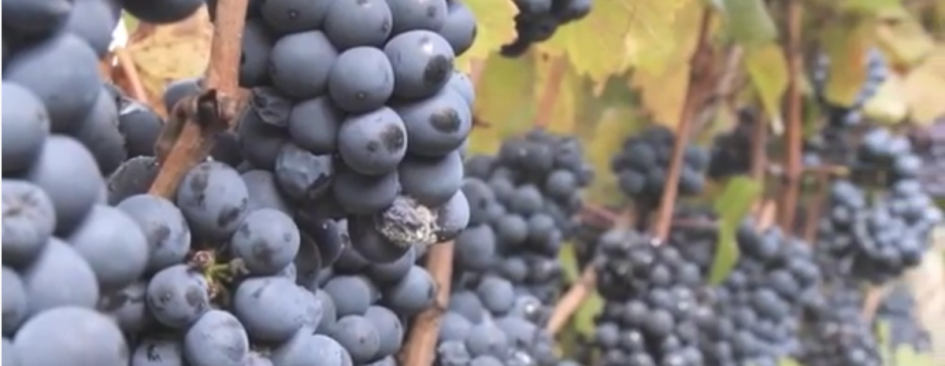
Botrytis Fungus Welcomes Evergreen’s “Seeds, Beads, Bees and Other Biodynamical Processes” Students to Harvest at Maysara Winery (photo credit and video: Greener Joel Asher)
Here’s where our Tasting Research with Foodoir curriculum lives as components: d) Case Study Tasting Research; e) Stuckey’s Taste Experiments; and h) Foodoir: Your Story of Tasting Place. However, following the integrative week 10 presentation assignment from fall quarter, during winter quarter you’ll create an integrative post every two weeks for each case study. Integrative posts should include appropriate highlights from your work in these components: a) Film Series; b) (un)Natural Histories; c) Regenerative Agriculture; f) Sustainable Entrepreneurship; g) Climate Justice and Resilience Events; i) Bibliography. The word “appropriate” invites each student to engage in components according to availability as well as student interest. The breadth and depth of your highlights for each component will vary depending on that case study’s curriculum and corresponding campus events as well as student interest. A thorough and curated case study of your choice is due week 10 when you present it as a cumulative winter quarter project.
Note: #3.5 Tea is a special event focused on an Oolong Tea Tasting as part of Evergreen’s Lunar New Year Celebration. No integrative post is required but participating students are encouraged to document their tasting experience.
Guiding Questions for T/M Integrative Work Winter Quarter:
- What definitions of terroir and meroir do you find most compelling and why? Keep a list of your and others’ definitions and possibilities in a notebook/file with authors and reference info (name of article, book, website with date of publication, and publisher or URL). Like an Evergreen Academic Statement, this question asks you to engage in an iterative (reflective, integrative, repeating) process of learning.
- How can terroir/meroir best be understood, represented, shared? What disciplines, practices or media are needed and why for knowing and communicating the following aspects of terroir/meroir? Provide examples with details.
- Looking for a challenge?: How might you want to focus or expand this list from our text, Wine and Place: A Terroir Reader?
- The Lure and Promise of Terroir
- History and Definitions
- Soil: The Terre in Terroir [and the Mer in Meroir]
- Climate
- Grapevines [or case study of choice]
- Winemaking [or production craft of choice]
- Sensory
- Marketing
- The Future
Food Media and Tasting Research Guiding Questions
- How is terroir/meroir mediated through taste? Why are matters of taste both objective (based on evolutionary processes and scientific facts) and subjective – based on your embodiment of evolutionary processes and your experience of what you consciously think as well as unconsciously sense you taste? What representations of terroir/meroir are most compelling and why? What blueprint (foodoir model) best enables you to articulate what and how you’re learning about your sense of taste of place in relation to rapid sensory evaluation, history, nature, and culture?
Sustainable Entrepreneurship Guiding Questions
- What is the potential of sustainable food and agricultural entrepreneurship to transform the existing industrial food system market? What criteria exist for assessing the role of agricultural businesses in building communities through food justice and sustainable practices?
Regenerative Ag Guiding Questions
- Where and how do people raise the foods we are highlighting? What factors influence the quality of these foods, especially their flavor? How are these foods processed, transformed and stored from farm to table? What is meant by regenerative agriculture and how can it guide us towards farming and food system sustainability?
#1a: Film Series: Program Questions in Scenes
Have you watched the film(s) required for each week of our case study and turned in your film assignment through Canvas? Winter quarter the film assignment asks you to choose a scene that you found compelling and share your interpretation of it in relation to one of our program questions. See canvas for details. Note: Each week you are required to copy and paste your current week’s assignment to the top of your Film Series Cumulative Document so that you have a single file with each of your weekly assignments.
Wk 1:
- Gather (Sanjay Rawal, dir.; 75 min; 2020) Kanopy (Evergreen Library streaming service)
- This Earth is Mine–‘Rock Hudson in Napa Valley Archival Stock Footage,” (Henry King, dir; 1 min; 1959). You Tube video link: https://www.youtube.com/watch?v=lJ6CvUpYof4 For historical context browse: AFI History: http://catalog.afi.com/Catalog/MovieDetails/53045
- The Rocks in Walla Walla with Geologist Kevin Pogue (Wine Spectator, 4 min.) https://www.winespectator.com/video/play/id/sF1ZdD23/title/The+Rocks+in+Walla+Walla+with+Geologist+Kevin+Pogue For more information about Dr. Pogue’s academic and wine consulting work click these links.
Viewing Prompt: Compare and contrast the terroir (and meroir) of Gather (2020), This Earth is Mine (1969) and The Rocks in Walla Walla (ND) in relationship to a key program question–or an answer to it. Suggestion: Browse the Napa Valley case study in the the Marketing chapter of our Wine and Place text for context re: This Earth is Mine (pp 244-256).
Wk 2: Wine
- The Wine Wars (53 min. Marathon International, 2003) Films on Demand (Evergreen Library streaming service: https://fod-infobase-com.evergreen.idm.oclc.org/p_ViewVideo.aspx?xtid=36438&tScript=0 )
- Red Obsession (David Roach, Warwick Ross, directors; 78 min; 2013). You Tube: https://www.youtube.com/watch?v=FAv-lkxhOmA
After posting your film assignments for each week of each case study to canvas, curate one to post here. See canvas for details.
#1b: (un)Natural Histories
Have you browsed the Tuesday AM resources for the (un)Natural Histories of this case study? Provide a link here to at least one resource you annotated using hypothes.is and introduce this link by summarizing your “take away” from one or more (un)natural history resources.
#1c: Regenerative Agriculture
#1d: Case Study Tasting Research: Wine
Wine with Luke Bradford, COR Cellars, Lyle WA
Link to conversation with Luke Bradford, Greener! (Copy and paste directly into your browser)
We’ll be working with two segments in class: a) 1-13 min: Luke’s story; and b) 58-92 min: the COR Cellars brand and the wine tasting experience.
Here’s the Wk 1 Case Study Tasting Lab Form. Download this form, complete it, and post it either as a file or by taking a screen shot and then uploading it as a media file. (It’s just like posting a photo.)
#1e: Stuckey’s Taste Book Experiments
Ryan’s WP workshop handout for wk 2: adding menus and editing photos
Hey all, Caleb here –
Week 2 Taste Book Reading:
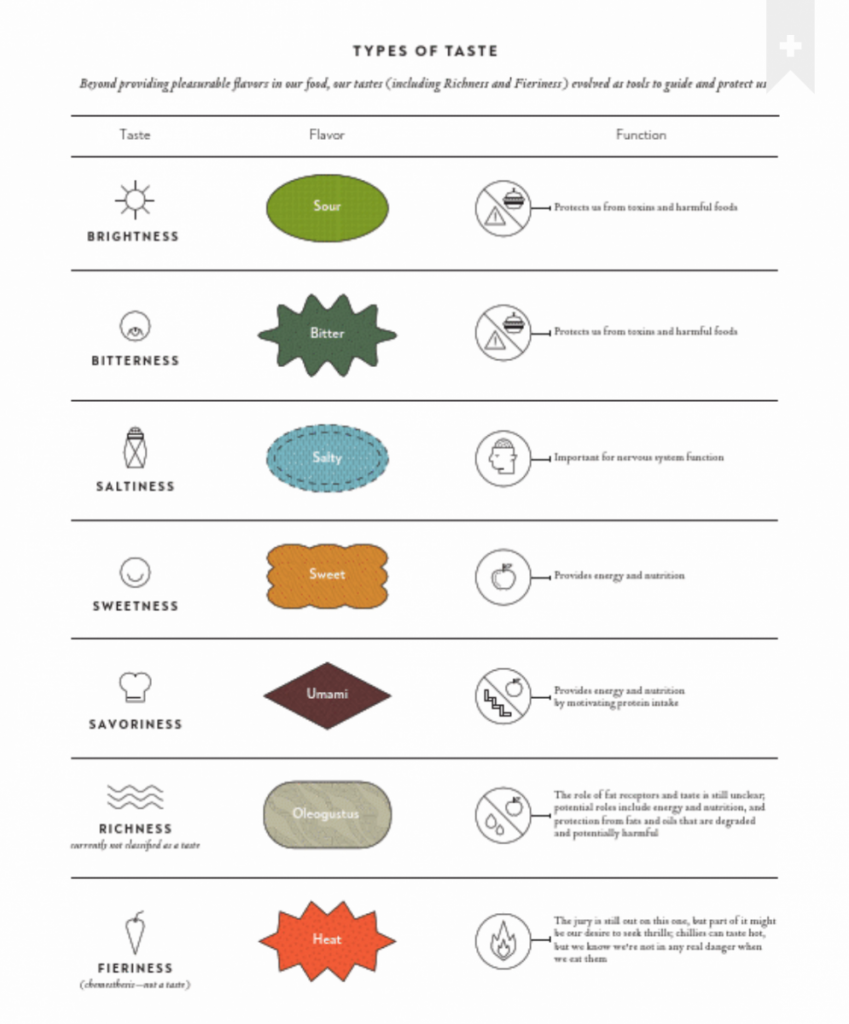
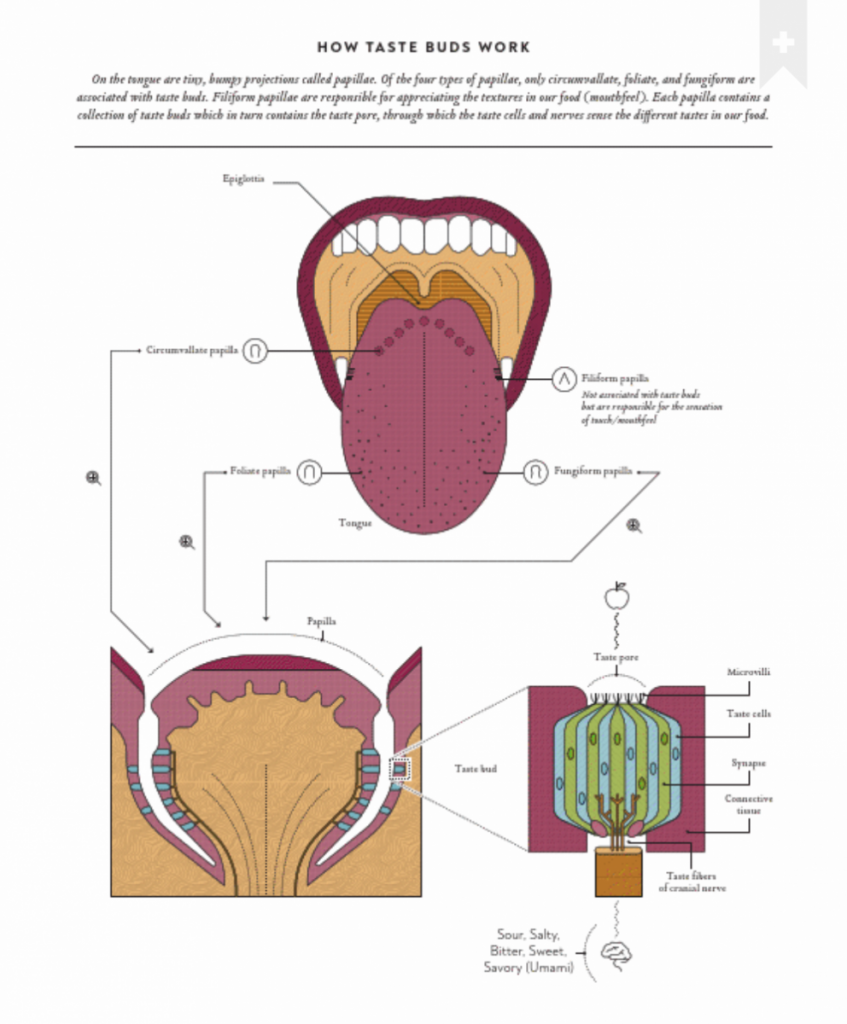
I don’t expect you all to have gotten/received Barb Stuckey’s Taste book yet so I thought that posting a few photos that I took from my own copy would be the simplest way to get you all in the loop; please look through these in preparation for the tasting experiment on Wednesday Week 2.
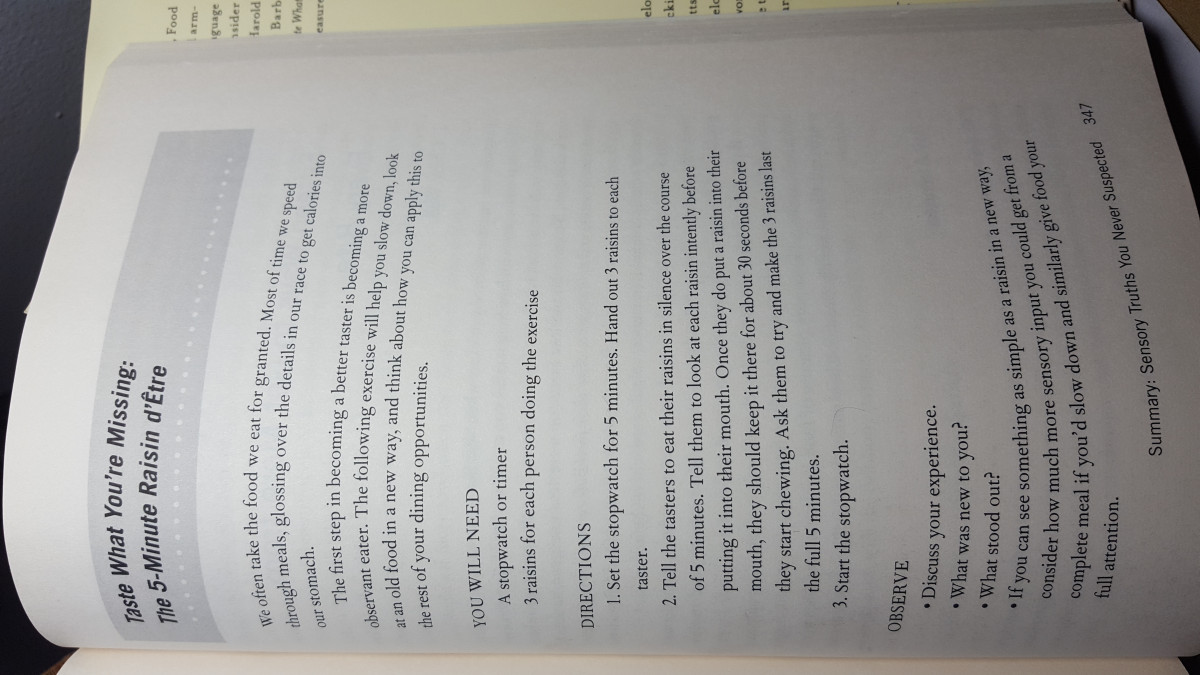
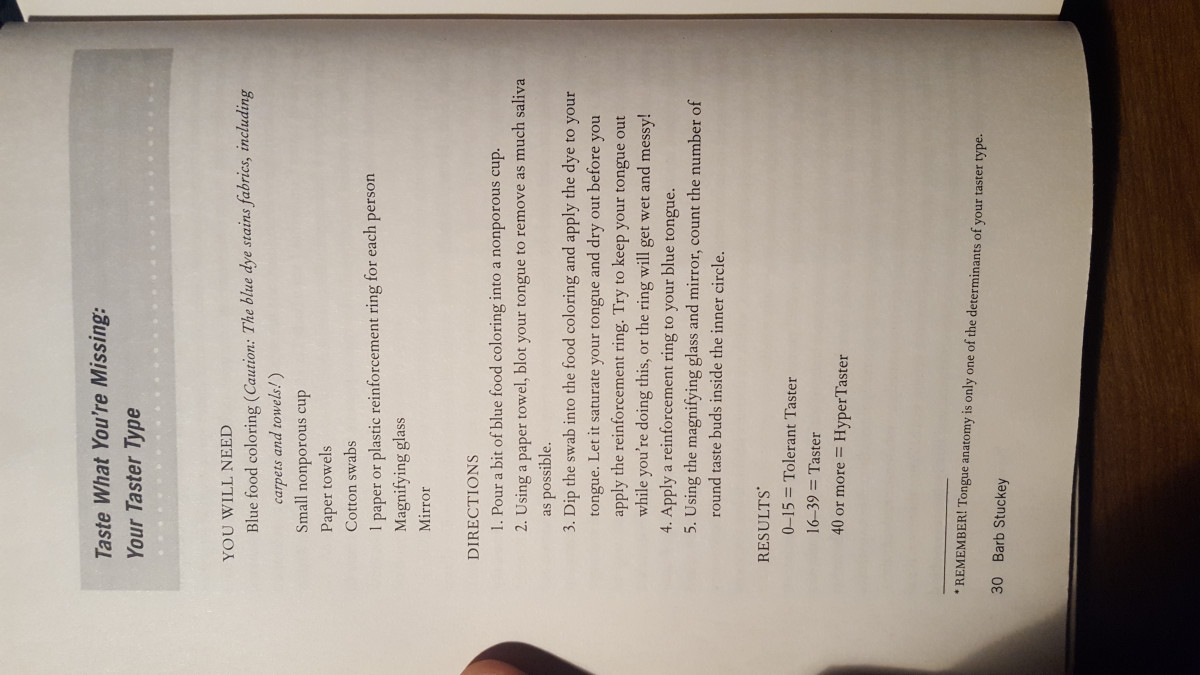
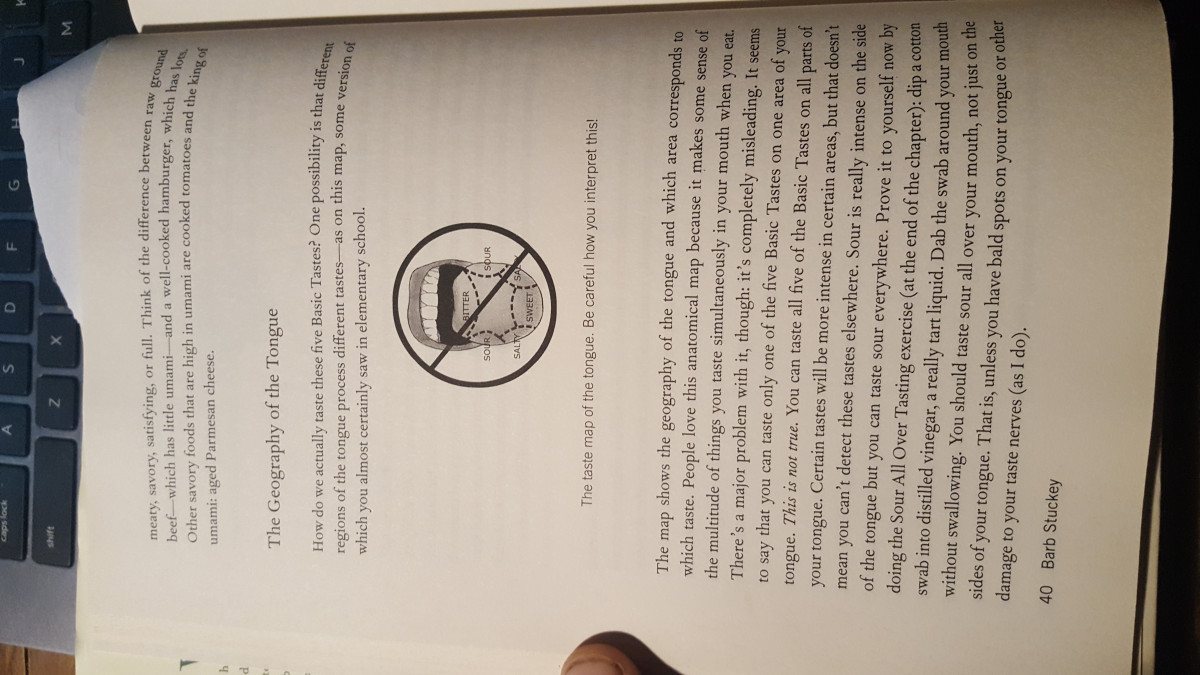
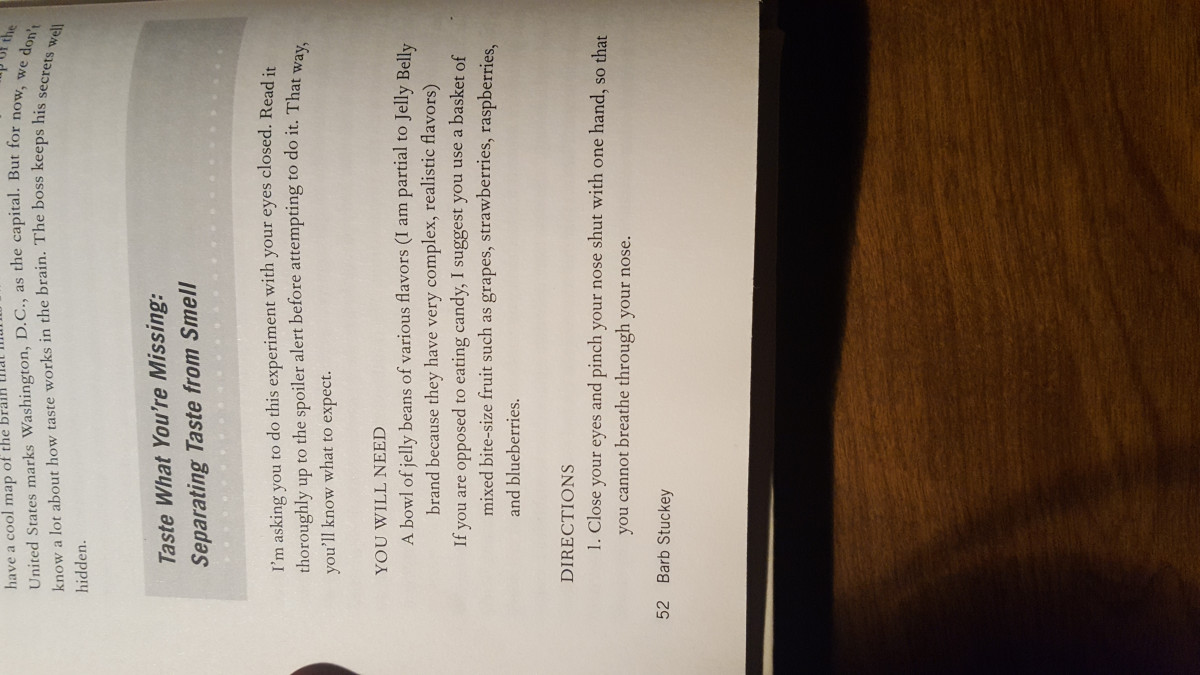
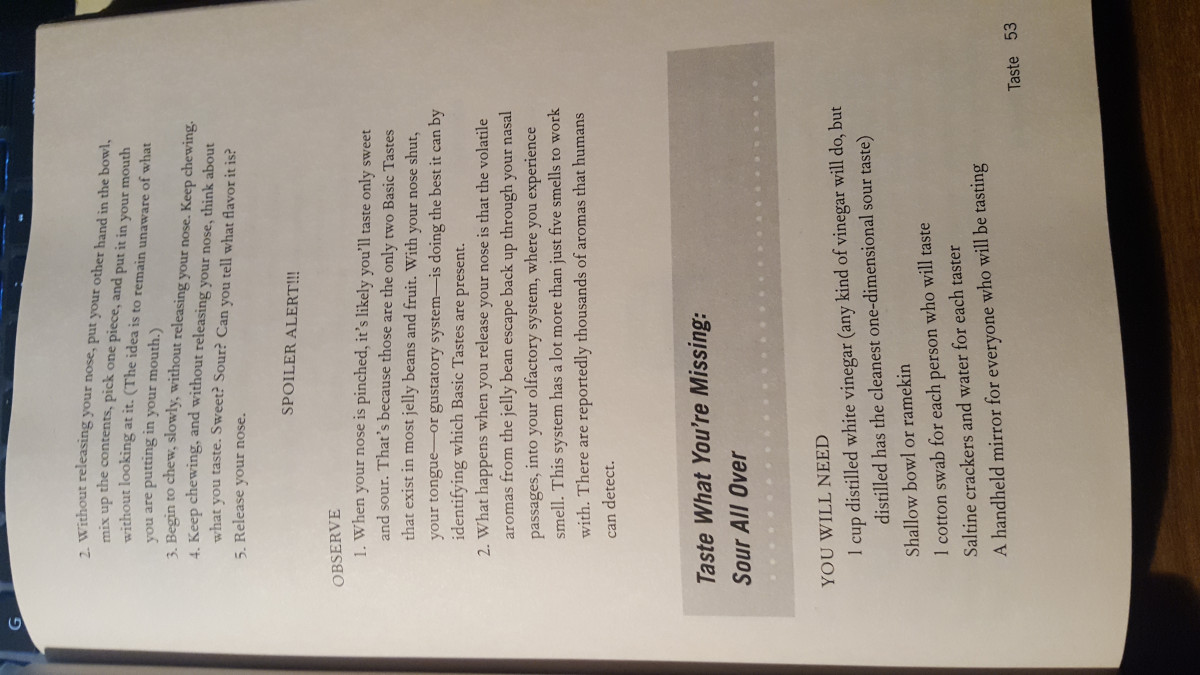
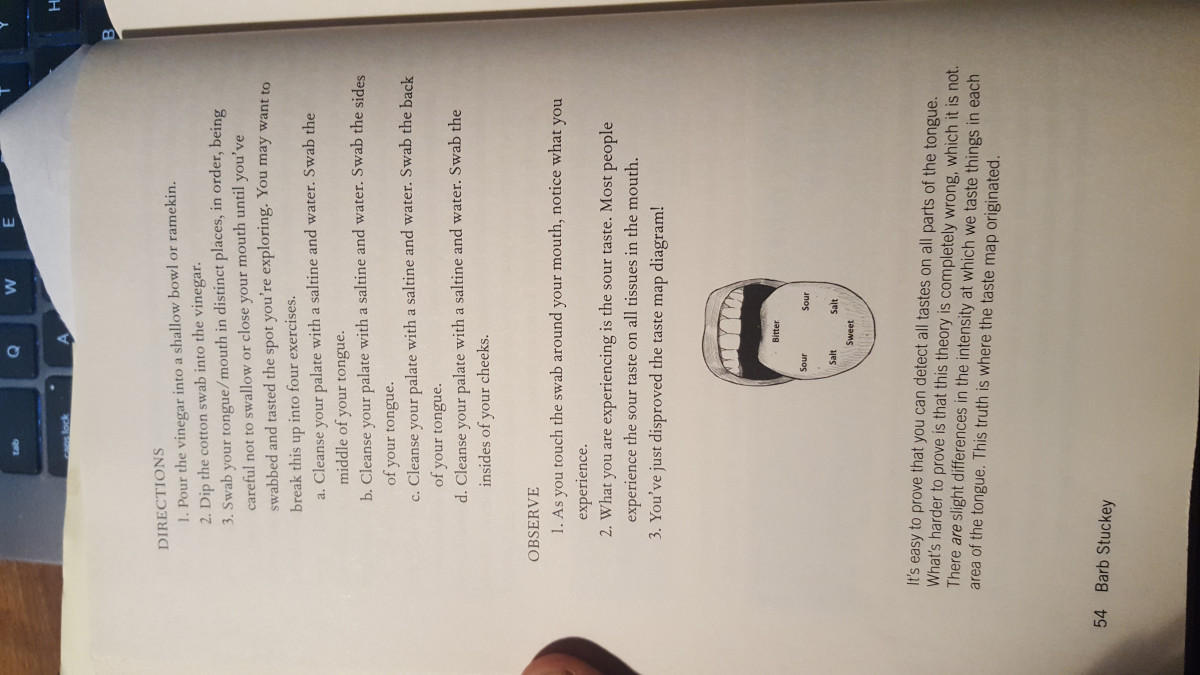
If and when you do have a copy of the book, reading the introduction (especially pages 14–19) and the Taste chapter (pages 33-54) will catch you all up to where we are going to be at!
Tasting Experiment Guide and Question Form:
Taste Experiment Materials:
I will attach below a list of materials that we will be using for the tasting workshops throughout this quarter; some of these materials will be provided to you by us and others are materials that we thought you may already have access to at home (in-home item). Please reach out if you have questions about any of these materials!
We will be doing our first supply pick up at the farm on this Tuesday afternoon (1/12) between 3:15-4:30; if you cannot make this pick up please please please let me know and we will make something work. I can also have supplies mailed to you for a small fee by emailing your address to me: popcal18@evergreen.edu The cost of these materials, which include materials for our TM case study tasting labs as well, is covered by your $30.00 student fee.
CA Raisin Ad and History: Trigger Warning
#1f: Sustainable Entrepreneurship
#1g: Climate Justice and Resilience Event Series
Click here for the link to the winter quarter Climate Justice and Resilience Event Series with details:
JAN. 23: Panel on Climate Change among the Indigenous Sámi of Europe’s Far North
JAN. 25: Evergreen Prof. Ruth Hayes, on “Eco-Media; the Environmental Footprint of Media and the Myth of the Cloud”
FEB. 20: Toshi Reagon on Parable of the Sower
FEB. 8: Prof. John Bolte, on Modeling Wildfire in Oregon
FEB. 24: Evergreen Prof. Shangrila Joshi, on “Climate Justice in Global Context”
#1h: Foodoir: Your Story of Tasting Place
Here’s where you write (draw, cook, scan, photograph, document) your engagement with the foodoir of your choice. Always begin by providing 1-3 sentences of a key quote from your foodoir (with author, title, page #) that you’ll be responding to by creating your own story of taste and place. Create a reading schedule week one in order to read approx. 1/9 of the book each week. Choose your ONE foodoir from this list (also provided on the TM syllabus): Farming While Black by Leah Penniman, The Rise: Black Cooks and The Soul of American Cooking or Yes, Chef: A Memoir by Marcus Samuelsson, The Flavor Equation by Nik Sharma, The Gastronomical Me by M.F.K. Fisher, The Sioux Chef’s Indigenous Kitchen by Sean Sherman.
If you’re new to TM winter quarter another option is to read the fall TM foodoir, Michael Twitty’s The Cooking Gene following the prompts provided on the fall quarter website. SW will be providing a prompt from Harold McGee’s Nose Dive each week, which students can choose to juxtapose with their foodoir quote, or not. Nose Dive locates the human sense of taste in relation to the evolution of plant earth. It also provides a blueprint for doing taste research, beginning and ending with McGee’s story of tasting grouse. All students will be supported to develop independent research projects for 4-12 credits during the spring quarter, or sooner as your interests take form.
Quotes from fall quarter’s weeks 1&9 reading from The Cooking Gene
Michael Twitty
“The Old South is a place where people use food to tell themselves who they are, to tell others who they are, and to tell stories about where they’ve been (xii).
The Old South is a place where food tells me where I am. The Old South is a place where food tells me who I am. The Old South is where food tells me where we have been. The Old South is where the story of our food might just tell America where it’s going (xvii).
’We need a blueprint as individual and as a people’ (11).
‘What’s the best thing you ever cooked?’ I asked my mother.
‘A little black boy named Michael; I cooked him long and slow,’ she replied (13).
The disruption of the black family, the interruption of an important community-driven ethnic economy, the engendering of a poor diet, an urgent desire to suppress learning and education, and a culture of unrelenting violence–these and all the dependency, instability, and toxic thinking that wen along with them were the fruits of King Cotton, none of which black America has been able to fully purge from its system. (358)
Little bits of stories mixed with recipes and techniques, treats, and tips come out as she rehearses the family dead in her mind: how to wash collards, sorting through field peas, the right way to chew sorghum and sugarcane …. (360).
Our food was never just food. (365)
Michael Twitty
Like our program’s focus on terroir/meroir, the focus of Michael Twitty’s The Cooking Gene is food and place. But, for Twitty understanding the taste of place requires being able to tell a story that locates the storyteller in relation to food and place. The Cooking Gene as a food memoir is part of a rapidly growing field of popular and academic interest in the intersectional politics of food. During fall quarter we read The Cooking Gene as a “blueprint” for writing our own “foodoirs.” During winter quarter you read the story of your choice of an author’s identity as an eater, consider your own story of self, food, and place. In what ways does (and doesn’t) your author’s writing provide a blueprint for yours? What do you choose to eat and why? Who cooked you and who cooked for you? How has that cooking—and its history–shaped your taste preferences and experiences? As you experiment with crafting words to communicate your taste experiences be sure to include that process in your story. What characterizes your experience of the relationship between your mouth as an organ of ingestion and an organ of disgestion? How do your hands relate to your mouth and to your keyboard? Where, when, and how is your thinking embodied?
The final part of your Tasting Lab post each week should include writing toward your own foodoir. Ground/anchor your writing in relation to a specific quote (or series of quotes) from each week’s chapters from The Cooking Gene or the foodoir of your choice. Note: Like his book, Twitty’s WordPress website, Afroculinaria, is award-winning. What about both inspire you? Suggested Length: 100-200 words.
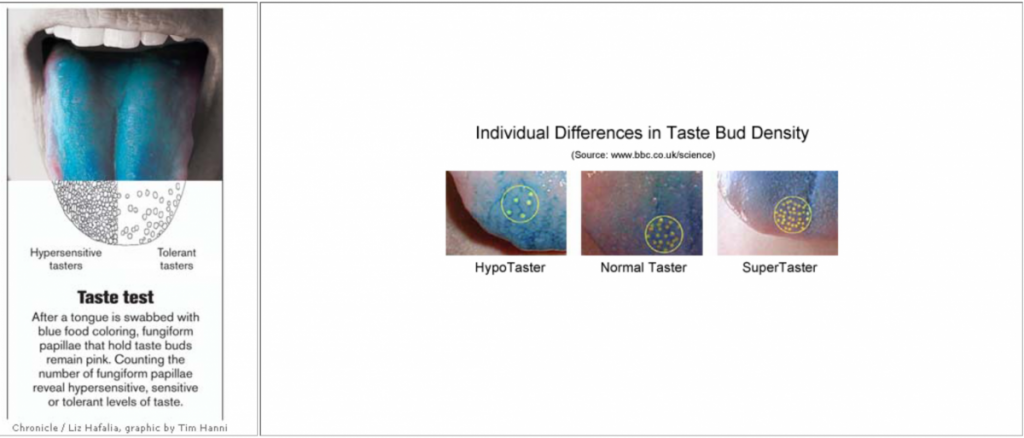
Have you chosen your foodoir text? Here are a couple relevant images from Sharma’s The Flavor Equation re: week 2’s “taste bud” experiment:
#1i: Bibliography
What were the most compelling resources you explored during the two weeks of this case study? You are required to learn and use a standard reference style such as APA or MLA as demonstrated here at the Online Writing Lab (OWL).
Leave a Reply