
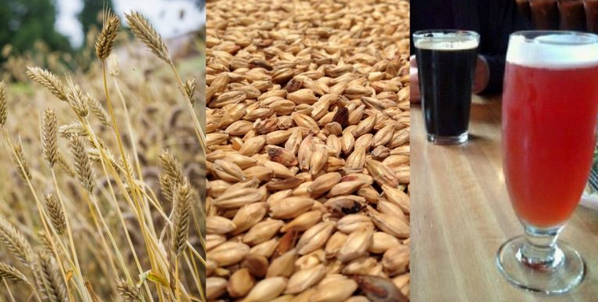
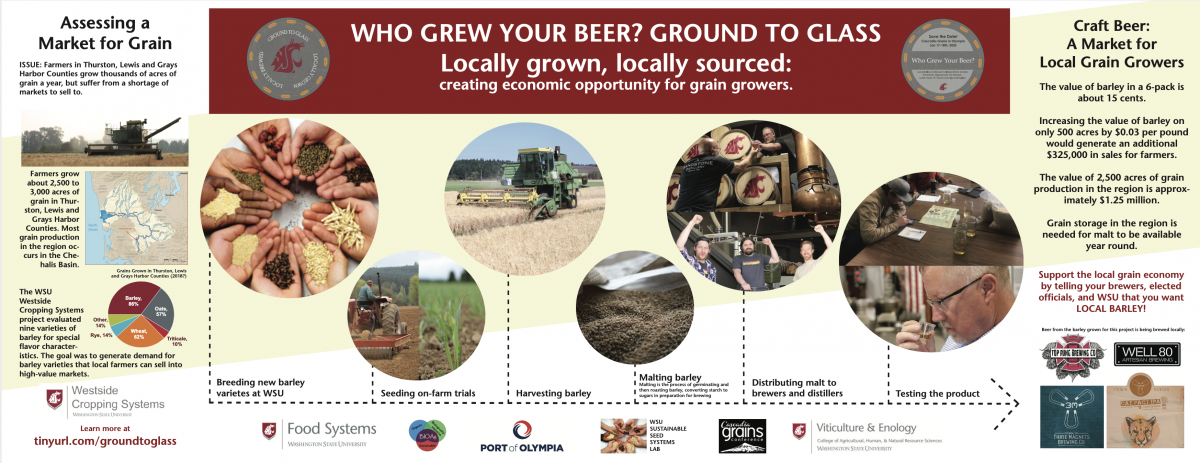
Barley varieties for W. WA craft malting, brewing, and distilling. Photos L-R: A. Gilson, D. Shea, & K. Koob)
Here’s where our Tasting Research with Foodoir curriculum lives as components: d) Case Study Tasting Research; e) Stuckey’s Taste Experiments; and h) Foodoir: Your Story of Tasting Place. However, following the integrative week 10 presentation assignment from fall quarter, during winter quarter you’ll create an integrative post every two weeks for each case study. Integrative posts should include appropriate highlights from your work in these components: a) Film Series; b) (un)Natural Histories; c) Regenerative Agriculture; f) Sustainable Entrepreneurship; g) Climate Justice and Resilience Events; i) Bibliography. The word “appropriate” invites each student to engage in components according to availability as well as student interest. The breadth and depth of your highlights for each component will vary depending on that case study’s curriculum and corresponding campus events as well as student interest. A thorough and curated case study of your choice is due week 10 when you present it as a cumulative winter quarter project.
Struggling with WordPress or the curriculum? Discuss with faculty the option of Plan B for focusing on weekly case studies and a single final cumulative using PowerPoint.
Note: #3.5 Tea is a special event focused on an Oolong Tea Tasting as part of Evergreen’s Lunar New Year Celebration. No integrative post is required but participating students are encouraged to document their tasting experience.
#2a: Film Series: Program Questions in Scenes and Overview
Have you watched the film(s) required for this week of our case study and turned in your film assignment through Canvas? This quarter the film assignment asks you to choose a scene that you found compelling and tell a story about it in relation to one of our program questions. Note: Each week you are required to copy and paste your current week’s assignment to the top of your Film Series Cumulative Document so that you have a single file with each of your weekly assignments–including faculty comments–to turn in week 5 on canvas and to post week 10 on your wordpress website with your final integrative case study.
Wk 3: Grains
Program Guest: Aba Kiser, Project Manager, WSU Food Systems and an organizer of the COVID suspended annual Cascadia Grain Conference. (9:30-9:45 Tuesday, 19 January).
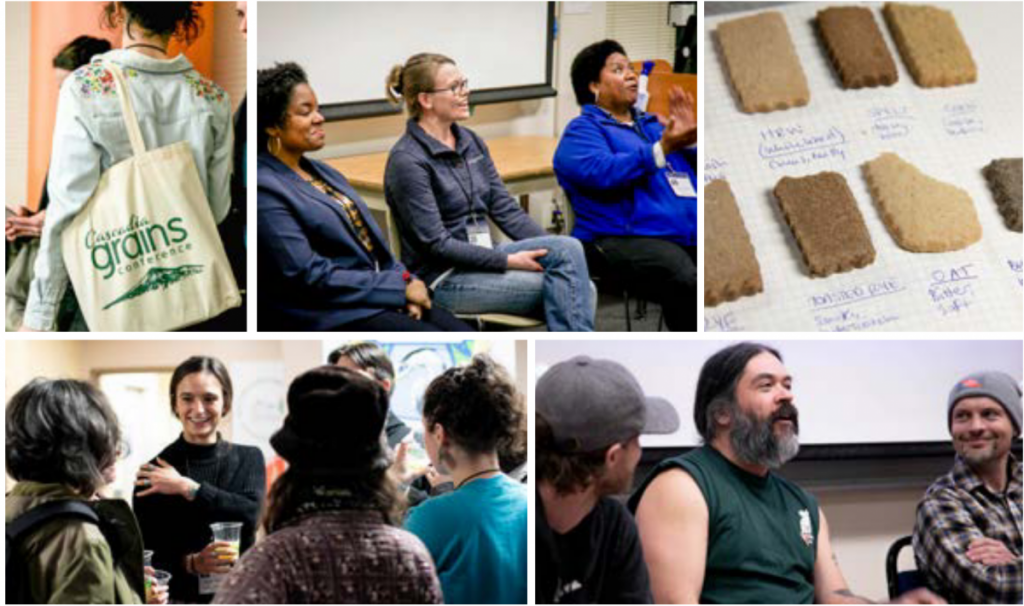
Selections from Cascadia Grain Conference & WSU Bread Lab:
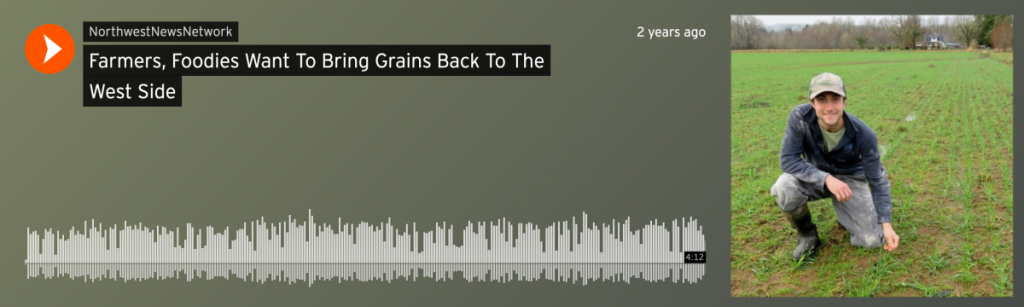
- “Foodies, Farmers Want to Bring Grains Back to the West Side,” Northwest News Network featuring Laura Lewis, WSU Food Hub, Evan Mulvaney, Greener and local farmer, and Jason Parker, Copperworks Distillery (5 min radio feature). Browse media links for Cascadia Grains Conference events from 2012-2018.
- Unbroken Ground: Revolutions Start from the Bottom, Patagonia Films link with introduction from WSU’s Bread Lab (25 min)
- “Bread is Broken: Industrial production destroyed both the taste and the nutritional value of wheat. One scientist believes he can undo the damage.” The New York Times link from WSU’s Bread Lab (website)
Wk 4: Grains
- “Against the Grain by John C Scott review — the beginning of elites, tax, slavery,” Barry Cunliffe, The Guardian (website)
- “How Grains Domesticated Us,” John C Scott, SOAS/Gastronomica Lecture (62 min)
#2b: (un)Natural Histories
Have you browsed the Tuesday AM resources for the (un)Natural Histories of this case study? Provide a link here to at least one resource you annotated using hypothes.is and introduce this link by summarizing your “take away” from one or more (un)natural history resources.
#2c: Regenerative Agriculture
#2d: Case Study Tasting Research: Grains
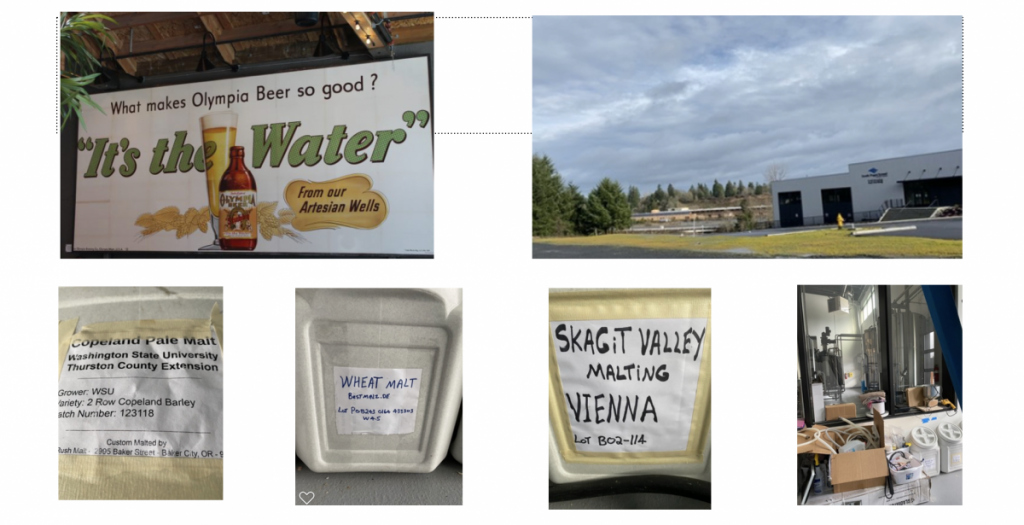
Terroir of WA Grains: Malt Sensory Lab and guest Laura Lewis, WSU Food Hub Stephen Bramwell, WSU, Thurston Co Ag Extension
- See our Canvas Tuesday 11 AM wk 3 module for the hypothes.is workshop document with annotations corresponding to key aspects of Stephen Bramwell’s craft grains project report, “From Ground to Glass.” If you missed this class or did not participate in the hypothes.is workshop with Paul McMillin using this document, please browse the following pages abstract pp 1-2, Community Sensory Evaluation p 10, Sensory Profile p 19, Tables pp 20-21, Conclusion p 23, Publications p 24, Literature Cited p 29.
Malt Sensory Lab Guide and Response Form:
FIRST: A “nose dive” with malt: childhood grain coop elevator’s cow-face sucker to brewing with great uncle to chocolate covered malted milk balls with grandma to music teacher sister in Northfield (Malt O Meal) … SW’s own foodoir notes.
#2e: Stuckey’s Taste Book Experiments
Hello everyone – Caleb here!
For this coming week’s (week 4) taste experiments we will be diving deeper into our own senses of smell and aroma. Just like last week, we will be following an experiment guide (that I will post below) and answering questions on a separate form that directly relate to the tasting experiment.
Now let’s think about smell: when I begin to think about smelly aromas I am taken to the moments as a child of walking into my grandmother’s house which always smelled of pine, soup, and old cat, or walking into a restaurant that I cooked at and smelling the onions caramelizing in the Rondeau. Our memory for smell is stronger than our memory for any other of our senses; that being said, what are some of your own nostalgic blasts from the past?!
We will be referencing Barb Stuckey’s book, Taste, again this week, and for those of you that have a copy of their own, please read through the Smell Chapter (pp 55-73). We will be walking through 2 experiments this week, a modified Nose Smelling vs Mouth Smelling on page 75&76 and the Spice Rack Challenge on page 77&78.
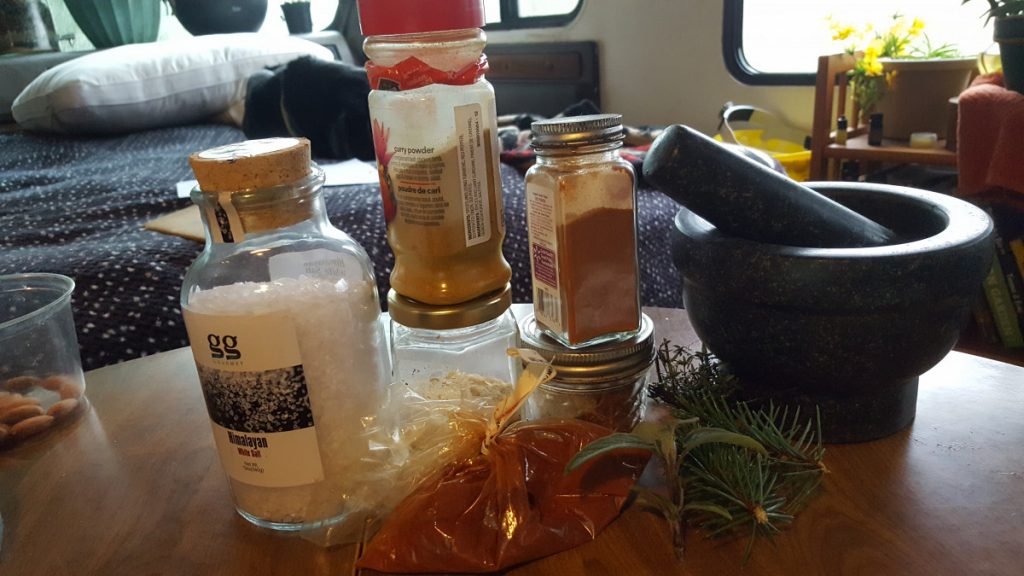
To prep for the experiment – I am going to ask you all to gather up some of your favorite spices used in your own home; these fresh and/or dry spices can range from thyme, basil, sage, pepper, cayenne, curry, anise, salt, even ketchup or sriracha, etc. If you don’t have access to your own spices – I encourage you to go on a walk around your neighborhood and forage for some of your own; everywhere I go in Olympia has rosemary, sage and oregano growing ‘wild’ outside. Feel free to grab some spruce tips, or my favorite: Grand fir needles. Ref: The Sioux Chef’s Indigenous Kitchen – pg 181.
URBAN FORAGING GUIDE FROM CALEB
Supplies you’ll need:
- Spices, fresh AND dry if possible (10 max)
- A couple of clean cups
- A rag or paper towel
- A clean piece of paper
- Paper and pencil/pen
For those of you that don’t have the book yet – I will post photos of the pages that we will working with this Wednesday below:
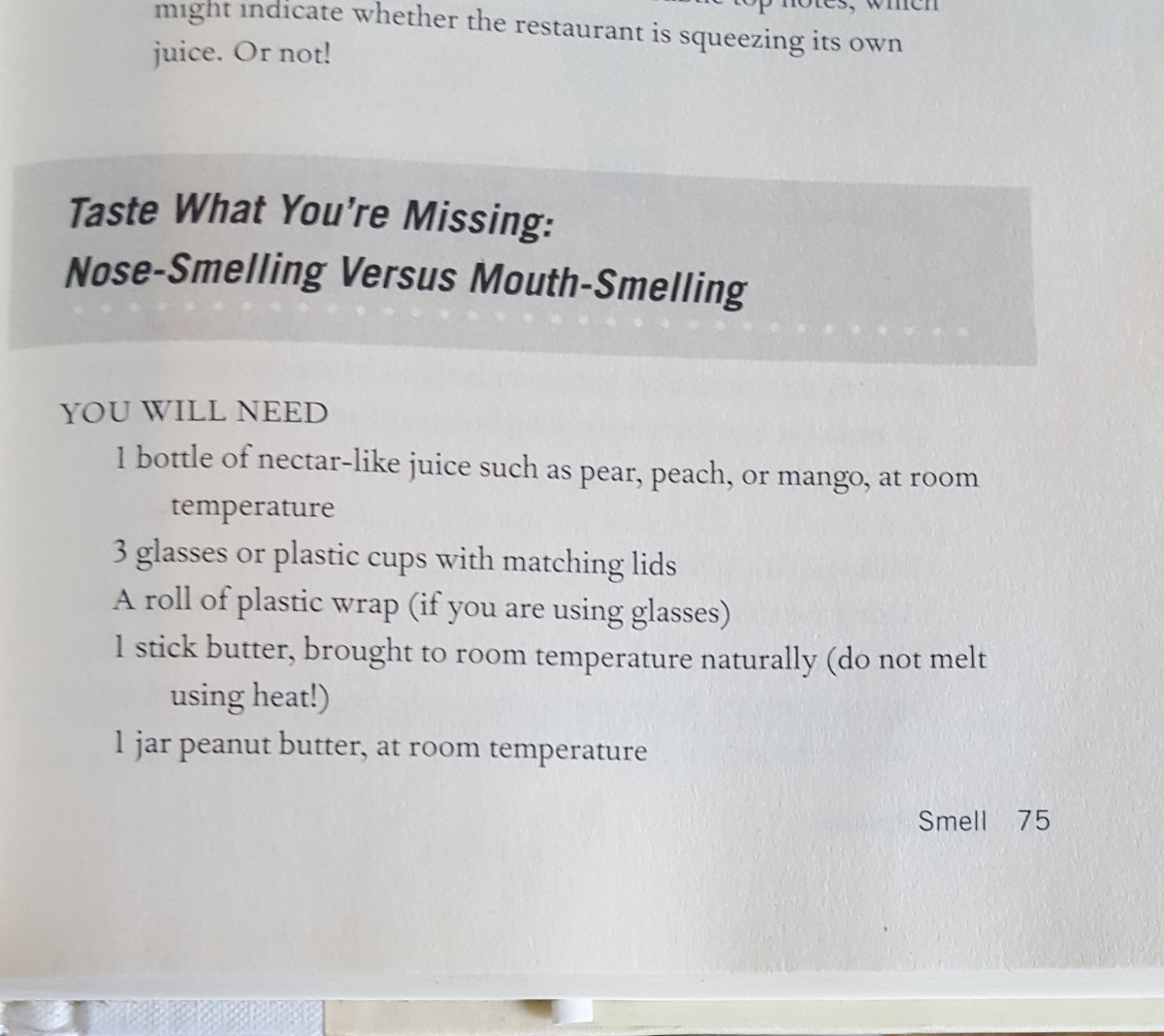
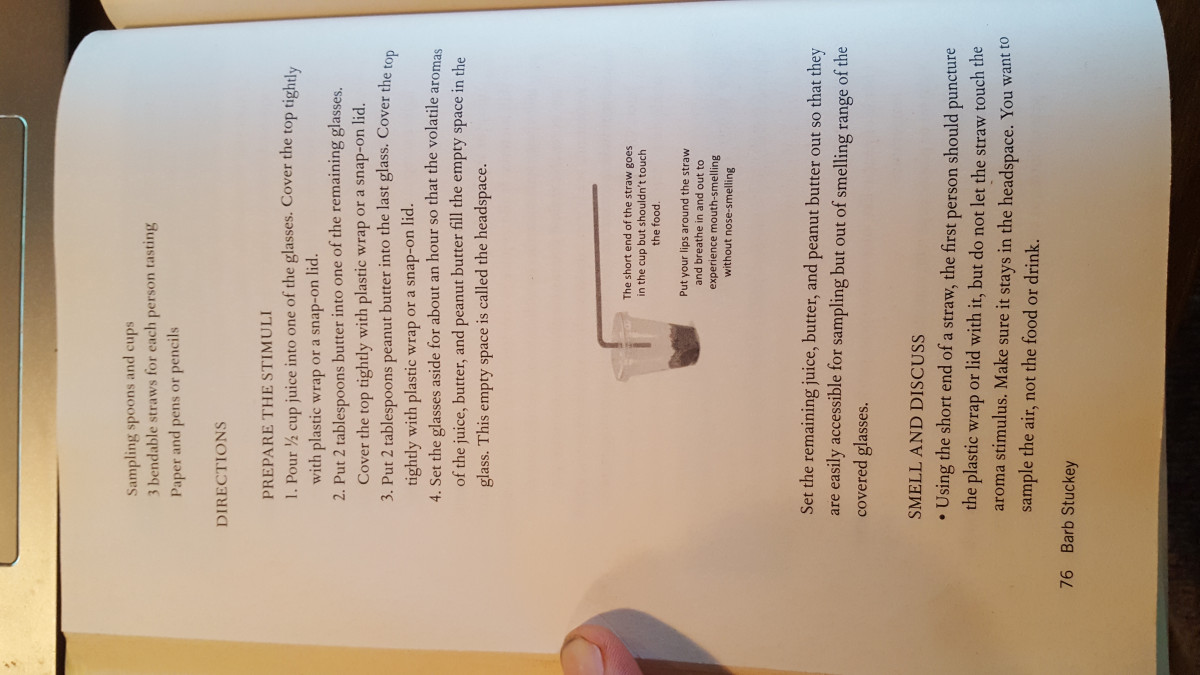
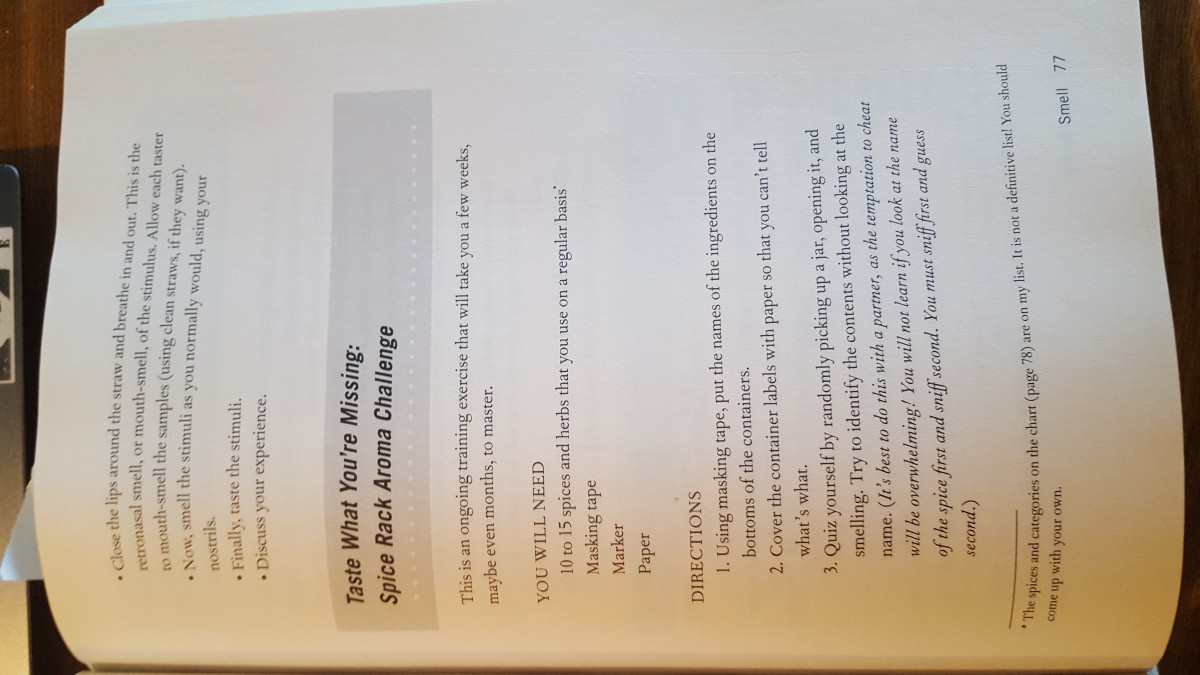
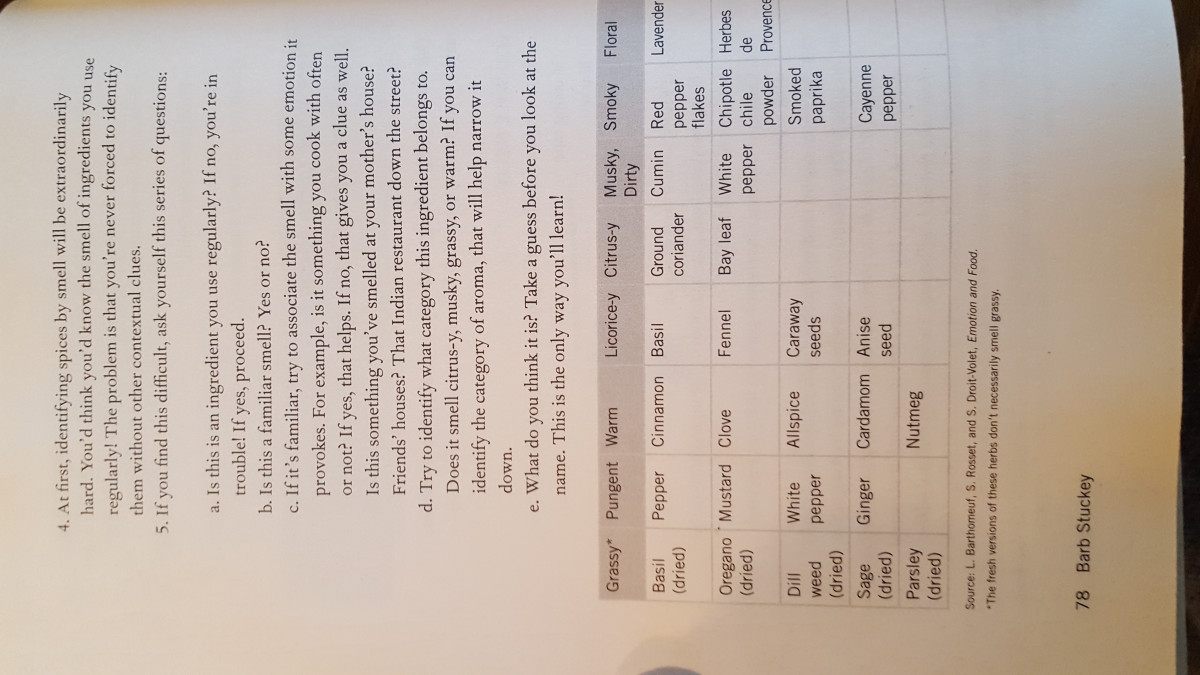
Taste Experiment Guide and Question Form:
#2f: Sustainable Entrepreneurship
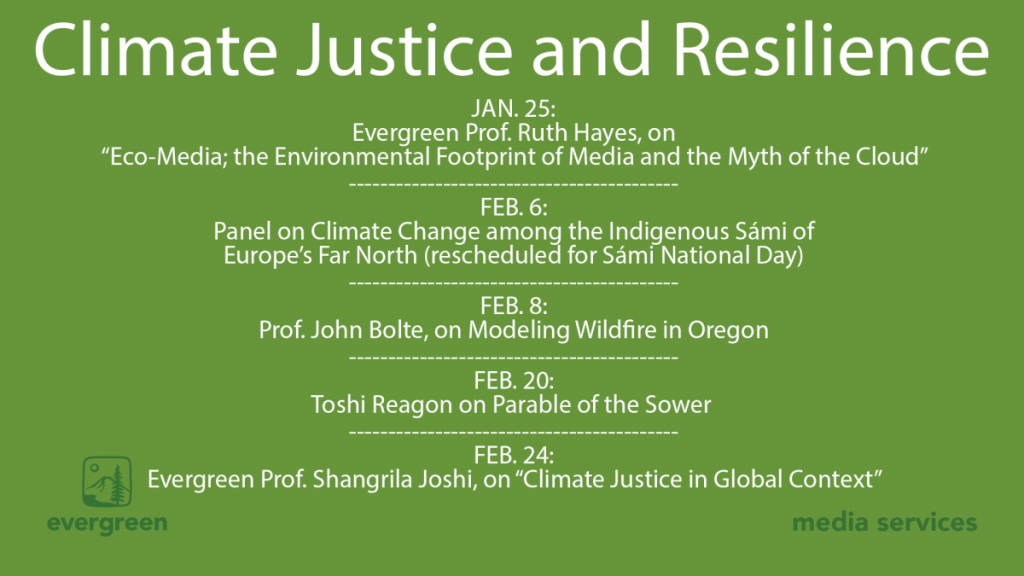
#2g: Climate and Resilience Event Series/Seminar
#2h: Foodoir: Your Story of Tasting Place
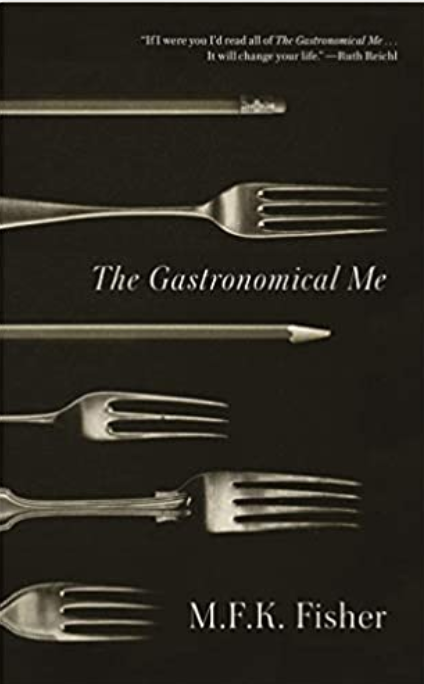
Like most other humans, I am hungry … it seems to me that our three basic needs, for food and security and love, are so mixed and mingled and entwined that we cannot straightly think of one without the others. So it happens that when I write of hunger, I am really writing about love and the hunger for it.
–M.F.K. Fisher, The Gastronomical Me, preface
Here’s where you write (draw, cook, scan, photograph, document) your engagement with the foodoir of your choice. Always begin by providing 1-3 sentences of a key quote from your foodoir (with author, title, page #) that you’ll be responding to by creating your own story of taste and place. Create a reading schedule week one in order to read approx. 1/9 of the book each week. Choose your foodoir from list provided on the TM syllabus. If you’re new to TM winter quarter another option is to read the fall TM foodoir, Michael Twitty’s The Cooking Gene following the prompts provided on the fall quarter website. SW will be providing a prompt from the TM list of possible foodoirs and as time allows a multi-week shallow but focused dive into Harold McGee’s Nose Dive, which students can choose to juxtapose with their foodoir quote, or not. Nose Dive locates the human sense of taste in relation to the evolution of plant earth. It also provides a blueprint for doing taste research, beginning and ending with McGee’s story of tasting grouse. All students will be supported to develop your own independent research projects for 4-12 credits during the spring quarter, or sooner as your interests take shape.
[H]ow we register and name and think about smells depends on where we’ve happened to encounter them first.’ We may think that the Amazonian ant tastes of lemon grass and ginger, but to the native Amazonian, lemon grass and ginger taste of ant.
Harold McGee, Nose Dive
Final fall quarter prompts from Twitty’s The Cooking Gene:
The disruption of the black family, the interruption of an important community-driven ethnic economy, the engendering of a poor diet, an urgent desire to suppress learning and education, and a culture of unrelenting violence–these and all the dependency, instability, and toxic thinking that wen along with them were the fruits of King Cotton, none of which black America has been able to fully purge from its system. (358)
Little bits of stories mixed with recipes and techniques, treats, and tips come out as she rehearses the family dead in her mind: how to wash collards, sorting through field peas, the right way to chew sorghum and sugarcane …. (360).
Our food was never just food. (365)
Like our program’s focus on terroir/meroir, the focus of Michael Twitty’s The Cooking Gene is food and place. But, for Twitty understanding the taste of place requires being able to tell a story that locates the storyteller in relation to food and place. The Cooking Gene as a food memoir is part of a rapidly growing field of popular and academic interest in the intersectional politics of food. You’ll be reading The Cooking Gene — or the foodoir of your choice — as a “blueprint” for writing your own “foodoirs.” As you read your chosen author’s story of her/his/their identity as an eater, consider your own story of self, food, and place. In what ways does (and doesn’t) your chosen author’s writing provide a blueprint for yours? What do you choose to eat and why? Who cooked you and who cooked for you? How has that cooking—and its history–shaped your taste preferences and experiences? As you experiment with crafting words to communicate your taste experiences be sure to include that process in your story: what characterizes your experience of the relationship between your mouth as an organ of ingestion and an organ of disgestion? How do your hands relate to your mouth and to your keyboard? Where, when, and how is your thinking embodied?
The final part of your Tasting Lab post each week should include writing toward your own foodoir. Ground/anchor your writing in relation to a specific quote (or series of quotes) from each week’s sequential chapters from your choice of a foodoir. Note: Like his book, Twitty’s WordPress website, Afroculinaria, is award-winning. Does the author of your foodoir also have a website or use other social media? What about the foodoir and social media inspire you? Suggested Length: 100-200 words.
#2i: Bibliography
Your are required to learn and use a standard reference style such as APA or MLA as demonstrated here at the Online Writing Lab (OWL).
Leave a Reply