
Film Preparation:
Set aside approximately two hours BEFORE Tuesday 9 AM each week to watch the films that will prepare you for the week’s case studies. Complete the Film Series writing assignment as described on Canvas (and also on each winter quarter case study post). Be prepared to screenshare your clip and your interpretation in relation to a winter quarter program question.
The following fall quarter week 1 films are recommended viewing for students new to Terroir/Meroir winter quarter.
- Seeds of Our Ancestors, Seeds of Life with Winona LaDuke (2012, 16 min). TEDxTC https://www.youtube.com/watch?v=pHNlel72eQc (Links to an external site.)
- A Look at The Cooking Gene with Michael Twitty, video embed titled “A Feast of African-American Culinary Contributions,” Thomas Jefferson Monticello website. (2017, 7 min) https://www.monticello.org/site/blog-and-community/look-cooking-gene-michael-twitty (Links to an external site.)
- “A Matter of Taste,” episode of Food: A Delicious Science. PBS (2017, 55 min). Available on Evergreen Library’s streaming service, Films on Demand. (Go to the Library homepage, scroll down, and link through to the streaming service, “Films On Demand.”
Tasting Lab: Rapid Sensory Evaluation
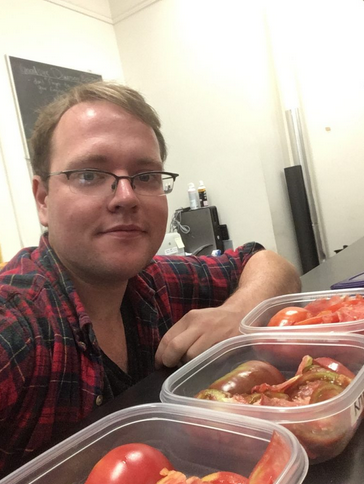
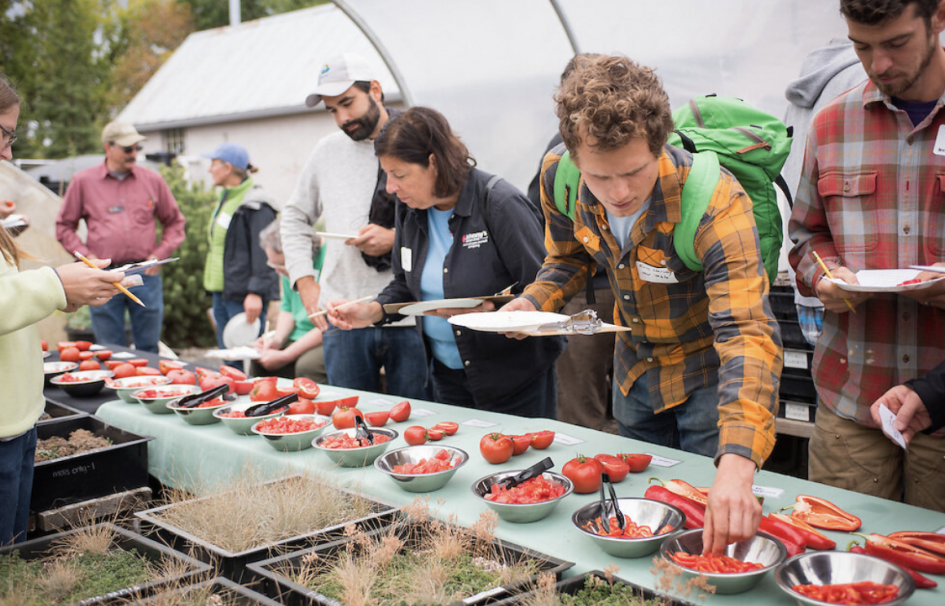
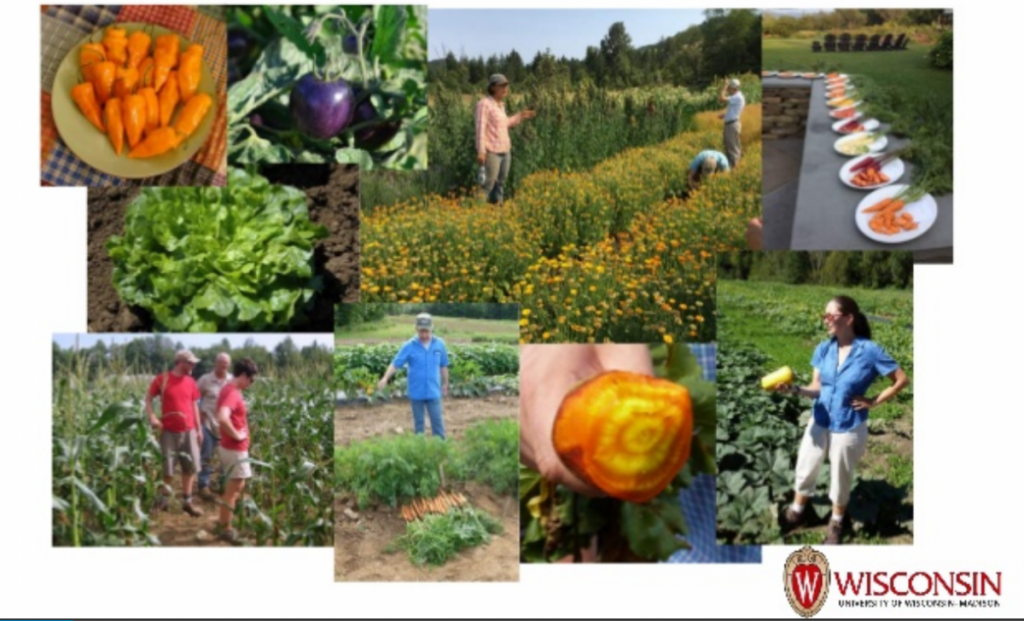
Patrick Merscher, Evergreen grad and recent MS grad from UW-Madison, introduced us to the role of taste in the relationships among seed savers-plant breeders, farmers-growers-producers, cooks-chefs, and eaters-consumers. The hyphens (-) between these word choices are related to the question mark (?) in our program’s title! Note: In an ideal world students repeated the sensory evaluation calibration protocol of this lab every other week of fall quarter, which means students learned how to use WordPress to add 4 posts to their own #1 page. Students new to T/M winter quarter are required to become familiar with the following reading and rapid sensory practices.
Required Reading:
An Introduction to Flavor and its Evaluation for Crop Scientists
Lab Practice and Resources:
i) Basic Flavor and Intensity Calibration
Begin by reading through this SKC Basic Flavor and Intensity Calibration Protocol and review the Sensory Test Form. Take notes, including questions, list of words you don’t know, required materials you don’t yet have, procedures you don’t understand, and the things that most interest and engage you. Each of your website’s Tasting Research posts should include a photo of at least 1 page of your annotated text from this or another of each week’s required resources. In Tomatoland, our first fall quarter seminar text, Barry Estabrook references a “battery of tests” he took at U of FL’s Center for Smell and Taste (147). One test, the Power of Food Scale developed by Dr. Lowe, is included below for you, too, to utilize. Another great overview of rapid sensory evaluation that references experts you’ll soon recognize is this Epicurious article, “Everything is Done with the Senses.” We’ll explore more tasting research resources throughout the year. Note: In an ideal world you will have assembled the calibration lab to practice with it by completing and uploading the form several times fall and winter quarters.
- Dr. Michael Lowe’s Power of Food Scale in relation to role of “embodiment, pleasure, and psychology” for taste (Estabrook 147/187)
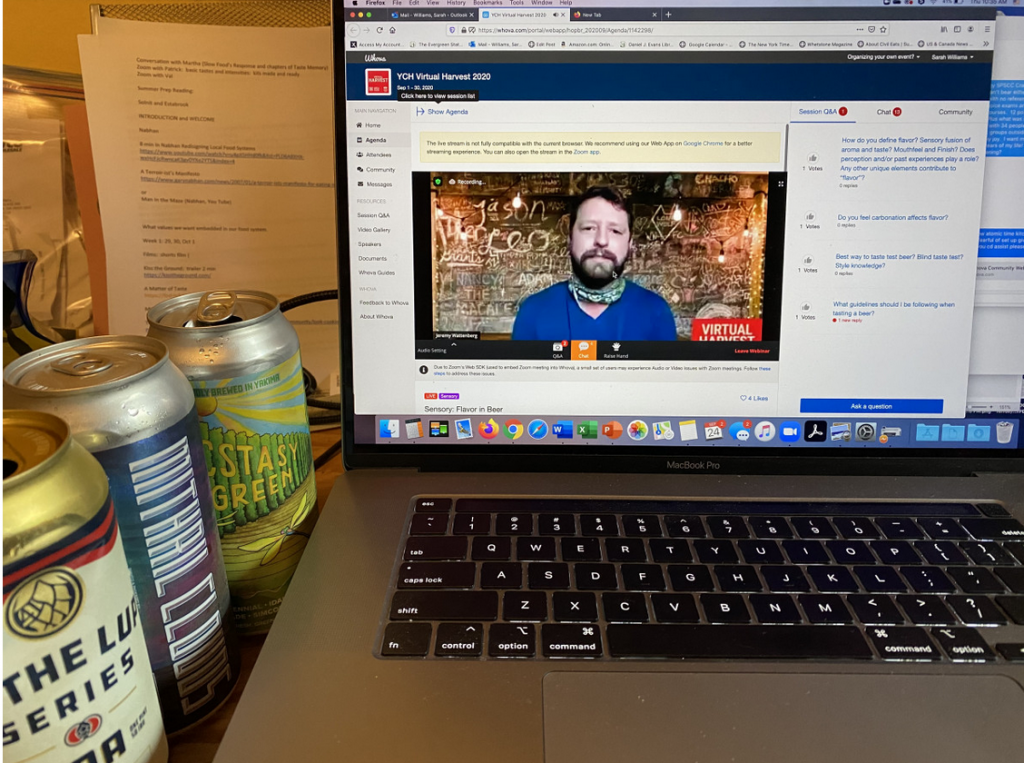
ii) Sensory Evaluation with Industry Professionals: Hops
iii) Tasting Research in Literature?
Yes, in addition to film, websites, books, articles, and labs another medium for tasting research is literature. For example, check out this novella, Nobel author Mo Yan’s Radish. If you’re intrigued, or just need to log more hours of non-zoom work any week, check out Mo Yan’s Red Sorghum (novel and film), Mo Yan’s (banned novel) The Republic of Wine, and in preparation for the Lunar New Year Celebration of the Ox read Mo Yan’s bovine reincarnation in his latest, Life and Death Are Wearing Me Out. Mark your calendar now for our Lunar New Year oolong tea tasting at noon on Friday, 12 February.
Foodoir: Your Story of Tasting Place
“The Old South is a place where people use food to tell themselves who they are, to tell others who they are, and to tell stories about where they’ve been (xii).
The Old South is a place where food tells me where I am. The Old South is a place where food tells me who I am. The Old South is where food tells me where we have been. The Old South is where the story of our food might just tell America where it’s going (xvii).
’We need a blueprint as individual and as a people’ (11).
‘What’s the best thing you ever cooked?’ I asked my mother.
‘A little black boy named Michael; I cooked him long and slow,’ she replied (13).
George Washington Carver once said, ‘If you love something enough it will give up its secrets to you’ (17).
Michael Twitty, The Cooking Gene
Assigned Chapters of The Cooking Gene: preface (i-xvii)
Like our program’s focus on terroir/meroir, the focus of Michael Twitty’s The Cooking Gene is food and place. But, for Twitty understanding the taste of place requires being able to tell a story that locates the storyteller in relation to food and place. The Cooking Gene as a food memoir is part of a rapidly growing field of popular and academic interest in the intersectional politics of food. During fall quarter we read The Cooking Gene as a “blueprint” for writing your own “foodoirs.” During winter quarter as you read the foodoir of your choice (from the recommended list or chosen in consultation with the faculty) compare and contrast the story of the author’s identity as an eater with your own story of self, food, and place. In what ways does (and doesn’t) the author’s writing provide a blueprint for yours? What do you choose to eat and why? Who cooked you and who cooked for you? How has that cooking—and its history–shaped your taste preferences and experiences? As you experiment with crafting words to communicate your taste experiences be sure to include that process in your story. What characterizes your experience of the relationship between your mouth as an organ of ingestion and an organ of digestion? How do your hands relate to your mouth and to your keyboard? Where, when, and how is your thinking embodied? How is your embodiment related to contemporary and historical issues of food justice?
The final part of your Food Media and Tasting Research post each fortnight (every two weeks or 1 foodoir post per case study) should include writing toward your own foodoir. Ground/anchor your writing in relation to a specific quote (or series of quotes) from each fortnight’s reading from your choice of a foodoir. Create your reading schedule by dividing your foodoir into 9 weeks. For example, if you’re new to the program winter quarter and choose to read The Cooking Gene you’ll need to read approximately 40 pages per week to complete the book winter quarter. You may choose to include a quote from among those the faculty provides to juxtapose along with your selection from your choice of foodoir, or not. Suggested Length: 100-200 words.
Food as a Medium: From “You Are What You Eat” to “You Are What You Post”… About What You Eat.
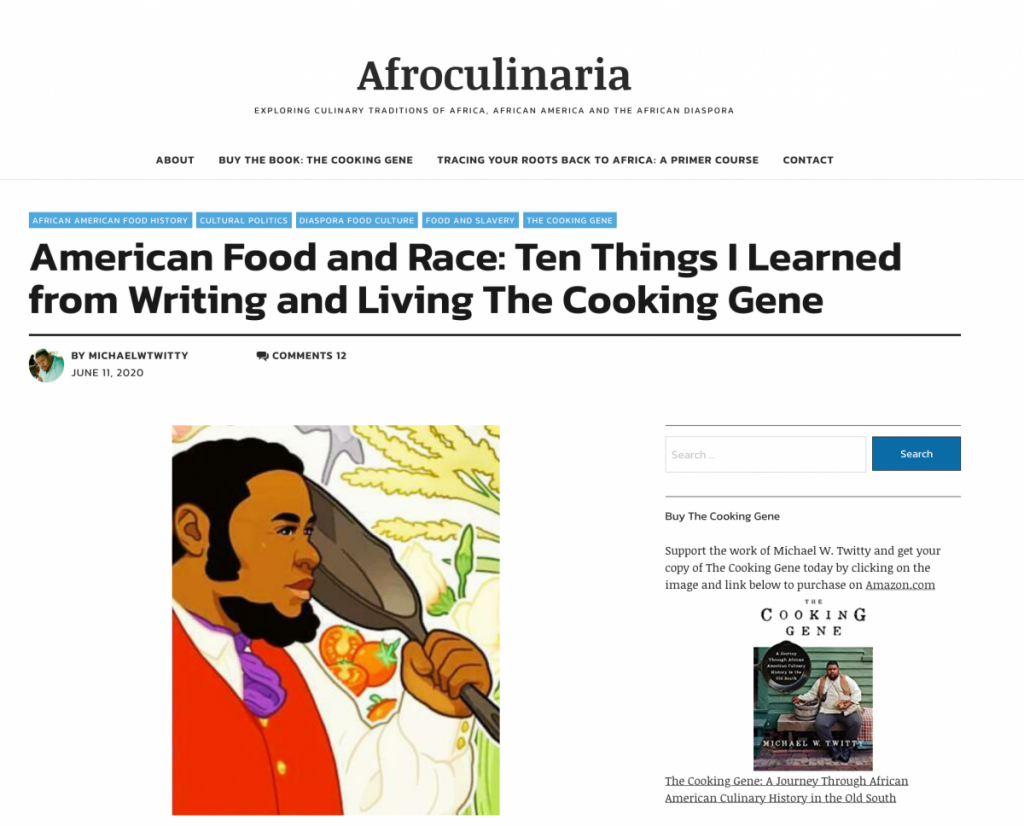
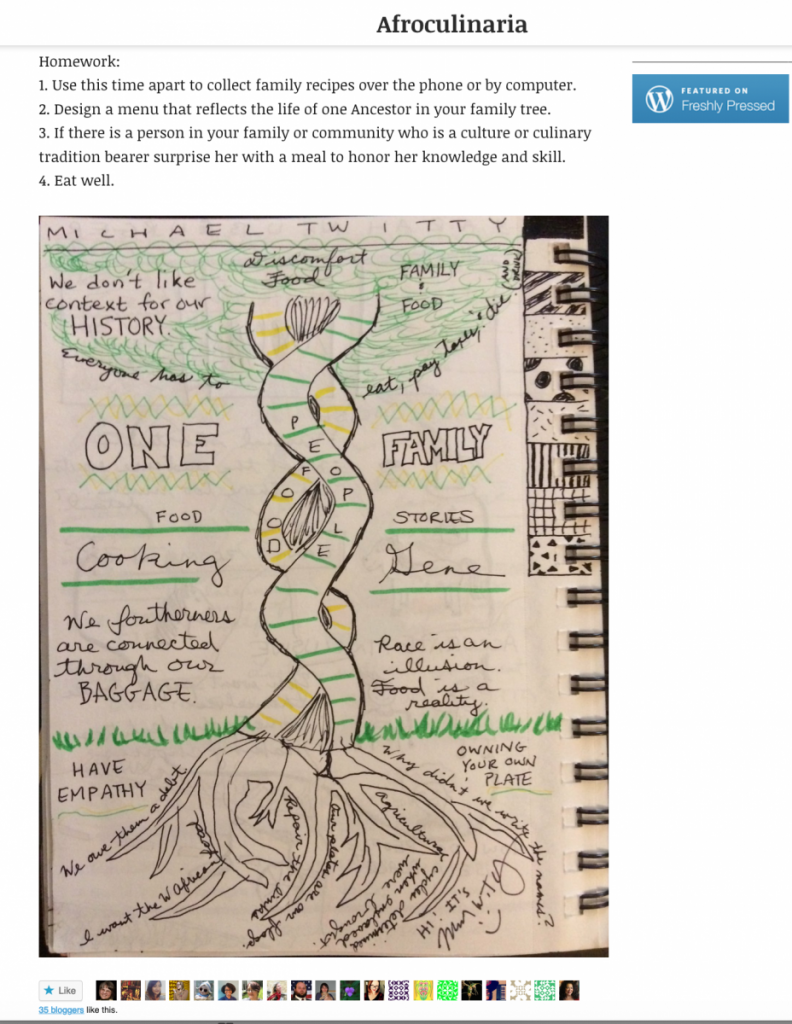
Food Media is a rapidly emerging field of study that reflects the role of media, food and the relationships between them on an over-heated planet earth. For background and context follow this link to Food Media resources provided fall quarter. For an introduction to food and popular culture, including chapters on film and speculative fiction see Bite Me by NYU Food Studies Professor, Fabio Parasecoli (an Ebook is available through our campus library). For an award winning food justice chef’s use of multiple media see the work of Michael Twitty. In his June 11, 2020 blog post on Afroculinaria Michael Twitty reflects on what he learned from “writing and living The Cooking Gene.” Please browse those ten things (pasted below). He concludes his post with homework for engaging with his book in a pandemic world focused on the Movement for Black Lives. Why do you think the following homework is what the author assigned to readers of his website after he reflected on the dystopian world of his book’s success? Like his book, Twitty’s WordPress website, Afroculinaria, is award-winning. What about the Afroculinaria website inspires you to explore through the medium of your own WordPress website?
Checklist for Winter Quarter Posts:
- Preparatory: Browse/watch websites and films; submit your film assignment through Canvas
- Browse each week’s Tasting Lab and any readings.
- Create a WordPress website during the program’s media workshop using the Evergreen Baskerville Collab Alpha Sort theme and create your first post: #1 Wine.
- Add a COMMENT to the STUDENT URLs post that includes your name and the URL for your wordpress.evergreen website. NOTE: Posting your name and URL to the COMMENTs at STUDENT URLs is the ONLY way we’ll be able to find your work!
- Assemble all the required materials and set up your remote laboratory. (Will you be working solo or with a COVID-safe pod?)
- Have a cell phone, laptop, or camera available (check out CARES $ plus media services support) to document your work and post photos with captions and credits to your website.
- Post completed weekly tasting forms to your website.
- Craft your own foodoir–a narrative about your own self in relation to food and the taste of place–by reading, annotating, and responding to the “blueprint” of Micheal Twitty’s The Cooking Gene or the foodoir of your choice from the list provided.
- Add highlights from your learning regarding each component of the program each fortnight for the corresponding case study.
January 6, 2021 at 6:05 pm
Dylan:
https://wordpress.evergreen.edu/wintertastingbydylan/