Food Lab with CTA Stephen Garfield
Turkey Chili & The Thurston County Food Bank
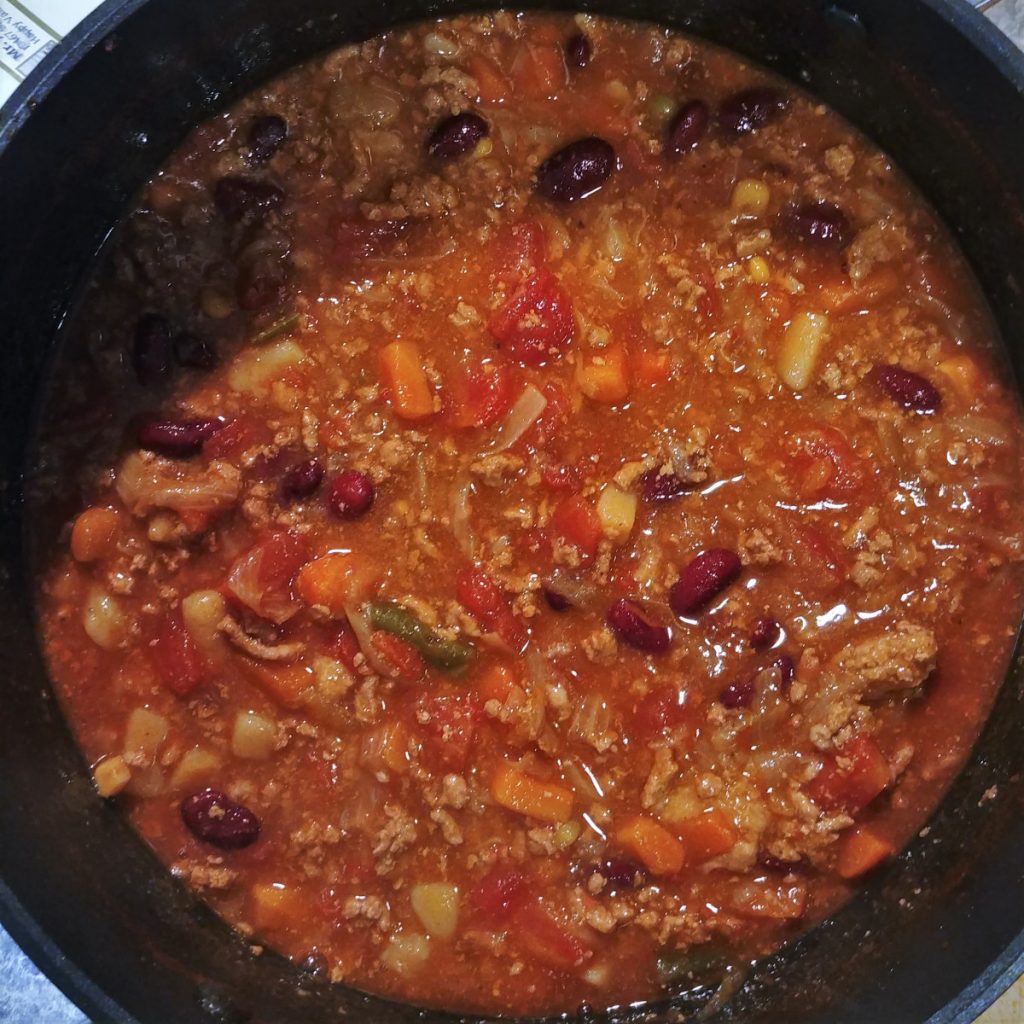
As mentioned above, this week our cooking lab will also be part of the Pandemic Academy. I visited the Thurston County Food Bank (downtown Olympia location) multiple times, and used many of the ingredients to come up with a relatively easy recipe to make at home.
Though it does contain a fair amount of meat–ground turkey–as with many of the ingredients in chili, this can be swapped out easily, or left out entirely. Hint: I’ve had lots of success making chili with chickpeas and roasted mushroom stock!
The themes of the food lab this week combine many aspects of our learning this quarter. Obviously, the work with the Food Bank and the Pandemic Academy ties together the ongoing participation in those Tuesday afternoon sessions with local responses to the COVID-19 pandemic.
In addition, despite the fact that this week I’m not working with an Heirloom Kitchen recipe, the background of chili serves as a perfect example of how a dish can tell a complex social and historical story about identity, movement, resources, economic status, and more.
For a thorough overview of the background of what we know today as chili and/or chili con carne, check out this long form article from TexasMonthly.
In short, though there are several theories as to the provenance of chili, the epicenter generally falls in San Antonio, Texas, around the middle of the 19th century. There was a lot of political turmoil in the region at this time (remember the Alamo, anyone?), and lots of cultural groups vying for elbow room in a growing city.
One common thread through most versions of this dish’s history is the presence of the “chili queens,” Mexican women who served chili and other foods from stands and ad hoc restaurants.
The basis for modern chili appears to lie in an amalgamation of relatively affordable ingredients, thrown in a pot and cooked for a whole family. This is the case with many dishes we are familiar with today–they began as peasant food, made by those with little means, who had to get creative at times to make those humble ingredients palatable.
Eventually, the oral recipes become tradition, and become known to those at higher socio-economic stations, who then go on to popularize the food as trendy. Think polenta, or broken-rice congee; foods that were once the staples of peasants that now appear on trendy, upscale menus alongside a $120 côte de boeuf.
Last week, we discussed the contrasting approaches to caution we’ve witnessed while gathering food. Any trip to the store lays bare this discrepancy: there will be people properly distancing, following the one way arrows in grocery aisles, conscientiously masked-up. And then there are those who don’t.
In chapter nine of Shark’s Fin and Sichuan Pepper, “Sickness Enters through the Mouth,” Dunlop discusses gong kuai, or the “public chopsticks” seen as a precaution against infection while eating:
“The host would say something ostentatious about the need for gong kuai, and invite everyone to use them, and then we would all talk about how important it was to be hygienic under the circumstances…[but] it just felt too artificial, and before long they were left forlornly at the side of the plates, and we all carried on helping ourselves and eating as normal.”
DUNLOP, PG. 166
In my experience my visits to the Food Bank have been among the most strictly disciplined in terms of a distanced and cautious approach to procuring food. The entire system for giving out food was overhauled, only a certain few are allowed in at any given time, and the line outside is demarcated, allowing six feet between customers.
Here lies the rub. Or, I guess, this week’s Food Lab Response Prompt:
- What are your thoughts on the effects of privilege on caution?
- And/or: who do you think might be the demographic groups least likely to practice strict social-distancing guidelines, and why?
Ingredients for Turkey Chili:
2 large yellow onions + 2 tbsp cooking oil, caramelized
2 tbsp extra-virgin olive oil
1/2 tsp red chili flake
1/4 tsp cinnamon
1/2 tsp freshly ground black pepper
1 tsp cumin
1 tsp coriander
1/2 tsp paprika
1/4 tsp ground Pasilla chili powder
1/2 tsp ground California chili powder
2 cloves garlic, minced fine
1 tbsp tomato paste
1 15-oz. can mixed vegetables
3 15-oz. can kidney beans
1 28-oz. can diced tomatoes
About 3-4 cups vegetable stock
2 slices plain white bread, torn into small pieces, for thickening
Leave a Reply