Food Lab with CTA Stephen Garfield
Pelmeni, New Year Dumplings, and the “Other”
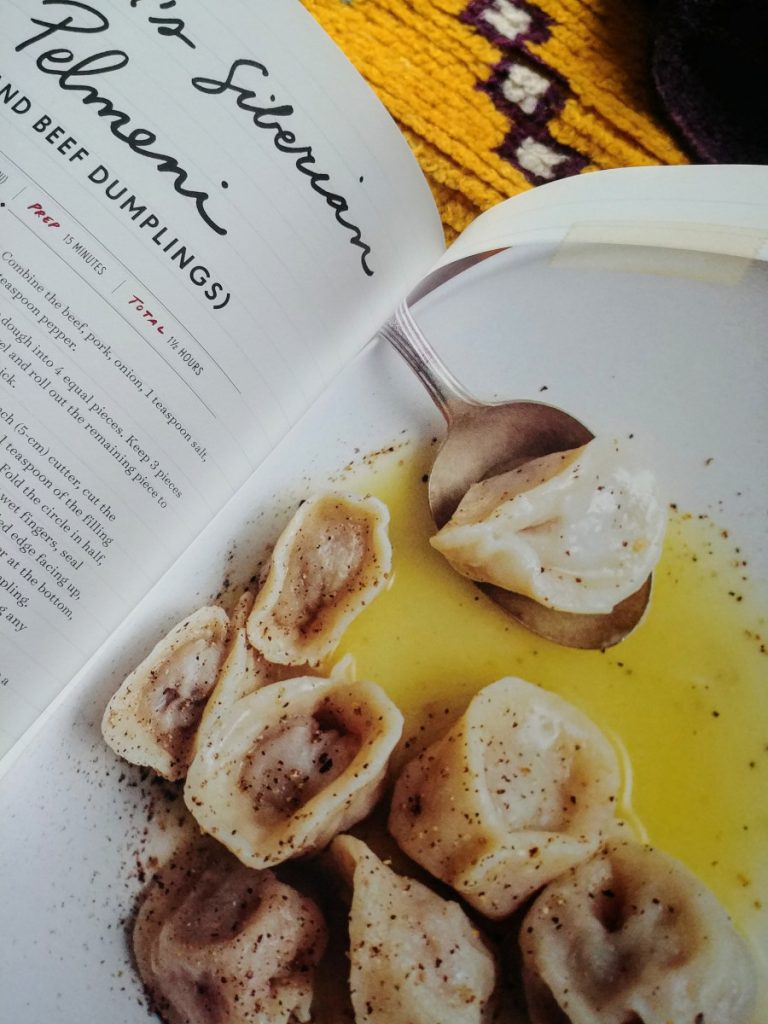
*After last week’s bean overload, I’ve been convinced by my rational other half that maaayyyyybe I should cut these recipes in half, considering they make a total of 150 dumplings. Little dumplings, yes, but that still might be too many for two people–especially when we’re still trying to make our way through the gallon of beans.*
What does it mean to be foreign? To be intersectional? How do we see and acknowledge difference and simultaneously see and acknowledge similarities? Every person on this planet shares something in common with someone else, and has something that sets them apart. We are a network of interlocking and overlapping Venn Diagrams—and in that mess, it can often be difficult to suss out what it all means.
This week, I’d like to make dumplings. What better way to take on difference and similarity than with the form of food so many cultures have in common? And yet in each location, the form shifts and changes—a variegated cacophony of a simple concept: dough, and filling. For week four, we’ll be tackling Tsilia Sorina’s Siberian Pelmeni (46) and Tina Hsia Yao’s Chinese New Year Dumplings. (115)
As we dive into forming these dumplings (remember, imperfection is okay!), try to keep in mind how cultural/traditional difference factor into the discrete techniques. What is different? What is similar? How can the histories of each culture inform these comparisons?
In Tsilia’s introduction, we see how she was “unsure and fearful about life in America,” and yet when she learned she’d have access to many familiar ingredients, she felt relief that “the family table would remain comfortingly the same.” (41) Tina Yao put aside much of her identity in the name of working hard to support her family; despite this, her “true identity manifests in her cooking.” (113) How does each woman’s individual background inform these recipes, and how does their presence in the U.S. affect these factors? How and why is identity enacted in the kitchen?
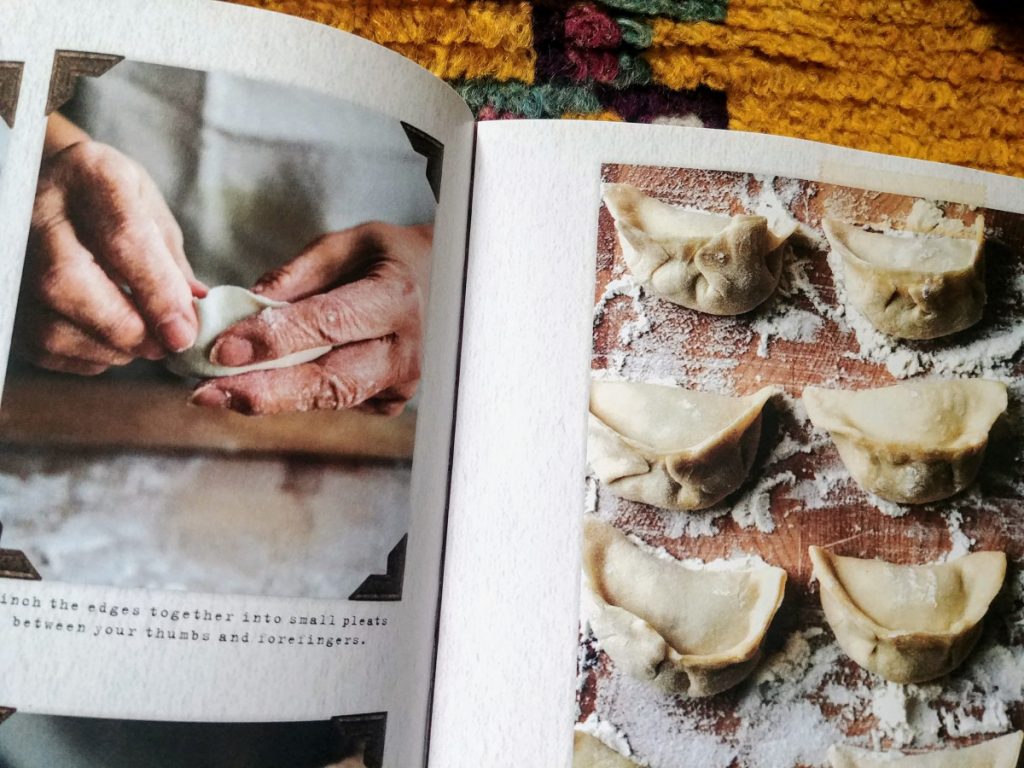
Reading: 41 & 46-47, 112-113 & 115
Response Prompt:
- We all have a “native cuisine,” meaning a set of dishes that either corresponds with our ethnic backgrounds or that we simply identify with most. Identify one of these dishes that you know was adopted from another cuisine, OR, that you have seen adopted by other cuisines. Is it a good thing to prepare another culture’s traditional dishes, or is it appropriation?
Ingredients for Pelmeni:
3 cups (375 g) all-purpose flour, plus more for rolling
Coarse salt
1 large egg
1/2 lb 90% lean ground beef
1/2 lb ground pork
1 small onion, finely chopped
Freshly ground black pepper
Unsalted butter, melted
White vinegar
Ingredients for Chinese New Year Dumplings:
For the dough:
4 cups (500 g) all-purpose flour, plus more for dusting
1 cup warm water
For the filling:
1 head Napa cabbage
1 lb ground pork
1/4 cup (60 g) minced soft tofu
2 tbsp minced ginger
2 scallions, thinly sliced
1 tbsp soy sauce, plus more for serving
2 tbsp white wine
For serving:
Soy sauce
Hot chili oil*
Leave a Reply