
I’ve known for quite a while that I’d be working with bread this week, but it wasn’t until just a few days ago that I officially decided on what to do.
I knew I wanted it to be a flatbread, preferably the Uyghur Nan we hear so much about from Fuschia Dunlop. I also really wanted to try my hand at making doughnuts, as I’d never done anything like it before, and I thought it’d be a fun way to work with bread, and really flex the versatility of dough.
However, due to the onset of the COVID-19 grocery store shortages, I hadn’t so much as laid eyes on a packet of yeast in weeks. Of course, both the Uyghur Nan recipes I had found and the doughnuts I wanted to make had yeast in them–which is why I held off for as long as possible to decide on this week’s cooking activities, in the hope that yeast would magically find its way into my waiting arms.
And magically appear it did, as a family member was able to mail some of their back stock to us. Dreams really do come true!
And so it came to be that for week seven, I kneaded and rested and cut and rolled my way to a beautiful batch of homemade doughnuts, and a small pile of the flatbread I had read so much about. The recipes this week aren’t from Heirloom Kitchen. I found the Uyghur Nan (spelled Uighur on their site) at Food 52, and pulled the yeasted doughnut recipe from a copy of Cook’s Illustrated that I had on hand.
Enjoy!
Due to the nature of both of these projects, and the very real power of my own sweet tooth, the emphasis is definitely on the doughnuts. It’s just that it’s much more of an engaged project, whereas the nan was pretty straightforward: mix, rest, mix, knead, rest, roll, bake, done.
On the other hand, the doughnuts required kneading and resting and rolling and cutting and resting and frying and glazing. That being said, the process was actually much easier than I expected it to be. I expect the next time we make them will be even easier, as the second (and so on) time making a recipe is almost always much more streamlined.
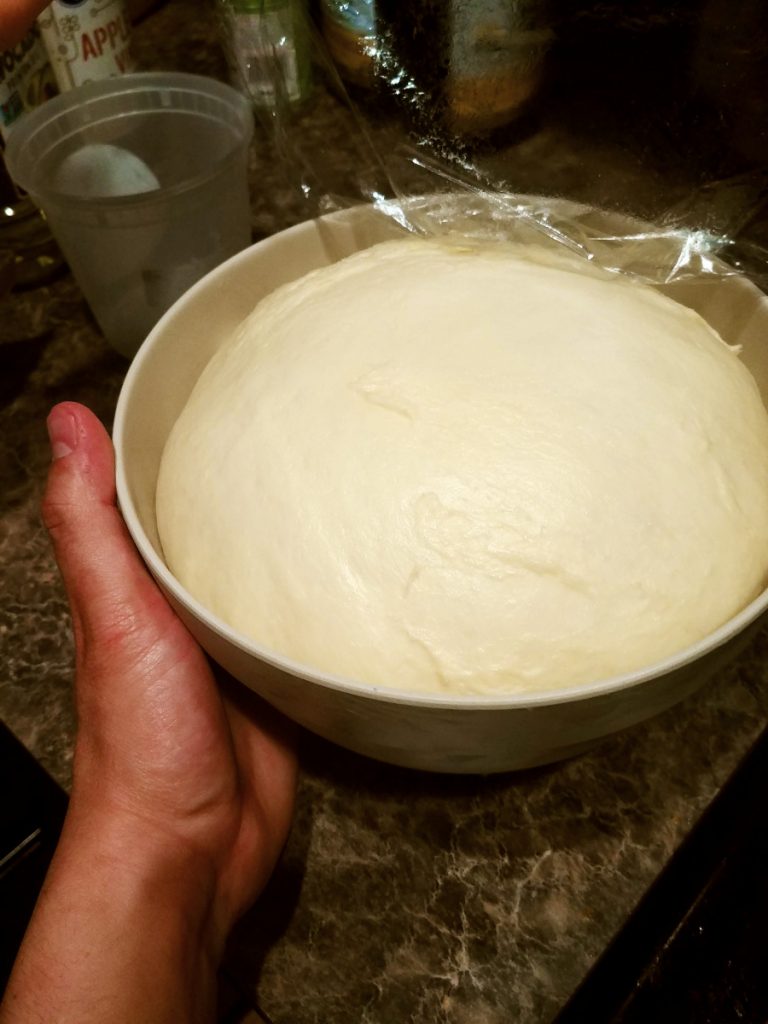
After the initial mixing process, and its first proving stage (where the yeast activates in the dough, feeding and releasing CO2 that expands within gluten pockets), the dough can sit overnight, and be rolled out and cut in the morning.
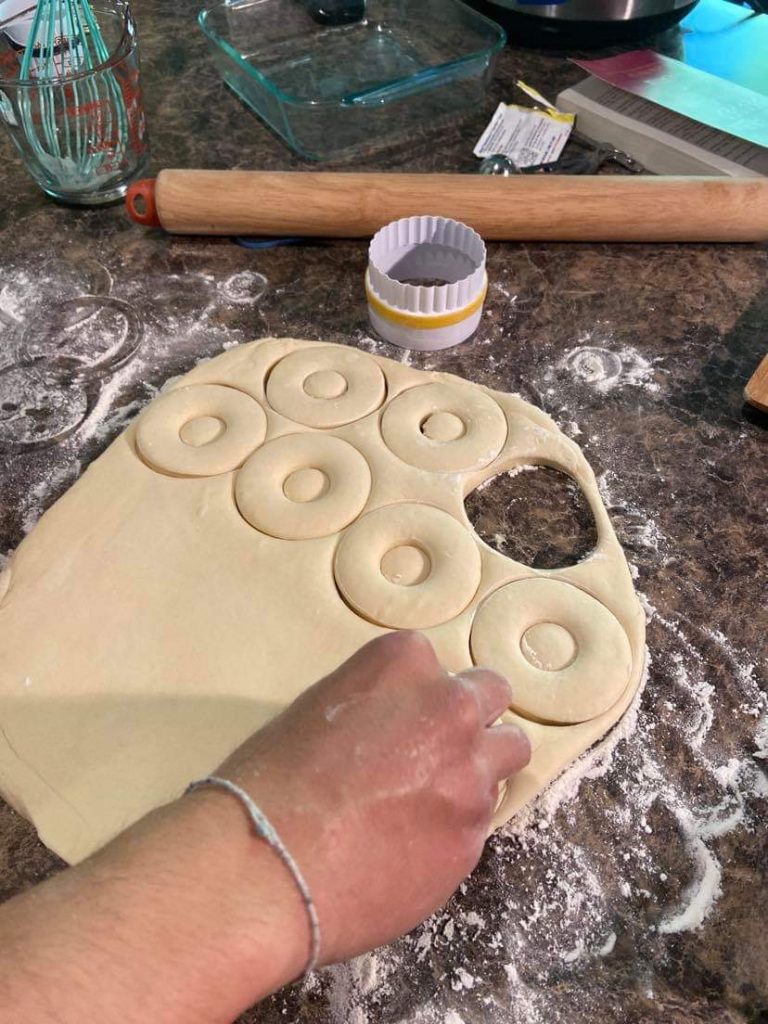
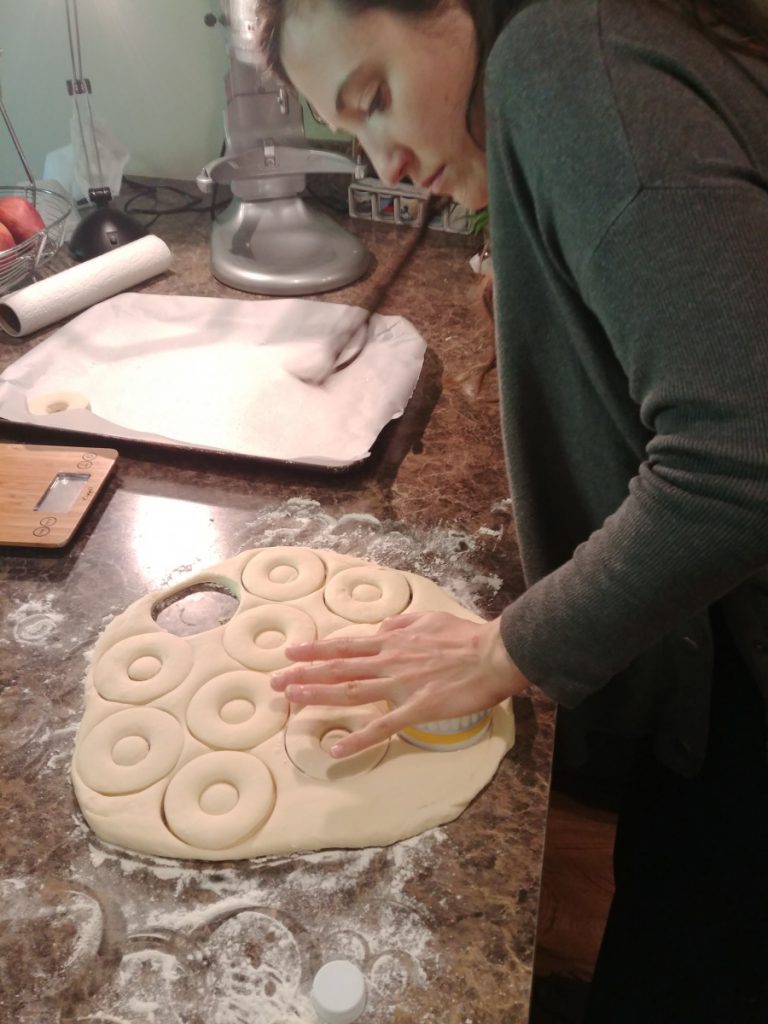
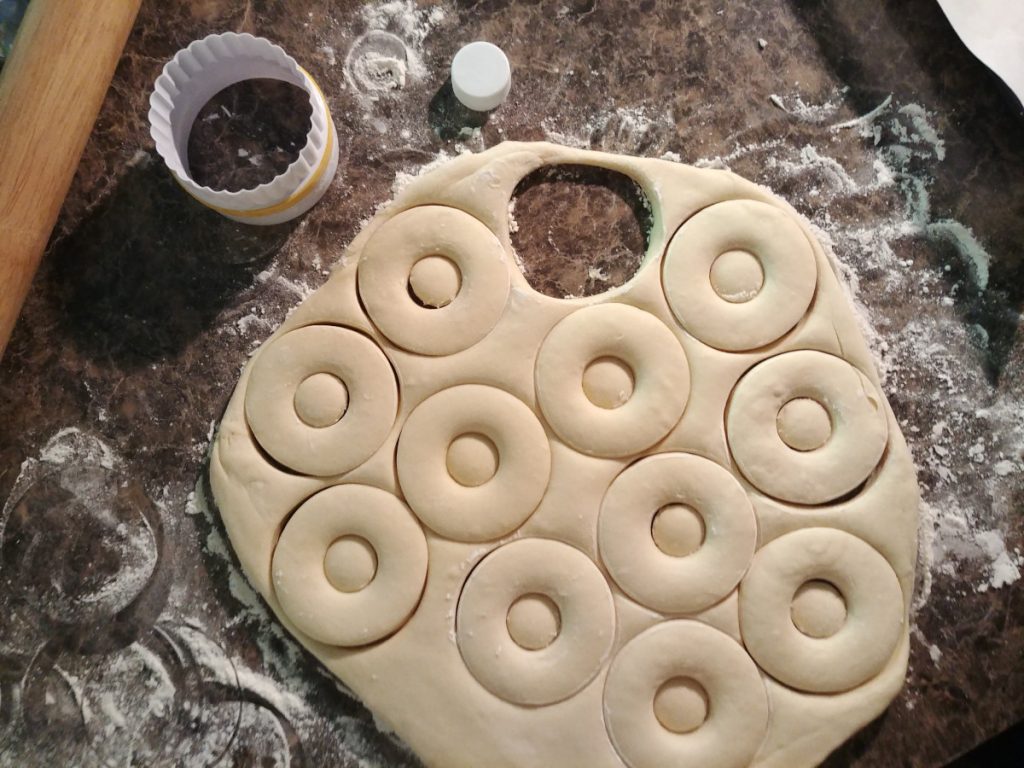
Once cut, the dough rests again in its cute lil’ shapes, until it’s risen significantly…can you see the difference?
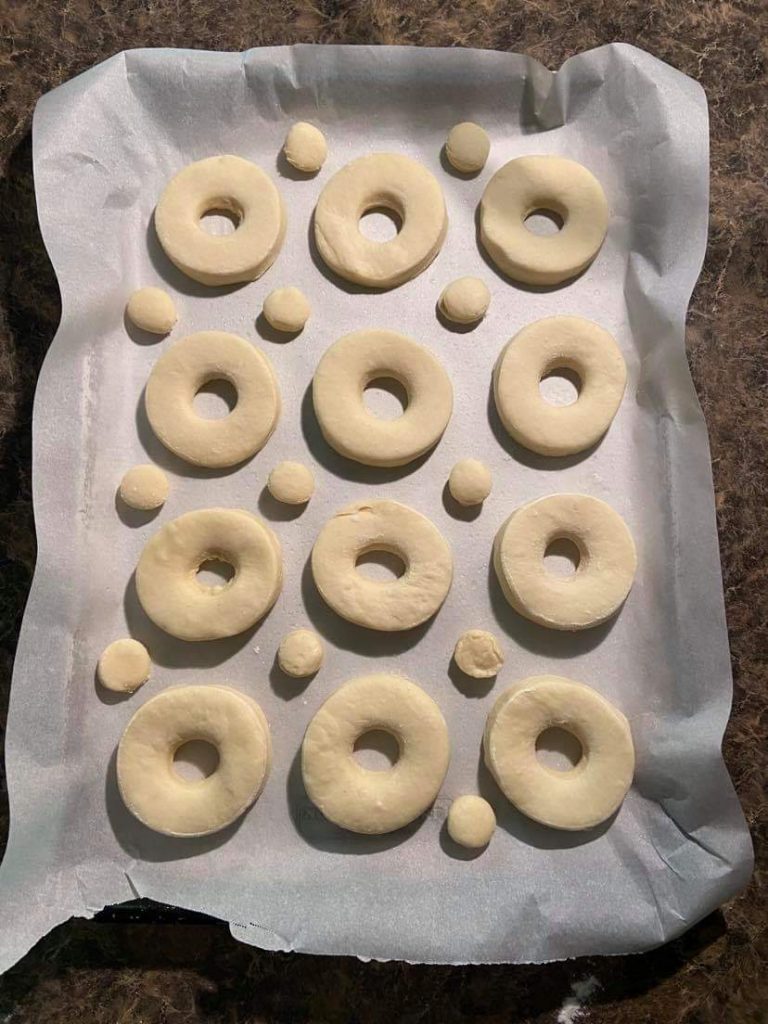
Before… 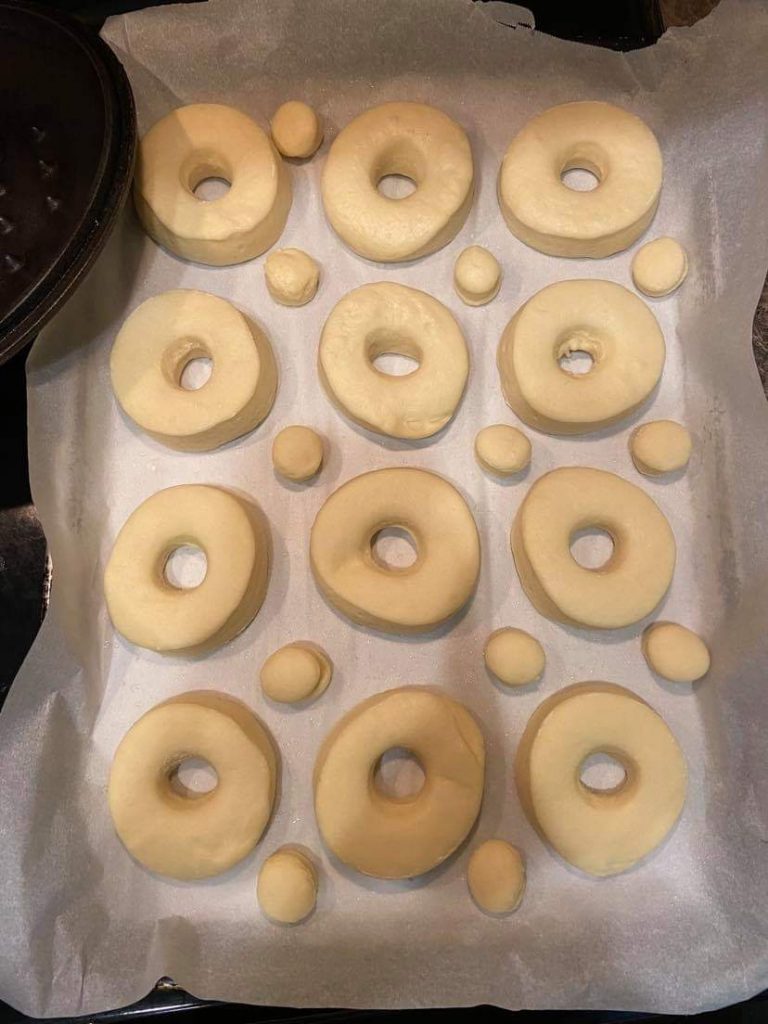
…and after.
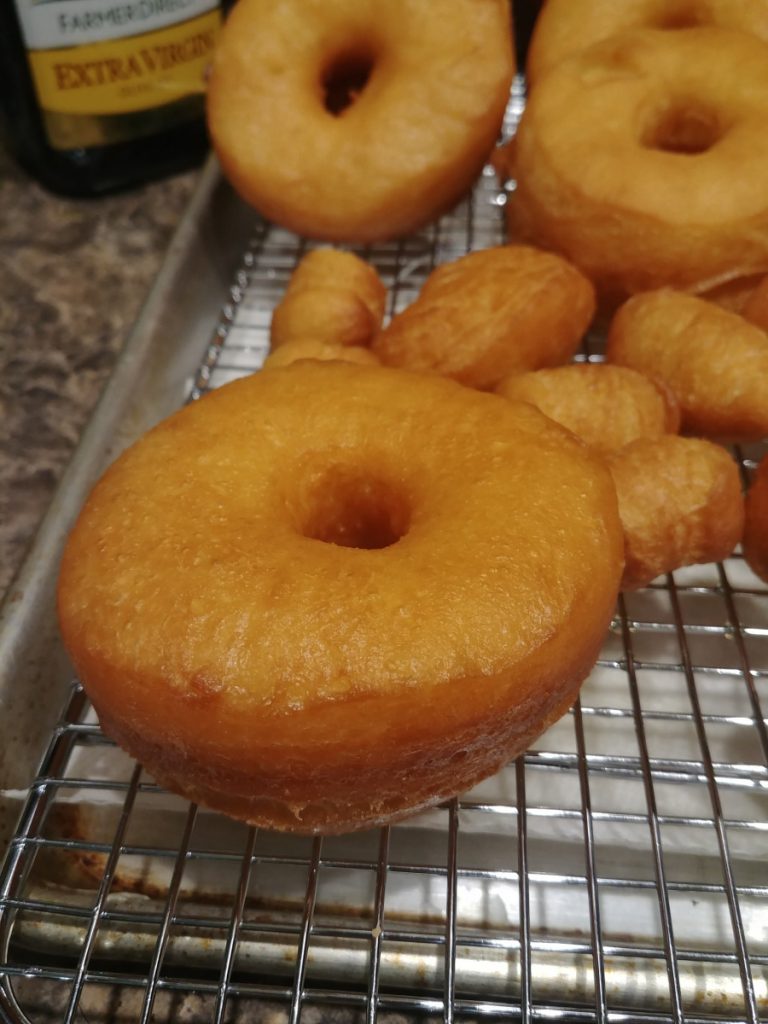
Then the frying, which, with the use of a cast-iron dutch oven, is actually much easier and less messy than you’d think. The temperature for the first few was a bit too high, resulting in doughnuts that looked and tasted a little dark. So I took the dutch oven off the burner for several minutes to cool down. The air pockets in the dough also expand somewhat from the heat in the oil, meaning with a lower temperature and slower cook time, the dough has more of a chance to expand to its lovely fluffy consistency before the outside gets too dark.
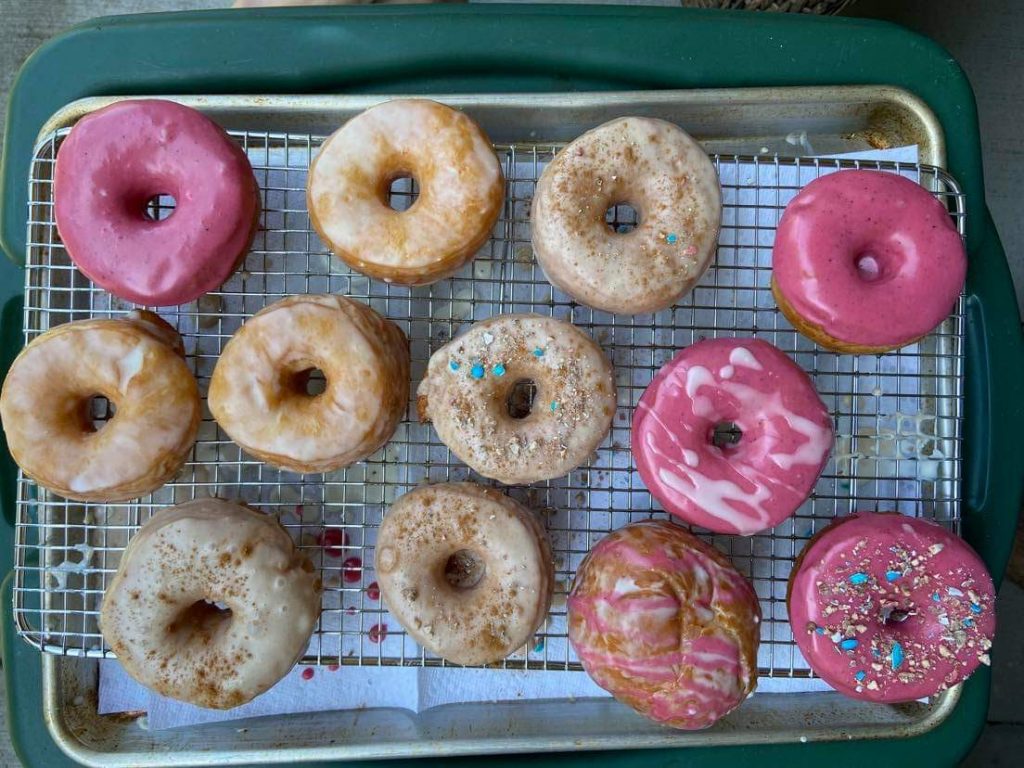
Of course, the glazes and decorations can in some ways be the most important part, so we put a fair amount of work into developing the perfectly textured and flavored glazes we ended up using: honey lemon, raspberry cardamom, and an horchata glaze we made using almond and vanilla extracts and cinnamon. Some crushed up Robin’s Eggs (candy coated, chocolate-covered malt balls) for a sprinkly topping, and our home doughnut shop was officially in business.
There was much less to the Uyghur Nan process, and I unfortunately didn’t capture many photos of what was ultimately pretty straightforward. I will note however that the flatbread is something that can be eaten any time of day, packed in a bag and taken on a hike, and topped with nigh-infinite combinations of things. Antoinette and I basically used them as plates, piling them high with marinated pork slices, a sharp, vinegary salad, and some homemade tzatziki. Our full-bellied smiles were just as big eating this as when we first sank our teeth into the more flashy doughnuts.
I do think making these two particular iterations of “bread” serve to illustrate the breadth (hah!) of potential inherent in the simple combination of flour and water (and sometimes, yeast!).
There is so much information out there about the history of bread making, and it can be overwhelming. But I highly recommend looking into yeast in particular. We forget that for most of human history, bread was all “sourdough,” made with the assistance of the living yeasts floating around in the air. A mutual creation from both human ingenuity and nature’s own magic.
Leave a Reply