
by Stephen Garfield
I began drinking coffee in earnest when I first started working in a kitchen, which, auspiciously, was when I started cooking. I didn’t particularly enjoy either one. Coffee was the key to slinging heavy garbage bags into the dumpster with any kind of vigor at 2 AM on a school night, and cooking was the key to earning enough money to pay for all the gas I used up cruising around our tiny island. I drank cup after cup after cup, year after year after year, and what at first felt like a necessary task became a pleasurable experience. Now, I go out of my way to only buy my favorite coffee, and I relish each sip, trying my best to use every sensation at my disposal to appreciate the experience. I developed the ability to appreciate on my own—or so I believed for a long time.
Now, this certainty has faded into…let’s say an awareness.
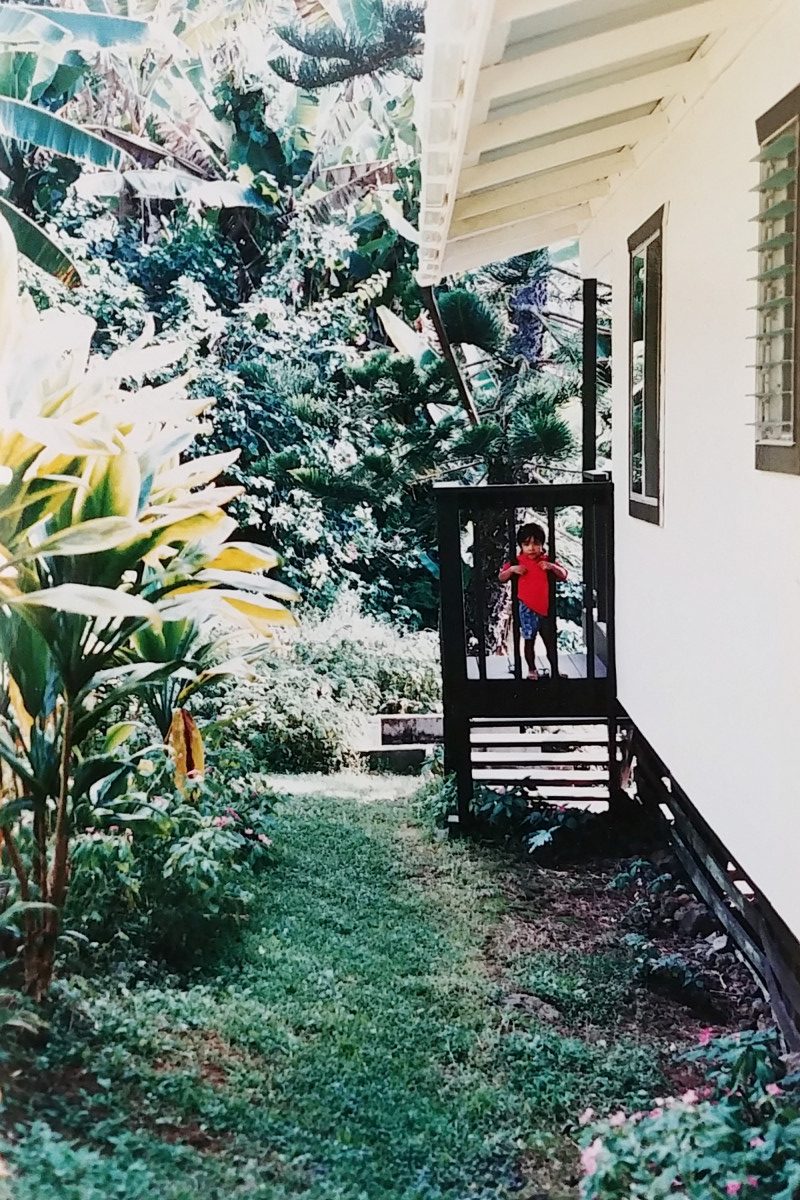
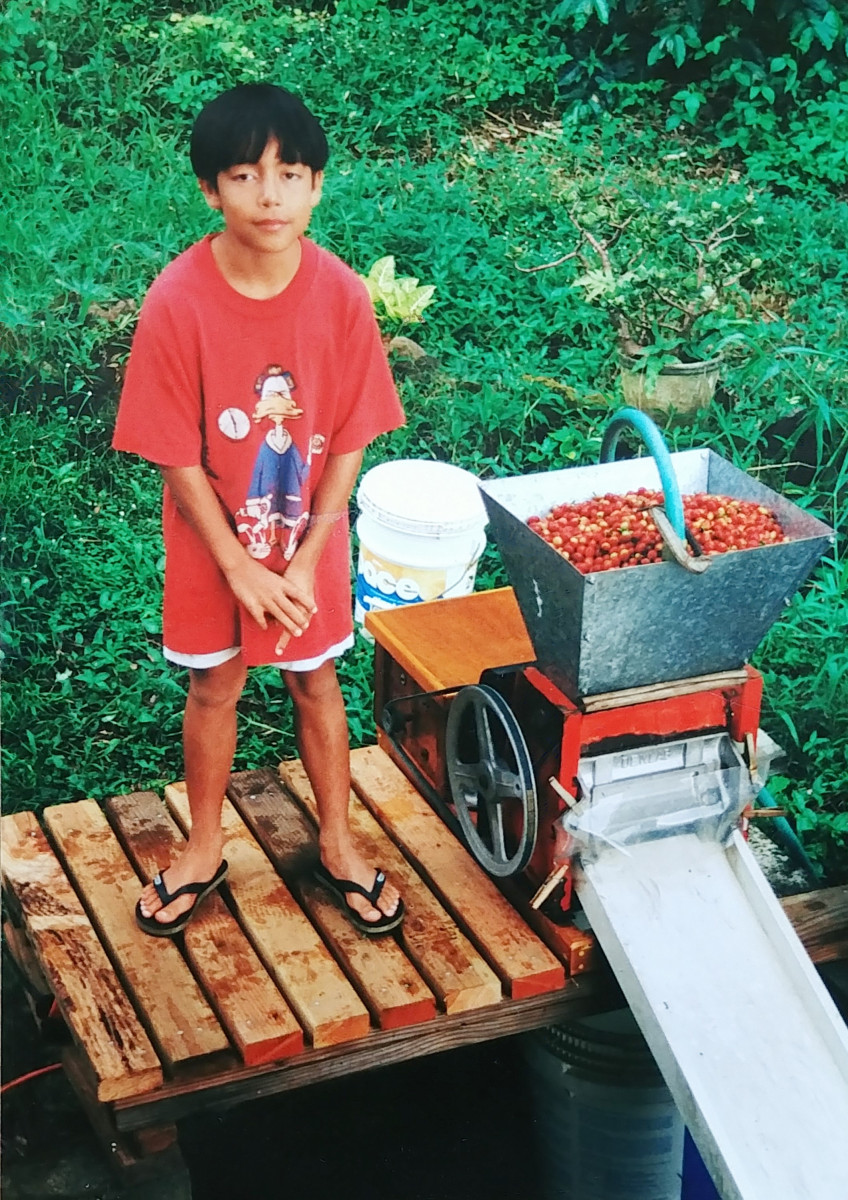
Between the ages of two and eleven I lived on the Big Island of Hawai’i, up the mountain from a small town called Honaunau, overlooking Kealakekua Bay. My father developed and operated a very small coffee farm, which he named after me: ‘Ano’i Farm. I grew up surrounded by coffee, but never drank it at that age, so I assumed that my preference for it didn’t come from childhood. I have always longed for the ability go back in time and appreciate a cup of my father’s homegrown product. And yet, though I may not have tasted the coffee as I could now, my very being was steeped deeply in the flavor of it.
Because taste is a sense; flavor is a sensation.
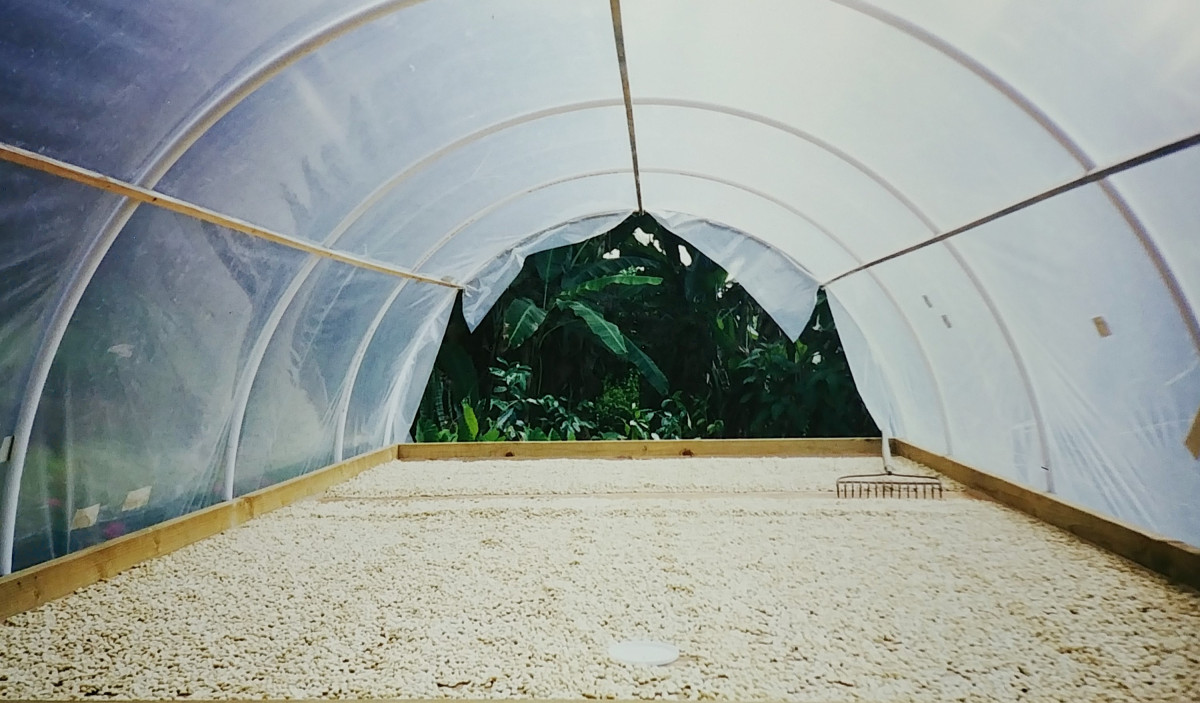
I can recall with the utmost clarity the feeling of freshly pulped beans, soaking slimy in buckets of water, the smell of those same beans drying in the sun on our huge homemade table, the sound of the parchment flaking off as we husked the dried beans, and the aromas of burlap bags and roasting rooms.
Similarly, though I never cooked as a child, I know that my mother would spend all day preparing recipes she had carried over in her mind and in her heart from another set of islands thousands of miles away, distant in geography and even more immeasurably so in culture. The smell of shrimp paste and dried cuttlefish, the horrifying appearance on my plate of chicken feet and fish eyes—these were not things I saw on TV ads: foods that beckoned with the allure of popularity. It took years for me to develop an affinity for these foods. But back then, they would be prepared and often brought to Filipino gatherings in which the tables overflowed with foreign bounties, and I would observe in wonder as the women seemed to shout at each other with words I couldn’t understand, crying and laughing in the same breaths.
At the time, I never asked for coffee. I certainly never asked for fish’s eyes, for which my mother never tired of ribbing me. She had spent her entire life in the Philippines—where they’ll fight over the eyes—prior to giving birth to me, and yet her one child only wanted chocolate milk, mac and cheese, hot dogs, and cake. On very special occasions, I might even get all three at the same time. Despite all of my heroic, thick-headed childhood efforts to avoid the tastes all around me, I am more beholden to them than I ever liked to think.
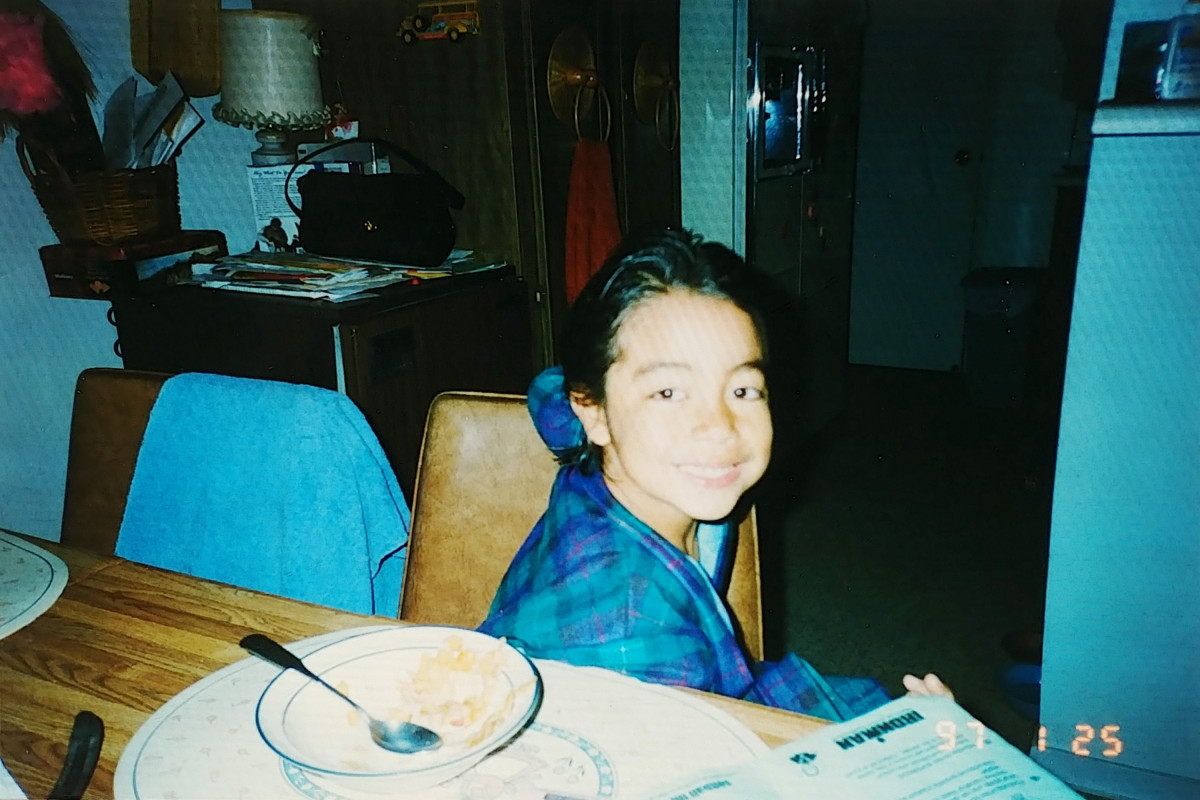
I turned fifteen, and lost my mother to cancer. I turned sixteen, acquired the ability to drive and with it the independence to be away from home as much as I wished. Shortly after this, drinking coffee became part of my daily routine, and I started working in a kitchen. Fourteen years later, I have come to realize that what I had seen as leaps away from my past were really first steps in my long journey back to the tastes and experiences that still sometimes flash vivid in my mind.
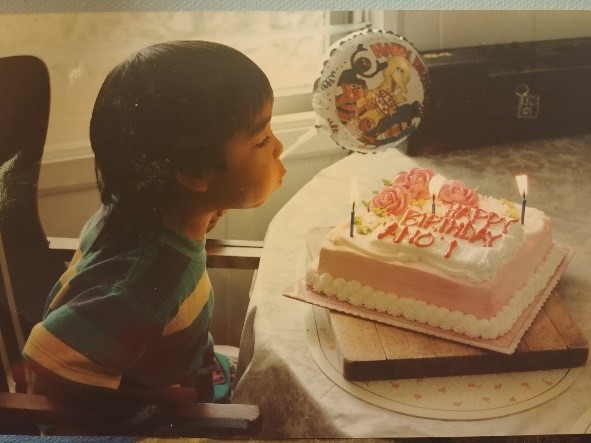
Because I didn’t develop my love for coffee on my own, and neither did my ability nor appreciation for cooking (and inherently, eating) spring forth immaculately from the recesses of my virgin mind. I’ve found that satiety comes not from a tearing apart but a coming together. I’m not satisfied eating a meal alone; not when all the turbulent emotions involved with the preparation and eating of a meal could be shared. I have seen the power of commensality—I’ve shed tears over a meal, communicated successfully, not with words, but with soft smiles and satisfied pats of bellies.
I believe I can continue the journey back to understanding the tastes of my childhood through the study of food beyond the hot line of a commercial kitchen. I’m looking forward to learning from the members of my community from whom I’ve fled much of my life. I’m looking forward to ingesting the same food that has passed through the bodies of my ancestors for generations past, and learning just how these foods serve to build and strengthen a community that thrives in pockets around the globe. The ability to conduct research, to eat new foods, and learn what is, in a way, my own history is a privilege for which I will never cease to be grateful.
___________________________
“Stephen, how would you compare coconut aminos to soy sauce?”
Great question, Martha. Oh boy. Is my professor asking me to describe a flavor? I’m terrible at this! Think!
I pondered for a second, standing there in the Sustainable Agriculture Lab (SAL) as we prepared to put on one of our weekly cooking labs. I was about to teach my vegan “lentil meatball” recipes to classmates in an academic setting—I’d never done anything like it before. I was nervous, but I also knew that I had spent days with these recipes. I had fine-tuned, deleted, sprinkled, smeared, burned, balled, dropped, zested, picked, plucked, and peppered my way to what I thought would be functional—and, hopefully, palatable—vegan versions of the meatballs the other tables would be making that day. I tasted, tested, and tasted again until I finally had presentable Greek, Italian, and Chinese versions of the lentil-based, falafel-esque balls.
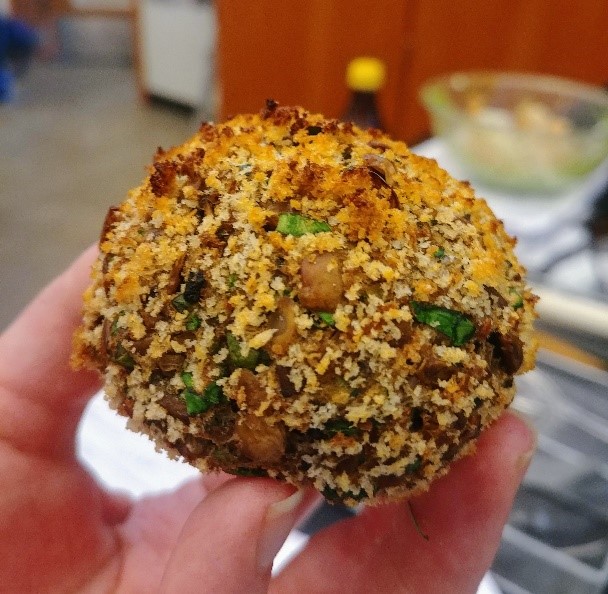
Fortunately, I have done so much work with so many different foods that I wasn’t starting this development process from scratch. I can taste lack, and I can taste excess, and I’ve built an embodied knowledge that whispers to me while I scratch my head wondering what to toss in to really tie it all together (pro tip: it’s probably lemon zest).
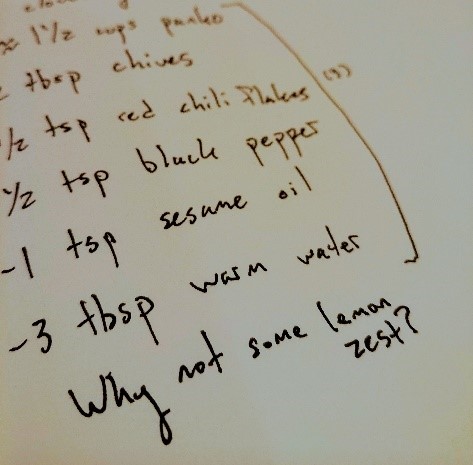
So really, despite my deep-seated reflex to say, “I don’t know,” it didn’t take much more than a pondered second to answer Martha:
“I’d say, coconut aminos are definitely much less of a salty, umami-ey punch in the mouth than soy sauce—and a little bit sweeter, too. If we’re talking about cooking it into something, though, it can basically serve the same function. The average eater probably won’t pick up that you substituted the soy sauce for coconut aminos, although you might want to add a dash more salt to the recipe than you otherwise might have.”
And there it was, like that, a jolt from the blue: maybe, just maybe, I’ve got some of it. That embodied knowledge I’ve heard so much about, what makes grandmothers able to decipher Spartan ingredient lists and turn them into sybaritic feasts. The fluid and rhythmic dance that seems to summon dishes from my fingertips; clearing my mind, lulling it into a trusting vegetative state, only to come alive again when someone takes an eager bite and says, “wow.”
Think less.
___________________________
Let’s talk about funk. Not like the emotional state I sink into when the rain hasn’t let up for three months, nor the Rick James, Curtis Mayfield, and Chaka Khan brand of danceable, elastic beats. I’m talking about funk—that strange, rich, sharp, musty, undefined, and usually fermented flavor that is either detested or adored the world over. It might be bright and tangy, like sauerkraut, or it might be deep and earthy, like the aroma of grated truffles. The United States has typically fallen on the “Oh, yuck! What is that!?” side of the funk chasm (aside from our intimate relationship with alcohol). However, recently we have been playing catch-up with much of the rest of the world, as we as a popular food culture have discovered “new” foods like kombucha, fermented hot sauces, or even funkier versions of familiar ferments, as in the proliferation of “farmhouse” ales and saisons.
I bring all of this up because as I reflect on the last academic quarter of eating, and try to recall which eating experiences have been my favorites, I keep coming back to the flavor profiles and dishes that appear under that dank umbrella that is funk.
In the second lab of the quarter, I faced a dilemma. Emily and Gillian of Wildflower Baking had come up from Portland for the Cascadia Grains Conference, and had graciously agreed to give an enlightening presentation on the nature, quirks, and benefits of baking with and growing alternative grains and flours. Their presentation was both engaging and deeply informative—and yet, I was having trouble focusing. How could I, when just inches away from my notebook was a plateful of cookies? And not just any cookies, but ones that bore alluring nametags like “toasted rye,” “spelt,” or “buckwheat.” I had gone into the day knowing we would be making chocolate and buckwheat brownies, but what I was really curious about was what buckwheat tasted like. I didn’t think I’d be able to taste much aside from chocolate in the brownies (I was right), but here in front of me, in this array of differently-floured cookies, I had the chance to not only eat cookies (one of my favorite pastimes) but to actually taste a side-by-side comparison of flours.
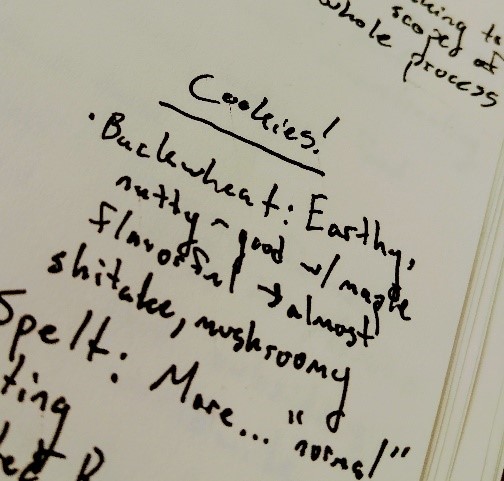
I gave in and directed my attention to the plate. I chose the regular flour one first, of course, as this was a scientific cookie-eating experience, and I needed a control. Then, the buckwheat. Whoa, what was that? I took another bite: slowly, rocking the cookie bits from side to side in my mouth, paying attention to my breath on its way in and on its way out, feeling what set this apart from the regular cookie. It was deep. Earthy…nutty? What does this remind me of? And then it came to me: mushrooms! It reminded me of mushrooms, specifically the sort of big, savory, funky flavor of a shiitake. But, I liked it. A lot. It turned out to be my favorite of the bunch, and the eating experience that stood out to me most from that day.
But, why?
___________________________
Fast-forward a week, and instead of eating cookies and smoothing pans of brownie batter, we’re slapping small ovals of pasta dough repeatedly on the counter until they stretch—amazingly—to arm’s length “belts.” The leader in this little exercise, prior to showing us how to make these belt noodles, had said, “Now we’ll make the Chinese noodles. Much more simple than Italian pasta.” Really? I had always thought of Chinese cuisine as being much more complicated than your basic cacio e pepe. I had just read a book that discussed at length the intricate, consciously-applied complexities of high Chinese cuisine, which told stories upon stories of Chinese art, culture, and history with each bite. Simpler than linguine? We’ll see.
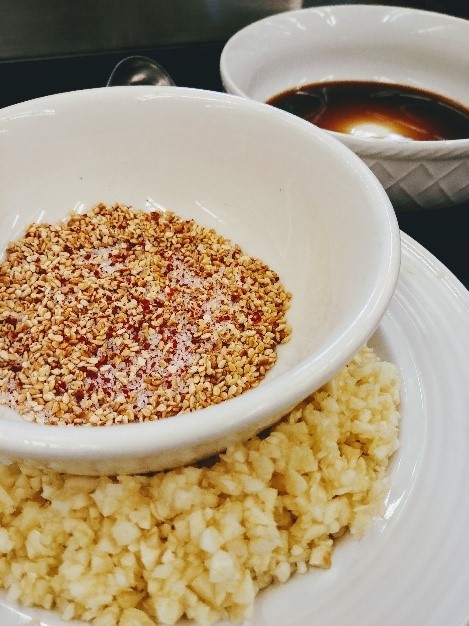
Of course, she was right. It was shockingly easy, in fact. And once the noodles were cooked, the procedure for making the sauce was also shockingly easy. Not much more complicated than just throwing it all in a bowl. Simplicity all throughout. Then, eager to see how my particular belt had turned out, I took my first bite, and forgot about the noodle entirely. Whoa. I looked over the ingredients again—garlic, chili powder, sesame, soy sauce, vinegar. I knew these flavors, and I knew them well. The flavor profile of what I cook at home is almost entirely drawn from this list, to the point that I’m almost certain my partner must be sick of it. But, what was I tasting? This was on another level; something was standing out, making this bowl of simplicity a blindsiding, momentous experience. I looked over the ingredients a third time, and hit on why this bite might prove to be unforgettable. This was my first time tasting Zhenjiang vinegar, a condiment that in its particular production process sets it apart from any other vinegar that I had tried previously.
The complexity of flavor in my little bowl of noodles felt like more than the sum of its parts, as if I had taken a well-known road only to round the final bend and discover a completely unfamiliar destination. It had to be that vinegar. So, I tasted it by itself. I expected that familiar—and beloved—tang and tongue-tightening that always follows a sip of vinegar. Something different, something entirely new confronted my palate instead. It was thick, almost syrupy, with flavor notes cascading one after the other, none of which made me think of vinegar, until at the very end: a suggestion, a whisper of tangy acid. Deep, dark, rich—these were the words that came to mind; and when I squeezed the bottle to get a smell of this magical liquid on its own, raisins. I had fallen in love.
But, why?
___________________________
Moving forward another three weeks, we come to Portland, Oregon and the Culinary Breeding Network’s Variety Showcase. I had three hours to shuffle from table to table, sampling the deliciously inventive dishes served up by combinations of breeders, growers, and chefs—and to try to fit some semblance of conversation in between bites, each seemingly more provocative than the last. It was a tall order. Baroque arrangements of lumpy squashes, arrestingly kaleidoscopic carrots, inexplicably beautiful cabbages, and blue turmeric roots littered the crowded space; a sensory overload from which I had to fight the urge to turn and flee. Instead, I ate, and I talked, my spirit buoyed by the excitement each table had to offer. This continued for the full three hours, and at the end, my head swam trying to sort out the experience.
“Which was your favorite?”
“Did you like one thing the best?”
“Come on, if you had to pick just one…”
I
was asked this over and over, and I struggled to find a response, submitting a
different answer each time. The event sat with me for several days, turning
over in my mind like a washing machine in slow-motion, and still I struggled.
It wasn’t until I was going through the photographs I had taken during the
event—camera in one hand, bag and food in the other, focusing with my little
finger—that one experience in particular crystallized and set as the clear
favorite.
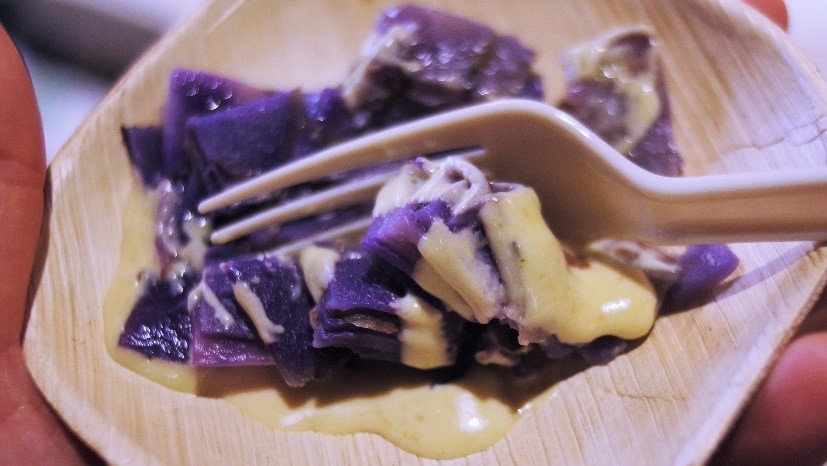
It was a purple potato terrine, layered sliver by sliver with obvious love, adorned with a smooth, off-white, creamy-looking emulsified sauce and topped with a single cured anchovy filet. It was a beautiful thing—both to the eyes and on the tongue. It was texture defined, both in body and taste; silky, slippery, each layer of potato sliding away on its briny sauce like little boats in a harbor. This was the striking image that came to mind as I ate: that of gently rocking sea-faring vessels, redolent of seaweed, fins, and salt. It was earth, with its sweet starchiness, but more than that, it was the sea, somehow crystal clear and briny, fishy, and funky all at once.
As soon as I recalled the experience, I knew that of all the wonderful tastes that day, this was the most transcendent for me, hands-down.
But, why?
___________________________
“I wanted chocolate milk, mac and cheese, hot dogs, and cake.”
Remember that? That was me, and my preferred flavor profile before I ventured out into the uncharted waters of the world of taste. So how could it be that not so many years later, I might instead say, “I want kimchi, fish sauce, and dried squid?” I think the answer to that question lies in my roots, in the flavors I internalized as a child. I am constantly learning—and every second I’m alive, I learn a little more about how much I have yet to learn. Instead of being daunting, it’s encouraging, giving me the motivation I need to always take the next step, because I’ll know that much more about the world around me.
On the other hand, recognizing what you already know has its place, too. When I look back at the experiences of this quarter—the eating experiences in particular—one of my most important pieces of progress has been acknowledging what I know. Like when I found myself answering Martha’s question about coconut aminos, or when I was able to answer all of my classmates’ questions regarding my lentil recipes, or when, in writing this very piece, I surprised myself with my description of eating a potato terrine. Having gotten the opportunity to eat so many different things, and to learn the historical, social, and environmental contexts in which each of those foods was situated has not only given me the gift of new information, but also put into perspective those things that I already know. I feel as though I trust myself a little more after having experienced the last two months, and that all the work I’ve put in over the years has imprinted not only on my mind, but on my body as well.
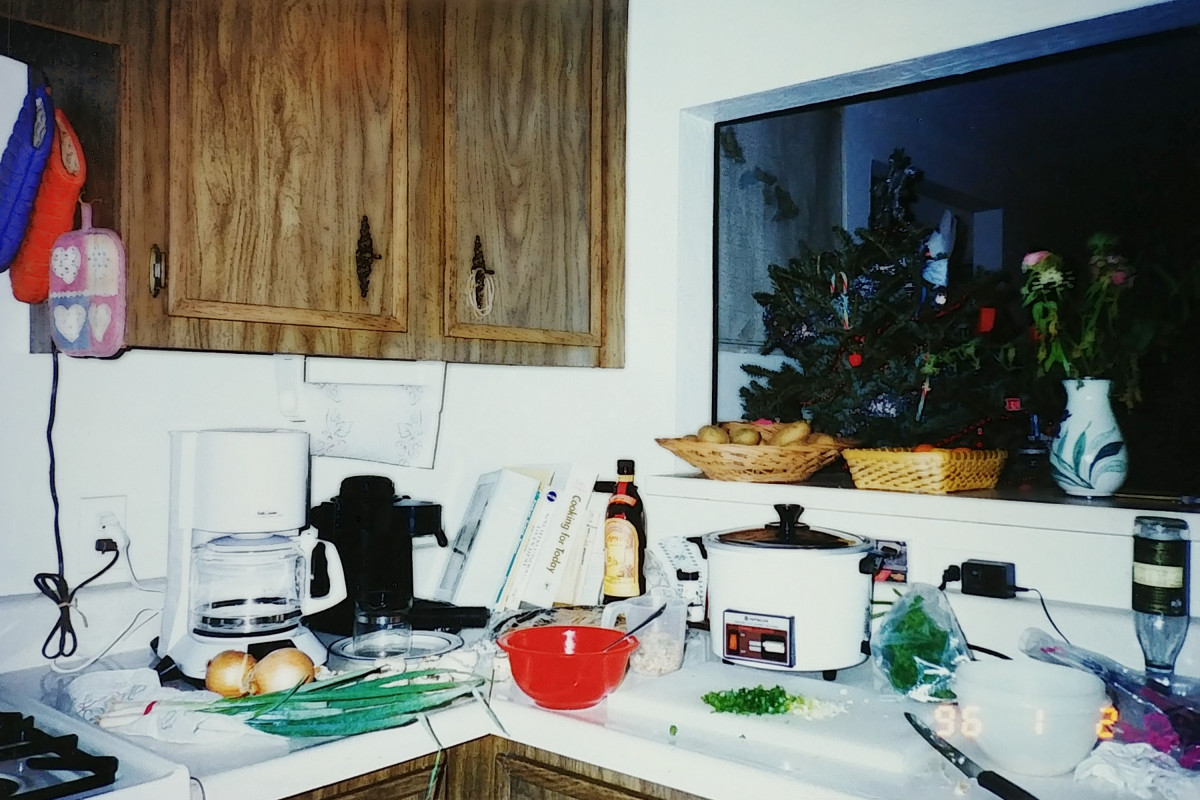
Those cognitive and embodied knowledges, like the greens of a carrot, only grow and develop as extensions of the subterranean taproot made up of my places and my people. The burlap sacks of coffee and the pungent aromas of dried fish are still with me, informing who I am, what I know, and how I taste. Why did I like that funky, almost savory buckwheat cookie so much? Well, it might have something to do with growing up in Hawai’i, inundated in sweet and savory, where I often devoured packages of Japanese teriyaki crackers with sugary icing. And I’m fairly certain my mother’s liberal use of patis (Filipino fish sauce) has wound its way, snakelike, through the years to give me an affinity for the complex flavors of aged Zhenjiang vinegar and the brininess of an anchovy.
I’ve often thought of myself as being by myself. I thought I built a skill set in the kitchen on my own, and I thought I built a library of taste preferences and a vocabulary for describing those preferences on my own. But, how could that possibly be true? Who would I be without those who gave me my first tastes in life? Without the mentors who fed me and showed me how to hold a knife and how to tell stories about food, both on a plate and on a page? I thought of myself as an island, like those I grew up on, standing stolid in restless seas. As I’ve come to understand, that kind of isolationist thinking isn’t good for me. In fact, when it comes to myself, my skills, and my food, I have to try to remember one thing:
Think less.
Leave a Reply