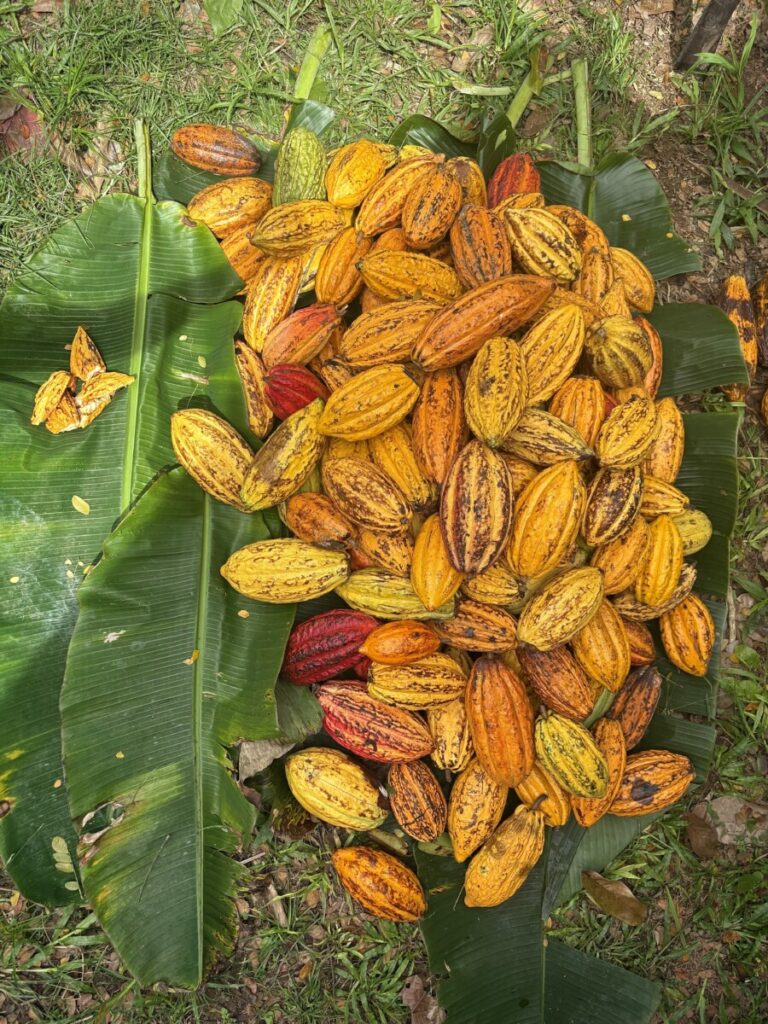
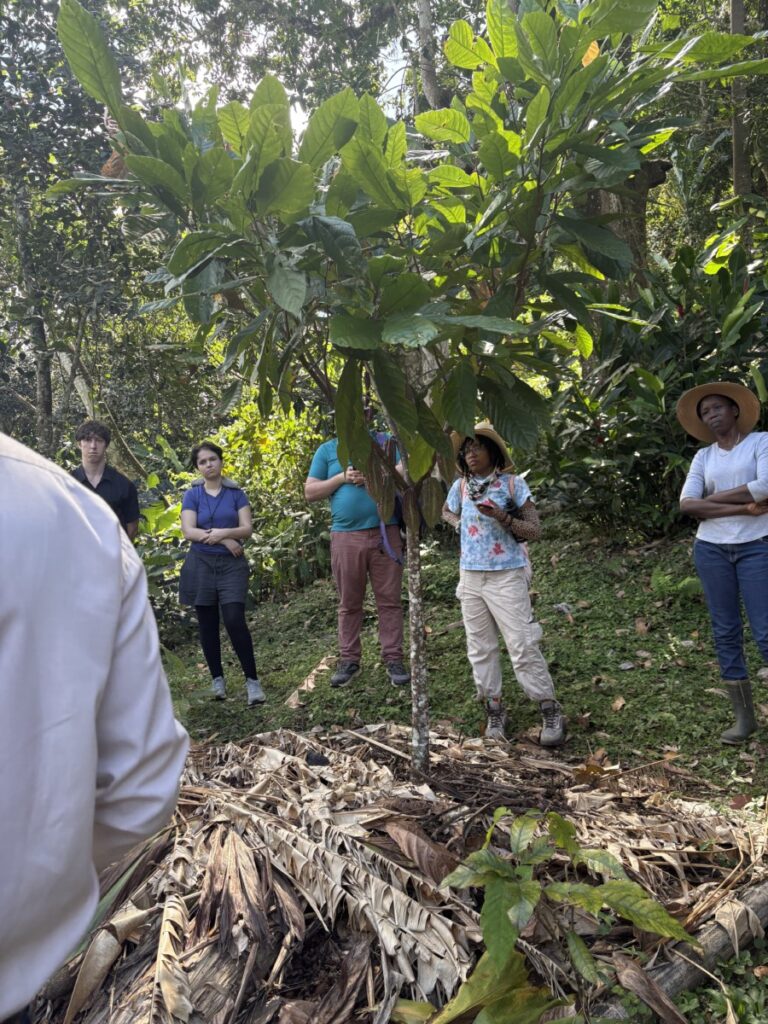
Our second week in Jamaica was very special to me as we got to expierence a large portion of what our class was primarily focused on chocolate and cocoa. While this seemed to be sort of a side quest away from our studies of permaculture it really added a deeper layer into the areas of plants I am interested in studying for this project. We headed out to Saint Andrew on February twenty-fifth to Mount Pleasant Chocolate where we were introduced to Averelle and Helen who are the owners and operators of Mount Pleasant Chocolates. It was the first time in my life seeing a cocoa tree. The one in particular I spent a long time looking at this one tree in particular grown in a separate plot that had a contained chop and drop style of compost done upon it. The tree was so delicate to be in contrast to how large and heavy the cocoa pods are.
After taking a walk through their farm and even getting to plant our own coca tree we began to partake in the process of the fermentation of cocoa. Cocoa fermentation using a wooden box lined with banana leaves is a traditional and effective method for enhancing the flavor and quality of cocoa beans before drying and processing. After harvesting, the cocoa pods are split open, and the wet beans, still covered in their sweet, sticky pulp, are placed in the fermentation box. The banana leaves help retain heat and moisture, creating an ideal environment for microbial activity while also imparting subtle aromatic compounds to the beans. This natural insulation prevents excessive drying and helps maintain the necessary temperature for proper fermentation. The fermentation process occurs in two main stages. In the first stage, which lasts for about two days, natural yeasts convert the sugars in the pulp into alcohol, generating heat and promoting microbial activity in an anaerobic (low-oxygen) environment. As fermentation progresses, the process shifts to an aerobic (oxygen-rich) stage, where bacteria convert the alcohol into acetic acid over the next three to five days. This acid penetrates the beans, breaking down their internal structure and allowing the development of the complex chocolate flavors that are essential for high-quality cocoa. Throughout fermentation, the beans are typically stirred or turned every two days to ensure even exposure to oxygen and uniform fermentation. The internal temperature of the box can reach 45–50°C (113–122°F), which is crucial for killing the bean’s germination capacity and breaking down undesirable compounds. The entire process usually takes five to seven days, depending on the cocoa variety and environmental conditions. Once fermentation is complete, the beans are removed, rinsed if necessary, and then sun-dried before further processing. Proper fermentation is essential for reducing bitterness and astringency while enhancing the rich, chocolatey flavors. The flavor profiles of Jamaican chocolate are described as nutty and fruity.