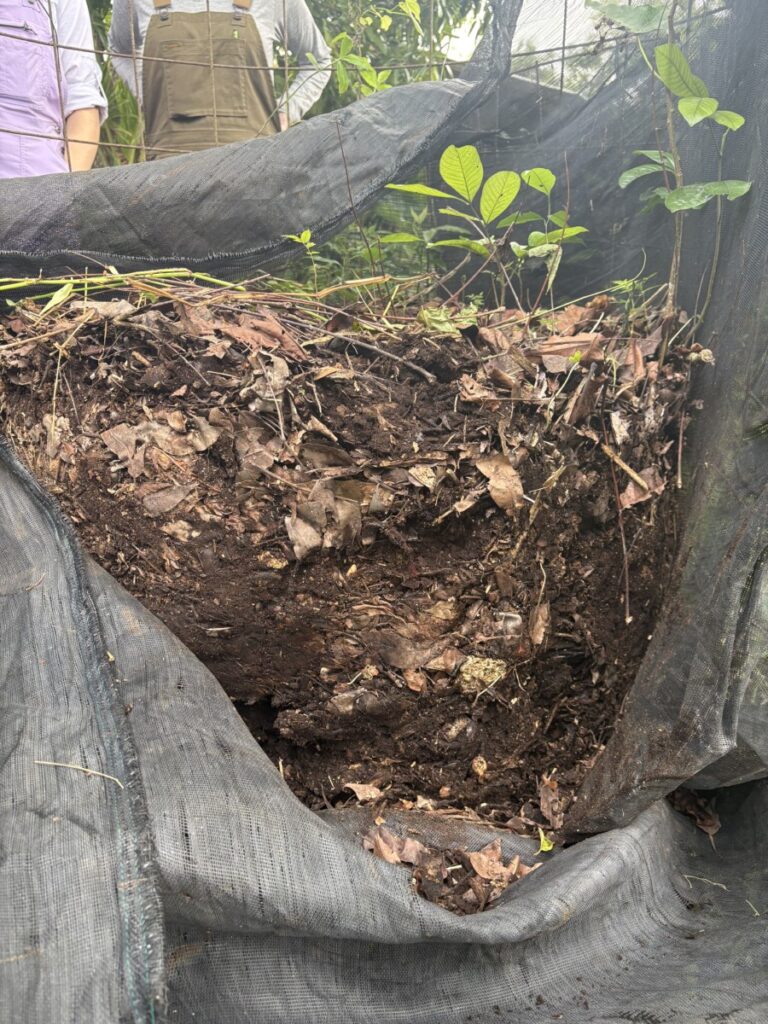
Upon arriving in Jamaica I did not expect how the trip was going to go pertaining to my ILC, but just as my mentality had been with the earlier part of the quarter I decided to roll with whatever came my way. On my first day in Jamaica I was introduced to our host at Durga’s den Lise. Lise was the perfect person to interact with on the basis of my project surrounding soil science and jamaica’s soils. Lise had done a lot of work around various soil composition especially macro and micro organisms in the soil food web. Lise started us off on our second day with a tour of her various composting systems including , vermacompost , Johnson-Su , and hybrid methods.
Vermicompost is a nutrient rich organic fertilizer produced through vermicomposting, a process in which earthworms break down organic matter into biologically active, microbe rich compost. In her method Lise used , Eisenia fetida (red wigglers) to consume decomposing plant material and excrete worm castings, which improve soil fertility. Vermicomposting does not rely on high heat but instead fosters a cooler, microbially diverse environment that enhances soil health. Additionally, the liquid runoff, known as worm tea, can be used as a natural fertilizer.
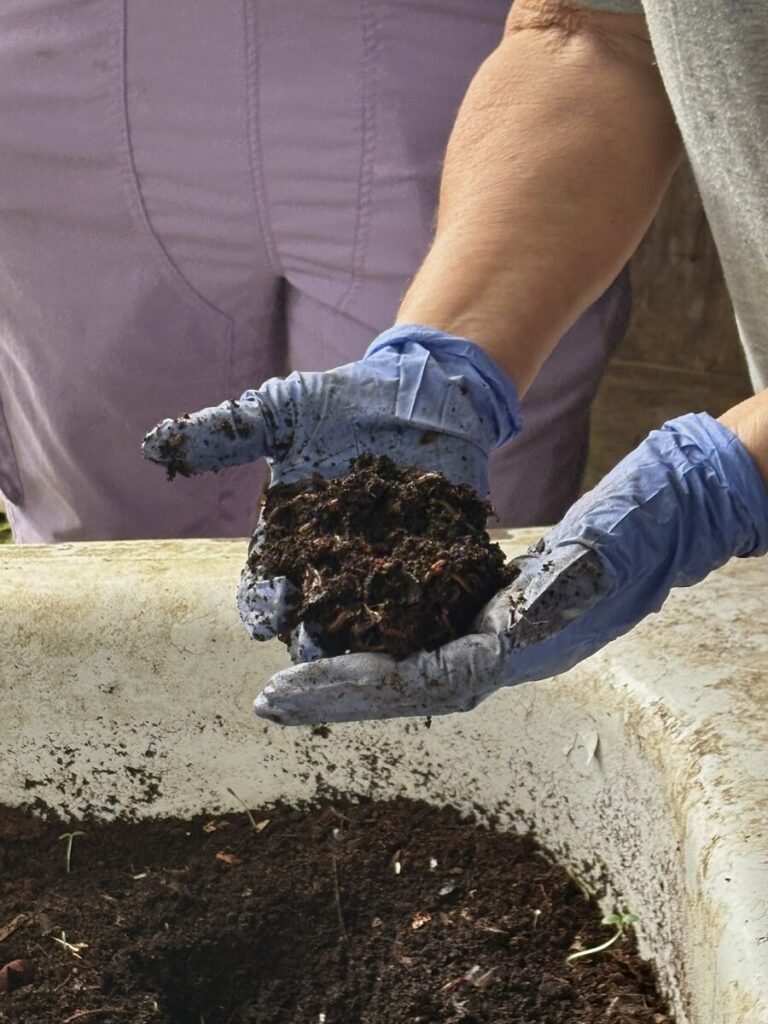
The process of vermicomposting involves placing organic materials such as vegetable scraps, shredded paper, coffee grounds, and decomposed leaves into a worm bin or pit with proper moisture and aeration. Over time, the worms break down the material, producing nutrient-dense castings that enrich the soil. This method is particularly suited for small-scale or indoor composting, as it requires less space than traditional composting and does not produce strong odors. However, maintaining a successful vermicomposting system requires providing the worms with optimal conditions, including adequate moisture, temperature, and ventilation. Certain materials, such as oily foods, citrus, and meat, should be avoided as they can harm the worms or create imbalances in the bin. Although vermicomposting takes longer than thermophilic composting to process large amounts of material, it yields a highly concentrated and beneficial soil amendment. I remember holding her compost in my hands and how rich it smell. The colors so dark from the humeric acid and the good energy she had put into it. Lise also showed us her bubbler system for making compost tea from the vermacompost. She said she does a 1:10 ratio of distilled water to compost and lets it bubble for 24 hours.
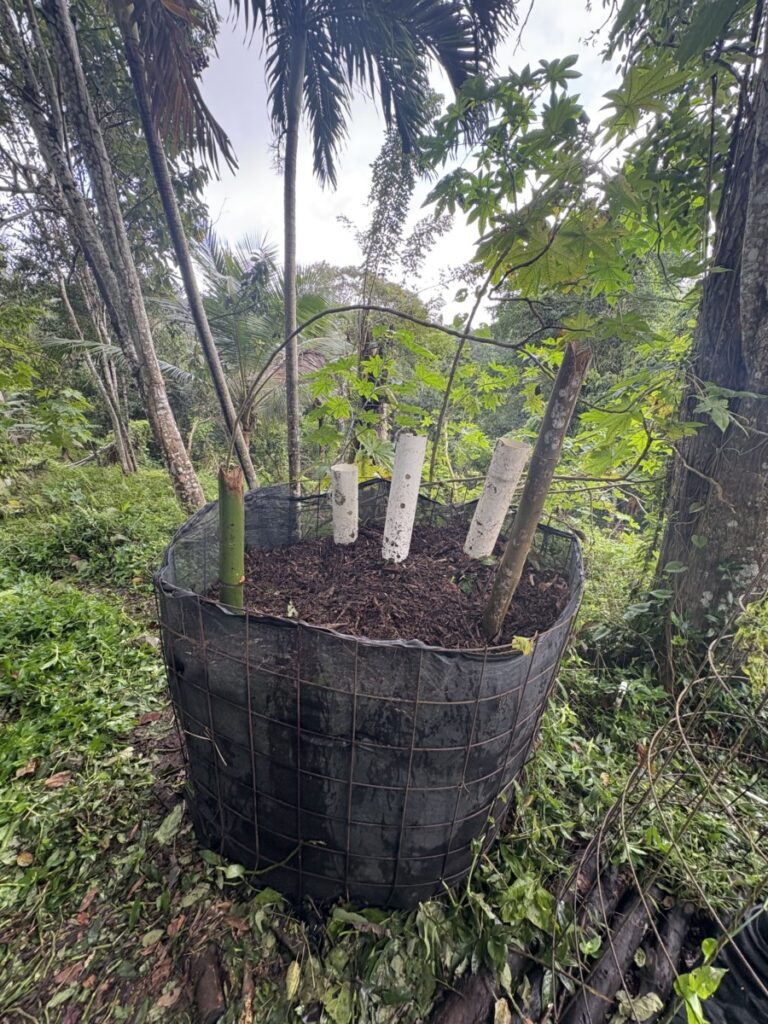
Her three main systems of large-scale compost are done through thermaphyllic , johnson-su, and a hybrid method. Thermophilic composting is a high-temperature process that rapidly breaks down organic materials while eliminating weed seeds, pathogens, and harmful microbes. The temperatures ranges needed for this compost are 50–70°C (122–158°F). This can be achieved through a mix of carbon-rich (browns) and nitrogen-rich (greens) materials. To sustain aerobic conditions, the compost pile requires frequent turning or forced aeration. While it is an efficient way to generate compost quickly, the high temperatures can sometimes reduce microbial diversity and lead to nutrient loss. In contrast, the Johnson-Su bioreactor method is a slow, no-turn composting system designed to create fungal-dominant, biologically rich compost. Developed by Dr. David Johnson and his amazing wife Hui-Chun Su, this method involves a static pile with vertical aeration pipes that ensure oxygen flow while maintaining moisture at around 70%. The composting process takes approximately 12 months, allowing beneficial microbes, particularly mycorrhizal fungi, to thrive. Rather than being used as bulk soil amendment, the resulting compost serves as a microbial inoculant to enhance soil biology and plant health. Her third method of a hybrid is a mix of these two styles of composting. This method we participated in generating by following the methods of the browns and greens from the thermophilic method while additionally adding in the vertical aeration pipes from the Johnson-su method.