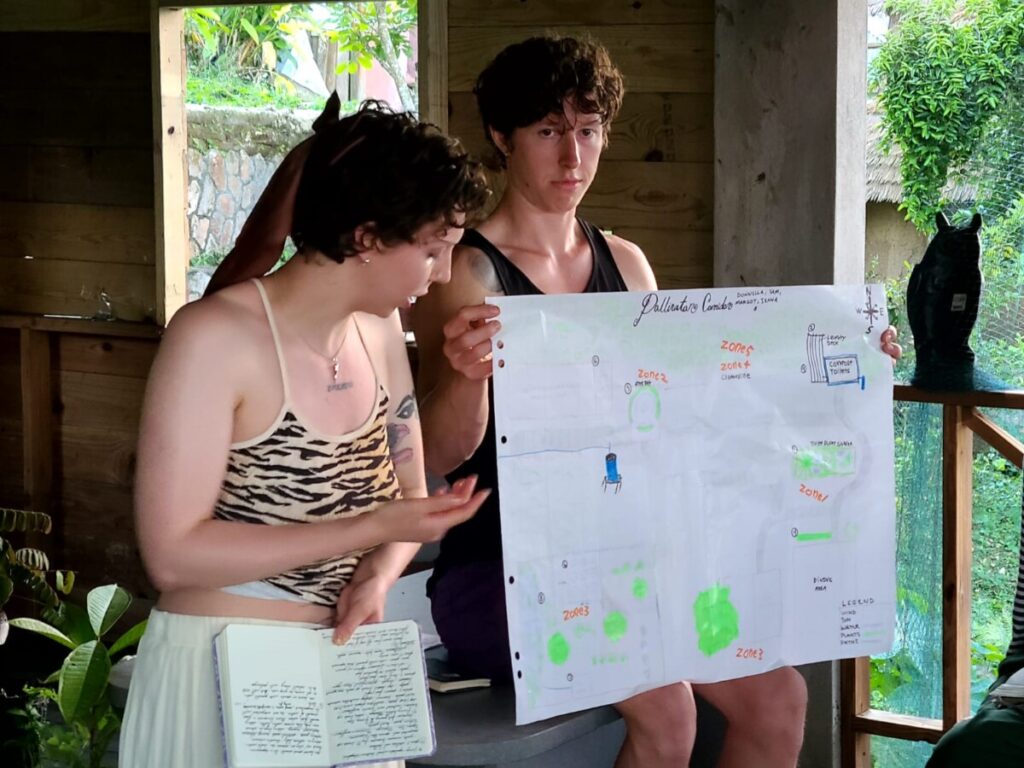
Our last week we were set to design some addition to a specific landscape area at Durga’s Den. I chose to look at an old fenced area where Lise used to keep her goats. My goals for that landscape were as follows:
Regenerating an Old Goat Pasture into a Thriving Bee Guild and Food Forest
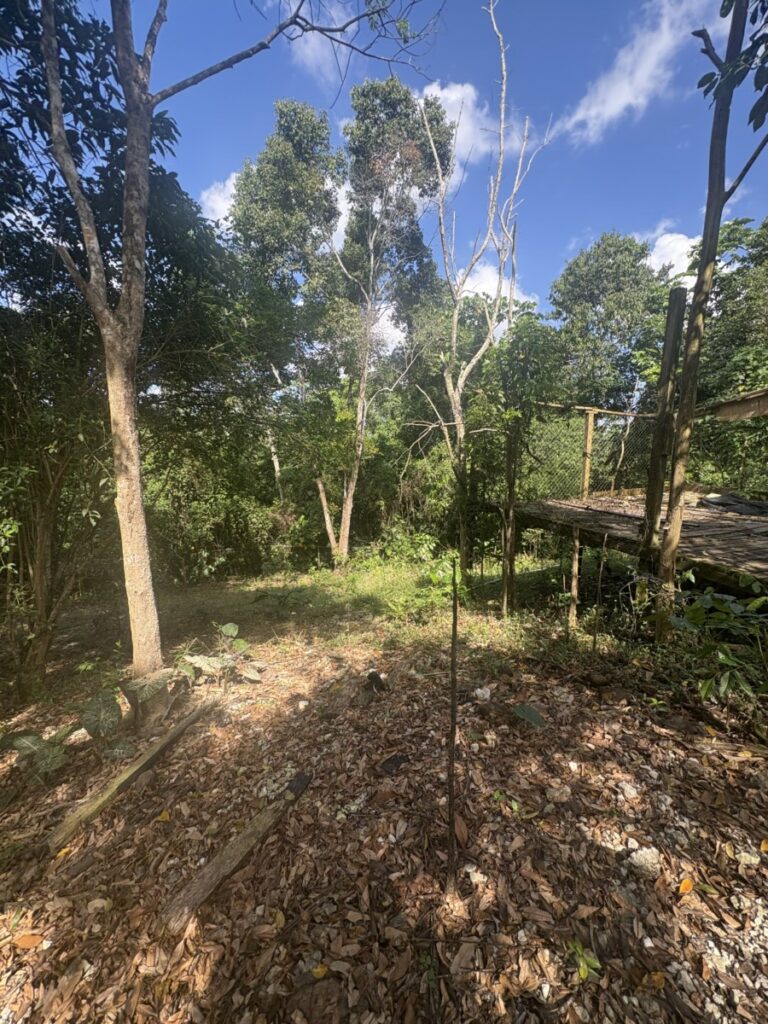
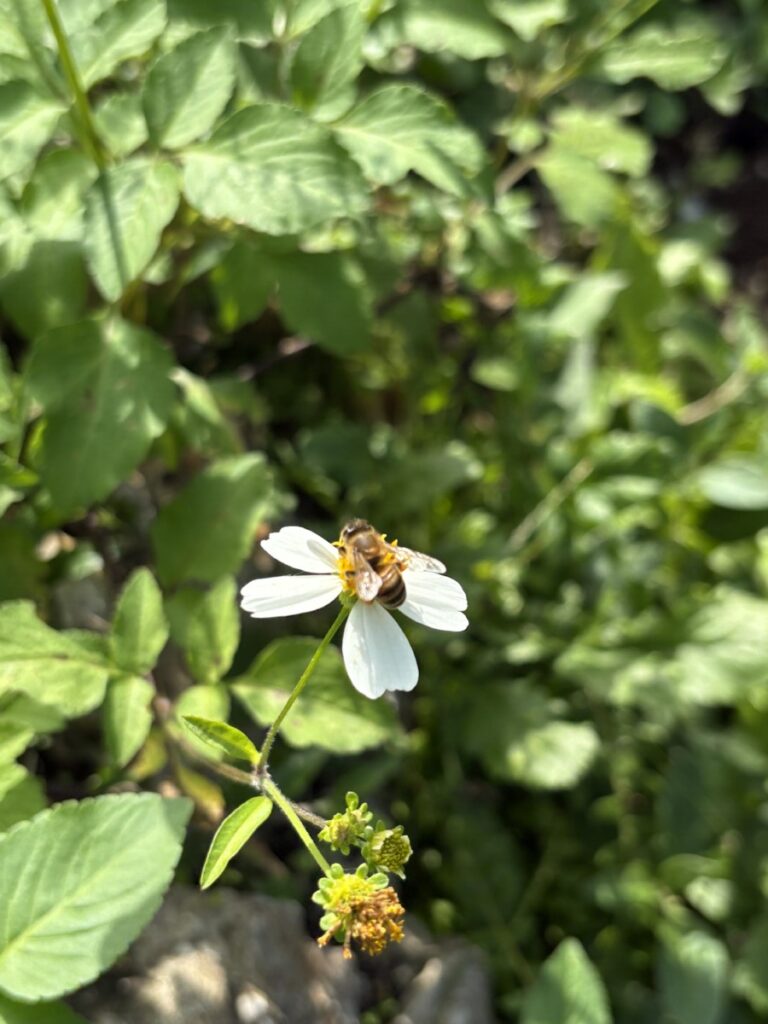
In revitalizing a goat pasture, I recognized the challenges posed by the rocky terrain, depleted soil, and limited vegetative growth. Establishing a bee guild in such an environment required a phased approach, focusing first on soil regeneration before creating a sustainable habitat for both bees and long term food production. This plan outlines a multi year strategy to build soil health, introduce pioneer species, and transition into a fully productive food forest that supports pollinators while improving the land’s fertility.
Phase 1: Regenerative Soil Building with Fast Growing Biomass Plants
The first step in transforming this limestone-rich landscape is increasing organic matter, fixing nitrogen, and breaking up compacted soil. This phase prioritizes fast-growing nitrogen-fixing trees, biomass plants, and ground covers to rapidly build soil fertility and prepare the land for food production. Key nitrogen fixing and biomass-producing trees include Leucaena, which grows quickly and adds organic matter, Pigeon Pea, which fixes nitrogen and produces edible pods, and Moringa, whose deep roots help break up limestone while offering nutrient rich leaves. To further improve soil structure, plants like Mexican Sunflower (Tithonia diversifolia), which produces nutrient-rich mulch, and Vetiver Grass, which stabilizes slopes and adds organic matter, should be established. These will be regularly cut and spread over the soil.For ground cover and additional nitrogen fixation, Cowpea improves soil health, Velvet Bean suppresses weeds and fixes nitrogen, and Sweet Potato prevents erosion while adding biomass. This diverse combination will help kickstart soil regeneration, creating a fertile base for the next phase.
Phase 2: Introducing Pioneer Food Crops
As the soil improves, hardy, deep-rooted food crops can be introduced to further break up limestone and enhance soil aeration. Cassava, which thrives in poor soils, and Yam (Dioscorea spp.), which grows well in rocky conditions, will help loosen compacted areas. Banana and Plantain will retain moisture and contribute additional biomass through their fallen leaves. In shadier areas, crops such as Chayote Vine and Passionfruit Vine can be planted to climb nitrogen fixing trees, while Taro and Ginger will thrive in moist, shaded areas. These plants will expand the ecosystem’s diversity and contribute to the overall resilience of the food forest.
Phase 3: Transitioning to a Long-Term Food Forest
By this stage, the soil will be significantly improved, allowing for a gradual transition from pioneer species to long term food producing trees. Some nitrogen fixing trees, like Leucaena, it can be selectively cut down, leaving their roots in place to decompose and further enrich the soil. These will be replaced with fruit trees, such as Guava and June Plum, which will now be well adapted to the improved conditions. To maintain soil fertility, the ground should remain covered with continuous nitrogen fixing plants like Wild Peanut or Perennial Cowpea, as well as deep rooted Comfrey, which accumulates nutrients and provides constant mulch. Once the food forest is established, the system should be actively managed to ensure long term fertility and resilience.
In addition for this guild there would need to be a source of water for the bees which I designed a wetland catchment system. The wetland system should be integrated at the lowest part of the slope. A French drain or soak pit can be constructed to slow release stored water, preventing runoff and increasing moisture availability. At the lowest point of the wetland, a small water holding depression can be created using clay, stones, or an old tarp to retain moisture for extended periods. To attract pollinators and maintain hydration for bees, floating plants and safe landing spots (such as logs, stones, and aquatic plants) should be incorporated.