

3a: Film Studies
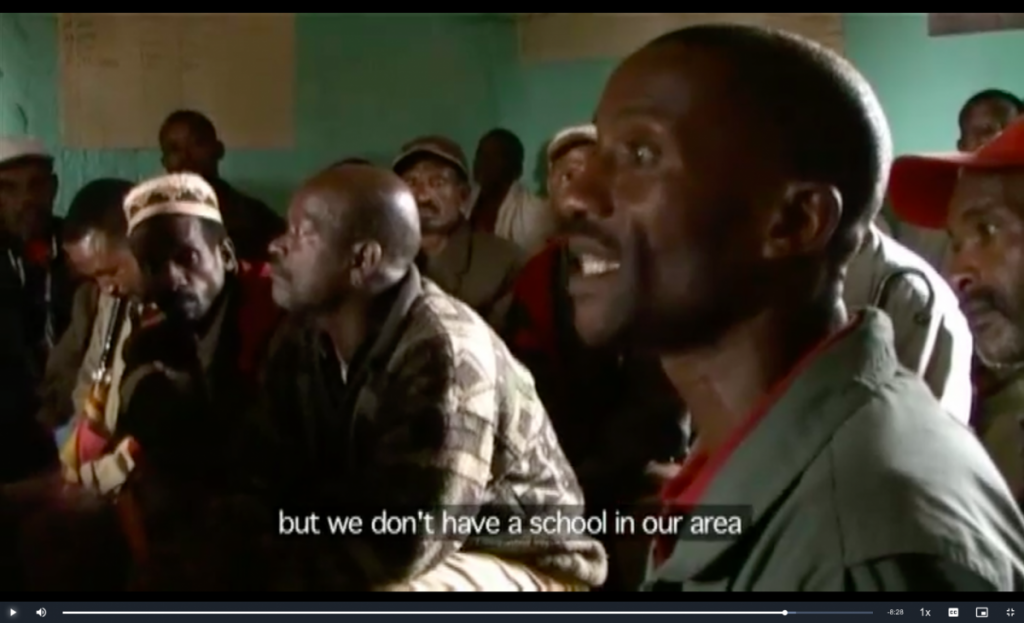
I’ve chosen minutes 1:08:00 to 1:10:30 from the film Black Gold, which I’m titling “Co-operative governance” in order to explore program question “What criteria exist for assessing the role of agricultural businesses in building communities through food justice and sustainable practices?”
Tadesse Meskela and the farmers he represents gather to discuss how money should be spent in the community after Meskela returns from a trip making business relationships in the USA. This co-operative is called Kilenso Mokonisa. About 20 farmers sit in a room with peeling teal walls. Some sit around a table. There are charts on the walls. The coordinators of the meeting speak in inviting tones, first introducing Meskela and then opening the discussion. The topic to discuss is that they previously agreed surplus money would go to a school for their children, but there is not enough money for that. Farmers eagerly begin sharing their opinions. It’s passionate, but not tense. Everyone actively listens while someone is speaking. They agree upon investing the money in a school for their children and “the growth of [their] country” even if that means making some sacrifices.
I thought this was a great example of how putting power in the hands of workers can look, and why it is the best option for community development. In this case Meskela leads a co-operative, in which farmers can have a voice and make decisions for their community. They make a decision that takes into consideration the future of their children as a generation. That is sustainable thinking. They know what their community needs better than any foreign organization that can offer philanthropic aid. In other scenes the film expresses that an increase in trade is much more sustainable than aid, as it allows farmers to stand on their own feet. At 58:20 min, Hon. Sam Mpasu MP says “trade is more important to us than aid”.
3b: Natural history
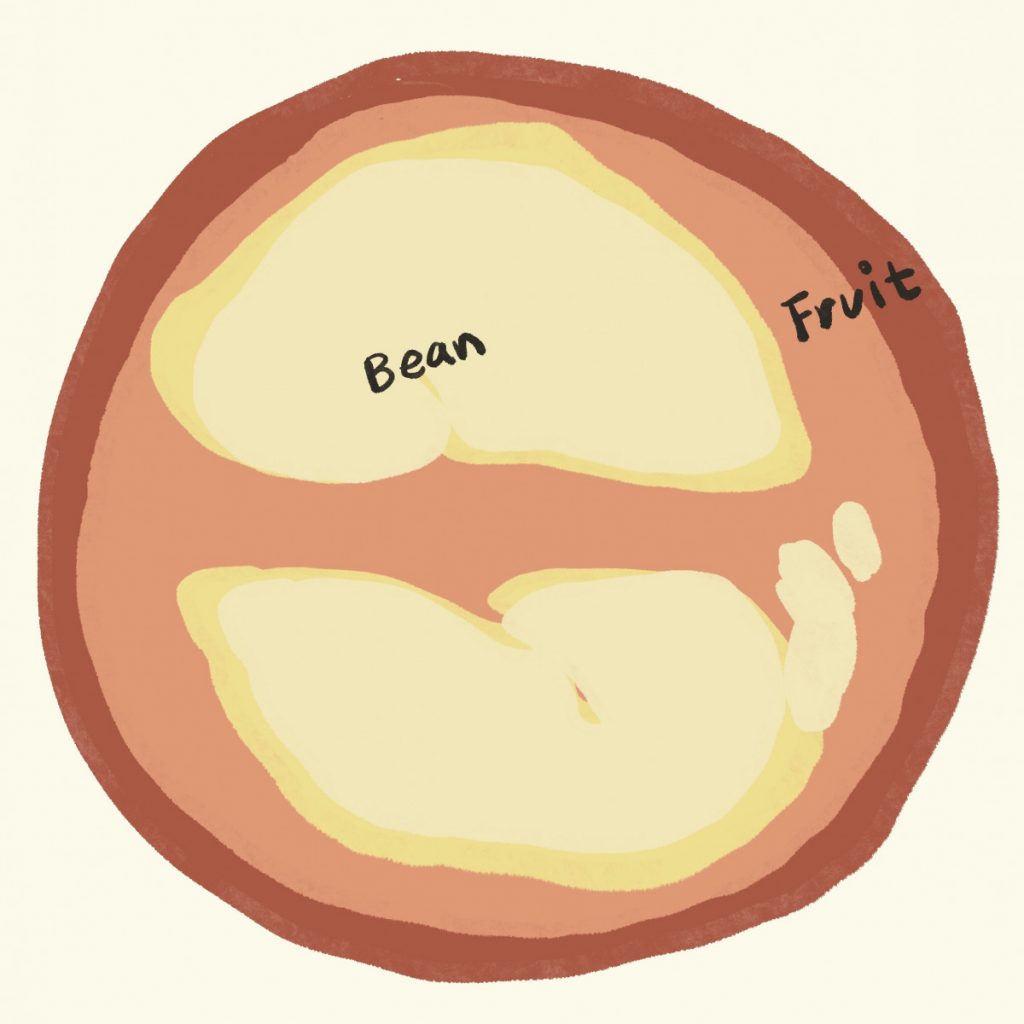
Plants from the Coffea genus originate in Africa but have since been moved around the world. The coffee we drink is usually Coffea arabica. However, there are 3 commercial species of coffee. Coffea plants are technically fruiting trees, bearing red fruit with the precious “beans” inside.
Coffea canephora is a tough plant, and benefits from genetic diversity due to each flower’s inability to inbreed. Though it is regarded to have an inferior cup quality, it is resistant to many of the problems faced by arabica. canephora likes warmer regions and more rainfall than arabica.
Coffea arabica is the most popular due to it’s superior cup quality. It is a naturally hybridized species, but being self-compatible has little genetic diversity. arabica likes cooler and drier climates than canephora.
There have been arabica-canephora hybrids that taste good, but are sterile.
Coffea liberica H. is not commonly cultivated. It’s very vulnerable to disease. The cup quality is regarded as somewhere between canephora and arabica.

3c: Regenerative Agriculture
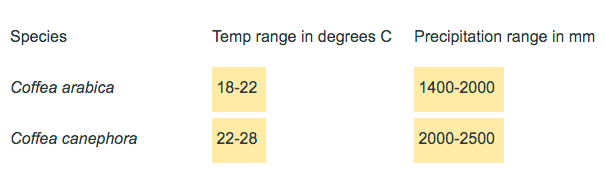
- Given the temperature niche of Coffea arabica, why is it most often grown in tropical highlands?
It’s cooler and drier, typically farther from sea.
- Given projected changes to tropical climates during this century, what impacts will climate change likely have on the production of Coffea arabica?
Growing in higher altitude will no longer be a way to find a cool climate. Arabica will have to be grown at a different latitude or not at all.
- For coffee farmers that rely on production of Coffea arabica in high rainfall areas, a simple climate change adaptation strategy would be to replant with Coffea canephora. Given our interest in the ‘taste of place’, what impact would this species switch have for coffee roasters and coffee drinkers?
Canephora might suffer from the drought effects of climate change. It also is known to have worse cup quality.

For the next questions consider our program tagline, “towards agroecological agribusiness?” in relation to our coffee tasting lab conversation with Bob B. and the assigned article Climate change adaptation, coffee, and corporate social responsibility: challenges and opportunities.
- Define CSR:
Corporate Social Responsibility is a company’s policy and self-regulation considering the ethical ramifications or potential positive impact of their business.
- Give a real or theoretical example of CSR for a coffee roasting business in the global north that aims to improve the socio/economic situation of a specific group of smallholder coffee producers.
A coffee company that trades directly with farmer co-ops.
- Define CSV:
Corporate shared value manifests in “policies and operating practices that enhance the competitiveness of a company while simultaneously advancing the economic and social conditions in the communities in which it operates.” (Bianco)
- Give a real or theoretical example of CSV for a coffee roasting business in the global north that directly addresses climate change adaptation for a group of smallholder coffee producers through regenerative agriculture practices.
Starbucks is working on a strategy for adaptation in it’s experimental fields as described in the article we read for class, and claims to prioritize farmers, although incidentally they won’t survive as a business if farms fail.
- Define climate change mitigation.
Efforts to reduce the emissions of, or draw down, greenhouse gasses.
- What types of climate change mitigation activities has the global coffee value chain invested in?
The coffee industry increasingly prioritizes “sustainability” CSR strategies and appeals to customers with certified energy efficiency, organic farming, and other sustainability labels.
Starbucks claims to make their buildings LEED certified. Peet’s roastery is LEED certified as well.
- Define climate change adaptation.
Altering our way of life in order to minimize harm expected to be incurred by climate change. It can also be taking advantage of new opportunities (such as expanding cacao farming in a suitable warmer climate)
Consider regenerative agriculture practices that directly address climate change adaptation for small-scale producers of Coffea arabica.
- What practices can help prevent soil erosion to increase resilience for intense storms?
Agroforestry, perennials (with deep roots), less tilling, cover cropping,
- What practices can help improve soil water holding capacity to increase resiliency for droughts?
Increased aggregation, via perennial roots and organic matter such as leaves.
- What practices can help moderate air temperatures around the coffee plants?
Shade trees or lack of, pruning,
- Before you recommend completely covering the coffee plants with shade trees, what problems can intense shade have on coffee diseases and yield?
It can create an environment that’s too moist, preferable to insects and other pests as well as fungal diseases. It also reduces yield compared to full-sun, barring other factors such as crop failure.
- For climate change adaptation in Mesoamerica, why might Coffea arabica growers prefer to switch to growing cacao?
Because coffee is not as profitable with the growing issue of leaf rust. Also, areas where coffee is grown are predicted to become much more suitable for cocoa and less suitable for Coffea arabica.
- Whether growing coffee or cacao in mixed agroforestry plantings, explain how climate change will require farmers to adapt the mix of tree species they plant (give two examples from the article The future of coffee and cocoa in a warmer Mesoamercia).
Climate change will alter the niches that preferred/ currently grown trees are suited to. The future of coffee and cocoa in a warmer Mesoamerica found that avocado, mango, and guava, very popular agroforestry trees, will become unsuitable, while jobo, sapadillo, mamon, and tamarind are all productive trees that will do even better in 2050.
Trees can be chosen to manage the microclimate in a desired way to adapt coffee or cocoa farms to climate change.
One often-mentioned climate change adaptation strategy for tropical farmers is to relocate them to better climates zones to continue growing the same type of crop, e.g. Coffea arabica. Critics of this concept note social and ecological concerns of moving farmers to these imagined other/better places, which in reality are already populated by other farmers or exist in a relatively ‘natural’ state – likely home to indigenous people that practice lower disturbance land management, aka looks wild to foreign eyes.
- What social conflicts are created by moving people as a climate change adaptation strategy?
Refugees are divorced from their ancestral land where they have local land management knowledge and culinary/health traditions. When a land loses it’s stewards the ecosystems there may be destabilized further.
- What consequences to ecosystem services and carbon balance result from converting relatively intact ecosystems to farming systems (yes, even shade-grown coffee)?
Genetic diversity can be lost, animals and plants that are imperative to the ecosystem may be threatened by “pest” and “weed” control, carbon sinks may be disturbed by tilling,
- It is fair to argue that coffee agroforestry practices can increase carbon sequestration (climate change mitigation) and help growers adapt to climate change stressors. Write a 1-2 sentence ‘elevator pitch’ to coffee executives for why they should help coffee producers invest in coffee agroforestry practices.
Arabica tastes the best, and locals know how to grow and process great coffee in the places where it’s historically been grown. We should focus funds and efforts on keeping these traditions and ecosystems viable. If you convert sun-grown coffee farms to agroforestry, you can restore draw down and other ecological services that will perpetuate the profitability of these coffee-growing regions where you already have the industry rooted.
Finally, imagine that you have been hired as a consultant to review Starbucks climate change program.
- Make an argument for why massively increasing their investment to breed good tasting coffee cultivars that are resistant to coffee leaf rust, drought, and higher temperatures would be the single most valuable contribution to smallholder coffee producer sustainability.
Coffea arabica is delicious, and Coffea canephora is resilient. There is also a wealth of genetic resources in other tropical species. Why invest in forcing arabica to work in a changing climate, when we could engineer a better plant with the best aspects of different resources. If we can make resilient crops, then the farmers who have expertise can stay put on the land where we know good tasting coffee can be grown, and you can keep your relationships with those farmers.
- Make an argument for why Starbucks should increasingly promote chocolate-based beverages and support for coffee producers to transition to cacao production as a way to adapt to climate change while creating shared value between Starbucks and tropical farmers.
Cacao will be much better suited for the future climate. You might be able to make coffee work, sure, but if you have a market for both, your entire business won’t have to rest on coffee’s success alone. If you invest in helping coffee farmers switch to cacao, you can ensure that down the line there are farmers who will grow quality cacao as you shift away from coffee.
3d: Tasting Research
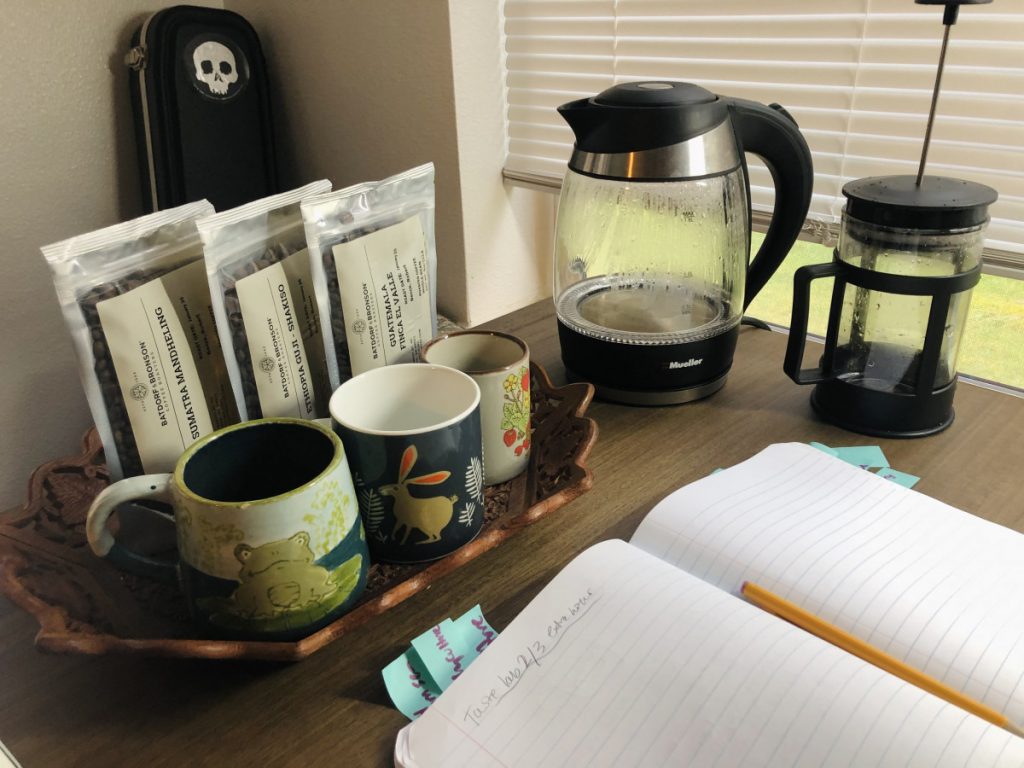
We were visited this week by Batdorf & Bronson‘s Bob Benck for a cupping analysis of three different coffee beans: Sumatra Mandheling, Ethiopia Guji- Shakiso, and Guatemala Finca el Valle.

It was a lot of fun, and the coffee packets they gave us will last me a couple weeks. I was amazed that I was able to distinguish them beyond “good” and “bad”, but there was so much going on in each cup. I think my Guatemala sample may have had a defect, because it tasted funky, but that was interesting too.
3e: Taste book experiments
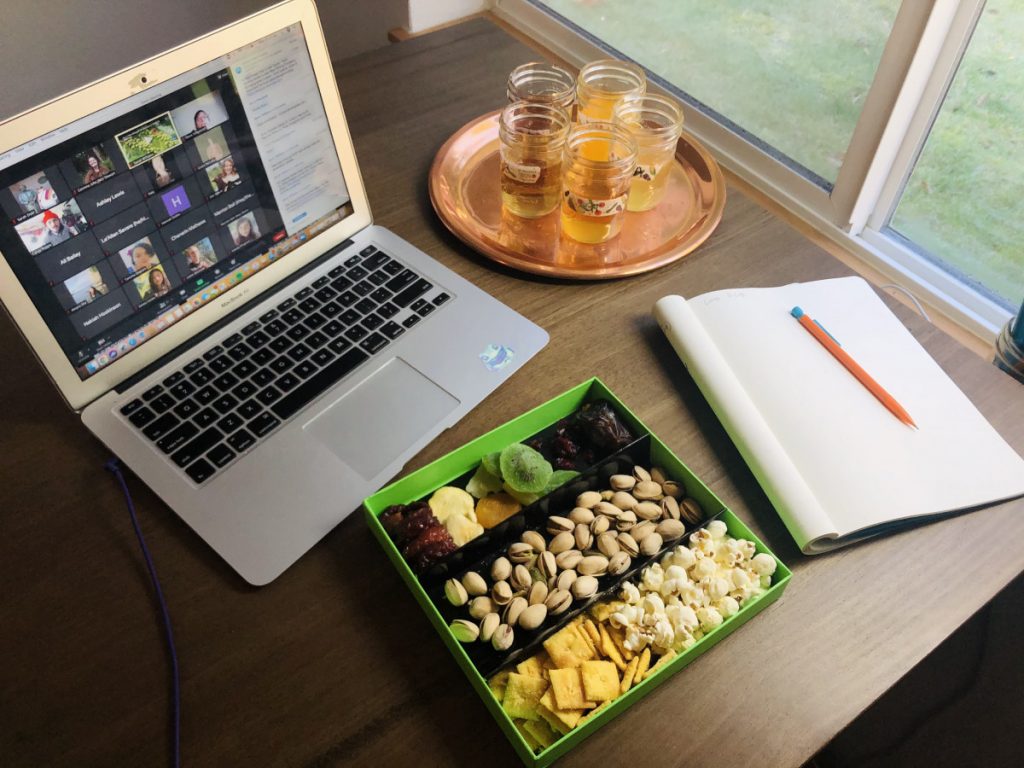
Week 6 – Experiment Guide Question/Answer Form
- What snacks did you choose to bring to the experiments and why?
I chose white cheddar popcorn, white cheddar cheez its, dates and other dried fruit, and pistachios. I chose these because they were way I had on hand. My mom sent me a fruit and nuts box recently and I saved it for this lab.
- What beverages did you bring to the experiments and why?
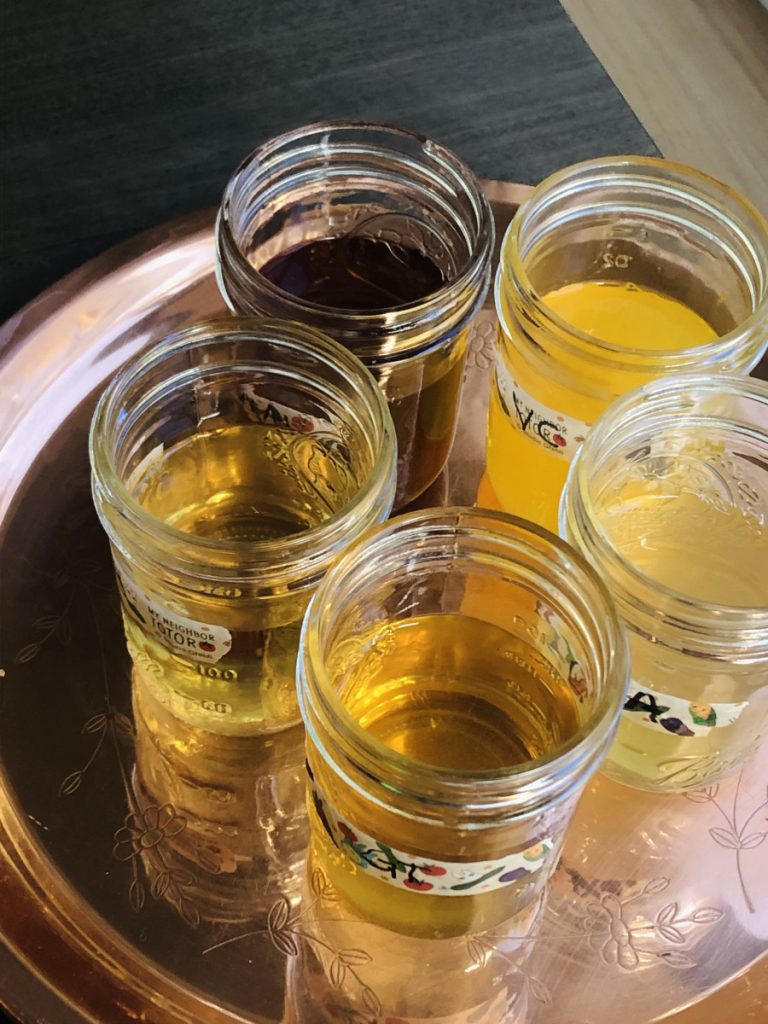
Every type of tea and drink I have in the house (left to cool/decarbonate over night). Ginger ale, ginger turmeric tea, lemon balm tea, chai tea, and vitamin C.
- What is your favorite snack food? From your own perspective, what is the story of how your favorite snack made it to your hands?
My favorite snack is regrettably hot Cheetos.
1st Experiment Questions:
- Please reflect on your experience through this experiment; did you notice any difference in how your mind prepared and received a drink of a strange color? Why do you think that you experienced it this way?
I had my partner dye them for me so I was excited for a mystery.
Chai was red but I knew I didn’t have anything fruity so I was not surprised.
Vitamin c is strong and distinct so I smelled it not long after I saw it.
Ginger ale also hit my nose before I tasted it so that helped me prepare for the flavor even though it’s green.
Ginger turmeric tea is pink but it tastes a little like hibiscus! Which has to be due to the flavor.
Lemon balm is golden-yellow and it makes the lemon and honey flavors pop out.

The drinks were not as shocking as I expected, probably because I knew what I have. I do feel weirdly less willing to drink these now that they’re green, red, etc which doesn’t match the flavors.
- Why do you think some farmers grow different colors of the same vegetable?
To alter what you expect things to taste like, creating excitement or intrigue or even influencing your sense of taste.
- Do you have an example from your own life where the appearance of a food affected your decision of whether or not to buy it?
I love matcha, and I think its largely due to the color! If it was brown or white, I might notice the chalkiness or bitterness more. But because it’s green, I focus on the leafy flavors.
- If you were to cook and eat an entire meal while being blindfolded for the whole experience, what meal would you choose? Why?
I would choose something with distinct textures so I can tell right away what’s going in my mouth. I would make a plate of asparagus, mashed potato, and some kind of blended veggie soup with classic ingredients (lentils, carrots, garlic, onion, etc). No creepy or cobbled textures.
If I wanted to be adventurous, I would make pho with mixed mushrooms, and see if I could tell them apart.
2nd Experiment Questions:
- Please reflect on your experience through this experiment; did you find it difficult to guess the snacks purely on the sound they make when being chewed?
My group guessed pistachio (I let them hear the crack of me opening it, does that count as chewing? External chewing?)
Grace did avocado, and we couldn’t hear it.
Grace also ate kettle chips and I thought it sounded softer, not crisp.
Emma ate a cashew and we could tell it was dense and not snappy. We guessed celery.
Grace’s pickle slice was crunchy but quieter than expected.
Apple was very distinct. It had a hollow, crisp, wet sound.
- Is there a certain food that you particularly enjoy the sound of (eating, cooking, drying, boiling, etc.)?
I like the sound of chopped potatoes sizzling in the oven, because I know they’re almost done and a little crispy on the edges. I also love the sound of a thick, chunky pot of soup bubbling. It sounds substantial and a little magical, like I’m brewing a chunky potion.
Bonus Question:
- 10)If you had to choose one of your five senses (sight, smell, hearing, tasting, or touch) to give up every time you ate a meal, which would you choose? Why?
I would choose hearing because I would still be able to feel the crunch or smoosh of whatever I’m eating. It would make it hard to cook things accurately, because the sound is so indicative of heat and cooking stage, but that would be better than not being able to see, touch, taste, or smell.
3f: Sustainable Entrepreneurship
Week 6 Reflective and Preparatory Diary Entry 2/10/21
Question #1: Does the cooperative model, in its many forms, inherently encompass sustainability and regenerative agriculture values? Why or why not?
Co-ops are economically sustainable, especially if cooperatives form a meta-cooperative (like the Erreka group in Spain) to spread out risk and ensure employment for workers. There are plenty of co-ops that are large and successful too. Also, profits funnel back into the business, community, or emergency funds. They are inherently more socially sustainable, because the workers and/or members, who represent the community at large rather than an individual, make decisions. Business is done with the intention of the welfare of workers rather than profit for shareholders. For the same reason, co-ops may be environmentally sustainable, because decisionmakers live with the environmental impact of their decisions.
Question #2: What is the potential for the alternative business model presented last week (cooperatives) for transforming and strengthening our local food and agriculture system in the South Puget Sound area?

Cooperatives can enable entrepreneurship with less risk or input from the individual member. I went to Olympia Food Co-op’s webpage for an example. In 1989 their landlord wanted to sell the property and forced them to buy it or lose it. Because of their co-operative model they were able to gather the funds to buy the property. Another example is that smallholder farmers who can’t produce enough for buyers like Aramark can team up with other farms to meet the quantity standards. Through co-ops, people who care about, and have connections within, their community can compete with individual capitalists. A more co-operative food economy overall would lead to more food security, dignity, and stability.
Question #3: How might a worker-owned cooperative model challenge our traditional conceptions of “work”?
A capitalist conception of work is: generating value primarily for a small group or individual’s wealth. The worker exchanges labor for a temporary state of security. A Cooperative idea of work is to invest your labor into a business of which you, the worker, are represented and a stakeholder.
Preparatory Questions for Speakers:
- Fred Medlicott, Northwest Cooperative Development Center
- What are some other examples of partnerships a co-op may make with non-co-op organizations?
- How does a member co-op differ in terms of governance from a work-owned cooperative?
- Have you ever helped a retiring business owner convert to a worker-owned cooperative?
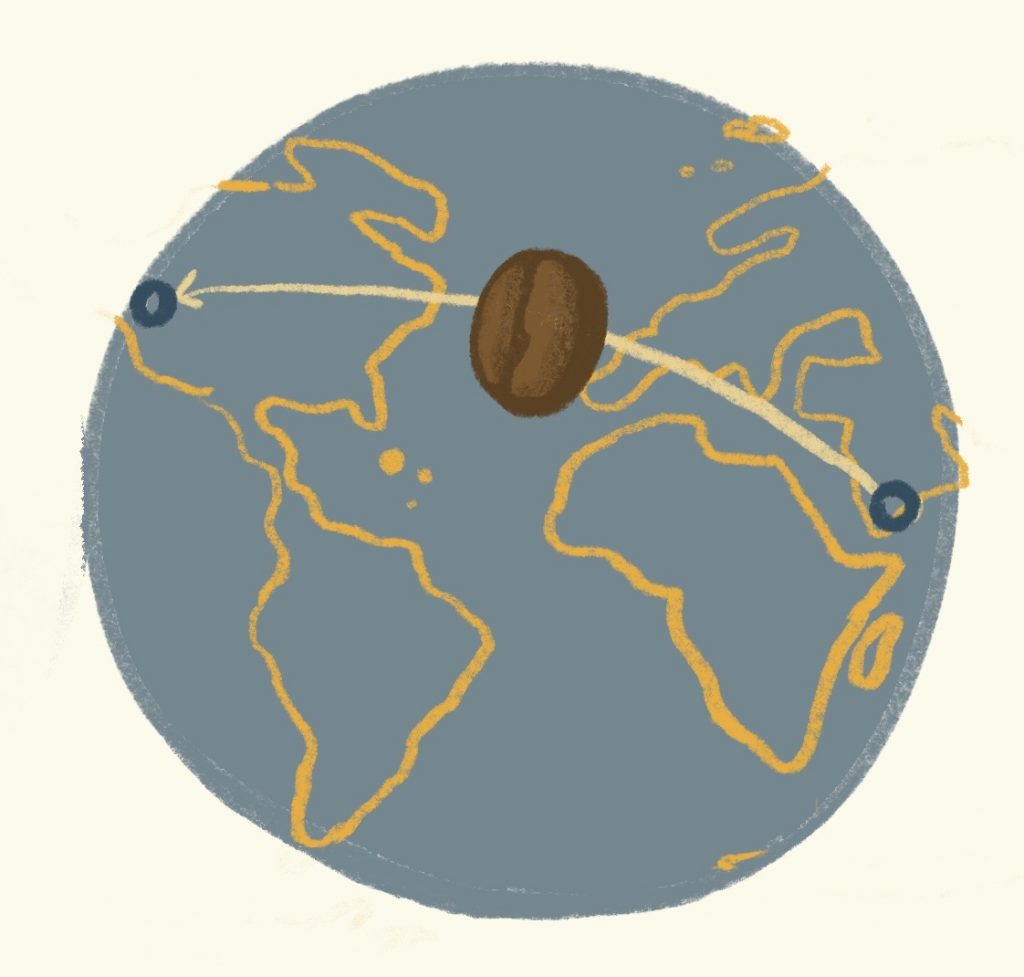
The coffee industry is one in which the parts (farming, processing, roasting, brewing) are spread out over vast distances and many borders. Farmers are severely underpaid for their exports. Cooperatives can break down the barriers to direct trade relationships with roasters, which increases the amount that farmers get paid for their coffee.
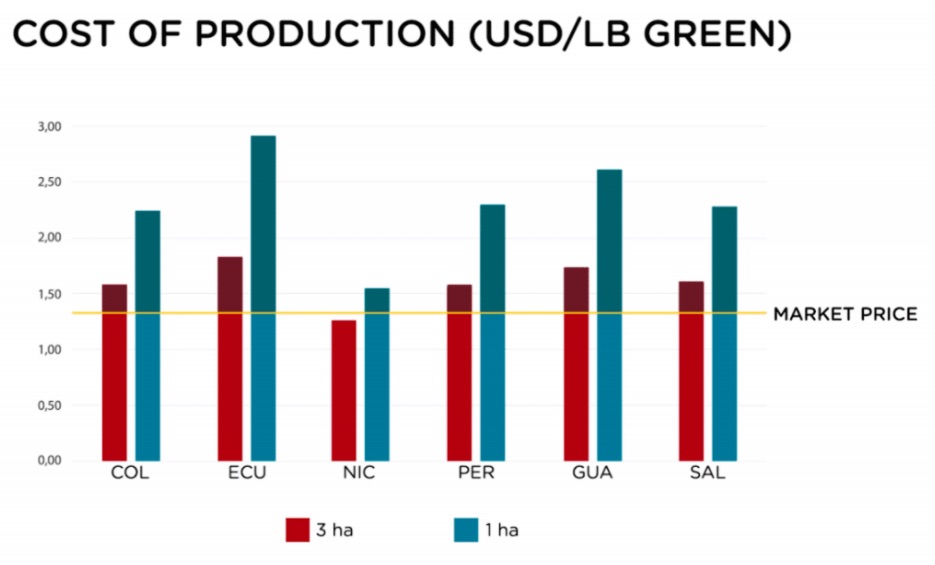
“The market price is lower than what it costs to produce coffee in nearly all of these six countries, threatening the sustainability of the industry.”
PerfectDailyGrind.com
3g: Climate Lecture Series
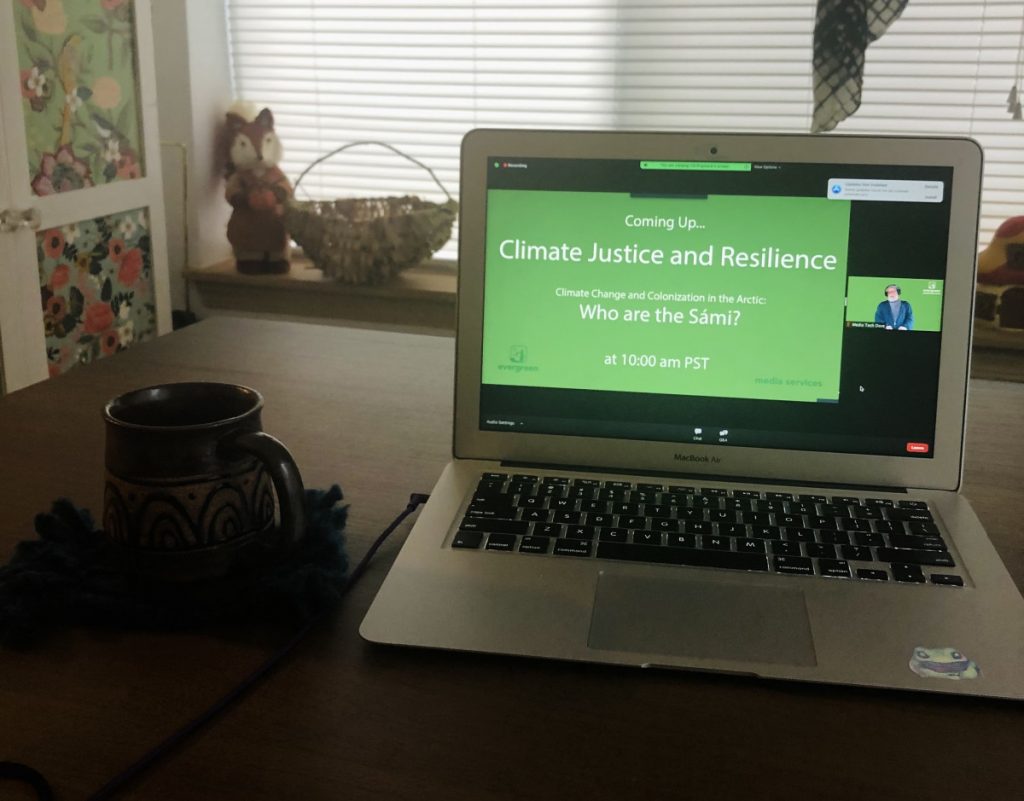
This week we heard from several Sami people of different generations to discuss the greenwashed colonization of Sami deer herding land for the building of windmills, among other topics.
The life cycle of reindeer in Sapmi is that in winter they graze in lowlands and in summer they go higher to graze. The windmills that Sami are fighting against frighten the reindeer and disrupt their biyearly migration. Country borders are another barrier, and climate instability threatens their lichen food source.
I was honored to hear a discussion between Hans Ragnar Mathisan, Torkel Rasmussen, Risten Turi Aleksanderson, Eva Maria, and Ellen Mari Jensen, who served the following food for thought:
- It is unproductive to replace “one bad thing with another” (windmills for oil) rather than reducing consumption and rethinking economics. (Torkel)
- We can’t solve climate change by incentivizing capitalists. (Risten)
- Green colonialism is antithetical to climate justice. (Eva Maria)
From the Sami perspective, those building windmills are the same as those who drill for oil, because it’s the same capitalism. In the context of terroir, can we expect improvements to food industries such as organic and fair trade to truly do ecological and social justice to farmers and the global community, given that it’s a strategy which asks the unjust system to clean up it’s own mess? Or is a more fundamental shift necessary?
3h: Foodoir
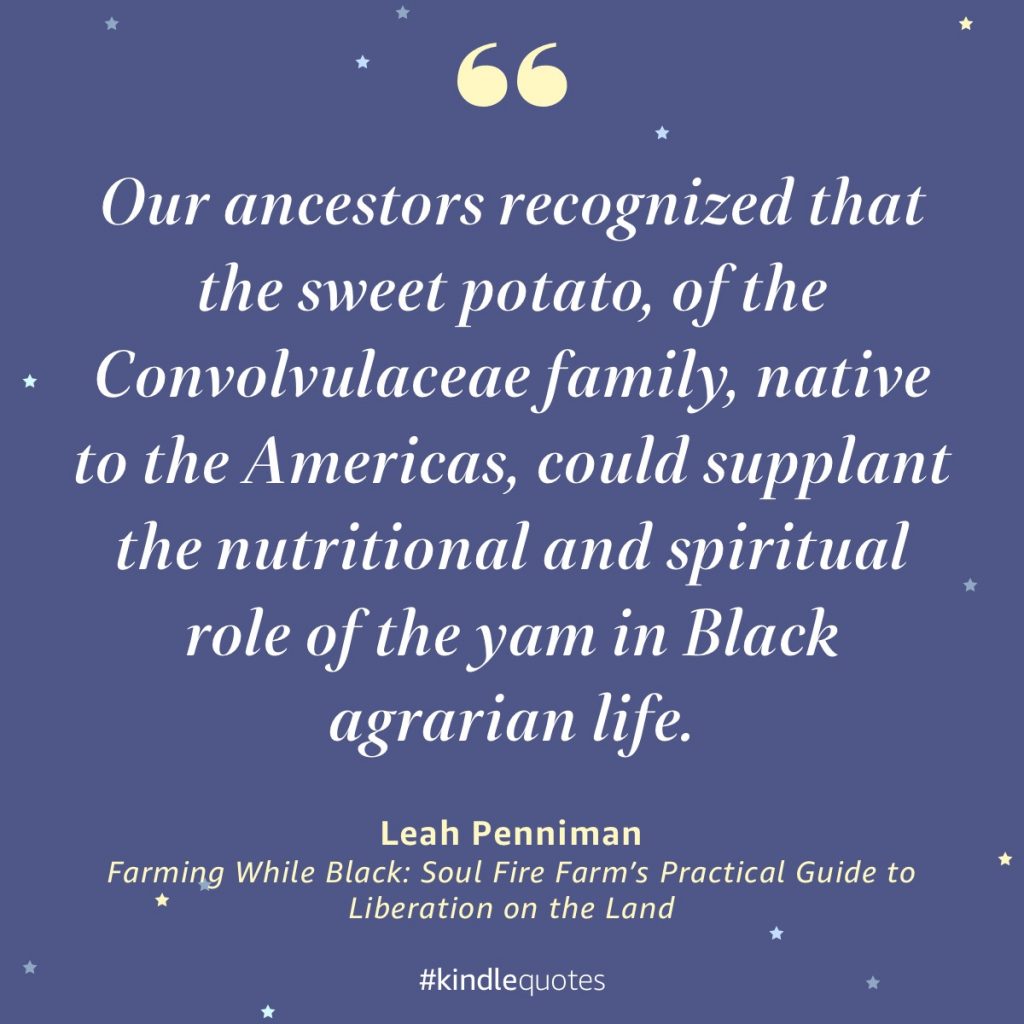
There might be a lesson in yams about climate adaptation. Rather than lose the knowledge and spiritual nourishment stored in agricultural and culinary traditions by abandoning those traditions, we can look for replacements that “naturalize” our cultures to transplantation in a new land, i.e. climate.

In the context of coffee, we see this in the possible cultivation of cacao as a replacement. Coffee is incredibly important globally as a fuel for people and as a tropical crop. But Arabica is threatened by climate change. Cacao will be much more suited to a warm climate. Cacao provides caffeine, bitterness, roasty-ness, and fruity-ness, and can be grown on the same farms by the same farmers as coffee.
In my own kitchen, I find myself substituting meat with mushrooms and other protein-rich foods, and replacing southern ingredients with ones that grow up here. I do this so that I can continue to cook the tacos and stews that my German-Texan mother raised me on (quite inexpensively, too) because that’s all I know and crave.

I’m also on a quest to leave coffee for something else. I have anxiety disorder, and coffee is not my friend, but it’s made its way into my daily routine through my time as a kiln tech, working at a very busy DIY ceramics shop with an espresso bar. Never until I started that job did I feel the need to drink coffee. I hope to find something I can forage locally and roast myself (mood-boosting instead of caffeinated) so I don’t have to navigate the ethics of global trade for my morning cuppa.
All images credit to myself, Corinne Stewart, unless otherwise indicated.
Leave a Reply