
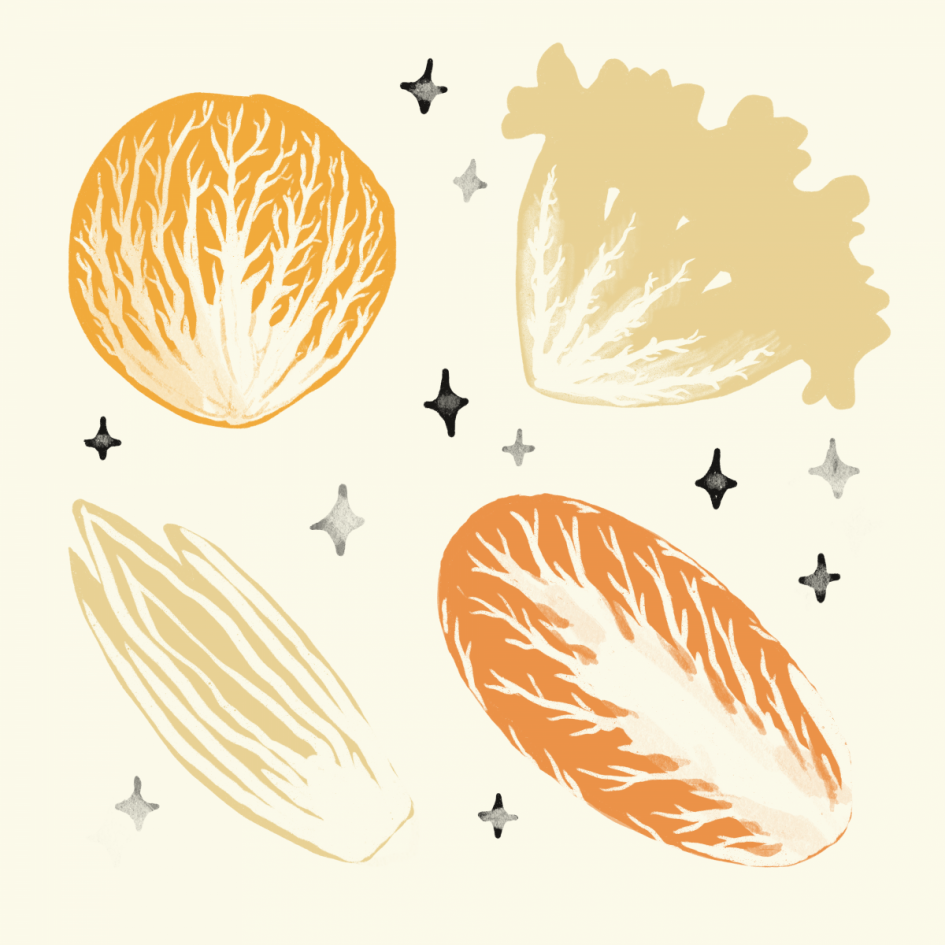
5a: Film studies
I’ve chosen minutes 27:30 to 30 (1-3 minutes) from the Radicchio Week video interview with Cathy Whims, which I’m titling “ice bucket challenge” in order to explore the program question: “What factors influence the quality of these foods, especially their flavor?”.

Lane Selman asks Whims an audience question: “do you have any more advice for gateways to loving radicchio or other bitter vegetables?” Lane also shares some strategies she’s come across; butter, cheese, and other fats. Cathy explains that radicchio is best just after frost. In the other video, with Andrea Ghedina, he explains that the plant produces sugars as a protection against freezing. Cathy says, you can replicate this in your home, by soaking your radicchio in ice water to make it crisp, crunchy, and noticeably sweeter, a process called forcing. She imitates the sound of the radicchio, “crunch, crunch, crunch,” and I can imagine how satisfying that is.

I think this is a great example of how the processing (like with coffee, malt, and wine) can play a large role in the quality of flavor. This reminds me of Stuckey’s bitter experiments, where we learned the chemistry of bitter and how to cover it up. With the tea and grapefruit, the sugar and salt together overpowered the other flavors, so I wonder what effect that has on radicchio.
5b: Natural history of chicories
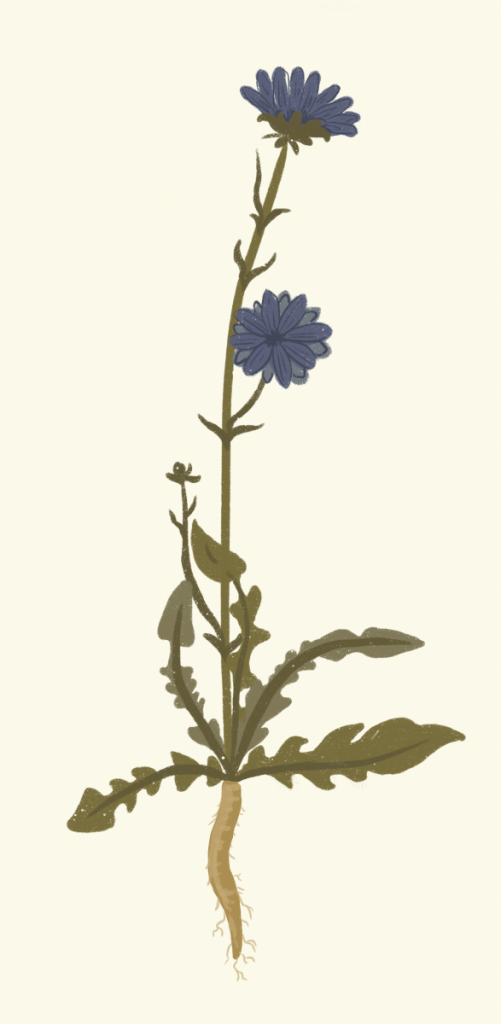
Chicories are native to western Asia, Northern Africa, and Europe. Chicories grow well in cool-cold, sunny conditions and well-drained soil. To get a harvest that is crisp and not too bitter, plant in late fall or winter.
Because radicchio is self-incompatible, new varieties are developed either via natural cross-pollination for diversity, or controlled breeding by segregating crops for consistent varieties. These two strategies are called open-pollinated breeding and landrace breeding, respectively. Farmers save seed from whichever plants have favorable characteristics, overtime creating new varieties.
Wild bitter roots “coffee” tasting
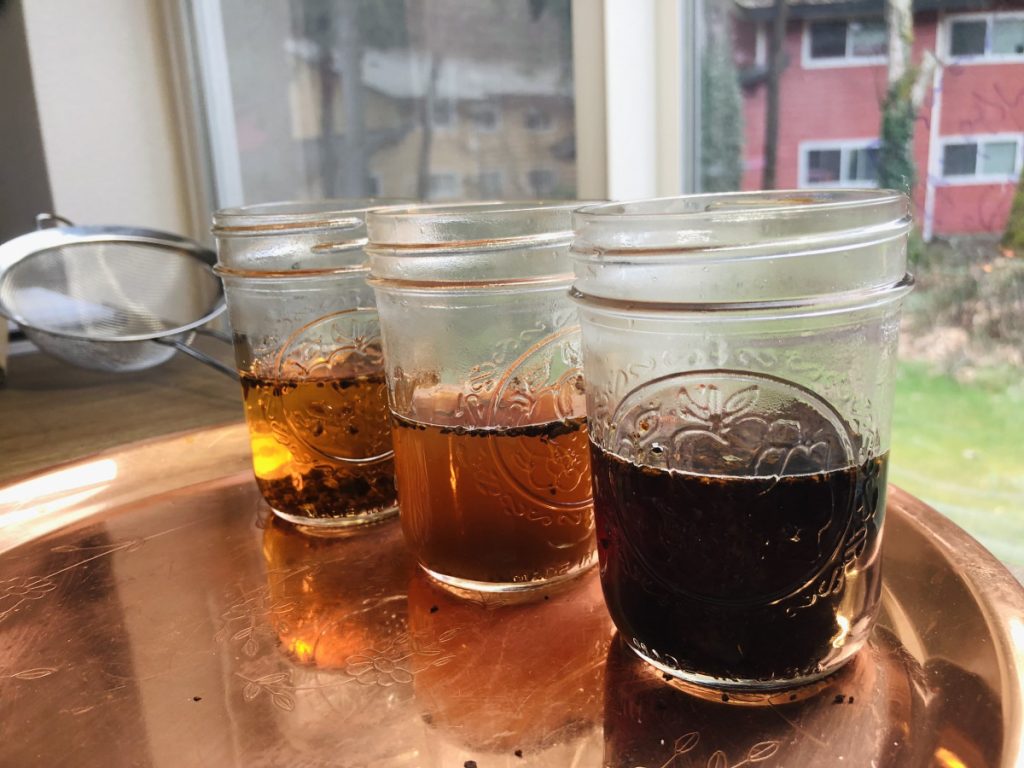
Sarah Dyer mentioned roasted chicory root coffee, so I got some from Radiance to try myself. I compared it to roasted dandelion root (also Asteraceae family), and regular coffee. Chicory was dark and intense, like a stout beer. I found out that it is indeed used for brewing in place of coffee in dark beers. Dandelion was bright and grassy. I still prefer the coffee over both local alternatives.
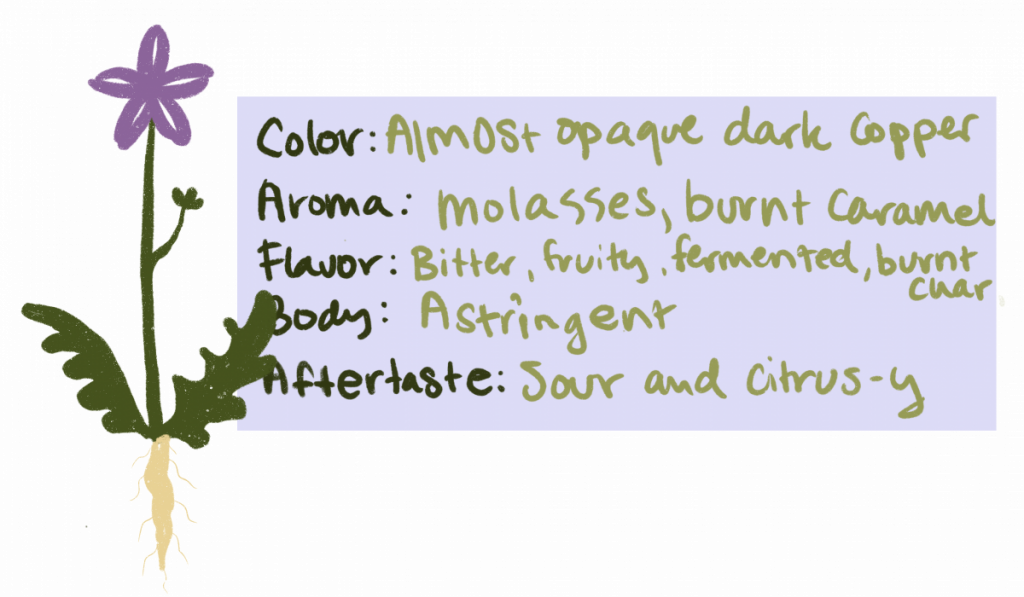
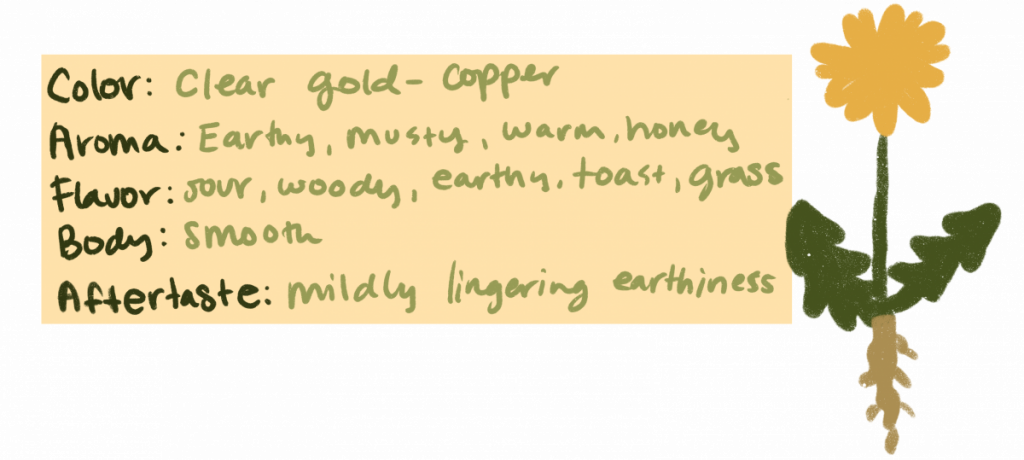
On the significance of these wild bitter greens: “Dandelion and chicory grow wild in our region and are commonly regarded as weeds, despite the fact that their nutritional value far outshines lettuce and other cultivated greens. Both were frequently used by our enslaved ancestors as vegetables” (Leah Penniman, Farming While Black).
5c: Regenerative agriculture
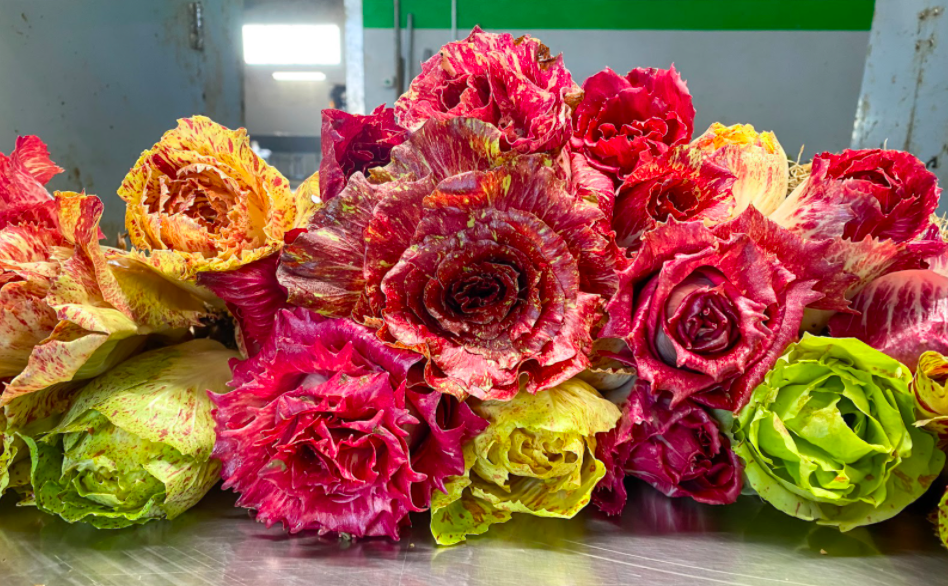
Chicories are especially bright and refreshing compared to other winter crops. They fill a variety of market niches because they come in a variety of colors, flavors, and shapes. Further economic diversity can be added to a farmer’s business by selling some radicchio raw, and some later in season after the value-added process of forcing in a cellar. Although chicories disturb the soil when harvested, in a rotation system followed by spring crops such as legumes who restore soil integrity and nutrients, they can serve as a cover crop.
Chicory is not highly competitive in early stages, so weeds are an issue. Most pests and disease cycles can be interrupted and combated by rotating crops and/ or not growing chicory all year round in the same spot. Mulching is not a good idea because it attracts slugs, who hide in between chicory leaves and eat the crop. In order to prevent downy and powdery mildew, keep a micro-climate with good airflow. Aphids also like chicory, and can be removed by spraying with water or removing infested plants.
Chicories prefer cool, well drained soil high in organic matter. They are fairly frost-tolerant. They like a lot of sunlight. Chicory should be grown in cool temperatures to yield crisp and sweet, not too bitter leaves. Ideal growing in the PNW for desirable flavor is between September and March.
“You can grow summer radicchio, but if it’s so bitter no one wants to eat it, is it really regenerative?”
Steve
I think this example of climate having such a profound effect on radicchio bitterness says something important about terroir in general. It’s important to not only consider what climate conditions a plant will tolerate, but also in what climate and cultural conditions it will taste good. Food nourishes us somatically and spiritually, not just physically.
5d: Tasting research
Radicchio Tasting Form – March 3rd, 2021
“I’m blown away by the tenacity of these plants, and the tenacity of these farmers.”
Caleb Poppe on radicchio
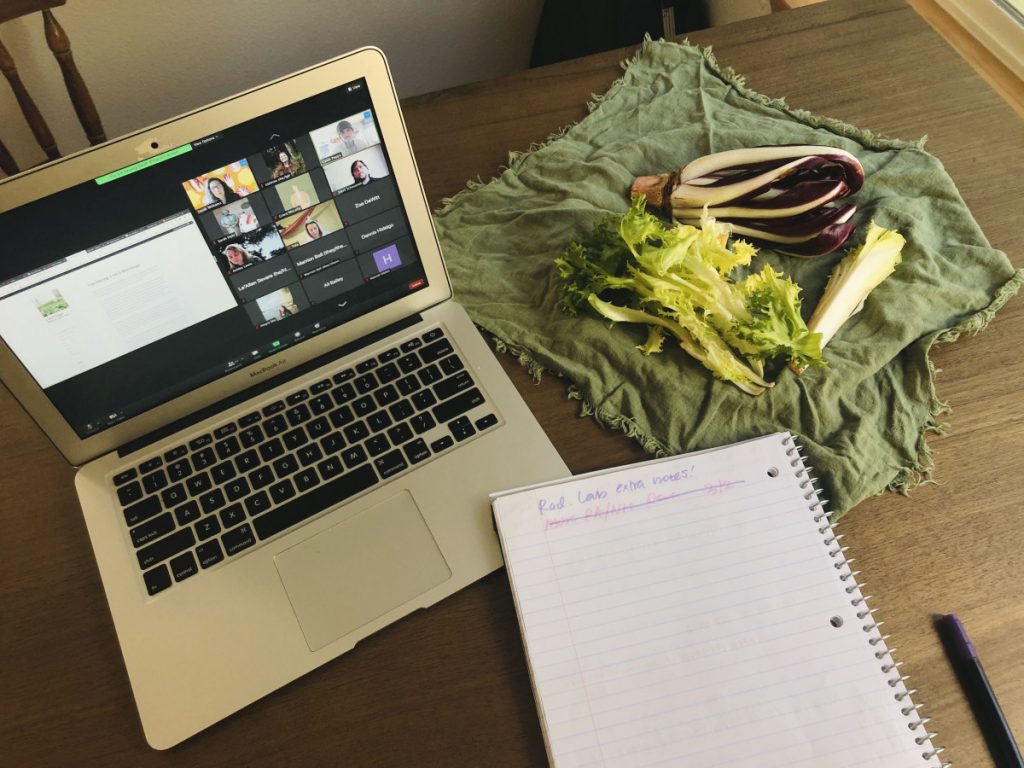
- Flavor Rating (0 – 5)
- Forced Treviso Tardivo (red)- crunch and smoosh, watery, citrus, sweet, chewy, peppery, grass
- Belgian Endive (heart)-peppery, spicy, sooo sweet, crunchy, dissolves, watery, honeysuckle!!!, honey, hairy fuzz, crunch crunch
- Frisee (frrizzy): vinegar, dark fruit, sweet, grass, corn?, Salty
- Bitterness Rating (0 – 5)
- Forced Treviso Tardivo- 2 outside, 4 inside
- Belgian Endive- 1
- Frisee-2, not lingering though
- From the perspective of a consumer, what is your opinion, solution, and/or concern about having access to local vegetables throughout the winter months?
I need/crave some local higher energy foods in winter besides dried spices. I make a lot of soups in winter with root veggies, and eat cheeses, breads, canned food, dark greens, and other seasonally appropriate foods when I’m trying to eat seasonally. I would value having access to some crunchy veggies that are refreshing. Although, there may be other veggies that do well to fill this niche that aren’t in my culinary bubble.
- From the perspective from a grower/farmer, what is your opinion, solution, and/or concern about having access to local vegetables throughout the winter months?
In his interview with Caleb, Jacob talked about how the volume you can get from winter tunnels is much less than a field radicchio yield (which is also higher value). It also adds diversity to his winter market and income.
- Do you think it is always feasible to only shop for vegetables that are in season for your local region?
In my experience, in season stuff is cheaper, so I imagine the barriers for most would be knowing how to cook winter foods for your specific location, or finding recipes for each season that meet all your needs. For example, I’m from Texas, so after moving to Washington it’s an ongoing process to learn how to cook with foods appropriate to this region.
- Having watched, listened, and read about radicchio over the last two quarters, what recipes, meals, and/or products are you excited to try, or have tried? Were they a success?
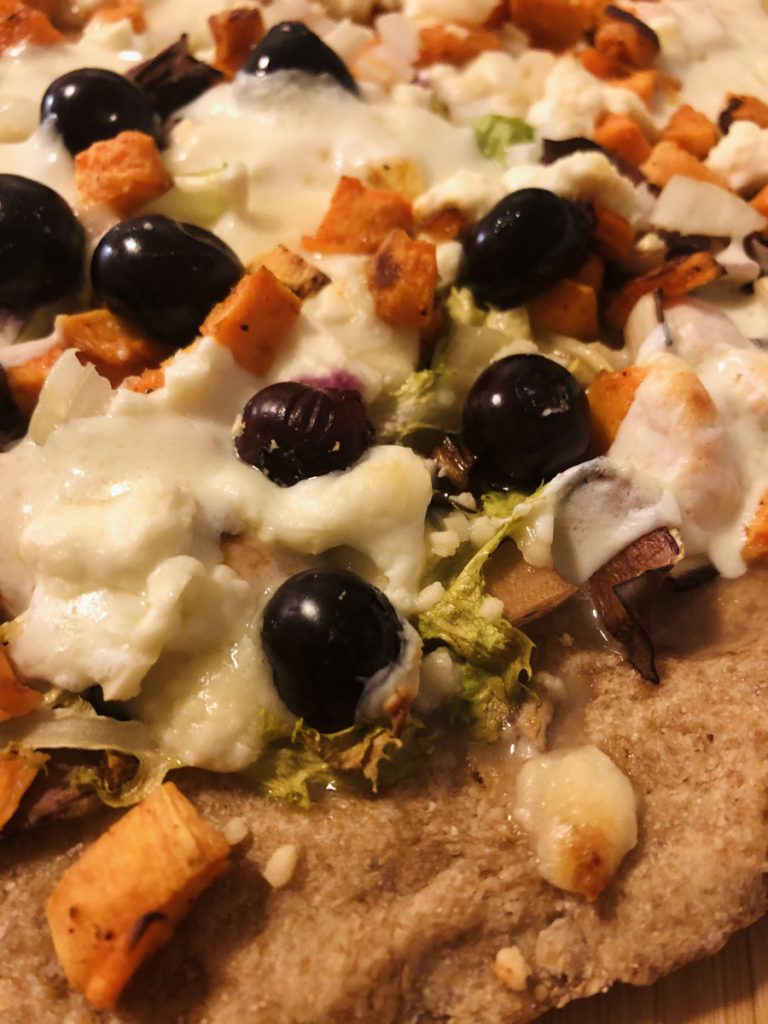
I tried making radicchio pizza. The other toppings I used overpowered it, and I actually enjoyed it much more all by itself. I’ll make a colorful salad with the remaining of it, with just oil and red wine vinegar to add some salty and sweet. The stiff spoon shape I imagine would make it good for dipping in something. I’ll have to explore some more options that don’t try to cover up the flavor of the radicchio. After being in my fridge for a while they are delicious.
- Now that we have been exposed to many different foods and drinks, and have a deeper understanding of our own perception of flavors, how would you ‘build your lexicon’ in relation to the flavor complex of radicchio? What categories and/or words might you use? Use the CBN’s Winter Squash Flavor Wheel (squash wheel) for inspiration.
I would use bitter, spice, sweet, floral, and vegetal.
Bitter would include acrid, zesty, acidic, astringent, and medicinal.
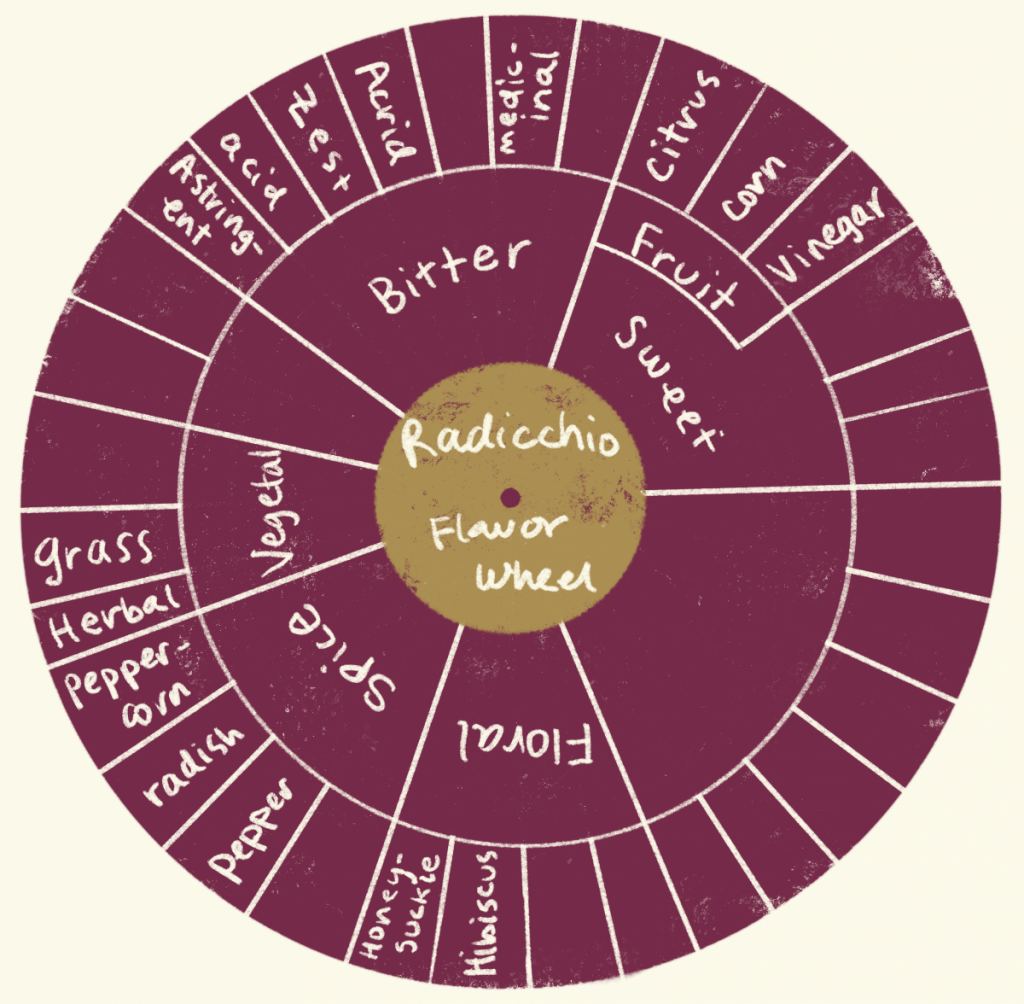
Spice would include peppercorn, radish, and pepper.
Sweet would include honey and fruity. Fruity would break down into corn, citrus, citrus rind, apple, and vinegar.
Floral would include honeysuckle and hibiscus.
Vegetal would include grass.
4e: Taste experiments
Bitter taste experiments: bitter nail tea and grapefruit

- Of the 5 basic tastes, which do you believe your body craves the most?
Definitely sugar. I have such a “sweet tooth”.
- Do you have a specific (or favorite) way to enjoy that basic taste?
I like to eat something really savory (salty and/or umami) and then have something sweet afterword for contrast, or salt my sweets, or
1st Experiment Questions:

- What was your initial reaction to the bitter nail tea with nothing added to it?
Made me open my mouth to dispel the volatiles by widening my mouth.
Vomit-y. Tactile. Doesnt linger
- How did the bitterness change between the different cups containing sugar and/or salt?
sugar: feel it on my tongue (astringency) but it tastes mostly sweet. Super strong on the second sip. The honey makes it super sweet and maybe even sour? But it’s still not yummy. It’s kind of worse. Like bad coffee with sugar, yuck. I have sourness lingering from the sugar.
Salt: same reaction as regular. I feel like gagging, I’m sticking my tongue out. Also tastes like salt water. I might not have added enough.
I added a little more salt and now it tastes soo salty but still hecka bitter!
Salt and sugar: EW EW so salty, very bitter, and sweet, like a rotten butterscotch! Too rich. Does not sit well.
- There seems to be two groups of coffee/tea drinkers: people who enjoy the drink in its unaltered form, and others who like modify it with fats and sugars. Give different example of a way we humans alter classically bitter foods or drink to make them more palatable.
People love caramel lattes, perhaps because it has the sweet and salty masking effect! I also noticed the hot cocoa mix that I have is salty before being brewed.
Personally I like to add cream to my coffee, but not sugar. Sugar compounds on the sour aftertaste of coffee and doesn’t do much to mask the bitter. My classmates have told me that sour aftertaste that I get from sugar is unusual and Caleb Sol suggested it might be the biota that help me digest who might be the cause of this phenomenon.
- What are your thoughts on regionally/culturally acquired flavor preferences? Do you believe that flavor preference is a learned behavior, instinctual, or a mixture of both? When you taste a flavor, when does its objectivity end and your subjectivity begin?
I think flavor preference is a mix of natural and both. For example, we don’t like bitter in high quantities because we instinctually know it might be poisonous, but our threshold for bitter is different depending on cultural traditions.
2nd Experiment Questions: (OPTIONAL)

I used some prematurely-picked (and consequently bitter and sour) blood oranges
- Do you enjoy grapefruit? Why do you think some people love the flavor of raw grapefruit, and others can’t stand it?
I think part of it is knowing how to eat it, how to avoid the rind and also what you add to it. Maybe whether you think of sour and bitter as complimentary to sweet. Probably also has to do with whether you are a tolerant taster.
- How did the addition of sugar alter the flavor of the grapefruit?
I have a slightly unripe blood orange that’s somewhat bitter.
The honey didn’t eliminate the bitter aftertaste, but it made the initial bite scrumptious. They didn’t mix much, like what Caleb said.
- How did the addition of the salt alter the flavor of the grapefruit?
It really brought out the sweet and the sour. I don’t taste much bitter. It’s much smoother.
Both sugar and salt: I tasted mostly sweetness., less sour, still deliciously tart.
- Did the addition of the sugar and/or salt change your opinion on grapefruit?
I never noticed how much I could appreciate a full, loud tart flavor. I always thought I disliked lemonade because of the tartness but maybe I disliked the bitter and the sugar (sugar leaves a sour taste in my mouth)
- Seeing as these two experiments both consisted of altering a food or drink by adding salt or sugar, did you find any similarities or differences between the two experiments?
I thought the masking effect was much more effective on the grapefruit than on the tea, but maybe because in the citrus, sour was the star of the show naturally, and bitter less prominent.
4g: Climate series
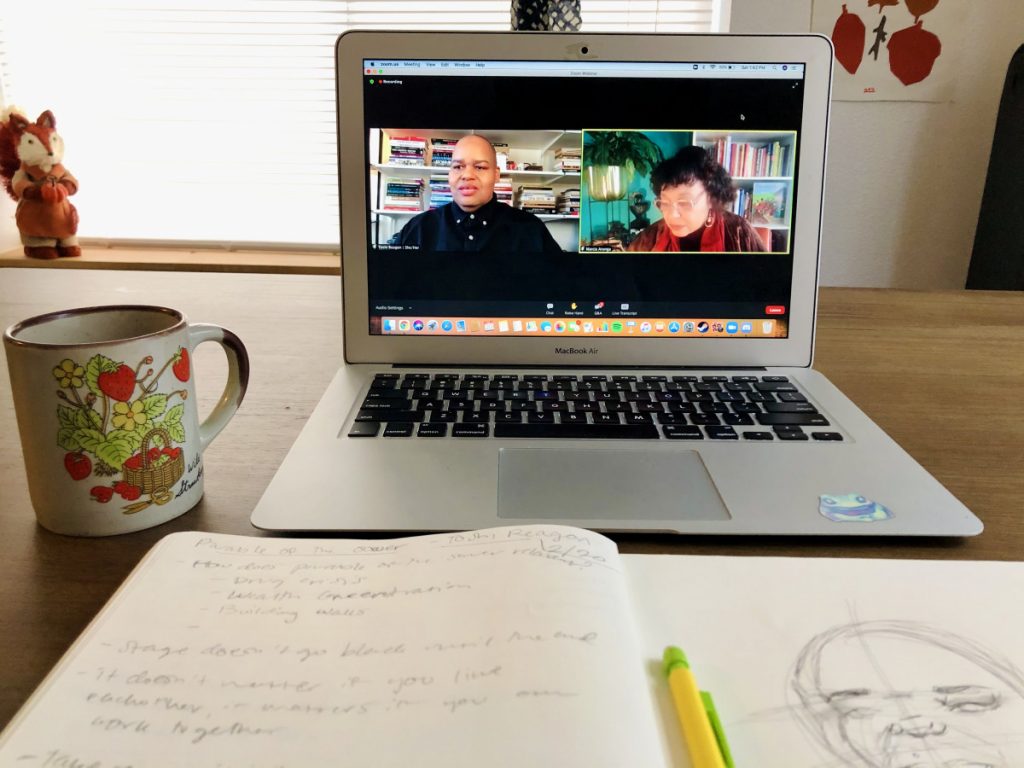

It was an honor to be present for a conversation with Toshi Reagon, a musician who created a musical with her mother based on Parable of the Sower by Octavia E. Butler. Everyone’s description of the production made me envious that I haven’t seen it and might never. They do the whole performance without the stage going black until the end. This was another great example of the role of art in environmentalism (like Geoduck Gal!).
Reagon thought that Octavia E. Butler’s prophetic climate dystopia novel was relevant in these ways:
- drug crises
- wealth concentration
- individualism/tribalism
- building walls literally and metaphorically
- refugee crises
- water scarcity
She talked about the contrast between main character Lauren’s walled community versus her cobbled group of refugees; her sedentary community has no impact beyond the walls. Lauren sees people houseless on the streets and can’t help them in that position. It occurred to me also when discussing walls that there is nowhere you can go that’s separate from the world. The wealthiest people may be effected last, but they can’t really escape climate change and ecological disaster. Because we are all part of one natural system, true food security is security for all, and true climate justice is justice for all.
She also talked about the value of diversity in the resilience of any community. Different people bring different strengths and skills. Young people bring energy and updated knowledge. Adults and elders can vote, and hold inherited knowledge of food and medicine, as well as the tenacity to support young people in their efforts.
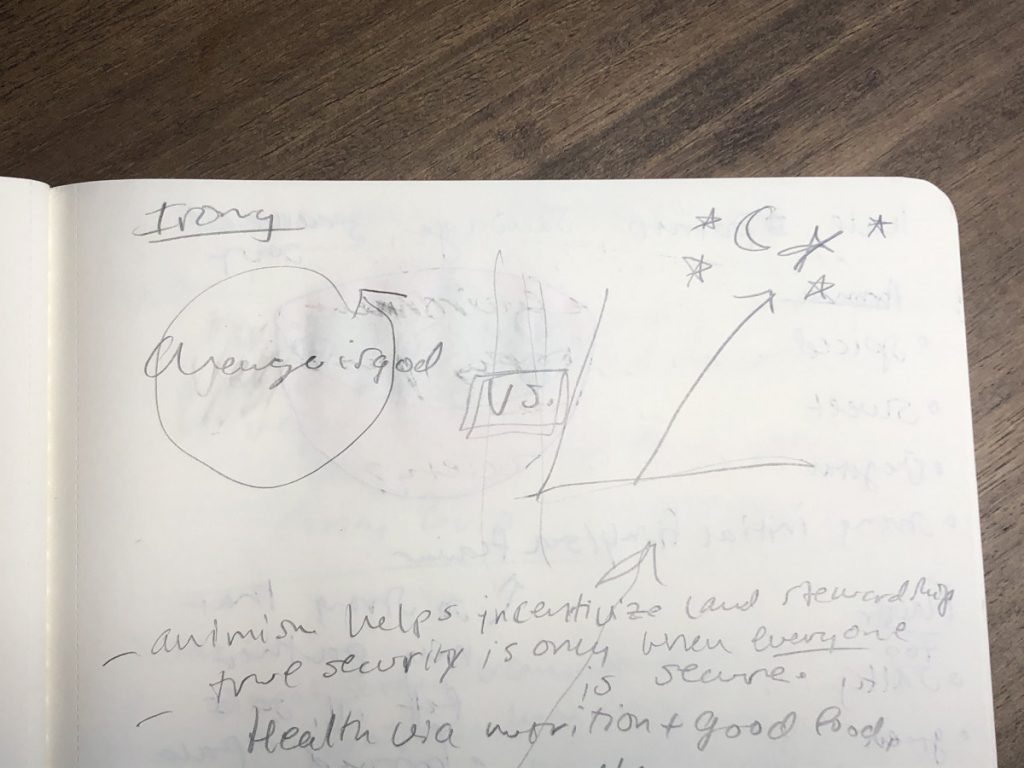
My seminar group on Thursday discussed the irony of Lauren’s “Earthseed destiny” philosophy contrasted with her other philosophical messages as discussed above. Her idea is that humans are special and intended to leave Earth eventually for another planet. We pondered whether this is metaphorical, character development, or a reflection of Butler’s own philosophy, because most of Lauren’s philosophy is humble and ecologically sensible, but this particular belief seems to place humans above nature and imply that there is a planet B, as Elon Musk would have you believe.
5f: Sustainable entrepreneurship
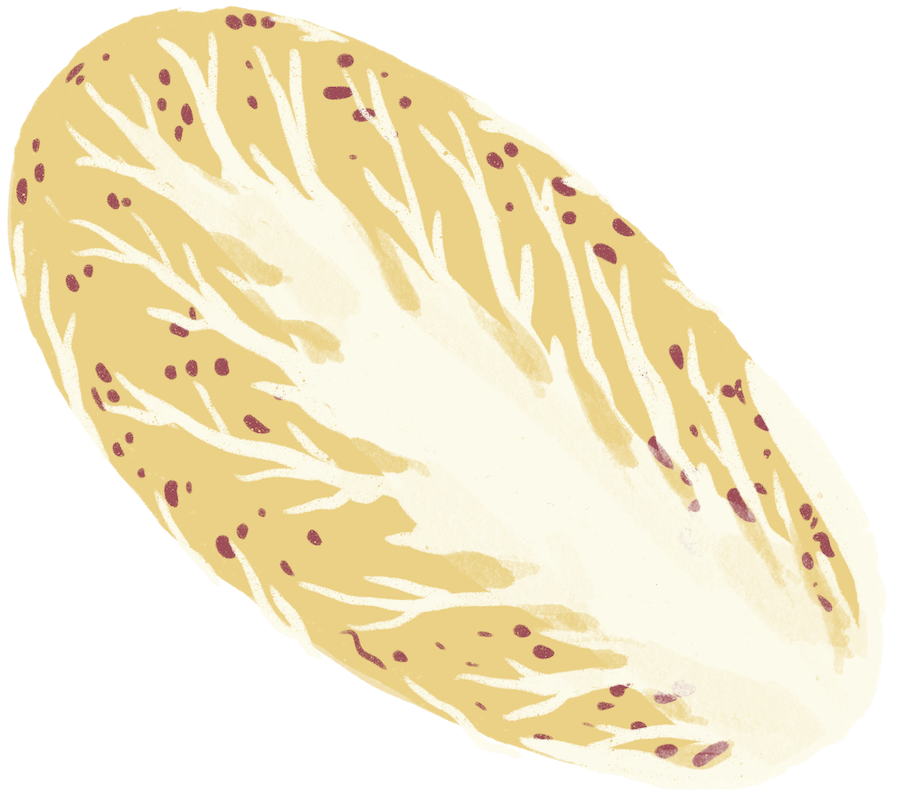
I thought that Azienda Agricola Pitton outside of Udine was a great example of sustainable chicory farming. Andrea Pitton’s open-pollinated radicchio crops are diverse and resilient, with less land and inputs needed than isolated crop varieties. His crops are unpredictable in flavor and appearance, which gives room for happy surprises and novelty, like the variety between one wine vintage and another. His radicchio is also a perfect expression of terroir, unpredictable and always adapting to it’s environment, helped along but not regimented by man.
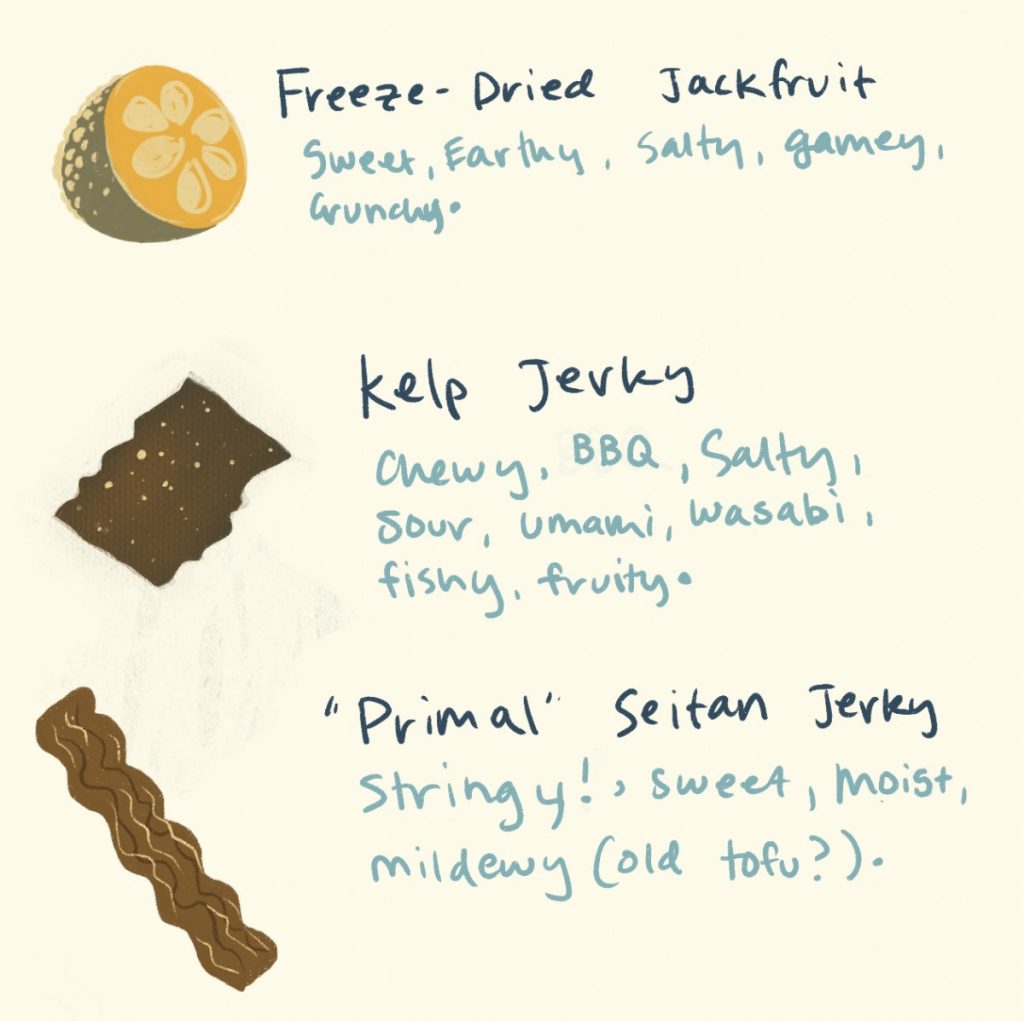
Our peers led a class session on meat industry sustainability. It sparked multiple threads of conversation and revealed an array of opinions on the subject of meat within our class.
The group presenting talked about the methods used by Impossible and Beyond meat. These companies use different methods to create lab-grown meat that has an incredibly realistic flavor and texture. Impossible uses heme from cows, while Beyond uses plants (soy and corn among them). A questions that went unanswered for me was, does meat replacement mean less jobs? If not, what is the pathway for livestock ranchers to new jobs in a high-tech meat industry?
For further reading: What do Farmers Think About Cultured Meat?

We also heard from Daniel Cherniske about his past career in permaculture. He engaged in some critical self-reflection and challenged us to reflect on our own intentions in permaculture careers. Namely, he points out that as a young white college student, he was given the message that he could and should save the world by himself. This led him to take a trip to panama where he used the land he had access to to arrogantly try and teach local farmers how to farm sustainably.
He spent much of his career farming in highly controlled aquaculture warehouses, removed from the land, growing malnourished food and feeling spiritually malnourished himself, thinking that high tech ag was the answer to food insecurity. He stresses the importance of working with, and not against, nature. Any solution that decreases human relationships with the land is a big red flag, he says.
“Food insecurity is a distribution problem and a justice problem.”
Daniel cherniske
Now he’s following his passion to play music, and yearns for a sense of community after living an individualistic life in the high-tech, high-input sector of food and ag. Listening to Daniel’s story, I was challenged to confront my own intentions and needs, because I relate to the feeling that the weight of the world rests on my shoulders alone, which is very white and individualistic, and something I need to unlearn.
5h: Foodoir
To expand on the topic of meat and sustainability, I’ll share some commentary from Leah Penniman in Farming While Black. She says about her own diet “I personally have found a home in the flexible vegetarian diet. Plant foods are the center of our family’s cuisine, but we are open to eating Grandmommy’s chicken” (Chapter 9, Kindle edition).
I have the same meat-eating habits as Penniman. When it’s cooked for me, I eat it, and I’d even be willing to cook it for others. I can’t imagine raising and slaughtering animals, but Penniman brought up some great points. She wants her community to have access to ethically and healthfully raised meat, so she is willing to supply that, rather than expecting everyone to be vegetarian. Soul Fire farm also benefits from the ecosystem services that livestock provides in a rotational grazing system. She raises only pigs and chickens because they “account for only 10 percent of total livestock greenhouse gas emissions even as they provide three times as much meat globally as cattle” (Chapter 9, Kindle edition).
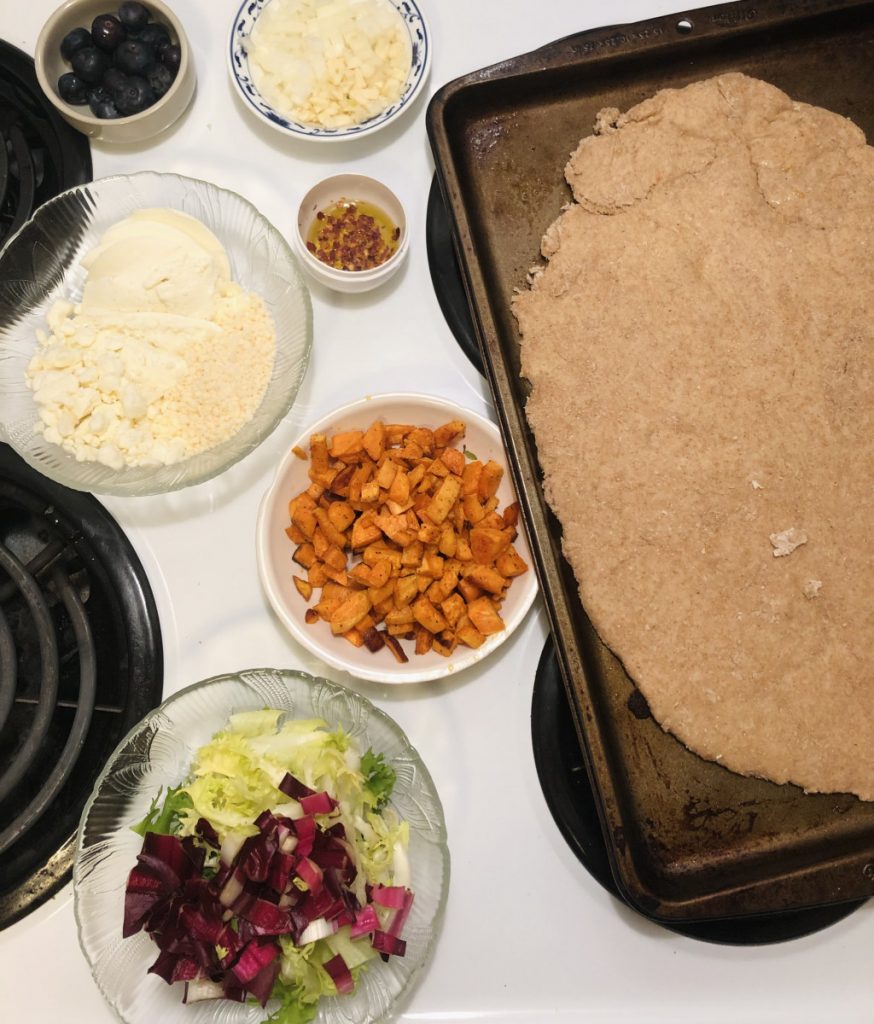
Inspired by Cathy Williams, I made my own radicchio pizza, as discussed above. I enjoyed having an hour with my partner working together on a meal amidst end-of-quarter craziness. We were shocked that our whole wheat flour came out delightfully chewy and puffy with the recipe we usually use for white flour. On the pizza we had mozzarella, parmesan, and feta, sweet potato, garlic, onion, oil, and blueberries. Although it was delicious, I don’t think it did radicchio justice. I’ll be searching for some next winter to try a classic salad my partner’s italian mom described to us.

I called up my partner’s mom this week to ask if she ate radicchio growing up as the daughter of an italian-canadian immigrant. She said that her uncle brought seeds from italy because he loved it so much, and grew it in their garden in Canada. They would usually eat it as a salad leaf, with oil, pepperoncini, red onion, and olives. As a kid, she absolutely hated the bitter taste, but she shared this little story with pride.
One last quote for inspiration from Leah Penniman:
“As insurance for an uncertain future, they began the practice of braiding rice, okra, and millet seeds into their hair. While there were no report-backs from the other side of the transatlantic slave trade, and rumors abounded that white people were capturing Africans to eat us, they still had the audacity of hope to imagine a future on soil.”
Leah Penniman, Farming While black
All images credit to myself, Corinne Stewart, unless otherwise indicated.
Outside sources:
Penniman, Leah. Farming While Black, Soul Fire Farm’s Practical Guide to Liberation on the Land. White River Junction, Vermont: Chelsea Green Publishing, 2018. Kindle edition
Culinary Breeding Network. (Dec. 9, 2020). RADICCHIO WEEK: Cathy Whims, Nostrana, Cooking Demo. YouTube. https://www.youtube.com/watch?v=UWzpwsi9wwE
Culinary Breeding Network. (Dec. 7, 2020). RADICCHIO WEEK: Andrea Ghedina, Smarties.bio, History of Radicchio. YouTube. https://www.youtube.com/watch?v=_AR155DUxZc
Chicory. (2021, March 9). In Wikipedia https://en.wikipedia.org/wiki/Chicory
Waterbury, M. (2021, February 22). Rebuilding Radicchio. Medium https://margarettwaterbury.medium.com/rebuilding-radicchio-6ee5a53f68d6#annotations:IaUZkHyKEeuEHLuPAl1Sew
Gibson, R. Drost, D. (2020, April). Chicory in the Garden. USU Extension. https://digitalcommons.usu.edu/cgi/viewcontent.cgi?article=1276&context=extension_curall
Mystikhybrid. (2015, October 25). Foraging and Brewing Beer With Chicory Root. Amber Waves Brewing. https://amberwavesbrewing.wordpress.com/2015/10/25/foraging-and-brewing-beer-with-chicory-root/
Poppe, C. (2021). PNW Plant Fact Sheet: Radicchio.
Patterson, T., & Buechsenstein, J. (2018). Wine and Place: A Terroir Reader. Oakland, California: University of California Press. Retrieved March 9, 2021, from http://www.jstor.org/stable/10.1525/j.ctv1wxqq5
Leave a Reply