
#1a: Film Series: Program Questions in Scenes
I’ve chosen minutes 14:30 to 16 (1-3 minutes) from the film Red Obsession, which I’m titling “hype and hope” in order to explore the program question: “Why are matters of taste both objective and subjective?”
The clip begins as Sean Guillame-Prats explains to us the marketing behind an En Primeur experience, where people taste wine before it’s bottled. He says, “you are selling a piece of excitement, of anticipation, of magic, and there must be some hype and hope around this…that’s why Bordeau is so famous around the world, because Bordeau is very good at creating that excitement.”
Next the filmmakers play tense music, showing us people milling about eager to try the year’s wine. The people attending the event have high expectations. A man tells us, he wonders whether they’ll deliver.
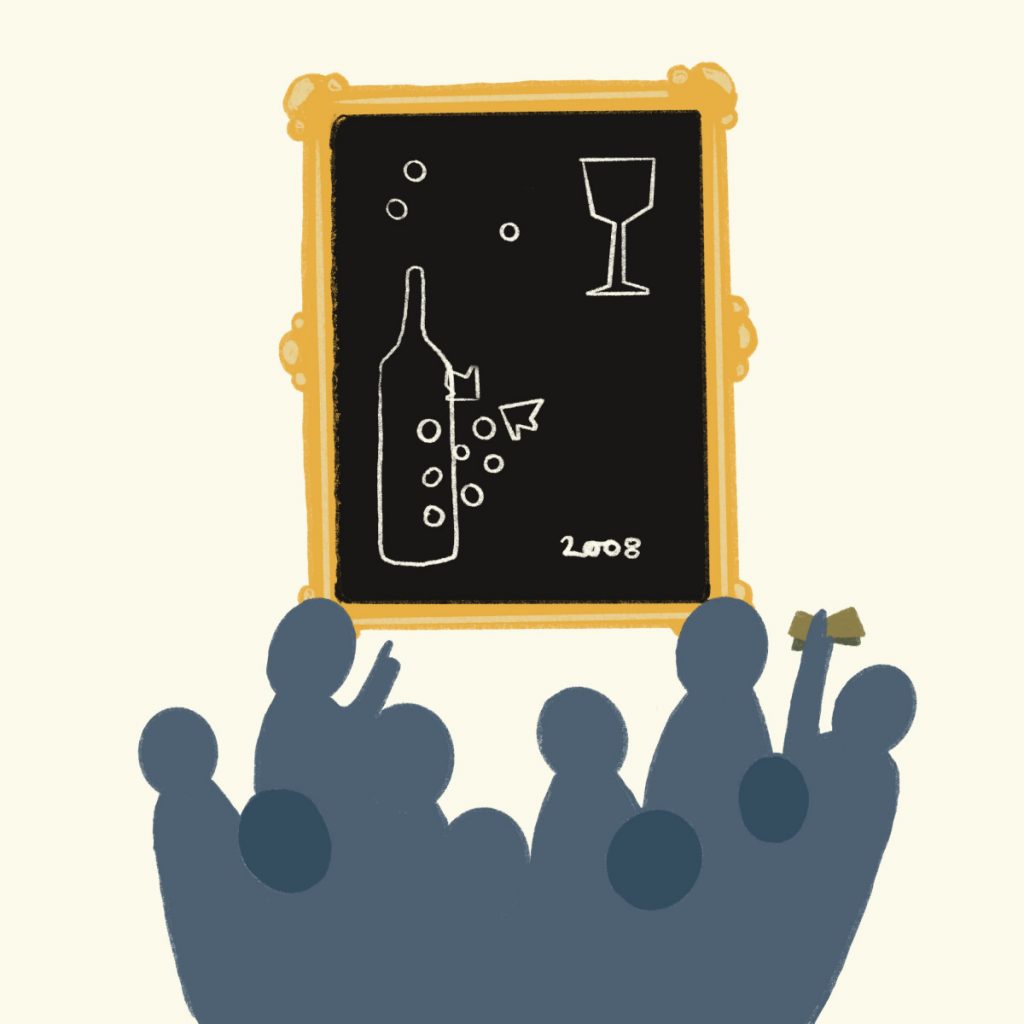
Then we get a peek into the wine traders’ perspective. The narrator informs us that the price of fine wine has skyrocketed, and the wines become “too valuable to drink”. Just like a highly esteemed piece of fine art, no one can experience these wines objectively. Desire heightens our appreciation, or in some cases our disappointment in the subject. Whether you objectively taste a special flavor or not, your satisfaction and the experience itself is informed by your expectations, by the “hype and hope” surrounding it.
#1b: (un)Natural Histories
Takeaways from Wine and Place: A Terroir Reader by Tim Patterson
“The universal premise underlying the concept of terroir—the simple truism we’ve already described—is that vineyard differences can affect the flavour of wine. Take a single grape variety and plant it in three different spots. Handle the harvested grapes in the same way, and the wines will taste different.”
page 51, Wine and place
History And Definitions:
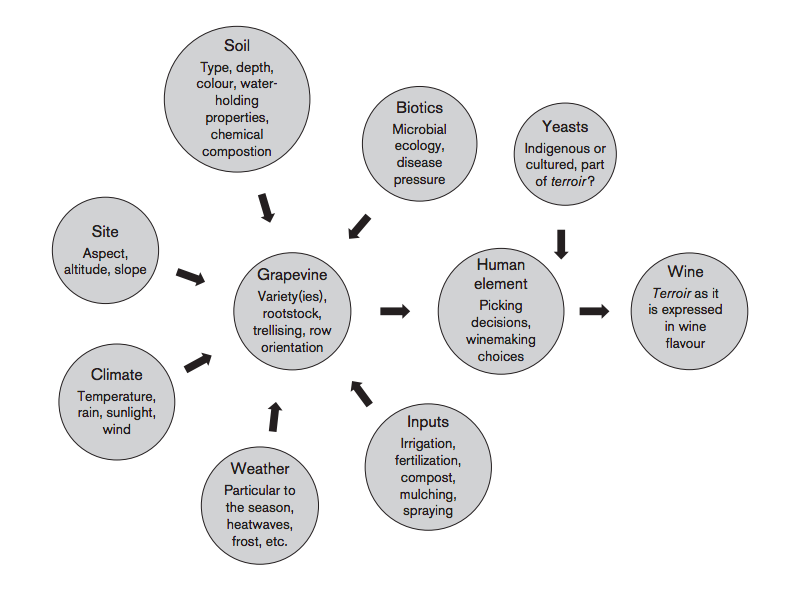
- As terroir is defined now, they say, it can be wielded with varying results and intentions. The definition must be modernized and specific.
- The misconceptions of terroir can leak into policy and regulations
- “ these oversimplifications are perpetuated by being too readily adopted in the legislation defining the criteria used to delimit their wine localities and regions, now known internationally as Geographic Indications” 52
- MORAN’s 6 facets of Terroir:
- Agro-terroir, or the way in which terroir is expressed by the plant (and managed by man);
- vini-terroir, or the ways in which winemaking influences our perception of place;
- territorial terroir, where the associations with a specific territory can yield obvious commercial benefits;
- identity terroir, where the notions of territory are extended into the realm of national pride or privilege;
- promotional terroir, where the concept is exploited for its obvious promotional advantages;
- legal terroir, where the notion of terroir is extended into legal terrain, as in the AOC system.
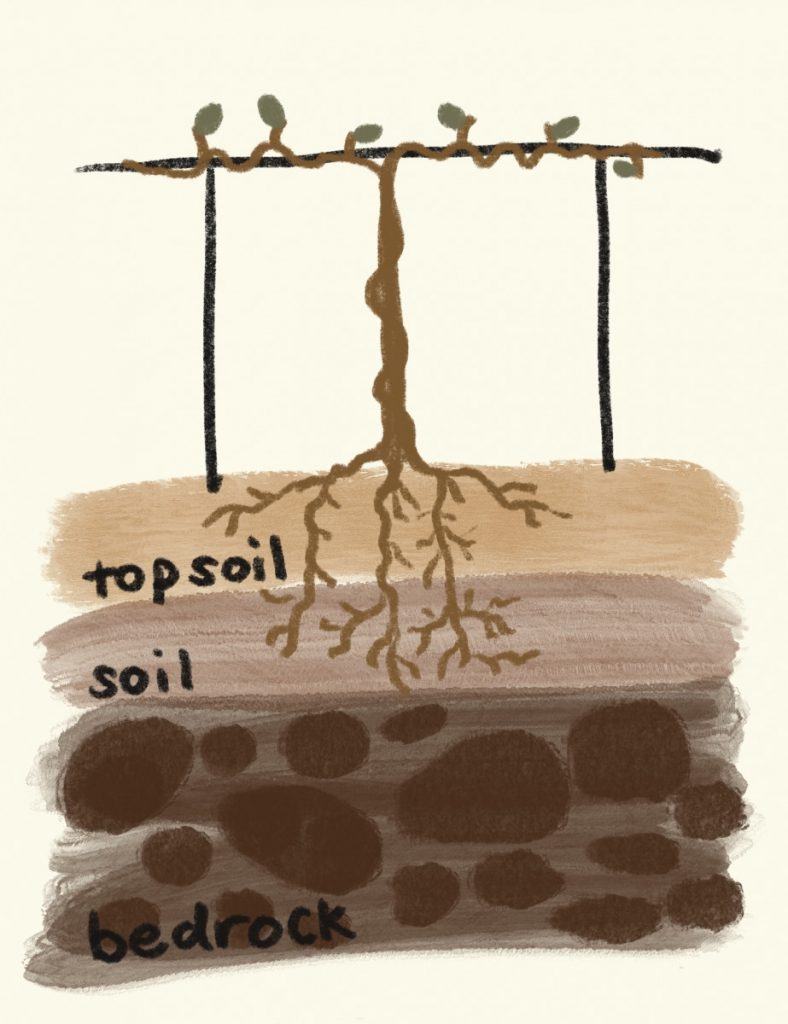
Soil
- Good vineyard soil is sand, silt, and clay (A.K.A. aggregated loam)
- Soil is central to terroir because “Weather comes and goes, as do the vines and the winemakers, but except in the broad expanses of geologic time, the dirt stays put” 59
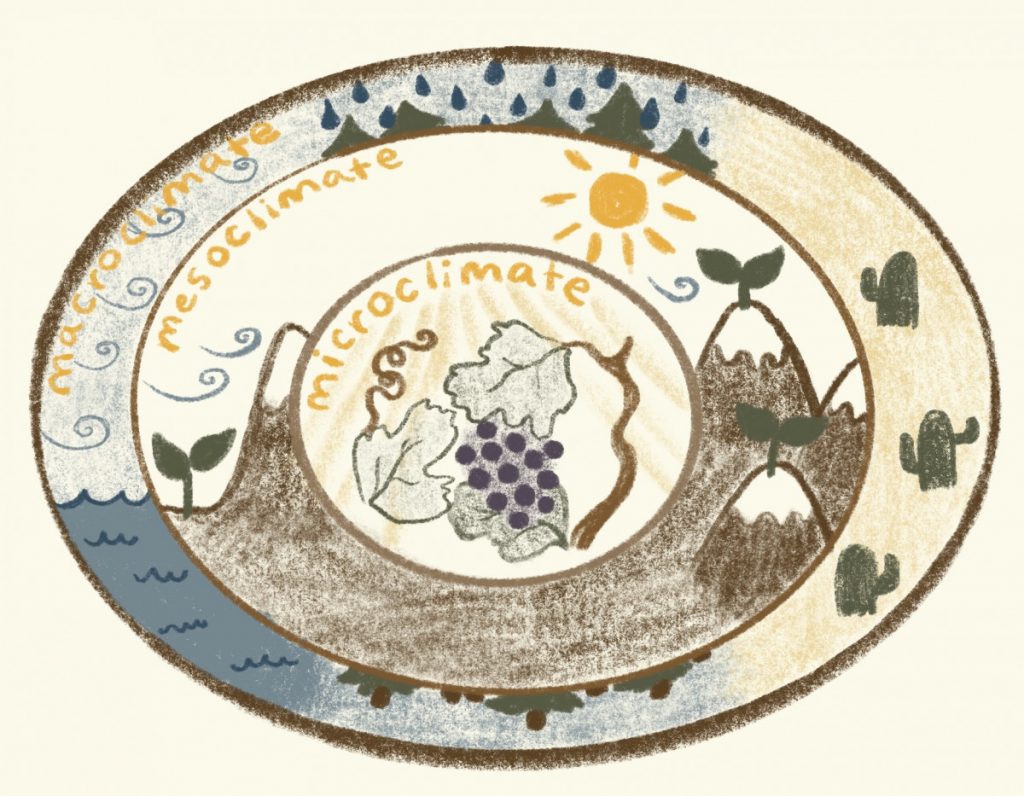
- Scale: land or climate, matters
- macro-terroir—the entire Napa Valley
- —or meso-terroir—the Stags Leap District, for example
- — or micro-terroir—a particular vineyard in Stags Leap
- “Active human involvement in modifying vineyard soils, in other words, is a longstanding tradition of winegrowing, and an important contribution to the terroir of a place.” 77
- It’s hard to tell exactly what nutrient composition in soil makes for “great” wine, bc if it was possible to say exactly, the additives could be replicated anywhere
- the best terroir soil-wise is one where the fruit can ripen slowly but fully
Climate
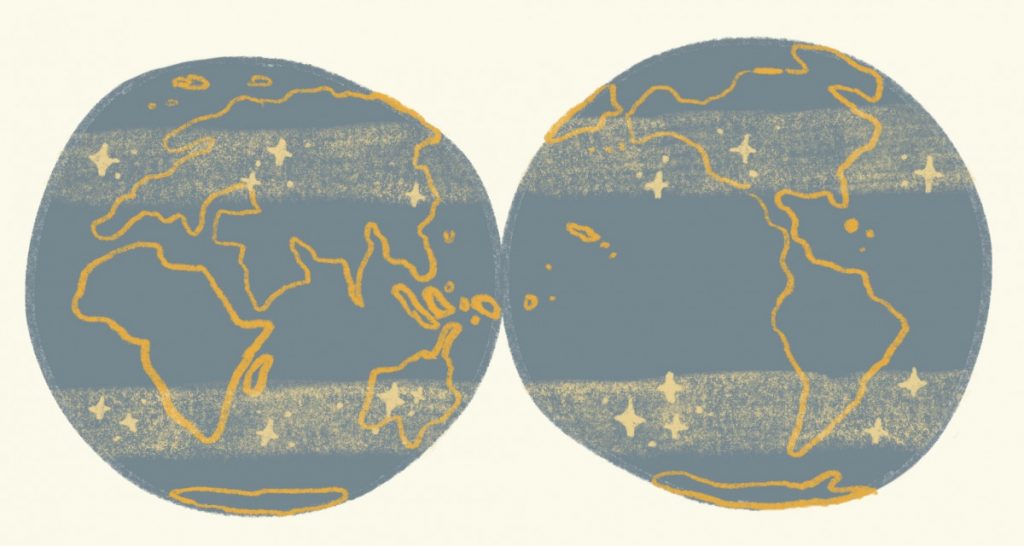
- Grapes are only able to grow properly in the two temperate belts
- Temperature & rainfall determine wine-growing viability
- On a smaller scale, topography effects temp and rain
- East facing slopes are best because
- Generally extreme water events migrate from the west
- The sun rises in the east, when the plants are still nice and cool, so they can do lots of photosynthesis without opening their stomata too much (a result of overheating)
- On an eastern coast, an east-facing slope may be too windy
- Temp is the most important climate factor in vineyards
- Hot areas make sweeter grapes and wines
- Cooler climate wines have less body and are more acidic
“Without scrutiny, standards, and common understanding, terroir can be easily dismissed, challenged, or distorted beyond recognition”
page 6, Wine and place
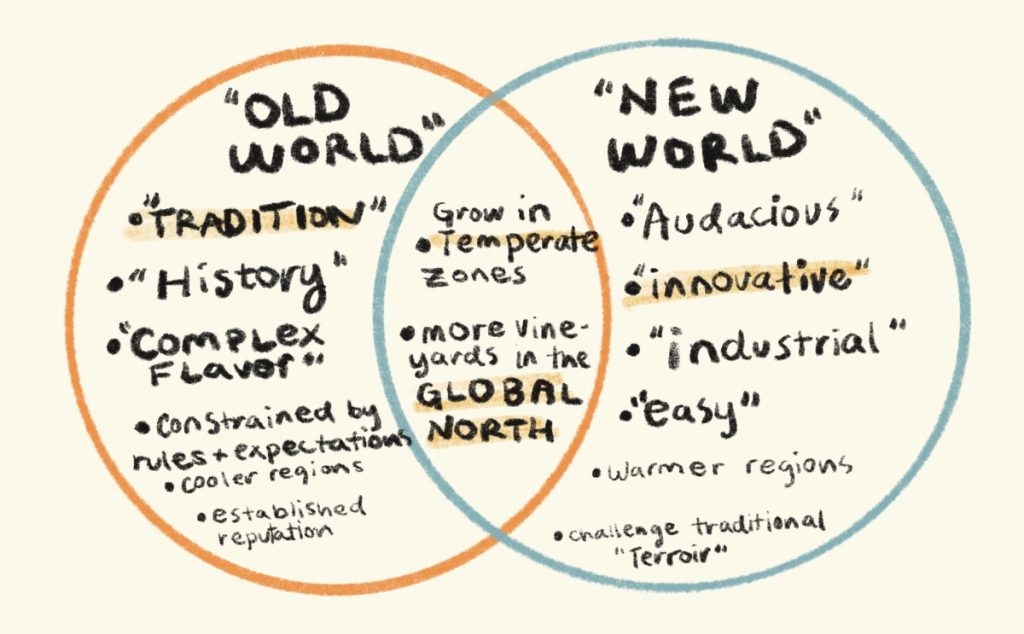
Wonder: is it/ how is it in the interest of wine marketers (or other food marketers) to specifically define, objectively and scientifically, terroir?
Conclusion: one way is that it can make fine wine seem possible (to the consumer’s expectations and therefore experience) in places other than those which have a monopoly on fine wine now (France, Italy).
#1c: Regenerative Agriculture
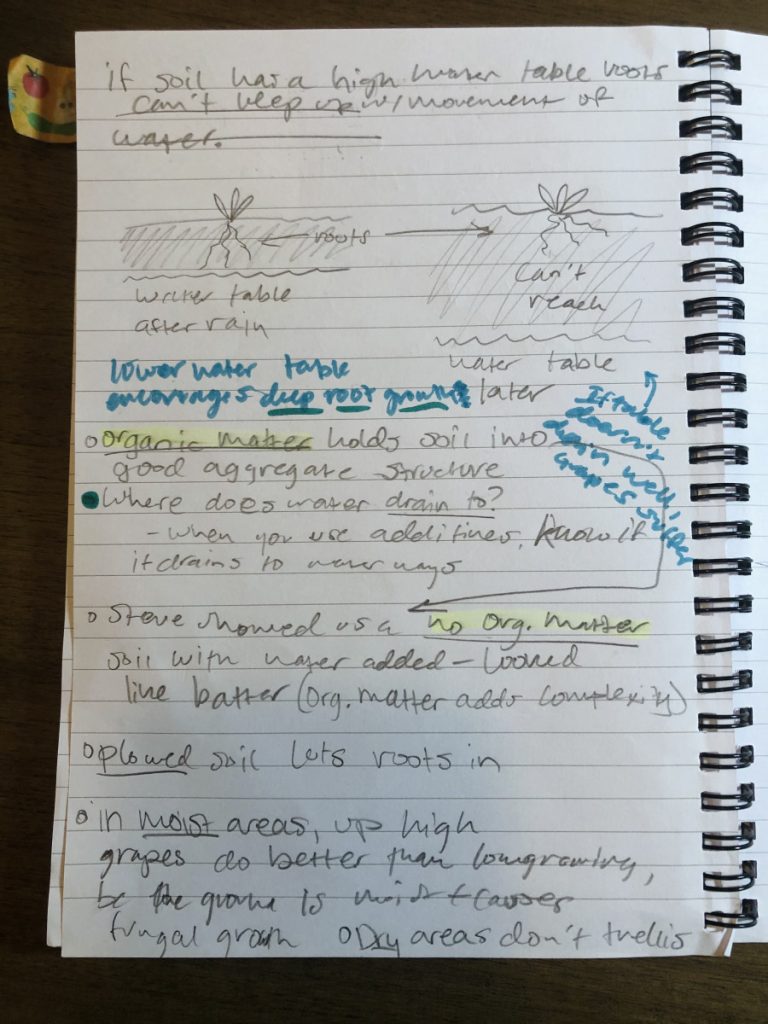
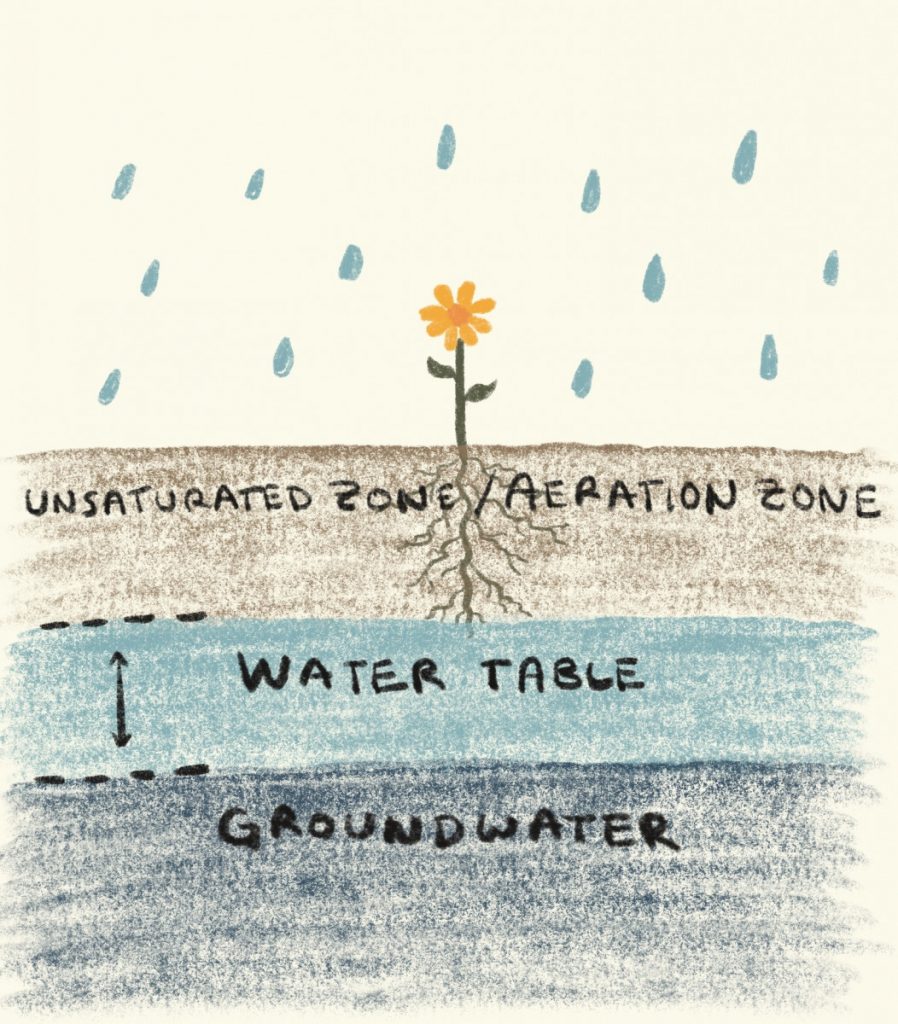
This week Steve introduced us to some agricultural practices and concepts that intersect with sustainability and taste.
He explained to us why grapevines love aggregated loam soils. This type of soil has both macro- and micro-porosity, meaning water can drain until it reaches field capacity, but some moisture is held in reserve by tiny pockets, available to the roots if needed. This type of soil structure also allows for plenty of oxygen aeration. Soil that is oversaturated with water and/or clay-heavy isn’t very aerated. Proper structure is due to the presence of organic matter in the soil and a mixed soil texture.
Key words:
Aggregate: Soil particles that bond to one another.
Field capacity: The level of groundwater after rainfall has drained as much as it can.
Texture: The proportion of sand, silt, and clay that make up the soil.
Structure: The level of porosity, determined by both texture and organic matter. A well aggregated soil has a range of pore sizes.
#1d: Case Study Tasting Research: Wine
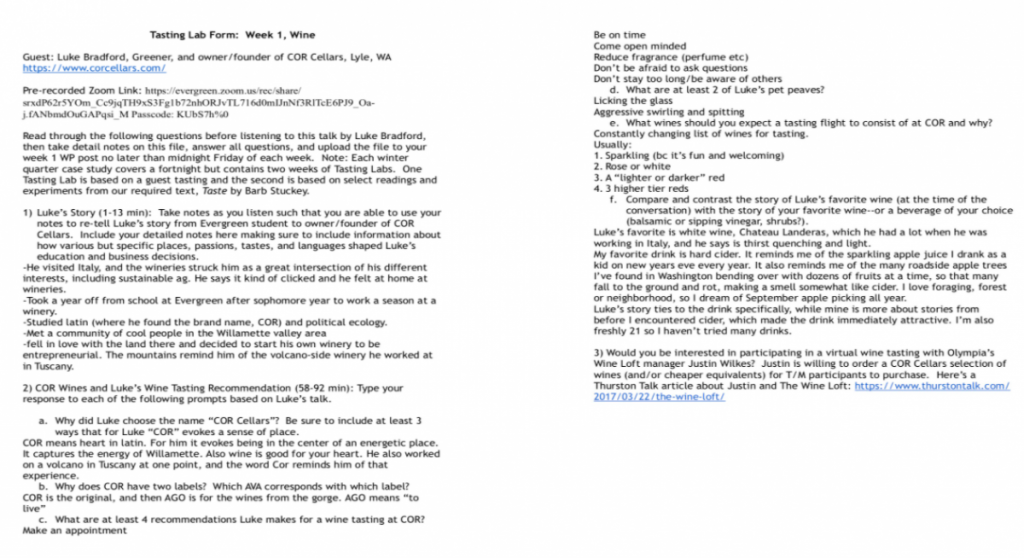
This week’s tasting research on wine included watching an interview with Luke Bradford, who owns a winery in Lyle, Washington called COR Cellars. He shared with us his journey from college student studying agro-ecology, to a year off working at a vineyard on a volcano in Tuscany, to entrepreneur with a successful winery. He gave us practical tips on how to taste wine in a setting with others: don’t wear perfume or cologne, don’t be gross, be open minded, ask questions, and don’t forget to eat.
#1e: Stuckey’s Taste Book Experiment

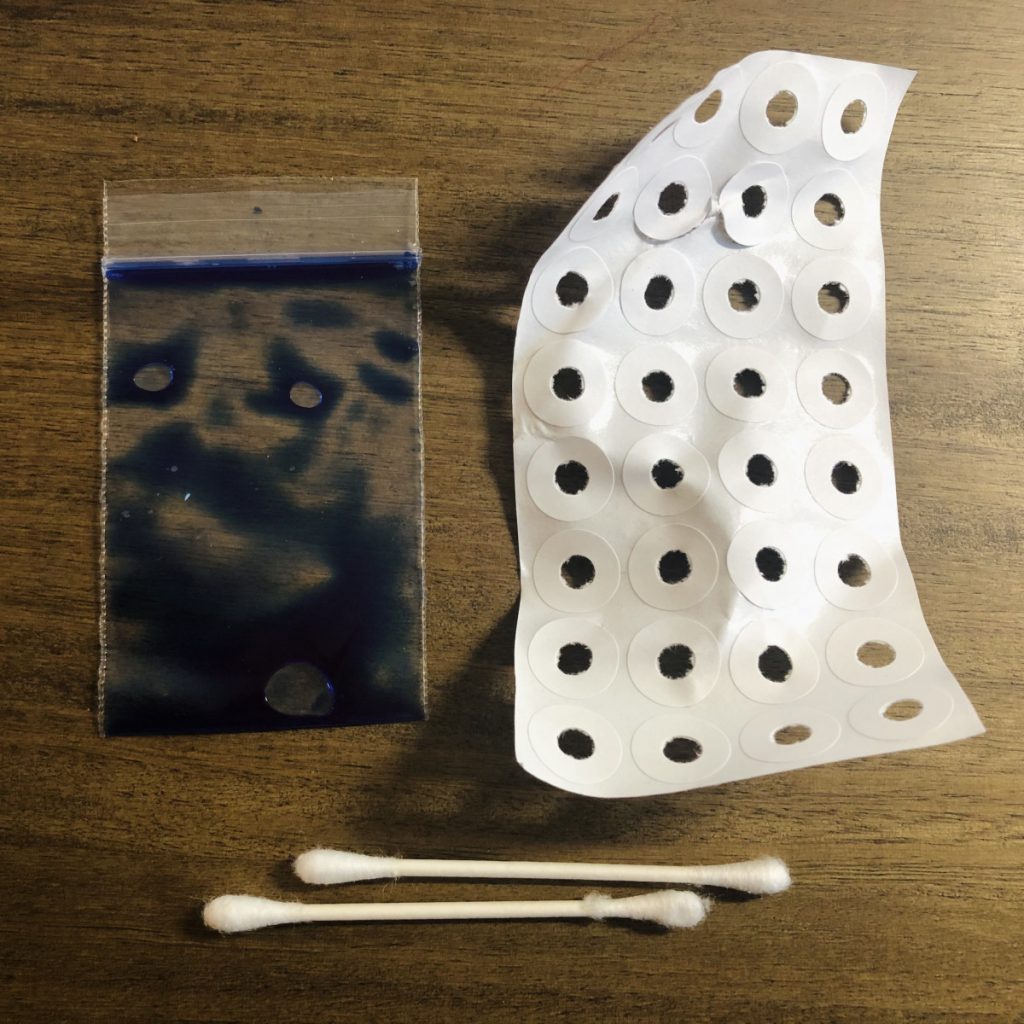
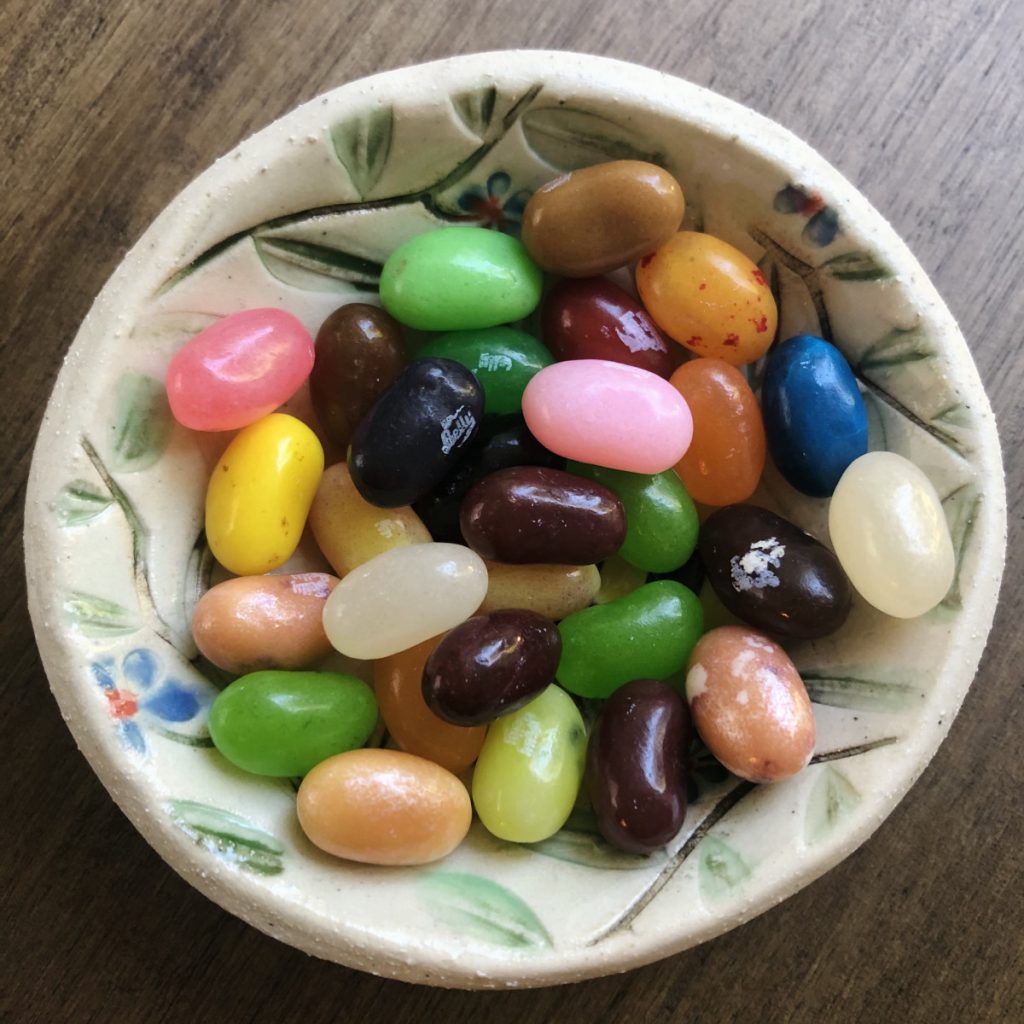
This week in lab, we tried 3 experiments from Taste What You’re Missing by Barb Stuckey.
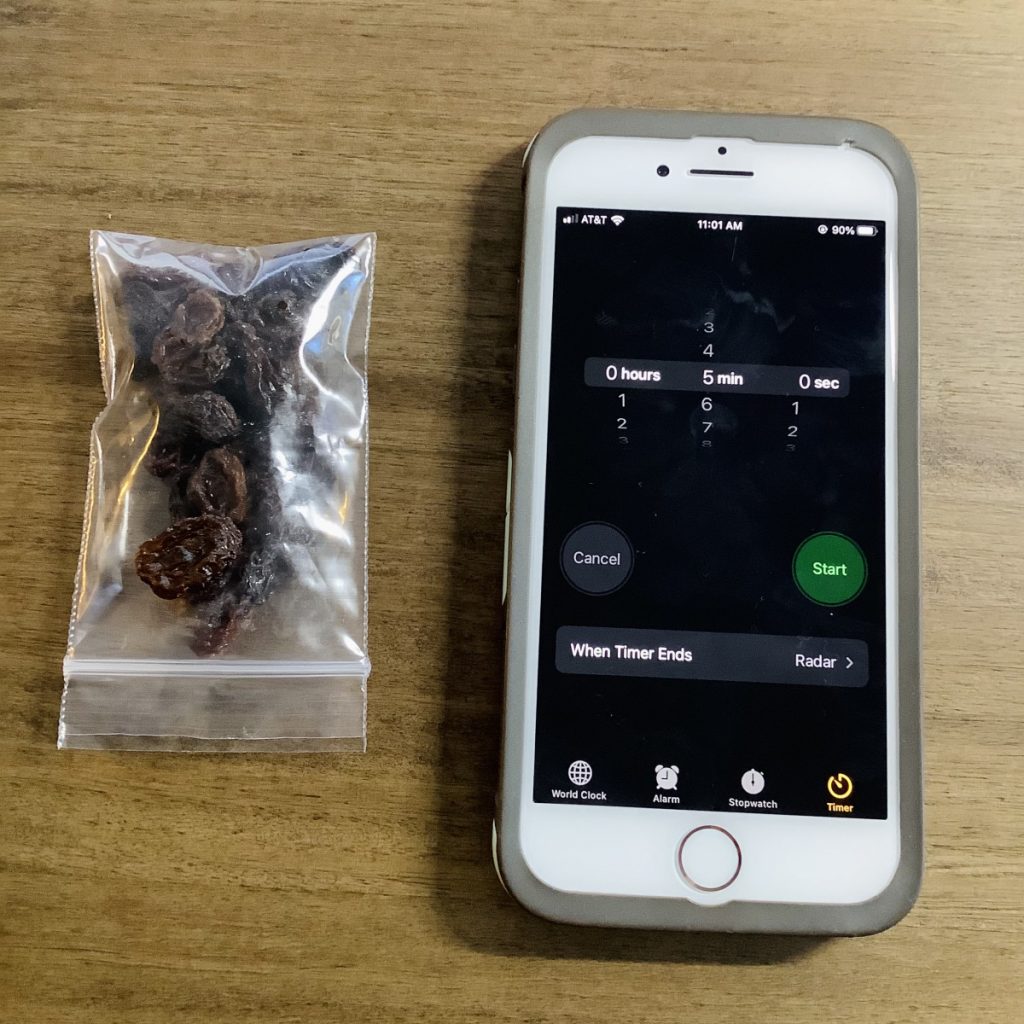
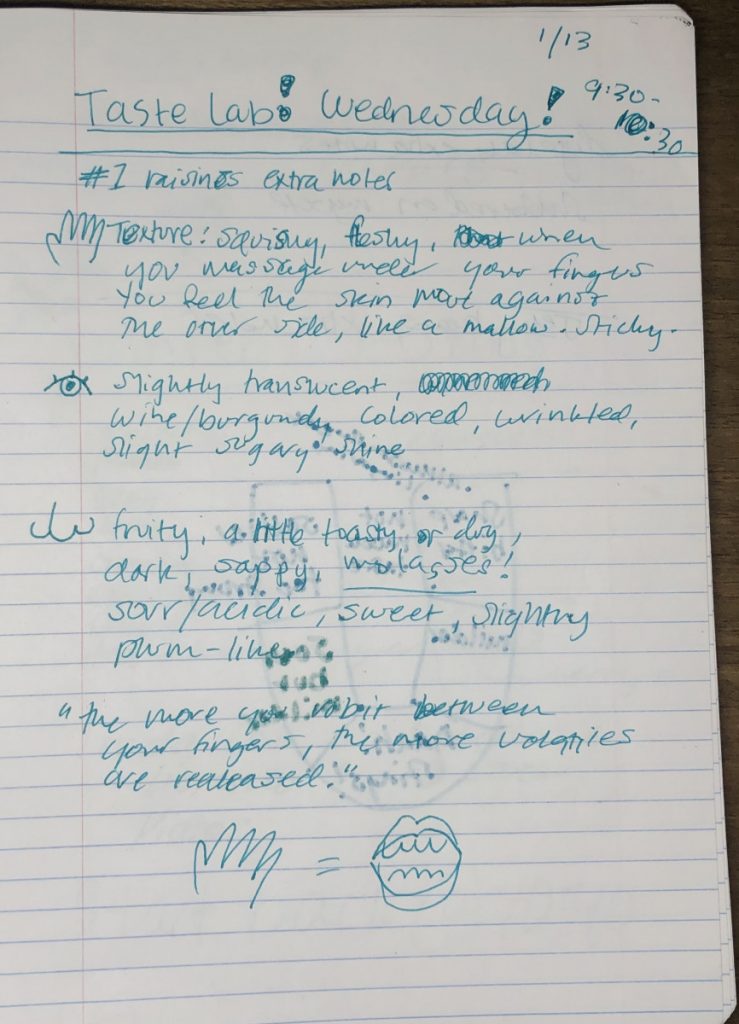
For the first experiment, we chewed raisins for 5 whole minutes. It was plenty of time to notice flavors I never had before, and to meditate on it’s terroir- who picked it? Where? How far had it travelled? Had sugar been added to it to give it that sticky molasses-y sheen?
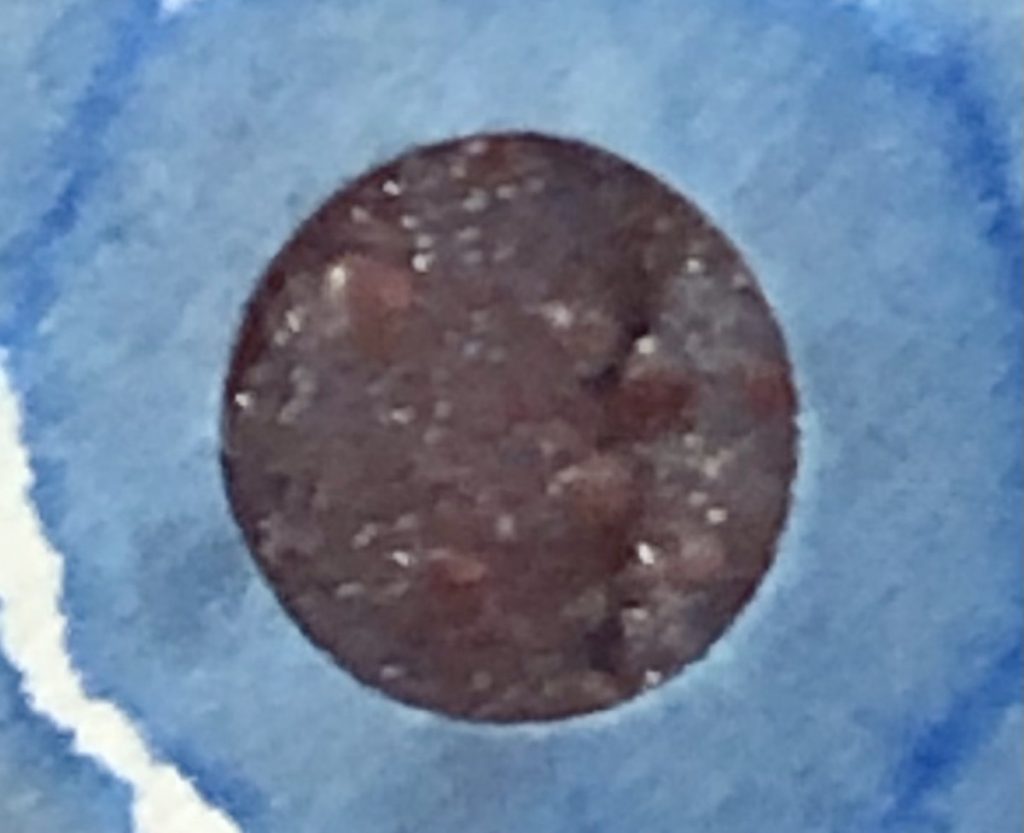
Next, we dyed our tongues to find out what kind of tasters we are. I had a hard time getting a clear photo, but based on the glint of the light on my tastebuds, I counted about 8 in the image below, but other parts had 14 within the circle. The front and sides seemed to have more. I’m what Stuckey calls a Tolerant Taster.
Next, we tasted jelly beans with our noses pinched closed. This one was mind-blowing. The “flavors” of the candy were stripped down to their most basic in the absence of smell; some were sour and sweet, others simply sweet. When I unplugged my nose I was shocked at the sudden difference. I could almost feel the aroma crawl up my nose.
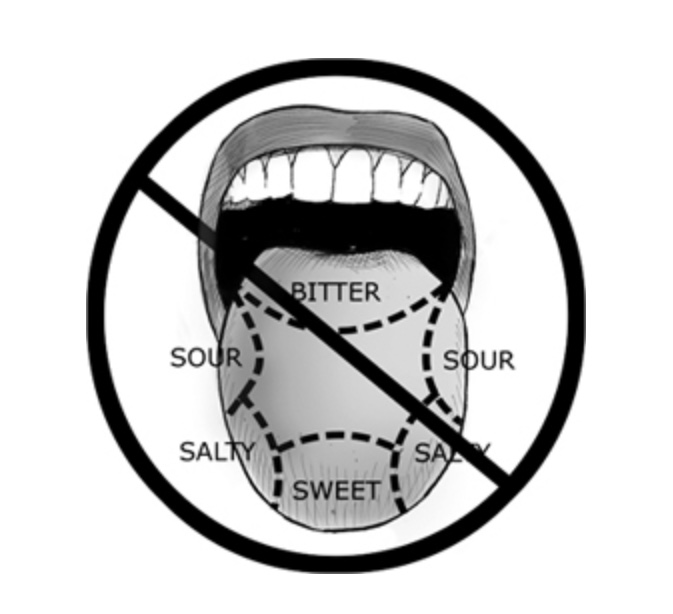
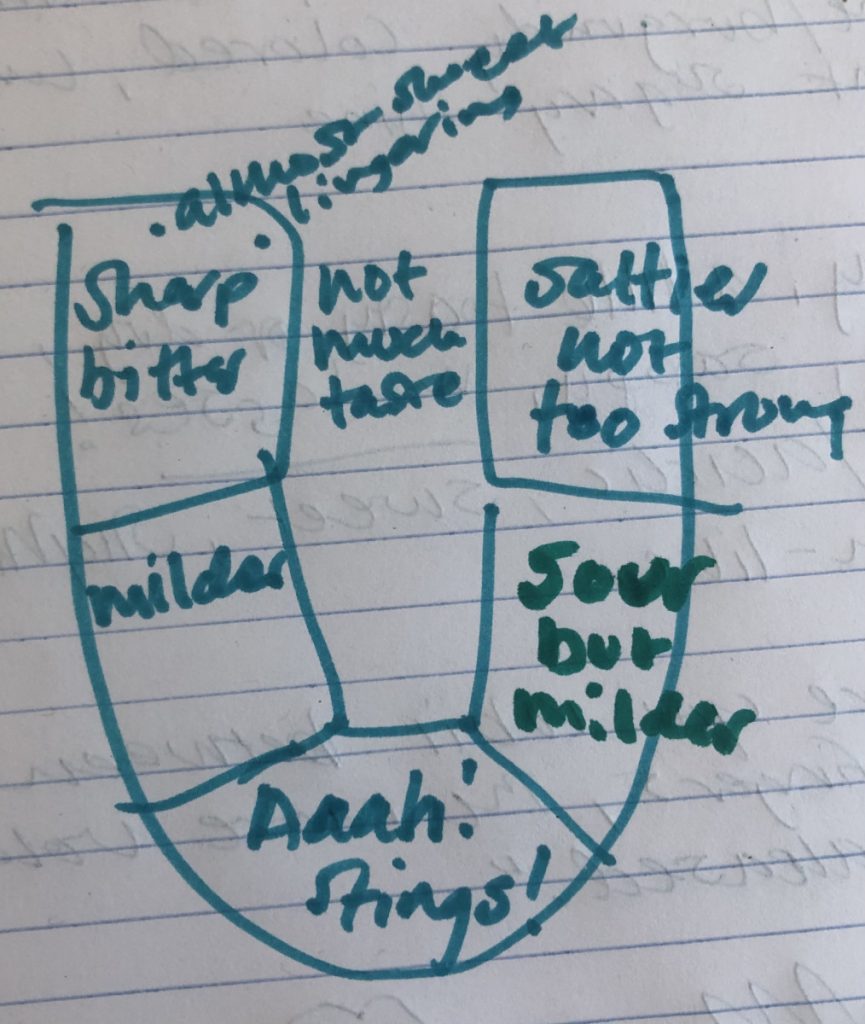
Last we rubbed vinegar on our tongues to test the widely known tongue map pictured near the top of this section. My tongue map looks wildly different than that. (pictured right)
w2labform
Week 2 – Experiment Guide Question/Answer Form
Week 2 – Taste Chapter Q/A
(pp 347, 30, 40, 52, 53, 54)
1st Experiment Questions: (p 347)
1) Reflection:Whatwereyourthoughtsandfeelingsduringthese5minutes?Wasit pleasant? Was it tough? What did you appreciate?
- The surface is mild and sweet. It is sour, bright, like cranberry or even citrus. It’s gooeyer than I expected on the inside.
- 2nd raisin: feels dry and chewy. But my mouth is re-invigorating it with moisture.
- 3rd raisin: has a bit of sand. It’s small, so much more sour.
- I feel the sour on the top of my mouth towards the back.
- The sour taste lingers. 2) Whatsensesandtasteswerebeingtriggeredforyouwhileeatingtheseraisins? My mouth was like the oatmeal I like which plumps the grapes and makes them taste sweet. Makes me think of my mom who always made us oatmeal with raisins. I can almost smell the butter and brown sugar she would melt in it. 3) SummarizethelifeyousawfortheraisinbeforeyouwatchedtheCaliforniaRaisins ad. I imagine that this raisin was too sweet to make wine. It probably grew in sunny conditions, warm, probably heavily irrigated, to make it plump and sickly sweet. Maybe it was grown in sandy soil. 4) Describethelifeyouseefortheraisinsthatarenowpartofyouinrelationto “American” labor, branding, and advertising/entertainment. It was probably picked by people making poverty wages, maybe not even citizens. It was probably dried in a factory and packaged by people again working poverty wages. Then driven to Washington by a truck driver. Maybe all this during the pandemic, maybe before. Then it was stocked in a store by someone wearing a mask for 8 hours, and risking their life dealing with idiots who refuse to wear theirs. I am familiar with this raisin, and like the taste of it rather than any other dried fruit, because it’s been marketed to my family using the likeness of a hispanic woman who gives the box of raisins a personality. Her image makes it seem like the people, often immigrants, who pick our food are ladies in skirts with baskets casually picking grapes with a smile. Raisins are mainstream also because of marketing which exploited the popularity of black music and used caricatures of black musicians to give raisins themselves a personality.
2nd Experiment Questions: (p 30)
5) Howmanytastebudsdidyoucountwithinthebinderring? I had between 8-14 (I sampled different parts of my tongue)
6) Circletheresultthatappliestoyourcountandreflectonhowthiscountdoesor does not correspond with your experience of your taste sensitivity.
0-15 = Tolerant Taster
16-39 = Taster
40 or more = HyperTaster
7) Whatareyourthoughts
on the role that tastebuds play in your tasting experience? (You may have a more
informed answer for this if you wait to answer until the end of this lab, having played
around with our sense of taste a bit! )
They sense the most basic aspects of the experience of taste. When I tried the jelly beans with no smell, I only sensed sweet and sour. When I put the vinegar on different parts of my tongue, what my tastebuds actually detected before I salivated or anything was quite simple, just sweet, sour, and a little salty, depending where on the tongue. When my tongue wet itself the vinegar taste got more complex. I also noticed that after I out vinegar on the back of my tongue, it lingered for a while. Stuckey talks about bitter in her chapter “Taste” of Taste What You’re Missing, and mentions that you taste bitter best at the back of your tongue, so people who spit wine may not get the full experience.
3rd Experiment Questions:
**Remember that we are not certain if the binder saver holes that we are using were the same size as the ones
THE 5 TASTES
8) Whatarethefivebasictastes?DrawthemontoyourownversionofStuckey’s tasting star (image on first page of each chapter).
See above
9) Whatsensesweretriggeredbeforeandafterpluggingyournose?
B4: vanilla sweet
after: I felt scent rush through my nose. Almost rose scent. I think this was peach
Color: pink
B4: sweet and not acidic
After: really strong bakery smell, like butter or caramel (which is butter+sugar so that makes sense). Shocking smell
Color: white
b4: very acidic and sweet
After: mellower smell but definitely citrus. I think it’s lime.
Color: green
What was it: green apple
10)Could you tell what flavor jellybean you had chosen before you unplugged
your nose? What flavors did you get? (Here’s the link for identifying the flavors of the JellyBelly beans you were provided: https://www.costco.com/kirkland- signature-jelly-belly%2C-variety-pack%2C-64-oz.product.100333880.html)
It was a huge different, sometimes uncomfortably sudden, to smell what I had been chewing. It was like I psychically felt the smell crawl up my nasal cavity.
11)What went through your head at the moment of unplugging your nose? “WHOA!”
4th Experiment Questions:
12)What did you find out about the map of your own tongue, in relation to the controversial histories of the supposed map of the tongue’s taste areas?
If I assigned specific tastes to specific parts of my mouth, it would look totally different than the traditional map. Where sour is supposed to be most intense, I tasted sweet and
salty, one side I tasted intense sour, but the tip of my tongue was way stronger. However, this may be due to a variety of factors including psychological.
MY OWN TONGUE MAP
13)Did you experience different intensities in different areas?
yes, I outlined that in the image above. The tip of my tongue appears to have a lot of tastebuds, and whether related or not, experienced the sourness of the vinegar very intensely.
Overall Reflection:
14)What have you learned from these 4 experiments? How might your learning relate to any/all of the TM program questions regarding the taste of place?
I feel like the rat from Ratatouille, much more aware of my senses. When I think about how much is wrapped in the gift of every bite, including what my tasting organs do in response to it, and how much went into the creation of this bite, I feel heightened awareness and appreciation.
#1f: Sustainable Entrepreneurship
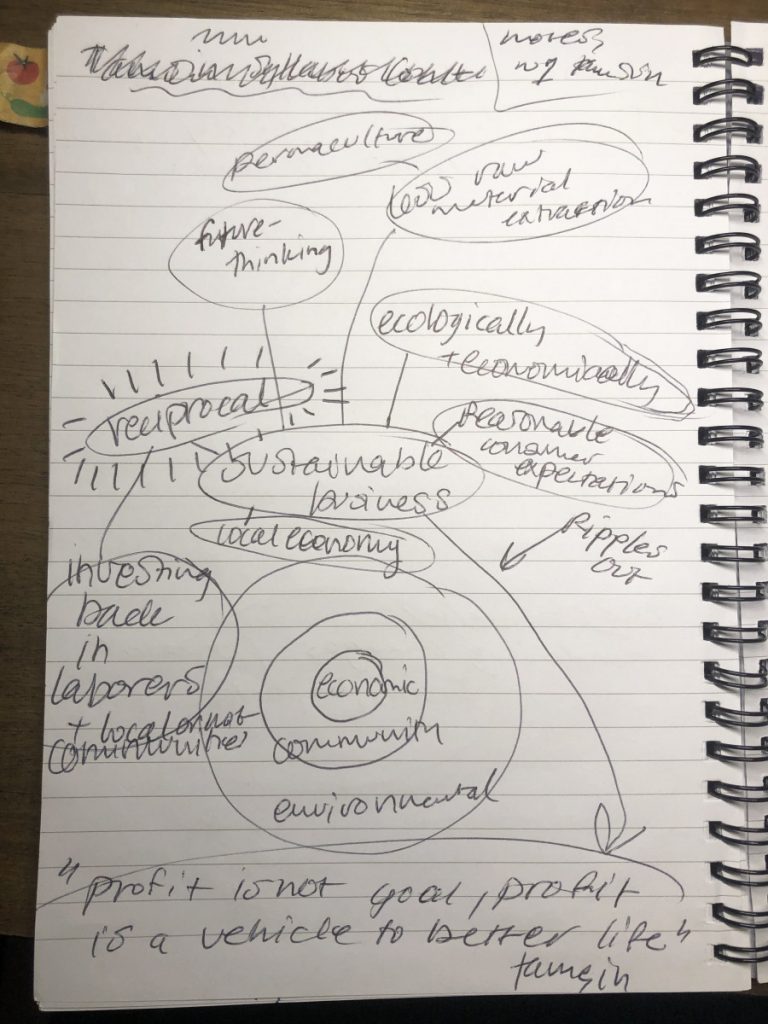
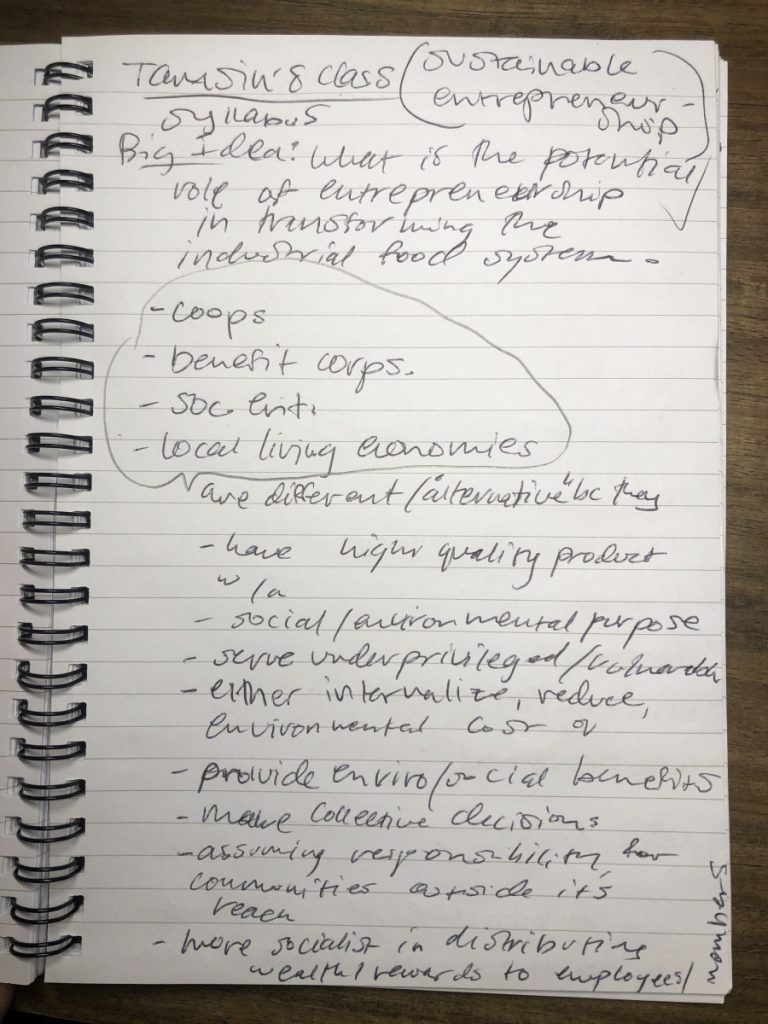
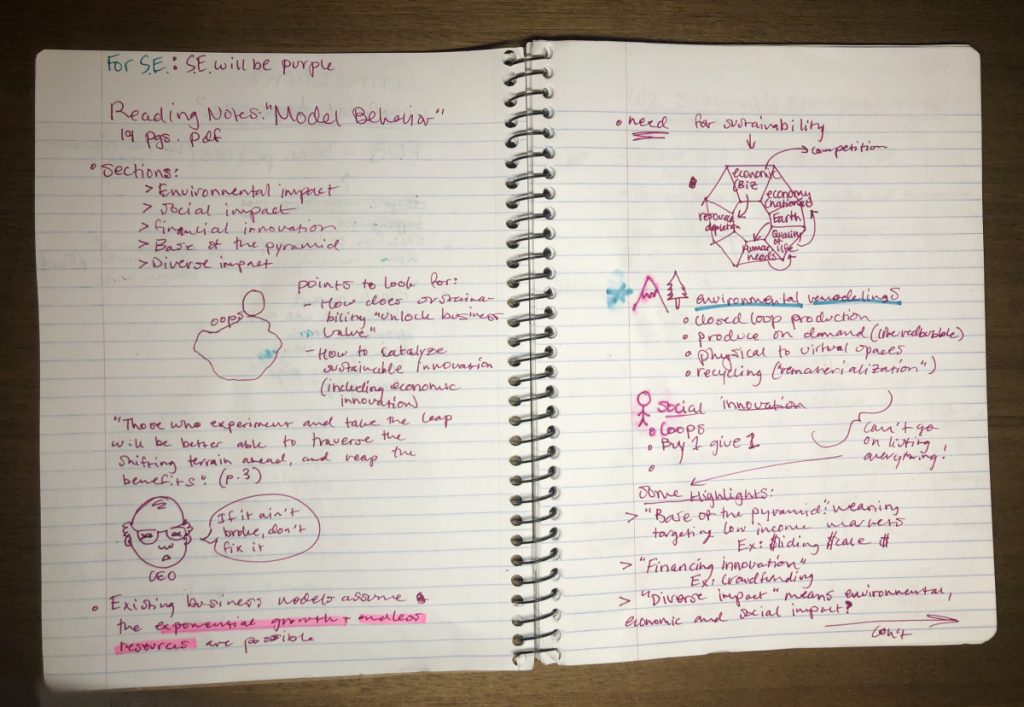
This week Tamsin introduced us to the big overarching ideas of sustainability. We also explored some frameworks that have been created to analyze businesses. We discussed the different aspects of sustainability: social, environmental, and economic. We played with different visualization strategies and analyzed some common visual representations. I thought it was interesting that Tamsin suggested we think about the environmental aspect as kind of encompassing everything else, because everything is limited by physical possibility.
“Profit is not the goal, profit is the vehicle to a better life.”
Tamsin
An exponential growth mindset in business is founded in the denial of environmental constraints, and proponents of business-as-usual practices typically argue that humans can figure out a way out of any environmental repercussions.
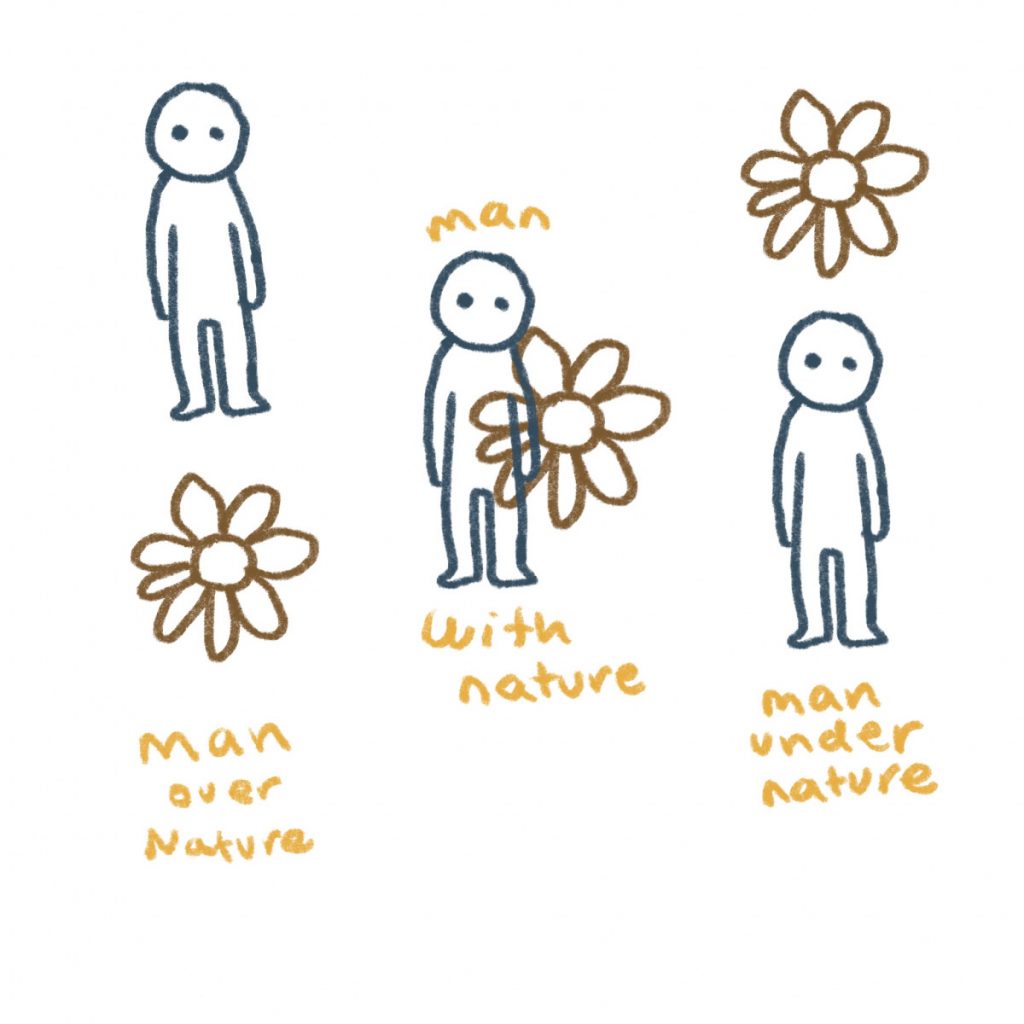
The concept of sustainability acknowledges the constraints and “physical realities”, as Tamsin puts it, of the world.
In essence, thinking we can continue doing business the way we have been (extracting resources, exploiting labor forces, etc) in perpetuity is unrealistic and arrogant. We are not gods, we are a part of an ecosystem.
#1h: Foodoir: Your Story of Tasting Place
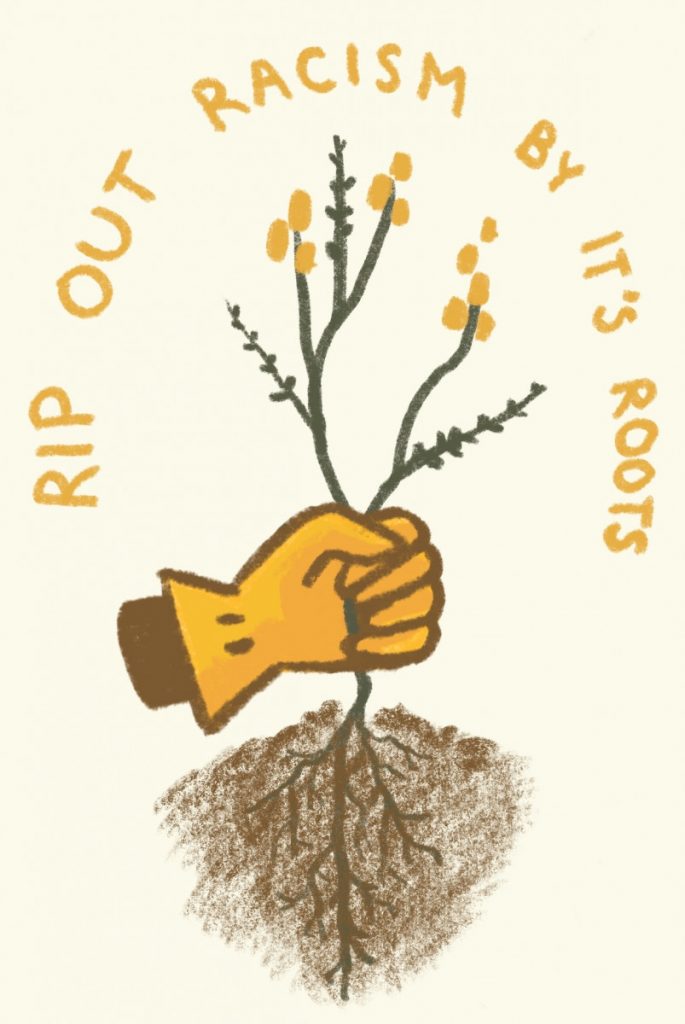
I chose Farming While Black by Leah Penniman to read this quarter, because I want to learn more about farming and community organization, and mostly because Leah Penniman’s EcoFarm 2020 keynote speech was fantastic. Her passion and knowledge for the work she does made me want to read her book.
“We honor our family and ancestors by building upon their wisdom, rather than imagining we can invent new truth all on our own. Pour your elders a cup of tea, sit at their feet, and ask them to give you advice.”
Farming while black, Page 33
One of the greatest pitfalls of Western science is that it dismisses Indigenous Knowledge and folk wisdom passed down through food and stories. This is evidently a weakness resulting from and perpetuated by racism and sexism.
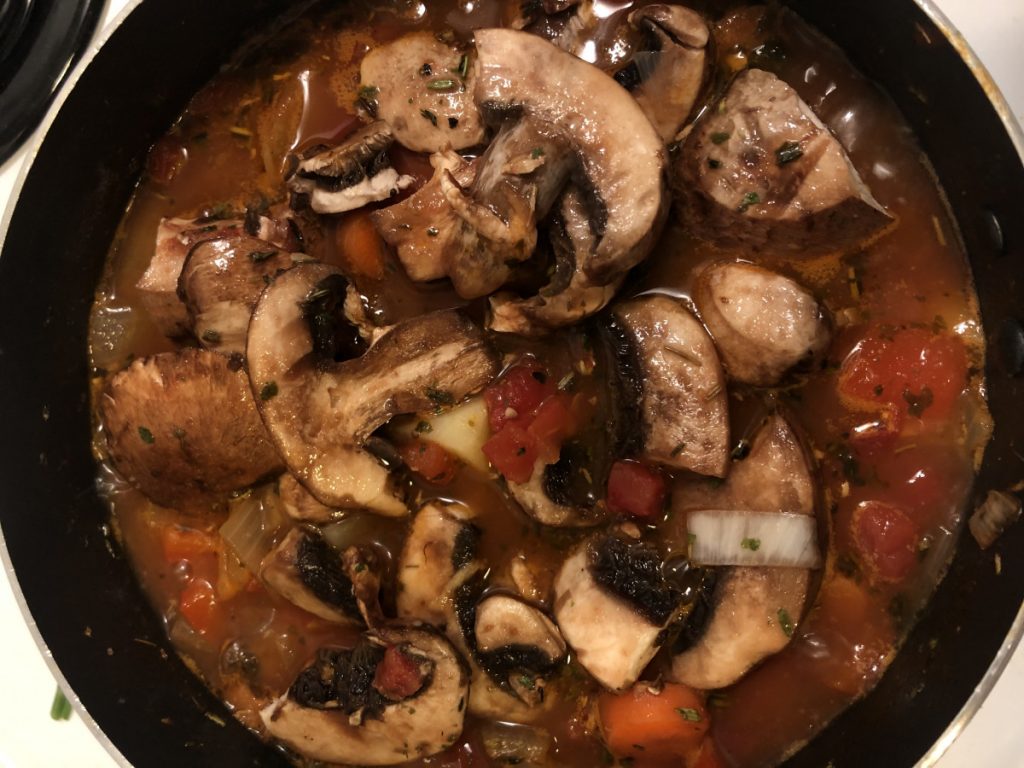
This week I made a traditional Irish root stew to nourish my partner and I, because it’s cold and foggy out. I replaced lamb with mushrooms.
My mom told me once, when in doubt, combine foods that have been cooked together for centuries. Corn, beans, and rice. Carrots, potatoes, and protein. Ginger, turmeric, and tomato. There’s something about these foods that meet our nutritional needs, which are different depending on where you live, and seasonally. We might never understand nutrition in an empirical way, but we can look to our elders for recipes that will nourish our bodies and souls.
This chapter of Farming While Black was a call to action for me to connect with my community, find mentors, people who can introduce me to the land. I’ve spent a lot of time in solitude with nature this year practicing plant ID’ing and foraging, but there’s only so much I can learn on my own.
All images credit to myself, Corinne Stewart, unless otherwise indicated.
February 27, 2021 at 11:01 pm
Your artwork is inspiring! Loved your post.