

4a: Film studies

I’ve chosen minutes 47:30 to 49:00 from the film 3 Feet Under, which I’m titling “geoduck: water protectors” in order to explore program question: “What is meant by regenerative agriculture and how can it guide us towards food system sustainability?”
The scene starts with a title: “janitorial service” over a shot of a muddy puget sound beach with old wood stumps sticking up out of the water. We cut to David Gordon, nature writer, in his office surrounded by aquatic biology paraphernalia and stuffed geoduck-shaped toys. He explains to us that the Puget Sound is an estuary. Estuaries are ecotones where freshwater meets saltwater. Next, Doug Williams, in his cubicle next to a map of Puget Sound, explains to us that geoducks are extremely common in the Sound. Gordon, again, explains to us while gesturing at a geoduck doll that the siphons of the geoduck pull water in, filter it, and shoot water back out. “What they do all day is filter water,” he says. Scott Chitwood of S’klallam tribe fishery explains that the amount of water that they can filter is probably hundreds of gallons a day, as we see footage of two huge siphon openings at the floor of the Sound. “If geoduck had a hand, I’d shake hands with it for keeping Puget sound clean,” Gordon says.
It seems like overharvesting wild geoducks might create a negative feedback loop in terms of toxicity and pollution. If geoducks help regulate the quality of Puget Sound’s waters, overharvesting would decrease the quality of the water, having adverse effects on the geoducks. On the other hand, letting the clams flourish is taking advantage of a valuable “janitorial” ecosystem service, making a more suitable environment for geoducks or other animals. They could be very useful in a regenerative polyculture.
4b: (Un)Natural history
Week 7/8 Questions – Aquaculture under climate change 2/28/21
- Describe the life cycle of the geoduck (from one adult generation to the next adult generation).
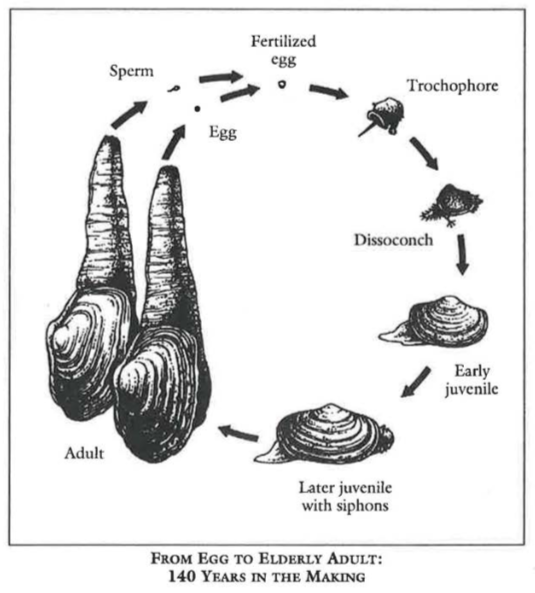
Geoducks are broadcast spawners, meaning they release gametes into the water and let the water currents bring the eggs and sperm together. They release gametes multiple times each summer, triggered by warm temperatures. Then forms a tiny trochophore larvae. As it develops it first forms a parachute called a velum to keep afloat, and a rudimentary shell. At about the size of a grain of sand it is called a prodissoconch or veliger. It will be moved all the while by ocean currents to a new location. It eats phytoplankton as it develops. When it loses it’s velum, forms a foot, and sinks to the bottom floor, it’s called a dissoconch. The foot helps it crawl around and push food into its mouth. Next, still barely larger than rice, the juvenile geoduck pulls itself into the floor with it’s foot. They plant themselves 2-3 feet under. It slowly grows bigger, new layers being added to its shell. They feed and grow during summer, and do less in winter. When they are removed they cannot dig themselves back in. They are at reproductive maturity at 3 years and can continue to release gametes for over a hundred years. They could be compared to a perennial that takes a few years to mature enough to eat, and is pulled out completely at harvest.
- What impact did the Boldt decision and associated court cases have for Native American rights and access to marine resources in the state of Washington?
The Boldt decision granted tribes listed in the Medicine Creek Treaty of 1854 rights to manage 50% of fish and shellfish in Washington state. This gave economic power to treaty-tribe fishermen, allowing them to be more competitive in the fishing market.
- How can farming geoducks in the Salish Sea improve water quality by removing excess nitrogen from the water?
It can help with the excess nutrients effect of eutrophication by eating microalgae, and each clam removes 20 g of nitrogen from its environment. Attention should be paid to what time of day and year clams are harvested in order to maximize the amount of nitrogen removed.
- As a climate change mitigation strategy, do you think it is reasonable to claim that geoduck aquaculture releases less carbon dioxide per kg of animal protein than the same quantity of protein derived from land-raised livestock. Why or why not (justify your answer)?
Just from familiarization with their life cycle and input needs, I would say geoduck likely have a much lower carbon impact than land-raised livestock. For one, they convert carbon into calcium carbonate for their shells, therefore fixing carbon for a long time, and these shells can even be removed from the ecosystem. Second, where land livestock typically needs a lot of feed which has a carbon impact itself, Geoducks just eat small particles like microalgae (which is often in excess) and bacteria and phytoplankton which is readily available in marine ecosystems.
- Describe the generalized life cycle of a kelp species (from one diploid generation to the next diploid generation).
Being a non-vascular macroalgae, Kelp alternates generations (haploid/diploid). Mature diploid sporophytes release haploid spores, which germinate and mature into haploid gametophytes, which release gametes, which have to fuse to become a diploid organism, which matures and the cycle starts over again.
- How can farming seaweed in the Salish Sea improve water quality by removing excess nitrogen from the water?
Macroalgae fixes nitrogen. If you remove that biomass, you remove nitrogen from the ecosystem.
- Describe how carbon dioxide emissions are causing ocean acidification.
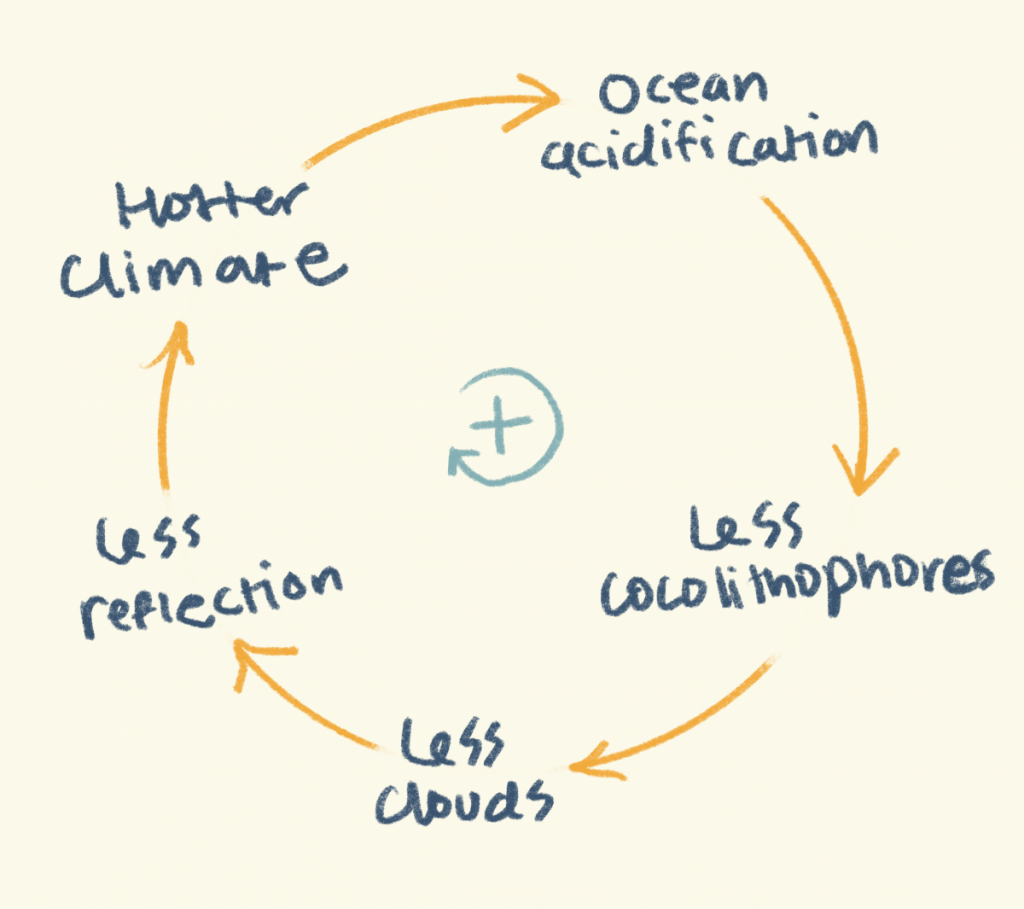
Acidic waters have a higher potential to create charged hydrogen ions. This is because the carbon dissolves in the water combines with H2O to create carbonic acid, which releases bicarbonate, which can break down into carbonate ions, all the while releasing hydrogen ions. The excess and highly excited hydrogen and carbonate ions keep making more bicarbonate, which means calcium carbonate is not being made. Calcium carbonate is important to keystone species like coral and clams.
4c: Regenerative agriculture
- Given acidifying ocean waters, describe how growing seaweed in close proximity to shellfish can improve the ability of shellfish to create their calcium carbonate shells.
Macroalgae fixes carbon at a 5x higher rate than land plants, meaning that carbon is not dissolved in the water and freely reacting to cause problems. While this may not have a scalable effect to save our oceans, it creates local habitats where the water is higher pH.
- To scale up seaweed aquaculture as a blue carbon strategy for climate mitigation, describe some of the research, regulatory and/or market issues that need to be addressed to facilitate scaling up ocean production.
Market: a lack of domestic interest in seaweed for culinary use, high entrance costs for farmers ($30,000), a need for even more uses
Research: It’s unclear whether the positive effects are long lasting and impactful beyond the local farm, whether desirable seaweeds are invasive
Regulatory: extensive permitting process
To scale up the use of seaweed used in cattle feed as a strategy to reduce bovine methane emissions, describe some of the research, regulatory and/or market issues for:
- Seaweed production
Market: can seaweed scale to meet the amount of cattle we farm?, capitalizing ecosystem services
Research: how to make a consistent product, are there species besides A. taxiformis that can function the same
Regulatory: just like question 10, the permitting is very expensive so farmers besides Symbrosia may not be able to break in
- Animal Feed Production
Market: affordability of algae supplements for farmers
Research: potentially high amounts of metals, effect on humans in terms of iodine
- Livestock Production
Market: will people pay a premium to support farmers who use supplemented feed, will farmers receive incentives for mitigation
Research: Symbrosia is researching how to replicate their lab findings in a productive setting, need for replication
Regulatory: health and safety approval for algae-fed cattle is pending in the US, lack of mandated emissions limits
- Why is plastic used in current geoduck farming methods, and can you imagine an alternate strategy to avoid plastic use in the Salish Sea?
Plastic is used as growing tubes to protect the geoduck in early life and remember where they are. The article about the Seafood Watch report says that farmers are experimenting with harder plastic that may not shed microplastics. In the youtube video we watched titled “Why this $300 clam is so important to Native Americans and China”, Native farmers used markers tethered to the geoducks instead. I wonder why they don’t use terracotta or wood, which could be used many times.
4d: Tasting research
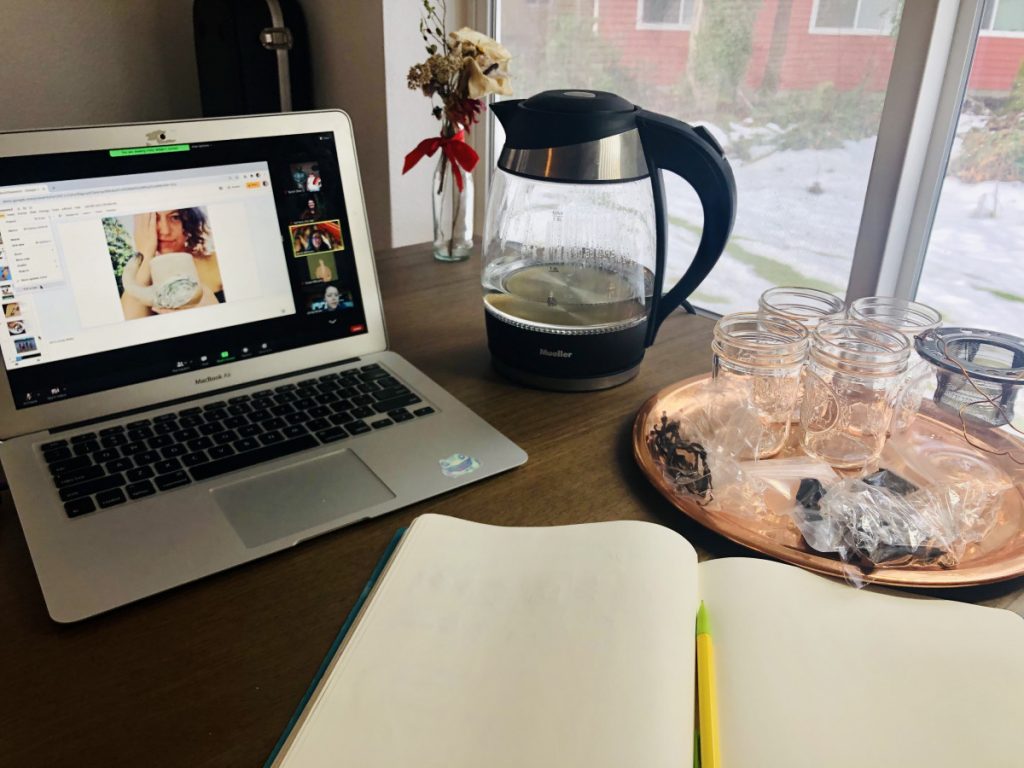
Geoduck & seaweed tasting with @geoduckgal Emily Wilder
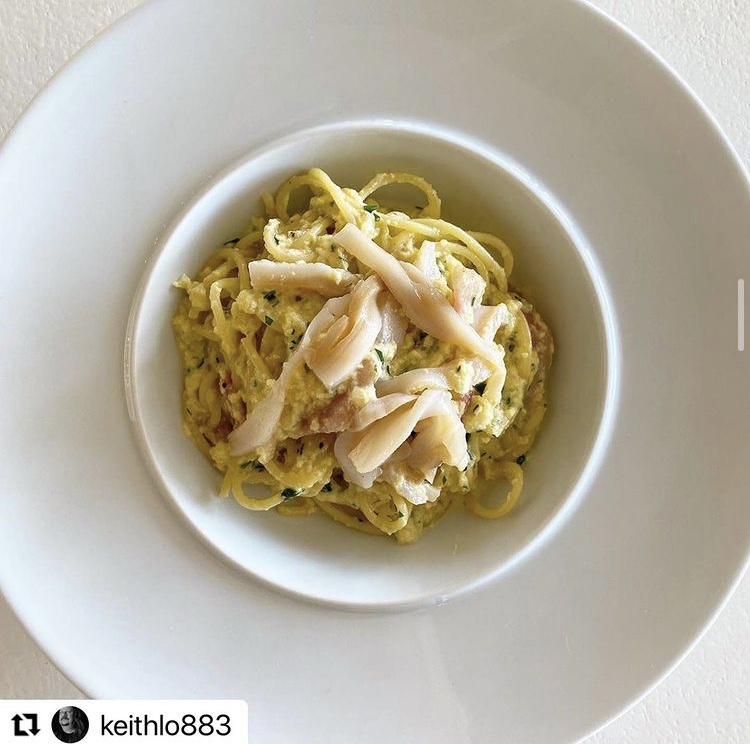
GEODUCK “TASTING”
- WHAT DOES GEODUCK TASTE LIKE?
gamey, sweet, floral, illusion of fatty.
- WHAT IS “Q”?
The squishy, springy texture of things like tapioca and mochiko, or rambutan.
- LABEL THE PARTS OF THE GEODUCK:
1: shell
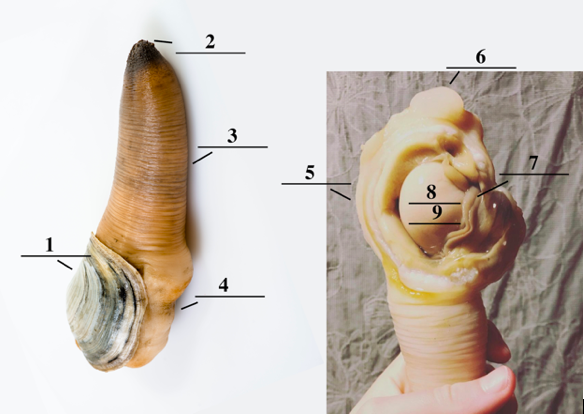
2: tip
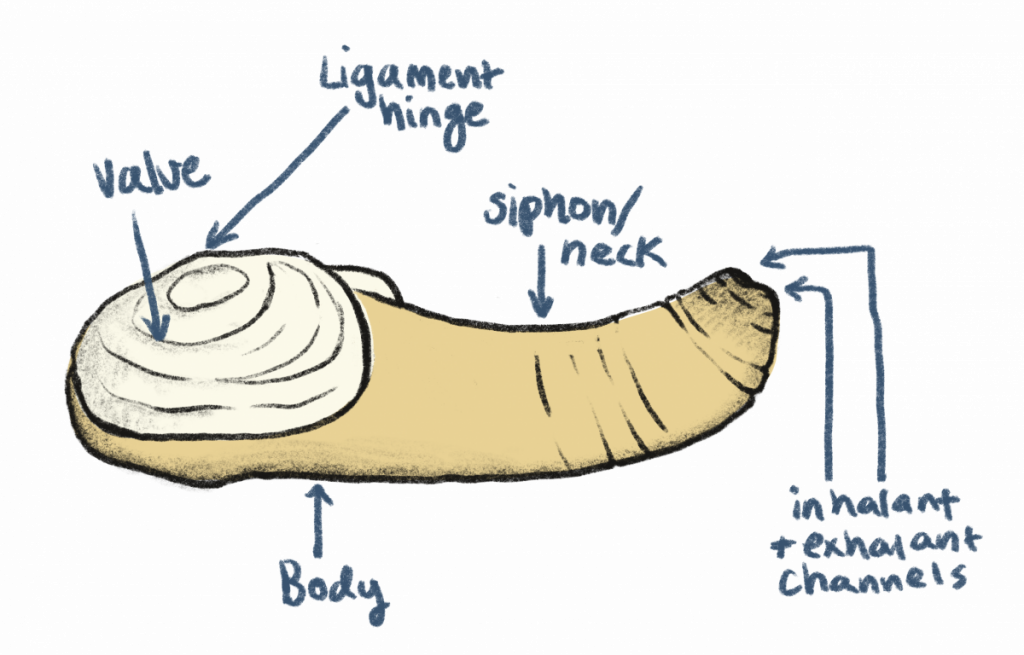
3: siphon
4: belly
5: mantle
8: gut
9: sack
7: gills
6: foot
SEAWEED TASTING
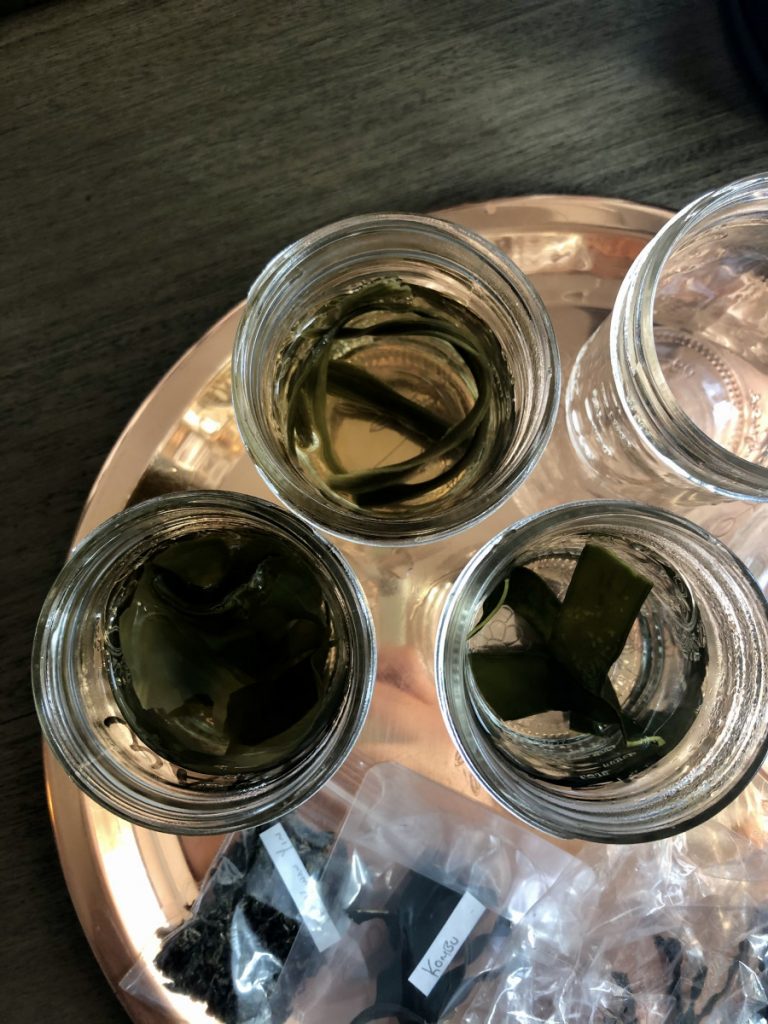
- WHAT ARE THE THREE SEAWEEDS WE ARE TASTING TODAY?
Kombu, Wakame, and Sea Palm. The tea I have is leftover from the new year celebration, Ti Kwan Yin.
- WHAT TYPE OF SEAWEED ARE THEY?
Brown seaweed, kelp.
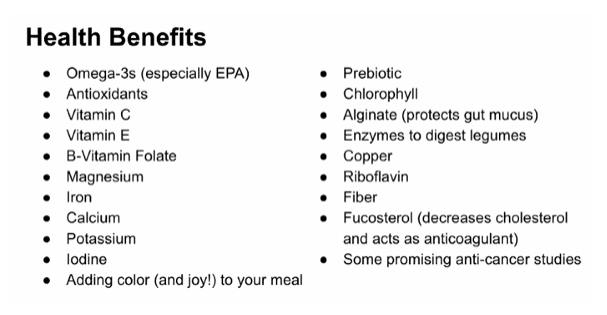
- WHAT ARE THE HEALTH BENEFITS OF SEAWEED?
Can be positive if the water is safe.
- WHAT IS THE BIGGEST THREAT TO THE OCEAN RIGHT NOW? Why?
Ocean acidification as a result of climate change.
SEAWEED #1: wakame
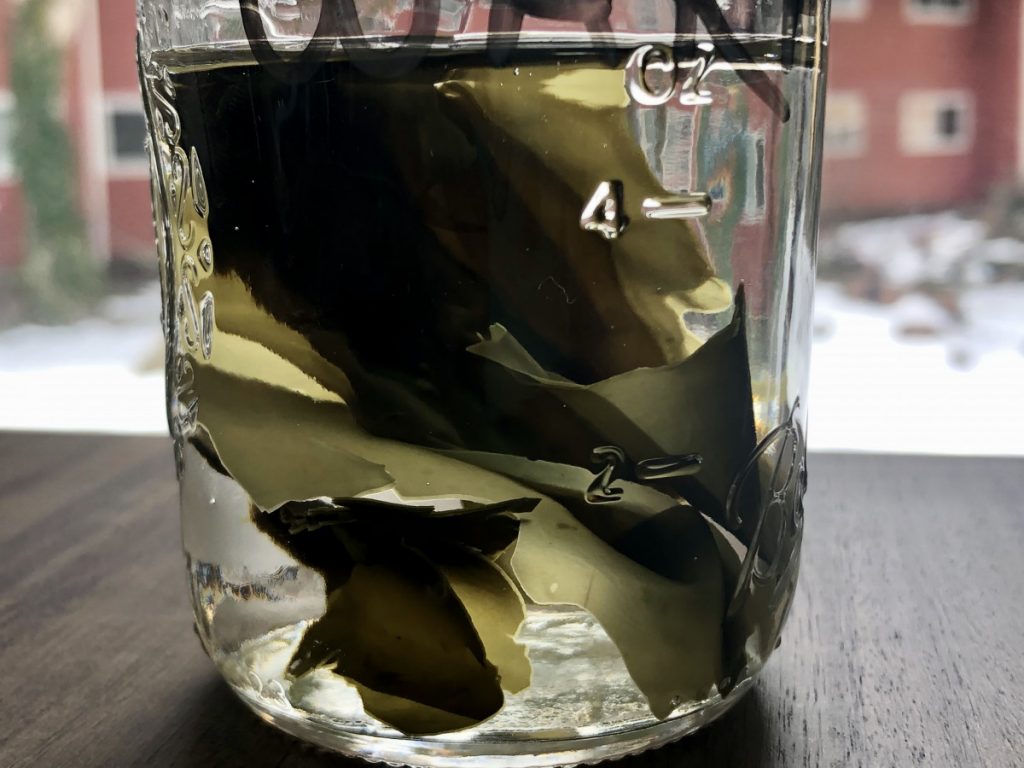
Tea
Color: emerald green
Aroma: salt, umami, asparagus, earthy, rocky, brassica, ocean
Texture: very thick
Mouthfeel: gooey
Taste: MISO, umami, leafy, sweet
Aftertaste: clean
Dried
Color: dark muted brown-green
Aroma: salt, umami, sweet, tamarind
Texture: super tough and chewy, gets soft like miso seaweed quickly
Mouthfeel: soft, not slimy like expected
Taste: salty, leafy like kale, umami, ocean (fish?), sweet
Aftertaste: clean
Reconstituted
Color: brown and emerald
Aroma: fishy salty ocean smell
Texture: chewy crunch like pickle
Mouthfeel: soft, smooth
Taste: mild, umami, green, ocean
Aftertaste: clean
SEAWEED #2: Sea Palm
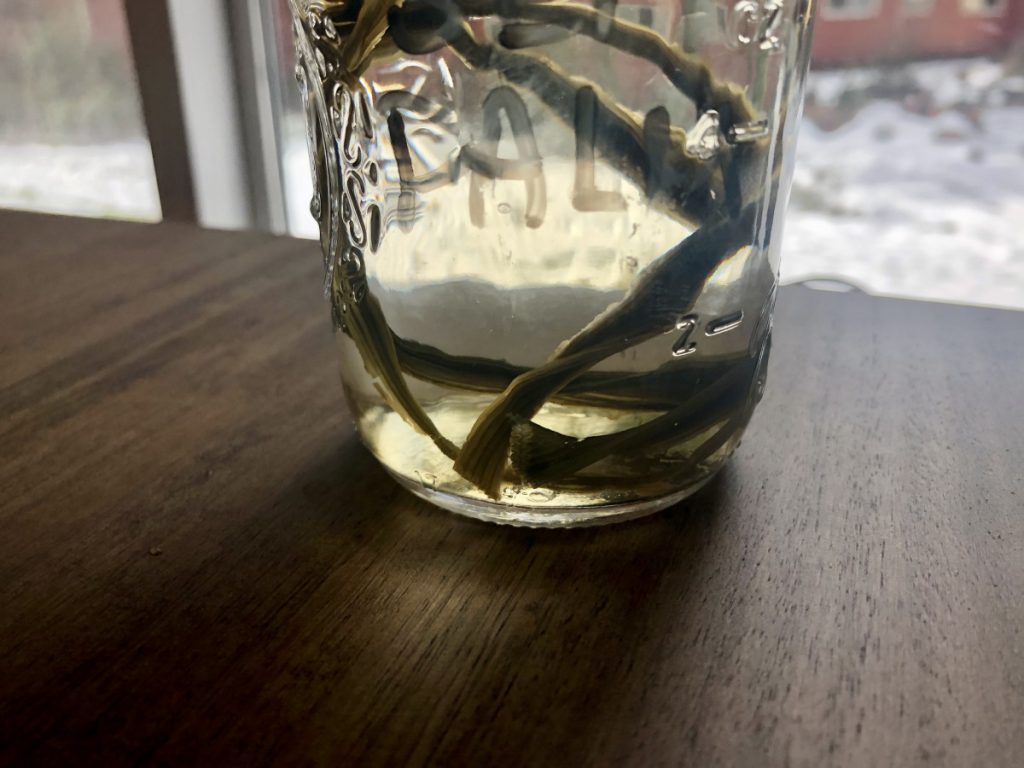
Tea
Color: yellow-brown-green
Aroma: salty, vegetal, mineral
Texture: n/a
Mouthfeel: thick
Taste: vegetal, salty, sweet, earthy
Aftertaste: lingering sour
Dried
Color: brown
Aroma: salty, tamarind
Texture: fibrous, crisp, squeaky,
Mouthfeel: slippery
Taste: umami, salty, sweet, sour
Aftertaste: lingering salt, vegetal
Reconstituted
Color: green-gold
Aroma: salt, vegetal?
Texture: fibrous, crunchy (like a pickle)
Mouthfeel: slippery but not slimy
Taste: not much, vegetal, earthy
Aftertaste: slight lingering vegetal
SEAWEED #3: Kombu
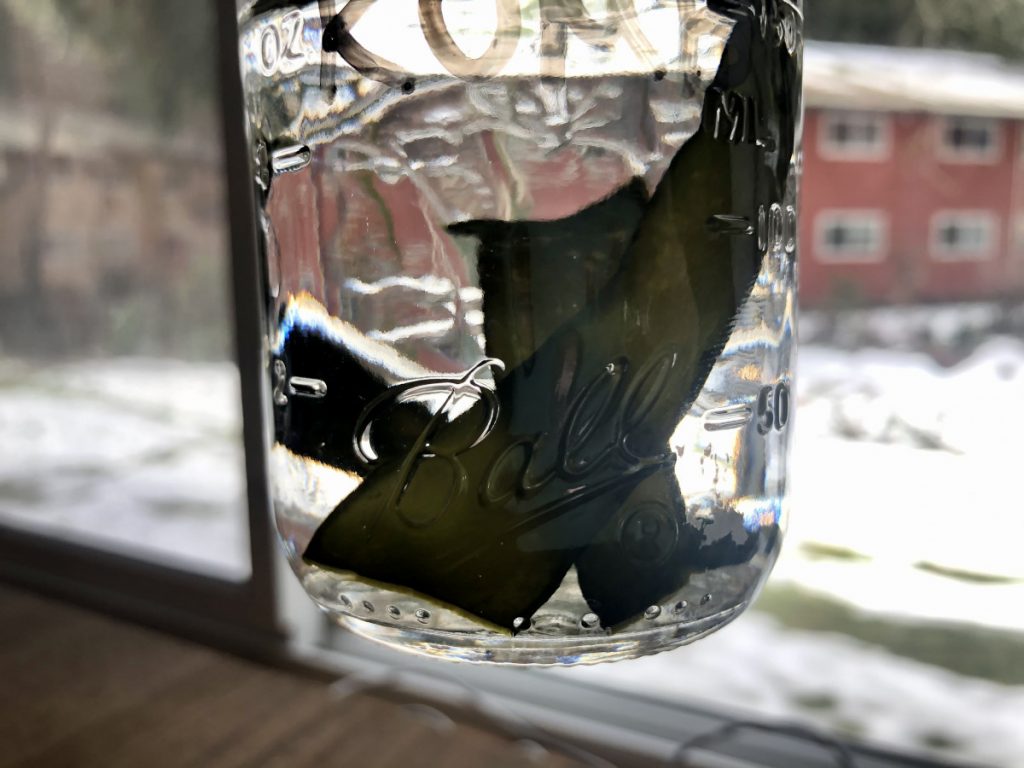
Tea
Color: very little color
Aroma: herbaceous, fruity, salt
Texture: dry
Mouthfeel: slimy
Taste: salt, rocks, earthy
Aftertaste: lingering earthy, salty
Dried
Color: dark green-brown
Aroma: eggy, salty, lemon
Texture: tough, squeaky
Mouthfeel: slimey!!
Taste: umami, salty!
Aftertaste: lingering sour, salty
Reconstituted
Color: dark gold-green
Aroma: mineral, salt, herbaceous
Texture: crunchy
Mouthfeel: slimy
Taste: salt, sour
Aftertaste: clean (a little astringent)
TEA EXPERIMENT
Tea: Ti Kwan Yin
Seaweed: Wakame
Color: dark gold-green
Aroma: rose, honey, toast, mineral, herbaceous
Texture: thick
Mouthfeel: astringent
Taste: bitter, sweet, salty
Aftertaste: astringent and lingering
REFLECTION
- WHAT WERE SOME OF YOUR FAVORITE GEODUCK AND/OR SEAWEED DISHES PRESENTED TODAY?
The grilled geoduck that Emily made looks so good, I can imagine the crispy caramelized meat. The spiced geoduck “sausage” that Caleb made also looks great.
- HAVE YOU EVER EATEN GEODUCK? If yes, please tell the story. How was it prepared? What did you think?
No
- WHAT OTHER FOOD HAVE YOU EATEN THAT HAVE “Q”?
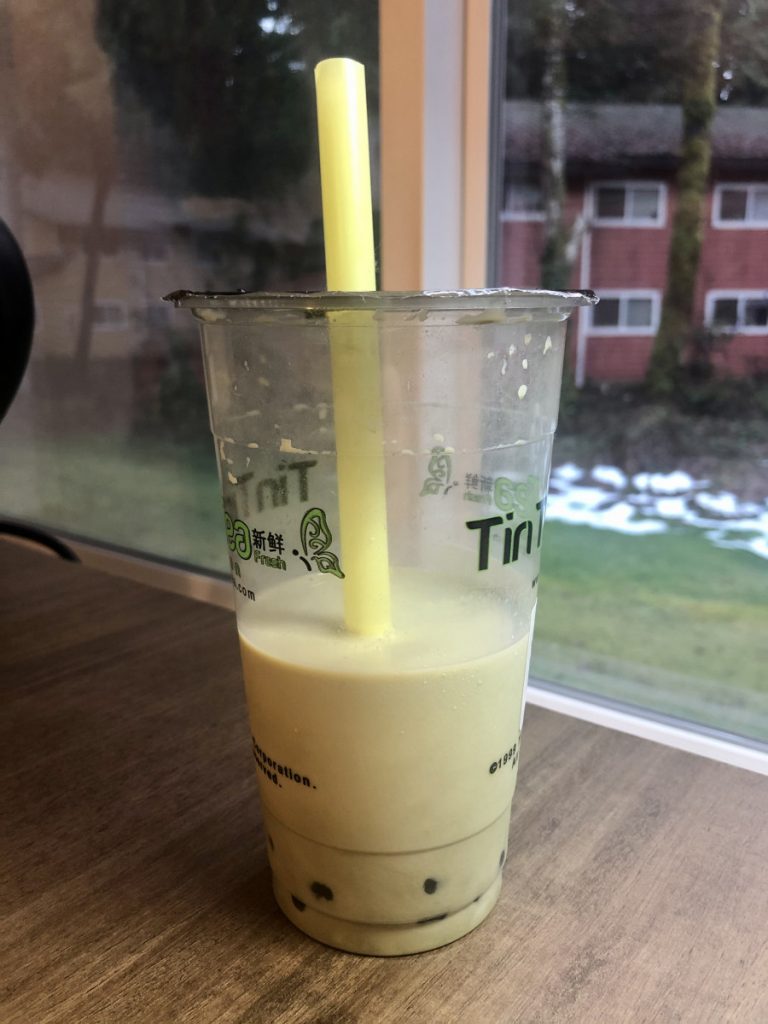
I love tapioca pearls and grew up eating mochi cake. I’ve also had lychee which I really enjoy (it’s heavenly sweet and refreshing) and I think I remember that having a springy, slippery, chewy texture. I think sometimes mushrooms have q as well, especially when boiled. And vegan marshmallows have q (although I think that’s just the tapioca again).
- WOULD YOU ORDER A GEODUCK SHIPPED TO YOUR HOUSE? If yes, how much would you be willing to pay for it? If no, why?
I’m vegetarian generally, and I get really grossed out touching raw meat. By the time I ate it I’d be too disturbed. I like to imagine I’d love geoduck but if I actually had the chance I don’t know if I’d cook with it. If I did want to try it, I would be willing to pay $20-30 for it, similar to salmon.
- WHAT WOULD YOU MAKE WITH GEODUCK IF THE SKY WAS THE LIMIT?
I think it sounds pretty good in small bites in a bibimbap or on a pizza.
- HAVE YOU EATEN SEAWEED BEFORE? If yes, what was your most memorable time? If no, what stopped you from eating it?
I have eaten nori sheets but other than that, no. I just have never seen it in the store, and wouldn’t know what to do with it! (I have some ideas now).
- WHAT TEA DID YOU EXPERIMENT WITH ADDING SEAWEED TO TODAY? Did they complement each other, or detract? What kind of tea do you think would pair well?
I used one of the oolong teas, Ti Kwan Yin, and wakame. They complimented each other nicely, the florals of the green tea being so much different from the earthy, salty flavors of the seaweed. I think the astringency of the tea also cancelled out the slime (thick body) of the seaweed tea.
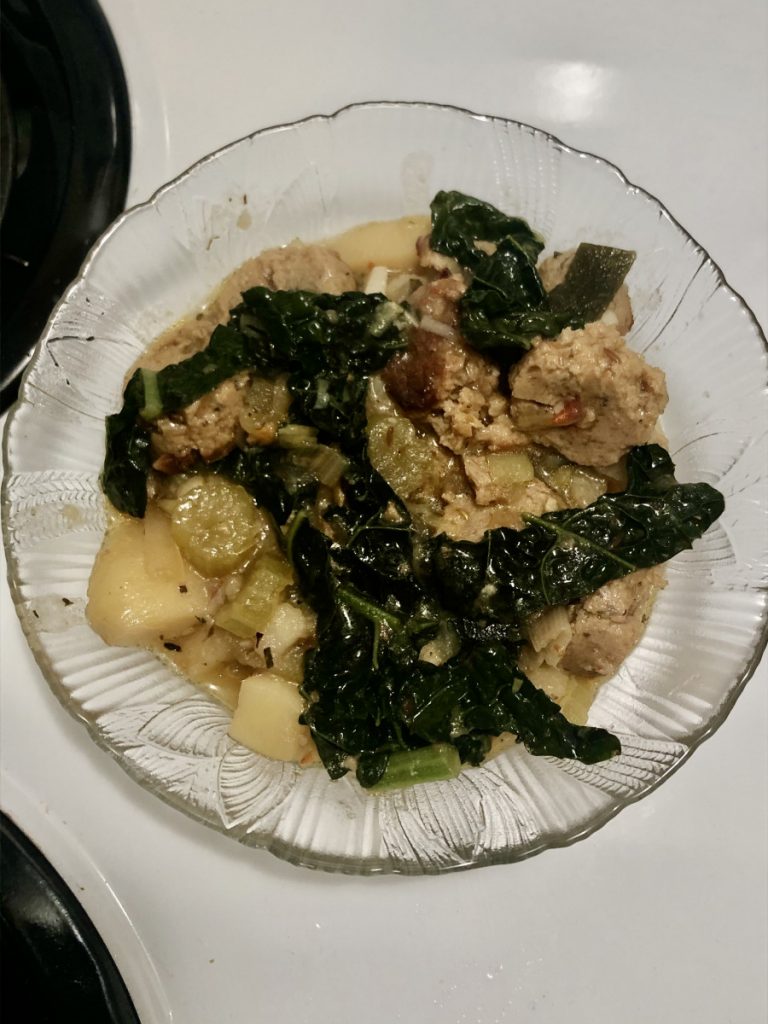
- HOW DID YOU PREPARE THE LEFTOVER SEAWEED? Share recipe details if you want, and Emily might feature it on her website!
I made kale soup with vegan sausage and all 3 seaweeds. It was rich, so I think next time I’ll use less seaweed, but it worked really well.
- WHAT DID YOU LEARN FROM ANNIE’S RESEARCH STRUCTURE AND FOCUS? Please share your notes.
I loved the way she combined natural history, cultural context, foraging guides, and tasting. She seems so excited about seaweed and I’m feeling stoked about my own project after seeing her blog as an example. I learned from her that before planning an ILC around food (especially foraged stuff like seaweed), you should look into it’s seasonal restrictions.
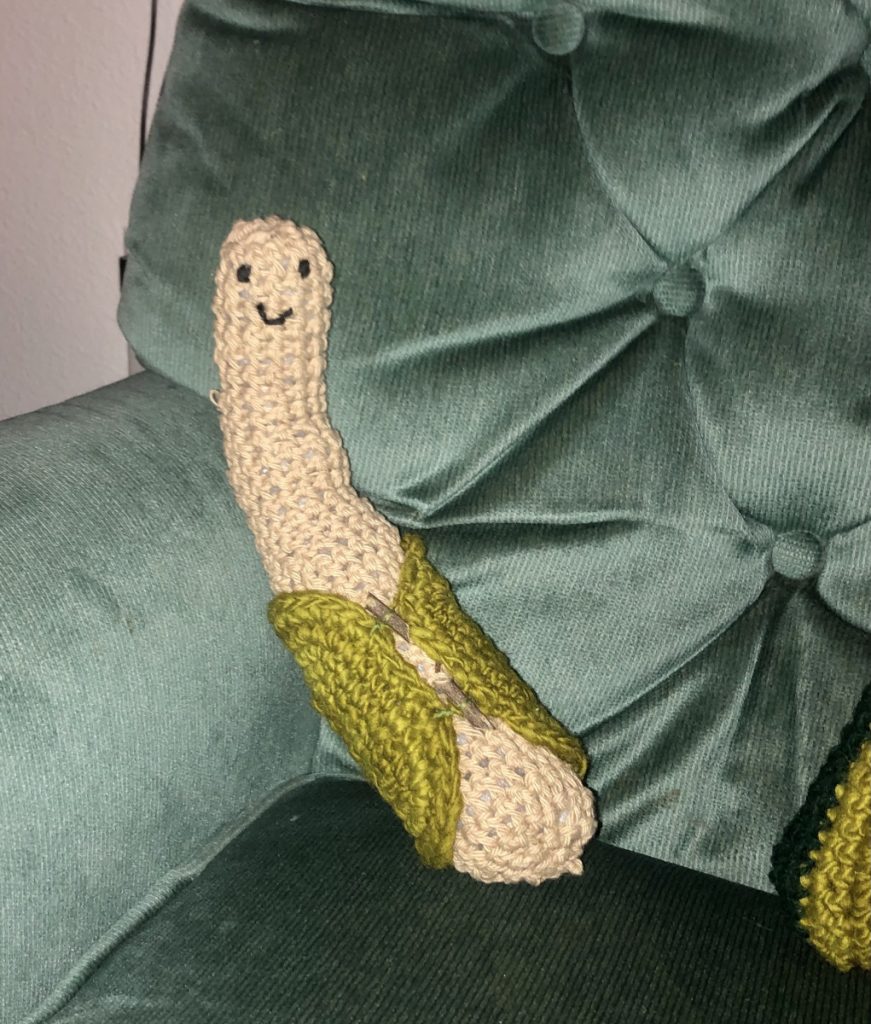
Emily Wilder also talked about how art plays a big role in marketing alternative foods like geoduck and seaweed that most people are dubious of. Aesthetics have the power to make food taste better, or at least convince people to try new things. In the spirit of making geoduck more friendly, I crocheted a shellfish friend inspired by our mascot Speedy.
4e: Taste experiments
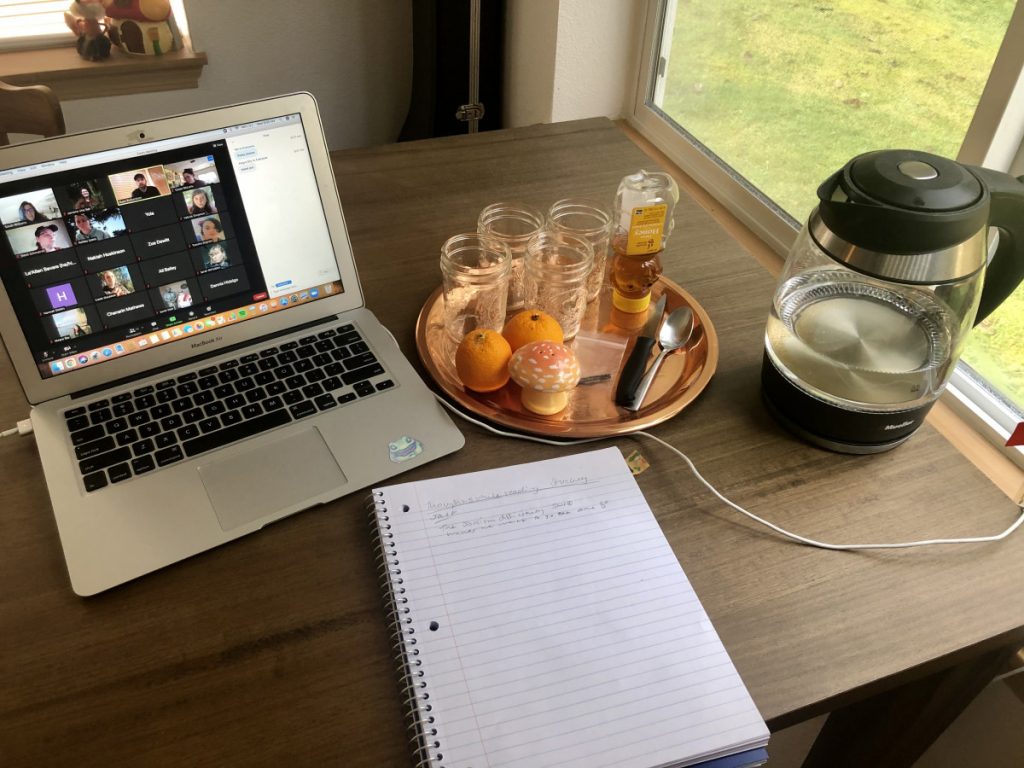
Bitter taste experiments: bitter nail tea and grapefruit
- Of the 5 basic tastes, which do you believe your body craves the most?
Definitely sugar. I have such a “sweet tooth”.
- Do you have a specific (or favorite) way to enjoy that basic taste?
I like to eat something really savory (salty and/or umami) and then have something sweet afterword for contrast, or salt my sweets, or
1st Experiment Questions:
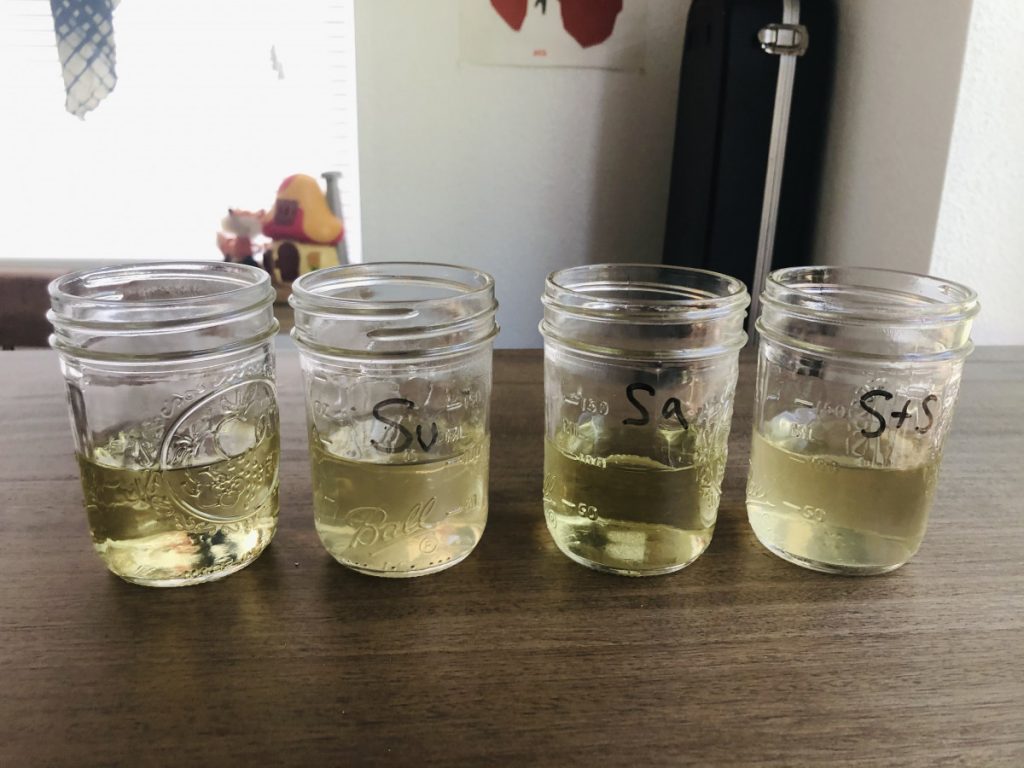
- What was your initial reaction to the bitter nail tea with nothing added to it?
Made me open my mouth to dispel the volatiles by widening my mouth.
Vomit-y. Tactile. Doesnt linger
- How did the bitterness change between the different cups containing sugar and/or salt?
sugar: feel it on my tongue (astringencey) but it tastes mostly sweet. Super strong on the second sip. The honey makes it super sweet and maybe even sour? But it’s still not yummy. It’s kind of worse. Like bad coffee with sugar, yuck. I have sourness lingering from the sugar.
Salt: same reaction as regular. I feel like gagging, I’m sticking my tongue out. Also tastes like salt water. I might not have added enough.
I added a little more salt and now it tastes soo salty but still hecka bitter!
Salt and sugar: EW EW so salty, very bitter, and sweet, like a rotten butterscotch! Too rich. Does not sit well.
- There seems to be two groups of coffee/tea drinkers: people who enjoy the drink in its unaltered form, and others who like modify it with fats and sugars. Give different example of a way we humans alter classically bitter foods or drink to make them more palatable.
People love caramel lattes, perhaps because it has the sweet and salty masking effect! I also noticed the hot cocoa mix that I have is salty before being brewed.
Personally I like to add cream to my coffee, but not sugar. Sugar compounds on the sour aftertaste of coffee and doesn’t do much to mask the bitter. My classmates have told me that sour aftertaste that I get from sugar is unusual and Caleb Sol suggested it might be the biota that help me digest who might be the cause of this phenomenon.
- What are your thoughts on regionally/culturally acquired flavor preferences? Do you believe that flavor preference is a learned behavior, instinctual, or a mixture of both? When you taste a flavor, when does its objectivity end and your subjectivity begin?
I think flavor preference is a mix of natural and both. For example, we don’t like bitter in high quantities because we instinctually know it might be poisonous, but our threshold for bitter is different depending on cultural traditions.
2nd Experiment Questions: (OPTIONAL)
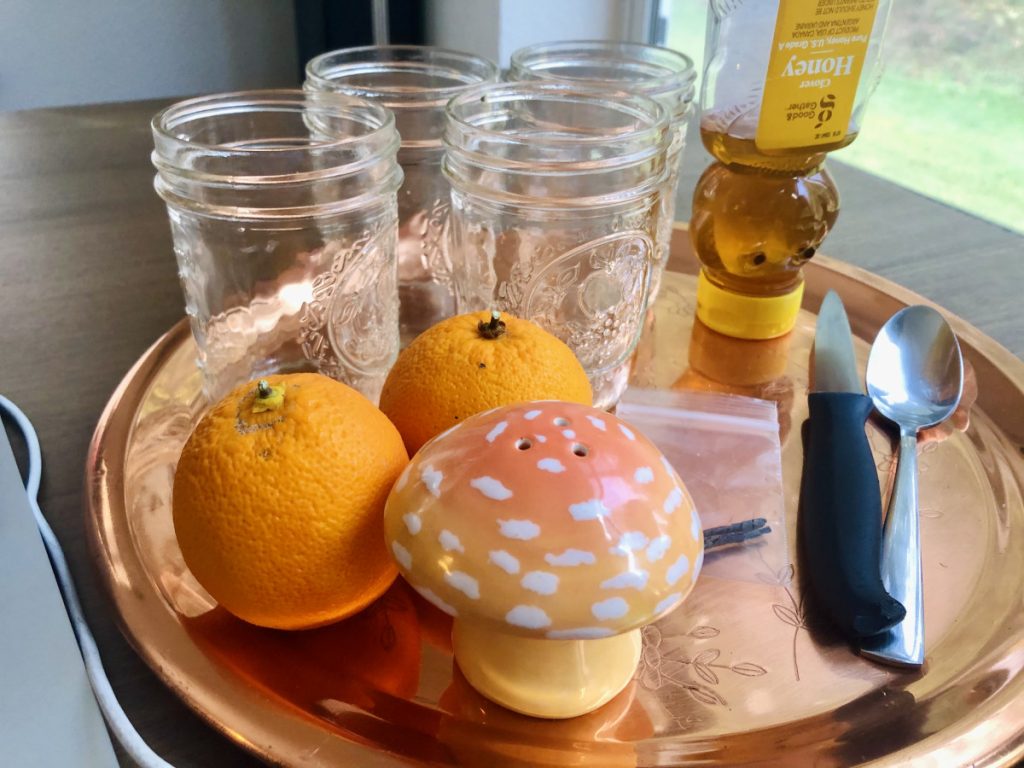
- Do you enjoy grapefruit? Why do you think some people love the flavor of raw grapefruit, and others can’t stand it?
I think part of it is knowing how to eat it, how to avoid the rind and also what you add to it. Maybe whether you think of sour and bitter as complimentary to sweet. Probably also has to do with whether you are a tolerant taster.
- How did the addition of sugar alter the flavor of the grapefruit?
I have a slightly unripe blood orange that’s somewhat bitter.
The honey didn’t eliminate the bitter aftertaste, but it made the initial bite scrumptious. They didn’t mix much, like what Caleb said.
- How did the addition of the salt alter the flavor of the grapefruit?
It really brought out the sweet and the sour. I don’t taste much bitter. It’s much smoother.
Both sugar and salt: I tasted mostly sweetness., less sour, still deliciously tart.
- Did the addition of the sugar and/or salt change your opinion on grapefruit?
I never noticed how much I could appreciate a full, loud tart flavor. I always thought I disliked lemonade because of the tartness but maybe I disliked the bitter and the sugar (sugar leaves a sour taste in my mouth)
- Seeing as these two experiments both consisted of altering a food or drink by adding salt or sugar, did you find any similarities or differences between the two experiments?
I thought the masking effect was much more effective on the grapefruit than on the tea, but maybe because in the citrus, sour was the star of the show naturally, and bitter less prominent.
4f: Sustainable entrepreneurship
Week 8 Reflective and Preparatory Diary Entry 2/24/21
Question #1:
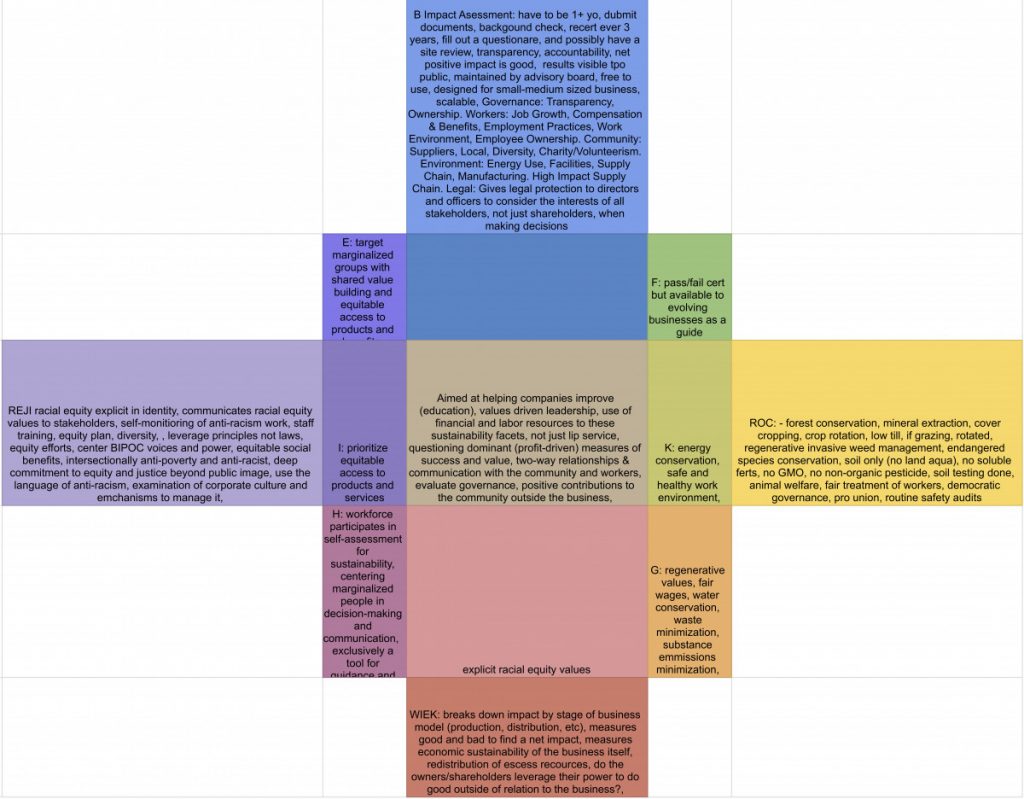
What are the similarities between the B Impact Assessment protocol and our three frameworks?
- All frameworks mention the safety, needs, and wages of workers, as well as workers having governance or bargaining power
- All frameworks share the goal of educating business leaders
- All frameworks stress a divergence from the dominant idea of value and success (shareholder-profit-driven)
- Emphasis on social and environmental sustainability and net positive impact
What are the differences between the B Impact Assessment protocol and our three frameworks?
- Wiek and B explicitly mention balance or tradeoffs, with net 0 basically being sustainable and more than that being positive.
- Wiek is the only one that says economic sustainability, but B mentions “scalability” which I think means essentially the same.
- The B Assessment, REJI Toolkit, and Wiek et al all mention the value of equitable access to products or services (ROC doesn’t)
- The B Protocol and the ROC Framework are both certifications you either qualify for or don’t. The other two frameworks are solely guides for assessing and improving.
What is missing in the B Impact Assessment protocol?
- B is the only one that doesn’t mention racial equity.
- Wiek and REJI mention marginalized voices in governance and feedback, while B and ROC do not.
- Wiek asks the question of whether business leaders leverage their power to do good outside of the business, which is important to consider.

Question #2:
Finnriver Farm and Cidery: 100.1
What does their B Score mean? In other words, where did they perform well? What specifically do they do well in their highest performing area? Where do they perform poorly? Why?
They performed higher than average in all areas: governance, workers, community, and environment. Their highest performing area was environmental, at 50.7 points. They have been named honoree for environmental performance 4 years in a row. They say “Finnriver is certified salmon safe and they are committed to … organic agriculture, farmland preservation, habitat restoration [etc].” Their lowest performing area was governance, at 11.7 points. They have barely any points for mission and engagement, ethics, and transparency, with 0 points for corporate accountability. The majority of their points come from being “mission locked”.
What might be areas of improvement for them (based on the information you can find)?
On their website they state a commitment to equity and diversity, which is a start on the REJI toolkit. They say on their “equity and community” page: “To uphold these values, we commit to ongoing learning, accountability and repair … open channels of communication for feedback, creativity, problem solving, and community building,” which also aligns with the values of the REJI and Wiek et al. frameworks of centering marginalized people’s voices in decision-making processes. If they truly commit to these missions they’ll probably raise their score. I couldn’t find anything on internal governance.
4g: Climate series
parable of the sower with toshi reagon (embed yuotube of her singing?)


It was an honor to be present for a conversation with Toshi Reagon, a musician who created a musical with her mother based on Parable of the Sower by Octavia E. Butler. Everyone’s description of the production made me envious that I haven’t seen it and might never. They do the whole performance without the stage going black until the end. This was another great example of the role of art in environmentalism (like Geoduck Gal!).
Reagon thought that Octavia E. Butler’s prophetic climate dystopia novel was relevant in these ways:
- drug crises
- wealth concentration
- individualism/tribalism
- building walls literally and metaphorically
- refugee crises
- water scarcity
She talked about the sustainability issues within the book, the contrast between main character Lauren’s walled community versus her cobbled group of refugees; her sedentary community has no impact beyond the walls. Lauren sees people houseless on the streets and can’t help them in that position. It occurred to me also when discussing walls that there is nowhere you can go that’s separate from the world. The wealthiest people may be effected last, but they can’t really escape climate change and ecological disaster. Because we are all part of one natural system, true food security is security for all, and true climate justice is justice for all.
She also talked about the value of diversity in the resilience of any community. Different people bring different strengths and skills. Young people bring energy and updated knowledge. Adults and elders can vote, and hold inherited knowledge of food and medicine, as well as the tenacity to support young people in their efforts.
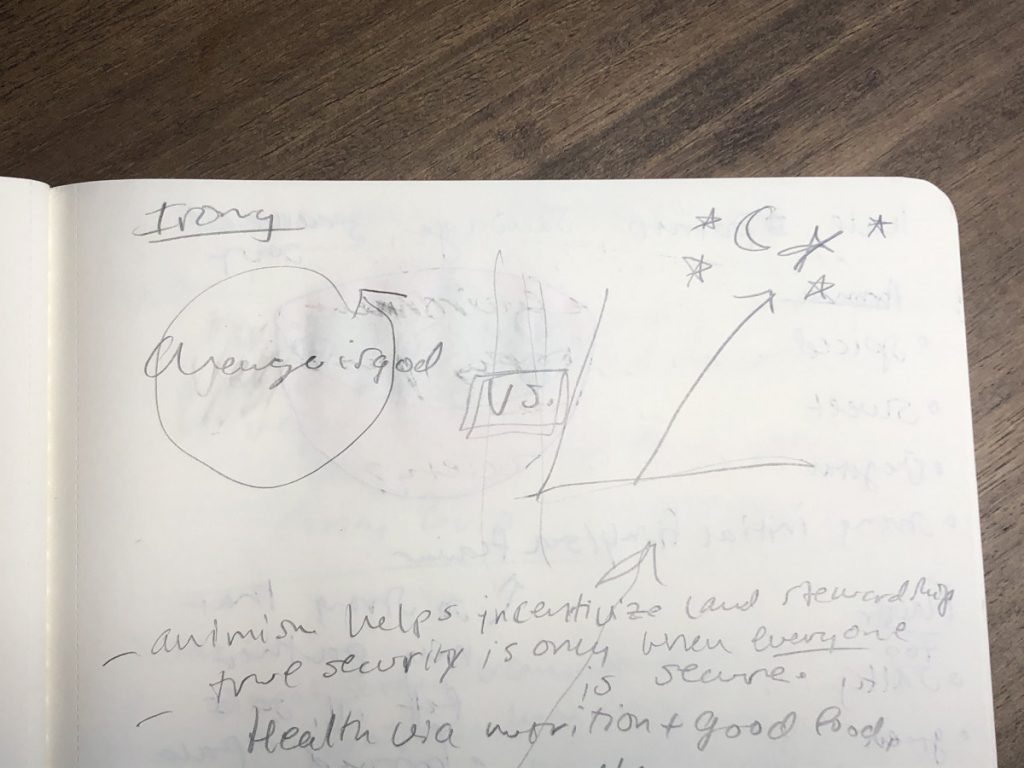
My seminar group on Thursday discussed the irony of Lauren’s “Earthseed destiny” philosophy contrasted with her other philosophical messages as discussed above. Her idea is that humans are special and intended to leave Earth eventually for another planet. We pondered whether this is metaphorical, character development, or a reflection of Butler’s own philosophy, because most of Lauren’s philosophy is humble and ecologically sensible, but this particular belief seems to place humans above nature and imply that there is a planet B, as Elon Musk would have you believe.
4h: Foodoir
Writing about Yacouba Sawadogo, a leader of reforestation efforts in Burkina Faso (West Africa), Penniman wrote the following:
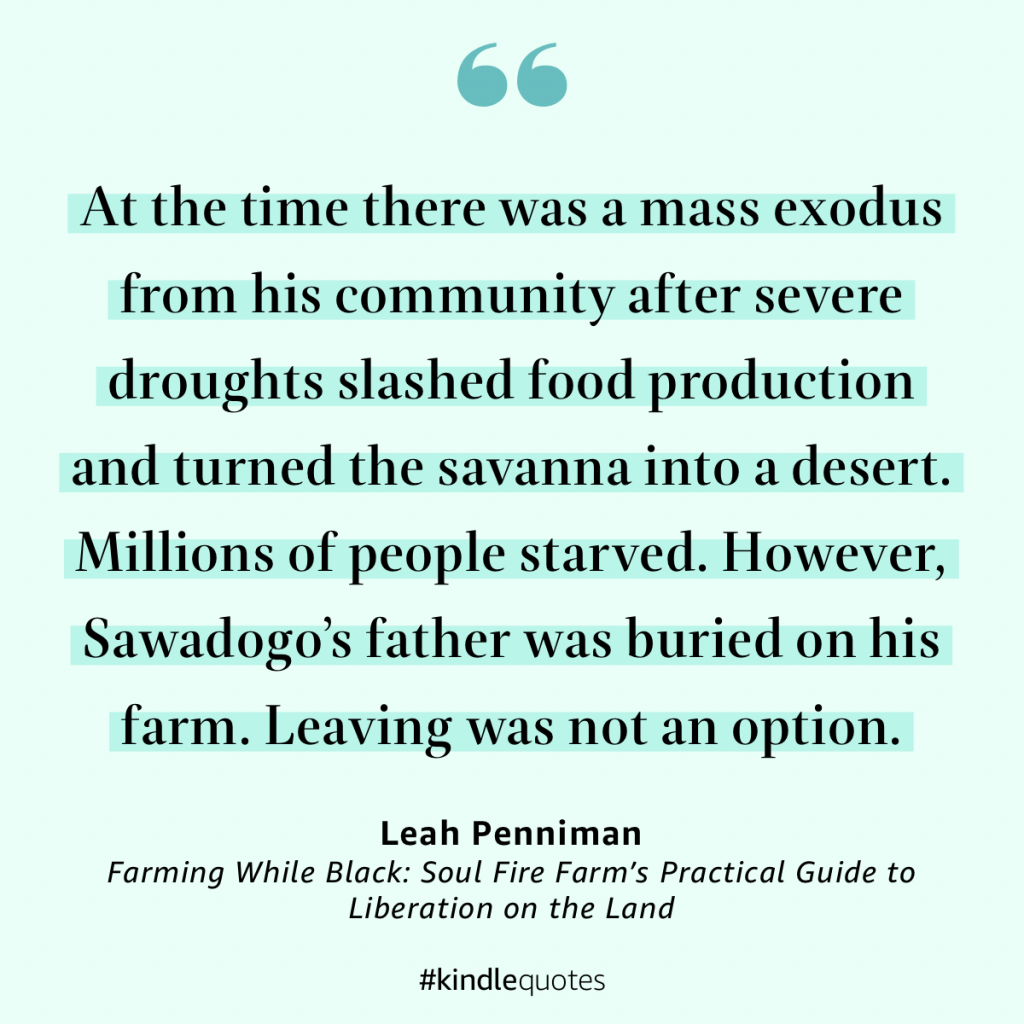
This reminds me of my own family in Texas freezing in the recent nearly unprecedented winter storm, and my partner’s elderly parents in California breathing in smoke every summer. Will they ever migrate to climate safety? I know that eventually there is nowhere to go, but I feel fairly secure here in Washington, where the forests are generous, the weather is mild, and water is plenty. We have wildfires too, but I’ve never had to evacuate my home.
I understand that my family is attached to the land they grew up on. Everyone except for my mom was confused when I decided to move so far away after high school. It’s a formidable process to root yourself in a new place, and my family has nine generations worth of root buried in Texas soil. Hopefully (and sadly) when my grandparents pass on, the rest of the family will move up here. My mom and her husband love Seattle.
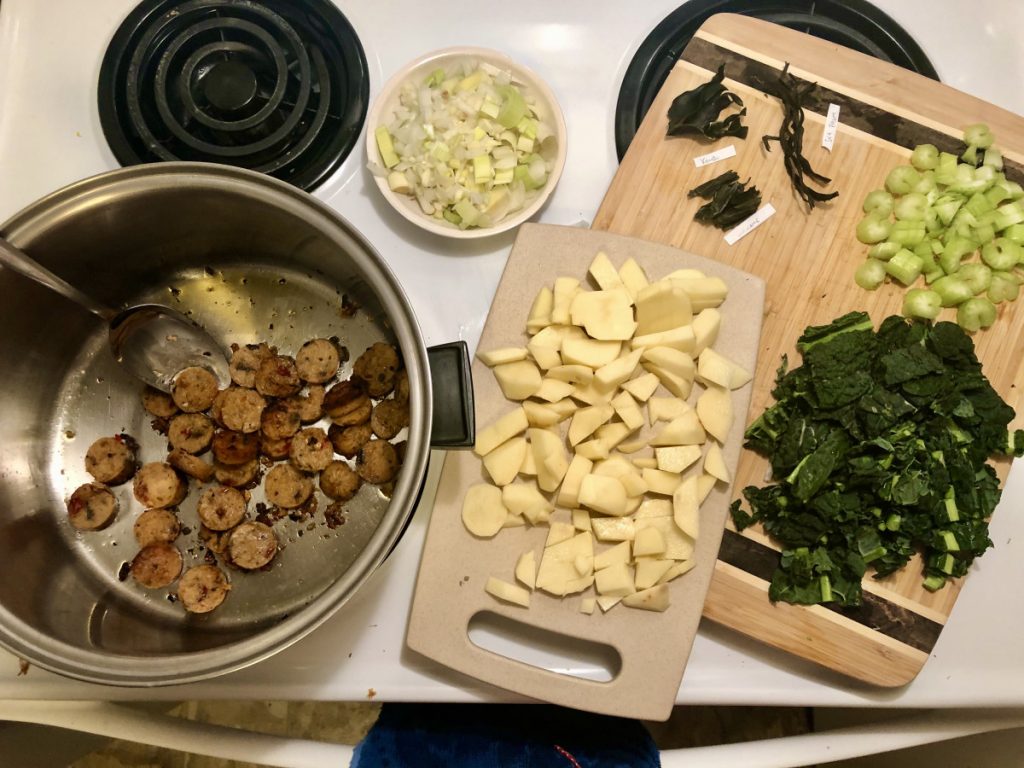
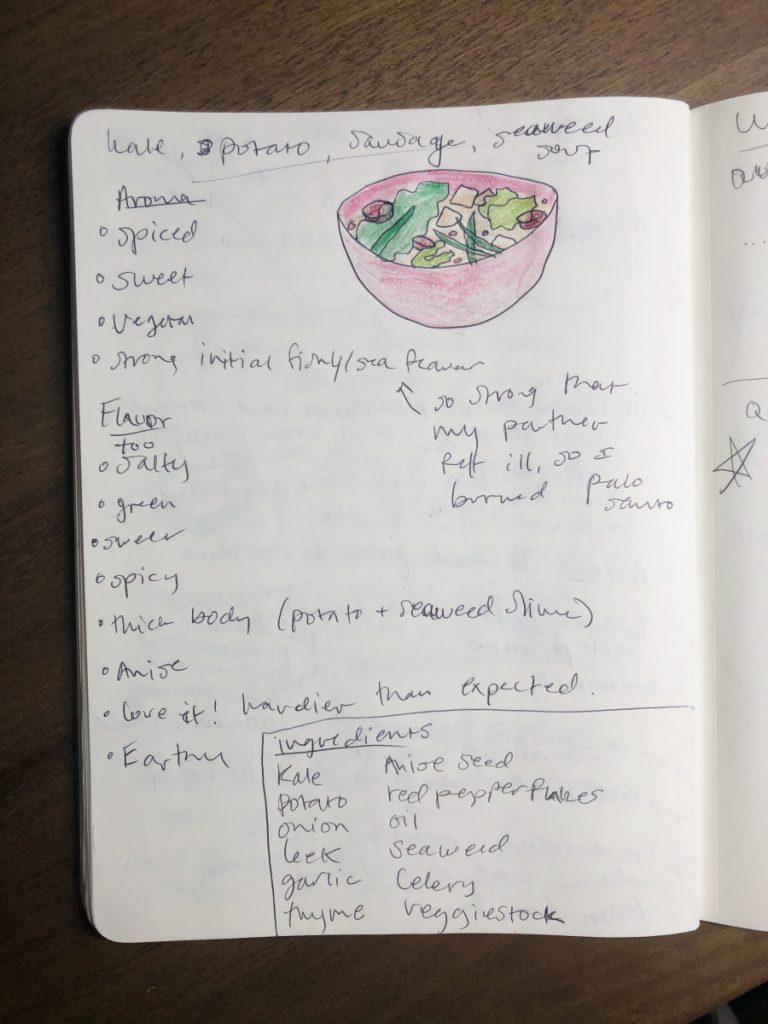
This week (unrelated to the book) I used my leftover seaweed to cook a nourishing meal for my partner and I. I improvised the recipe: kale, potatoes, onions, garlic, leeks, celery, seaweed, and some spices. In hindsight, I wish I had chosen one seaweed. All three resulted in a delicious but aggressively rich and pungent stew. All the earthy, iron rich greens complimented one another well. With slight adjustments, I would definitely make this again. This seems more like something I’d eat at a ren faire than a “seafood” dish! I was surprised it turned out so well.
All images credit to myself, Corinne Stewart, unless otherwise indicated.
Leave a Reply