
Some may find disagreeable select images contained herein that pertain to the process of alchemy by which an animal is turned into food
Brandon Sheard
In-program ILC:
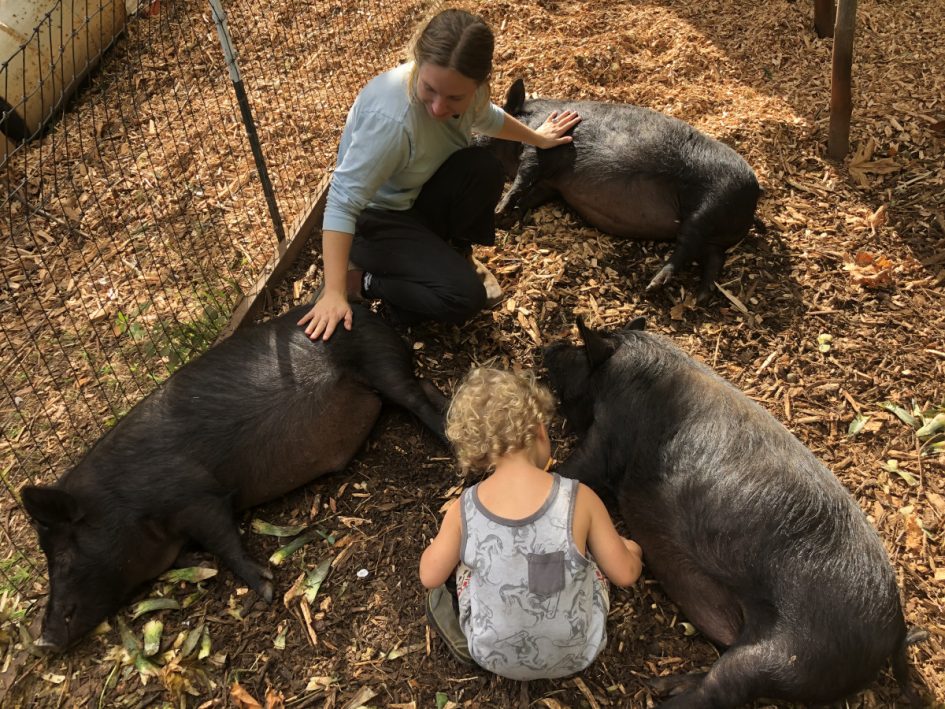
This 16 credit in-program independent learning contract entitled “Pig to Pork” is designed for the student to do a quarter long case study of terroir with her American Guinea Hogs. This will include gaining hands on experience in nose-to-tail butchery, charcuterie, experimenting with selective feeding to shape the flavor of the pork, and tasting labs with a foodoir. It also includes learning about the social, environmental and flavor affects of pasture raised heritage breed hogs vs. industrial confined hogs. The student will be gleaning curriculum and modifying assignments from the program Terroir Meroir: Towards Agricultural Agribusiness.
| Learning Objectives | Activities that will help me to attain this objective | What my sponsor will evaluate |
|---|---|---|
| To learn the ecological, social, ethical, and flavor affects with small scale homestead hog farming and industrial hog farming. | Reading Real Pigs: Shifting Values in the Field of Local Pork by Brad Weiss Reading Foodopoly by Wenonah Hauter Researching using online library | ePortfolio WordPress Website: Photos, Writing on information learned, Time Log |
| To use selective feeding and observations during foraging to experiment with shaping the terroir the of the pork. | Read Happy Pigs Taste Better: A Complete Guide to Organic and Humane Pasture-Based Pork Production by Alice Percy Read The Third Plate by Dan Barber Let my pigs forage and note the foods they eat most Find local food sources and waste streams that can create a certain flavor and mouthfeel to the pork i.e. spent grain from local breweries, hazelnuts, etc. Note the flavor and tastes of the pork after the harvest. Make dishes out of the harvested pork. | ePortfolio WordPress Website: Photos, Writing, Time Log |
| How to humanely and honorably harvest a hog and learn nose-to-tail butchery | Read Homegrown Pork: Humane, Healthful Techniques for Raising a Pig for Food by Sue Weaver Do a facilitated workshop on the nose to tail butchering. Use The Farmstead Meatsmith (Brandon Sheard) membership videos and literature for guidance. Harvest a whole hog and use every part of it while documenting the experienceCreate dishes out of the offal | ePortfolio WordPress Website: Photos, Writing, Time Log |
| To learn the art of Charcuterie. | Read The River Cottage Curing and Smoking Handbook by Steven Lamb Read Home Production of Quality Meats and Sausages by Stanley Marianski Read The Art of Charcuterie by John Kowalksi Use The Farmstead Meatsmith (Brandon Sheard) membership videos and literature for guidance. Begin the process of making bacon, salami, sausages, and more. | ePortfolio WordPress Website: Photos, Writing, Time Log |
| Tasting Research with Foodoir | Tasting lab Complete lab matrixes Foodoir writing on WordPress Website Will be tasting the Pork and noting flavors, mouthfeel, and more. | ePortfolio WordPress Website: Photos, Writing, Time Log |
Pigs to Pork:
“One of the powerful things about heritage animals is that they were able to survive and thrive in a time when we didn’t have a lot of vets and chemical dewormers and vaccinations” (34).
“Just some grazing and a few scraps to survive and thrive. That is the one role that Guinea Hogs provide better than any other pig” (35).
kirk fackrell, Saving the guinea hogs
- The Guinea Hog has been known by many names: Forest Guinea Hog, Guinea Forest Hog, African Guinea Hog, you may have noticed Michael Twitty mentioning Guinea Hogs in his book The Cooking Gene
- They were a common pig prior to the civil war in the South, but went nearly extinct previous to the 90’s.
- Their calm temperament and flavorful meat and luxurious amount of fat are just a few of the things that make them special.
- Are among rarest of the heritage breeds, are a landrace breed.
- Landrace breeds are special due to there ability to survive with little input. They have a certain resistance to diseases and parasites without the help of humans, which makes them very important in the case of disaster occurring in modern commercial hogs. They have a genetic diversity that makes it important for preserving this breed.
- There is now a niche market for the American Guinea Hog due to the flavor, aroma, and texture of the pork.
- Guinea Hogs are lard hogs, which means they get fat really easily and are more fatty than most other breeds. The lard can be used for cooking, making soap and candles, making biscuits, confit, pancetta, and much more.
- They have different metabolism than other hogs, making it more acceptable for them to ‘graze’.
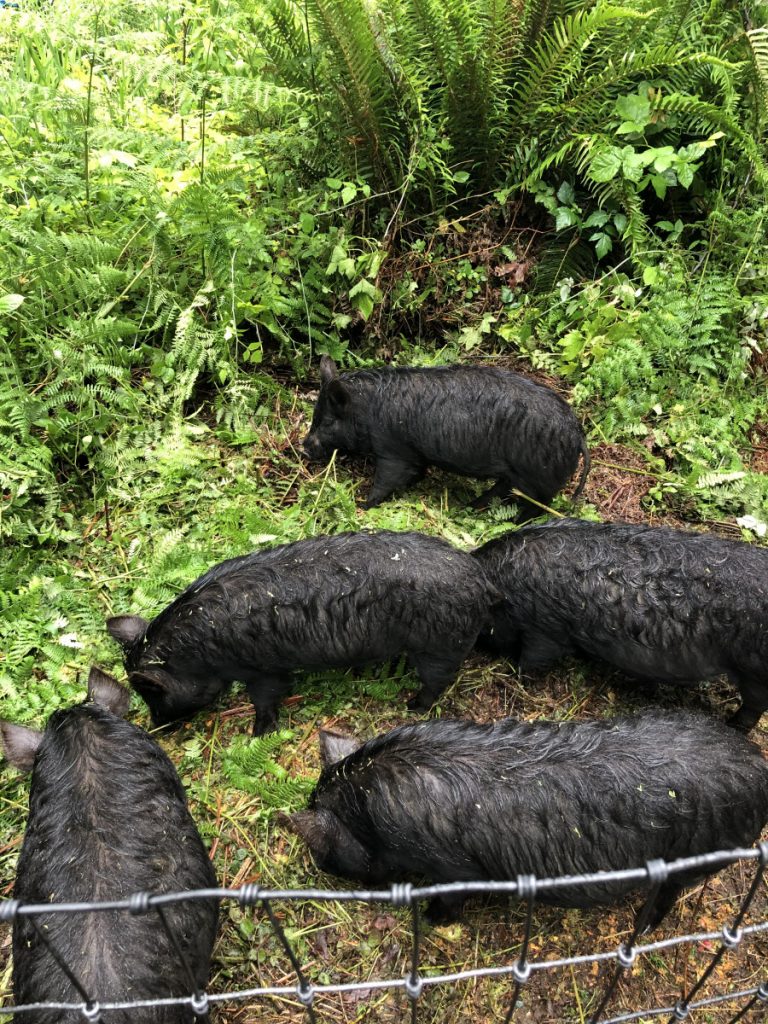
Welcome home piggies (June) 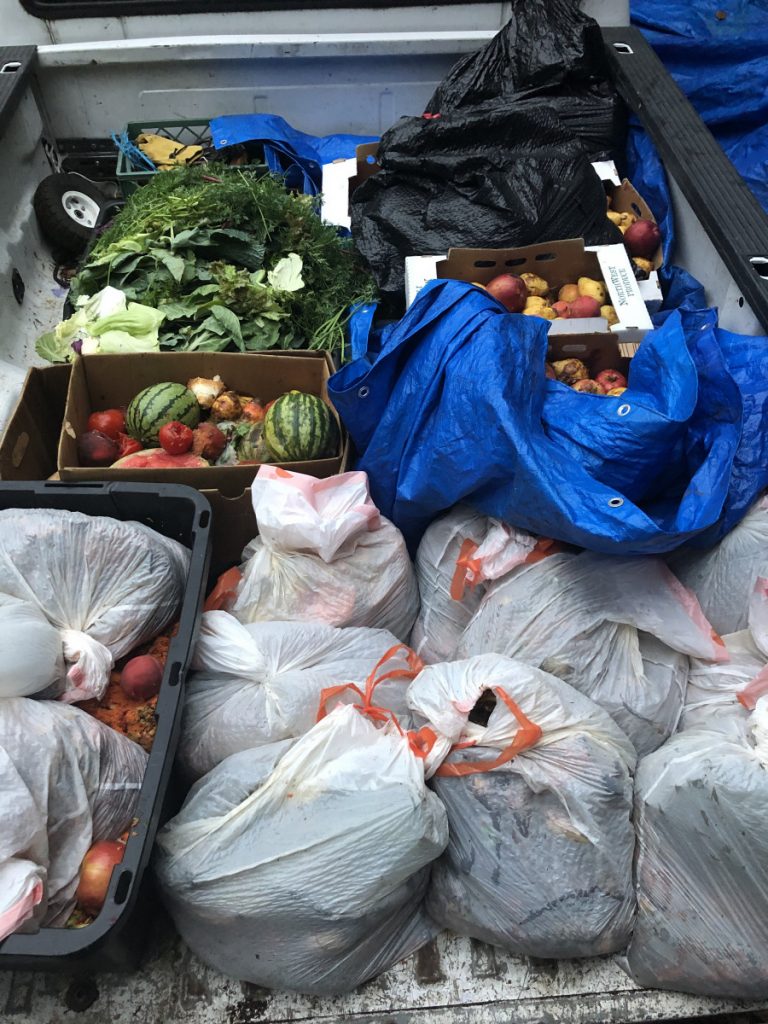
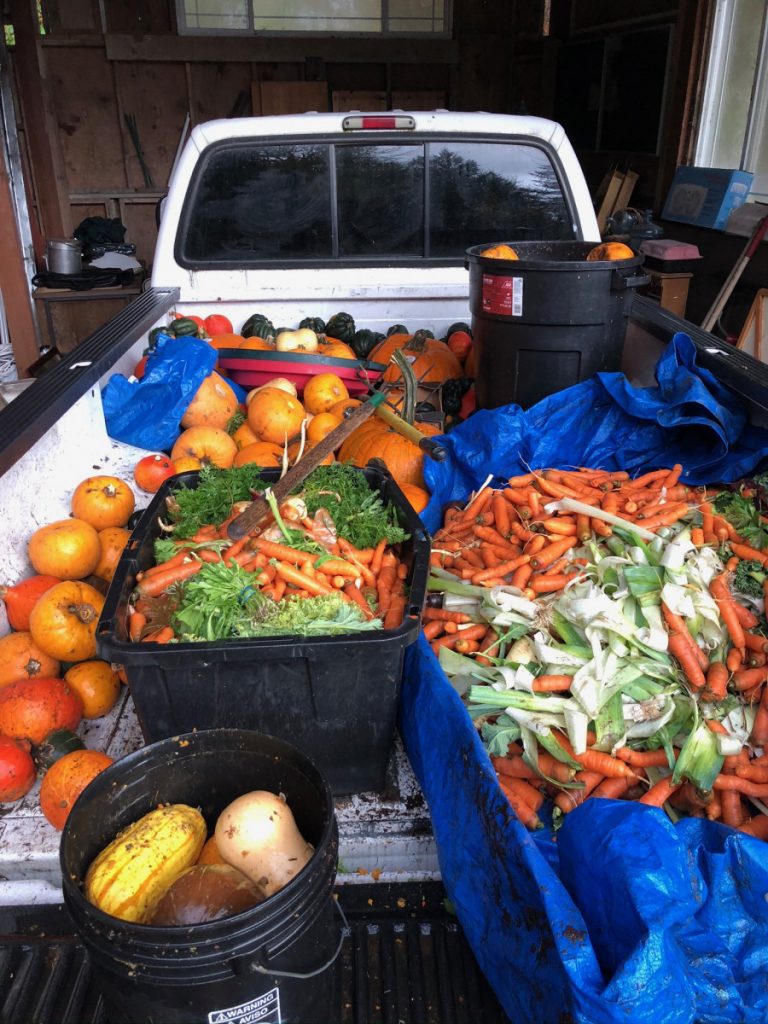
Food waste 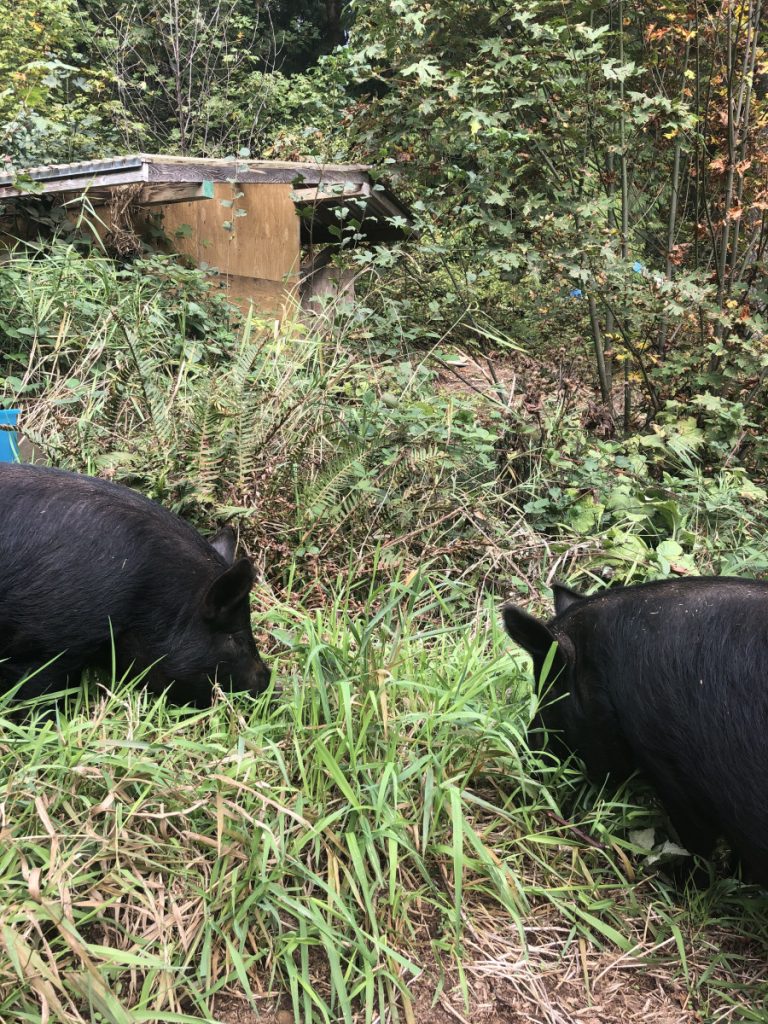
Foraging 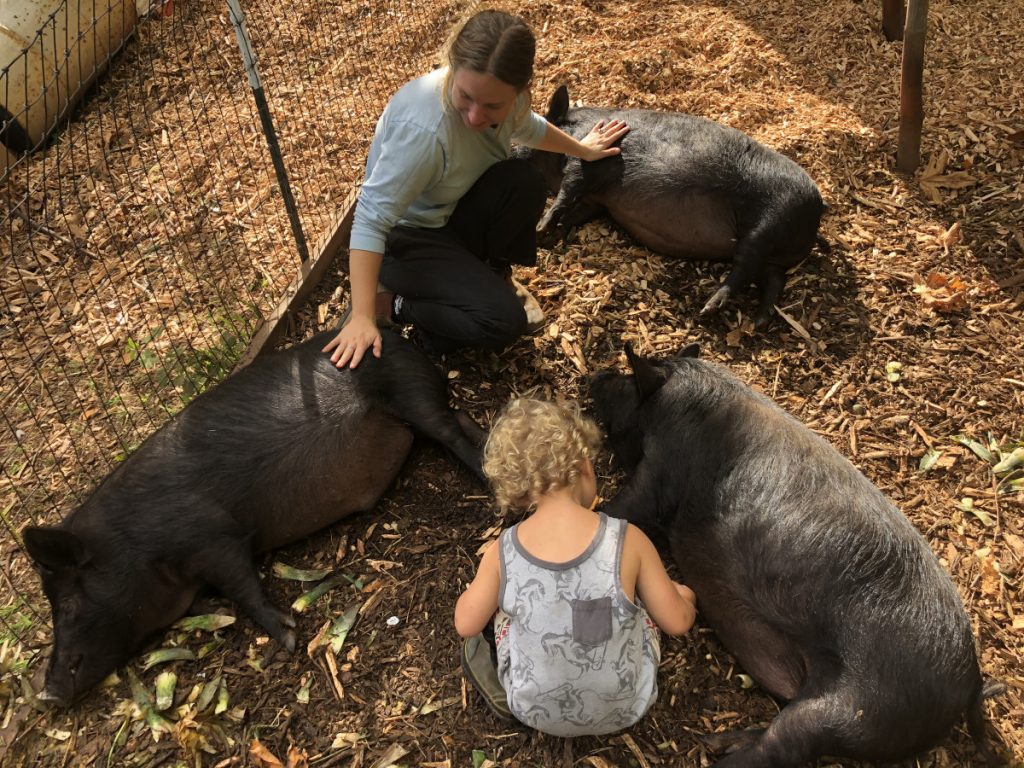
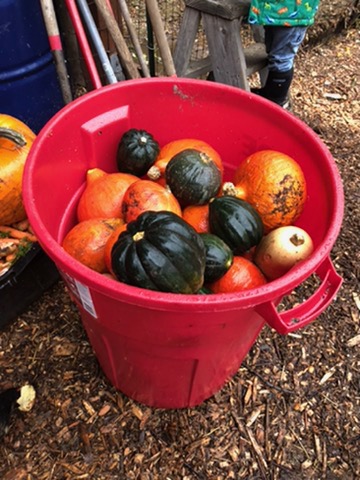
Abundant squash 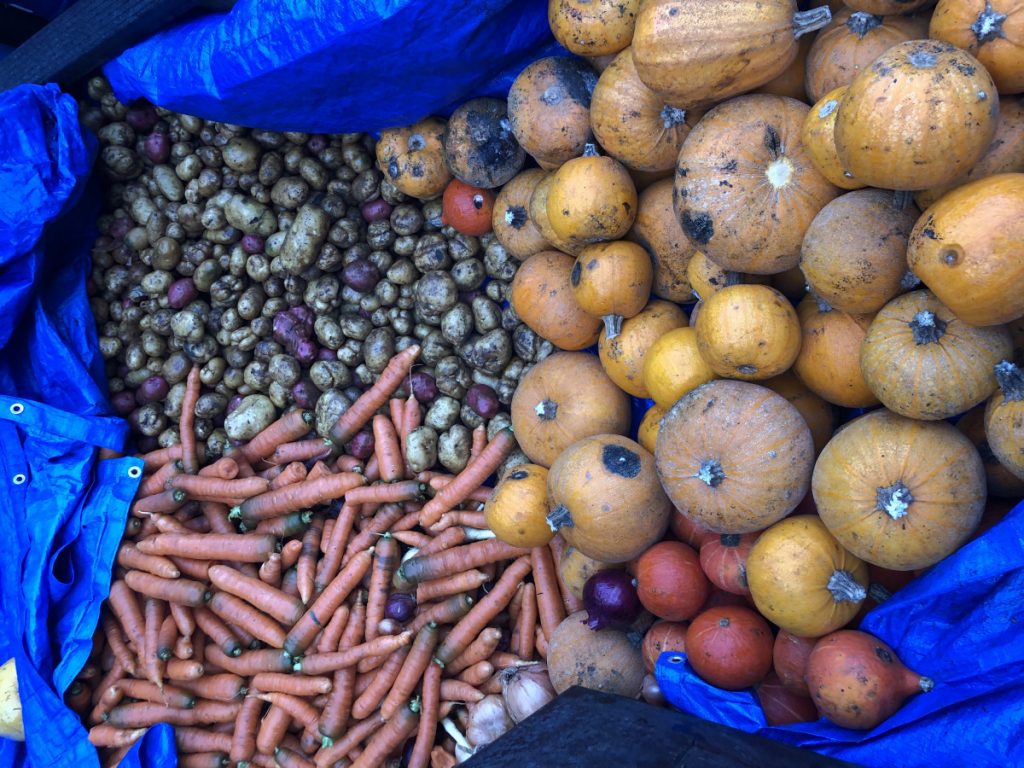
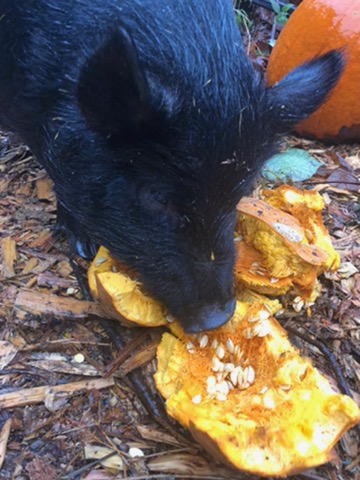
Finishing hog on squash 
After stunning with gunshot, Stick to bleed out 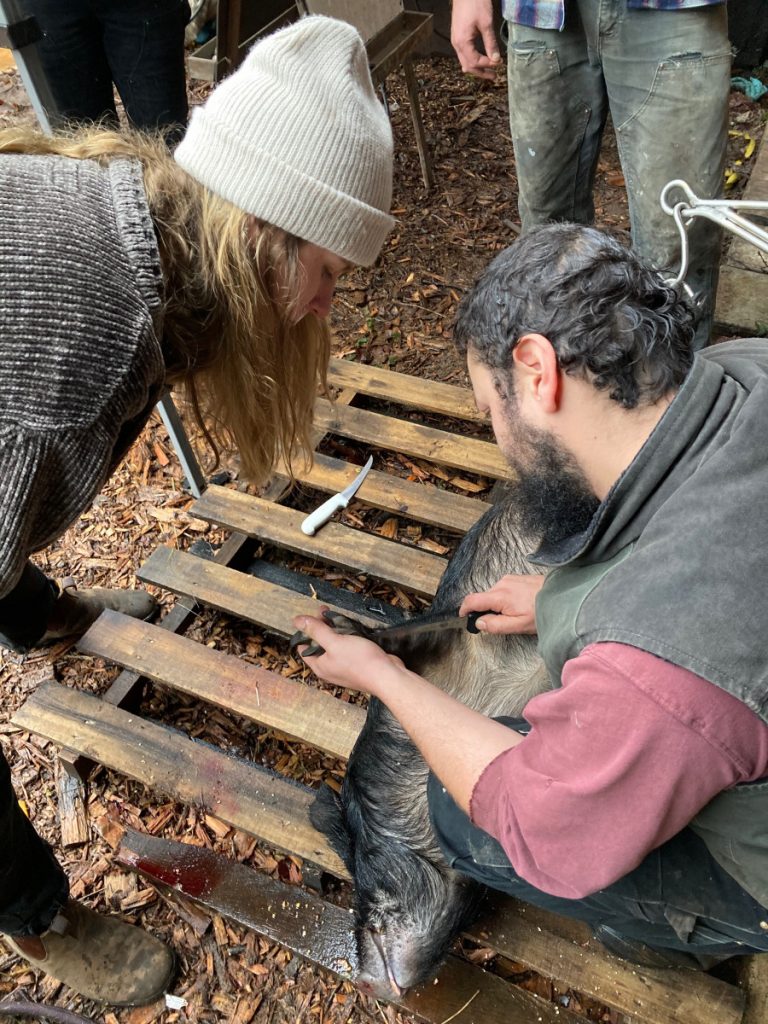
Finding tendon that we will hang from 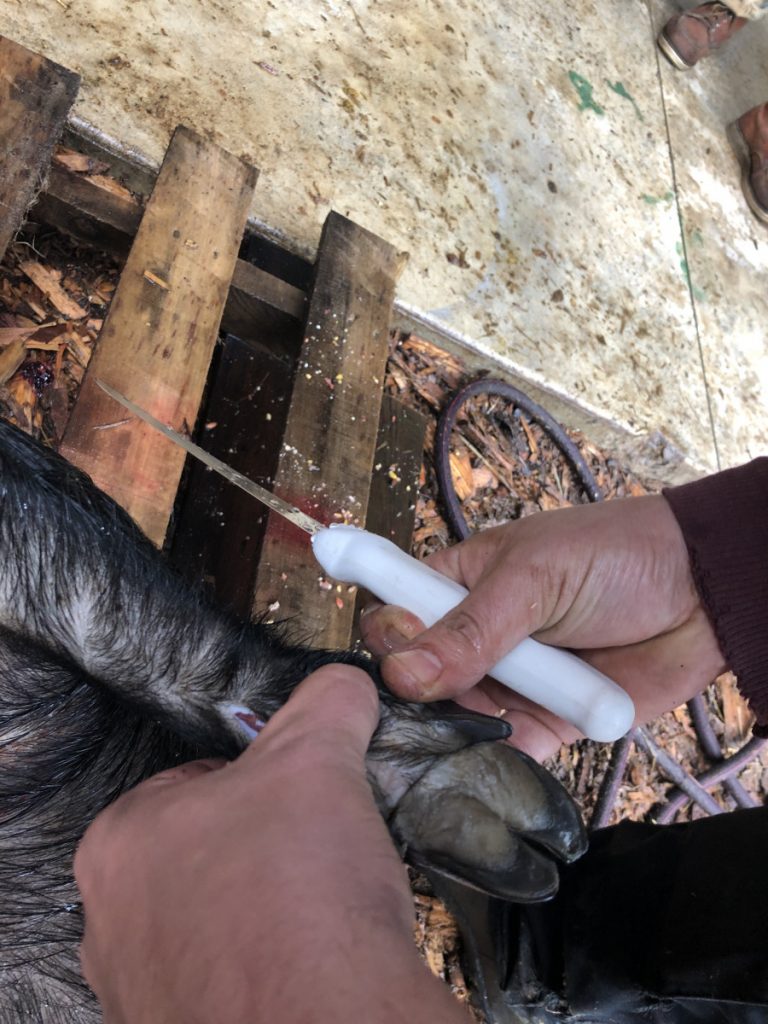
cutting for hanging 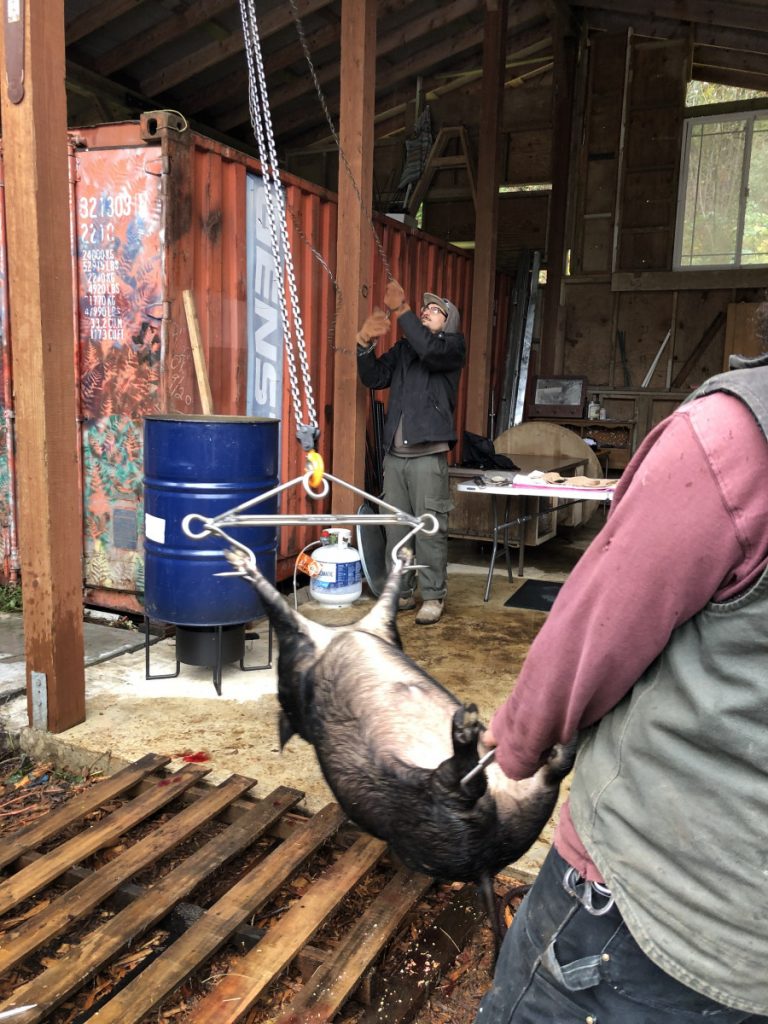
hoisting up 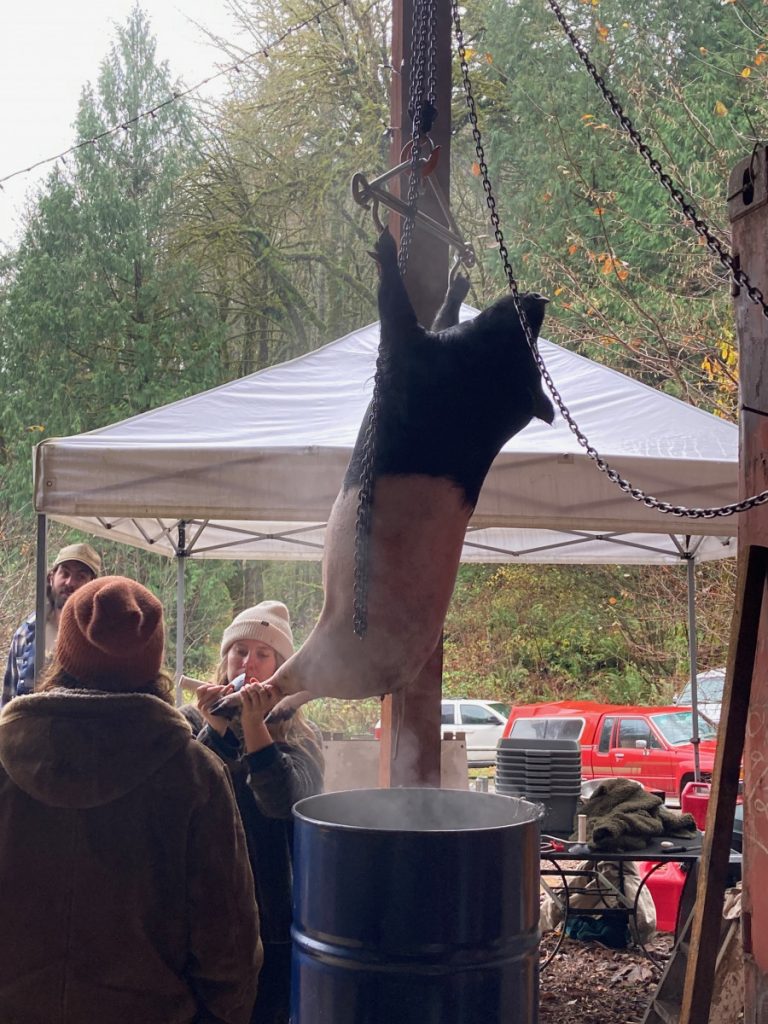
Scraping after 90 sec scald 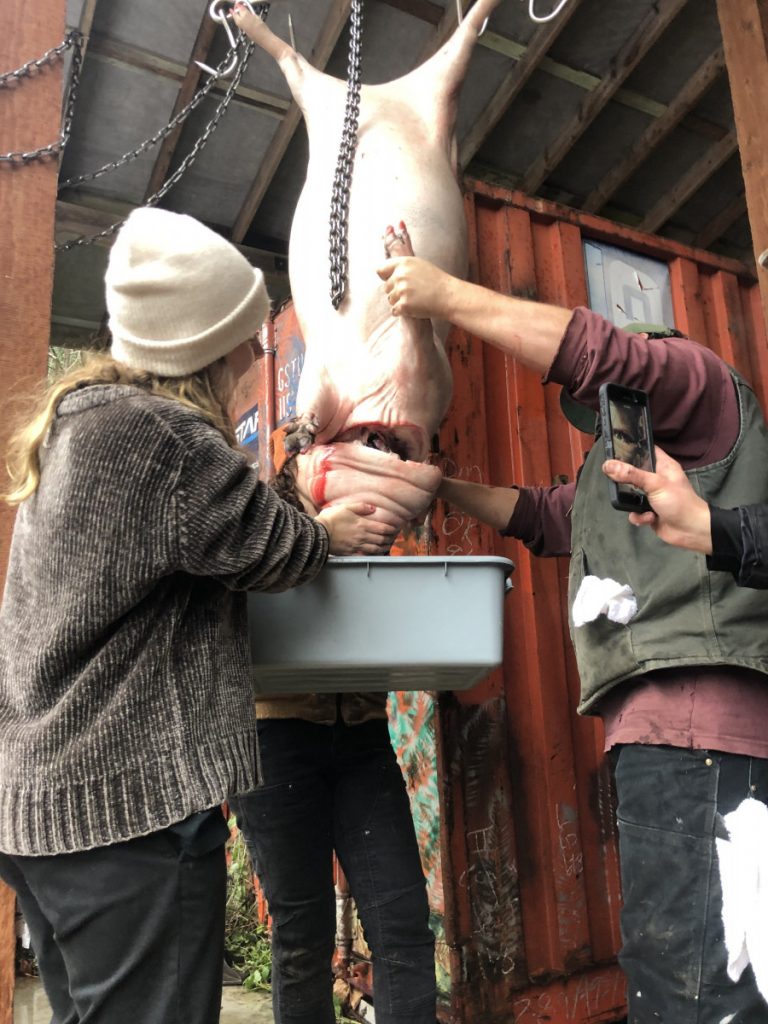
Removing head 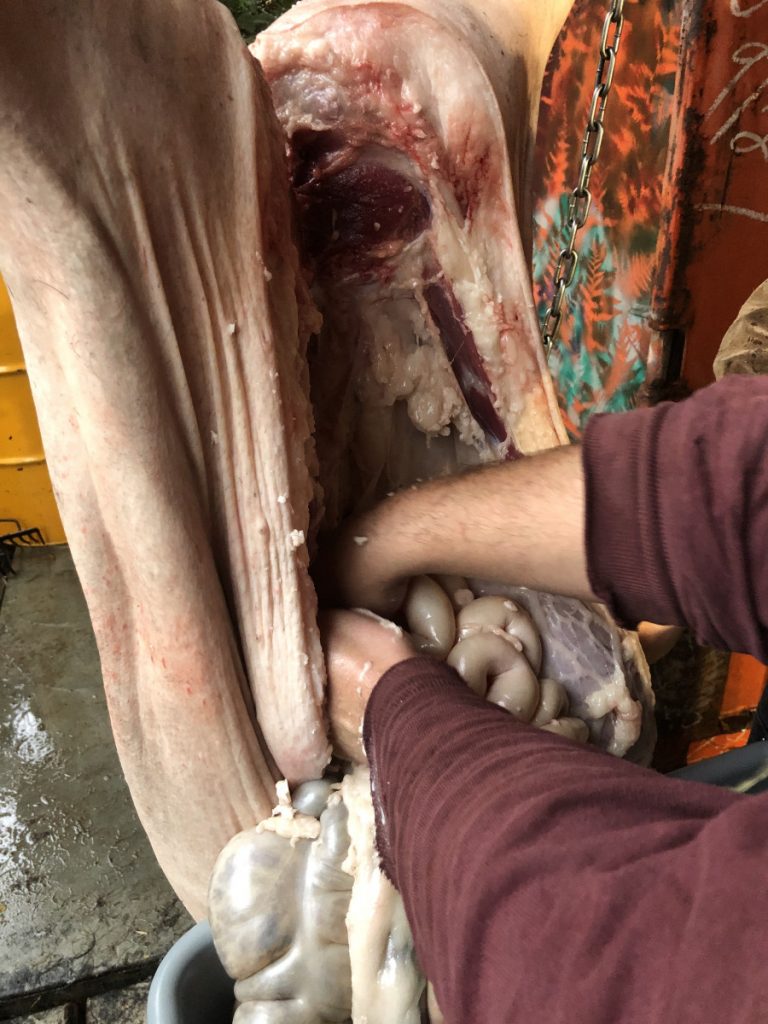
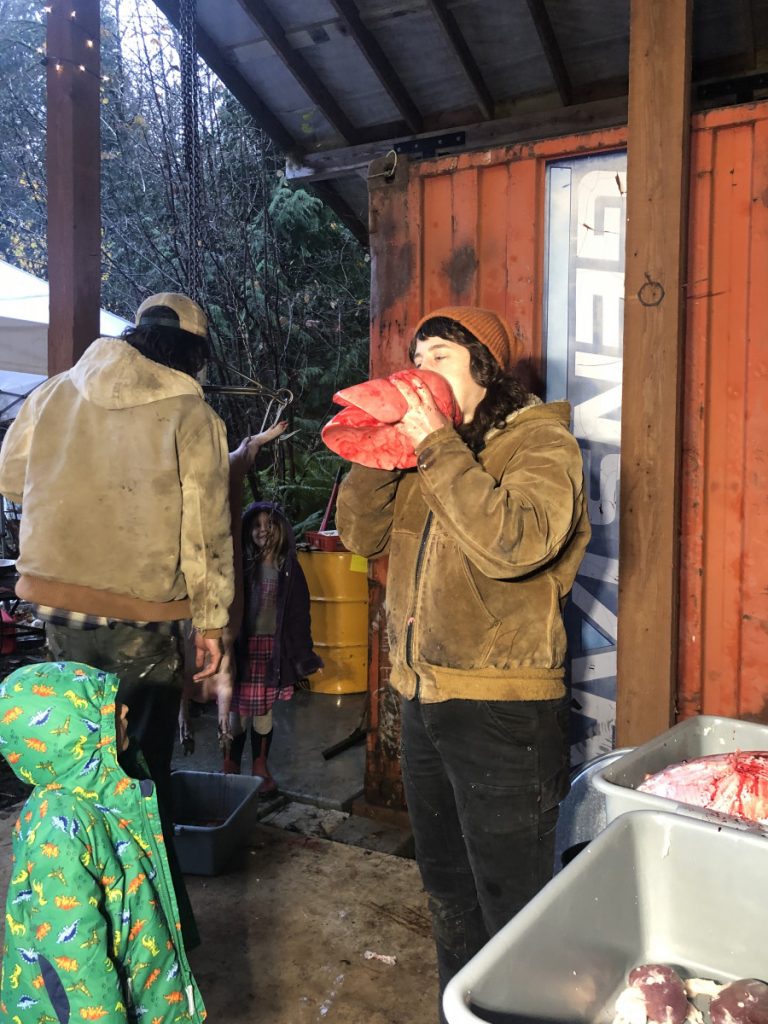
Lung Ballons! 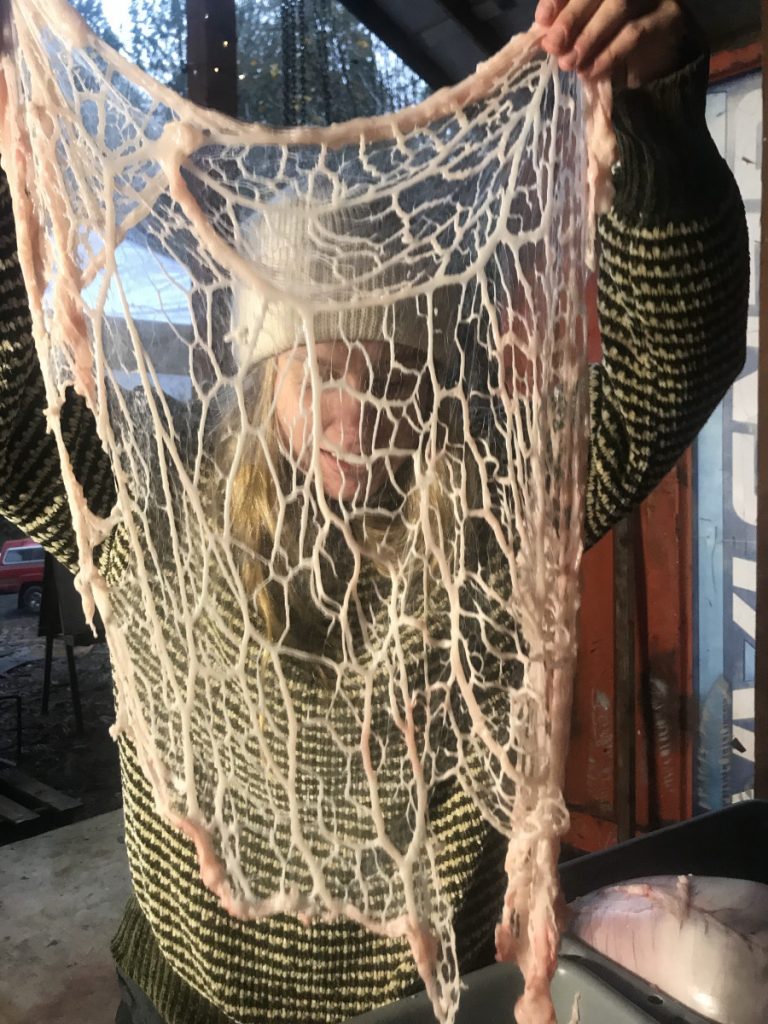
Caul fat 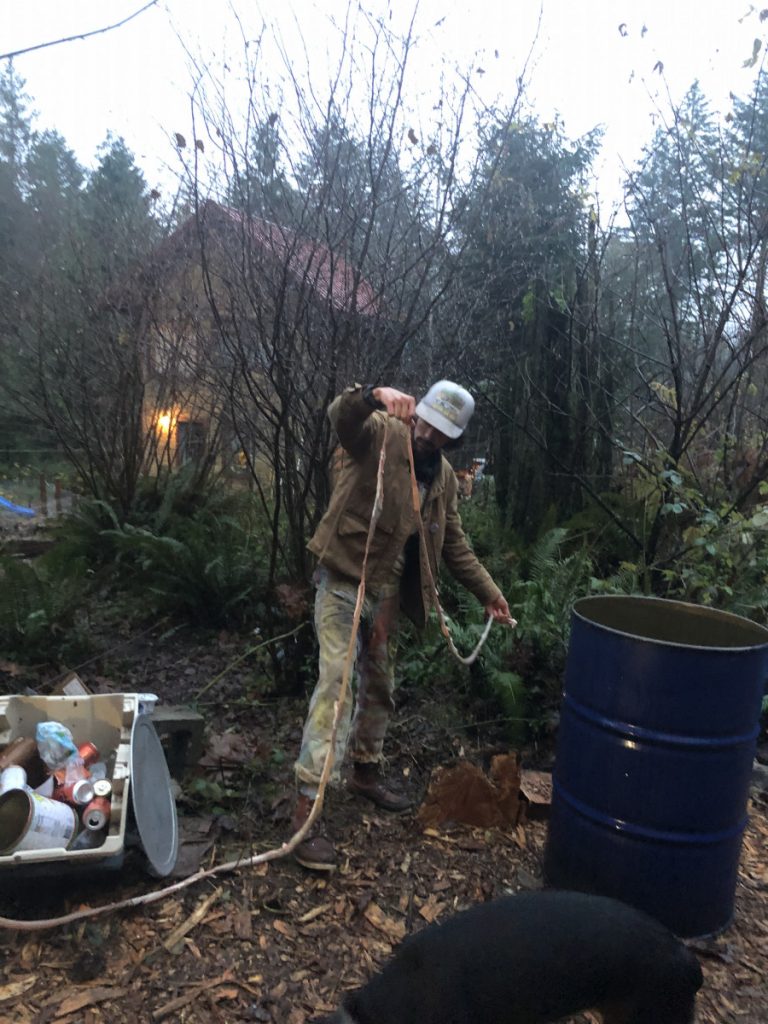
Intestine Cleaning 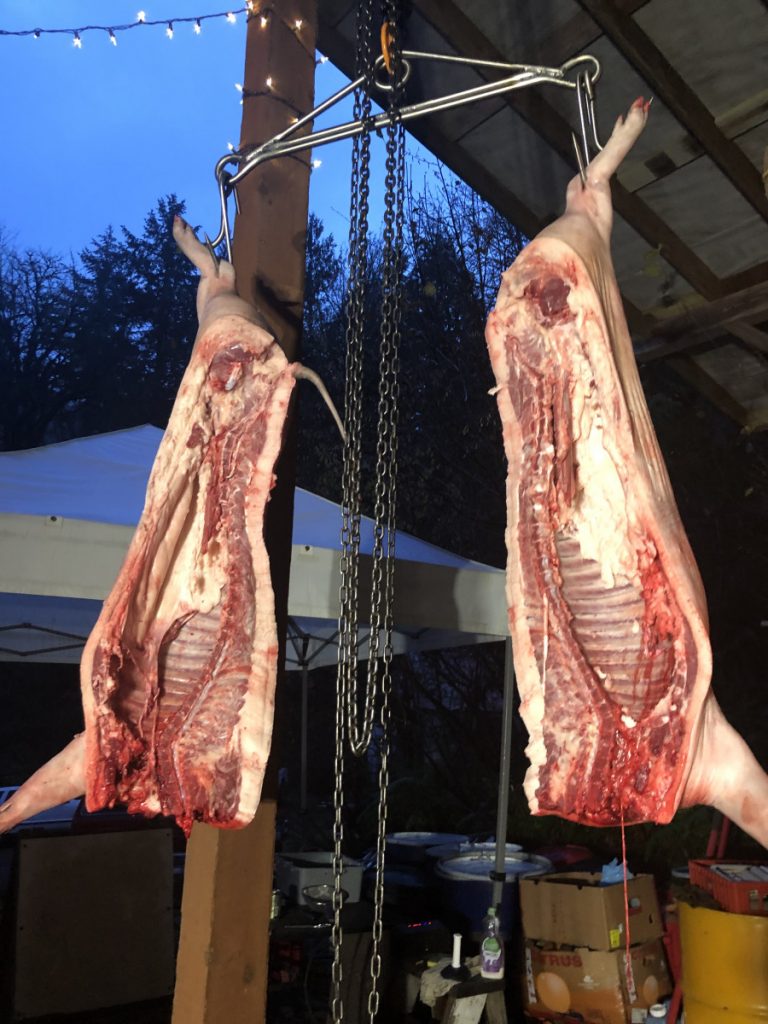
Split in half ready to hang over night! 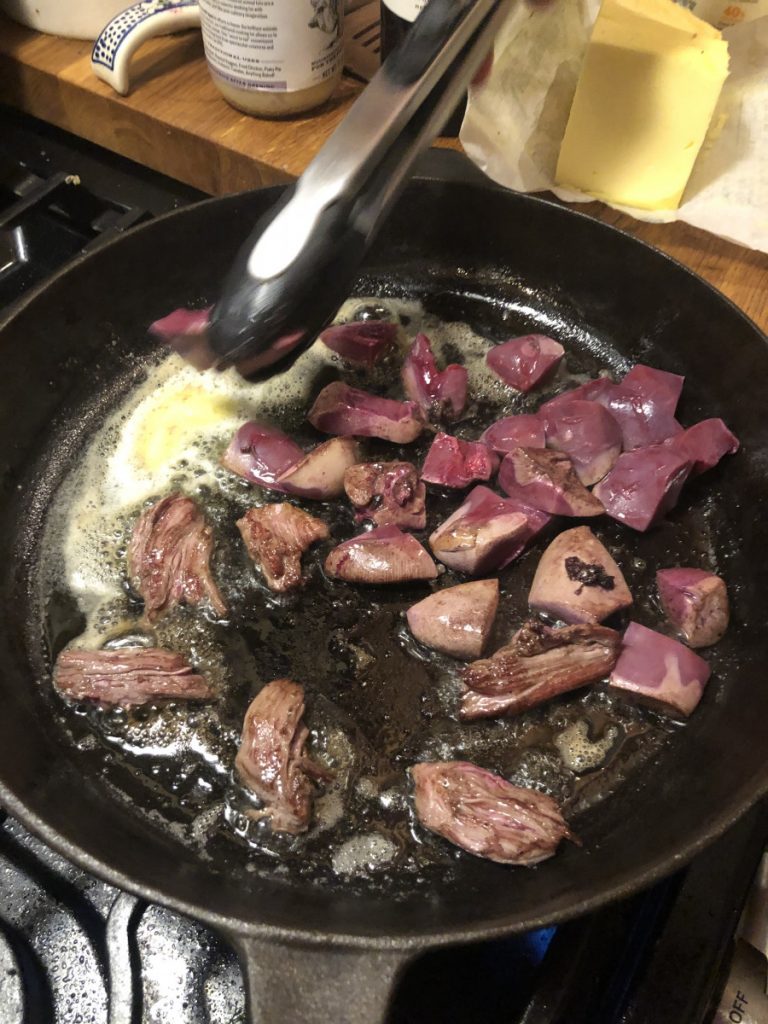
Frying in order of toughness and doneness 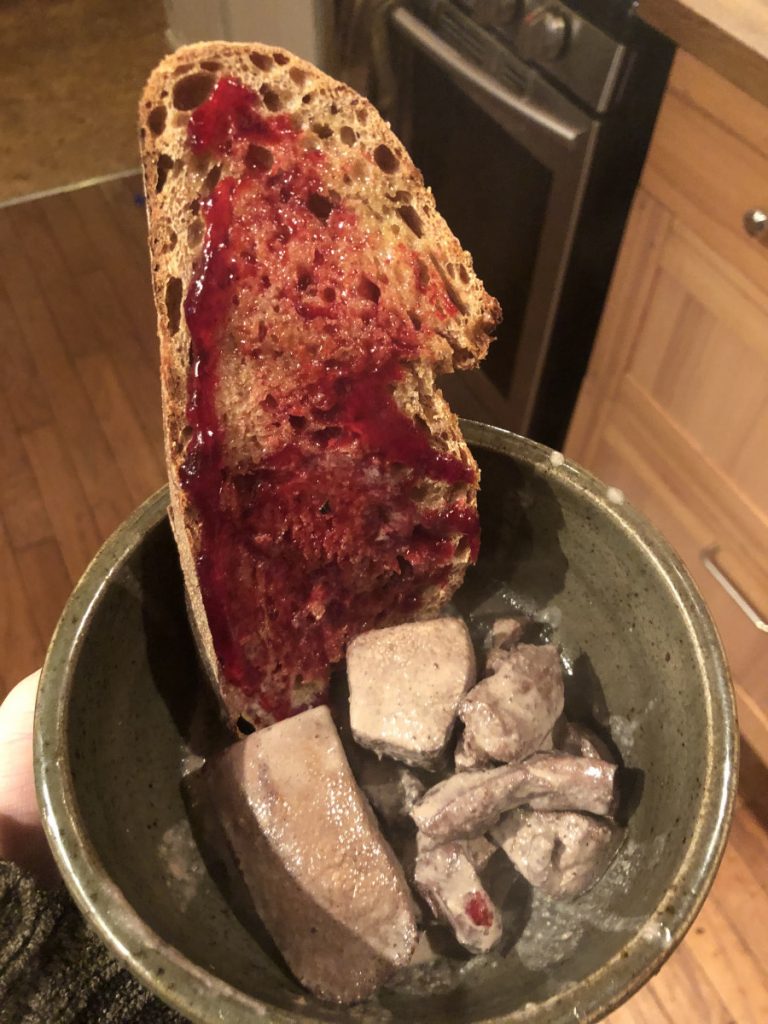
Slaughter day fry 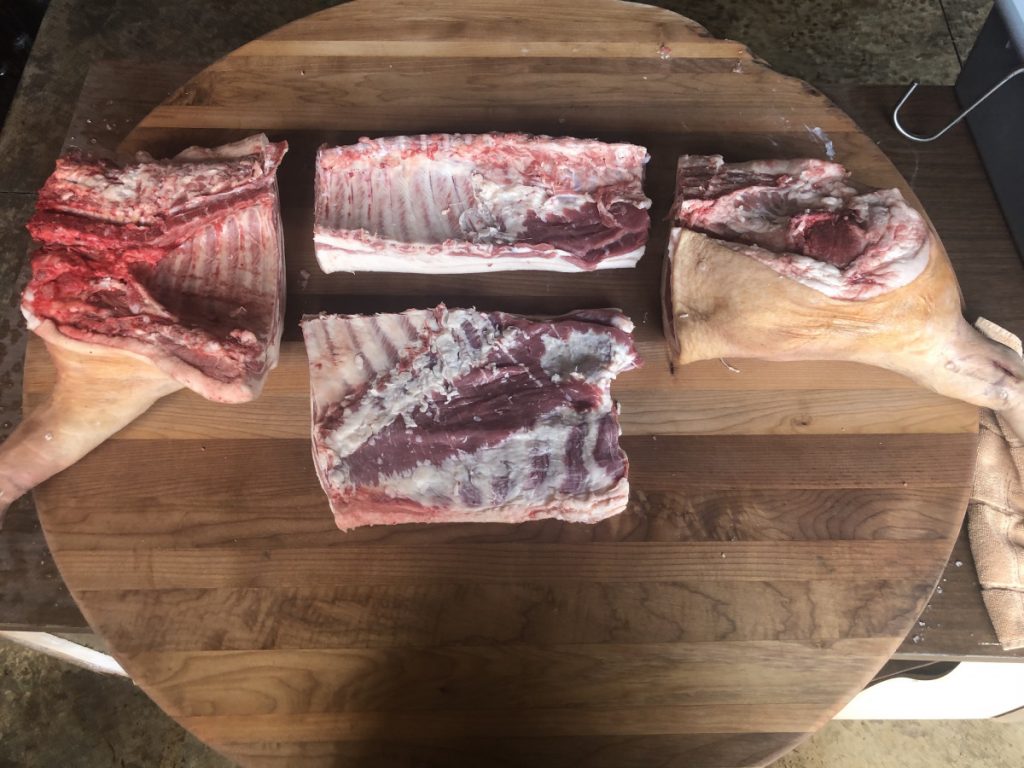
The four primals: Shoulder, Loin, Belly, Ham 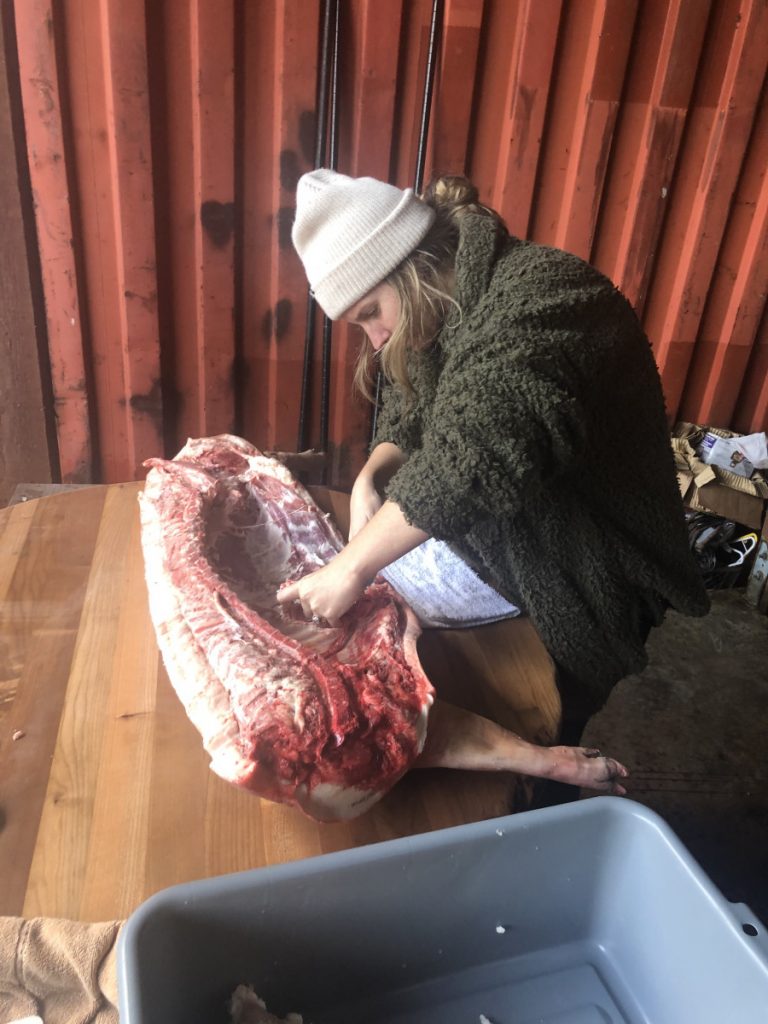
Removing Skirt Steak 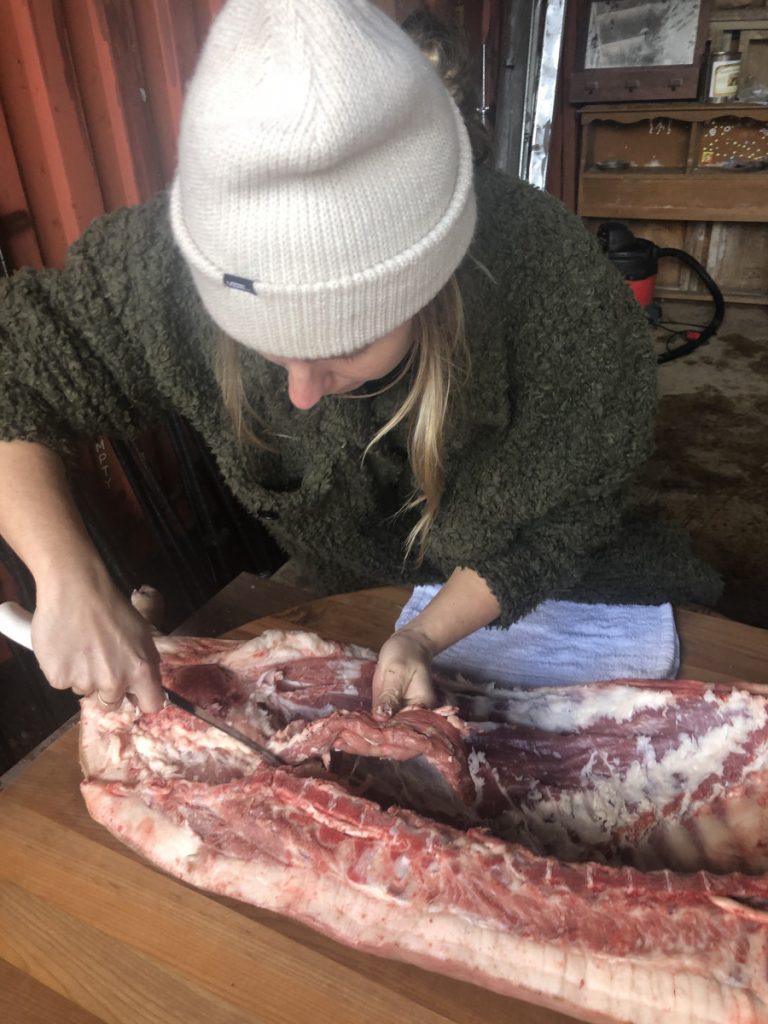
Removing Tenderloin 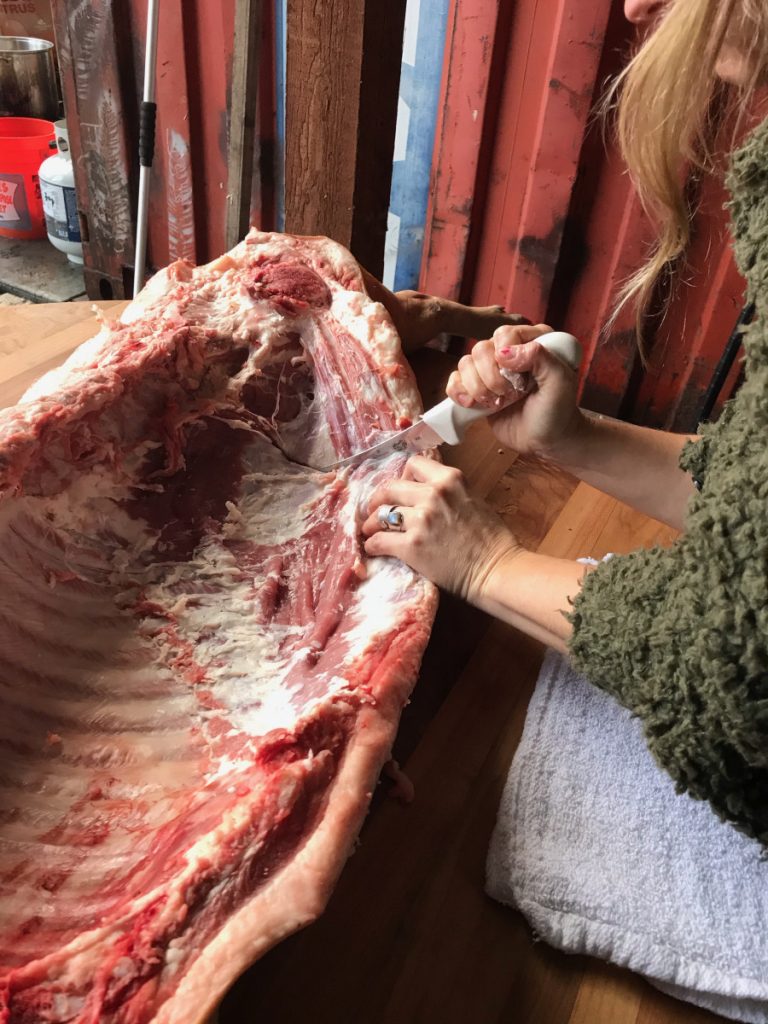
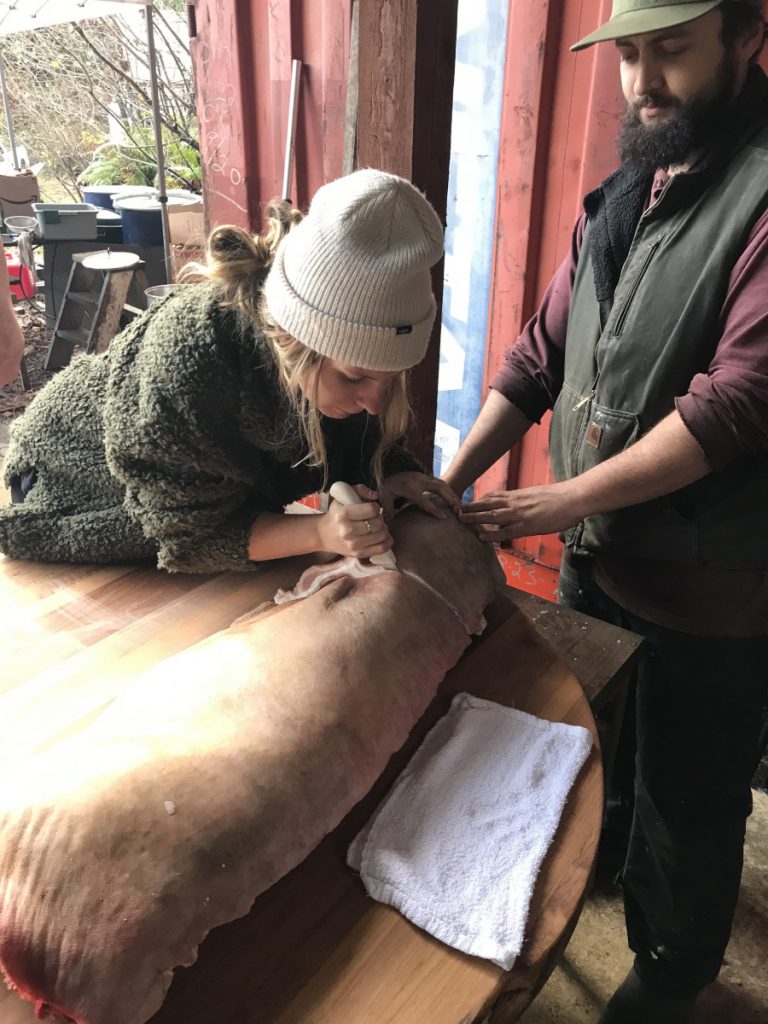
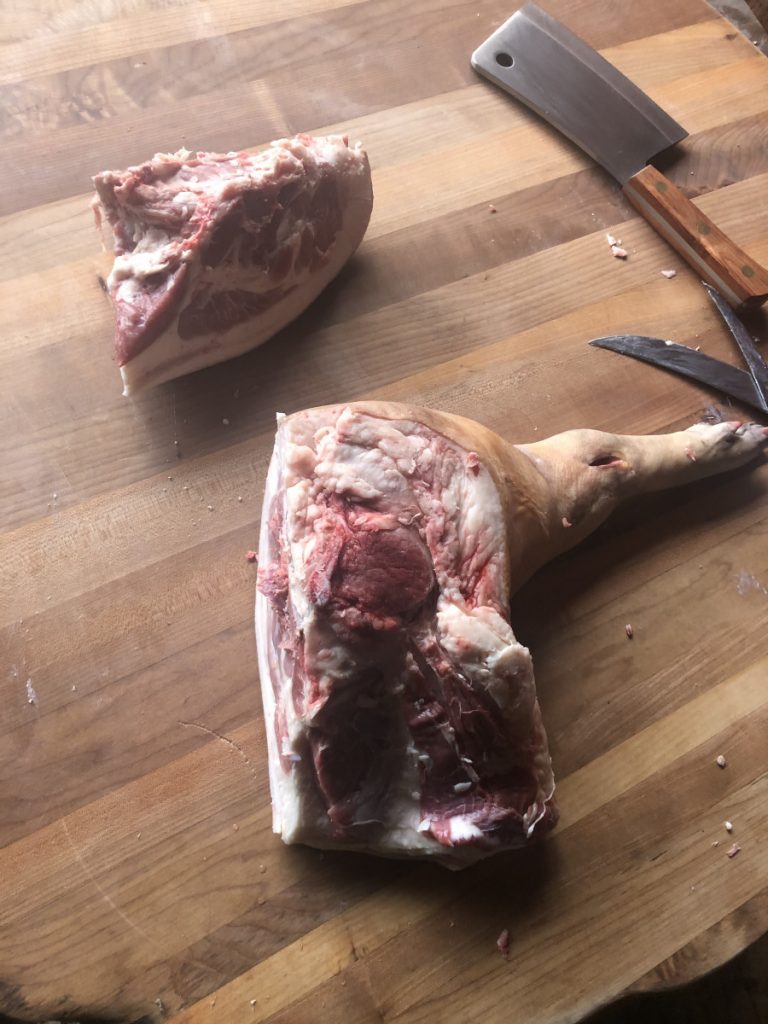
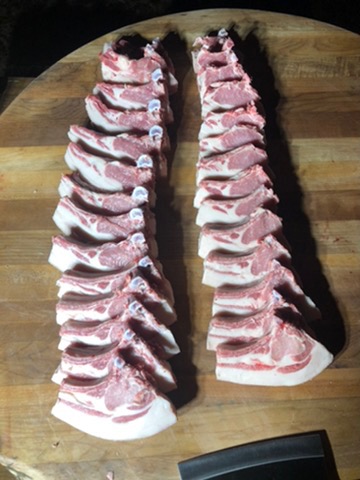
pork chops 
Blood Sausage 


Blood Sausage 
Blood sausage 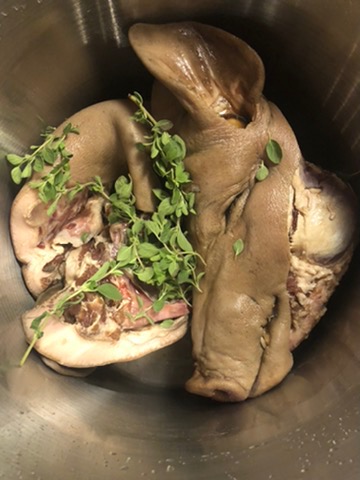
Post-Brine head 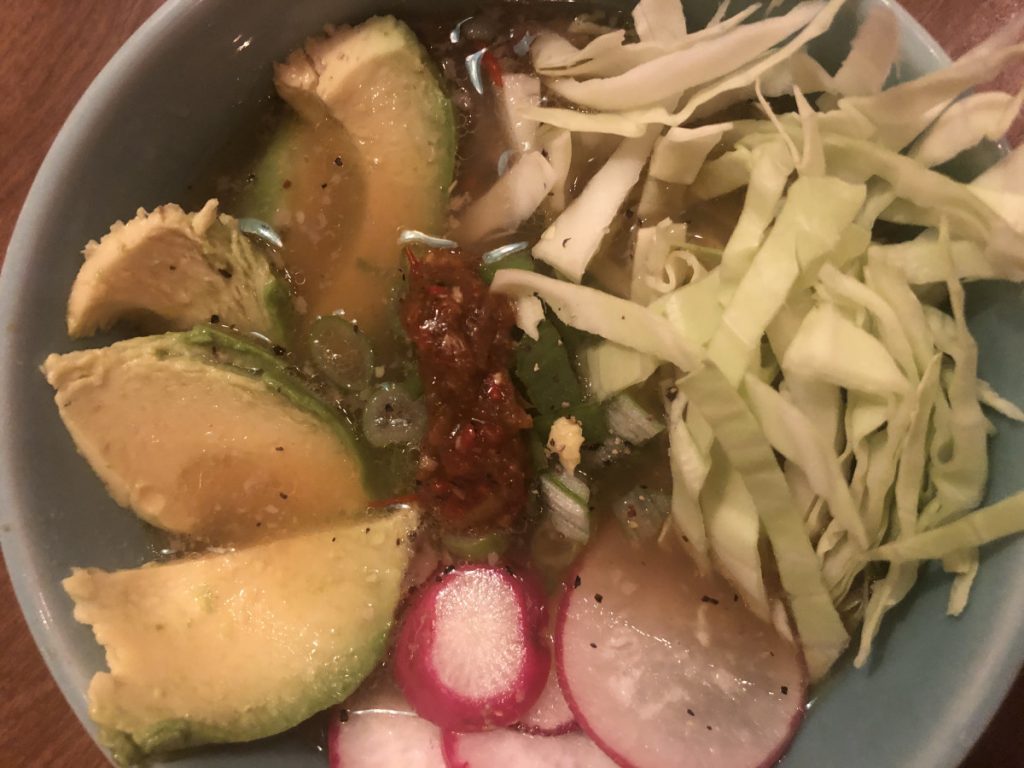
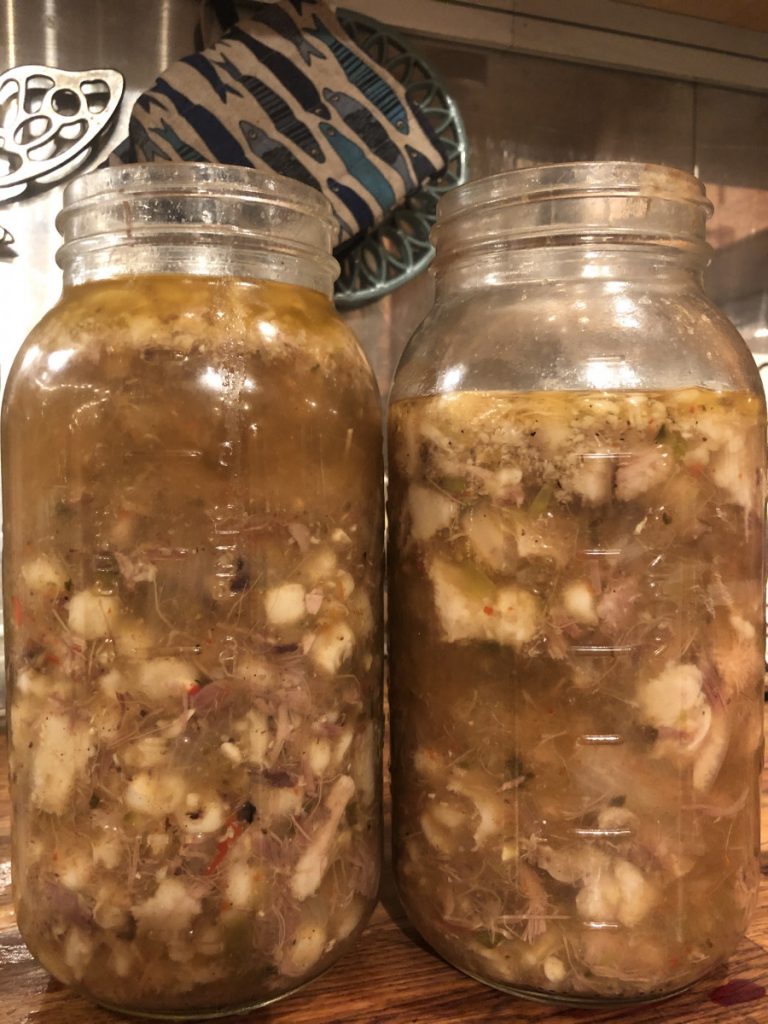
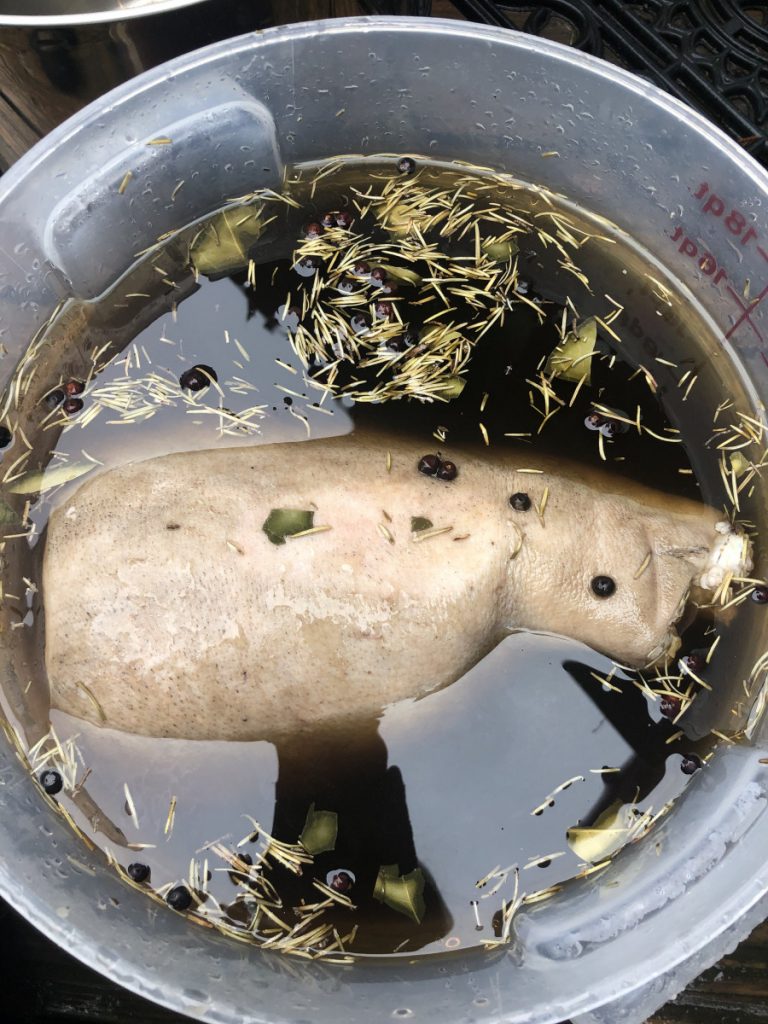
Taking ham out 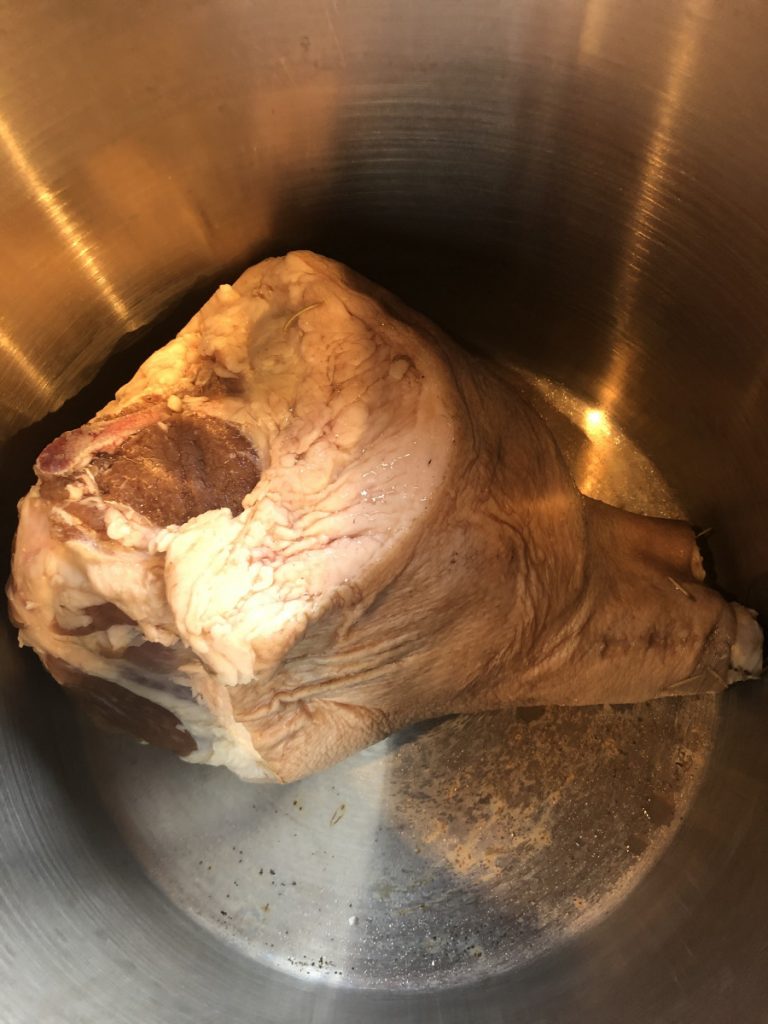
Post brine ham 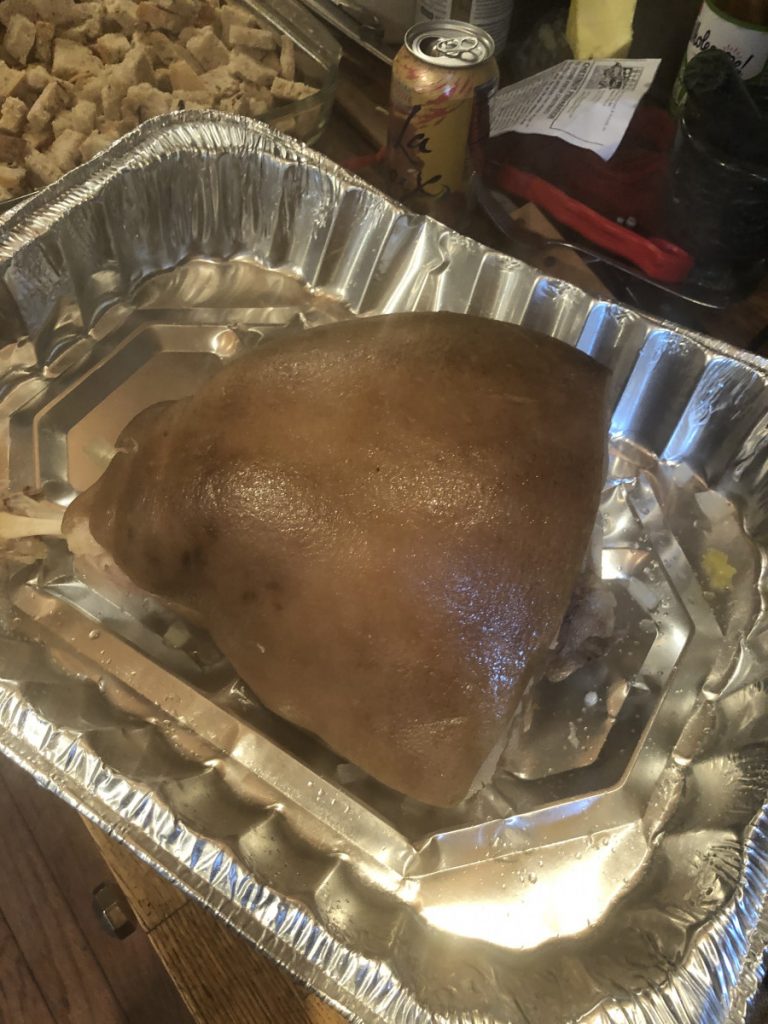
Skin on 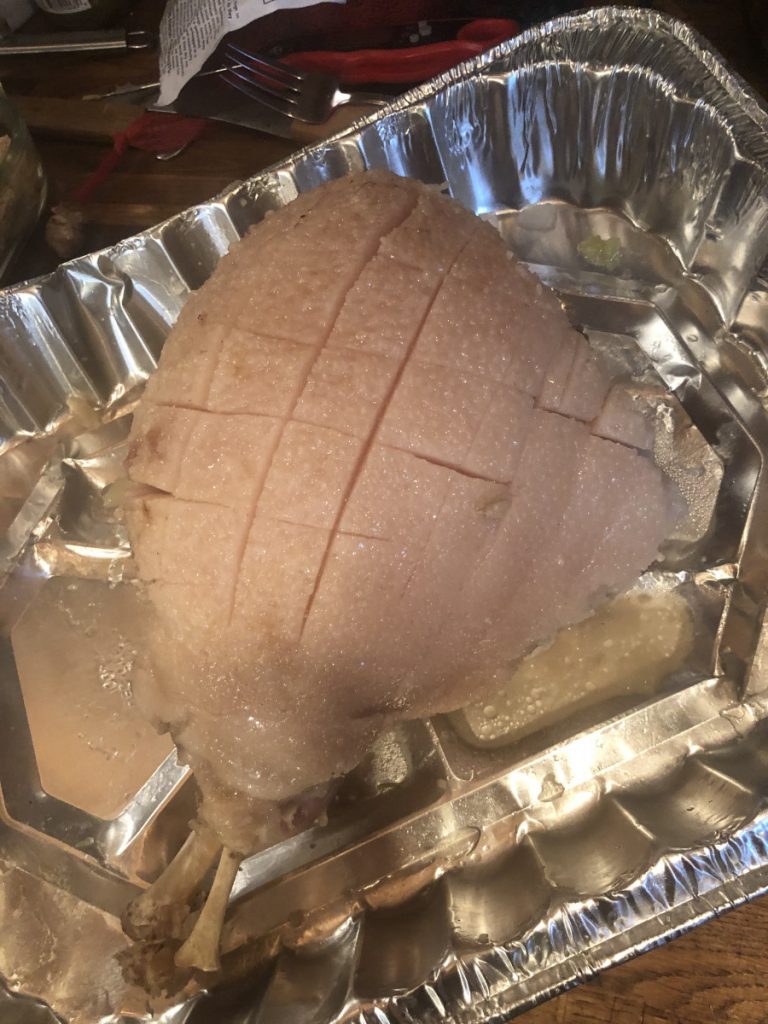
Removed skin and score 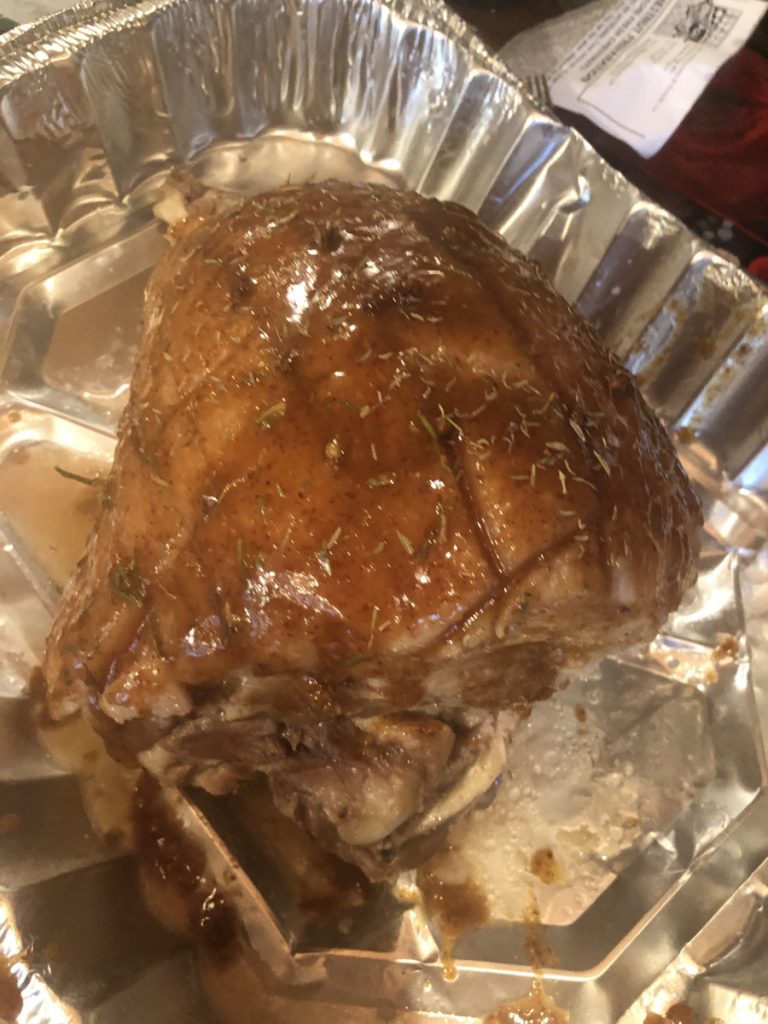
glaze it 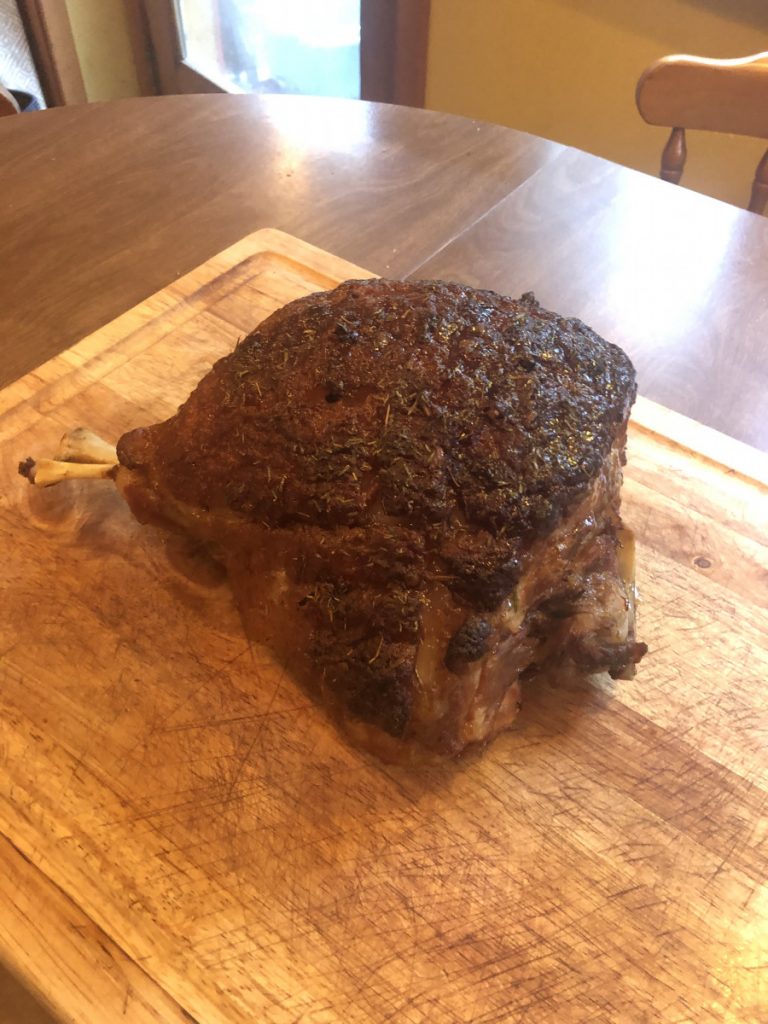
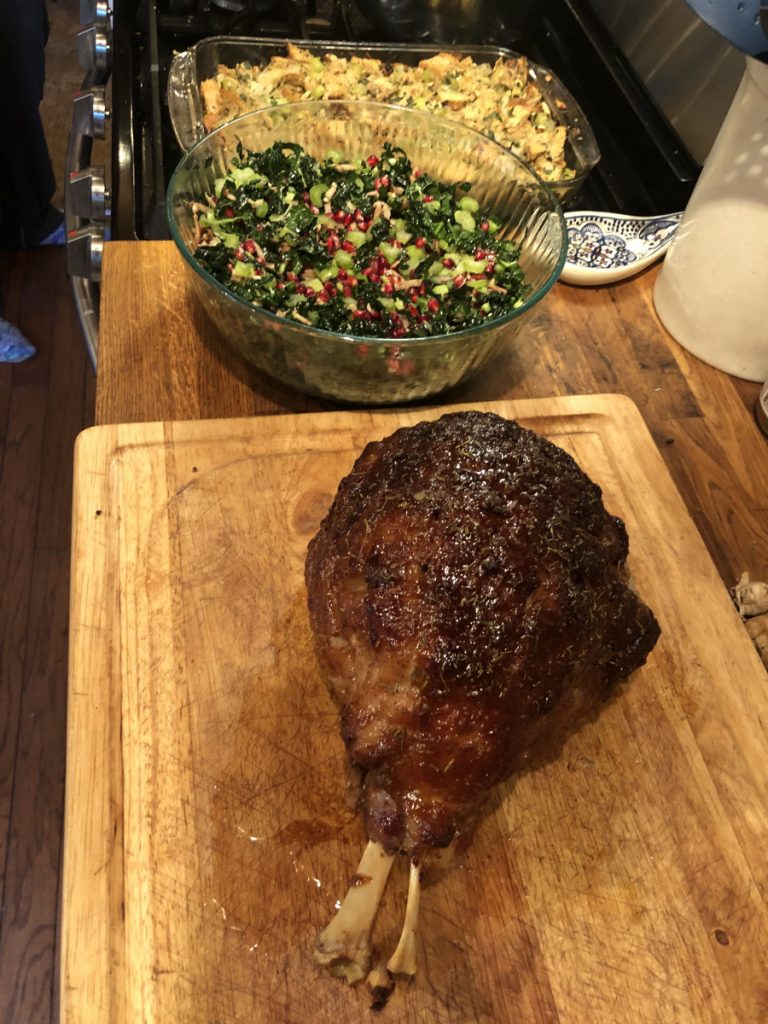
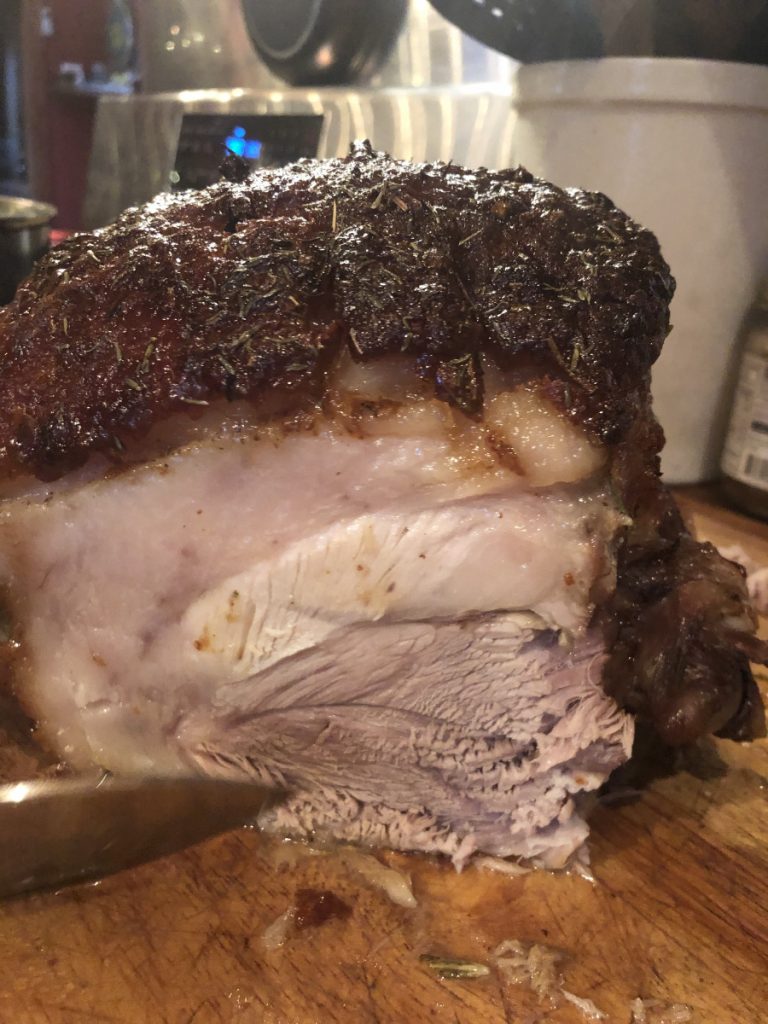
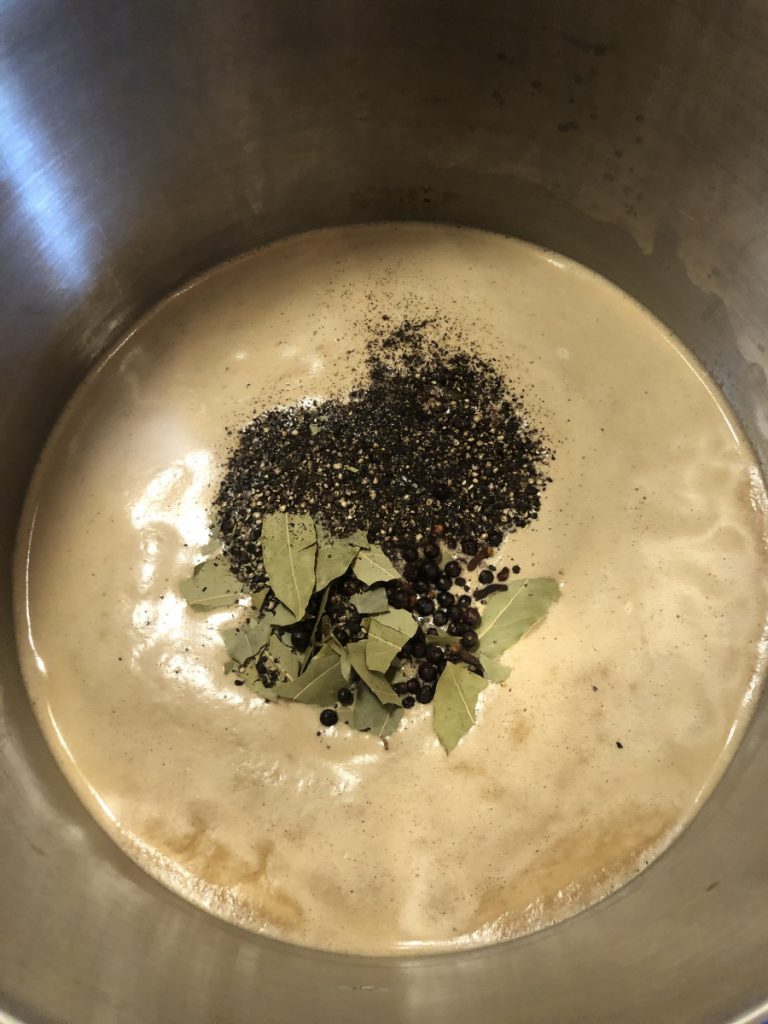
Cider Brine 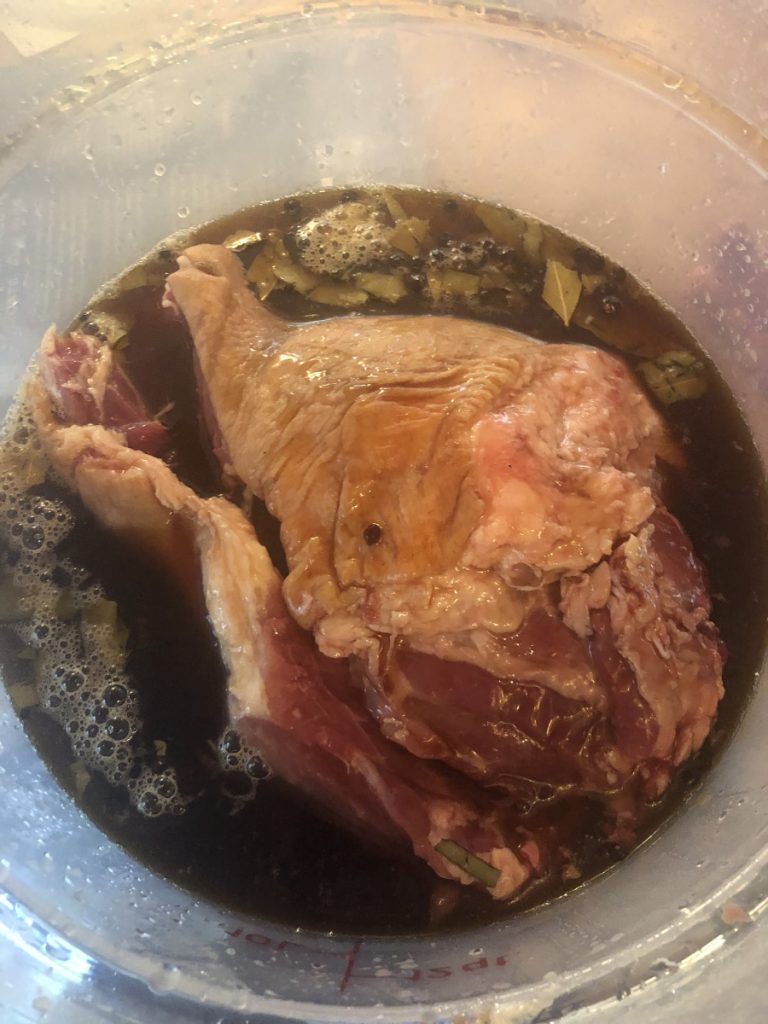
Ham in Cider brine 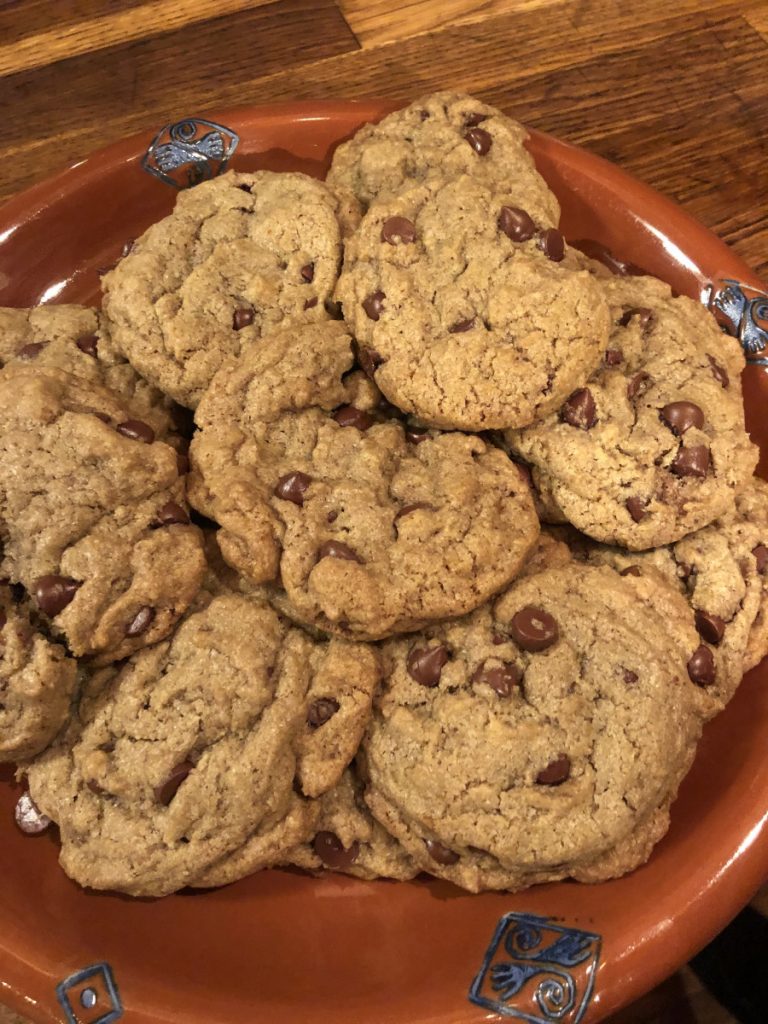
Blood Cookies 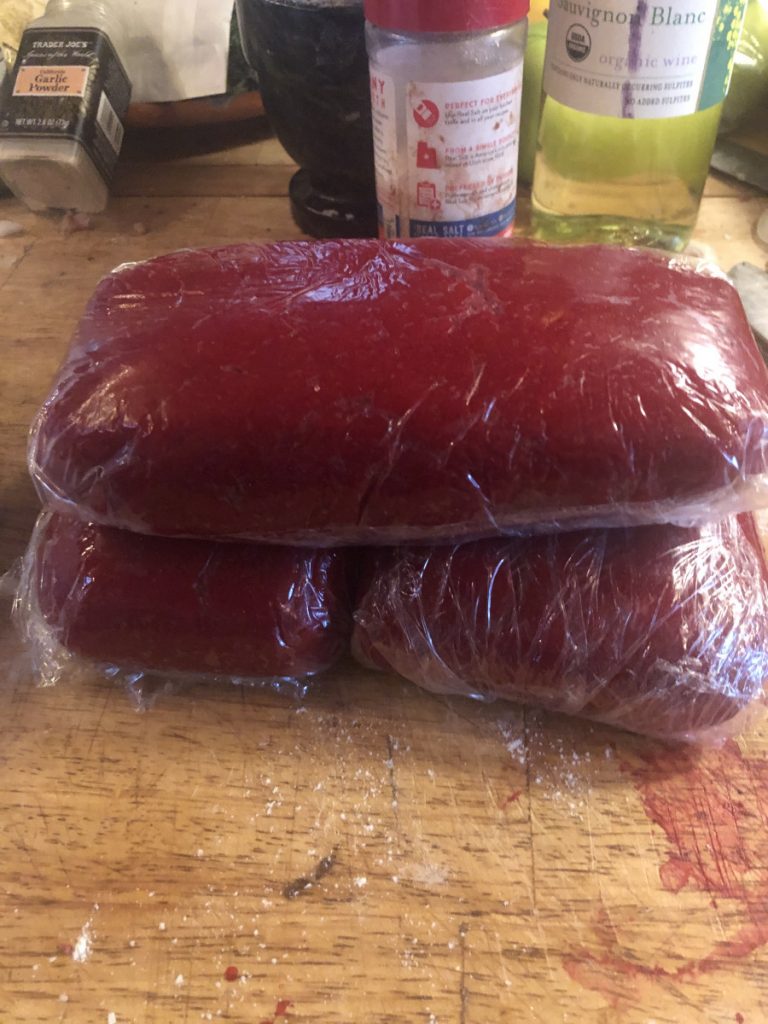
Brutal doodles 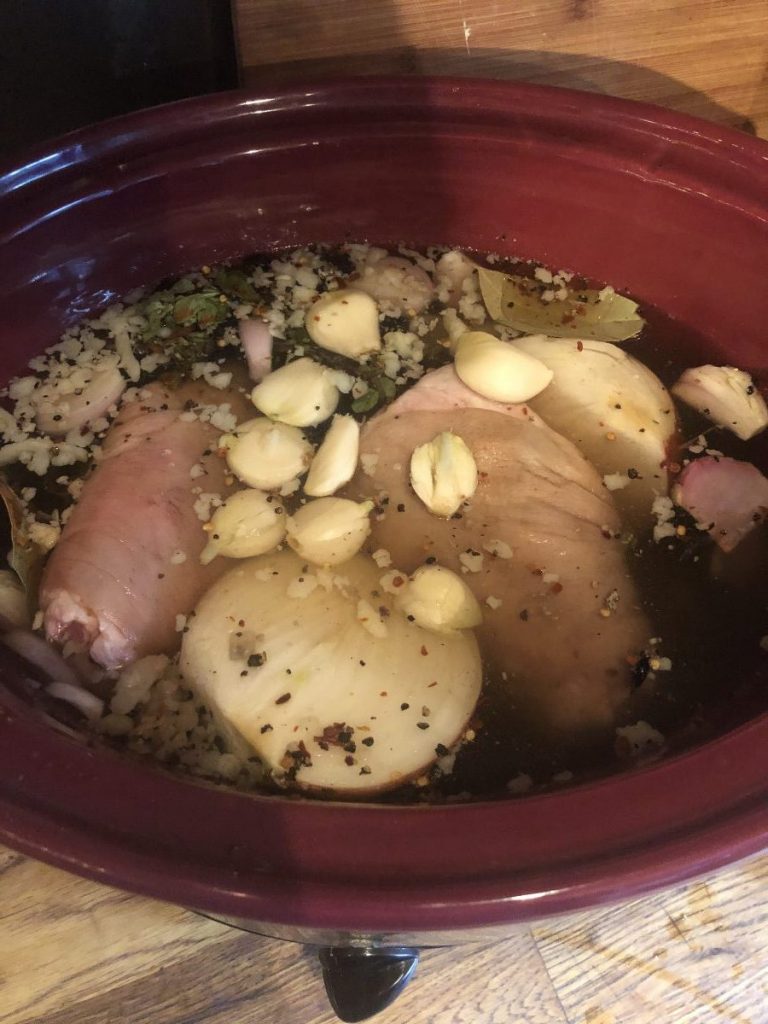
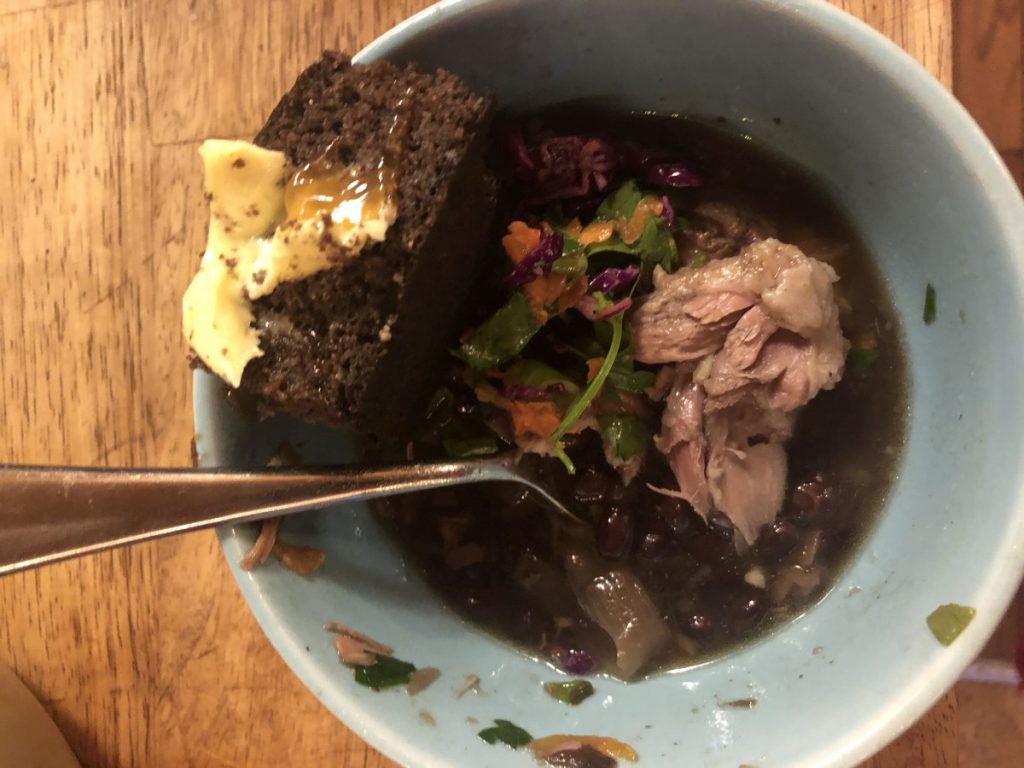
Ham hocks n beans 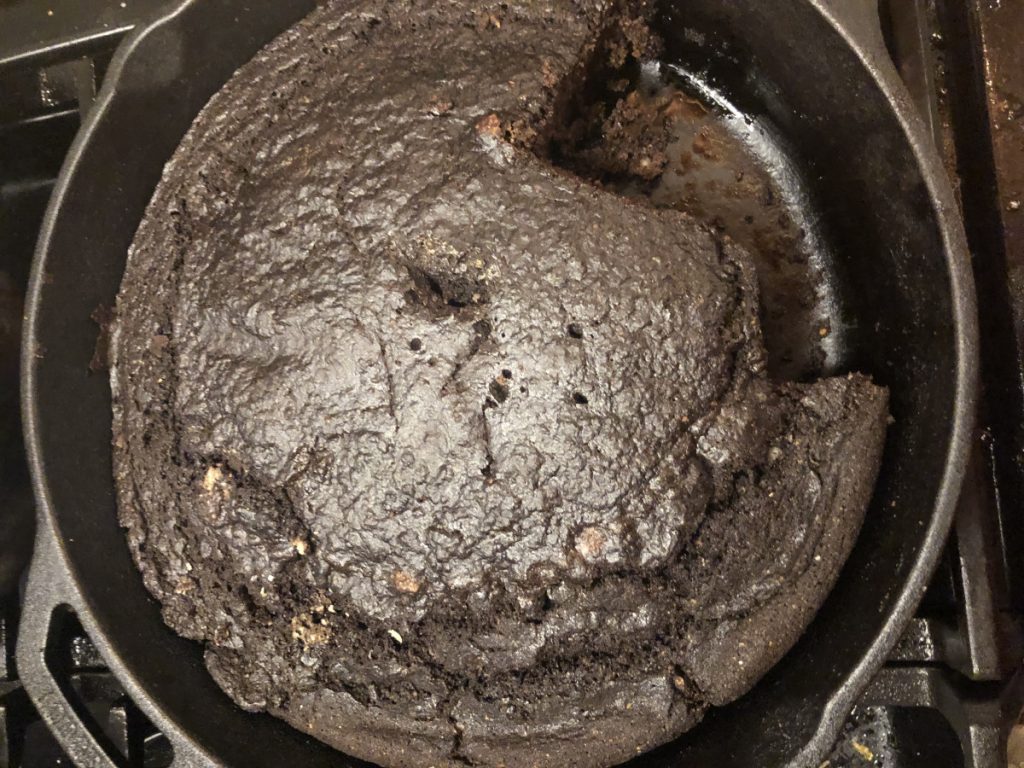
Blood corn bread 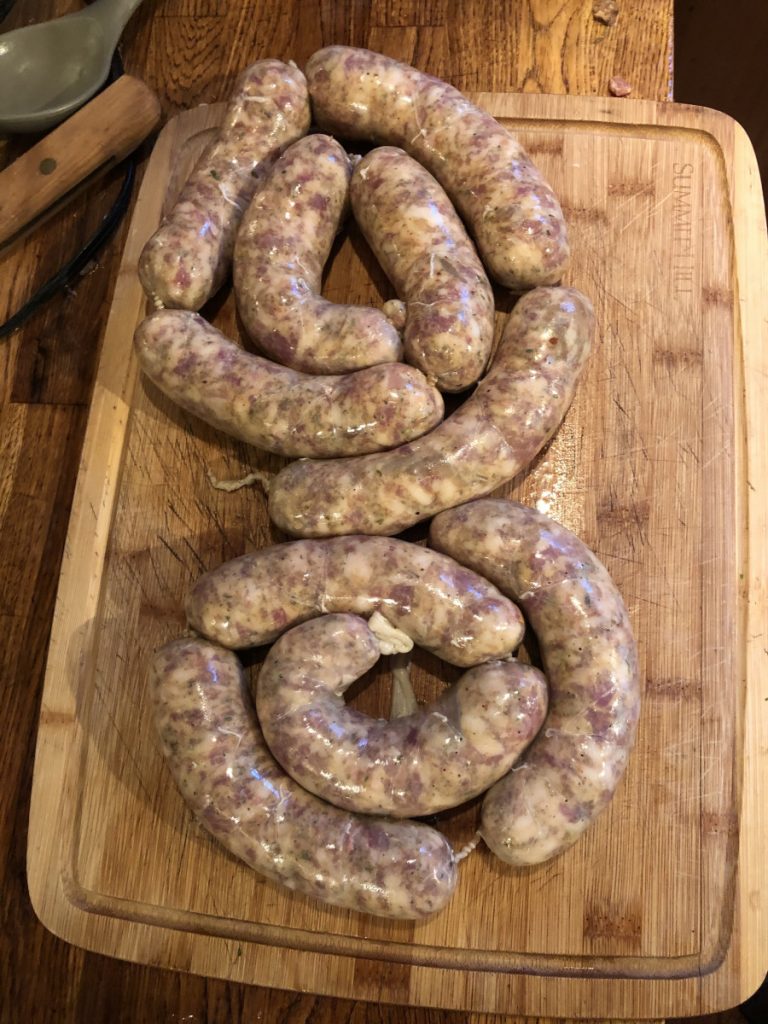
Italian Sausage 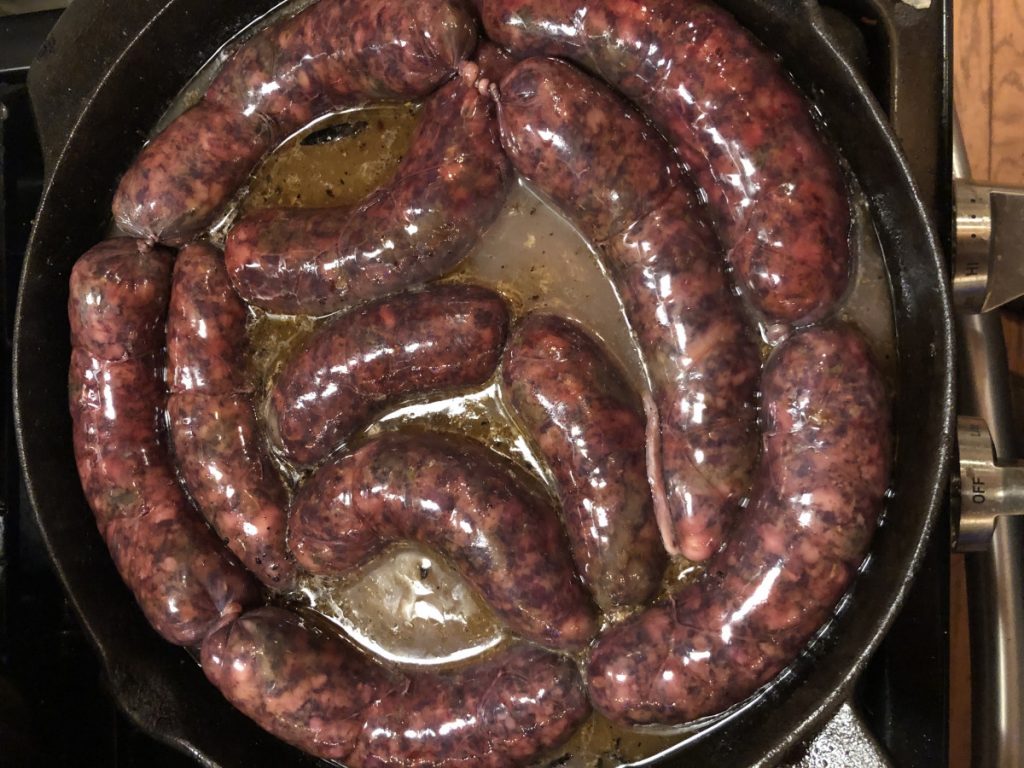
Bloody Italian sausage 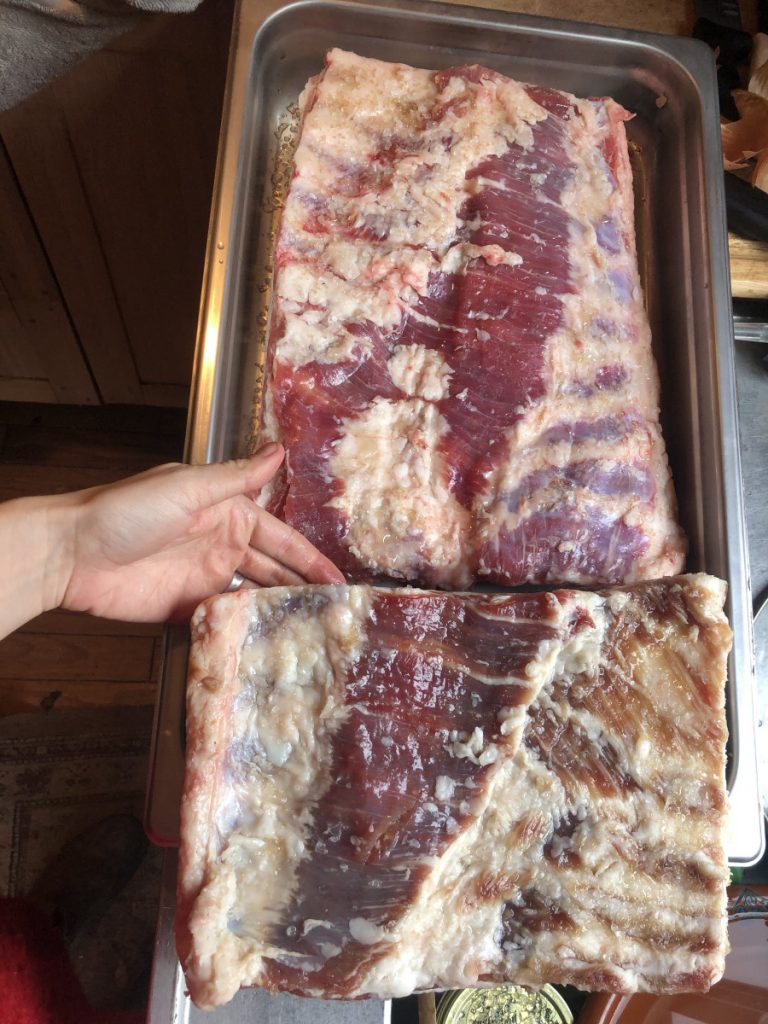
Bacon Dry Cure.. 2 days vs 9 days 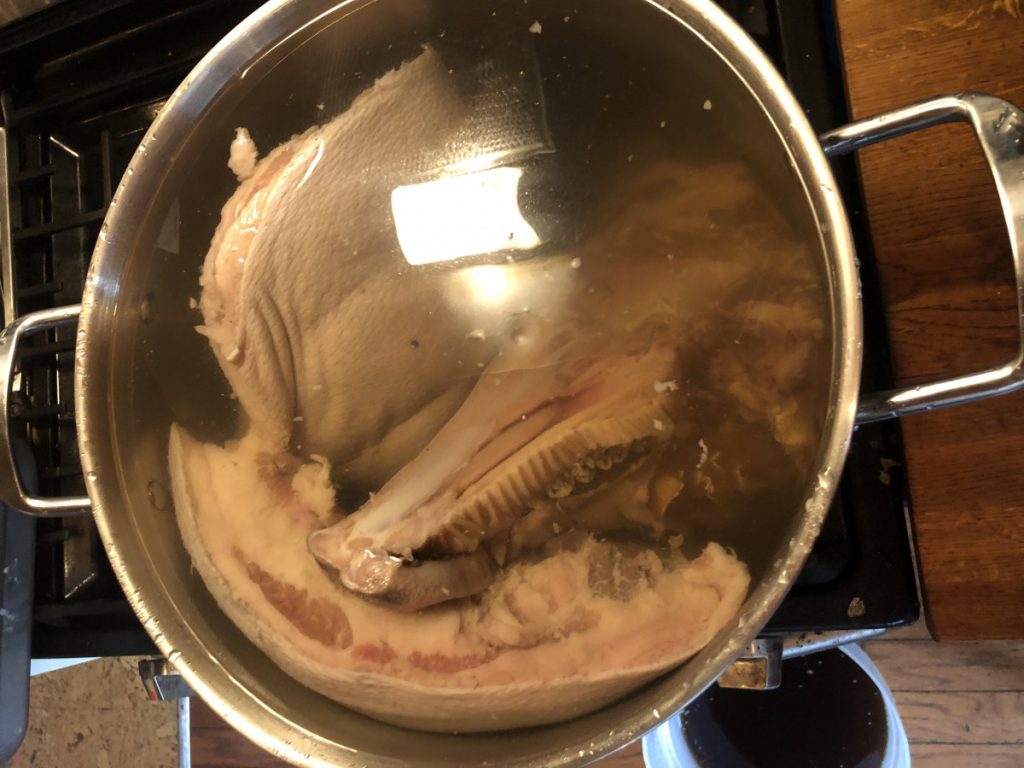
Head for head cheese 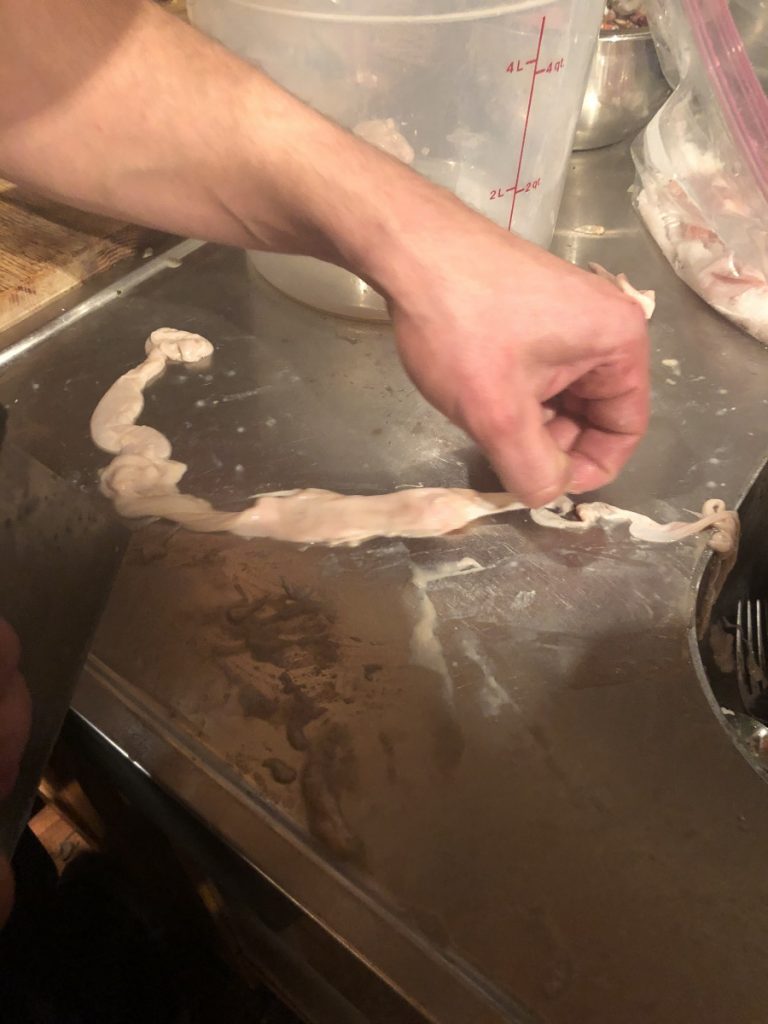
Intestine cleaning 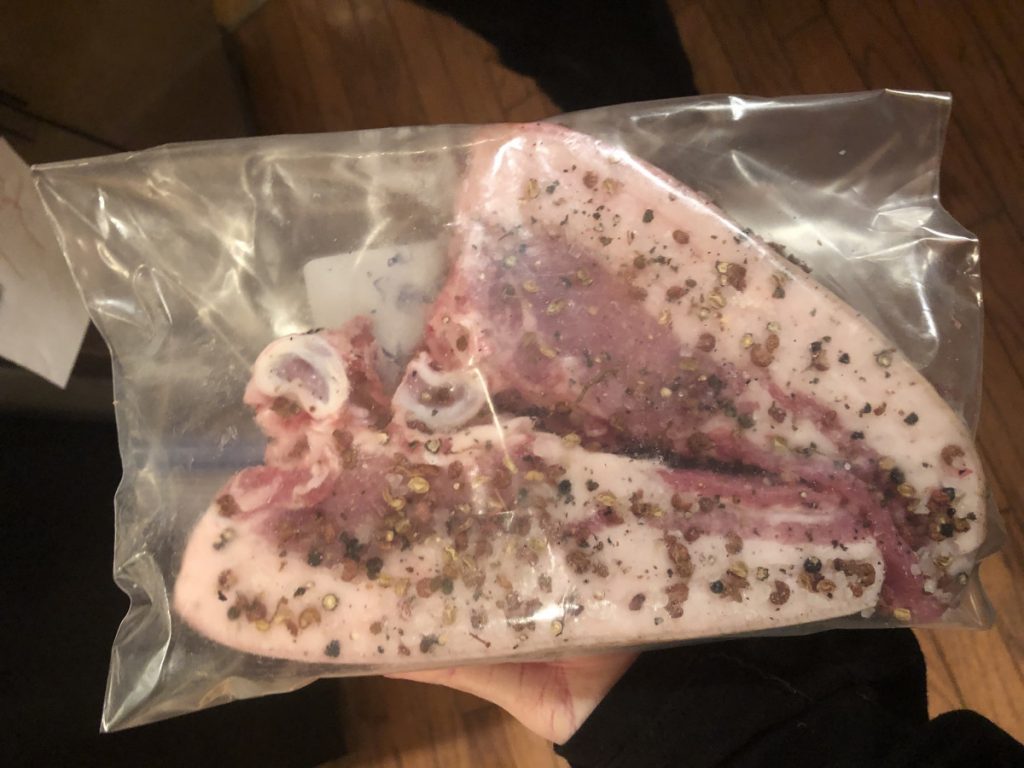
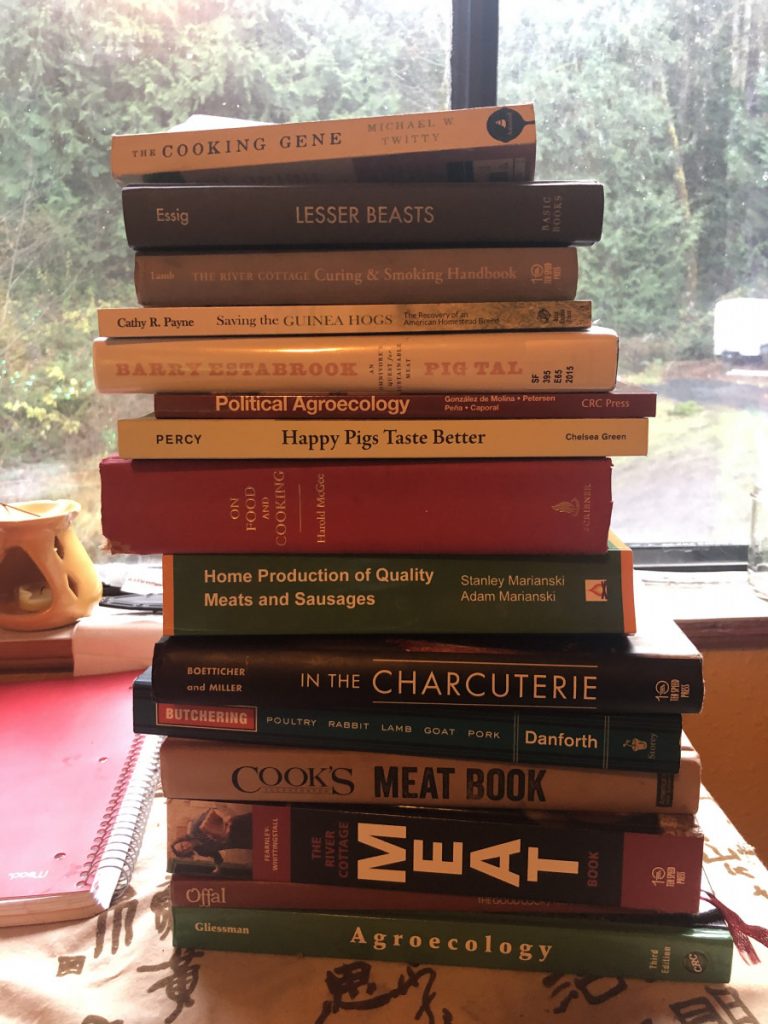
Read books
Getting pigs, pasture, foraging, food waste, selective feeding, finishing on pumpkins, the honorable harvest, slaughter day fry, nose-to-tail butchery, pig head pozole, brined thanksgiving ham, pork chops, blood sausage, cider brine, bacon, blood cookies, ham hocks and beans w/ blood corn bread, slaughter #2, italian sausage, italian blood sausage, head cheese, intestine cleaning, books.
Leave a Reply