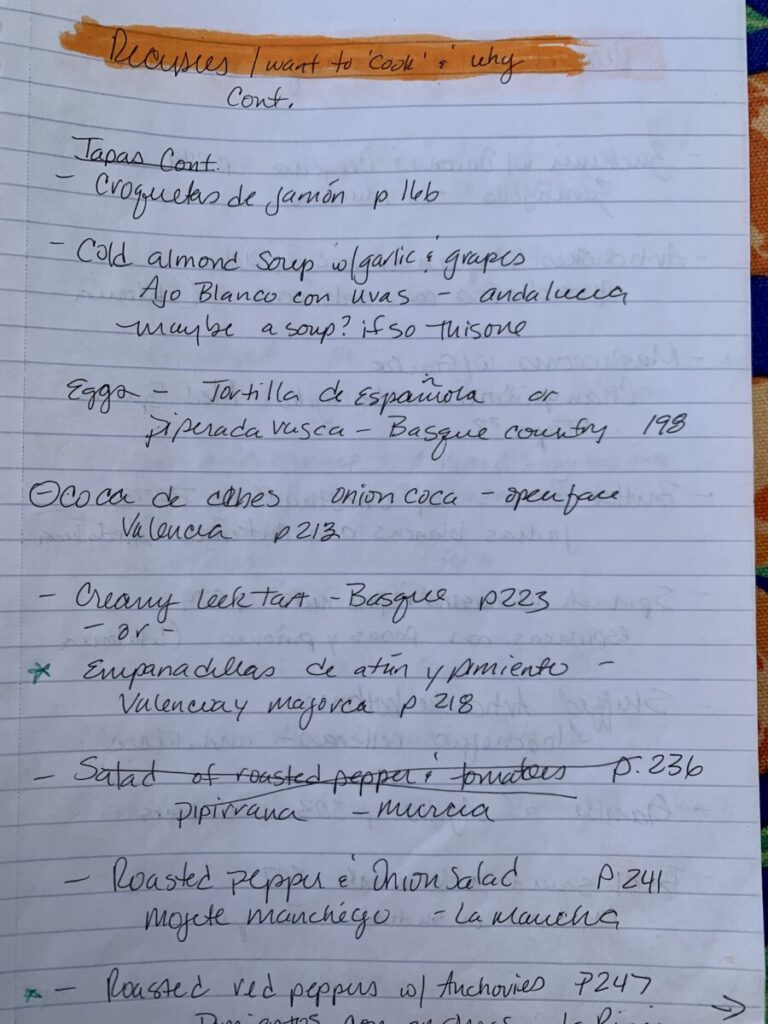
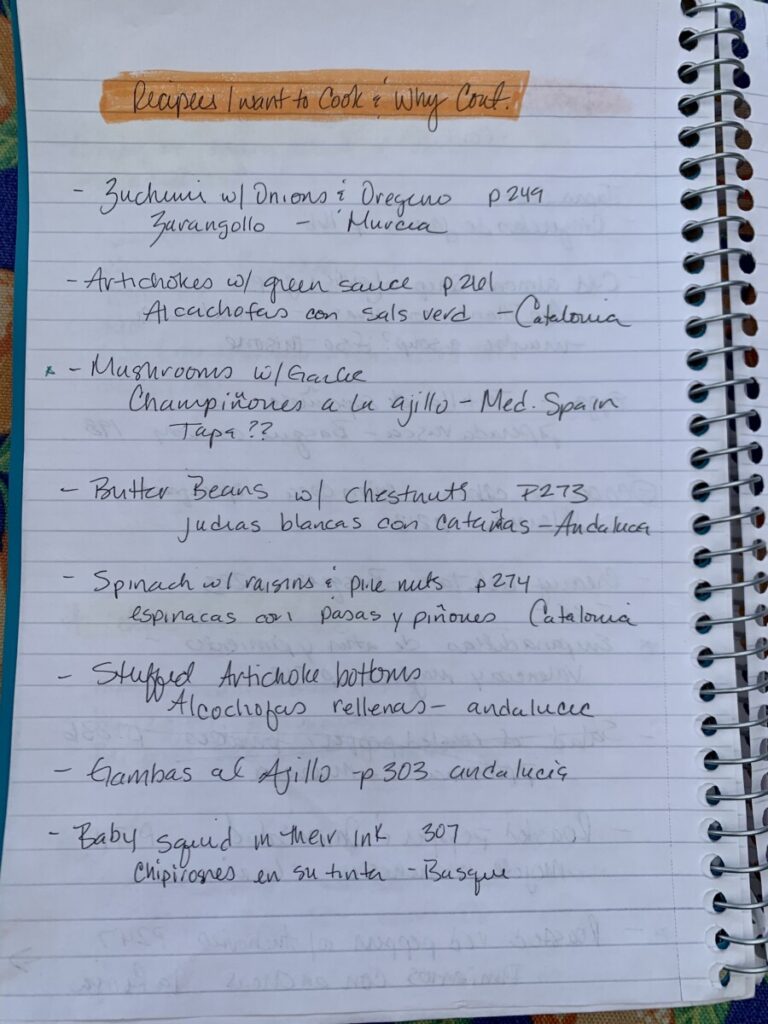
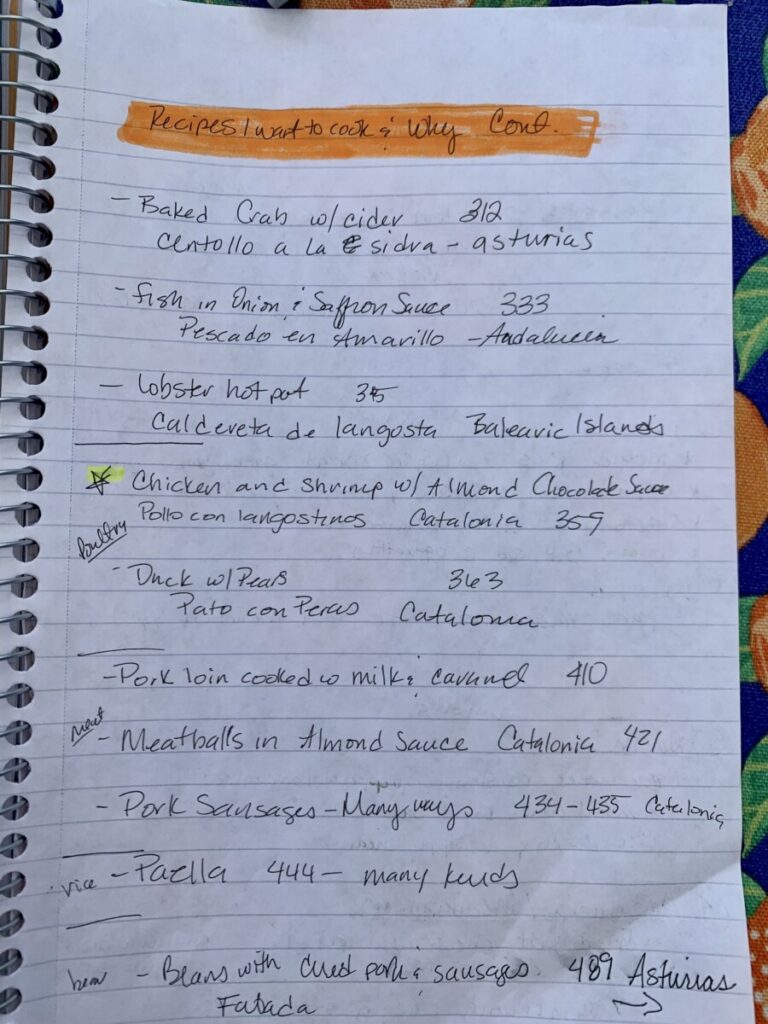
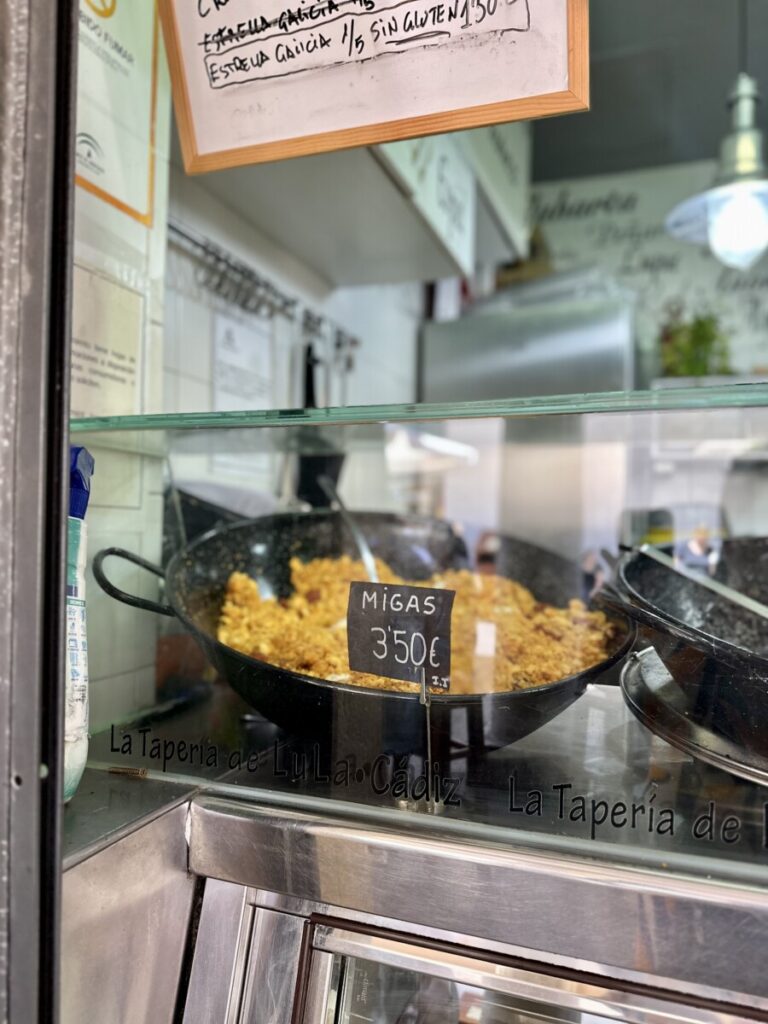
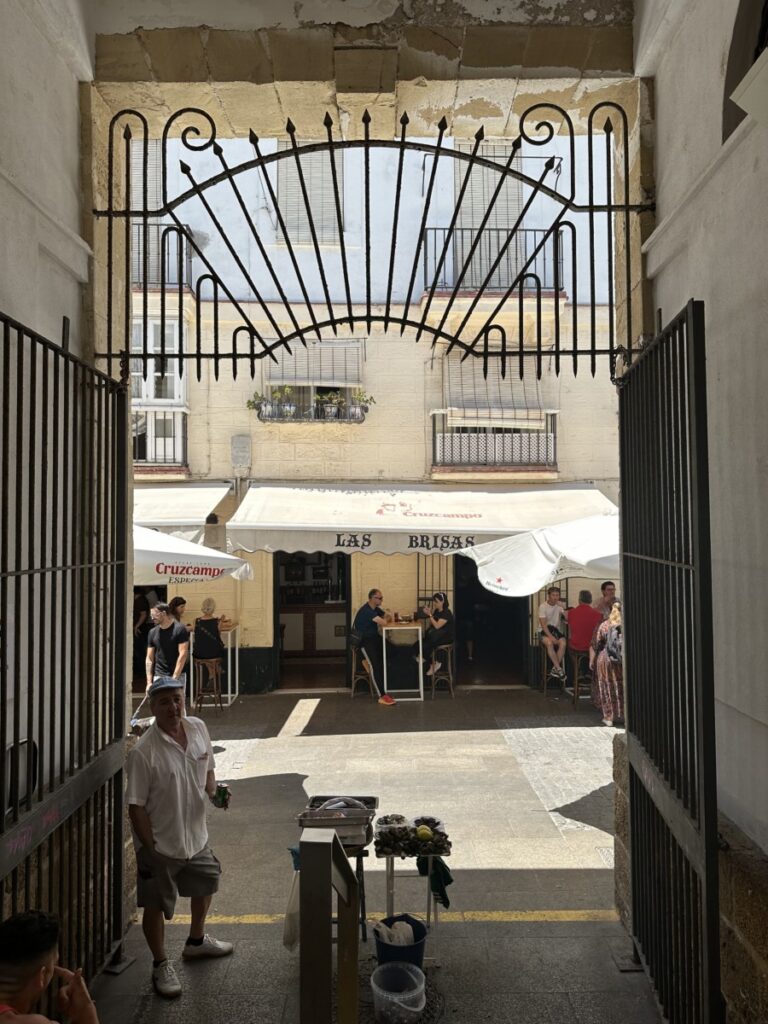
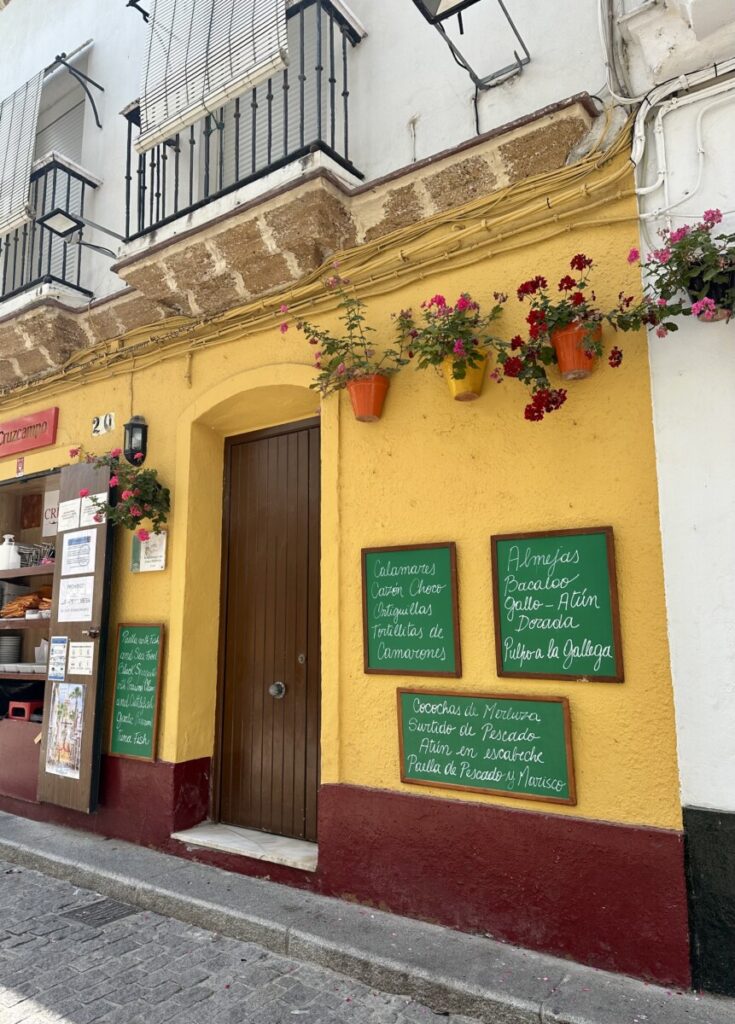
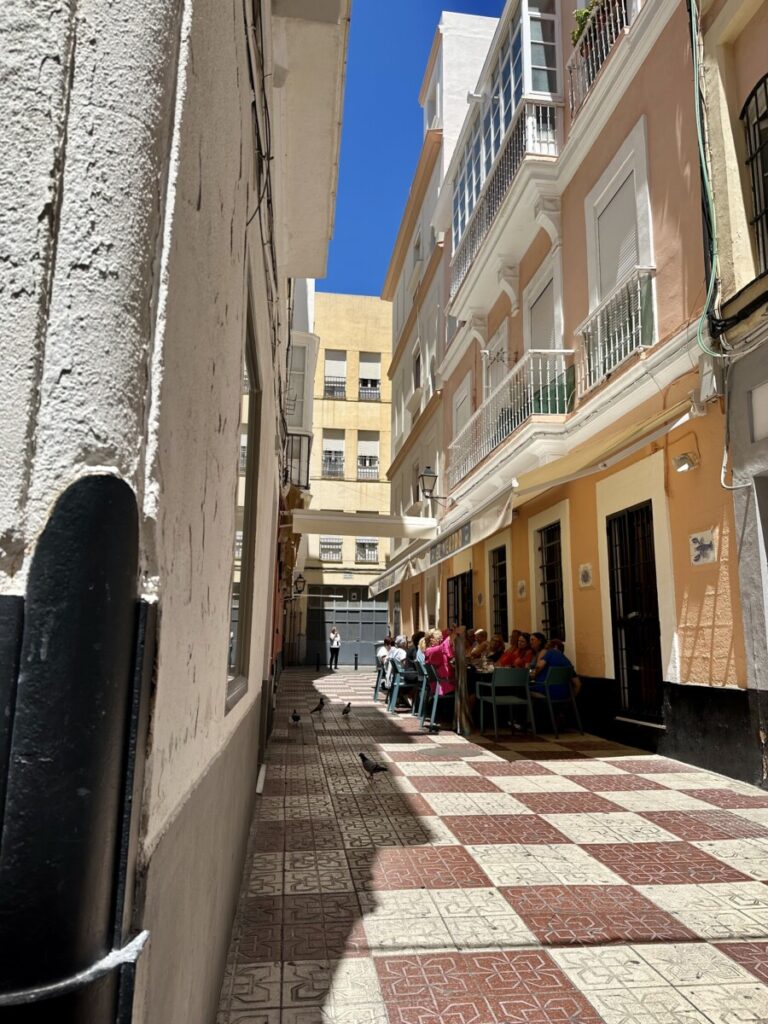
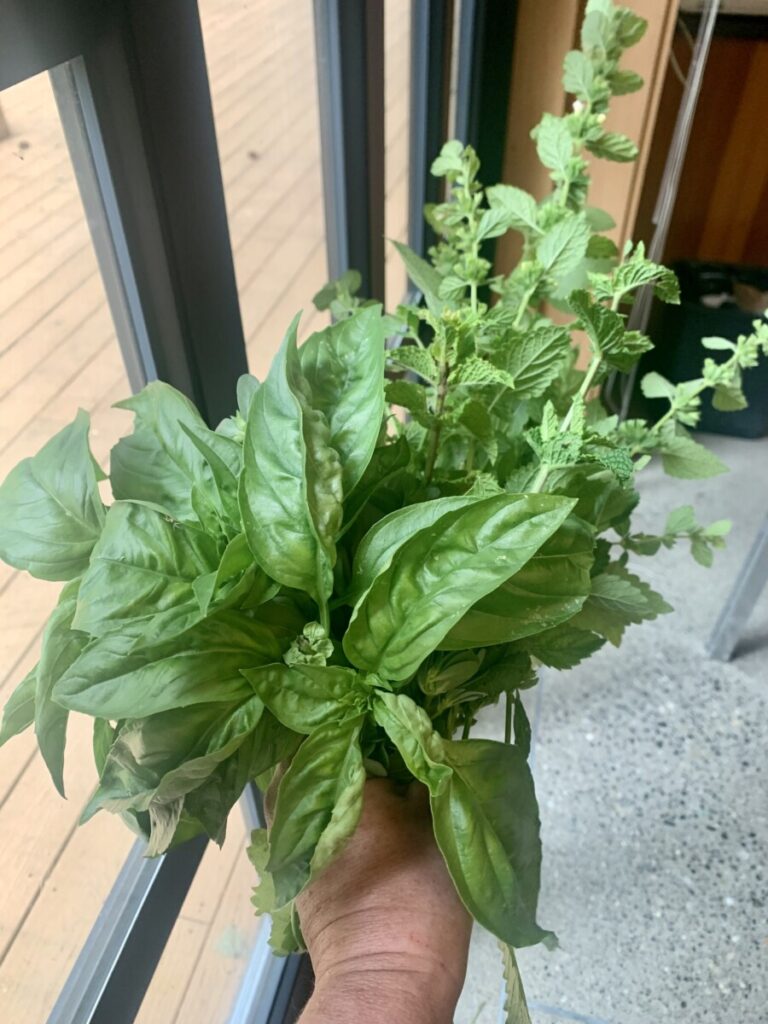
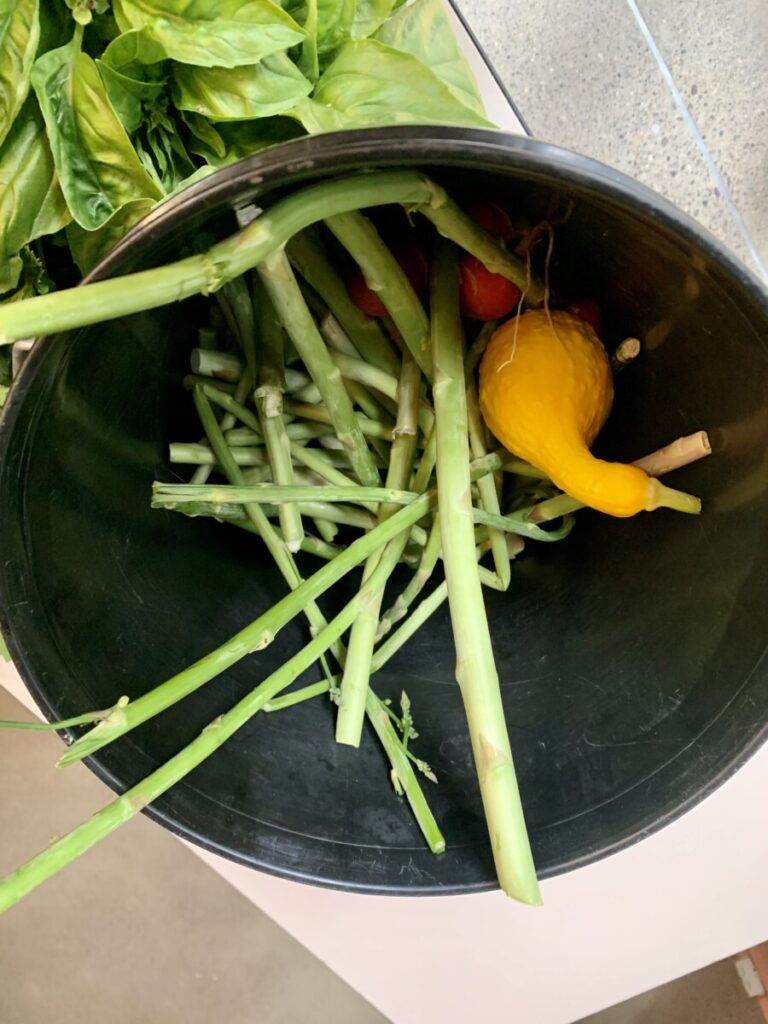
I created a few “categories” of recipes: Tapas, Paella, The North, Andalucía and Valencia/Catalonia. This helped me narrow down what recipes to choose and covered where I traveled in Spain.
Tapas
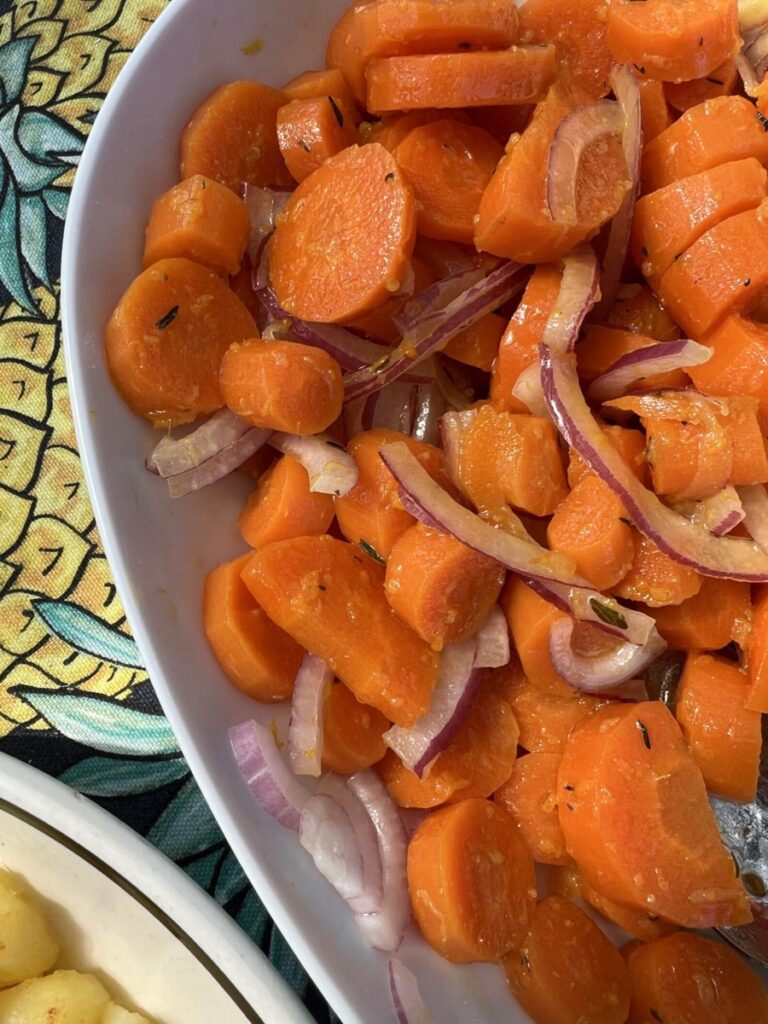
Carrots:
This is a recipe I recreated from my travels. I ate this in Seville after seeing it at many of the tapas counters throughout Spain. It looked so simple with carrots and onions, chilled, I had to try it. It was amazing, sweet carrots and orange, rich olive oil and vinegar onions. It has been a hit with everyone, and I keep cooking it. I realize I am beginning with dishes not in Roden’s book – but I had to include them.
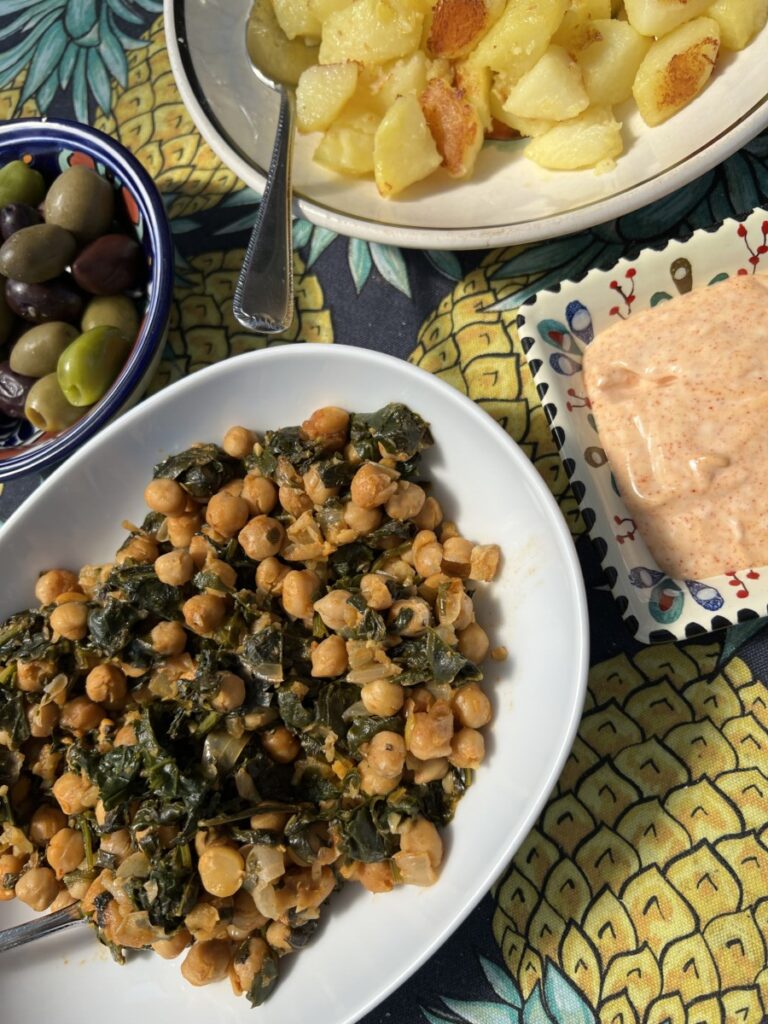
Garbanzos and Spinach Garbanzos y espinacas
This is also a dish I recreated after trying in Barcelona and Seville. In Barcelona it was mixed with blood sausage giving it a deeper and richer flavor. In Seville it was much lighter without the sausage and still delicious. Paco in Seville at La Maestro, where I went for a jamón tasting, told me it was a local favorite and a must eat in Seville and I can see why, there is something about it that is so comforting.
Empanadillas with tuna and peppers – Empanadillas de Atun y pimiento
These were Delicious, most empanadillas are, you can’t go too wrong with pastry and meat. I had never tried one with a filling of tuna and given the wonderful tuna fishing in the south of Spain I thought they would know best so I wanted to try them. I did not see these on much of my travels, they are more popular in the Balearic islands: Majorca, Mayorca and Ibiza, and Valencia which I did not travel to so I decided to try them.
Ham Croquettes
These were everywhere I traveled; I did not come across a tapas bar who was not serving them. We ate them everywhere we went – they were Dougs favorite – I thought they were filled with mashed potatoes. To my suprise they were filled with a bechamel! I cannot eat too many potatoes so I only tried a few bites when I was traveling and I would have eaten a ton more if I knew. So I decided to make a batch so I could eat a pile of them. Small bite sized, creamy, fried ham filled – amazing.
Paella
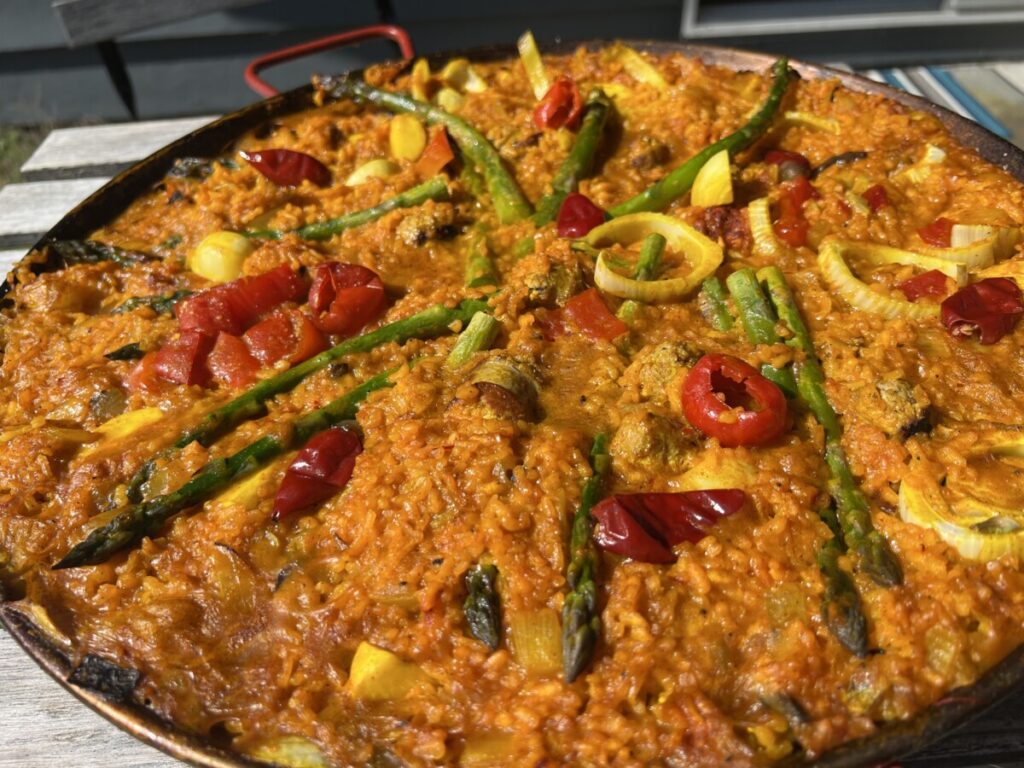
I decided to make paella Valenciana, the original and traditional paella said to be the first type of paella made in the rice fields of Valencia. It is made with chicken, rabbit and beans – I ended up adding some extra vegetables I had because the mood struck me, so as it turns out it wasn’t true Paella Valenciana, but it was true paella. I learned a lot making this, made some mistakes like too much rice, but it was fun and I got a good socorrat on the bottom which is my favorite part. I will surely be making this a lot to perfect it.
The North
Roasted Red Peppers with Anchovies – Pimientos con Anchoas la Rioja
This was my second choice, I wanted to make the most popular pinxto in the north; Gildas Pinxto. I couldn’t find the essential pepper – guindillas – which is essential so I chose this instead. I have a difficult time with strong flavorful fish, so anchovies were a bit of a stretch for me. I learned through my travels that they can be delicious if prepared properly, rinsed. I did a lot of reading about how to prepare them so I could get it right I bought very good anchovies and the dish turned out silky and delicious, a pleasant surprise. I also had it with a glass of crisp txakoli which cut the rich oil and brightened it, which I am sure helped.
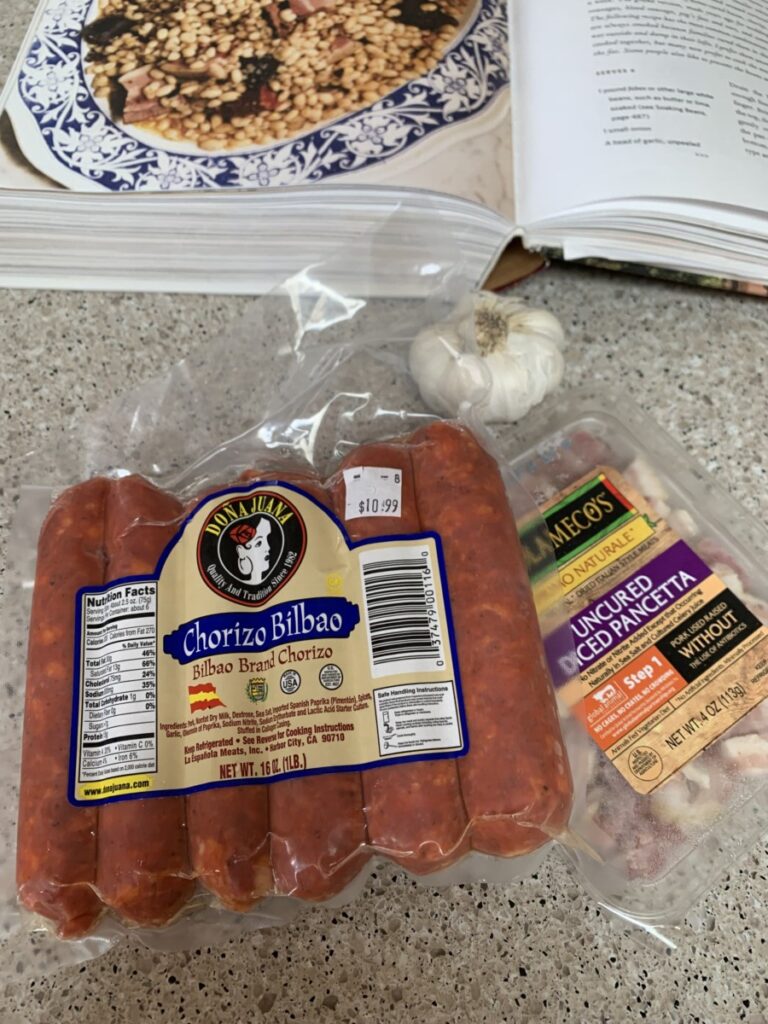
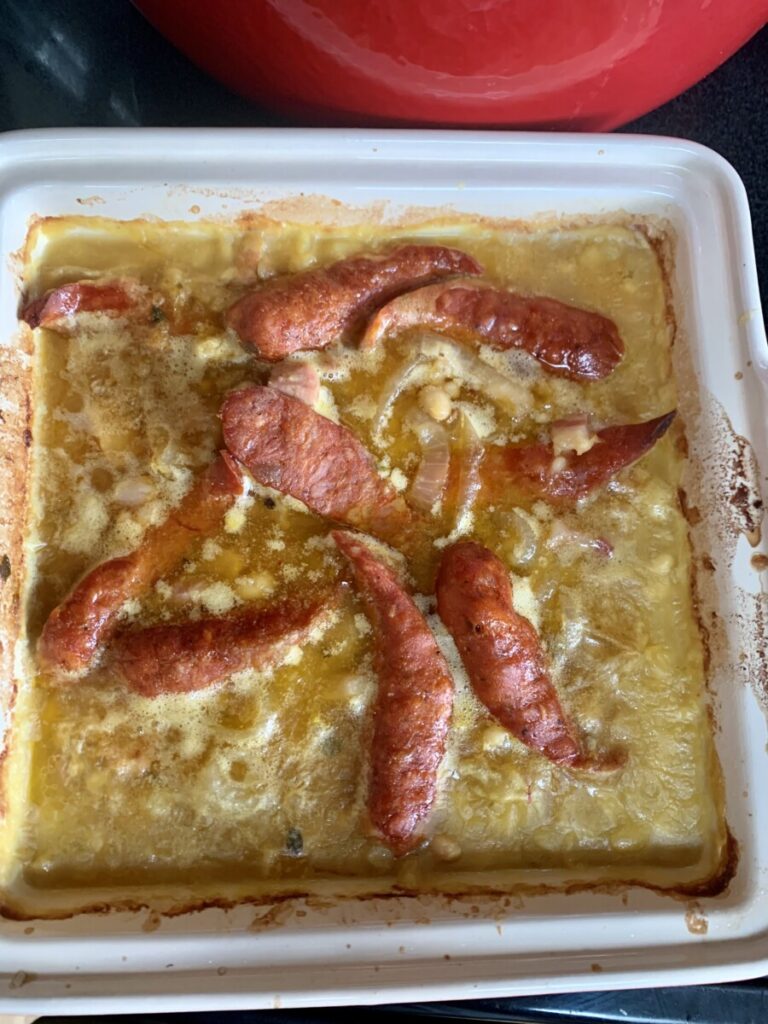
Beans with cured pork and sausages – Fabada Asturias
I chose this dish because it is a staple in this region, used as a weekly meal or in festivals it has a very long history. It is a very rich dish, and you can see why the working peasants would cook this, It sticks to the bones and would satisfy after a hard day of labor. I loved it, I love beans and these particular beans I brought back with me. It was not the best dish for summer and I will add this to my rotation for crisp fall days.
Andalucia/Mediterranean
Fried Goat Cheese with Honey – Queso de Cabra Frito con Miel
Simple and delicious, I chose this because it had honey which was a Moorish addition to southern Spain, and to be honest I had some amazing goat cheese from salt spring island, BC Canada and local honey from a friend and I thought it would be wonderful and it did not disappoint. I did not come across this dish during my travels but I will be looking for it upon my return.
Shrimp and Garlic – Gambas de Ajillo
This dish is served all over Spain, it is so simple and much more than the sum of its parts. All of the shrimp at markets is so fresh and sweet and salty especially in Andalucía. I could have eaten this for every meal and when I saw it in Roden’s book I instantly craved it.
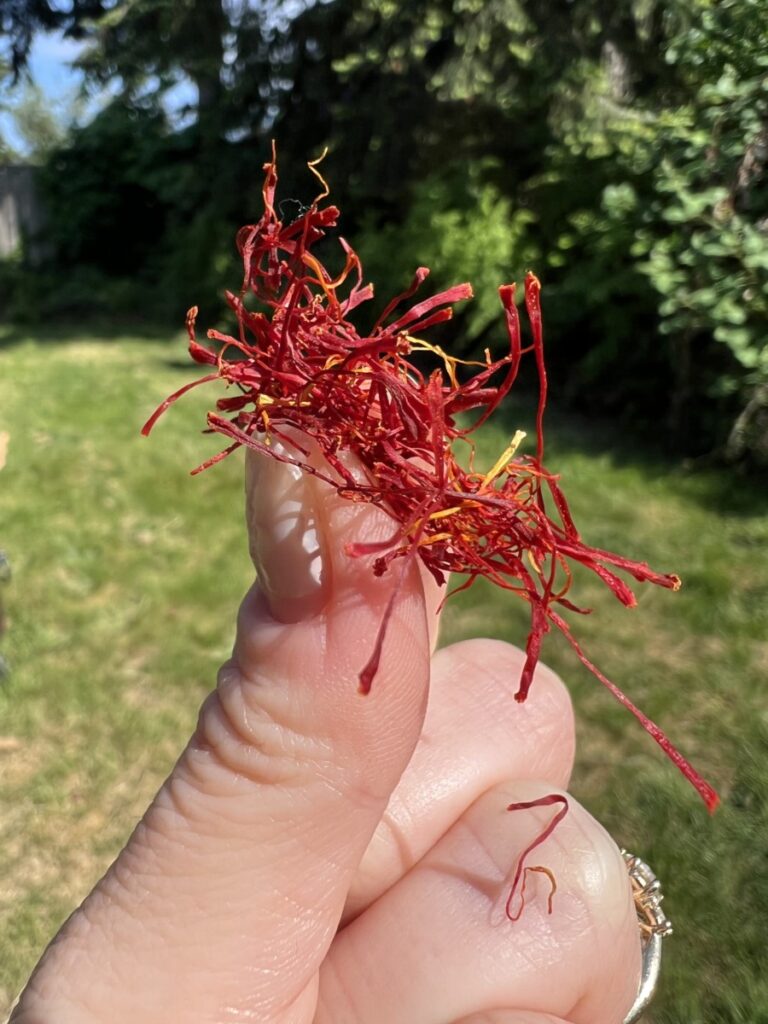
Fish in Onion and Saffron Sauce – Pescado en Amarillo
I chose this dish for the almonds; an ingredient that is in so many dishes in the south. Brought by the Moors, they were an intragal part of the cuisine by the time they were conquered and I wanted to make sure I represented them in the dishes I was cooking. I used halibut instead of monkfish because I had some and it was delicious. A reminder of how Spanish cooking can be delicate and rich and complex with only a few ingredients.
Valencia/ Catalonia
Artichokes with Green Sauce – Alcachofas con Salsa Verde
Claudia was inspired by this recipe by one in Tia Victoria’s Spanish Kitchen and it had a nice little story of how the translator, a Catalan man living in London, missed home cooking and sent for his mother to write recipes and she wrote a book! I also wanted to cook this because I love artichokes and they were in season when I was in Spain. I chose to make them from fresh ones though hard to find and difficult at the end of July, but it was worth it. This is a delicious dish, the one of a kind flavor of an artichoke heart with an herby sauce with a kick – it balanced so well I could have eaten 10 of them.
Chicken and Shrimp with Almond Chocolate Sauce – Pollo con Langostinos
I chose this dish because it intrigued me, after visiting the chocolate museum I knew I would find a recipe that used chocolate in savory applications and wanted to include this in my sampling of cooking. It is an example of a mar y montaña dish Catalans are famous for, mixing meat and seafood in the same dish. Roden asked a Catalan man why they mixed meat and seafood, she was told “The mountain is right by the sea and we use what we have.” Pg359
Again I will at some point return to these recipes and my experience and write more about it I have so much to say and share. One theme that has shown itself throughout my travels and eating and especially through this cooking project is that Spaniards use what they have to create an amazing culinary world.
I read cookbooks for fun, not just the recipes and how to prepare the dish, but I read the writing; cooks have so much more to say than give directions. It feels like we are so eager to know exactly how to make a dish we forget it has a very important story. After a trip through Spain and a discovery of her work I devoured all 600 plus pages of Claudia Roden’s The Food of Spain. By the end of the first page I was taken, it was clear she was setting me up for a journey of people and land and connections. Returning from my travels last quarter I came back with so many more questions than I had when I embarked. I wondered about the history and people and land and what I encountered there. She answered so many of them – in a cookbook! I would like to go on and at some point in my studies I will continue this writing, and for the sake of time I will leave you with this quote:
It is surprising how dishes can appeal directly to the emotions. They say that with food, as with music, you can touch people and even make them cry.” Pg. 2
I decided to cook through some of the amazing recipes in her book to gain another level of experiential learning through the food of Spain. It was tough to choose, I wanted to cook everything but that would take a year and alas I had a quarter, so I began by slowly eliminating choices from my endless list and ended with a few recipes from the regions I visited and some iconic Spanish dishes.
Listing and Reading all I wanted to cook.
The kitchen is a place where I lose time and can fully immerse myself. I use all my senses when cooking and recipes are usually mere suggestions for me. I tried my best to follow the recipe as written through this process, and it was so much fun it felt like I was cooking alongside Claudia. Here is a snapshot of what I cooked – I can say it was all delicious!
Well, the time has come to say goodbye to my travel companions and set out on my own. This is the first time I will travel alone abroad, and I am filled with excitement, nervousness and pride. I have wanted to do this since so long ago when I read an article in a food and travel magazine (I forget which one it was so long ago) about Cuba, the writing mesmerized me. It talked of avocado and mango trees and the description of picking them, sun warm off the tree hooked me. I knew I needed to head out on my own and discover sun warmed things. I have to pinch myself that it is really happening. I ride the train with my companions to the airport outside of Barcelona where I will get off on the terminal 2 stop – domestic flights and they continue to terminal 1 – international flights as they make their way home and I am on my own.
I spend my time in the airport filling notebooks of thoughts ideas and experiences while emotions swirl in me. I realize there are more questions than answers and I see a future of research when I return.
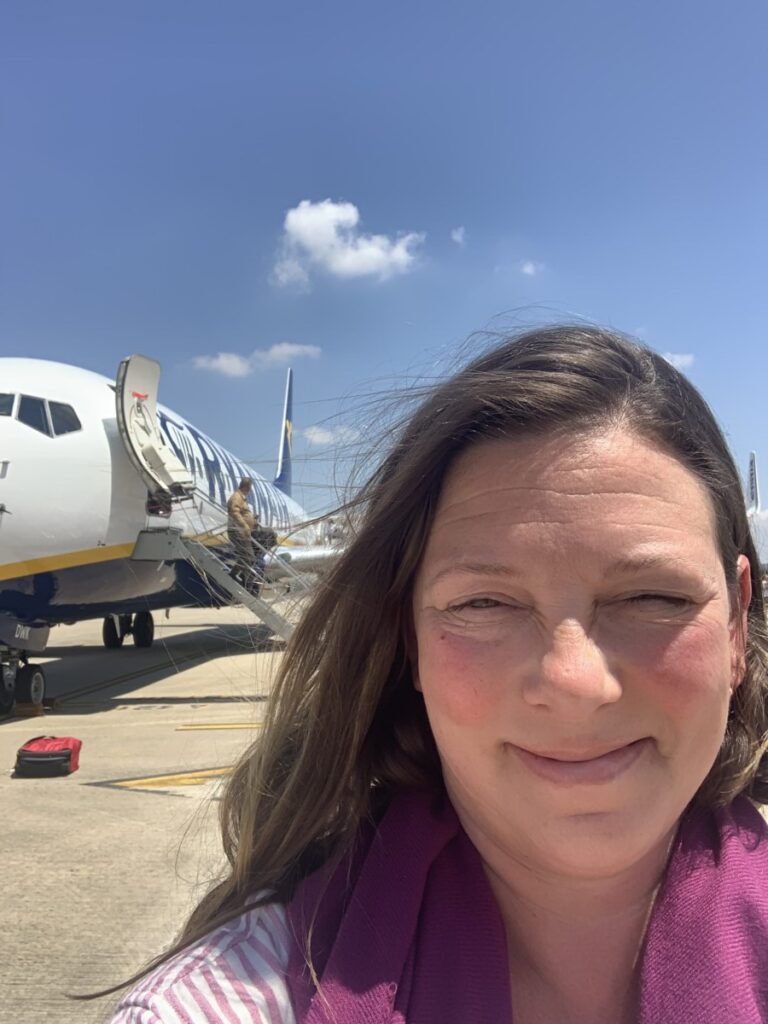
I descend the plane stairs to a balmy windswept tarmac about 45 minutes north of Cadiz in Jerez de la Frontera – one of the iconic white hill towns of Andalucía, the southern region of Spain. It is part of the Sherry Triangle, a trio of towns that produce the sweetened fortified wine. I planned on making this a stop of mine, but logistics got in the way, and I made a note to myself to revisit the area and learn about sherry. How did this region become known for Sherry, what is the history and how has it shaped the people and culture? I contemplate this as board the bus to Cadiz.
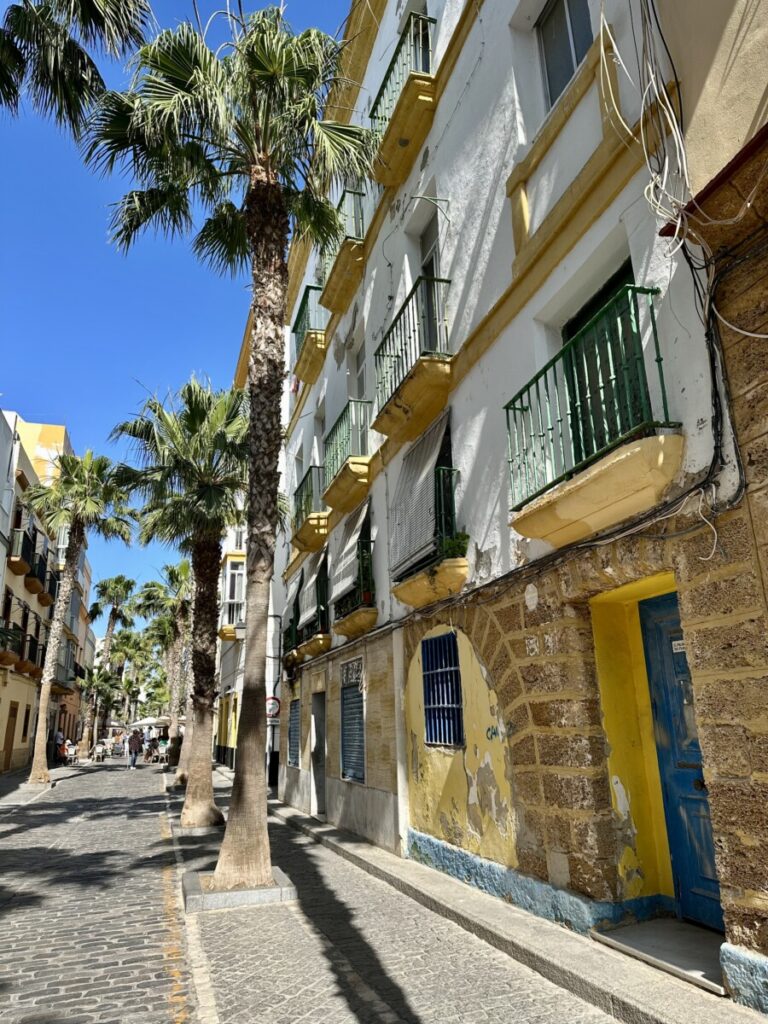
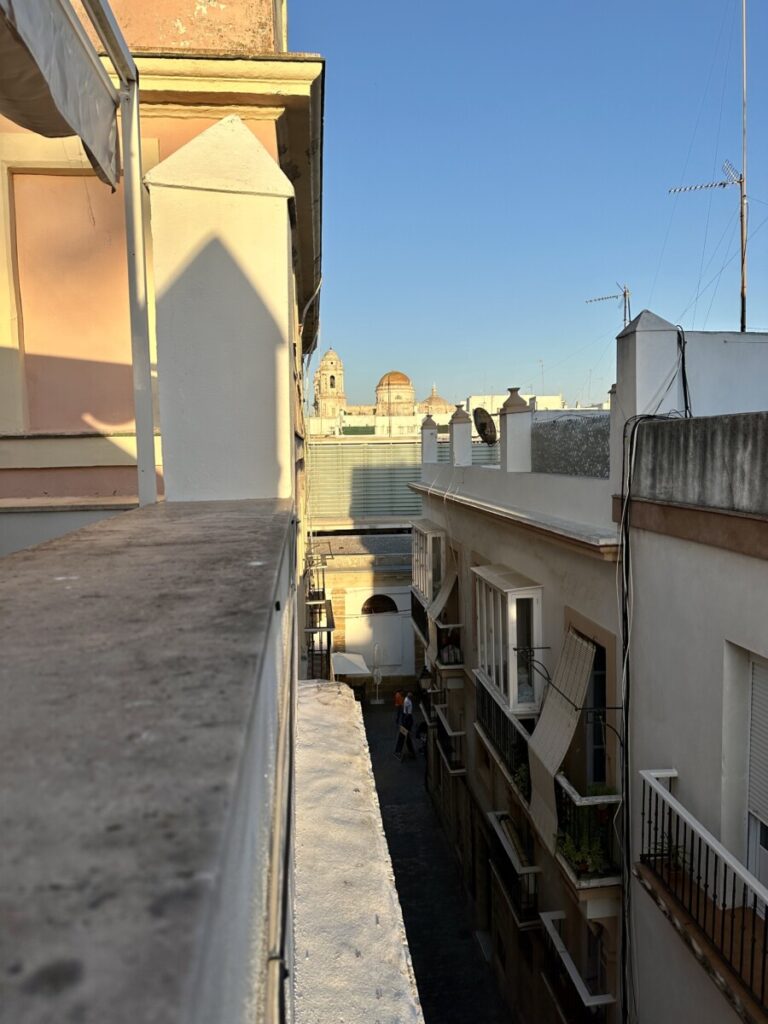
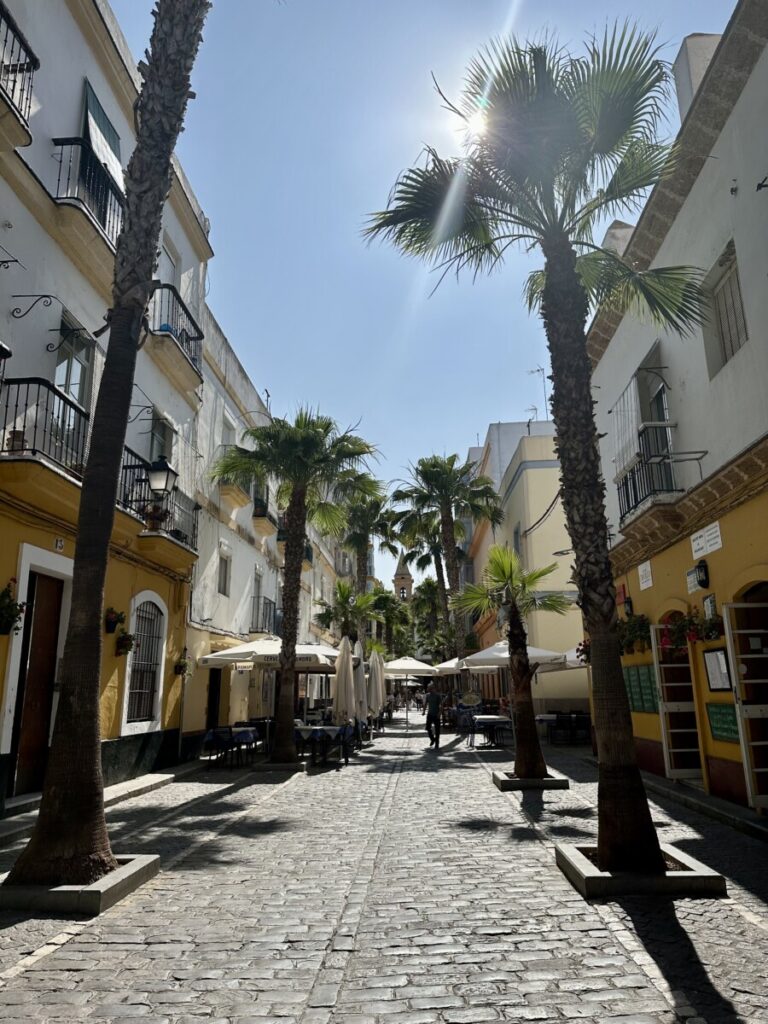
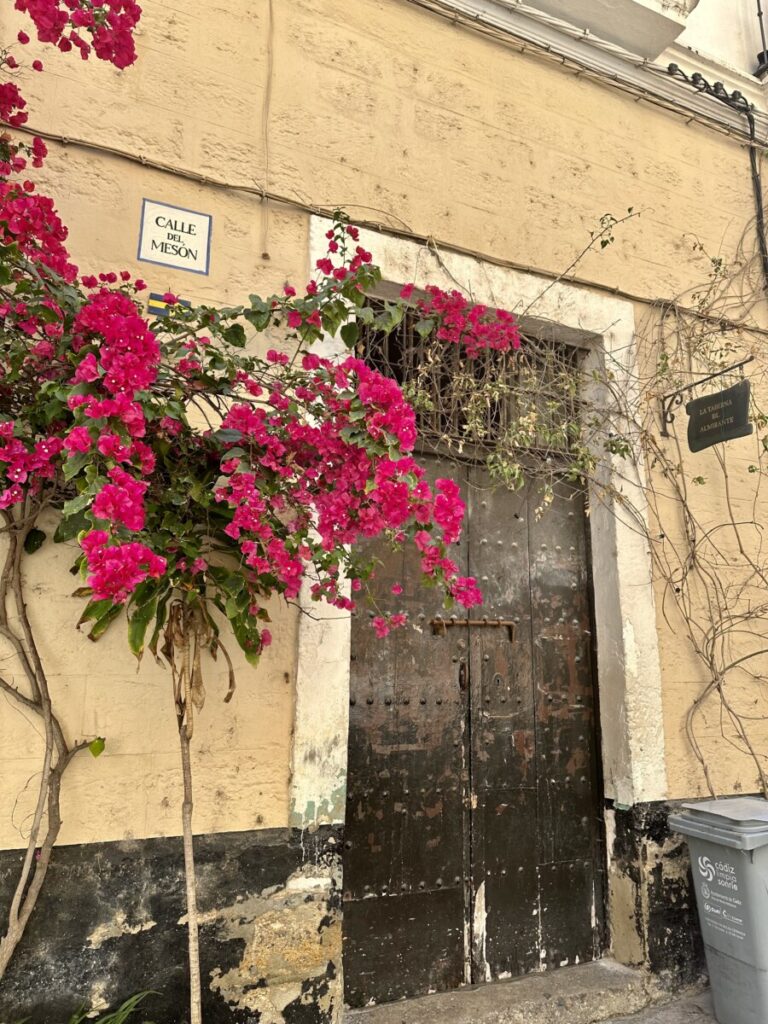
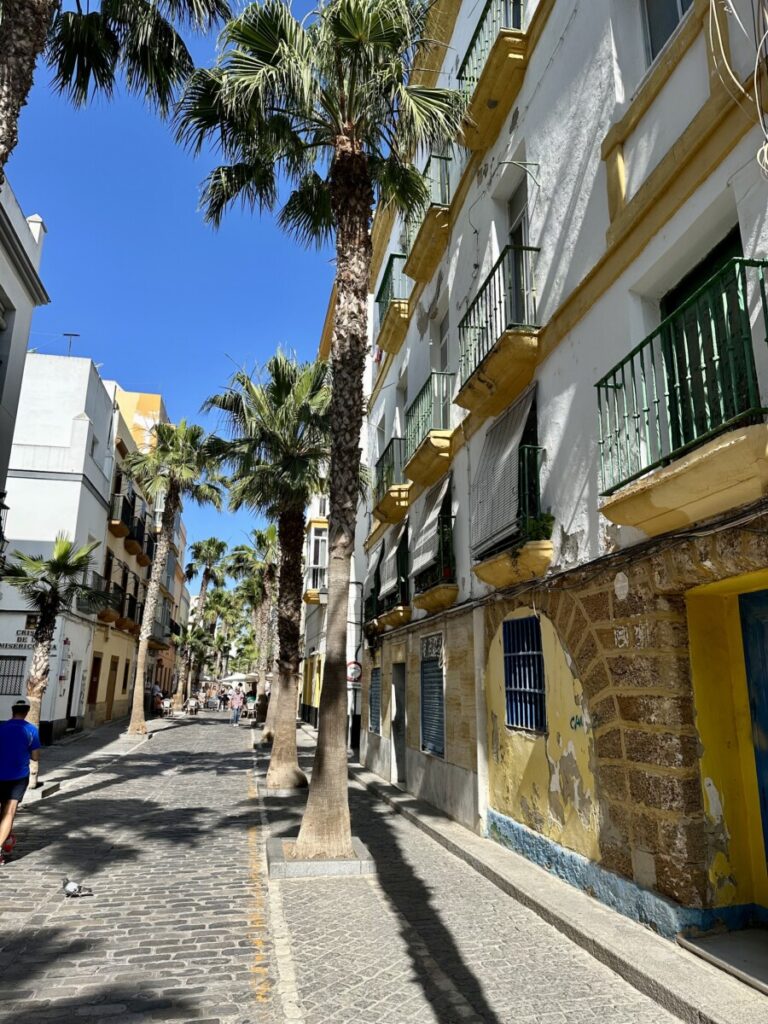
Cadiz is located and the southwestern tip of Spain, between Gibraltar and Portugal on the costa del luz – the coast of light. It is considered the oldest, continuously inhabited city in Europe. Yes, you read that correctly – it has been here for a very, very long time. The Phoenicians inhabited the strategic spot with a protected bay set between the Atlantic, the strait of Gibraltar – entrance to the Mediterranean and North Africa. It was a strategic piece of land that just happens to boast a huge migration of Bluefin Tuna as they make their way to the Mediterranean to multiply. The Phoenicians founded Cadiz – what they named Gadir in 1104 BC. When the Romans conquered the area in 200 BC, they called it Gades, at times it was the 2nd most populous Roman city, rivaling Rome itself. It continued to be an important port city through time, the Byzantines in 522 AD, Visigoths in 620 AD, Moors in 711 AD – calling it Qadis which led to its name today. Finally, the Crown of Castille in 1264 eventually secured it as a city of Spain. It has been burned to the ground and sacked so many times and is still standing. You can see the mark of these cultures layered upon each other when you are here. The white buildings with cobblestone streets, palm tree lined against a very deep blue sky, I was transfixed.
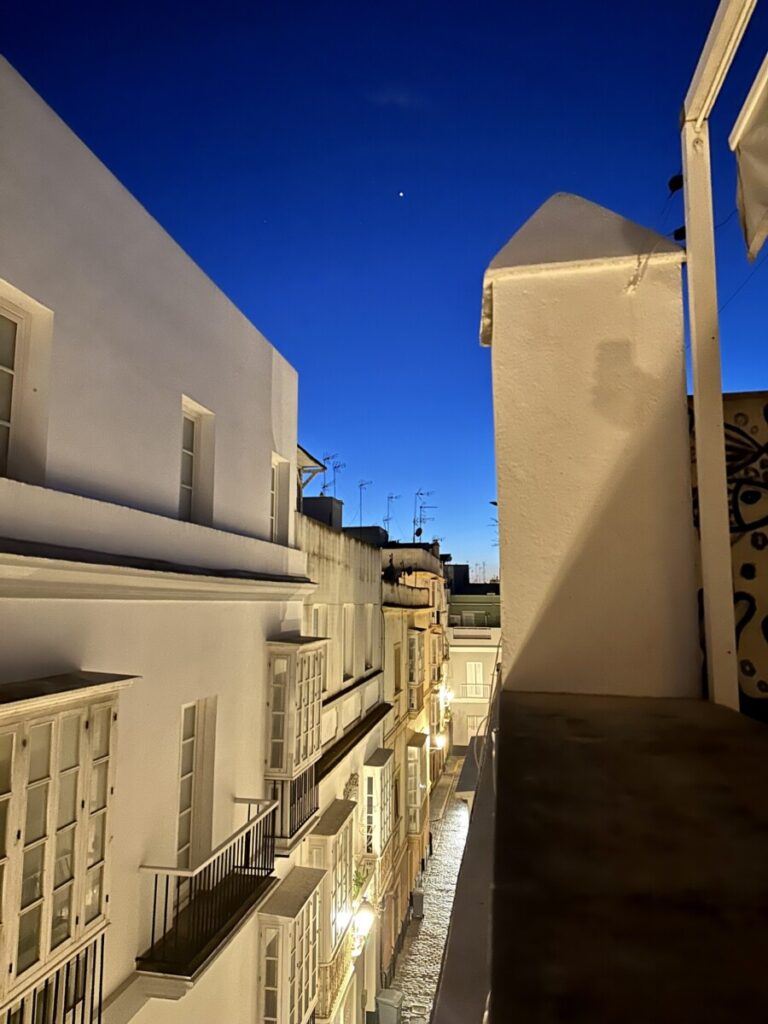
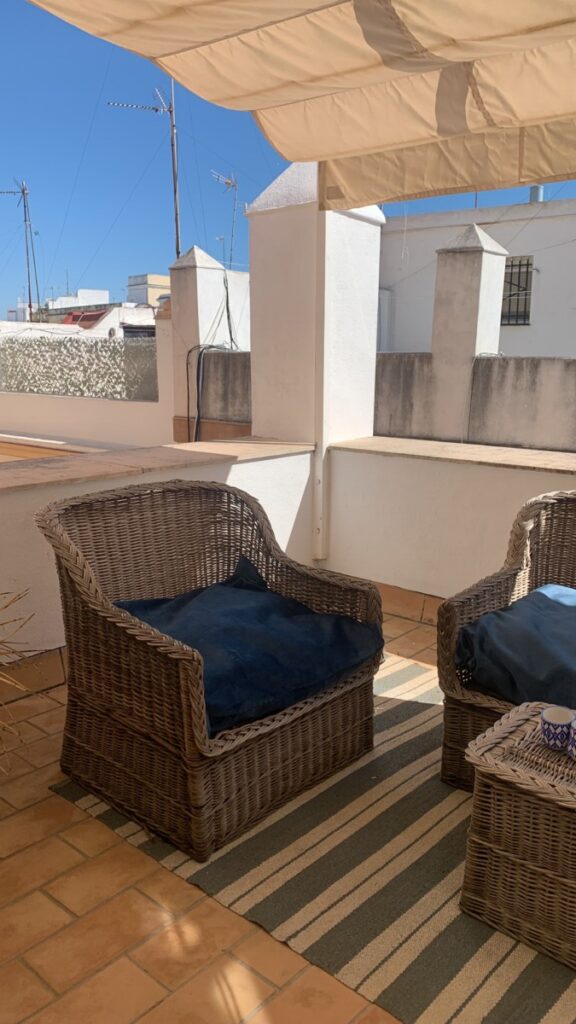
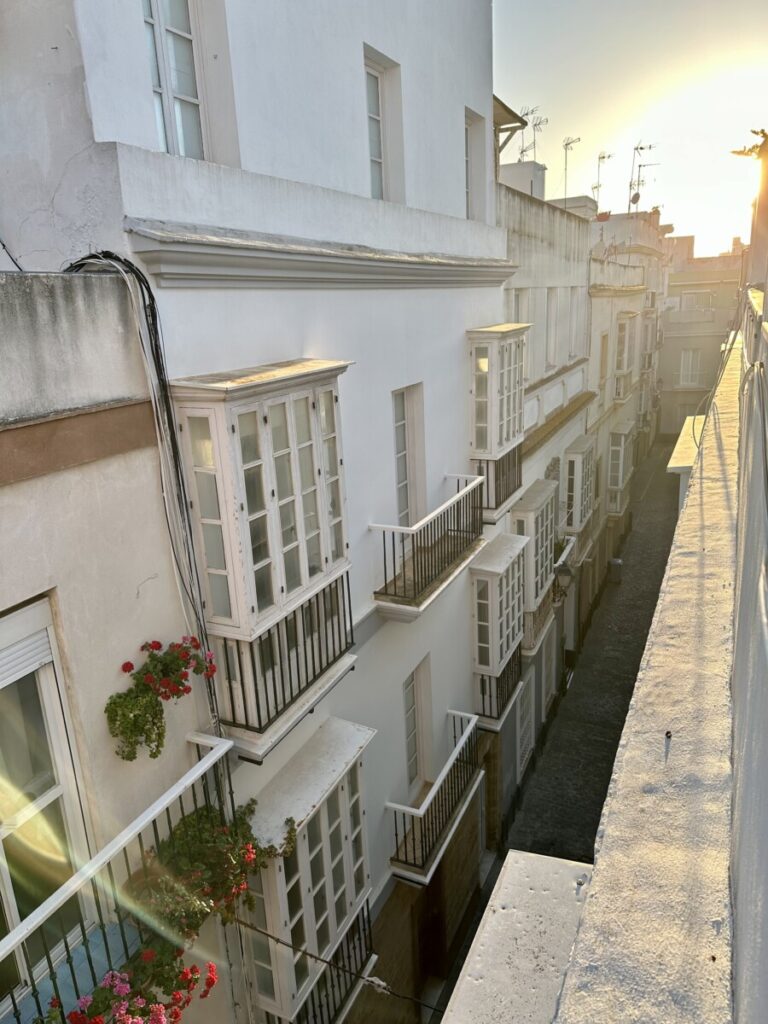
I made my way, luggage clomping over the cobblestone streets to the bustling bar below my Airbnb, collected my keys from the owner and climbed the 4 stories of cool marble and tile stairs to my amazing rooftop room. Walking out onto my deck I discovered a sea of white rooftops, bright hued laundry drying on lines against the deep blue sky – I was transported to another place. How long has this building been here? How many generations of people have hung clothes on the line, bleaching in the bright sun? The stories of people lived and lost. I could hear the murmur and clinking of lunch in the cafes that lined my street below. I could see the market, Mercado Central below and hear the bustle of shoppers gathering. I want to know more about this the oldest city in Spain, the cultural changes over time, how did the fishing and salting industry make it thrive? What makes it thrive now?
I was starving and tired from a day of travel, I couldn’t wait for 8:00 when the restaurants opened for dinner, and I looked forward to cooking for myself tonight. I think I have mentioned before that Spaniards love food and they eat a lot of it, I eat a lot and had a difficult time keeping up. There is a set eating schedule here and if you don’t follow it, you will find most places closed – in the middle of the day. They eat about 5 times per day, and it takes some effort to adjust, especially when traveling. I love the schedule and wish we had it here in the states. Here you don’t see people eating in their car in a parking lot, people take the time to eat, sitting down and enjoying their meals or sharing a snack chatting with a friend. Here is the schedule in case you make your way to Spain:
Desayuno – Breakfast 7am-9am This is a small sweet or savory pastry and coffee.
Almuerzo – Mid Morning Snack 10;30-12 Meant to tie you over to lunch, usually a boquadillo (small sandwich)
Comida – Lunch 2pm-4pm The largest meal of the day, usually many courses, and includes a rest afterward – Siesta!
Merienda – Afternoon Snack 5:30-7pm A snack to tie you over to dinner.
Cena – Dinner 8:00-11 Dinner is light and begins with Tapas. It can go late into the night with sobremesa (the time when eating is finished, and you sit with friends and family drinking and talking into the night.
Restaurants close or only serve beverages between these dining times. You will be hard pressed to find a meal between 4:00 and 8:30 pm and if you do beware, they are usually restaurants catering to tourists and not very good.
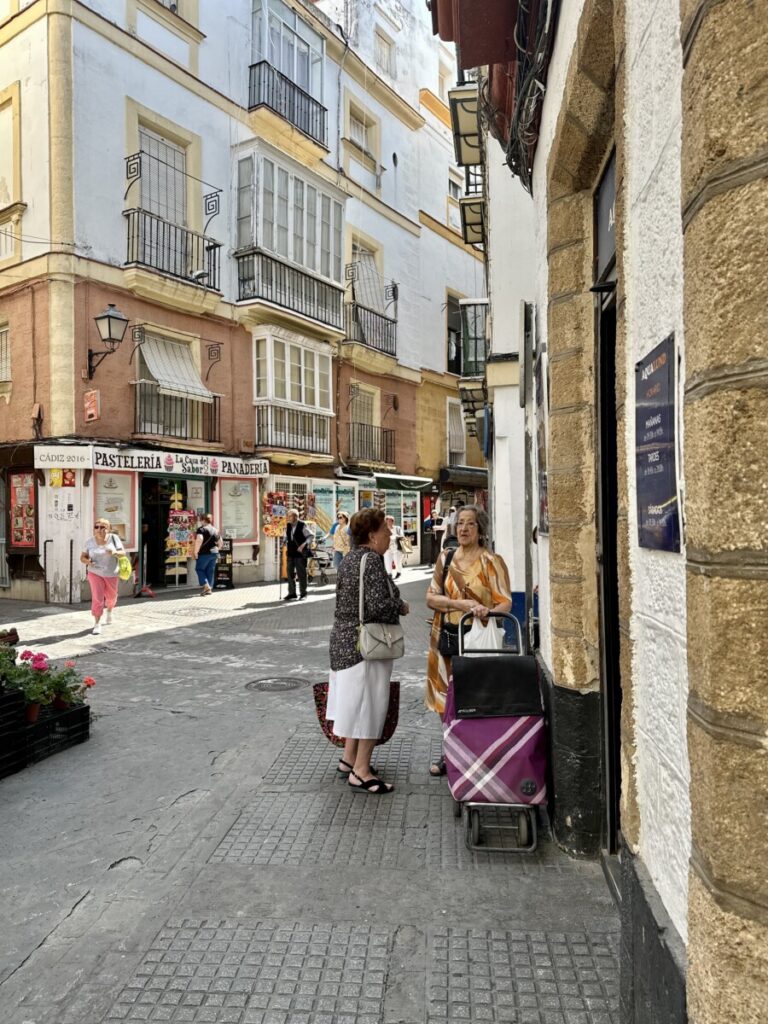
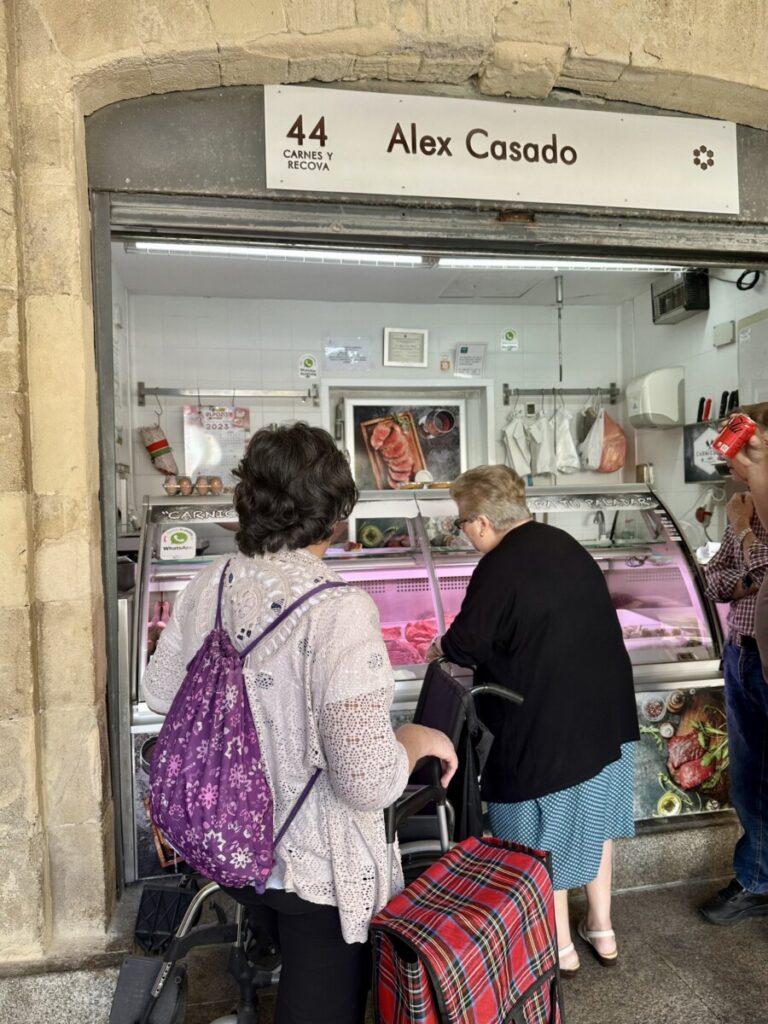
I navigated the bustling market booths using mostly Spanish, it was a bit easier here since Euskara and Catalan languages were not used. I noticed there were a lot of locals, the market and my apartment were far enough from the cruise ships and popular tourist plazas and I was surrounded more by locals than visitors. It was interesting, everyone lining up at the stalls chatting familiarly with the vendors and each other, grabbing their food for the day. This market is open every day – and each day I loved seeing the people with their rolling cart bags shuffle from stall to stall, stopping when they see friends – there was as much visiting with each other, if not more, than actual shopping. It was clear this was a social center for the community.
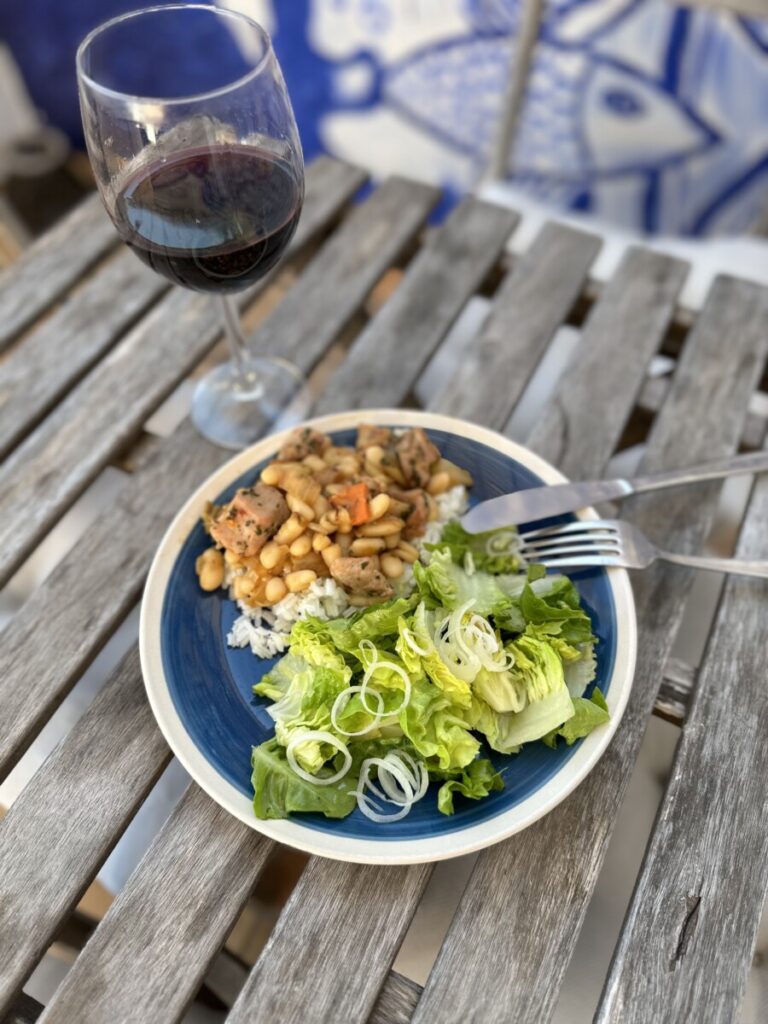
I made myself a simple dinner of some pork loin with beans, garlic, olive oil and a sprinkle of the piri piri I got in Barcelona over rice with a fresh salad and spring onions. It was just what I needed, I tucked in for the night watching the sunset on my rooftop.
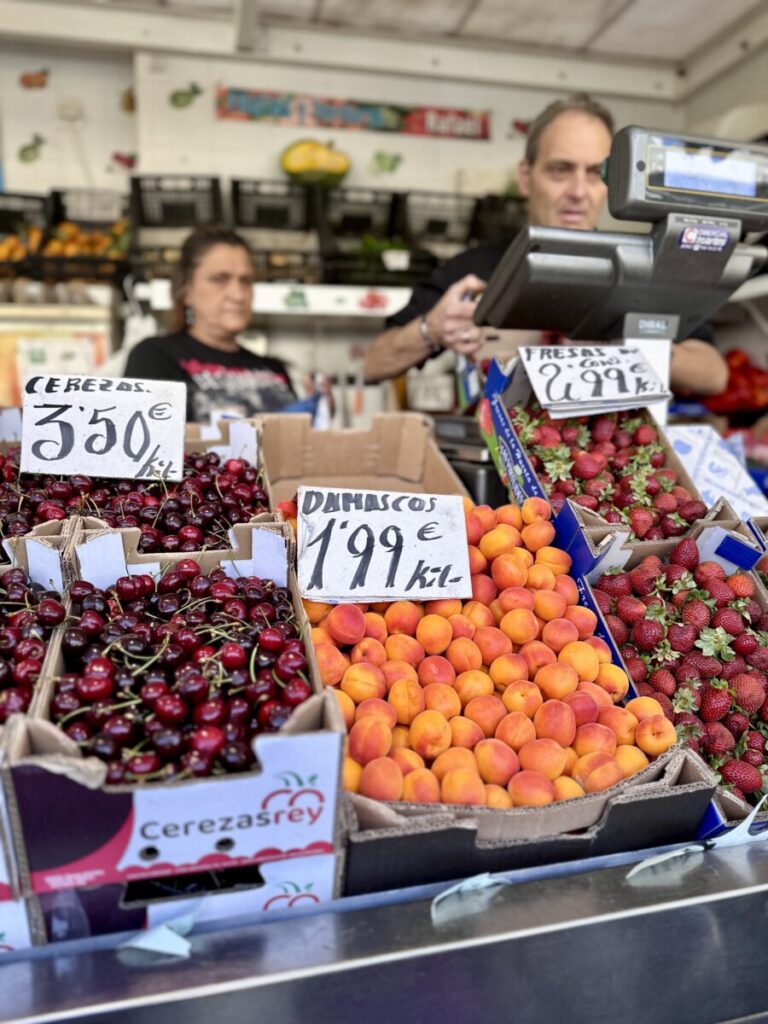
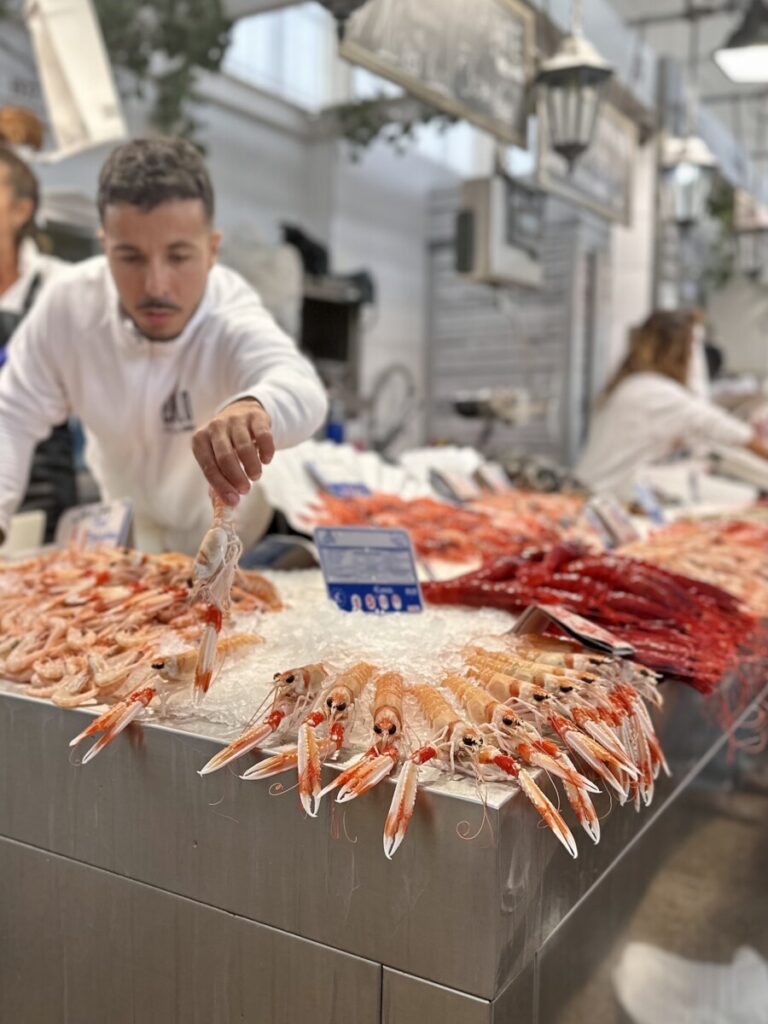
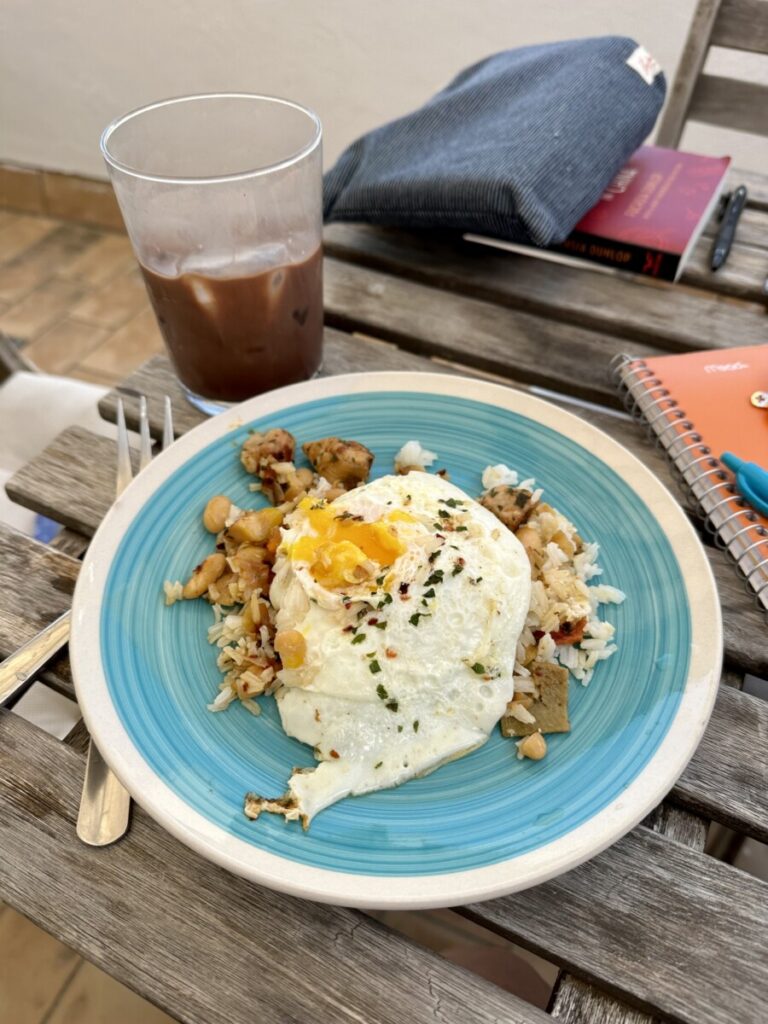
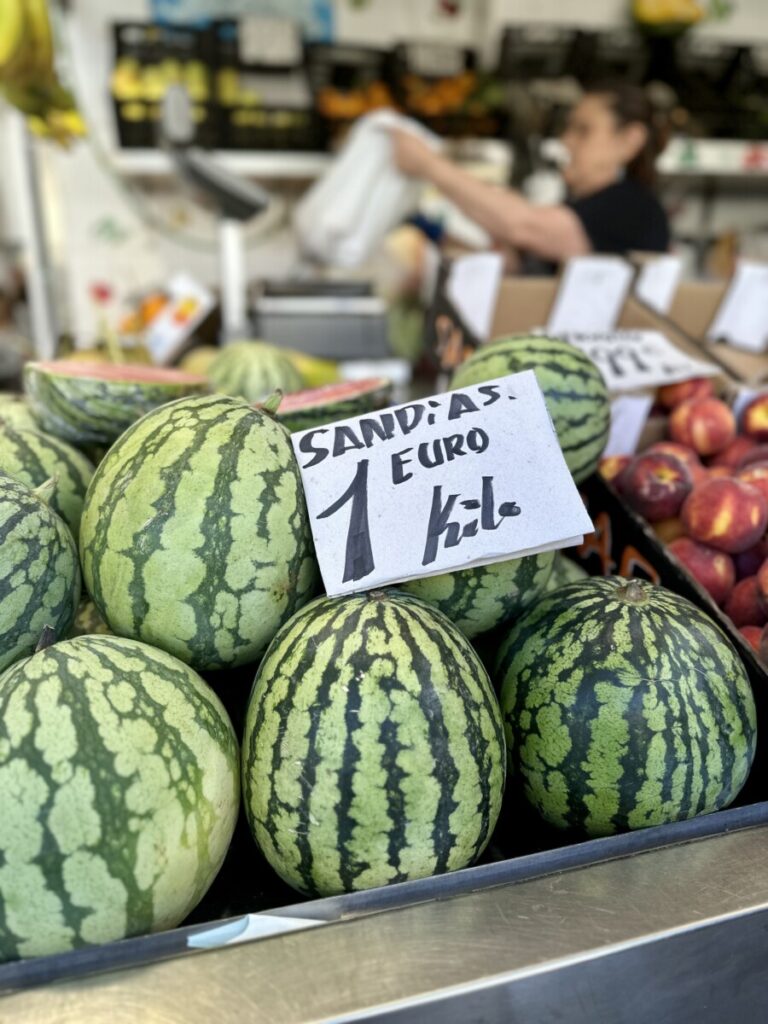
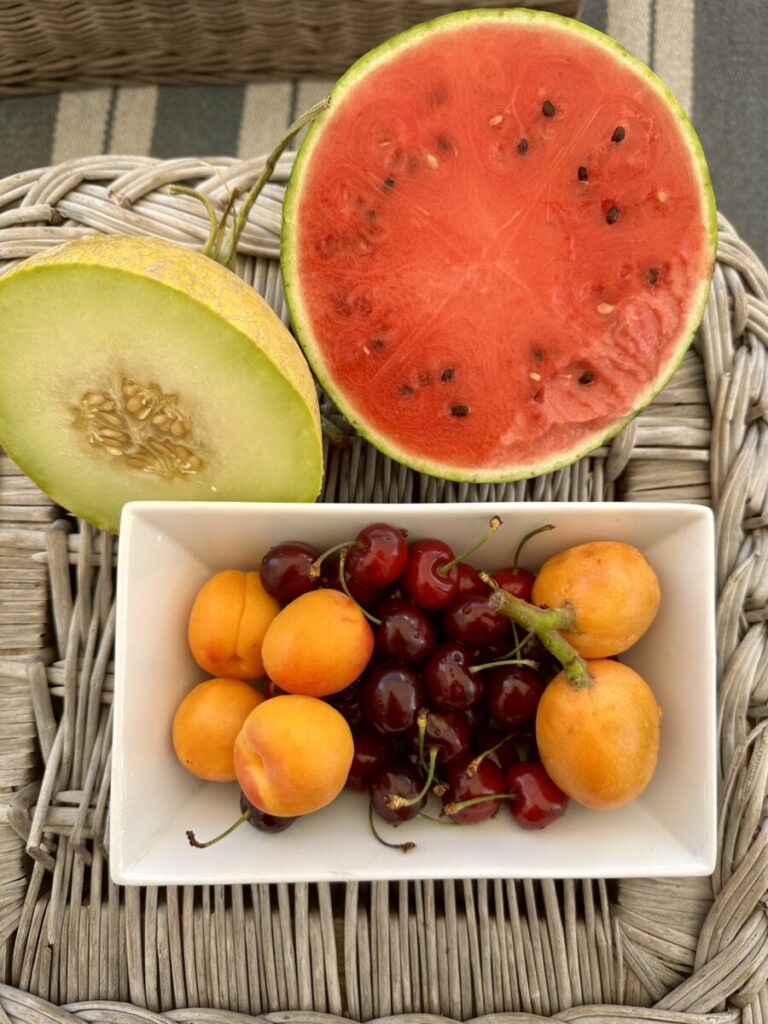
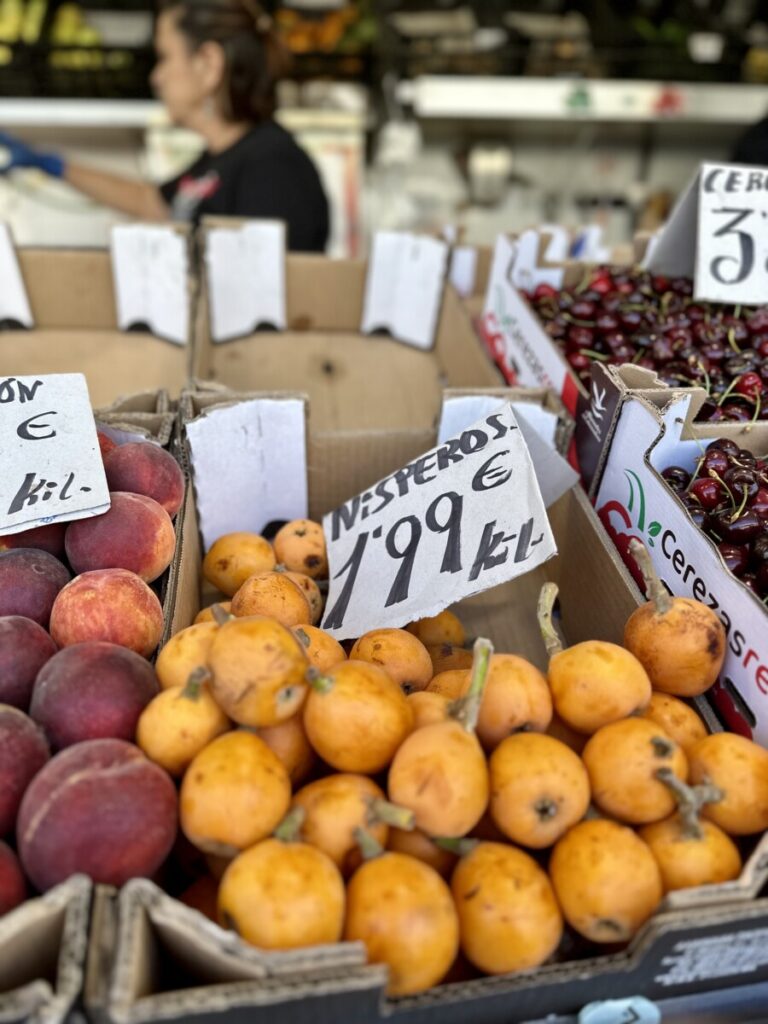
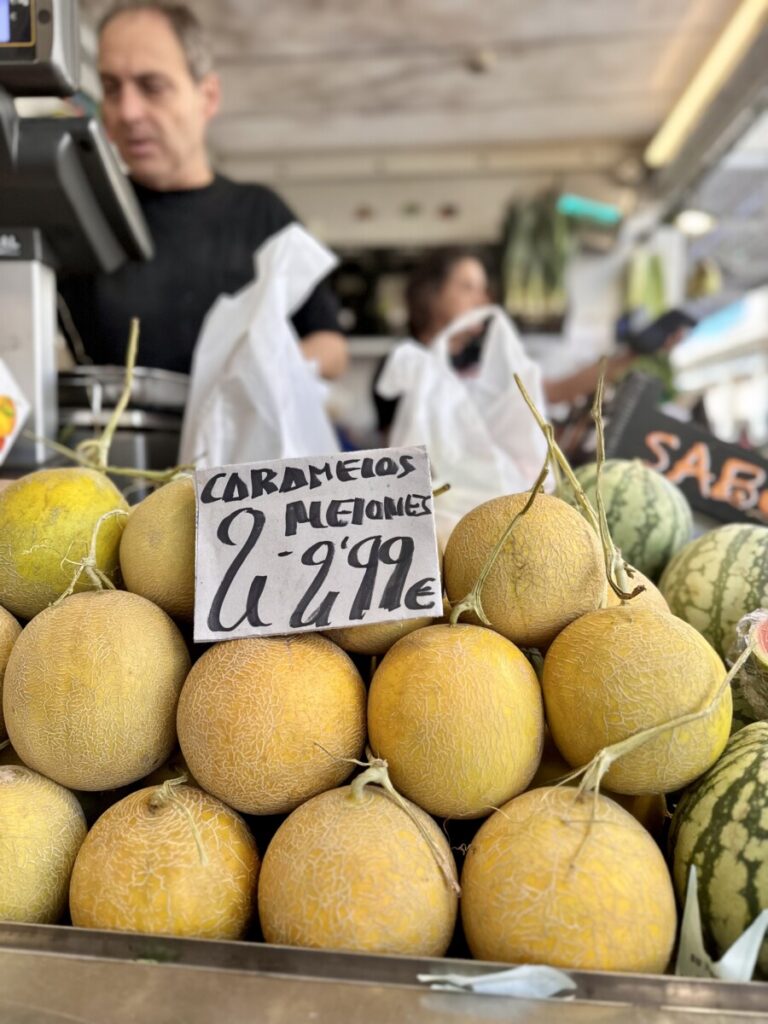
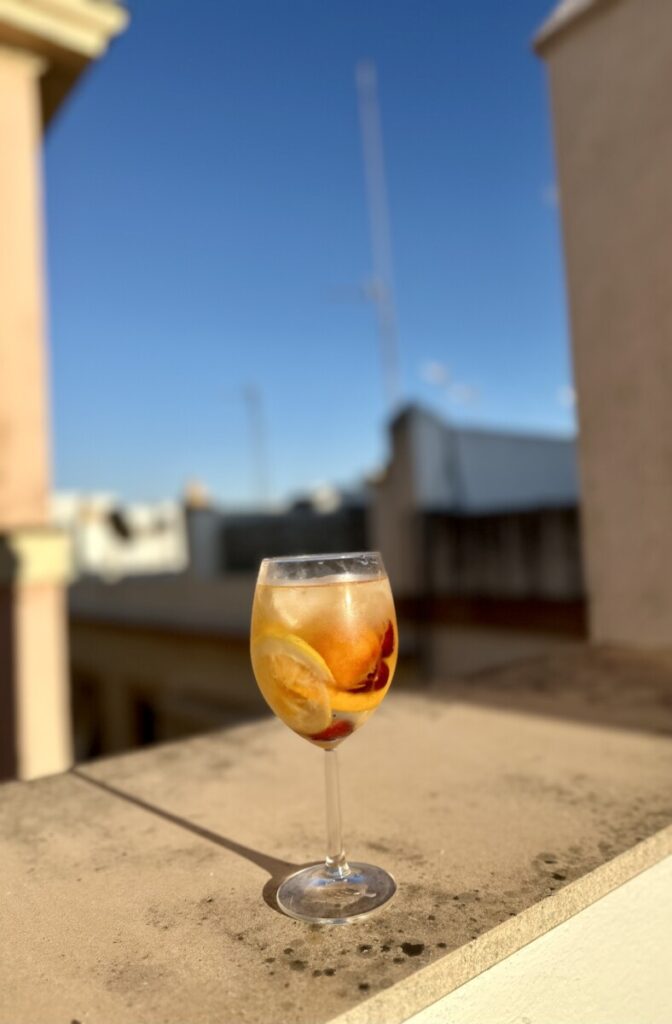
The next day I was excited to explore. Breakfast was leftovers with an egg – you will notice this is my favorite breakfast. I have never felt good with standard sweet American breakfasts, I would rather have a savory bite. And as much as I would love to here in Spain I can’t take eating a pastry every morning as the locals do. I spend the morning getting a lay of the land, this city is easy to wander about – cobbled streets, white and pastel buildings. I am in the Old Town, which is surrounded on three sides by the sea, if you’ve gone too far you will run into water. I made it back to the market before they closed at 4:00. I bought some fruit; I am not much of a fruit eater but here in Spain they eat a lot of fruit. I wanted to take some to the beach and make some sangria for later. I got some melons, apricots and cherries and some nisperos. I had no idea what nisperos were – they are loquats. They were interesting, a sweet and sour flavor with a creamy texture. Of course, I dove into some research and found that they came to Spain about 2000 years ago, native to Asia and Japan and they grow well in the Mediterranean climate. My apartment is so wonderful I decided to cook dinner at home again, so I bought shrimp and peppers for this evening.
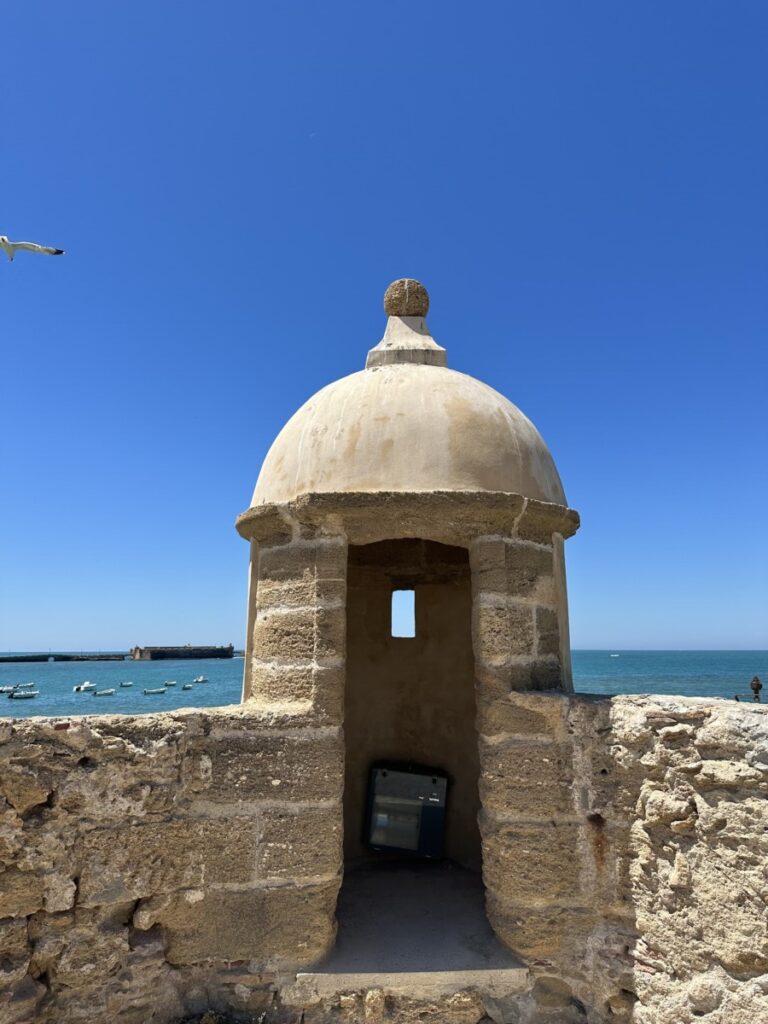
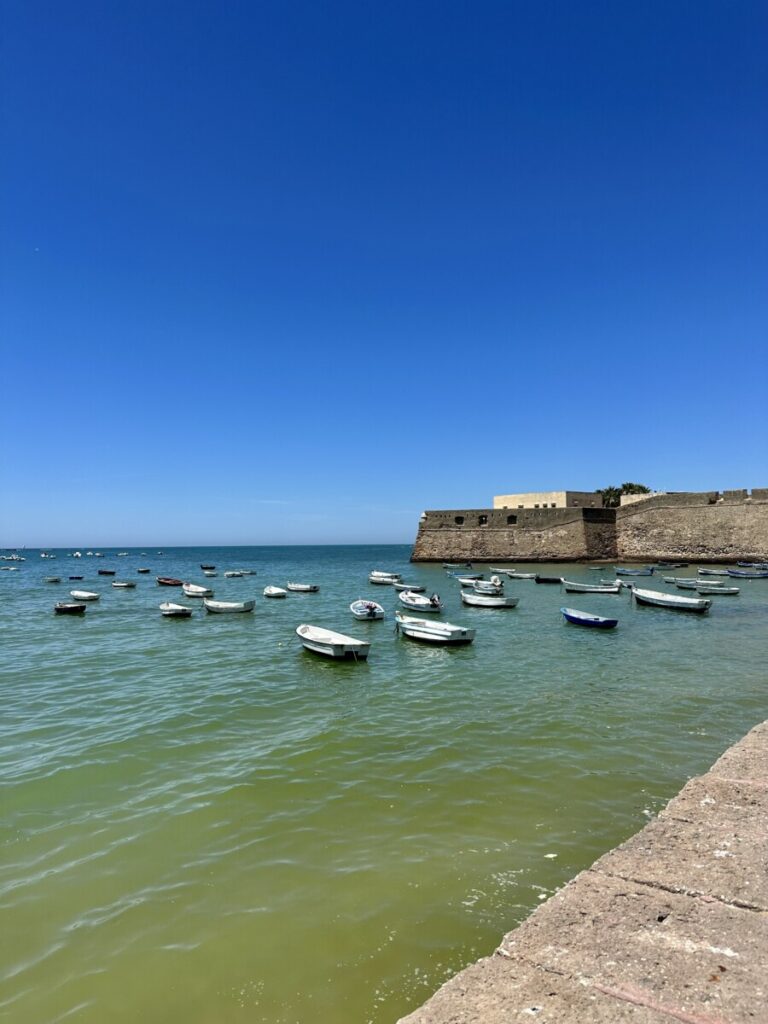
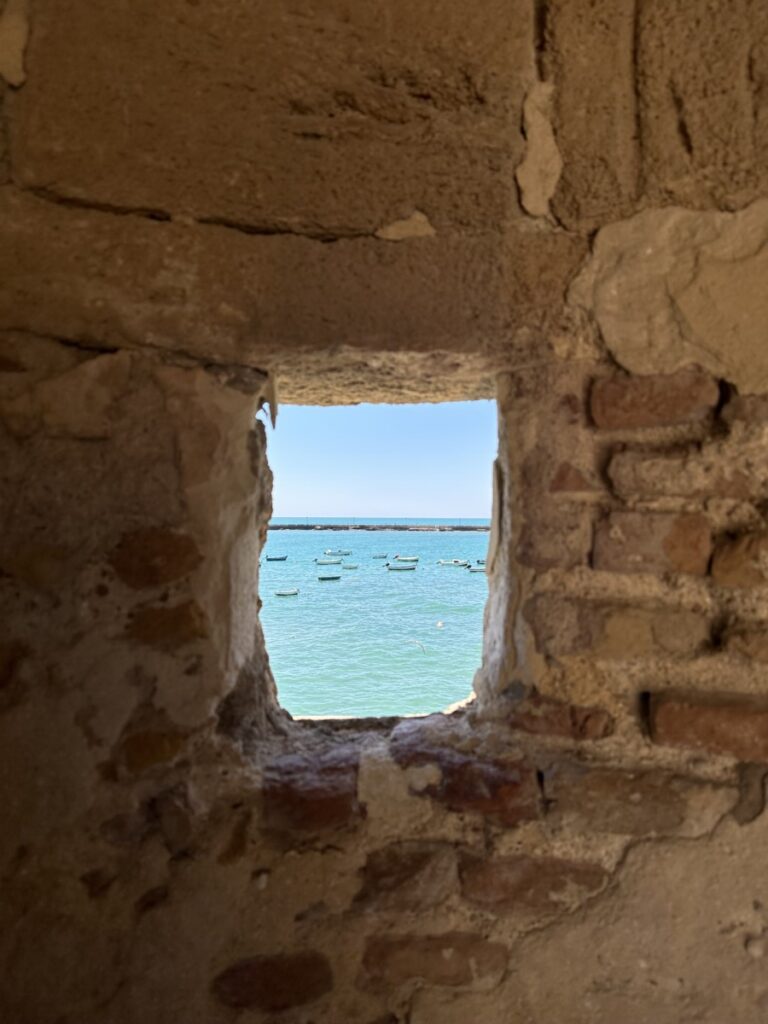
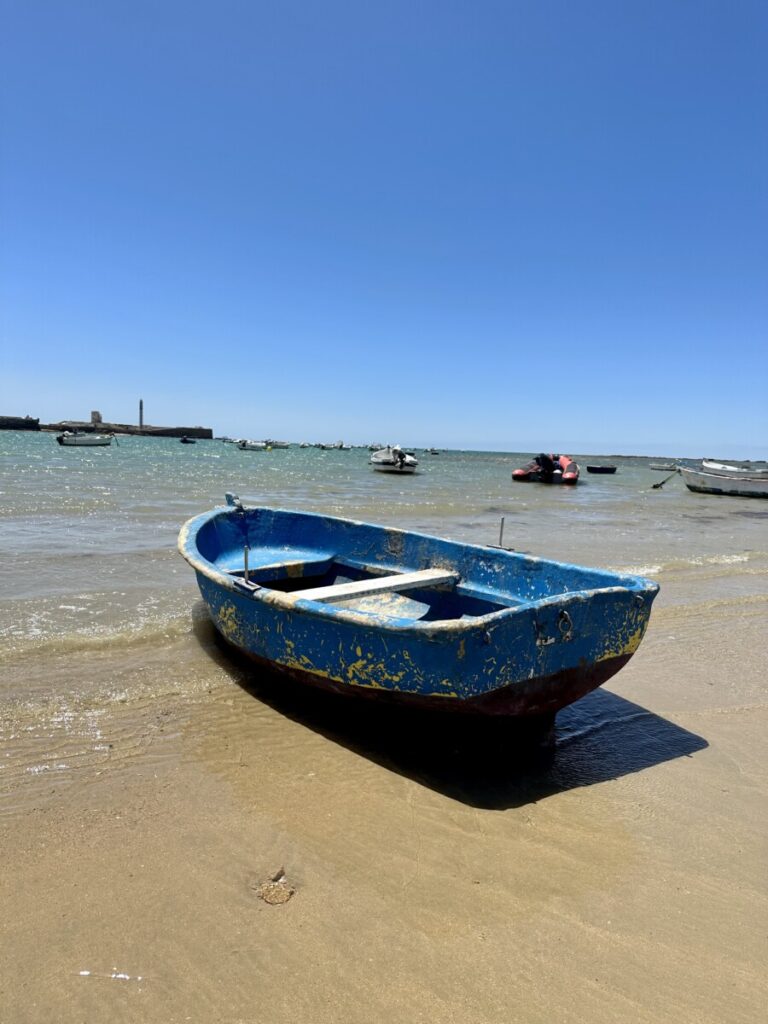
I packed a snack of fruit and crackers, made sangria to refresh me when I return home from the sun and headed out. The main beach in Cadiz, flanked to the north by a late 16th century Castillo de Santa Catalina, a star shaped fortress for defense of the city and to the south my Castillo de San Sebastian, where it is said the Phoenician temple of Kronos or Hercules stood around 1100 BC and has been built upon by countless inhabitants. Both are now used as event spaces for the community. The bay is still full of little dinghy boats of the fisherman, you can see them come in at different times of the day with their buckets of catch that they take to the market. As you walk along the walled city you can see them freediving along the rocky coast and at night the bay is dappled with little lights bobbing as they catch their evening squid
I did as the locals did, took in some sun with a light snack from the market. Parked in the warm sand, I bought a 3-euro cold beer; the beer with ice falling off as the vendor plucked it from his bright rolling ice chest was chilly and refreshing. I observed as children splashed and listened to the quick Spanish of a group of women who sat in a circle in their travel chairs with attached bright umbrellas gossiped. And I contemplated all the history of this place, how many different people crossed its shores?
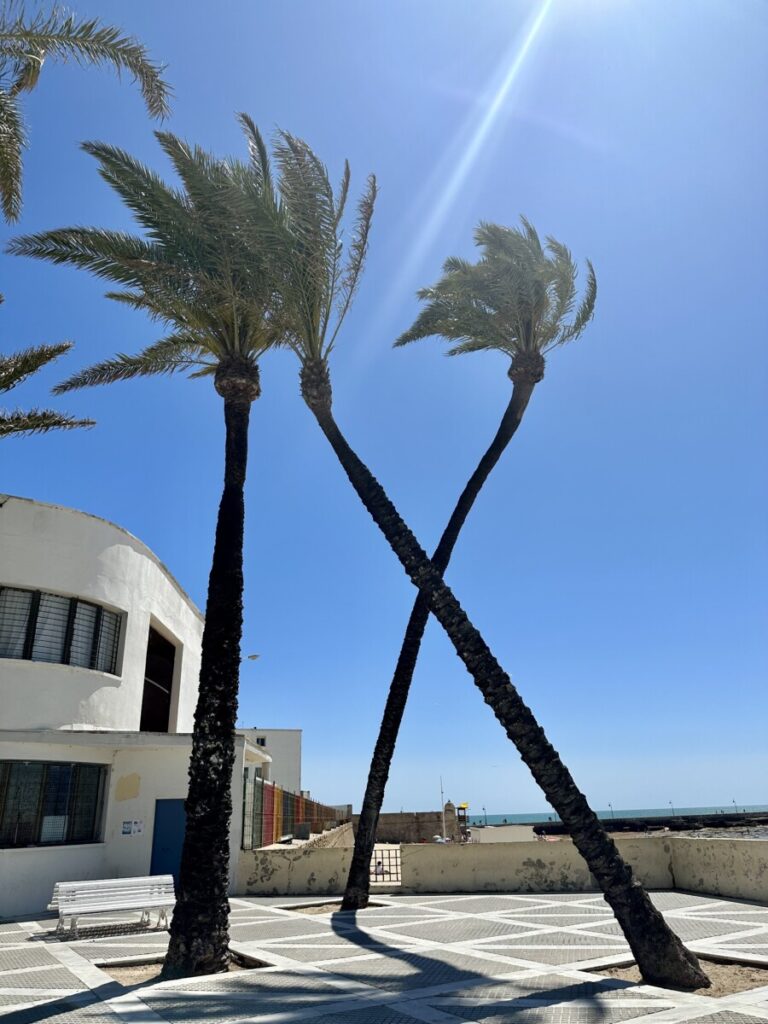
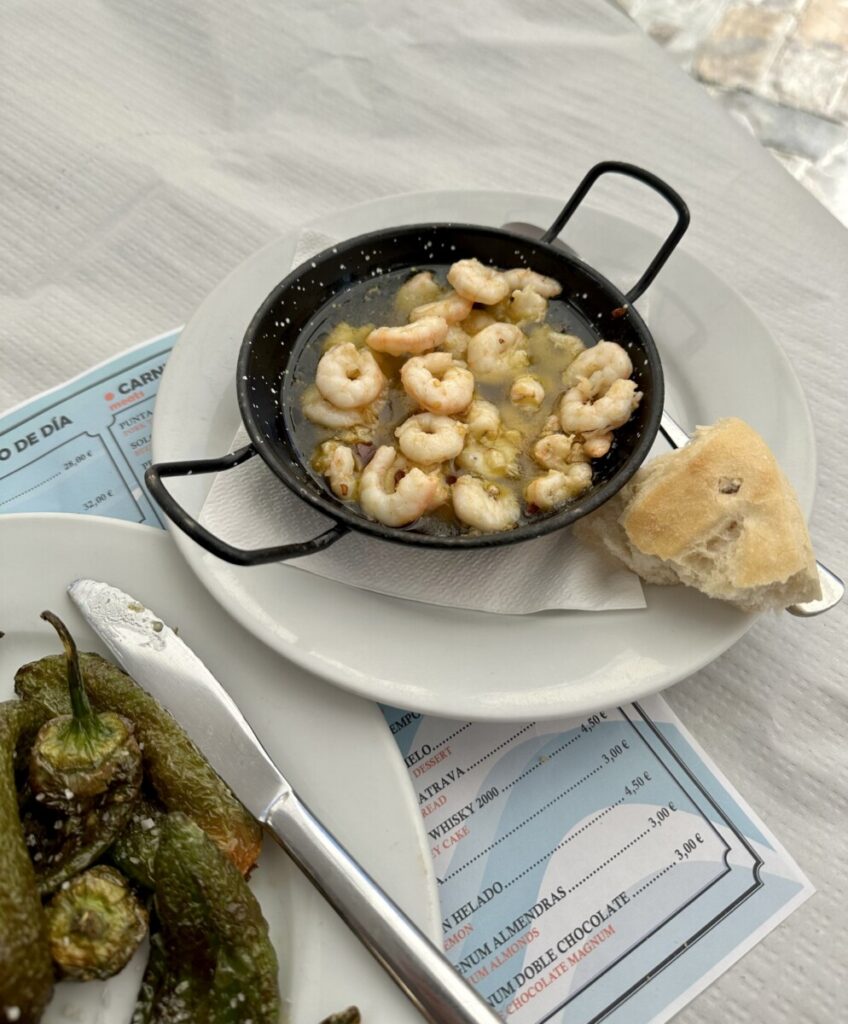
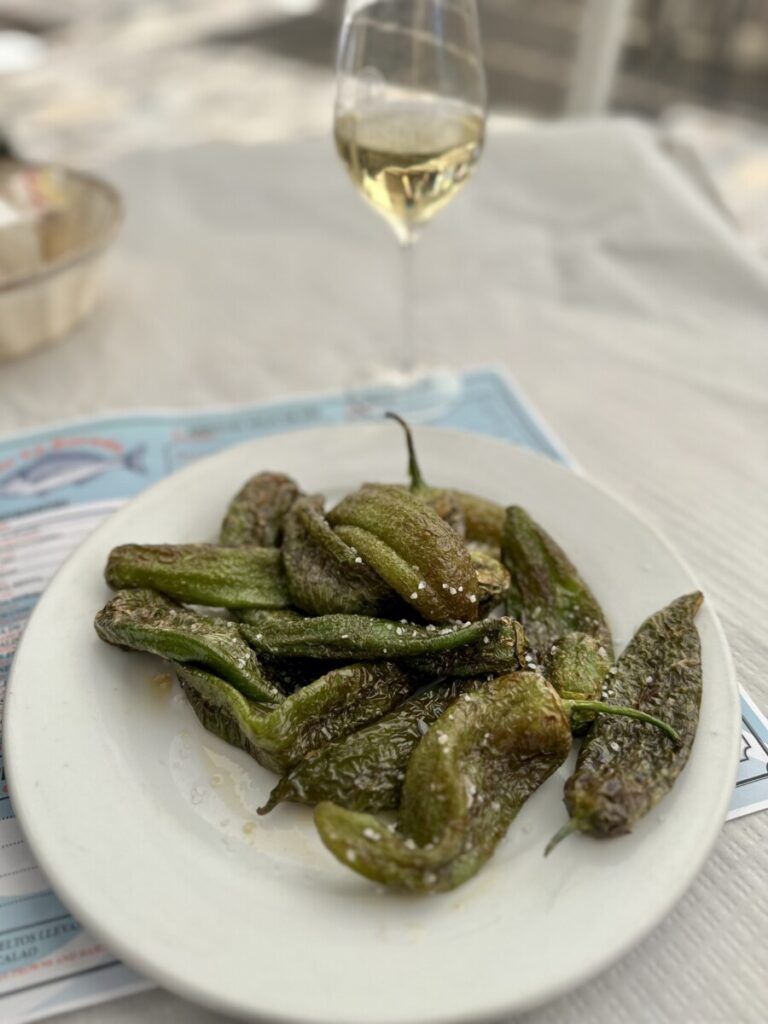
It was late and I stopped for some tapas along the palm tree lined street that led home, amazing; blistered peppers with sea salt and lemon and gambas aljio – shrimp in olive oil and garlic – with bread. It was fresh and delicious and the perfect meal for the warm sunny weather.
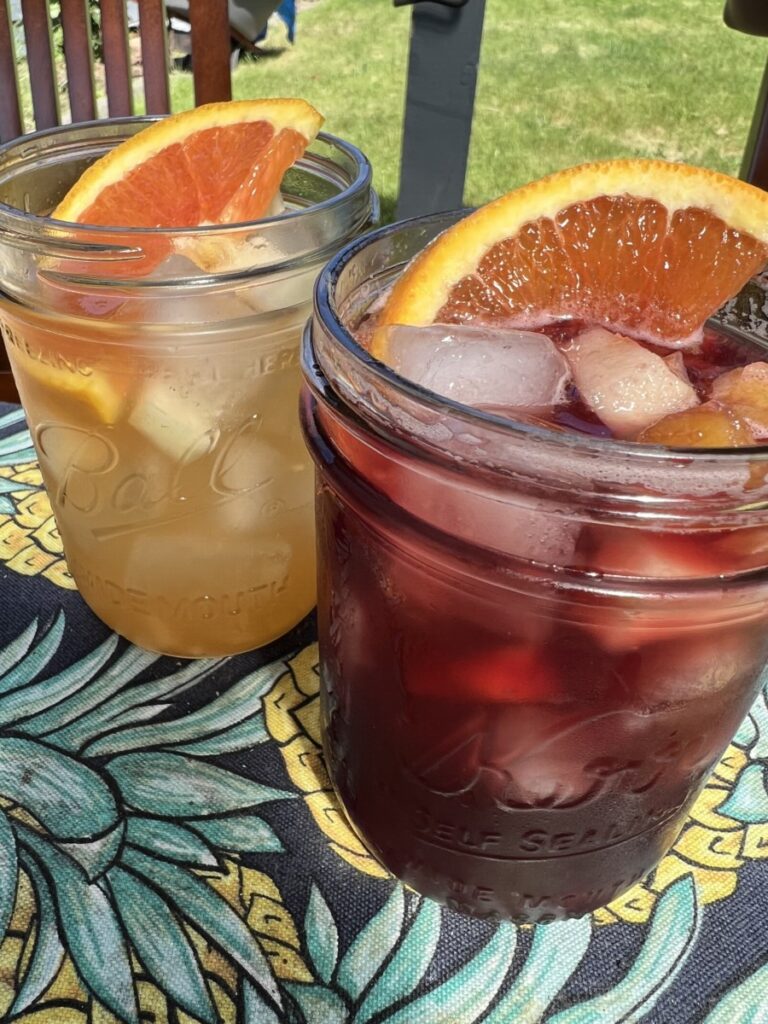
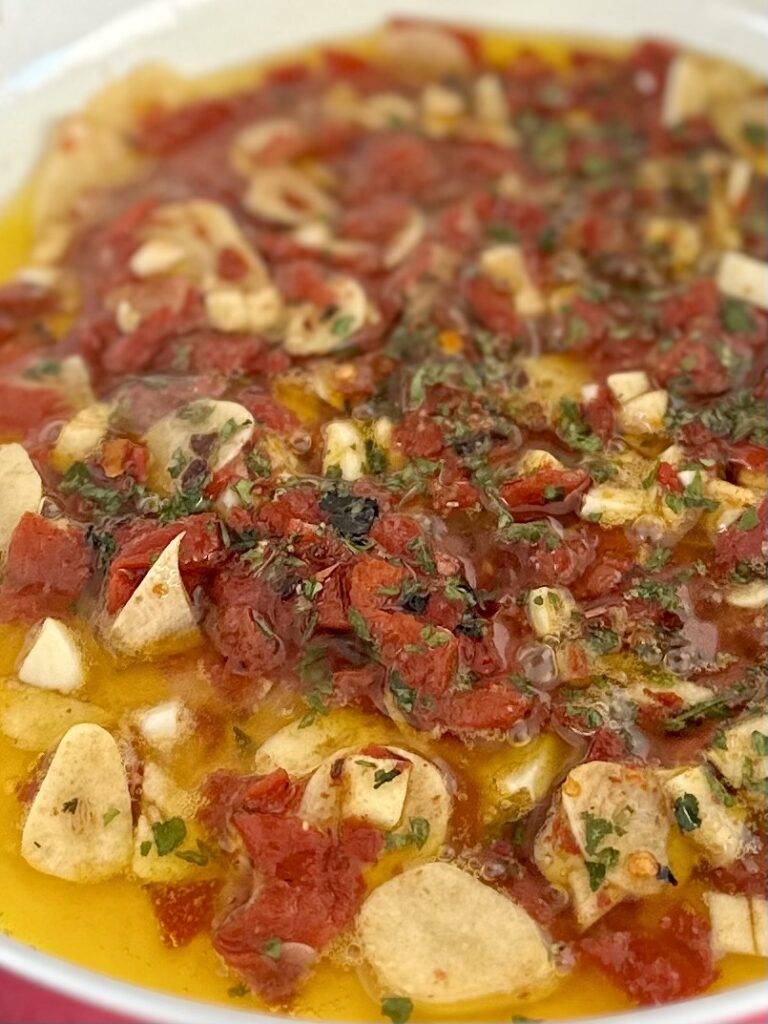
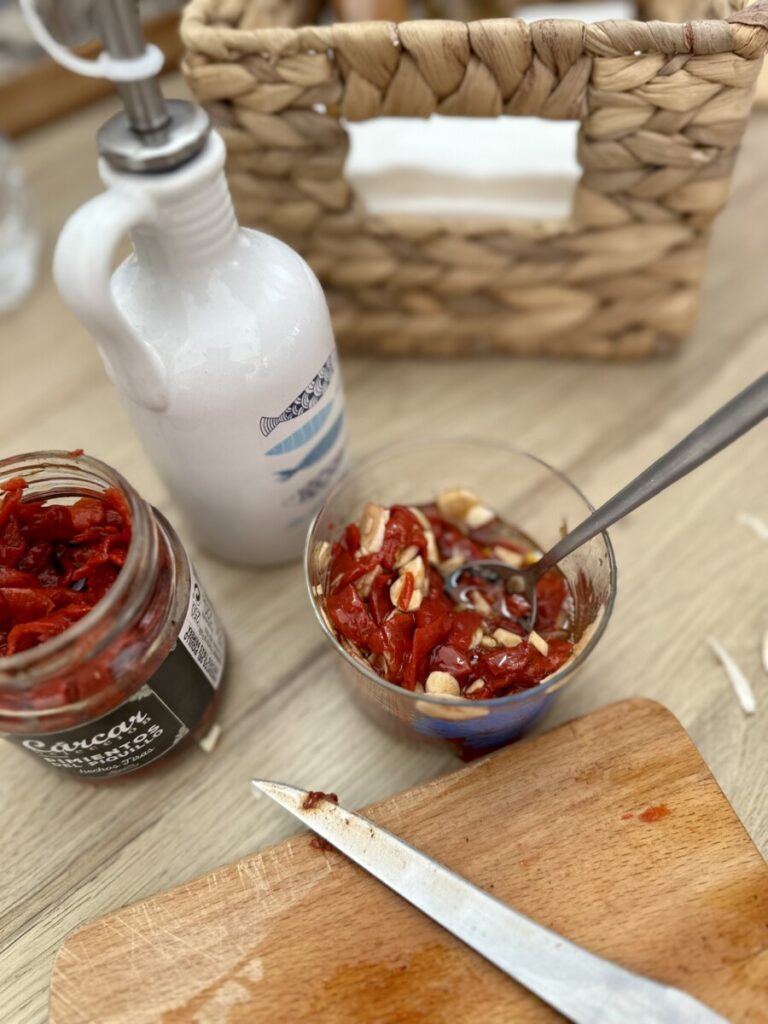
I made my way home – what a lovely place to land – and I started cooking. Red Calabrian chilies I got at the market, garlic, olive oil and onion sofrito – my apartment smelled amazing. The doors open the whole length of the wall, so it felt as if I was cooking outside on the rooftop. I pan fried my shrimp from the market, added some carrots that looked delicious and simmered it in the sofrito. I served it over some rice with my leftover fried peppers – so good and soo good with an egg on it for breakfast the next day! (See recipe here) My sangria came along nicely. Some of the fruit I got at the market, orange and lemon slices muddled in a white regional wine from the market. It was crisp and refreshing in the warm breeze on my patio. It felt wonderful to cook, to get lost in the process of it. I spent hours on my rooftop – savoring every bite, listening to the people below, the din of diners at the bars and market below becoming louder as the sky turned twilight. It was relaxing and heavenly. I let my mind wander about it all; what do people do here, to live? How do they eat in their homes? What is the typical day in terms of food; shopping, sharing, preparing? How has the culture here been shaped by so many years of inhabitants and migrants and trade? What has been ingrained here from this history that isn’t anywhere else in Spain? What stories are untold here? These are questions I would like to answer by experiencing them, the sense of time is strong here, and I decide this is another place I would like to return.
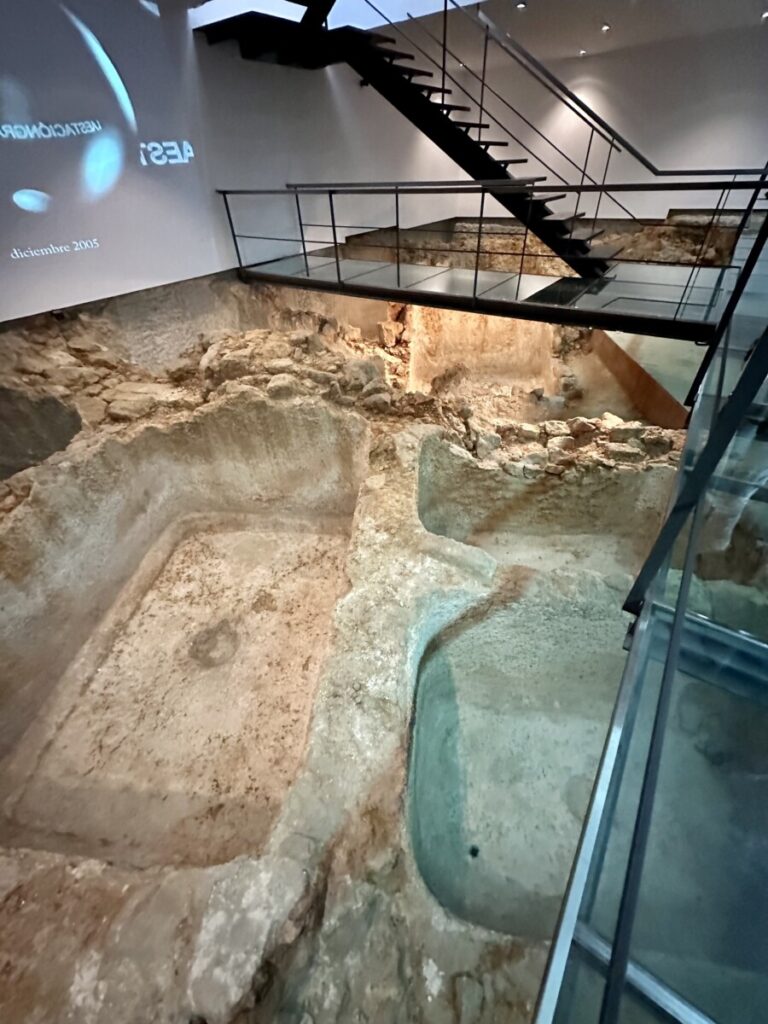
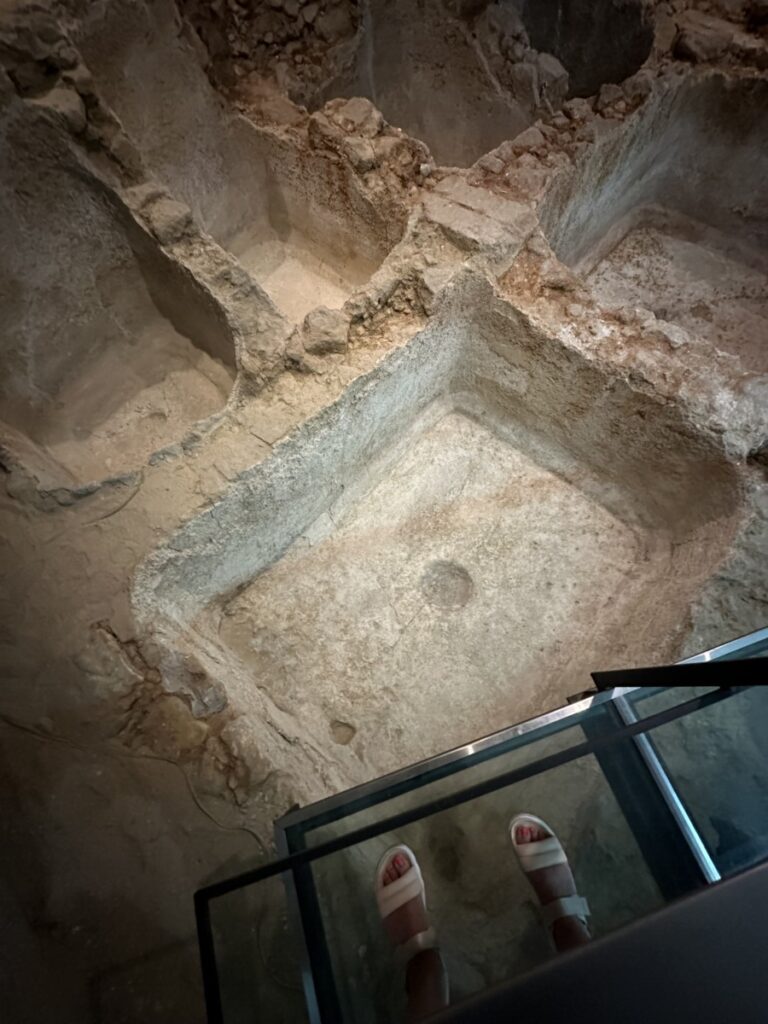
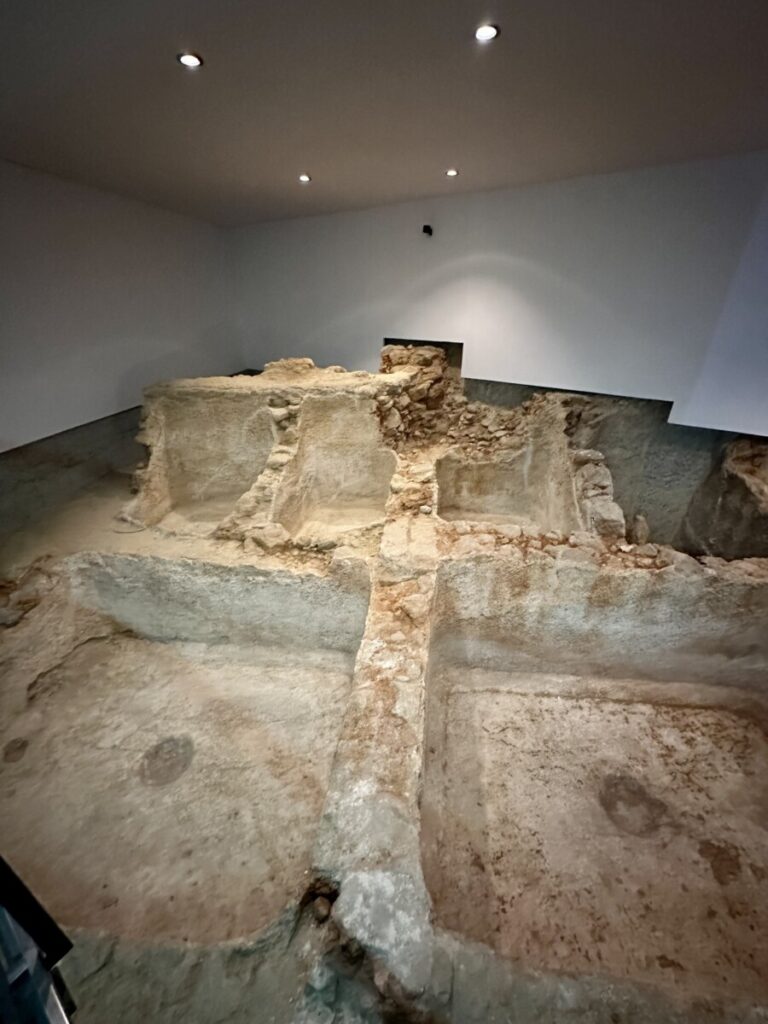
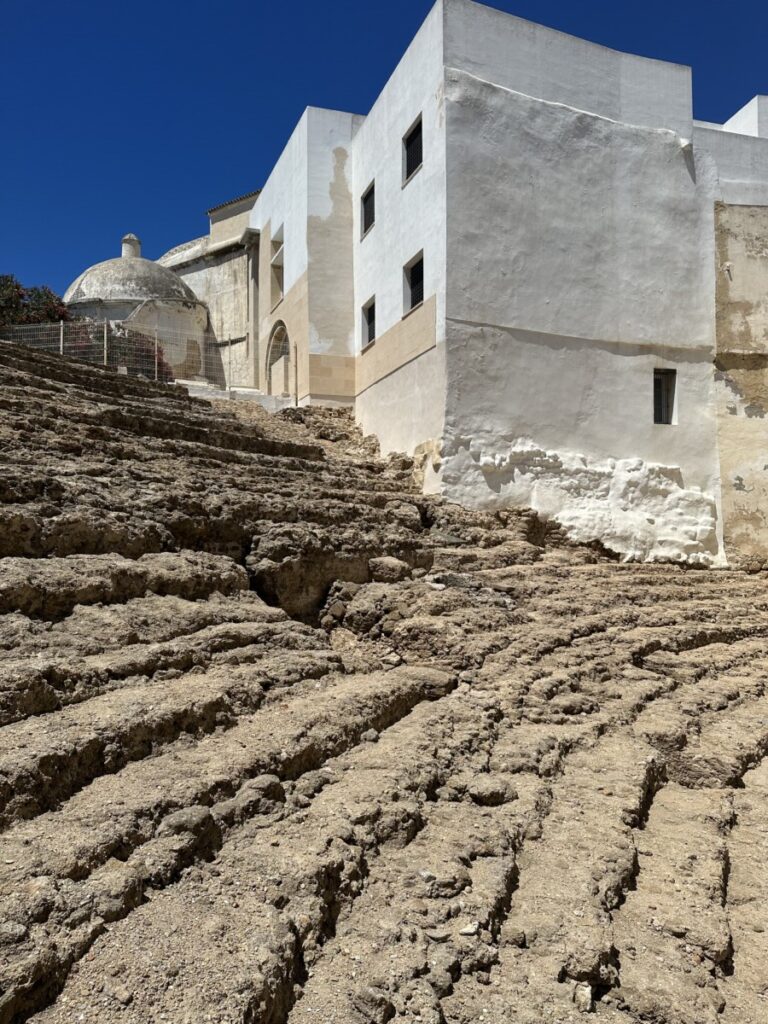
The next morning, I had my usual breakfast, and headed out to find the roman salting factory. It was discovered during a demolition in 1995 right around the corner from my apartment. The 1st century BC factory contained great big deep vats carved out of stone where they layered fish and salt to salt cod and tuna for transport and preservation. They made a prized substance called Garum, a paste made from fish intestines and other parts, that were added to the tanks where the digestive enzymes broke down the tissues, while adding enough salt to prevent putrification. They let the mixture condense in the heat and strained the concoction until it formed a paste used as a flavor enhancer and even in cosmetics. Cadiz was prized for its garum and was Rome’s main exporter. I can’t imagine the smell of this factory, they not only salted fish, especially prized tuna, they made many other fish sauces and oils for export.
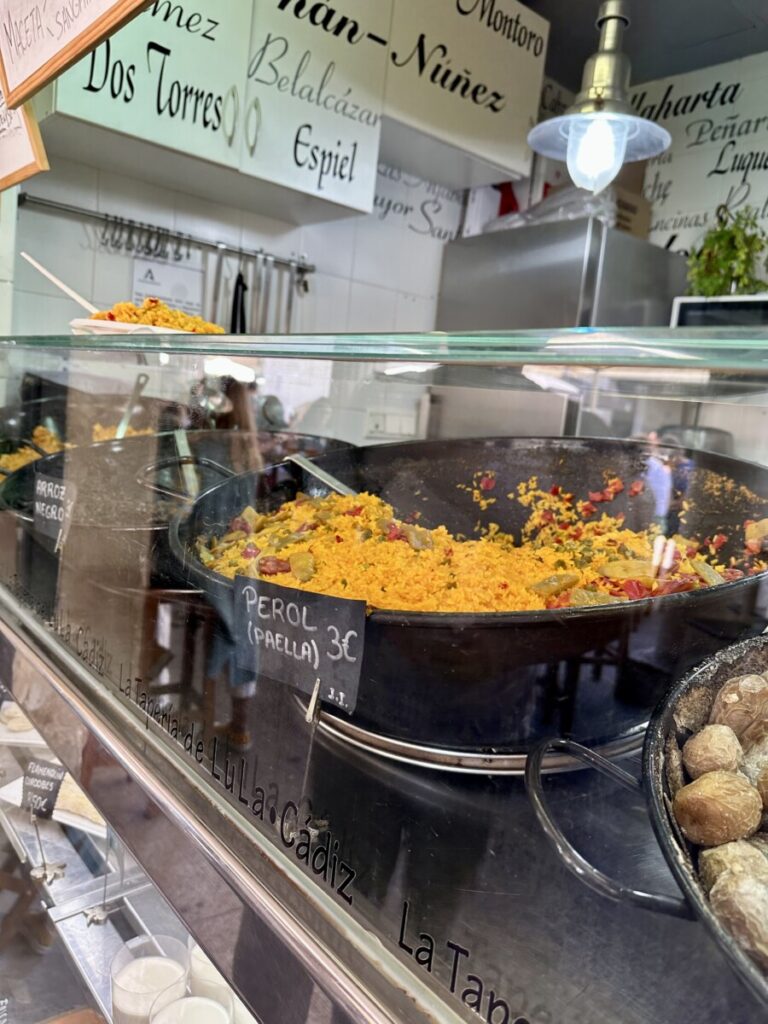
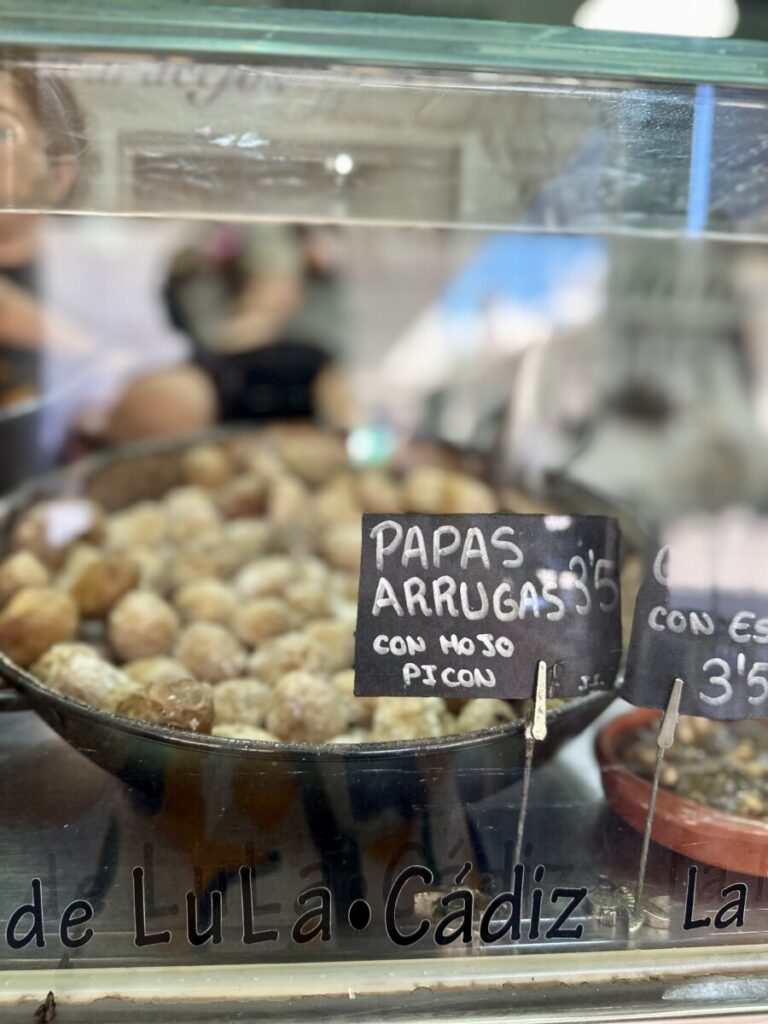
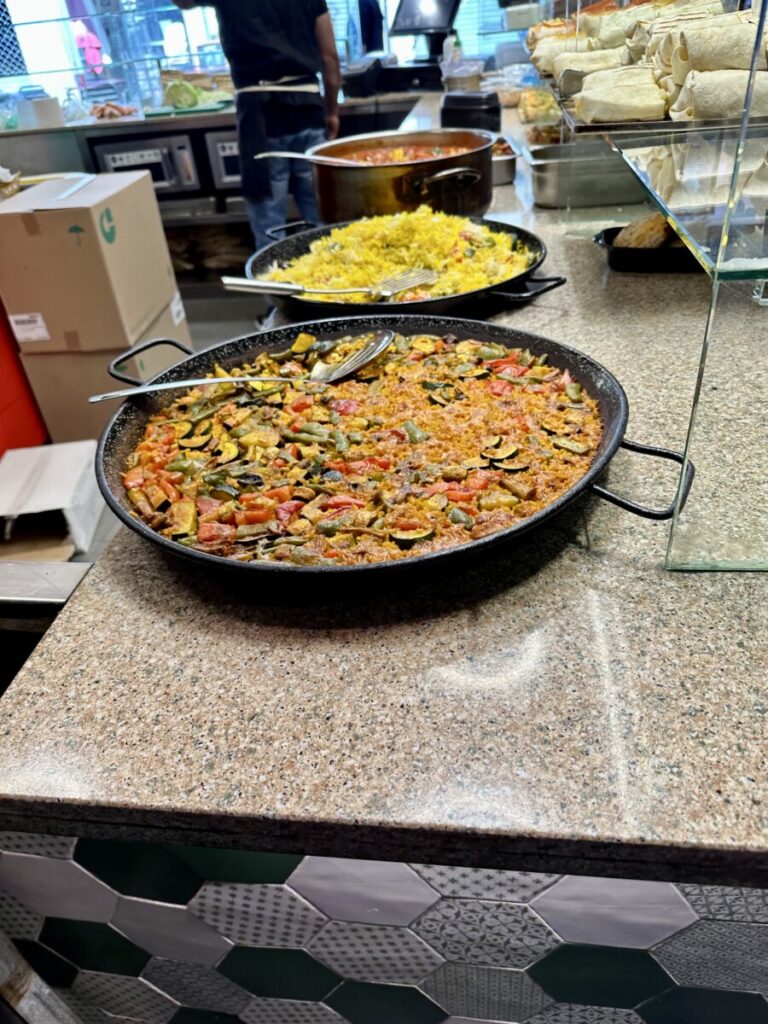
Time for lunch so I stopped in the market and got myself some paella and sangria, it was delicious. As I learned in Barcelona, I did not expect authentic paella, but this was a great rice dish and I enjoyed it. As I ate standing at the large round tables spread around the perimeter of the market, I watched the fishermen, set up outside the metal market gates, selling oysters and golden urchin pulled from the sea this morning. For a few euro you can get some shucked and cracked open with a wedge of lemon and eat them right on the spot, still cool and briny. I also saw vendors outside the market walls, small tables piled with mesh bags of caracoles – those land snails everyone is bonkers about here. Caracoles are a spring obsession here in Spain. The season runs from May to June and dates back over 30,000 years in this region. Spaniards eat them by the kilo as a tapa or snack with a glass of beer, slurping them, broth and all out of their corkscrew shells. The larger snails called Cabrillas are cooked in a tomato and garlic sauce and the smaller ones are steamed in a traditional broth of garlic, black pepper, cumin and bay leaves – sometimes curry is added. These are reluctantly on my list to try; I am on a culinary exploration and these little spiral housed mollusks are favorite here, so they are reluctantly on the list. I do not know how, nor do I feel comfortable preparing them myself, so I am on the hunt for a local spot to try them. No one I’ve asked seems to know where I can get some prepared and I get the sneaking suspicion that they don’t want tourists to sweep in on their limited stash – still on the squeamish hunt!
It was time to pack up and head to Seville, I am excited to go and I long to stay. Like Artesorro Basseria in Basque Country, I could spend a lot more time in this place. I want to dive into the history and layers of people and food here. It is an old place situated in a spot that served so many empires with ‘gourmet’ or prized foods for their times. I can see how this little place in Spain has stood the test of time and I want to know the stories in food.
I boarded the train and passed through the coastal salt flats or salina, row after row of irrigated ditches and reservoirs, some with sea water and some white with salt. Scattered throughout I saw old houses and barrack style homes. For over 3000 years this land was used to extract sea salt using solar evaporation. Flats of land next to the sea are at sea level or below, they carve big irrigation ditches leading to reservoirs. Gates allow the control of which reservoirs are flooded, once flooded the water is allowed to evaporate leaving the salt to harvest. The homes I saw were old homes for the workers and foreman when the land needed constant tending. Now sea salt is a much larger production, and these old Salinas are being revived into gastro tourism. I wish I had planned on touring them and will surely be back next year.
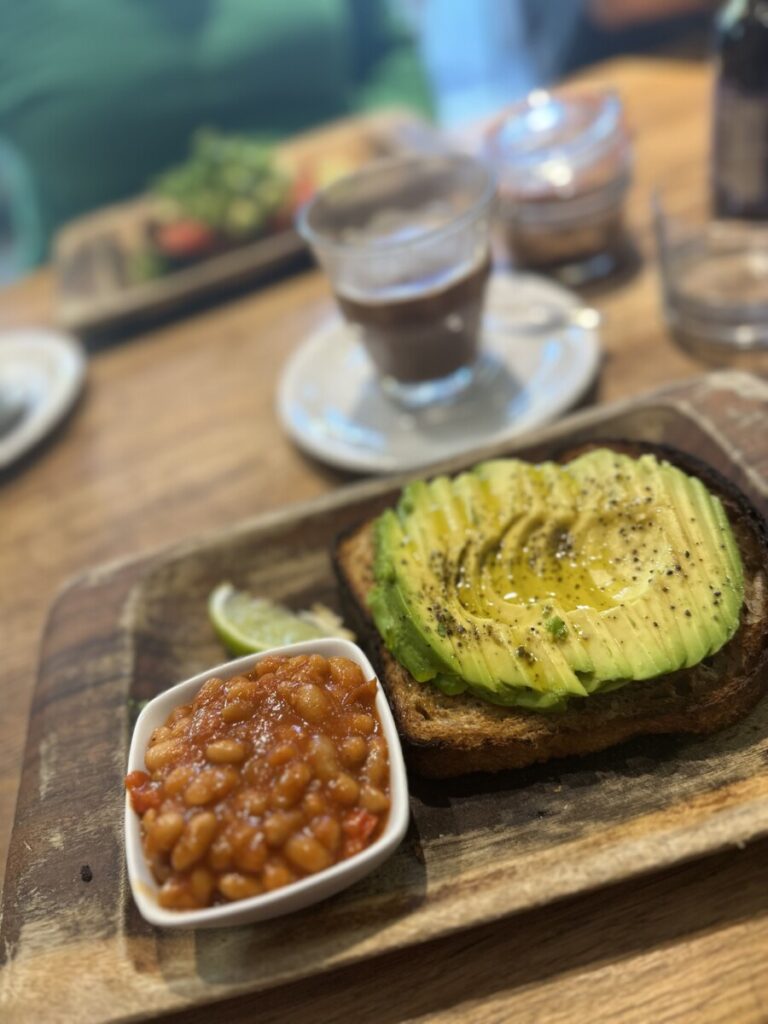
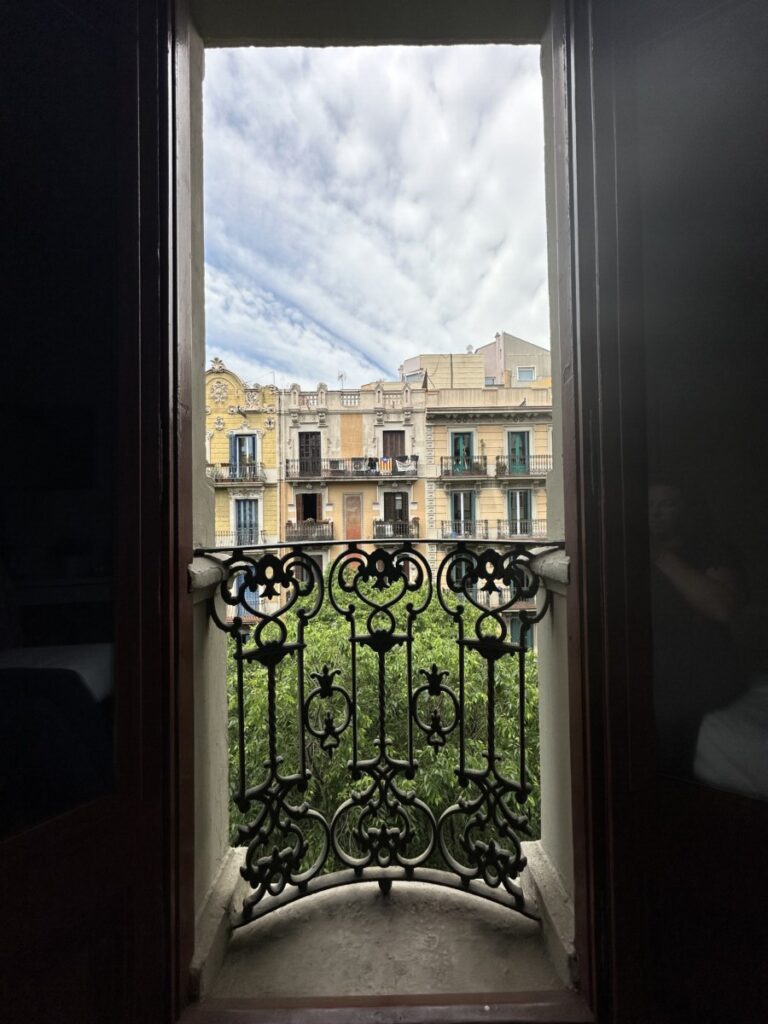
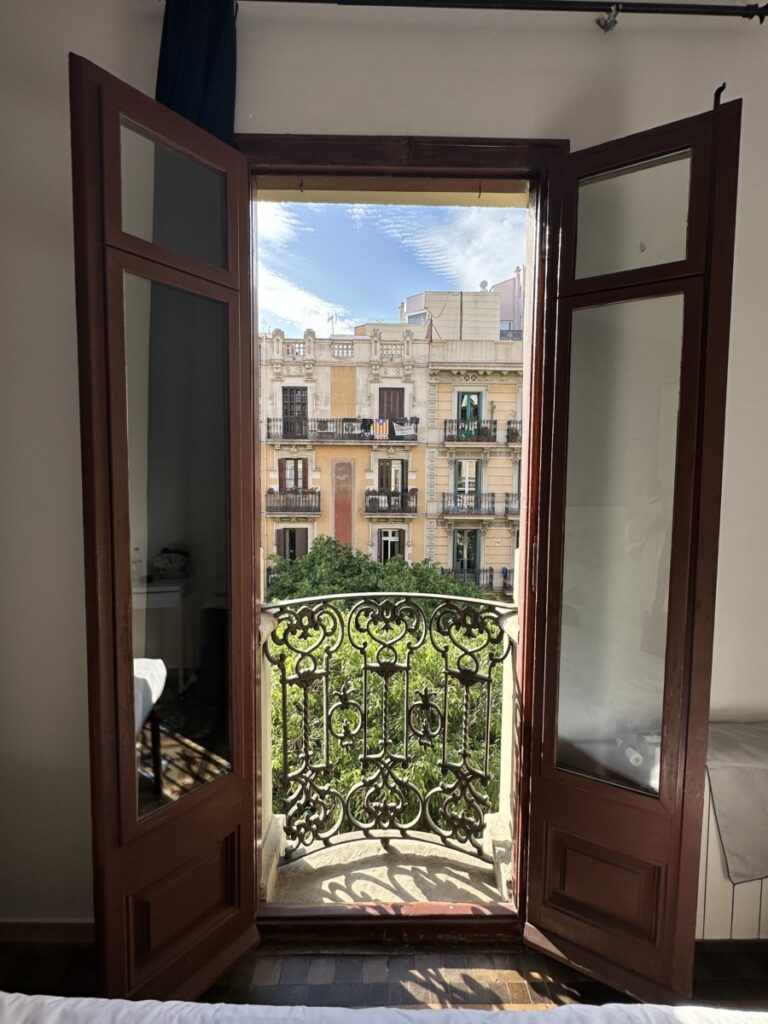
We arrived in the early morning, returned our car, hopped on the train and made our way to our Airbnb. Climbing out of the subway onto the streets of Barcelona the architecture was the spotlight – the Art Nouveau balconies and flourishes, tile and soft pastels encompassed every building. It was stunning. Our home for the next few days did not disappoint, built around 1880, it had original Spanish tile floors, high ceilings, ornate balconies and a beautiful tree lined street view and I was excited to explore more of it, but we were hungry. We found a modern plant-based restaurant around the corner, avocado toast and buckwheat pancakes with house made hazelnut chocolate spread and lates. It was a hipster style spot, organic, local and vegan which is especially difficult to find in this meat centric country, I felt like I was back in Seattle for a moment. It was delicious and a great way to begin a day of exploring. On my list for this city is the multiple open markets, salt cod – I must do it at some point – tapas and chocolate!
Vegan BreakfastOur Apartment
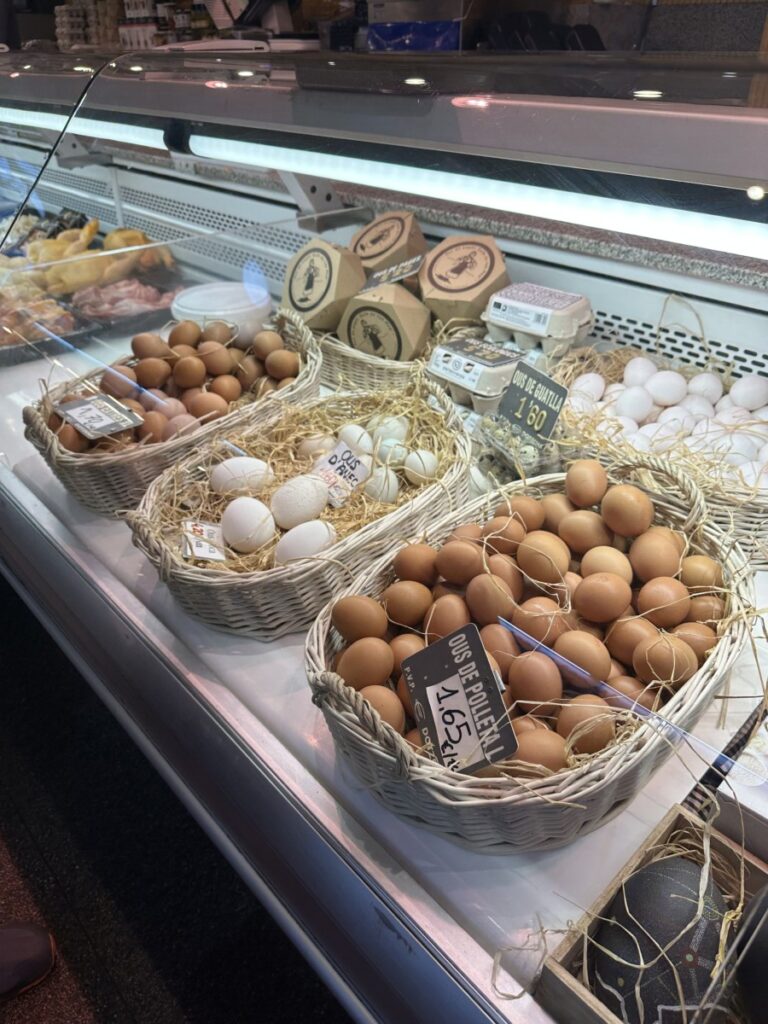
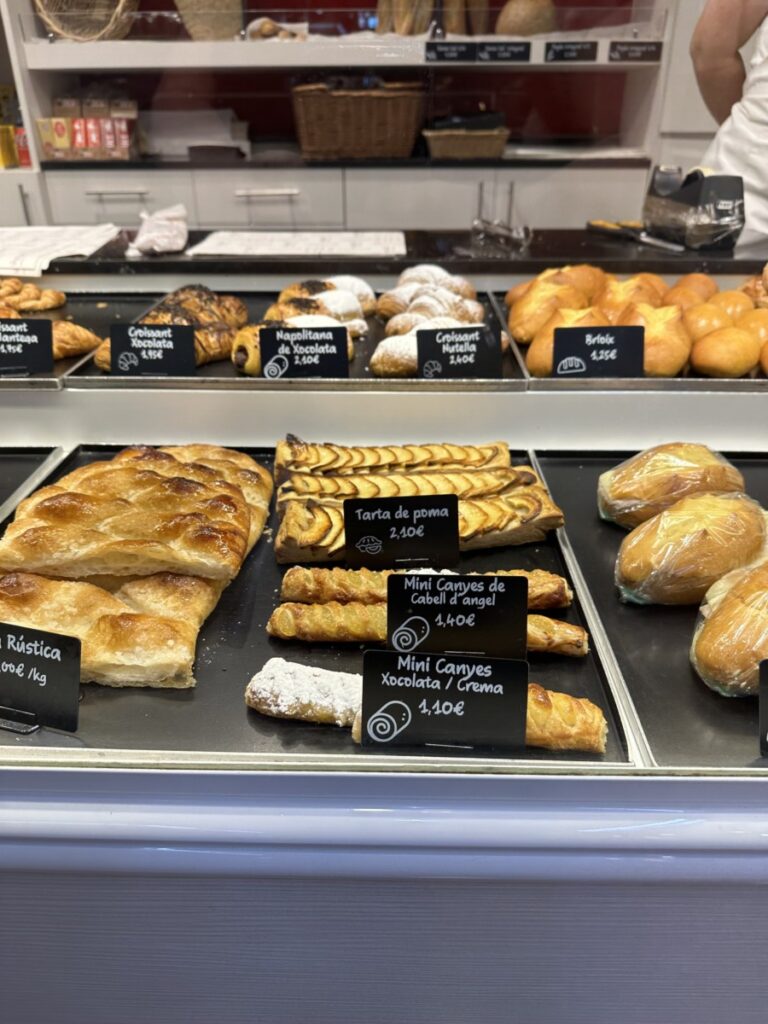
We spent the day exploring the city and happened upon a market down the street from our apartment, beautiful wrought iron gates and full of vibrant produce, spices, meats and cheeses. We grabbed some eggs and a few different types of pastries for breakfasts. I love these neighborhood markets, they are beautiful, light and a feast for the senses. This was a quick trip through the market on a neighborhood stroll and to stock up on provisions. The city has so much to offer, see and eat we kept it simple with breakfast at home and lunch and dinner out.
Ojos!Yummy Pastries
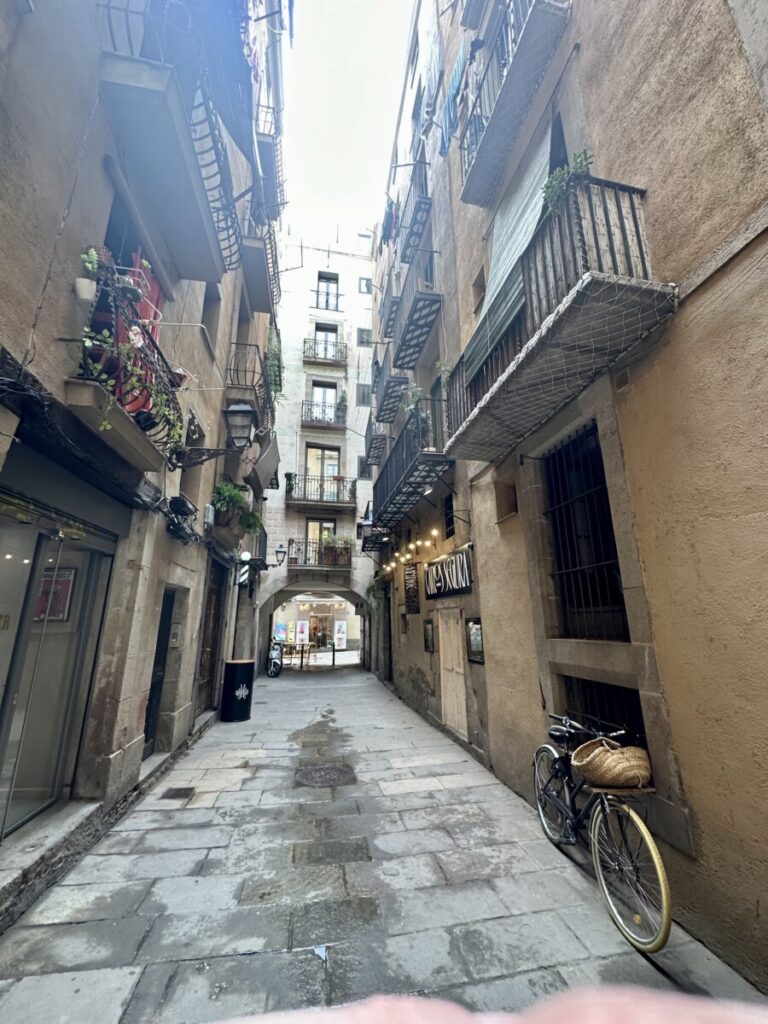
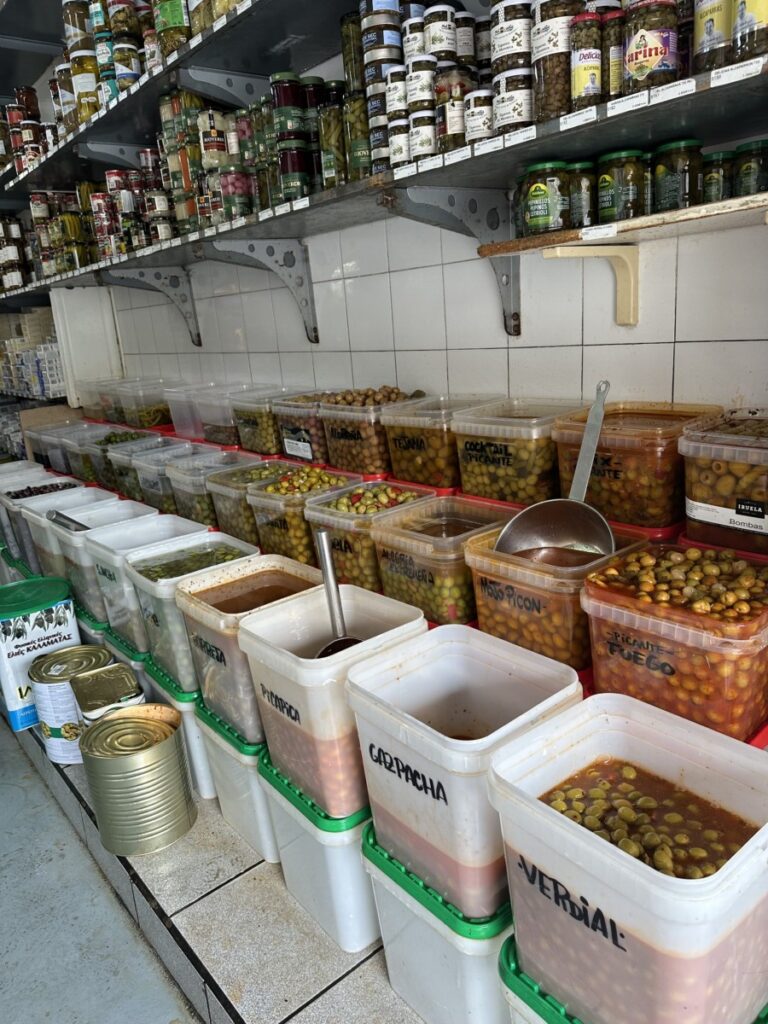
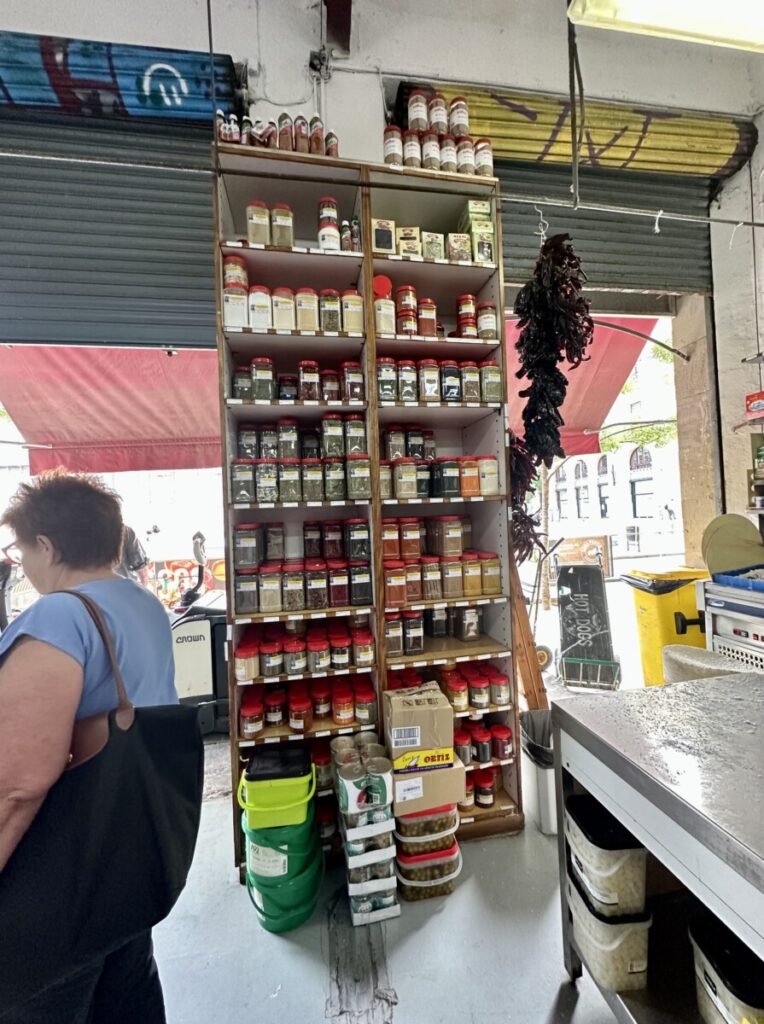
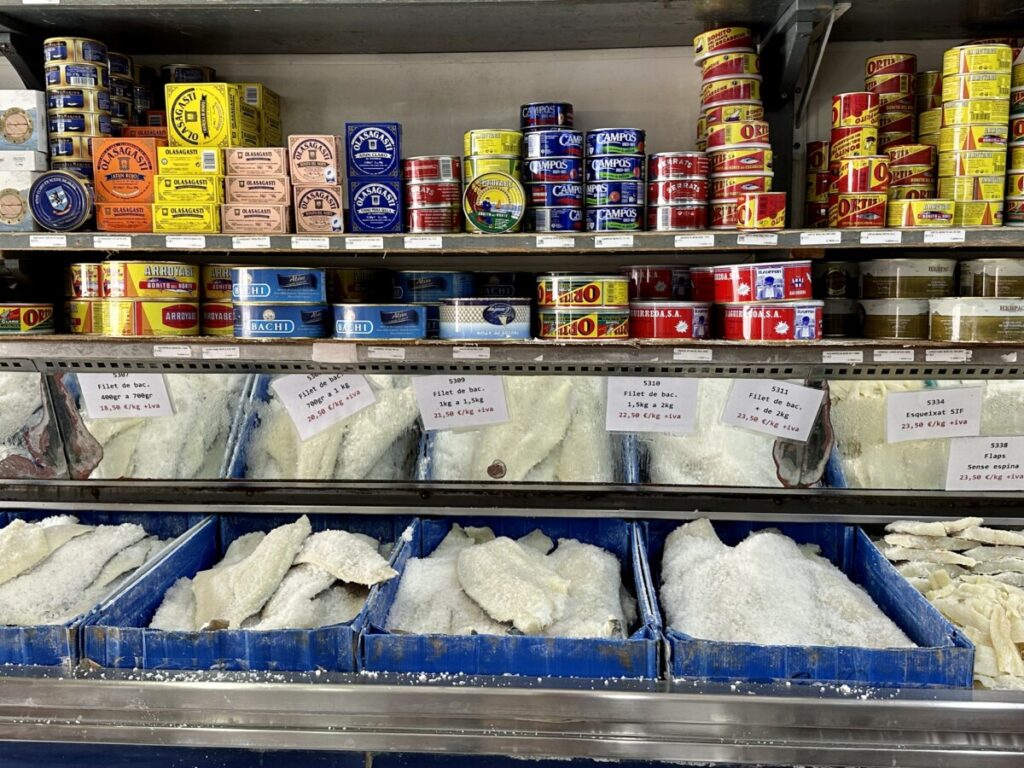
The next morning was pastries, coffee and omelets before heading out. Our first stop was the Picasso Museum getting there early we were the first in line which I highly recommend, we secured our tickets and strolled the El Raval neighborhood and into the Gothic Quarter. We stumbled upon a local market selling olives, spices, provisions, canned fish and salt cod. There were buckets of different green olives in spices and brine, piles of white salty crusted cod filets. I did not know there were so many different types. This market was devoid of pretention and display, the utilitarian placement of goods, using every inch of space it was apparent they were catering to locals and provide the various products that are used in the daily lives of people who live here. I stared at the piles of salt cod and realized at this point I have no idea what to do with it in terms of preparing it myself, I have a lot of recipes but without ever tasting it I am not sure what authentic salt cod tastes like. I decided I want to eat it prepared by someone – it intimidates me, and I decide not to buy any today.
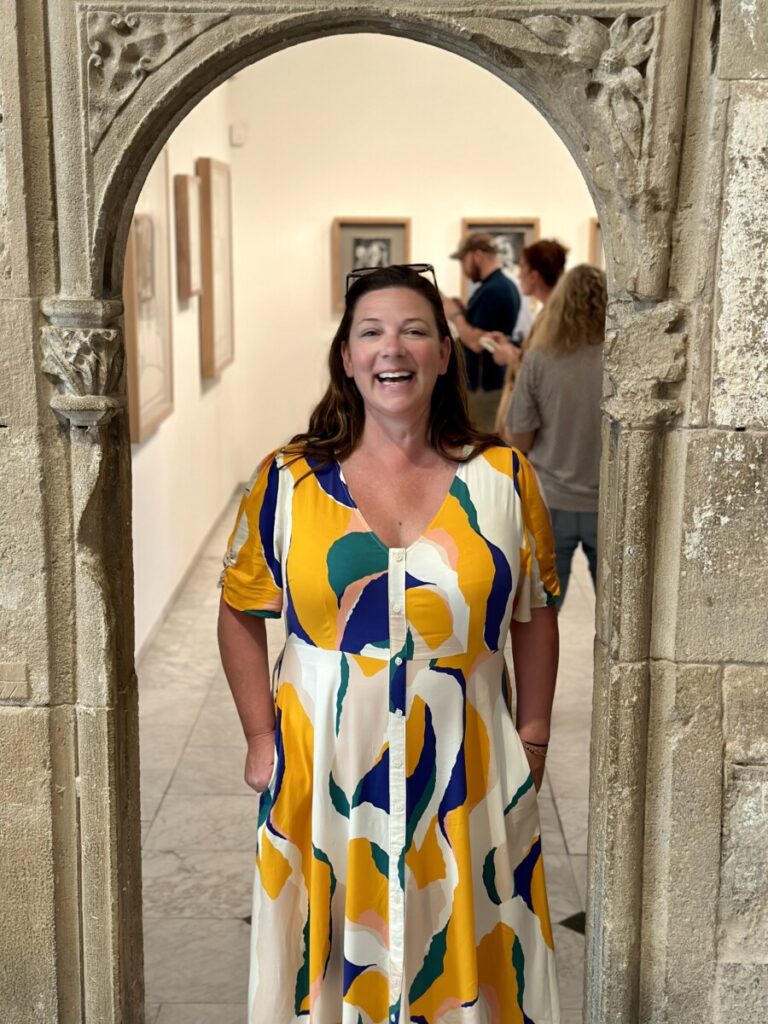
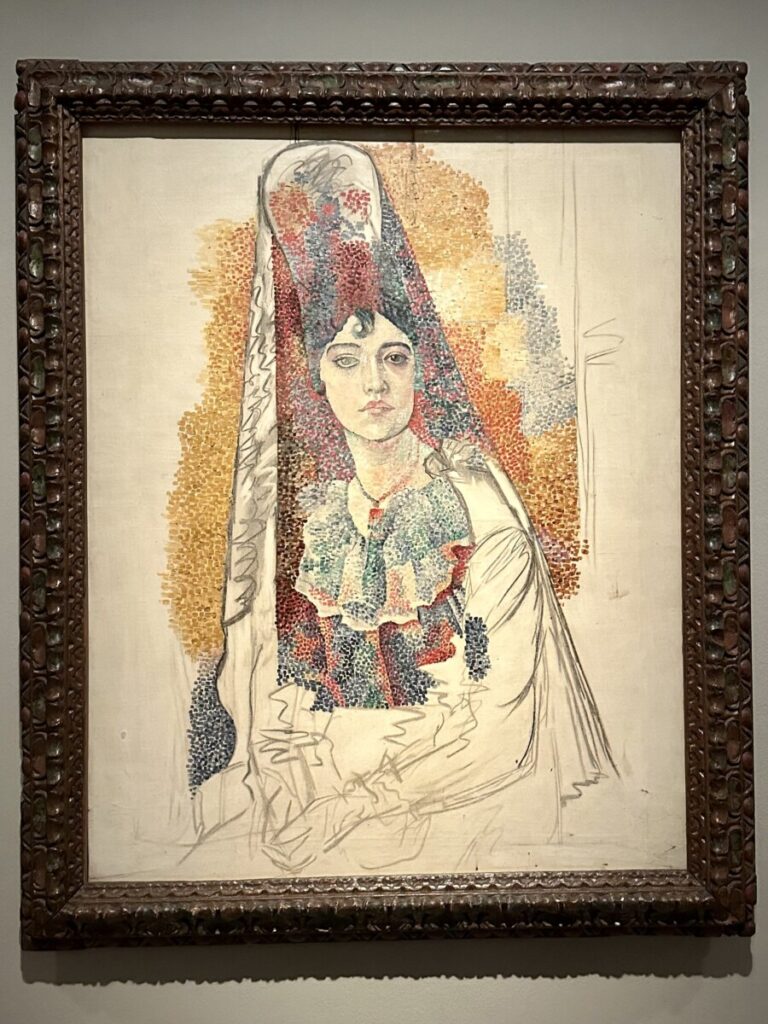
Gothic QuarterLoved the MuseumUnexpected favorite “Woman with Mantilla” Picasso
You may be wondering why all the talk about salt cod, called bacalao here it has been a staple in the Spanish diet for thousands of years. The history takes us back over to Basque Country. The Basque people were a whaling culture, sometime around the 10th century Basque fisherman came upon a field of cod as they were whaling in the north and caught as much as they could, instantly fileting and salting the huge catch to preserve it until they reached home. Since then, they have traveled north to Norway and eventually to Newfoundland on the North American coast in search of it. It was used instead of meat for lent and traveled well from preservation making it an available source of protein for many. Soon the preserved fish made its way over the mountains and reached Catalan and eventually the rest of Spain. The flesh is preserved in salt and needs to be soaked in water to remove the salinity before preparing it. It is a beloved dish and used in a myriad of everyday and celebratory recipes.
P;ovesSpicesSalt Cod and Tins
I allow myself to take in all the products and try my hand at asking some questions. Locals fill the shop, and I am nervous, but I try anyway, with my sophomore Spanish I ask about the different varieties of salt cod and quickly realize Catalan is spoken here. The Catalan language originated in the 8th or 9th century. Catalonia, the area encompassing the north in parts of France to Valencia has as many parts of Spain do, a long history of autonomy and rule. Originally and autonomous province of the the Aragon Kingdom, when Barcelona fell to the Spaniards in 1714 the language was restricted. In the 19th century it was revived through literature and again banned during Franco’s regime which ended in 1975. The language was then revived yet again and in 1979 it was accepted as the official language of Catalonia – making Catalan and Spanish official languages here. At the market they are not too interested in dealing with my broken Spanish and so I abandon my questions and move on. It is our ticket time, and we stroll back through the medieval streets and immerse ourselves in Picasso.
The museum was wonderful, a very large – over 4000 works – that Picasso donated to the city of Barcelona over many years. By the time we were done we were hungry. A bus across town, a quick bite, pizza and a walk up a steep hill, we were at Park Güell – today is a tourist day and I am not upset about it. First a note about pizza, there is a lot of it in Spain, it feels like there is more pizza than paella. The more I travel the more I notice that pizza, the magical combination of bread, cheese and tomato is a worldwide winner. It is everywhere you go; I did not spend much time researching it, that will be included in next year’s travels, and it is something to note that pizza has become a favorite in so many places around the world.
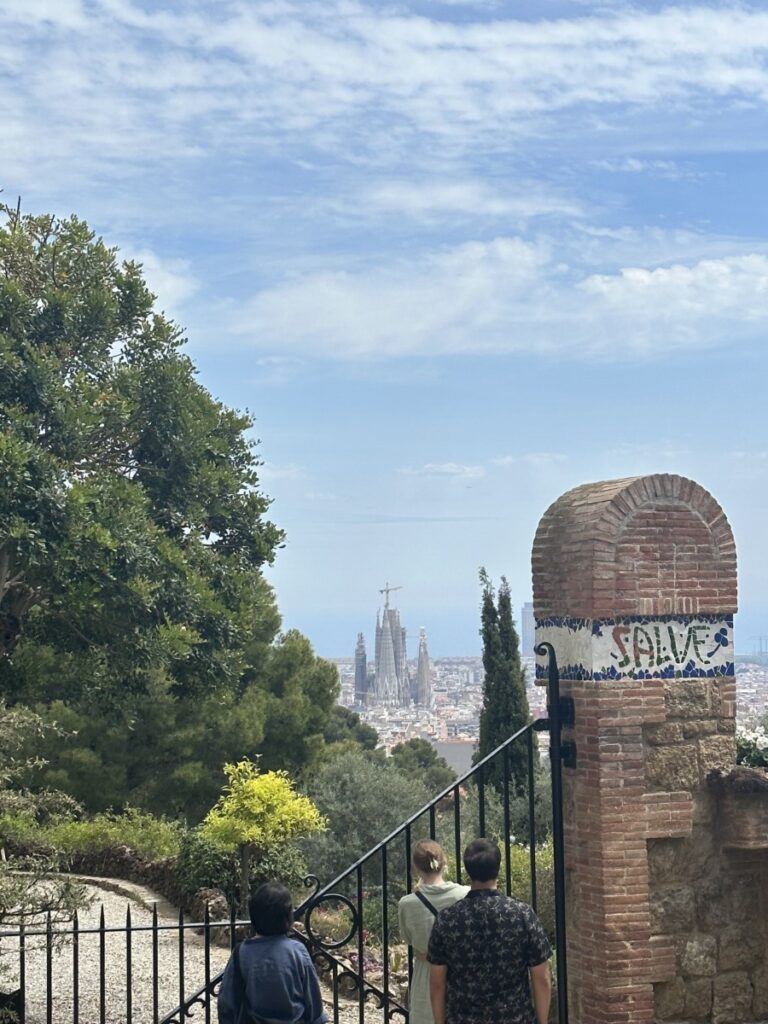
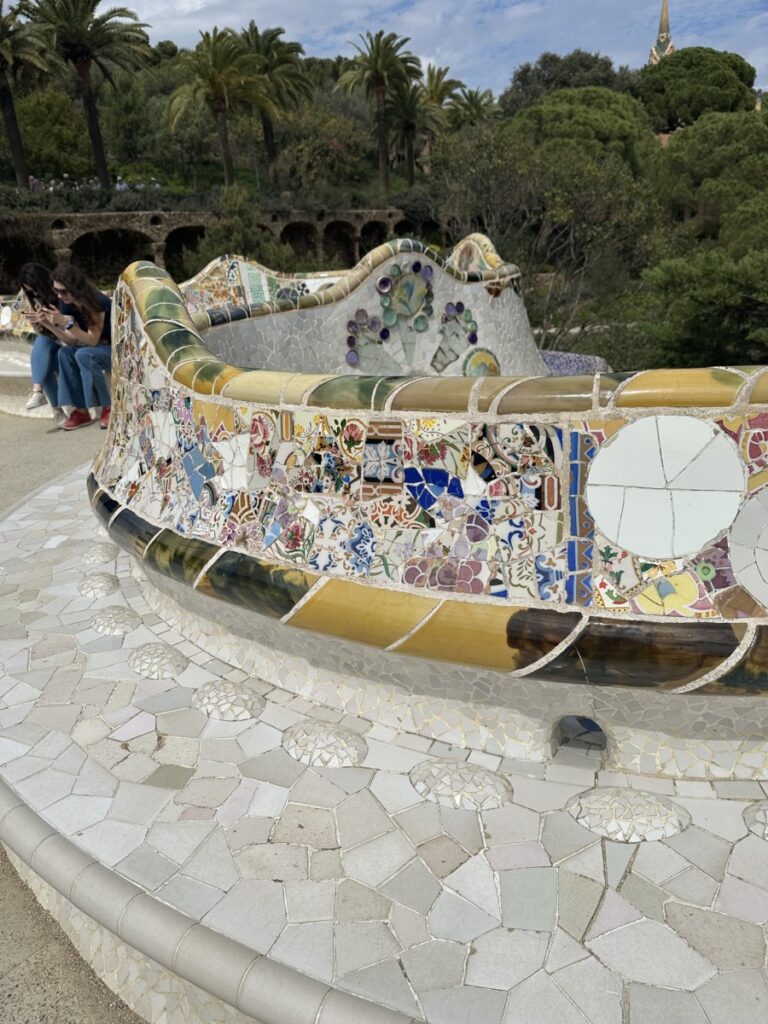
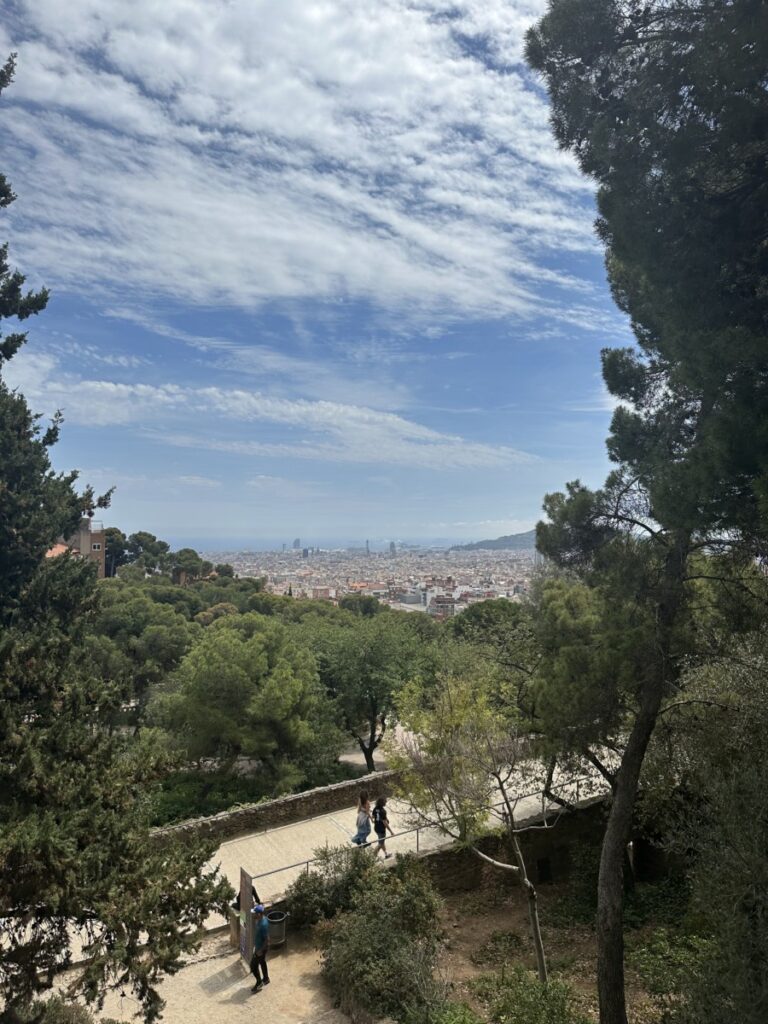
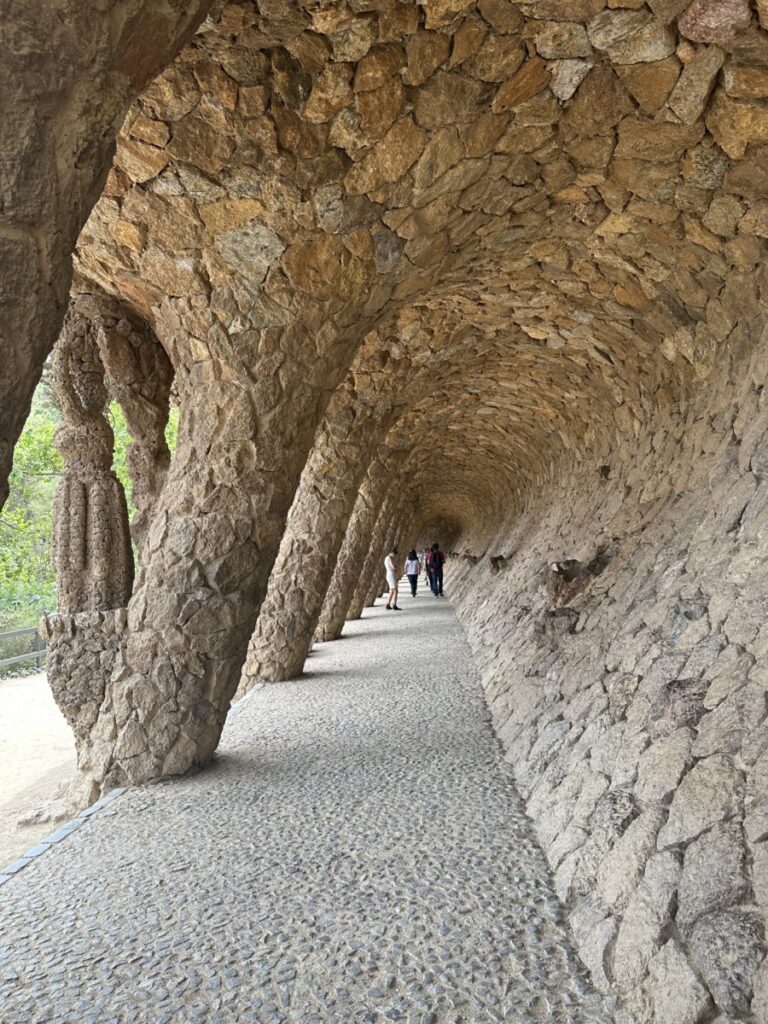
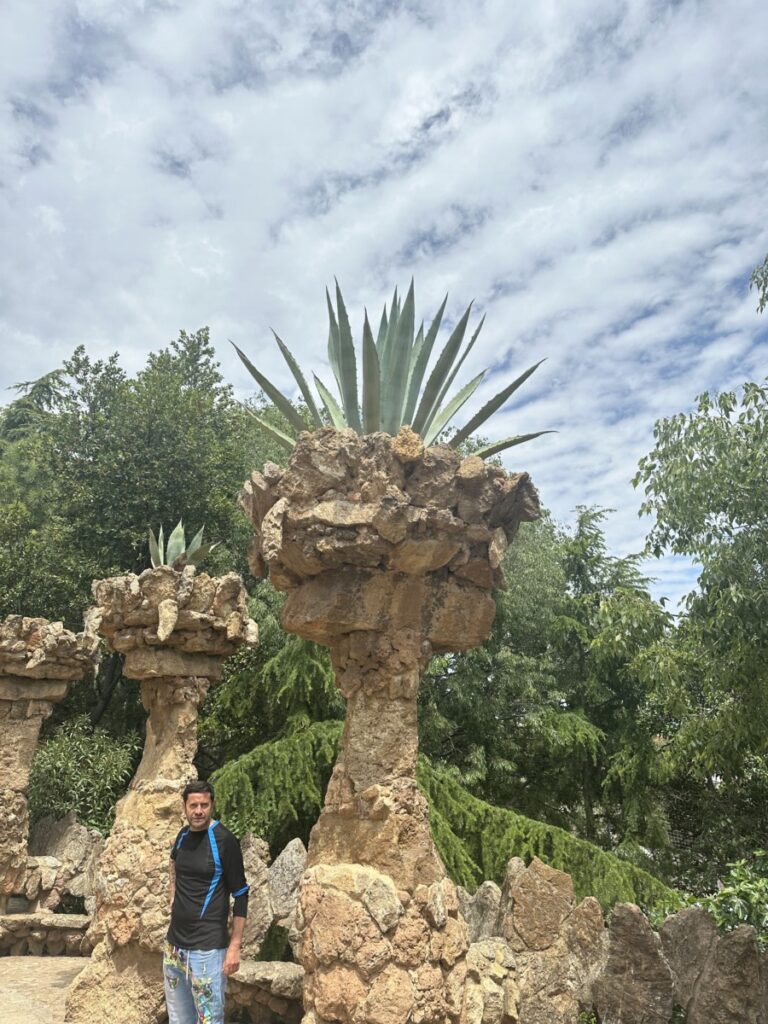
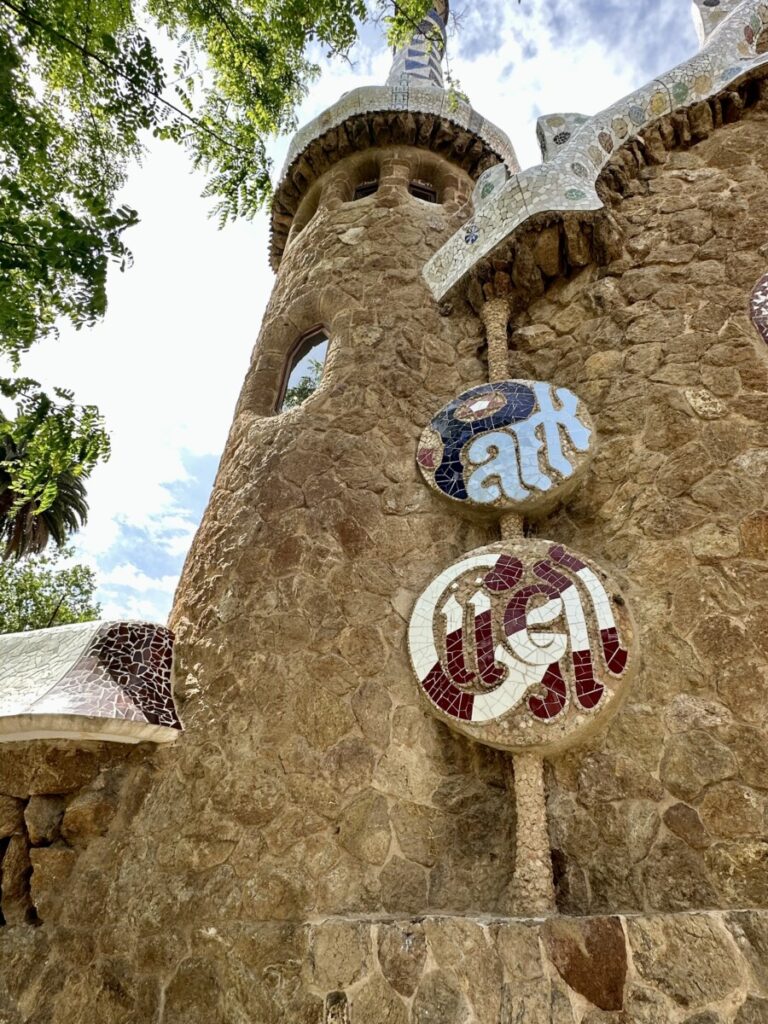
Park Güell is stunning. The architect Antoni Gaudi working with his mentor Joan Martorell began building in 1900 during the Modernisme Movement – “. . .the expression of a desire for the modernization and cultural resurgence of Catalonia”. With the influence of Art Nouveau and Its expression derived from nature they built a whimsical otherworldly structure in the heart of the neighborhood. Pillars and tiled animals, plays on light and form it is a joy to discover. After roaming the wonderfully odd, quirky and whimsical design and interpretation of nature, I can see Gaudi’s influence throughout Barcelona and the large mid 19th century growth of the city.
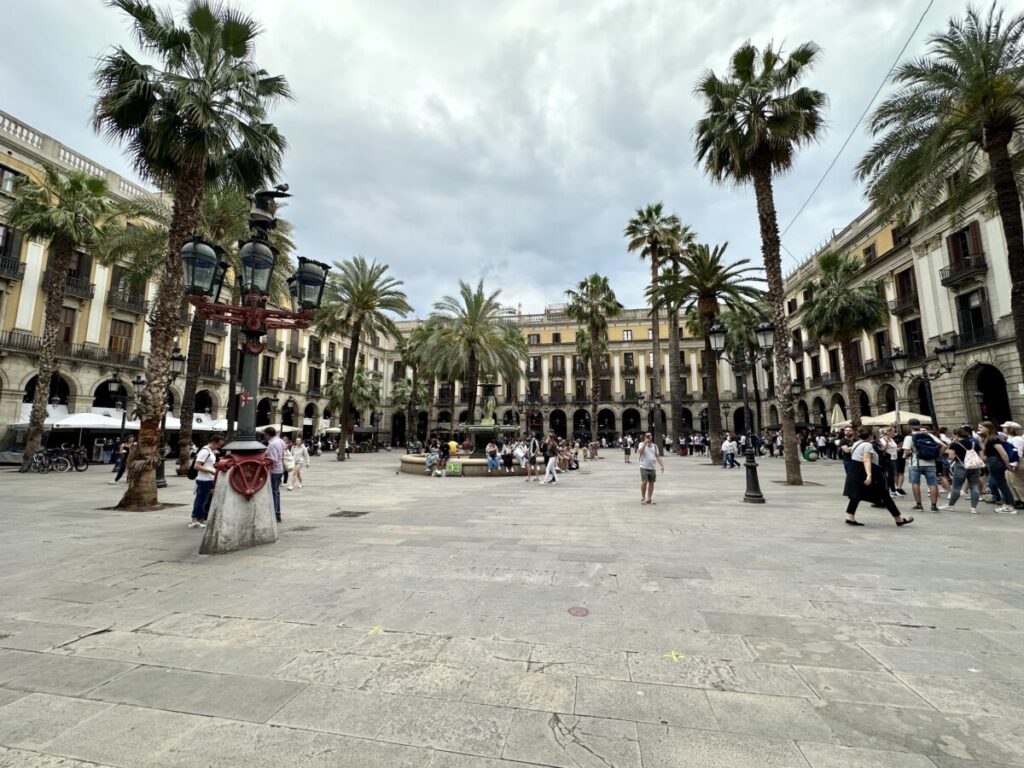
Again, we were hungry and we made our way to Las Ramblas, a beautiful 19th century promenade in the city lined with tourist restaurants, souvenir shops and people everywhere. We decided to wander off the main promenade to see if we could find something a little more authentic. We found a little restaurant in a quaint palm tree lined plaza, with a local band playing music and chose the spot for dinner. Time for paella. So far, I really thought of paella, that lovely rice dish prepared with a myriad of ingredients beautifully displayed over a bed of seasoned rice that is cooked until a chewy crispy crust is developed on the bottom, as something you can get everywhere in Spain, and in a way you can. But is it really paella or just a quick form of the dish? Having prepared paella before, over a fire, with a group of friends drinking, talking and socializing while the dish bubbles away late into the night before you dive into I, it is inherently a social dish, not easily replicated in a restaurant setting. I wondered how they would be able to pull it off. I was hesitant to order it, so many restaurants we’ve passed with that sign out front; pictures of the many types of paella they serve – it was the same billboard at every restaurant, same pictures, same offerings, I was suspicious.
And not seeing the ubiquitous sign on the patio like a tourist trap beacon, I decided to try it here. It was a delicious rice dish; chicken, shrimp, well cooked rice, nicely seasoned – but no socarrat the swoon worthy crispy caramelized crust that forms on the bottom that is as quintessential to paella as rice is. Paella is historically a communal meal, cooked on Sunday with friends and family. People gather, traditionally over an open fire, and cook the dish with sofrito, rice, aromatic broth and what you have on hand, vegetables, meats and seafoods. Paella has been referenced as early as the 17th century, beginning as most of the best dishes do, with peasants. Laborers in the rice fields in Valencia would cook what they had on hand in a big, flat-bottomed pan which is where Paella got its name. Sofrito sizzles in olive oil, rice is added gathering a good sheen from the onions and olive oil. Aromatic broth, saffron, vegetables and meats decorate the top layer and it bubble away. The best part in my opinion is the socarrat that forms when the rice caramelizes on the bottom creating a crunchy chewy heaven that can’t be beat. Thought this was not the place for Paella it was a great rice dish. I wondered about Paella throughout the days here as I passed by that same paella billboard over and over again – when did it become this? After Franco lost power Spain as I have pointed out before had a reawakening of sorts by returning to local traditional foods, when that movement was mixed with increased tourism some dishes took the hit – Paella was one of them. An article in the Guardian summed up what I was experiencing perfectly:
“Suddenly paella wasn’t a dish made on Sundays in homes around Valencia, but a National icon, something that anyone traveling to Spain expected to find everywhere they turned. You know how the story goes: the dish was diluted, misinterpreted, bastardized and butchered.”
I am one of the guilty ones thinking I could find Paella everywhere I turned, I was sorely mistaken. Luckily there is a group of concerned Spaniards and Chefs that created an organization called Wikipaella. The saw a need to define and preserve this dish, in their words:
“To stand by idly while millions eat lack luster paellas is to miss an opportunity to spread a true piece of their culture to the rest of the world”.
Thankful to know the delicious dish is being officially preserved, our bellies full, legs sore and heart full of beauty we strolled home and slept deeply with the sounds of Barcelonians and the tradition of sobremesa; that magical time after a meal when you linger and enjoy the company of others, glasses clinking, laughter and music.
Morning View from our Apartment
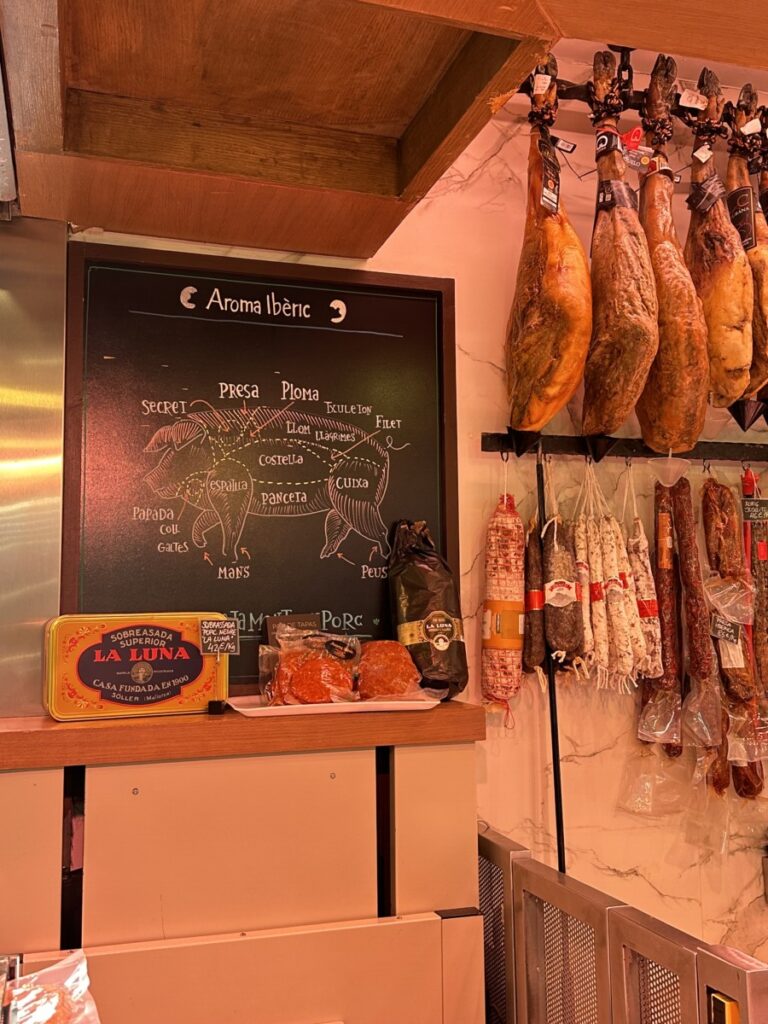
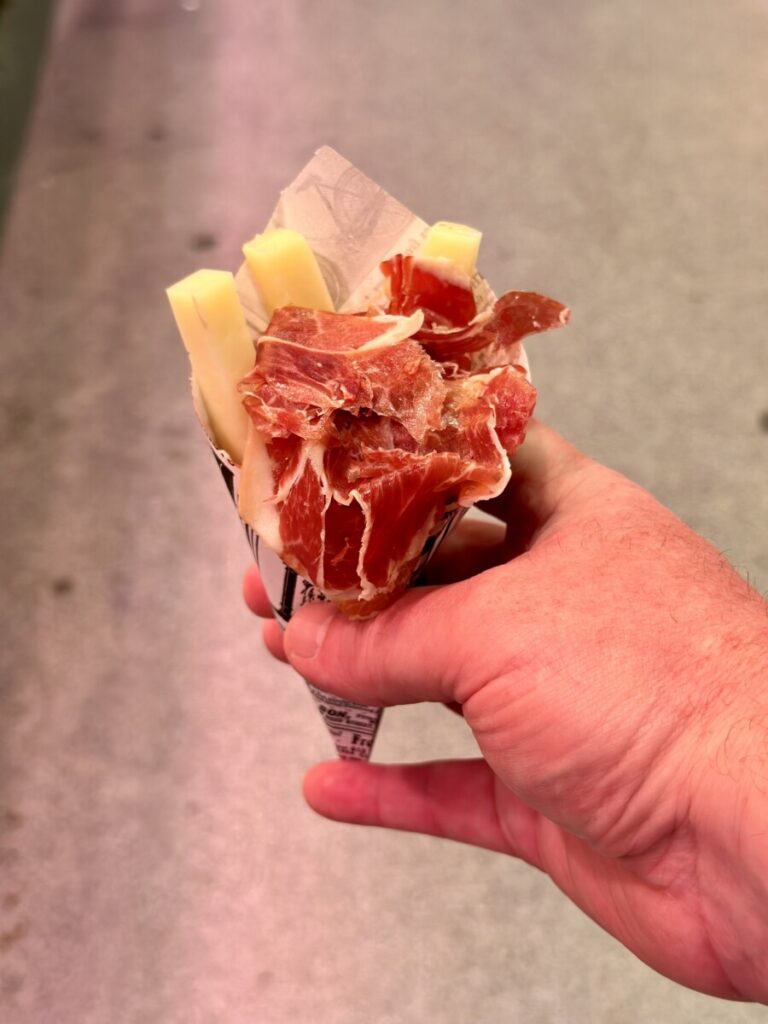
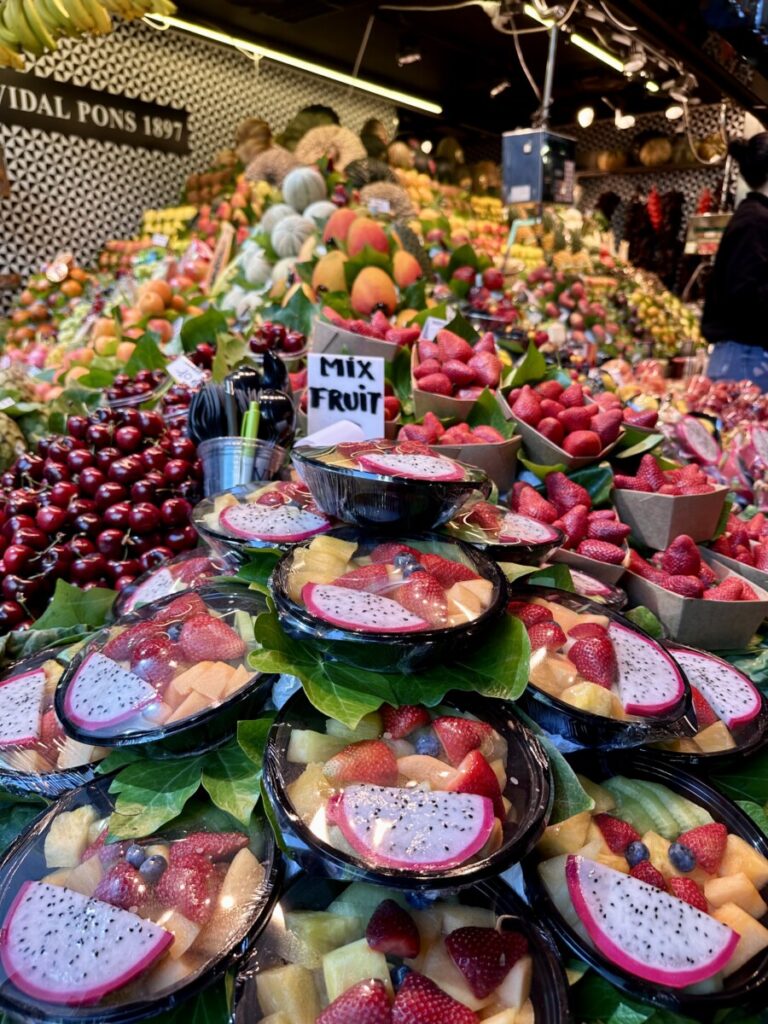
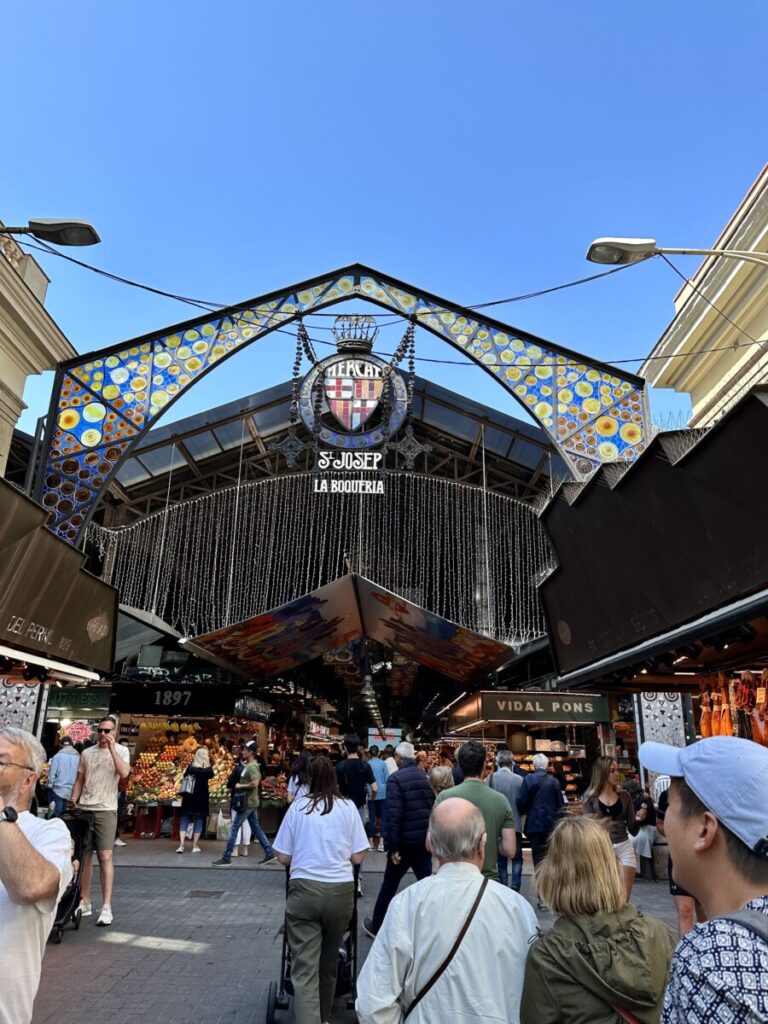
Waking to a bustling street below the treetops, the sounds of a city starting the day, we finished the pastries and omelets and fortified ourselves with coffee. I was excited for another day of wandering, and we headed back to Las Ramblas to the Mercat de Sant Josep de la Boqueria. The large 1840 ornate steel frame of the market towers over you as you enter a sea of people, and color. Fruit, fruit juices, jelly candies and tapas bars greet you at the entrance. As you wind through the stalls and people you see meats, the famous Iberico ham legs hanging from stalls the color of their tag telling you of its journey, and cone cups of fresh shaved pork with cheese ready to munch on as you peruse the goods.
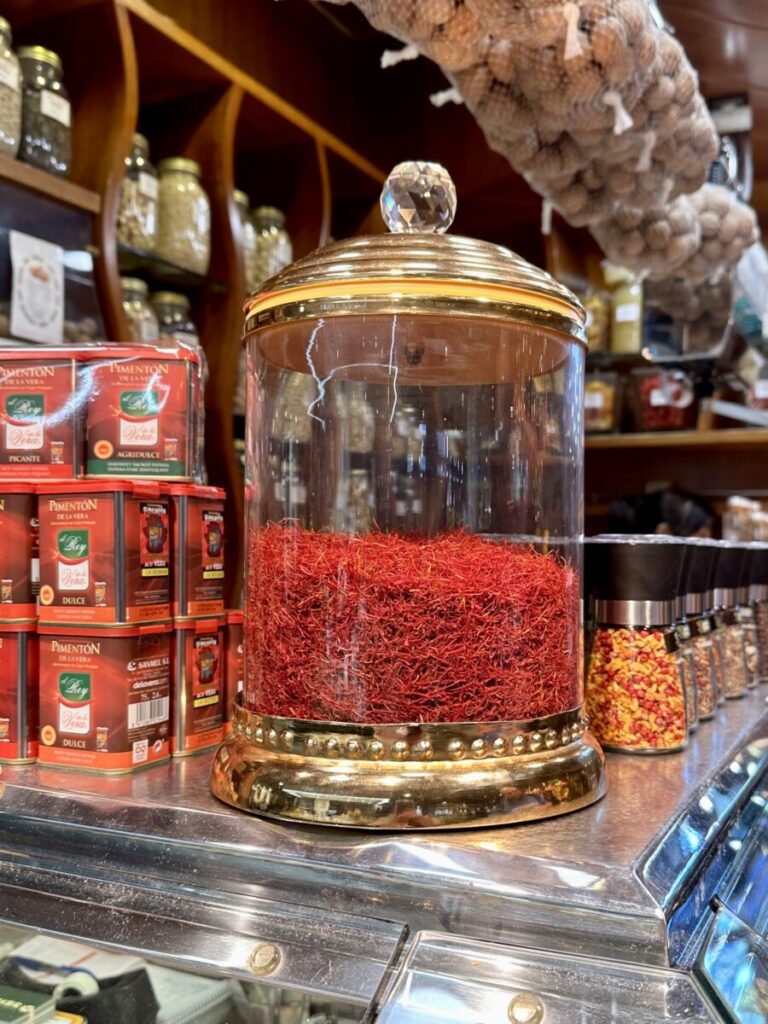
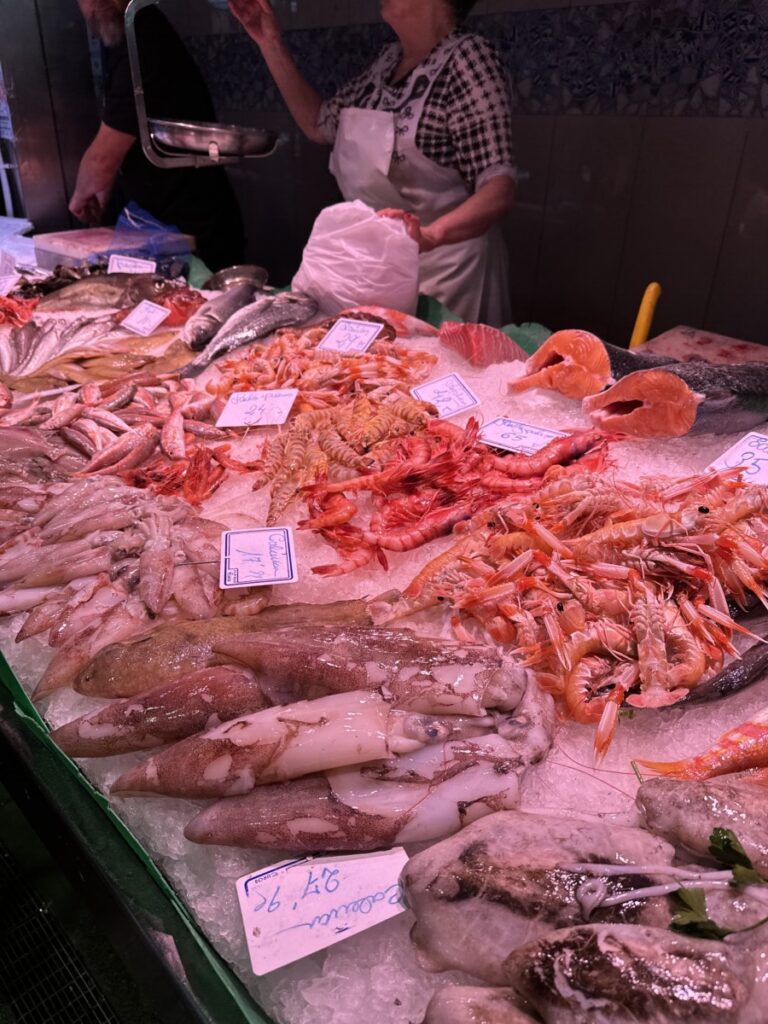
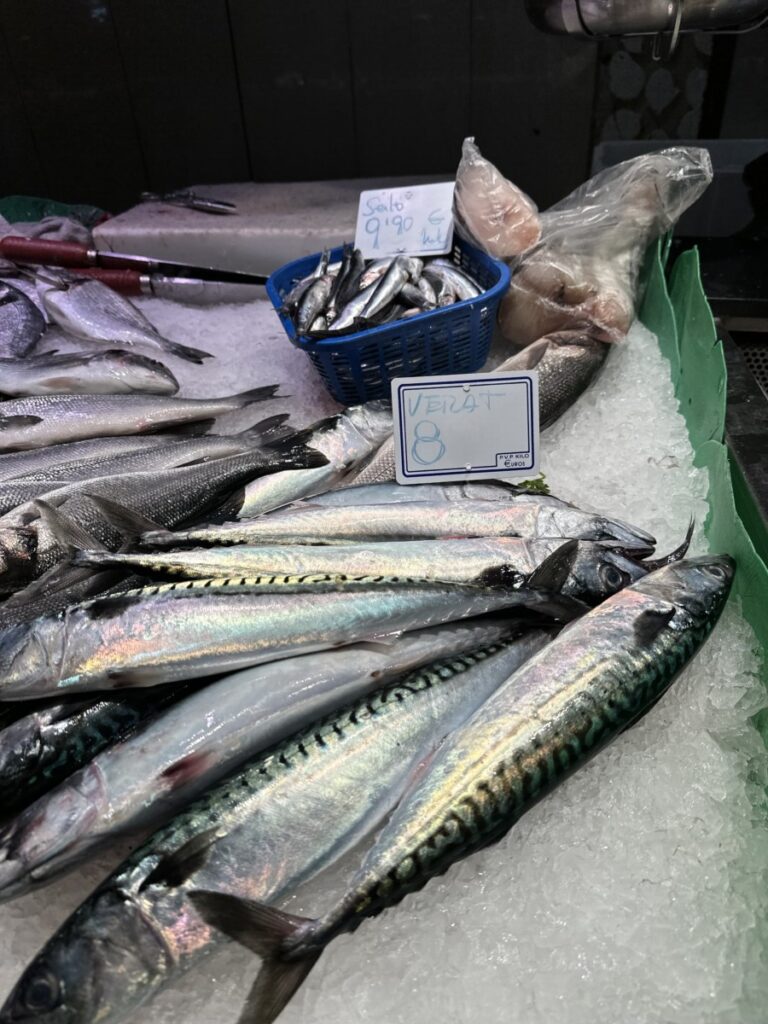
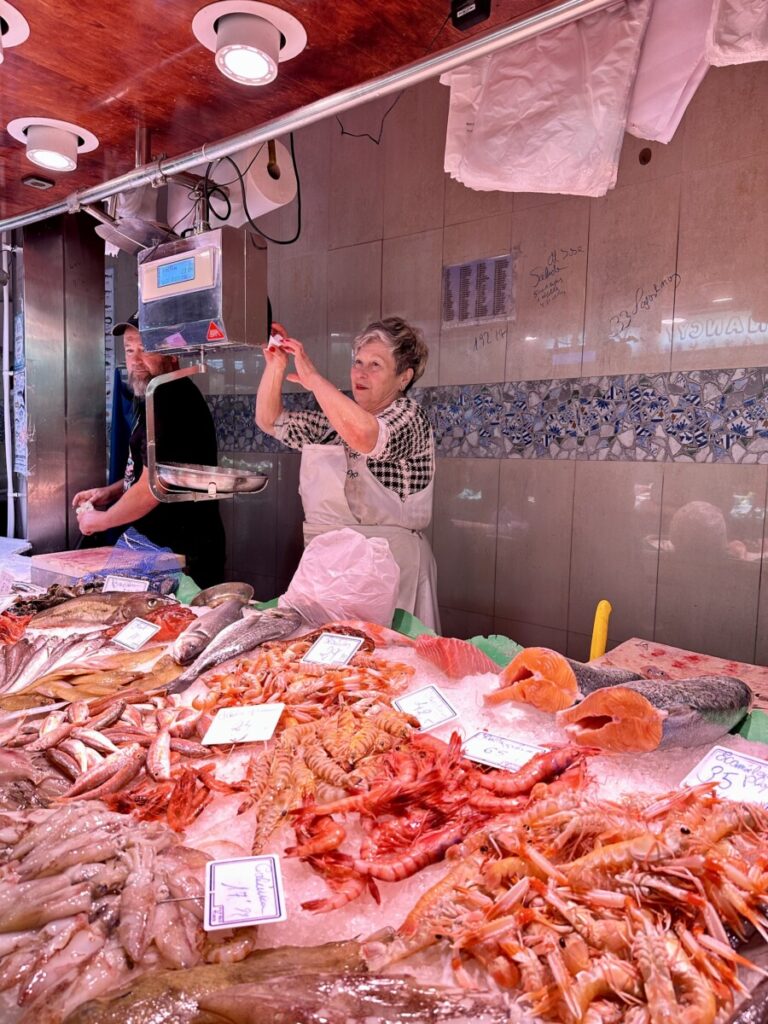
Spice stalls boasting huge containers of saffron and paprika. The seafood stalls are fresh – they really smell like the sea, and you can get big cones filled with all types of fish caught that morning. I wanted to look at everything, I wanted to buy everything and take it home and cook for a week!
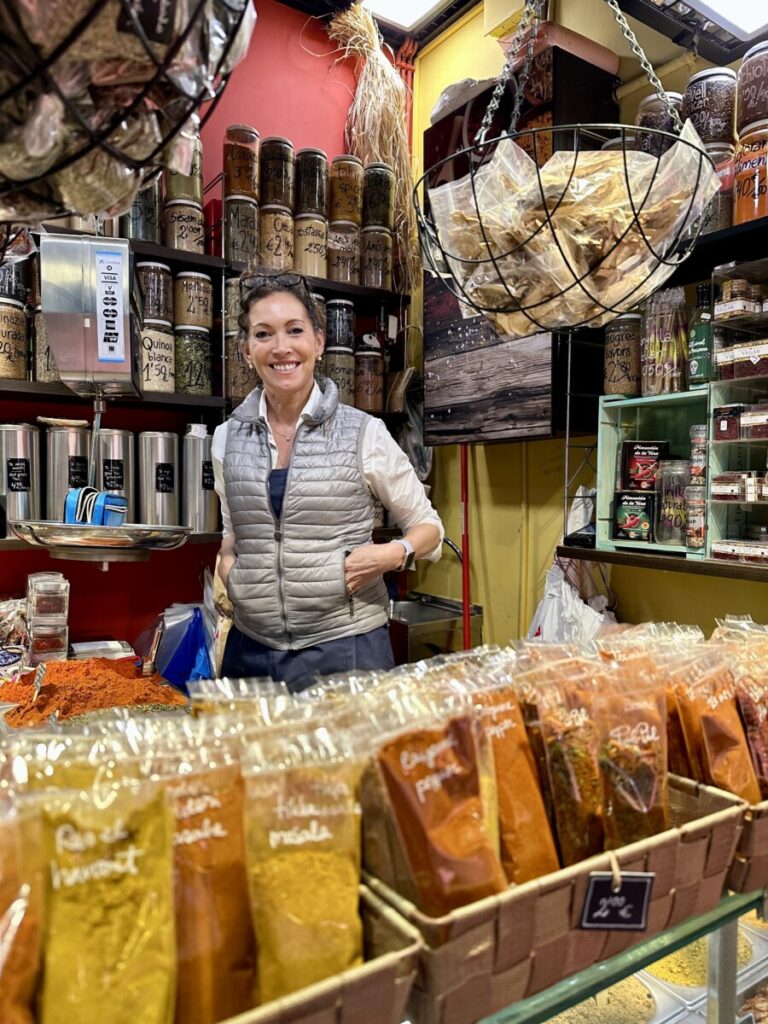
I talked with a few folks, and I bought some very good, very fresh spices from a lovely woman in a small stall tucked in the back of the market. With fresh inspiration from Claudia Roden, I set aside my nerves about the language obstacle, and I asked her what she cooks at home? She said she loves to grill, fresh seafood and meat. She made up two spice mixes for me that she said she uses for almost everything, a piri piri – with spicy pepper, paprika, oregano and other herbs I didn’t quite catch. And a ‘BBQ’ which she quickly explained is not like American BBQ but is a spicy, smoky paprika salt. She coats all kinds of fish or meat, whatever is fresh, with these mixtures, olive oil and lemon and grills them – la plancha. It was fun talking with her and though we were both a bit shy it worked! I had my first experience asking and receiving an answer to the question I would like to explore with everyone. It was busy and she had other customers, so it was a relatively short interaction – I wanted to continue to talk with her and ask more about how she came about selling spices and making her spice mixes. Did she buy from a wholesaler or small farms? She had a lot of whole herbs hanging and drying in her stall, did she process these herself? I have since coveted these herbs I bought from her – they are fresh and delicious; I wish I had bought more.
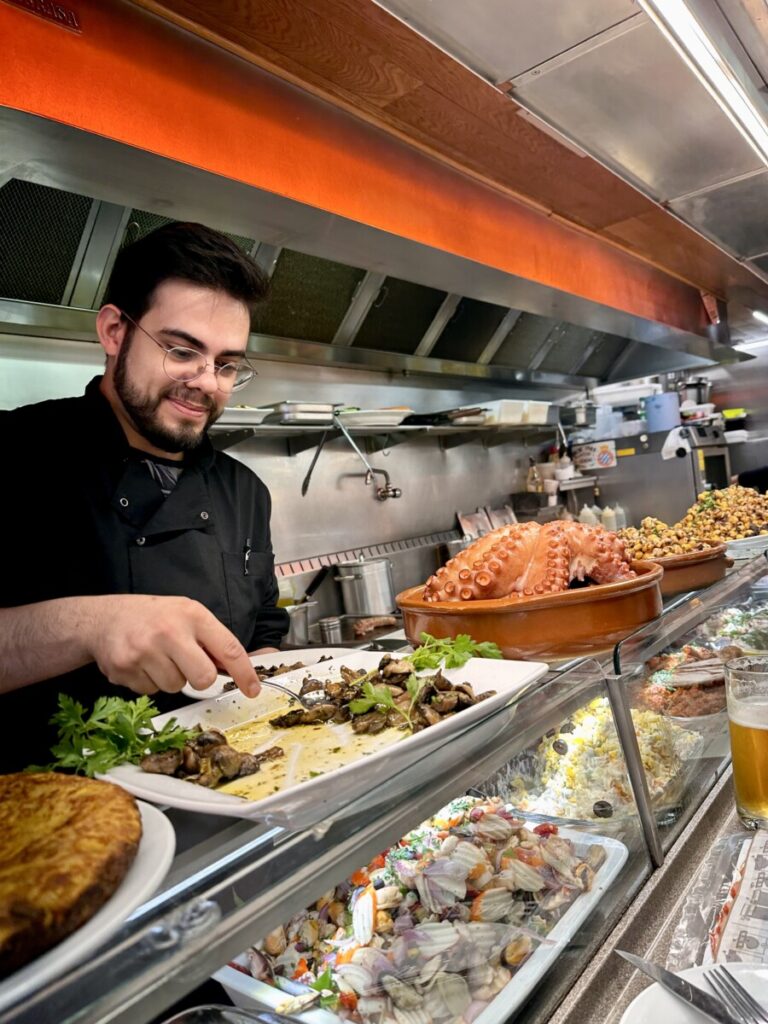
This market is also known for its tapas stalls, we found one and settled up to the bar, cases of all sorts of salads, croquets, seafood piled high on the counter. Chefs, bustling behind the counter frying croquets, sizzling peppers and shrimp. I was hungry. We began with chickpeas with blood sausage and pine nuts, croquettes with ham and shrimp, charcuterie with chorizo ham and cheese, pan con tomate (toasts with tomato sauce and olive oil), mushrooms or chimpagones in herbs and olive oil, crispy patatas bravas and grilled shrimp fresh from the market. Paired with a glass of Cava (or two) not only our bellies were stuffed, but our hearts were too.
We spent hours meandering the stalls, doing my best to talk with people while navigating another language. It was a feast for the senses. I wonder how many locals use this as their daily market. I noticed, especially the seafood stalls in the back- the ones that weren’t decked out in decoration or social media photo spots were people buying seafood and talking with the fishmongers as if they are regulars. I am interested in how often Barcelonans shop at markets daily vs the grocery store. I feel like in my readings it seems to have been the norm for people of Spain to shop every day at a market with local, fresh ingredients. How is this culture changing today? These are questions I explore and add to my list of research as I watch the hustle and bustle of the market.
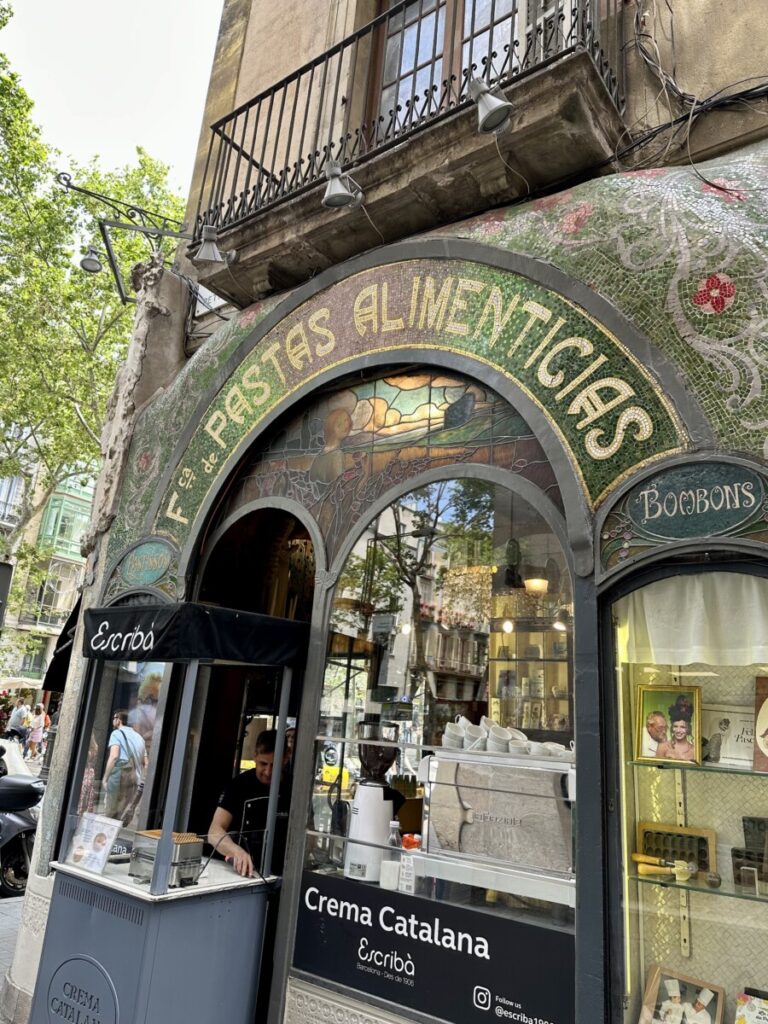
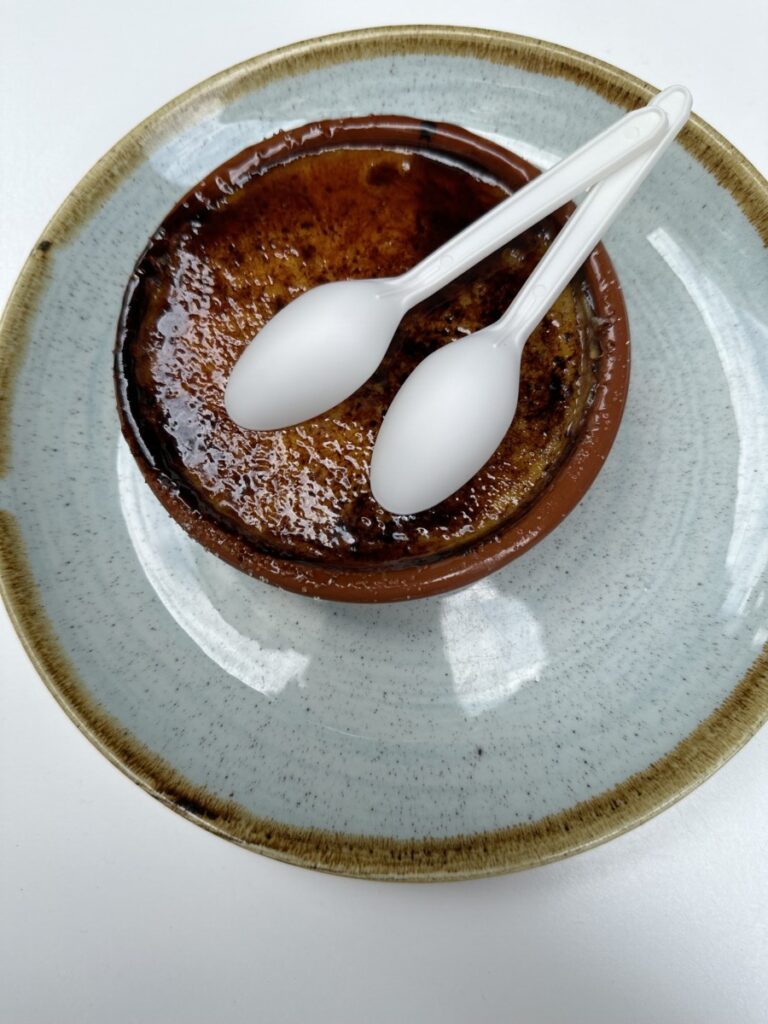
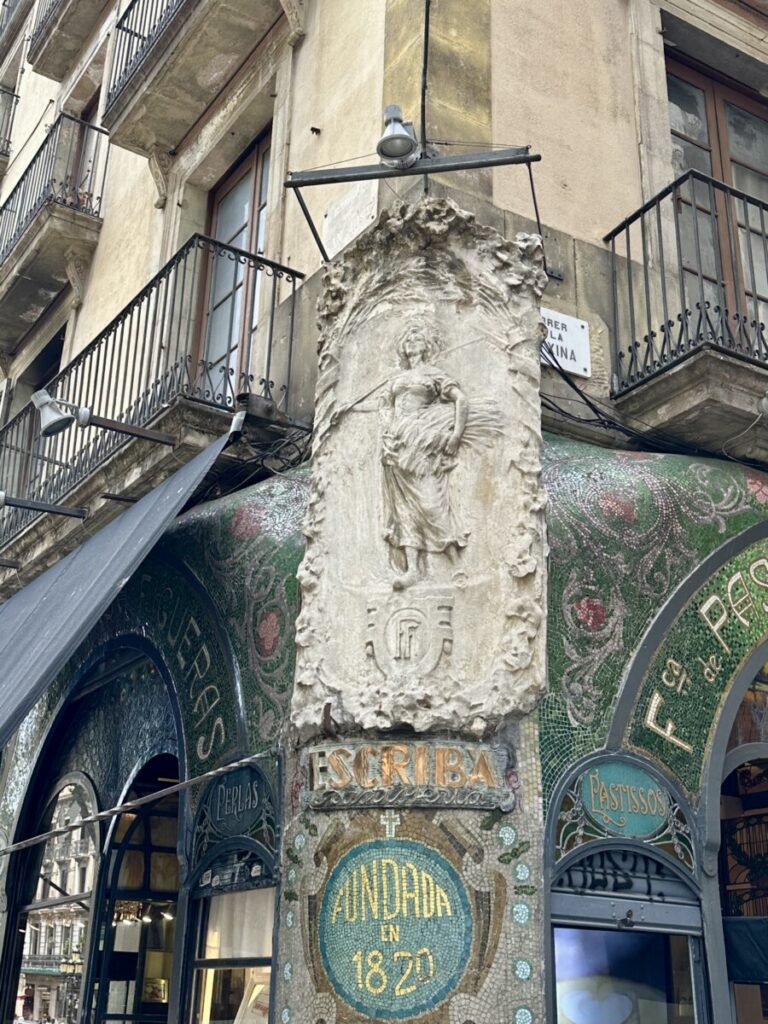
We walked off our tapas strolling the length of Las Ramblas and stumbled across a beautiful shop that was opened in 1820, Escriba. It was a beautifully tiled and stained-glass art nouveau building boasting the best Crème Catalan. I had never heard of it and after a little digging discovered it is considered one of the oldest desserts in Europe and was mentioned in literature in 1324. The vendor explained that it is much like crème brulee the more well-known version of the dish, the custard is a bit denser and is flavored with cinnamon and lemon peel. It was delicious and a lot of fun watching the caramelization of the sugar in front of us.
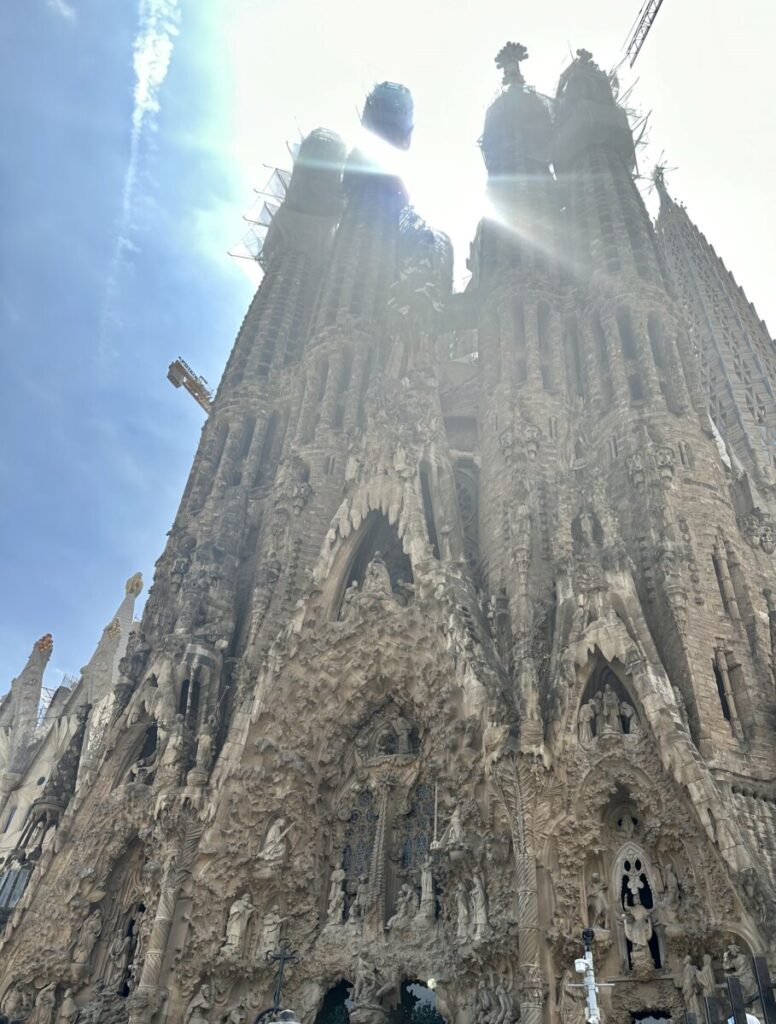
The next day I awoke with my list of what I wanted I to see and eat before leaving this city swimming in my mind – La Segrada de Familia and Chocolate. It was a misty morning, and we donned our white paper coffee cups for the short stroll through town. The streets full of people on their way to work or play, sounds muffle by the cloud cover and the smell of a long-awaited rain on hot pavement. We walked out of the cover of lush park trees and La Segrada de Familia rose out of the city like nothing I have ever seen, and I was blown away.
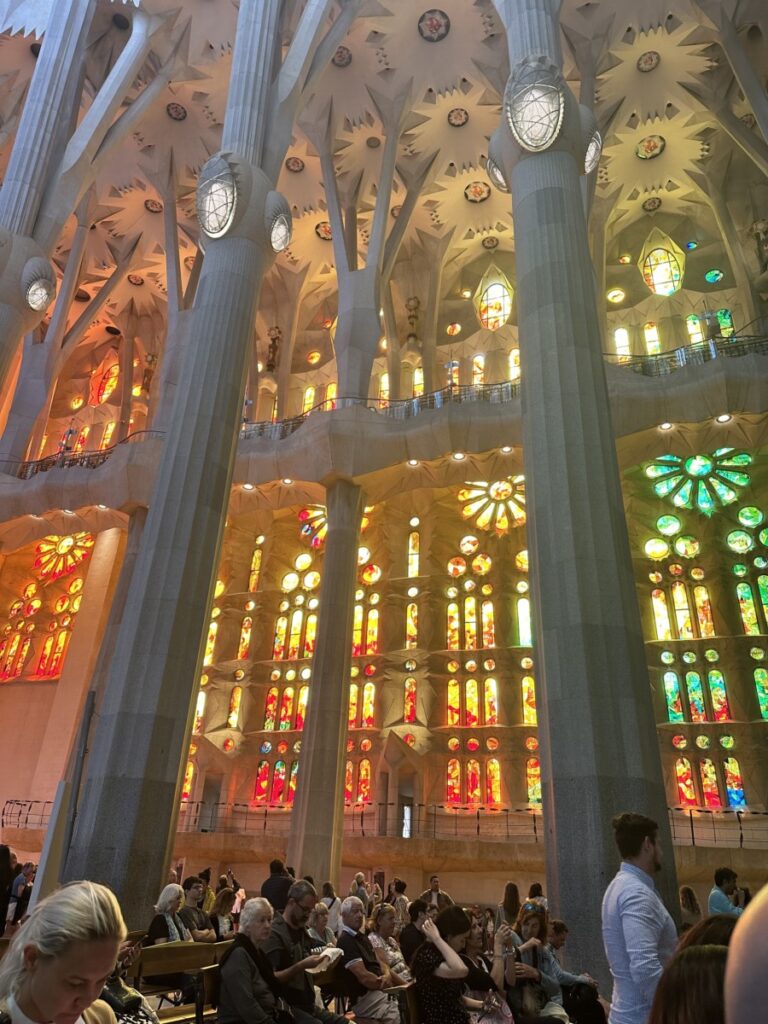
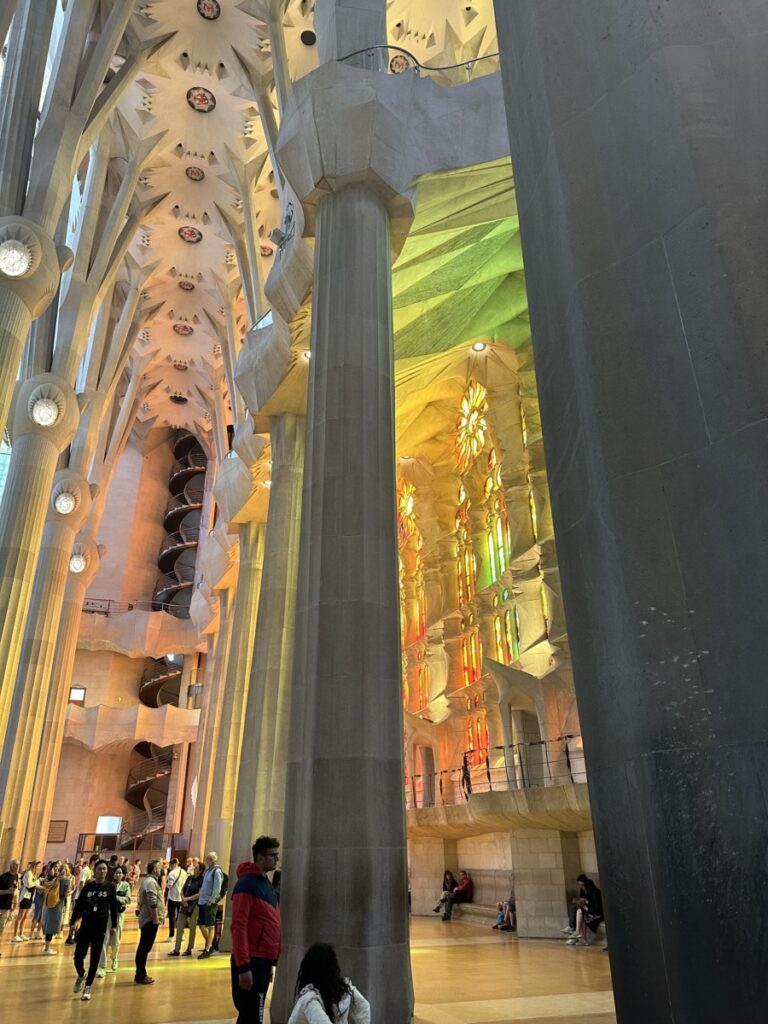
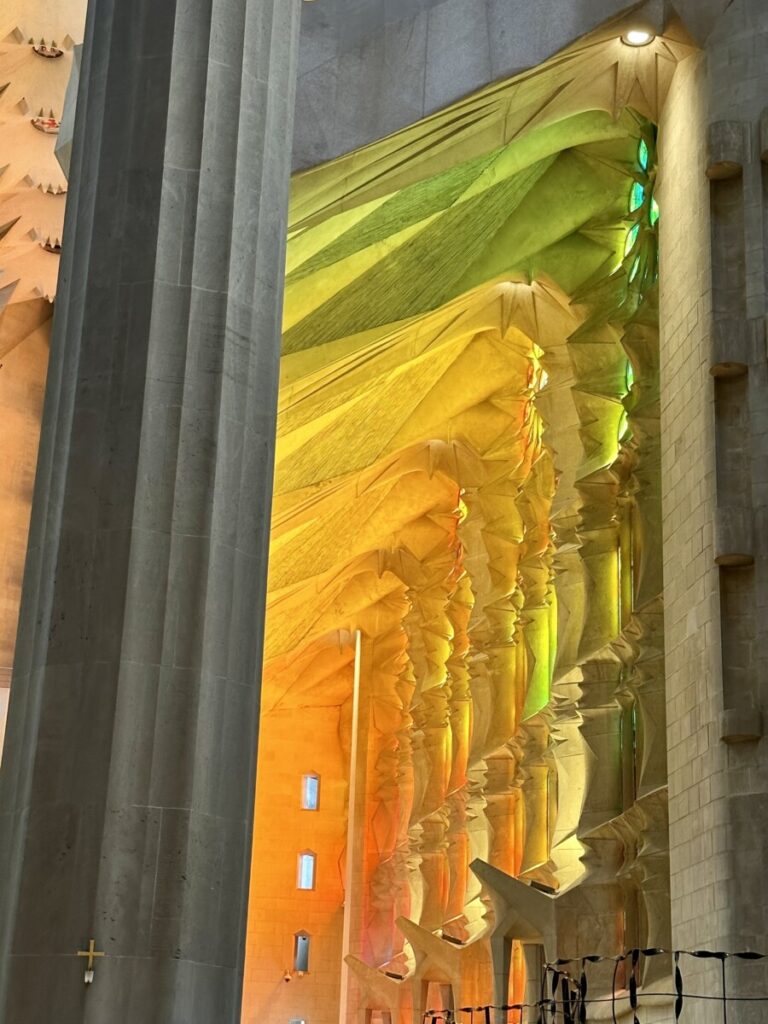
Cathedrals across Europe are a site to behold, so many ornate, cavernous, feats of marvel fill every town and city and I love touring them. But this was a whole new world. Antoni Gaudi spent the better part of his life building this cathedral, and after 125 years it is still under construction. I don’t have the space here to write in full about it but here is my takeaway. He constructed it to imitate nature and the cycle of life and death and re-birth. I am not a religious person, so the message of Jesus is not what I identified with here. It was the deep beauty and connection to nature, and humanity and this cycle that he captured in wildly profound architecture, play on light and color, form and function – it is breath itself. I am an emotional person and beauty brings tears of delight to my eyes often, yet this is the first time that a piece of architecture has evoked such connection and emotion in me, I found myself on the smooth wood pews, streams of tears trailing down my smiling face. It is that wonderful moment when a piece of art speaks to you – you get it, that is what happened here. It is stunning and I will come back to Barcelona if only to be here again and again and again. Doug and I spent the rest of the evening having a cocktail while watching the sun set on La Segrada in the fore, walking around the grounds with lights changing the facades and stories of the place. We settled in at a little sidewalk restaurant for dinner, late as Spaniards do, eating shrimp and salad and grilled fish late into the night. With bellies and hearts and souls full we strolled back to our apartment contented with the day.
Difficult to express in images.
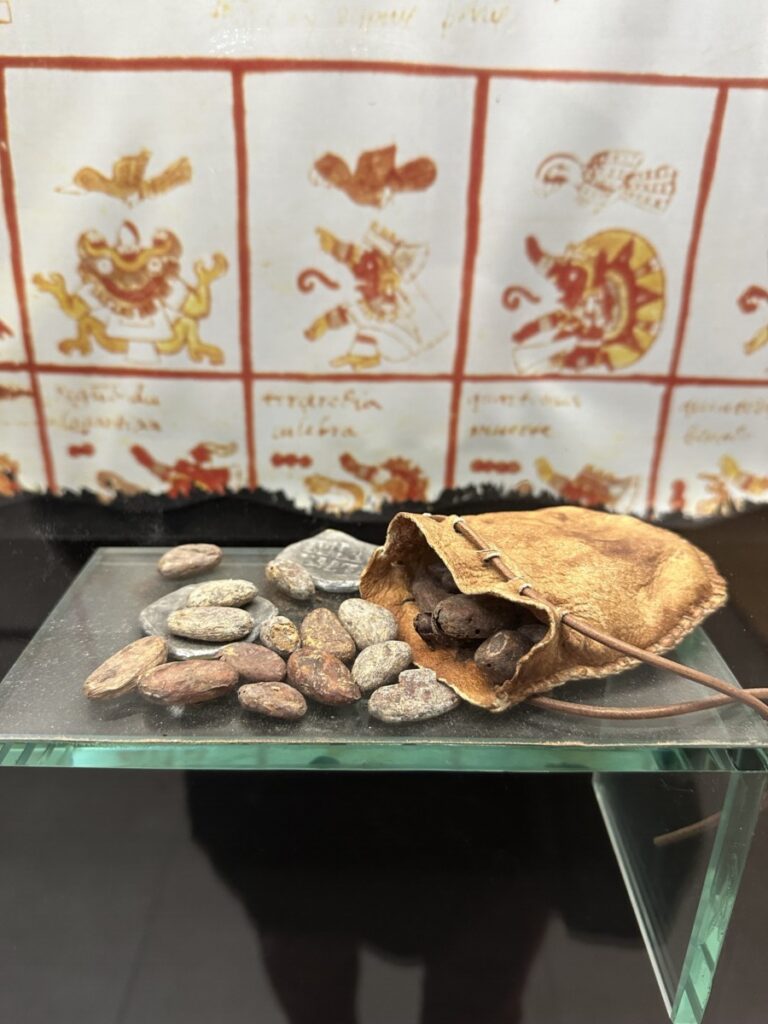
Our last day in Barcelona, one thing on my list: chocolate. I absolutely love chocolate and I eat it every day. To say the least I was ecstatic that I got to spend the day learning about chocolate in the very country that brought it to Europe from North America during the colonial time. At the chocolate museum, Museu de la Xocolata, I paid my entrance and received my ticket – a chocolate bar with a qr code that allows entrance into the exhibit. It was small yet informative with wonderful displays of history, chocolate art and sculptures and tools used to process the cacao into the yummy chocolate we enjoy today. Cacao, the funky bean that is fermented, dried and ground to make chocolate is native to the Americas. It has been recorded in history dating back to 1000 bc and no doubt had been used long before that. The Mayans most notably used the fruit in every part of their daily lives. It was sacred to them and integral in their trade – the beans were used as currency.
Mayan Cocoa Coins (reproduction)
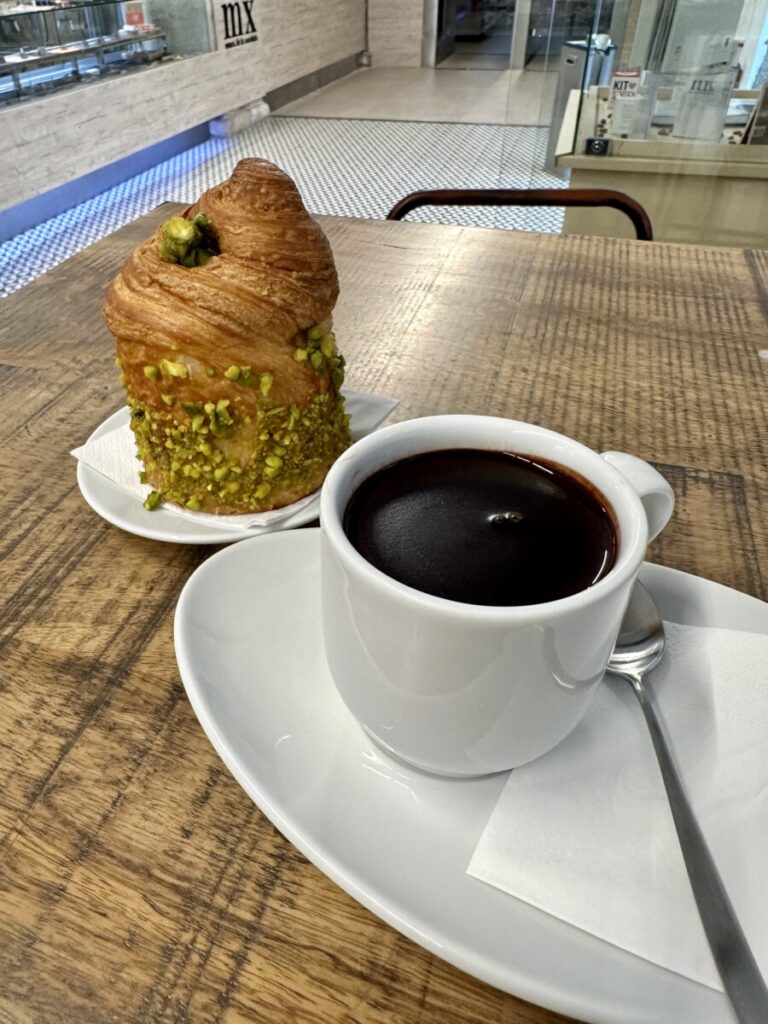
The Spaniards arrived in the new world and exploited every aspect of the cacao trade as colonizers do. Though the cocoa industry has been rife with abuses since we stepped onto the continent, there are now options to buy chocolate from producers like Theo Chocolate in Seattle and many more that buy direct from farmers, pay living wages and demand fair working conditions. I digress – back to a bit of history – Europeans initially thought chocolate too bitter. It is bitter! Mayans would grind the beans and mix it with maize (corn), ground chilies, vanilla and seeds and roots and flowers and add that to cold or warm water. They drank it, it would be a while before it was transformed into bars and other confections we know of today. The addition of sugar or sweeteners to the drink changed the game and Europeans went crazy for it. By the 18th century it was known throughout Europe. Here in Spain, there is a debate as to who brought chocolate to Spain, the Basques and the Catalonians both claim they did. The story is as deep and complicated as is the confection itself. After the exhibit I sat down in the café, by this time I was ready to eat my weight in chocolate. I ordered drinking chocolate and couldn’t pass on the pistachio pastry. It was my first taste of true drinking chocolate and I have to admit I moaned out loud at the first taste. It was warm and complex, rich yet light, smooth yet it stuck in your mouth – divine. With all the fresh history swirling in my head I had a new understanding how this unique little bean’s story is as complex as it is itself.
Heaven in a cup
We spent the evening in preparation for an early morning departure, leftovers for dinner, trying to use up any food we had. Doug, Denise, Ed and I would part ways in the morning, them on their journey home and me on my first solo travel abroad. I was nervous, excited and proud. I have dreamt of this for so long, dreams of solo travel and all it has to offer; personal growth, understanding, life experience as well as the dreams of studying food around the world – curiosity fulfilled. I could barely believe the time had come and I tucked myself in spilling over with gratitude.
We headed east today, making our way through the lush green of the northwest and Bilbao on our way to the small beach town of Stiges on the Mediterranean. We had planned to stop at a few wineries and a salteria (a place where they salt fish) as we traversed Spain but Artesoro Basseria was such a wonderful place we chose to stay for as long as we could.
For the next few days, I don’t have a planned culinary journal stop or a specific food I want to try on the road, or in Stiges, and I am glad for it. I look forward to a few days on the beach to process what I have learned and experienced. It will be a good pause to regroup and refocus my plans going forward.
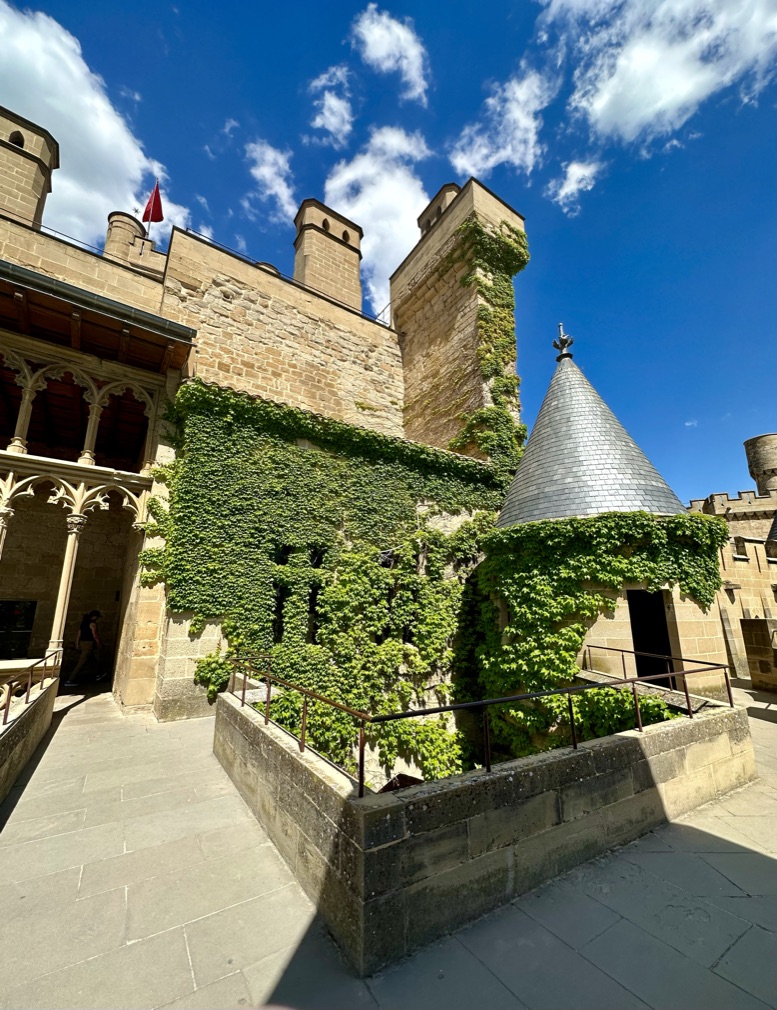
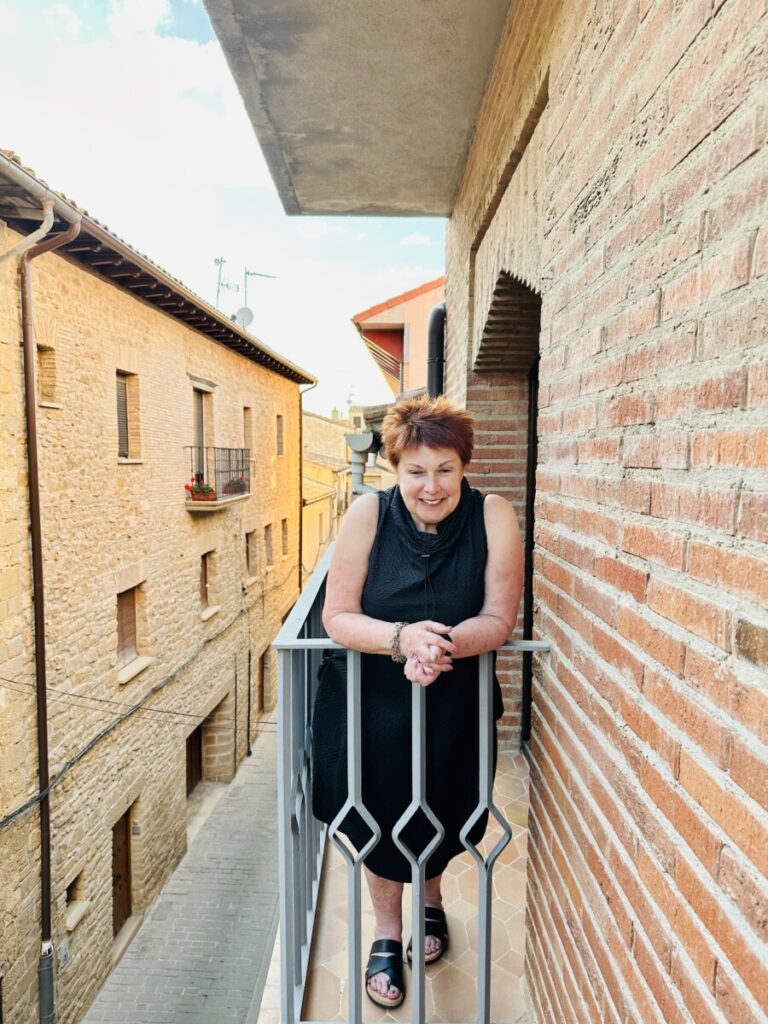
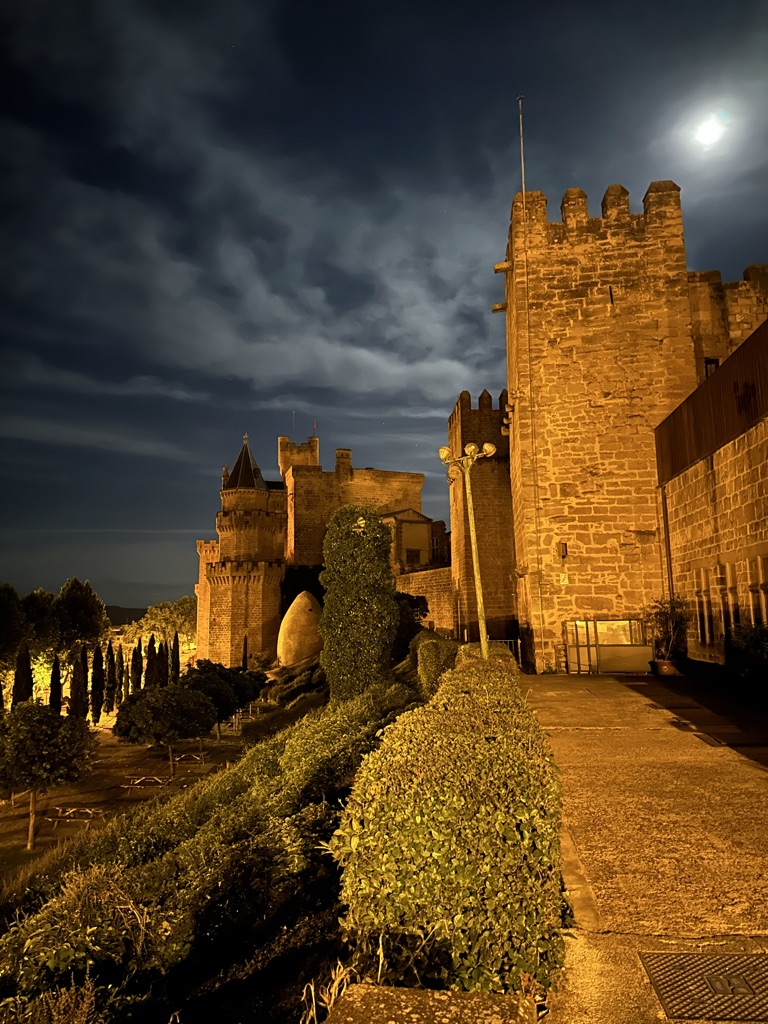
Parador de OliteChatting on our balconiesThe castle at night
Our first stop, breaking up the drive is Parador de Olite, a medieval castle of the Navarre Kingdom turned into a hotel. In the late 1920’s the Spanish government decided to increase tourism as well as preserve and restore historical sites by turning buildings such as castles, monasteries, convents, fortresses and palaces among other beautiful sites into lodging. Today there are 96 paradores throughout Spain. We stayed in the castle de Olite which was beautiful and exiting, and spent the day wondering through the castle, strolling the walled, cobblestone city and had tapas inside the vine covered courtyard – olives in oil and herbs, tomato toasts and crisp wine.
Ironically this is where I tried migas for the first time in Spain. Why is that ironic? Migas are a dish of fried breadcrumbs in oil, and depending on the region they use olive oil or lard and add what they have on hand. The combinations vary from chorizo and blood sausage to grapes and chocolate. Originally the food of shepherds the dish has since become a national comfort food. Shepherds would cook migas while journeying the old transhumance routes the cross Spain, these routes were used to transport sheep to seasonal grazing pastures. Agricultural laborers soon adopted the delicious and frugal dish and it spread throughout Spain.
It was an interesting paradox to have such a humble dish served in a castle where Kings and nobility of Navarre, once the seat of Spanish Royalty, lived for centuries. These are the journeys that interest me the most, and what I hunger to discover, how a dish has moved through time, it is a story of people that I enjoy discovering. Did I like them? No. Unfortunately it is rare to get an authentic take on a dish when dining in a tourist spot. I think it was more important to the restaurant to have ‘traditional’ dishes on the menu than it was to take the time to then prepare something tasty – and so it goes. I am sure it is a different experience when one samples a well prepared plate of migas that include love and care, and I look forward to trying those.
Back on the road we journeyed through many regions of Spain, form Basque Country into Navarre, along the lush Ebro River Valley and into Aragon with olive trees forever and on to the roads end – at the sea. It was wonderful to watch the topography change from high, forested mountains dropping into green rolling hills, to the chalky arid interior with vineyards as far as you can see.
As we got closer to the Mediterranean the rocky soil lightened, and bright green grape vineyards were mixed with fields and fields of eucalyptus green olive trees – until there were only olive trees as far as you can see, sage against the blue sky. I was mesmerized and wanted to know all about these gnarly beauties.
Let’s talk a bit about olive oil – aka liquid gold!
Until I began this project, I would not have believed you if you told me Spain produces over 51% of the world’s olive oil. According to the International Olive Counsel, during the 2021/22 harvest season Spain produced a whopping 1,491,500 TONNES of liquid gold. Out of the top 10 best olive oils produced in 2019 – 8 of them are Spanish. What about Italy you ask? So did I. That same year Italy produced 329,000 tones of olive oil and I learned Italy imports olive oil from Spain, I was shocked. Needless to say, I was not surprised at the amount of olive groves I saw on our drive. (https://www.internationaloliveoil.org/wp-content/uploads/2022/12/HO-CE901-13-12-2022-P.pdf)
Since I was not going to the largest olive producing region during this trip, I did a surface amount of research and (as I am finding with every turn) I have more questions. A very quick view of the history of olive oil in Spain; It is believed that the Phoenicians brought olive trees to Spain over 3000 years ago from present day Lebanon, the Romans took power of the region, which they called Hispania, planted more trees, created an industrial amount of olive oil and used this fertile land to grow and supply their oil thirsty empire. When the Moors took power, they were skilled in irrigation practices and increased production among other updates that greatly increased production. Today there are olive groves in Valencia that are said to have trees over 1000 years old, the oldest has been scientifically dated, is 1,700 years old and still producing. All of this being said, there is a lot more depth and history and power struggle and information that goes into the olive oil story of Spain as it is today. It is a rich and exciting lineage and I look forward to making it one of my studies next year.
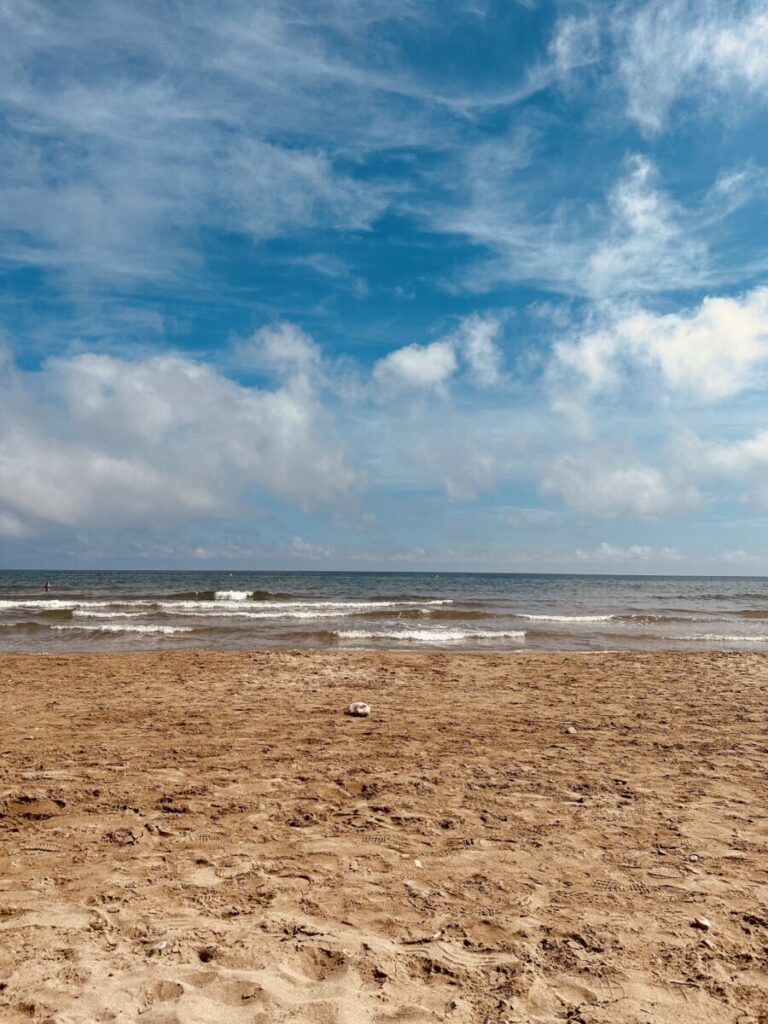
As thoughts and questions about olive oil went through my head, watching grove after grove whisk by, we turned a corner and there it was – the shining, deep marine and turquoise blue water of The Mediterranean – an unbelievable color. I get really excited about bodies of water, they feed my soul – especially oceans and seas and I keep a mental and visceral note of the first time my feet are lapped by waves from new water. I could not wait for my first step into the Mediterranean Sea. I was in the moment we arrived, sandcastle colored sand, soft warm deep blue waters, the sound of the waves calling me in. I was ready for a few days of beach, fresh seafood and catching up on my notes – so many notes. I am still surprised at how much more I want to learn after being in a place, traveling awakens my curiosity and leaves me wanting to know more.
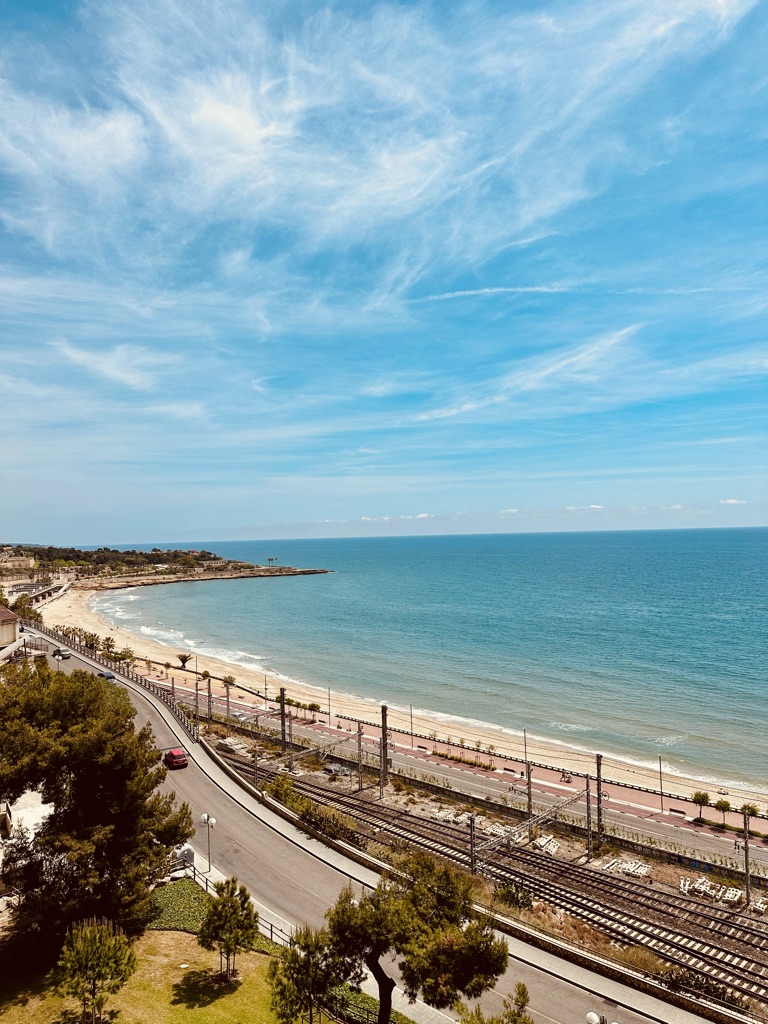
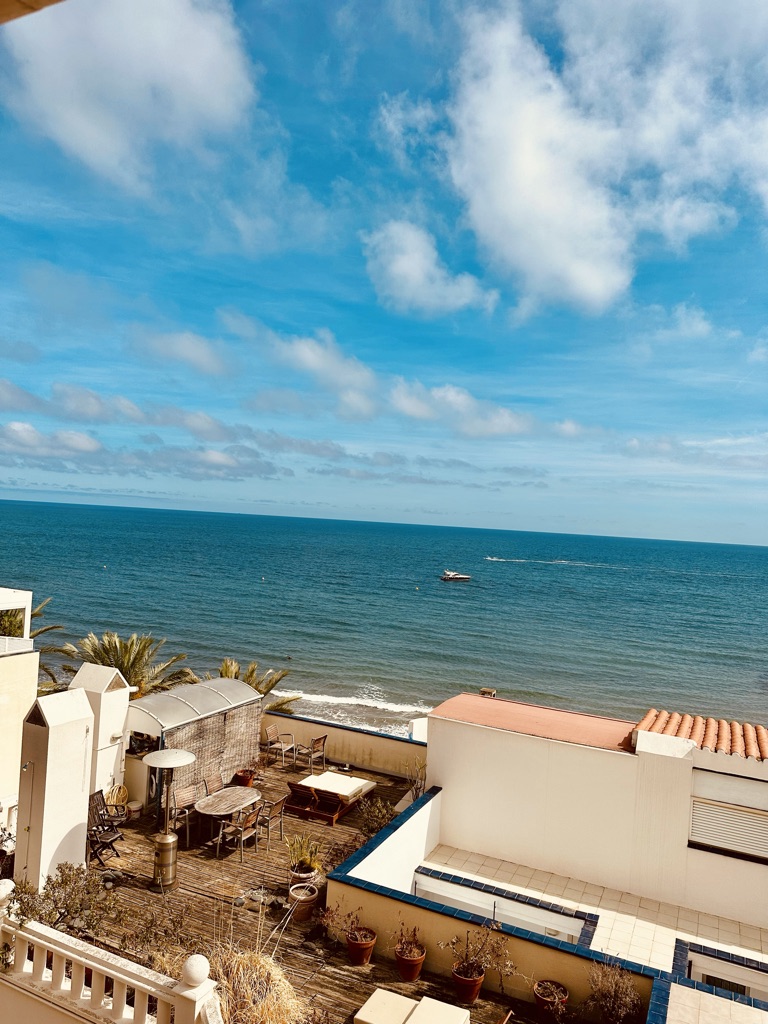
The view from our apartment
Stiges was exactly what I needed. It is a small town just south of Barcelona on the sea. It was quaint, sleepy, yet touristy with rows of very large boats lining the marina and restaurants boasting fresh seafood and paella along it’s sidewalks.
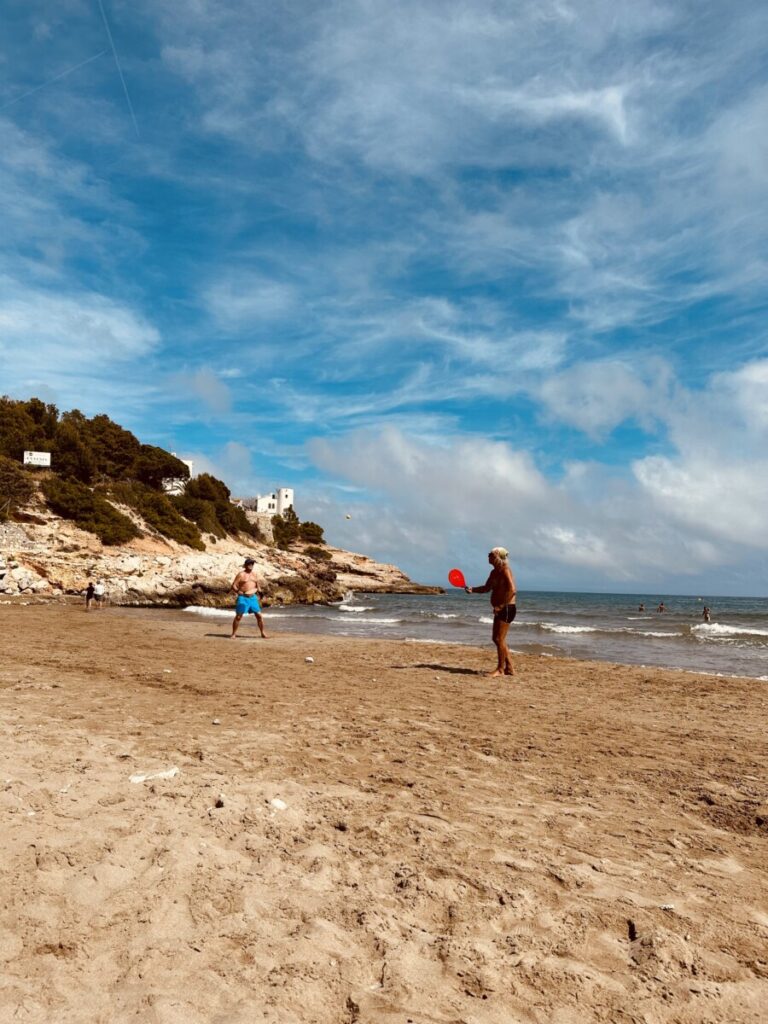
The beach at the end of the small harbor was lined with jagged rocks on either side, cliffs lined with sun bleached houses and a sleepy little restaurant in the sand. It was perfect. I rested, watched the locals play paddle ball, ate delicious shrimp and salad under the umbrella with a cold beer, and wrote a notebook full of thoughts and ideas on my travels thus far. I did not cook much in Stiges, I spent my days on the beach, eating the fresh catch, soaking in the sea air and thinking – heavenly.
Locals playing paddleboard
As I researched (researching while on a beach is fabulous) I re-discovered Claudia Roden; a food writer, traveler, cookbook author and amazing historian. I had heard of her before, here and there, and I’ve cooked a few of her recipes in the past. Being on a culinary journal project myself, I saw her work in a new light. She began to travel through the Mediterranean when she was my age, kids out of the home and ready for a new direction. She began by asking people what their favorite recipe is, what their parents and grandparents ate and she connected these recipes to a history and a culture of a place in a stunning and moving way. Being in a similar stage of my life, I felt a connection to her work and became newly inspired. I had been struggling, I know what I want to do in this next phase of life, travel and share food and cultures, I know why it is important to me yet the question and honestly doubt in my mind has always been – why would anyone want to know what I have to say about it, why would people want my perspective and thoughts on food, how is this a contribution? Through her work and words she reminded me that recipes are important, not only to understand a dish but be able to explain it, to understand a culture and it’s history through the stories of the people, to be able to say what a dish is, what it represents and why it is important to share. She writes about her culinary journey through Spain, “A word, a taste, a smell, triggered memories I never knew I had. It is surprising how dishes can appeal directly to the emotions. They say that with food, as with music, you can touch people and even make them cry.” Spain pg. 2
I am discovering what I am truly interested in – how people cook in their homes, what food they cook for celebrations and their traditions around the dinner table, what social connections do they have to the food they eat, where does their food come from today and in the past and what all of this tells us about the human condition. We are what we eat (literally) and for us as humans, social connection and food are intricately entangled – we are human because of this relationship. It is important to remember and reconnect the two. I want to tell the stories of food that evoke joy and relationship and leave the reader hungry. Through reading Claudia’s work and words, I remembered that my voice and perspective will evoke emotions in some that may not be touched by other’s writing – we need all of the voices, and my work will matter to some.
So I ask myself what would it look like to cultivate connections to people as I travel – like Laura and Roberto in Basque Country – and share recipes with them, ask them what their favorite recipe is, what did their parents and grandparents eat? What would my experience be if I made connections with people in each place, I traveled asking these questions? What would it look like to stay in one place long enough to get a feel of the rhythm and the food and the people? What if I traveled through the Mediterranean and retraced some of Rodens travels, how has the culture and ways of food in these regions changed since she set out on her first adventure so many years ago? Sitting on the veranda in the evening, watching the green light tipped poles connected to invisible fisherman on the cliff rocks, boggle around for a nighttime catch of squid, the waves’ rhythm against the sand, these questions swam in my mind and ignited an excitement in me, tapped my insatiable curiosity on the shoulder and woke me up again.
And so it is off to Barcelona tomorrow with renewed excitement, clear direction – and a suntan.
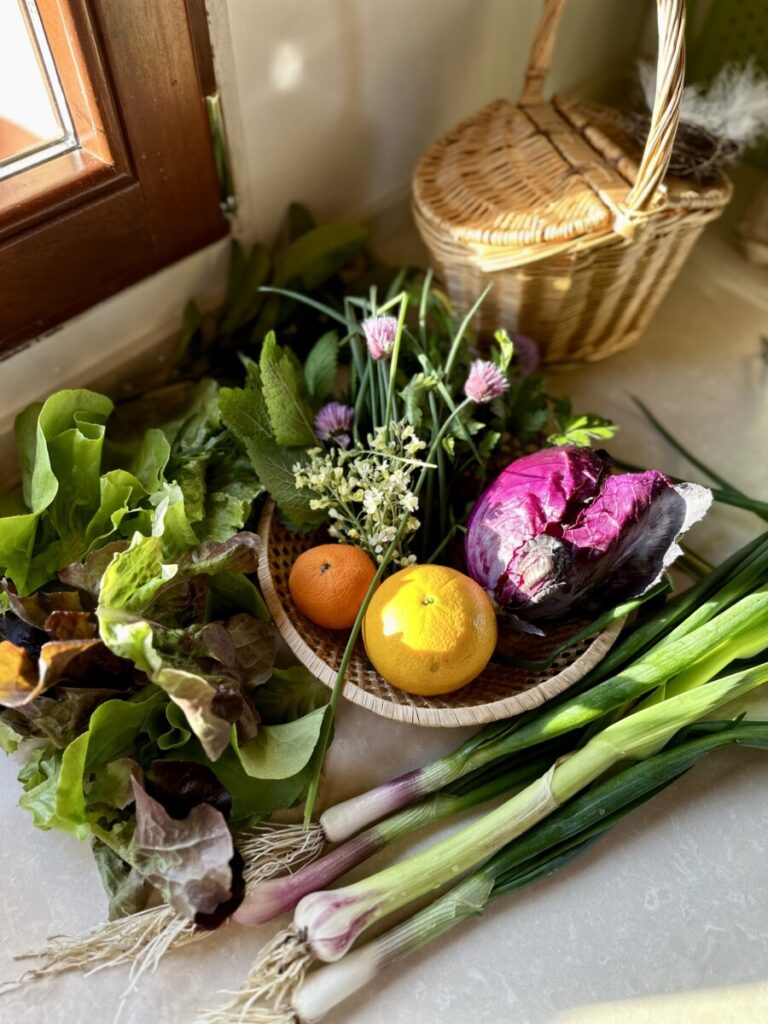
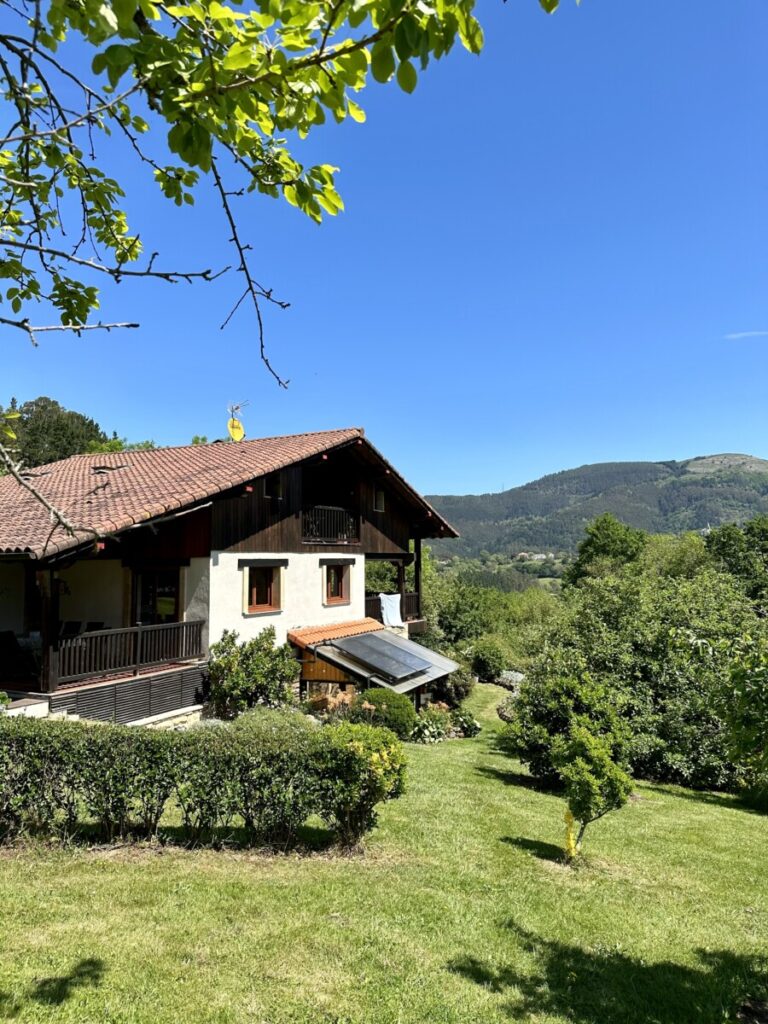
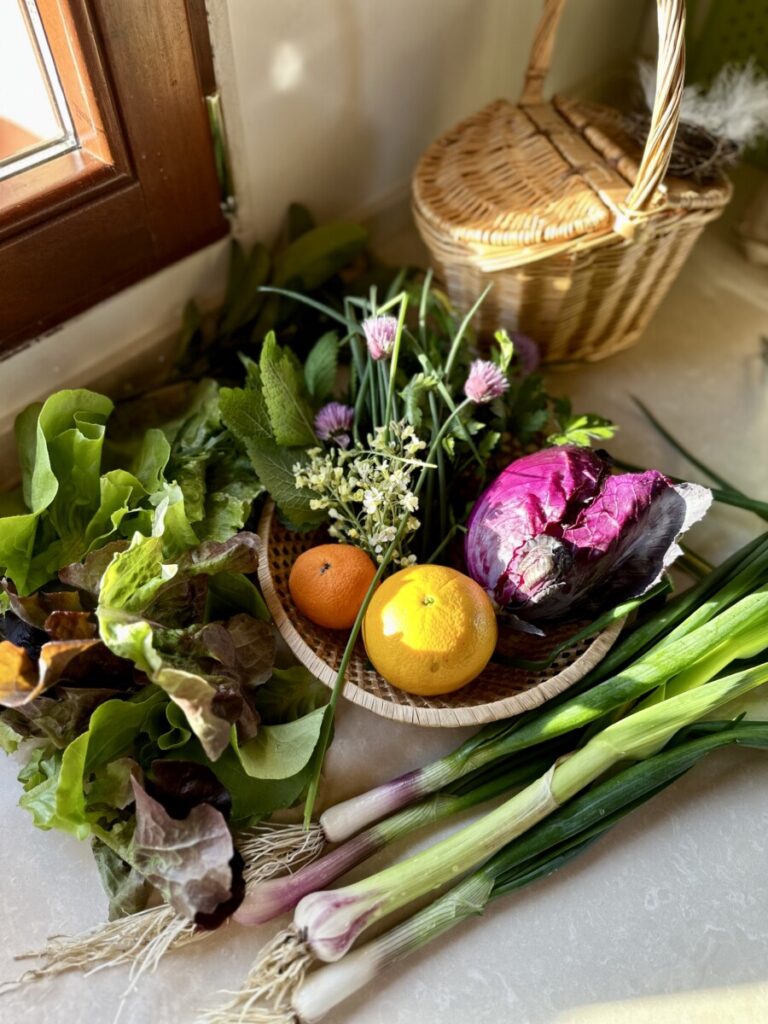
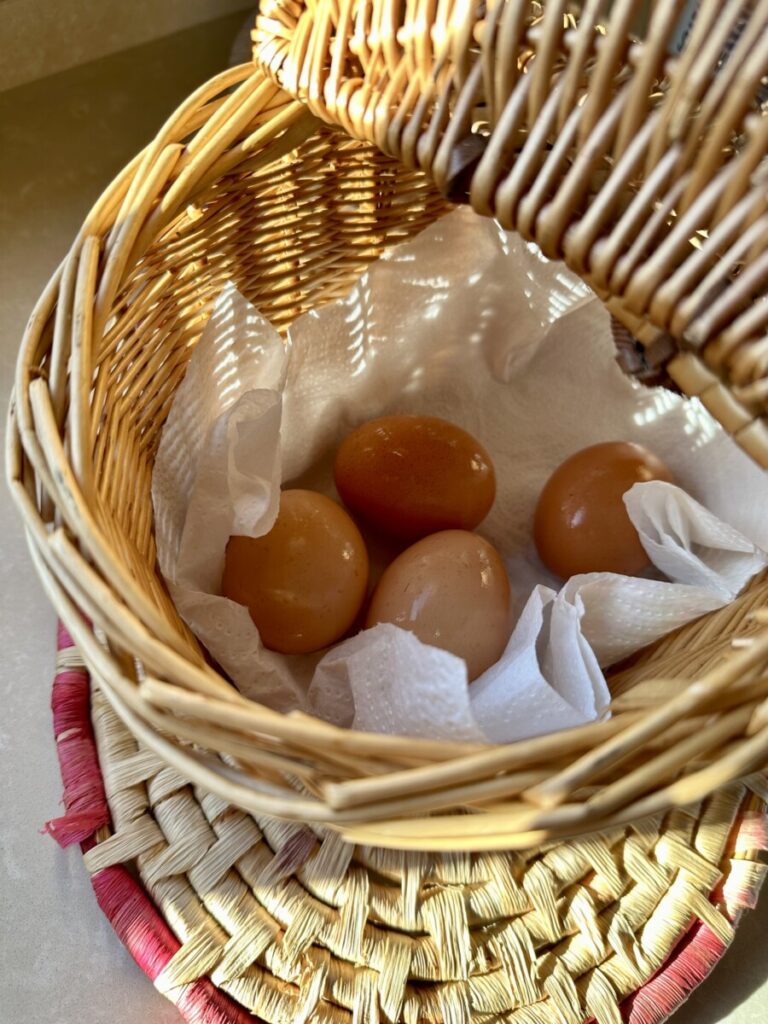
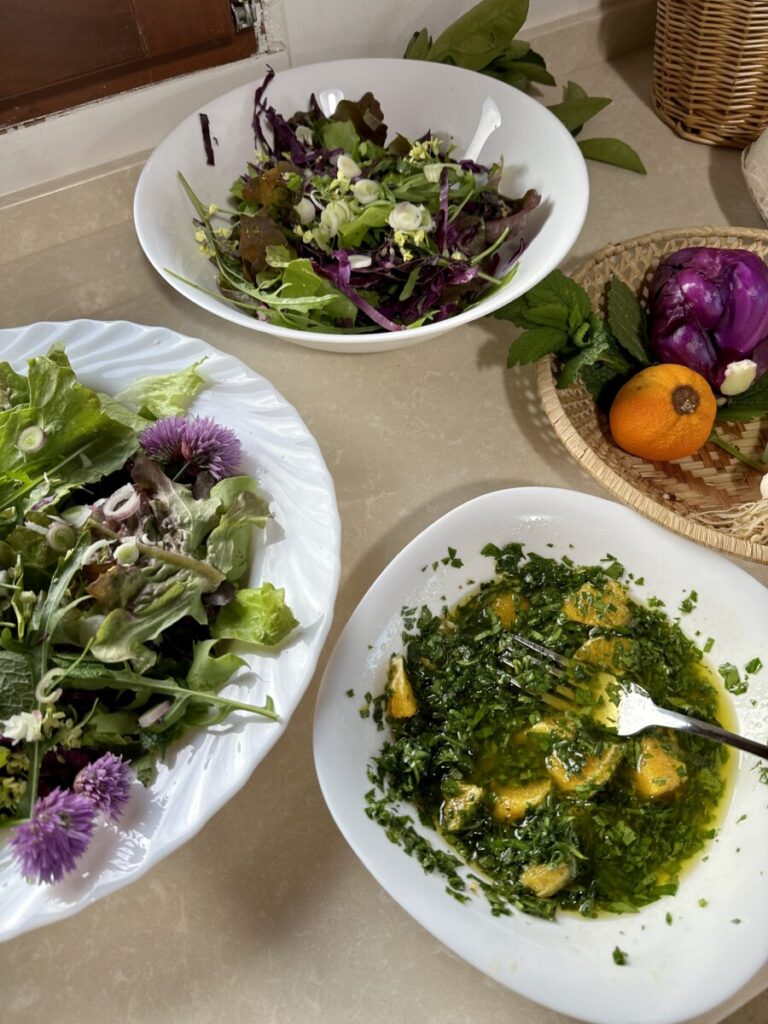
We arrived in a beautiful farm and Horticultural Education Center about 20 km outside of Bilbao, Spain in the Basque Region. Lush hills of farmlands and forest, this area is beautiful. Known for fresh local ingredients the Basque know how to enjoy food. We were unaware that it was a holiday and therefore no stores were open – we had a half loaf of bread and a jar of peanut butter and ready for dinner. No worries the produce on the farm was gorgeous and plenty! The chickens had eggs for us, there were herbs of plenty and fresh citrus – here is what I made for a perfect spring dinner.
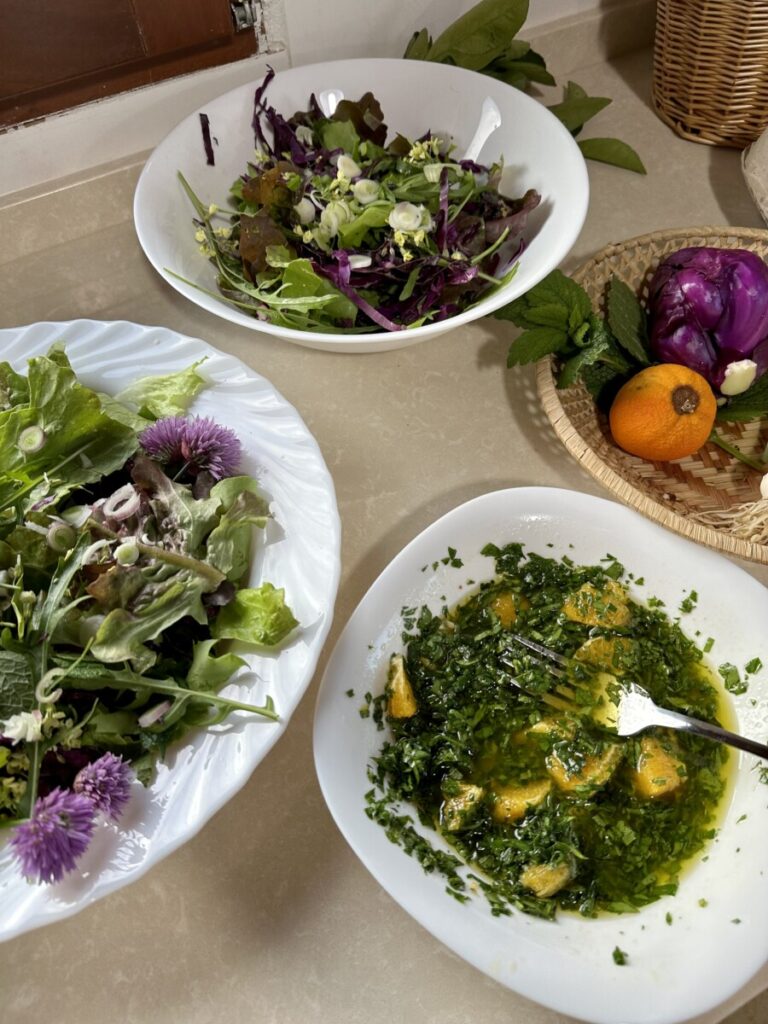
Orange Herb Dressing
Juice of one orange – throw in some of the sections as well
¼ cup good olive oil (check the date! Olive oil spoils)
Sea salt to taste
1 cup or more chopped herbs – I had parsley, dill, mint, chives, fennel and lemon balm
Chop herbs, add all ingredients and mix – adjust to taste with any of the ingredients. If you desire more of a punch in your dressing feel free to add lemon or a light vinegar – sherry, apple or white wine.
Garden Salad
Fresh spring greens
Spring onions
Rocket (arugula works)
Cabbage
Edible flowers – I had chive blossoms and broccoli flowers
If you don’t have a garden, the next best thing is a local farmer’s market, use what is fresh and what looks good to you. These ingredients will change with the seasons, use what you have, use what is in season and play around with combinations. Wash and tear greens, finely slice onions and cabbage. A note on edible flowers – they can be delicious, a bit spicy and add a beautiful touch to your plate. Talk with your local farmers or send me any of your questions. If you have a garden, taste the flowers your plants make on their way to seed – it’s a great way to mix up your plate!
Housemade Croutons
Bread – any that you have will work.
Olive oil
Salt
I like to tear the bread into bite size pieces giving more surface area to toast and fill with oil, you can cut it if you like. I toss the pieces with a generous serving of olive oil and salt to taste. You can toast them in a pan, bake them in an oven on 350 until crisp – or my favorite – toss them on the BBQ! If you BBQ them make sure they are large enough pieces to not fall through the grates. BBQ on medium turning continually until they are toasty on the outside and a lovely chewy on the inside!
6 Minute Eggs
Bring enough water to cover your eggs to boil, carefully lower eggs in using a spoon so you don’t drop the eggs and crack the shell. Boil for 6 minutes. Remove the eggs and submerge into an ice bath (bowl of ice water). Peel when cool enough to handle the eggs. Slice them in half and sprinkle with salt, pepper and paprika – or whatever you have on hand!
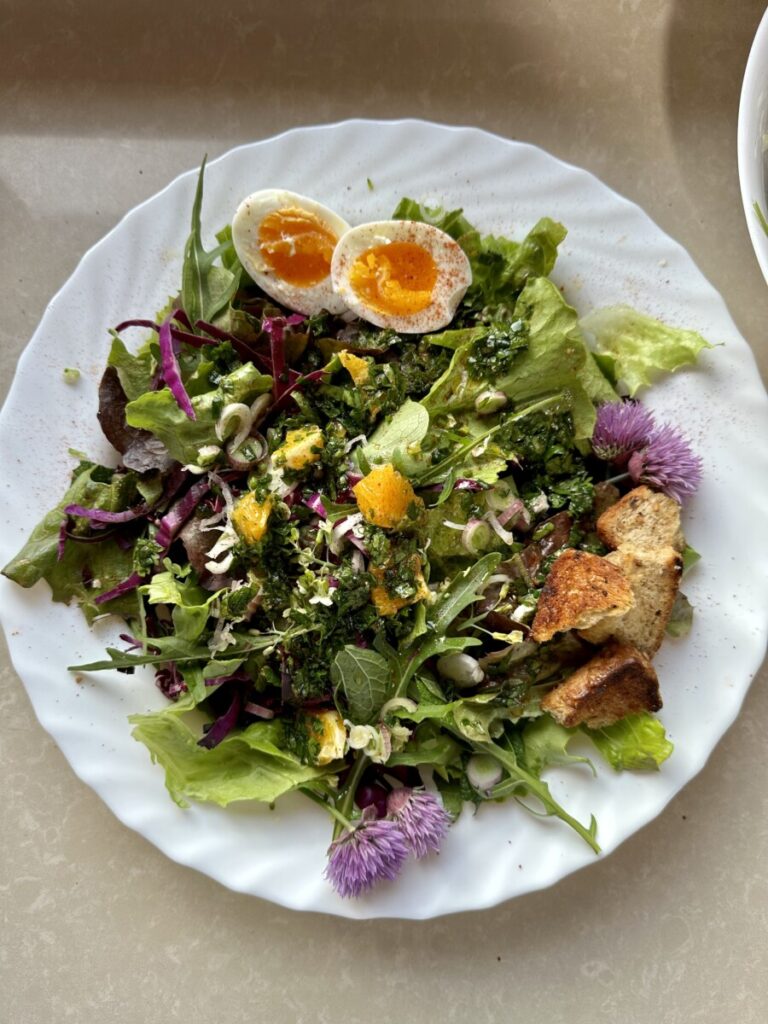
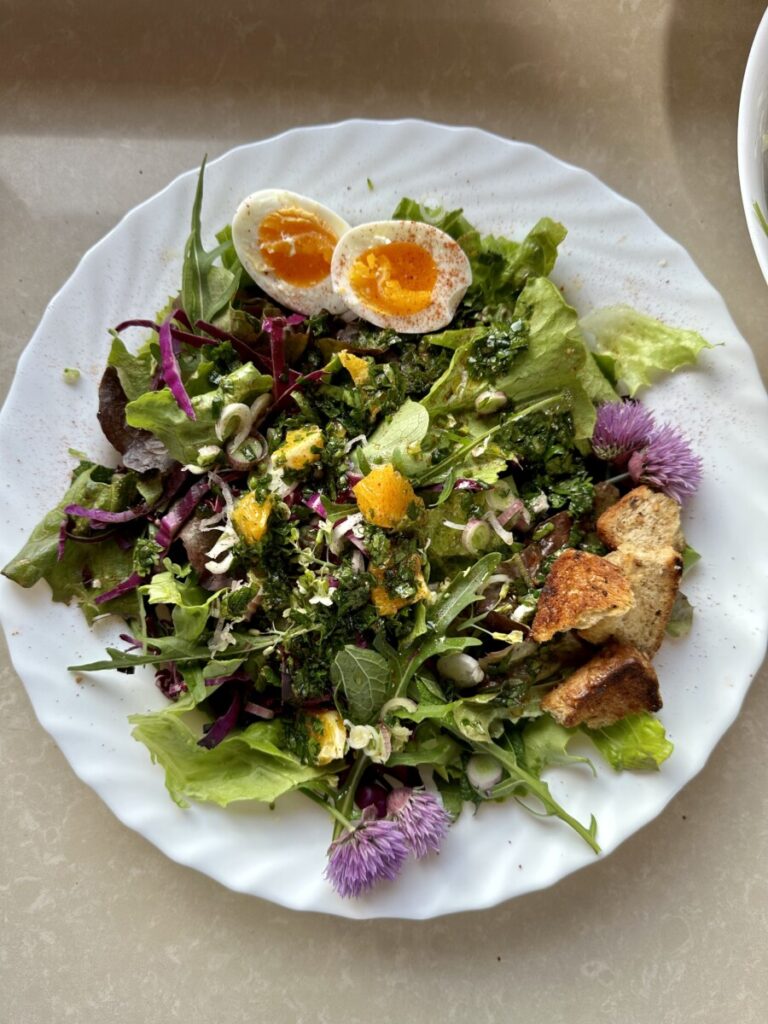
Toss the salad ingredients with dressing in a serving bowl, top with edible flowers, eggs and croutons. Enjoy!
We have arrived in Basque Country. That lovely place in the north of Spain bordering the Sea of Biscay; full of rolling hills, forest, sea and an ancient rich culture. The Basque people have inhabited this area for a very long time. They are a people who have endured time and persecution and they are a people who love food– good food and it is an integral part of who they are as a culture.
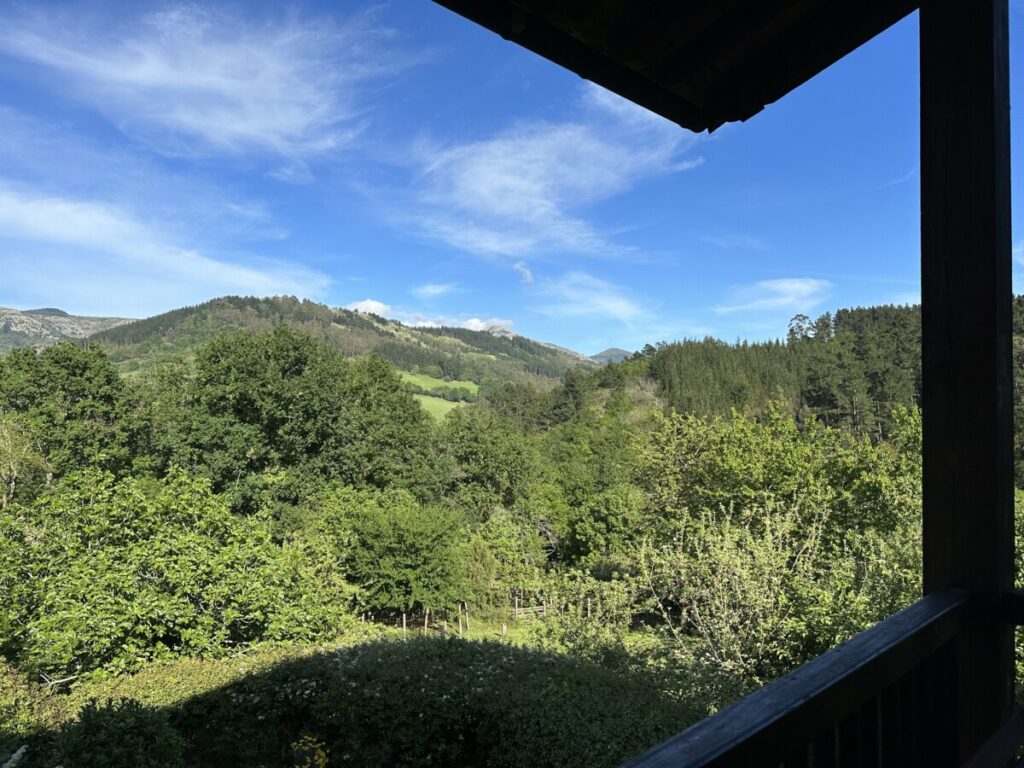
Vizkaya View from the front porch
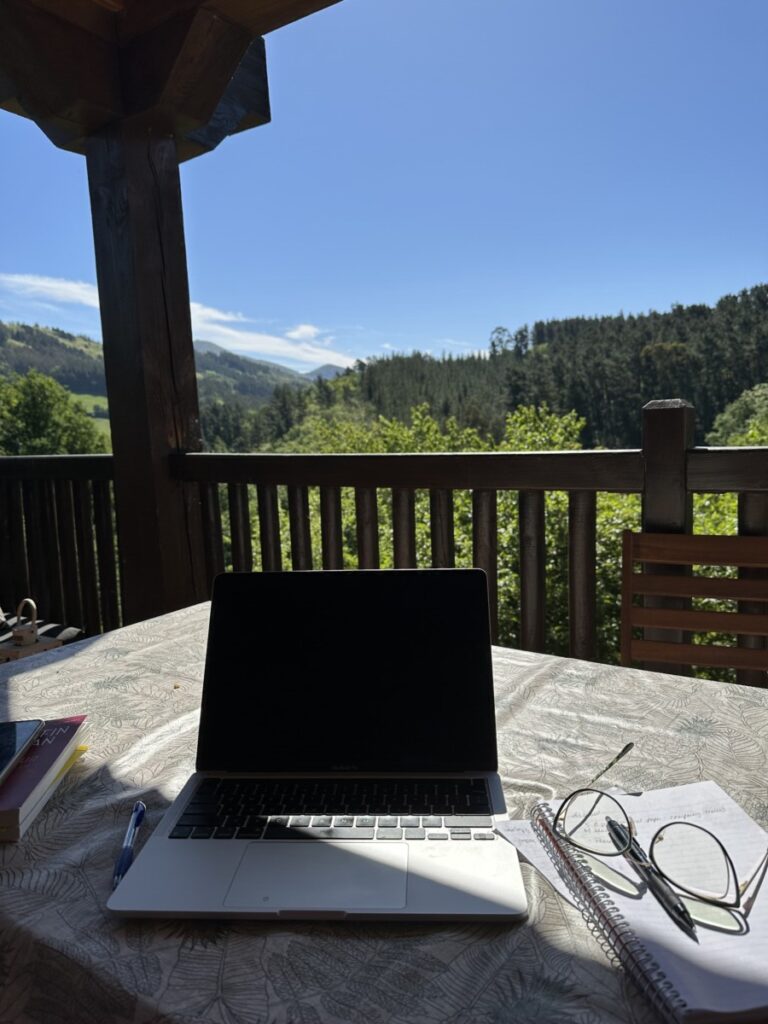
I sit here; computer in front of me, notebooks full of experiences, piles of books littered with bright sticky notes bending out of the pages – facts, stories, recipes, and exploration on this place and I find myself stuck. I want to convey all that I discovered, and I keep being drawn back to a feeling, it is one that I did not read about, nor did I expect; the experience of being home.
I should explain and so I will begin at the beginning.
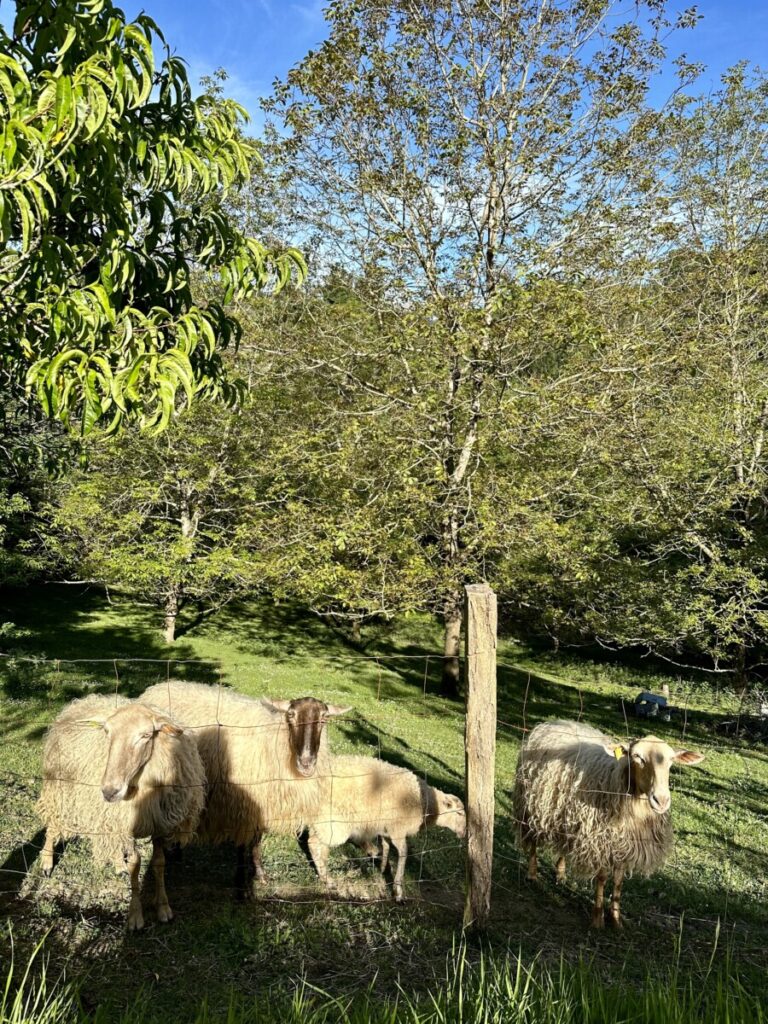
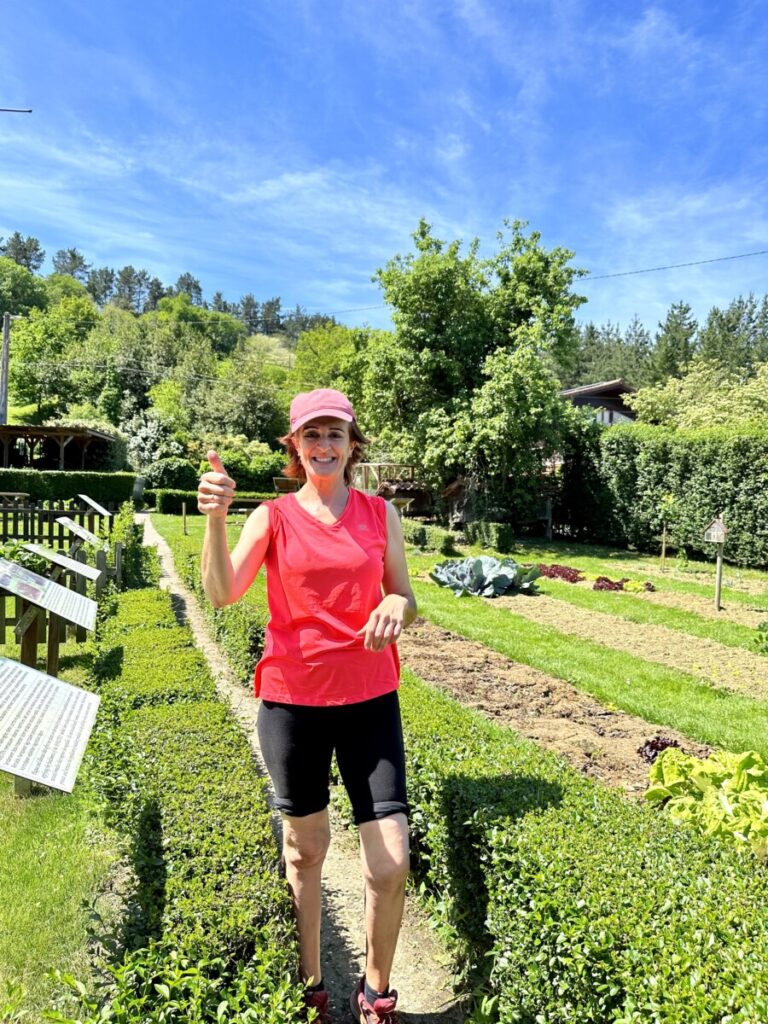
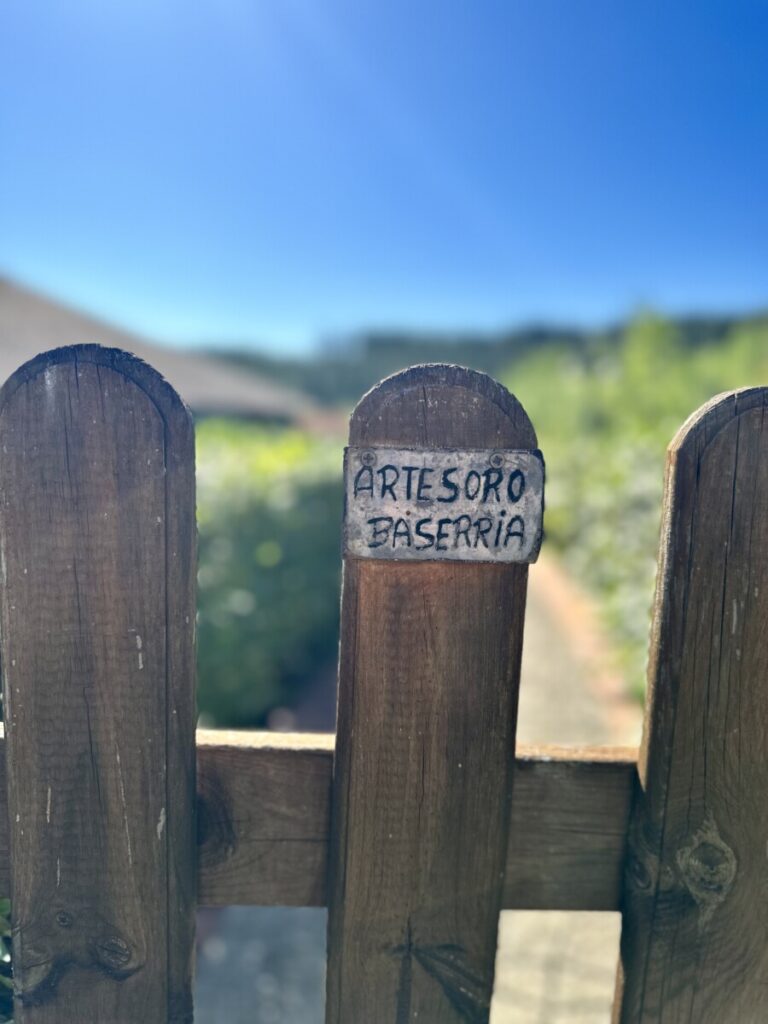
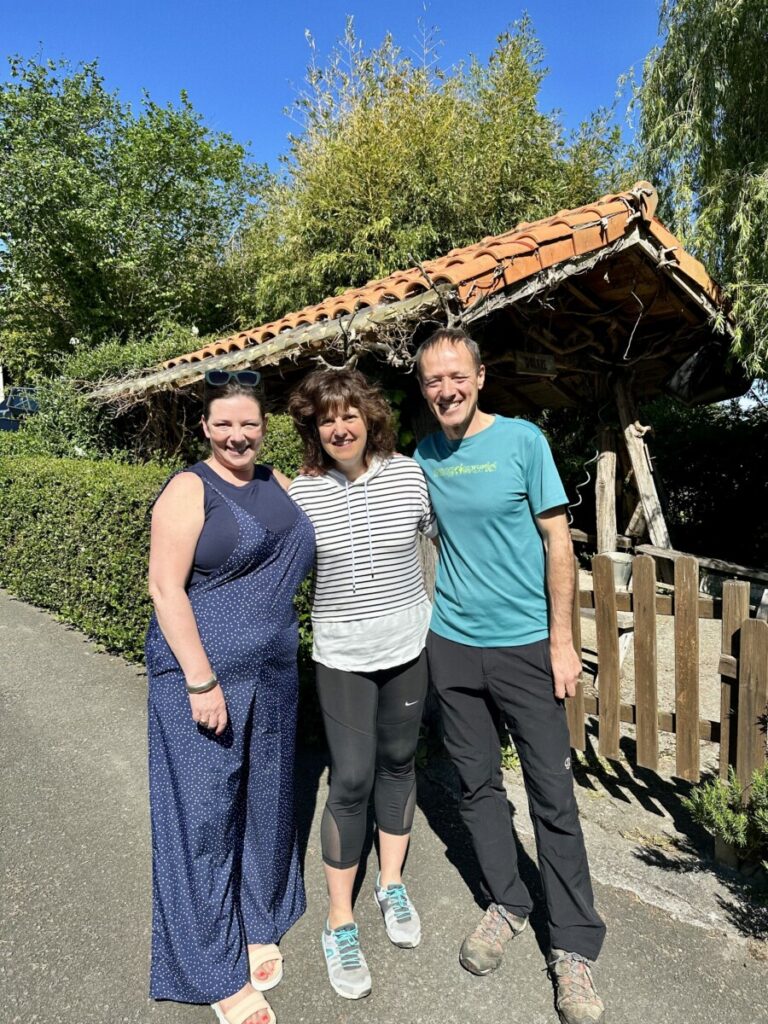
We spent the day crossing into Spain. I was so very excited, all my studying and research and expectation bubbling over in me. Rolling hills, glimpses of the sea, forest and red tile roofed towns settled in valleys, we were in Basque Country. The plan was to stop at a market and grab provisions on our way to our Airbnb, about 20 km outside of Bilbao up a winding road through small towns, rolling hills and wild forest land. We were unaware that day was a Spanish holiday and therefore everything was closed, including any store selling or serving food. Not wanting to get stuck on steep, narrow hill roads in the dark we carried on, we had bread and peanut butter and would make do for the evening. Our directions landed us at a horticultural educational center, not expecting this we were a bit confused. A wonderful woman walked up the road and with a bit of stumbling through my freshman Spanish, her freshman English mixed in with her Euskera, the Basque language – she directed us to the correct house next door, we had arrived. Oh, did we arrive, the gate opened to an amazing home sitting above an unforgettable landscape with a phenomenal view of rolling mountains for miles and a property filled with fruit and nut trees, las huertas (vegetable gardens), sheep and chickens! I could barely contain my excitement. We were at Artessoro Basseria, a sustainably built and run home, educational center and lovingly tended land by Roberto and Laura. I could go on for 20 pages about what they have created here, and I will sprinkle some through while I talk about food over the next few days – you can follow the link to their site and I encourage you to do so and discover all they offer! https://artesoroa.com/
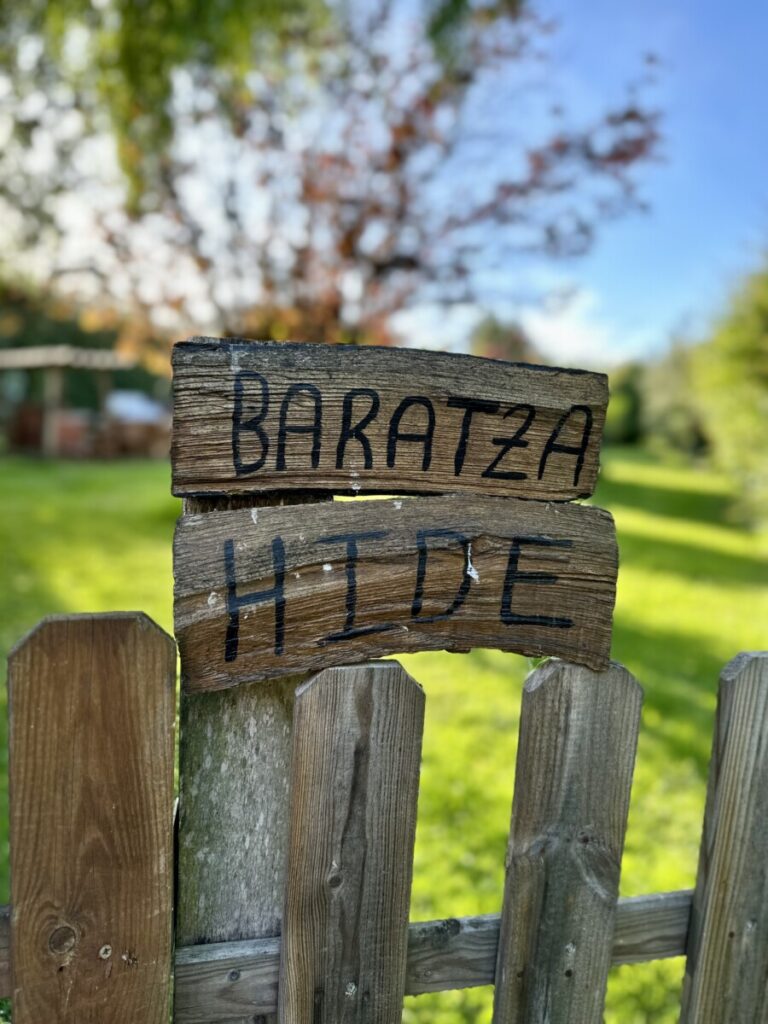
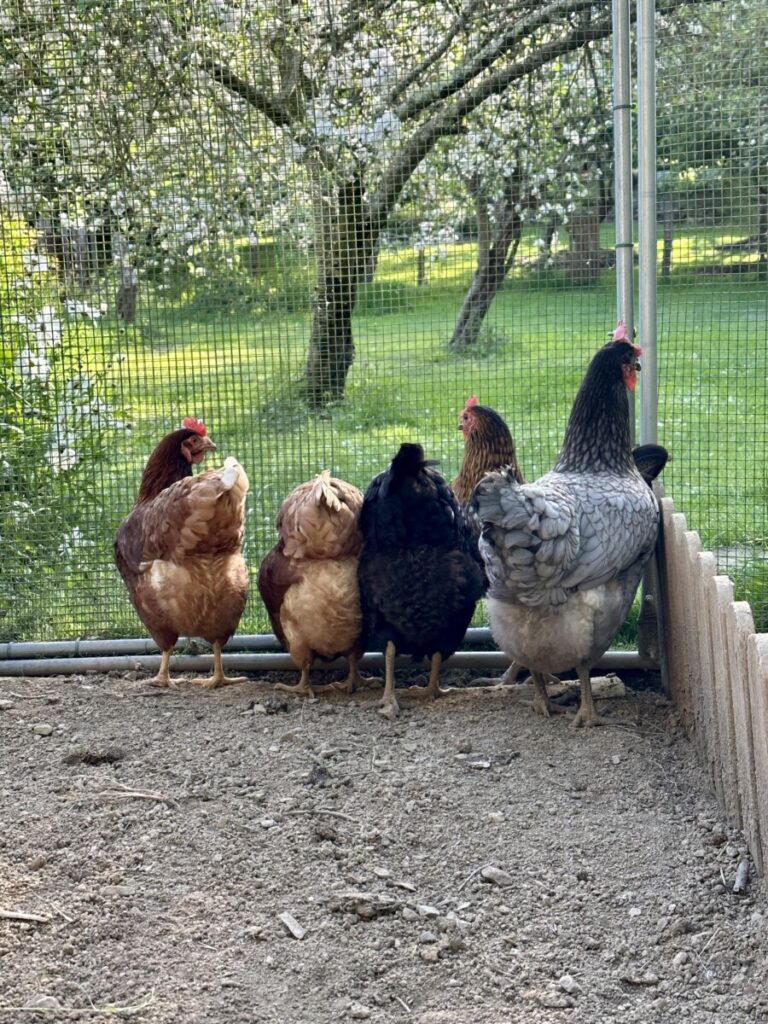
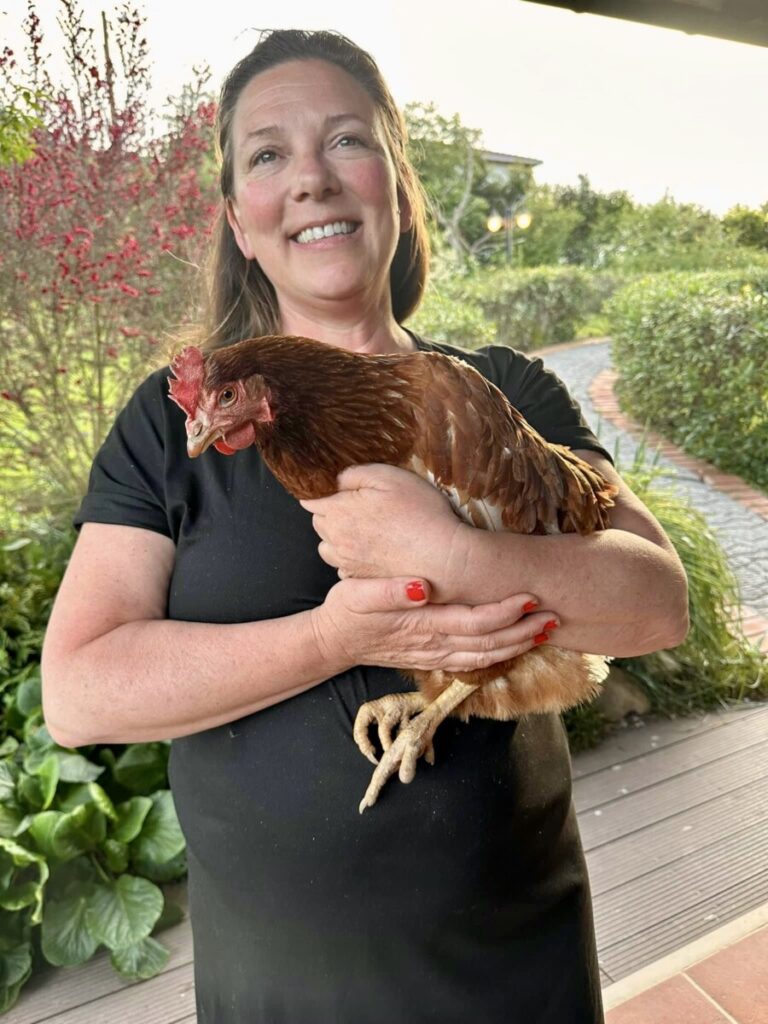
Artesoro BasseriaGarden HideThe LadiesWaiting for more Lemon Balm
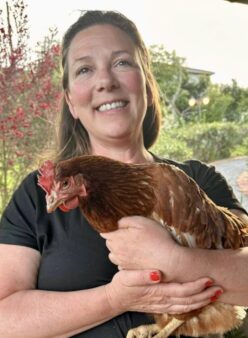
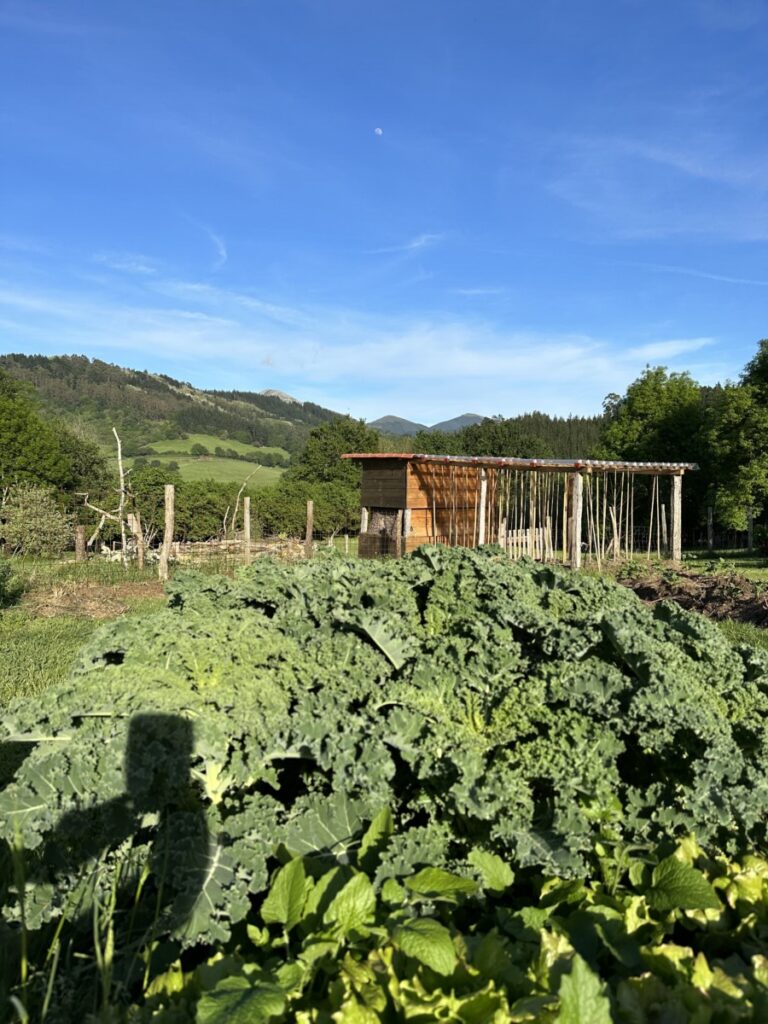
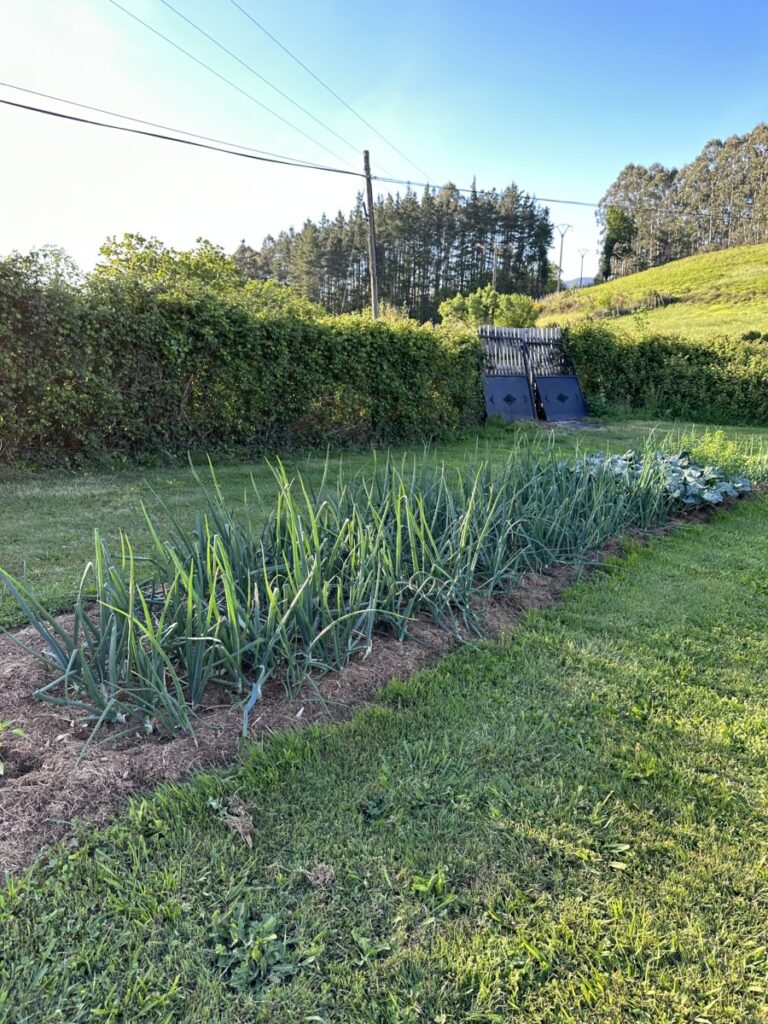
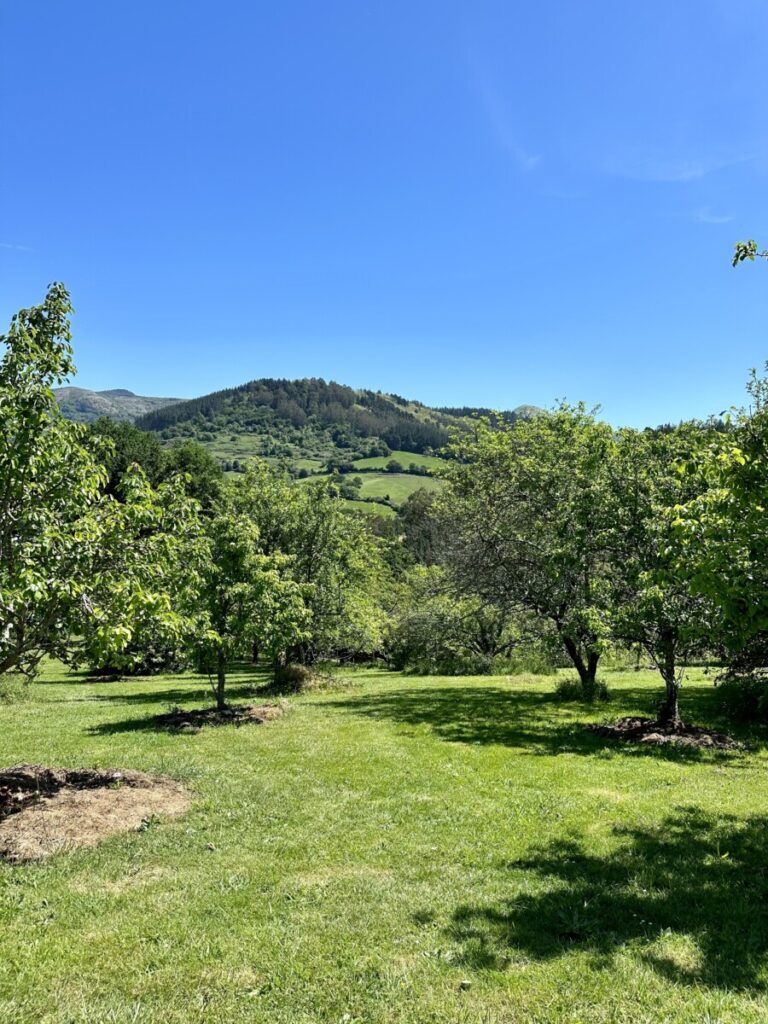
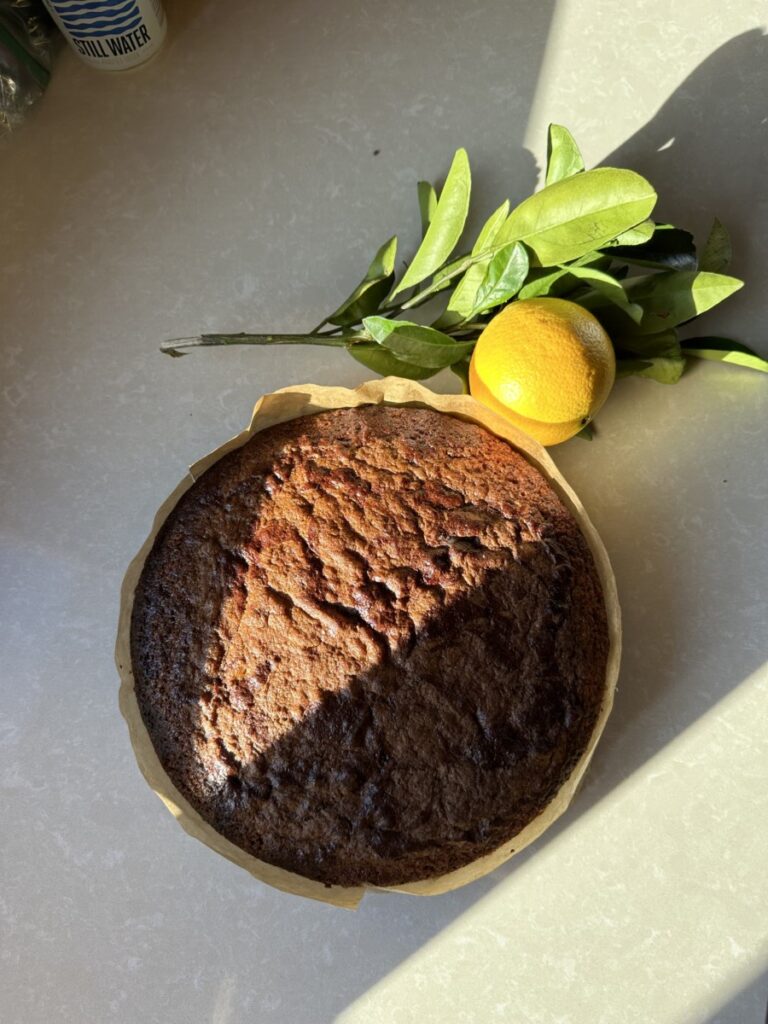
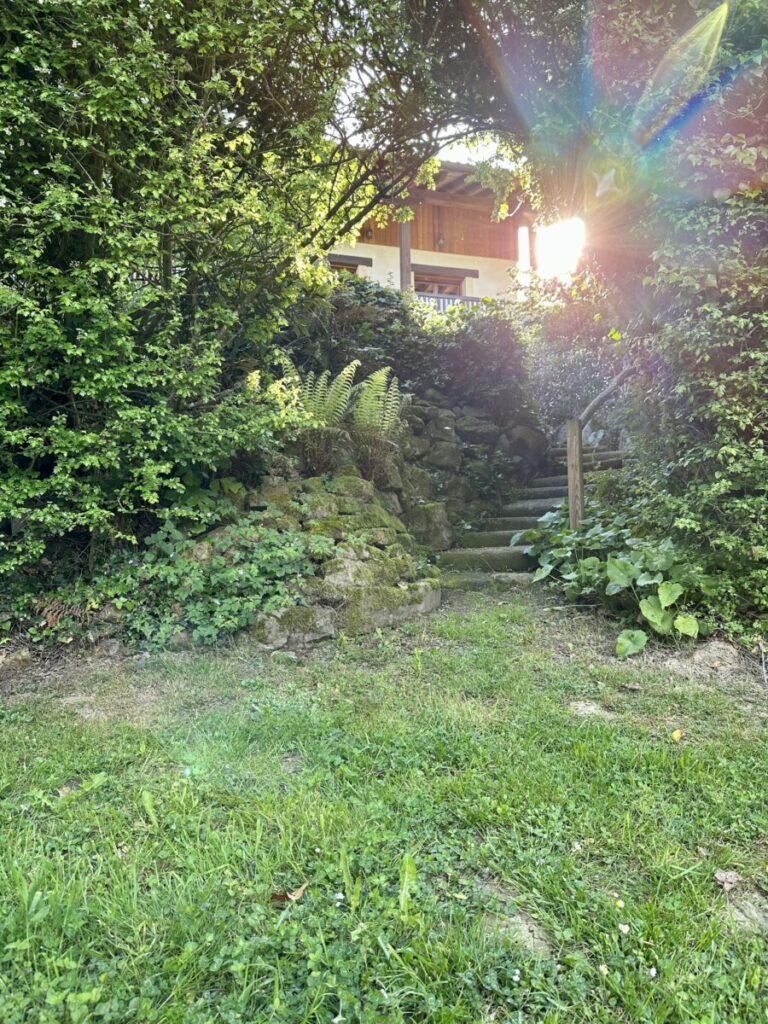
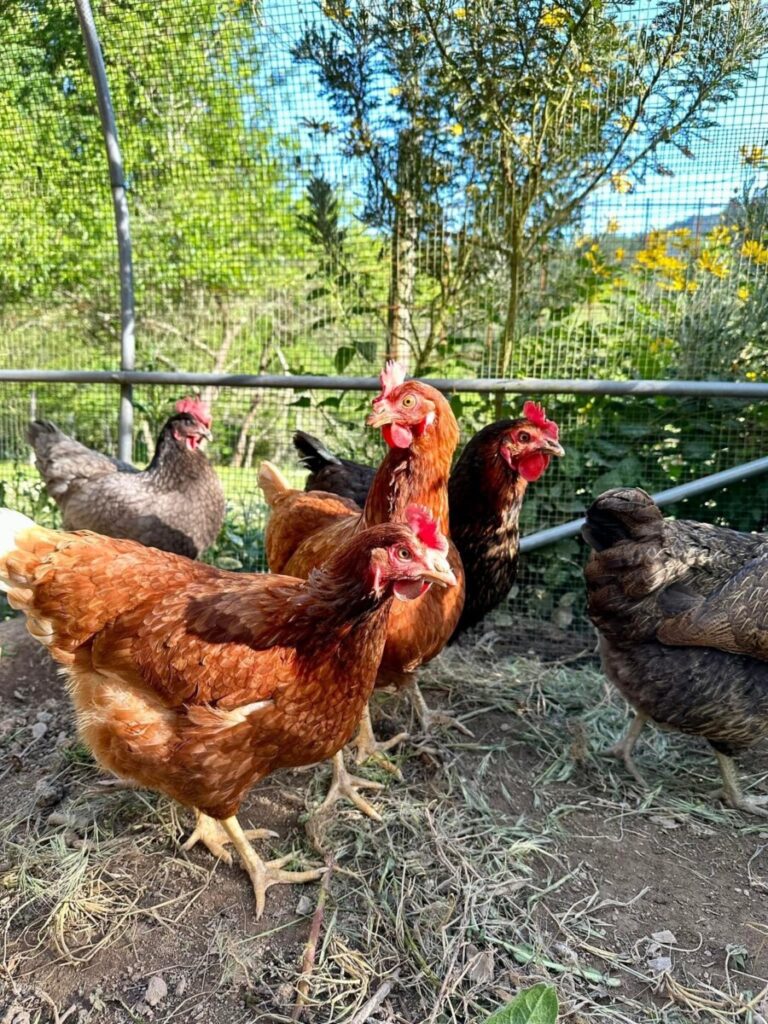
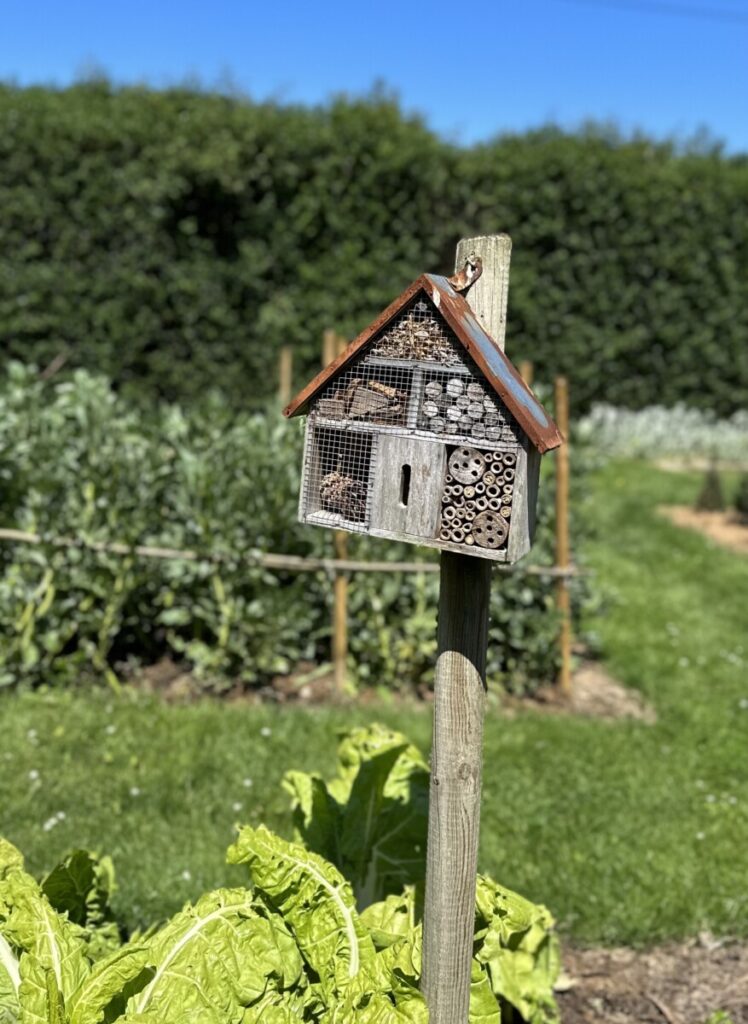
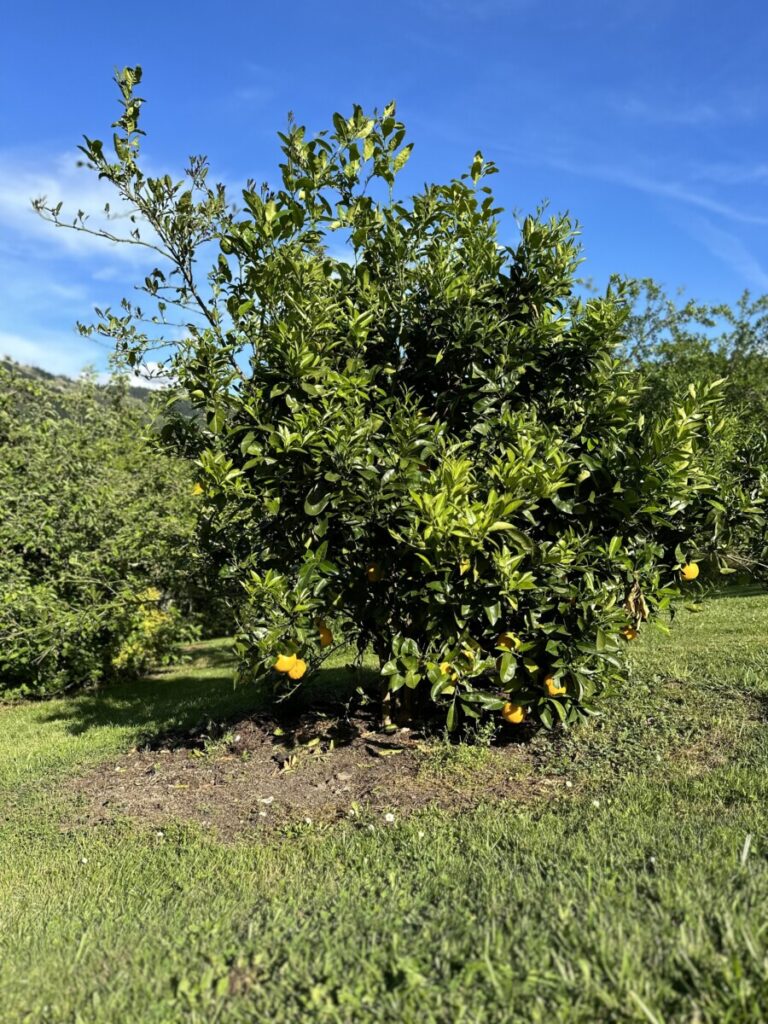
Laura and Roberto took us on a tour of the house, accommodations and the land. The house was built over the past 25 years by Roberto using sustainable and ecologically friendly materials and methods and is run off the land. It is beautiful; large eves overhang porches and decks cooling you while you enjoy the landscape, the perfect place to enjoy all this area has to offer. Laura made us a delicious chocolate and orange cake and left us a bottle of red wine. After the long drive and with no fresh groceries, I was ready for cake and wine for dinner. Then we toured the property, and I knew we were somewhere special. At first glance it looks like a stunning place to stroll and look at the views and as we toured, I realized this was so much more. Everywhere you turn is something edible; big bright green leaved fig trees, white spring blossoms of the apple trees, rows of grape vines, no till gardens full of green and red lettuce, asparagus poking out of the ground like little green aliens, onions with their bright white spring bulbs starting to plump out of the ground. Herbs and flowers dotted color and bright scents throughout the gardens. A teaching garden, outdoor bread oven and cider press. Chickens of all sorts; some were fat hens doing their pecking and scratching, red waddles and combs flopping as they work – some so tiny with big poofs on their heads and feet strutting their barnyard with authority, sheep and fluffy lambs, a pig named Scout – even a peacock. I could stroll and wander here endlessly, and I was transported back to being a kid on a farm and joy struck me deep.
Gardens and fruit trees
We weren’t having peanut butter sandwiches for dinner; I knew exactly what to do here! I grabbed my tote and headed out on a gathering mission. Lettuce, onions, herbs, oranges, eggs. I set the table and we feasted on fresh salad with orange herb dressing, 6-minute eggs and homemade croutons (find the recipe here). The red wine was dry and refreshing and the orange cake was light, airy and not too sweet. (Find cake recipe here) I was in love with this place already.
Dinner of Salad, Orange Herb Dressing, Croutons, 6-Minute Eggs
The next day we headed into Bilbao, one of the larger cities in the Basque region to visit the Guggenheim Museum and dig into some Pinxtos, small bites of delicious food enjoyed with a cider, beer or glass of wine. Tapas are the well-known cousins to these Basque morsels. We went to the old part of town to Plaza Nueva which is lined with bars parading case after case of Pinxtos. Each bar showing off their creations; little sandwiches called bocadillos, small toasts topped with all sorts of goodies – anchovies, tomato sauce, tuna – the options are endless with bocadillos. There were Spanish omelets called tortilla de España, olives, sardines, croquets fried with bacalao (salt cod) and ham – I could have sat and ate for hours! We ordered some bocadillos with Iberico ham and tuna, they are very popular here and are little sandwiches with either tomato puree or mayonnaise, topped with different meats and cheeses. I chose Iberico ham, (famous in Spain which I will tell you all about when I visit the south) and Tuna. We devoured the croquettes, small fried balls of cheese and ham – cheese, ham, fried – need I say more? We paired them with a few zurritos and txikitos, small glasses of beer and wine and sat out in the courtyard watching people. This first taste of Pinxtos did not disappoint. After a long day of roaming through Bilbao, we stopped for some gelato, finally made it to the grocery store and headed home. We were so full of Pinxtos we headed to the garden and ate salad, and chocolate orange cake for dinner and were perfectly satiated.
Laura’s Chocolate Orange Cake
That evening, sitting outside on the deck with a glass of wine, watching the bats dart to and fro like cute little bug killers, the cacophony of bird song was stunning. Owls and hawks’ screeches setting off the baby cry of the peacocks as the day birdsong changed over to night birdsong. A cow in the distance trekking from one pasture to the next, cowbell clanking. I was thinking about the plans for the next day. I packed our itinerary with gastronomy museums, wine and cheese tasting and of course more Pinxtos. I was going to try caracoles and salt cod the quintessential Basque food I could not leave without trying. Basque country has its own local wines and cheeses and salt cod or Bacalao, is a way of life here and I was looking forward to trying them all – well not the salt cod or caracoles (land snails that are a Spring obsession throughout Spain) but as they say; when in Spain! Basque country is one of the major food regions in Spain. It has a large amount of Michelin starred restaurants and is credited for leading the new era of returning to local, regional foods and celebrating them. The Basque people have been stewarding this land for generations dating back to Neolithic times. They have fought for and maintained their culture of food through Roman rule, Spanish rule, kingdoms come and gone and the Spanish civil war. During the war Franco forbade their language and took their rights away and the Basque people celebrated their traditions, language and food underground keeping it alive. The Basque region is currently an autonomous region and though not completely separate from Spain they do have laws and some self-governance, used mostly to preserve their long standing traditions and language. They have been here for so long their language, Euskera is unlike any other language on Earth. It predates the earliest known European settlers and is the only surviving pre-indo European language in Europe – which means it is ancient! It goes without saying Basque people have a very rich and old culture surrounding food and land and they honor that history through food still today. It is the perfect place to visit museums and cultural centers where you can explore the wealth of history and knowledge of the food of Basque Country as well as Spain and I have been planning these activities for months. Then I remembered a quote from The Basque Book:
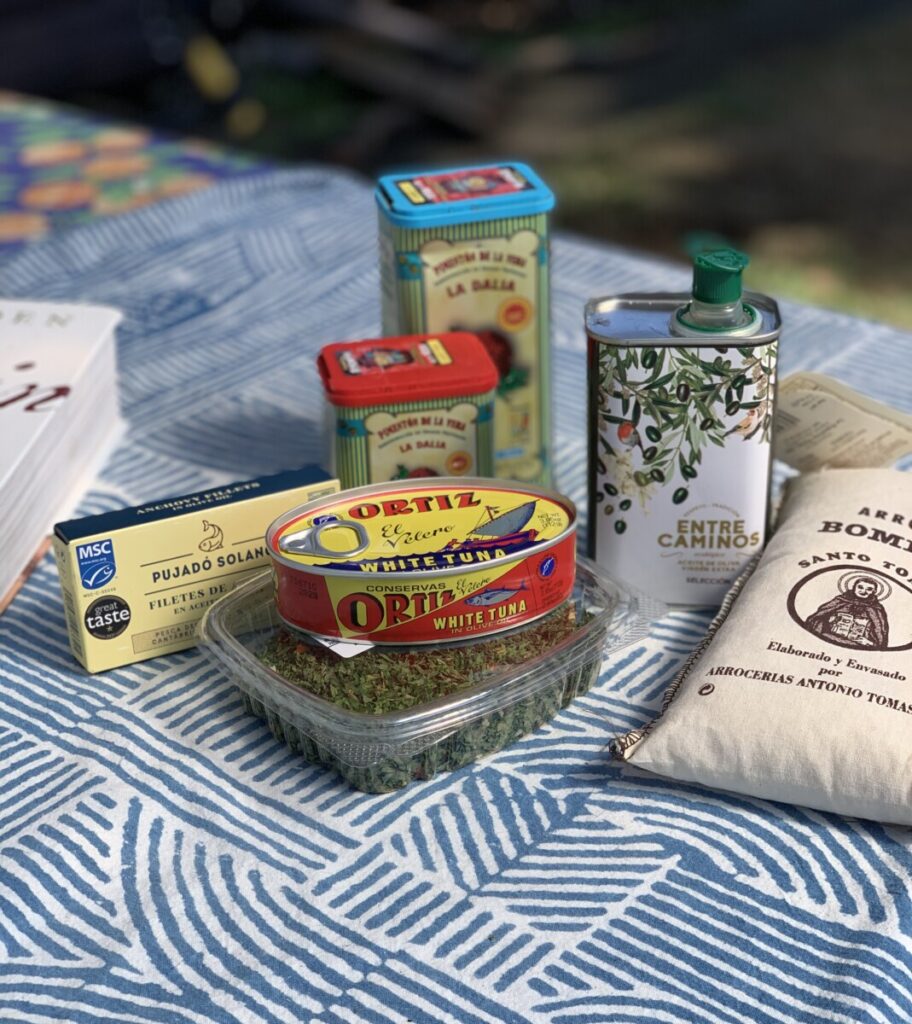
“If you know how to pick out good raw ingredients, you can cook Basque Food. . . If you have a bottle of olive oil, a head of garlic, and a tin of tuna, you can make Basque food. Like a family, it is a cuisine that is much greater than the sum of its parts. And like a family it is basic, instinctive, and comforting. Give it your time and care and it will give you a home.” P8 The Basque Book
This quote brought me back to the feeling I was having about this land and the connection I was making to it; my instinct was begging me to explore this place and what better way to celebrate Basque culture than walk the land I am on and use the food that is available right here? I had a bottle of very good olive oil, loads of garlic, some delicious Iberico ham cutlets and acres of possibility. I wanted to stay. So, I scrapped my plans of museums and tastings and stayed home for the day.
Sun BeamsThe Ladies
It was glorious! I went and said hello to the chickens in the morning, my cup of coffee (pretty much drinking chocolate at this point) in hand, dew hovering, the sun bright, warm rays and I walked the land. I wandered through the gardens, took note of the herbs, visited the animals, fed the lambs. I stumbled into Sonja, the woman who helped us find our way when we first arrived. She toured the learning garden with me and taught me about the farming practices they have here. (see photo gallery for more information).
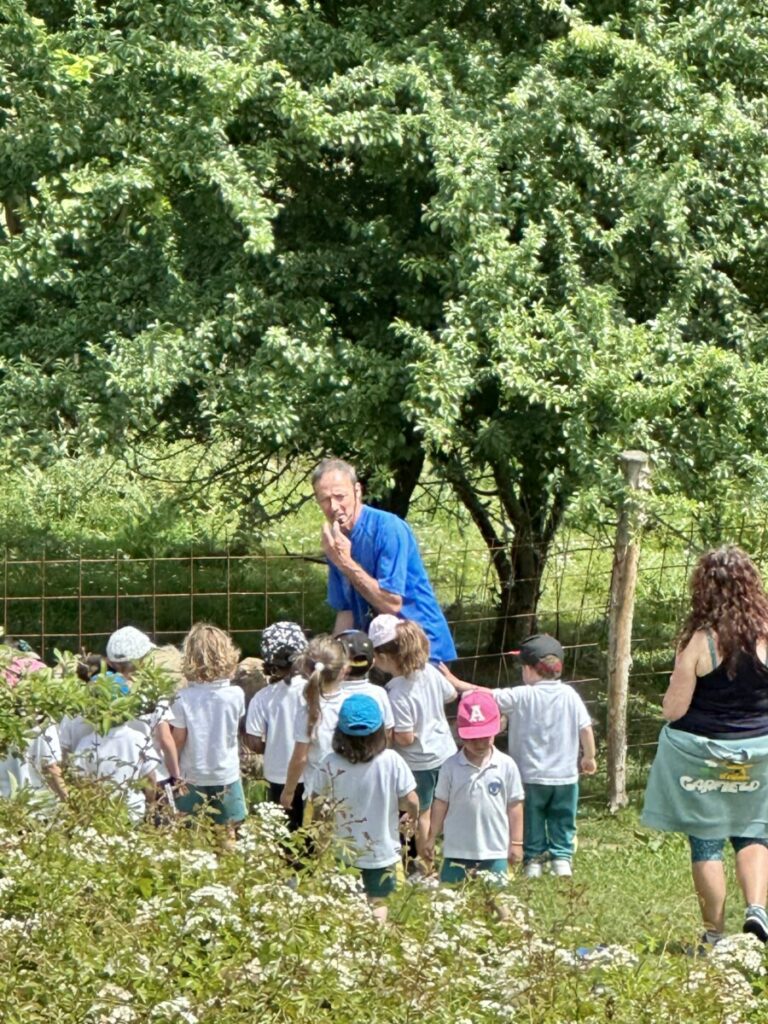
Erle HotelaRoberto teaching the kids. Orange TreeSonja!
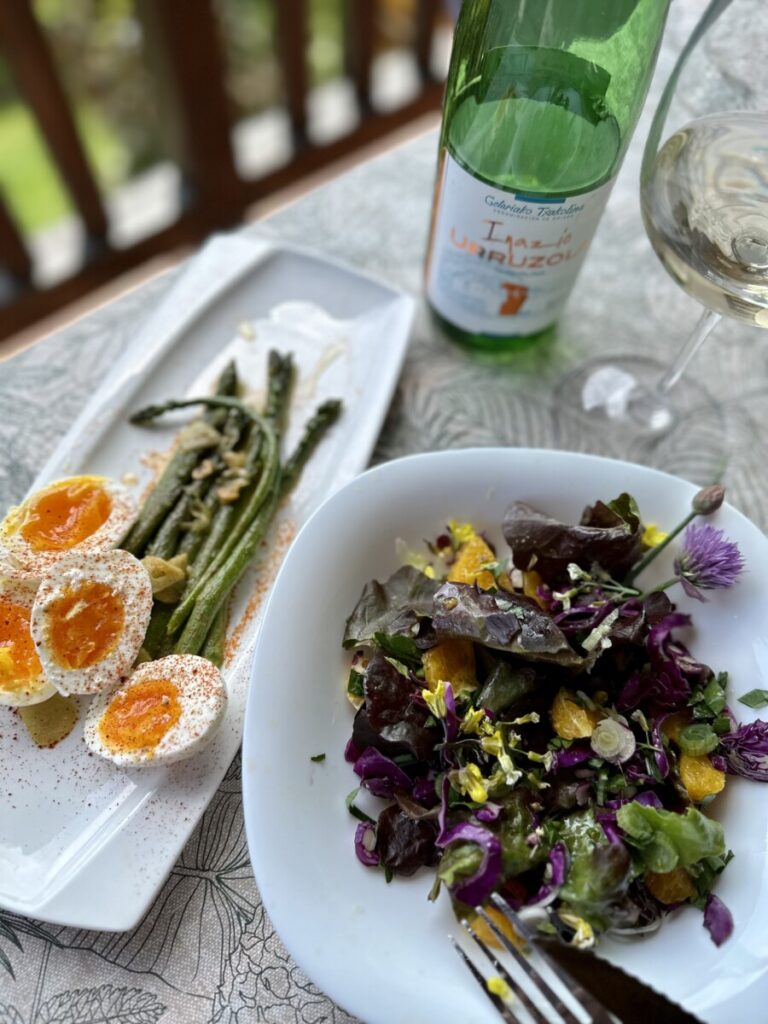
I headed to the garden for lunch; sauteed asparagus with garlic and olive oil, 6-minute eggs with paprika, more salad – I can’t get enough – and a glass of local Txacoli (cha-co-lee) white wine, dry and effervescent. It was light and decadent (find recipe here). Two things fill my head as I write; one, I don’t feel like I have enough space on this post to describe what fresh asparagus, picked minutes before you eat it, tastes like – the sweet tenderness is unbelievable, and two, I don’t have enough space on this post to tell the story of how this brings me back to the dreamy parts of me as a child and morning dew and chickens and sunlight through apple blossom trees and eating garden vegetables evoking overwhelming joy, those are stories for another outlet. Just know that I felt I was home.
Attempting to put this into words.LunchSalud!
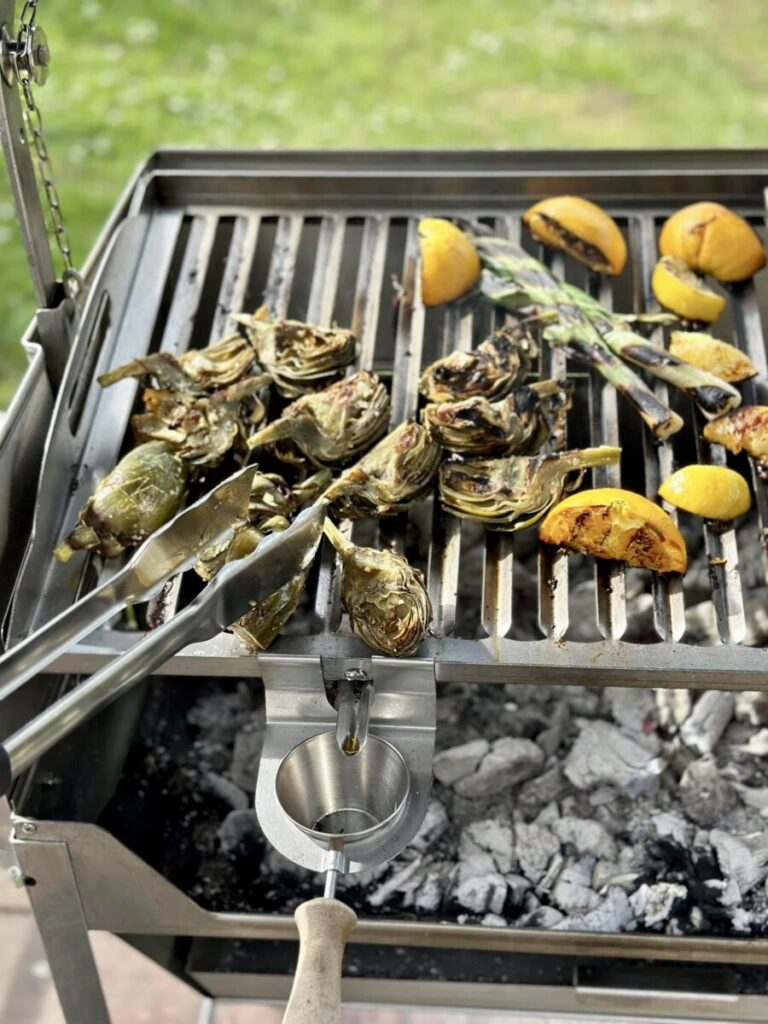
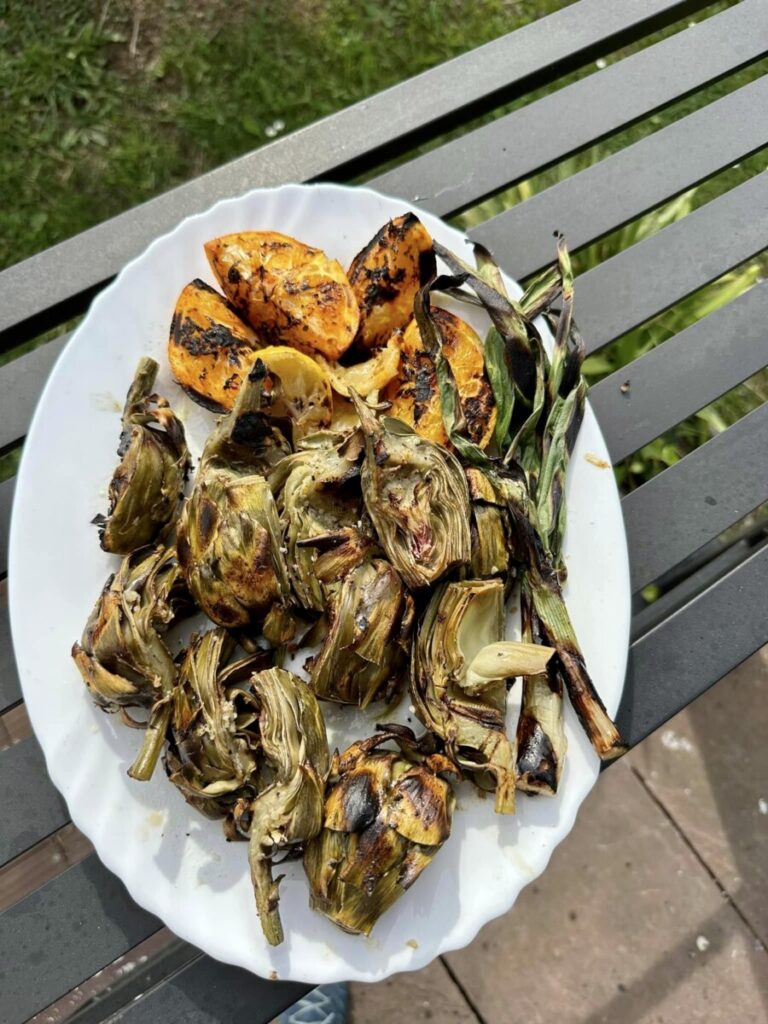
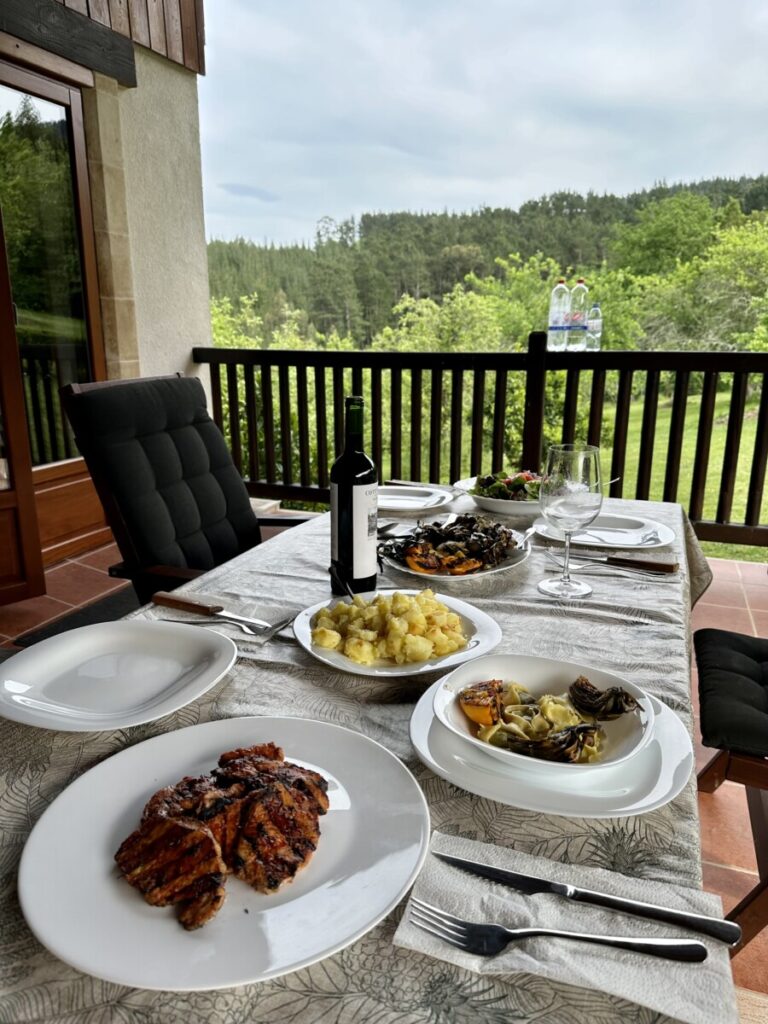
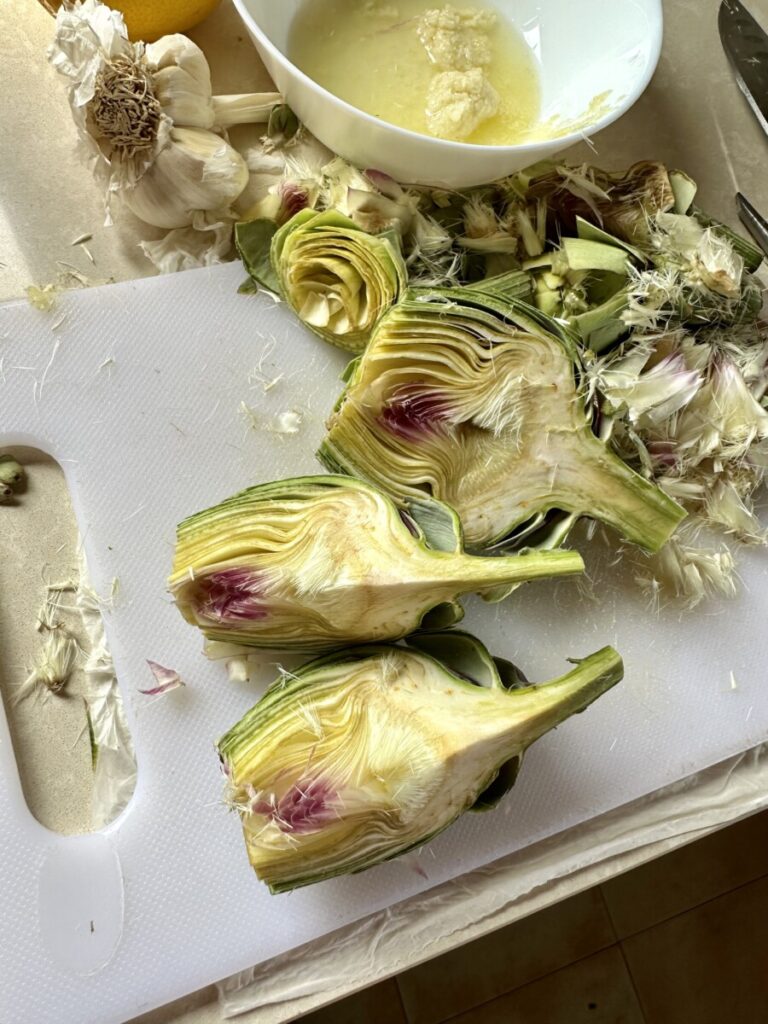
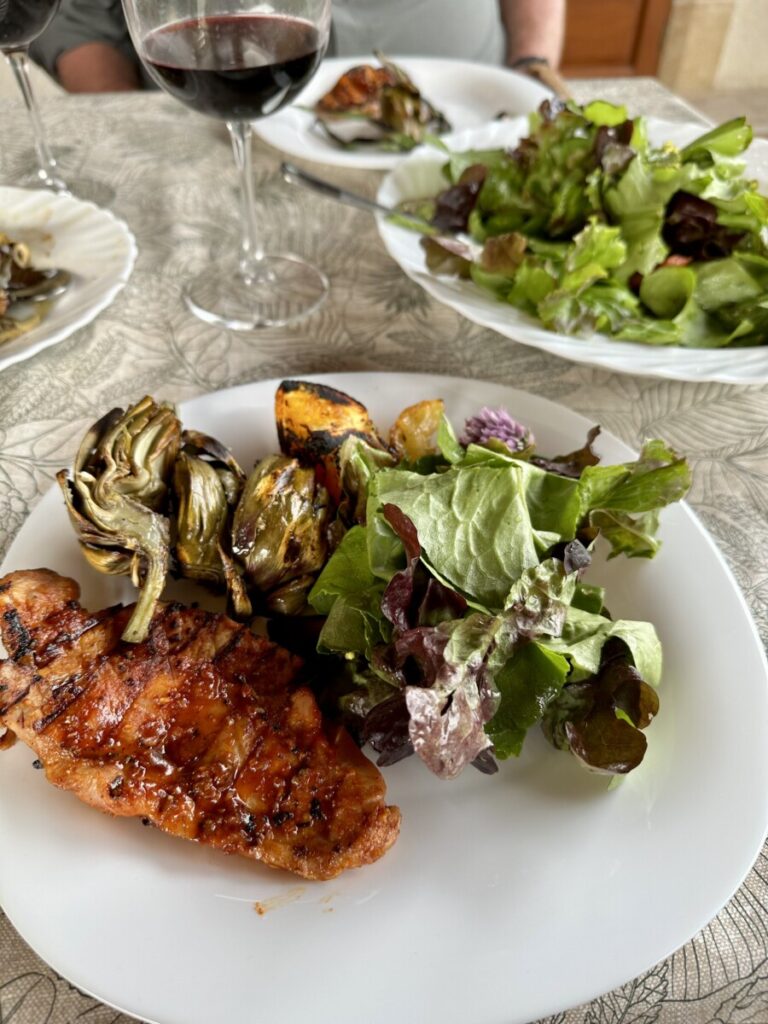
Back to the garden for dinner. Baby artichokes or alcochoas, grilled with garlic and orange, Iberico ham cutlets with a honey paprika marinade, salad and potatoes or patatas. (find recipe here) a bottle of Rioja – and of course more orange chocolate cake. We sat outside on the back porch and enjoyed the delicious meal, each other and the evening twilight and I felt we were exactly as we should be in Basque Country.
Grilling or La PlanchaAlcochoas
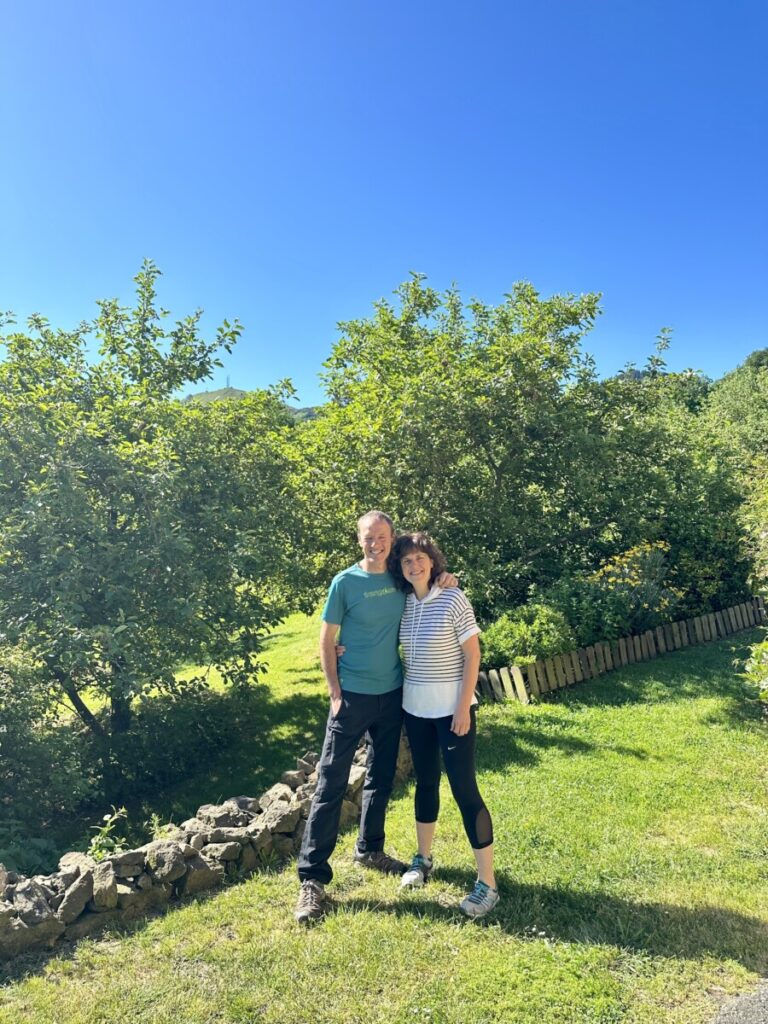
Alas the day came to bid a bittersweet goodbye to this place, I walked the property warm coffee in hand, taking in every final moment. I savored each bite of the last slice of cake, still moist and perfect, with a poached egg for breakfast and took my bags to the car. Roberto and Laura came to see us off and I got to spend some time chatting with them, they are lovely and graciously answered the myriad of questions I had.
Anytime I travel I know the reality is that I will not return to a place, it is a part of traveling. There are places I wish I could revisit but I know there is more of the world I want to experience. This is one of those rare places I will make a point to return.
This week’s Menu and Ingredient list – please note some tips on reheating the fritters.
Cucumber Mint Salad
Cucumber
Mint
Red Onion
Red Wine Vinegar
Olive Oil
Salt
Lemon
Toss before serving
Beet Hummus
Garlic
Lemon
Tahini
Chickpeas
Beets
Apple Cider Vinegar
Salt
Olive oil
Fava and Chickpea Fritters
Fava Beans
Chickpeas
Olive Oil
Buckwheat Flour
Garlic
Parsley
Green Onion
Apple Cider Vinegar
Mint
Salt
Directions for reheating: Place fritters on a baking sheet in a single layer, cook in a preheated oven to 400 degrees on convection setting for about 5 minutes or until heated – start checking at 5 minutes then pay attention not to burn. Serve with beet hummus.
Toasted Vegetable Salad
Garlic
Green Onion
Parsley
Basil
Apple Cider Vinegar
Olive Oil
Salt
Amaranth
Mint
Zuchinni
Turnips
Beet Tops
Green Salad With Dressing
Mixed Lettuces
Olive Oil
Dijon Mustard
Apple Cider Vinegar
Salt
Palm Sugar
Hello all,
This week we will have a lot of lettuce – so salads it is. I would like to try out a few new things with lettuce that will take me out of my comfort zone and thought this is the perfect place to try them. I am going to be using chapter 8 “How to Season a Salad” and chapter 16 “How to Snatch Victory from the Jaws of Defeat” – perfect for trying something new and having some encouragement to save it if it doesn’t work out.
Note a change in the schedule for this week I will be there on Tuesday instead of Monday so I can attend pasta making with Robin – so the food that I prepare will be ready for you to try on Wednesday for lunch.
I would also like to send my apologies for not having the ingredients list on this site last week due to technical issues, they are solved and each week you can find the recipes and ingredient lists here. I will also start printing out recipe cards to have at the farm stand beginning this week.
Thank you and please let me know anytime you have any questions, comments, requests or feedback.
Chapter 3 is a road map on the idea of prepping and cooking vegetables for use throughout the week. And I wanted to provide a few examples of the variety of ways you can use prepped without feeling repetitive. This not only preserves the freshness of the produce you’ve just procured, but a little bit of time up front can save you time on a busy day without compromise of flavor and enjoyment. Adler begins the chapter with basic rules of thumb when prepping vegetables – roasting, preparing, tasting and all of the do’s and don’ts wrapped in advice that transfers to all of your kitchen adventures. Then she gives you the gift of a thousand ways to use these prepped vegetables – and they are good.
“By the end of the week, you will have eaten vegetables a dozen ways a dozen times, having begun with good raw materials only once. You will also have had a number of satisfying conversations . . . You will have been silently practicing that ancient conversation in which cooks and their materials used to converse, feeling out unfamiliar conjugations, brushing up.” Pg 52
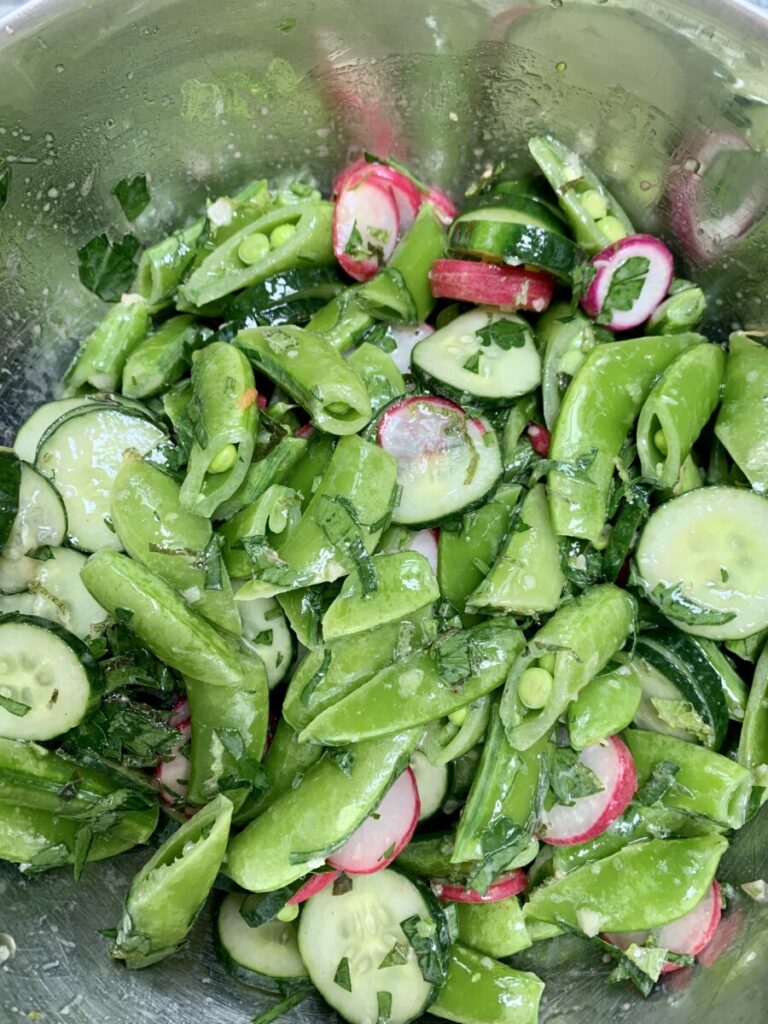
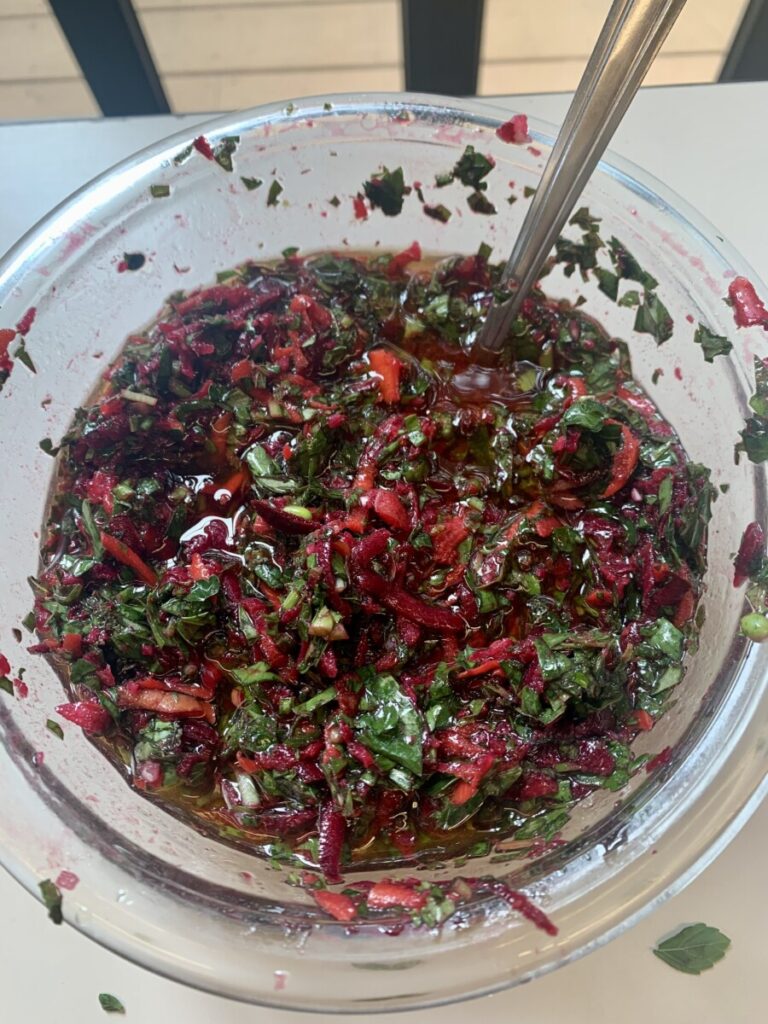
Spring Pea SaladHerb and Beet DressingVegetable Bean Soup
I am also excited about chapter 5, reading it was one of those moments when you read someone’s words and it is as if they are narrating your thoughts. She wonderfully and succinctly navigates key advice when it comes to cooking. She writes:
“If we were taught to cook as we are taught to walk, encouraged first to feel for pebbles with our toes, then to wobble forward and fall, then had our hands firmly tugged on so we would try again, we would learn that being good at it relies on something deeply rooted, akin to walking, to get good at which we need only guidance, senses, and a little faith.”
We aren’t often taught to cook like that, so when we watch people cook naturally, in what looks like an agreement between cook and cooked, we think that they were born with an ability to simply know that an egg is done, that the fish needs flipping, and that the soup needs salt.” Pg63
Often people tell me they aren’t good at cooking and ask how I know what to do – I will direct them to this chapter. Paying attention and using all of your senses is key and one of the most asked questions I get is “how many minutes should I cook this?” Adler answered this better than I can:
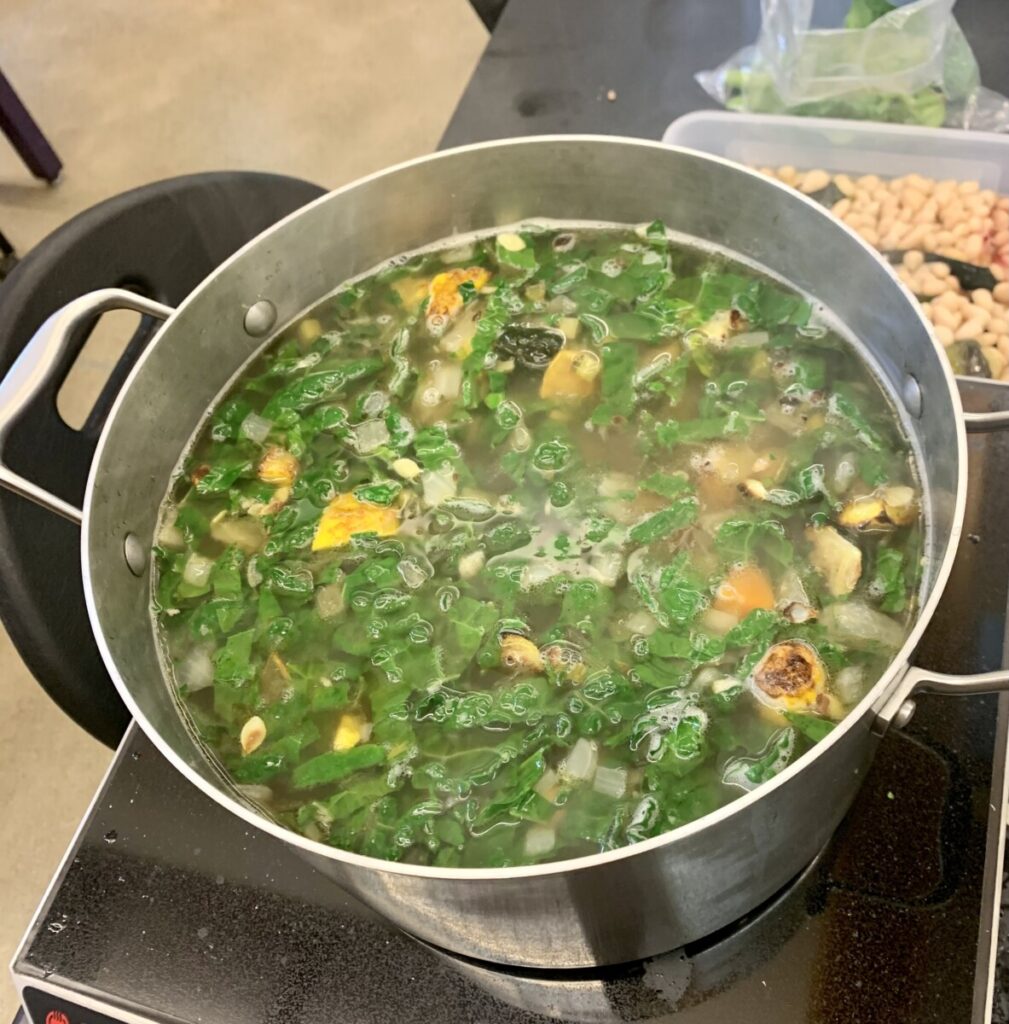
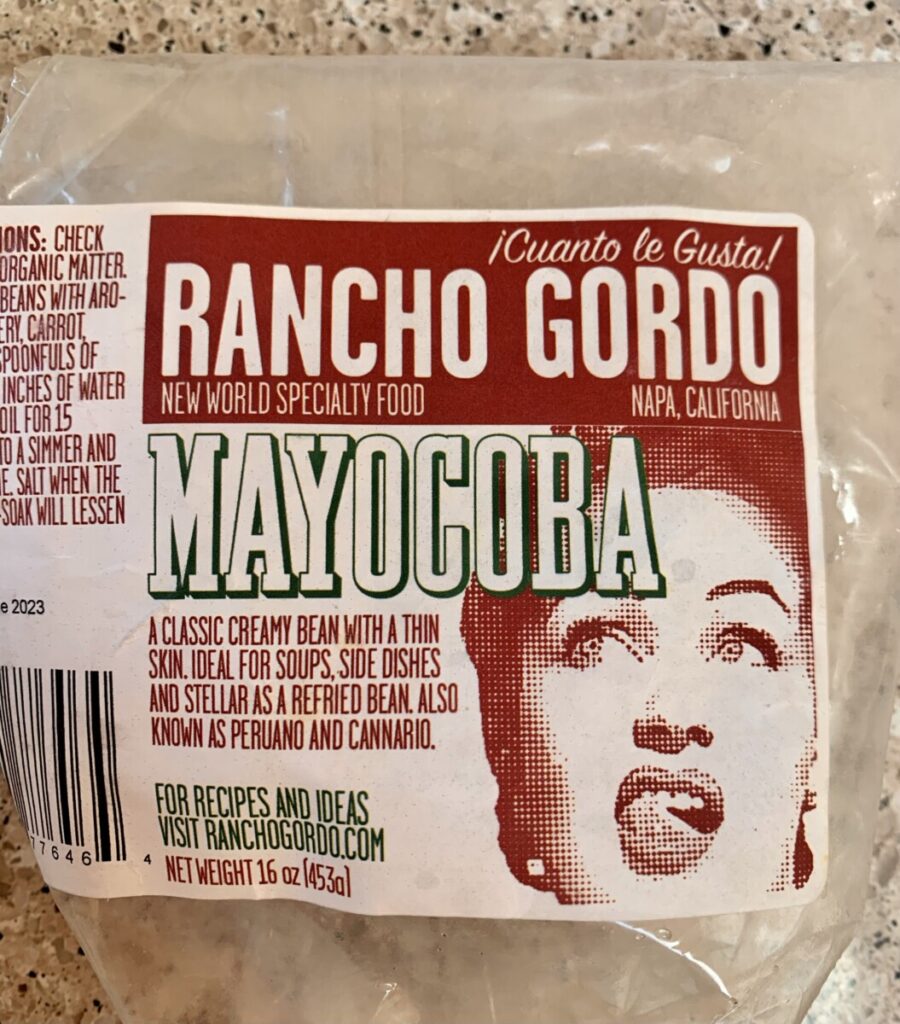
Mayocoba beans – they were in the soup – some of my favorite.
“No matter how well a cookbook is written, the cooking times it gives will be wrong. Ingredients don’t take three or five or ten minutes to be done; it depends on the day and the stove. So, you must simply pay attention, trust yourself, and decide.” Pg64
We can easily forget that cooking with simple ingredients, using all of our senses, simple tools and without the pressure of perfection or the expectation of award-winning presentation can and often does produce magical meals. The ability to look into the refrigerator, pantry or garden and piece together a meal with what you have on hand can be accomplished by anyone. Allowing ourselves to cook with wonder and misstep is key to learning how to know what to do.
Here are some of my favorite and I think useful quotes on using your senses – taste, sound, smell, touch and heart – from this chapter:
“Only by tasting can you learn to connect the decisions you make with their outcomes.”
“Listen as though you could cook something just by hearing it.”
“For your nose to be as useful as it can be, associate what you smell with what you taste and see and hear.”
“When you touch the food you cook, you develop intelligence in your fingertips.”
“A meal is cooked by the mind, heart, and hands of the cook, not by her pots and pans.”pg 64
As you can tell these may be my favorite chapters, I highly recommend reading and learning from them. The squash salad I made follows her recipe on page 45, A Vibrant Vegetable Salad. I am going to change up my posting a bit and post separately the recipes and process for the food I prepared this week. This will help to create handouts for the farm stand and for you to easily navigate what I am getting out of the text and what I am cooking. Stay tuned and please contact me or leave a comment if you have any questions, comments or feedback!
“As long as you taste curiously, and watch and feel and listen, and prick your way toward food you like, you will find that you become someone about whom people will say that cooking seems to come naturally, like walking.” Pg 66
Here is the ingredient list and a few notes for the menu this week.
Directions: Mix Dressing with salad – best if as many servings as possible are mixed with dressing becoming fully tossed before serving. Stir the dressing thoroughly, use a small amount and toss, adding more dressing as needed. Careful not to over dress.
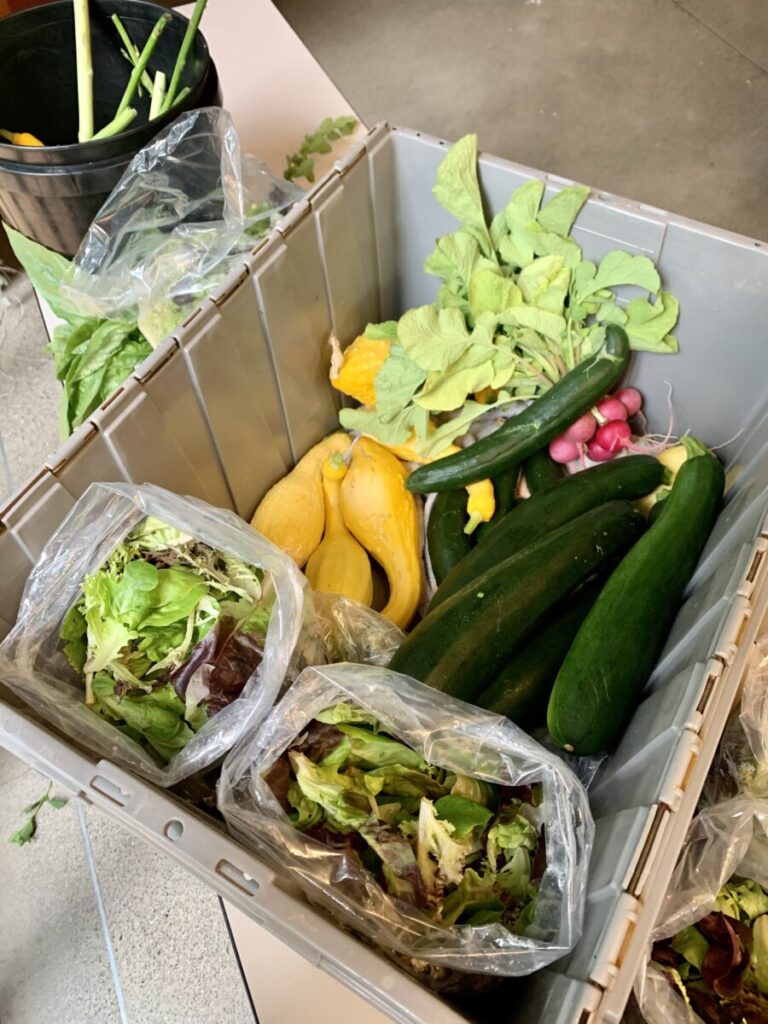
This week’s leftover produce was Zucchini and Snow Peas
I wanted to start the first food lab with the basics, taking Tamar Adler’s lead and using as much of what was on hand as I could. The produce leftover from the market this week was beautiful zucchinis and snow peas. I was quickly reminded that fresh organic produce is wonderful to work with, though it was harvested days ago it was better than any produce you could find in a store or supermarket. The zucchini was dark green and the flesh inside was mild, firm and dense and the snow peas still sweet and snappy. I took time to peruse the pantry in the SAL and was pleasantly surprised at it being stocked with the best basics of oils, vinegars, sweeteners and salts. At some point I would like to write a post on pantry staples that will help you make the most of the fresh food you have on hand but alas that will have to wait.
Working with just two ingredients, I wanted to make a variety of dishes that displayed the many options available without a lot of ingredients. I wanted to make sure to into consideration different techniques – when to dress a salad ahead of time, allowing the flavors to mellow and textures to change and when to wait – keeping things crisp and fresh. Cooked ingredients vs raw, different ways to cut ingredients and why they work with the technique applied. These four dishes have mostly the same ingredients in them and yet they have different flavors and textures creating a versatile menu with very little. No one wants to get bored with eating the same meal 15 times in one week just because they have limited ingredients on hand.
From the text I used the basic Vinaigrette on page 100 to start us off. I used onion, there were no shallots and because I knew I would need a little more sweetness with parsley and zucchini – I used apple cider vinegar instead of red wine vinegar. I suggest playing around with this recipe. It is very versatile, use it on every grain, even pasta for a cold pasta salad. Use it on cooked and raw vegetables, mix it with warm potatoes and herbs on hand and you have an amazing potato salad – run with it. Switch the ingredients around with what you have – have a lime not a lemon? Use the lime and a lighter oil and white wine or apple cider vinegar – see what it tastes like, what foods do you imagine it on, how does it change the flavor profile? I use these basic ingredients – think salt, fat and acid combinations – in every single thing I make. In her book a passage that I thought spoke to learning she said;
“If we were taught to cook as we are taught to walk, encouraged first to feel for pebbles with our toes, then to wobble forward and fall, then had our hands firmly tugged on so we would try again, we would learn that being good at it relies on something deeply rooted, akin to walking, to get good at which we need only guidance, senses and a little faith” pg. 63.
This recipe is a great place to start to “walk”. Here you have guidance, use your senses, smell two ingredients together, they will tell you instantly if they will taste good together, add some color and brightness, taste every step and have faith that some amazing flavors and textures will come out of playing around.
There are a few staples I keep in my pantry for my own tastes. I personally like a little heat and would add red pepper flakes to the vinaigrette. I would use honey instead of palm sugar, not enough to taste sweet, just enough to balance the bitterness. I am not big on adding sweetness, sometimes it makes sense though.
Here is what I’ve made this week:
Rice and Bean Salad
Brown rice, red beans, SNOW PEAS, ZUCHINNI, carrot, red onion, parsley
Dressing: Dijon, apple cider vinegar, onion, garlic, capers, palm sugar, lemon zest, lemon juice salt and pepper
Stuffed Zucchini:
ZUCHINNI, brown rice, onion, garlic, carrot, parsley, salt, pepper, lemon, red onion, Dijon, apple cider vinegar, capers, palm sugar, lemon zest, lemon juice.
SNOW PEAS, carrots, red onion, Dijon, apple cider vinegar, onion, garlic, capers, palm sugar, lemon zest, lemon juice, salt and pepper.
I hope you enjoy tasting the different dishes, and I would love to hear from you , questions, comments and requests, I am happy to answer your questions.