This week’s Menu and Ingredient list – please note some tips on reheating the fritters.
Cucumber Mint Salad
Cucumber
Mint
Red Onion
Red Wine Vinegar
Olive Oil
Salt
Lemon
Toss before serving
Beet Hummus
Garlic
Lemon
Tahini
Chickpeas
Beets
Apple Cider Vinegar
Salt
Olive oil
Fava and Chickpea Fritters
Fava Beans
Chickpeas
Olive Oil
Buckwheat Flour
Garlic
Parsley
Green Onion
Apple Cider Vinegar
Mint
Salt
Directions for reheating: Place fritters on a baking sheet in a single layer, cook in a preheated oven to 400 degrees on convection setting for about 5 minutes or until heated – start checking at 5 minutes then pay attention not to burn. Serve with beet hummus.
Toasted Vegetable Salad
Garlic
Green Onion
Parsley
Basil
Apple Cider Vinegar
Olive Oil
Salt
Amaranth
Mint
Zuchinni
Turnips
Beet Tops
Green Salad With Dressing
Mixed Lettuces
Olive Oil
Dijon Mustard
Apple Cider Vinegar
Salt
Palm Sugar
Hello all,
This week we will have a lot of lettuce – so salads it is. I would like to try out a few new things with lettuce that will take me out of my comfort zone and thought this is the perfect place to try them. I am going to be using chapter 8 “How to Season a Salad” and chapter 16 “How to Snatch Victory from the Jaws of Defeat” – perfect for trying something new and having some encouragement to save it if it doesn’t work out.
Note a change in the schedule for this week I will be there on Tuesday instead of Monday so I can attend pasta making with Robin – so the food that I prepare will be ready for you to try on Wednesday for lunch.
I would also like to send my apologies for not having the ingredients list on this site last week due to technical issues, they are solved and each week you can find the recipes and ingredient lists here. I will also start printing out recipe cards to have at the farm stand beginning this week.
Thank you and please let me know anytime you have any questions, comments, requests or feedback.
Chapter 3 is a road map on the idea of prepping and cooking vegetables for use throughout the week. And I wanted to provide a few examples of the variety of ways you can use prepped without feeling repetitive. This not only preserves the freshness of the produce you’ve just procured, but a little bit of time up front can save you time on a busy day without compromise of flavor and enjoyment. Adler begins the chapter with basic rules of thumb when prepping vegetables – roasting, preparing, tasting and all of the do’s and don’ts wrapped in advice that transfers to all of your kitchen adventures. Then she gives you the gift of a thousand ways to use these prepped vegetables – and they are good.
“By the end of the week, you will have eaten vegetables a dozen ways a dozen times, having begun with good raw materials only once. You will also have had a number of satisfying conversations . . . You will have been silently practicing that ancient conversation in which cooks and their materials used to converse, feeling out unfamiliar conjugations, brushing up.” Pg 52
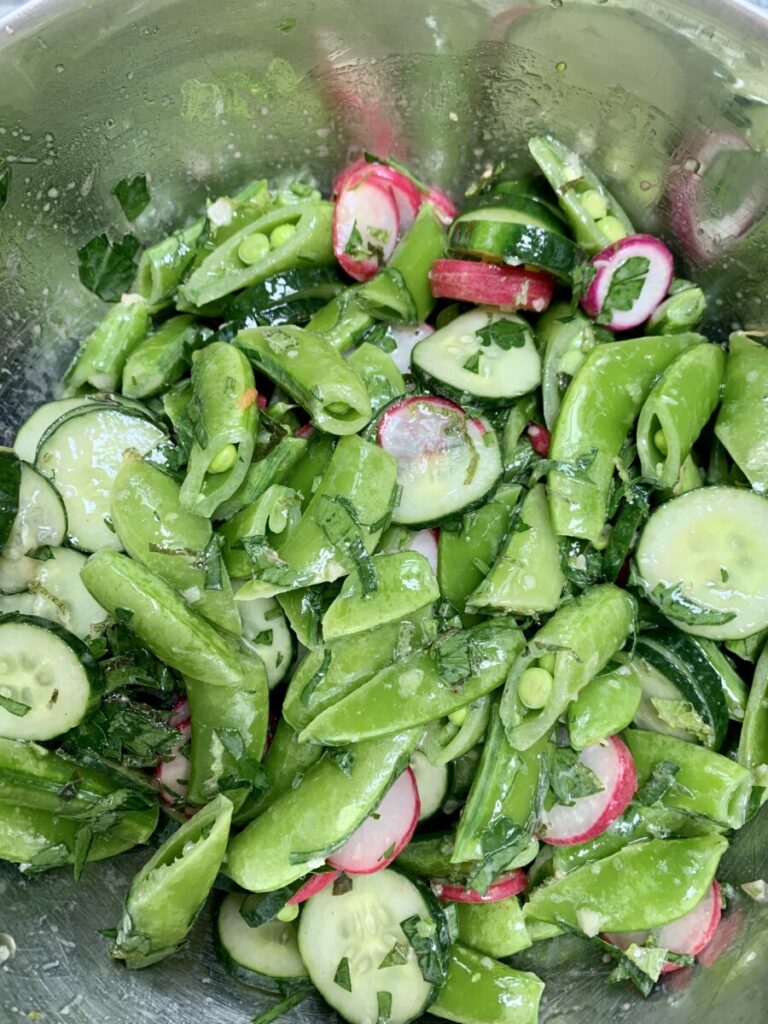
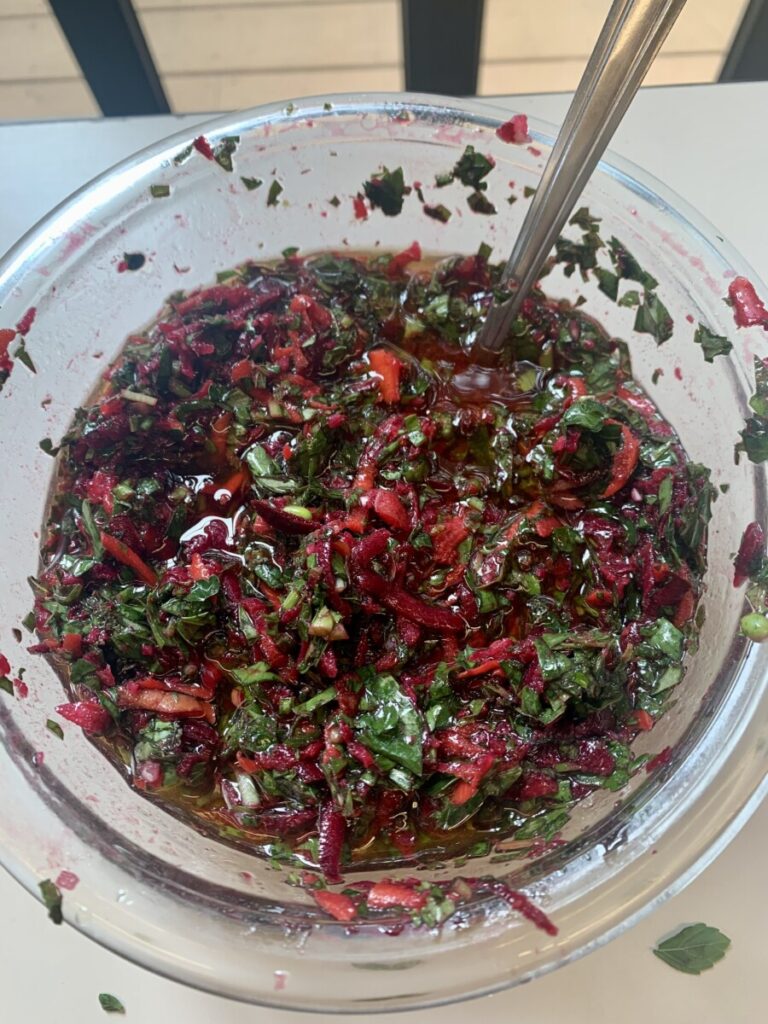
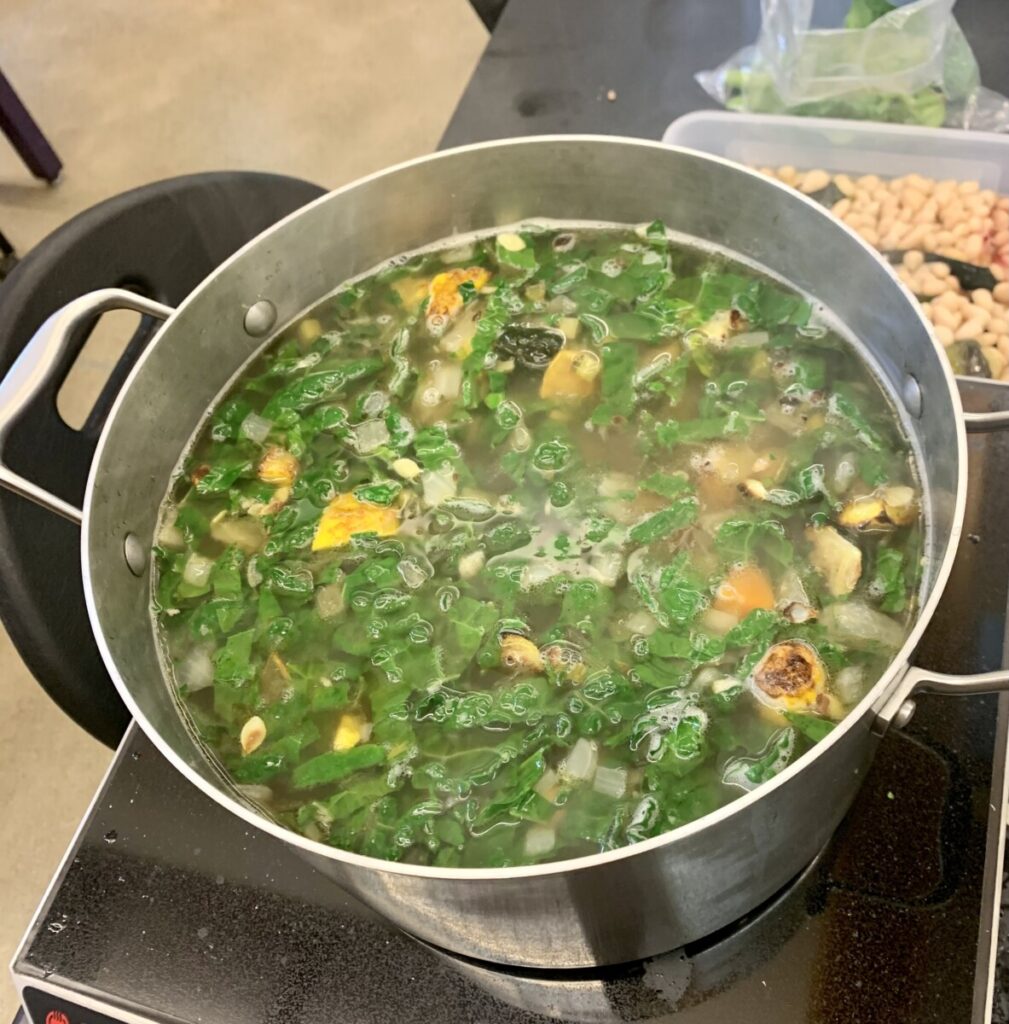
Spring Pea SaladHerb and Beet DressingVegetable Bean Soup
I am also excited about chapter 5, reading it was one of those moments when you read someone’s words and it is as if they are narrating your thoughts. She wonderfully and succinctly navigates key advice when it comes to cooking. She writes:
“If we were taught to cook as we are taught to walk, encouraged first to feel for pebbles with our toes, then to wobble forward and fall, then had our hands firmly tugged on so we would try again, we would learn that being good at it relies on something deeply rooted, akin to walking, to get good at which we need only guidance, senses, and a little faith.”
We aren’t often taught to cook like that, so when we watch people cook naturally, in what looks like an agreement between cook and cooked, we think that they were born with an ability to simply know that an egg is done, that the fish needs flipping, and that the soup needs salt.” Pg63
Often people tell me they aren’t good at cooking and ask how I know what to do – I will direct them to this chapter. Paying attention and using all of your senses is key and one of the most asked questions I get is “how many minutes should I cook this?” Adler answered this better than I can:
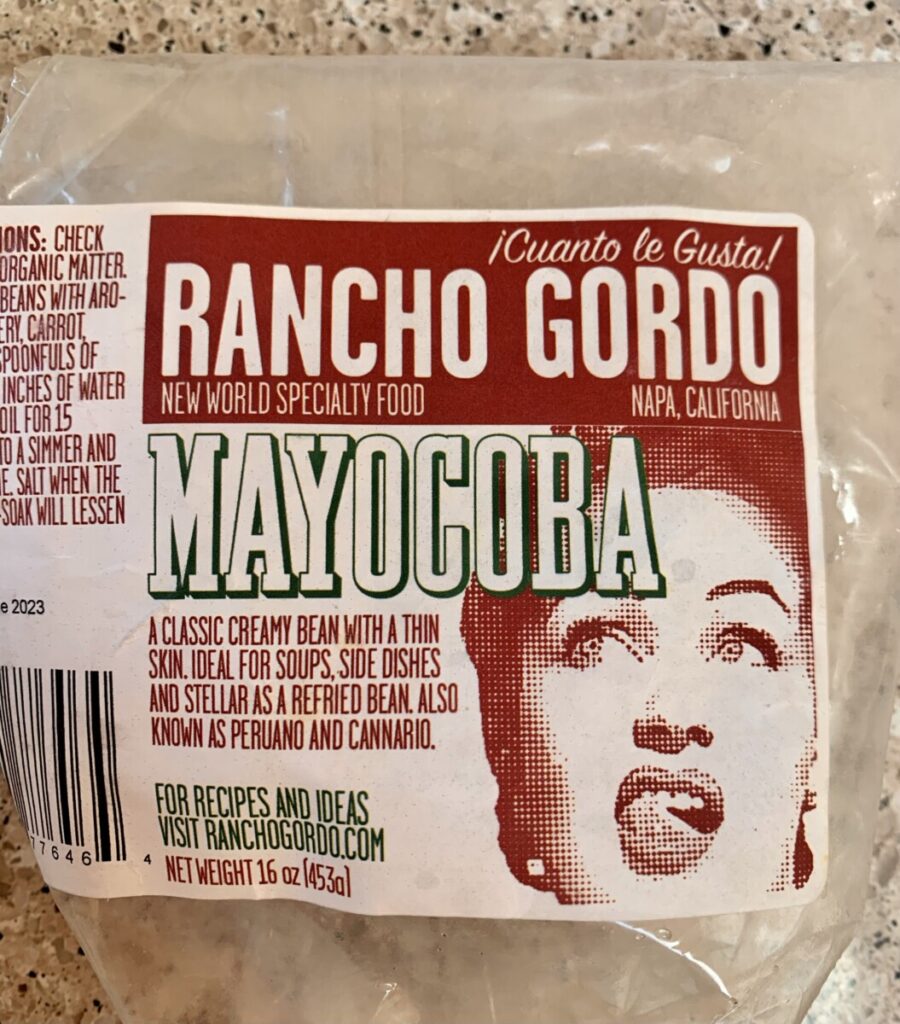
Mayocoba beans – they were in the soup – some of my favorite.
“No matter how well a cookbook is written, the cooking times it gives will be wrong. Ingredients don’t take three or five or ten minutes to be done; it depends on the day and the stove. So, you must simply pay attention, trust yourself, and decide.” Pg64
We can easily forget that cooking with simple ingredients, using all of our senses, simple tools and without the pressure of perfection or the expectation of award-winning presentation can and often does produce magical meals. The ability to look into the refrigerator, pantry or garden and piece together a meal with what you have on hand can be accomplished by anyone. Allowing ourselves to cook with wonder and misstep is key to learning how to know what to do.
Here are some of my favorite and I think useful quotes on using your senses – taste, sound, smell, touch and heart – from this chapter:
“Only by tasting can you learn to connect the decisions you make with their outcomes.”
“Listen as though you could cook something just by hearing it.”
“For your nose to be as useful as it can be, associate what you smell with what you taste and see and hear.”
“When you touch the food you cook, you develop intelligence in your fingertips.”
“A meal is cooked by the mind, heart, and hands of the cook, not by her pots and pans.”pg 64
As you can tell these may be my favorite chapters, I highly recommend reading and learning from them. The squash salad I made follows her recipe on page 45, A Vibrant Vegetable Salad. I am going to change up my posting a bit and post separately the recipes and process for the food I prepared this week. This will help to create handouts for the farm stand and for you to easily navigate what I am getting out of the text and what I am cooking. Stay tuned and please contact me or leave a comment if you have any questions, comments or feedback!
“As long as you taste curiously, and watch and feel and listen, and prick your way toward food you like, you will find that you become someone about whom people will say that cooking seems to come naturally, like walking.” Pg 66
Here is the ingredient list and a few notes for the menu this week.
Directions: Mix Dressing with salad – best if as many servings as possible are mixed with dressing becoming fully tossed before serving. Stir the dressing thoroughly, use a small amount and toss, adding more dressing as needed. Careful not to over dress.
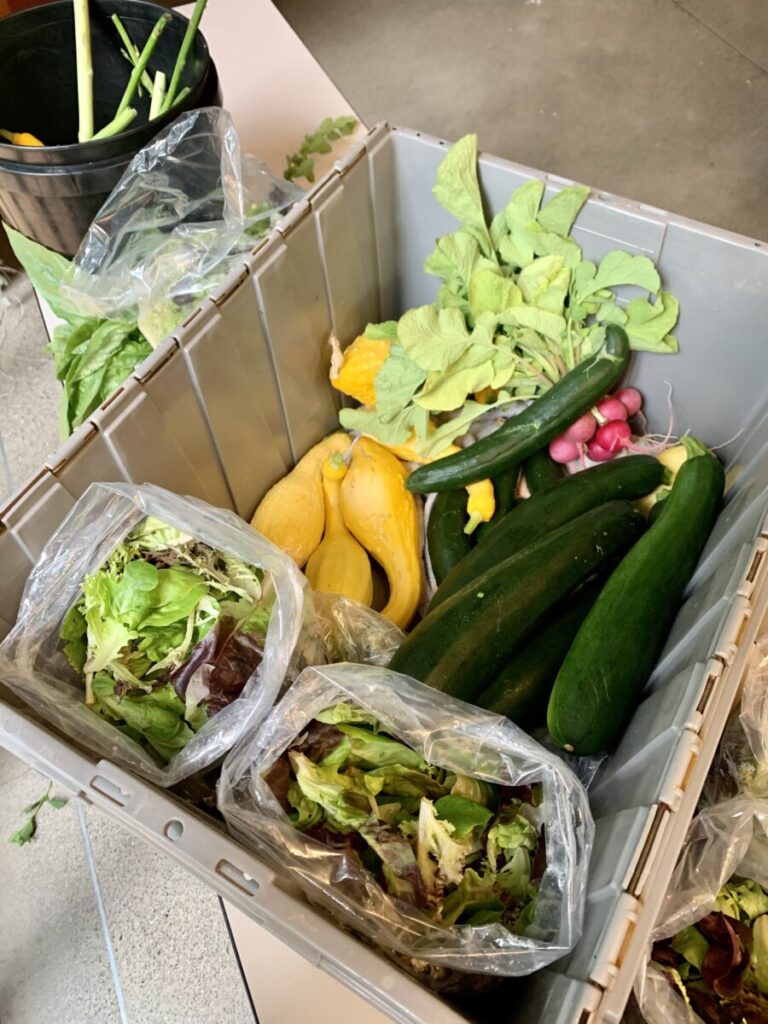
This week’s leftover produce was Zucchini and Snow Peas
I wanted to start the first food lab with the basics, taking Tamar Adler’s lead and using as much of what was on hand as I could. The produce leftover from the market this week was beautiful zucchinis and snow peas. I was quickly reminded that fresh organic produce is wonderful to work with, though it was harvested days ago it was better than any produce you could find in a store or supermarket. The zucchini was dark green and the flesh inside was mild, firm and dense and the snow peas still sweet and snappy. I took time to peruse the pantry in the SAL and was pleasantly surprised at it being stocked with the best basics of oils, vinegars, sweeteners and salts. At some point I would like to write a post on pantry staples that will help you make the most of the fresh food you have on hand but alas that will have to wait.
Working with just two ingredients, I wanted to make a variety of dishes that displayed the many options available without a lot of ingredients. I wanted to make sure to into consideration different techniques – when to dress a salad ahead of time, allowing the flavors to mellow and textures to change and when to wait – keeping things crisp and fresh. Cooked ingredients vs raw, different ways to cut ingredients and why they work with the technique applied. These four dishes have mostly the same ingredients in them and yet they have different flavors and textures creating a versatile menu with very little. No one wants to get bored with eating the same meal 15 times in one week just because they have limited ingredients on hand.
From the text I used the basic Vinaigrette on page 100 to start us off. I used onion, there were no shallots and because I knew I would need a little more sweetness with parsley and zucchini – I used apple cider vinegar instead of red wine vinegar. I suggest playing around with this recipe. It is very versatile, use it on every grain, even pasta for a cold pasta salad. Use it on cooked and raw vegetables, mix it with warm potatoes and herbs on hand and you have an amazing potato salad – run with it. Switch the ingredients around with what you have – have a lime not a lemon? Use the lime and a lighter oil and white wine or apple cider vinegar – see what it tastes like, what foods do you imagine it on, how does it change the flavor profile? I use these basic ingredients – think salt, fat and acid combinations – in every single thing I make. In her book a passage that I thought spoke to learning she said;
“If we were taught to cook as we are taught to walk, encouraged first to feel for pebbles with our toes, then to wobble forward and fall, then had our hands firmly tugged on so we would try again, we would learn that being good at it relies on something deeply rooted, akin to walking, to get good at which we need only guidance, senses and a little faith” pg. 63.
This recipe is a great place to start to “walk”. Here you have guidance, use your senses, smell two ingredients together, they will tell you instantly if they will taste good together, add some color and brightness, taste every step and have faith that some amazing flavors and textures will come out of playing around.
There are a few staples I keep in my pantry for my own tastes. I personally like a little heat and would add red pepper flakes to the vinaigrette. I would use honey instead of palm sugar, not enough to taste sweet, just enough to balance the bitterness. I am not big on adding sweetness, sometimes it makes sense though.
Here is what I’ve made this week:
Rice and Bean Salad
Brown rice, red beans, SNOW PEAS, ZUCHINNI, carrot, red onion, parsley
Dressing: Dijon, apple cider vinegar, onion, garlic, capers, palm sugar, lemon zest, lemon juice salt and pepper
Stuffed Zucchini:
ZUCHINNI, brown rice, onion, garlic, carrot, parsley, salt, pepper, lemon, red onion, Dijon, apple cider vinegar, capers, palm sugar, lemon zest, lemon juice.
SNOW PEAS, carrots, red onion, Dijon, apple cider vinegar, onion, garlic, capers, palm sugar, lemon zest, lemon juice, salt and pepper.
I hope you enjoy tasting the different dishes, and I would love to hear from you , questions, comments and requests, I am happy to answer your questions.
This week I was unable to make it to the farm, disappointing yes and figuring out schedules can get confusing. I was able to read more of Tamar Adler’s An Everlasting meal