We headed east today, making our way through the lush green of the northwest and Bilbao on our way to the small beach town of Stiges on the Mediterranean. We had planned to stop at a few wineries and a salteria (a place where they salt fish) as we traversed Spain but Artesoro Basseria was such a wonderful place we chose to stay for as long as we could.
For the next few days, I don’t have a planned culinary journal stop or a specific food I want to try on the road, or in Stiges, and I am glad for it. I look forward to a few days on the beach to process what I have learned and experienced. It will be a good pause to regroup and refocus my plans going forward.
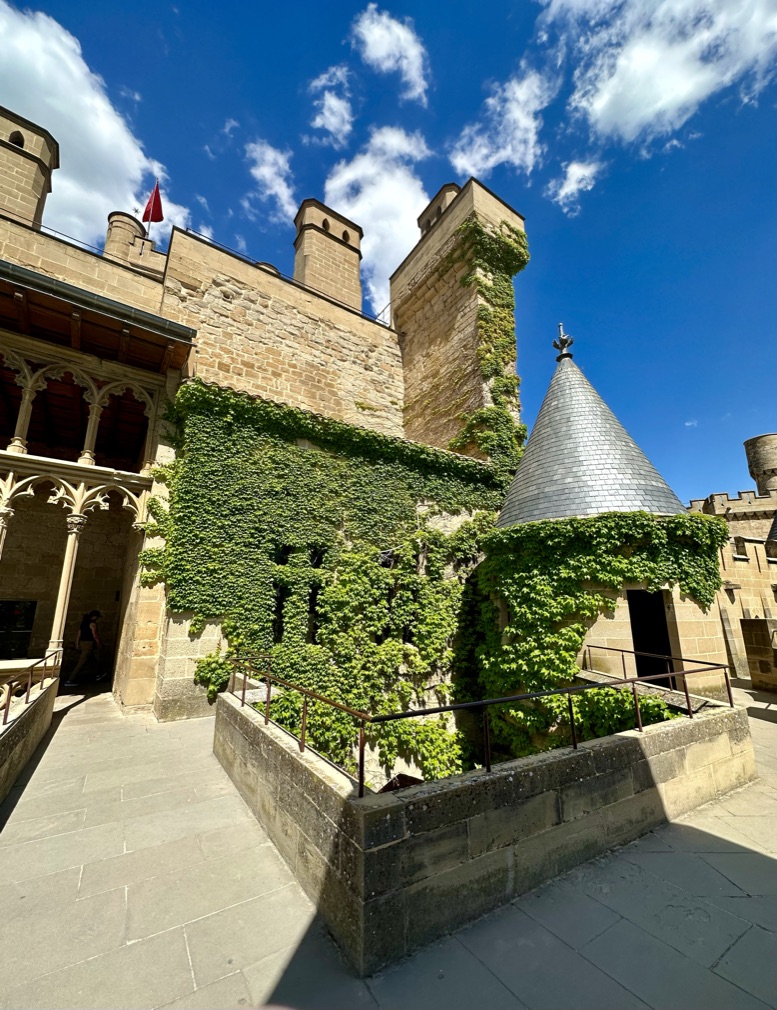
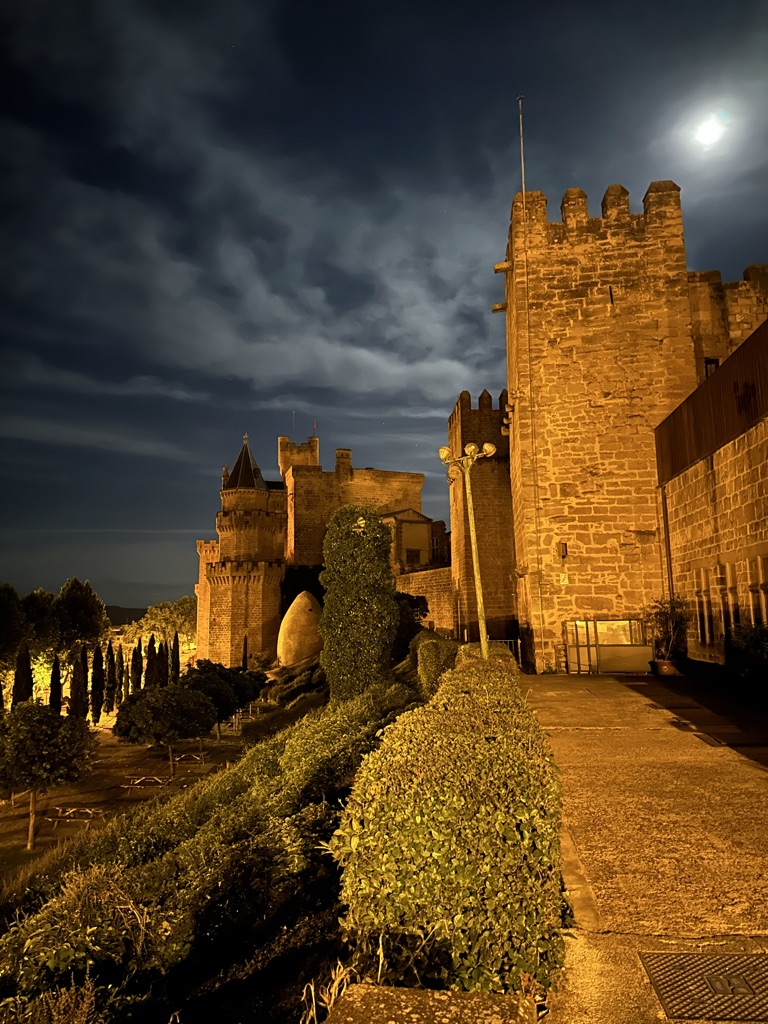
Our first stop, breaking up the drive is Parador de Olite, a medieval castle of the Navarre Kingdom turned into a hotel. In the late 1920’s the Spanish government decided to increase tourism as well as preserve and restore historical sites by turning buildings such as castles, monasteries, convents, fortresses and palaces among other beautiful sites into lodging. Today there are 96 paradores throughout Spain. We stayed in the castle de Olite which was beautiful and exiting, and spent the day wondering through the castle, strolling the walled, cobblestone city and had tapas inside the vine covered courtyard – olives in oil and herbs, tomato toasts and crisp wine.
Ironically this is where I tried migas for the first time in Spain. Why is that ironic? Migas are a dish of fried breadcrumbs in oil, and depending on the region they use olive oil or lard and add what they have on hand. The combinations vary from chorizo and blood sausage to grapes and chocolate. Originally the food of shepherds the dish has since become a national comfort food. Shepherds would cook migas while journeying the old transhumance routes the cross Spain, these routes were used to transport sheep to seasonal grazing pastures. Agricultural laborers soon adopted the delicious and frugal dish and it spread throughout Spain.
It was an interesting paradox to have such a humble dish served in a castle where Kings and nobility of Navarre, once the seat of Spanish Royalty, lived for centuries. These are the journeys that interest me the most, and what I hunger to discover, how a dish has moved through time, it is a story of people that I enjoy discovering. Did I like them? No. Unfortunately it is rare to get an authentic take on a dish when dining in a tourist spot. I think it was more important to the restaurant to have ‘traditional’ dishes on the menu than it was to take the time to then prepare something tasty – and so it goes. I am sure it is a different experience when one samples a well prepared plate of migas that include love and care, and I look forward to trying those.
Back on the road we journeyed through many regions of Spain, form Basque Country into Navarre, along the lush Ebro River Valley and into Aragon with olive trees forever and on to the roads end – at the sea. It was wonderful to watch the topography change from high, forested mountains dropping into green rolling hills, to the chalky arid interior with vineyards as far as you can see.
As we got closer to the Mediterranean the rocky soil lightened, and bright green grape vineyards were mixed with fields and fields of eucalyptus green olive trees – until there were only olive trees as far as you can see, sage against the blue sky. I was mesmerized and wanted to know all about these gnarly beauties.
Let’s talk a bit about olive oil – aka liquid gold!
Until I began this project, I would not have believed you if you told me Spain produces over 51% of the world’s olive oil. According to the International Olive Counsel, during the 2021/22 harvest season Spain produced a whopping 1,491,500 TONNES of liquid gold. Out of the top 10 best olive oils produced in 2019 – 8 of them are Spanish. What about Italy you ask? So did I. That same year Italy produced 329,000 tones of olive oil and I learned Italy imports olive oil from Spain, I was shocked. Needless to say, I was not surprised at the amount of olive groves I saw on our drive. (https://www.internationaloliveoil.org/wp-content/uploads/2022/12/HO-CE901-13-12-2022-P.pdf)
Since I was not going to the largest olive producing region during this trip, I did a surface amount of research and (as I am finding with every turn) I have more questions. A very quick view of the history of olive oil in Spain; It is believed that the Phoenicians brought olive trees to Spain over 3000 years ago from present day Lebanon, the Romans took power of the region, which they called Hispania, planted more trees, created an industrial amount of olive oil and used this fertile land to grow and supply their oil thirsty empire. When the Moors took power, they were skilled in irrigation practices and increased production among other updates that greatly increased production. Today there are olive groves in Valencia that are said to have trees over 1000 years old, the oldest has been scientifically dated, is 1,700 years old and still producing. All of this being said, there is a lot more depth and history and power struggle and information that goes into the olive oil story of Spain as it is today. It is a rich and exciting lineage and I look forward to making it one of my studies next year.
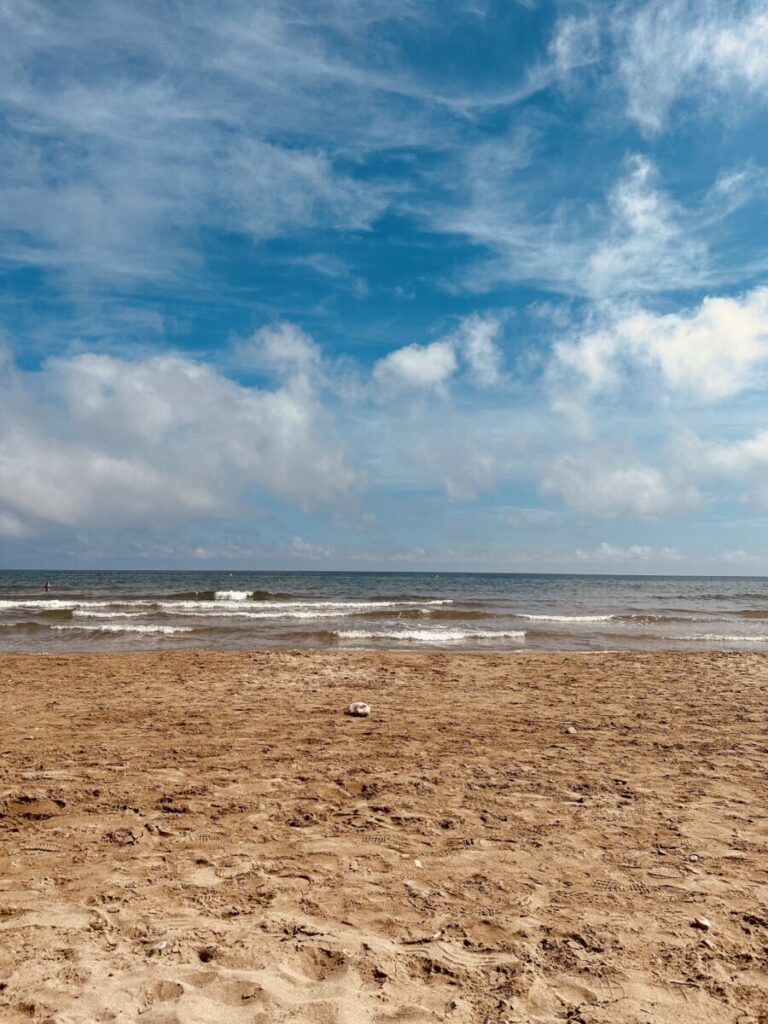
As thoughts and questions about olive oil went through my head, watching grove after grove whisk by, we turned a corner and there it was – the shining, deep marine and turquoise blue water of The Mediterranean – an unbelievable color. I get really excited about bodies of water, they feed my soul – especially oceans and seas and I keep a mental and visceral note of the first time my feet are lapped by waves from new water. I could not wait for my first step into the Mediterranean Sea. I was in the moment we arrived, sandcastle colored sand, soft warm deep blue waters, the sound of the waves calling me in. I was ready for a few days of beach, fresh seafood and catching up on my notes – so many notes. I am still surprised at how much more I want to learn after being in a place, traveling awakens my curiosity and leaves me wanting to know more.
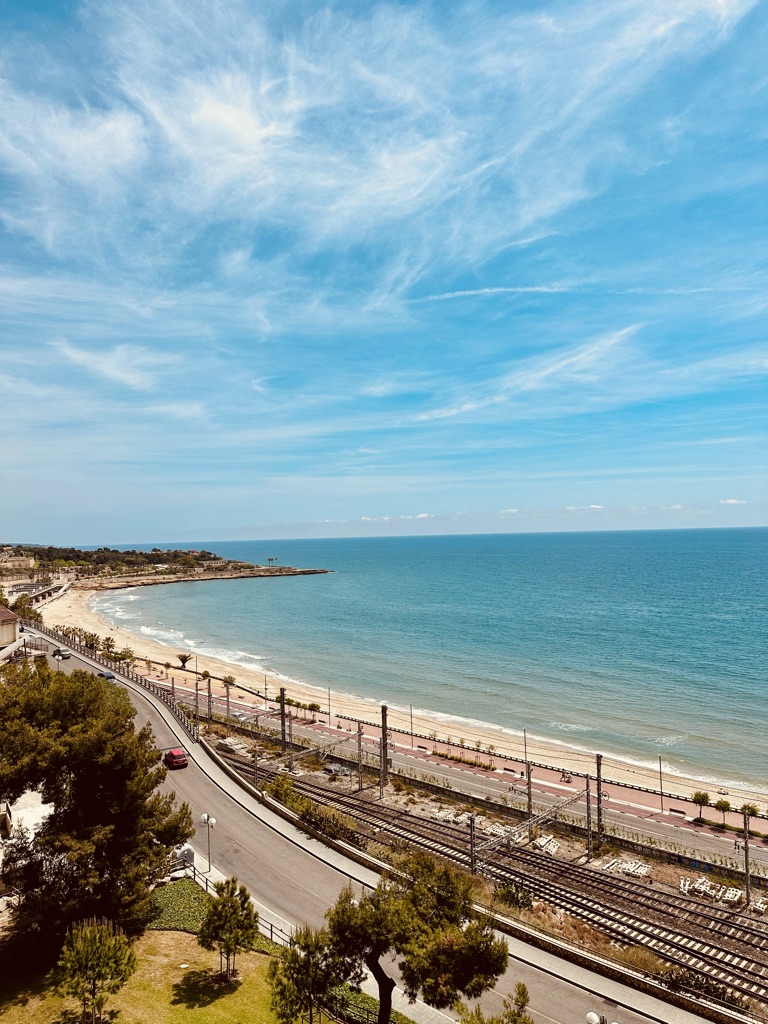
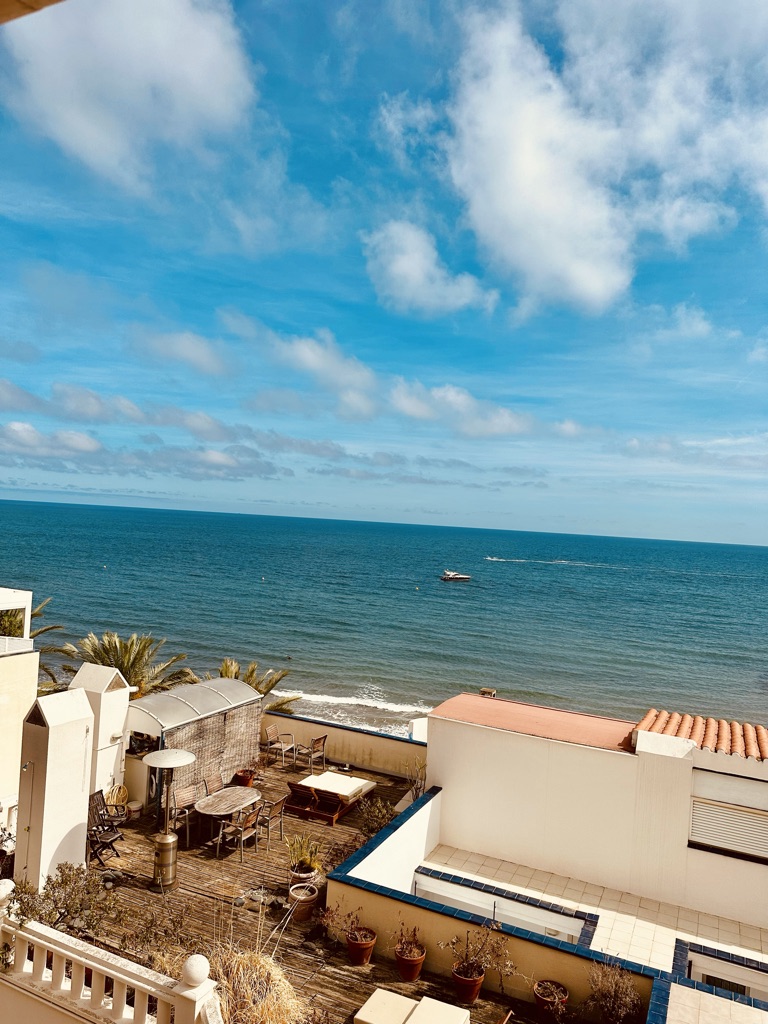
Stiges was exactly what I needed. It is a small town just south of Barcelona on the sea. It was quaint, sleepy, yet touristy with rows of very large boats lining the marina and restaurants boasting fresh seafood and paella along it’s sidewalks.
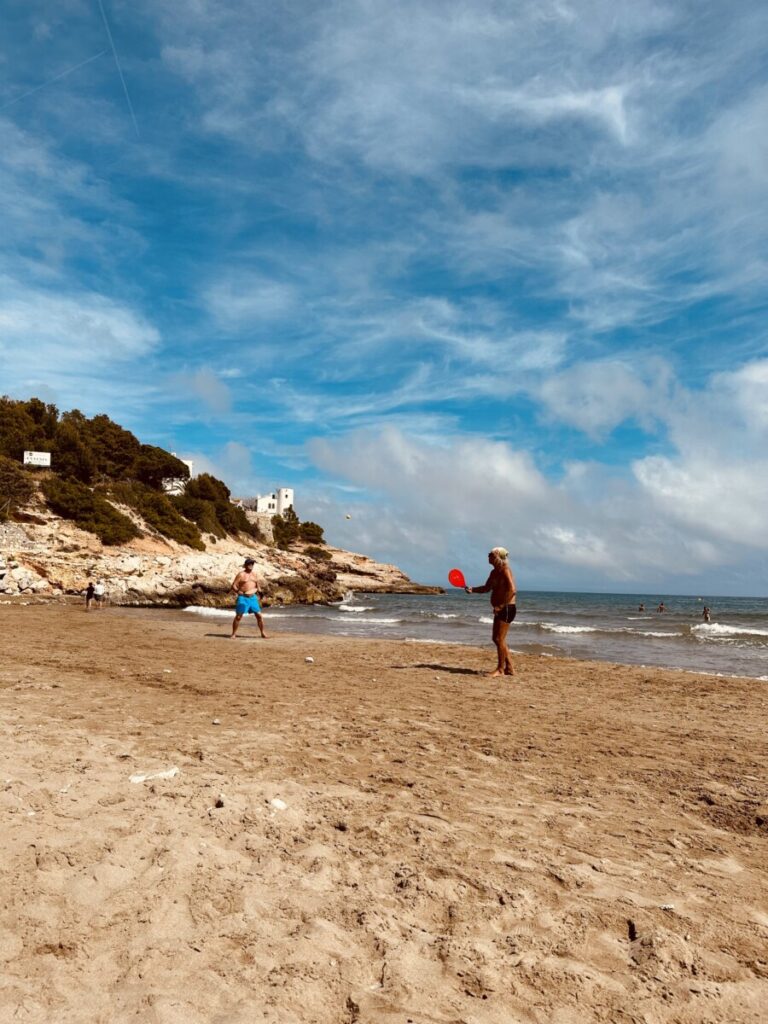
The beach at the end of the small harbor was lined with jagged rocks on either side, cliffs lined with sun bleached houses and a sleepy little restaurant in the sand. It was perfect. I rested, watched the locals play paddle ball, ate delicious shrimp and salad under the umbrella with a cold beer, and wrote a notebook full of thoughts and ideas on my travels thus far. I did not cook much in Stiges, I spent my days on the beach, eating the fresh catch, soaking in the sea air and thinking – heavenly.
As I researched (researching while on a beach is fabulous) I re-discovered Claudia Roden; a food writer, traveler, cookbook author and amazing historian. I had heard of her before, here and there, and I’ve cooked a few of her recipes in the past. Being on a culinary journal project myself, I saw her work in a new light. She began to travel through the Mediterranean when she was my age, kids out of the home and ready for a new direction. She began by asking people what their favorite recipe is, what their parents and grandparents ate and she connected these recipes to a history and a culture of a place in a stunning and moving way. Being in a similar stage of my life, I felt a connection to her work and became newly inspired. I had been struggling, I know what I want to do in this next phase of life, travel and share food and cultures, I know why it is important to me yet the question and honestly doubt in my mind has always been – why would anyone want to know what I have to say about it, why would people want my perspective and thoughts on food, how is this a contribution? Through her work and words she reminded me that recipes are important, not only to understand a dish but be able to explain it, to understand a culture and it’s history through the stories of the people, to be able to say what a dish is, what it represents and why it is important to share. She writes about her culinary journey through Spain, “A word, a taste, a smell, triggered memories I never knew I had. It is surprising how dishes can appeal directly to the emotions. They say that with food, as with music, you can touch people and even make them cry.” Spain pg. 2
I am discovering what I am truly interested in – how people cook in their homes, what food they cook for celebrations and their traditions around the dinner table, what social connections do they have to the food they eat, where does their food come from today and in the past and what all of this tells us about the human condition. We are what we eat (literally) and for us as humans, social connection and food are intricately entangled – we are human because of this relationship. It is important to remember and reconnect the two. I want to tell the stories of food that evoke joy and relationship and leave the reader hungry. Through reading Claudia’s work and words, I remembered that my voice and perspective will evoke emotions in some that may not be touched by other’s writing – we need all of the voices, and my work will matter to some.
So I ask myself what would it look like to cultivate connections to people as I travel – like Laura and Roberto in Basque Country – and share recipes with them, ask them what their favorite recipe is, what did their parents and grandparents eat? What would my experience be if I made connections with people in each place, I traveled asking these questions? What would it look like to stay in one place long enough to get a feel of the rhythm and the food and the people? What if I traveled through the Mediterranean and retraced some of Rodens travels, how has the culture and ways of food in these regions changed since she set out on her first adventure so many years ago? Sitting on the veranda in the evening, watching the green light tipped poles connected to invisible fisherman on the cliff rocks, boggle around for a nighttime catch of squid, the waves’ rhythm against the sand, these questions swam in my mind and ignited an excitement in me, tapped my insatiable curiosity on the shoulder and woke me up again.
And so it is off to Barcelona tomorrow with renewed excitement, clear direction – and a suntan.