
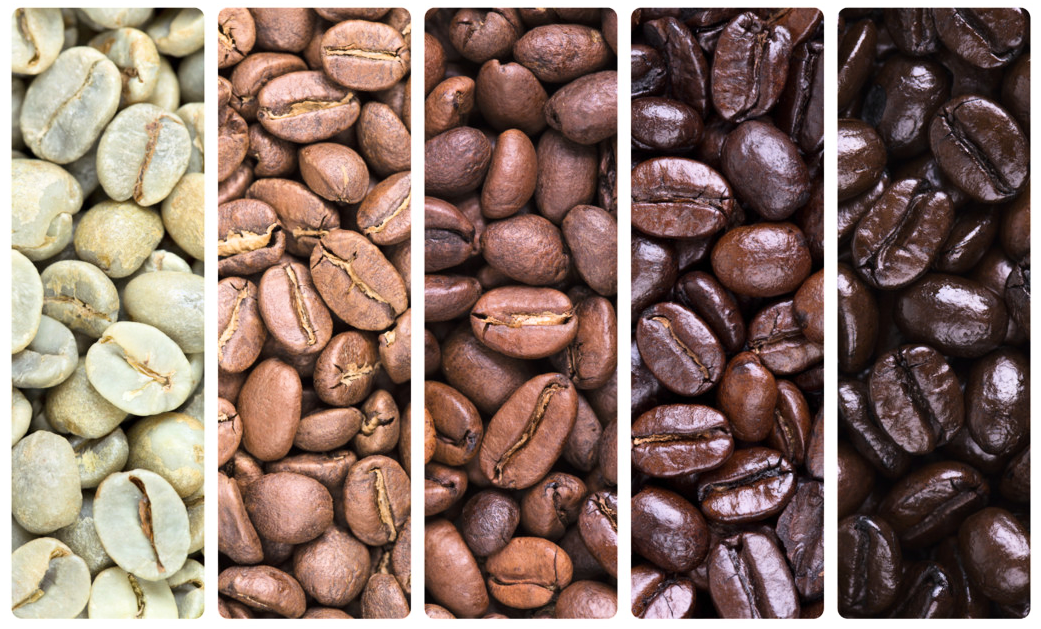
Stages of Roasting
Browning
Once all the water has been driven out of the beans the browning process can begin. The beans are still very dense and will soon start to expand, this is when the chaff flakes off. During this time the beans give off an aroma of basmati rice and baking bread. Before the first crack happens, the beans are now browned, but they have a very harsh plant like or acidic taste.
First Crack
As the beans are nearing 390F the beans go through a phenomenon called “first crack”. This is when the beans crack due to the outer portion of the bean being dried and the gasses and water vapor expanding, thus the bean cracks and expands. This cracking or popping sound is usually fairly loud. Once this happens the coffee will develop its flavors and the roast can be ended at any point.
Cinnamon/Very Light Roast/Blond– ~395 to 410*
Light Roast/ New England Roast/ American Roast– ~410* to 425*
The beans are usually taken off of the heat right around the peak of the first crack. This provides a toasty tasty with notes of brown sugar and lemon or citrus.
City Roast- ~425 to 435*
This roast usually defines the color of the beans that are taken out a minute or so after the end of the first crack. This offers still the original flavor of the bean with some citrus undertones. Little to no Maillard reaction has occurred yet and acidity levels are still fairly high here.
Medium Roast/ Full City Roast– ~435* to 445*
A minimum of a full minute of development after the first cracking. This is when the beans start to begin to smooth out and their color deepens. Maillard reaction is also starting to happen here. This will bring out the buttery, caramel, and chocolate notes. The fruity, sweet, citrusy, floral notes will start to disappear here.
Second Crack
This second crack is a quieter, more snappier sounding crack/pop. Here the bean will expand in size again, due to the internal temperature of the bean reaching the same temperature as the outside of the bean. This is when the oils will be driven to the surface of the bean. The acidity will almost all disappear. Continuing on roasting after the second crack usually results in the raw coffee characteristics being lost.
Progression in the roast after the second crack can often result in the beans catching fire.
Dark Roast/Vienna Roast– ~445* to 455*
This roast happens when the beans have been taken off the heat in the later stage of the second crack. As this roast progresses the beans will lose their original coffee characteristics and begin to take on a roast profile instead.
Further Development
This happens at the end of the second crack when a secondary development happens, this is when the beans are darkening in color. The roast profile will start to fully take over as the beans start to carbonize.
French Roast- ~460* to 465*
The beans have fully gone through a second development and their color is a very dark brown not quite black. All fruit and floral notes are gone here. There usually is a fair amount of smoke happening during this stage. The smoke and carbonization within the beans are what gives the French Roast its toastiness in both flavor and aroma.
Italian/Spanish Roast– ~ 470* to 480*
By this time little to no original characteristics are left and the smokiness has completely dominated the flavors. The beans become black and very carbonized here.
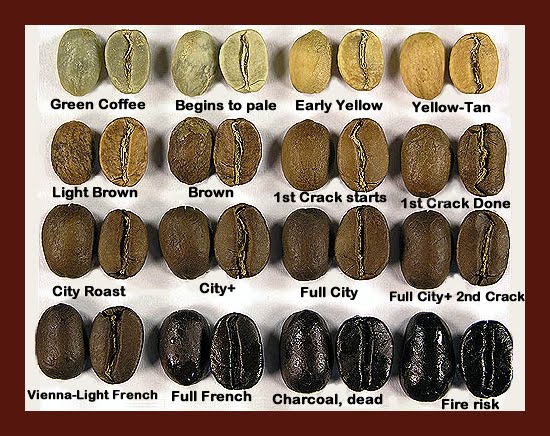
Light roasts will preserve a wider range of the bean’s original flavors, but will always lack those caramelish notes you find in darker roasts. They also tend to be more acidic, while darker roasts are less acidic and have more body. Darker roasts will also tend to bring out the caramel notes while losing the sweet, fruity profiles you find in lighter roasts.
Leave a Reply