Spring in Class Projects

Category: Project Weekly Coffee

Week 9

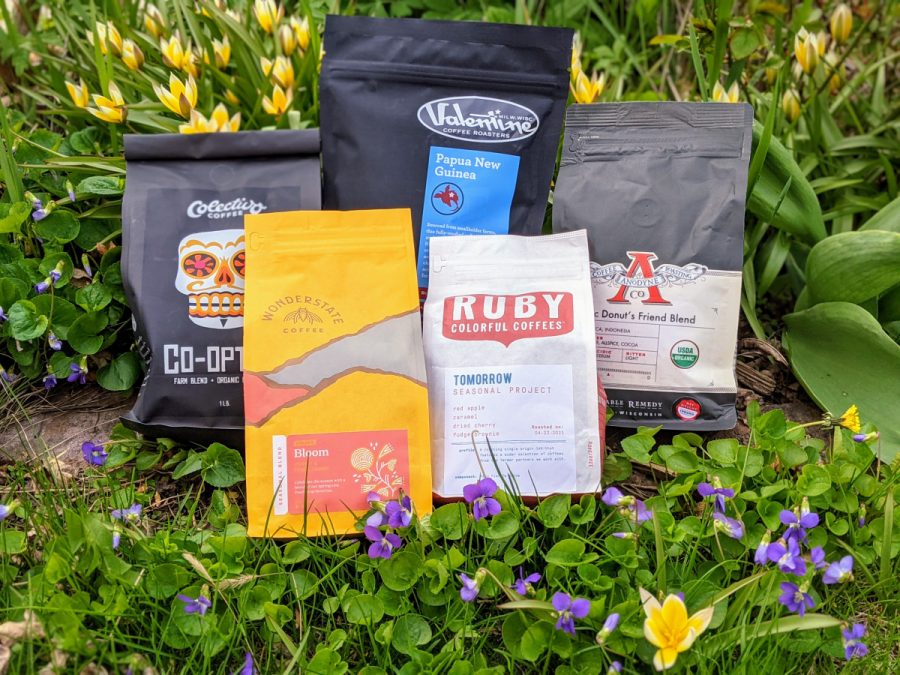
Wonderstate-
Seasonal Blend: Bloom
Medium Light Roast
Organic
Aroma: Cherry, Chocolate, Figs
Taste: Vanilla, Cinnamon, Chocolate
Low acidity
Ruby-
Seasonal Project: Tomorrow
Peru Flor De Selva
Aroma: Fudge, Caramel
Taste: Brownie, Cherry
Medium acidity
Colectivo-
Co-Optiva Farm Blend
Full Body
Organic
Aroma: Molasses, Cinnamon
Taste: Dark chocolate, molasses, grain
Medium Acidity
Valentine
Papa New Guinea
Full Body
Aroma: Cherry, Figs, Cinnamon
Taste: Caramel, graham cracker, cinnamon
Soft Acidity
Anodyne
Donut’s Friend Blend
Central America and Indonesia
Medium Roast
USDA Organic
Aroma: Allspice, cocoa, Vanilla
Taste: Graham cracker, Cocoa nibs, spices
Medium Acidity
Sweet Bloom
Hometown Blend
Washed and Natural
Aroma: Dark stone fruit, chocolate
Taste: Coco nibs, blackberry
Low Acidity

Wonderstate- Viroqua, WI 

https://wonderstate.com/

Not only was Bloom by Wonderstate my favorite out of the 6 coffees from my cuppings, Wonderstate has the most detailed, in-depth plan on what they are currently doing and what they will be doing to creat a delicious, sustainable coffee. While all 4 of the other coffees roasted in Wisconsin stated that they were, some or all of these, organic, responsibly sourced, small batches, sustainability, transparency, long term relationships with small farm holder none of them described how they were doing this and none of them talked about climate resilence or helping the farmers that grow their coffee.

Wonderstate went 100% solar powered in 2015, this made them one of the first coffee roasters in the world to power from an onsite solar array. Their efforts to shrink their carbon footprint and mitigate their ecological impacts go beyond their solar field, they purchase carbon offsets for all their wholesale shipping and source 94 to 97% of all their coffees by volume from certified organic produces annually.

“A truly sustainable future in coffee must be a just and resilient one. From our efforts to ensure equitable farmer compensation, to supporting regenerative agricultural practice, to packaging our coffee in biodegradable packaging, we’re working to do our part.  
In order to find coffees that meet our stringent quality standards and support the future of the farms and producers we work with, we’ve developed a sourcing model that’s one of a kind. We like to call it “Sourcing Coffee for the Collective Good.” “

They have developed their own sourcing model, that is truely one of a kind, called “Sourcing Coffee for the Collective Good”

FARMER STABILITY: Coffee farmers face countless variables. Finding a consistent buyer shouldn’t be one of them.  Long-term partnerships build quality and trust throughout the supply chain. Each time you buy Wonderstate you’re helping us keep our long-term partnerships.

CLIMATE RESILIENCE: In 2020, 96.5% of all coffee we purchased was organic. We donate $.03 per pound of coffee we purchase through Cooperative Coffee to their Impact Fund, which supports farmer education and regenerative agriculture practices to cultivate climate resilience. In 2020, Wonderstate committed to being “carbon responsible”. We worked with a third party organization to set up a system to track our carbon impact. We offset emissions with donations to climate resilience groups.

PAY TRANSPARENCY: We ask for pay transparency throughout our supply chain. By having a keen understanding of supply chain costs, we can guarantee higher farmer compensation and that anyone else getting a slice of the pie is adding fair value to us and coffee farmers.

COOP STRONG: We purchase the majority of our coffee from cooperatives. Since 2006, our membership in Cooperative Coffees, the world’s only cooperatively owned coffee importer, has opened incalculable doors. Like establishing direct relationships with producers from the start, even when four of us ran Wonderstate out of a little train depot. When producers organize in cooperatives, they pool resources and achieve more together, too — like representation on governance boards and higher profits. Because farmers should have a voice beyond production.

PAYING FARMERS MORE: Producers often don’t make enough money to cover production costs. For coffee to have a future, producers must make more. That’s why in 2017, we established an industry leading minimum price guarantee, and we’re committed to raising it .05 cents every year. Our 2021 price guarantee: 55% above current Fair Trade Organic minimum of $1.90 per pound — at $2.95 per pound FOB.

DELICIOUS COFFEE: Outstanding coffee is not a pleasurable accident. It’s an invitation to be present to something fleeting and delicious. It’s the result of terroir and painstaking attention to detail — from farm to roastery. We are a six-time Good Food Award winners. Roast Magazine’s 2010 Roaster of the Year. And have over 40 coffees scoring 90+ points on Coffee Review.

DIRECT RELATIONSHIPS: We purchase 100% of our coffees directly from growers and exporters around the world. Direct relationships give us the best opportunity to make meaningful and lasting impacts in our supply chain. The closer we are to each stage of coffee production and movement, the higher the quality coffee we can deliver to you.

INNOVATIVE PARTNERSHIPS: Creative relationships allow for unique projects. We keep an eye out for opportunities. True collaboration within our supply chain allows for mutual trust, benefit, and quality. Here’s one example: $1 from every pound we sell of Organic Project Congo Muungano directly supports gender equity work by On the Ground in Congo.

SMALLHOLDER FARMERS: 80% of our supply chain comes from farms smaller than 12 acres. 100% of our coffee comes from farms under 125 acres. Sourcing from small farms means putting our dollars into the hands of families where we can have the greatest impact. It also means supporting an agricultural model that protects important biodiversity and supports Indigenous and rural communities the world over.
“Sustainable Coffee Roasters: Specialty Coffee: Wonderstate.” Wonderstate Coffee, Wonderstate Coffee, wonderstate.com/.

Every year they also donate 5% of all their profits to community based initiatives that help support a more resilient and equitable, not only within the coffee industry, but also beyond.

Week 8

The coffee shop, Likewise, just two doors down from work FINALLY opened back up. It opened back up under new ownership and a new name. They serve Wonderstate Coffee, which is a semi local coffee roaster.

They have some odd hours currently, but I was fianaly able to snag a couple coffees this week on my way into work. They also have a very nice homemade banana bread too, along with a few other bakery items. They also have plants everywhere!

Aestheticlly Well & Vitality

My new position has quickly grown along with the hours offered to work. This has been what has been taking up a majority of my time this quarter, unfortunately, but I could not turn down this amazing opportunity to work with these amazing people. I’ve gone from just a front desk in take person, to a full on personal assistant, social media, and front desk within three weeks. I have never had a job that I actually like and time just flies by so fast working here. I can not believe its been a month already. I am absolutely estatic to work and grow with these two amazing people and their companies.
https://aestheticallywell.com/
https://vitalitymke.com/

https://instagram.com/aesthetically.well?utm_medium=copy_link
https://instagram.com/vitalitymke?utm_medium=copy_link

Cedar Valley Cheese Factory

Cedar Valley is a local cheese factory in Wisconsin. Before I moved to Washington, I had originally lived just a mile or two down the road from the cheese factory. I have fond memories of picking up fresh string cheese and curds on Fridays. Now days the factory seems to have at least doubled in size. They now have a separate building down the road for shipping. The cheese store has also doubled in size, they now offer more than just cheese. They have a little cafe, serving fresh foods and Cedar Crest ice creams. The store also offers many different types of gifts and wines.


The cheese factory takes in milk from around 140 different dairy farms in 8 different counties, which is around 141,000 gallons of milk a day. It takes over 18,000 cows to produce that much milk a day.
Cedar Valley has received the Seal of Excellence Award from the State Fair five times now for their string cheese.

Week 7

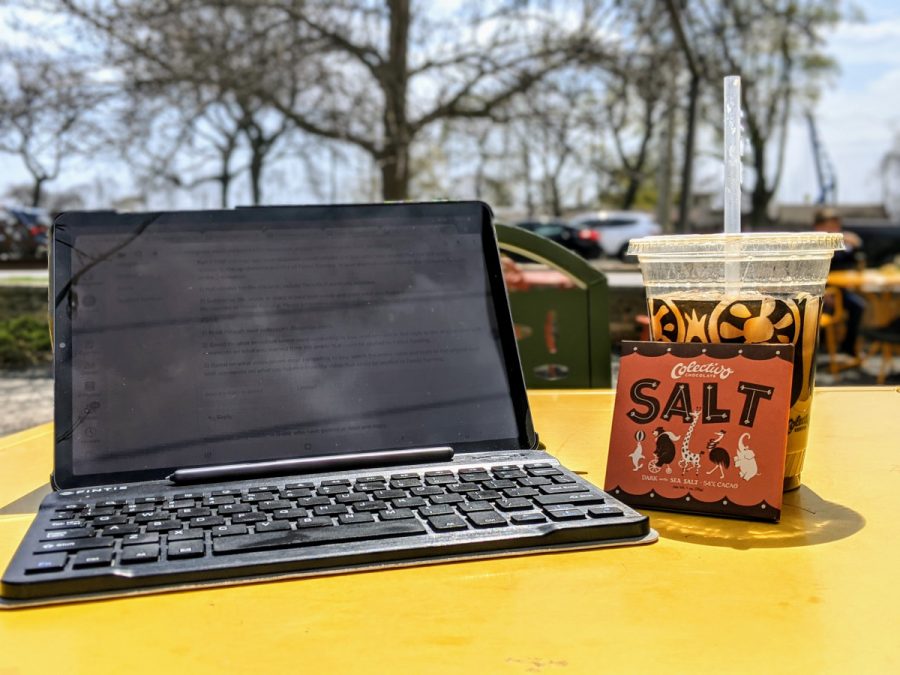
With packing up for my move into my apartment, finally, in Cudahy, just a few miles south of Milwaukee and only a few blocks away from Lake Michigan, I had little time to actually sit down at a coffee shop. So instead of going in, ordering, and having a seat I ordered online for curbside pick up at the Collectivo in Shorewood. I got myself a white, raspberry, iced mocha. Inbetween boxing up my things I enjoyed sipping my very springy drink in my no mow May front yard, between rain clouds.

Week 6

This week I wanted to look for a coffee shop that was close to my new apartment. I found Charleston Cafe, which is just 5 minutes away from my new place! They offer fresh paninis, wraps, salads, and pizzas on top of a wide variety of coffee and tea drinks. On top of all of that they have an amazing patio. This will definitely be my hang out place during the summer.
I decided that I needed to try my more usual coffee drinks, just to make sure that this was going to be my new coffee spot.
https://charlestoncoffeeco-orderonline.shopsettings.com/

Caramel Macchiato
Turtle Mocha
Watching the chocolate and caramel swirl
Grilled Cheese and chips

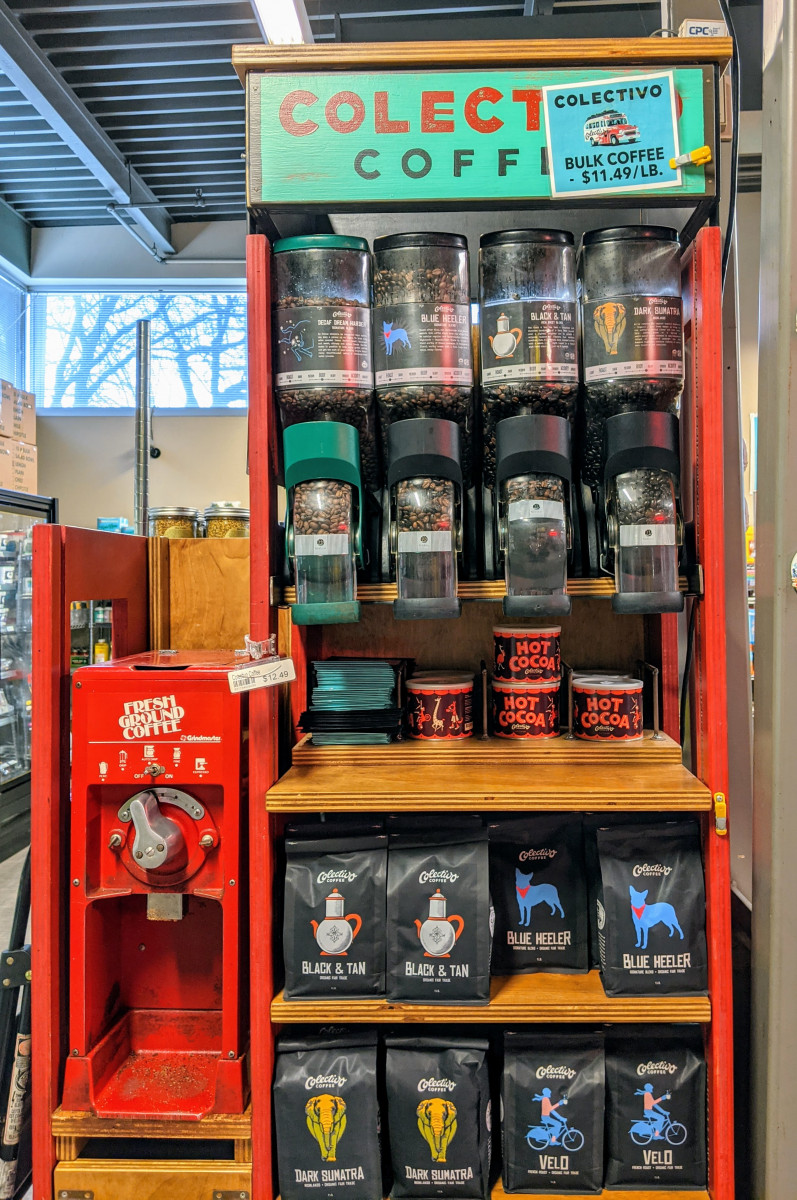
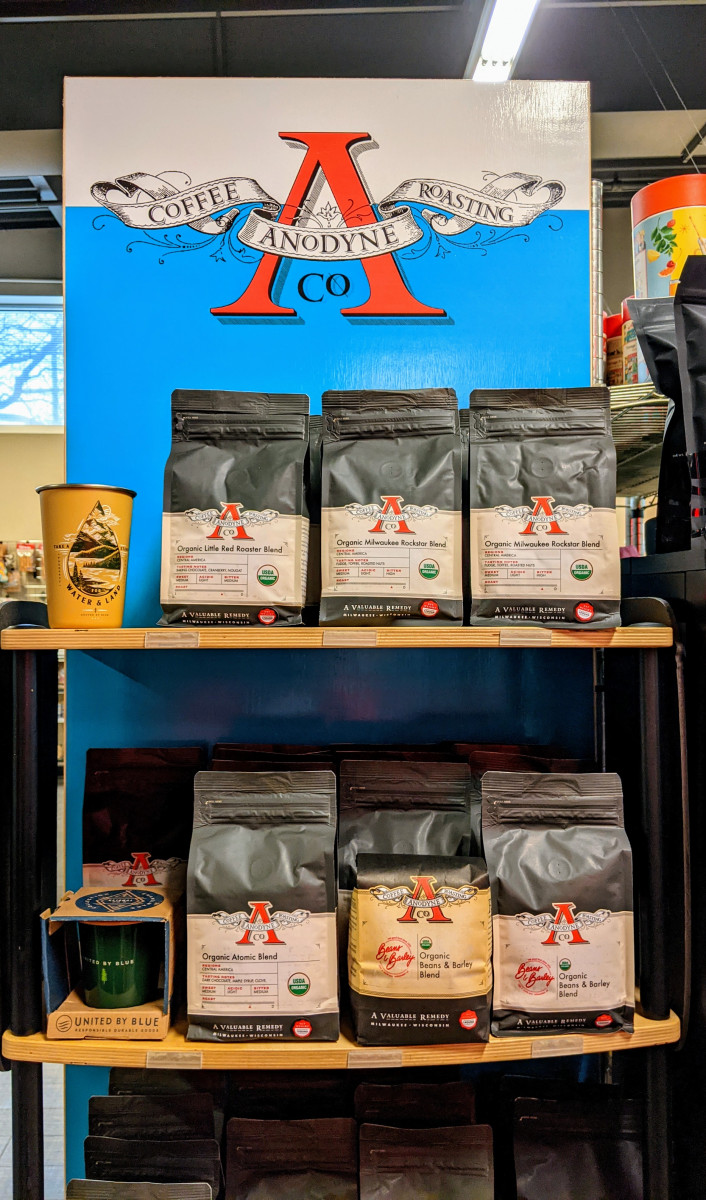
Buying Locally Roasted Coffees

Neighborhood specialty and health food store and fresh homemade deli
Real, Good, Food; Locally Grown, Locally Made https://www.beansandbarley.com/

https://rubycoffeeroasters.com/

https://anodynecoffee.com/

https://www.valentinecoffeeco.com/

https://colectivocoffee.com/

https://wonderstate.com/

Week 5

This week I checked out this little cafe in the middle of Downtown Milwaukee, called Canary Coffee Bar.
I tried the Almost Perfect espresso shot with half and half, simple syrup, and grenadine. It had a sweet, bitter chocolate taste with a hint of cinnamon.

https://canarycoffeebar.com/

I also went shopping for loally roasted coffees, so I can do some coffee cuppings later this month.

Week 4

Cardamom Honey Latte
Aromatic and honey-sweetened, this latte combines cardamon, almond milk, and Espresso Toro.
A strong cardamon flavor with a hint of sweet honey and cloves. This latte reminded me of a Finnish cardamon Christmas cookie I make.

Sitting on the patio of Collectivo Coffee, sipping coffee, across from the Milawukee Yacht Club on Lake Michigan

https://colectivocoffee.com/

Roasting Machines

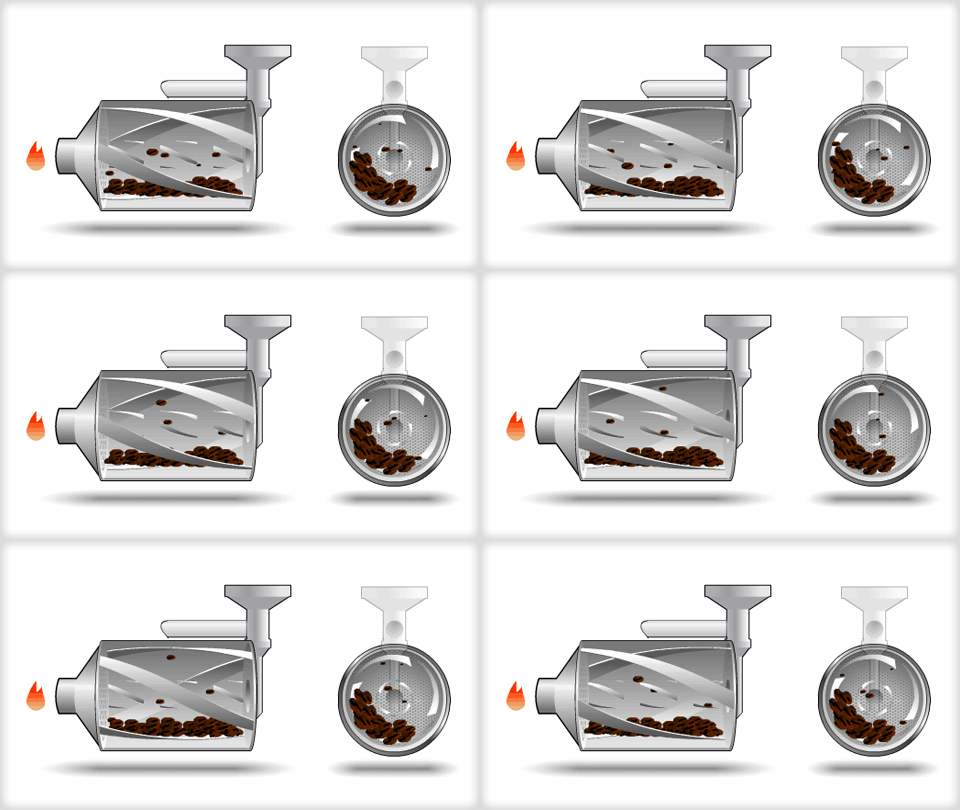
Classic Drum Roaster
A rotating drum placed above a heat source. This type of roasting will provide convective heat to roast the beans. A double walled drum is more sought after, as a thin-walled drum will supply more heat and through off the taste.

“Coffee Roasting Animation.” Empier Coffee Roasters, Empire Coffee Roasters, empirecoffeeny.com/coffee-roasting/.

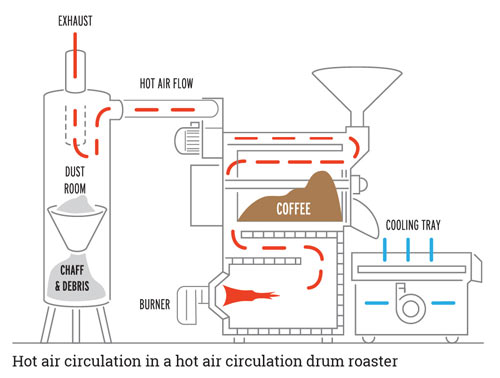
Indirectly Heated Drum Roaster
Similar features of the classic drum roaster, but will not rotate directly over the heat source. The burner will be far from the roasting drum and hot air is pushed through the drum.

“Hot Air Circulation Roaster.” Toper, TOPER ROASTER, www.toper.com/blog-detail/2/blog/1058/roasters-by-heating-system.aspx.

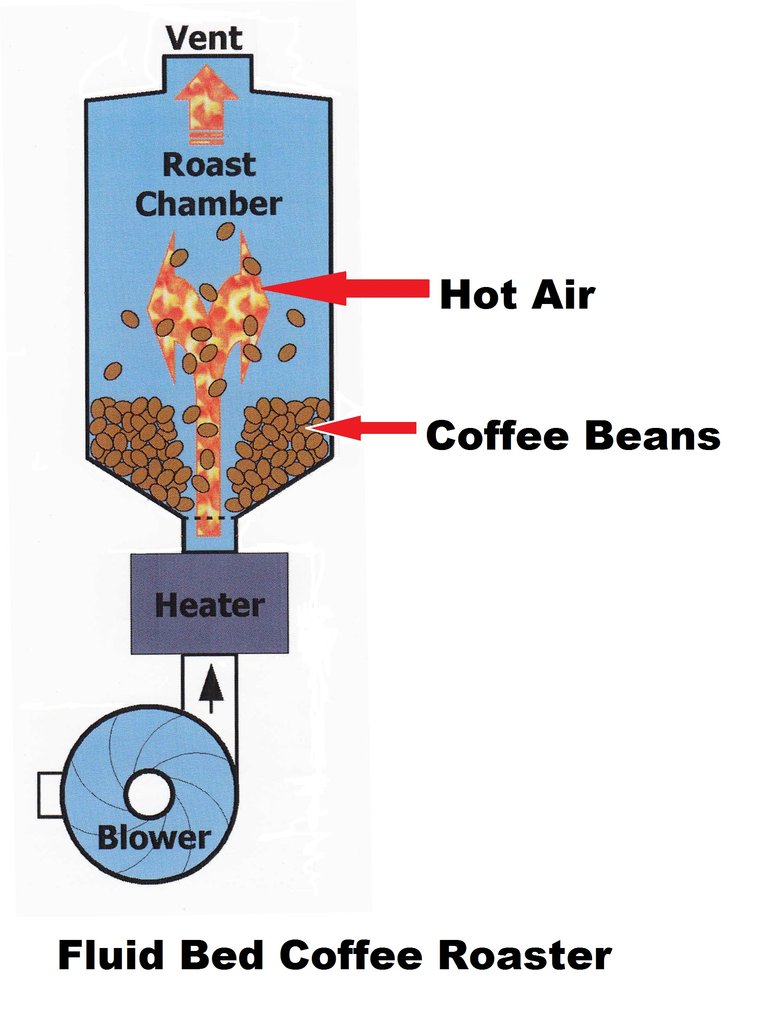
Fluid/Air Bed Roasters
Beans are roasted by floating in a constant bed of circulated hot air without the beans having direct contact with the metal, this gives an even roast to every bean.

“Fluid Bed Coffee Roaster.” Fluid Solar Roasted Coffee, Fluid Solar Roasted Coffee, fluidcoffee.ca/pages/an-introduction-to-fluid-bed-coffee-roasting.

The heat source for roasters can vary from electricity, wood, natural gas to petroleum gas.

Week 3

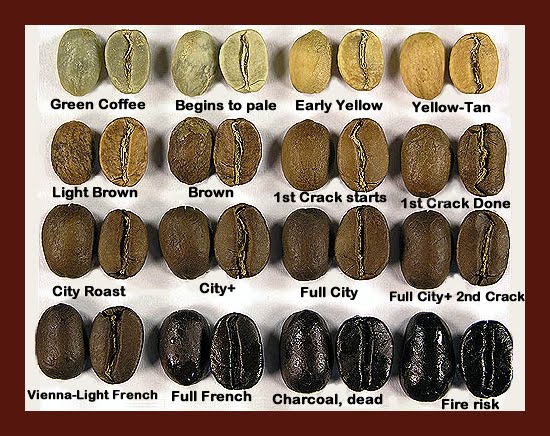
“Coffee Roasts.” Tibaagan Coffees, Tibaagan Coffees, www.tibaagan.com/coffee-roasts/.

Stages of Roasting

Browning
Once all the water has been driven out of the beans the browning process can begin. The beans are still very dense and will soon start to expand, this is when the chaff flakes off. During this time the beans give off an aroma of basmati rice and baking bread. Before the first crack happens, the beans are now browned, but they have a very harsh plant like or acidic taste.

First Crack
As the beans are nearing 390F the beans go through a phenomenon called “first crack”. This is when the beans crack due to the outer portion of the bean being dried and the gasses and water vapor expanding, thus the bean cracks and expands. This cracking or popping sound is usually fairly loud. Once this happens the coffee will develop its flavors and the roast can be ended at any point.
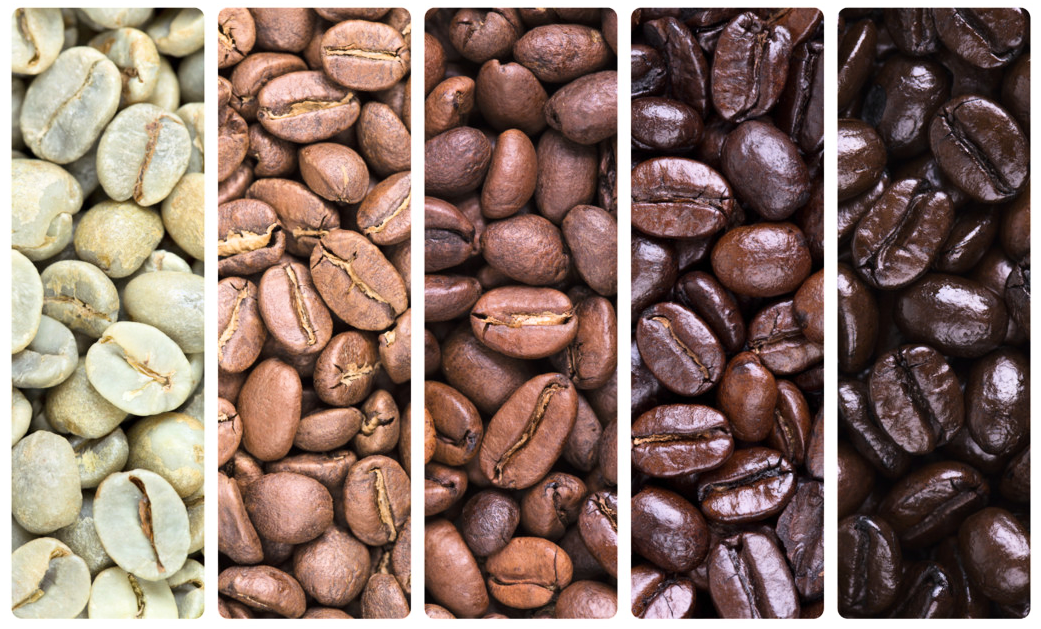
Cinnamon/Very Light Roast/Blond– ~395 to 410*
Light Roast/ New England Roast/ American Roast– ~410* to 425*
The beans are usually taken off of the heat right around the peak of the first crack. This provides a toasty tasty with notes of brown sugar and lemon or citrus.
City Roast- ~425 to 435*
This roast usually defines the color of the beans that are taken out a minute or so after the end of the first crack. This offers still the original flavor of the bean with some citrus undertones. Little to no Maillard reaction has occurred yet and acidity levels are still fairly high here.
Medium Roast/ Full City Roast– ~435* to 445*
A minimum of a full minute of development after the first cracking. This is when the beans start to begin to smooth out and their color deepens. Maillard reaction is also starting to happen here. This will bring out the buttery, caramel, and chocolate notes. The fruity, sweet, citrusy, floral notes will start to disappear here.

Second Crack
This second crack is a quieter, more snappier sounding crack/pop. Here the bean will expand in size again, due to the internal temperature of the bean reaching the same temperature as the outside of the bean. This is when the oils will be driven to the surface of the bean. The acidity will almost all disappear. Continuing on roasting after the second crack usually results in the raw coffee characteristics being lost.
Progression in the roast after the second crack can often result in the beans catching fire.
Dark Roast/Vienna Roast– ~445* to 455*
This roast happens when the beans have been taken off the heat in the later stage of the second crack. As this roast progresses the beans will lose their original coffee characteristics and begin to take on a roast profile instead.

Further Development
This happens at the end of the second crack when a secondary development happens, this is when the beans are darkening in color. The roast profile will start to fully take over as the beans start to carbonize.
French Roast- ~460* to 465*
The beans have fully gone through a second development and their color is a very dark brown not quite black. All fruit and floral notes are gone here. There usually is a fair amount of smoke happening during this stage. The smoke and carbonization within the beans are what gives the French Roast its toastiness in both flavor and aroma.
Italian/Spanish Roast– ~ 470* to 480*
By this time little to no original characteristics are left and the smokiness has completely dominated the flavors. The beans become black and very carbonized here.

“Coffee Roast Levels.” Tibaagan Coffees, Tibaagan Coffees, www.tibaagan.com/coffee-roasts/.

Light roasts will preserve a wider range of the bean’s original flavors, but will always lack those caramelish notes you find in darker roasts. They also tend to be more acidic, while darker roasts are less acidic and have more body. Darker roasts will also tend to bring out the caramel notes while losing the sweet, fruity profiles you find in lighter roasts.

Week 2

Arabica Coffee Tree Varieties

Here are just a handful of more well known Coffee Arabica varieties. It is assumed that there are well over a hundred different varieties as many wild varieties in Ethiopia have yet to be cataloged or have their genetic diversity explored.

Typica
Typica is considered the original Arabica variety. Typica is the variety from which all other varieties have mutated or have been genetically selected from.
Typica is grown extensively in many different parts of the world, making it known by several different names: Criollo, Sumatra, and Arabigo.
Typica is very susceptible to coffee leaf rust with a low yield.

Bourbon
Bourbon is a natural mutation from the Typica variety. This mutation occurred on the Island of Réunion, which was originally called Bourbon. Bourbon was introduced to Brazil around 1860s.
Bourbon typically has a higher yield that Typica.

Mundo Novo
Mundo Novo is a natural hybrid from Typica and Bourbon. Mundo Novo was named after the place in Brazil where it was discovered in the 1940s.
Mundo Novo is grown mainly for its high yields, disease resistance, and high success rates at higher altitudes, up to 1,200 MASL.

Cuturra
Cuturra is a mutation of Bourbon and was discovered in Brazil in 1937.
Cuturra has a relatively high yield, but its downfall is that it has the capacity for over bearing. Over bearing is when the tree produces more fruit than it can sustain, thus sending the tree into die back. The quality of the cherries increases with altitude, but yield than decreases. Cuturra is also very susceptible to coffee leaf rust.
Cuturra is popular in Colombia and Central America.

Catuai
Catuai is a hybrid of Caturra and Mundo Novo and was created by the Instituto Agronomico do Campinas in Brazil in 1950s and 60s.
Catuai is a compact tree that can produce a high yield, but is very susceptible to coffee leaf rust.

Maragogype
Maragogype is a mutation of Typica and was first discovered in Brazil.
Maragogype has exceptionally large leaves, but a relatively low yield. It also produces unusually large bean size and is often referred to as elephant bean. It is also susceptible to coffee leaf rust.

SL-28
SL-28 was created by Scott Laboratories in Kenya in the 1930s. It was selected from a drought resistant variety from Tanzania. It is commonly found in Kenya, Malawi, Uganda, Zimbabwe.
SL-28 beans are larger than the average bean size.
SL-28 is quite susceptible to coffee leaf rust, preforms better when grown at higher altitudes, and is drought tolerant.

SL-34
SL-34 was selected from the French Mission Bourbon, in Bourbon (Now Réunion) and brought back to Africa. Tanzania was the first to see SL-34, then it appeared in Kenya. It is commonly found in Kenya.
SL-34 has a high yield and produces well in high altitudes with good rainfall.
SL-34 is susceptible to coffee leaf rust and coffee berry disease.

Geisha/Gesha
Geisha was originally brought to Panama from Costa Rica, but it is believed to have originated in Ethiopia. Gesha is a town in Western Ethiopia.
Geisha does well in high altitudes and is tolerant to coffee leaf rust.
Geisha gained quick popularity in 2004 when a Panamanian farm, Hacienda La Esmeralda, entered their Geisha lot in a competition.

Pacas
Pacas is a natural mutation of Bourbon and was discovered by the Pacas familyl in 1949 in El Salvador.
Pacas is very highly susceptible to coffee leaf rust.
Pacas is still widely grown in El Salvador and accounts for roughly 25% of the country’s coffee production.

Villa Sarchi
Villa Sarchi is a natural mutation of Bourbon and was named after the town in Costa Rica where it was found.
Villa Sarchi is well adapted to high altitudes and tolerant of strong winds.
Villa Sarchi is susceptible to coffee leaf rust.

Pacamara
Pacamara is a cross between Pacas and Maragogype and was created in 1958 in El Salvador.
Pacamara has extremely large leafs, fruits, and beans and is very highly susceptible to coffee leaf rust.

Kent
Kent was named after a planter that worked on a selection program in India in the 1920s.
Kent was created for its resistance to coffee leaf rust, but can be very susceptible to new strains.

S795
S795 is a cross between Kent and S288, which is an older selection of resistance to coffee leaf rust, and was developed in India.
S795 is widely planted in India and Indonesia.

Powered by WordPress & Theme by Anders Norén