For the stuffed cucumber bites I first started by chopping off the ends and cutting the cucumber in half. Then I peeled the cucumber and scooped out the seeds. Next I mixed together Level Valley cream cheese, a local cream cheese from West Bend, Wisconsin, white pepper, fresh chopped parsley, and chopped walnuts. I then spooned the cream cheese mixture into the cucumber halves. I cut them into nice bite sizes and sprinkled with paprika. Perfect healthy, appetizer paired with chardonnay.
Cranberry Pecan Goat Cheese Sweet Potato Bites with Honey
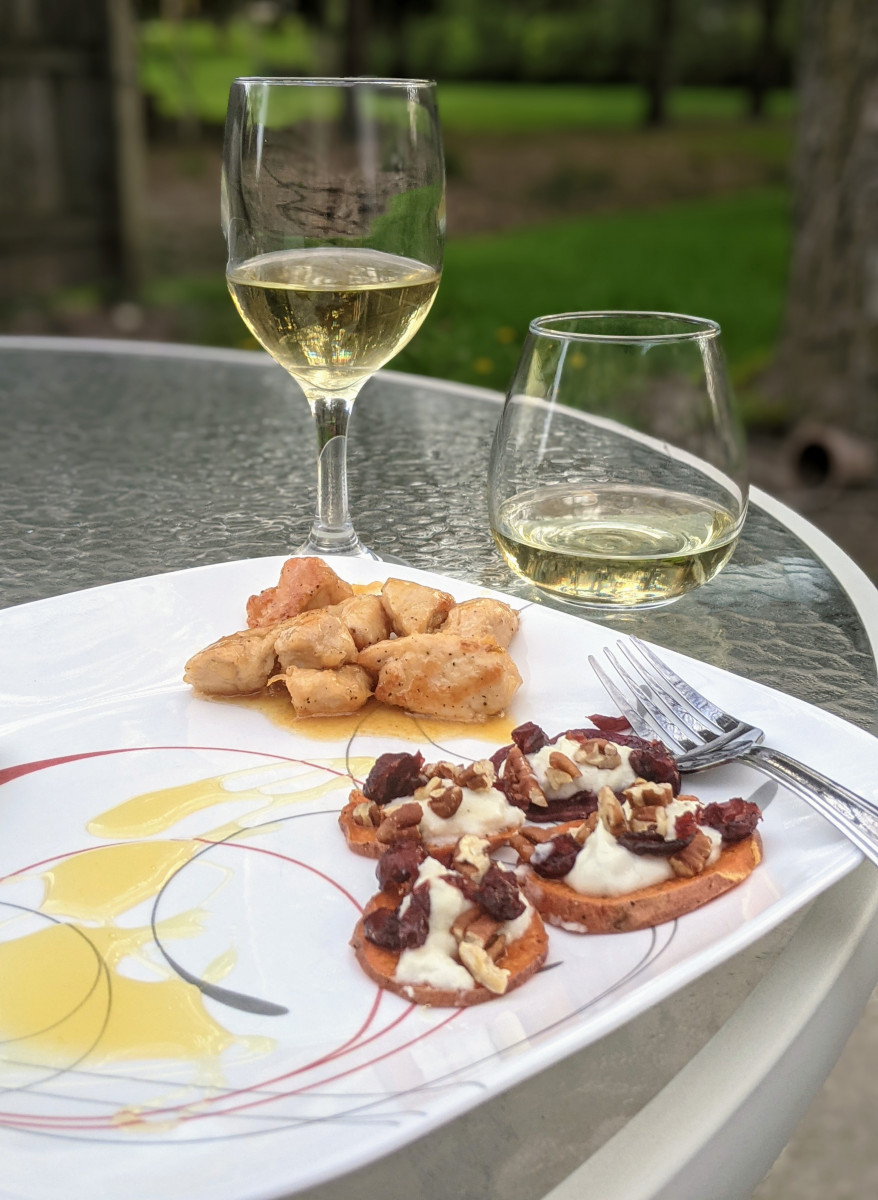
I had fun creating these little nummy sweet potato bites. I started by slicing up a regular sweet potato and a purple sweet potato. I then tossed the sweet potato slices with olive oil, salt, and pepper. After that I placed the slices on a baking sheet and stuck them in the oven. After about 10 minutes I flipped the sweet potato slices and let the bake for another 10 minutes. While the sweet potatoes were cooking, I whipped together LaClare goat cheese, from Malone, Wisconsin, little bit of milk, salt, and pepper until it was nice and smooth and fluffy. Once the sweet potato slices were ready I popped a little of the goat cheese on them, along with roasted and chopped pecans and dried cranberries. Once that was all done I drizzled local East Troy Honey on top. The sweet, from the honey, tart from the cranberries, and tangy, from the goat cheese, paired very well with the Sauvignon Blanc.
Honey Garlic Chicken
I really had such I hopes for this one, unfortunately it did not have enough flavor for me and was really lacking in garlic taste. I started off by mixing together the chicken with corn starch, salt, and pepper. I then placed the chicken into a pan that had warmed butter and olive oil, I then cooked that for about three or four minutes. I then added the minced garlic and cooked again for a little longer. After stirring that together I added some honey, the East Troy Honey, and a little apple cider vinegar. I stirred it a couple more times and it was ready to eat. I paired this with the chardonnay also.
Freakshow Chardonnay and Kim Crawford Sauvignon Blanc
Wine
Pairing
Tasting Notes
Freakshow Chardonnay
Stuffed Cucumber Bites Honey Garlic Chicken
Medium Yellow Moderate aroma of honey, oak, vanilla, baking spices Off dry medium body with tart acidity Flavorful intensity of oak, honey suckle, and rose Medium finish
Kim Crawford Sauvignon Blanc
Sweet Potato Bites Key Lime Pie
Pale straw yellow Low aroma of pear and grapefruit Off dry light body with crisp acidity Moderate flavor intensity of lime, pear, and green apple
UW Madison: Growing Grapes in WisconsinWisconsin Public Radio: Wisconsin’s Soil, Climate, Geographic Position Makes For Ideal Grape-Growing
USA Today Wisconsin: Wisconsin Wine Makes Name for ItselfWisconsin Public Radio: Wisconsin Wine Industry Is Growing, Thanks In Part To Cold-Hardy Grapes
This week I checked out this little cafe in the middle of Downtown Milwaukee, called Canary Coffee Bar. I tried the Almost Perfect espresso shot with half and half, simple syrup, and grenadine. It had a sweet, bitter chocolate taste with a hint of cinnamon.
Whipping egg whites for a red wine chocolate chiffon cake
Red Wine Chocolate Chiffon Cake with a Red Wine Ganache
For the red wine chiffon cake, I started off by heating up the merlot in a sauce pan. Next, I sifted the cocoa into the hot merlot and let it cool. While the cocoa mixture is cooling, I mixed together the flour, sugar, baking soda, and salt. I then added a mixture of egg yolks and oil. Once the cocoa mixture was cool, I added that next. In my KitchenAid I whipped the egg whites and baking powder, a substitute for cream of tartar, until stiff peaks formed. I then folded the egg whites into the batter. Once the egg whites were all folded in, I spooned the batter into an ungreased tube pan. I ran a knife through the batter to make sure I got rid of all air pockets. I then baked the cake for 65 minutes at 325*. Once the cake was done, I inverted the cake while it cooled. While the cake was cooling, I made the red wine ganache. For the ganache I put the pinot noir, heavy cream, and semi-sweet baking chocolate into a sauce pan over low heat. Once everything was melted together, I added the butter and let it cool down. Once both the cake and ganache were cooled down, I popped the cake out of the pan and drizzled it with the ganache.
Dirzzling red wine ganache on a red wine chocolate chiffon cake
As I was making this cake, I was sure I was going to screw this one up, the batter looked too light and was very grainy and nothing seemed like it was going right. I had to make the decision to either leave out the cream of tartar or find a replacement, as it turns out I actually did not have any in my plethora of spices in my cabinet. Turns out that the baking powder I added to the egg whites worked out just fine. My next issue was my two-piece tube pan, that I got second hand, and have yet to use before this. Well, I guess this tube pan does not have the greatest seal on the bottom as it leaked batter while baking.
I was relatively suppressed at how great this cake turned out! This will definitely be put into the books. Next time I may use a different type of red wine for the ganache, one that has less acidity and tannins. The cake itself is very light, airy, and spongey with a deep chocolate taste with subtle red wine notes of dark tree fruits. You can really taste the red wine in the ganache, the tannins and acidity are very present with just a slight hint of dark tree fruits and cloves.
Cardamom Honey Latte Aromatic and honey-sweetened, this latte combines cardamon, almond milk, and Espresso Toro. A strong cardamon flavor with a hint of sweet honey and cloves. This latte reminded me of a Finnish cardamon Christmas cookie I make.
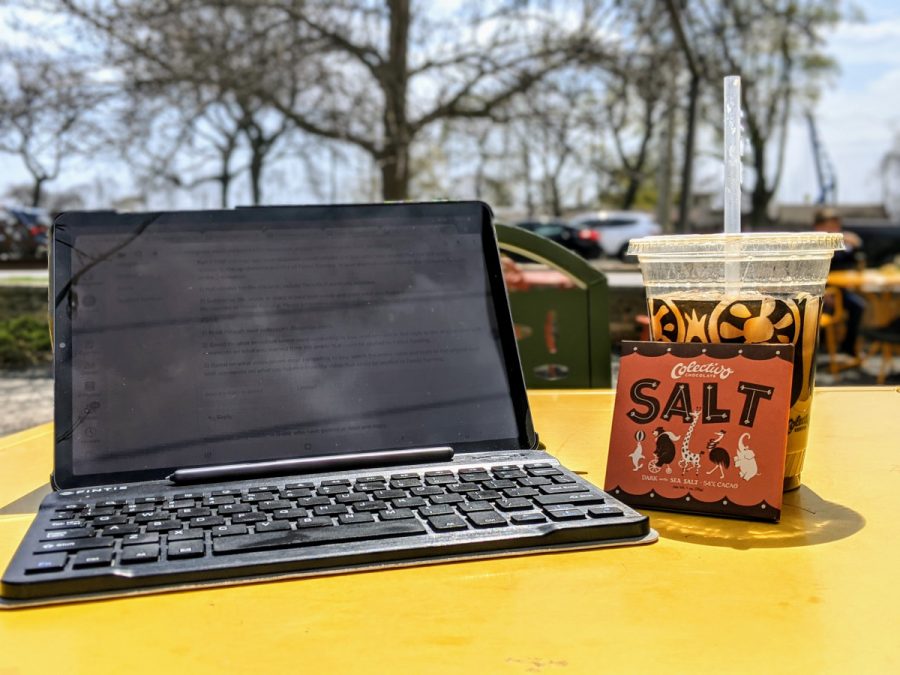
Sitting on the patio of Collectivo Coffee, sipping coffee, across from the Milawukee Yacht Club on Lake Michigan
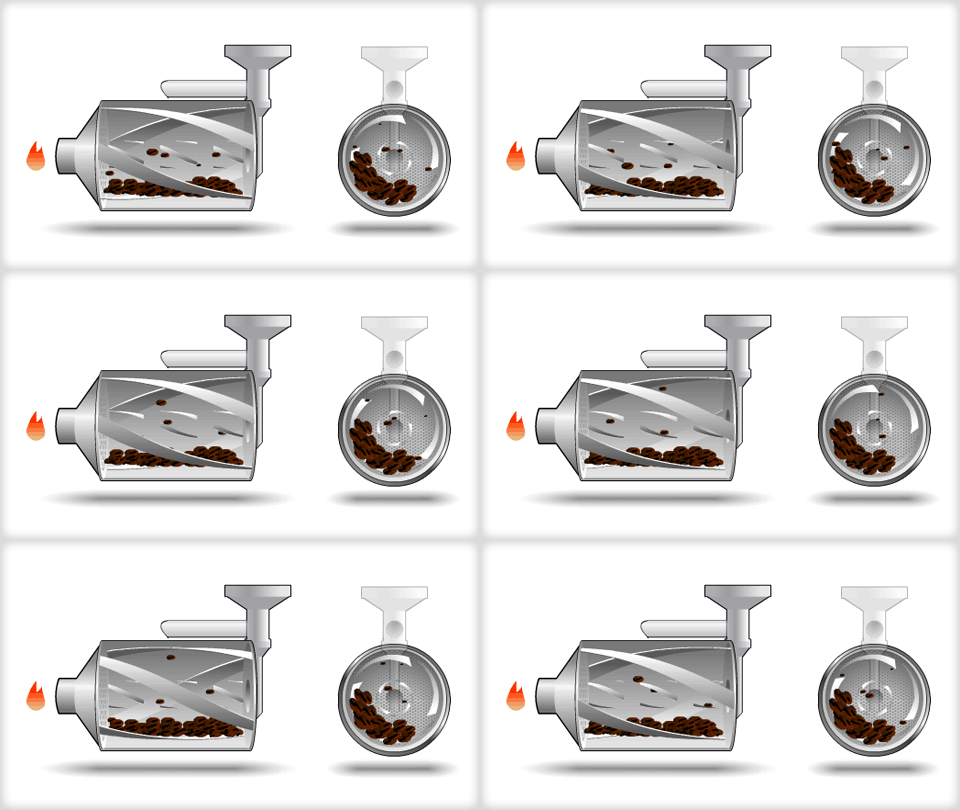
Classic Drum Roaster A rotating drum placed above a heat source. This type of roasting will provide convective heat to roast the beans. A double walled drum is more sought after, as a thin-walled drum will supply more heat and through off the taste.
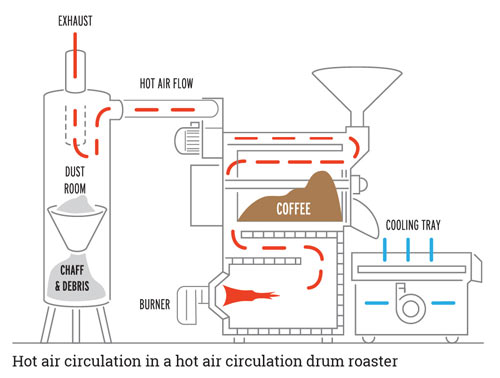
Indirectly Heated Drum Roaster Similar features of the classic drum roaster, but will not rotate directly over the heat source. The burner will be far from the roasting drum and hot air is pushed through the drum.
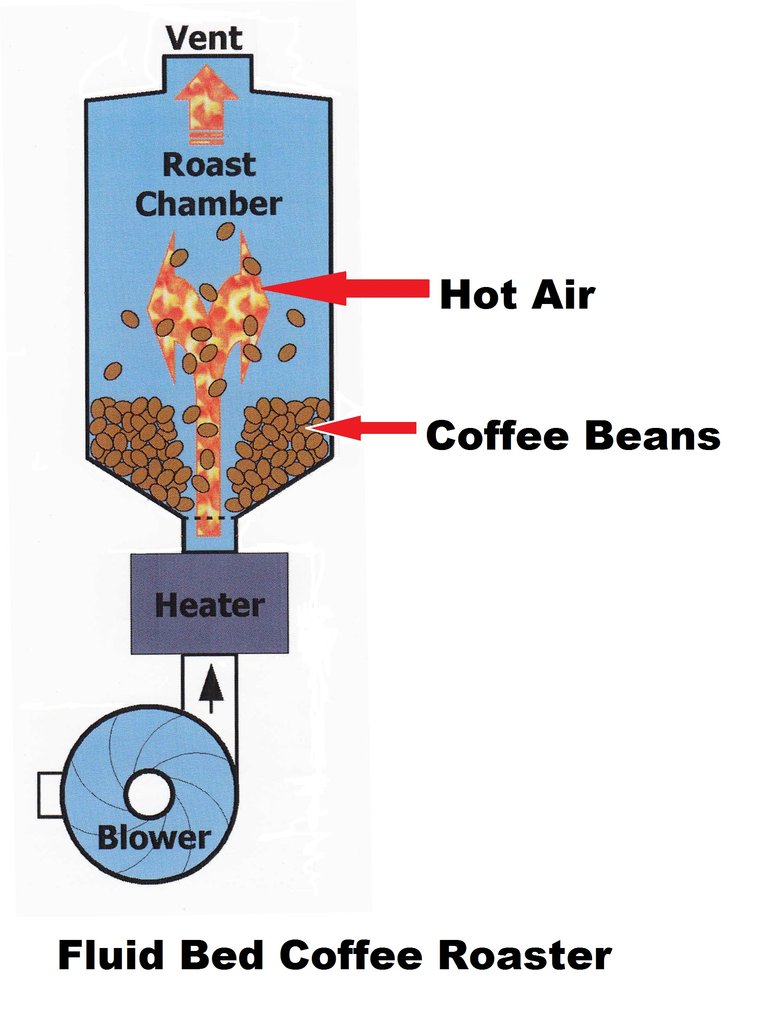
Fluid/Air Bed Roasters Beans are roasted by floating in a constant bed of circulated hot air without the beans having direct contact with the metal, this gives an even roast to every bean.
Blend of Zinfandel, Cabernet, Grenache, Syrah, and Petite Sirah Color: Medium Ruby Red with slight sediment Moderate aroma intensity of cherry, vanilla, fruit, and wood Dry Medium-Full Body Crisp Acidity Medium Soft and Well Rounded Tannins Good Balance Moderate flavor intensity of blackberry, oak, and vanilla Medium Finish
Color: Medium Red Moderate aroma intensity of dark tree fruits and spices Dry Medium Body with Crisp Acidity Medium Dry Tannins with a Good Balance Moderate and Flavorful flavor intensity of cherry, spices, and apple Long Finish
Color: Pale Yellow Aged for 12 months in French Oak barrels Moderate aroma intensity of aged oak, cheese, cream, and fruit Off Dry Medium Body with a Fair Balance with Smooth Acidity Moderate flavor intensity of creamy blue cheese, oak, honey, vanilla Medium Finish
Blend of Chardonnay, Sauvignon Blanc, Pinot Grigio, and Viognier Color: Pale Straw Yellow Aged in French Oak Barrels Low aroma intensity of mineral/cement, fruit, and apple Off Dry Light Body with a Good Balance with fresh acidity Medium flavor intensity of oak, vanilla, and apple Medium finish
Birdys Red
Blend of 100% Wisconsin Grapes Frontenac, Baco Noir, Marquette Color: Pale Red Aged long term in barrels Moderate aroma intensity of spices and sweet Medium Sweet Light Body with a Good Balance, Soft Low Tannins, and smooth acidity Moderate flavor intensity of cherry, cranberry, and spices Medium finish
Peachy Birdy
Color: Medium Gold Aromatic aroma intensity of youthful peach Medium Sweet Medium Body with crisp acidity and good balance Flavorful flavor intensity of peach Medium Finish
Sauvignon Blanc
Color: Pale Yellow Moderate aroma intensity of green apple and fruit Dry Light Body with a crisp acidity and good balance Moderate intensity of orange, apple, and fruit Short Finish
2019 Ice Wine
Grapes: St. Pepin from Whitetail Vineyards in Plymouth, Wisconsin Color: Medium Yellow Moderate aroma intensity of honey, apple, and citrus Medium Sweet Medium Body with a crisp acidity with a fair balance Flavorful flavor intensity of apple, honey, fruity, and pear Medium Finish
2019 Naked Chardonnay
Color: Pale Yellow Aged in stainless steel tanks Low aroma intensity of citrus, wood, and fruit Dry Light Body with smooth acidity and good balance Low flavor intensity of nutty, lime, and fruit Short Finish
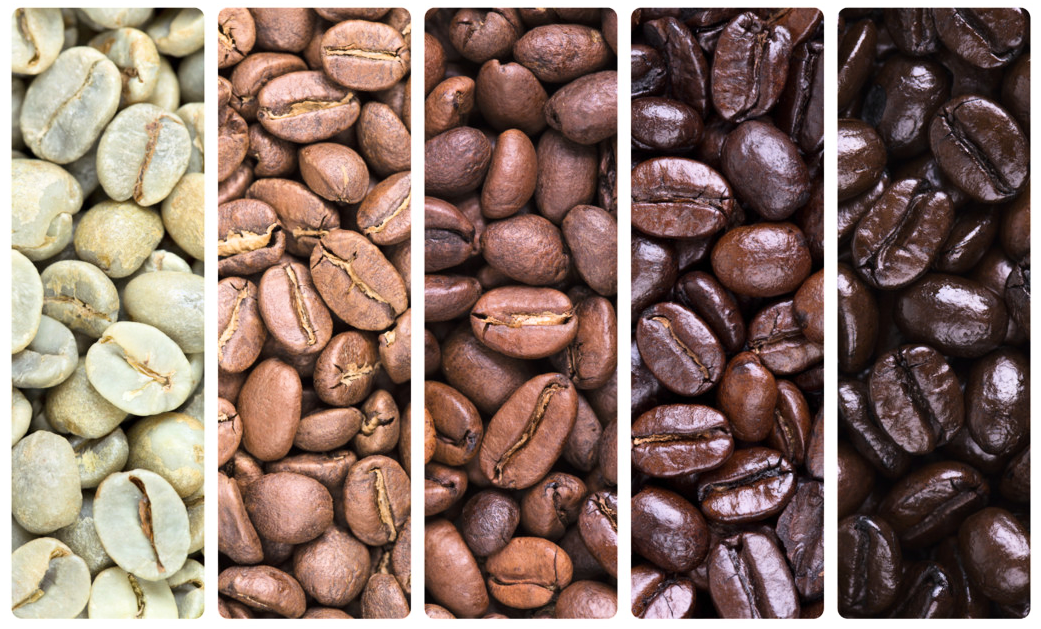
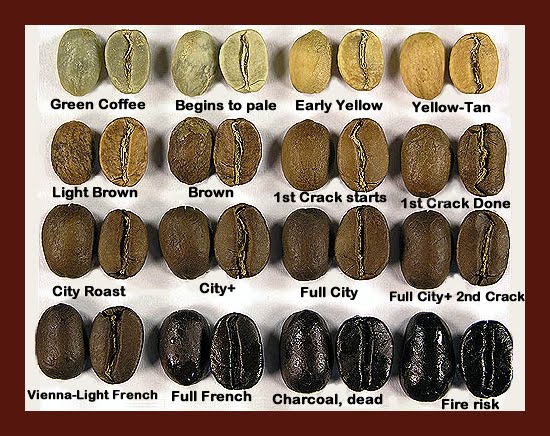
Browning Once all the water has been driven out of the beans the browning process can begin. The beans are still very dense and will soon start to expand, this is when the chaff flakes off. During this time the beans give off an aroma of basmati rice and baking bread. Before the first crack happens, the beans are now browned, but they have a very harsh plant like or acidic taste.
First Crack As the beans are nearing 390F the beans go through a phenomenon called “first crack”. This is when the beans crack due to the outer portion of the bean being dried and the gasses and water vapor expanding, thus the bean cracks and expands. This cracking or popping sound is usually fairly loud. Once this happens the coffee will develop its flavors and the roast can be ended at any point. Cinnamon/Very Light Roast/Blond– ~395 to 410* Light Roast/ New England Roast/ American Roast– ~410* to 425* The beans are usually taken off of the heat right around the peak of the first crack. This provides a toasty tasty with notes of brown sugar and lemon or citrus. City Roast- ~425 to 435* This roast usually defines the color of the beans that are taken out a minute or so after the end of the first crack. This offers still the original flavor of the bean with some citrus undertones. Little to no Maillard reaction has occurred yet and acidity levels are still fairly high here. Medium Roast/ Full City Roast– ~435* to 445* A minimum of a full minute of development after the first cracking. This is when the beans start to begin to smooth out and their color deepens. Maillard reaction is also starting to happen here. This will bring out the buttery, caramel, and chocolate notes. The fruity, sweet, citrusy, floral notes will start to disappear here.
Second Crack This second crack is a quieter, more snappier sounding crack/pop. Here the bean will expand in size again, due to the internal temperature of the bean reaching the same temperature as the outside of the bean. This is when the oils will be driven to the surface of the bean. The acidity will almost all disappear. Continuing on roasting after the second crack usually results in the raw coffee characteristics being lost. Progression in the roast after the second crack can often result in the beans catching fire. Dark Roast/Vienna Roast– ~445* to 455* This roast happens when the beans have been taken off the heat in the later stage of the second crack. As this roast progresses the beans will lose their original coffee characteristics and begin to take on a roast profile instead.
Further Development This happens at the end of the second crack when a secondary development happens, this is when the beans are darkening in color. The roast profile will start to fully take over as the beans start to carbonize. French Roast- ~460* to 465* The beans have fully gone through a second development and their color is a very dark brown not quite black. All fruit and floral notes are gone here. There usually is a fair amount of smoke happening during this stage. The smoke and carbonization within the beans are what gives the French Roast its toastiness in both flavor and aroma. Italian/Spanish Roast– ~ 470* to 480* By this time little to no original characteristics are left and the smokiness has completely dominated the flavors. The beans become black and very carbonized here.
Light roasts will preserve a wider range of the bean’s original flavors, but will always lack those caramelish notes you find in darker roasts. They also tend to be more acidic, while darker roasts are less acidic and have more body. Darker roasts will also tend to bring out the caramel notes while losing the sweet, fruity profiles you find in lighter roasts.
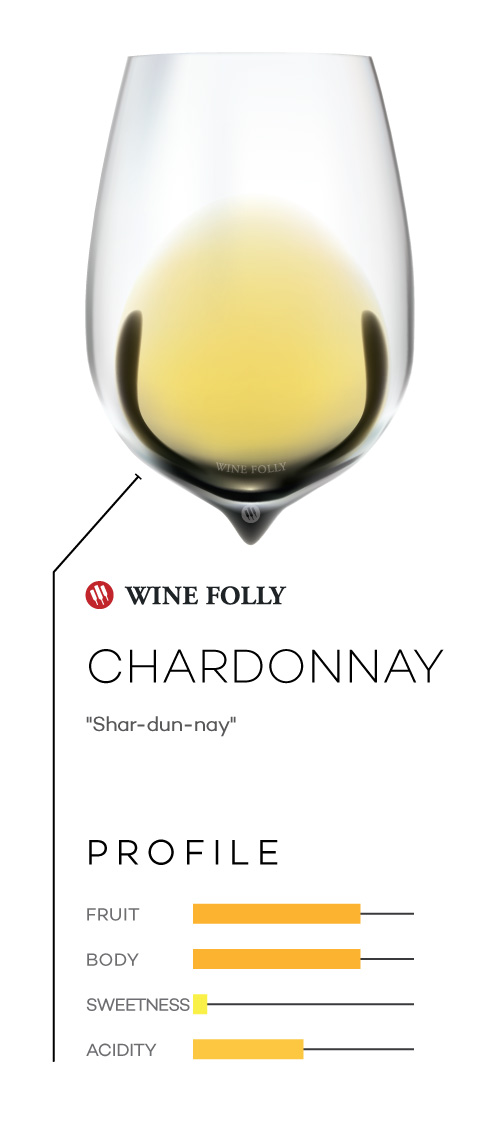
“Chardonnay is the world’s most planted white grape.” (Puckette and Hammack 73)
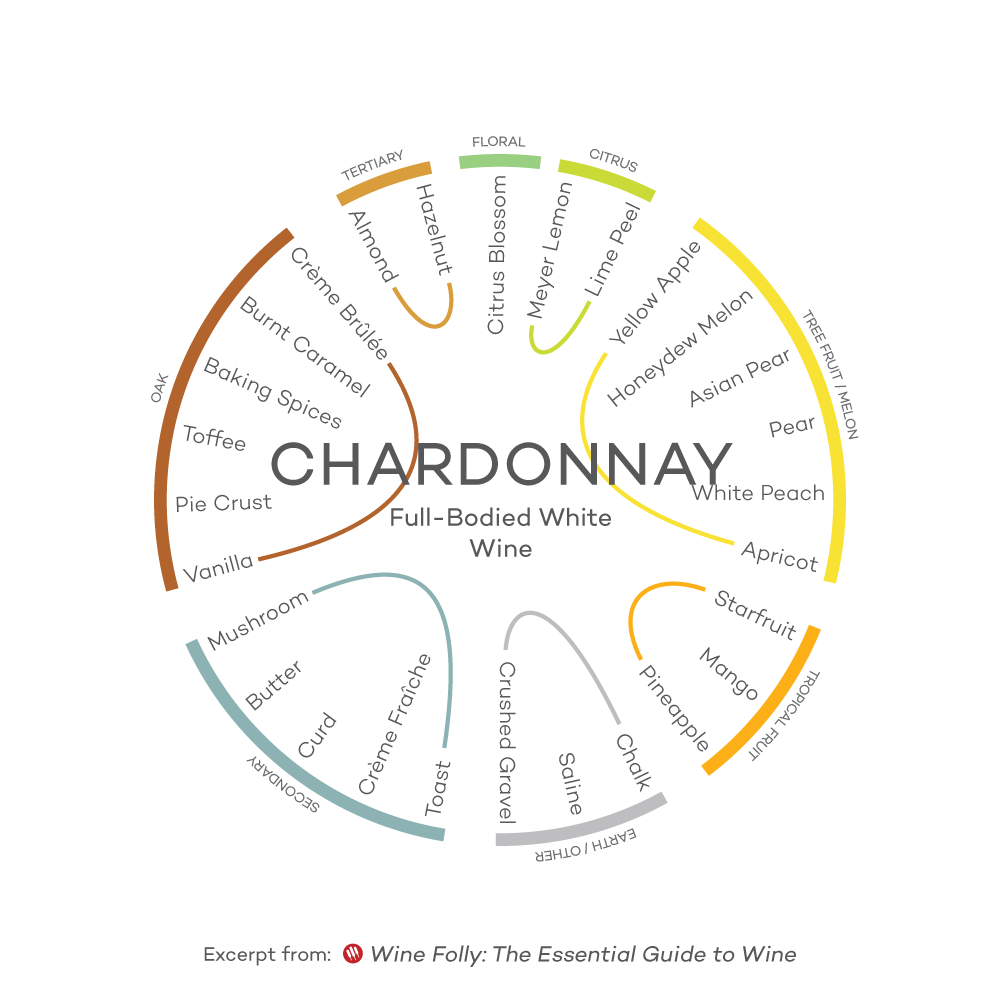
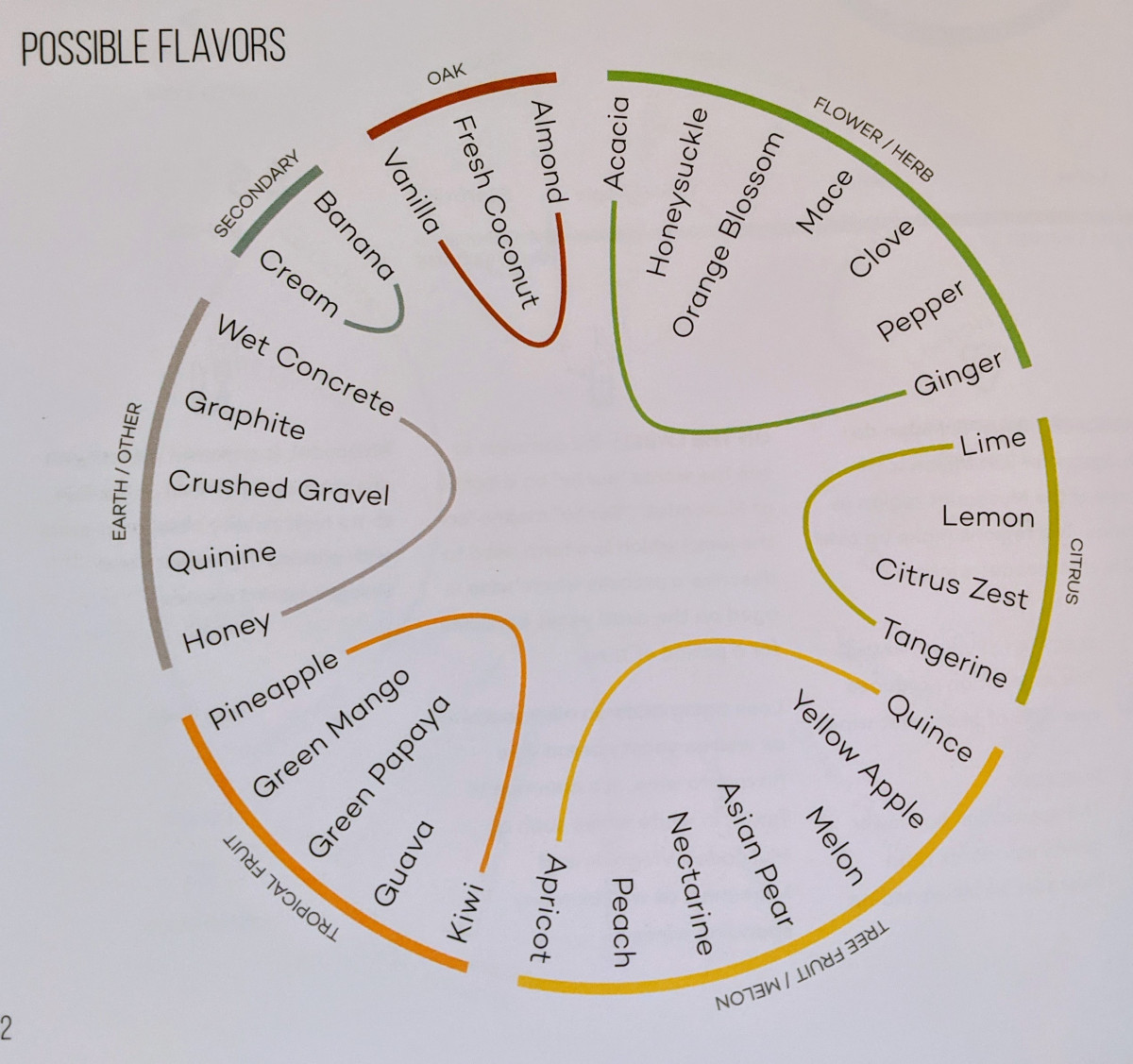
Primary Flavors Yellow Apple Starftuit Pineapple Butter Chalk
Chardonnay can make a very rich, strong, almost always dry, white wine. This grape originated in Burgundy, during the medieval times, and is a major player in the production of Champagne and other sparkling wines. Chardonnay vines are well adapted to varying climates, because of this you can get a flavor range from more tropical fruits in warmer climate regions to a green apple and citrus flavor in cooler regions. Often times Chardonnay is put into oak barrels to ferment, this gives a rich full-bodied wine that often times has the hints of oaky vanilla, baking spices, or butter. Chardonnay can be pale to deep gold in color. This, often times, gold color is due to the oxidation that happens in the oak barrels during the wine making process. Chardonnay is often referred to as the white grape of Burgundy. All white wines coming out of Burgundy are 100% Chardonnay. As of 2015 Chardonnay grapes are planted on 491,000 acres of land.
Food Pairings Lobster, crab, halibut, shrimp, chicken, pork, mushroom, French, cream sauces, soft cheeses like triple cream brie, medium-firm cheeses such as Gruyere, rich or starchy vegetables like corn, pumpkin, or squash.
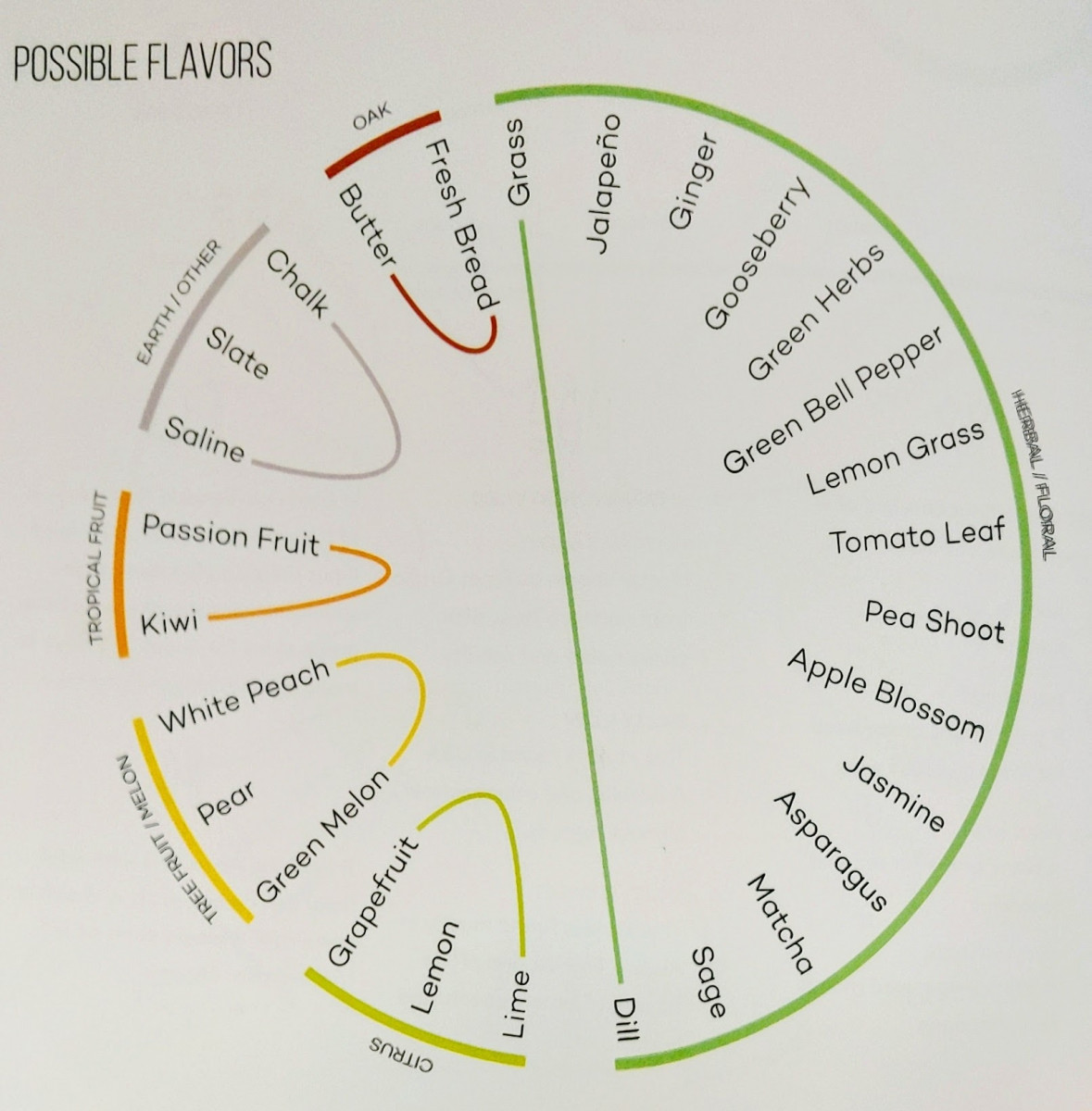
Primary Flavors Gooseberry Green Melon Grapefruit White Peach Passion Fruit
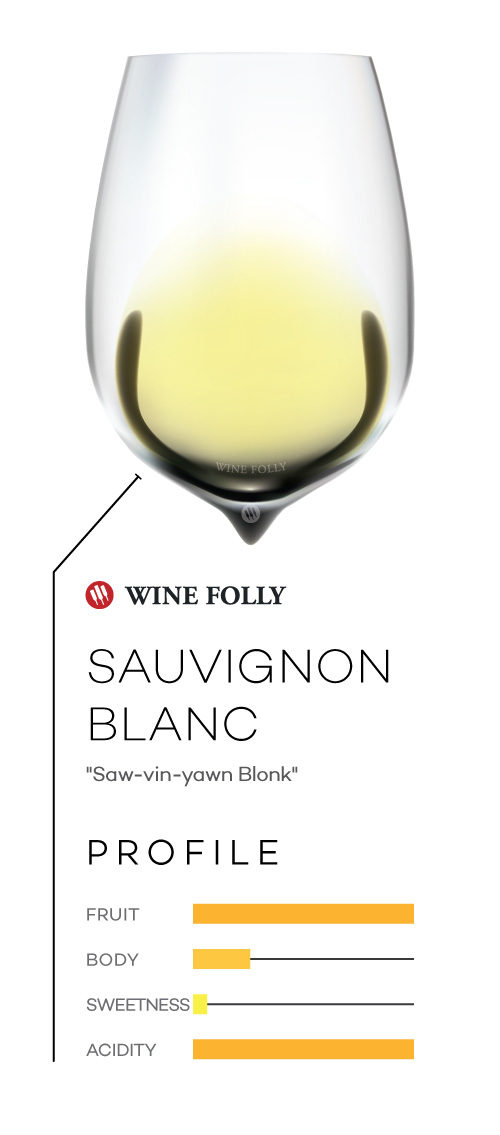
Sauvignon Blanc is a light to medium bodied and often times dry wine, which is indigenous to Bordeaux on the Atlantic side of France. This vine is an uncommonly vigorous vine that can yield bumper crops without losing its flavor. Sauvignon Blanc’s roots go well back before 1534, when writer Francois Rabelais first mentions the grape in the Loire Valley. This wine usually falls in the heavy citrus circle with some notes of exotic fruits and is always herbaceous. Often times it has a pungent aromas of fresh cut grass, peas, or asparagus to tropical and ripe passion fruit, grapefruit to even mango. Sometimes Sauvignon Blanc is aged in oak barrels. This creates a more well-rounded and lush wine with creamy or waxy notes and leaves an oil feeling in the mouth.
Food Pairings Light pairings like halibut, crab, lobster, haddock, bass, cod, salmon, oysters with mignonette, calamari, or herb-driven sauces over chicken, tofu, turkey, pork. Mint, dill, cilantro, chive, rosemary, basil, thyme, bay leaf are great herb pairings. Soft, flavorful cheeses like herb-crusted goat cheese, burrata, or mozzarella di bufala in a caprese salad, nutty cheeses such as Gruyère. Veggies such as cucumber dill salad, fried zucchini, asparagus risotto, green peas, arugula, tomato, artichoke, lemon, lime, zucchini, bell pepper, eggplant, leek, and green bean.
Puckette, Madeline, and Justin Hammack. Wine Folly: the Essential Guide to Wine. Avery, 2015.
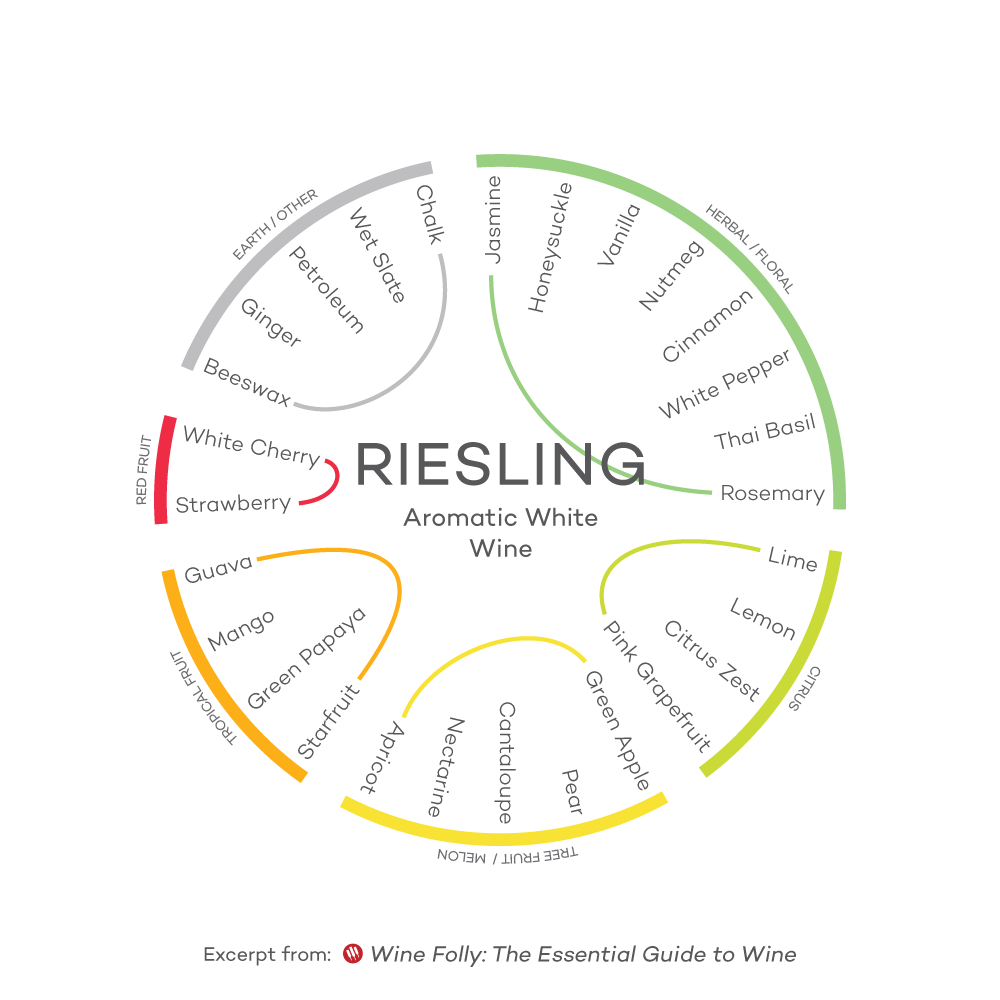
Primary Flavors Lime Green Apple Myer Lemon Pear Peach Apricot Beeswax Jasmine Petroleum
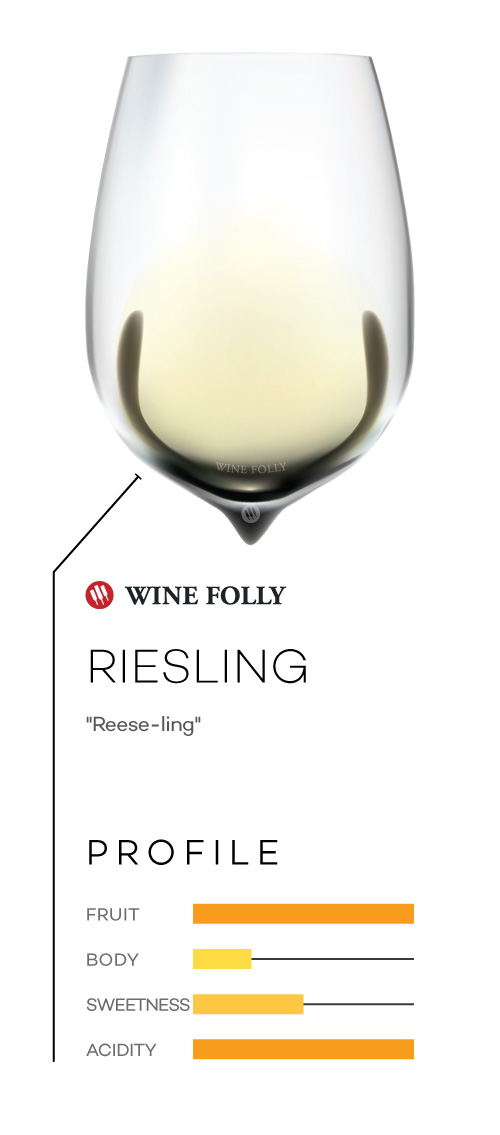
Traditionally, Riesling is a more on the sweeter end because it needs to balance out the wine’s high acidity, but can be found at varying degrees of sweetness from candy sweet to bone dry. Usually if a wine has a low alcohol percentage, below 9%, it will most likely be on the sweeter side. Riesling grapes are rather small grapes, this means they have a much more intense flavor and ripen very early. They are native to the southwestern German valleys of the Rhine between Frankfurt and Trier. Germany is currently the world’s most important produce of Riesling wines. I myself prefer a nice German Riesling in those lovely blue bottles. Riesling has a naturally strong resistance to oxidation, mostly due to its high acidity levels. This gives it a great aging potential. Rieslings usually have an intense aroma of orchard fruits, honeycomb, jasmine, or lime peel. Sometimes, usually in an aged wine, you get aromas of petrol, rubber, or diesel fuel.
Food Pairings The perfect accompaniment to spicy or stronger, bolder foods. Indian and Thai cuisine is a good bet to pair with. Spiced duck leg is a classic dish to pair with Riesling. Duck, Pork, Bacon, Chicken, Shrimp, and Crab with accompaniments of cayenne Pepper, Ginger, Clove, Cinnamon, Allspice, Turmeric, Madras Curry, Sichuan Pepper, Shallots, Soy Sauce, Sesame, Marjoram, Basil, Rice Vinegar, or Teriyaki Sauce.
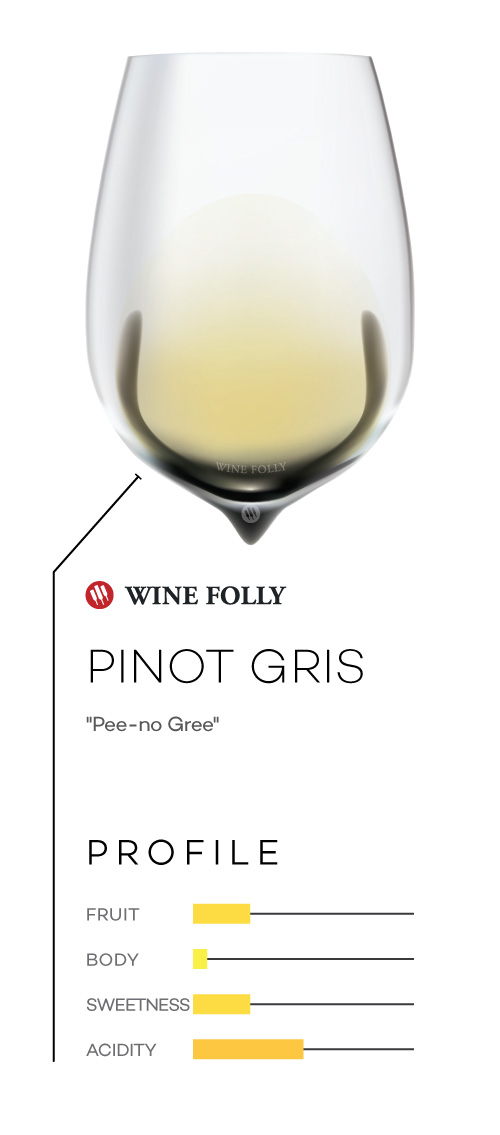
Pinot Grigio grapes are originally from Burgundy. They are technically a red grape, but they lack the gene that provides the color saturation that is needed to make red wines. This is because Pinot Grigio is a mutation of the Pinot Noir red grape. If Pinot Grigio grapes are fermented with their skins on they can produce a nice coppery colored rosé. Pinot Grigio wines tend to be less sweet due to their medium high to high acidity levels. They have a primarily fruity flavor notes, such as lime, lemon, pear, white nectarine, and apple with aroma notes of almond, clove, ginger, and spice. Depending on where the grapes are grown, they can produce notes of honey or honeysuckle.
Food Pairings Pairs well with light flaky fish like tilapia with a cream sauce, crab, ceviche, sushi, or scallops. A semi firm to softer cows milk cheese such as triple-cream cheese, Lighter meals of chicken or turkey that include a fruit element such as lemons, oranges, peaches or apricots. Fresh veggies and salads to braised and well-spiced green using shallot, garlic or ginger as their flavor base also pair very well.
Puckette, Madeline, and Justin Hammack. Wine Folly: the Essential Guide to Wine. Avery, 2015.
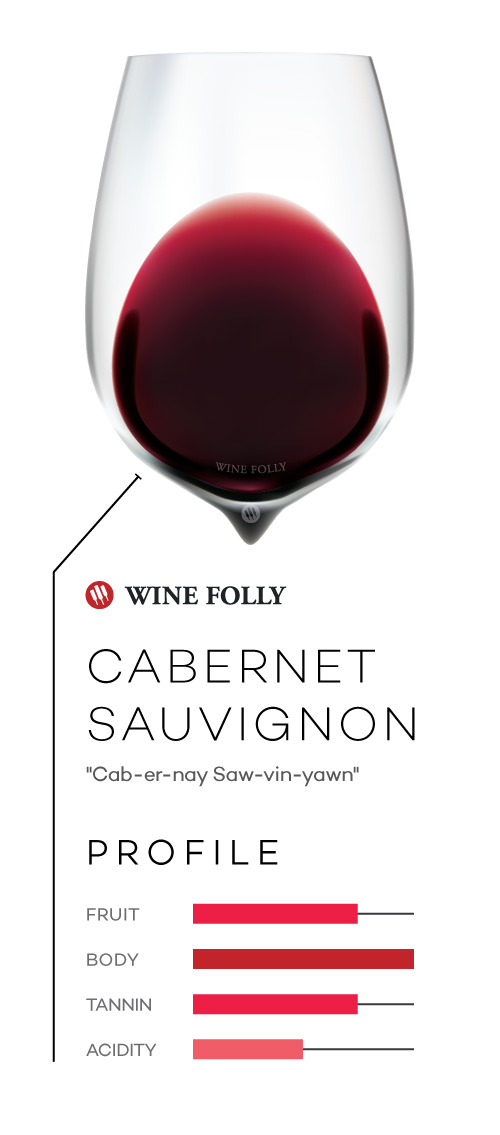
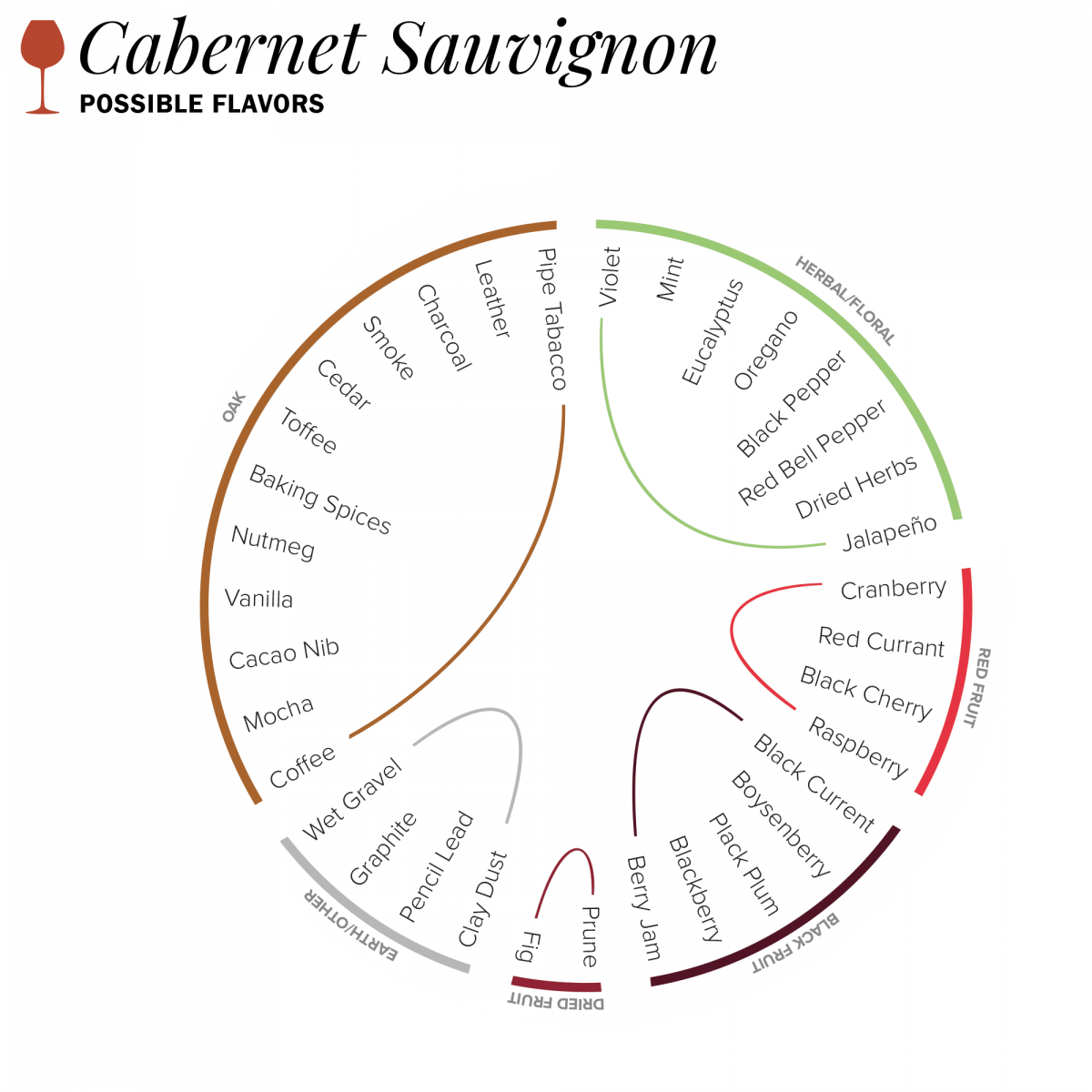
Primary Flavors Black Cherry Black Currant Red Bell Pepper Baking Spices Cedar
Full bodied red wine that is heavily planted in the Bordeaux region. It is currently planted on around 717,000 acers and is one of the most popular wine verities in the world, thus commonly called the king of grapes. Cabernet Sauvignon is a natural crossing of Cabernet Franc and Sauvignon Blanc that happened in the 1600s. It has unusually smaller berries that have a thick skin, this results in more flavor, tannins, and color. The Cabernet Sauvignon vines tend to bud later in the spring and the grapes take longer to ripen in the fall.
Food Pairings Pairs well with foods in high fats and umami flavors like charred gruyere burgers, mushroom pizza, marinated ribeye steak, or braised short ribs. Also pairs well with lamb, beef, smoked meats, or firm cheeses like aged cheddar, or hard cheeses, like pecorino.
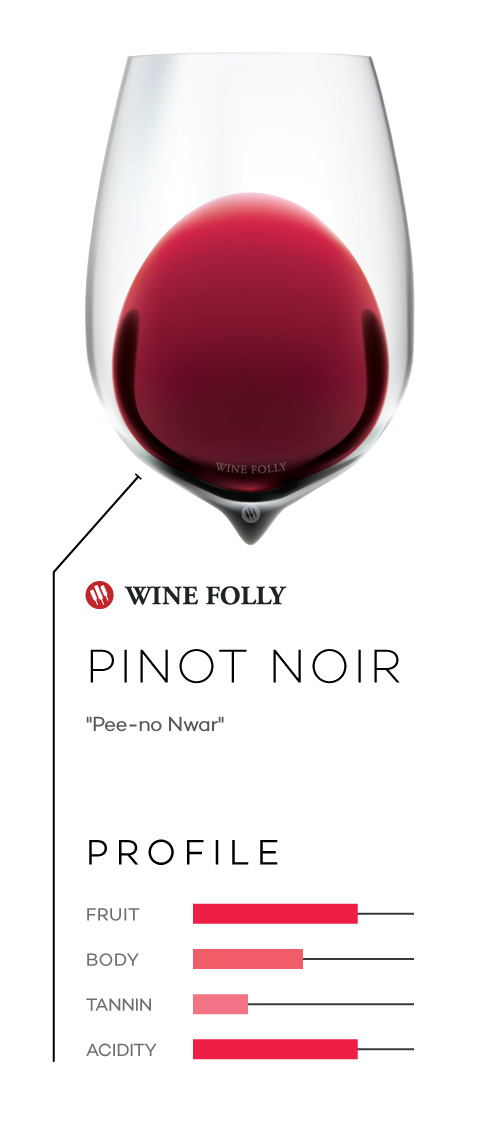
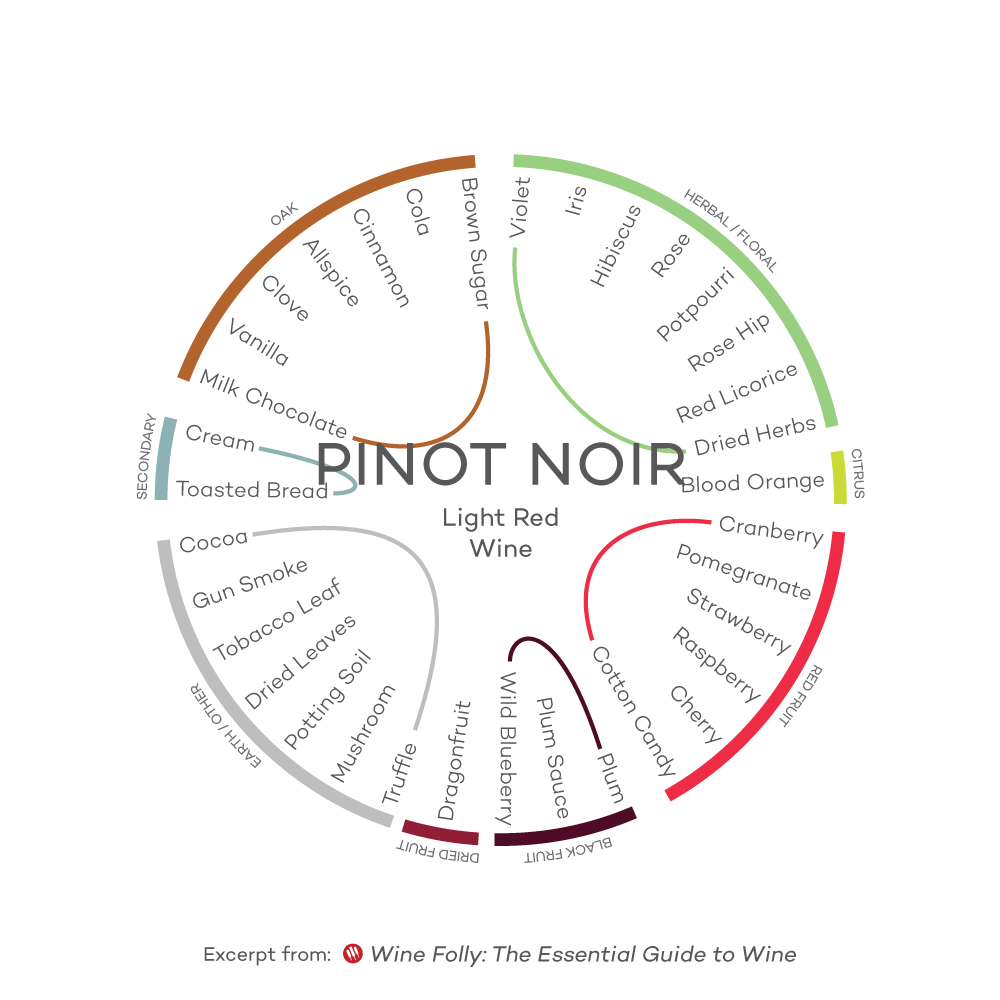
Pinot Noir is a lighter bodied red wine. Burgundy, France is the original home to Pinot Nior and is considered the original wine grape. These grapes have a thin skin, prefer a cooler growing climate, tend to ripen early, usually produce a low yields, and are a demanding grape to farm. Pinot Noir is one of the few red grapes that are usually made into reds, whites, roses, and sparkling wines.
Food Pairings Pairs great with duck, pork, chicken, and mushrooms. Also goes well with veal, cured meats, cream sauces, soft cheeses, and semi firm chesses like gruyere.
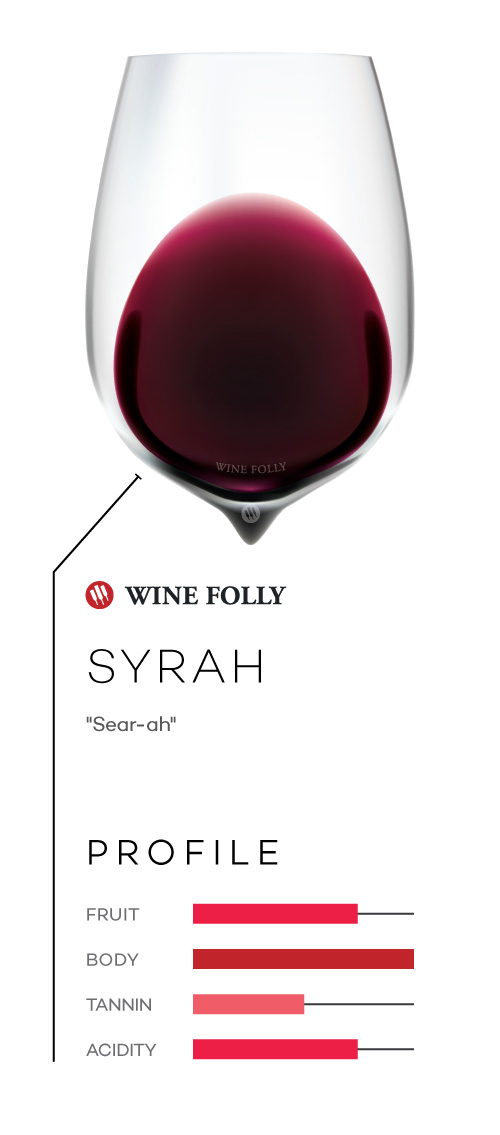
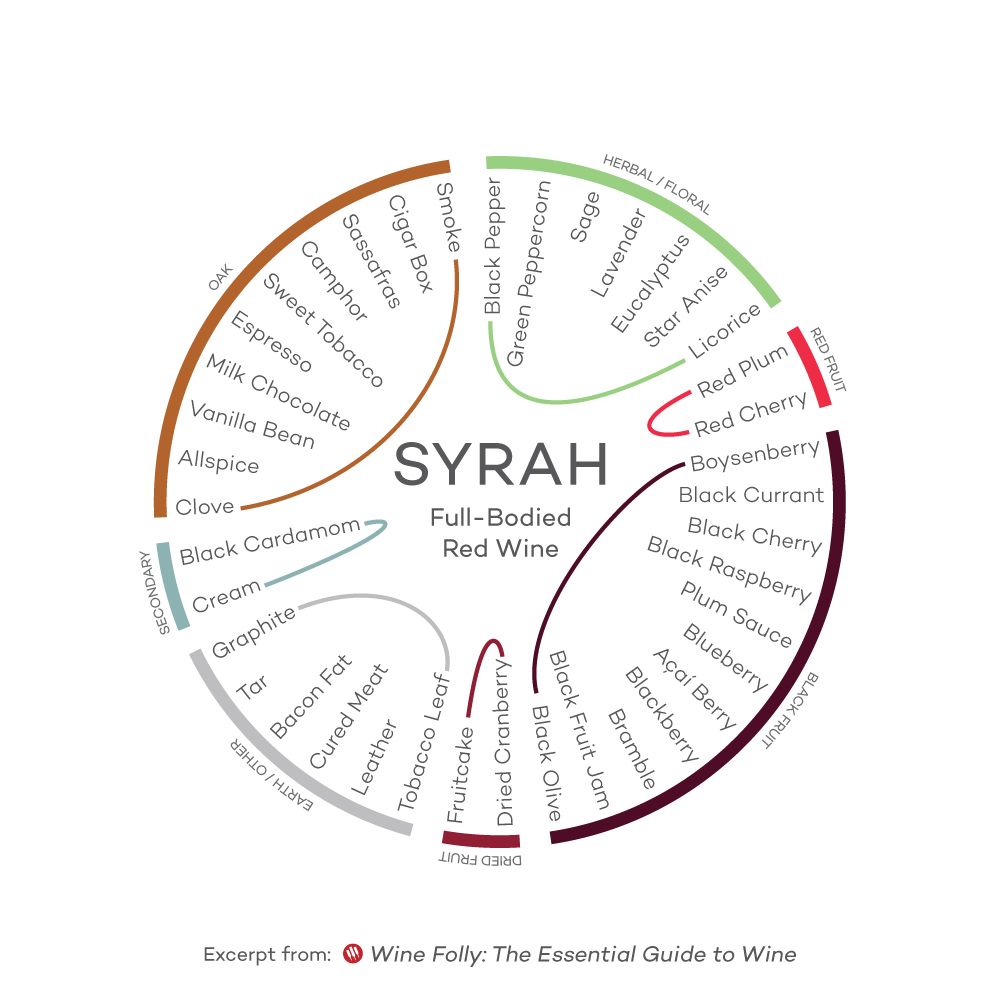
Primary Flavors Blueberry Plum Milk Chocolate Tobacco Green Peppercorn Black Pepper Cured Meat Violet
Syrah is a full bodied red wine that is heavily grown in Rhone Valley of France and in Australia, where it is called Shiraz. Syrah is a small grape with a thick dark skin, this gives the wine a higher tannin content. Because of its thick skin, it is a common practice to cold soak Syrah grapes for several days. This helps to increase the wines color and fruitiness, while reducing herbaceous flavors and tannins.
Food Pairings Pairs great with lamb, beef, and smoked meats. Also goes well with firm cheeses like white cheddar and Manchego. Dark and spicy meats like Lamb Shawarma, Gyros, Asian five spice pork, and tandoori meats bring out the fruit notes of the Syrah.
Currently there are thousands of varieties of grapes, but the vast majority of modern day wines are currently made with only a few varieties.
Chardonnay
Sauvignon Blanc
Riesling
Pinto Grigio/ Pinto Gris
Moscato
Cabernet Sauvignon
Merlot
Pinto Noir
Syrah/Shiraz
Grenache/Garnacha
But, what about the rest? Airen and Cinsaut varieties are usually considered work horse grapes and usually only used for making bulk wines or brandy. Varieties like Tempranillo and Chenin Blanc just haven’t caught on outside of their home regions where they are very popular, these varieties can make some exceptionally great wines.
The Best of the Rest Pinot Blanc Semillon Chenin Blanc Viognier Gewurztraminer Gruner Veltliner Albarino Gamay Cabernet Franc Carmenere Malbec Sangiovese Barbera Nebbiolo Montepulciano Aglianico Zinfandel Monastrell Teempranilla Pinotage