It seems that water has been the theme of your PDC.
Rodjé Malcolm, giving me the run down on Durga’s Den’s hopes for a greywater system.
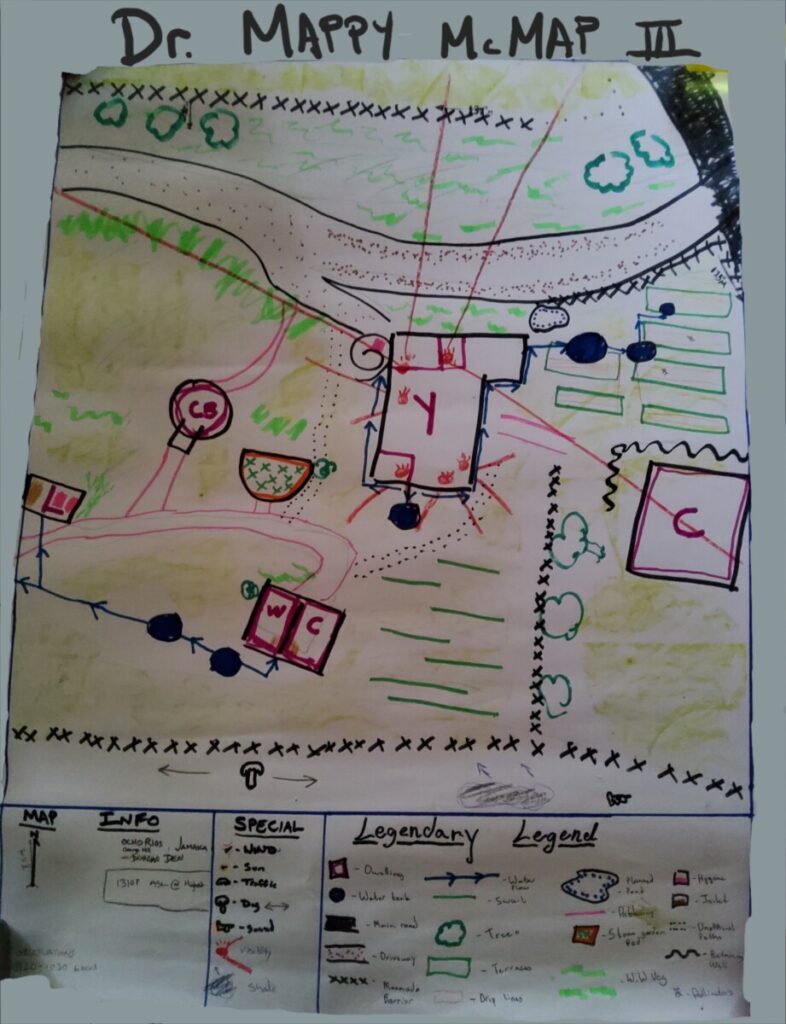
The applied design project saw team Mappy McMap doing our best to utilize the potential of the elements and landforms that made up the front third of Durga’s Den. From the main road, up the driveway, until you are parallel with the upper showers/toilet, all the way up to the neighbor’s fence line. This portion contains the majority of the guest houses as well as the yoga deck, lower garden beds, and upper swales.
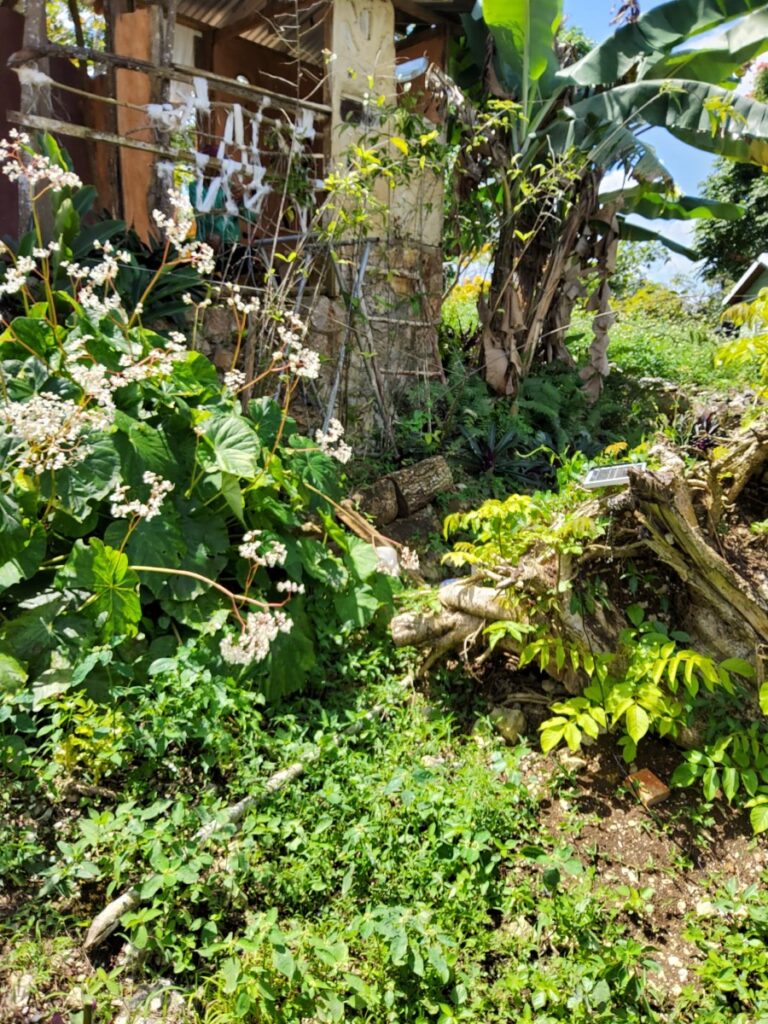
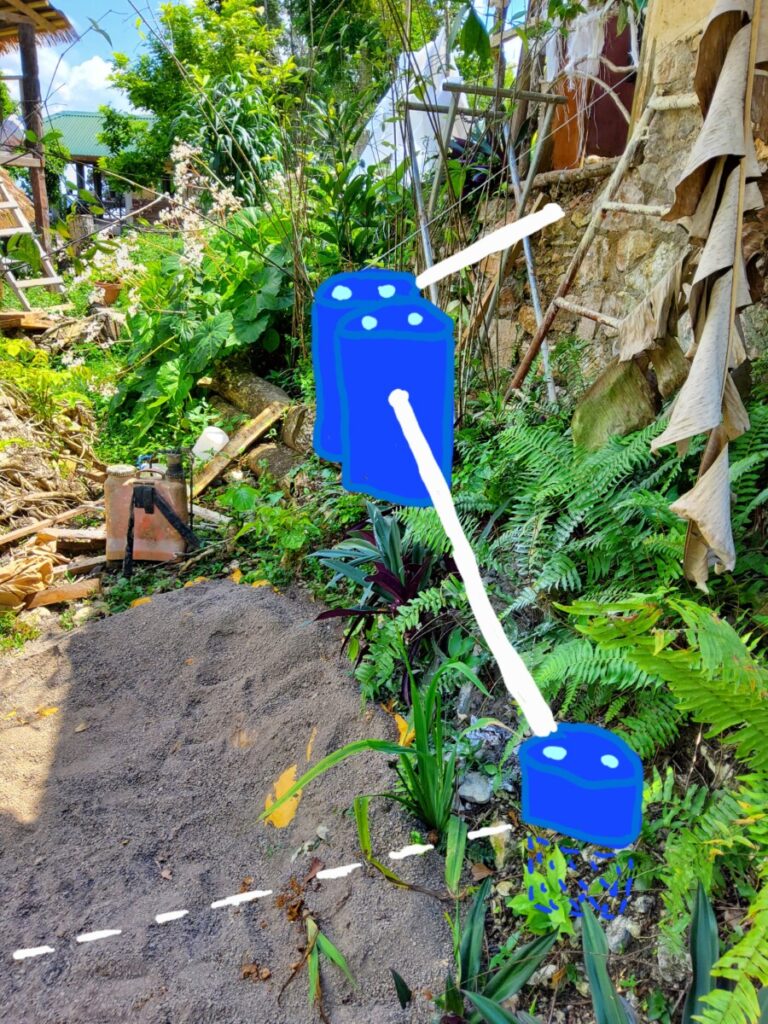
I was given the responsibility of designing a greywater reclamation system for the section of the property. After some clarification, this project was requested by Lise and Mikey and is something they wish to work with going forward. As such, I was given the area pictured above to work with, and a mandate that the system be able to handle inputs from approximately four guest’s weekly.
Given the relatively tight area, and soil samples showing loamy clay sitting on top of limestone/marl, I decided a mostly contained system would serve the purpose better than open air succession ponds. I set to work brainstorming designs and settled on plastic 55 gallon drums as the vessel to catch and manage the greywater.
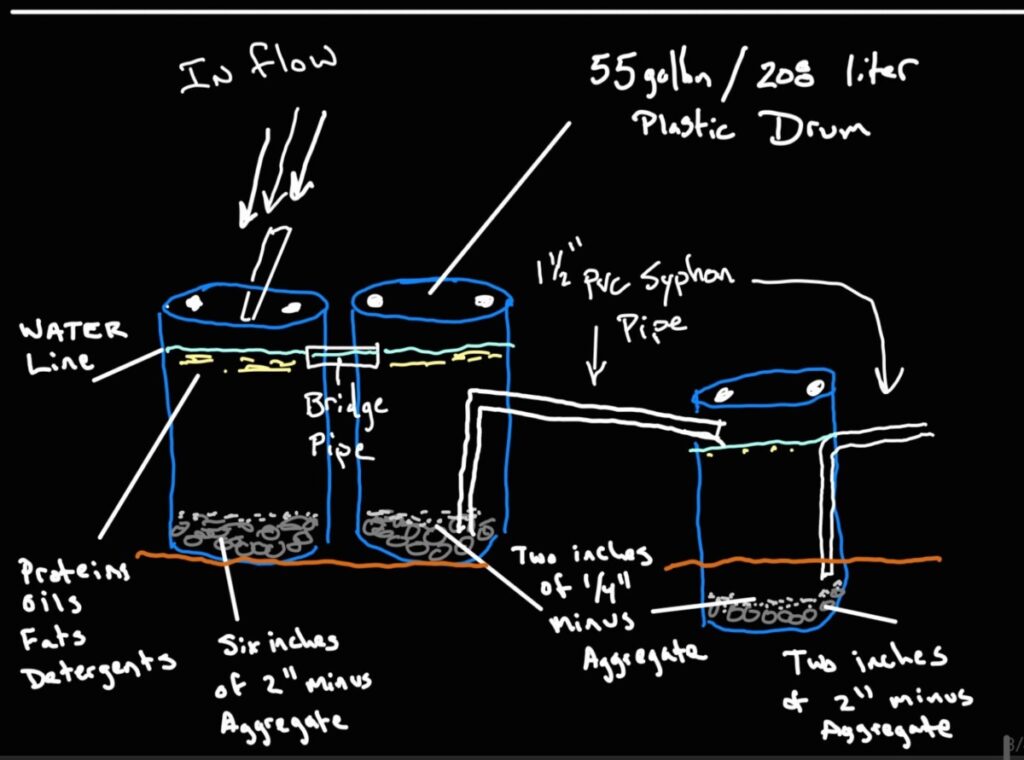
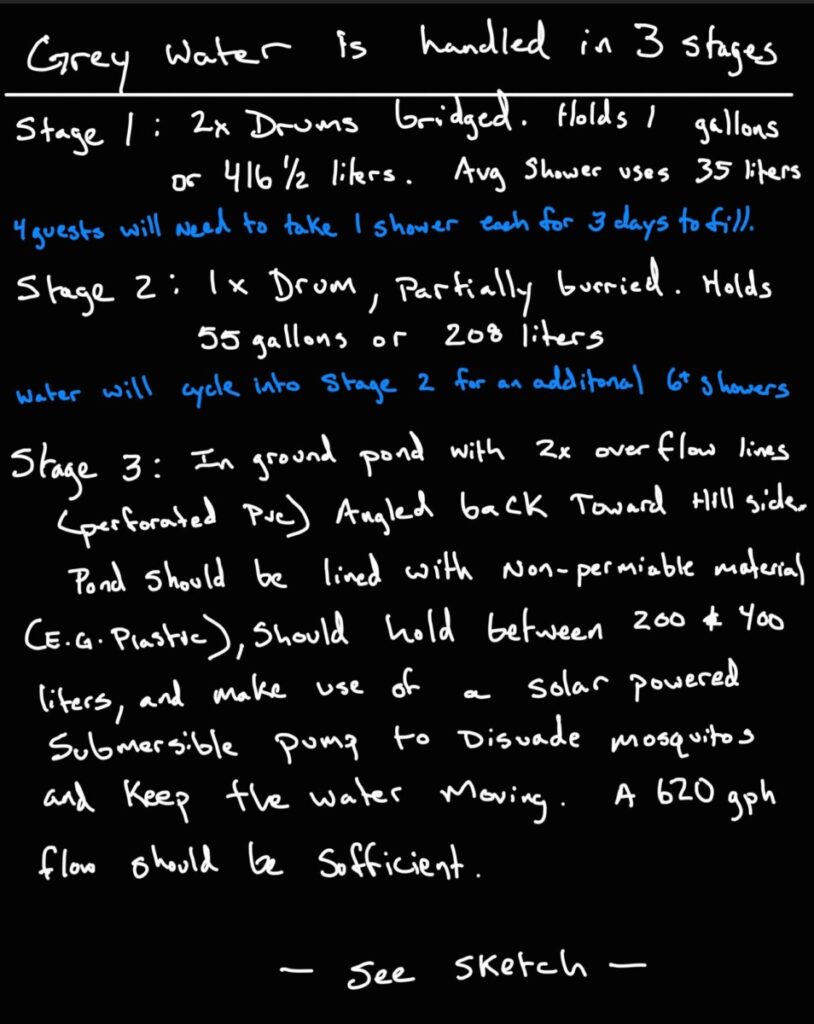
Ultimately, I wanted a system that would scale with increased inputs, manage overflow within the area that currently takes the used water, and would be relatively accessible for any necessary maintenance that may need to be performed. A scaled down version of the water separation systems used at LOTT in Olympia, WA seemed appropriate. Utilizing aggregate as sediment filters, and mid-line syphon flow pipes to allow proteins, oils, fats & detergents to sit on top, the water leaving stage one should be fairly well cleaned without the need for filtration or treatment.
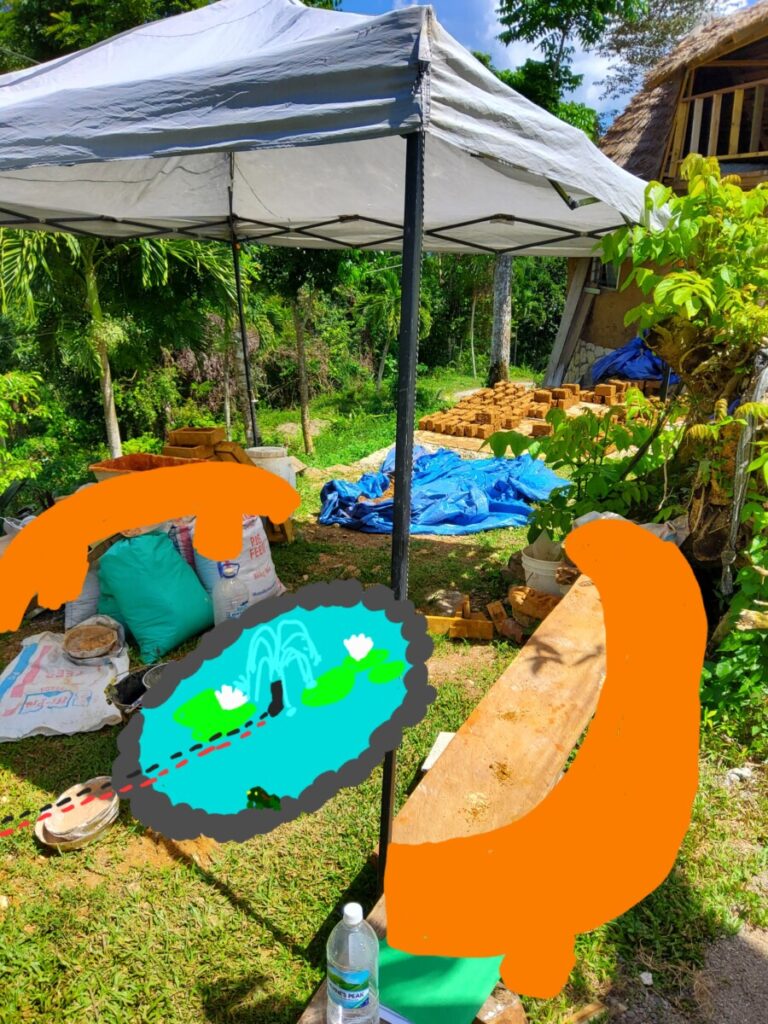
Stage two is a smaller version of stage one, partially sunk into the ground to aid flow angles. A final sediment filter/POFD separation should allow the outflow to be mostly free of contaminates by the time it settles into the planned pond feature. This pond will utilize an impermeable liner, small gravel bottom, and water-borne plants to hold and biologically filter the final stage. A solar-powered submersible pump is recommended to allow for circulation of the water and discourage mosquito growth.
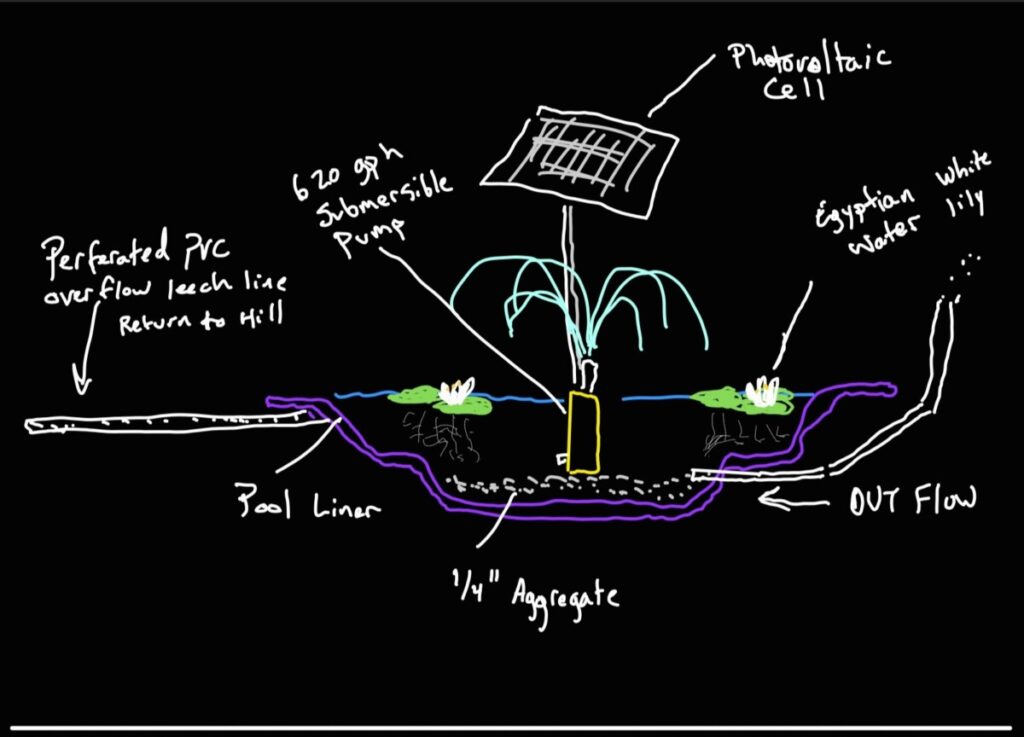
The final step is to allow for two perforated pipes (leech lines) to be directed back at the hillside where the water currently drains now. This will continue to create and encourage a wetland micro climate below the showers. With the addition of some water-loving plants, everything from herbaceous groundcover that can serve as chicken feed, to fast growing fodder plants, pleasant flowering shrubs, and even a small shade tree can be planted to take advantage of this additional water.
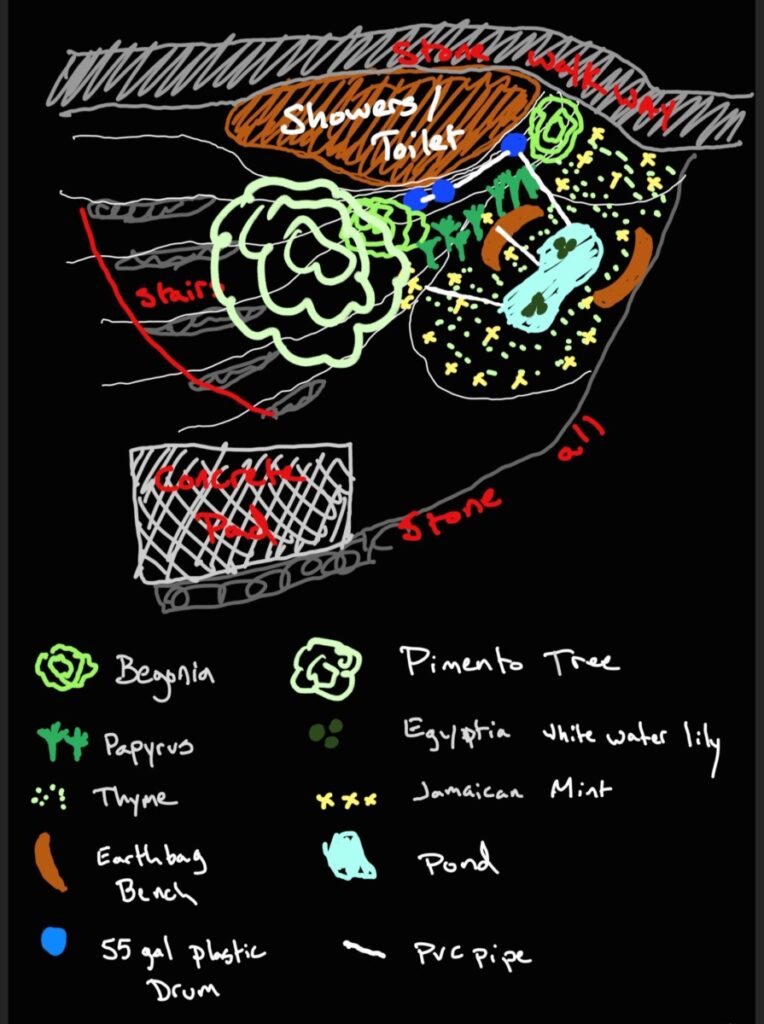
This area, once planted, could serve as an additional ‘Chill Zone.’ It’s location relative to guest lodging, unique wetland plants, shade tree, and central water feature would make a wonderful spot to place some simple earthen benches and give guests a place to sit and listen to the water babble through the submerged pump.
I hope this design can inspire a future greywater reclamation system in that area. The land holds a lot of potential. I hope to return to see it transformed in the near future!