You have some roses and a maple. That’s cute.
Nine, when looking at our partial companion planting design.

Here it is, Week 3. The end is near. You are standing, with your PDC cert in hand, staring into the middle distance wondering what the future holds for you and this newly grown seed of permaculture in your mind. Should you go home and destroy your backyard to create edge? Should you hack swales into that grass beside your driveway to move your water laterally? Oh God! What if Nine sees this sad attempt at gardening without community and laughs at you?
Fear not! The Scotty B (yet again) has you covered. Whether you are a college kid in the dorms, a college kid in an apartment, a college kid splitting a rental with three others (and their partner[s]), or just a plain old college kid in your own rental or home, the pepper has your back!
In 1941 the first Hungarian Paprika seeds were planted in Washington’s Yakima Valley.
DeWitt & Bosland, proving Washington’s chops when it comes to pepper cultivation.
Although the Scotch Bonnet is a tropical plant, it can be grown in a small greenhouse made from something as simple as sticks and plastic wrap. The seeds tend to take a long time to germinate, doing best in high humidity and staying warm over night. They are slow growers and can take between 80 and 120 days (or more) to produce a yield. This yield can vary enormously according to how well you adapt our conditions to those of Jamaica in your greenhouse. Stunted plants producing as few as ten pods, all the way to large bushy plants with fifty or more pods are possible (DeWitt & Bosland, 1993).
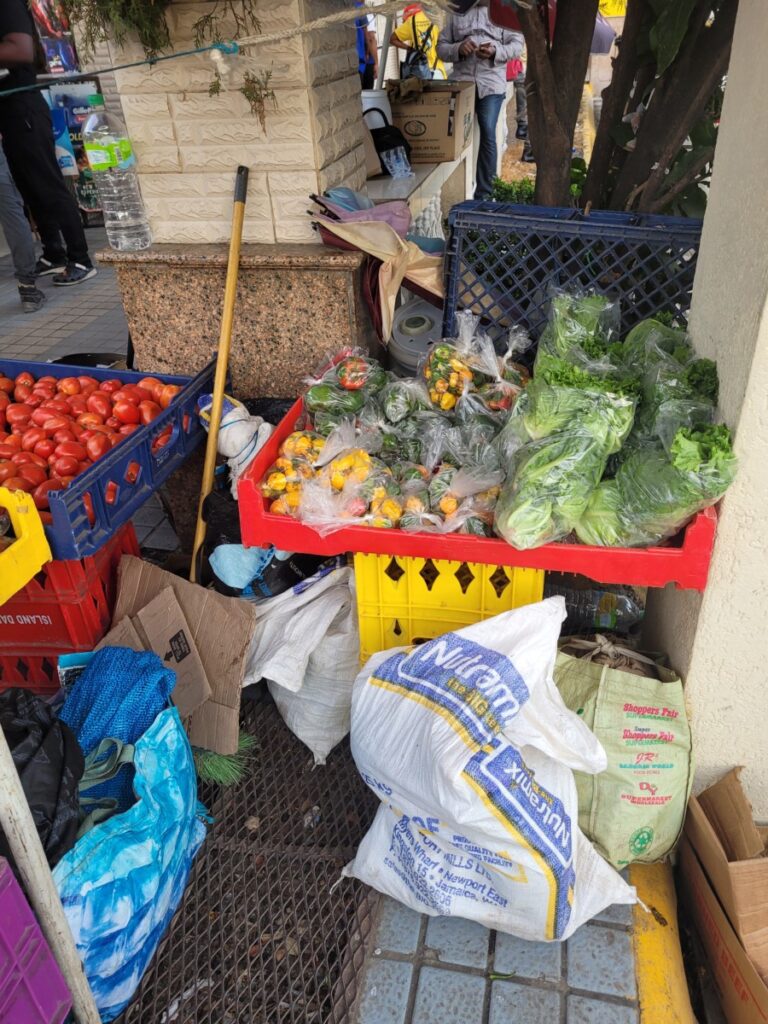
While a few handfuls of Scotch Bonnets may not seem like a worthwhile pay off for all of that invested energy, I would argue that the challenge of bringing a bit of Jamaica to Olympia is worth that cost. Whether making taumaline with dungeness or red rock crab guts, or pickling your own pepper, or going nuts with a couple of Boston Jerked chickens to make Thanksgiving dinner worth eating (F you turkey), a pepper garden can be your ticket to a world of flavor to spice up your life.
The heat or ‘hotness’ of food is refereed to as pungency. It is a sensation experienced by the entire oral cavity – and elsewhere, notably the anal mucosa. Pungency is commonly linked with astringency, and ‘cooling effects’ under the general heading chemesthetic. The effects of chemesthetic stimulants may be better described as a chemical irritation, and has much in common with the sensation of pain (Coultate, 2024).
Are you surprised that at no point Scoville heat units (SHU) have been mentioned? That is because SHU is based on an invented scale dating back to 1912. A number of peppers were suspended in ethanol, diluted with water, then fed to a panel of judges. The results are neither precise nor accurate measures of casaicin concentration, but can be useful in comparing the pungency of various peppers in controlled concentrations to the average ‘every-man’ (Coultate, 2024).
So the next time you watch Hot Ones on YouTube, roll your eyes at the Heat-o-Meter, grab you a fresh Scotty from your window greenhouse, pop that bad boy in your mouth and fret for your anal mucosa.