
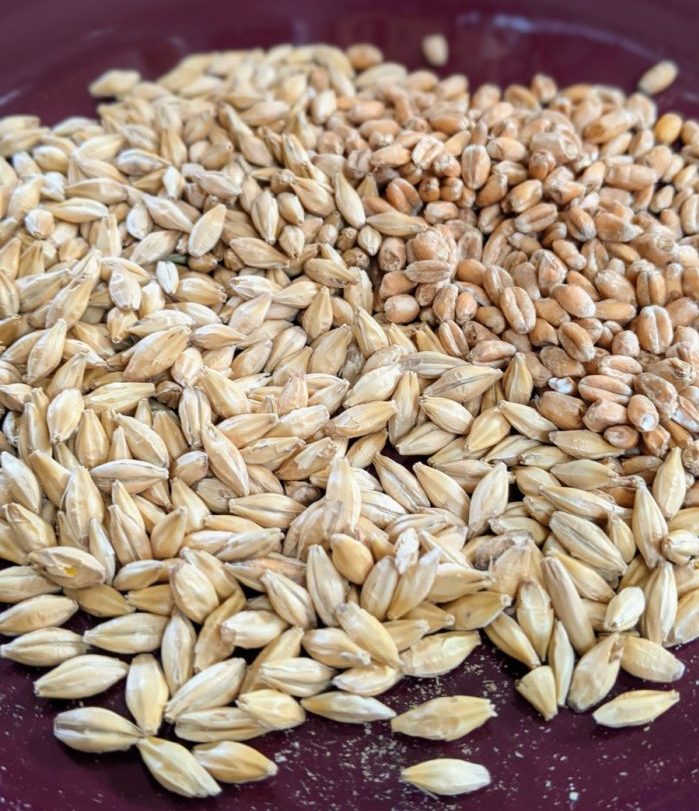
Photo by Val
#2a: Film Series: Program Questions in Scenes and Overview
Week 3
- “Foodies, Farmers Want to Bring Grains Back to the West Side (Links to an external site.),” Northwest News Network featuring Laura Lewis, WSU Food Hub (Links to an external site.), Evan Mulvaney, Greener and local farmer (Links to an external site.), and Jason Parker, Copperworks Distillery
- Unbroken Ground (Links to an external site.): Revolutions Start from the Bottom, Patagonia Films link with introduction from WSU’s Bread Lab
- “Bread is Broken (Links to an external site.): Industrial production destroyed both the taste and the nutritional value of wheat. One scientist believes he can undo the damage.”
Week 4
- “Against the Grain by John C Scott review — the beginning of elites, tax, slavery,” (Links to an external site.) Barry Cunliffe, The Guardian (website)
- “How Grains Domesticated Us,”
I choose minutes 2:32 to 5:13 from Unbroken Ground, A New Old Way to Grow Food and I am calling this scene Perennial is the Way to Go. This scene starts off with Wes Jackson, the land institute founder, talking about how grains represent around 70% of all of our calories and that grains are grown on about 70% of all of our acreage worldwide.
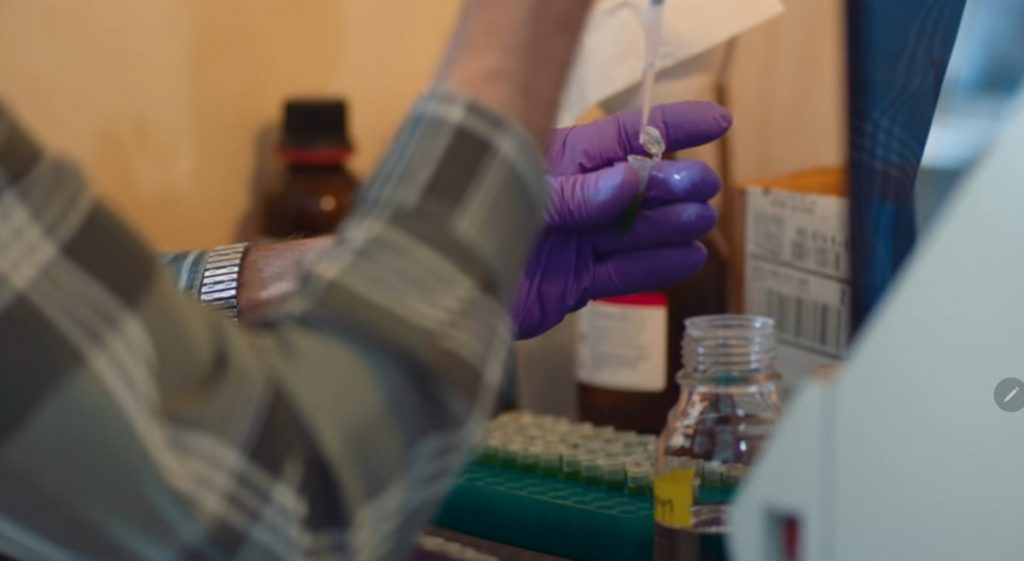
We are then introduced to Lee DeHann, the land institute lead, where he is working in the laboratory to create a new type of wheat.
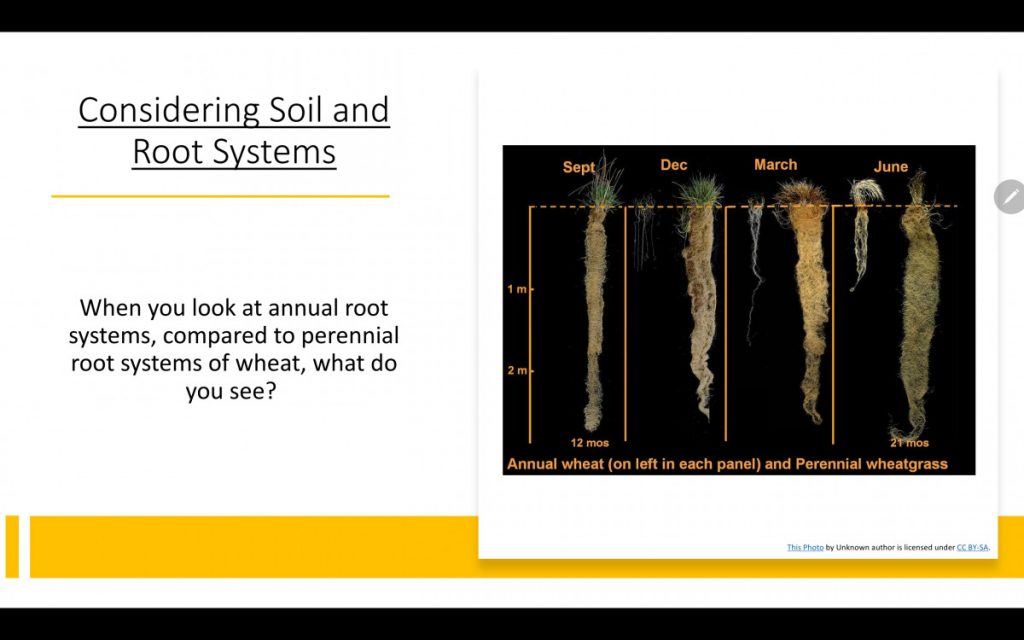
During this scene it is talked about how soil is more important than oil is and is just as much of a nonrenewable resource too. Every time we plant annual crops, we lose top soil. All of our grains that we currently plant are annual crops, this creates a degradation in our soil.
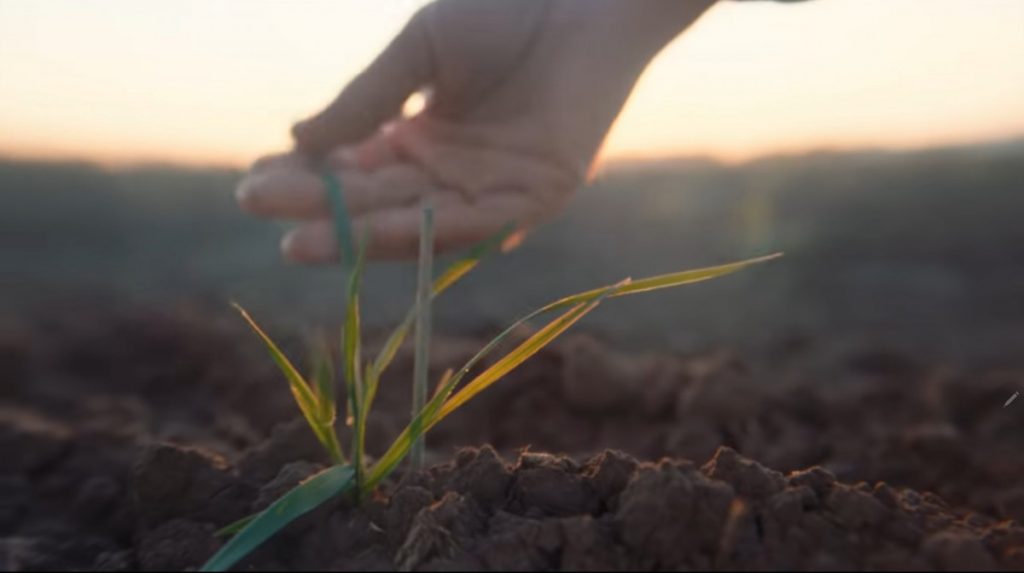
Currently at the land institute they are trying to create a perennial wheat. They are doing this by crossing a perennial grass with wheat. This type of plant breeding “is like looking for a needle in a hay stack”, trying to find the plants that have the combined traits you want.

By creating a perennial wheat, this will create a large and deep root system to bring carbon into the soil from the atmosphere, once there that carbon will be able to stay.
For me regenerative ag is the way to the future. Not only are we trying to create systems that will bring more carbon into the soil and help rebuild it, but also it is creating diversity. This diversity is helping the smaller organic and craft farmers with better seeds more fitted for their needs and ways of farming.
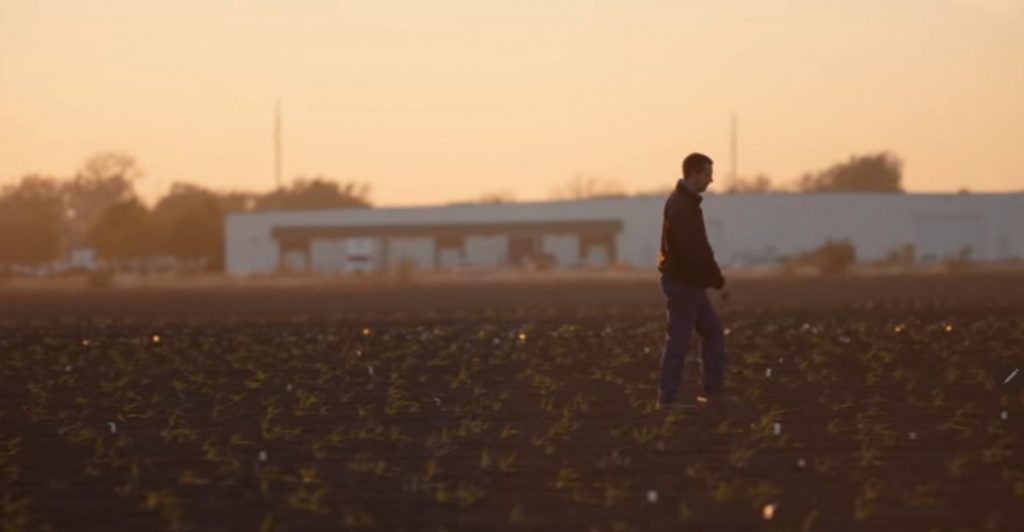
Photos from Unbroken Ground, A New Old Way to Grow Food by Patigonia
#2b: (un)Natural Histories
- Winter Rye for Erosion Control https://hosstools.com/product/winter-rye/
- Using winter grain as a cover crop in the home garden https://digitalcommons.usu.edu/cgi/viewcontent.cgi?referer=https://www.google.com/&httpsredir=1&article=2085&context=extension_curall
- Barley Growing Guide https://www.sprowtlabs.com/2017/01/10/barley-growing-guide
- Barley Growth Guide https://projectblue.blob.core.windows.net/media/Default/Imported%20Publication%20Docs/Barley%20growth%20guide%20130718.pdf
- Hypothesis: Ground to Glass
- The Terroir of Barley https://beerandbrewing.com/brewing-impacts-the-terroir-of-barley/ (Links to an external site.)
- Growing Malting Barley in and around the Willamette Valley https://catalog.extension.oregonstate.edu/em9233/html (Links to an external site.)
- Growing Malting Barley pays a premium but…. https://www.farmprogress.com/crops/growing-malting-barley-pays-premium-demands-lot-more-care (Links to an external site.)
- How to Malt at Home https://www.sprowtlabs.com/2017/02/23/how-to-malt-at-home (Links to an external site.)
- The Terroir of Beer (a grant proposal)
Final_The Terroir of Beer Evaluation of Barley Characteristics from Farm to Glass.pdf - Introduction to perennial grains (contains a word clue that indicates this was at least in part authored by The Land Institute staff)
https://en.wikipedia.org/wiki/Perennial_grain (Links to an external site.) - Long-lived perennials – grain-like chestnuts and agroforestry production
https://www.regenerativedesigngroup.com/growing-chestnut-agroforestry/ (Links to an external site.) - Using Chestnut flour – example of Italian Terroir
https://www.greatitalianchefs.com/features/chestnut-flour-tuscany-dishes (Links to an external site.) - WSU Bread Lab and International Bread Collective
http://thebreadlab.wsu.edu/the-bread-lab-collective/ (Links to an external site.) - Breeding perennial grains
https://www.americanscientist.org/article/wild-plants-to-the-rescue
#2c: Regenerative Agriculture
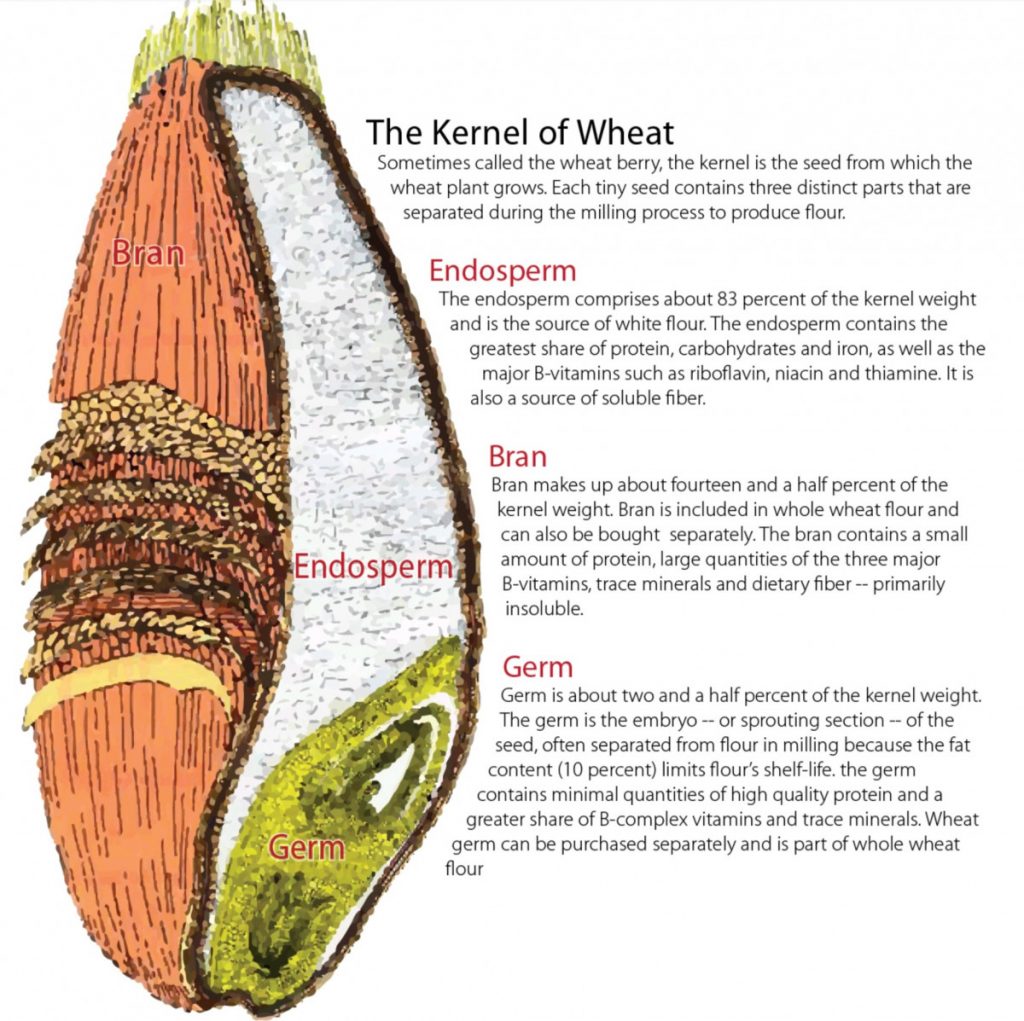
Shared by Steve Scheuerell in Regenerative Ag
http://flour.com/anatomy-of-a-wheat-kernel/
Annual wheat will produce more seeds than perennial wheat varieties.
– Carbon partitioning
– all the energy goes into the seeds of annual wheat varieties
– large root systems of perennial wheat takes away energy and carbon from seed production
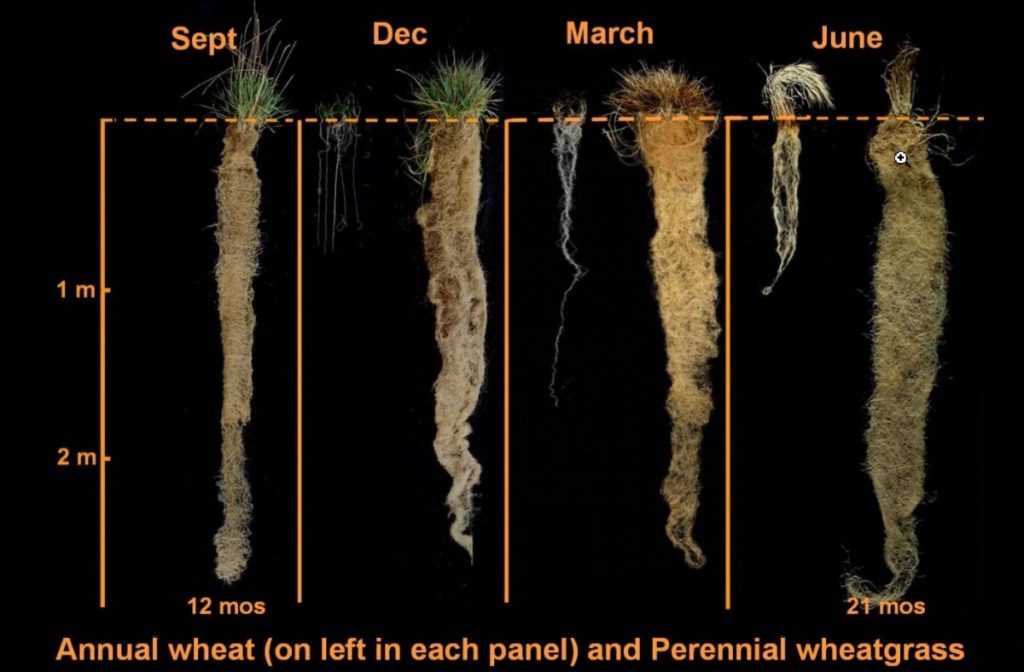
Shared by Steve Scheuerell in Regenerative Ag
Soil structure management and drainage have major effects on root growth and distribution
- a mature root system has 20 or more main roots per plant with many branches
- root distribution through the soil profile determines water and nutrient capture
- good rooting especially deep rooting, will enhance crop growth when water is limited
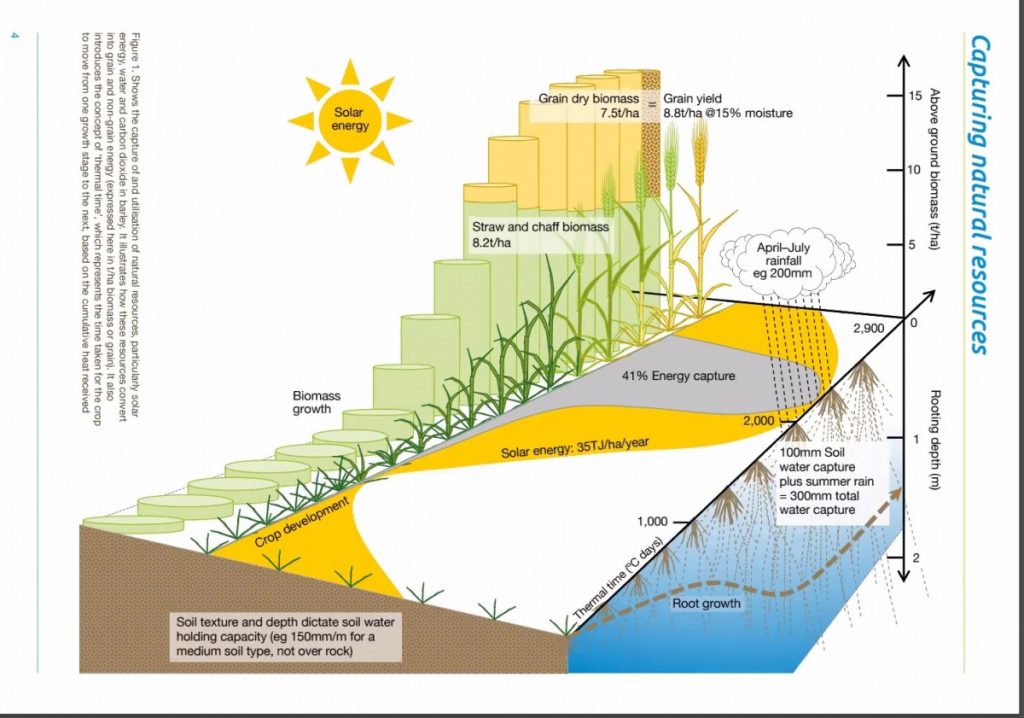
Shared by Steve Scheuerell in Regenerative Ag
Malting barley quality specifications are made by the American Malting Barley Association AMBA
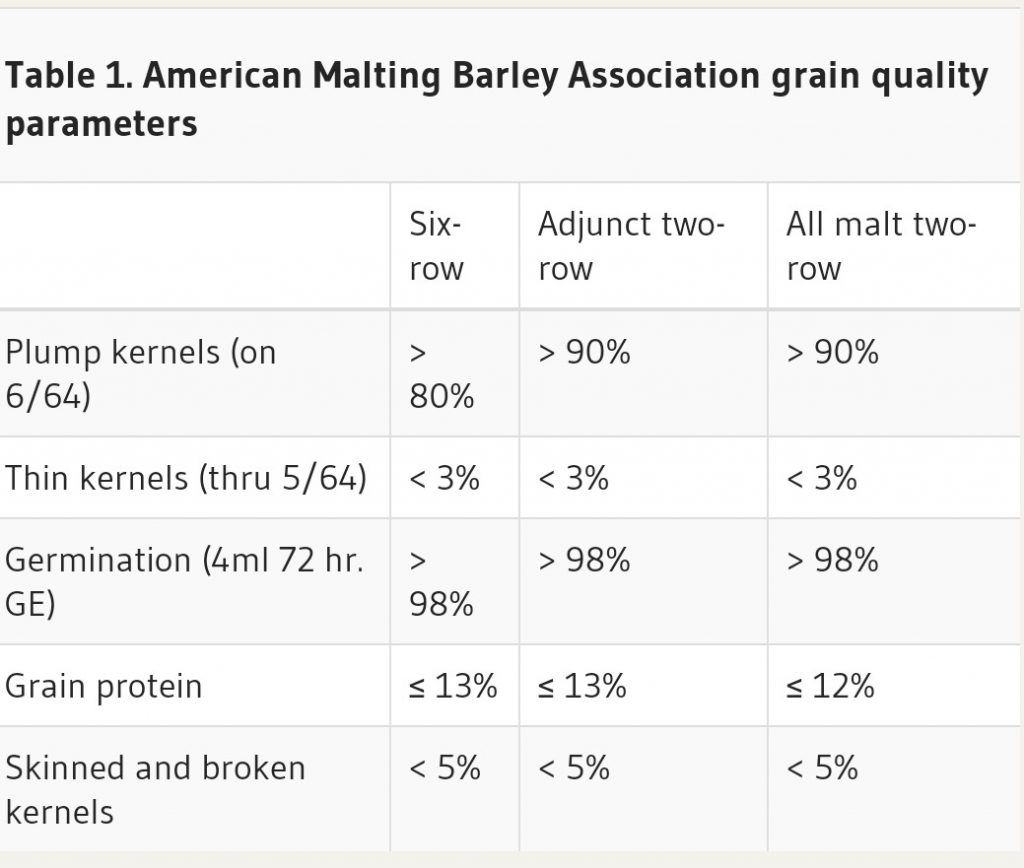
Chart found in Growing Malting Barley in and Around the Willamette Valley by Betsy Verhoeven, et al.
Key malting traits
- Grain protein
- The percentage of plump kernels
- The percentage of skinned and broken kernels
- Germination percentage and rate
If the barley does not meet these specific standards it will then be sold at a lower price as feed.
Kernza Grain
A trademark name for a grain of intermediate wheatgrass.
It has deep roots, which can extend 10 plus feet beneath the soil surface.
After harvest the remaining leaves and stems can be grazed by cattle.
Under good conditions kernza can contain more seeds than an annual wheat head.
#2d: Case Study Tasting Research: Grains
Aba Kiser’s Cascadia Grains
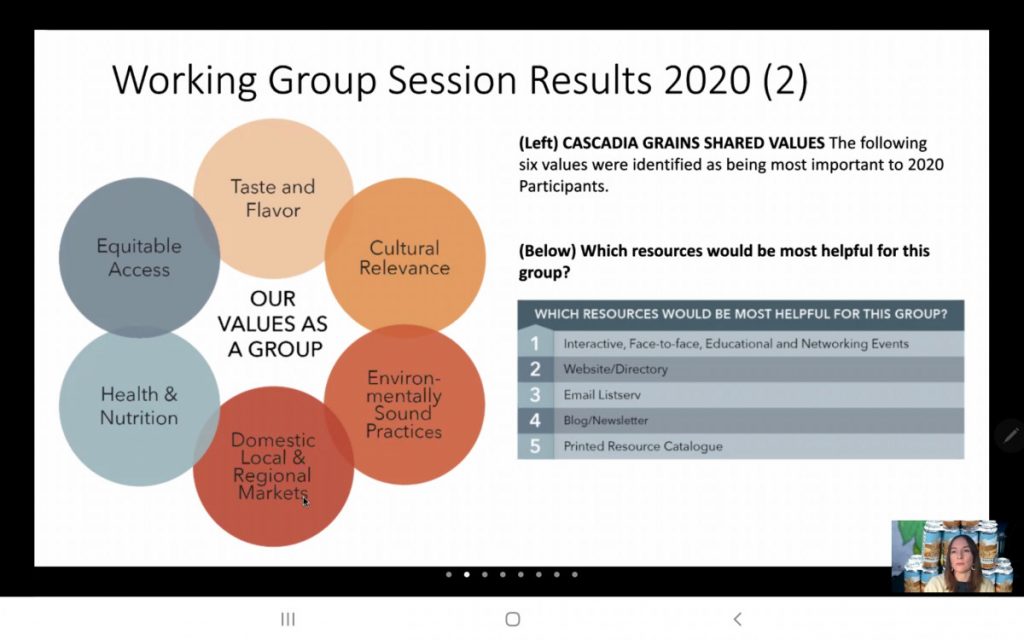
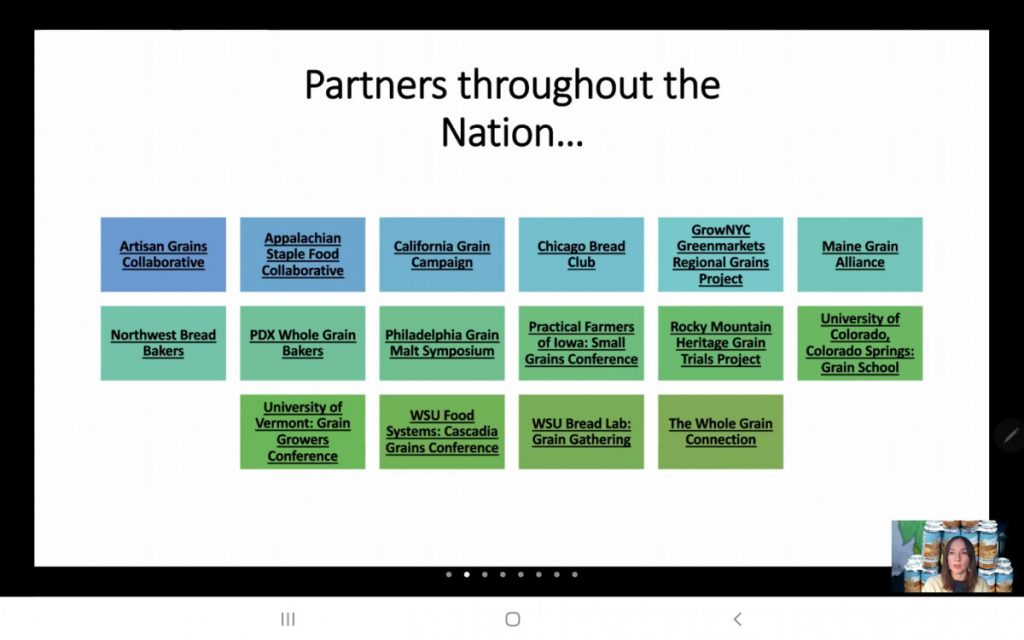
Stephen Bramwell’s craft grains project report, “From Ground to Glass.”
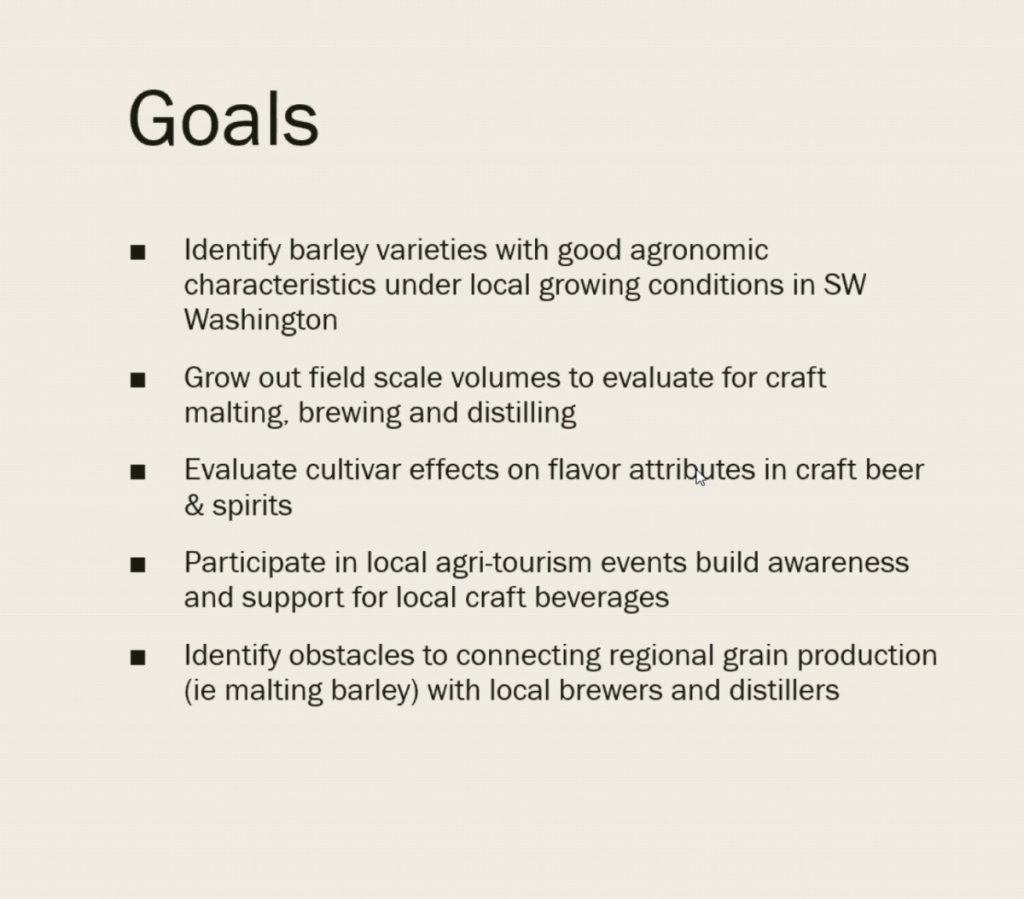
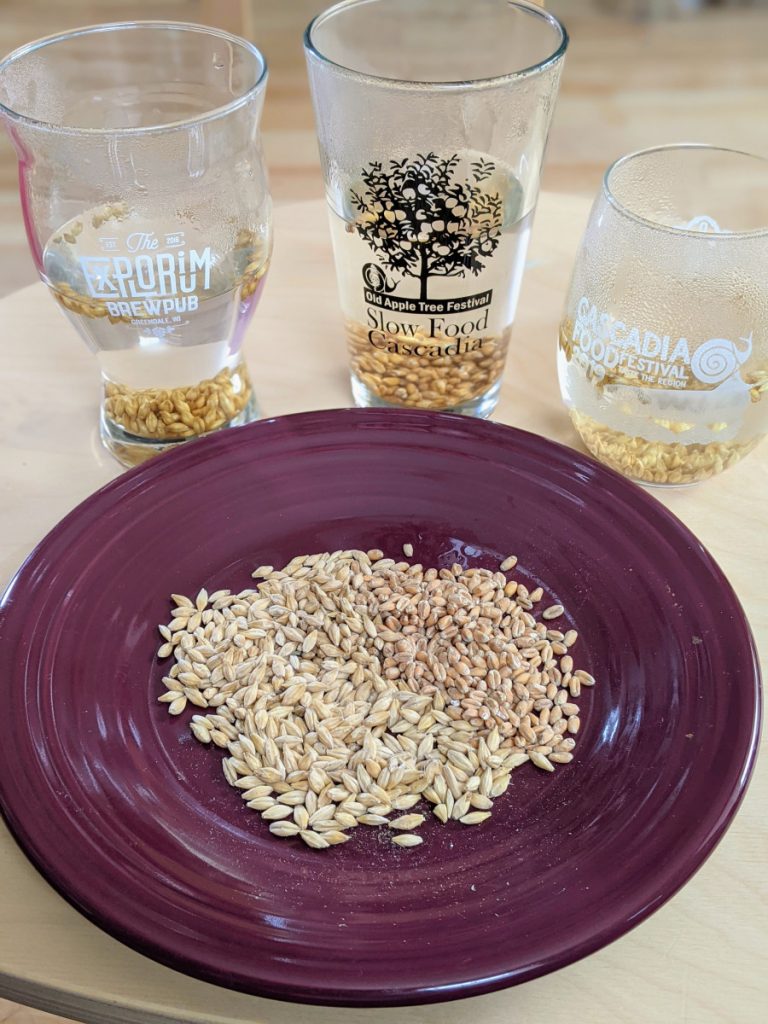
Photo by Val
#2e: Stuckey’s Taste Book Experiments
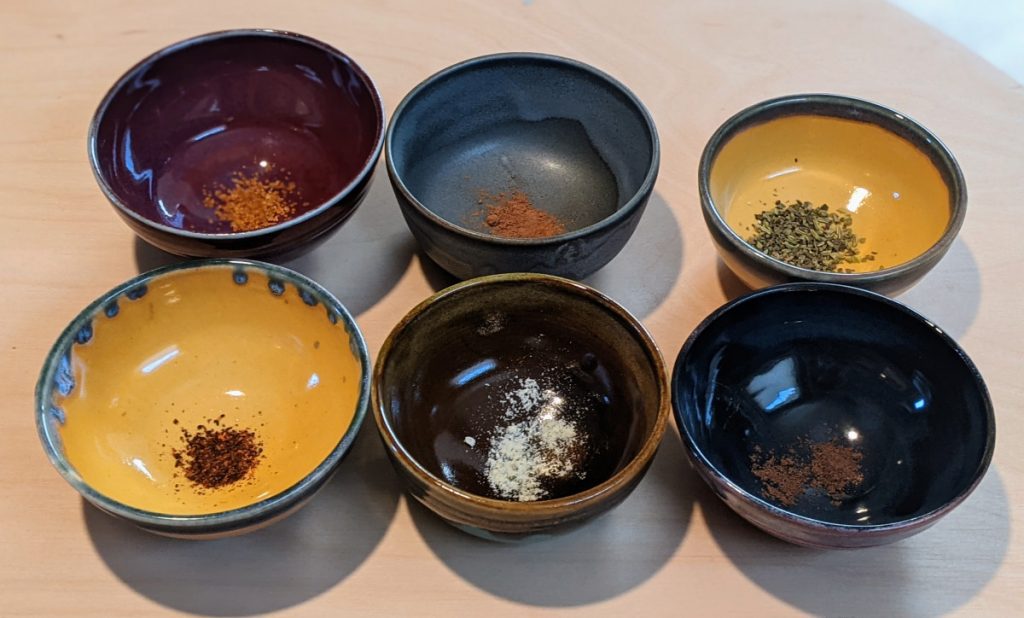
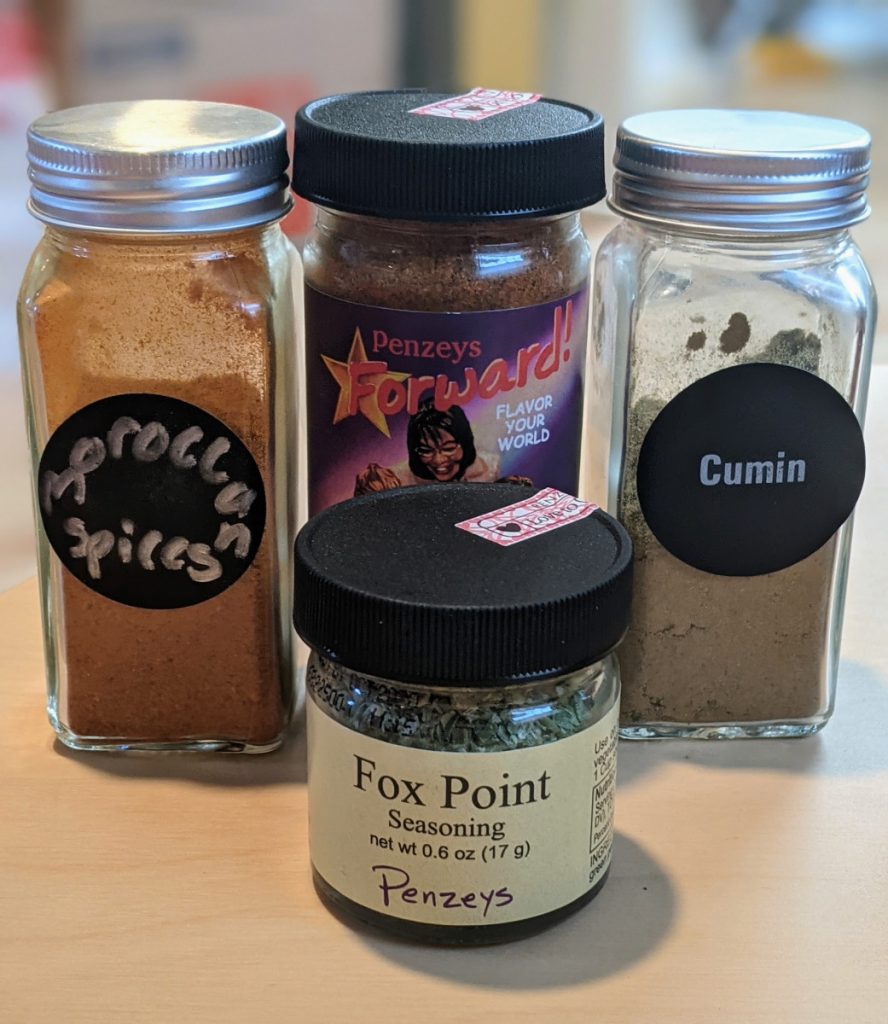
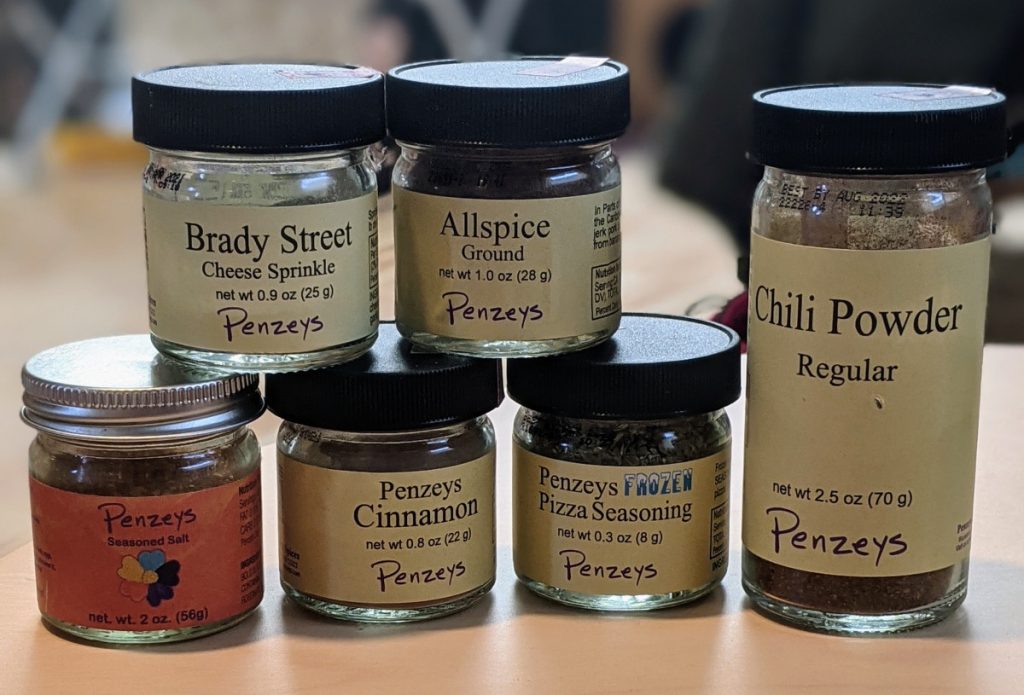
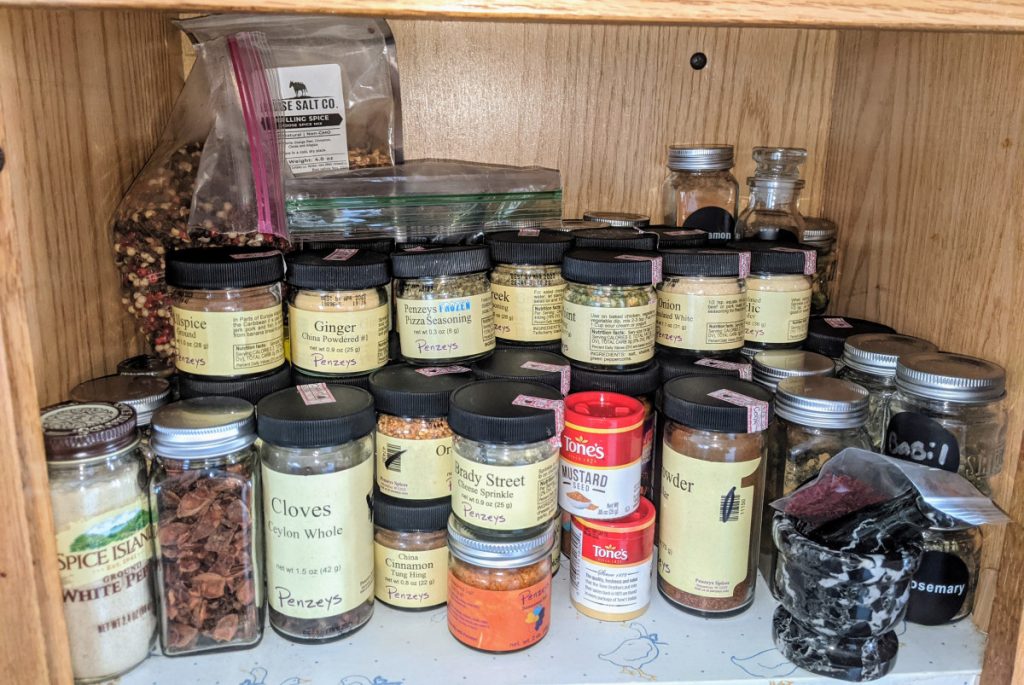
Photos by Val
#2f: Sustainable Entrepreneurship
Local Living Economy Model
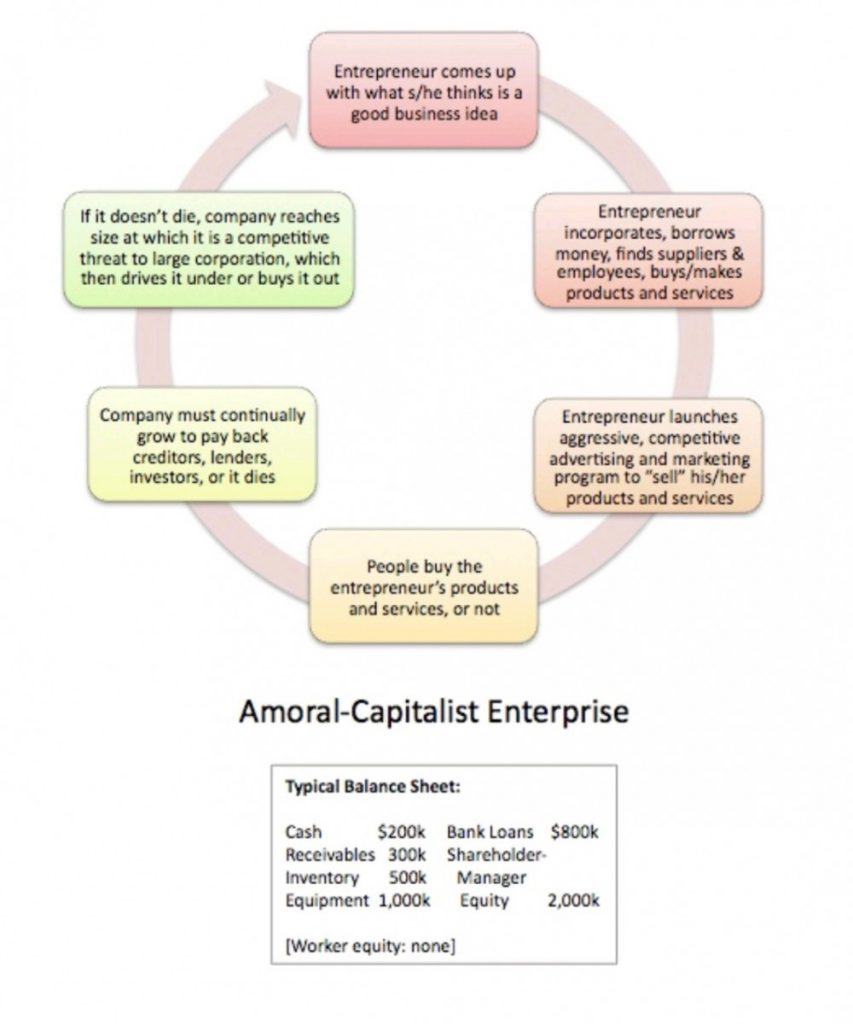
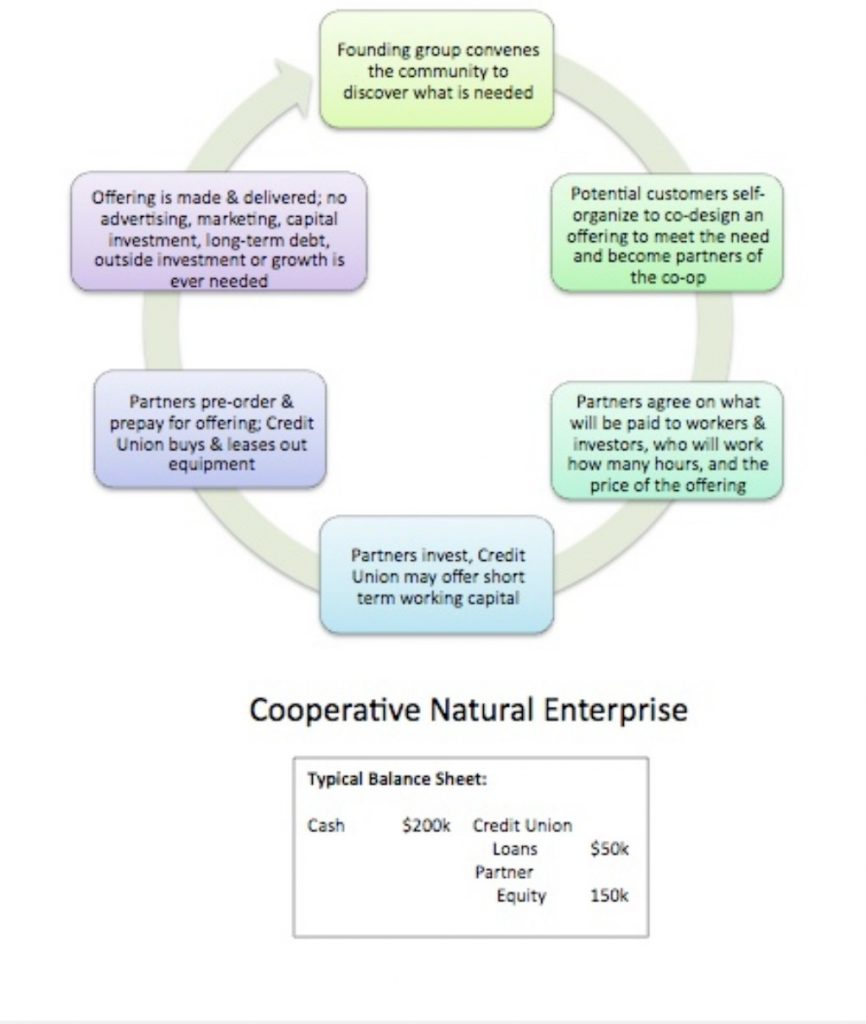
Shared by Tamsin Focrier in Sustainable Entrepreneurship
http://howtosavetheworld.ca/2010/07/29/how-a-community-based-co-op-economy-might-work/
Ensures economic power resides locally, sustains a healthy community and natural life as well as long time economic viability
Principles
- Producing and exchanging locally
- Decentralized ownership
- Willing to pay price premium
- Living return
- Independent and locally owned
Source products locally and sustainably
Care for their employees
Provide quality customer service
Cooperate with the local community
Support and protect the community around them
Yield a living return
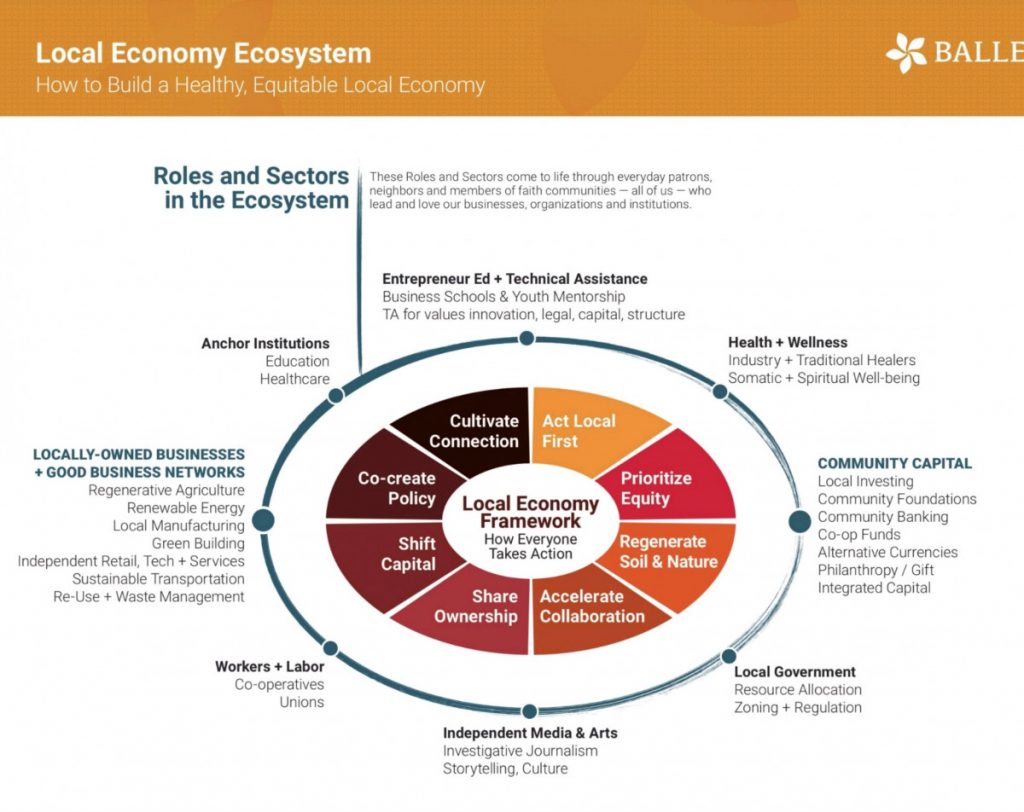
Shared by Tamsin Focrier in Sustainable Entrepreneurship
https://www.gih.org/views-from-the-field/connecting-the-dots-equitable-local-economies-create-healthy-people/
Local Currencies
Mechanism for supporting local living economies
- Local money supply
- New business and job development
- Community independence and resilience
- Local stakeholder engagement
- Stakeholder control over externalities
- Build direct relationships
- Community pride and identity
- Access to high quality goods and services
- Different forms
- Time Bank/ Hour Money
- Local Business Credit/Debit
- Straight up Barter
- Federal Local Exchange
- Different forms
Econovillage
Mission
- Sustainability
- Resources are not consumed faster than their natural replenishment on the site
- Community can continue indefinitely without reduced internal resource
- Community can continue indefinitely without contributing negatively outside of the community
Sustainability Gudelines
- Look holistically at issues of sustainability to create a sustainable culture that takes into account all impacts of its action and acts to preserve the earth for the future
- Rely only upon renewable resources and to use them at a rate less than their replacement
- Minimize its negative impact on global ecological systems
- Preserve and rebuild healthy ecosystems and have a positive impact on biodiversity
- Avoid exploiting people and their cultures
- Achieve negative population growth from reproduction
Frank Addeo (South Puget Sound Community College), Craft Brewing and Distilling Program
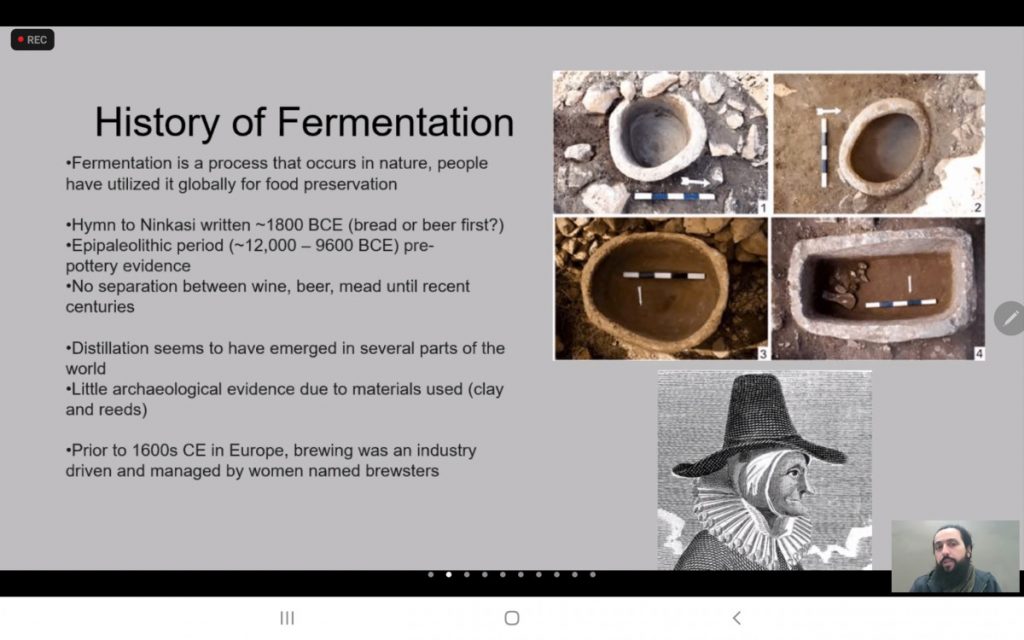
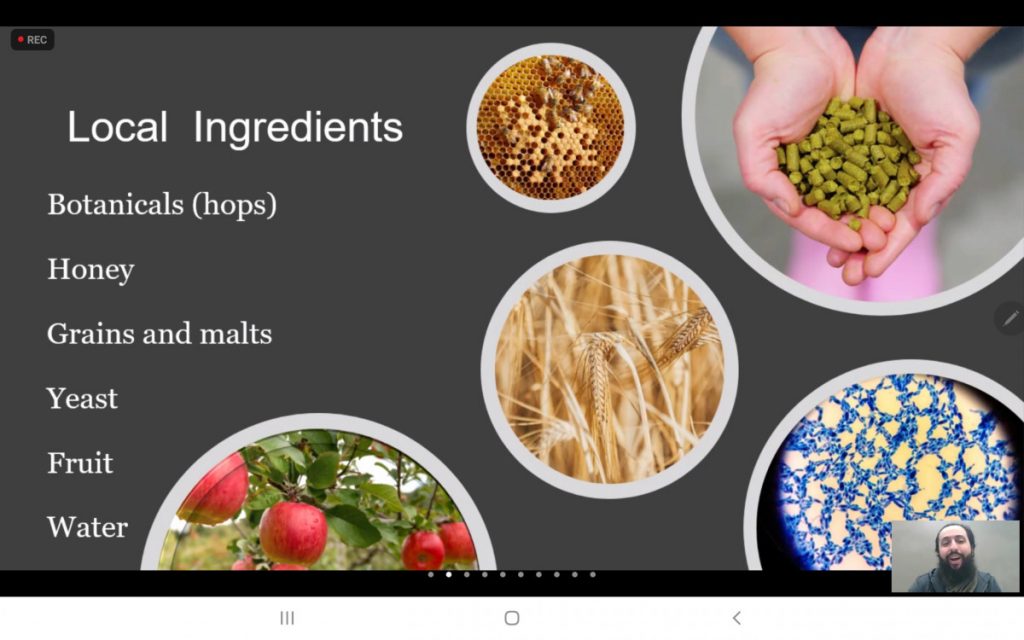
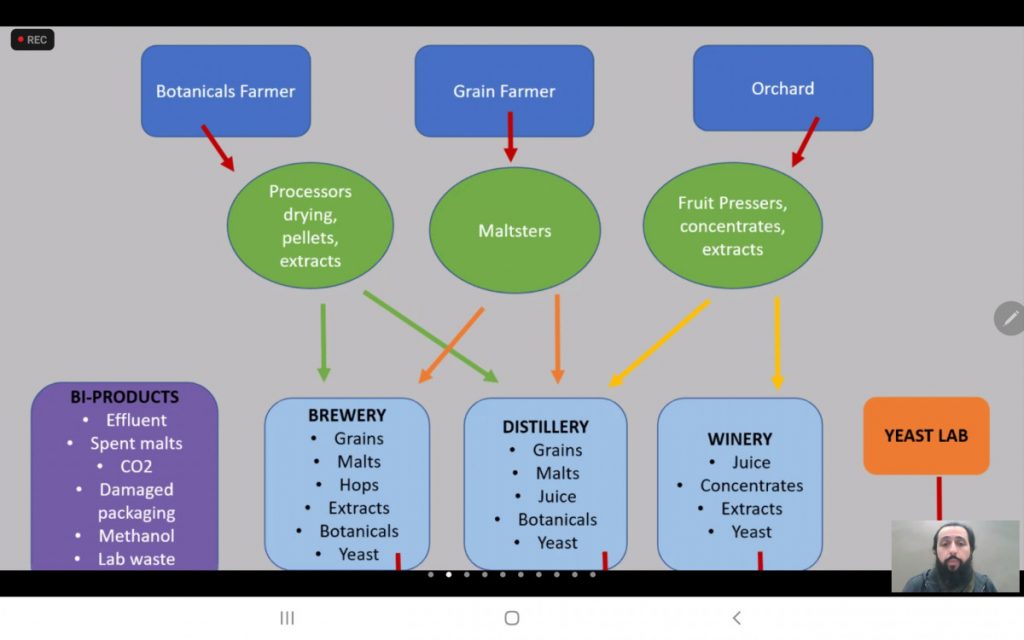
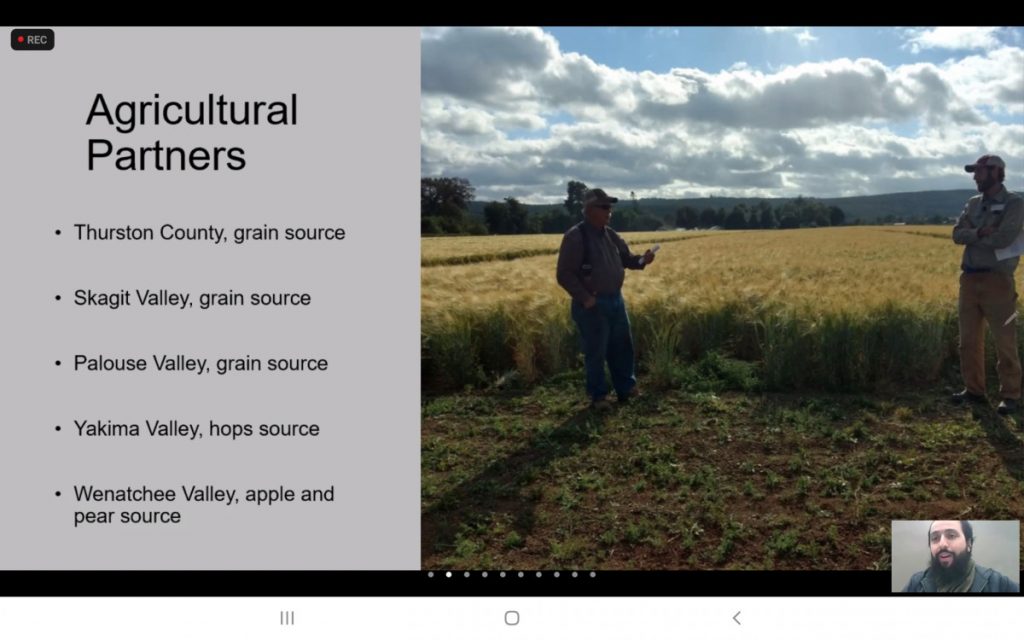
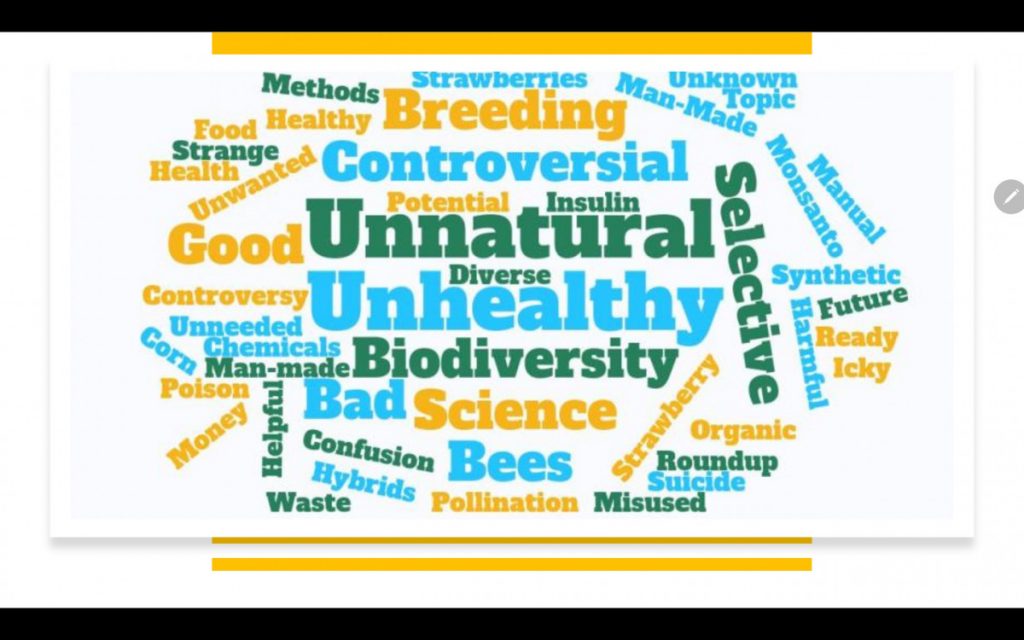
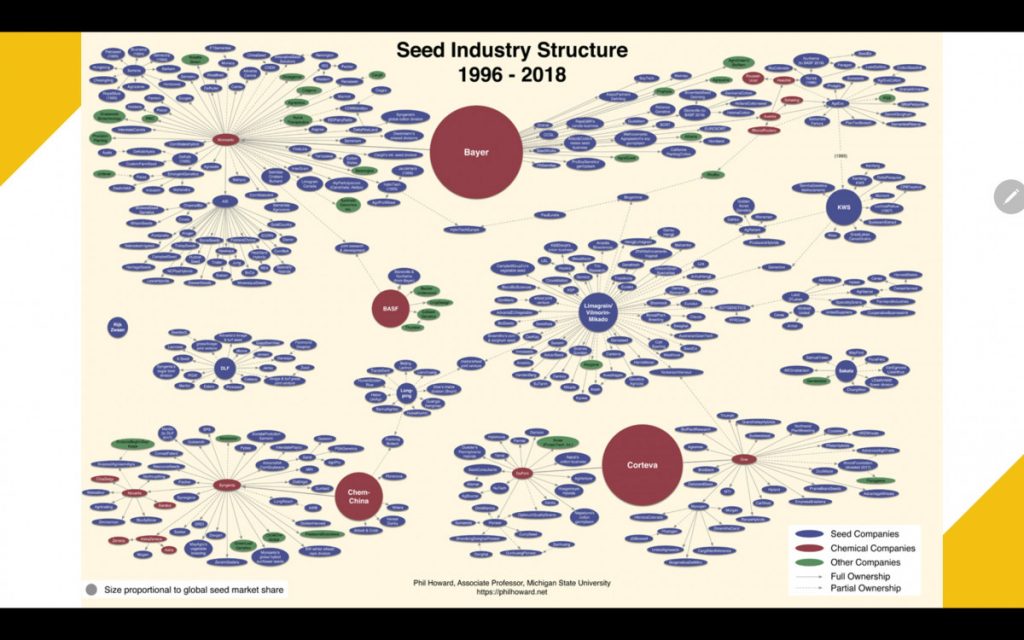
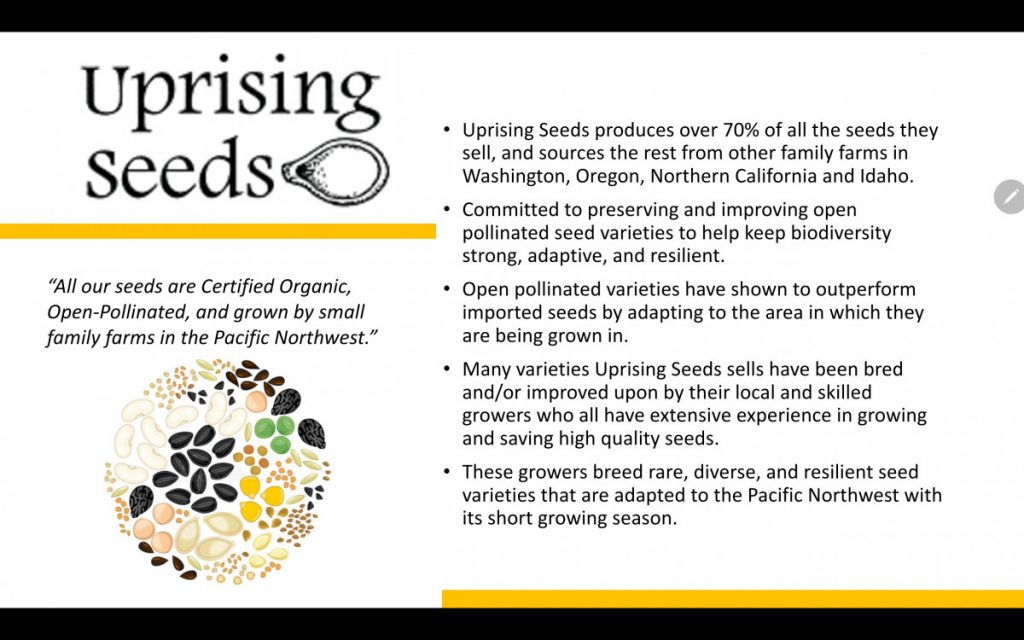
Group 2 GMO presentation
#2h: Foodoir: Your Story of Tasting Place
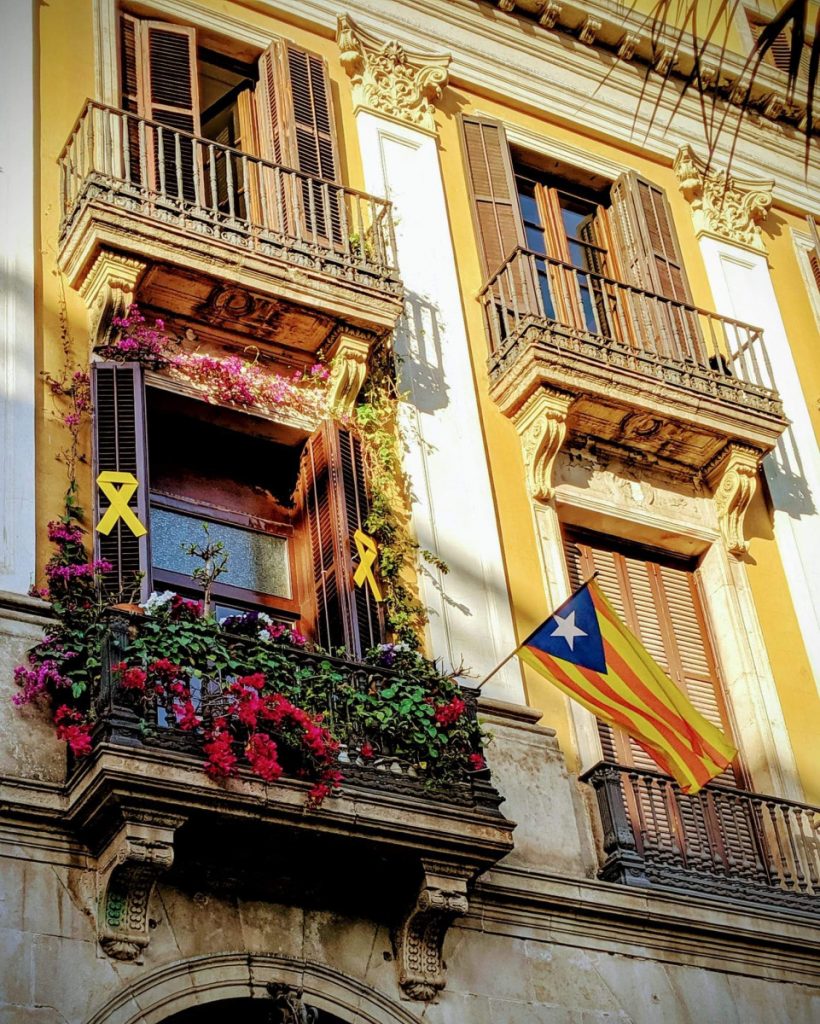
Catalan independence flag in Barcelona, Spain
Photo by Val
Catalonia is an autonomous region of Spain. It has its own parliament, government, president, police force, flag and anthem, and public broadcaster.
Beginning in the 1850s various individuals and organizations wanted independence from Spain. The first organized independence party was Estat Català (Catalan State) in 1922.
During the Spanish Civil War Franco abolished Catalans autonomy in 1938. It was not until after Franco’s death in 1975 was Catalonia able to regain its autonomy.
In 2009 the contemporary independence movement began after the Partido Popular (Peoples Party) challenged the 2006 Statue of Autonomy. In 2009 and 2010 symbolic referendums of independence were held. A snap election in 2012 was sparked by the 2010 ruling of the statue of Autonomy to be unconstitutional, and led to the first pro-independence majority ever in Catalan parliament.
In 2014 the new government held a non-binding referendum, which yielded that a large majority were in favor of independent. In 2016 President Puigdemont told parliament that a binding referendum on independence would be held in September 2017.
This referendum was considered illegal by the Spanish government. The Spanish police took action and tried to stop the referendum from happening. They raided voting stations and closed then down. They even seized ballot papers and threatened to fine those who manned polling stations up to €300,000. The Spanish government shut down web sites and even demanded that Google remove a voting location app from their app store. Because of this many parents stepped forward and set up “events” in schools (where many polling locations are set) over the weekend and kept them occupied during the vote.
Though the vote said 90% of people would approve a split from Spain, it was only a 43% voter turnout.
Many election organizers and cabinet officials were arrested, which only sparked more demonstrations and protests in the streets of Barcelona.
On October 25, 2017 the separatist majority of the Catalan Parliament declared independence. This caused the Spanish government to in force Article 155. Article 155 dismisses Catalonia’s autonomy, dissolving parliament and its leaders, and imposes direct rule from the central government in Madrid. A snap election for new officials was held on December 21.
The Catalan president, Carles Puigdemont, self-exiled himself to Brussels on November 5 after being charged with rebellion, sedition and misuse of public funds. Several other leaders also fled abroad. Many of those who stayed were arrested and charged with treason.
“Then, to her mother’s proud bewilderment, she went all alone to Paris, studied medicine, and became a roentgenologist. She was there when the city fell, and I wonder now whether Papazi’s fanatical hatred fo the Boches has upheld her, or whether the latent sensuality in her small round body has taught her that headaches are not always made by men, even German men.” – The Gastronomical Me p. 84
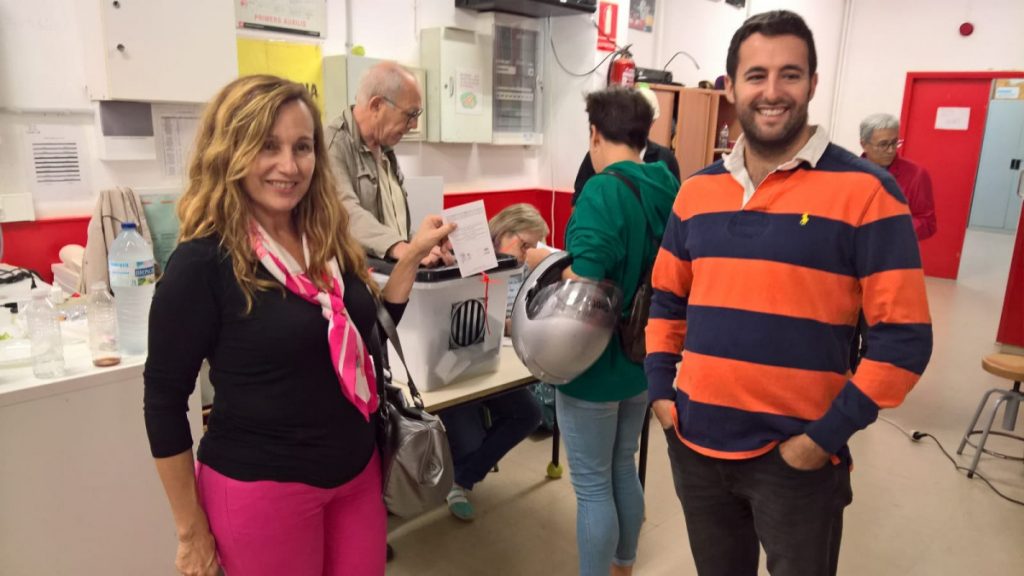
My host mom Rosa and her son voting
Picture by Val
My first study abroad to Spain was with WCCCSA (Washington Community College Consortium for Study Abroad). I had never really traveled much by myself and never outside of the country before, unless you count Canada. I had never really thought to look into what was going on in the place I was going to. When most people hear Barcelona, they think of art Nuevo and Gaudi, the beach and the ocean, and sangria (though sangria is a very touristy thing to get). I would have never thought I would be experiencing an independence movement. The first time I really heard about this independence movement was from my host mom, Rosa. She was telling us what to expect if these protests got much bigger, that the public transit systems would most likely be shut down. Now we lived almost five miles from school and I could not sleep that night as the dread of not being able to take the subway was gnawing at me. Well, the next morning the school had sent out an emailing saying that the transit system was suspended. Turns out I was not willing to walk 5 miles to school, as taxis hike up their fees during times like these. A couple weeks later I had decided to go out one night, and well it just happened that the public transit system shut down again. I don’t even remember how far away I was from my place, but as being it was 4 in the morning and I was a slight bit intoxicated, I grabbed one of the only cabs I could find and paid over €50. The following nights at 11pm, just like clockwork, people would hang out their windows and bang pots and pans in favor of the independence movement. Several times on my short walk from the subway to school I would see protests happening. These protests were different though, nothing like protests in the US. Both sides would be walking down the streets together chanting each their own chant. It was very few and far between to ever see a scuffle between the two sides. That is until the voting. Madrid had sent in the Guardia Civil to Barcelona. The funny thing here is that they were housing the Guardia Civil on a Disney cruise ship in the port for the several months they were there. The Guardia Civil were there to shut down the voting. The closer it got to the voting date the higher the tensions were. The only time my host mom told us to be careful when we were out and about was on the day of voting. This is when things got a little violent, but in all honesty, nothing was as violent as the new made it out to be. It was really only at one polling station where there was violence between protesters/voters and the Guardia Civil. Never once did I feel like I was ever going to be in a place that was not going to be safe for me. I was so surprised at how peaceful these protests turned out to be. Yes, there was your usual dumpster firers and such, but in reality, it was nothing compared to protests here in the states. Later on in the day on October 1 myself and the three other study abroad students that lived with me went with our host mom and her son to the neighborhoods local polling station so she could vote. It felt so powerful seeing her vote and being so happy afterwards, she even did a little dance. I don’t think I could have ever asked for a better and more fulfilling time to have been in Barcelona. To say I watched it all unfold from an apartment window in Barcelona.
Leave a Reply