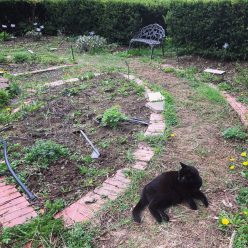

Finally time for our first workshop with the Taste: What We Hunger For program! It was a warm, sunny morning, perfect for harvesting the last of the lemon balm from the Ethnobotanical Medicine Garden before heading to the farm to get things prepped. As students arrived, we walked through the process of setting the still up, explaining the use of the bread dough as a sealant, and filling the inner chamber 3/4 full with the lemon balm. Once the process was rolling, we experimented with the relationship between smell and taste by picking a lemon balm leaf and chewing it with our noses plugged. As I chewed, I was completely unable to determine that what was in my mouth was the lemon balm, but once I unplugged my nose, the volatiles flooded into my nose and the taste burst on my tongue almost instantly. This experiment is always so fascinating to me, and really highlights the importance of smell in our tasting experiences.
Perfume Lab with Jean Fenske
After the smell experiment, I waited with the still as everyone else went up to the SAL for the perfume lab with Jean Fenske. Jean is a librarian at the Evergreen library but is also a perfume enthusiast with a vast collection of perfumes that she brought to share with us in relationship with our essential oil lab. I was really excited when my turn to join everyone at the SAL arrived because the perfume lab had been very exciting to me during Fall quarter and I was excited to see what Jean had brought to share this time around.

I, unfortunately, took no photos or notes during my perfume experience due to limited time and my want to smell all of the perfumes, but I specifically remember my favorite perfume being Sundowner by Tauer. The packaging was quite appealing in a pentagon shape with colorful floral designs on the front, and the smell was intense, hitting me out of nowhere. I think that’s why it left such a lasting impact on me, I am not a perfume person at all, but the aroma hit me so hard in the face that it truly stood out among all of the others to me. The initial smell was smokey and subtle, but then came the hit of cinnamon and spice out of nowhere, it was truly such an interesting and unique blend.
What I Learned
At the end of the day, we didn’t get any oil again, which was a bit disappointing. While I don’t think I learned anything different from our last run, this experience just drove home the fact that this still requires A LOT of material to produce any usable oil. And also the fact that I do not wish to work with this still if we have to continue to scrub endless amounts of cooked bread dough off of the metal chambers. The steel wool we are using is starting to tear up my nails and skin, it is really not an enjoyable task to do at all. I also feel like the size of this still might not be the most useful for the farm and interested students, as I don’t think the farm will ever be able to produce enough of any material, other than maybe lavender, to actually create any oil. I am actually feeling pretty anxious about how much material we will have for our final workshop with POF during Week 9. Either way, I think designating this still for alcohol brewing and investing in a smaller one for essential oils would be very beneficial for future students, and also for my future in working with the still as well.
As for connections between the perfume lab and our essential oil workshop, I was so pleased with how well these paired with one another. Getting to see and understand the process of extracting the natural oils from a plant made the perfume lab all the more special in understanding the work that went into creating these products. Although a lot of perfumes are synthetically created now, I am starting to understand why this is the case, since it takes so much plant material just to extract a small amount of essential oil. I am not a perfume person and probably never will be, but I now have a lot of respect for those who put the time into making these incredible aroma combinations like Sundowner, and even more respect for those that put the time into making natural perfumes and essential oils as well.
Putting the Pieces Together
This was one of my busiest weeks so far between both of my classes, this ILC, my internship, and SCARF club events. However, the piece of my week that stood out the most to me was the guest speaker in my Medicine of Community and Place Program, Enrique Salmón. Enrique is a member of the Rarámuri tribe and is an ethnobotany and Indigenous studies professor at California State University. He is also the author of Iwígara, one of my program’s required readings.

I was drawn in from the very moment Enrique joined our online class. Maybe it was the silly jokes he sprinkled into his presentation or the absolutely breathtaking way he told stories and shared information, but his presence was very calming to me, he felt like an old friend stopping in to say hello. Enrique spoke about the importance of story and language in relationship to plants and the land. In his book, he includes Native stories that accompany each plant mentioned, and through these stories, we are able to learn and create a deeper relationship with the plant that the story is about. For example, he shared the story of Horsetail, in which the trickster, Coyote, falls into a river and grabs onto a plant to try and save himself. Coyote begs the plant to save him by extending its roots further into the soil, saying that he would turn it into the most beautiful plant in the world if it helped him. The plant, not trusting this trickster at first, finally agreed and reached its roots further into the soil so that Coyote could pull himself from the swirling waters. Sticking to his word, Coyote turned the plant into the unique Horsetail that we know today. Through this story, we learn a lot about Horsetail. We learn that it grows where it is damp, along streams and rivers. We also learn that its roots grow deep, so we must bring a trowel or small shovel if we ever plan to harvest any Horsetail. I really appreciated this demonstration of the importance of storytelling, especially when being told by as wonderful a storyteller as Enrique.
All of this talk on stories had me thinking about the connections between the perfumes we were exposed to and the stories that Jean shared behind them. While I was not present to hear her explain and share the stories of the perfumes that she chose for us this week, I remember from fall that she was passionate and knowledgable about each perfume she brought, making her a wonderful spokesperson for these aromas as well. While I am not a perfume person, knowing and understanding the background and ingredients of each perfume truly enhanced my experience in smelling them; instead of just being turned away by the strong synthetic scent, I was drawn in to try and pick apart each component of the perfume. This really drove home the importance of stories in creating lasting and meaningful relationships with not only plants but smells and foods as well.
Now my mind is spiraling into a connection I made from reading the Introduction to Tasting Difference by Gitanjali Shahani during our Scholarly Ingredients module. I was thinking about how meaningful it was that when making my favorite recipe, I am aware of the history of all vegetables that are put into this recipe as I am living on the land where those very vegetables are produced from. So much of our experience with food is lacking in that history, those stories of where our food is coming from since the majority of us buy everything from our local grocery store or grab a to-go meal from our favorite fast food place. A meal is so much more meaningful when we know where the ingredients have come from, or even when our hands were the ones that grew and harvested those ingredients ourselves. I am beyond honored to be able to create these stories of our food for my classmates and peers through the Taste program and my Food and Ag internship. I hope my peers are as touched as I am by this opportunity to create such a deep connection with our food.