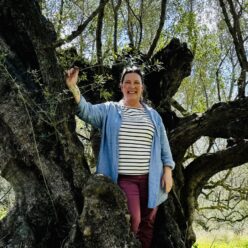
What did it look like . . .
It has always been a dream; travel to fantastic places, see the world and dive deep into another culture, people – FOOD! This has been a time of disbelief, excitement, overwhelm and processing that I will be in Europe for 15 weeks learning and experiencing olive oil, olive trees and the wonderful people who work with them.
Where do I begin, who do I contact, what do I want to know and where do I go? I began swimming with questions. What questions do I ask, how do I contact producers – do I just email them, would they even want to talk to me? Through the whole process I keep facing fears, of failure, disappointment; who am I to be a person who does this, my mentors do this not me! It has been as much a process of figuring out the logistics as it has been developing the confidence to move through each step.
Here I will give the highlights and lowlights of planning and developing a trip of a lifetime!
Week 1-5
Taking all of the information I gained thus far, and the lists upon lists and little tabs in books yet to read about the olive tree, olive oil, and all that goes with it was overwhelming and I had to remind myself over and over – I don’t need to know it all right now. This is just a fact finding mission and as I have learned, the experience itself will bring about more questions as well. So I set to keeping my rabbit hole hunting at bay as best I could and just gathered information. Skimming has become my new go to! I began by creating a list of questions:
- Where do I go – where in the world are all of the Ancient Olive Trees, who is producing the oil and caring for these trees and who has used tourism in their business model?
- How do I contact these producers and what do I want to know from them?
- What will I ask them when I do contact them and meet with them?
- What factors do I need to take into account as I will be sharing their story?
- Why am I doing this project, why is this important to me?
I then set out to answer these questions. Through research and thought I began to answer them as best as I could.
Week 6-10
I narrowed down my itinerary – this was difficult as there were so many places to see and I am in the area! But I knew to get the most out of my work I needed to keep it to a minimum. I also knew I would need intermittent breaks to process and write all of my experiences. I decided to create a visual itinerary and began with maps on a wall. I created a Zotero library with all of my details and poted the main ones on my wall.
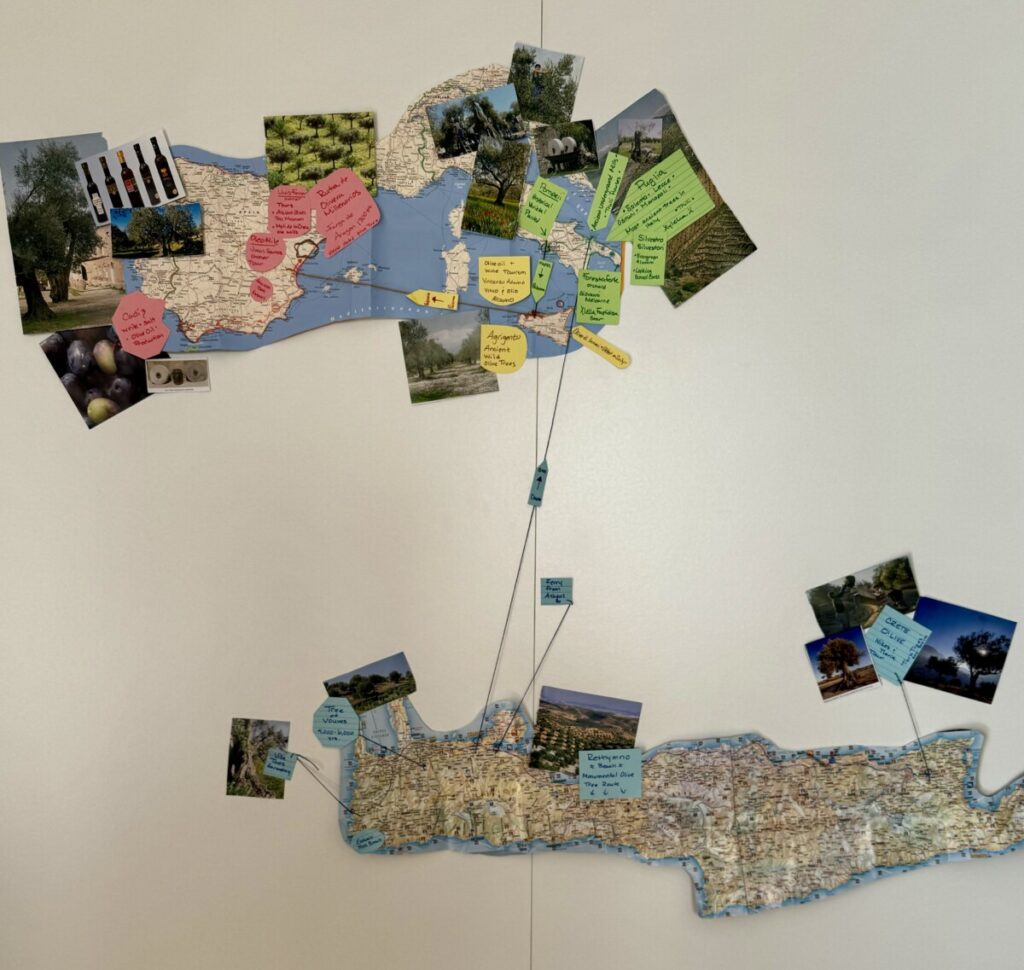
Decorating my wall was a great way to ponder and think about how I wanted to develop an itinerary, what I wanted to get out of my travels and why I was going.
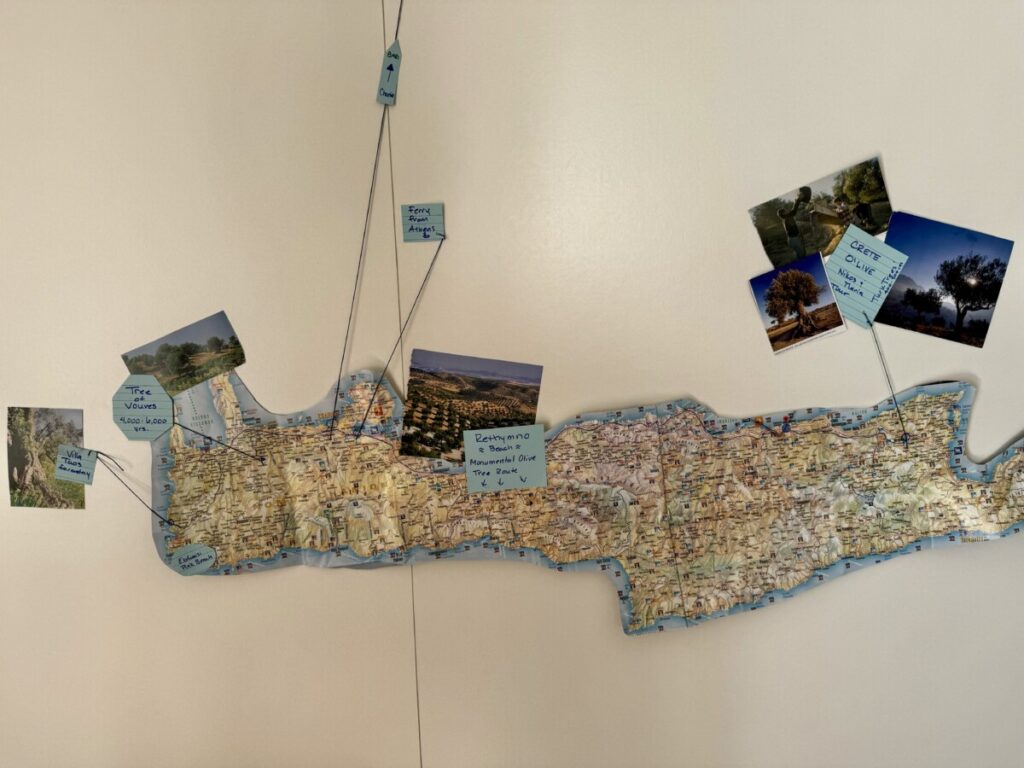
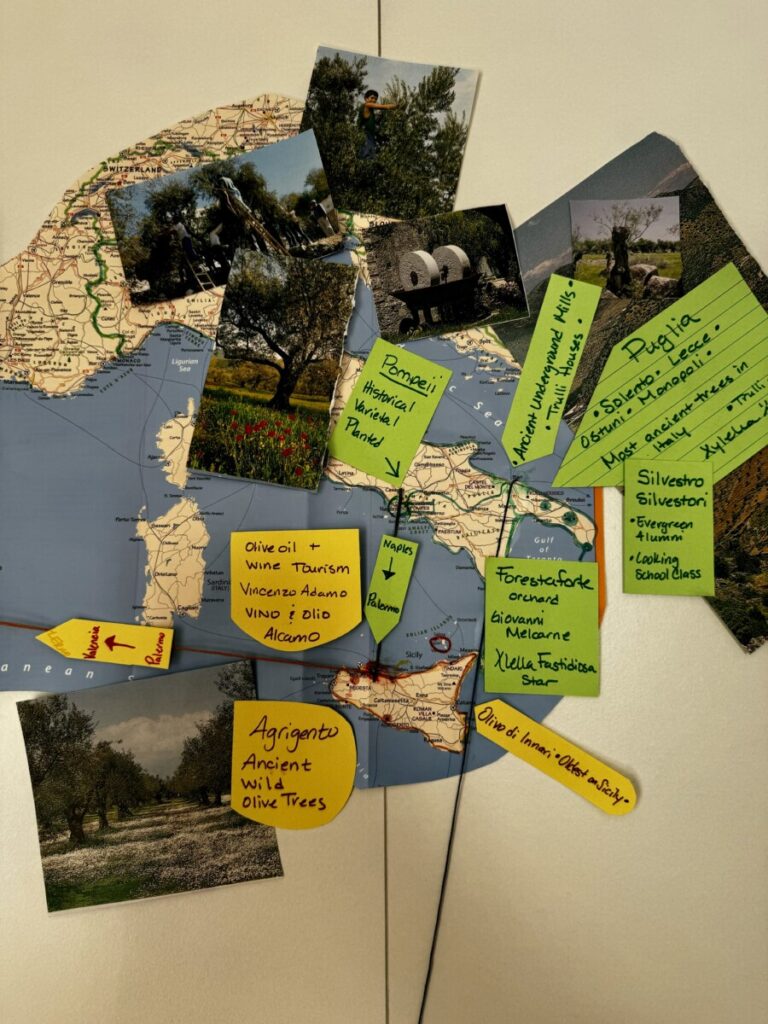
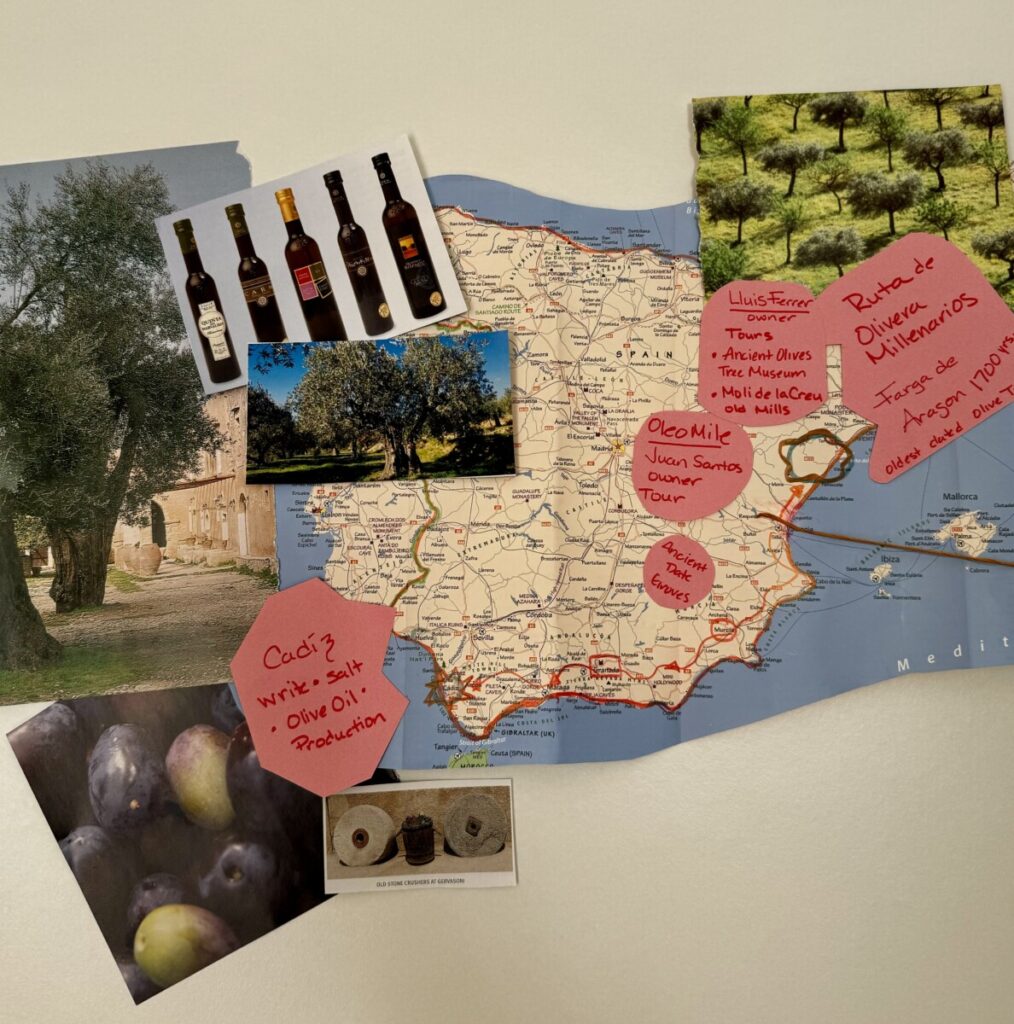
I set about answering my questions. It is wheels up week 8! I created an email that I could personlize for each producer I reached out to. I sent countless emails. Springtime is the off season for olive oil and I thought this would be a better time to go seeing as the producers would be less busy, I did not take into account that Europeans take their downtime seriously and it posed difficult to reach people at first. I did slowly begin to get replies, and I was elated to see that everyone was interested and excited to meet with me. I found the producers truly love what they do, it is part of their culture, history and pride comes with sharing. I made sure to acknowledge and apologize for coming during break.
I decided on 4 regions, Crete, Puglia region of Italy, Sicily and Spain. Here are a few of the contacts I made.
Crete – the oldest dated olive tree in the world, the Tree of Vouves is 4,000 to 6,000 years old. I contacted Crete O’Live who has created a co-op olive oil company and olive tour company. I found a farm stay in the southwest of Crete surrounded by old olive groves.
Puglia, Italy – the ‘heel’ of the boot, Puglia has the largest concentration of ancient olive trees. The southern portion of Puglia, Solento there is an Evergreen Alumni that created a cookery school and has his own olive orchard and is willing to meet with me. He also gave me many references to producers in the region. I contacted Giovanni Melcarne of Forestaforte and he will meet with me – this one was a long shot. Giovanni is credited with saving the trees of Puglia from the ravage of Xylella Fastidiosa a bacteria that has decimated the region.
Sicily – Sicily has been occupied by a very wide range of powers through the centuries and all have had their hand in the trees that still exist today. Agrigento has trees that have grown wild through the ruins. I will travel and see the many millennial trees and culture of olive oil there. The olive oil tourism in Sicily is tied to wineries so it will be interesting to see the combination. I will be on a tour with Baglio Florio Adomo, Vincente the youngest purveyor of the long history of his family growing grapes and olives. The oldest tree on Sicily is over 2,000 years old, Olivia di Innari.
Spain – where it all began last year as I pondered about the olive trees driving through the Valencia region. I will visit and take tours with two producers of olive oil from millenial olive trees in the Ruta de Millenarios Olivos, the largest concentration of millenial olive trees in the world. The oldest dated it 3,000 years old, Farga de Aragon. This area has been preserved and turned into a tourism hotspot.