Storying Land
There was a ravine outside my bedroom window. Past the top of the sour cherry tree, the drop off to the ravine just beyond the towering twin hazelnut trees. It was where the nighttime music of my childhood came from, the frogs singing me to sleep each night. There were two ways to get to the magical spot on the creek that ran the length of the crevice, I could walk along the road to the spot between our land and the neighbors and trek up the creek or I could slide past the woodpile, around the above ground pool that served more as a resort to the frogs than a swimming pool for us kids. And past the pet cemetery where Popsicle and Rat Kitty, and more to come were laid to rest. On the other side was a tree stump raising the ground and I could squeeze around it. And after a good rain I could sled down on a mud river to get to my spot. This was my preferred method of reaching my secret spot up the creek, no one, namely my siblings and cousins noticed me as I slipped away through this route – mostly I think if they did notice they lost interest when I got to the pet cemetery, everyone was afraid of that spot. I was too but the freedom of wandering undisturbed by bossy relatives was a power I gained by allowing myself to pass through the ghosts and that is how I became comfortable with spirits. On this day though I don’t remember why, maybe there wasn’t enough rain in the past few days for a proper mud sled, but I entered from the road and began the walk up the creek, steep hills of blackberry on either side of me it was a bright fall morning, crisp with the promise of the sun burning through the fog that rolls into the valley that is our front yard and reminding us that summer is holding on as long as she can.
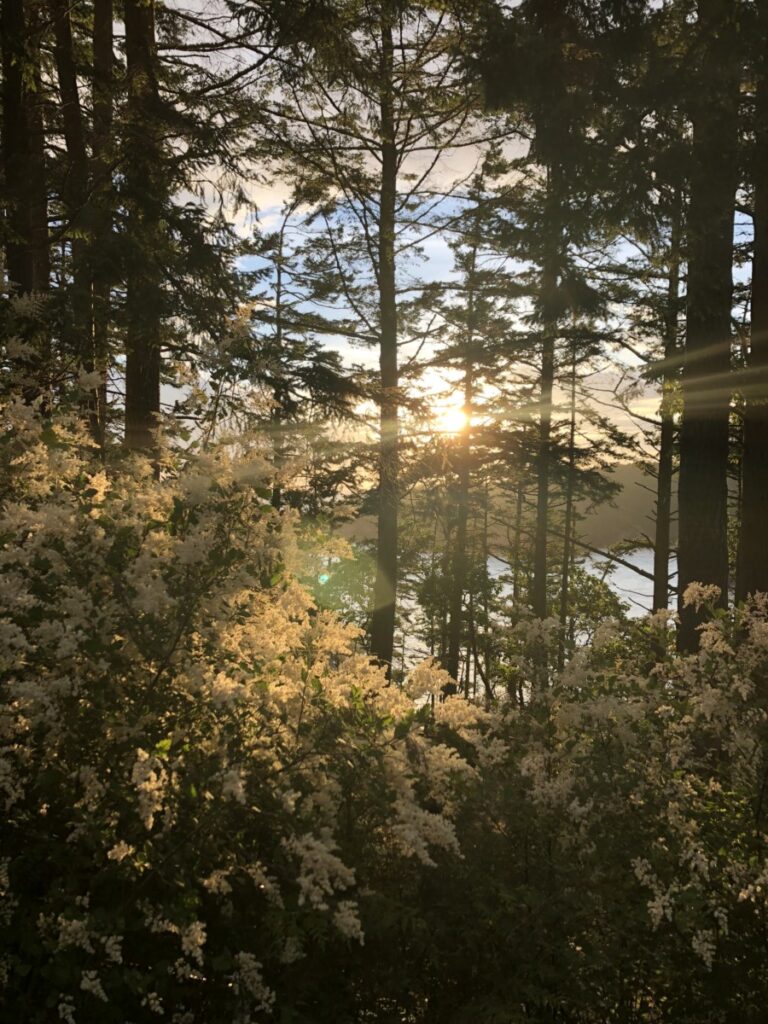
This time of year, where I come from I call the time of dew and spider webs. The eastern facing house with its wrap around porch that displayed the evening work of the spiders’ webs woven between the balusters, sun shining through the dew droplets made it look like a sparkle party. I was always in awe at how pretty it was and the work that it must have taken to weave through the night. This is also the time of year for mud which requires my favorite outfit of dresses and rubber boots, we didn’t have the fancy kind back then, just the standard black with a red stripe around the top – I loved them. I loved the feel of them while I walked through the mud, sometimes losing them in a suction of trying to pull my foot out of the bog. I loved the connection they gave me to my land; I was able to get them dirty, trudge myself wherever I needed without a worry. I still to this day wear dresses and rubber boots, especially in my yard tending a big fire to cook over. It brings me so much joy and connects me to my younger self – it gives me the same feeling as having my magical spot did as a kid. Peace and playfulness.
I wondered as I made my way to what I now refer to as my spot. Feeling the slug of my boots in the mud and water, cool in the deeper parts. They crystal cold rolling over smooth stones in the center speaking of its journey. Tender trees and bushes heavy with dew drops hung in an ark over the creek. Towering alder and big leaf maple rustling in the wind. As I took it all in, the morning sun, low in the east, broke through the fog and beamed through the dew drops, millions and millions of them, smashing white light to reveal the colors within spraying light and rainbow on every surface. I stopped in my tracks, this was magic, for sure magic. I at once was deeply aware of all my senses. My feet cool as the water rolled over my boots. Shoulders and wild hair damp from collecting dew drops, miniature moss forests on the edge of the mud banks bright in the sunshine. A tunnel of rainbow lit limbs arching over the creek, dark at the end. The fresh wet smell of earth and sun and magic was delicious. I am sure the woodland creatures were dancing there with me. Time stopped and my senses were alive. I was reassured that this was my spot and now knew why I was always at peace there. I held it in high esteem and respect, and it was thanking me and letting me see it’s secrets. I was honored.
This was a moment of great connection to land that is as alive in my memory as the day it happened 40 years ago. I felt the land so deeply and it was so beautiful I knew there was more to the land than dirt and trees and rocks and animals, more than a place to live and play and manage. It was the first time that I felt in my bones what it feels like to have a reciprocal relationship to land.
Storying Food
My Grandmothers Potato Leek Soup
My grandmother stood a small 4’10” cute as can be. My grandparents on my father’s side lived two houses down the rural road from us, a walk through 10 acres of woods was the fun way to get there. We were lucky to spend a lot of time with them and they were fantastic grandparents. Warm, loving, engaging and they taught me a lot. Food was always being cooked, by both of them. My grandfather would make us a snack of toast with peanut butter and melted cheddar cheese served with a glass of tang or country time lemonade made by the glass from a tub of powder. I loved it. My great grandmother Alice lived with them at the end of her life and I spent the most time with her. I wasn’t afraid of snakes so my gaggle of cousins would leave us to gathering rhubarb where the garter snakes built their hideouts. She had a drawer, bottom left right by the door, in her dresser that she kept a tin with candy in it, those white nougats with red, orange and yellow jellies in them were my favorites. She would whisper in our ear or give us a nudge “run upstairs and get yourself a piece of candy” with a wink and a smile in our hidden secret from our parents. When she passed, we all put candy in the pocket of her robe she was buried in. She loved her robe, or house coat and I spent hours cooking with her. The three of them in that house was full of love and food and cousins.
As I grew older and my grandmother retired, I started cooking more with her. I realize I could have been doing other things like my siblings and cousins did but I wanted to be in the kitchen with her.
My grandmother wasn’t an especially fabulous cook like my mom was. She was good and made her rotation of dishes that became the background to our childhood. The row of halved grapefruit with a cherry and powdered sugar that greeted us every Christmas morning, her quick homemade macaroni and cheese she made for us after school bubbling and warm on a cool day. Her potato salad, the best potato salad you will ever have, she made all summer long. She put caraway seeds in it, I don’t know why or where she got the idea and I wish I would have asked her. My grandpa would tease us and tell us they were mouse turds – we lived in the country, we knew what mouse poop looked like and caraway seeds look just like mouse poop. There were a few years I was suspicious and couldn’t eat the potato salad. Now my family can’t imagine potato salad without caraway.
She also made an amazing potato leek soup; I think it was my great grandmother Alice’s recipe but I am not sure. As a kid I didn’t pay much attention to eating it. I do have a vivid memory of her standing by the stove, her little stool handy so she could see into the pot and reach ingredients. She was adding so much pepper to this soup and telling me this was the secret and I held onto that. I remember testing out different amounts of pepper in dishes to see how they changed after her telling me that. And when I made the soup at home it wasn’t right until I added more pepper than my good senses thought I should.
After my grandpa passed and I was grown with my own children, my grandmother moved to Wenatchee to live with my aunt. They built her a mother-in-law tiny home and I visited her as much as I could. I remember the last time she cooked for me, she was tiny as ever – my kids called her Baby Grandma and still do today in remembering her. Standing on the same stool to reach her pot, cooking potato leek soup for me and my kids.
I still make it nearly every year. I love soup making all year round, I think I like cooking soup even more than I enjoy eating it. My kids weren’t and still are not big soup eaters unless it is my grandmother’s potato leek soup. In fact, my son won’t eat any other soup I make. My great grandmother Alice, my grandmother Betty and my son Simon were all born on July 5th. It is a connection I cannot ignore and brings me so much joy to think of all of them and their favorite soup with each bite.
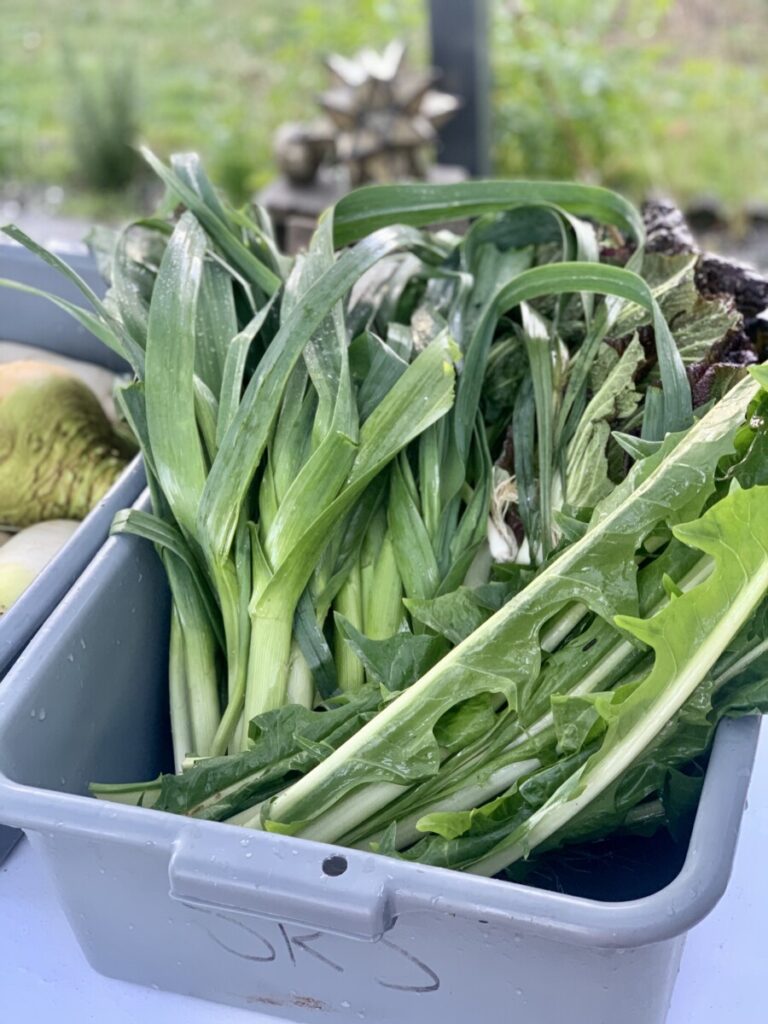
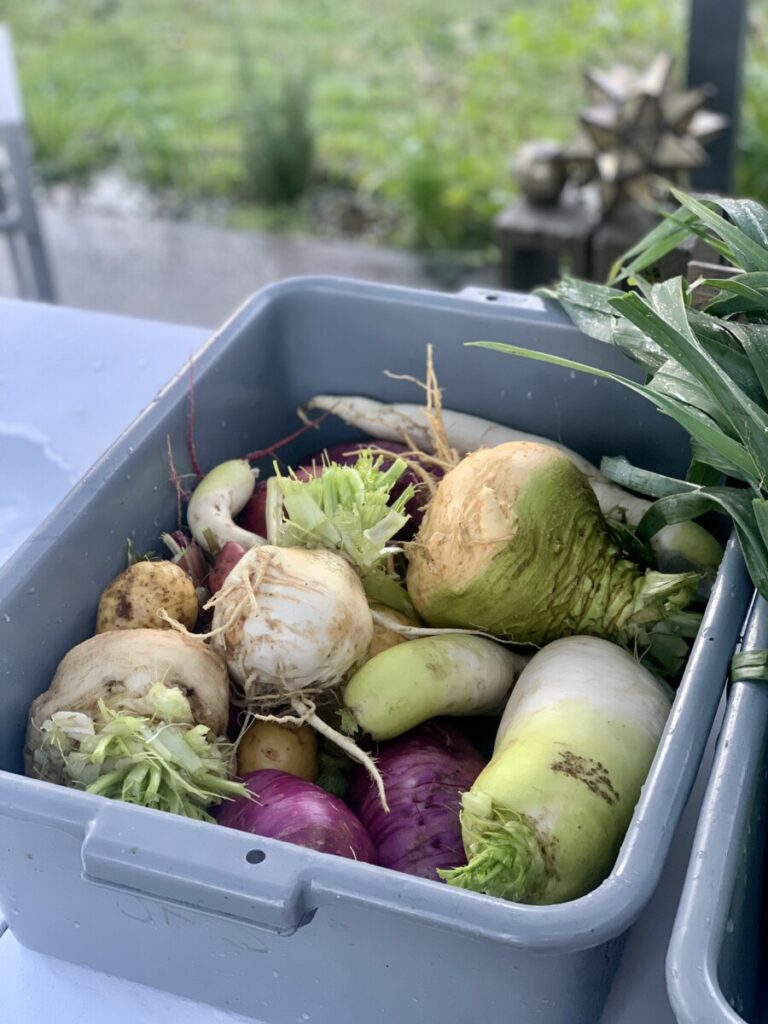
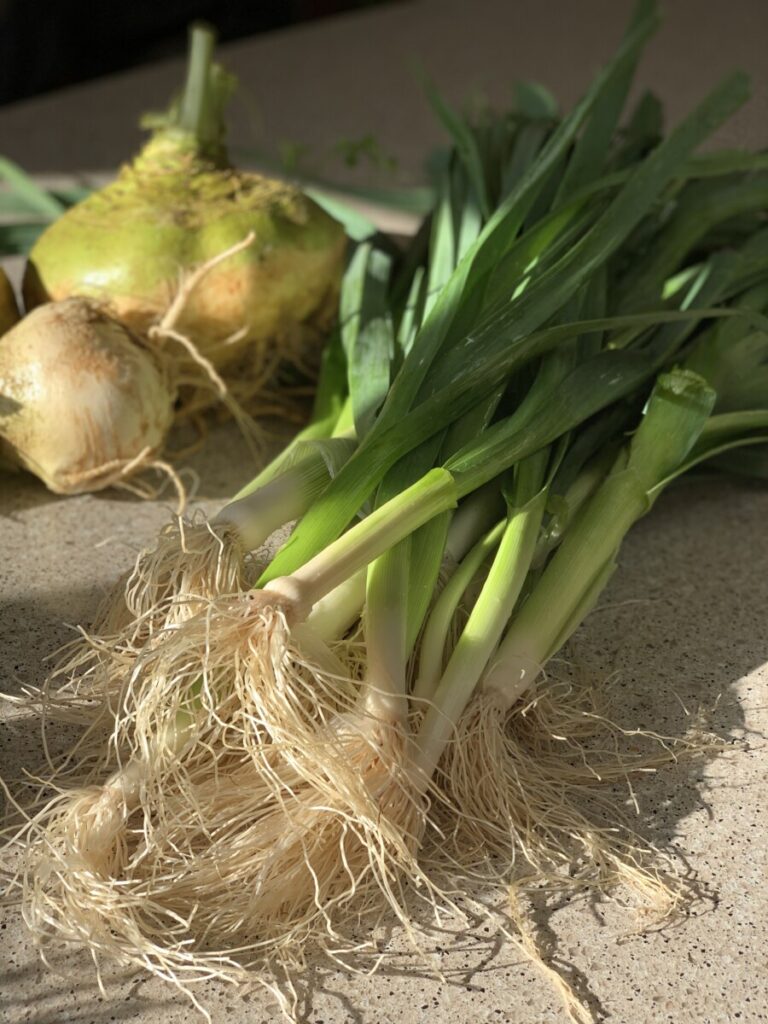
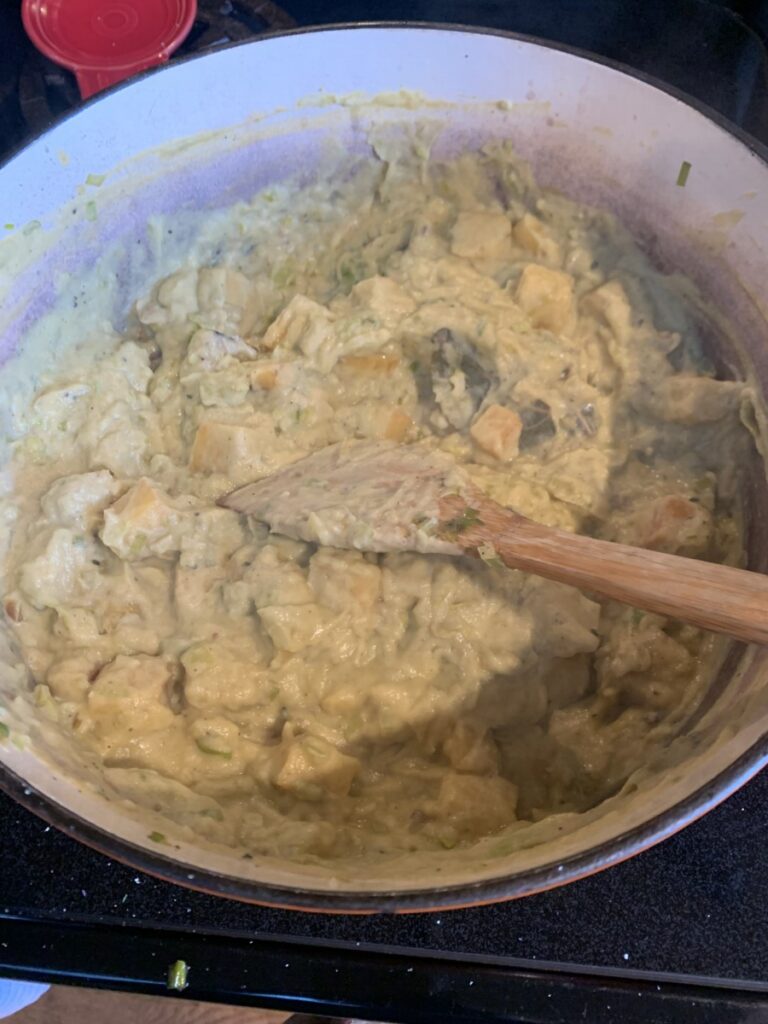
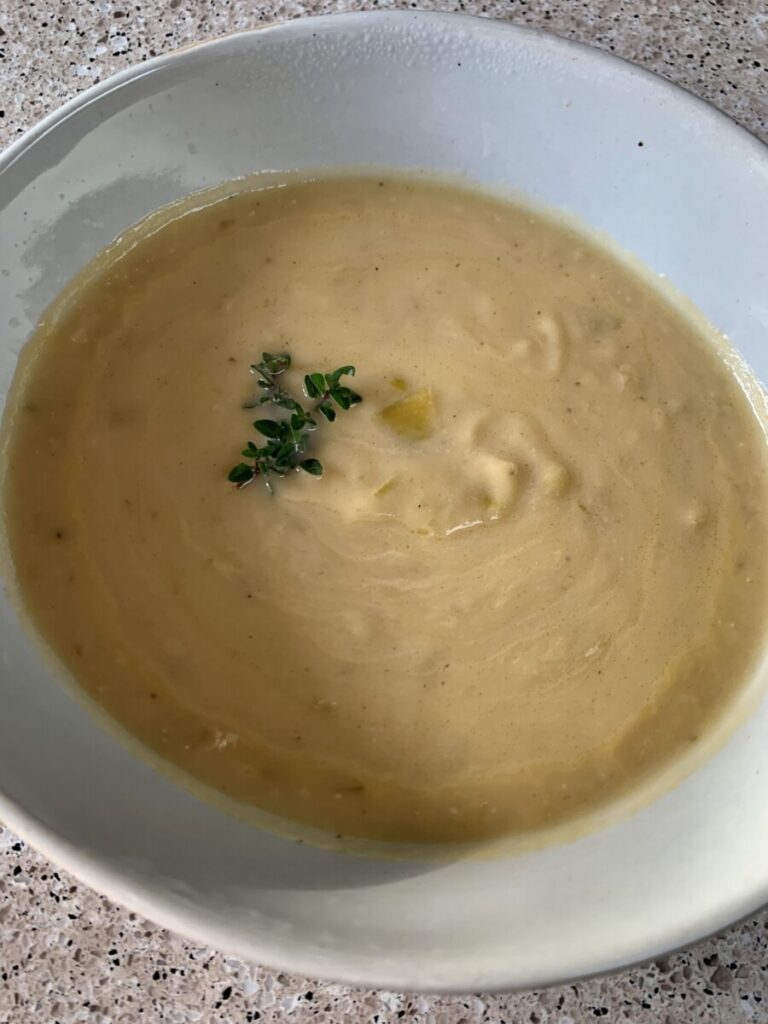
Through this class and Ezra’s research triangle we were able to gather some of the excess produce. I picked a gigantic rutabaga wondering what on earth I would do with it! I picked herbs, radishes, kale and dandelion and so many leeks. I cut open the rutabaga and smelled it and instantly thought of my grandmother’s soup, so I decided to combine nostalgia and the practice of cooking with what you have and made soup. It turned out so close to my grandmother’s potato soup I think she would be proud of my ingenuity, not wasting a bit and remembering to add plenty of the secret ingredient.
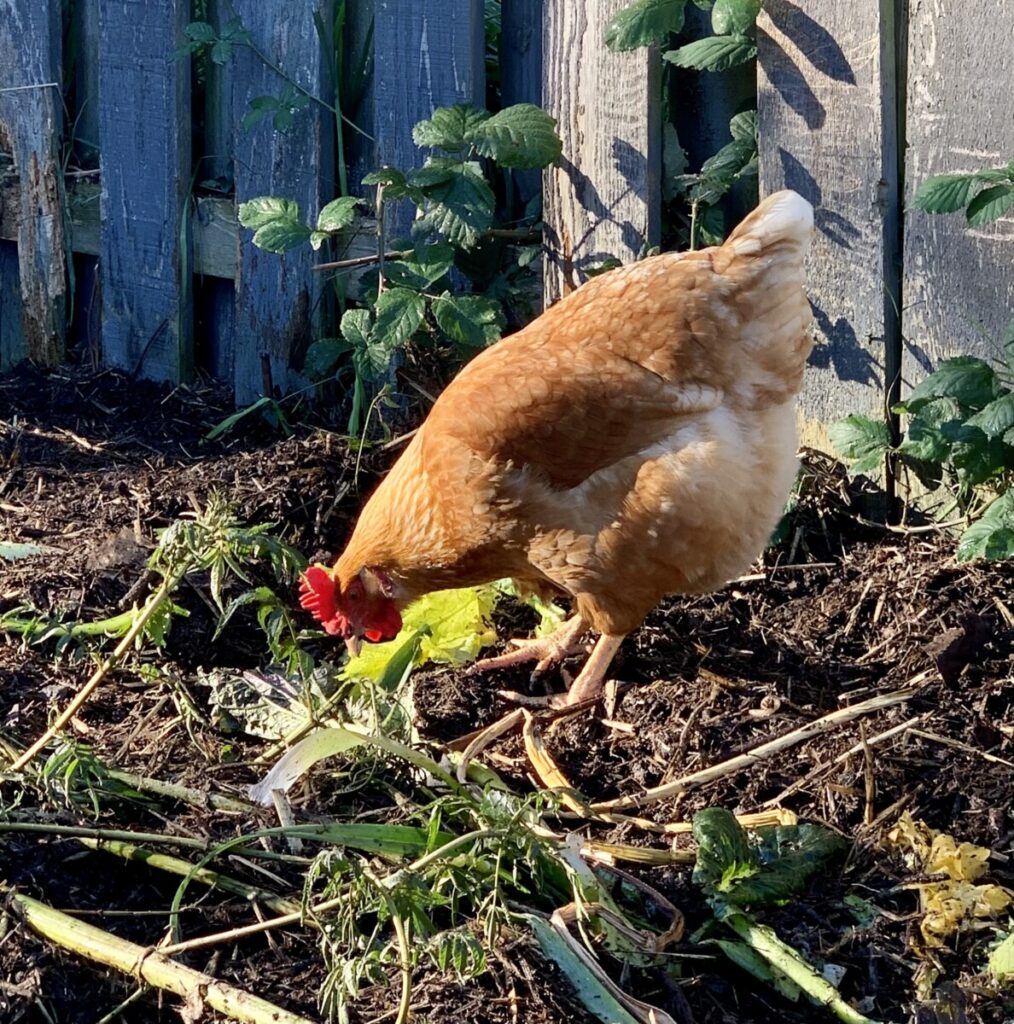
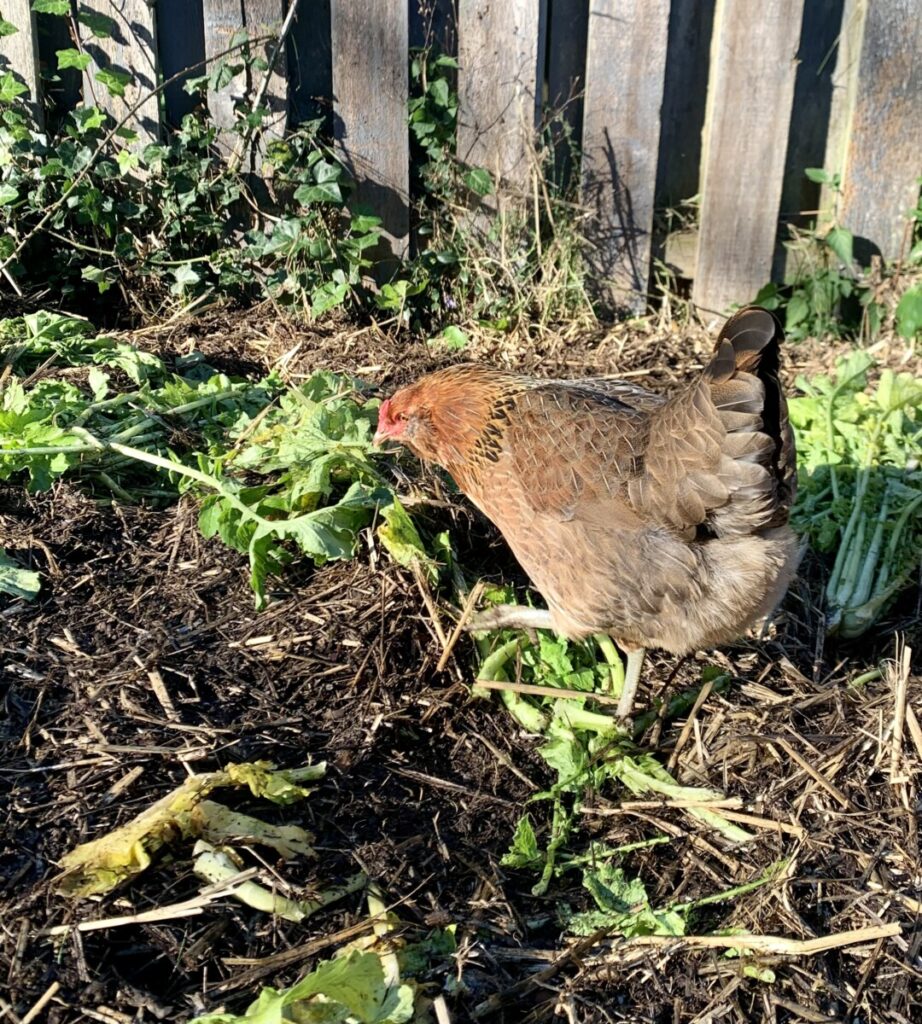
As I write this, I am filled with excitement for the holiday break, my son coming home from college and heating up a big bowl for him to try.
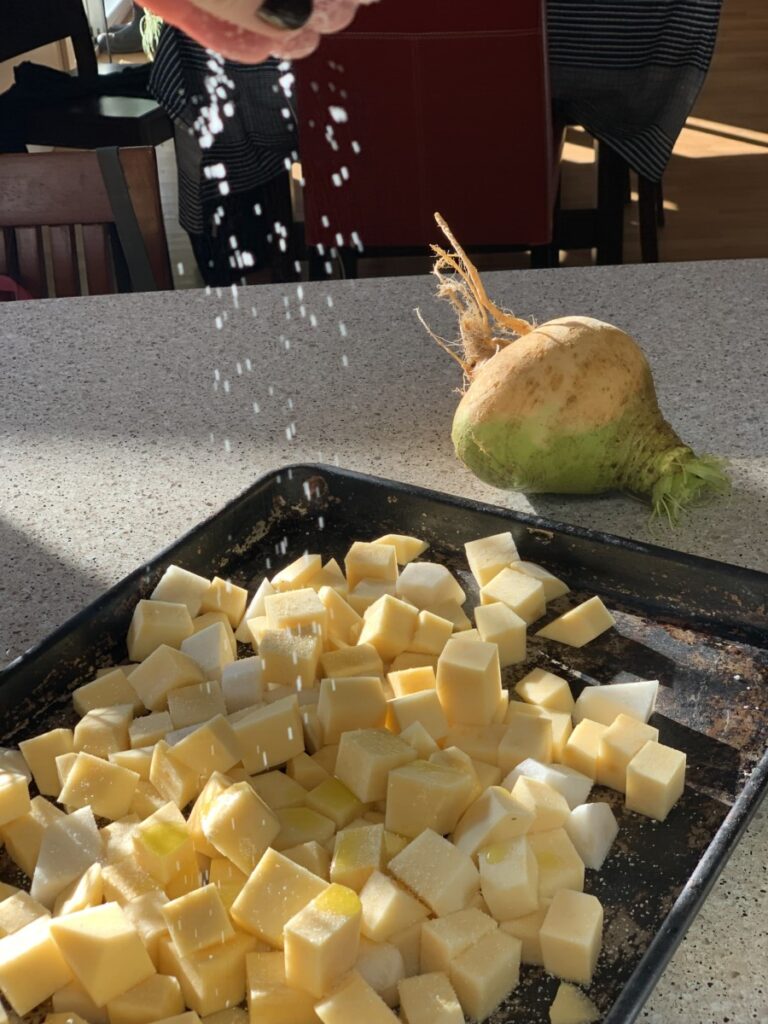
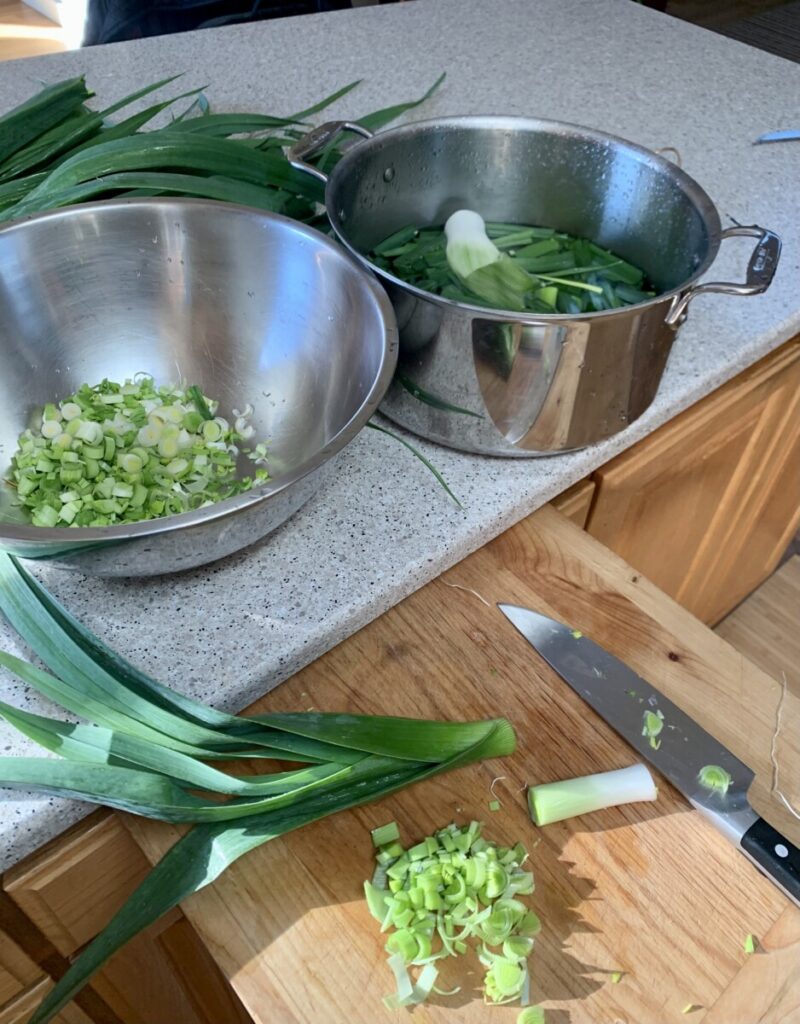
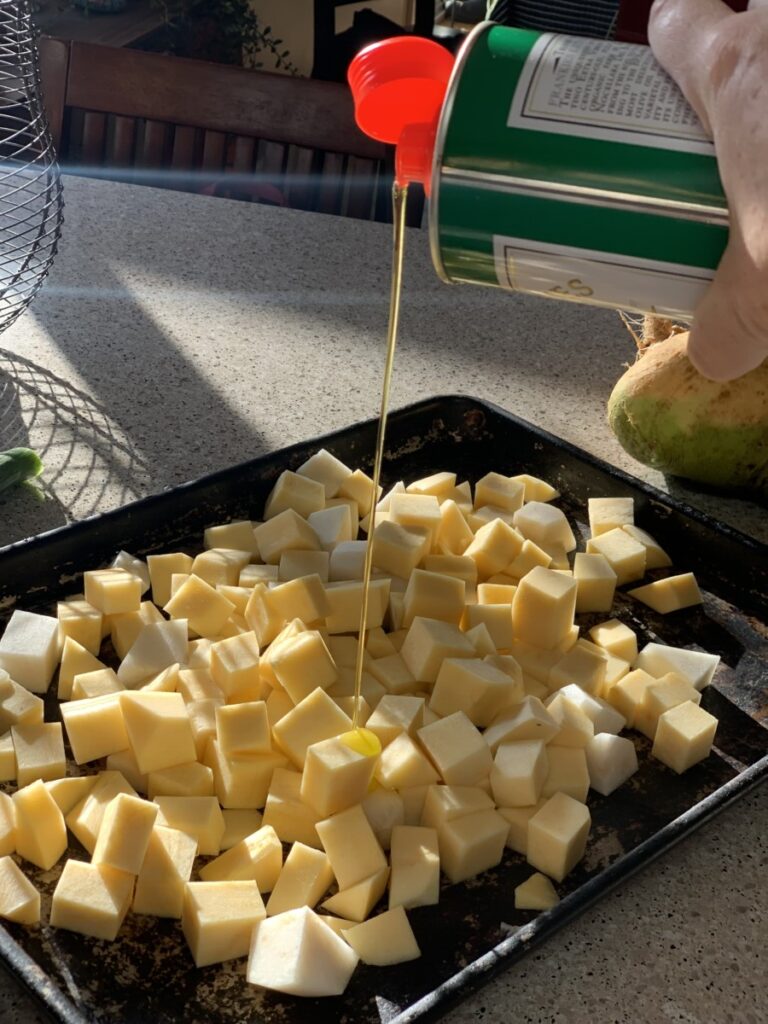
Betty Hembree’s Potato Leek Soup – with adjustments for rutabagas!
To feed a crowd or freeze leftovers for later
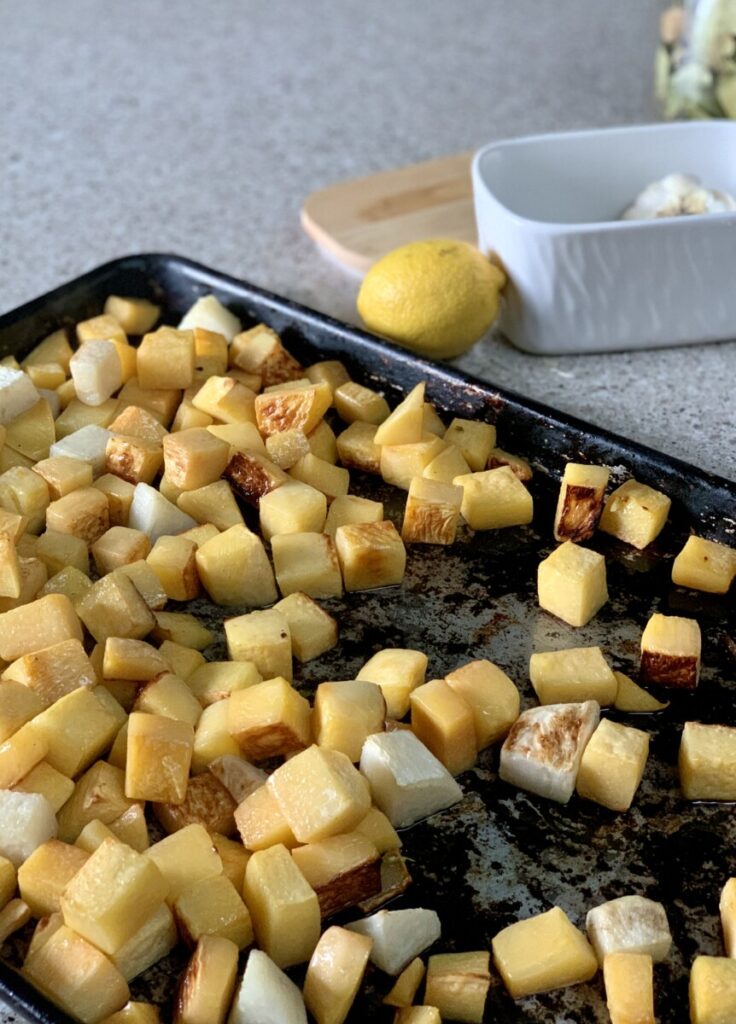
5lbs Russet Potatoes (sub Rutabaga) peeled, cut in large pieces
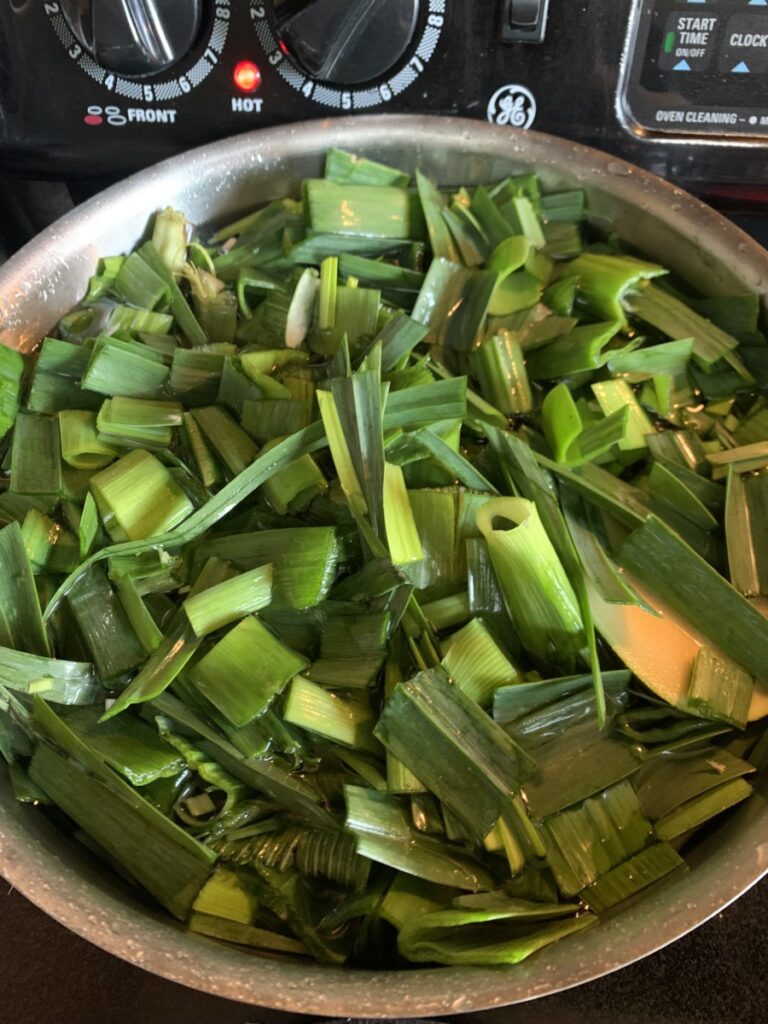
3lbs Leeks – white and light green parts chopped (cut the dark green parts, cover with water and simmer for broth)
8 Cloves Garlic chopped.
Olive oil
Salt
Pepper
2-3 Bay leaves
Red Pepper Flakes to taste (I like a pinch)
Lemon peel of half lemon
TBS Thyme
Optional: These are in the original recipe
1 lb Bacon
1 Cup Heavy Cream
- Toss potatoes (or rutabaga) in olive oil and salt, roast in a 400-degree oven until lightly browned.
- Wash leeks, chop white and light green parts. Cut dark green parts, place in large pot and cover with water. Bring to a boil, reduce to simmer. Let this simmer on the stove while working on the soup.
- If using bacon, chop and sauté in a soup pot, letting it brown.
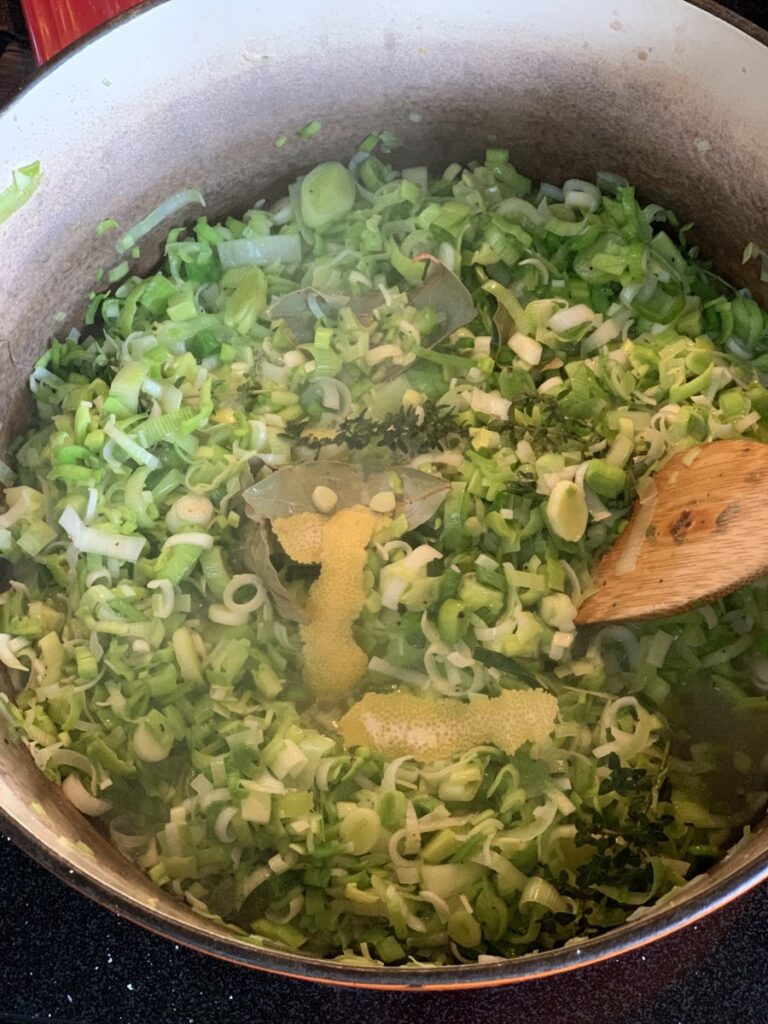
- Add oil to soup pot, add chopped white and light green leeks. Salt to taste Sautee on medium, taking care not to brown the leeks. Cook until beginning to become translucent and smell really good.
- Add garlic, bay leaves, red pepper, lemon peel and thyme continue to sauté
- Add potatoes (or rutabaga)
- Strain leek stock and add to the pot. Covering the potatoes (or rutabaga) and filling the pot 3-4” above the potatoes. Add salt to taste.
- Add lots of black pepper and allow to simmer until potatoes (or rutabaga) are cooked through and fall apart with a fork.
- Remove from heat and take out bay leaves and lemon peel.
- Scoop out 2 cups of potato (or rutabaga) and leeks and set aside.
- Blend remaining soup mixture.
- Add reserved 2 cups of potato leek mixture back to the blended soup
- Add cream if using.
- Add salt and pepper to taste, serve with bread, olive oil or on its own.
I hope you enjoy it and remember to add extra pepper!
Storying Education
In Three Acts
Act 1: Mom – Work with what you have
Peace in my house meant being alone; woods, fields and the kitchen. Peace was rare, peace in the kitchen was especially rare, it meant all 5 of my family members were busy or out of the house. Any other time the kitchen meant yelling, people, rushing, not doing the massive amount of dishes fast enough – stop daydreaming. And it is where I learned to loose myself, hide away and dream in those rare moments of solitude.
My mom uses recipes as a suggestion, never one to follow directions and always one to think her way is better than any others’. Sometimes it is. She is a fabulous cook. I don’t have a memory of her teaching me how to cook. It was more of a command; she was cooking, and I was there to work.
Do this.
Don’t do that.
No, not like that.
Hurry up.
Somehow through her impatience, cooking seeped into my being. In the midst of trying to stay out of her way, read her mind in an attempt to mitigate yelling, not being aloud in the kitchen and watching from afar, I learned to sauté onions, garlic and carrots as a base for pasta sauce, to brown meat for more flavor, deglaze the pan to capture it, and to finish with brightness. I did not learn to watch the clock to measure doneness, or when to move to the next step. I learned to watch, smell, feel – pay deep attention to my senses. This allowed me an outlet not usually granted in my home, to immerse myself in something, whole body, whole senses. Time stopped and I danced. I learned to be free in a not so free world. I learned to work with what I was given and cook with what I have on hand.
I took every opportunity to cook by myself practicing what I observed. I would peruse my mom’s Sunset Magazines for recipes. My mom had a recipe box, unorganized with tattered and splattered index cards and magazine cutouts, notes scrawled that made no sense as if half of her thought was left off the page and only she knew the meaning. No one was taking me to a store to get the ‘right’ ingredients, I used what was on hand. It was all I knew.
Act 2: Sheryl Ball – Make it with Joy and Love
I was young, I left home and was working full time and putting myself through school and it was hard. Then I met my mother in law for the first time when I was 20. I remember entering her home, a courtyard with palms and a huge mimosa tree, bright pink puffs drooping all over the feathery chartreuse leaves. Pots of plants, lining the patio. It was lovely and hinted of the tropics and I was instantly transfixed. Her home, I was warm and there was art everywhere. Glass sculptures, glowing in the light of the windows, paintings and textiles in interesting shapes and colors, I had never seen anything like it before and I felt at ease. There was a sunroom full of plants and books and sun and I wanted to live in it. Her kitchen was a dream, beautiful dishes and bowls and utensils from around the world filled it with color and charm. Sheryl was wonderful, an amazing woman, a writer, a mother, an artist and a life story full of being in the middle of historic moments. An editor for Rolling Stone Magazine in the 60’s and 70’s, contributor on writing the legislation and policy that turned into the Americans with Disabilities Act of 1990 and a long career as curatorial editor for Seattle Art Museum just to name a few. She was a beautiful writer, an outstanding human being and a stalwart of support and encouragement to me like no other. I could go on and I am here for one of many things she gave me and that is cooking.
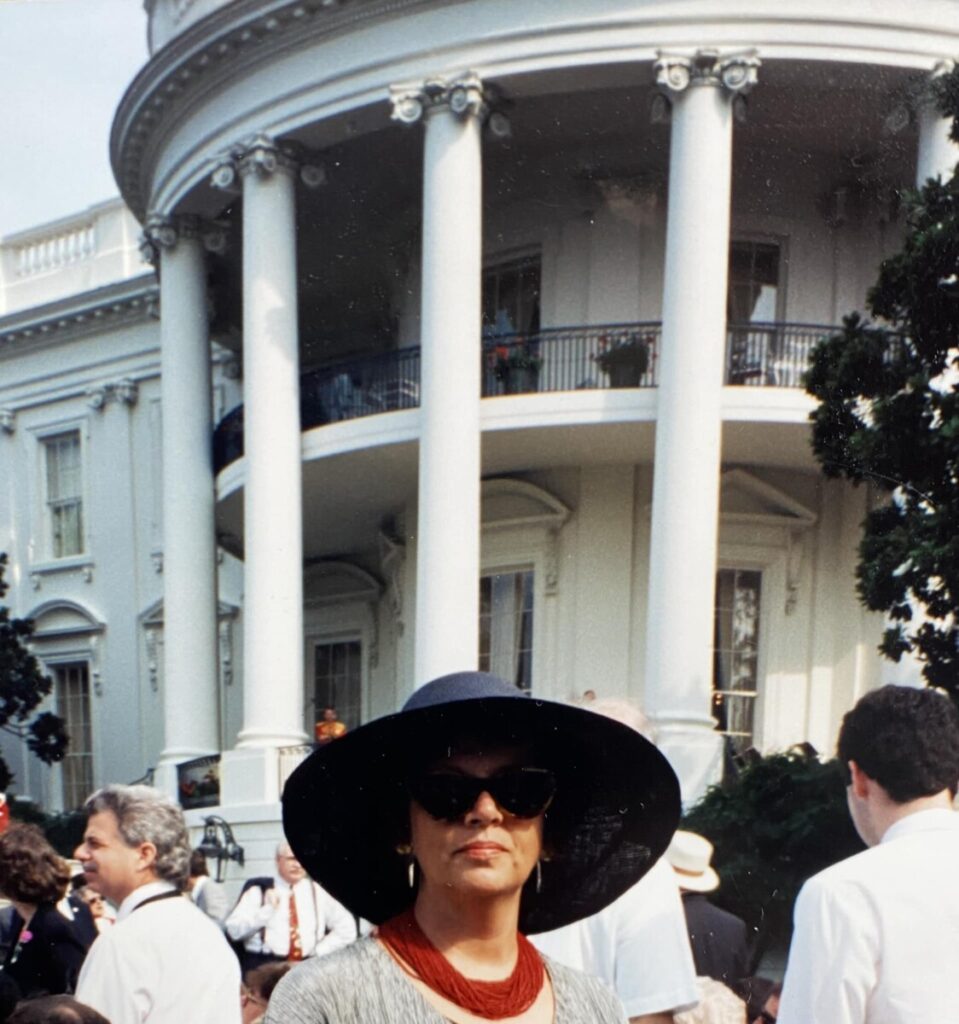
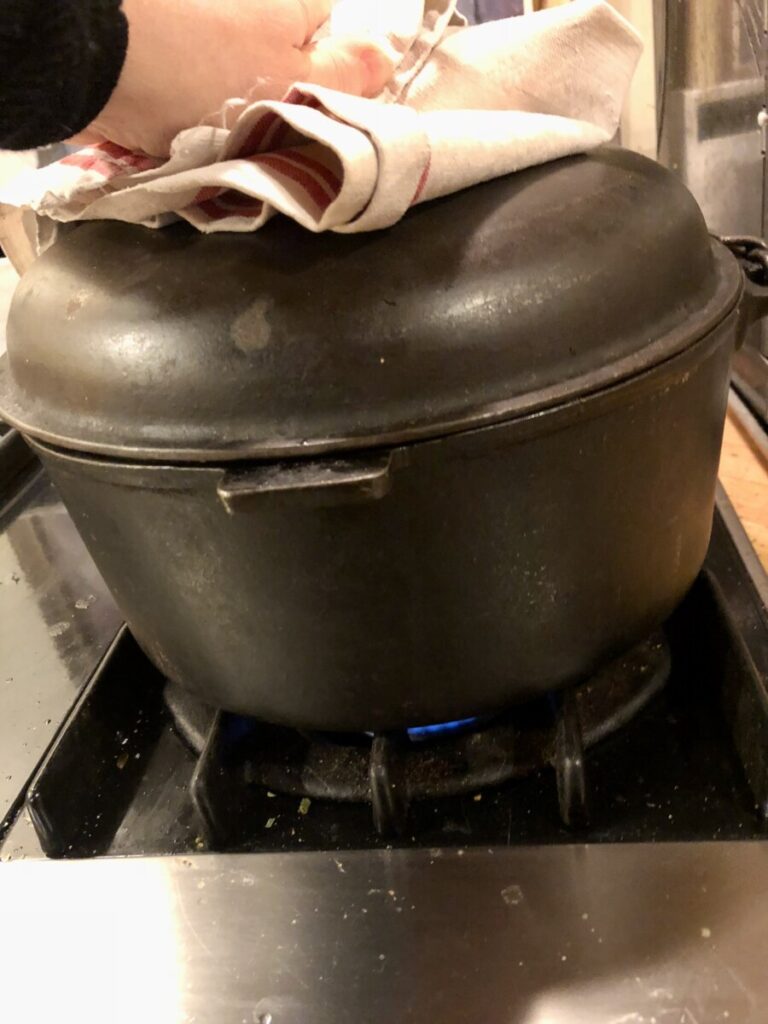
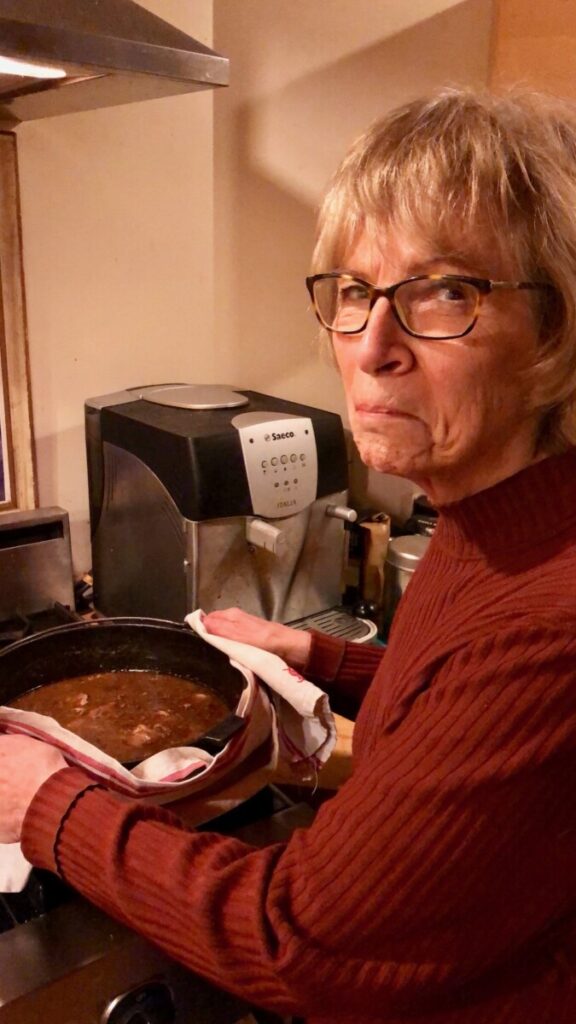
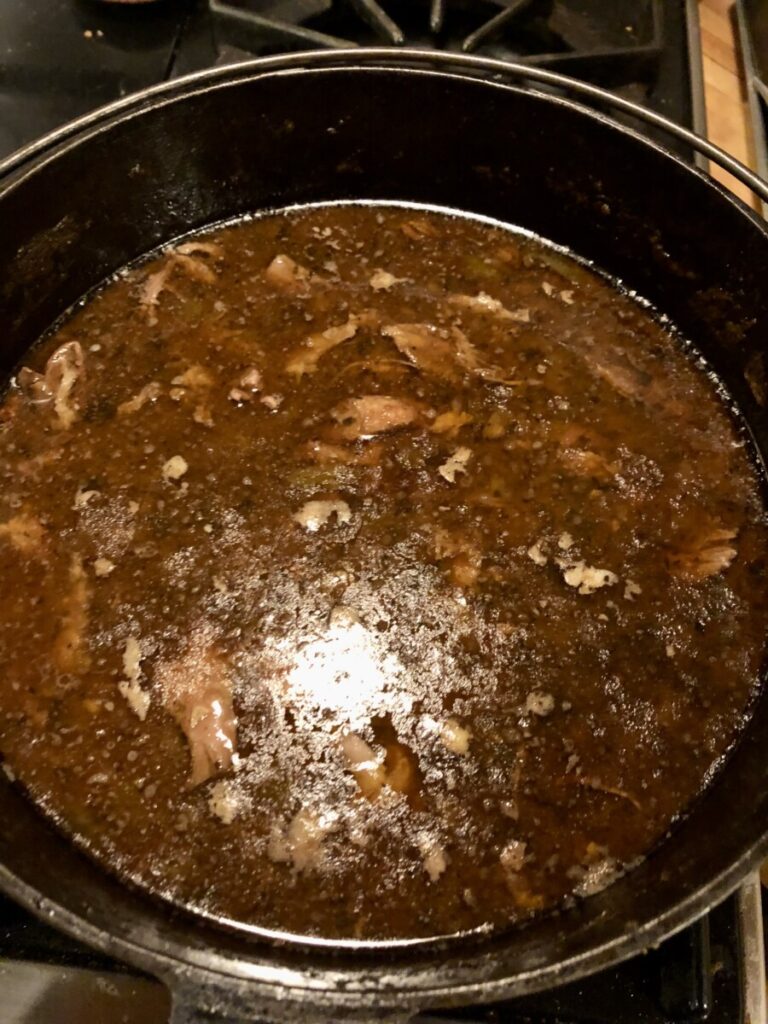
Sheryl was from Louisiana and she was an amazing cook. Sheryl had traveled, grew up in the South and brought a cornucopia of diverse cuisine that I had never had before. She learned how to cook in so many places around the world; Indonesian curries from the years she spent in Amsterdam, how to make omelets in France, and of course the rich and historied food of the south. Sheryl was the calm, loving guidance that equalized my mother’s chaotic, impatience. She taught me how to look, feel and smell in a broader way than my mom. I learned through her the love and joy that could go into food. She taught me how to properly cook a roux, fat and flour slowly browning; light for macaroni and cheese to deep dark roasted for gumbo. She had a big cast iron pot with a handle, it was so old and perfectly seasoned, and she used it for everything; gumbo, collard greens and red beans and rice. We spent hours over this pot. She was taught to cook by her cook as a child. She would tell me stories of how her escape was also the kitchen and she would spend hours with her cook helping and learning to cook these foods dripping with history. This particular pot was given to her by the cook she grew up with, it was over 100 years old. This pot was used by her cook’s family while they were slaves, and fed them through these hard times. The significance of cooking in this pot and learning these dishes was not lost on me. The pot smelled so good, like gumbo and chili and cornbread.
Sheryl showed me peace outside of the kitchen that was as comforting as being in the kitchen. I cooked with her whenever I could and through the years and we became very close, she became the mother I never had. She gave me the support, care and encouragement I needed. Cooking together was never just about the food, there was always a deeper learning. She would be proud and excited that I am writing and traveling and cooking and though she is gone from Earth she continues to be my biggest support and inspiration. As she aged and dementia began to show its ugly face, I remember one of the last dinners we had where she was fully present. She made one of my favorites, duck ragu over polenta – it was so good with cinnamon and cumin fragrant and rich. We were reminiscing on different dishes she and I have cooked over the years and having a great time going down memory lane. To my surprise she got up from the table and grabbed her cast iron pot and gave it to me. She said she knew she wouldn’t be able to cook much longer and wanted me to have it. It still smells like her gumbo.
Act 3: Madhur Jaffrey – Patience
The first two acts of my cooking education began with my mother figures. I have never met Madhur Jaffrey and I feel like I know her. I happened upon her cookbooks through a funny story of my naïve childhood. I have to tell this story! I was about 10 and found a recipe feature in my mom’s Sunset Magazine, Indian food! I was intrigued and luckily my mom liked spices, cumin, coriander, turmeric we had the ingredients to make this meal and I got to work. I was fascinated by the idea of cooking a new and unknown cuisine. I set to work, it was good, my family liked it and it planted the seed of knowing there was more than pot roast, spaghetti and casseroles. Fast forward to when I was 20, in college and just started dating my future husband. We went to his dad and Stepmom’s house for dinner to meet them. I was nervous as expected and excited. Kathy, his stepmom called to let me know she was going to cook Indian food and wondered if I was ok with that, YES! It brought me right back to when I was 10 and I hadn’t had Indian food since. The meal was delicious my favorite dish being black eyed peas with tomatoes and mushrooms, spiced with cumin and it was bright and delicious served over rice. I wanted the recipe and Kathy handed me Madhur Jaffrey’s Indian Cookery. I went silent, red in the face with embarrassment as it hit me – this food was Indian food – from the country of India – not as I am still embarrassed to admit, Native American food. I mean this was an eye opener if I ever had one. It was so shocking; I kept this epiphany to myself and thanked her for the use of the cookbook. I don’t really know what else to write about this other than I grew up in Snohomish where diversity was not celebrated and no one ate any food other than Americanized Italian and Chinese. I realized in that moment, in a BIG way how sheltered I was.
I took the book to Sheryl’s to cook some of the recipes – she had a better kitchen than I did, and she would be there to guide me if I came across something I didn’t know. It was full of things I had never heard of; lamb vindaloo, fresh paneer, green apple chutney I was entranced. Going into it I thought I would just be learning how to cook a whole new style of dishes, what I unexpectedly got was learning how to cook with patience. The hidden gem in her recipes is her teaching of how to create and build flavors. She doesn’t give times, she gives descriptions of how each step should look and smell. Onions cooked to a paste to create the base of a dish without browning them, how they should look, smell and sound. Layers upon layers of flavor building. The use of spices, buy whole spices, toast them, grind them fresh. She taught me how to brighten every dish at the end. She taught me how to take the time and smell ingredients together to see if they work. Her cookbooks are more than a catalog of recipes they are a cooking school that teaches how to have patience, wait, look, smell, listen. Her writing is funny, wise, practical and easy. I cooked my way through that first book – everyone in my house was very happy I can report. I slowed down and deepened my senses. I have learned to adapt my cooking of all foods to these basic steps and teachings from her and every time I hear slow cooking of onions I smile and think of her.