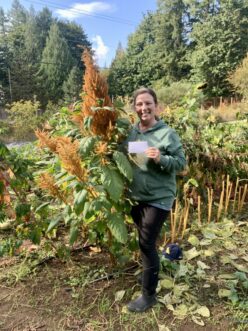
Seminar Week 9
Texts:
Lynda Mapes (2023, November 12), “The Pacific Northwest Trees Shaped by Generations of People”
Plant Teachings for Growing Social-Emotional Skills (course text): “Introduction;” “Honoring Plants, Places, and Cultural Knowledge;” “Cedar;” “Douglas Fir
Live with the Seasons podcast, “Fall Season with Dr. Terry Maresca”
Quotes:
“People don’t think about it much, but we truly are living in an Indeigenous garden, from which the gardeners have been forcibly removed.” Burr in Mapes Article
This was astounding to me, I have seen these trees with their markers and never knew what it was. I want to wander about again and see them with the knowing I now have. I never thought or knew about how the Indigenous population shaped the forest and lands surrounding me. In my mind I thought they used what was there and left everything the way it was. I did not know it was truly a reciprocal relationship and there are signs everywhere of the relationship of people and the land. It is beautiful and I will see the place I have lived my whole life in a new way.
“When we share our gifts with others the whole community grows stronger.” Pg 9 Plant teachings.
This connects me to a course quote in the sylubus by Thurman, “Don’t ask what the world needs. Ask what makes you come alive, and go do it. Because what the world needs is people to come alive.”
I loved the combination of reading Plant teachings and listening to the podcast. Learning so much about the wonderful plants and all they have to offer. I grew up with all of these and have never thought about a reciprocal relationship with them and all the gifts they have to give. Now I want to ponder on what gifts I can give back.
Week 6 Lunch
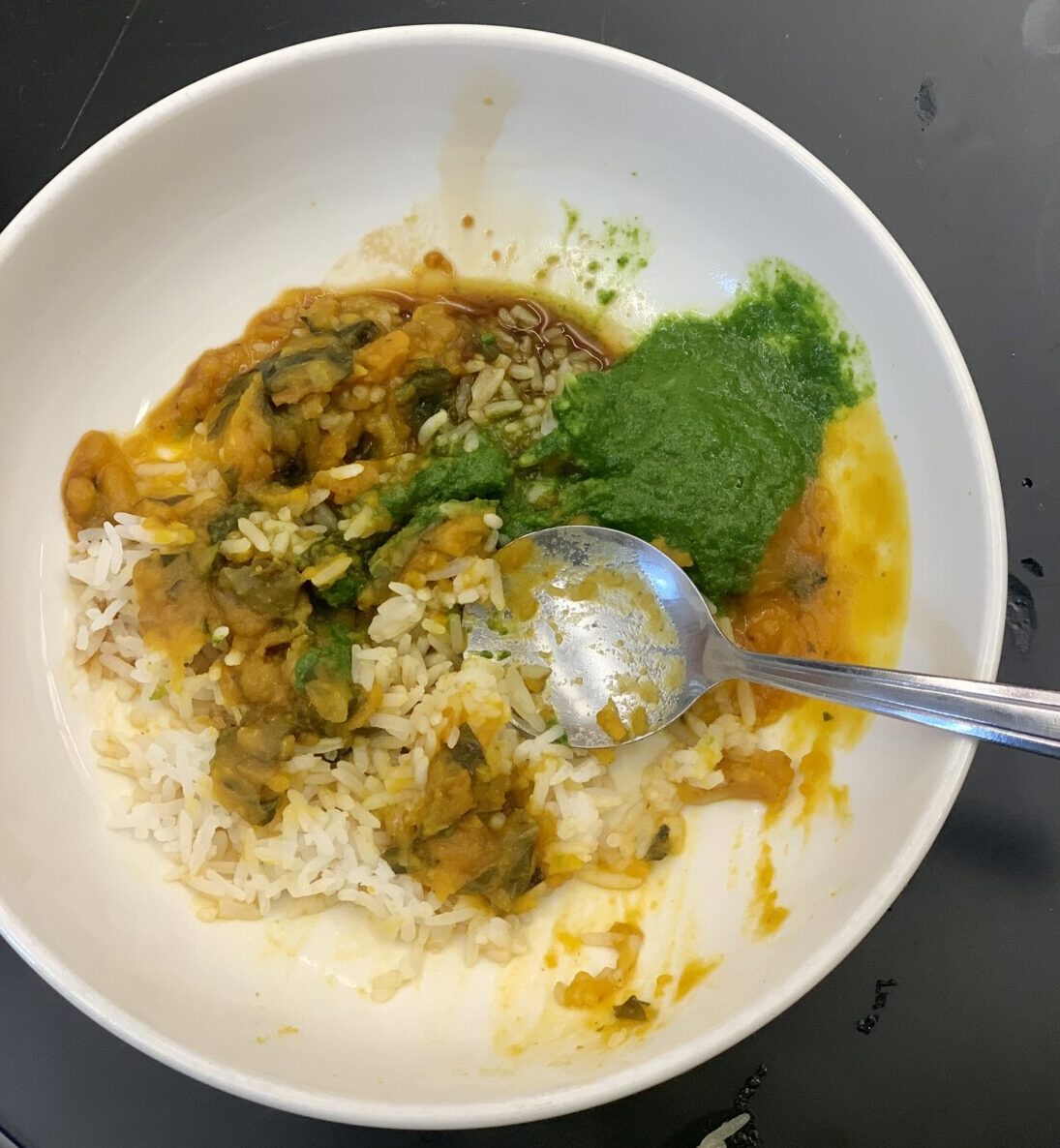
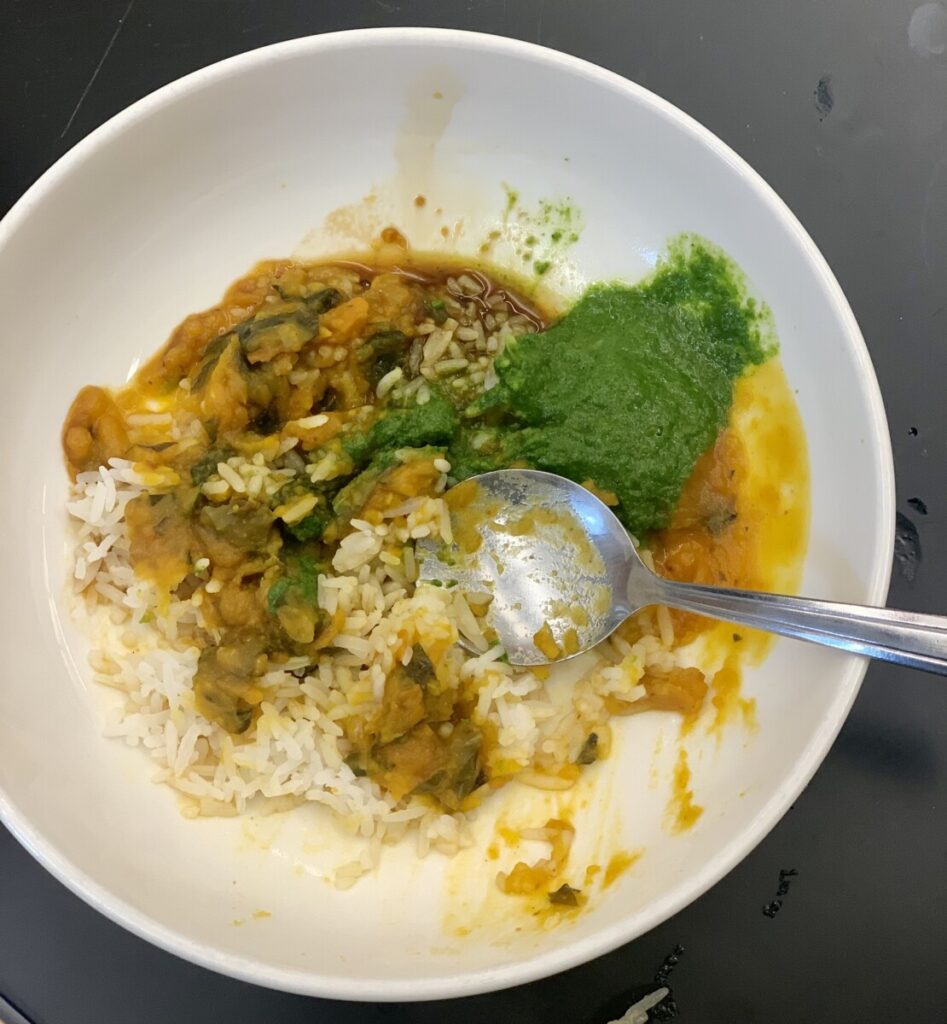
Curry Squash Soup with Green Sauce
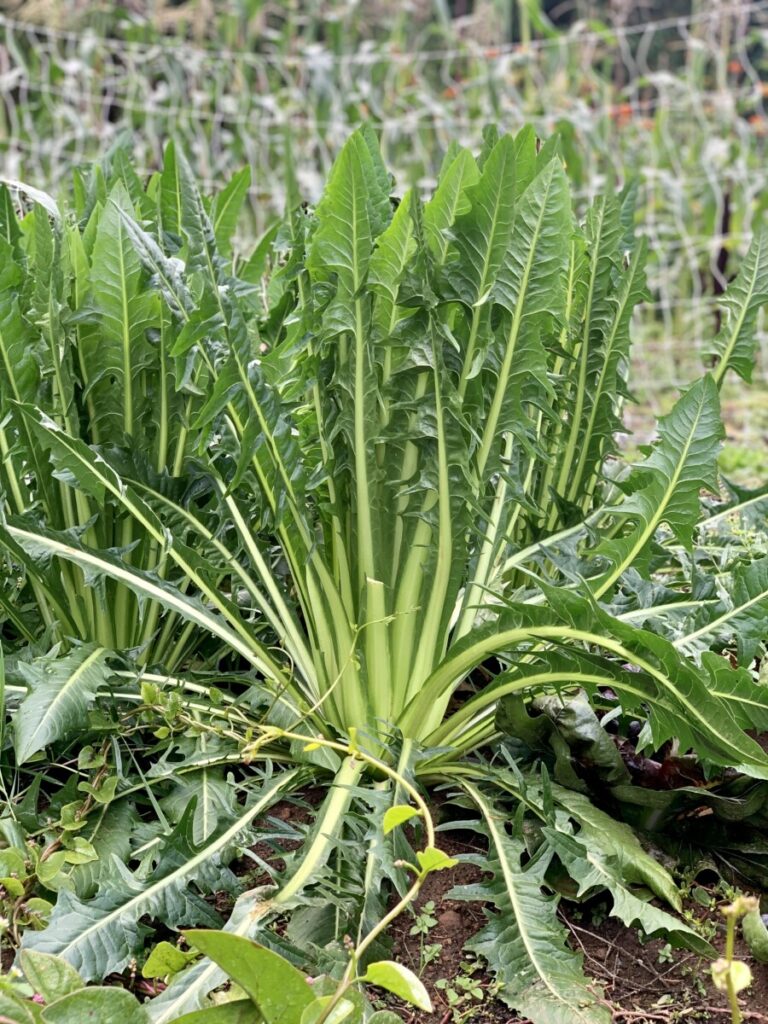
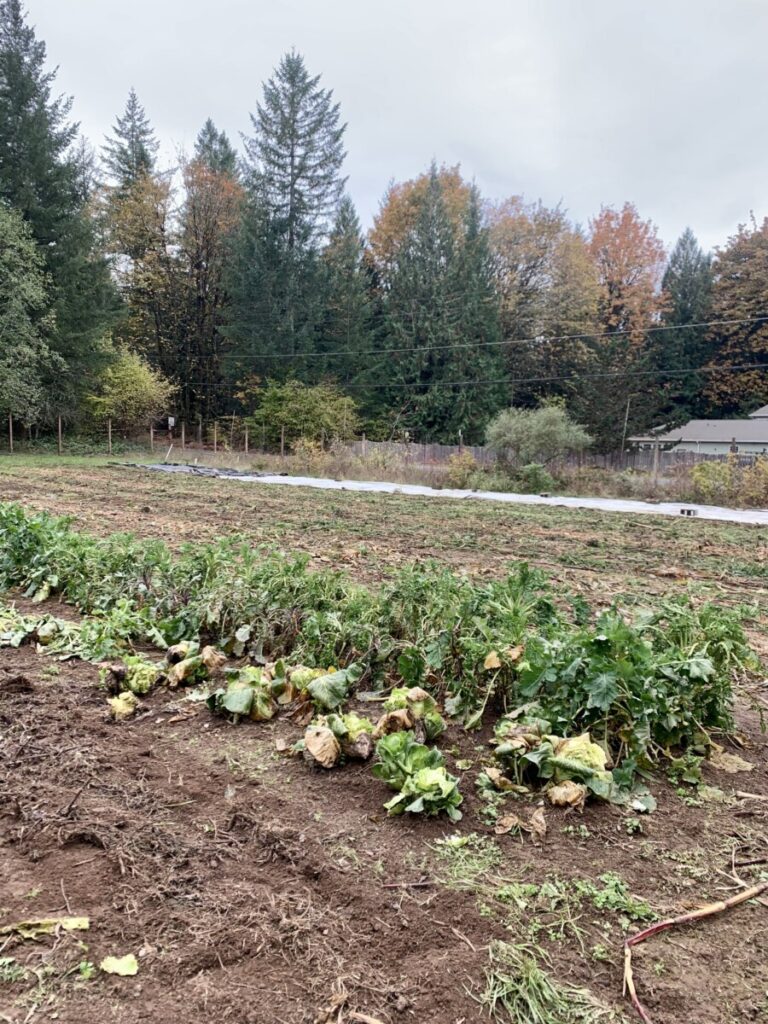
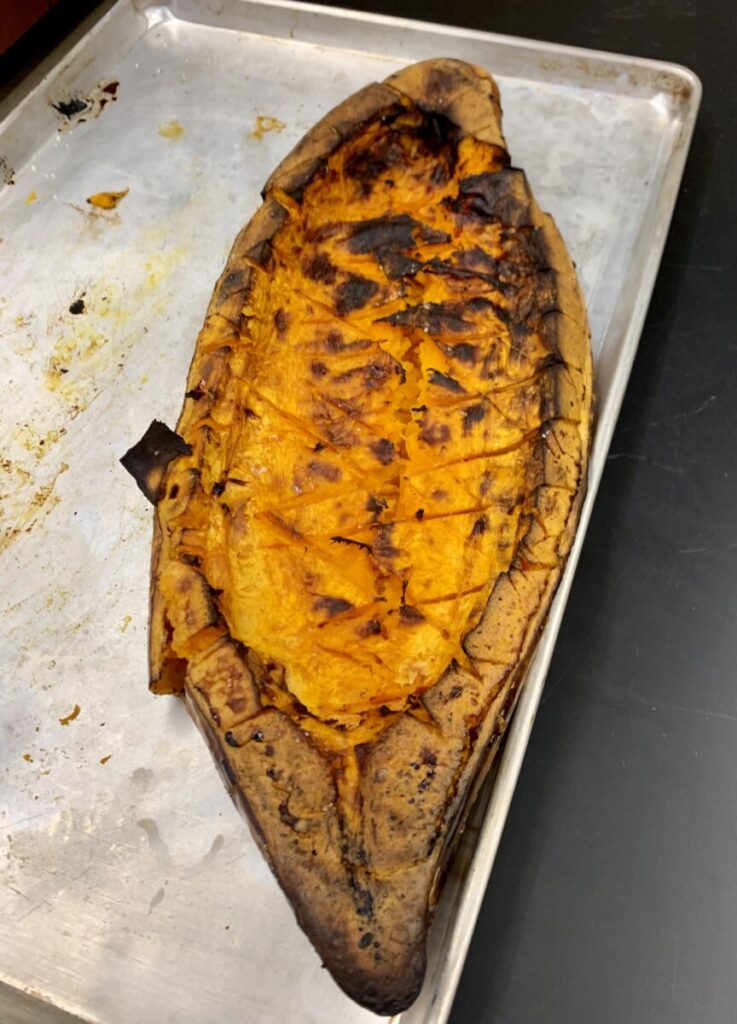
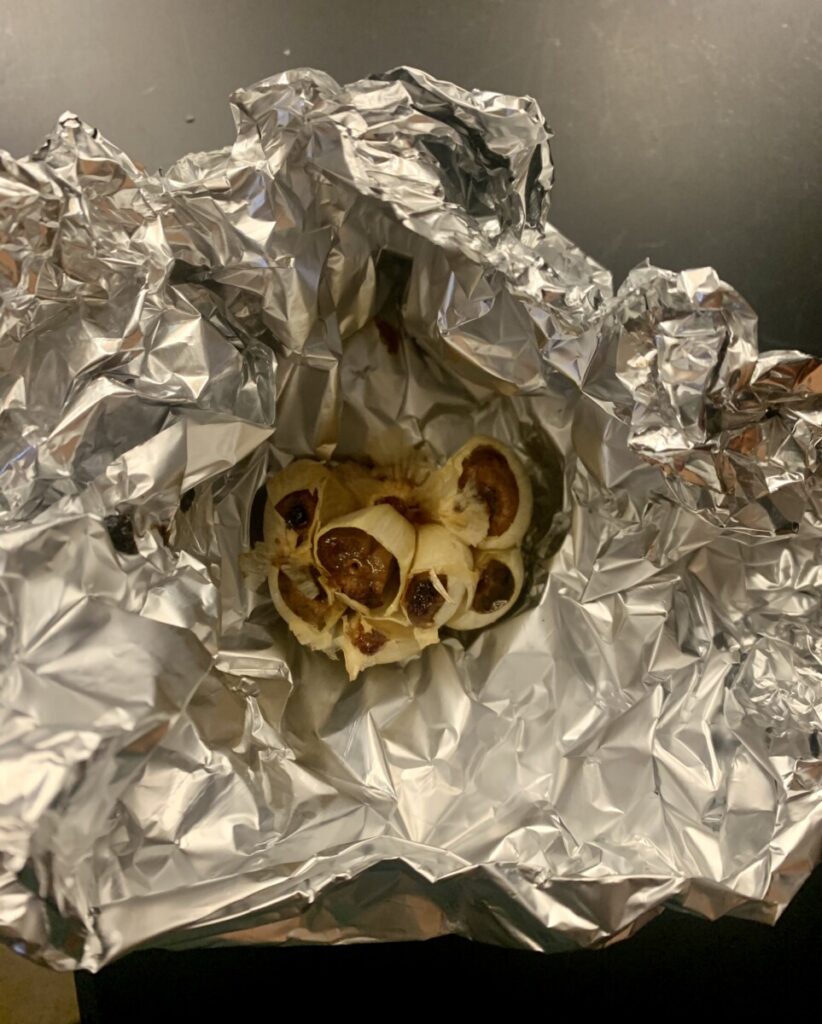
For me there is nothing more comforting than warm soup on a cold fall day. Using what you have on hand; out of the garden, pantry or refrigerator magically turns into a wonderfully healthy meal. The kind of cooking that has the capacity to nourish our bodies, our spirits and communities. Todays soup started with the tender care of Ezra’s Research Rectangle, opportunity and a sprinkling of love. I received a message that the Agroecology lab had lovingly roasted one of the Georgia Candy Roaster squashes and had half of one left over and wondered if I could use it – YES! My mind went to work, what do I have on hand, what is left in the garden to use? I happened to cook some soup at home this weekend, I roasted a whole head of garlic and forgot to use it, that was going in. I happened to visit Buck’s Spices in Olympia (Thank you Joshua for the fabulous spice shop recommendation and the new spice bill I will have to figure out!) They had a Malaysian style curry powder that I fell in love with – this soup was coming together. I got up early and headed to the Research Rectangle to see what was there – herbs and greens – perfect. We’ve got a soup and a green sauce to brighten it up! I love sauces and garnishes for soup, it is a wonderful way to add flavor, texture and excitement to dishes. I perpetually have random jars of this and that to plop on top of anything that needs to come alive. Life is not boring with a few good sauces in the fridge.
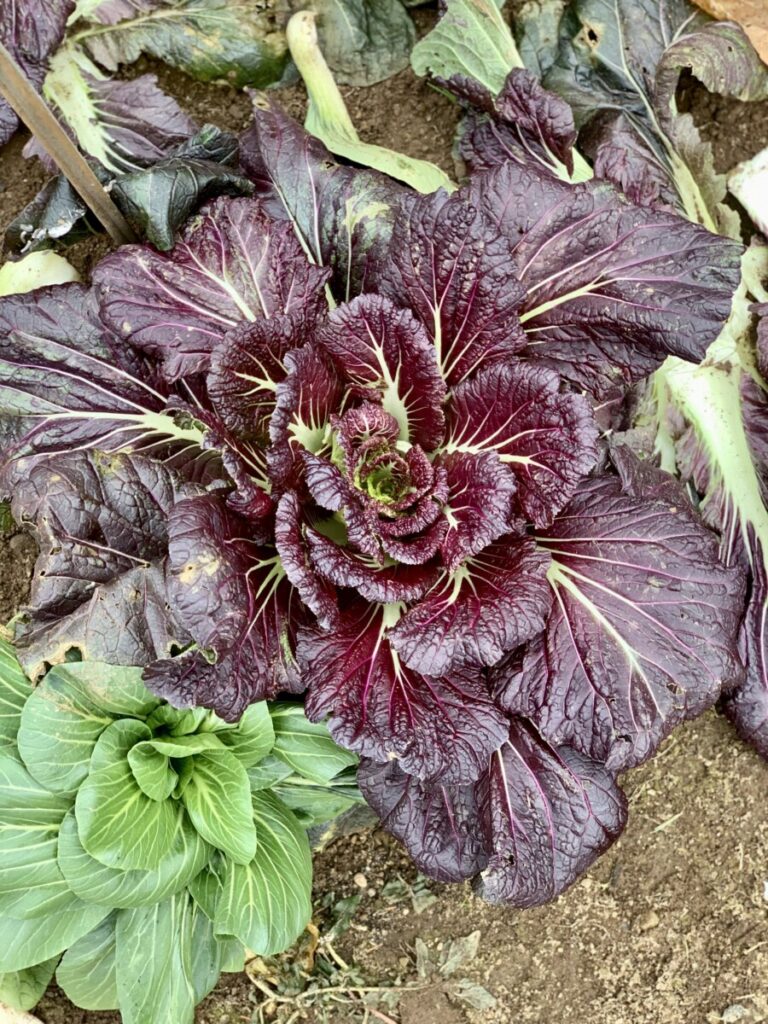
Now that I took stock of what I had on hand it is time to throw it together. For some this can be the hard part, how do you know how and what to do? I often hear from people that I am lucky that I know how to cook, I am AND I am lucky to have had the teaching of amazing cooks that know how to cook from whatever you have on hand, AND anyone can learn how to do it. It is not by some miracle or talent or professional education that I know how to gather ingredients on hand, mix them together and make it taste good. It comes from years of using my senses. In Adler’s The Everlasting Meal she lays out how to do this in chapter 5. I love this quote from page 63,

If we were taught to cook as we are taught to walk, encouraged frist to feel for pebbles with our toes, then to wobble forward and fall, then had our hands firmly tugged on so we would try again, we would learn that being good at it relies on something deeply rooted, akin to walking, to get good at which we need only guidance, senses and a little faith.
We aren’t often taught to cook like that, so when we watch people cook naturally, in what looks like an agreement between cook and cooked, we think that they were born with an ability to simply know that an egg is done, that the fish needs flipping, and that the soup needs salt.” Adler Pg 63
She goes on to note that “Instinct, whether on the ground or in the kitchen, is not a destination but a path.” Adler Pg 63 As in all areas of life we will mess up and we will learn from these mistakes, this is also the path of cooking. And as in life when we mess up we apologize and recover – we fix and make nice. So is it with cooking from your senses, we can recover our dishes using our senses. So I made the green sauce and in my rush dumped too much vinegar in it – whoo it was bright all right – almost spicy with vinegar. So I adjusted, I would usually add a splash of vinegar or citrus to the soup at the end to brighten it and balance the sweet richness of the squash and bitterness of the greens. Knowing the green sauce would handle that on it’s own I left this step out of cooking the soup, creating balance and viola we have a yummy meal.
“Only by tasting can you learn to connect the decisions you make with their outcomes” Adler pg 64
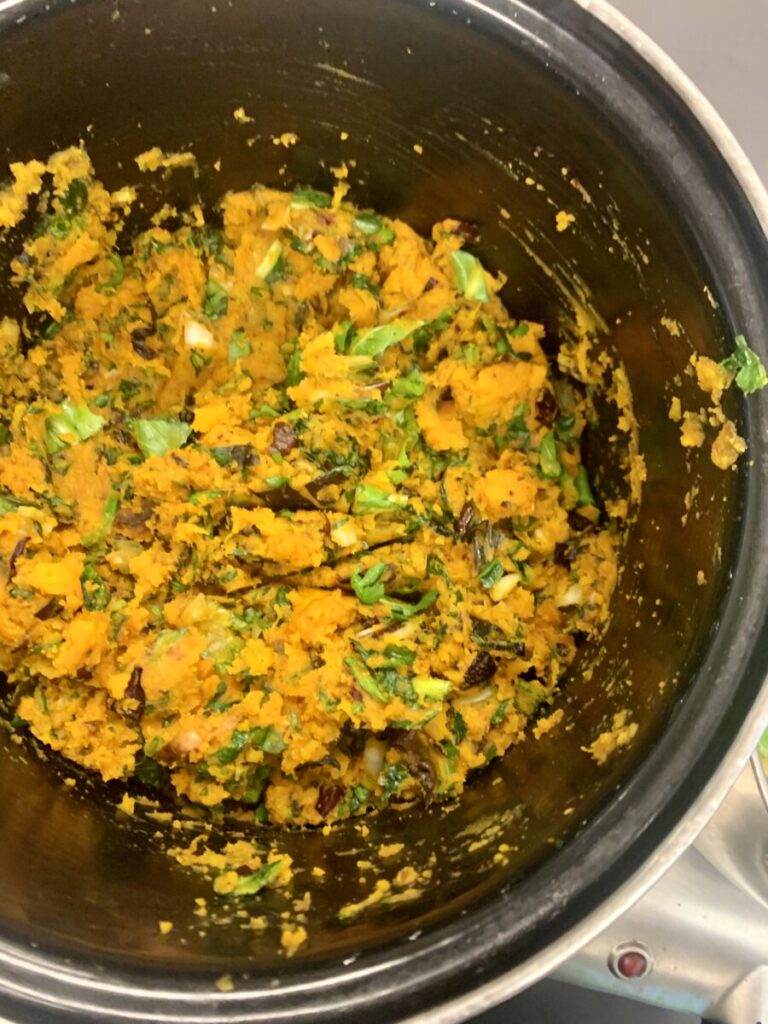
Cooking and nourishing people brings me great joy and for me it is the most gratifying way to express love and care. Thank you all for your kind words and appreciation and all of the yum’s filling the room at lunch.
Leftover Squash Soup:
- Roasted Squash
- Roasted Garlic
- Leeks
- Curry Powder
- Salt
- Olive Oil
- Coconut Milk
- Spinach, Pak Choy, Italian Dandelion, Beet Greens,
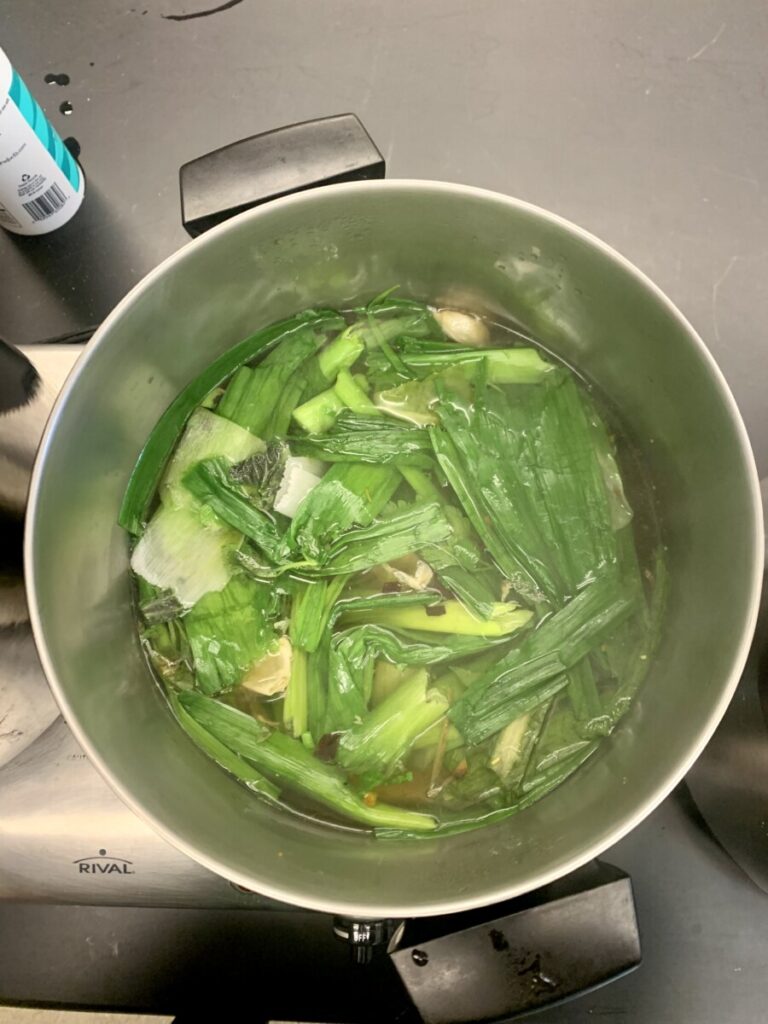
In a soup pot I used the white and very light green parts of the leeks, chopped them and sautéed them in olive oil. In a separate pot I used the dark green parts of the leeks, covered them with water and set that to boil, then reduced to simmer for a quick vegetable broth. When the leeks were translucent, a little caramelized and began to fill the room with a delicious smell I added the squash, salt, roasted garlic and curry powder. I let it cook a bit to incorporate. Then I added the chopped greens and let it all cook a bit longer stirring to keep from burning. I then strained the leek broth into the pot and let it all simmer, stirring and adjusting for seasoning. The trick is to keep tasting as you go, building on the flavor. Pay attention to how things transform, smell, look, feel and taste. Before serving I added coconut milk and salt until it tasted right to me.
Green Sauce:
- Cilantro
- Parsley
- Mint
- Apple Cider VInegar
- Olive Oil
- Salt
- Honey
I blended all ingredients until smooth, tasting along the way for salt, honey and vinegar amounts. I was looking for bright and balanced.
As I do I thought of additions and variations to this dish as I ate. You could add currants, raisins, cashews. You could use any squash, potatoes cabbage would be good too!
Not only did I observe each step with all of my senses, I also paid attention to what I was pairing each dish with and what it would be used for. Every time I tasted the green sauce I kept in mind that I would be serving it with squash soup; I knew the soup would be served over rice so I kept it a bit thicker, richer and a touch saltier knowing the rice would distribute the flavor and continuously adjusting accordingly for balance across the meal. Have fun and practice by using what you have on hand, and adjusting as you need through taste and exploration of cooking with your senses!
“As long as you taste curiously, and watch and feel and listen, and prick your way toward food you like, you will find that you become someone about whom people will say that cooking seems to come naturally, like walking. They will say it and it will be true.” Adler pg 67
Seminar Week 2
Texts:
Leah Penniman (2018), Farming While Black. University of Washington Press, Introduction 1-10
Harold McGee (2020), Nose Dive. Penguin Books, Chapter 18 Pgs 484-485 and 528-532
Robin Wall-Kimmerer (2023), Corn Tastes Better on the Honor System
Quotes:
“There’s a word for forcible injection of unwanted genes” Wall-Kimmerer
“Racism is built into the DNA of the US food system.” Penniman, Pg 5
“While the land was “the scene of the crime, she was never the criminal. Our people mistakenly strove to divorce ourselves from her in an effort to get free. But without the land we cannot be free.” Penniman, Pg 8
On genetically modified corn, Kimmerer ends her paragraph with strong words:“There’s a word for forcible injection of unwanted genes” This struck me, I never thought of it that way because I never thought of corn as equal. What I am trying to say is that in this moment it was clear to me that though I have respect and love for plants, I still saw them and worked with them as a commodity not an autonomous being. This is hard to explain other than I saw the disconnect that I still had in my thinking. I did not like the idea of genetically modifying anything in respects to our health and well-being as people, what it would do to us if we ate it. I thought about how bad it is for biodiversity and the health of the planet, it’s negative effects. But I never thought about the corn as an individual, only what it does for me. This broke that open and I can see the change in my thought process to really honor and care for the corn because it is corn, it is precious and smart, and is a part of us.
Penniman writes, “Racism is built into the DNA of the US food system.” Pg 5 Also strong words here, needed words here. She goes on to explain the history of this; genocidal lands of Indigenous people, forced slave labor, convict leasing, migrant workers – where farm management is white and labor is brown and exploit. Once I began to look I could see this everywhere. It is how the system works, a big ol’ oppressive machine pumping money to white land owners. This is frustrating to me, why? Even though I know why, the systemic instituion of racism, but really why? Why can’t we get past this? Why does our society still cling to this system – I know it benefits a certain population, I guess my question should be how, how can they look at the situation and live with it? How do they not see that even though it benefits them now, it really hurts them in the long run. It baffles me.