Sea to Sea

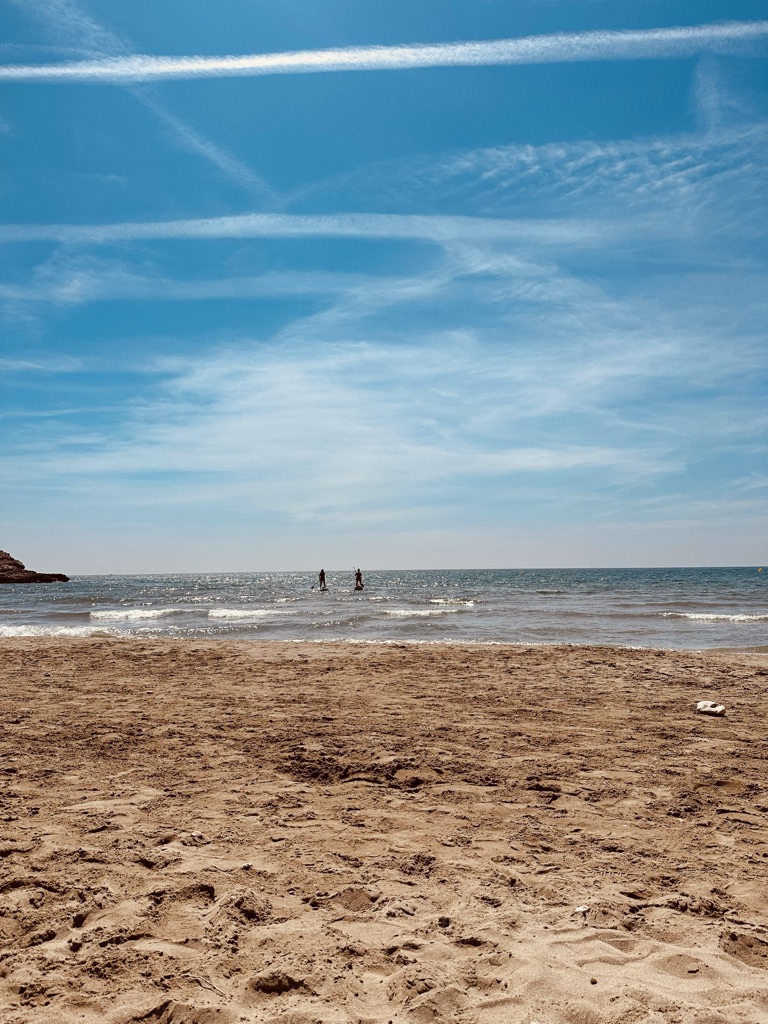
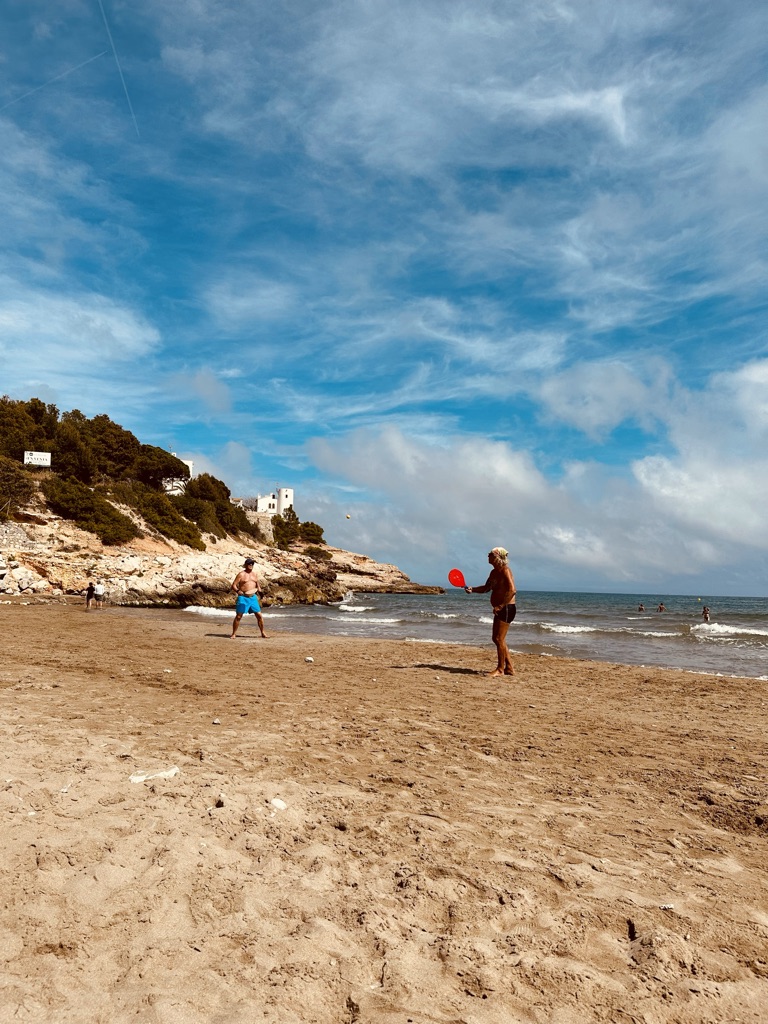
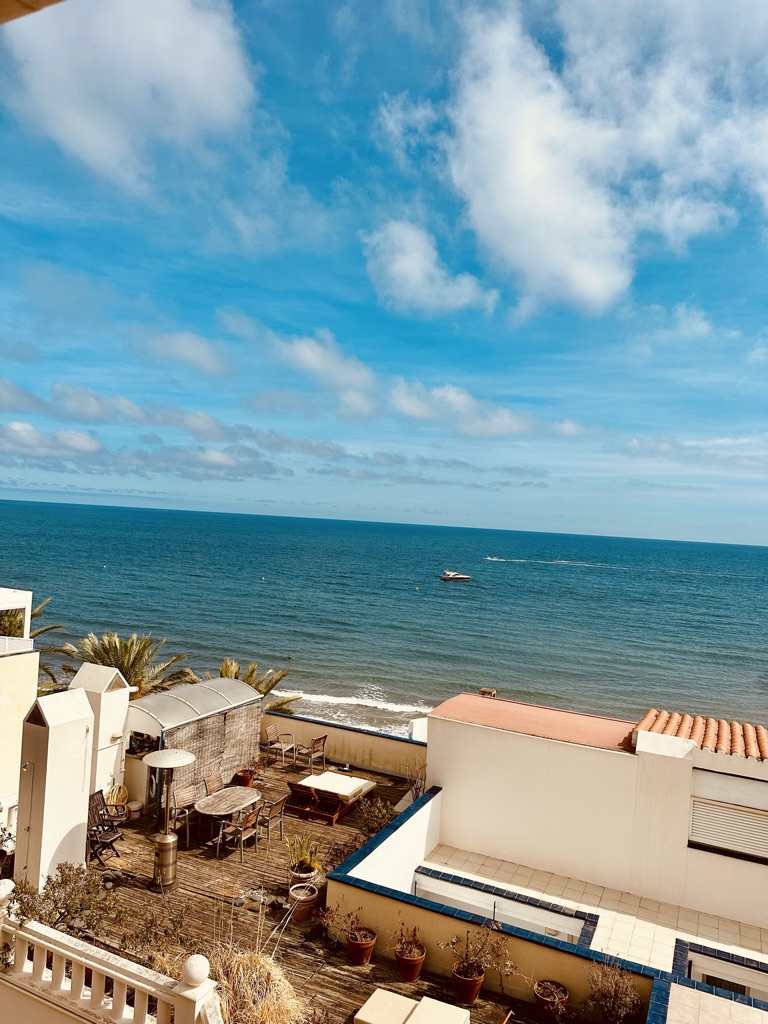
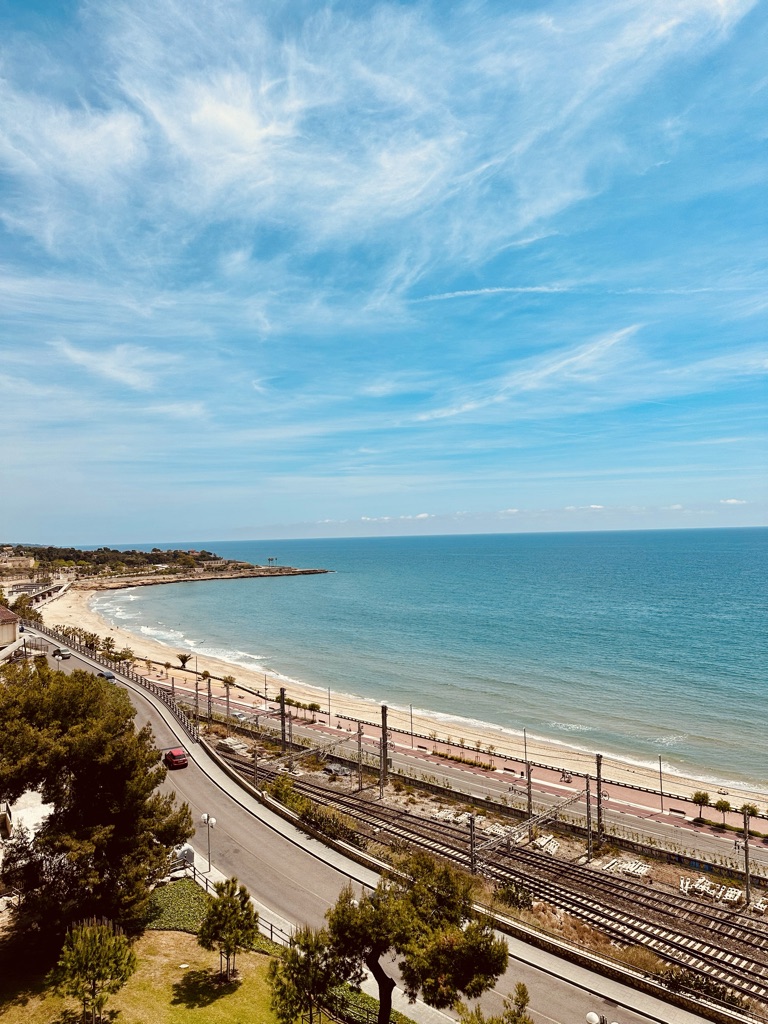
We headed east today, making our way through the lush green of the northwest and Bilbao on our way to the small beach town of Stiges, on the Mediterranean. We had planned to stop at a few wineries and a salteria (a place where they salt fish) on the way, but Artesoro Basseria was such a wonderful place we chose to stay there for as long as we could. 

For the next few days, I don’t have a planned culinary journal stop or a specific food I want to try on the road, or when we get there, and I am glad for it. I have so many pictures and notes and questions to process.
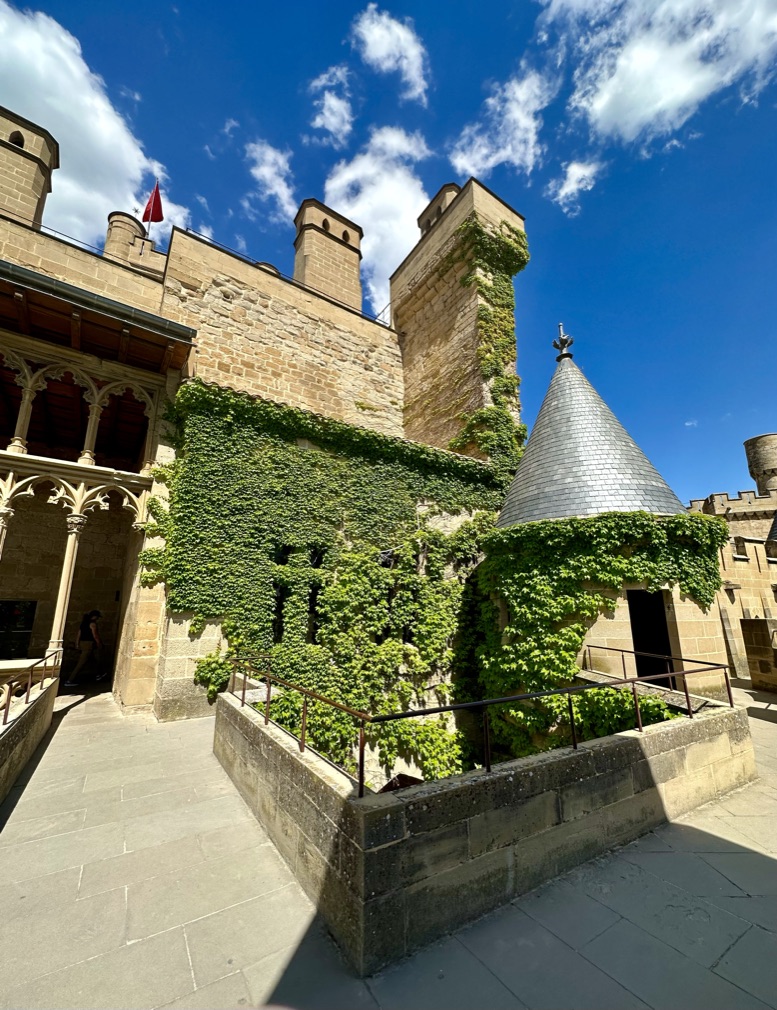
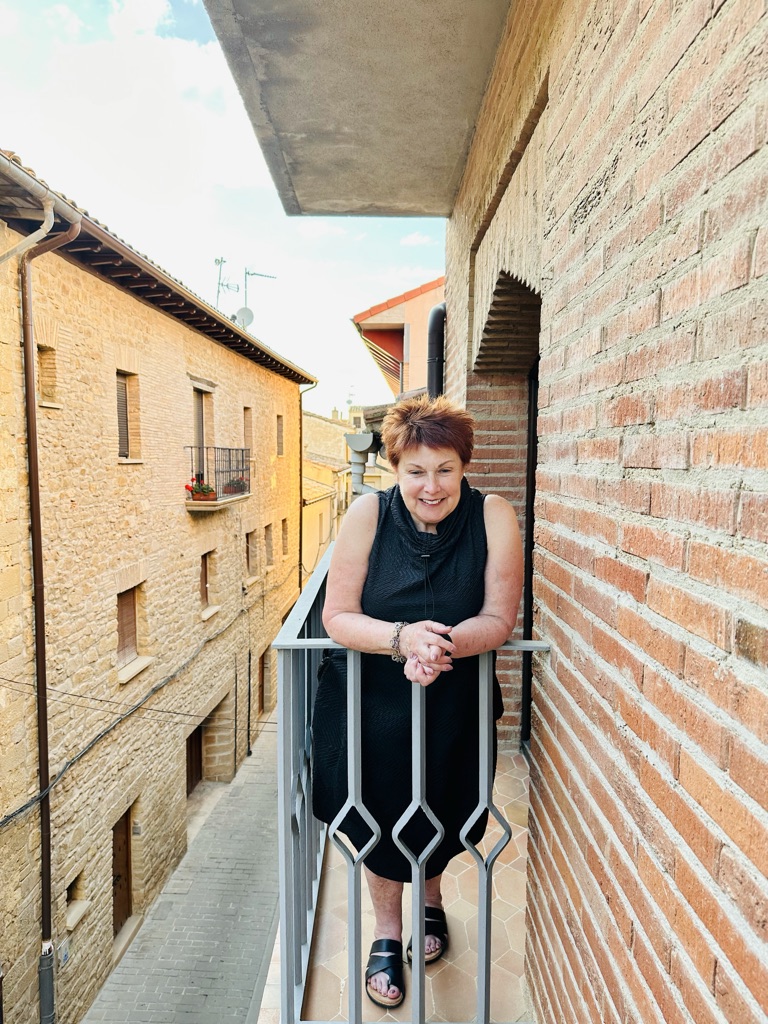
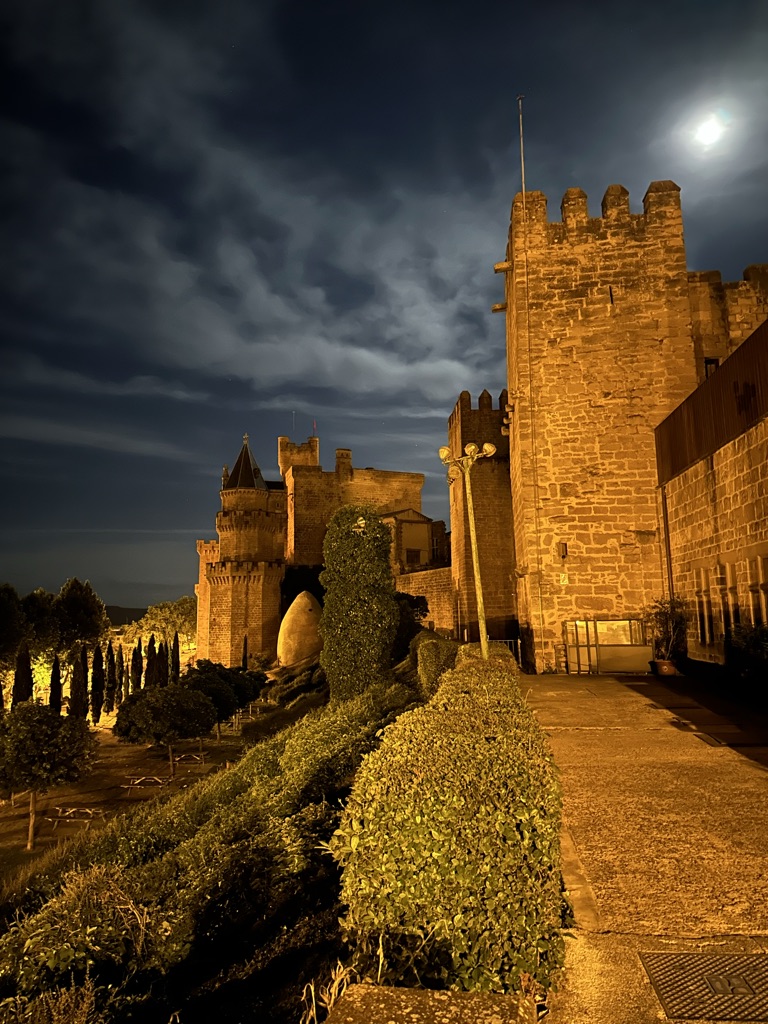
Our first stop to break up the drive is Parador de Olite, a medieval castle turned into a hotel.  We stayed in the castle which was exciting and spent a day wondering through the castle and the walled, cobblestone city.  Ironically this is where I tried migas for the first time in Spain. Migas were first a peasant food of breadcrumbs fried in oil or fat, sometimes with onions or meats, and were created to use anything you had left in the pantry for sustenance especially during lean times.  They since have become a beloved comfort food and it was an interesting paradox to have them served in a castle where the kings and nobility of Navarre lived for centuries. It is always interesting to me to follow the humble beginnings of a dish that then becomes an integral part of a culture. I would like to choose a few of these foods and follow them through time.

We continued our journey through many regions of Spain. It was wonderful to see the topography change from lush mountains and rolling hills to the arid interior with vineyards as far as you can see. This is another area of study that I would like to dive into deeper; how is wine connected to the different regions of Spain and what impact has the development had on the culture. Spaniards and Basques consume a lot of alcohol, what have the effects and benefits been on the culture here compared to, for example the United States?

 As we got closer to the Mediterranean the soil lightened, and grape vineyards were mixed with fields and fields of olive trees until there were only olive trees as far as you can see.

Let’s talk a bit about olive oil – aka liquid gold!

Until I began this project, I would not have believed you if you told me that Spain produces over 51% of the world’s olive oil.  According to the International Olive Counsel, during the 2021/22 harvest season Spain produced a whopping 1,491,500 TONNES of liquid gold.  Out of the top 10 best olive oils produced in 2019 – 8 of them are Spanish. What about Italy you ask? So did I! That same year Italy produced 329,000 tones of olive oil and even imports olive oil from Spain, I was shocked.  Needless to say, I was not shocked to see the amount of olive groves I did on our drive. I will be tasting olive oil in Andalusia and I can’t wait (https://www.internationaloliveoil.org/wp-content/uploads/2022/12/HO-CE901-13-12-2022-P.pdf)

Since I was not going to the largest olive producing area during this trip, I did a surface amount of research and have more questions! A very quick view of the history – It is believed that the Phoenicians brought olive trees to Spain over 3000 years ago from present day Lebanon, the Romans took power of the region which they called Hispania, planted more trees and used this fertile land to grow and supply their oil thirsty empire. When the Moors came into power, they improved irrigation practices and increased production among other updates. Today there are olive groves in Andalucía that are said to have trees over 1000 years old. All of this being said, there is a lot more depth and history and power struggle and information that goes into the olive oil story of Spain as it is today. As Claudia Roden notes in her book Spain, ” I have found that history is a sensitive subject that arouses passions whenever I say that I am researching teh history of Spain through it’s food” pg 9 Through it’s history how did the layering of power changes, culture changes and time grow this industry into what is today? How did the different types of policing, now Designated Origin accreditation, impact the product, and the people involved today? Did these limitations help or hinder the growers and producers? How did these changes through time impact the environment, the quality and growing practices? What is the difference between all the different types of oil? What is the process of tree to fruit to oil? What do they all taste like? I wish this was going to be one of my stops this year – I will add it to next year’s adventure for sure.
 I also did some more research and re-discovered Claudia Roden, a food writer, traveler and cookbook author. I had heard of her before, here and there, and I’ve cooked a few of her recipes in the past. Being on a culinary journal project myself, I saw her work in a new light. She began to travel through the Mediterranean when she was my age, kids out of the home and ready for a new direction. She began by asking people what their favorite recipe is, what their parents and grandparents ate and she connected these recipes to a history and a culture of a place.  Being in the same stage of my life I felt a connection to her work and became newly inspired. She reminded me that recipes are important, not only to understand a dish but be able to explain it, to understand and explain the culture, to be able to say what this dish is, what it represents and why it is important to share.

“The stories of what you eat in Spain are like pieces of a puzzle” Roden, Spain

At this point I was realizing, what I am truly interested in is how people in a place cook in their homes, how and what they eat when they go out, what social connections they have to the food they eat, where they get their food and who they eat it with? How has and does the people in power structured who can eat and who can not through time? How has the power struggle and the narratives from those struggles shaped how and what people eat? So far I have been struggling to break out of the tourist experience of food – somehow I thought I would be able to get off the beaten path of tourist food and experience the “real” food of Spain. Tourist food in a place tells a story as well to be sure, and I think it is an important piece to the puzzle yet I long for the day to day home cooked food of locals.  What would it look like to cultivate connections to people here – like Laura and Roberto in Basque Country – and share recipes with them, ask them what their favorite recipe is, what did their parents and grandparents eat? What different kind of experience would it be to make connections with people in each place I traveled and asked them these questions. What would it look like to stay in one place for a longer period of time to get a feel of the rhythm of the place and the food and the people? What if I traveled through the Mediterranean and retraced some of Rodens travels, how has the culture and ways of food in these regions changed since she set out on her adventure so many years ago? Thinking of this project ignited an excitement in me, tapped my insatiable curiosity on the shoulder and woke me up again.

It’s off to Barcelona tomorrow with renewed excitement, far more questions than I arrived at the beach with – and a suntan.
Basque Country

We have arrived in Basque Country. That lovely place in the north of Spain bordering the Sea of Biscay, full of rolling hills, forest, sea and an ancient rich culture. The Basque people have inhabited this area for a very long time. Their culture has strengthened through the test of time and persecution. They are a people who love food, good food and it is an integral part of who they are as a culture.

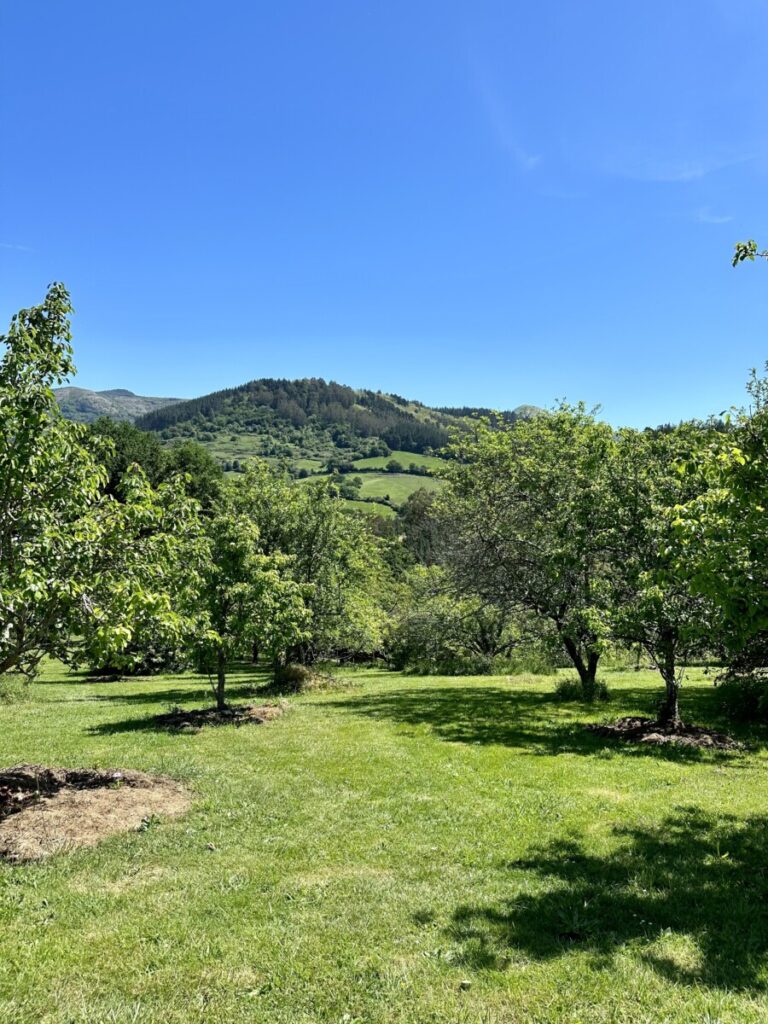
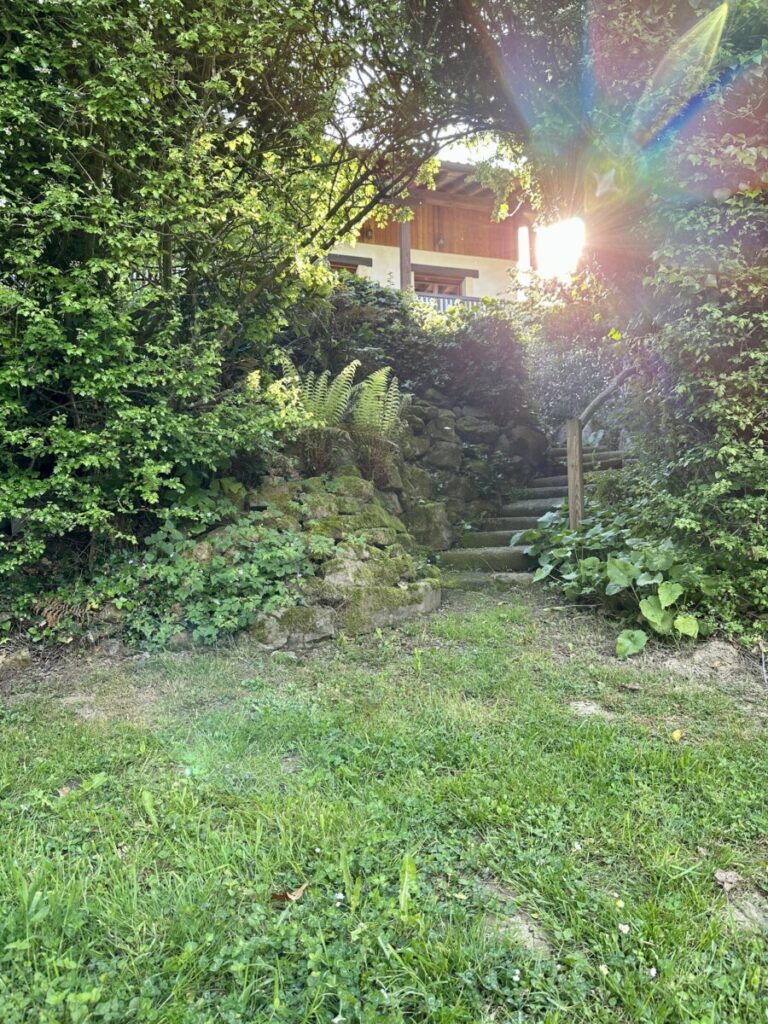
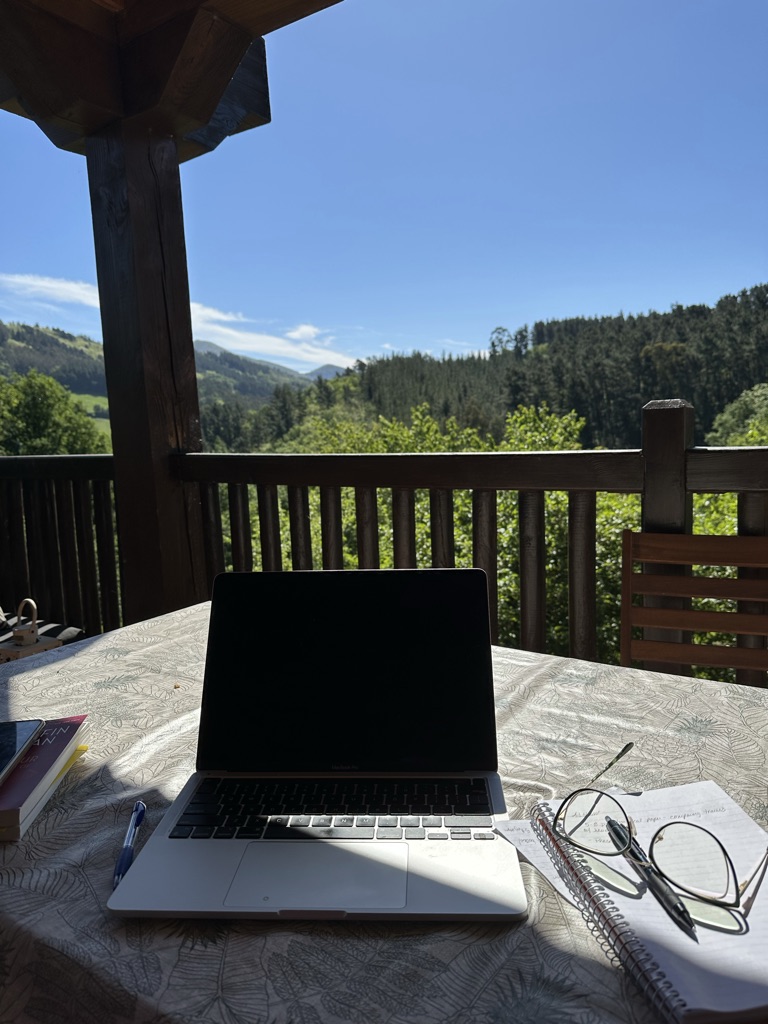
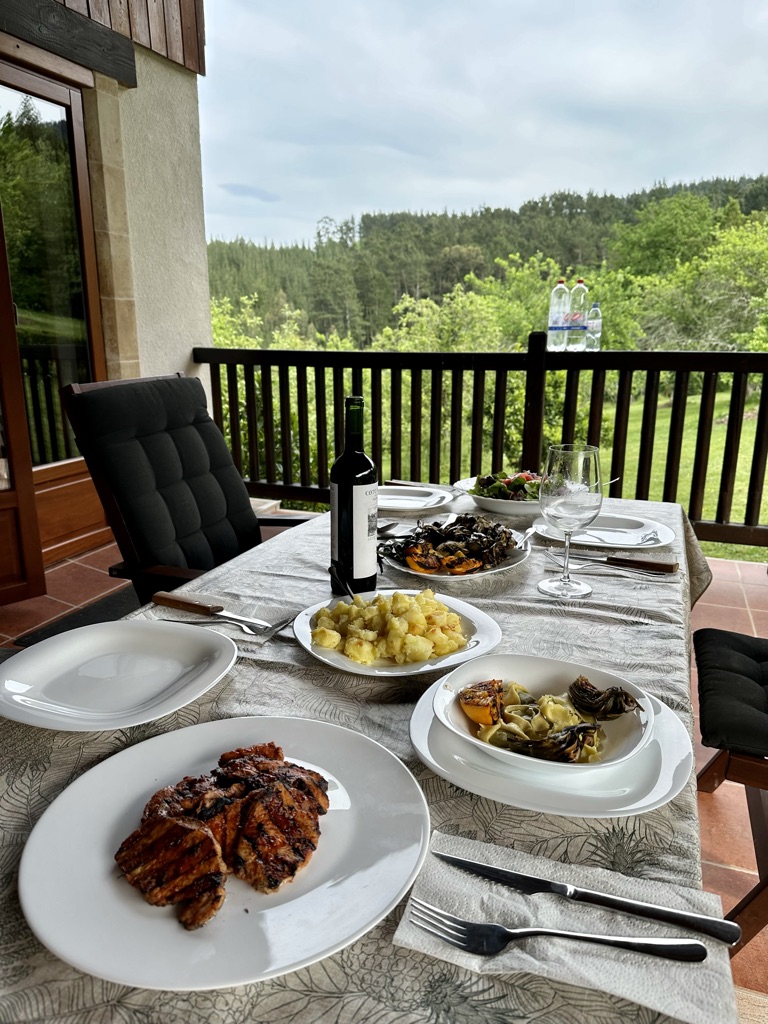
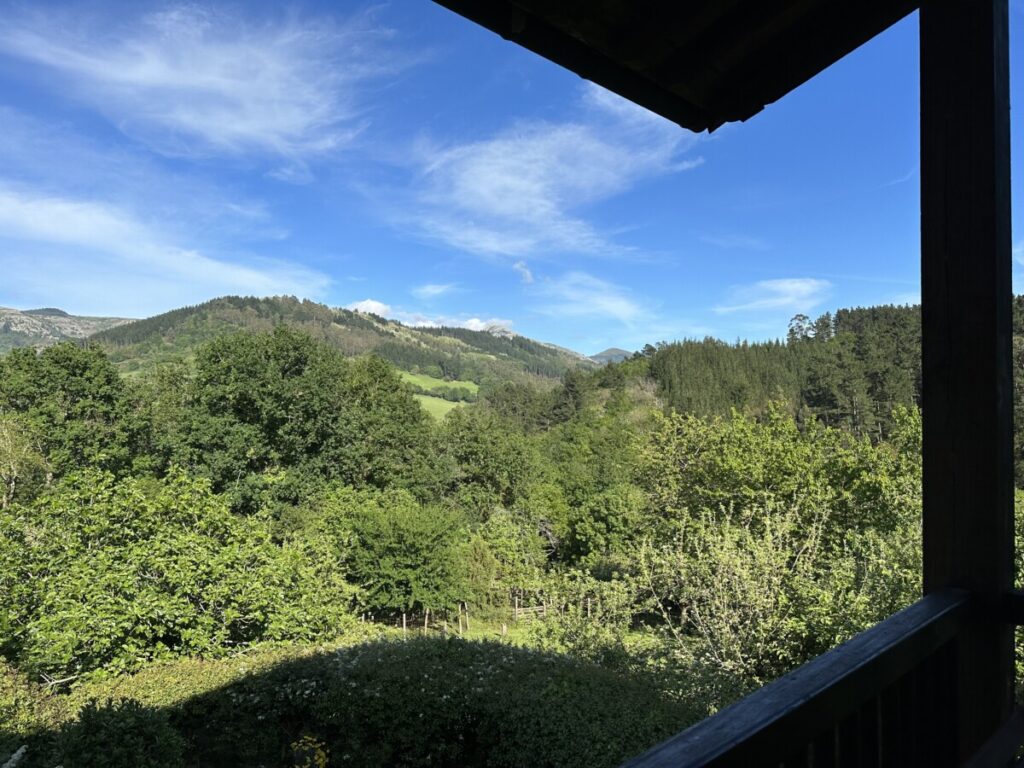
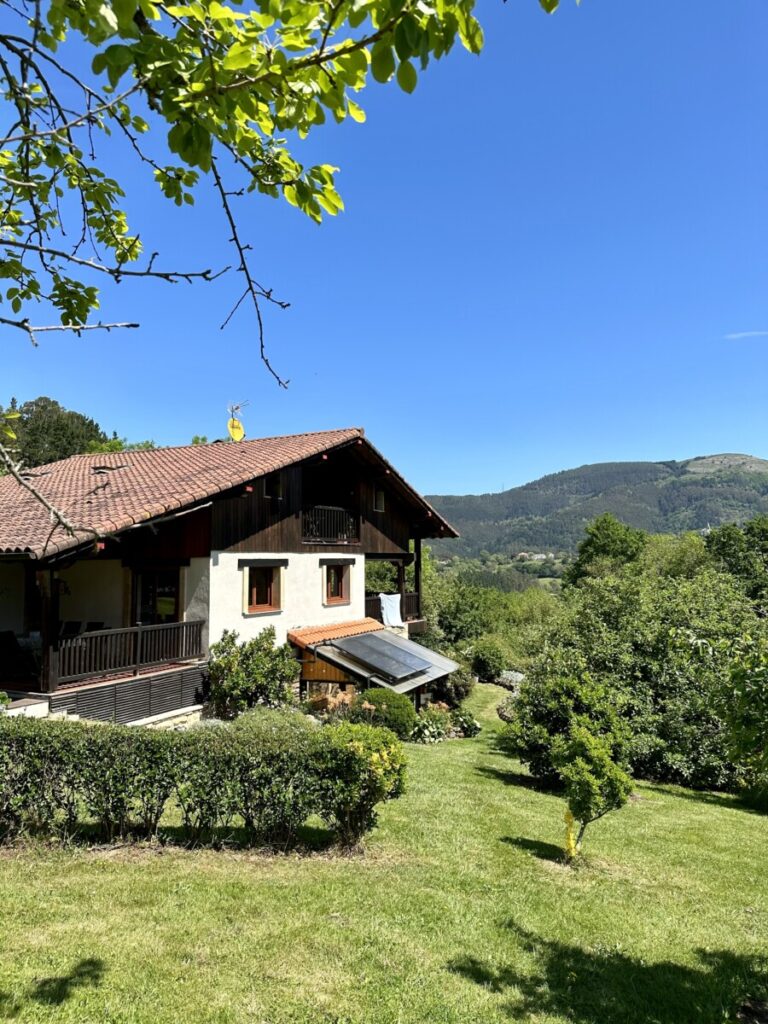
The view from the porch

I sit here, computer in front of me, notebooks full of notes, piles of books littered with bright sticky notes bending out of the pages – facts, stories, recipes, and exploration on this place and I find myself stuck. I want to convey all that I discovered, and I keep being drawn back to a feeling, it is one that I did not read about, nor did I expect; the experience of being home.

I should explain and so I will begin at the beginning.

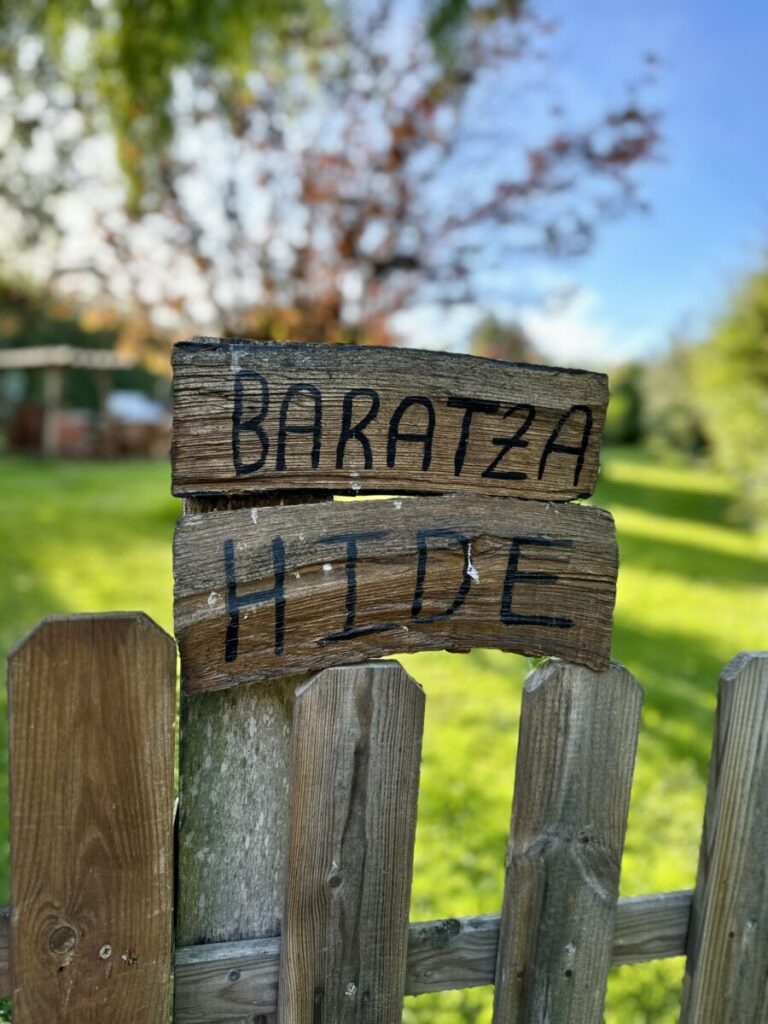
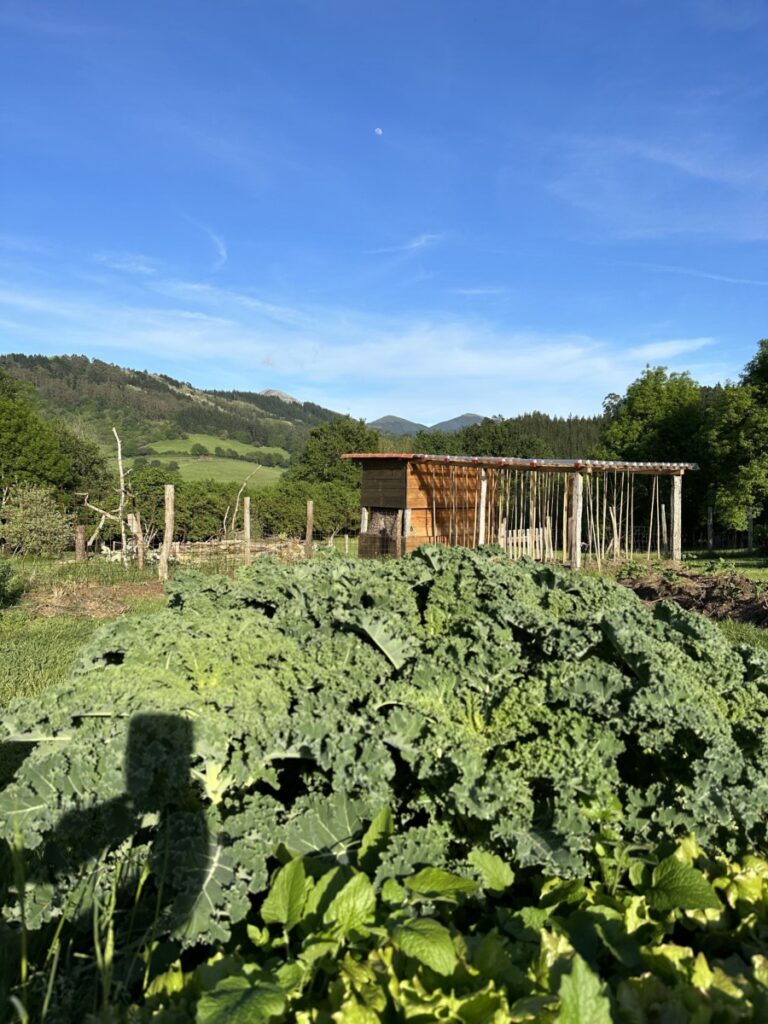
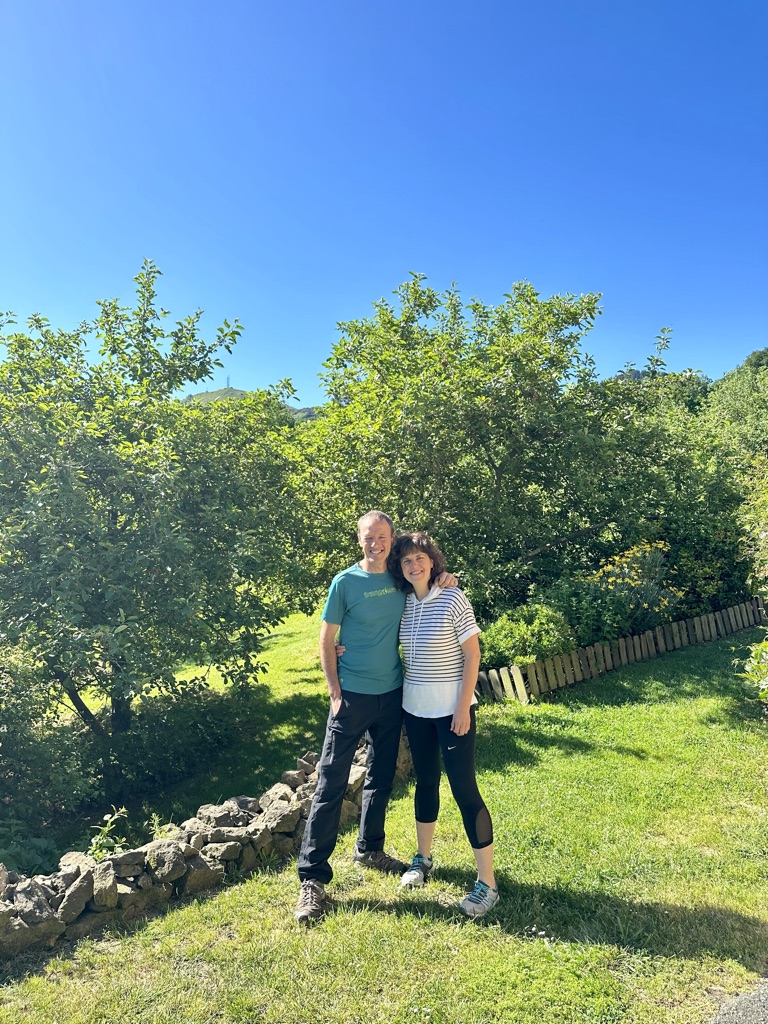
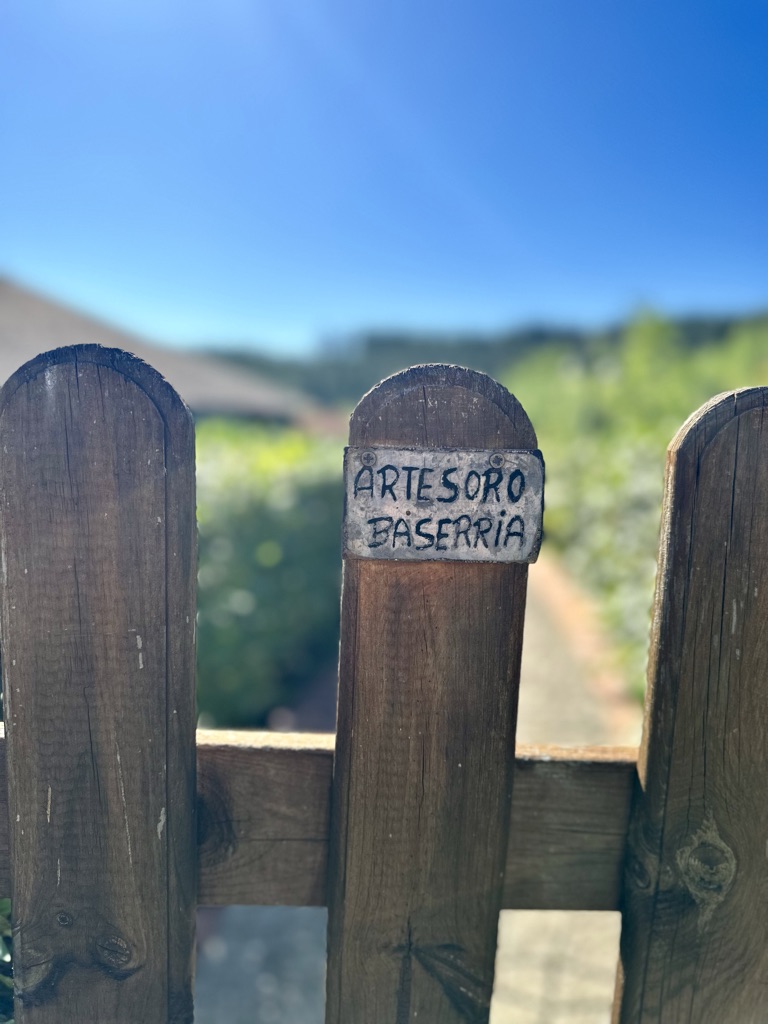
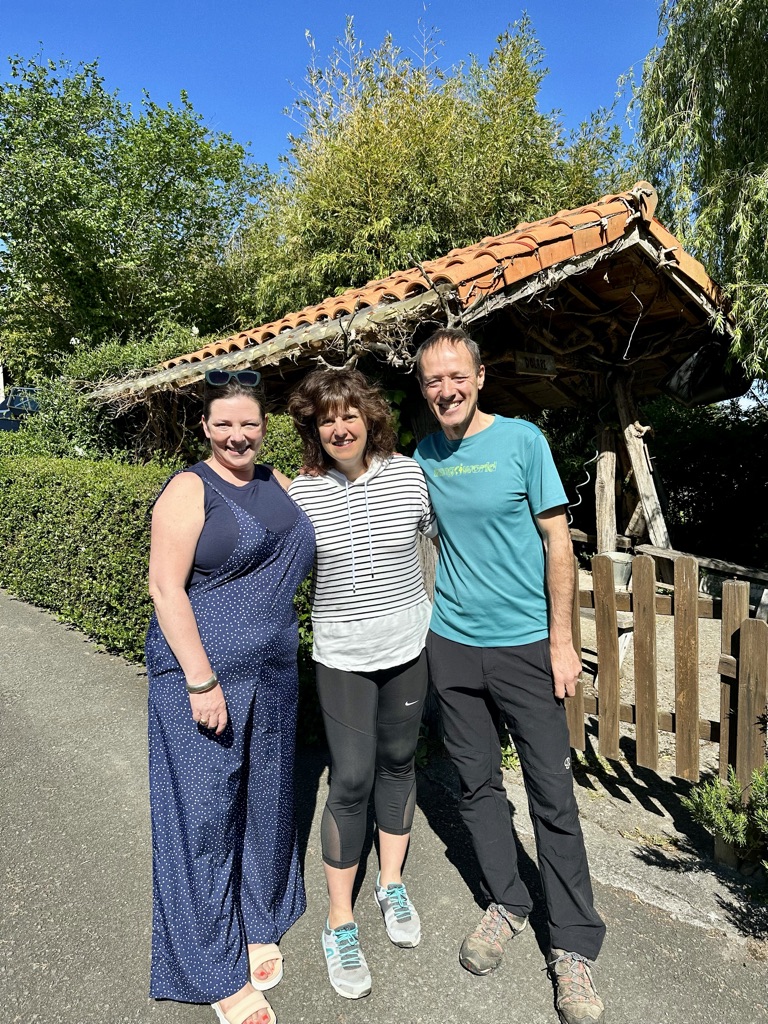
We spent the day crossing into Spain. I was so very excited, all my studying and research and expectation bubbling over in me.  Rolling hills, forest and red tile roofed towns settled in valleys, we were in Basque Country. The plan was to stop at a market and grab provisions on our way to our Airbnb, about 20 km outside of Bilbao up a winding road through small towns, rolling hills and wild forest land. We were unaware that day was a Spanish holiday and therefore everything was closed, including any store selling or serving food. Not wanting to get stuck on hill roads in the dark we carried on, we had bread and peanut butter and would make do for the evening. Our directions via Google landed us at a horticultural educational center. We were not expecting this and were a bit confused. A wonderful woman walked up the road and with a bit of stumbling through my freshman Spanish, her freshman English mixed in with her Euskera, the Basque language – she directed us to the correct house next door, we had arrived. Oh, did we arrive, the gate opened to an amazing home sitting above an unforgettable landscape with a phenomenal view of rolling mountains for miles and a property filled with fruit and nut trees, las huertas (vegetable gardens), sheep and chickens! I could barely contain my excitement.  We were at Artessoro Basseria, a sustainably built and run home, educational center and lovingly tended land by Roberto and Laura.  I could go on for 20 pages about what they have created here, and I will sprinkle some through while I talk about food over the next few days – you can follow the link to their site and I encourage you to do so to see all they offer! https://artesoroa.com/

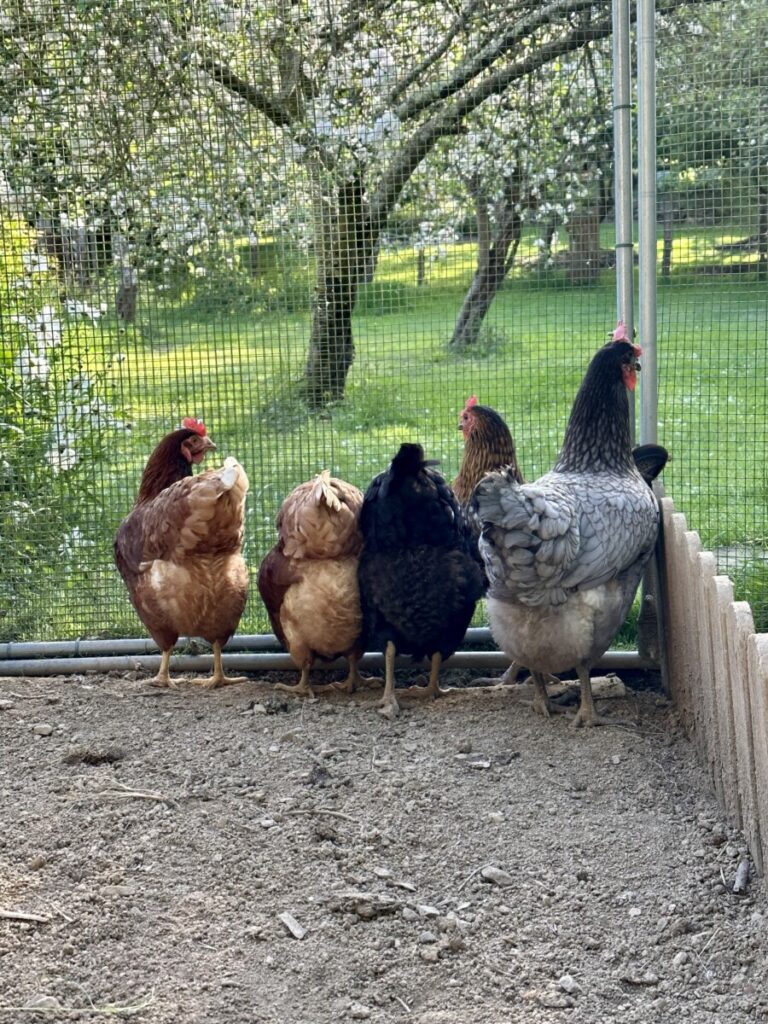
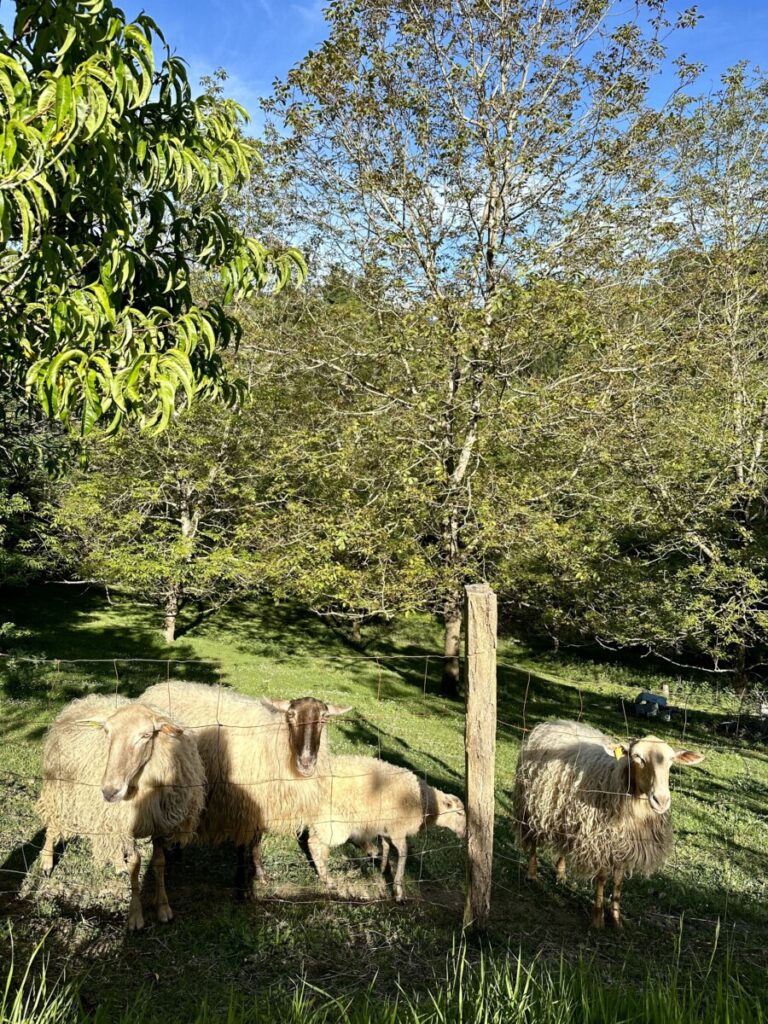
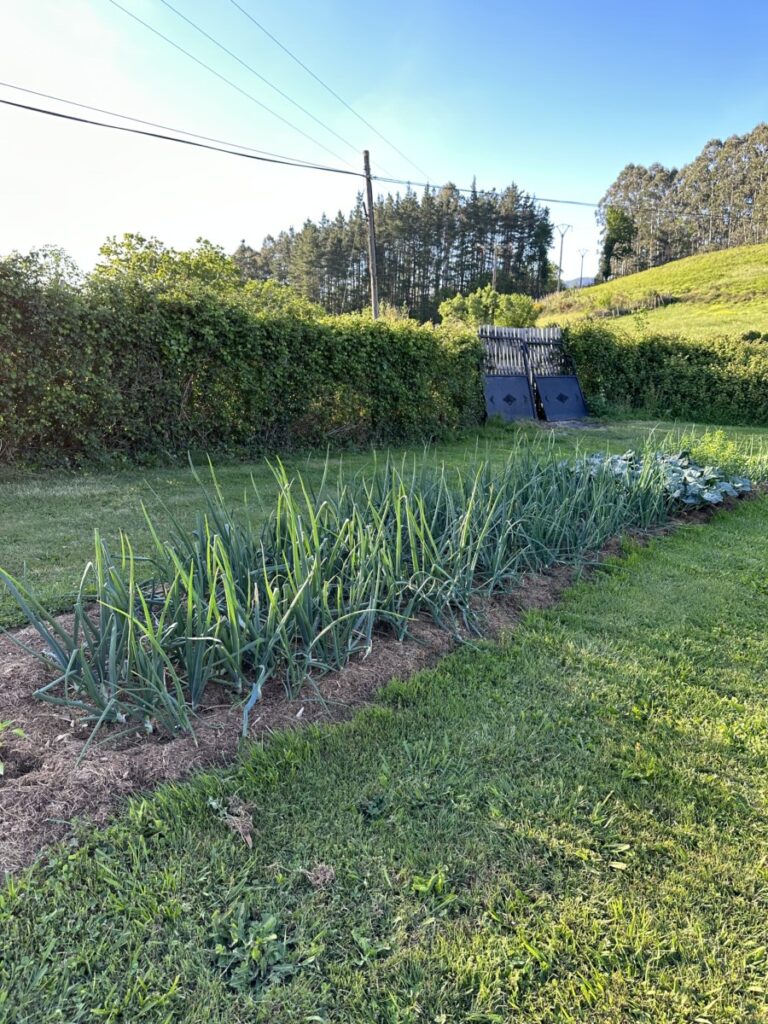
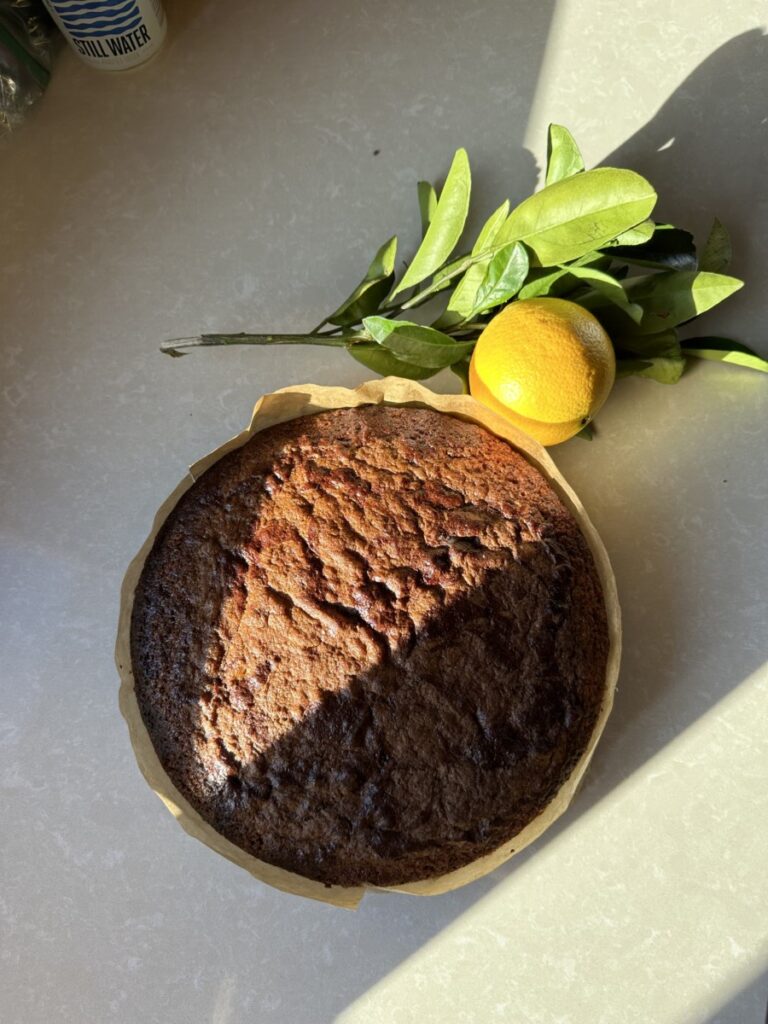
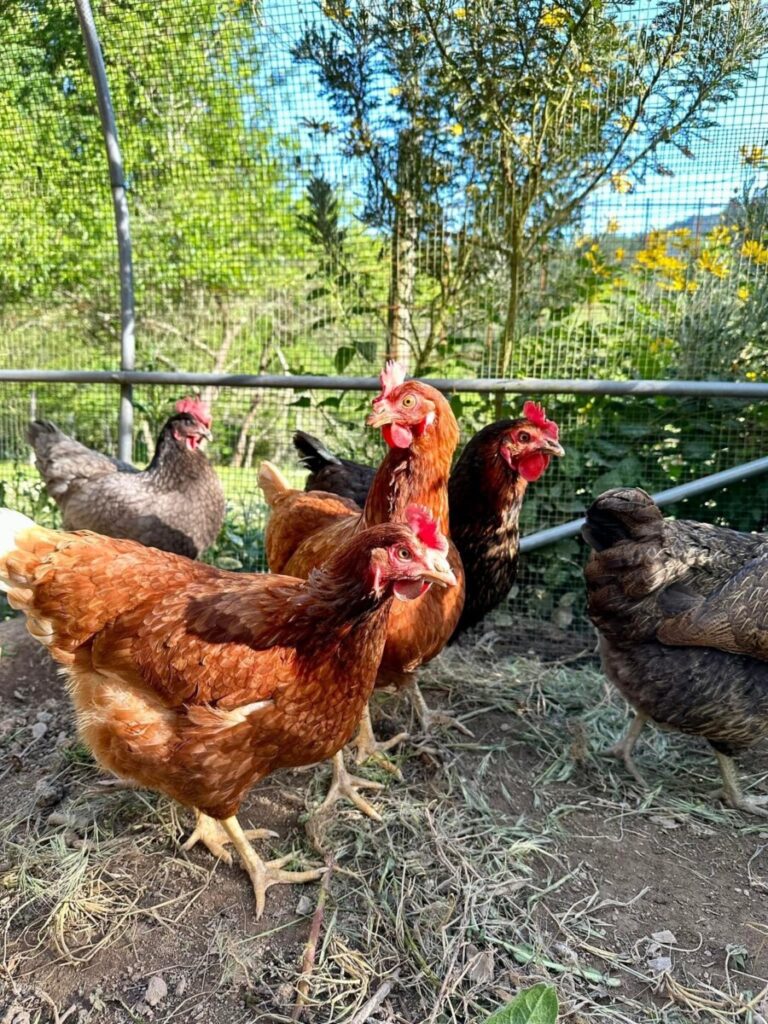
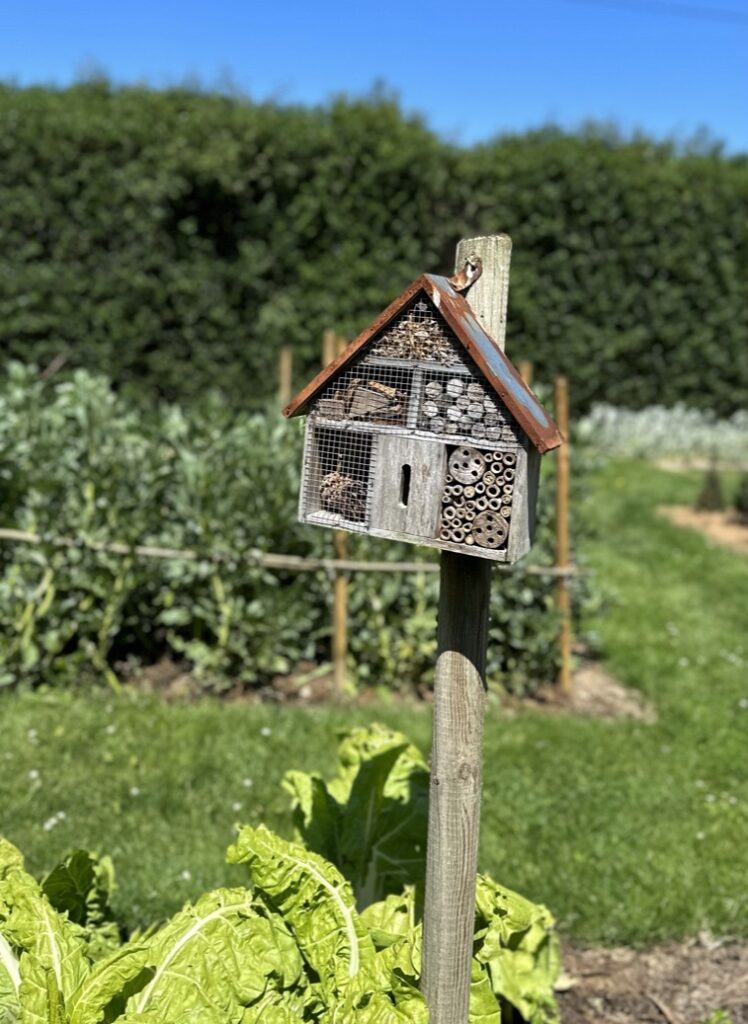
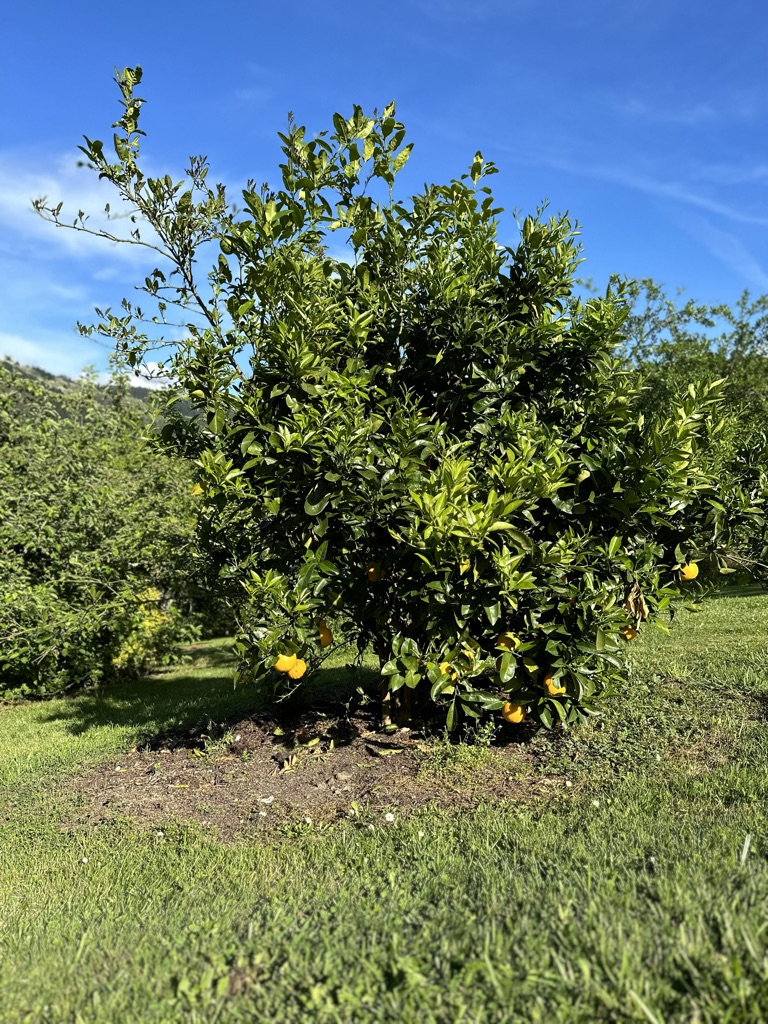
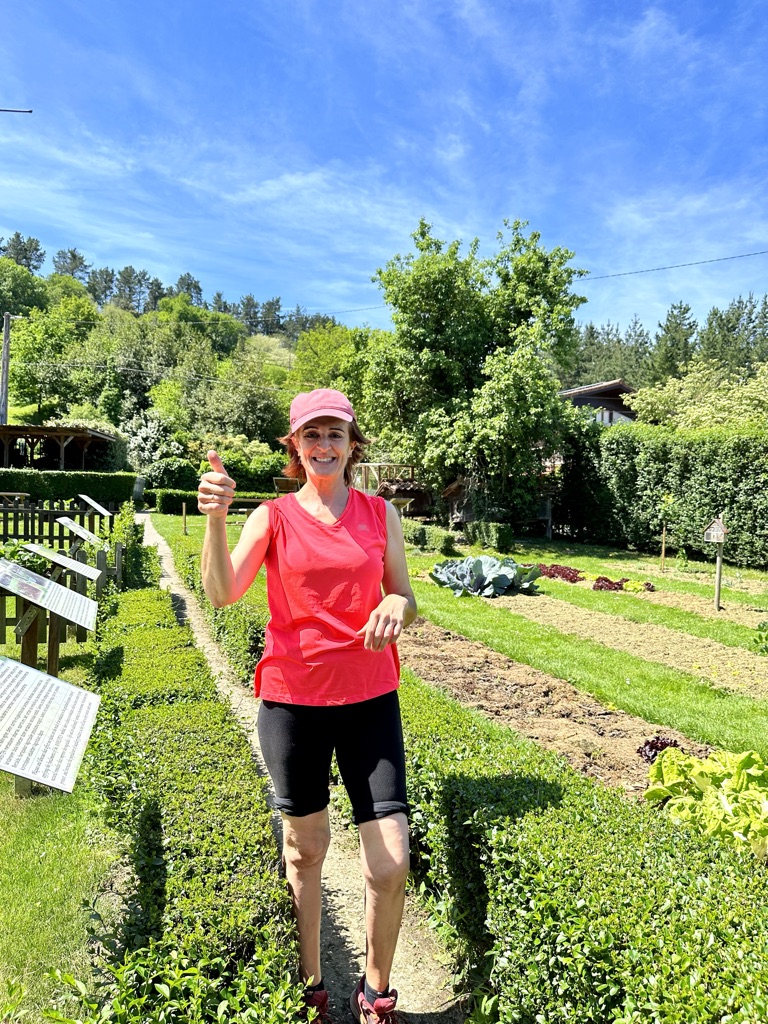
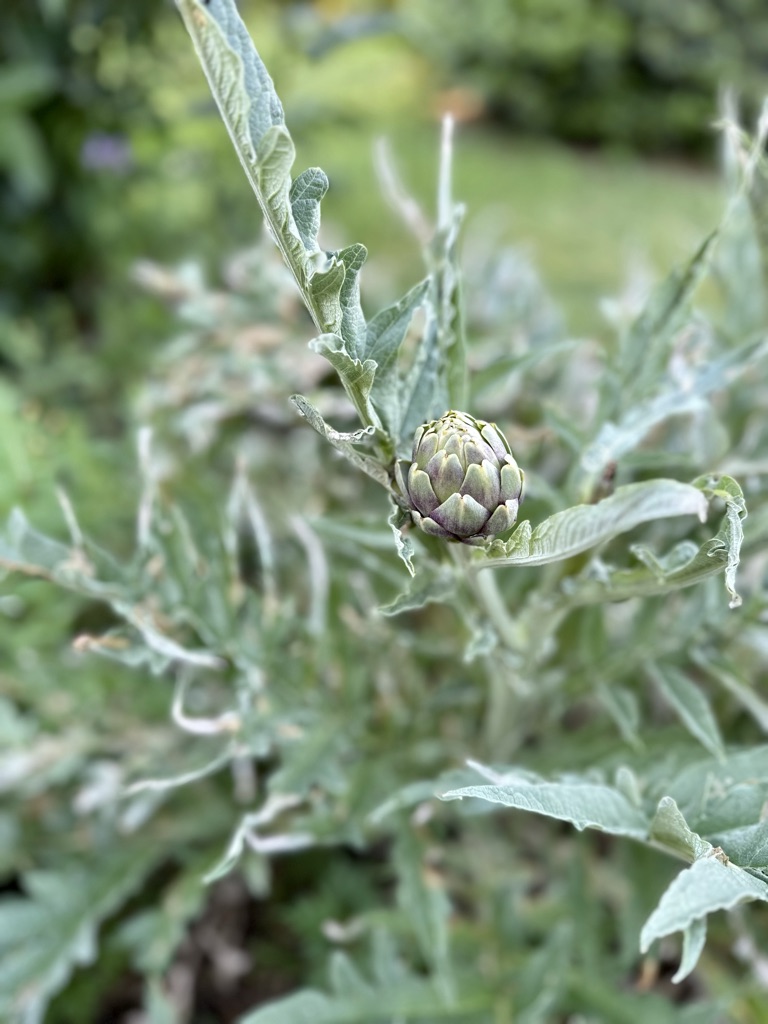
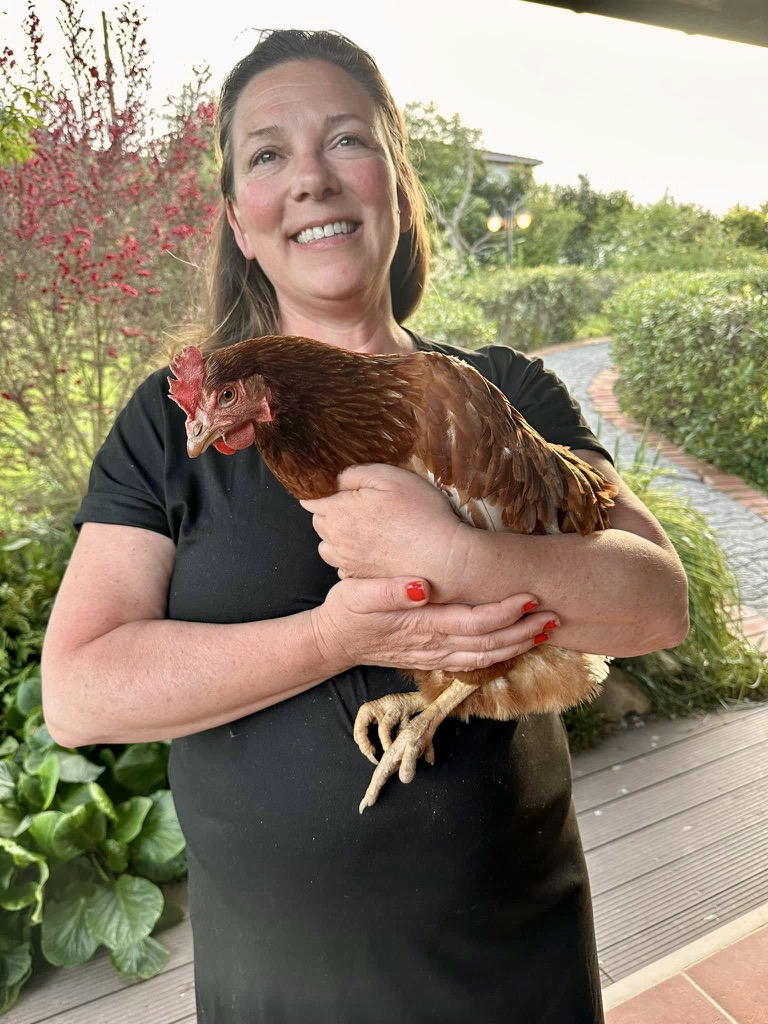
Laura and Roberto took us on a short tour of the house, accommodations and the land. The house was built over the past 25 years by Roberto using sustainable and ecologically friendly materials and methods and is run off the land. It is beautiful and the perfect place to enjoy all this land has to offer. Laura made us a delicious chocolate and orange cake and left us a bottle of red wine. After the long drive with no fresh groceries, I was ready for cake and wine for dinner!  Then we toured the property, and I knew we were somewhere special.  At first glance it looks like a stunning property to stroll and look at the views and as we toured, I realized this property was so much more. Everywhere you turn is something edible; fig and apple trees, grape vines, no till gardens full of lettuce, asparagus, onions and more. Herbs and flowers throughout the gardens. A teaching garden, outdoor bread oven and cider press. Chickens, sheep, a pig – even a peacock. I could stroll and wander here endlessly, and I was transported back to being a kid on a farm and joy struck me deep.

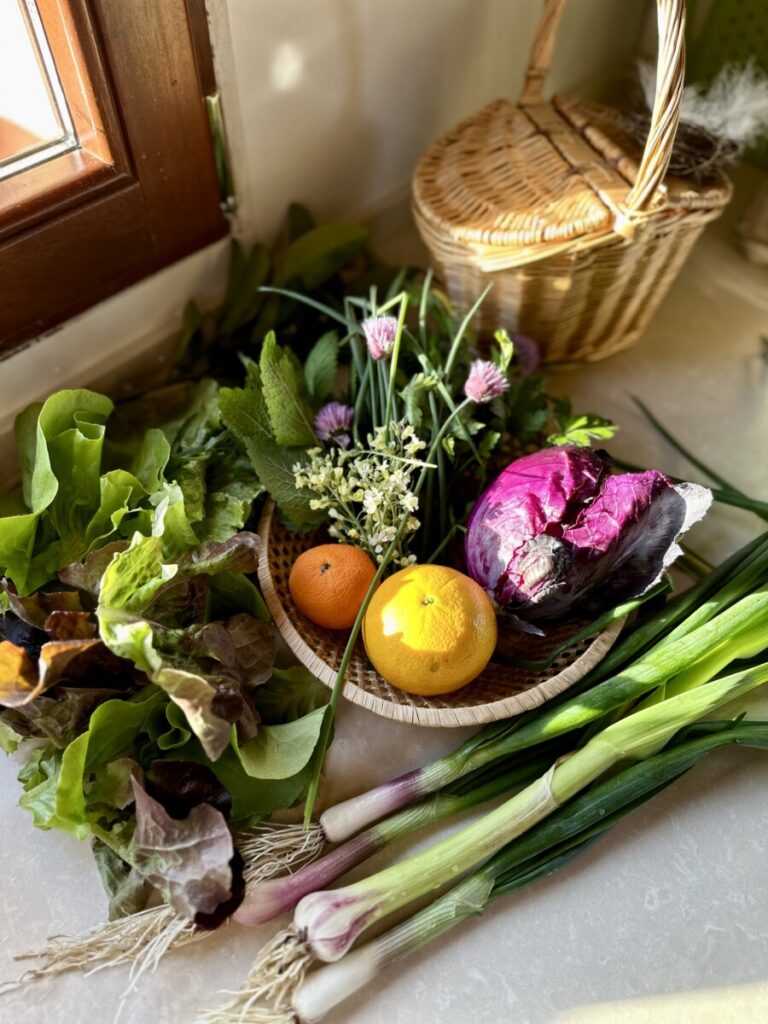
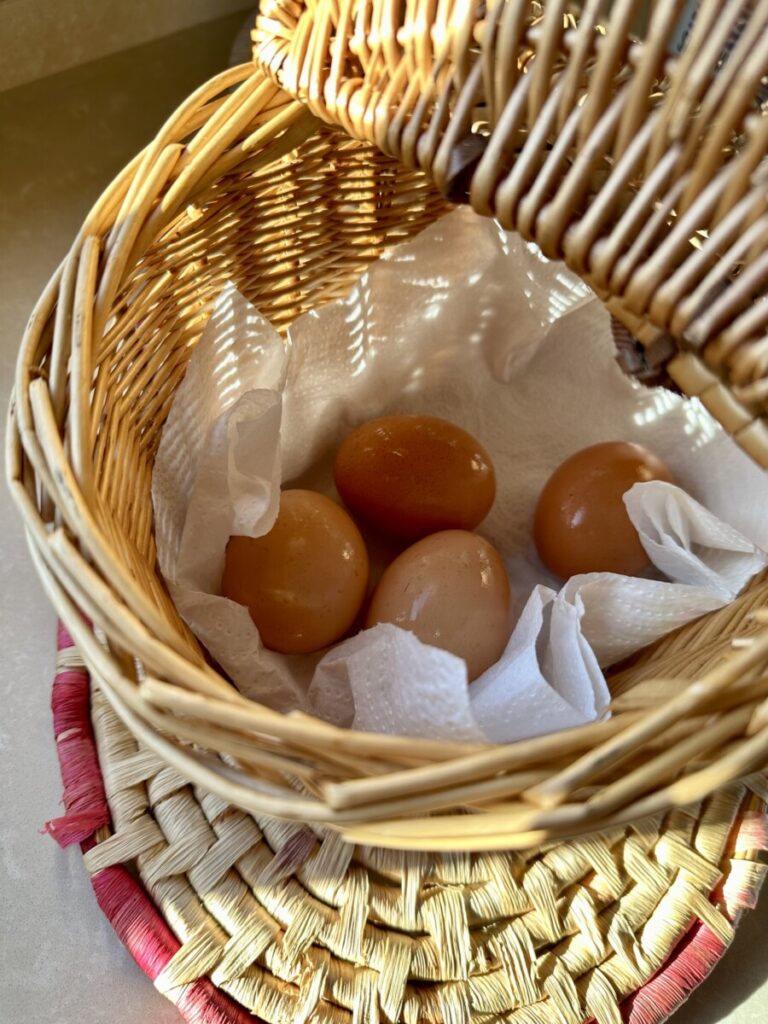
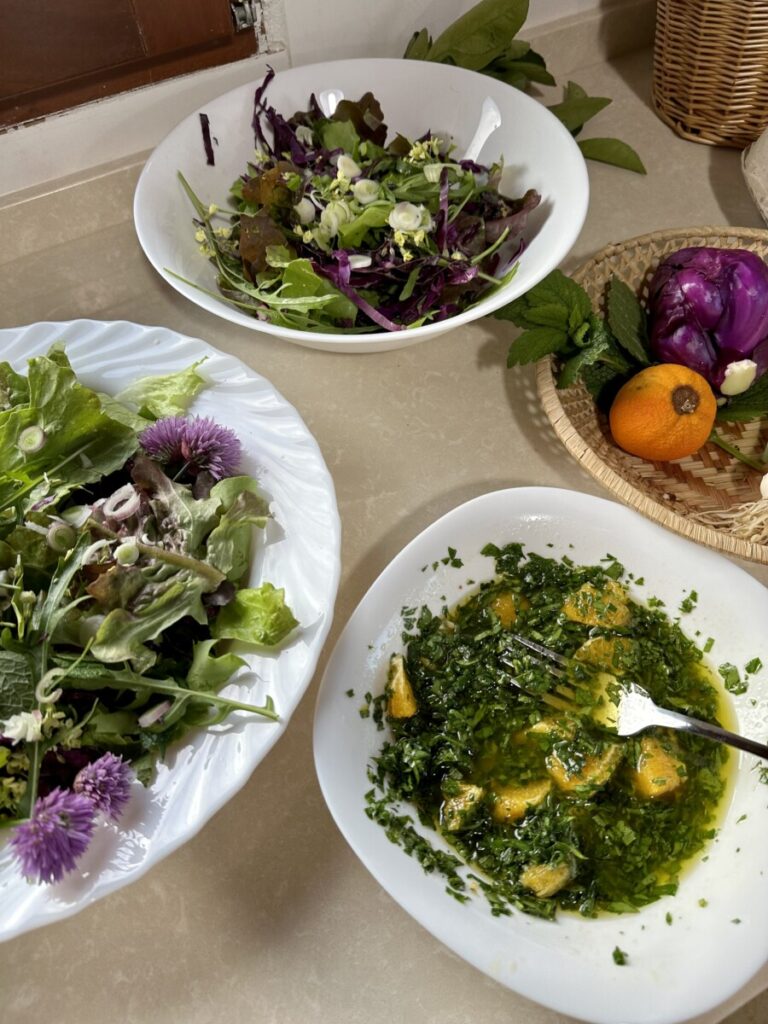
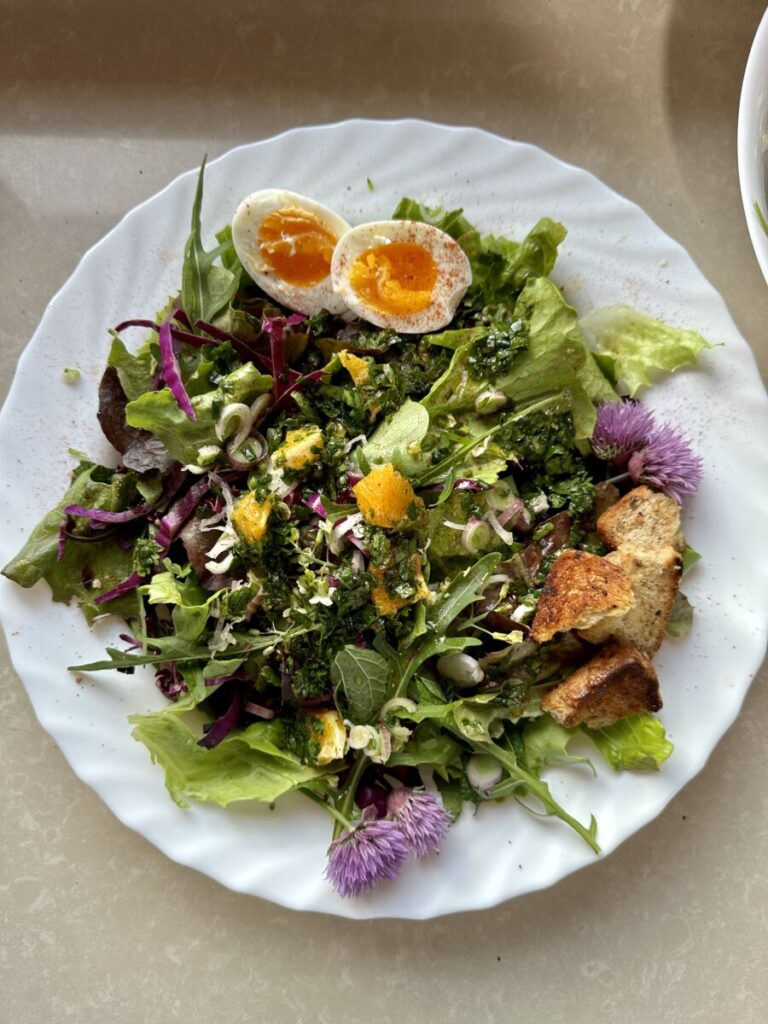
We weren’t having peanut butter sandwiches for dinner; I knew exactly what to do here!  I grabbed my tote and headed out on a gathering mission. Salad, onions, herbs, oranges, eggs. I set the table and we feasted on fresh salad with orange herb dressing, 6-minute eggs and homemade croutons (find the recipe here). The red wine was dry and refreshing and the orange cake was light, airy and not too sweet. (Find cake recipe here) I was in love with this place already.

The next day we headed into Bilbao, one of the larger cities in the Basque region to visit the Guggenheim Museum and dig into some Pinxtos which is what the Basques call tapas. We went to the old part of town to Plaza Nueva which is lined with bars with case after case of Pinxtos. Each bar has a case with a variety of small bites, little sandwiches called bocadillos, small toasts topped with all sorts of goodies, Spanish omelets, olives, sardines, croquets – I could have sat and ate for hours! We ordered some bocadillos with Iberico ham and tuna, they are very popular here and are little sandwiches with either tomato puree or mayonnaise, topped with different meats and cheeses. I chose Iberico ham, famous in Spain which I will tell you all about when I visit the south of Spain and Tuna. Some croquettes, small fried balls of purred potatoes with cheese and ham – cheese, ham, mashed potatoes fried – need I say more? We paired them with a few zurritos and txikitos, small glasses of beer and wine and sat out in the courtyard watching people.  This first taste of Spanish tapas did not disappoint. After a long day of roaming through Bilbao, we stopped for some gelato, finally made it to the grocery store and headed home.  We were so full of Pinxtos we headed to the garden and ate salad, and chocolate orange cake for dinner.

Laura’s Orange Chocolate Cake

That evening, sitting outside on the deck with a glass of wine, watching the bats dart to and fro like cute little bug killers, the cacophony of bird song was stunning. The owls and hawk screeches setting off the peacocks as the day birdsong changed over to the night birdsong.  A cow in the distance trekking from on pasture to the next, cowbell clanking. I was thinking about the plans for the next day. We had a day packed with gastronomy museums, wine and cheese tasting and I was going to try caracoles and salt cod. Basque country has its own local wines and cheeses and salt cod or Bacalao, is a way of life here and I was looking forward to trying them all – well not the salt cod or caracoles (land snails that are a Spring obsession in Spain) but when in Spain! Basque country is one of the major food regions here.  It has a large amount of Spain’s Michelin starred chefs and is credited for leading the new era of returning to local regional foods and celebrating them.  It is the perfect place to visit museums and cultural centers where you can explore so much history and knowledge of the food of Spain and I have been planning these activities for months. Then I remembered a quote from The Basque Book:

“If you know how to pick out good raw ingredients, you can cook Basque Food. . .  If you have a bottle of olive oil, a head of garlic, and a tin of tuna, you can make Basque food. Like a family, it is a cuisine that is much greater than the sum of its parts. And like a family it is basic, instinctive, and comforting. Give it your time and care and it will give you a home.”

The Basque Book

This quote brought me back to the feeling I was having about this land and the connection I was making to it; my instinct was begging me to explore this place and what better way to celebrate Basque food than walk the land you are on and use the food that is available right here?  I had a bottle of very good olive oil, loads of garlic, some delicious Iberico ham cutlets and acres of possibility. I wanted to stay.  So, I scrapped my plans and stayed home for the day. It was glorious!

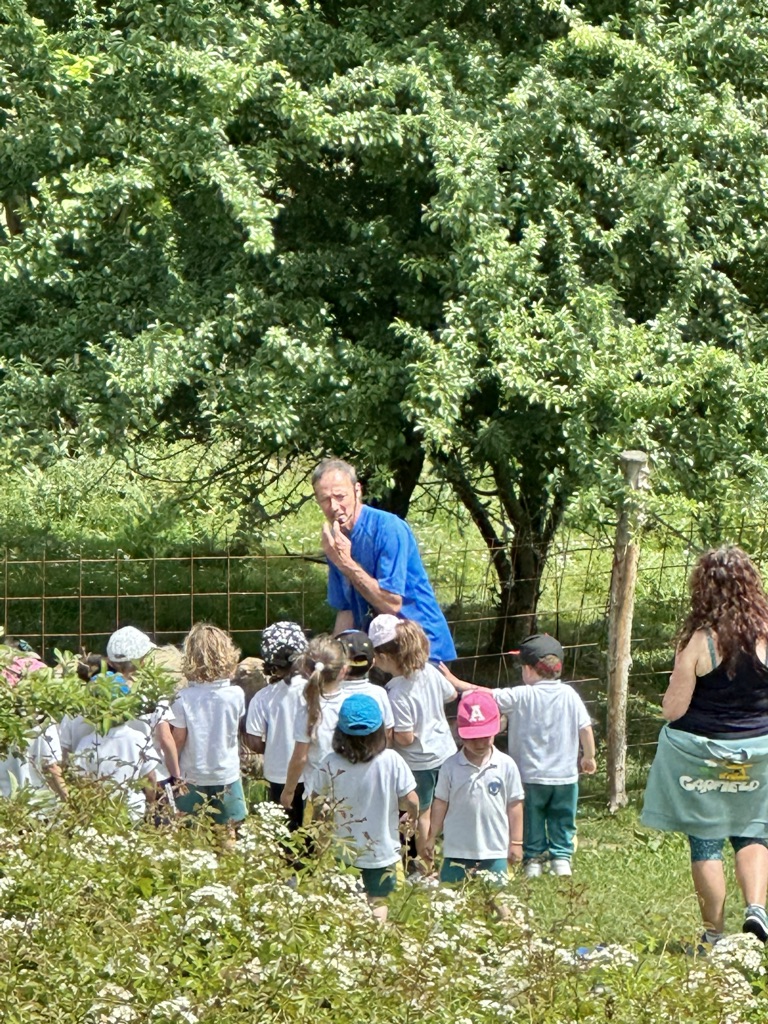
I went and said hello to the chickens in the morning, my cup of coffee (pretty much drinking chocolate at this point) in hand, dew still hovering, the sun bright and warm and I walked the land. I walked through all of the gardens, took note of the herbs, visited the animals, fed the lambs. I listened to the cheerful laughter of children as they spent the day on the farm, learning about sustainable gardening and farming. I stumbled into Sonja, the woman who helped us find our way when we arrived.  She toured the learning garden with me and taught me about the farming practices they have here. (see photo gallery for more information).

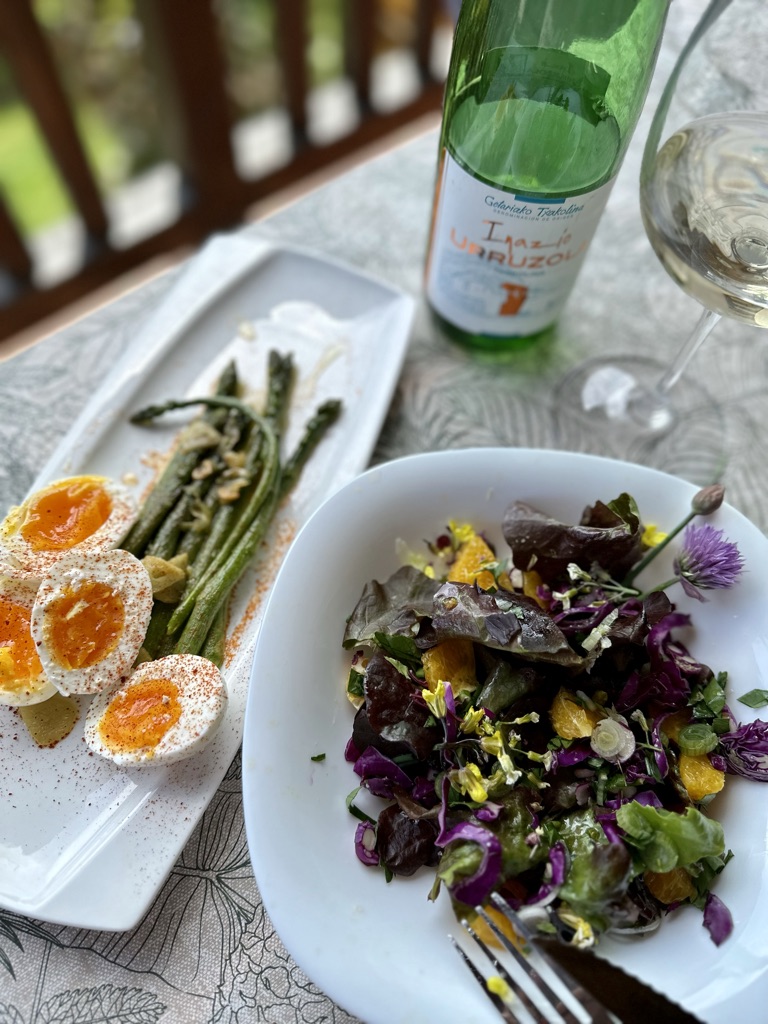
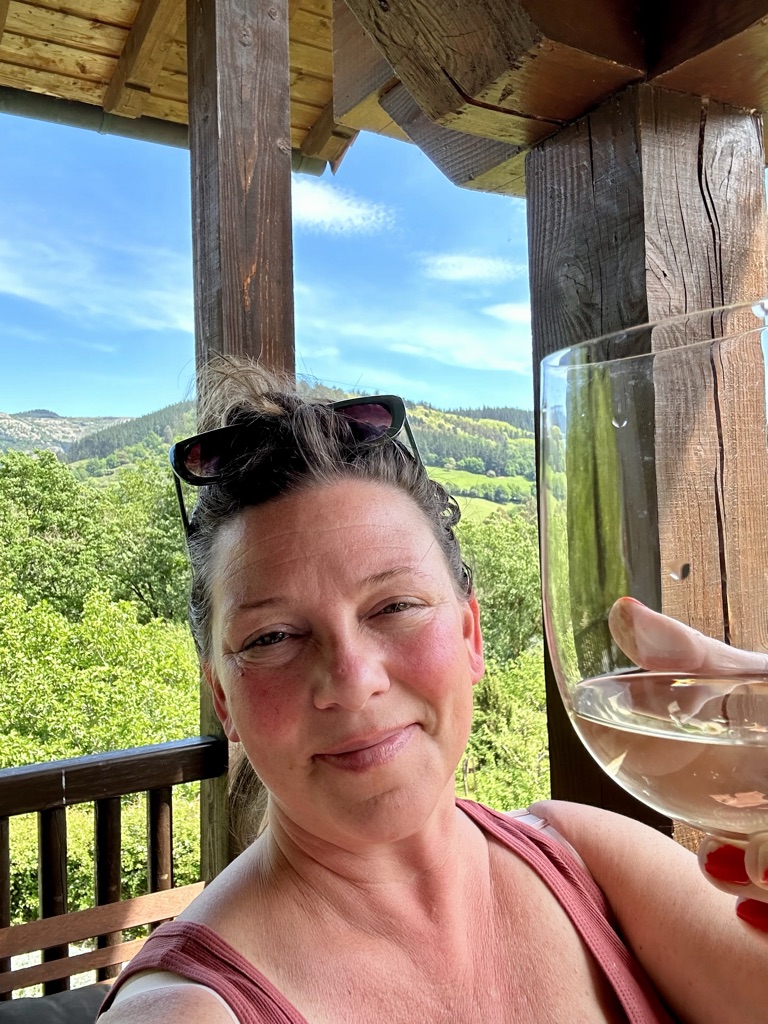
I headed to the garden for lunch, sauteed asparagus with garlic and olive oil, 6-minute eggs with paprika, more salad – I can’t get enough – and a glass of local Txacoli (cha-co-lee) white wine, dry and effervescent. It was so delicious (find recipe here). Two things fill my head as I write; one, I don’t feel like I have enough space on this post to describe what fresh asparagus, picked minutes before you eat it, tastes like – the sweet tenderness is unbelievable, and two, I don’t have enough space on this post to tell the story of how this brings me back to the dreamy parts of me as a child and morning dew and chickens and sunlight through apple blossom trees and eating garden vegetables brings me overwhelming joy, those are stories for another outlet. Just know that I felt I was home.

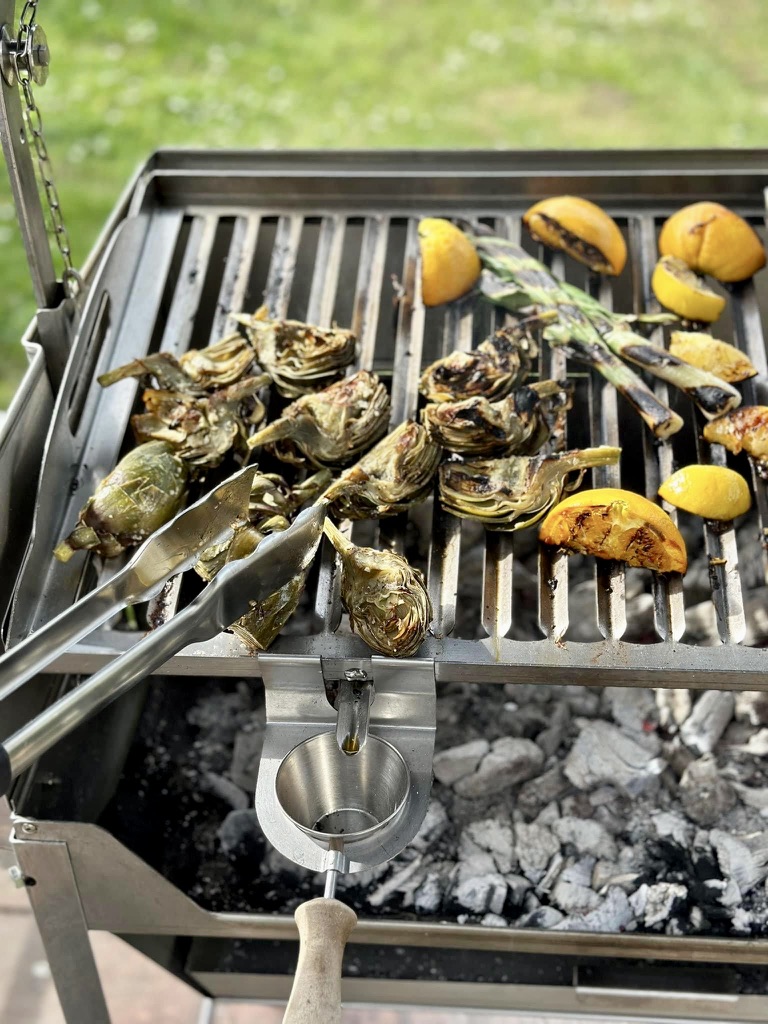
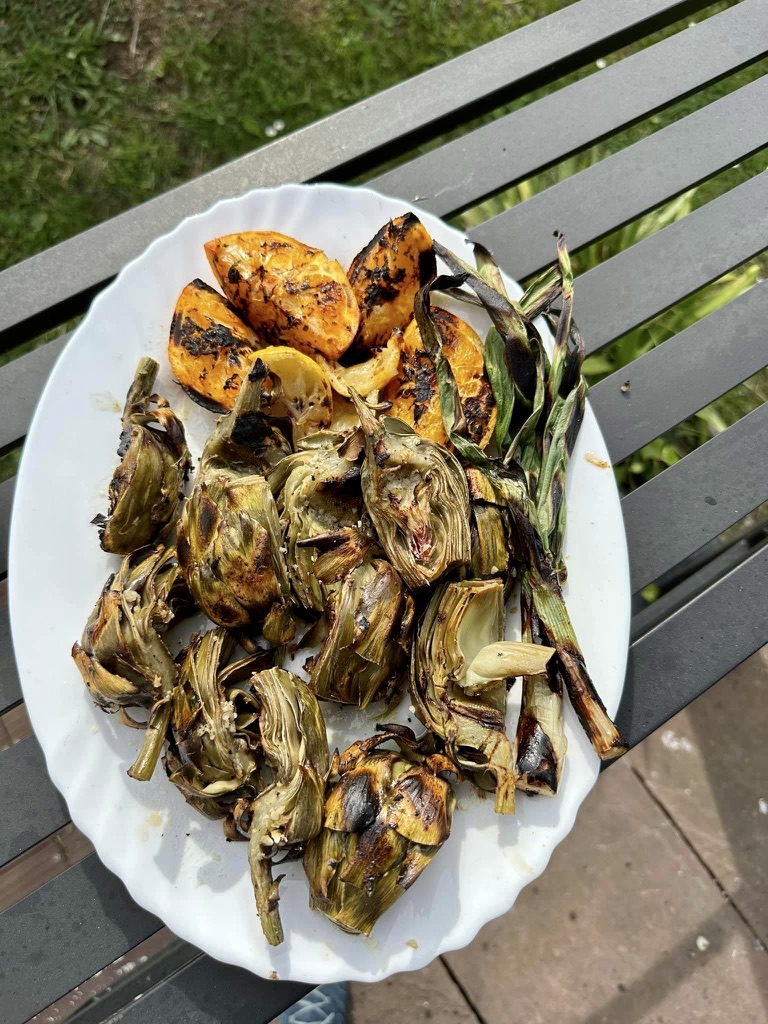
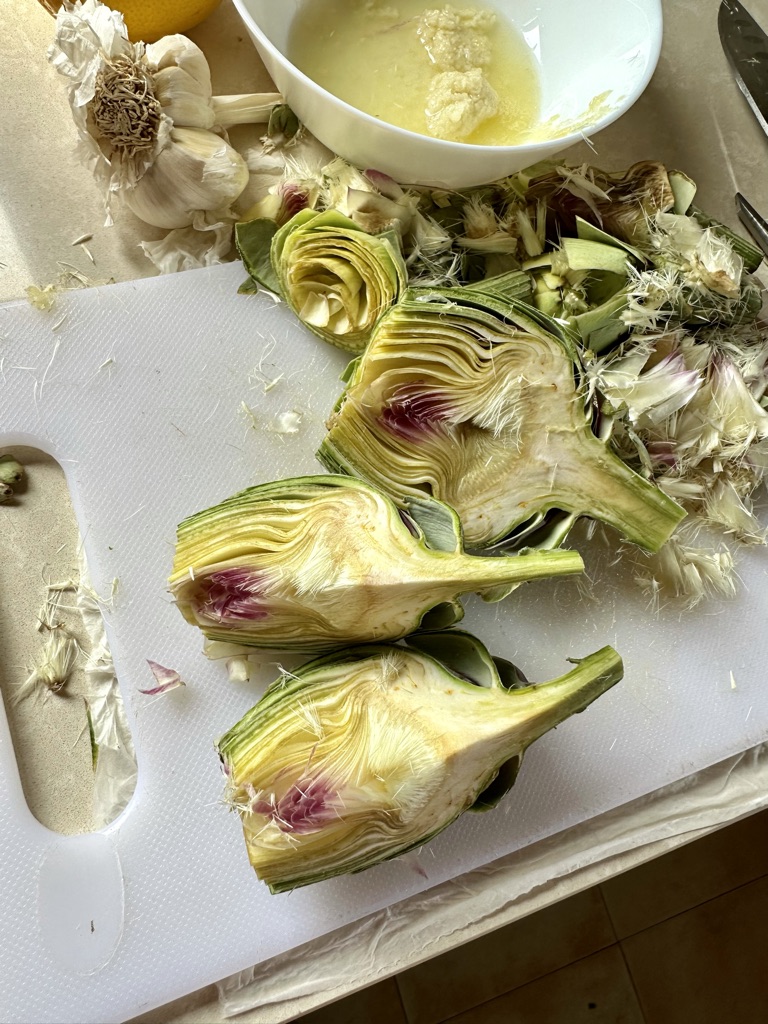
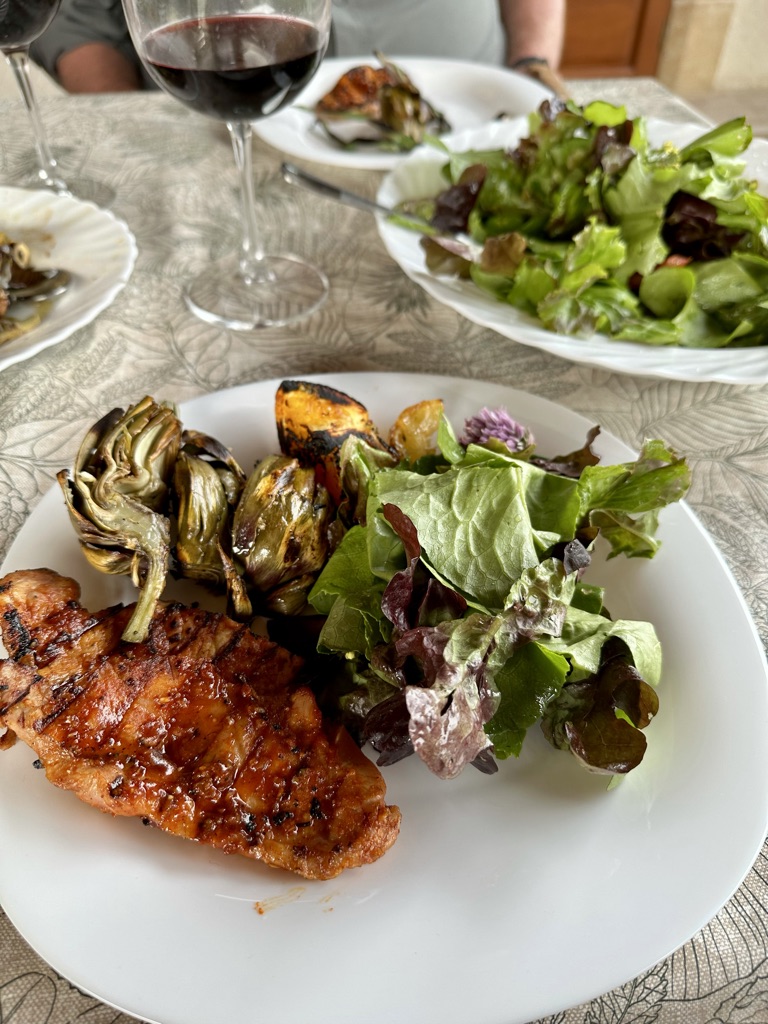
Back to the garden for dinner. Baby artichokes or alcochoas grilled with garlic and orange, Iberico ham cutlets with a honey paprika marinade, salad and potatoes – patatas. (find recipe here) and a bottle of Rioja – and of course more orange chocolate cake! We sat outside on the back porch and enjoyed the delicious meal and evening twilight.

The next day we were leaving, a bittersweet goodbye to this place, I walked the property with my coffee taking in every minute.  I savored every bite of the last slice of cake for breakfast and took my bags to the car.  Roberto and Laura came over to see us off and I got to spend some time with them, they are lovely and answered the myriad of questions I had!

Anytime I travel I know that most everywhere I travel I will not return to a place, it is part of traveling – there are places I wish I could go back to but I know there is more of the world I want to experience.  This is one of the rare places in the world I will make a point to come back.

As I am wrapping up my second week of travel, I am learning what works for me in terms of documentation. Every day is fast moving and there is so much to take in, so much to share and I have done so much preparation for these moments my head is spinning. I have been taking notes and photographs and reading, what I struggle with is consolidating all the information into a post while I am traveling. This is all new for me and I am reminded that this is a learning experience, to let myself become immersed and don’t struggle with what it is supposed to look like. So with that I am letting myself continue to do what is working for me in terms of documentation and we shall see how that plays out through the length of this journey. 

We are off to drive across the country, I can’t wait to see what else Spain has in store for me!

A Jet Lagged Check In from Toulouse.

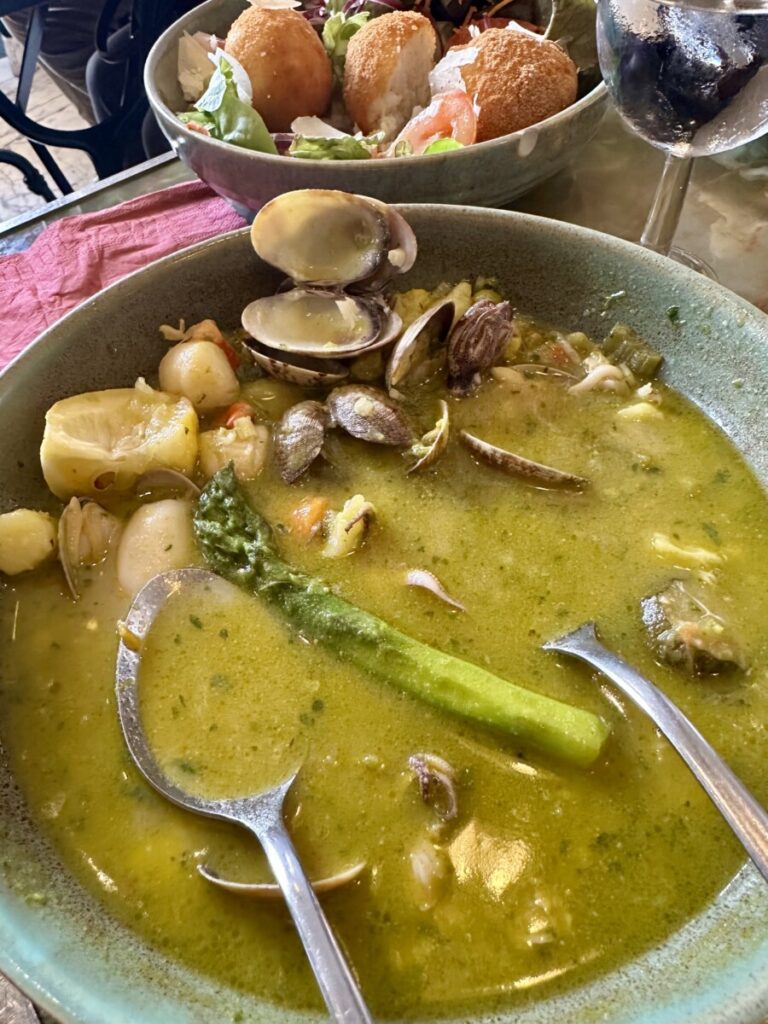
Hello everyone! We made the journey, landed safely in Barcelona and made our way up to Toulouse for a few days before heading back to Spain. It was a misty cool day in Toulouse and the jet lag still has a little hold on me – the best cure was a stroll through the Marché du Crystal and a hot bowl of soup. The market was beautiful, I could have roamed for hours! I wish I took more pictures, I was a bit entranced, combined with the jet lag I pretty much roamed like a happy zombie staring at everything. I will be visiting another market tomorrow and for lunch I will be having cassoulet – stay tuned for more writing, pictures and plans from me – I am going to bed!

Here We Go!

I want to pinch myself – is this real? Sitting in a Chicago cafe, watching the wind whip the snow flakes with the cherry blossoms I can’t believe I am creating a blog to document EATING THROUGH SPAIN! I get to read food journals, cookbooks, talk with farmers, cooks and people while I travel through Spain and eat, eat eat! It gets better, I get to share the stories, adventures and discoveries with you, Eeek! In a few short days I will fly off to sunny, delicious Spain ( a touch of France too – just because) where I will eat and explore all things food! This is the spot where you get to join me.

In preparation I have been reading through every book and article I can get my hands on. I have so many questions and thoughts and interests. Alas I can not read them all and have narrowed my course books to a few that I will share throughout my travels. Stay tuned!