When I was a little girl, my summers were red. Memory of that time is tinged the colors of a hot day’s sunset; yellow, orange, red. Every summer it seemed my mother grew tomatoes in her garden. The green vines would outstretch, twining around their thin metal cages. It was an exciting thing, watching a garden grow. I wondered at how the small, green fruit would slowly change colors to the bright reds and oranges of cherry tomatoes, hanging like miniature suns in Mama’s garden. She grew a few kinds, but the cherry tomatoes were the crown jewels.
Small hands reach towards the soft, but sturdy vines, ready to pluck tomatoes from the green’s hold. My mom is with me, her hair is still long in this memory, though I’m sure she’s cut it short by now. She watches me reach for the small, plump cherry tomatoes. Watches as I try to tug one loose, then give up on my efforts for fear that my small struggle will somehow uproot the whole plant. Mom proves my teacher once again, breathing out in either amusement or subtle exasperation before telling me the proper way to pick a tomato.
“Twist it gently when trying to pull it, and if it comes loose that means it’s ripe.” She demonstrates and I study her careful grace. “If it doesn’t come off right away, leave it there. That means it isn’t ready to be picked.”
We go back inside with a bowl full of orange-red sunspots.
Cherry tomatoes were snacking tomatoes, though sometimes Mom would use them in salads. There’s an Italian cucumber & tomato salad Mom’s always been fond of, though it took me a while to get used to it. Despite disliking the tang of the red wine vinegar for this dish, I always delighted in the pieces of cucumber and halved cherry tomatoes covered in herbs.
The big tomatoes, which were never abundant in Mom’s garden, were used for meals like sandwiches, steak, atop salads, caprese salad. The rounded tomatoes, I confess, I used to eat like apples on sunny afternoons when school let out. The ones from the store suited me fine, but I preferred garden fresh tomatoes if they grew.
“I’d never eaten a store-bought tomato until I left for the Navy,” my father tells me during one of our phone calls. Growing up in Northern California, it was the perfect climate for his mom’s multitude of tomato plants. He told me her garden was bursting with life, their backyard filled with tomatoes, honeydew melons, green onions, and Korean hot peppers. An urban paradise. Dad recounted the delectability of those home-grown tomatoes, sweeter than anything sold in the grocery store. Although I myself never saw this fabled garden, I imagine the tomatoes to be as large as softballs and as red as a painted sun.
Unsurprisingly, the most common way we ate tomatoes was through pasta dishes. Baked ziti was my favorite, the penne mixed with creamy ricotta cheese, topped with fresh mozzarella and fresh basil leaves, but of course, the sauce was the most important part. From eggplant parmigiana to regular spaghetti, the dishes wouldn’t be much without a good red sauce. And if you’re Italian, you usually have a recipe in your back pocket.
I remember the first time I asked Mom to show me how to make the family’s spaghetti sauce. I was 18 years old and my grandpa had just died. Mom drove up from Portland to Olympia to pick me up—I feared if I tried to drive myself, I’d only end up crashing the car, done-in by my own grief. I was barely two months into my freshman year at college and I had spent almost every weekend going home to see Grandpa in the hospital.
It was jarring to see him so small and frail, this man who’d once let his grandkids climb all over him like a jungle gym. I kept thinking to myself, I swear he was taller. But it was simply that I used to be smaller, younger. He would tell me he loved me before I left, that he would always love me. He said it in a way that seemed he would die the moment I stepped foot outside of his room. I would tell him “I love you, too” because I was afraid of the same thing. I remember him most clearly wearing wine-red hospital clothes.
I don’t remember much of the time between Mom picking me up and Grandpa’s funeral, but I remember seeing red. For his wake, to be held at my Auntie Dewaina’s house, Mom would be making spaghetti and she would be teaching me how to make the sauce. Despite my grief—or maybe because of my grief—I was still worried about my academics. I was in the program Eating in Translation with Professor Sarah Williams, my first foray into food studies, and was anxious to do well. My in-program ILC was all about family recipes, and so in my grief I became my mother’s student once more.
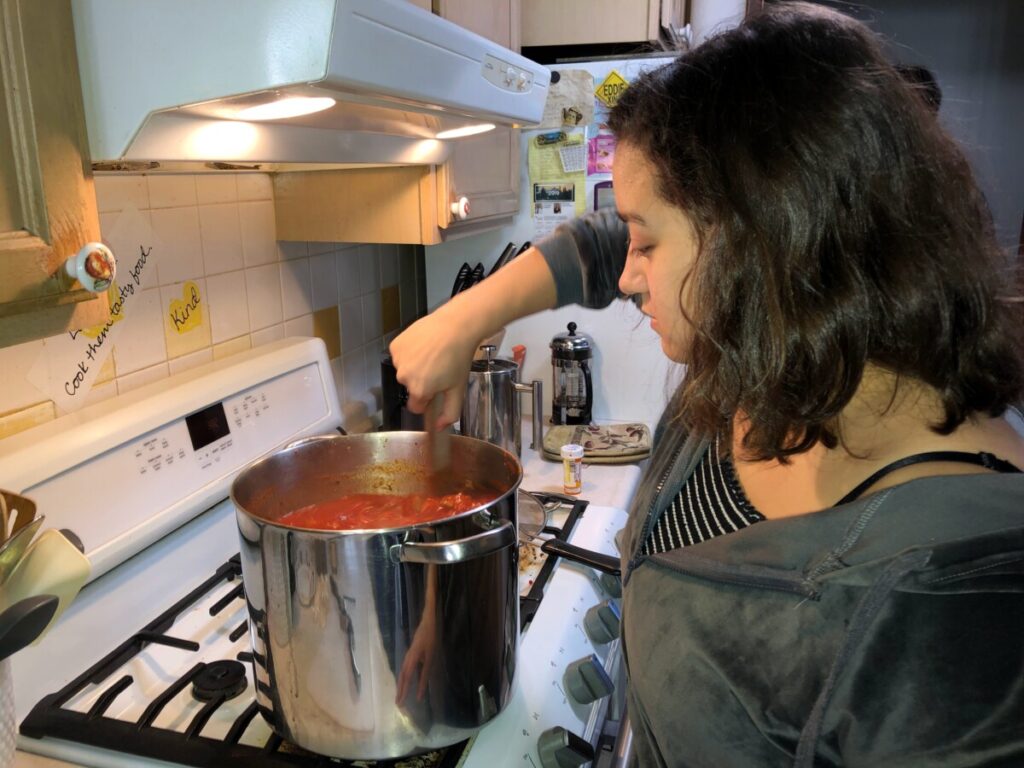
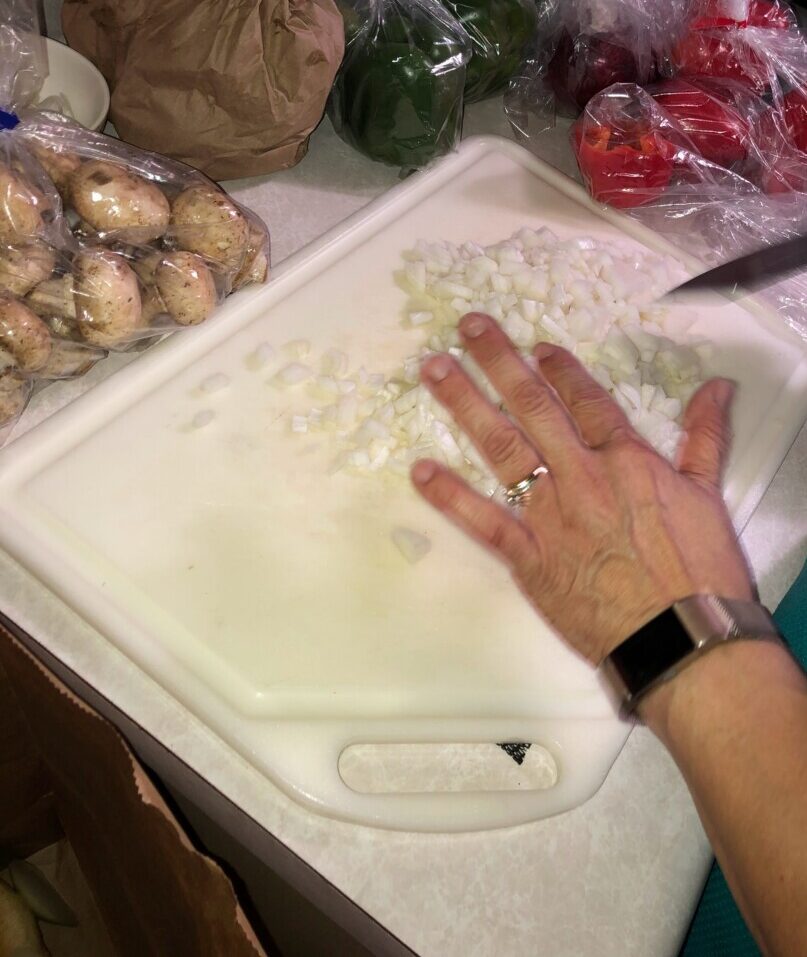
The family sauce is a red sauce you typically see paired with spaghetti. It has its base ingredients that never change—tomatoes, garlic, onions, sugar or carrots to sweeten the acidic taste, oregano, salt, and pepper. What gets added in varies from person to person, Mom being partial to mushrooms, bell peppers, and red pepper flakes in her sauce. According to my mom, a characteristic of a true Italian spaghetti sauce is the use of pork as the meat. She’s not sure if it’s simply a regional thing (our family being from the southern part of Italy) or just a general rule, but every other Italian she’s come across also uses pork in their sauce. Pork shoulder is the most typical cut of meat to use, but ground pork is acceptable in a pinch. Never beef. Mama told me, “Beef is for making meatballs, and even then, it’s a mix of pork and beef.”
We use canned San Marzano tomatoes as well as tomato puree. I watched as Mom reached her hand into the Cento can and pulled out whole tomatoes. She hovers them over the large pot, the bottom of which would already be covered with sizzling mushrooms, bell peppers, onions, and browned pork. She squeezes her hand, crushing the tomato. Red spills from between her fingers into the pot before she drops in what remains of the tomato. It’s carmine, tangy and sweet.