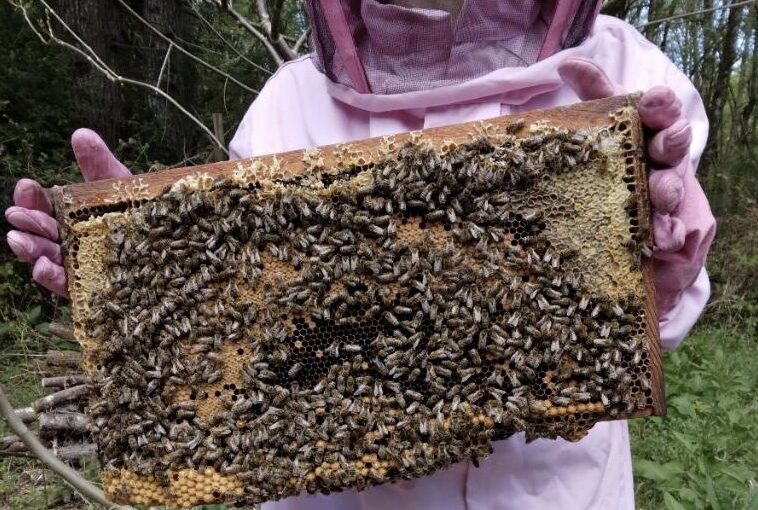
Beekeeping is a growing agricultural sector in Jamaica, contributing to both biodiversity and the economy. The Ministry of Agriculture and Fisheries has initiated programs to encourage investment in beekeeping and the establishment of apiaries, recognizing the role of bees in pollination and honey production. Local projects, such as those by Yerba Buena Farm, focus on sustainable beekeeping practices and community education, aiming to enhance honey production and support environmental conservation. Bee keeping is first seen as a medicine then as a luxury due to sugarcane being the primary form of sweetener used throughout the island. Jamaica has an amazing climate for keeping bees and faces little issue with the exception of foulbrood and varroa mites. In addition to this due to the island being fairly small there are concerns of inbreeding within hives. Inbreeding can lead to a weakened colony.
In Jamaica, I found out through talking with Lise that large scale mosquito spraying is done to try and control the spread of diseases like dengue, Zika, and chikungunya, which are transmitted by mosquitoes (Ministry of Health and Wellness). However , this poses threats to both people and animals. Due to the spraying it immensely affected her hive and all of her bees died. This is from the Insecticides used. The exposure to these pesticides can cause immediate death or can disrupt navigation and foraging behaviors, leading to disorientation, difficulty returning to their hives, and reduced food sources, which weakens the colony. Pesticides can also contaminate hive products such as honey and wax.
The chemicals used in Jamaica’s mosquito control include Malathion, an organophosphate insecticide; Permethrin, a synthetic pyrethroid, and Resmethrin, another pyrethroid. Malathion, Permethrin, and Resmethrin are insecticides commonly used for mosquito control, but they belong to different chemical classes and have distinct mechanisms of action: Malathion works by inhibiting acetylcholinesterase, an enzyme essential for proper nerve function in insects. This leads to the overstimulation of their nervous system, causing paralysis and death. Permethrin is a synthetic pyrethroid insecticide that affects the nervous system of insects by disrupting sodium channels, leading to paralysis and death (Francis, Sheena et al.). And resmethrin is similar to permethrin, paralyzing and killing the mosquitos upon contact. All of these are highly toxic to bees.
In addition to mosquito spraying, ants seem to be the other threat to beehives in Jamaica. The different types of ants include Fire Ants (Solenopsis spp.), which are aggressive and can attack bees, feed on honey and larvae, and cause stress that may lead bees to abandon the hive. Sugar Ants (Camponotus spp.), they steal honey, in large numbers. Argentine Ants (Linepithema humile), invade hives and disrupt the colony. They are various different methods taken to help prevent ant infestations. Applying Petroleum Jelly around the base of hive stands, creating ant moats with soapy water or vegetable oil, and regularly monitoring for ant trails or nests. Additionally, removing nearby nests, using Diatomaceous Earth or cinnamon, and ensuring the hive area is clean of spilled honey or sugar can help deter ants. Other issues Jamaican beekeepers face is from intense rainfalls and costs of operations.