
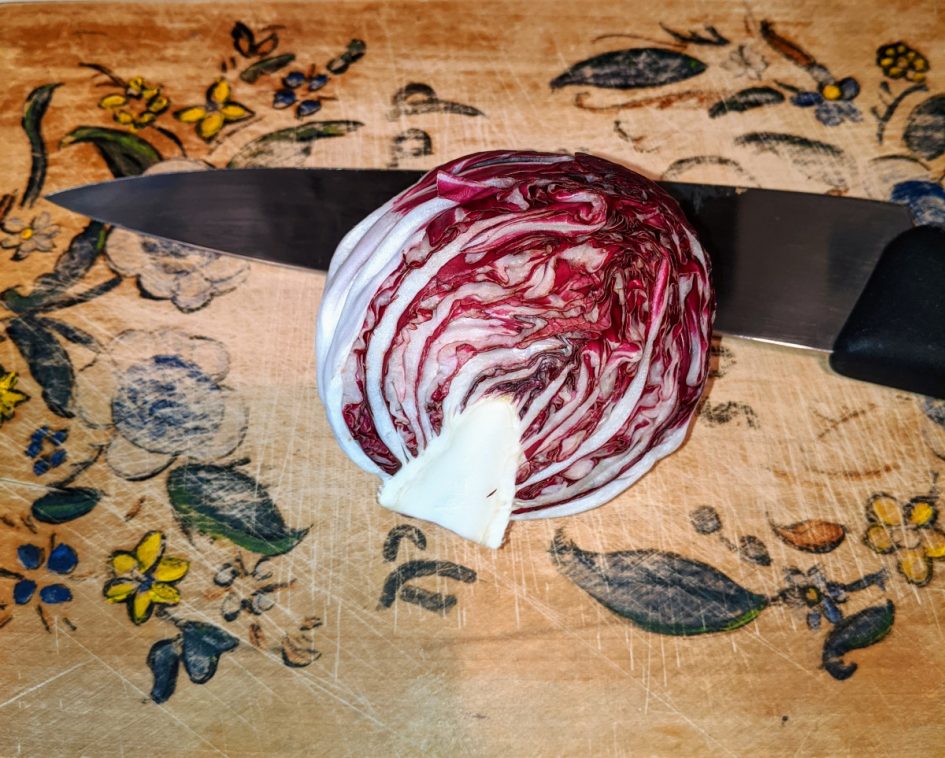
Photo by Val
#5b: (un)Natural Histories
Growing Chicory in the Garden bulletin: https://digitalcommons.usu.edu/cgi/viewcontent.cgi?article=1276&context=extension_curall (Links to an external site.)
NPR, 2-minute listen on midwestern soil erosion https://www.npr.org/2021/02/24/967376880/new-evidence-shows-fertile-soil-gone-from-midwestern-farms
Building Soils for Better Crops: https://www.sare.org/wp-content/uploads/Building-Soils-For-Better-Crops.pdf
#5c: Regenerative Agriculture
Chicory is native to Europe, North Africa, and Western Asia and was introduced to the US in the late 19th century. Belgium, France, Germany, and the Netherlands cultivate chicory extensively. Chicory is a cool season crop and is best grown in fall and winter in warm winter regions and in spring and early summer for cold winter regions. Chicory likes temperatures between 45 and 75 degrees. It is best planted in fertile and well drained soils and in the full sun. It prefers soils with a pH of 6.5 to 7.2. It is best to keep the plants moist to prevent the development of bitterness, chicory usually requires 1 to 2 inches of water per week depending on the climate and soil growing conditions. For chicory, also called witloof, grown for its leaves, it should be harvested while the leaves are tender and young. For chicory growing for its roots, it should be pulled from the soil right before the last frost date. Commerical seed is used mainly outside the area of origin. Many varieties are open pollinated, and this must be kept in mind when seed saving. On farm seed saving is a comon practice in Italy, which means constant varietal maintenance and slection is a requirement based on environmental constraints. Downy mildew, Anthracnose, Fusarium wilt, Septoria blight, White mold, Bacteral soft rot, Bottom rot, Slugs & snails, Damping-off, Aphids, Darkling beetles, Flea beetles, Leafminers, Loopers, Thrips: control weeds, remove plant debris, promote good air circulation, rotate crops, well drained soil/ raised beds, plant with other greens, just not peas or beans, and water in the morning. Cooler temps will produce sweeter tasting chicory, forced winter chicory also creates more of a sweetness to the plant. You want to make sure you soil is loose, well drained, and moist, but not wet- make sure to water the base of the plant and not its foliage. Chicory can withstand light frosts, but heavy freezes can cause damage to the taproot, if there is a worry about deep freezes it is best to plant the winter chicory in a raised bed for warmth and extra drainage. The PNW mirrors a similar climate of that of Veneto, Italy, the native area of radicchio. Winter chicory helps keep the soil covered, intercropping winter chicory with brassica or winter clover can be helpful to save the topsoil during the rainy season. Planting radicchio and chicory reduces monocultures, these monocultures can lead to pests and disease in brassica. They also give farmers another winter crop giving them a source of income, along with adding color and unsualality to the otherwise dull winter brassicas. Radicchio and chicory are a hearty plant and can be stored for periods of time, giving the farmer and extended time to sell the crop.
#5d: Case Study Tasting Research: Radicchio
Radicchio Tasting Form – March 3rd, 2021
- Flavor Rating (0 – 5)
a. Forced Treviso Tardivo- 2
b. Belgian Endive- 3
c. Frisee- 4 - Bitterness Rating (0 – 5)
a. Forced Treviso Tardivo- 3
b. Belgian Endive- 2
c. Frisee- 1 - From the perspective of a consumer, what is your opinion, solution, and/or concern about having access to local vegetables throughout the winter months? Living in a place where we have cold, snowy winters, I really wish local veggies were more easily available. I would much rather support my local farmer, than an unknown big corp, plus that way you know exactly what they are using on your food.
- From the perspective from a grower/farmer, what is your opinion, solution, and/or concern about having access to local vegetables throughout the winter months?
If you are able to produce veggies in the winter, it is a great supplement of income until you can sell spring produce. - Do you think it is always feasible to only shop for vegetables that are in season for your local region?
In some places you would end up very limited in the product available or not have any at all, because of winter weather in the area, so sometimes its not possible to stay seasonal and local. - Having watched, listened, and read about radicchio over the last two quarters, what recipes, meals, and/or products are you excited to try, or have tried? Were they a success?
I would be willing to try a radicchio salad with goat cheese and a sherry vinaigrette. Roasted radicchio with honey, goat cheese or blue cheese, and a balsamic vinaigrette. Add in apples or craisins, walnuts or pecans. - Now that we have been exposed to many different foods and drinks, and have a deeper understanding of our own perception of flavors, how would you ‘build your lexicon’ in relation to the flavor complex of radicchio? What categories and/or words might you use? Use the CBN’s Winter Squash Flavor Wheel (squash wheel) for inspiration.
Savory, sweet, nutty, earthy, vegetal
#5f: Sustainable Entrepreneurship
Meat Alternatives
Do you eat meat?
Yes- 60%
No- 40%
Are you willing to give up meat?
Yes- 73.3%
No- 20%
Unsure- 6.7%
Would you be willing to eat lab-grown meat?
Yes- 26.7%
No- 36.7%
Unsure- 36.7%
Types of meat alternatives
- Lab grown meat
- Memphis Meats
- Plant based meat
- Beyond Meat
- Alternative meat
- Impossible Meat
By finding more sustainable ways to replace meat we can reduce the need for human labor, lessen disease transition, and it can be more affordable.
Leave a Reply