
#4a: Film Series: Program Questions in Scenes and Overview
Week 7
- Three Feet Under: A Duckumentary, Evergreen Library streaming service (Dir. Justin Bookey, 63 min, 2003).
- Why this $300 clam is so important to Native Americans and China (Al Jazeera, 20 min, 2019)
- Meet Eddie Huang, the memoirist who inspired ‘Fresh Off the Boat’, Soraya Nadia McDonald, Washington Post, 2013. Scroll down for film trailer (3 min).
- How Chef Jacob Harvests and Cooks Wild Seaweed (Eater, 11 min, 2020)
Week 8
- Introducing Humboldt State University’s New Seaweed Farm, Humboldt Online (2 min, 2020)
- 3D Ocean Farms with Bren Smith of GreenWave (Classy Org, 20 min, 2016)
- Meet the Women Growing the California Seaweed Economy, Civil Eats (website), Alexander Sammon (2018) along with viewing Zanzibar’s Seaweed (5 min, 2019) and Zanzibar’s Female Seaweed Farmers (5 min, 2019), CNN on Evergreen Library’s AVON streaming service (log in required)
- Seaweed Farming in Washington State Agenda: Videos of UW Sea Grant Conference. Choose any 90 minutes of talks, but begin with “Seaweed Farming Overview: Species and Applications” (Thomas Mumford, 44 min, 2019)
I choose minute 5:23 to 7:39 from 3D Ocean Farms with Bren Smith of GreenWave and I will be calling this scene The New 3D. During this scene Bren Smith is discussing the importance of his 3D ocean farming. Bren’s shellfish and seaweeds are zero input foods, because they do not need fresh water, fertilizer, feed, or aired land to grow. These foods, farmed in this system, will be the most sustainable and most affordable food for the world with the coming climate change. Oysters filter up to 50 gallons of water a day this helps pull nitrogen out from the ocean. Kelp soaks up to 5 times more carbon than any land-based plant, earning them the name the sequoia of the sea. Kelp produces 5 times more ethanol per acer than corn does, The New Yorker even called kelp the culinary equivalent of the electric car. These 3D farms also help out the ocean ecosystem by creating artificial reefs and storm surge protectors. Over 150 different spices are attracted to these farms and feed and thrive within them. These zero input crops can also be used to replace land-based feeds and fertilizers. By feeding cattle a kelp-based diet, it can reduce up to 90% of methane outputs. Kelp also creates a delicious umami and slightly salty beef! These farms are helping to transform pillaging fishers to restorative ocean farmers, thus helping to create a new climate cuisine that builds a bridge between land and sea food systems. By creating a small footprint farm, which uses the full water column by growing vertically, we can help restore the ocean, instead of depleting its ecosystems. There is almost no other large scale farming that creates a negative carbon footprint. Imagine if the boats that are used to get to these farms were using a combo of wind and the biofuel from kelp, talk about no carbon footprint! These farms are also helping ease the plight of ocean acidification, along with curving over fishing and the pollution of local waterways.
#4b: (un)Natural Histories
Smithsonian article, Geoducks, Happy a Clams
https://www.smithsonianmag.com/science-nature/geoducks-happy-as-clams-52966346/ (Links to an external site.)
Geoduck Aquaculture:
https://en.wikipedia.org/wiki/Geoduck_aquaculture (Links to an external site.)
Detailed examination of geoduck natural history and harvest sustainability by Seafood Watch
https://seafood.ocean.org/wp-content/uploads/2016/10/Clams-Pacific-Geoduck-Mirugai.pdf (Links to an external site.)
PLASTIC in the marine environment – Seafood Watch downgrades recommendation for WA geoduck
https://www.kitsapsun.com/story/news/local/2017/02/05/farmed-geoducks-sustainability-rating-takes-hit/97410252/
Ocean acidification and its effect on marine biodiversity
https://www.khanacademy.org/science/biology/biodiversity-and-conservation/threats-to-biodiversity/v/ocean-acidification-and-biodiversity-impacts (Links to an external site.)
Commercializing seaweed as cow feed to reduce methane produced by cows
https://www.csiro.au/en/News/News-releases/2020/New-company-puts-foot-on-the-gas-to-reduce-cows-methane (Links to an external site.)
Young entrepreneurs taking on cow methane issue with seaweed feed
https://www.forbes.com/sites/jeffkart/2020/11/21/hawaiian-seaweed-makes-cows-90-less-gassyand-thats-good-for-climate-change/?sh=11721b005c4b
#4c: Regenerative Agriculture
Geoduck
- Native to the coastal waters of Western Canada and Northwestern US
- Considered the largest burrowing clam
- The oldest recorded geoduck is 168 years old, the average life span is 140 to 150 years old
- They have few natural predators
- Sea Otters
- Starfish- exposed siphons
- Humans
- Eggs, larvae, and juveniles have a higher rate of mortality
- Juvenile predators
- crabs
- starfish
- flatfish
- gastro pods
- Geoduck are broadcast spawners and spawn spring to late summer
- 95% of all harvest geoduck is exported to China
https://nam02.safelinks.protection.outlook.com/?
https://nam02.safelinks.protection.outlook.com/?
Seaweed
- Over 10,00 species of seaweed
- Brown
- Green
- Red
- The darker the color of the seaweed the deeper it can survive in the ocean; this is because it can survive with less sunlight
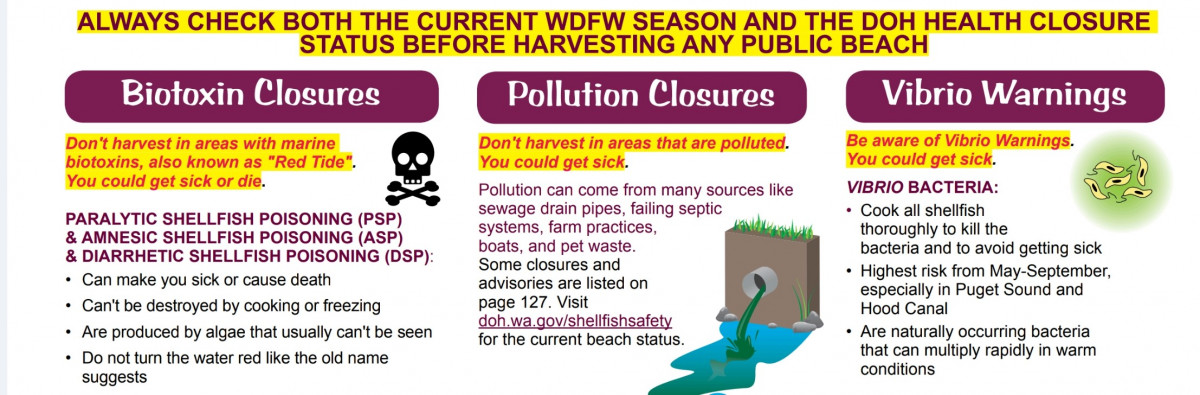
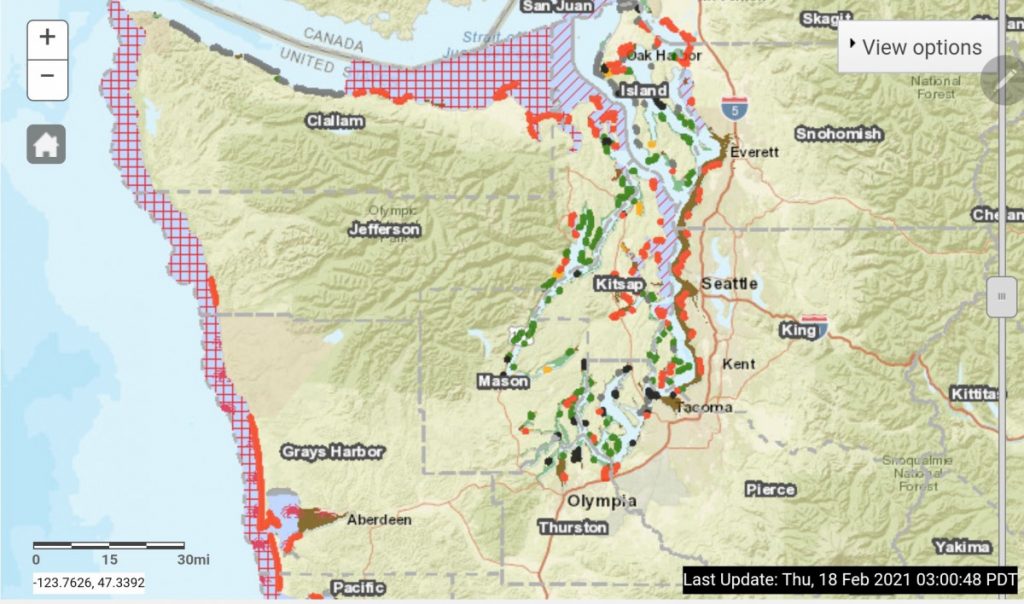
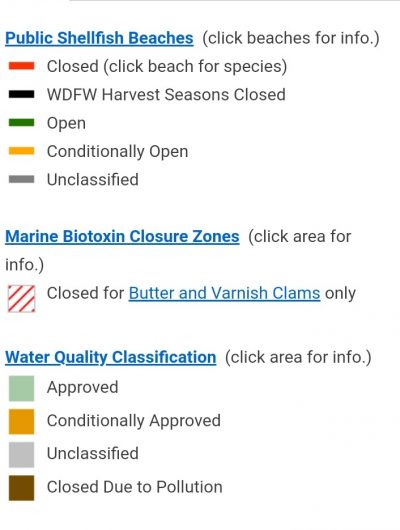
- Before you harvest make sure to:
- get a valid license
- check the local area rules and map
- know the limits and use the right tools
- make sure seaweed is safe for consumption
- Seaweed has many health benefits, such as:
- antioxidants
- omega 3s
- magnesium
- calcium
- vitamins C and E
- fiber
- riboflavin
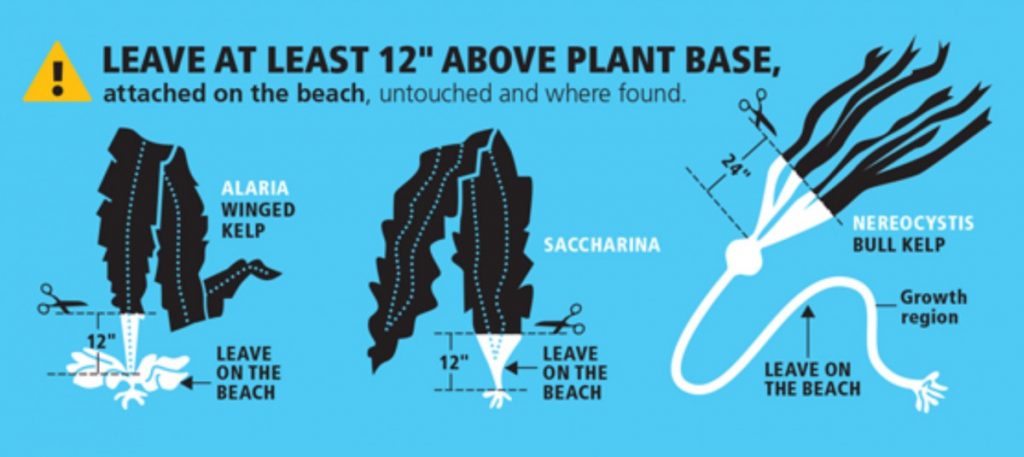
https://nam02.safelinks.protection.outlook.com/?
#4d: Case Study Tasting Research
Geoduck and Seaweed Tasting with Emily Wilder, MBA, Greener
GEODUCK
- WHAT DOES GEODUCK TASTE LIKE?
Geoduck has a natural sweet salty flavor - WHAT IS “Q”?
Bouncy, gummy, chewy textures- things like tapioca pearls, mochi, or boba - LABEL THE PARTS OF THE GEODUCK:
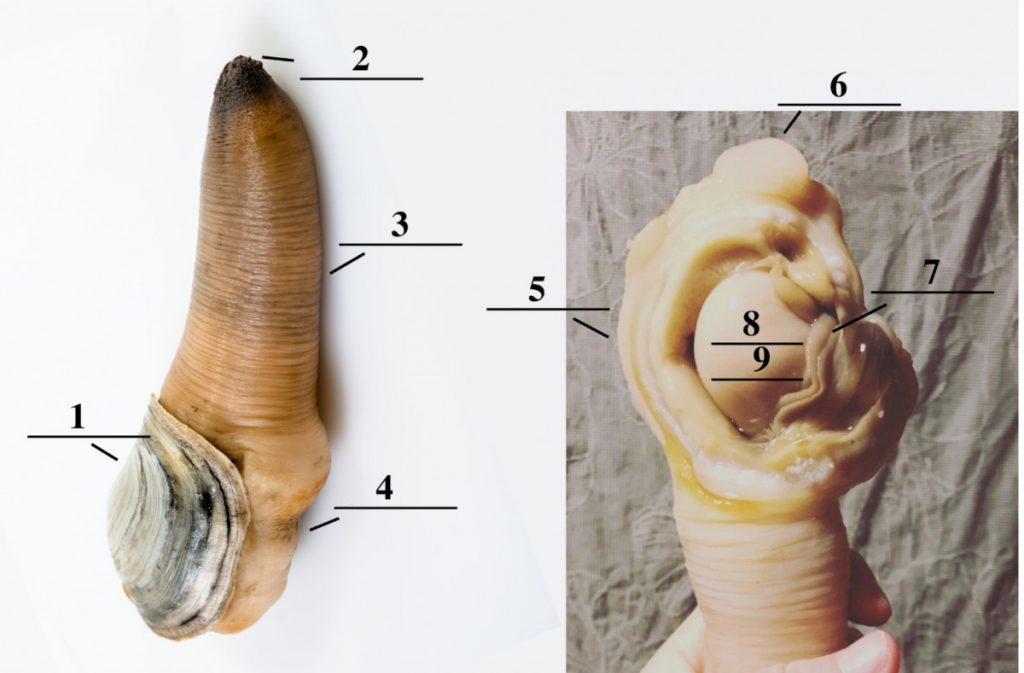
| 1. Shell | 6. Foot |
| 2. Tip | 7. Gills |
| 3. Siphon | 8. Gut |
| 4. Belly | 9. Sack |
| 5. Mantle |
SEAWEED
- WHAT ARE THE THREE SEAWEEDS WE ARE TASTING TODAY?
Kombu, wakame, and sea palm - WHAT TYPE OF SEAWEED ARE THEY?
Macro algae- kelp - WHAT ARE THE HEALTH BENEFITS OF SEAWEED?
Omega-3s, Antioxidants, Vitamin C, Vitamin E, B-Vitamin Folate, Magnesium, Iron, Calcium, Potassium, Iodine, Prebiotic, Chlorophyll, Alginate, Enzymes to digest legumes, Copper, Riboflavin, Fiber, Fucosterol
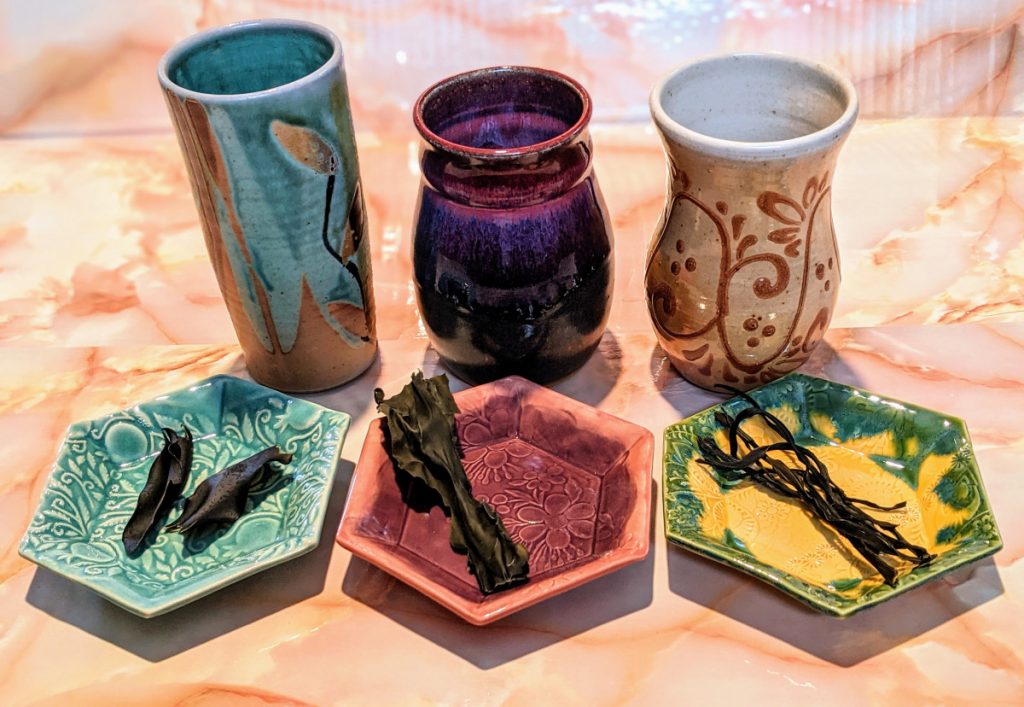
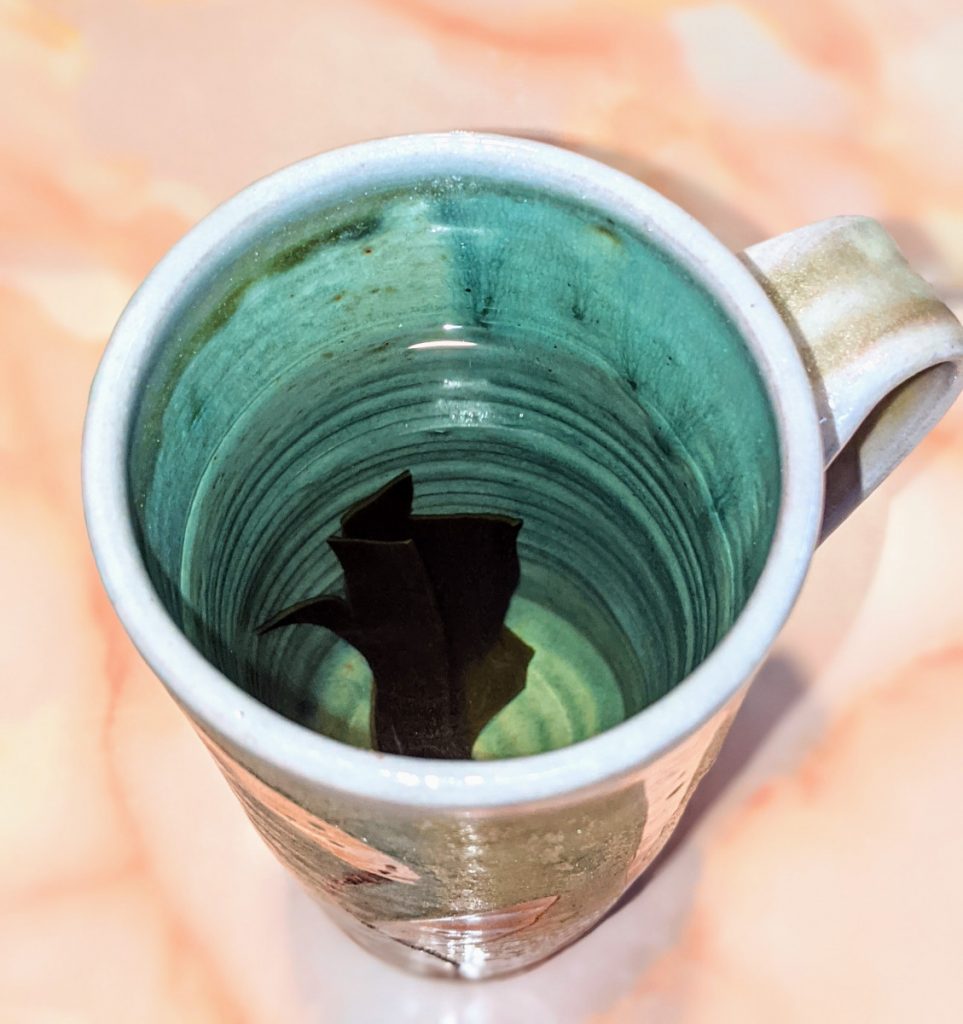
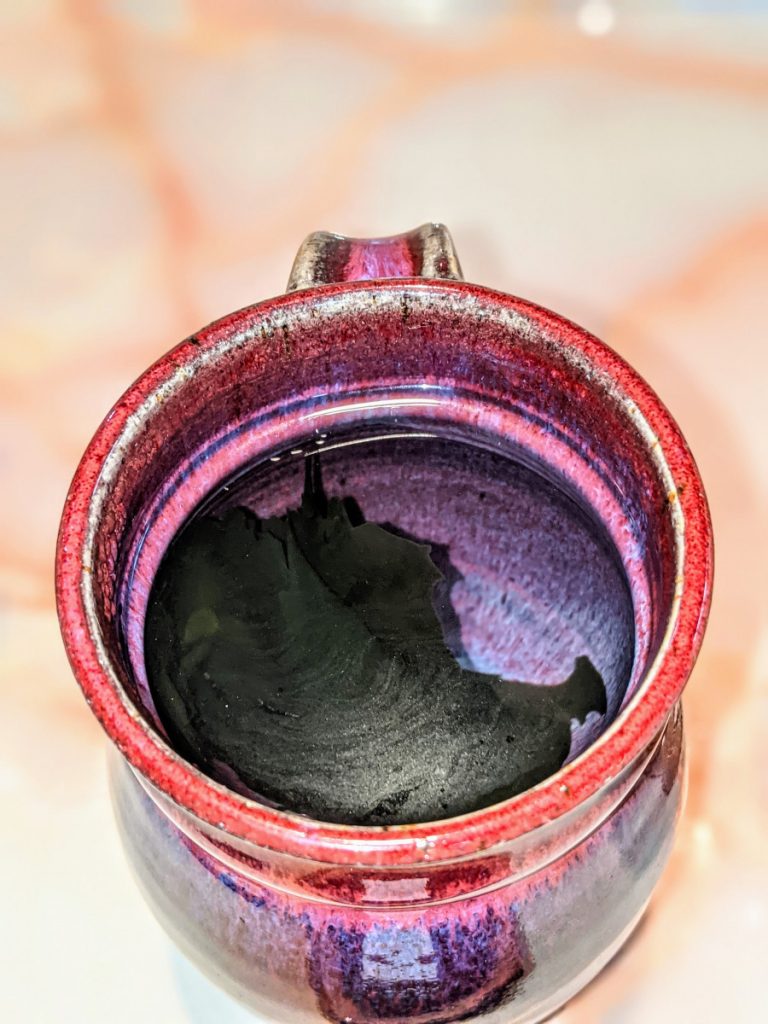
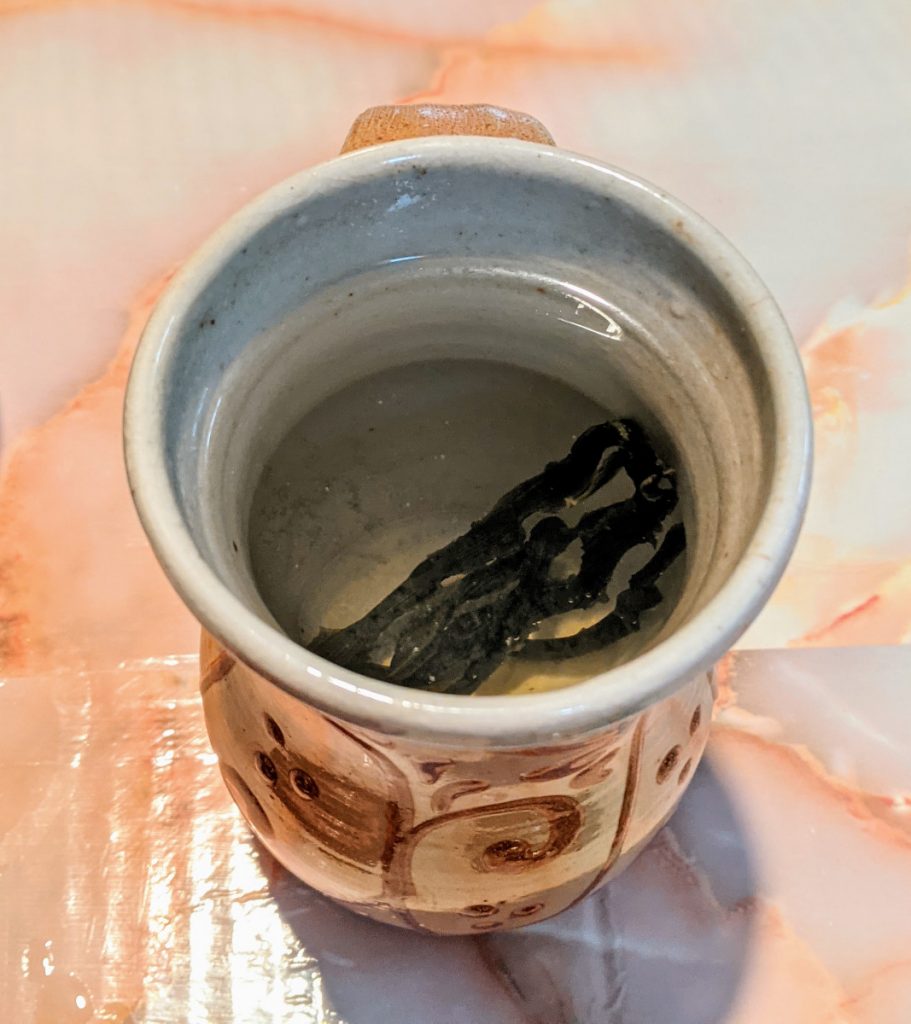
Seaweed Tasting
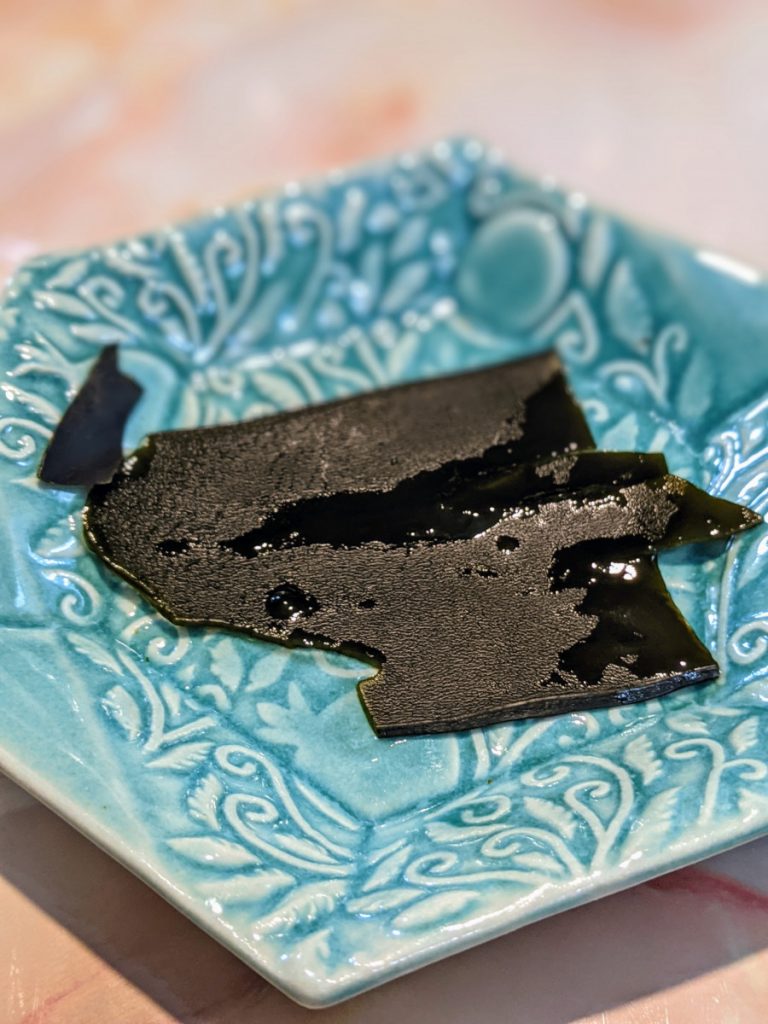
SEAWEED #1: Kombu
Tea
Color: almost clear, slight green ting
Aroma: salty, veggie
Taste: veggie, earthy, oceany
Aftertaste: slight linger
Dried
Color: dark green
Aroma: sweet, slight earthy
Texture: crisp, firm, crunchy
Taste: salty
Aftertaste: linger of oceany aftertaste
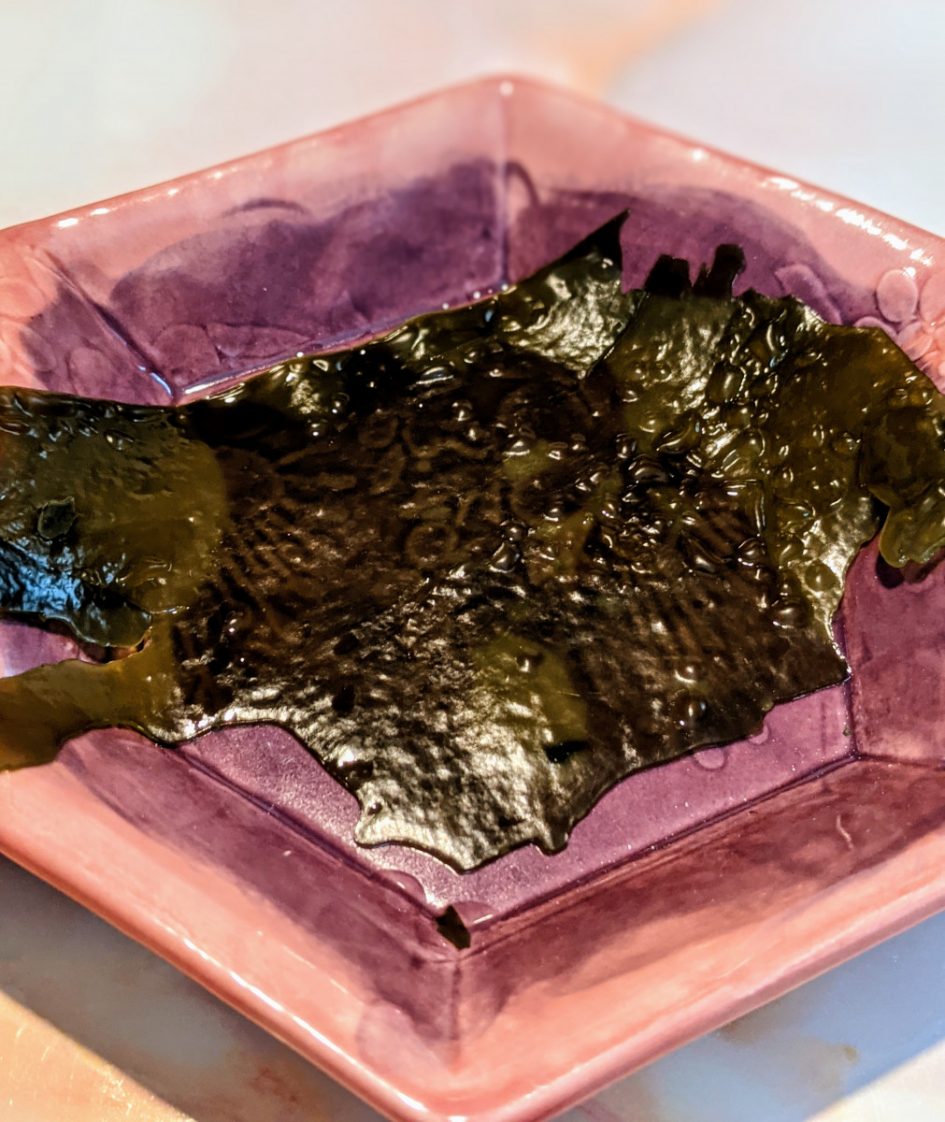
Reconstituted
Color: medium green
Aroma: shellfish, oceany
Texture: slippery, slimy
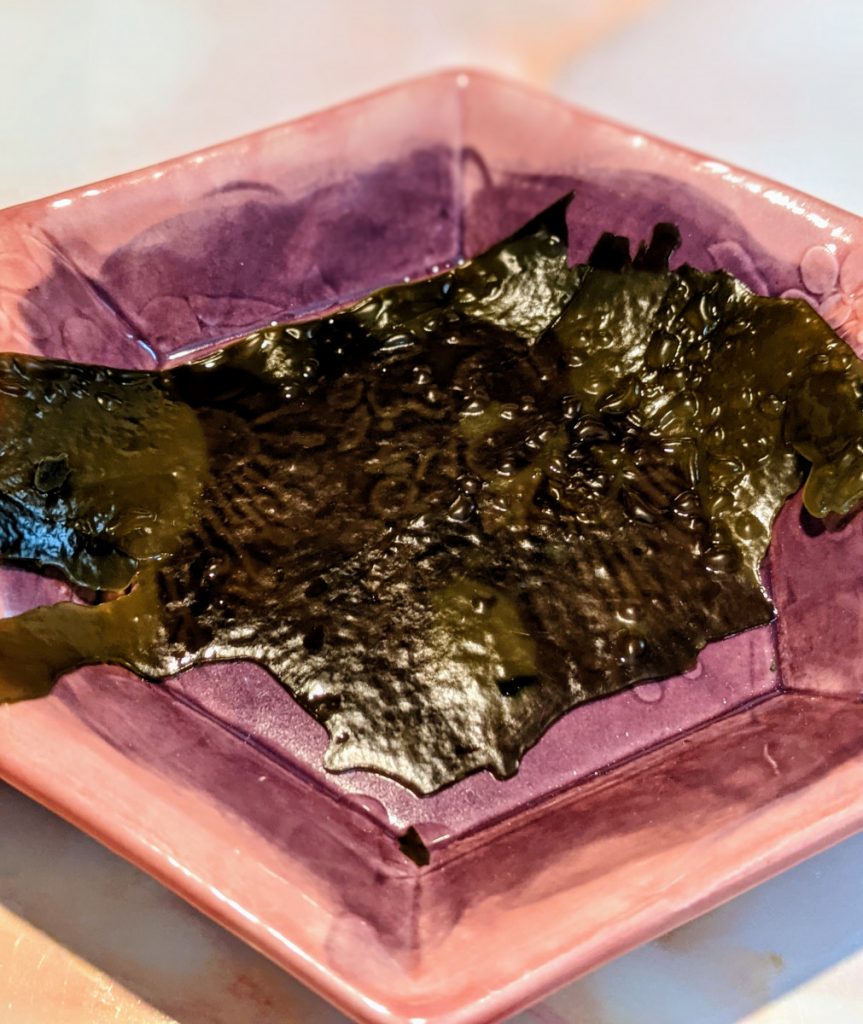
SEAWEED #2: Wakame
Tea
Color: light green, transparent
Aroma: ocean fishy
Dried
Color: dark medium green
Aroma: oceany, fishy
Texture: crisp, firm, thin
Taste: salty, fishy, oceany
Aftertaste: lingers
Reconstituted
Color: light medium green
Aroma: strong ocean fishy smell
Texture: slimy
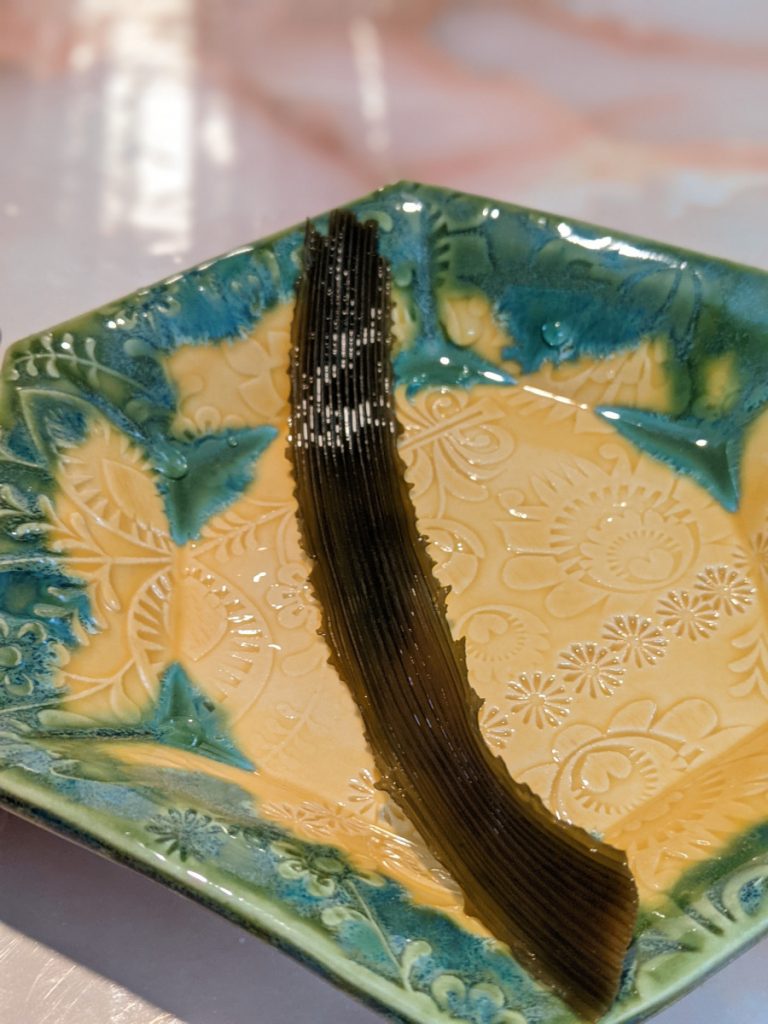
SEAWEED #3:
Sea Palm
Tea
Color: light transparent green
Aroma: fishy, salty
Taste: fishy
Aftertaste: lingered
Dried
Color: dark green
Aroma: sweet, nutty
Texture: crunchy
Taste: fishy, oceany, salty
Aftertaste: lingered
Reconstituted
Color: medium green, lighter green stripes
Aroma: strong fishy smell
Texture: slimy, slippery
REFLECTION
- WHAT WERE SOME OF YOUR FAVORITE GEODUCK AND/OR SEAWEED DISHES PRESENTED TODAY?
A lot of the images looked pleasing to the eye, but none of them would ever be appetizing to me. - HAVE YOU EVER EATEN GEODUCK? If yes, please tell the story. How was it prepared? What did you think?
Nope, never. I don’t think that I ever will as I have sever problems with texture and food. - WHAT OTHER FOOD HAVE YOU EATEN THAT HAVE “Q”?
Tapioca pudding, but it can’t have too big of pearls. - HAVE YOU EATEN SEAWEED BEFORE? If yes, what was your most memorable time? If no, what stopped you from eating it?
Nope, never have and after today I don’t think I will ever be really searching it out on my own. The smells and textures were off putting to me.
#4e: Stuckey’s Taste Book Experiments
Week 8 – Salt and Bitter
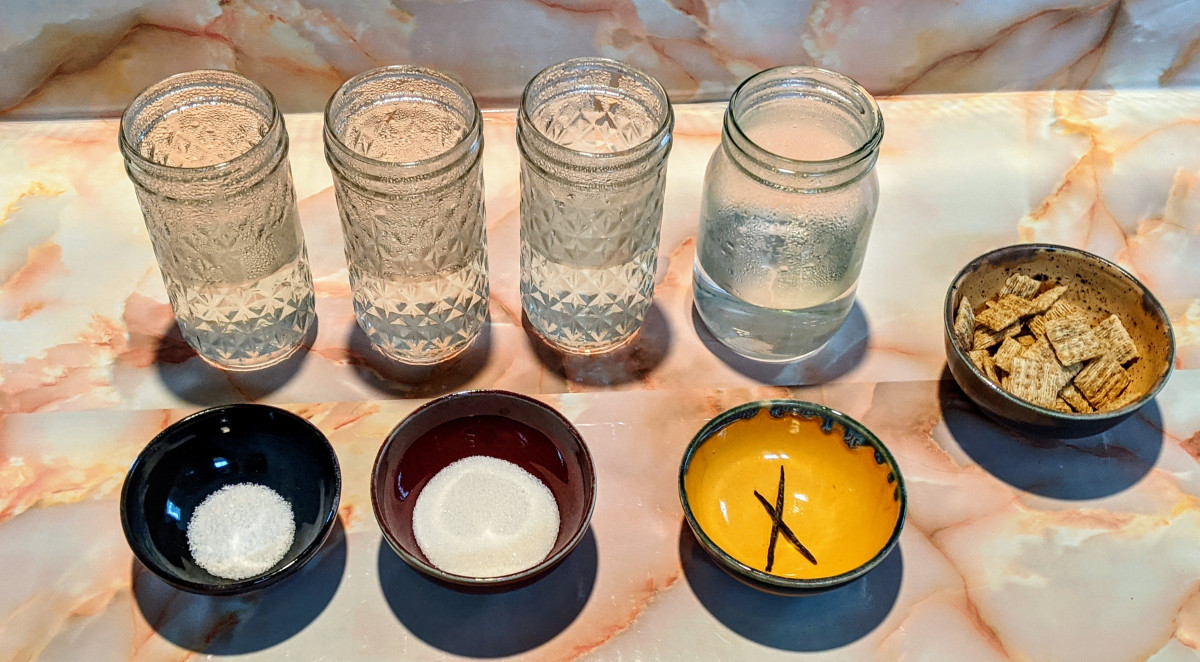
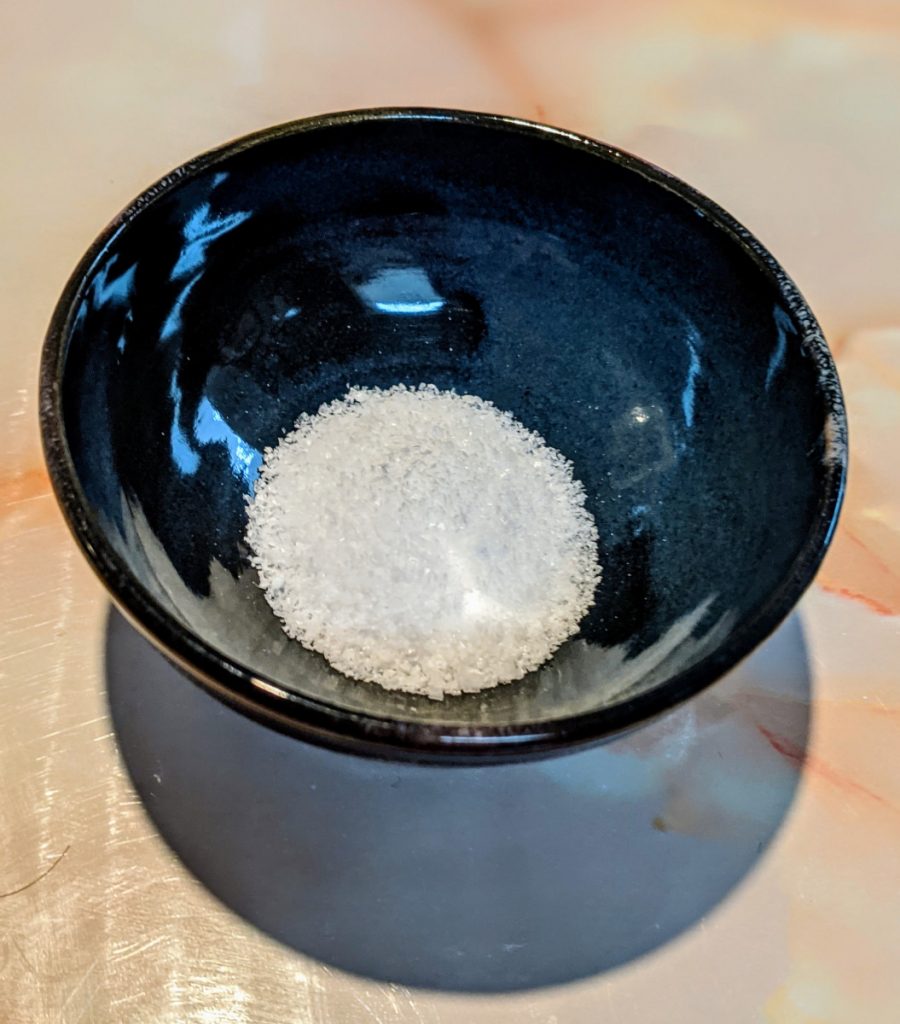
Salt 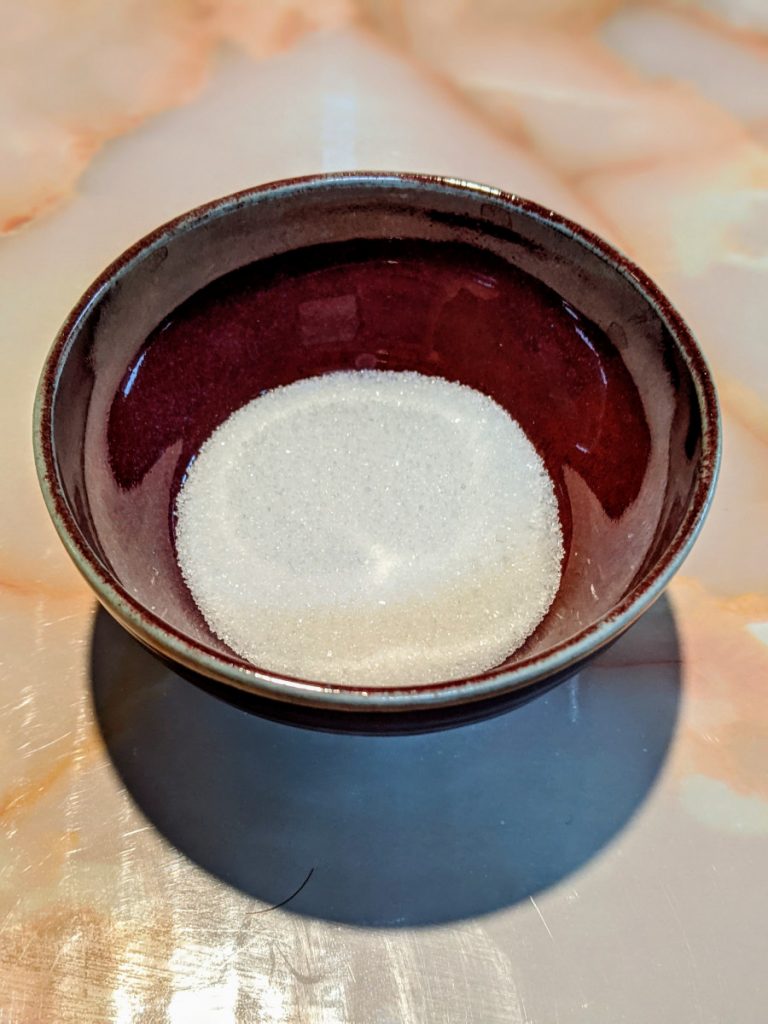
Sugar 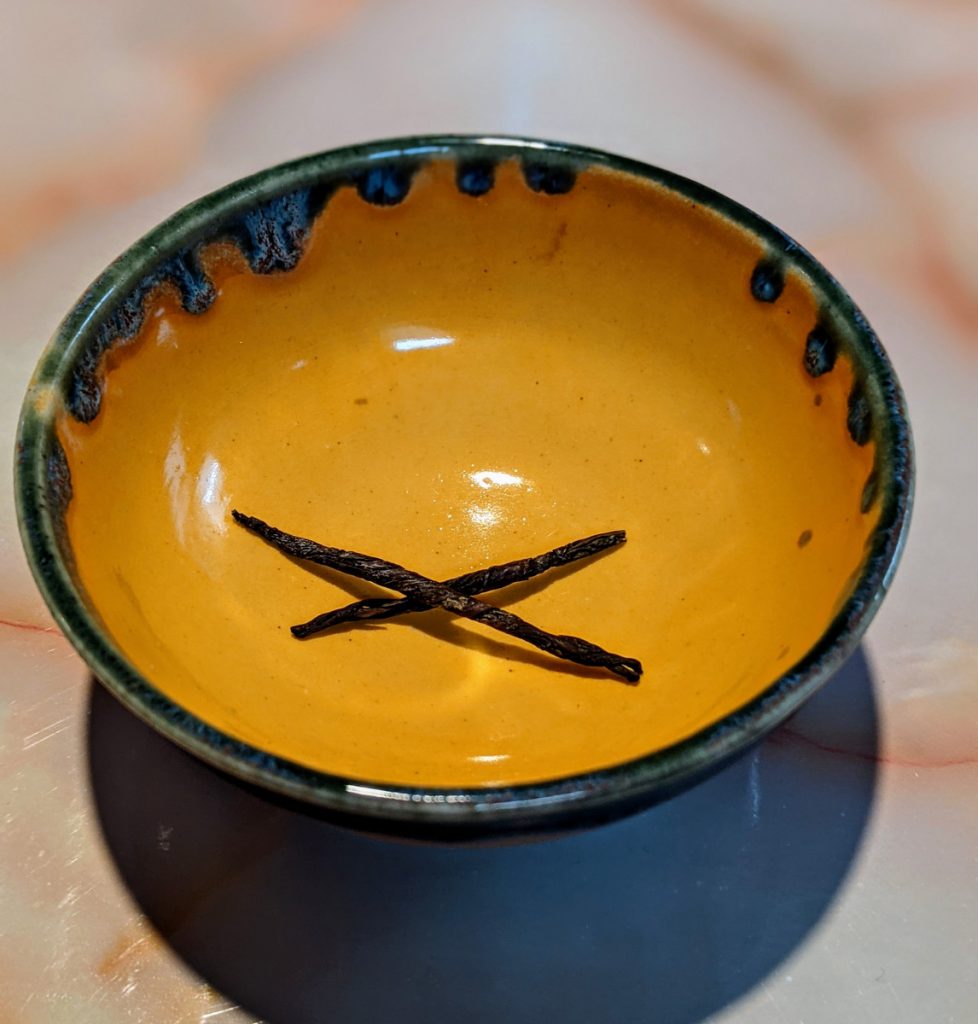
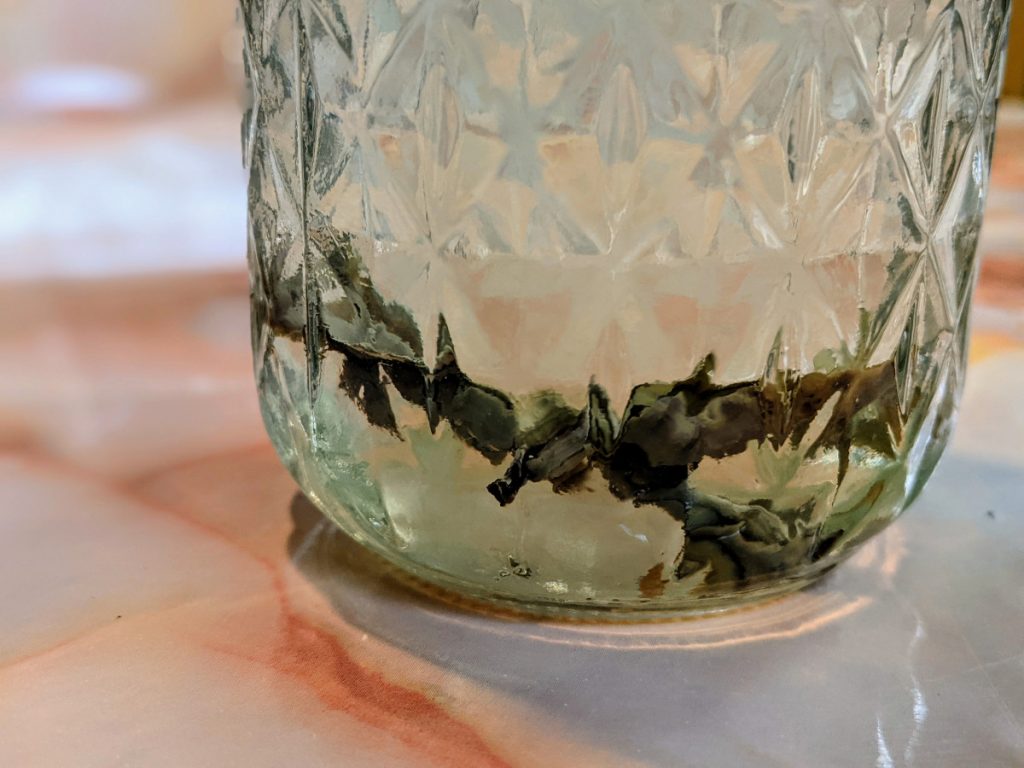
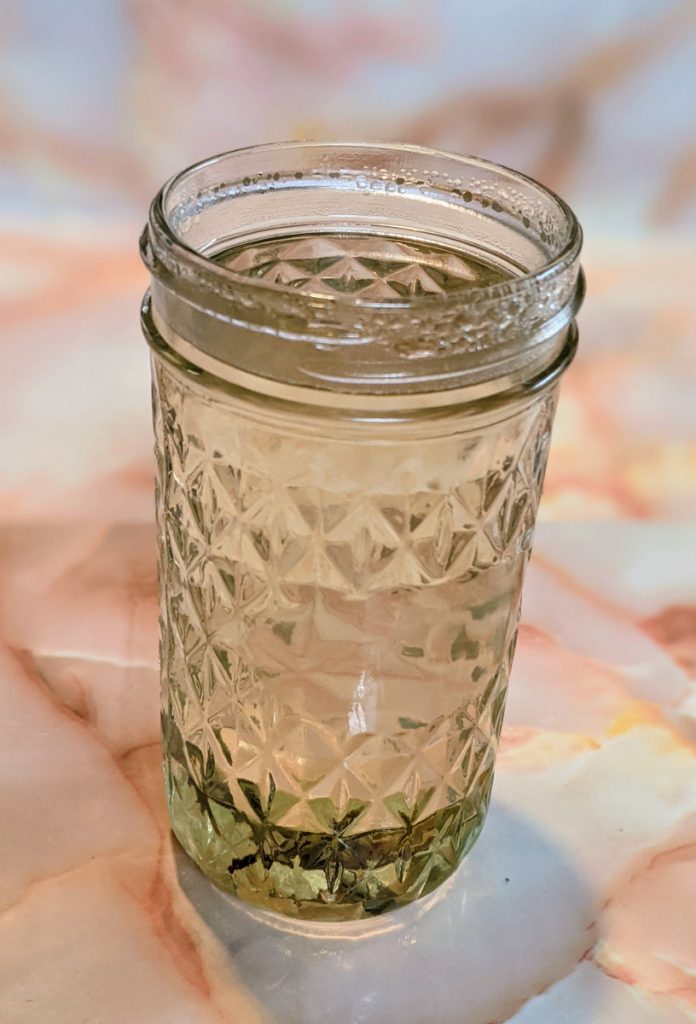
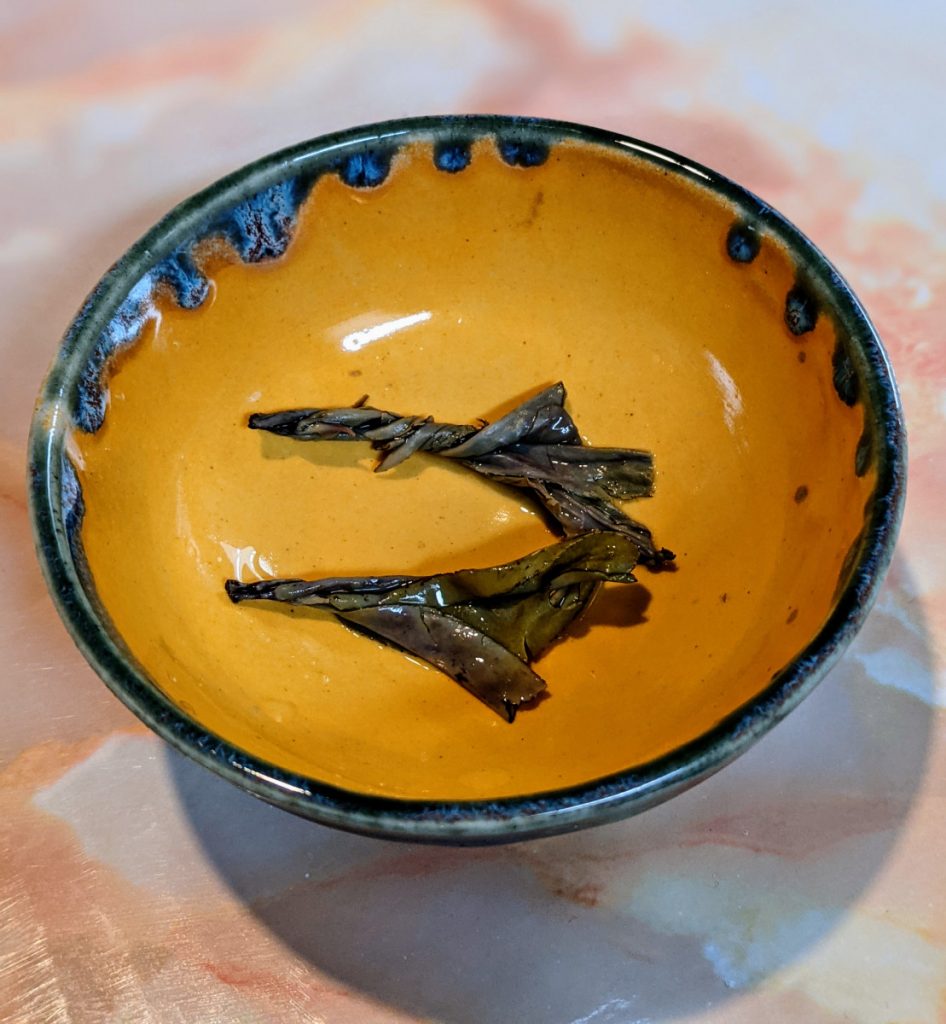
Bitter Nail Tea
1) Of the 5 basic tastes, which do you believe your body craves the most?
Salt
2) Do you have a specific (or favorite) way to enjoy that basic taste?
Cheese, usually a brie
3) What was your initial reaction to the bitter nail tea with nothing added to it?
Curls my tongue and lingers for a long while, almost like the same bitter of eating the grass from a hay field
4) How did the bitterness change between the different cups containing sugar and/or salt?
Sugar: super sweet with just a tinge of bitter but in a good way, made it a great complement to each other
Salt: tasted very salty, but absolutely noo bitter taste at all
I would definitely go for the sugar sweetness with slight bitter
Slat and sugar: almost a weird sweet medicine taste, no bitterness
5) There seems to be two groups of coffee/tea drinkers: people who enjoy the drink in its unaltered form, and others who like modify it with fats and sugars. Give different example of a way we humans alter classically bitter foods or drink to make them more palatable.
Coffee and tea with milk and or sugar
Grapefruit with sugar
Trying to think of more bitter things…..
Artichoke with butter lemon and salt
Broccoli- salt, butter, cheese
Eggplant- honey, goat cheese
6) What are your thoughts on regionally/culturally acquired flavor preferences? Do you believe that flavor preference is a learned behavior, instinctual, or a mixture of both? When you taste a flavor, when does its objectivity end and your subjectivity begin?
Here in Wisconsin, we have a lot of foods that are very popular here, but you do find around the country just not in the same amounts. Things like bloody marys, sauerkraut, coleslaw, brats. I think it’s a slight mixture of both learned and instinctual.

#4f: Sustainable Entrepreneurship
Benefit Corporations
Benefits the community and you bottom line
Modified obligations committed to the higher standers of purpose, accountability, and transparency
Is a for-profit cooperation with a defined purpose of creating positive social impact
Can take account of workers, the community, the environment
Held accountable to its beneficial purpose though annual benefit reports
Shareholders: take responsibility for a portion of the company by owning shares of stock and are not liable for the companies debs
Stakeholders: has personal investment in the social factors of the business and is involved in the community on a personal level
Fisheries
171 million tons of fish were produced in 2016, but overfishing is still and increasing problem
Salmon and fishing in general play a huge role in Native peoples culture
The Boldt decision of 1974 guaranteed that half of all harvestable shellfish and fish in Washington sate would belong to the native American communities
Farmed salmon are genetically different from wild salmon and pose a threat to wild salmons genes
Overfishing and massive fish escapes have a direct coloration with the lack of regulations on fishing
Leave a Reply