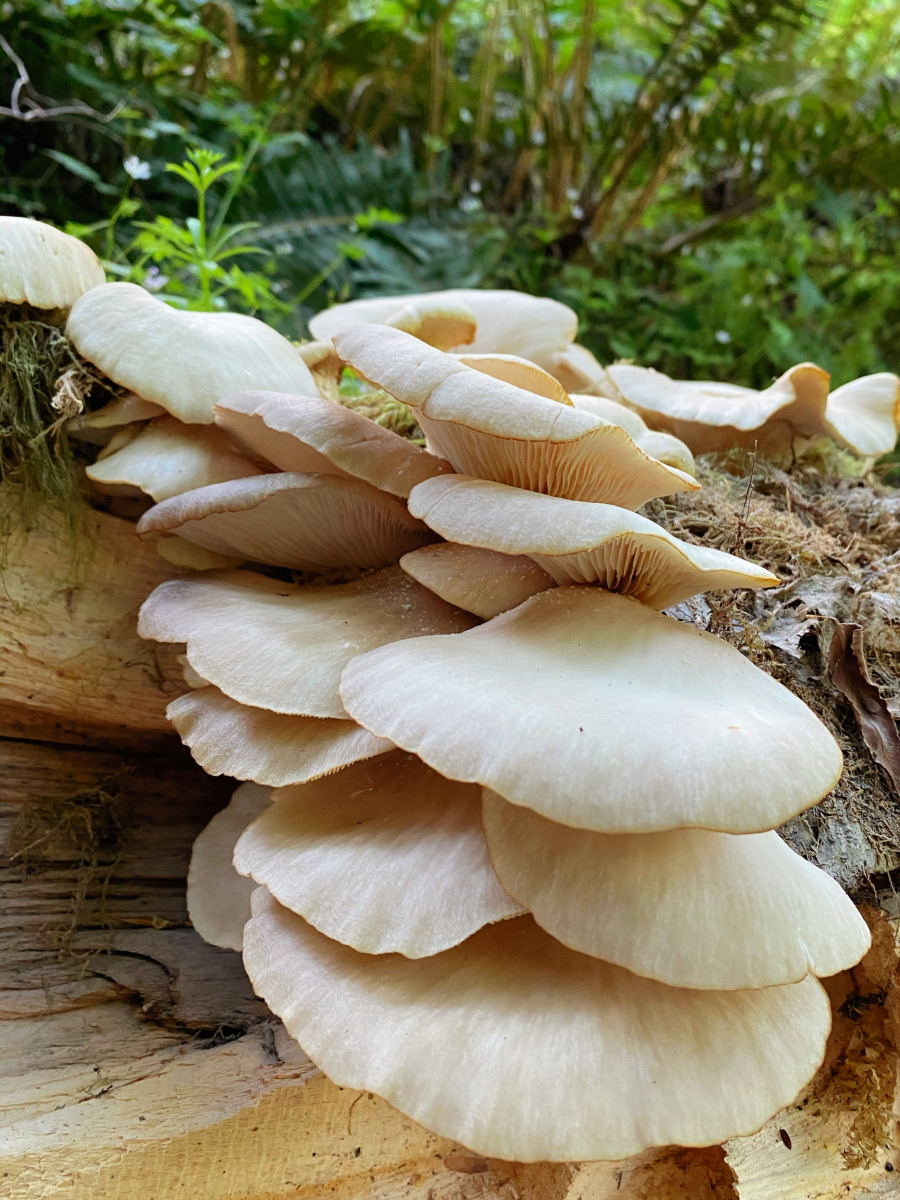
Etymology of Oyster Mushrooms (Pleurotus ostreatus)
Oyster Mushrooms were first named Agaricus ostreatus scientifically in 1775 by the Dutch naturalist Nikolaus Joseph Freiherr von Jacquin. During the creation of fungal taxonomy, most common gilled mushrooms were included in the genus Agaricus.
In 1871, the German mycologist Paul Kummer changed the Oyster Mushroom to the genus Pleurotus, giving it its modern scientific name.
Oyster mushroom’s has the generic name of Pleurotus, is Latin for ‘side ear’. This refers to the lateral attachment of the stem. Ostreatus is references the fruiting bodies of the mushroom that resemble oyster shells.
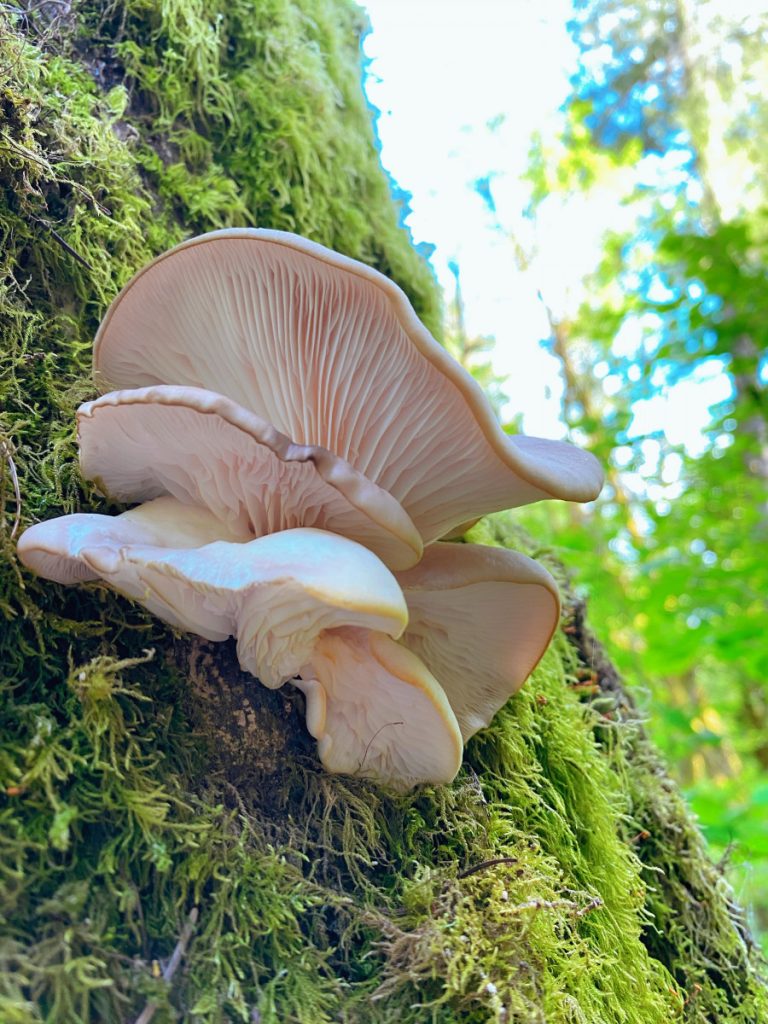
This extremely common edible mushroom has 202 species of edible mushrooms in the same family. Oyster mushrooms are loved for their variety of colors and culinary attributes.
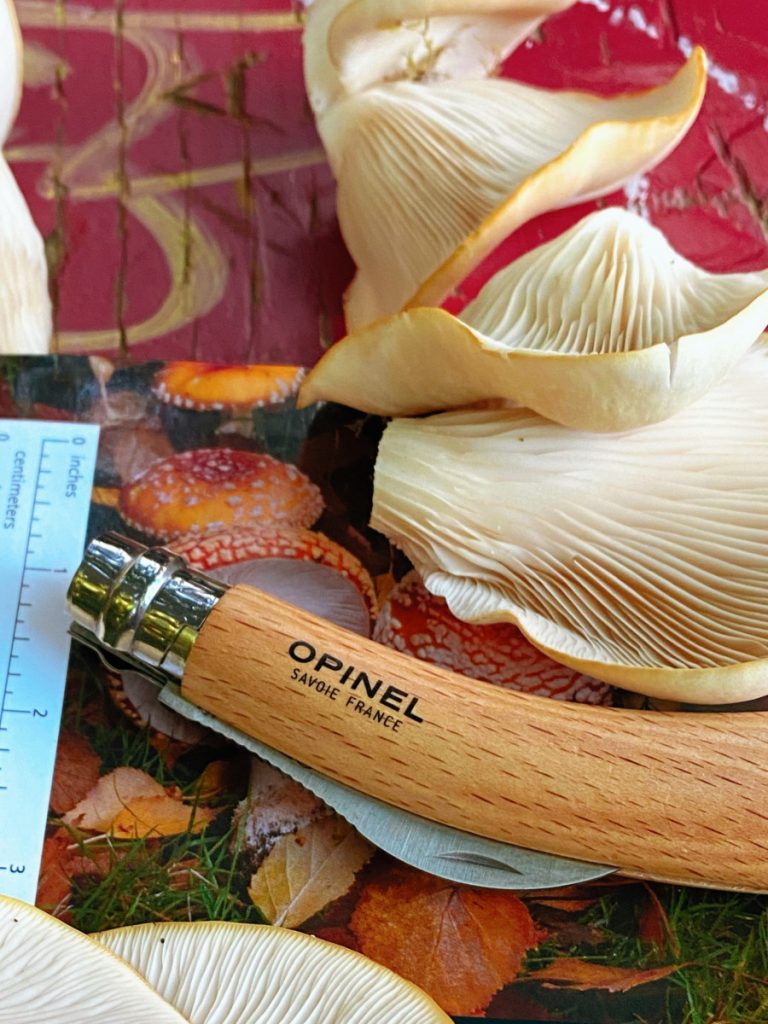
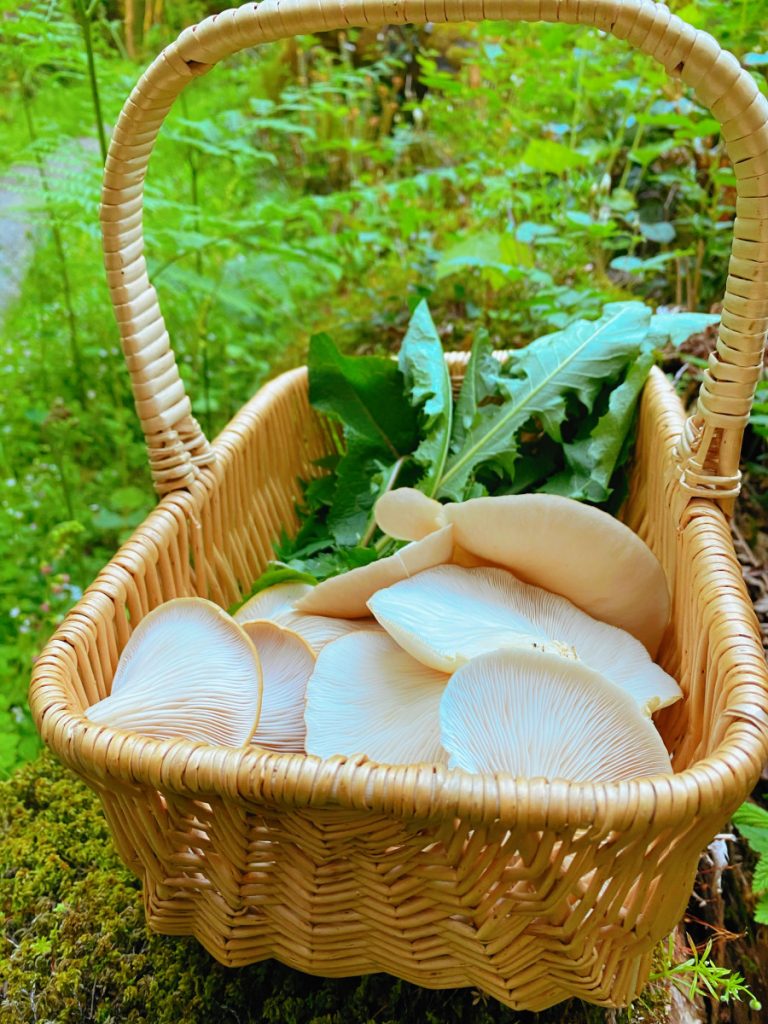
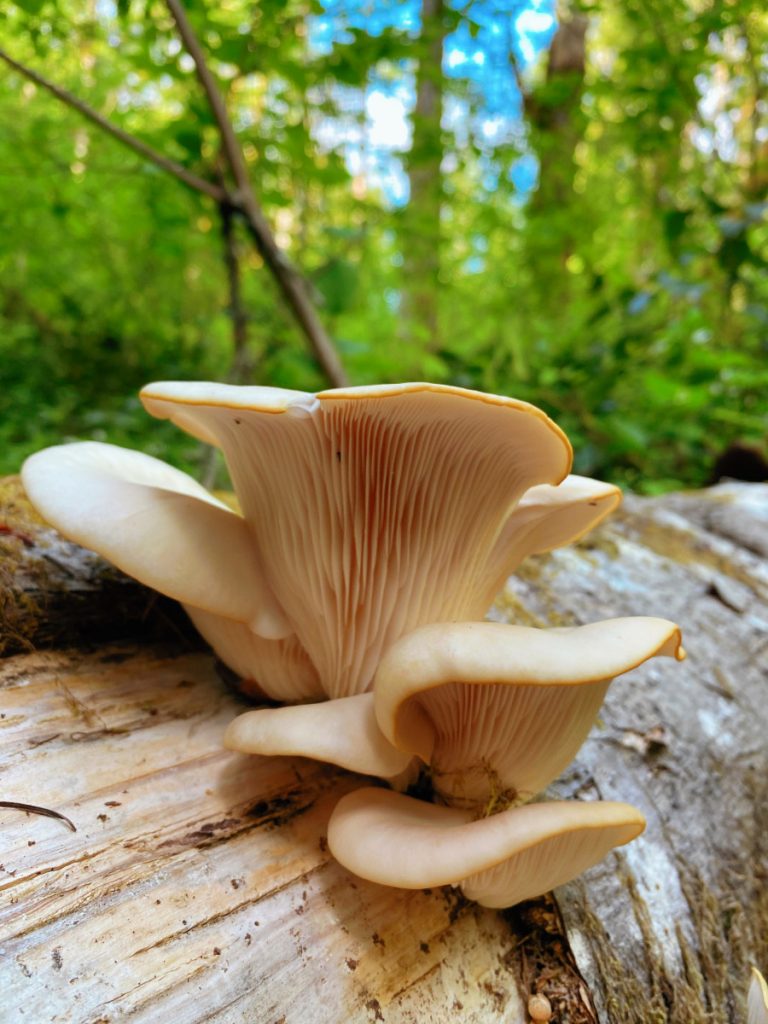
On May 12, 2021, I went on my first forage to look for Oyster mushrooms and edible greens at Woodard Bay park. Since the trail had been closed, I stumbled on an abundance of fresh un-claimed Oyster mushrooms in the wooded section of the park. This was a great learning experience for me as I took hours of learning identification to determine if these mushrooms were really Oysters or a close look-alike, Angel-Wings. In the end, I determined they were Pearl oyster mushrooms that are a Pacific Northwest delicacy.
Health Benefits of Oyster Mushrooms
Immune System Support
Oyster mushrooms both enhance and regulate the immune system. Technically, these medicinal properties can improve the effects of infectious illness, autoimmune disorders and allergies.
Antimicrobial
These mushrooms have also been shown to be effective against drug resistant variations of E. coli, and Staph. infections as well as Streptococcus and Candida .
Antiviral
Ubiquitin is an antiviral protein isolate found in Oyster mushrooms.
Anti-Cancer
The polysaccharides within the oyster mushrooms have shown anti-tumor activity. The specific antioxidant – polysaccharide pleuran – can combat colon cancer.
Lower Blood Pressure and Blood Sugar
The high fiber, high protein and low-fat content of these mushrooms make them an ideal for combating diabetes naturally. Guanide, a compound found in oyster mushrooms, exerts an anti-hyperglycemic effect that naturally lowers blood sugar levels.
Oyster mushrooms have also been found to have relaxant effects on the arterial walls which helps lower blood pressure.
A quiet afternoon under the Spring sun
I find myself in a dream state of exploration and admiration
Like foxglove, this world has become so toxic,
Yet in these woods I don’t remember what it feels like to be afraid
In these woods, all I see is the promise of a new life
There is a perfect mushroom perched between two stinging nettle armies
(I must have it)
(I must obtain every beautiful thing in this forest)
I got stung on my way to capture beauty-only to find out that the beauty I have been craving is pure toxicity
This is a metaphor for being alive
(Being alive and stagnant, while everything surrounding you changes)
Salmon berries, glowing like a sunset on a warm day, envelope my every step
Their orange and pink hue contrasting the blue skies
I search for a ripe berry, yet the birds have already beat me to the prize
How greedy must I be to want to steal from nature itself?
The Pacific Glasswort stings my tongue with salt as I reminisce of being in a kid in the Bay Area.
In a home away from home, learning about a different ecosystem than my own, but still admiring what my current surroundings shall be.
It tastes like a burst of the ocean, a sip of the sea.
And I am at peace.


Leave a Reply