Real Life application and observations of concepts covered in Soil Science!
Buzz and Blossom Garden:
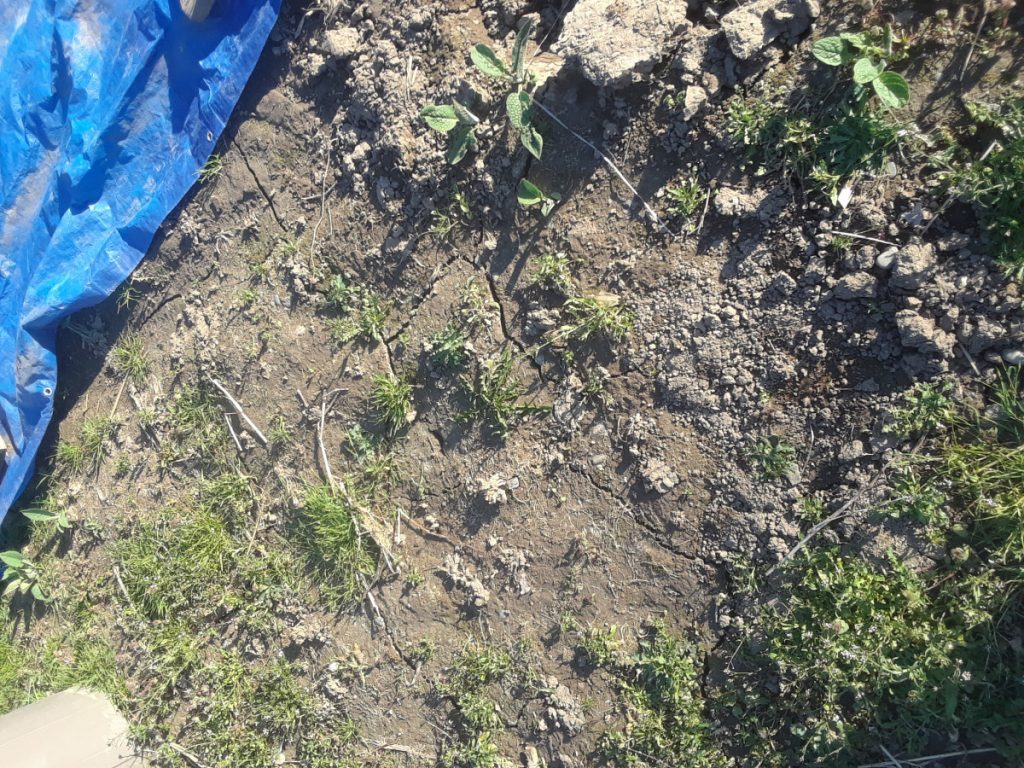
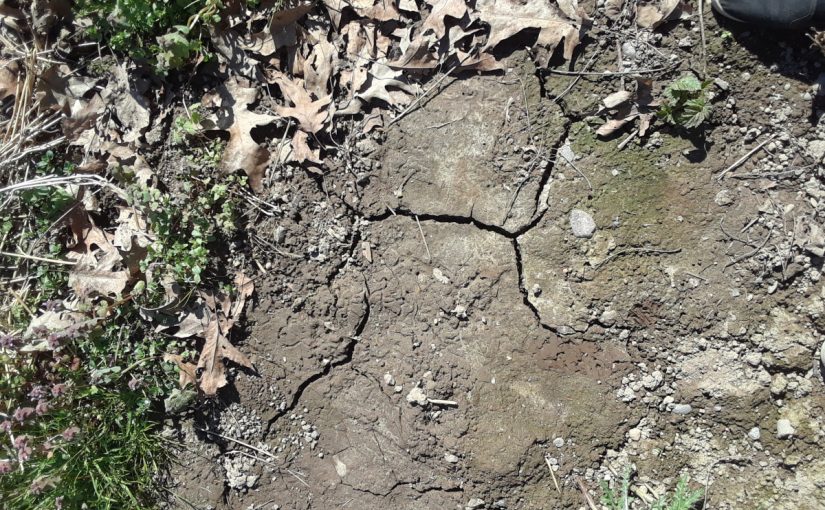
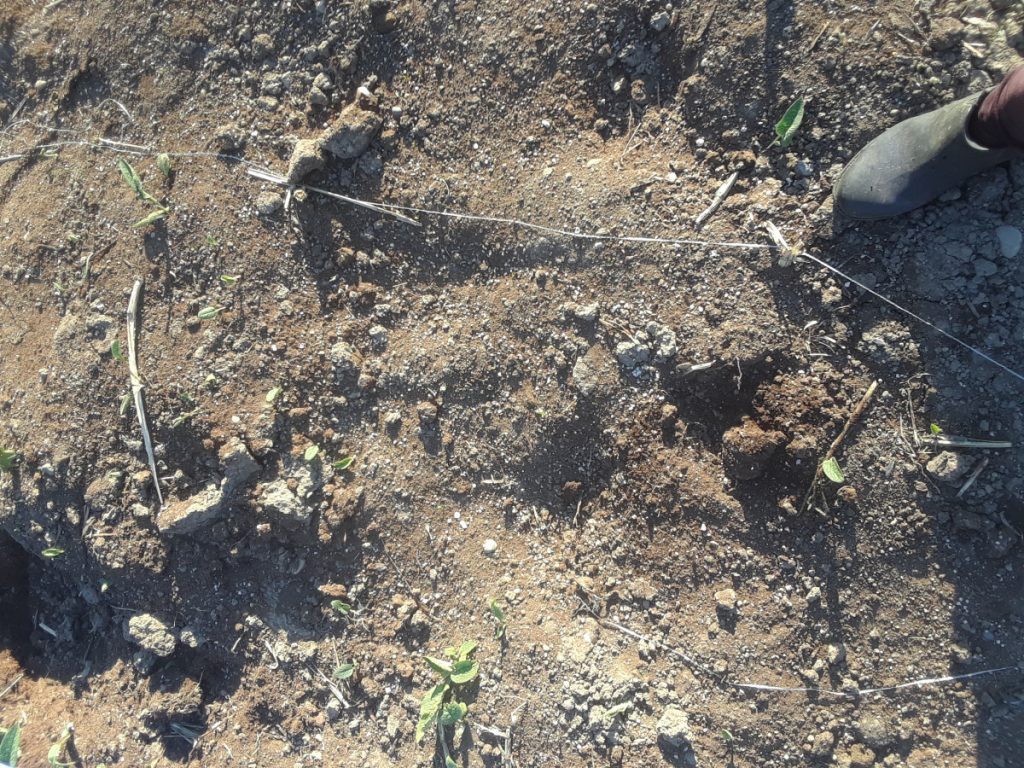
The soil at Buzz and Blossom Garden has a high clay content, which retracts and cracks when moisture levels decrease. But, as it is a space that has been cultivated every year for over 30 years, there are areas that have been amended over and over so the immediate top few inches of the soil can vary. The next picture is only 3 paces away from the above large cracks. It has a totally different texture, being much more crumbly, doesn’t have cracks, and is the location of a massive dump of straight peat moss from two years ago that didn’t get spread around evenly. When this patch is planted, you can see a difference in plant growth where there is the “peat moss pit” and the native soil.
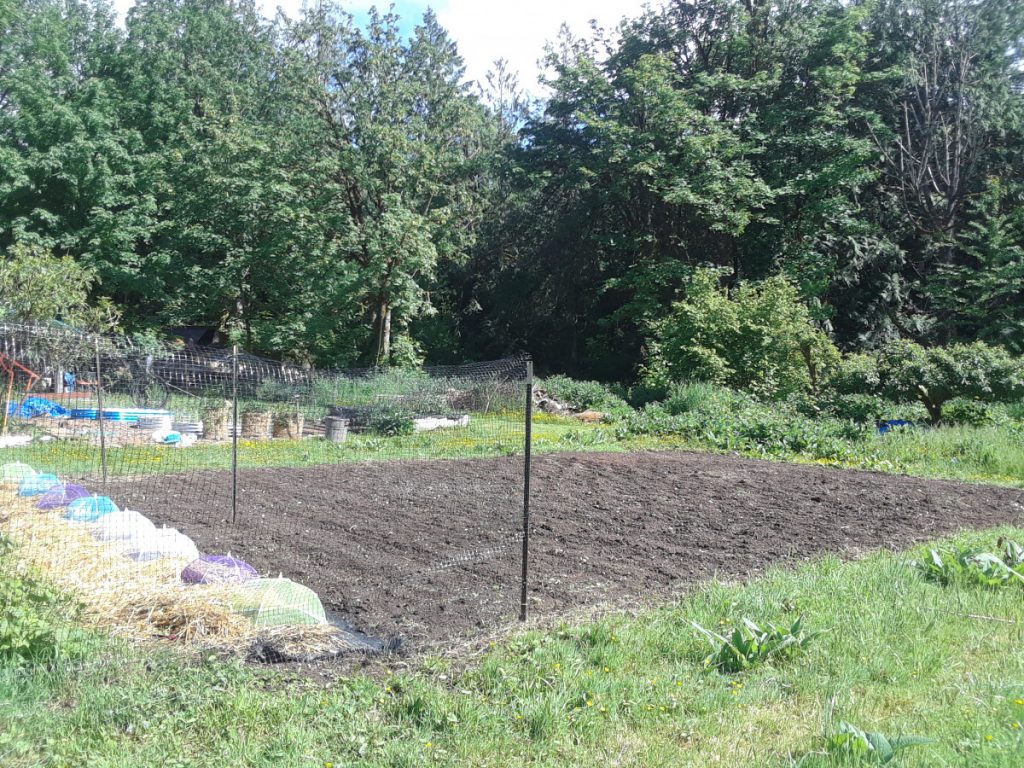
Here we have the corn patch. Every year, my neighbors grow corn on this square. It’s a pretty big patch and grows enough corn to feed many people in the neighborhood. The harvest period last 3 to 4 weeks. They process and freeze what’s not eaten fresh. Every year, we spend the early spring digging out comfrey, before they have a friend plow the space. There is always lots of weeding to do because the comfrey gets spread a ways and recently crops have been less successful. Upon a soil test, it was discovered that this area was highly acidic, which makes sense after my neighbor realized she hadn’t put lime down this past winter. The course of action they decided to take was add extra compost and fish fertilizer when planting and watering and lime heavily in the winter. It wouldn’t be my first choice to keep tilling because it definitely makes the comfrey situation worse, but I understand their thought process.
Seed Sowing Experiment:
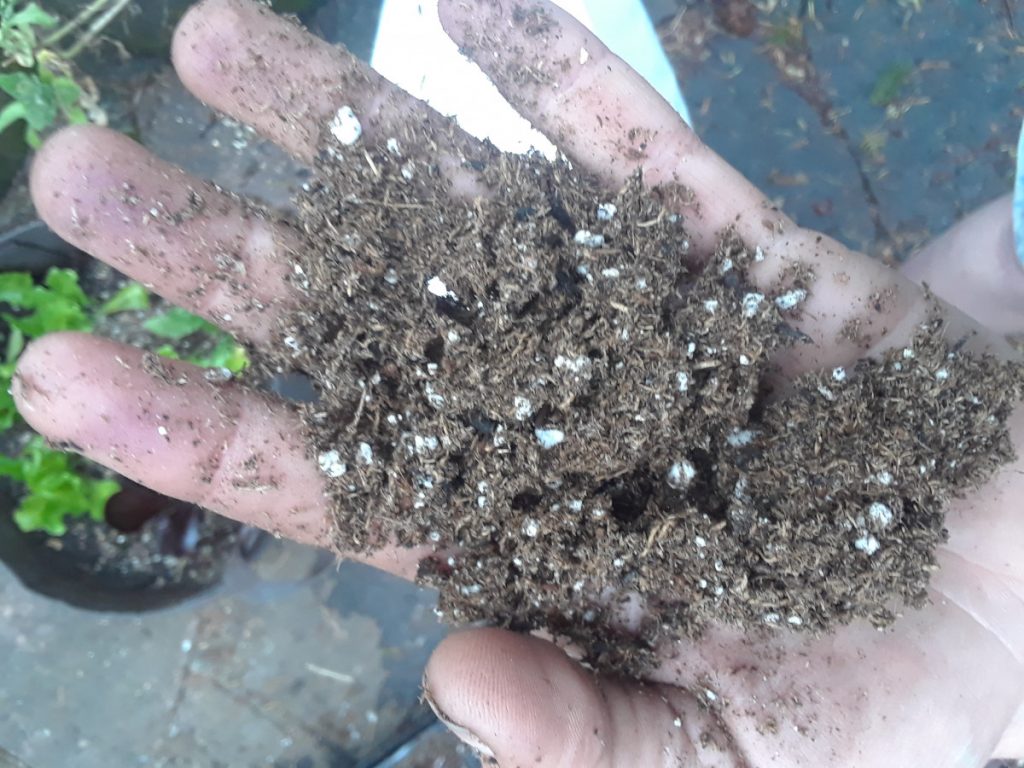
I sowed seeds using two different soils to see which would be the “most successful”, a mix by Caleb and a bagged seedling mix from Four Corners. I will gauge “success” by how quickly seeds germinate and how many of them germinate, however I am unsure of the viability of some of the seeds I had collected. I think it will still be worth comparing the results. I sowed the same broccoli seeds in each mix to compare. Caleb made a seedling mix consisting of a blend of coconut fiber, compost from the Evergreen campus that I believe Steve made in a class last year and some bagged seedling mix from Four Corners.
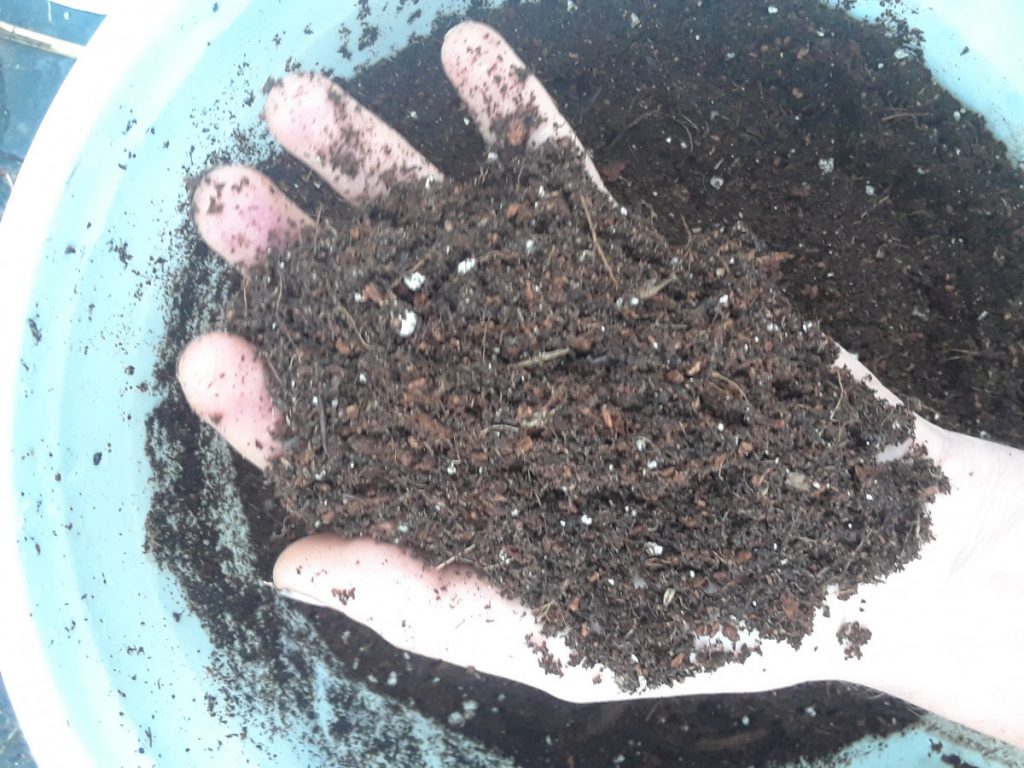
Caleb’s mix is quite crumbly and dark in color, with a great earthy smell. On the right, I attempt to form it into a ball and it holds some shape, but breaks off in large chunks.
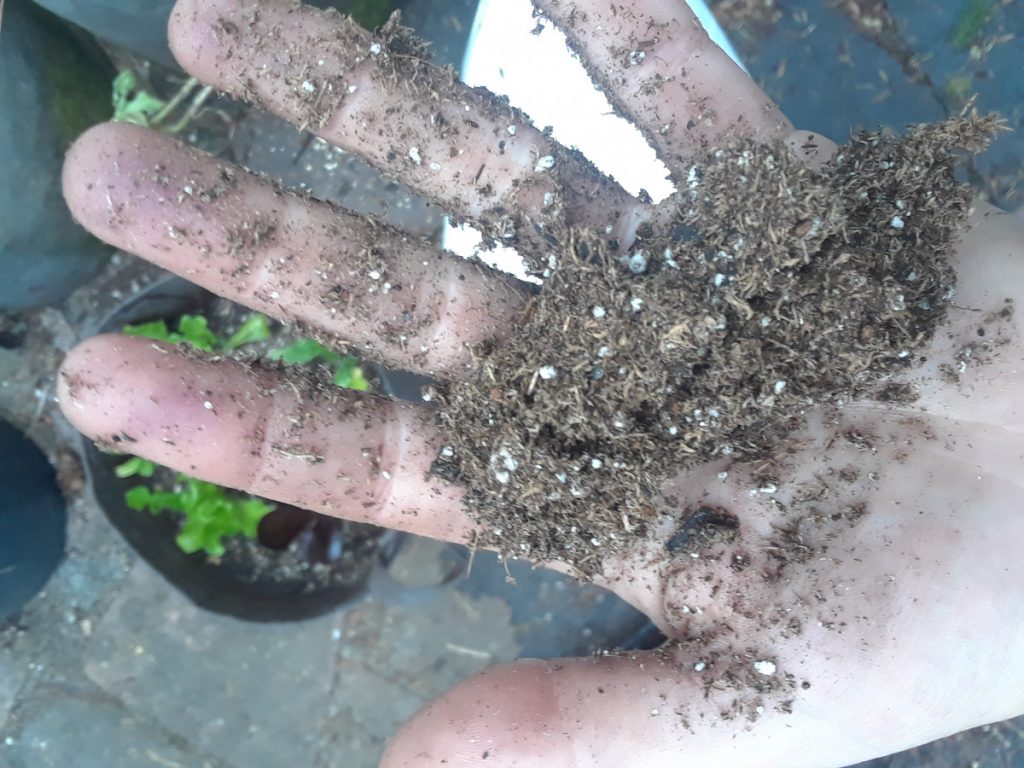
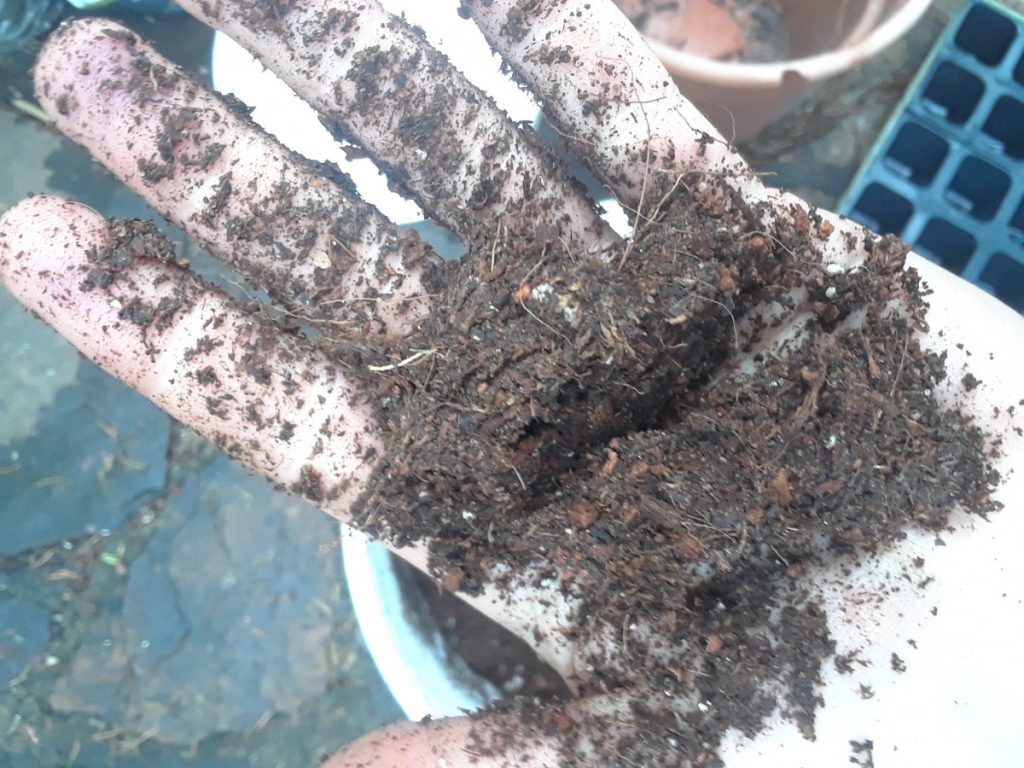
The Four Corners seedling mix is quite fluffy and airy, almost too fluffy. It doesn’t have much mass to it, smells dusty, and is light in color. On the right, it would appear that it holds a ball form well, however in actuality the ball crumbled apart quite easily into small chunks.
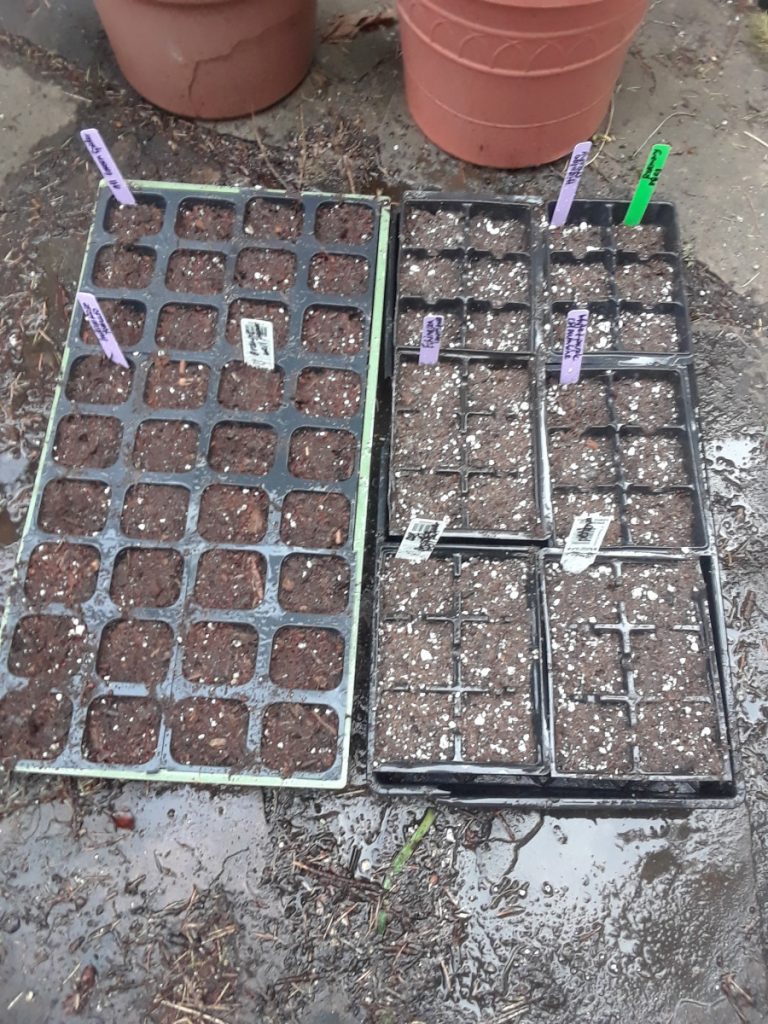
Notice the difference in color when wet
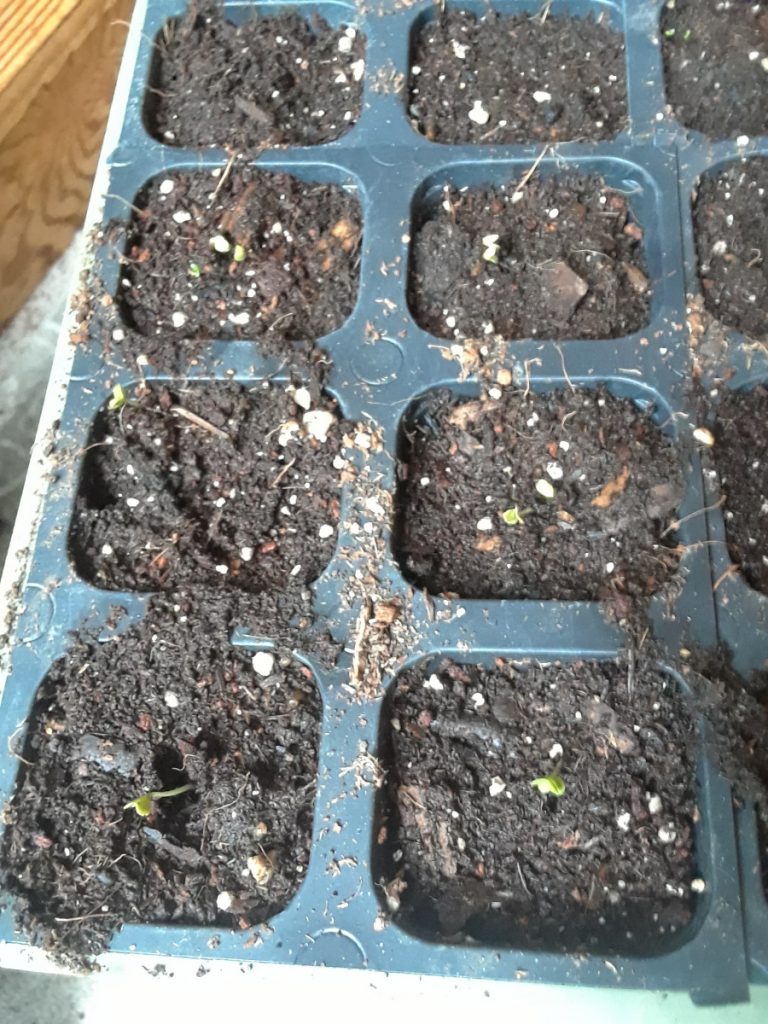
Caleb’s mix is the “winner”! Broccoli seeds came up four days later, and by the end of that day, the other broccoli in the other seedling mix came up too.
Follow up:
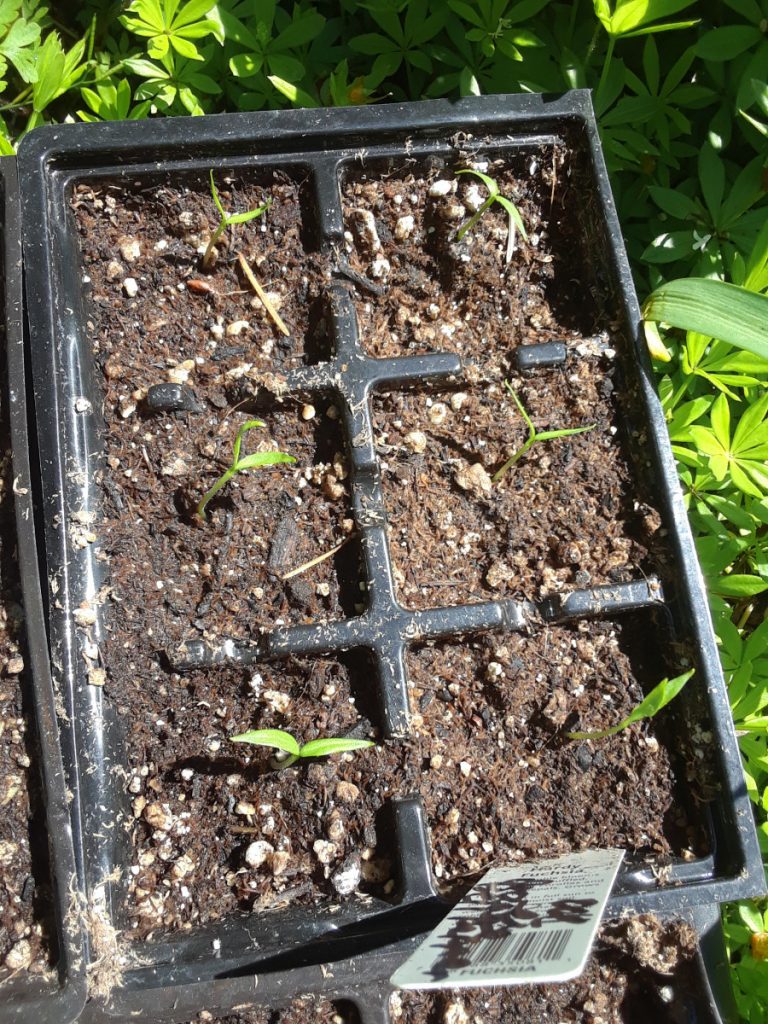
All the orange peppers came up! 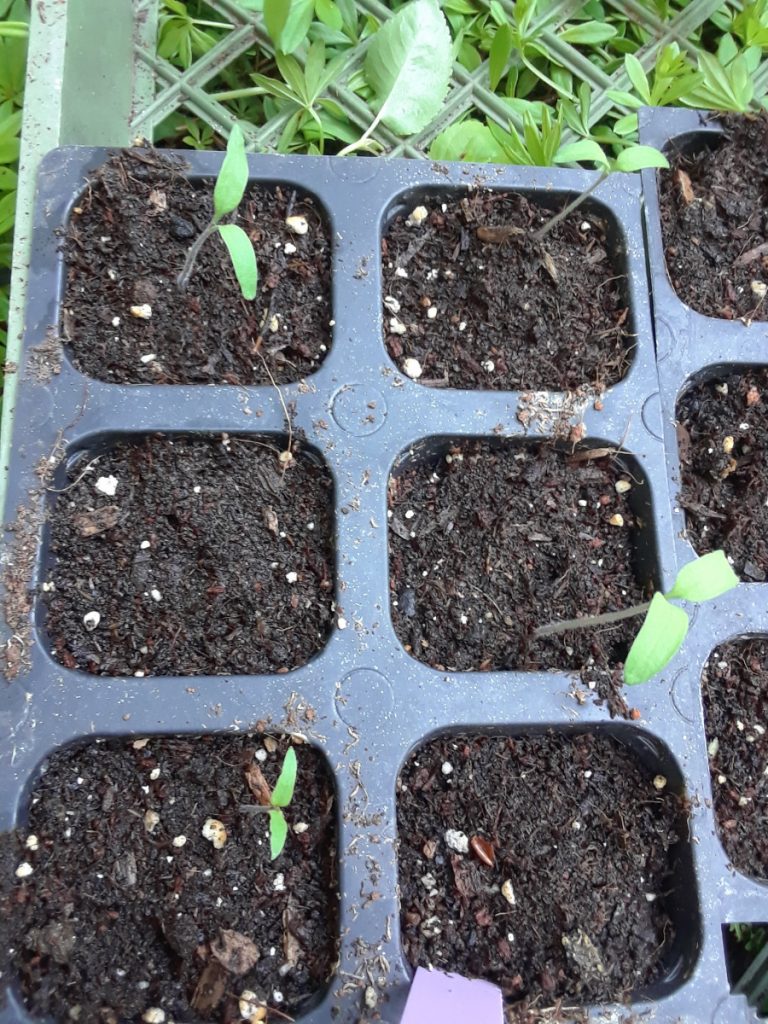
Indigo Rose Cherry Tomatoes!
Each tray had about 60% germination. 4.5 6-packs came up in Caleb’s mix first, followed closely by 4 6-packs of the bagged seedling mix. Some of the seeds I sowed were questionable, so it was expected to not have full germination. Other factors that may have limited my success include inconsistent temperatures and birds, seeing as I was bringing the trays inside and outside with no protection, definitely saw signs of birds and wasn’t totally consistent bringing the trays in every night. Even still, I was able to grow 8 lettuce and 6 broccoli starts to plant in Buzz and Blossom garden. I have learned that temperature consistency is very important. Dr. Dirt gave us a hot tip, watering seeds and starts with warm water helps with germination and growth.
Soil at the Evergreen Community Garden:
Caleb and Class Plot:
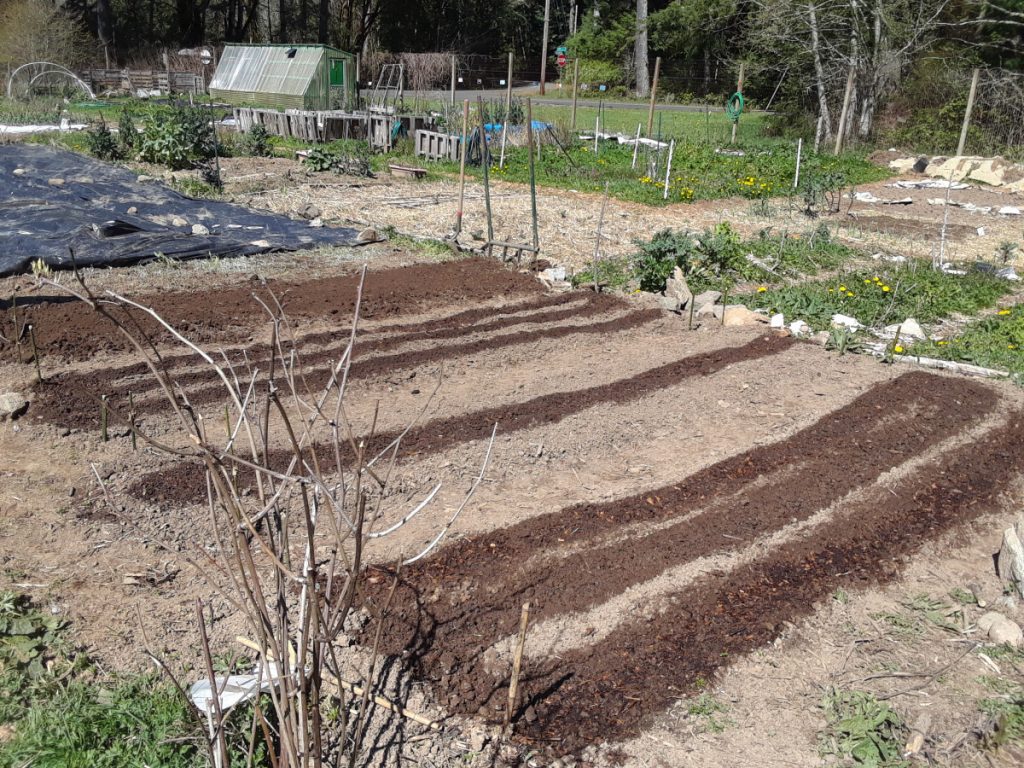
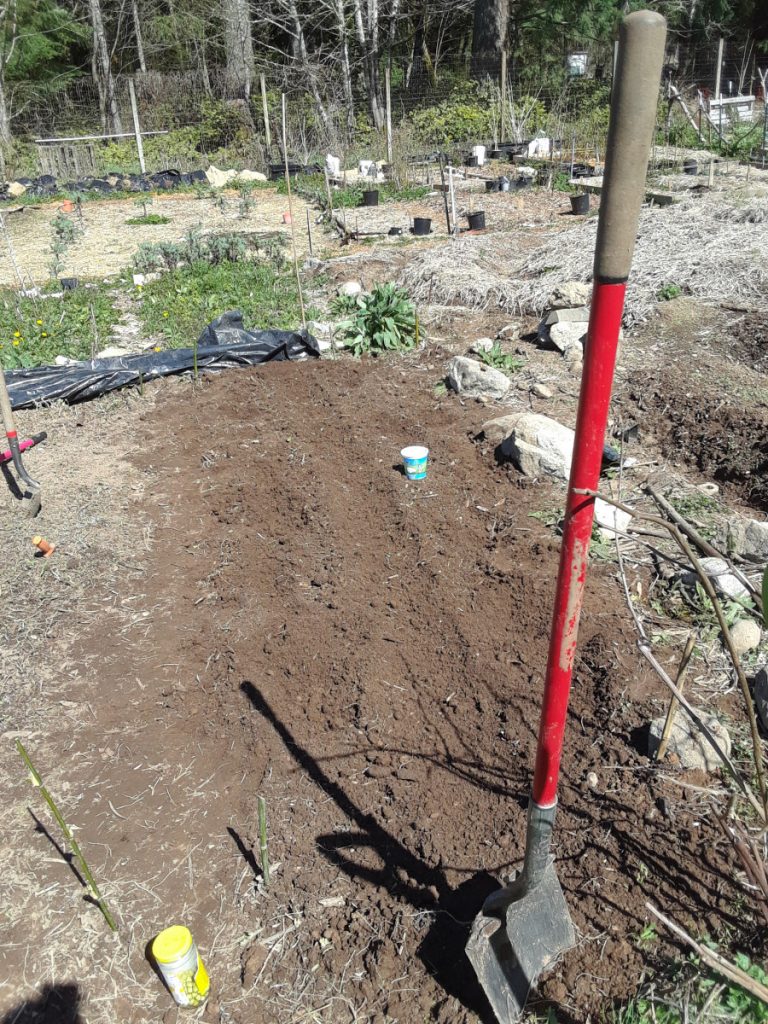
The first bed! 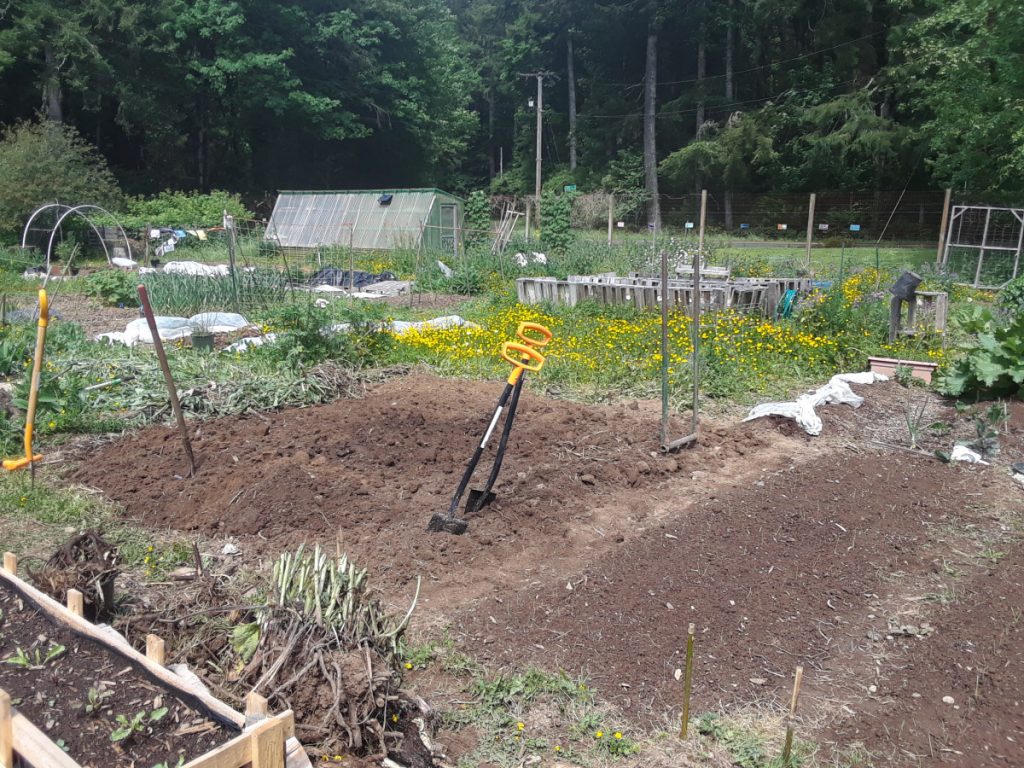
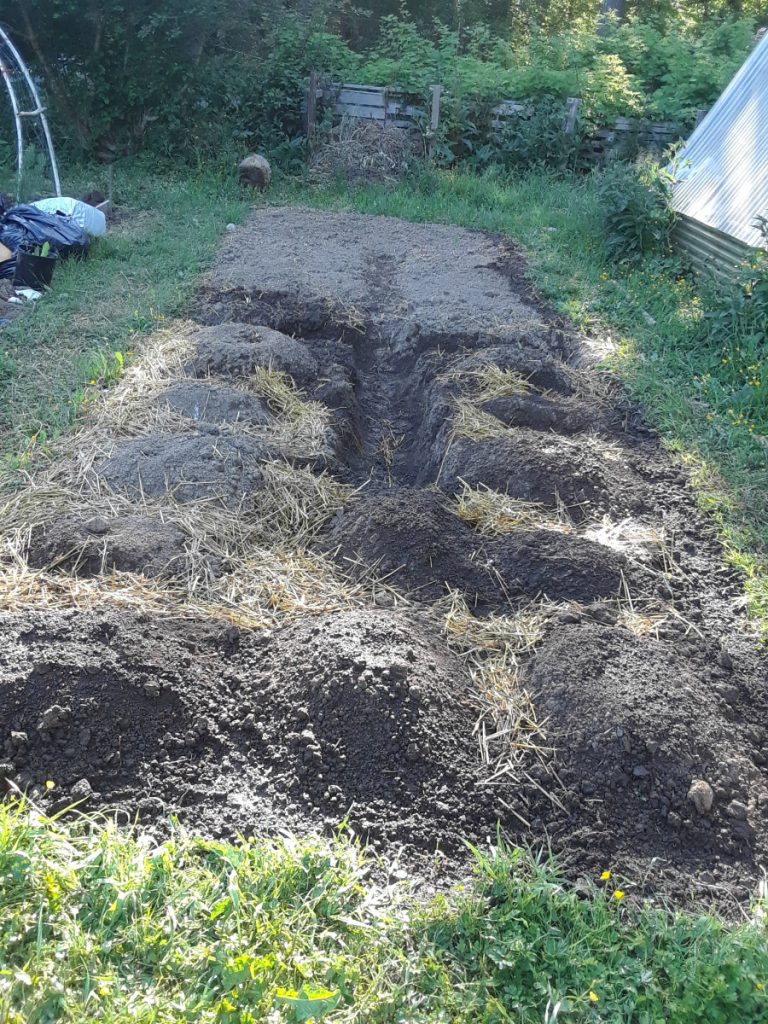
The last bed!
The soil in the class plot is a red brown color, dense when wet and dusty and crumbly when dry. The red is still visible even when compost was added to planting beds. Red tones in soil can imply high levels of iron oxides.
I noticed an immediate difference between the plot I am sharing with another classmate that is located in the corner of the community garden, around 50 feet away.
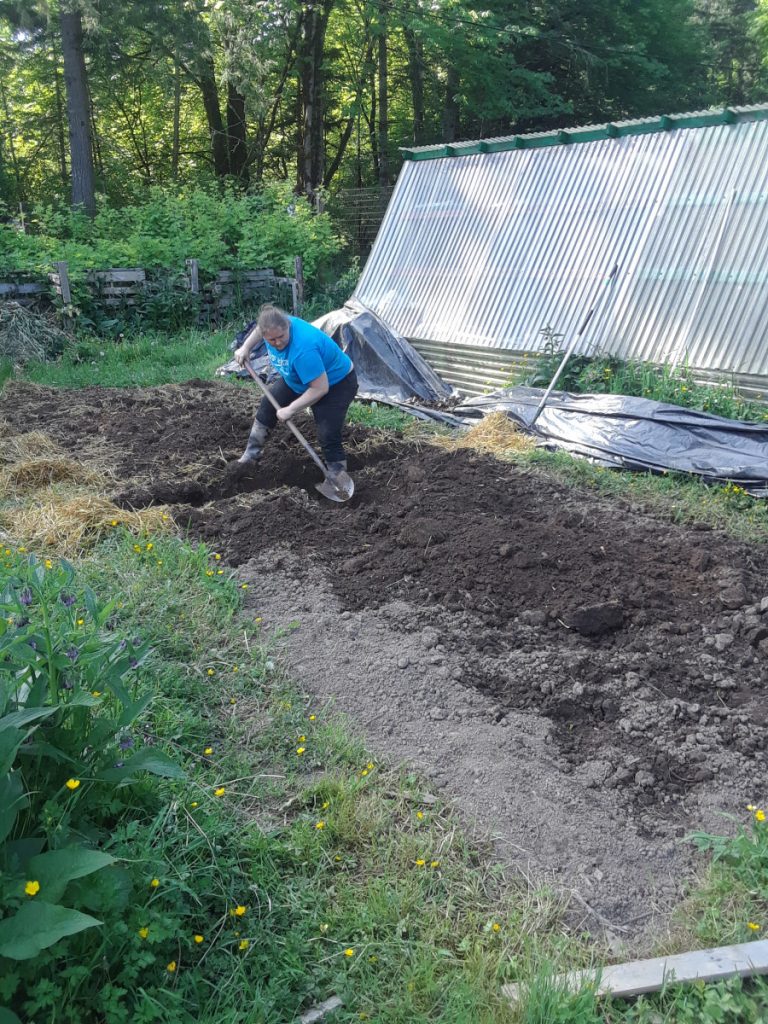
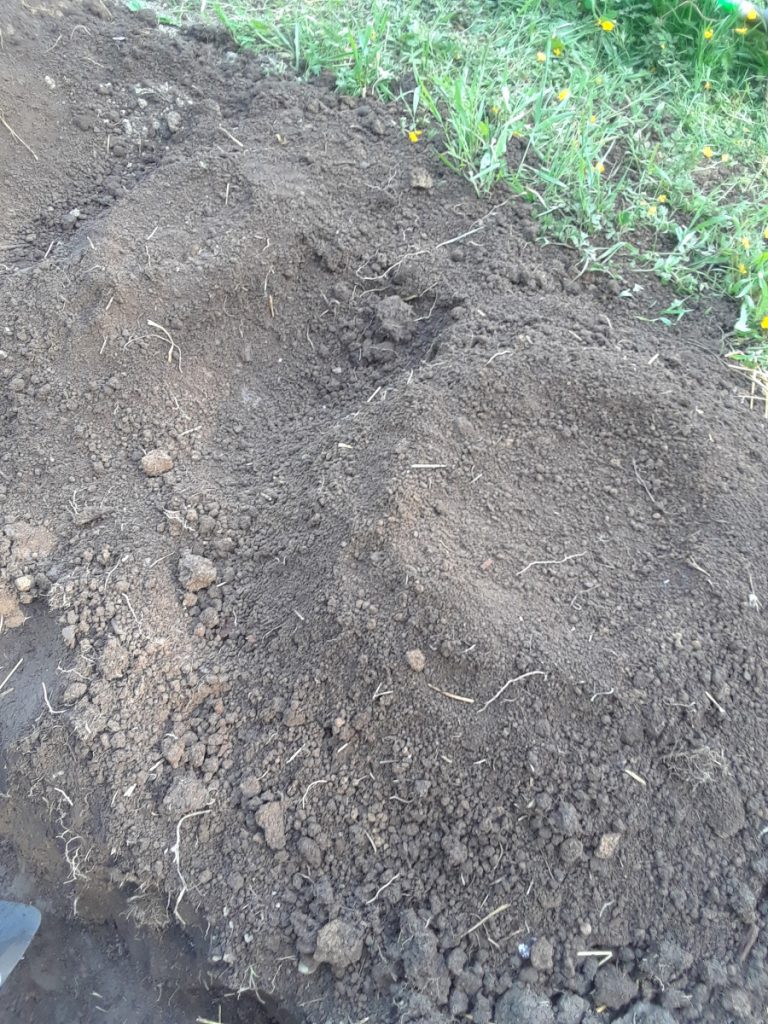
The soil in this plot is more grey, with a “fluffy” and easily crumbled texture, suggesting it is higher in organic matter. It was a dark wet color when we first starting clearing weeds and dried to a grey crunchy dust. This plot also gets shade sooner than the class plot, which is right in the middle of the whole garden space. I think that may account for the higher water contents.
Glacial Heritage Preserve: Burnt Prairie Grasslands
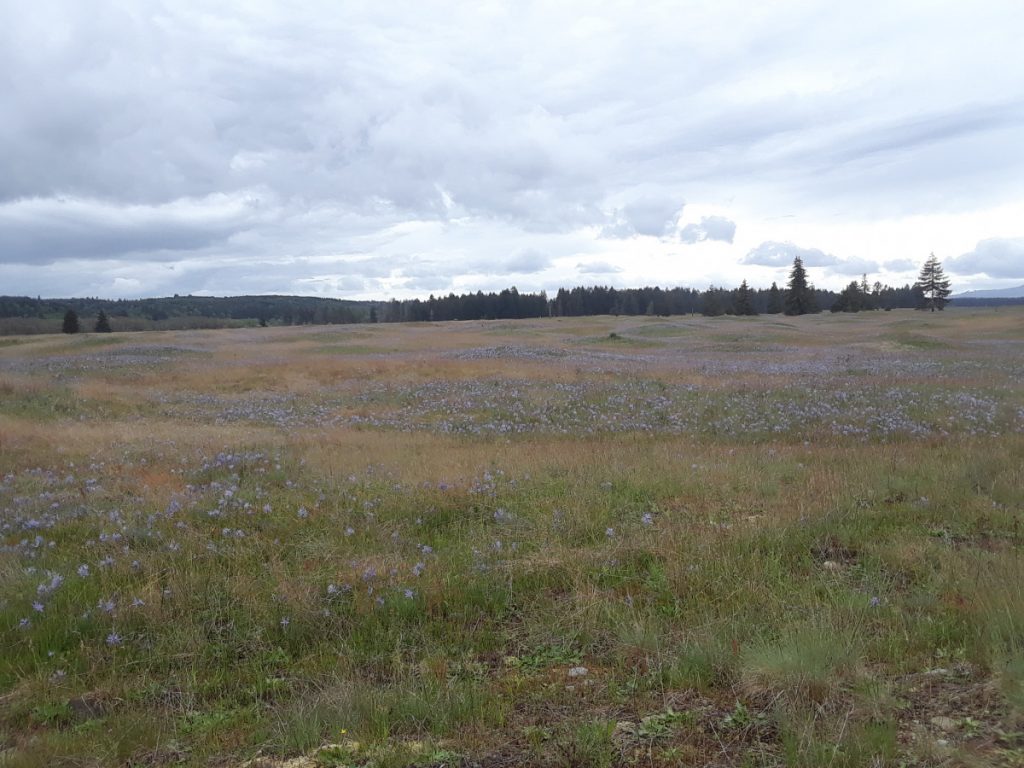
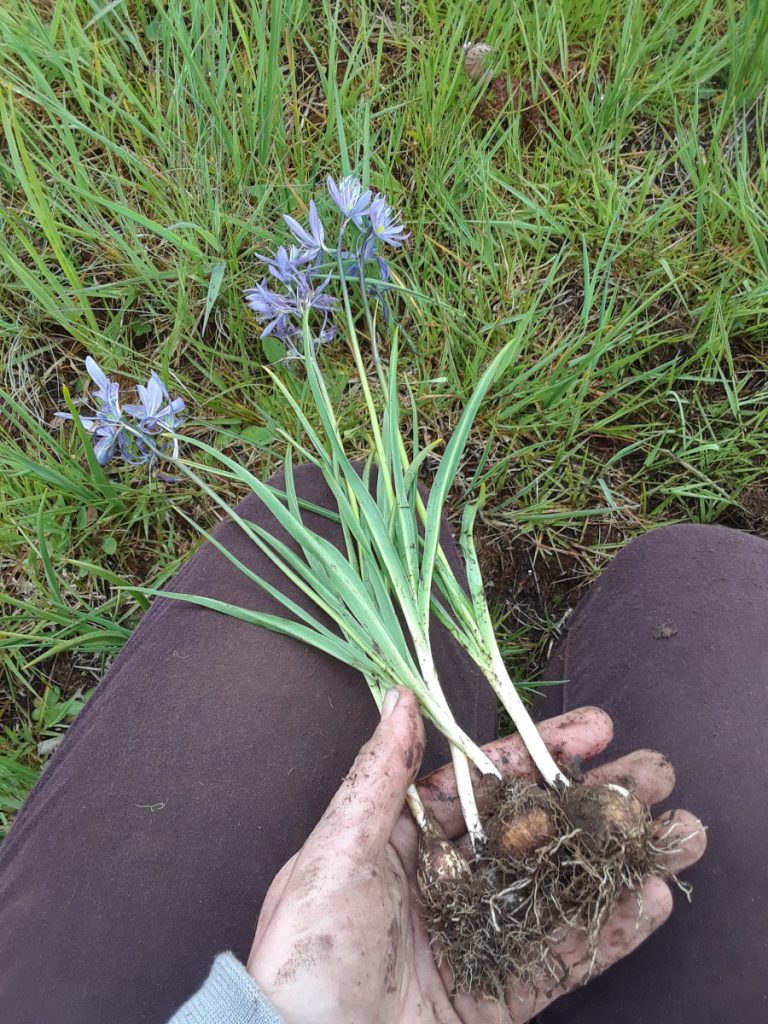
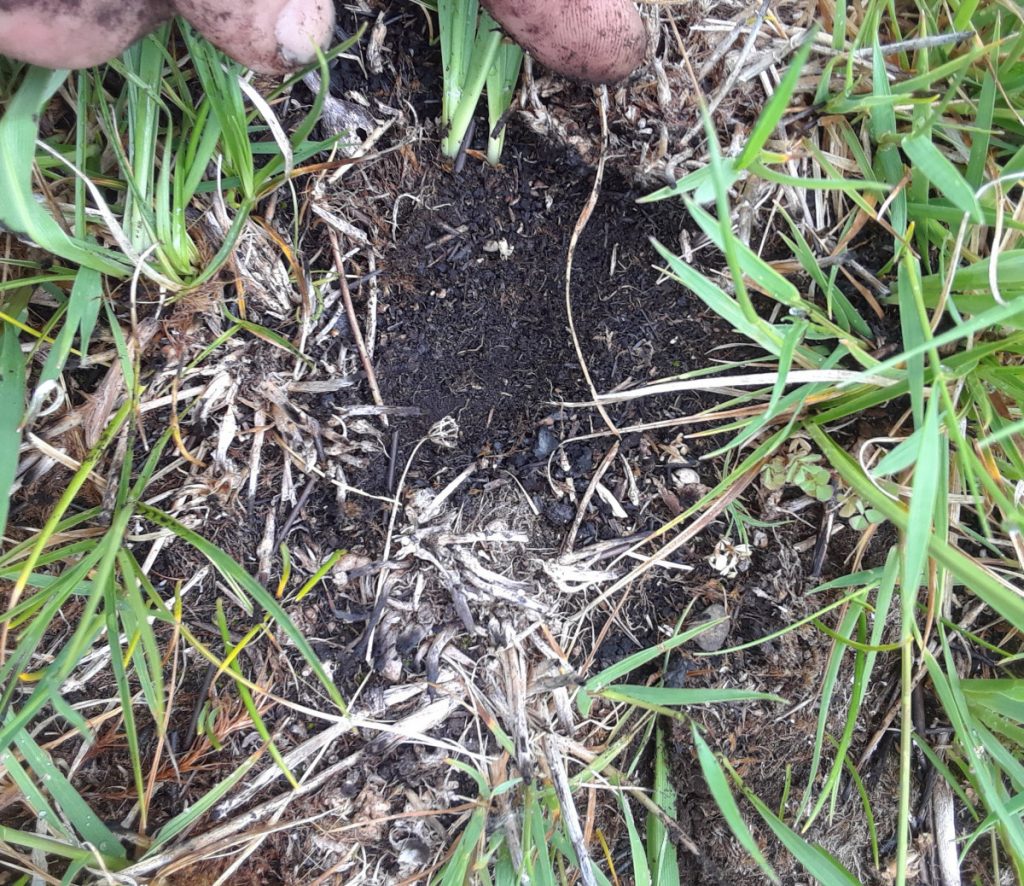
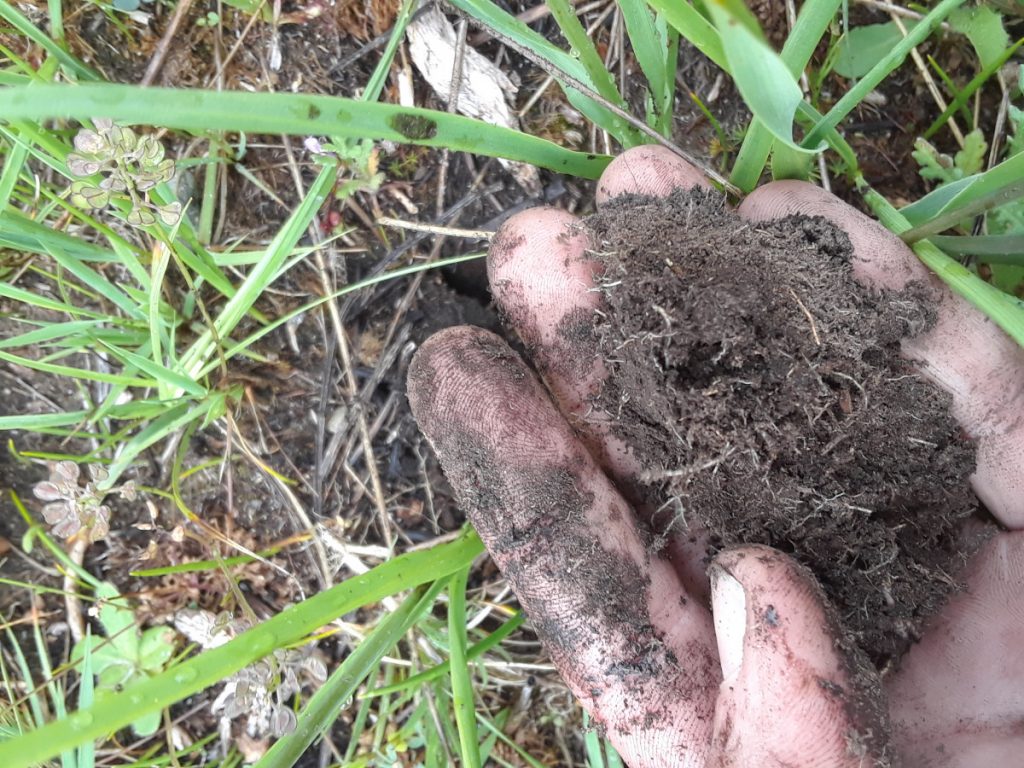
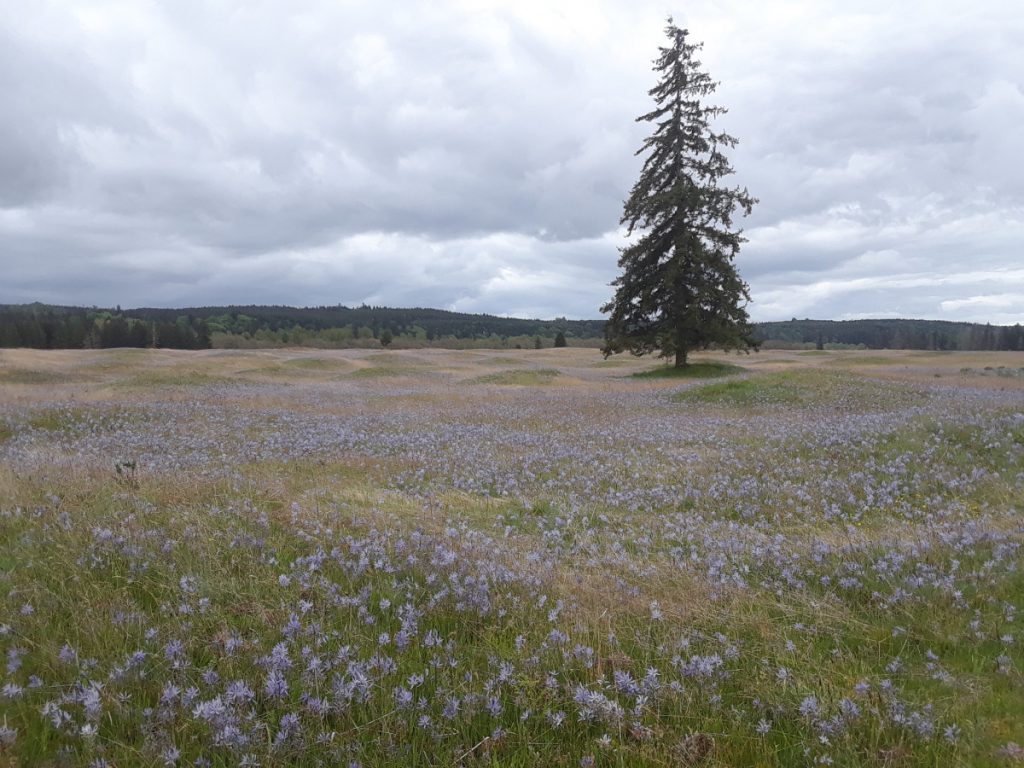
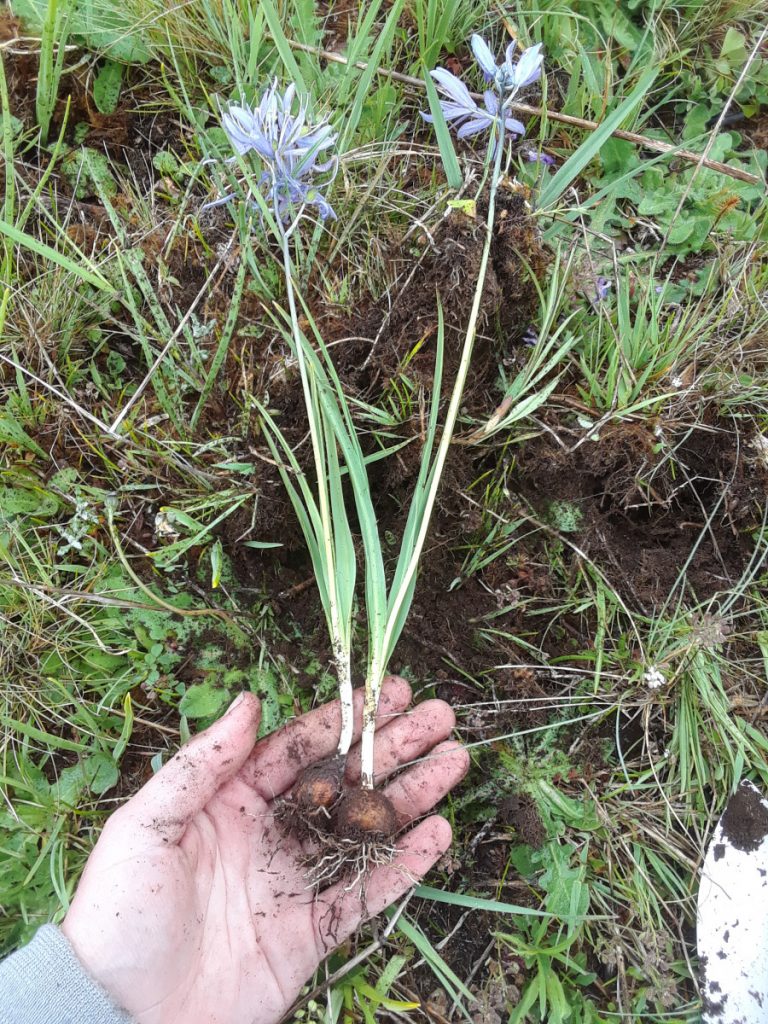
Glacial Heritage Preserve is a sliver of prairie owned by Thurston County. On various websites, this site is described as “an example of the Puget Prairie ecosystem seen by settlers in the 1800s” but more importantly it is the ecosystem Salish tribes inhabited and tended for thousands of years. The Squaxin Island Tribe held a camas harvest there and I joined them. Members of the group had traditional digging picks made of bone or antler, to sink down into the earth 2 inches away from the camas stem and 4 to 6 inches down, pushing up, to uproot the camas bulb. Some were buried even deeper. I used a hori-hori knife. The soil was stony, hard to dig through, full of roots and plant matter, and also had a silky smooth feel to the silt. There was a 1/4 inch layer of soot over the entire area we stood. The preserve is divided into different sections that are burned periodically. Generally, the area is closed to the public so I felt very grateful to be able to be there.