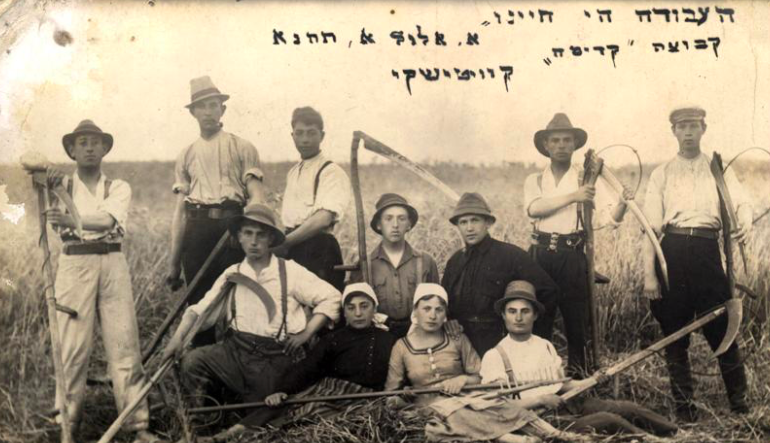
In 1804, the Czar of Russia allowed Jews to purchase plots of land to farm. Provided with tax abatements, exemption from military service, and other benefits, Jews were encouraged to start agricultural colonies with other Jewish families. These colonies were an attempt by Czar Alexander I to improve the quality of life for Russian Jews, who had been suffering from famine and extreme poverty in previous years. Although Jews were (finally) allowed to own land, various restrictions still applied: their farms had to be a prescribed distance from Christian farms and they were not allowed to purchase land in Christian villages. These requirements served the Czar’s second purpose— to populate the distant lands Russia had just obtained.
The land these Jews was allowed to purchase was in the steppes of southern Russia, a terroir to which they were unaccustomed. Accordingly, many fell ill and died in the endeavor’s initial years. As time passed, the Jewish agricultural settlements in Southern Russia and the surrounding countries supported thousands of families. This success was in part due to overt support from the Czar and foreign philanthropic organizations.
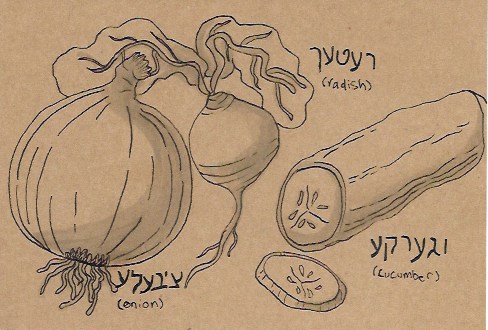
Other families chose to settle in small towns, shtetls, where each house had a small plot of land used to garden and raise animals. Each family had a cow from which they got all their dairy products; some had chickens or geese as well. Families grew onions, radishes, cucumbers, and potatoes in their gardens and supplemented these vegetables with food bought from the town’s central market.
While rural Jews had access to either farms or a garden, many still went hungry. The land they were allotted was hard to work, conditions were tough, and yields were often small. However, the communal nature of the agricultural colonies allowed families to support each other and farms became more successful as time passed.
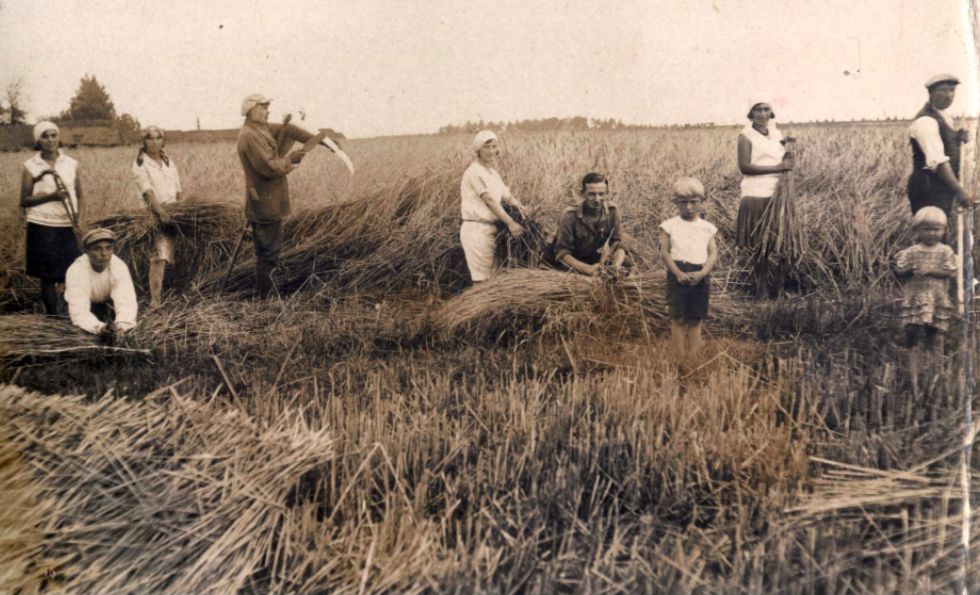
Community care and food was deeply intertwined in the lives of Eastern European Jews. In the film Horodok: A Shtetl’s Story 1920-1945, a survivor stated that “letting people go hungry was unthinkable” and bread was handed out by the rabbi to those who needed it no matter how poor the town was. The lives of Eastern European Jews were hard and starvation was not uncommon. However, food was continually viewed as something that brought people together—something sacred. Russian Jewish farming colonies reflected the Jewish connection between food and community. This connection lifted up these poor farmers and bound them to their history, to the land, and to each other. By 1890, the region supported nearly 18,000 Jewish families.
Sources:
- Dekel-Chen, Jonathan. “Agriculture.” YIVO Encyclopedia of Jews in Eastern Europe 24 July 2017. 30 November 2020 <https://yivoencyclopedia.org/article.aspx/Agriculture>.
- Rosenthal , Herman. “Agricultural Colonies in Russia .” JewishEncyclopedia.com, www.jewishencyclopedia.com/articles/908-agricultural-colonies-in-russia.
Leave a Reply