Eating and Drawing Memoir Week 6:
“Food insecurity is a characteristic of our food system, one that has been amplified, not created by the COVID pandemic” (Williams).
During the presentation “Eating During COVID-19: Food Banks and Cooking With Food Insecurity” on May 5th, Robert Coit, of the Thurston County Food-bank explained “people without enough income don’t have access to enough food, the right food, or just food in general” (Coit). Many people experience food insecurity, and as Sarah Williams explained, these issues have not been created by the COVID-19 Pandemic. The pandemic has simply brought pre existing insecurities of the food system to people’s attention.
The systemic inequalities in our food system are a big issue right now, but it is also important to remember that it has been that way for a long time. This is just one example of the inequalities that the COVID-19 pandemic has brought to light. In class, we have talked a lot about the social implications of the pandemic, and none of them are new. They were created by people, But amplified by the pandemic. The people who get sick are the same people who go hungry. The attention that the pandemic has brought to the insecurities of our food system is very important, but it is also important that these issues remain relevant not only in a state of crisis, but also in day to day life.
Robert Coit seems to be very hopeful that this will be the case. He explains, “what I hope is that when things return to normal, there is more of that continuing sense of wellbeing and community… These crises bring out the best in people” (Coit). Robert Coit isn’t the only one who recognizes the ways the Pandemic has been a catalyst for some positive change. On Soul Fire Farm’s COVID-19 response, it says “This outbreak reveals the interconnectedness of our world… It is showing, conclusively, that the health and well being of one is intimately bound to the health and well being of all” (Soul fire Farm). The Food Bank, and Soul Fire Farm are just two organizations working to end inequality in our food system, and their optimism in the face of two separate yet connected health crises, is something we could all use. It is a testament that there are forces working against the oppressive nature of the society we live in. Even in everyday life, the health of one is bound to the health of all. If people are able to maintain that perspective as we ride out COVID-19, then perhaps equality in our food system will be attainable.
Cooking Lab
This week’s food lab was chili, which is what I cooked last week. However, this chili was very different from the chili that I made for the last cooking lab, and as I explained last week, chili is a perfect food to eat during a pandemic. This Chili was much sweeter than the one I made last week, and it contained Mixed vegetables, which I have actually never had in Chili. I followed the recipe exactly, except I used meatless crumbles instead of turkey. It fed my whole family, and though we did polish off the entire pot, we were stuffed. The bread in the broth was another thing that I’ve never tried, but I loved it. It thickened up the chili really well, and it was delightful to come across small chunks of bread in the broth from time to time.
The Recipe
2 large yellow onions + 2 tbsp cooking oil, caramelized
2 tbsp extra-virgin olive oil
1/2 tsp red chili flake
1/4 tsp cinnamon
1/2 tsp freshly ground black pepper
1 tsp cumin
1 tsp coriander
1/2 tsp paprika
1/4 tsp ground Pasilla chili powder
1/2 tsp ground California chili powder
2 cloves garlic, minced fine
1 tbsp tomato paste
1 15-oz. can mixed vegetables
3 15-oz. can kidney beans
1 28-oz. can diced tomatoes
About 3-4 cups vegetable stock
2 slices plain white bread, torn into small pieces, for thickening
Drawing Lab
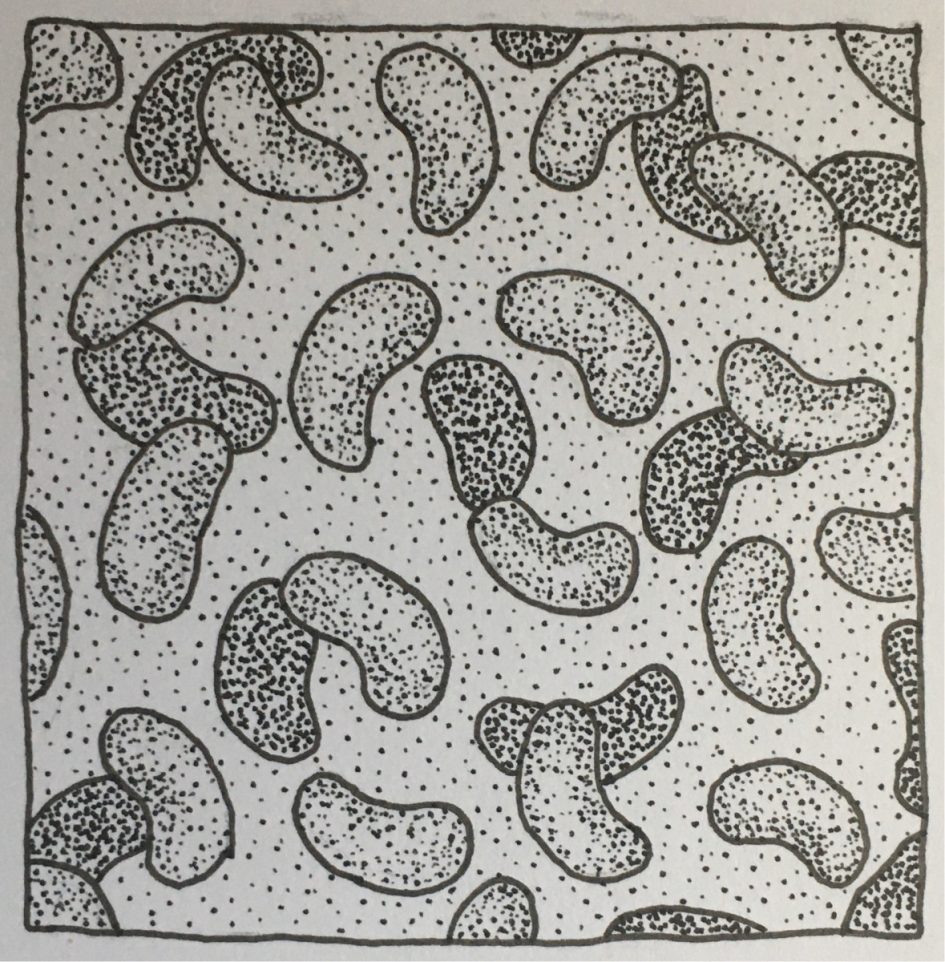
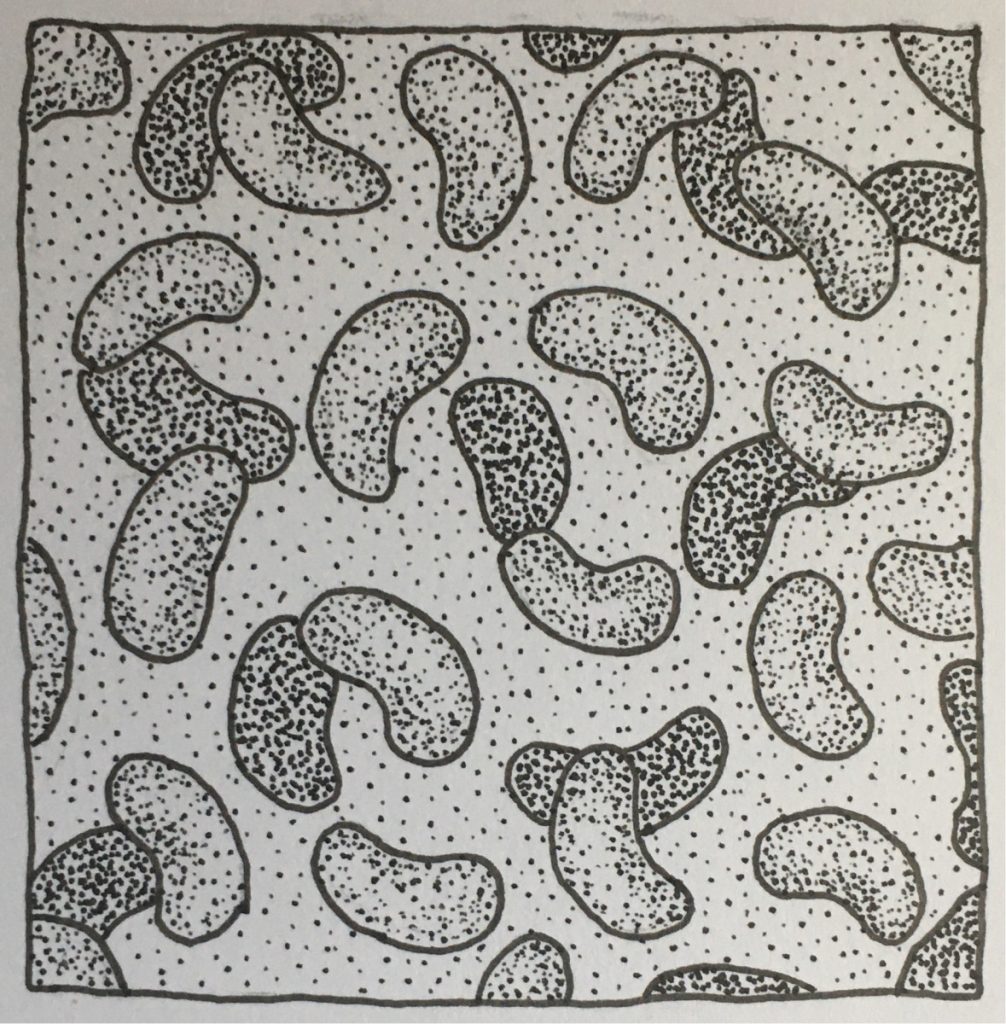
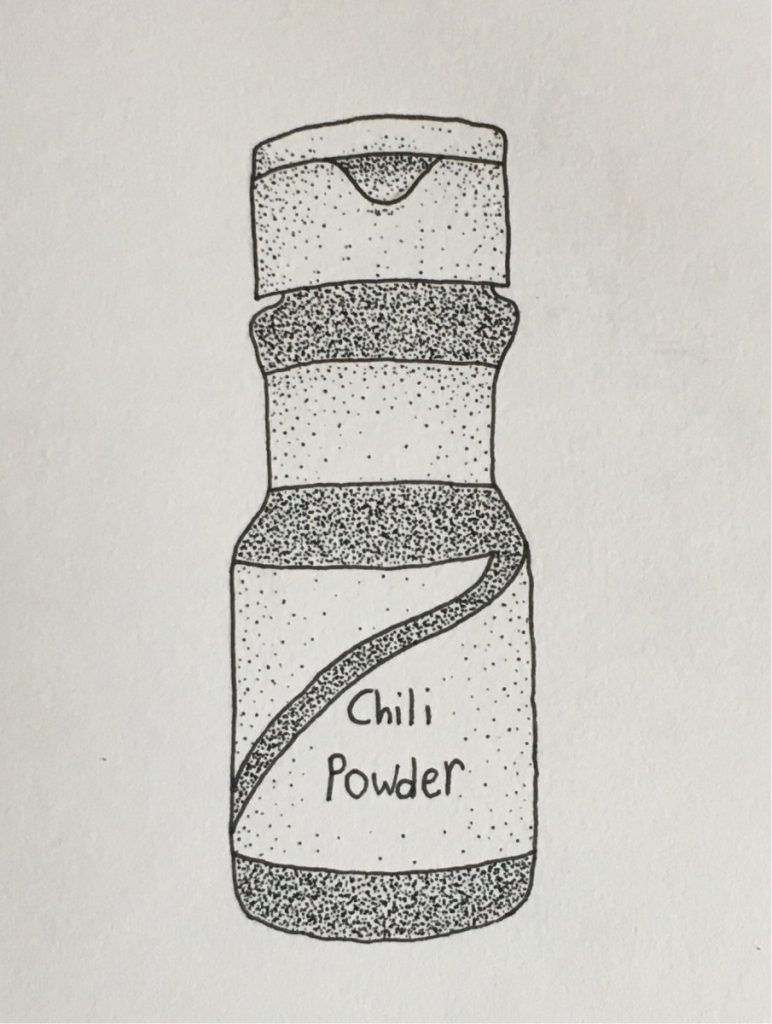
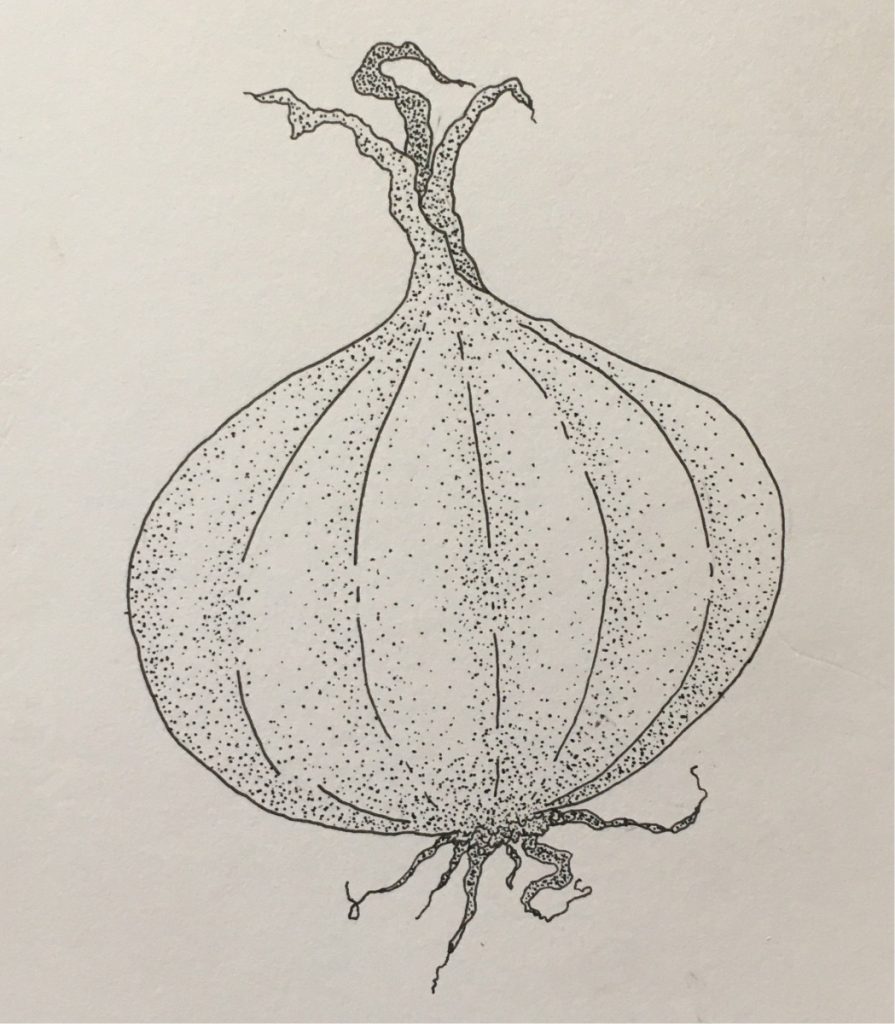
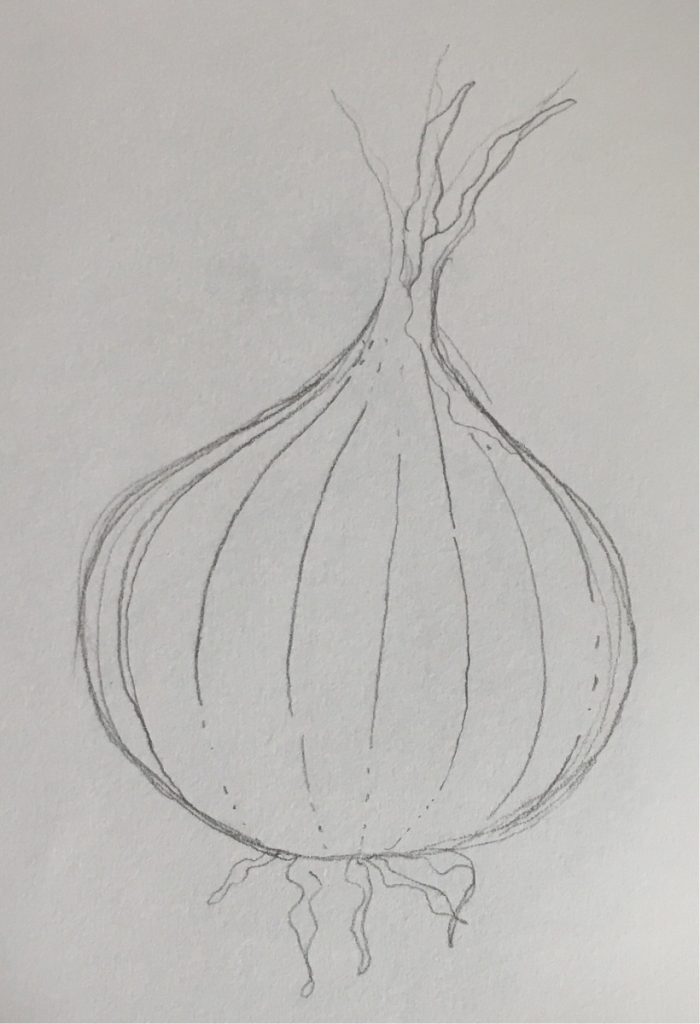
For my recipe illustrations this week, I decided to do stippled ink drawings. I’m trying to make sure that I never use the same medium for two consecutive weeks as a way to ensure that if I ever have an ingredient repeated, I still have to draw it. For the most part, it should actually be possible to avoid ever having to redraw an ingredient, but this week I chose to draw an onion (even though I already drew one last week) as a way to show how two different mediums can wildly change the same image. I also chose to stipple-shade instead of coloring the illustrations, because the way the individual dots come together to create an image seemed symbolic of the concept of the individual being tied to the collective.
I also drew beans again despite having drawn them last week, but that’s just because beans happen to be the essential ingredient for both recipes. This is a good example of why switching mediums was a good idea! These drawings were definitely the most time-consuming ones I have completed so far, but I really enjoyed the process and I was pretty happy with the way the drawings turned out. Drawing food is getting a little bit easier each week. That being said, if I ever have to draw beans again I might cry.
In the book Salt, Fat, Acid, Heat: Mastering the Elements of Good Cooking, Samin Nosrat writes, “the choice to embellish this book with illustrations rather than photographs was deliberate. Let it liberate you from the feeling that there’s only one perfect version of every dish. Let it encourage you to improvise, and judge what good food looks like on your own terms” (Nosrat, 2017). This is how I feel about my illustrated cooking labs. Also, it liberates me to illustrate, rather than photograph the process because if my food does turn out looking objectively bad, nobody needs to know.
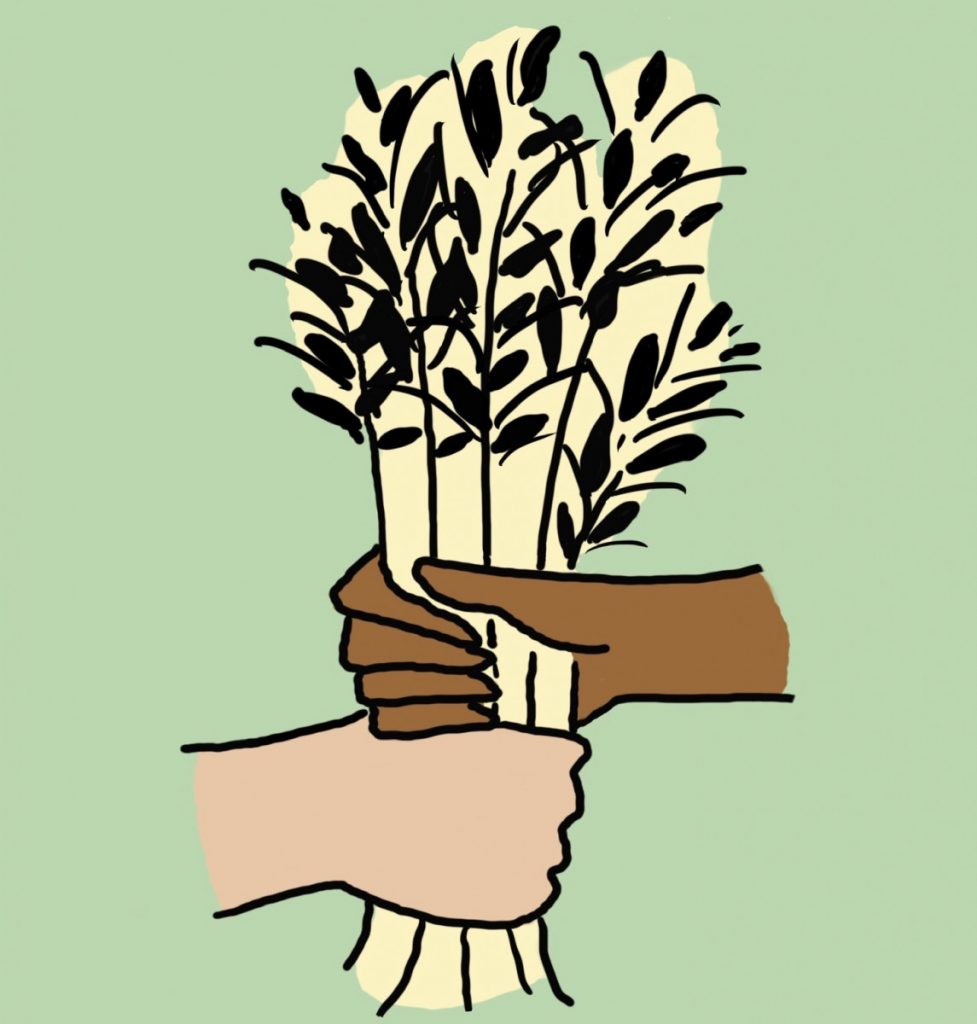
For the illustration at the top of my eating memoir, I chose to illustrate the logo of the Thurston County Food-bank. I just got an iPad for school and for art, and this is the first digital drawing that I have done for this project. It was a pretty quick drawing, but already, I am extremely excited to explore the limitless possibilities of digital illustration in future weeks, and as I illustrate past eating memoirs. I chose to do a colored image of the logo, as I have only seen images of it in black and white, and wanted to provide my own interpretation. The food bank’s mission is to “eliminate hunger in the community, in the spirit of neighbor helping neighbor.” This includes eliminating access barriers, and prioritizing health, through partnership and collaboration. I chose to color the two hands different colors to represent food being shared between cultures. Like I said earlier, this was my first digital drawing, and I’m excited to explore the possibilities with digital art as I proceed with this program.
Leave a Reply