An Eating/Drawing Memoir
“People want to eat delicacies like shark’s fin just because they are rare and expensive, and because they are the kind of thing emperors used to eat” (Dunlop, 2008, p. 262)!
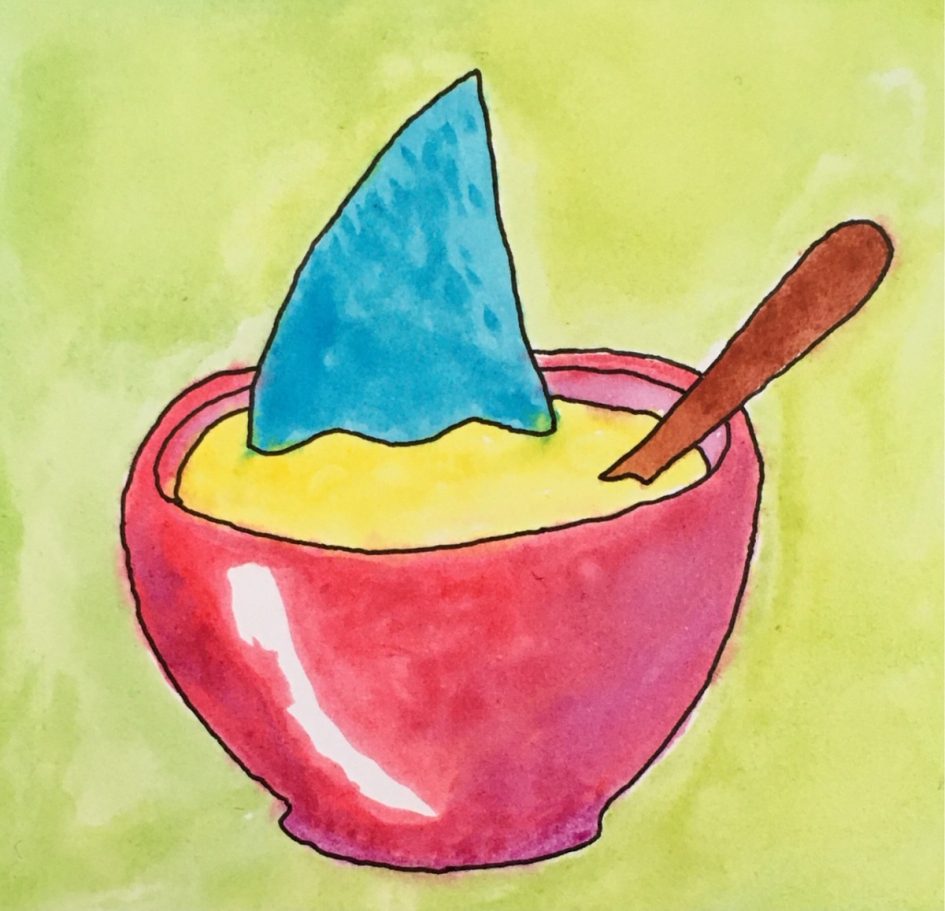
I decided to illustrate my own interpretation of shark’s fin soup, not just because it is a dish of relevance throughout the entire book, Shark’s Fin and Sichuan Pepper: A Sweet Sour Memoir of Eating in China (heck, it’s right there in the title), but also because chapter 16 describes the dish as a luxurious delicacy with quite a bit of “snob value” (p. 261). This class-defining dish eaten by the rich is clear evidence that food can be, and has been used as a way to define people as “in” or “out.”
It is very clear that just as our food is defined by us, many people have been defined by it. People have historically used food to identify who is in, who is out, who is the same, and who is the other. When visiting Uyghur, Dunlop writes, “For the Chinese, of course, this was always a Barbarian land” (Dunlop, 2008, p. 239). The label of “barbarian” or “savage” has long been used to dehumanize people and justify discrimination against them. “While the Uyghurs drink tea… they show their nomadic heritage in their liking for yoghurt and other Dairy foods” (p. 239). Stereotyping is a harmful form of discrimination, and this shows how it even affects the culinary world.
Another example of food stereotyping is mentioned in Choice Cuts: A Savory Selection of Food Writing From Around the World and Throughout History, by Mark Kurlansky. It is a writing by French Larousse Gastronomique on American food in 1938. It is explained that “many are the people, here in France, who think, even write, that American cooking is barbaric, and that, in general, Americans do not know how to eat or drink” (Kurlansky, 2002, p. 409). This is a reminder that every group of people has their own version of the barbarian. As shown in Astoria: Astor and Jefferson’s Lost Pacific Empire, for the settlers in America, it was those native to America who were the barbarians. That narrative in many ways has remained to this day. However, many white Americans never experience being the “other” or the “barbarian.” This writing is an alternative narrative to most that are distributed in America in that it provides that perspective.
Another reason I chose to illustrate Shark’s fin soup, is that there aren’t very many signs of danger that are as jarring as a dorsal fin poking out of the water. I wanted to depict the danger of food as fuel for prejudice and show what a looming threat (just like a shark’s fin in the water) it is. Food can either fuel oppression, or it can fuel resistance to it. It has great power to break down barriers and bring people together. Larousse goes on to write that American food “is different than ours, but that does not necessarily mean that it is bad” (Kurlansky, 2002, p. 409). Even though food can be an identifier of our differences, it should not identify those things as good or bad. Narratives produced in the media are often used to divide people by their differences, and to make the words “different” and “bad” synonymous. If food is used alternatively to celebrate differences, then maybe, one day even shark and man will be able to sit down together at the dinner table as equals.
Food Lab
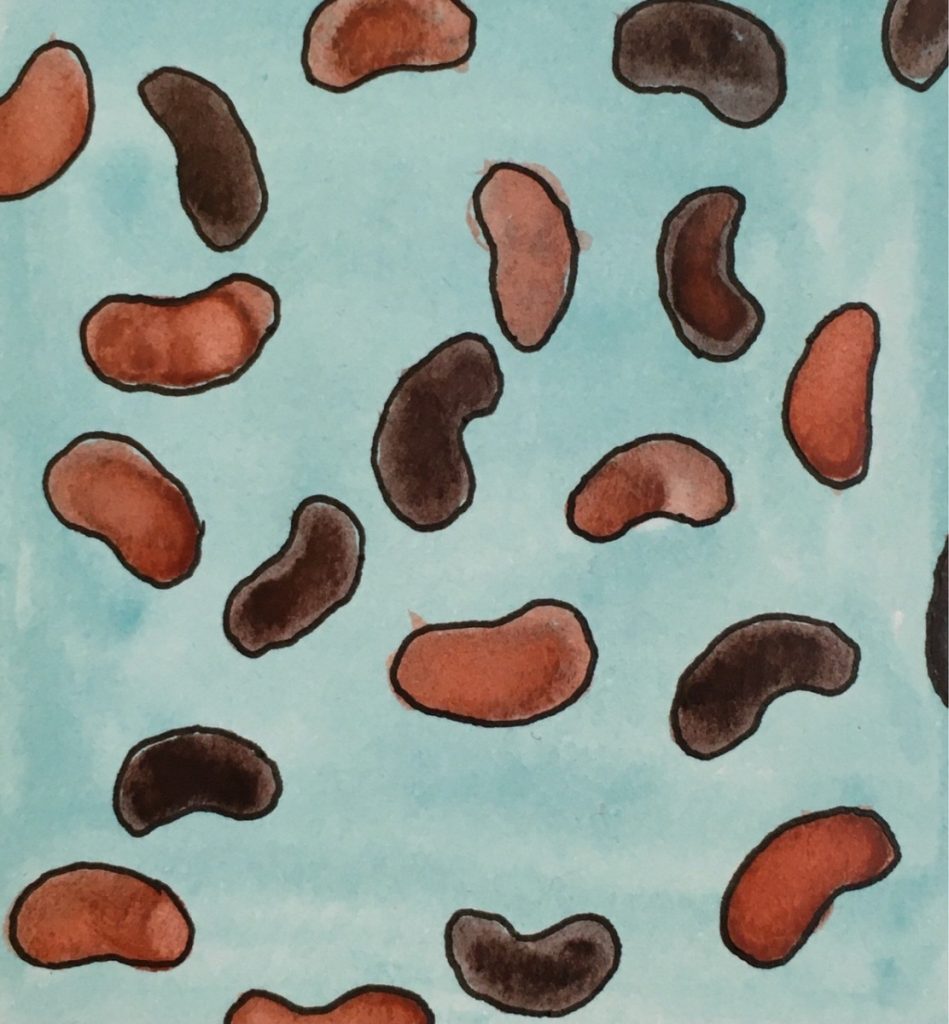
For the week 3 food lab, I cooked both options a and b so didn’t have a new recipe to follows for this week. I decided to make a recipe for quinoa chili that my girlfriend and I love to make. Black bean soup was one of the famous American dishes listed in Larousse Gastronomique on American Food, and though it isn’t black bean soup, black beans are a central ingredient. Also, because black beans were a star ingredient in week 3’s cooking lab, it seemed close enough to what I could have been making this week. This dish is also relevant because the recipe calls for both salt and sugar, and as mentioned in Choice cuts, the French “criticize Americans… for their habit of mixing salt with sugar” (Kurlansky, 2002, p. 409). This chili is an incredible vegan dish, especially during the COVID 19 pandemic, as it is a wonderful meal when you are stuck inside, and beans are a long lasting food that is very nutritious. I recommend serving it with cilantro and Avocado.
The ingredients:
- 1 tablespoon olive oil
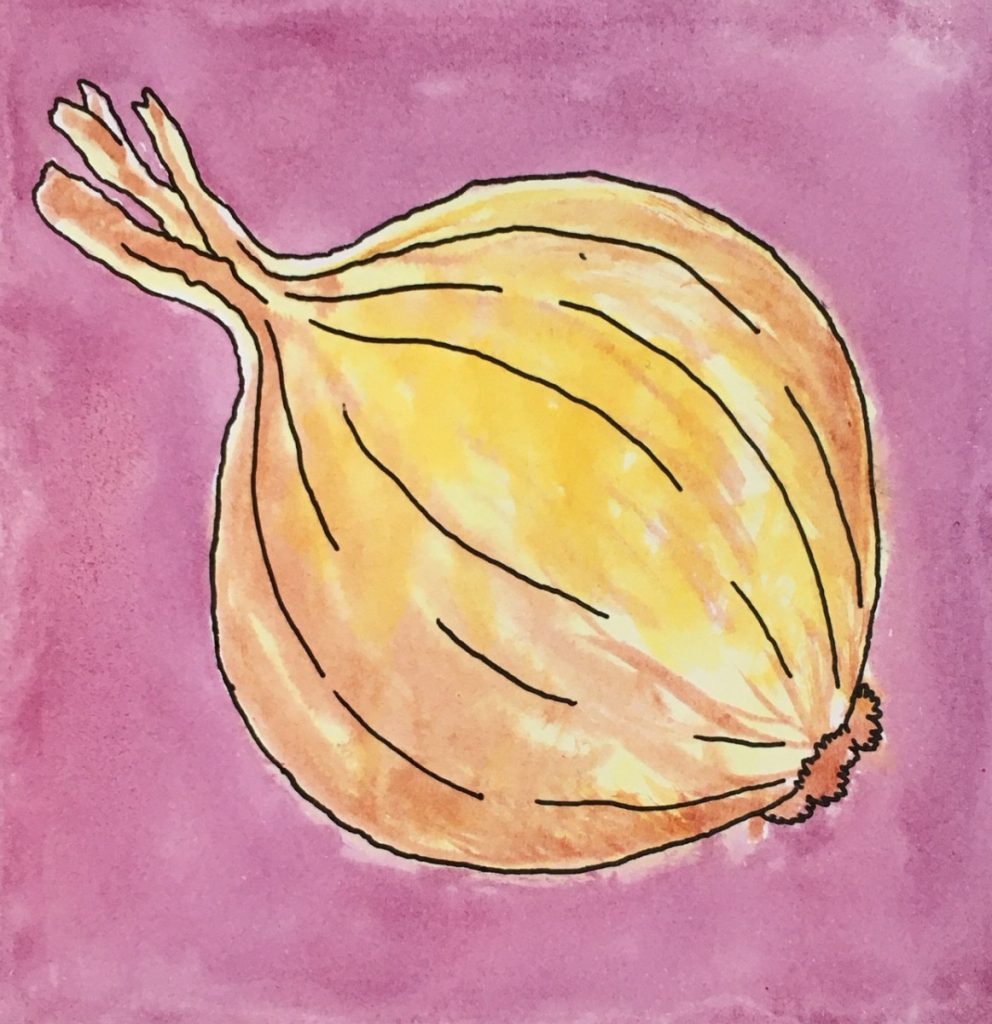
- 1 medium yellow onion
- 4 cloves of garlic
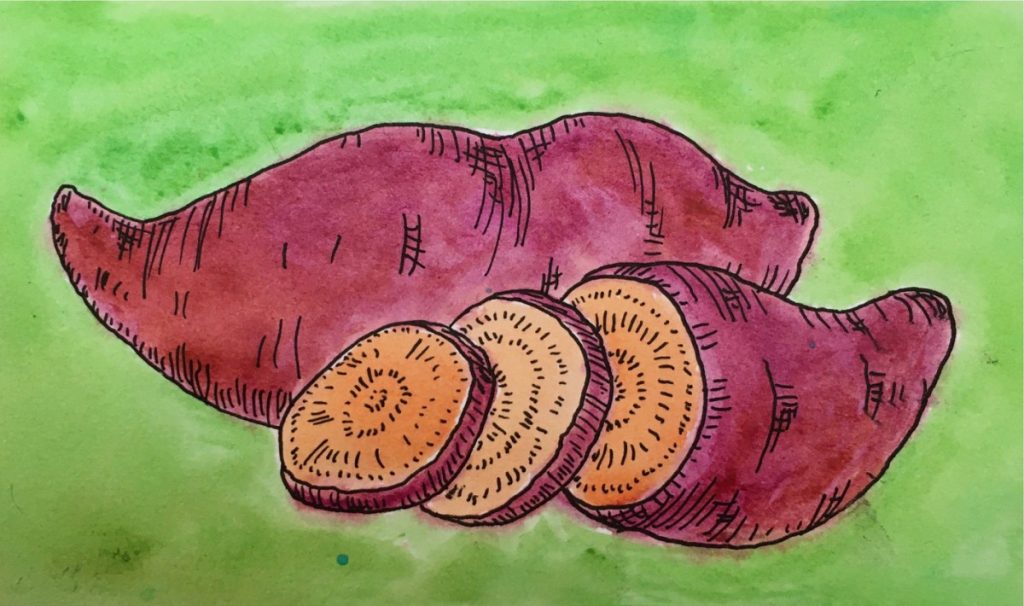
- 2 medium sweet potatoes
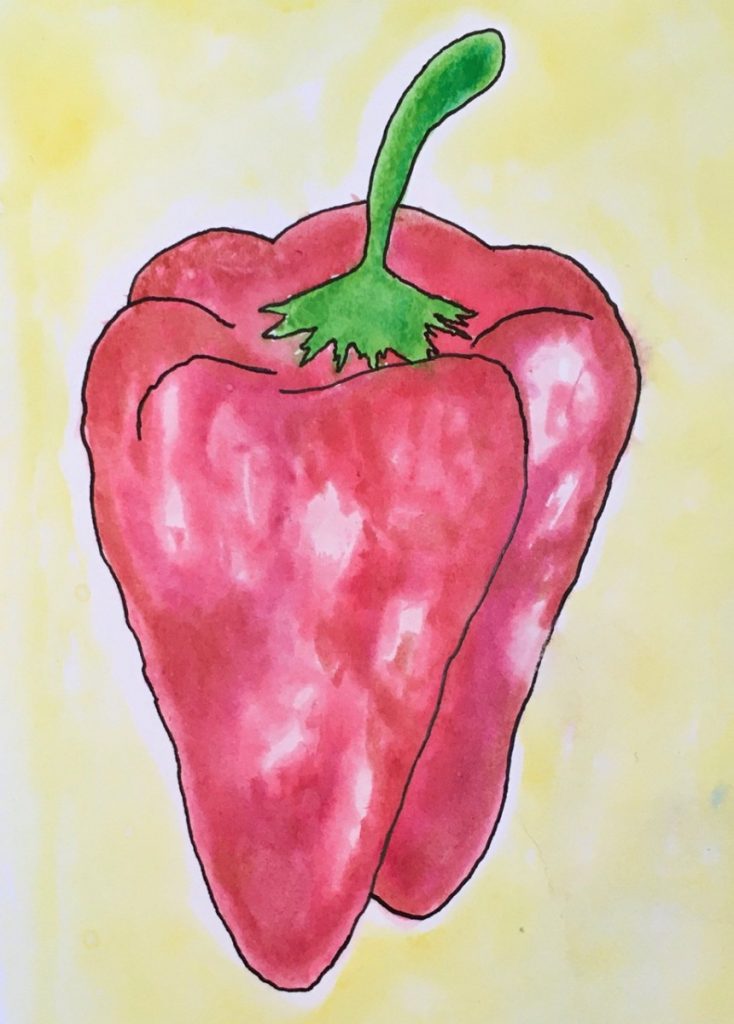
- 2 medium red bell peppers
- 1 tablespoon chili powder
- 1 table spoon chipotle chili powder
- 1 teaspoon ground cumin
- 1 1/4 teaspoon kosher salt
- 2 1/2 cups low-sodium vegetable broth
- 1 (8-ounce can) low-sodium tomato sauce
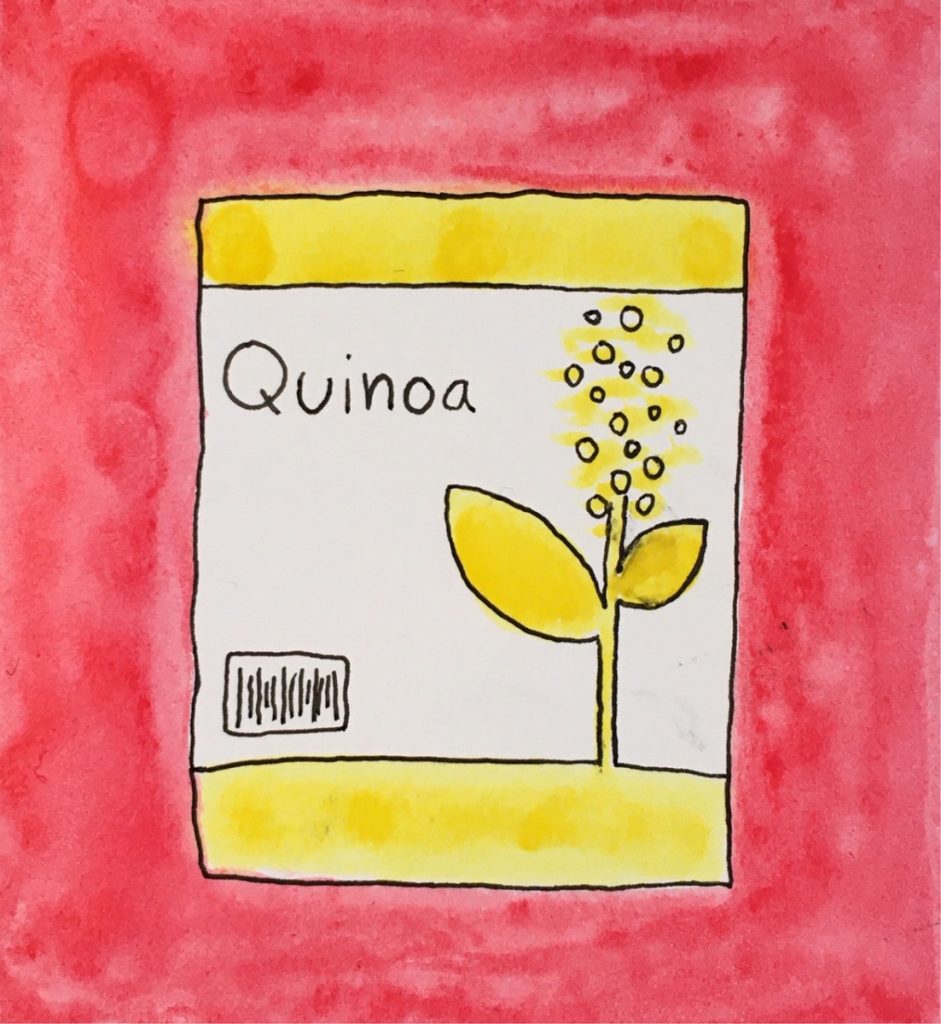
- 1/2 cup uncooked quinoa
- 1 (15-ounce) can black beans
- 1 (15-ounce) can red kidney beans
- 1/2 teaspoon granulated sugar.
Drawing Food
Much of what I want to say about my illustrations was already mentioned in my eating memoir. My artistic decisions were guided by the content and themes of the reading, as explained above. I’m trying to switch up the medium I use for my illustrations each week as a way to ensure that I have to draw something new even if an ingredient is repeated in a future lab. I chose to use water color as my medium for this week because a shark is an aquatic animal and it made sense to use water for a picture of one. I don’t paint very often and saw this as a good learning opportunity. As I try new things with food, I also want to try new things with art. It was a little challenging but I was overall pretty satisfied with how the illustrations turned out. I want to focus less on illustrations of produce next week, to make sure that I get in some drawings of spices, sauce, etc.
Leave a Reply