
#1d: Case Study Tasting Research:
During this time, we had the pleasure of reviewing an interview hosted by Sarah Williams. She interviewed COR Cellars owner Luke Bradford! He had previously attended The Evergreen State College, and cites it to be a big influence in his career path.
Luke’s Story (1-13 min): Take notes as you listen such that you are able to use your notes to re-tell Luke’s story from Evergreen student to owner/founder of COR Cellars. Include your detailed notes here making sure to include information about how various but specific places, passions, tastes, and languages shaped Luke’s education and business decisions.
Answer: Luke was a skiier and lived his life on the road, he decided to take 8 quarters to do some schooling at evergreen to do agroecology and took some Latin classes on the side. Not knowing what to do with his life in his youth, he became very interested in sustainable agriculture as he progressed in college. During his college experience he ended up taking a climbing trip in Italy, his cousin had a winery there, it was there that he believed things clicked for him. An evergreen teacher offered to sponsor an independent study program in Italy. He ended up getting a job at a winery, and found his calling, he thought it would be a good idea to fund his own winery in a place where real estate was more affordable.
COR Wines and Luke’s Wine Tasting Recommendation (58-92 min): Type your response to each of the following prompts based on Luke’s talk.
Why did Luke choose the name “COR Cellars”? Be sure to include at least 3 ways that for Luke “COR” evokes a sense of place.
Answer: COR is a Latin word for heart, which he found out at evergreen when taking a Latin course 1: active volcanoes and the energy of the volcanic soil embodies wine 2: he found a phrase he liked from the Latin course, “good wine pleases the human heart”
3: He thinks COR represents a first instinct is always right mentality.
Why does COR have two labels? Which AVA corresponds with which label?
Answer: the white wine is from the gorge, and the reds are from the Horse Over, and he wanted to make it clear where each came from.
What are at least 4 recommendations Luke makes for a wine tasting at COR?
Answer: 1: make an appointment ahead of time 2: come curious and ready to try different things 3: give yourself enough time throughout the day 4: don’t be afraid to ask anything
What are at least 2 of Luke’s pet peeves?
Answer: People licking the wine glasses, and people aggressively swirling and spitting the wine.
What wines should you expect a tasting flight to consist of at COR and why?
Answer: Sparkling, rose or white, light bodied red, medium bodied red, high tier red. Summer usually has more whites, Winter is heavier on reds.
Would you be interested in participating in a virtual wine tasting with Olympia’s Wine Loft manager Justin Wilkes? Answer: I can’t sadly, I’m just a tad underage ☹
#1e: Stuckey’s Taste Book Experiments
Here, we started on our journey through Barb Stuckey’s “Taste” book. Below is my first step on that journey.
1st Experiment Questions (pg. 347)
Reflection: What were your thoughts and feelings during these 5 minutes? Was it pleasant? Was it tough? What did you appreciate?
Really taking my time with this one made me realize how right Stuckey is about taking things for granted. I often ignore the taste of most foods; I just focus on getting it down fast so I can get on with everything else in life. Had me in a moment of self-reflection for about 5 minutes.
What senses and tastes were being triggered for you while eating these raisins?
I think the raisins were kind of sweet and savory really; a generous taste of sweetness, and a nice accent of tang to compliment it. They were squishy, like it had a hint of life left in it but dried out like a husk of its former self. Kind of reminds me of when I was young, playing with friends for a long time, and coming inside for a small snack of raisins or crackers.
Summarize the life you saw for the raisin before you watched the California Raisins ad.
I mean I can only imagine that it wasn’t exactly the top shelf; otherwise, it would’ve ended up on the top shelf. It’s probably of edible quality but was thought to be more palatable as a raisin. So there it goes, off to be processed and packed into a small box for some child’s fingers to mash them until they can manage to get a couple out.
Describe the life you see for the raisins that are now a part of you in relation to “American” labor, branding, and advertising/entertainment.
I’ve been watching food process documentaries for a long time now, so my view has always been the same when it comes to products that look suspiciously uniform. If there’s a branded product, I feel like there’s probably going to be some issue between that company and labor laws, or something else; it seems like its really hard not to slip up somewhere if your company gets big enough.
2nd Experiment Questions (pg. 30)
How many tastebuds did you count within the binder ring?
I’ve counted about 23 tastebuds. I am a Taster.
What are your thoughts on the role that tastebuds play in your tasting experience?
I feel my sense of smell guides me through my tasting experiences more than anything else. I have singed many parts of my tongue with ridiculously hot foods and sauces, and some other things I might surmise. So I’m thankful I have any form of taste really, even if it comes from my nose.
3rd Experiment Questions
What are the five basic tastes?
Sour, sweet, bitter, umami, salty
What senses were triggered before and after plugging your nose?
Well these experiments always surprise me, even if I’ve done it every other meal I eat. I tasted mostly sweetness when I plugged my nose, once I could breathe through my nose again, I tasted what I usually taste from assorted jellybeans (not the Harry Potter kind thankfully). Almost as if I stopped using half of my tasting senses there for a moment!
Could you tell what flavor jellybean you had chosen before you unplugged your nose? What flavors did you get?
That’s the thing with assorted jelly beans, you never really know! You could be thinking wow this must be a lime flavored one, and then it turns to tell you that you just ate grass, and then you proceed to regret eating everything with Tapatio on it. But I could tell the more generic ones apart for the most part. I got orange, I think.
What went through your head at the moment of unplugging your nose?
I feel like I’ve ruined my tastebuds really, I got orange, and I can’t remember the rest I got but it was probably something easy. I felt a bit of relief in knowing that all of my over-salted dishes I cook are over-salted for a tangible reason. I like this experiment a lot, but I should probably trash my dreams of going on Master Chef.
4th Experiment Questions
What did you find out about your own tongue, in relation to the controversial histories of the supposed map of the tongue’s taste areas?
I won’t say I feel too confidently in the old tongue map, doesn’t feel as tried and true as I thought it would be. My tasting experience change a bit every time I switched what areas of my mouth I was tasting in.
Did you experience different intensities in different areas?
Mostly on the sides and the tip of my tongue.
Overall Reflection
What have you learned from these 4 experiments? How might your learning relate to any/all of the TM program questions regarding the taste of place?
Surprise surprise, the kid who ate ghost pepper chips on a weekly basis didn’t turn out to be a Hyper Taster. No but really, I thought these experiments kind of shined a light on the fact that I taste at a minimal level, which I am both unsurprised and surprised at. I also realized I should probably write with a little more professionality. Don’t think I’ve ever taken the time to think about taste, thank you Stuckey.
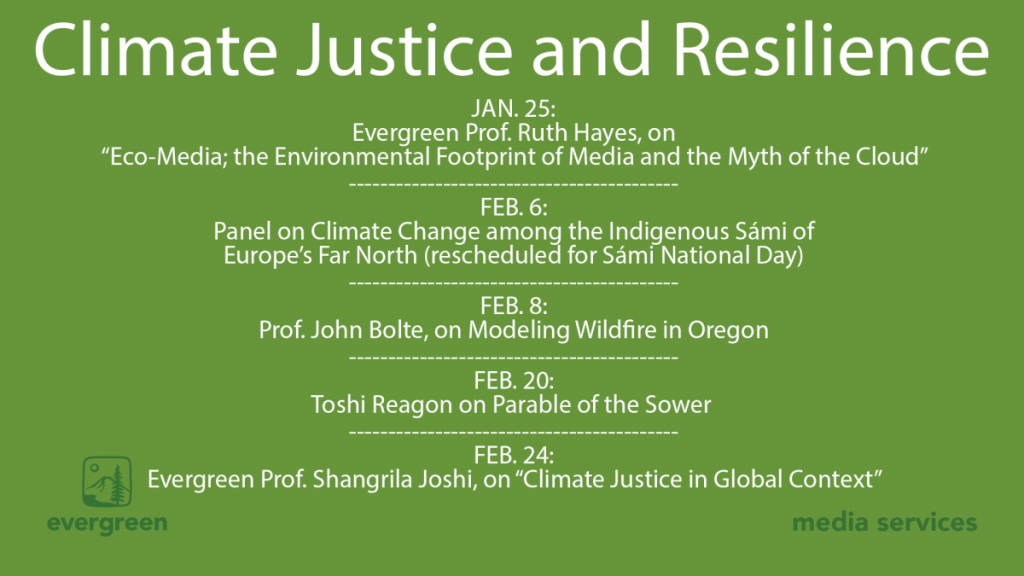
#1g: Climate Justice and Resilience Event Series
Click here for the link to the winter quarter Climate Justice and Resilience Event Series with details, zoom links, and recordings. Provide your notes and insights regarding the Climate Event and T/M program thematic questions here. Do not upload a file.
#1h: Foodoir: Your Story of Tasting Place
“It is not enough to be white at the table, it is not enough to be black at the table, it is not enough to be just human at the table. Complexity must come with us, in fact, it will invite itself to the feast whether we like it or not.”
“Full confession: I am not dispassionate and unbiased. I didn’t come to genetic genealogy services to be underwhelmed or go back to a vague appreciation of my heritage. I’m here to use a developing technology to sort out what has survived history in order to tease out a fuller understanding of my origins and my family’s story. I am unapologetic about my enthusiasm, but I’m also cautious because I feel the need to protect the integrity of the history.
All I ever really wanted was a recipe of who I am and where I come from.”
— MICHAEL TWITTY, THE COOKING GENE
I wish to learn more about my heritage, and their culture, but my story is almost entirely whitewashed. I feel almost as if it’s too little too late at this stage. The hex of being both white and Mexican has been apparent for a long time, I want to relate to my Mexican side, even though I know I wouldn’t be easily accepted as a Mexican by many of that race. These cynical thoughts have raged about my mind for a while, but after reading this book, it felt like a bit of weight had been lifted from me.
My experience with quality food isn’t very vast, fresh ingredients had never really been a staple in my household. My family may have not been as impoverished as the rest, but I feel my family’s wealth has affected our way of eating. I caught a bug from my father at an early age though, before he left during my teens he had me cooking certain things for the family, parts of the meal at least; his passion for cooking was contagious, and spurred my curiosity in the world of cooking, which brought me here. I think the process of organic foods is interesting, the prospect of a healthier lifestyle seemed to become more and more appealing as the days went on.
It wasn’t until my dad had popped back up by the time I was 17, that my relationship with food starting becoming more nuanced. My mother isn’t one for cooking, she actively encouraged we look up recipes for meals to cook as she felt she wasn’t as gifted in cooking; it was either cook for ourselves or eat Kraft Mac ‘n Cheese for the 5th time in a week, but I would never hold that against my mom as I love her dearly. But my dad is definitely a home chef, he’s always experimenting with plating foods, and cooking a lot of Mexican dishes; he’s the only reason I’ve gotten to try tres leches cake! when it comes to what piqued my interest in the history of food, and the concept of food being something to deeply appreciate, he’s the one to blame. And maybe Gordon Ramsay too.
Michael Twitty speaks a lot about his mother and her stories, and how it inspired his stories as well. Her hardships in some ways remind me of my mother. Being the descendant of people who know hardship has also opened my eyes to how much worse it could be, and what I should be thankful for. I do not know firsthand that kind of struggle, but I hope to honor it the same way Michael does. I want to bring passion, truth, and honor to the table.
Leave a Reply