Musleah, Rahel, et al. “My Daughter, the Farmer.” Hadassah Magazine, 12 Jan. 2018, www.hadassahmagazine.org/2018/01/11/my-daughter-the-farmer/.
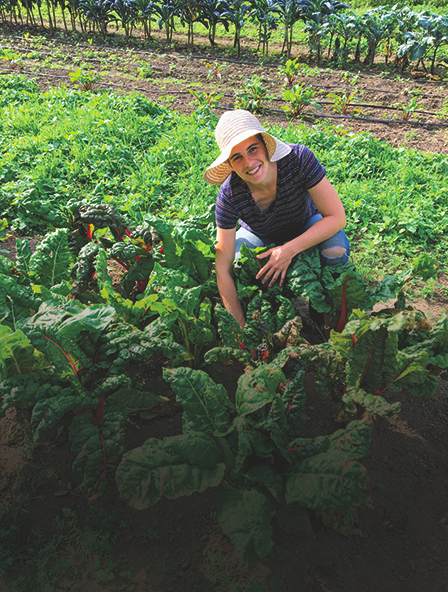
Following the work of three women, Janna Stiller, Sabrina Malach and Irinel Stegaru-MacLaughlin, “My daughter, the Farmer” examines the history of Jewish farmers in the US and how Jewish women are using their connections to the earth and spirituality to make change in modern agriculture. All three women have fostered deeper connections to their spirituality as well as their communities through farming. This phenomenon is nothing new, Jewish farmers throughout American history finding peace and community through their work with the land. This article also highlights how historically and in the present day, Jewish farms often used their resources to better the lives of those around them: CSA programs for Holocaust survivors, food banks, as well as initiatives to clear paths young Jewish women interested in farming.
This article demonstrates how closely related Judaism and the earth are. Both aid and enhance each other, “all the rituals and holidays become real. You grow your own horseradish and use it on Passover. You harvest honey and apples at the same time for Rosh Hashanah” (Malach, “My Daughter, the Farmer”). With food and ritual being so closely related in the Jewish faith, it is no wonder that a closer connection to the food one eats would result in a deeper connection with religion as well. While focusing on American history and American farmers, I feel as though this article demonstrates a phenomenon that could also be found in nineteenth century Europe. The closer one is to food, the closer to God.
“My Daughter, the Farmer” is helpful in that it shines a spotlight on how deeply food and religion are connected in Judaism. I would not be surprised if many women working in farming colonies in Russia during the late nineteenth century had similar feelings while working in their fields. This article helps show how women can be empowered through their work with food rather than oppressed by it. By reclaiming food work as something that is beautiful and sacred, women can and are finding healing and opportunity.
Leave a Reply