My initial reason for getting involved with this project was to run an analysis on the nutrient content on S. aetheiopicum and compare it to S. melongena. This for a number of reasons, the chief of which being time constraints, did not happen. but I am going to discuss a few ways I had considered going about this.
Brix value
The initial idea I came to this project with was to use a refractometer to measure the soluble solids of each eggplant variety. Soluble solids can be anything that, as the name suggests, is water soluble and a solid. Amino acids, pectins, organic acids, and sugar all fall into this category, with sugars being the most abundant, and in most cases, important.
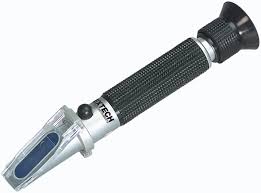
A Brix refractometer can only be used with a homogenous liquid, so the eggplant fruit would have to be blended thoroughly before testing. This test would provide a very simple and rough comparison of the nutrient contents of the different varieties. It would not measure anything besides the relative abundance of soluble solids across varieties.
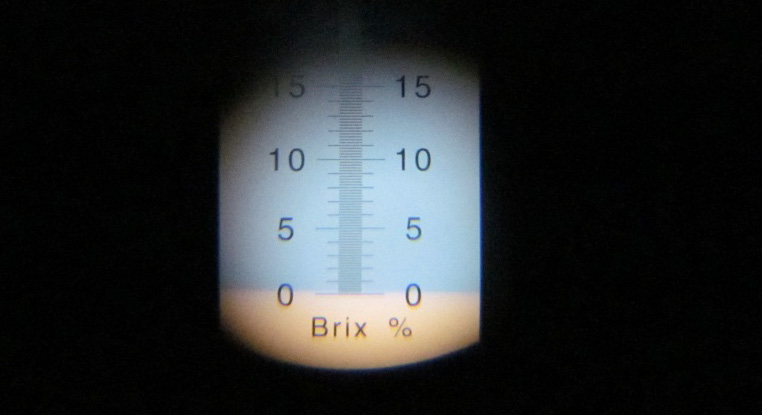
Following the advice of many people who are more knowledgable than me, I came to the conclusion that the data from a Brix test would do very little to further my understanding of the nutritional value of S. aethiopicum, and that other methods would provide more valuable information.
ICP-MS
Inductively coupled plasma mass spectrometry is a method for analyzing the elemental contents of a biological solution down to parts per trillion. It works by taking a solution, aerosolizing it, and transferring it into argon that has been heated to the point it enters a plasmatic state. This ionizes the elements in the solution. Once ionized, the ions are extracted from the plasma into a vacuum, where ion optics guide the ions to the mass spectrometer. Here they are separated based on their mass/charge ratio, and measured based on the number of ions striking the detector per second.
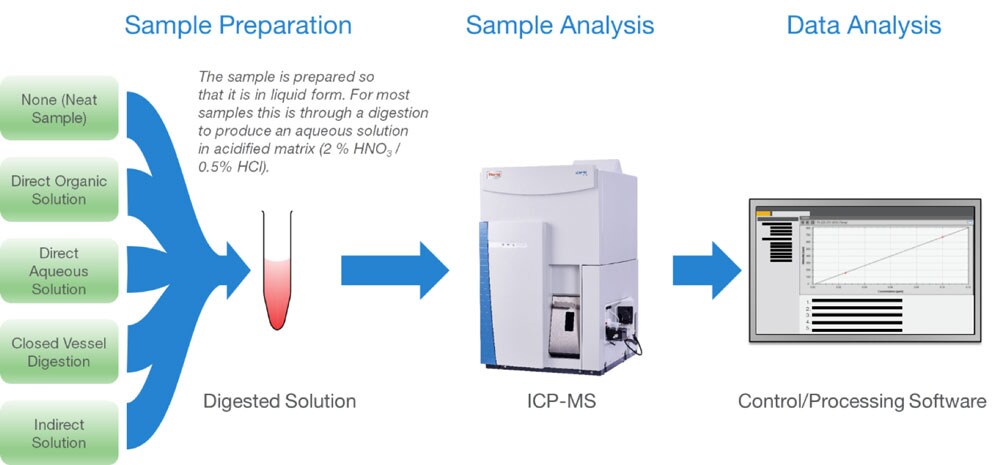
This would have worked well, but due to the number of varieties, and the repetitions necessary for each variety to ensure quality data, ICP-MS was not a viable method for this project.
That being said, there is one more big reason why my project pivoted to it’s current state.
SOMEONE ELSE ALREADY DID IT.
In my research, looking for methods for nutrient analysis, I came across a paper from Journal of Experimental Agriculture International. This paper, Comparison of the Physicochemical Properties of Aubergine (Solanaceae) Varieties Solanum aethiopicum gilo and Solanum melogena Grown in Northern Côte d’Ivoire, goes over the methods and results of a nutritional analysis and comparison of S. aethiopicum and S. melongena grown in Côte d’Ivoire, West Africa. 10 kg of both types of eggplant were purchased from 3 local markets. These fruits were then processed and measured for many different values using various methods.
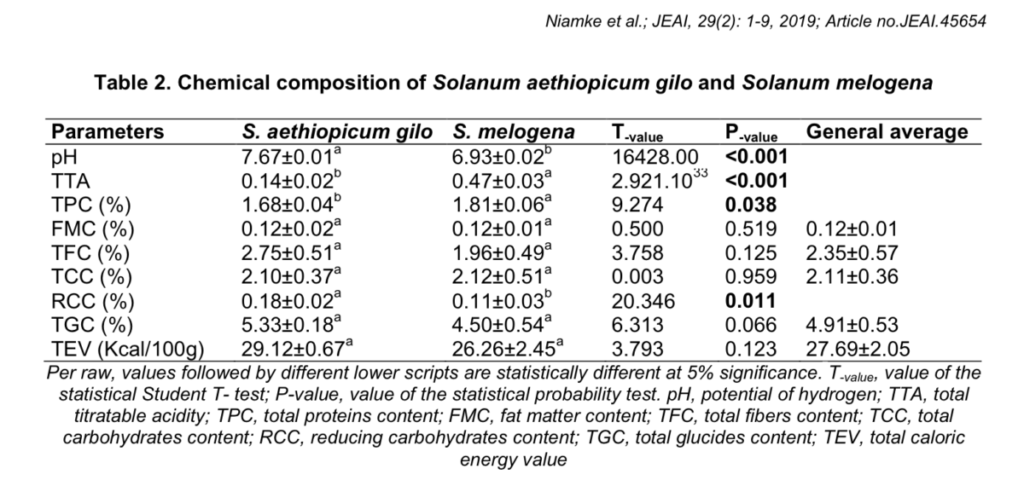
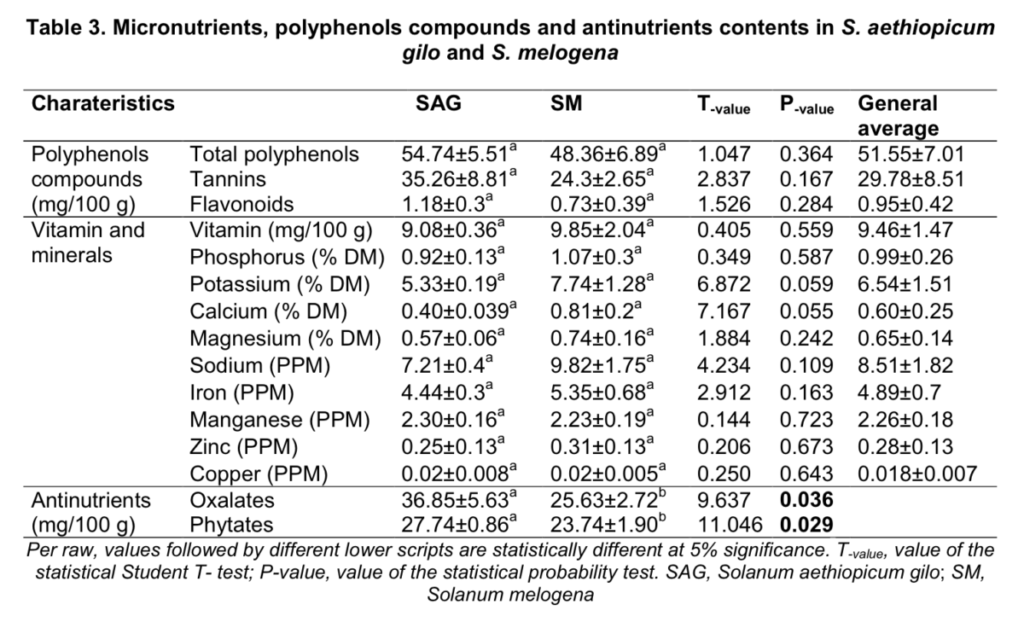
These results show that the nutrient values are similar, with S. aetheopicum mainly containing more polyphenols and fiber, both of which are beneficial for gastric, cardiovascular, and immune system health, as well as lowering blood sugar and preventing cancer. This could suggest that S. aethiopicum could have some health benefits over S. melongena.
This study, along with the challenges that come with the other methods of nutrient analysis, led me to pivot my research into a more practical direction, that being the preservation and preparation of the large quantity of bitter eggplant we had grown.