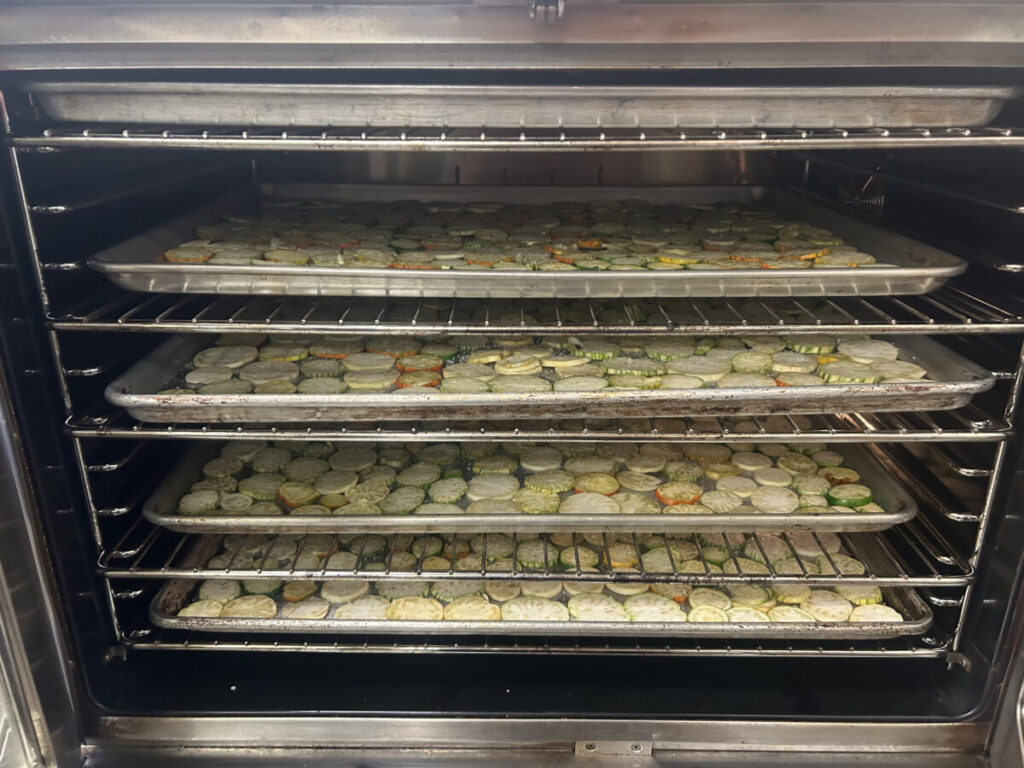
Processing S. Aethiopicum has been a bit of a learning process. While both scientific and culinary resources exist, they aren’t common or easy to find. Among the most helpful, were Combined Pretreatment for Enhancing Quality of Dried and Rehydrated Eggplant (Adiletta et al., 2016), and the recipe The Easy: Quick Pickled Garden Egg Slices (KitchenButterfly.com, 2013). These recipes allowed for the development of several recipes that help to make S. Aethiopicum delicious to a wider variety of palettes.
The recipe that has had the most success is the simplest, both in preparation and taste, and has the most possibility to be further developed by experimenting with seasonings, cook times, and different oils.
Bitter Eggplant Chips
3 Tbsp sea salt
¼ cup cooking oil
1 Tbsp trehalose sugar
1 full sheet of sliced S. Aethiopicum
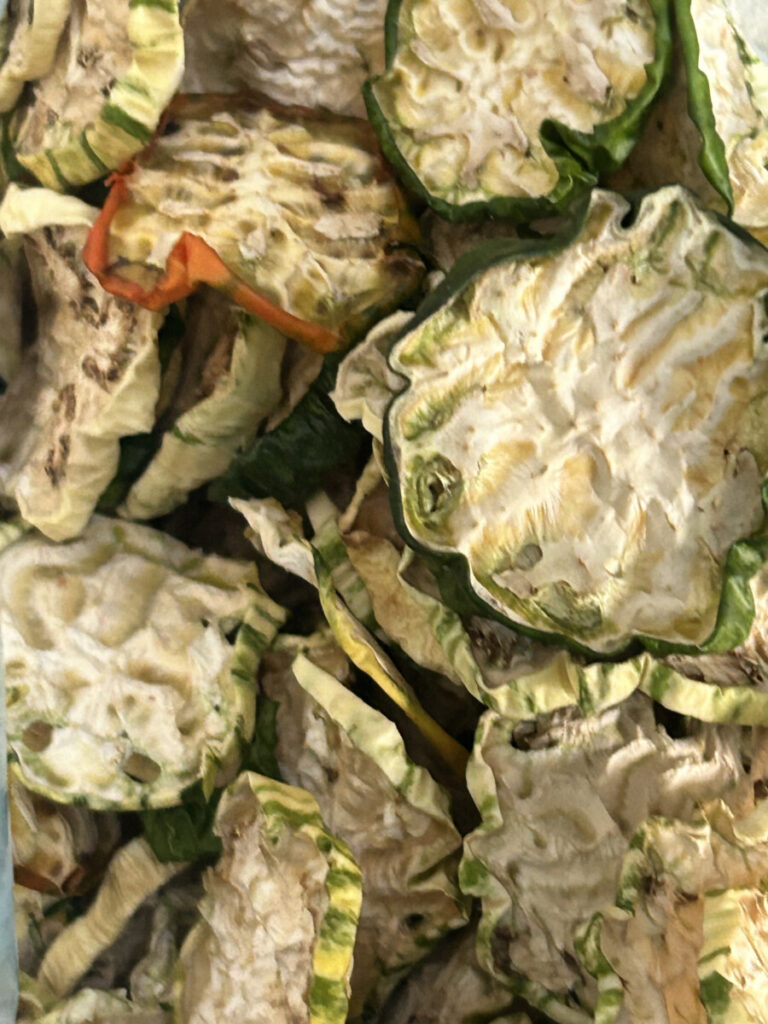
Slice the eggplant to ~1/8 inch thick with a mandolin, lightly coat with oil, and lay out over tray sprinkle salt and trehalose sugar on the halves of the slices facing up. Preheat oven to 150 degrees Fahrenheit, and turn on the internal fan to its highest setting, leave it for 5-7 hours, occasionally testing by bending a chip, when dry (roughly 10% original moisture) they will break cleanly. after this, they are ready for storage. It takes about 4 trays to fill a gallon bag. They should then be frozen until ready to be eaten. They can be seasoned the same way you’d season any other dry vegetable, but using a store bought dry marinade or other seasoning packets is a quick and easy way to add other flavors.
Pickled Gilo
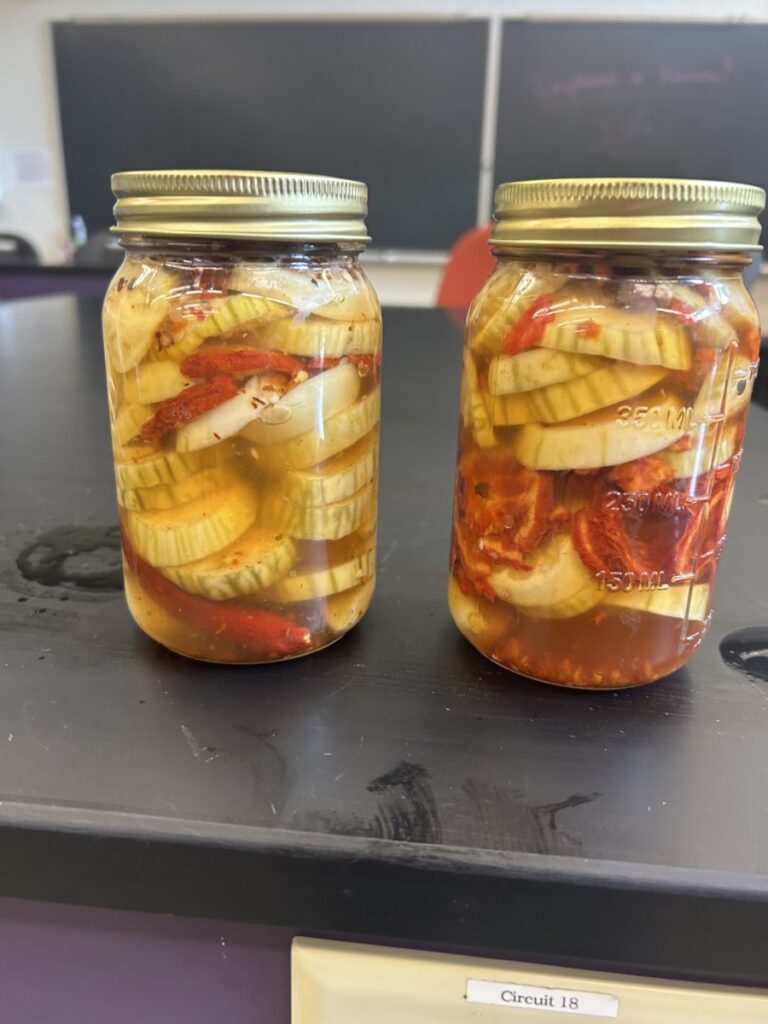
This recipe is heavily based on a recipe published by Kitchen Butterfly in 2013. So credit where it is due, you can find their recipe here. My first exposure to Nigerian cuisine has been through their blog and recipes, which I highly recommend you check out here. They have recipes, articles, and a wide variety of other media.
Ingredients (yields 2 12 oz jars)
1 cup water
1 cup white vinegar
1tsp Sea salt
2-3 long pepper pods
2-3 pods star anise
1 Tbsp chili flakes
4-5 cardamom pods
4-5 dried paste tomato slices
4-5 dried pepper slices (sweet or hot, both add in their own ways)
1 Tbsp sugar
sliced bitter eggplant (enough to fill the jar 3/4 of the way)
Sterilize jars, lids and rings in boiling water, put to the side on a clean, dry, towel.
Combine water, vinegar and spices in a saucepan over medium-high heat, wait until boiling. This will be our brine.
While waiting, fill jars 3/4 to the top with bitter eggplants and add 2-3 dried tomato slices and 2-3 dried pepper slices to each jar.
When the brine is boiling, reduce heat and wait until simmering. The brine should take on an amber color.
Once cooled to a simmer, fill jars to the top with brine, then put the lids on, dont tighten the ring too much as air needs to escape to form a seal.
Boil jars for 10-15 minutes before taking them out. they should seal in 5-10 minutes.
Wait at least a week, then enjoy.
These recipes, while simple or based on the work of others, took some time to develop, and considering the goal of ~600 bites, I have spent a lot of time harvesting and slicing bitter eggplant.
On average, a harvest took 2-3 hours, and processing could take anywhere between 2-3 hours if frozen without drying, or 7-8 hours if drying first.
I harvested on September 10th , 16th, 23rd, 30th, and October 7th. throughout these harvests I collected
I processed eggplant on September 9th, 11th, 17th, 18th, 19th, 23rd, and 27th. And in total processed around 120 Lbs of bitter eggplant. 20-25 lbs were frozen, and the rest into chips. if we assume that chips are around 15% moisture, the yield should be around 12 Lbs of chips. which sounds about right.
I experimented with several flavorings for bitter eggplant chips, but the most successful in my opinion was a ranch flavoring, which i just used 1/4 pack of hidden valley ranch mix, which was plenty for the 1/2 Lb that I seasoned with it. Any store bought seasoning packet would likely work well, but the seasonings I made from scratch weren’t as successful. I think this is due to a lack of ingredients and not having much experience with seasoning chips. I also thing a big difference was that the store bought seasonings contain monosodium glutamate, which brings an umami flavor to the chips that pairs well with the eggplants natural flavors.
I also experimented with using a food dehydrator instead of an oven to dehydrate the chips. this worked well for removing, but concentrated the bitter flavors.
I also experimented with soaking the sliced eggplants in a brine before drying. this extended the drying time, and they ended up a bit too salty, i’m sure it could be good with adjustment to the salt:water ratios, but due to the limited time slots in which I had access to the sustainable agriculture lab, the extra drying time outweighed the potential benefits of brining.