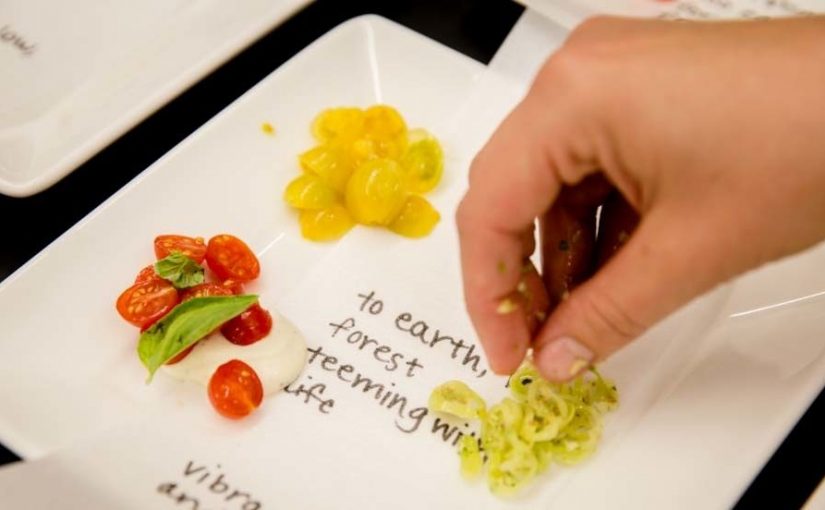
Harvesting Bitter Eggplant is a straightforward procedure. The process for this trial is to harvest by row, block, and variety. Each variety gets three blocks, with three blocks for row, giving us a total of fifteen blocks, five rows, and five varieties. Each block is tracked for performance separately, and combined to track the overall performance of the variety.
The varieties are as follows
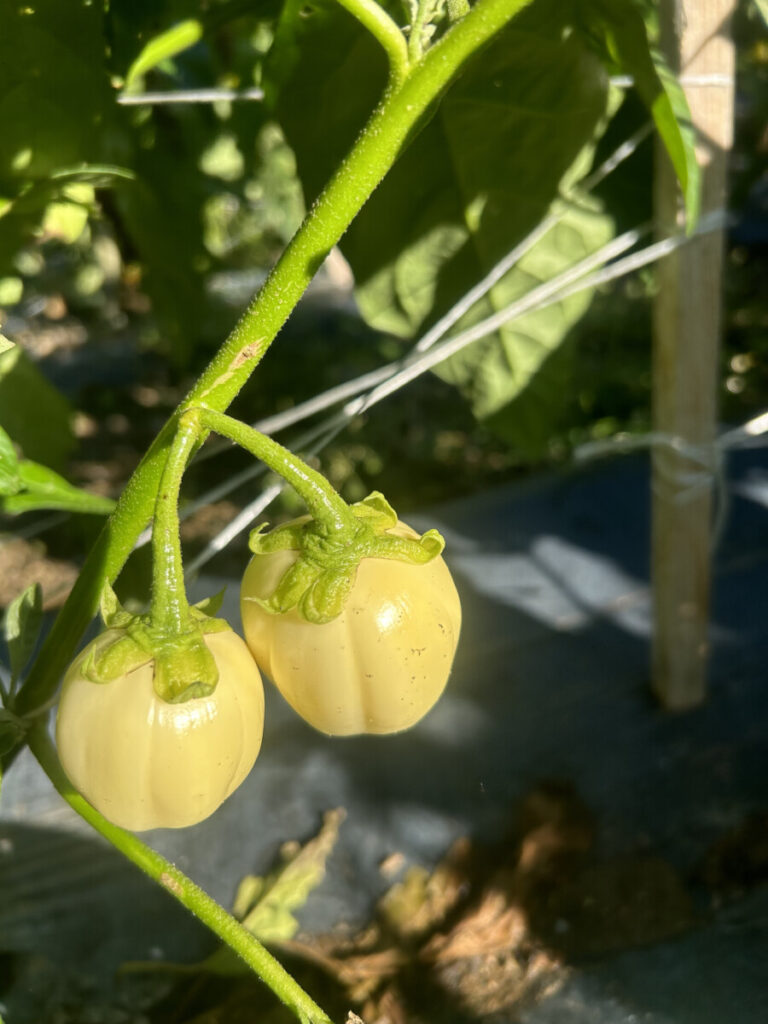
Simians White–
Simians White is a variety that performed very well. It has a lightly bitter taste, with some floral and spicy undertones. The texture is reminiscent of a cucumber, and is harvested anywhere between the size of an egg to large enough to fill your palm. The skin is white and without any particular patterning. The variety tended to the most palatable to the most people among the varieties in the trial.
Zebra–
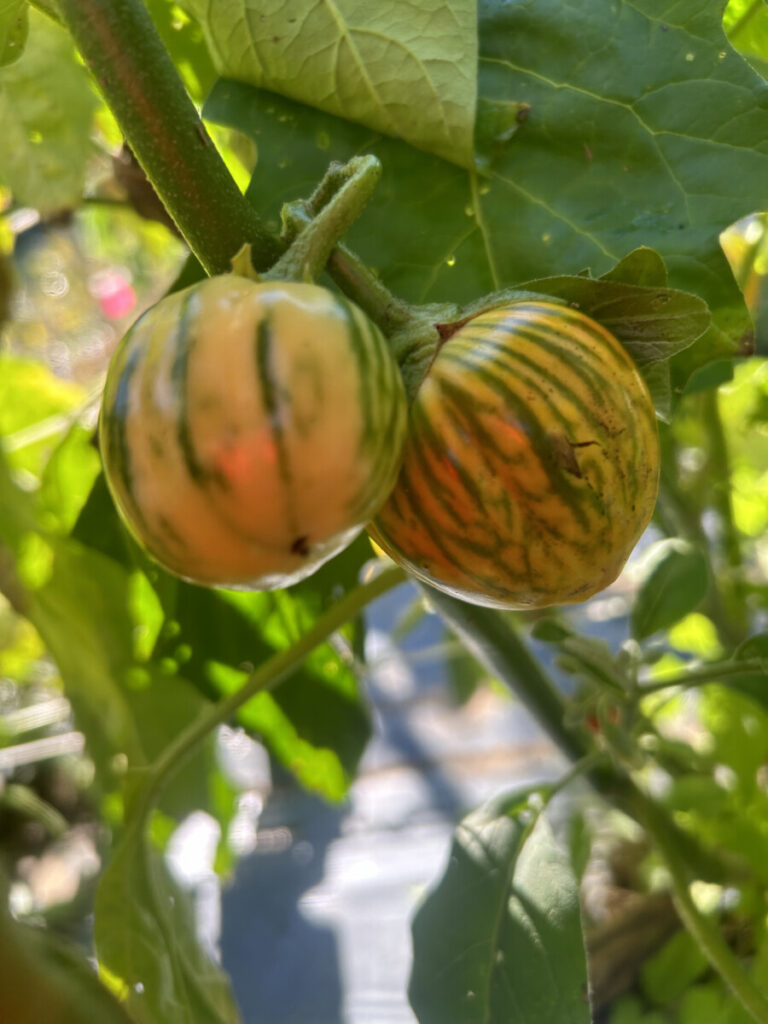
Zebra is a variety very similar to Simians White, with all the same flavors and notes, just slightly more intense, and with slightly smaller fruit. They have distinctive striped patterning, and tend to hold slightly more moisture.
Morro Redondo–
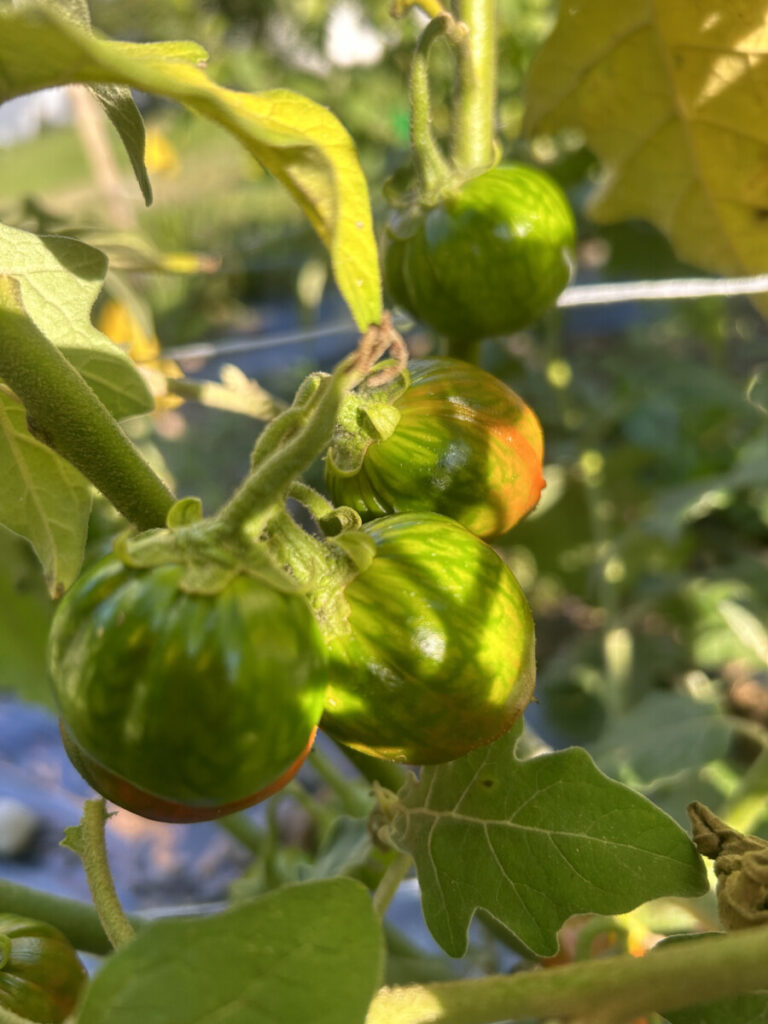
Morro Redondo is a variety closer to what you may find in some parts of southern Italy, but was bred in the Brazilian municipality for which it was named, Morro Redondo. It is a smaller variety than Simians White or Zebra, and is generally harvested around the size of a golf ball. It is much more bitter on the front of the palate, and has a softer texture with thicker skin. It has strong peppery notes, and a distinct scent. It lagged behind in production for most of the summer, but has increased significantly in October, as the other varieties wind down.
Comprido Verde Claro–
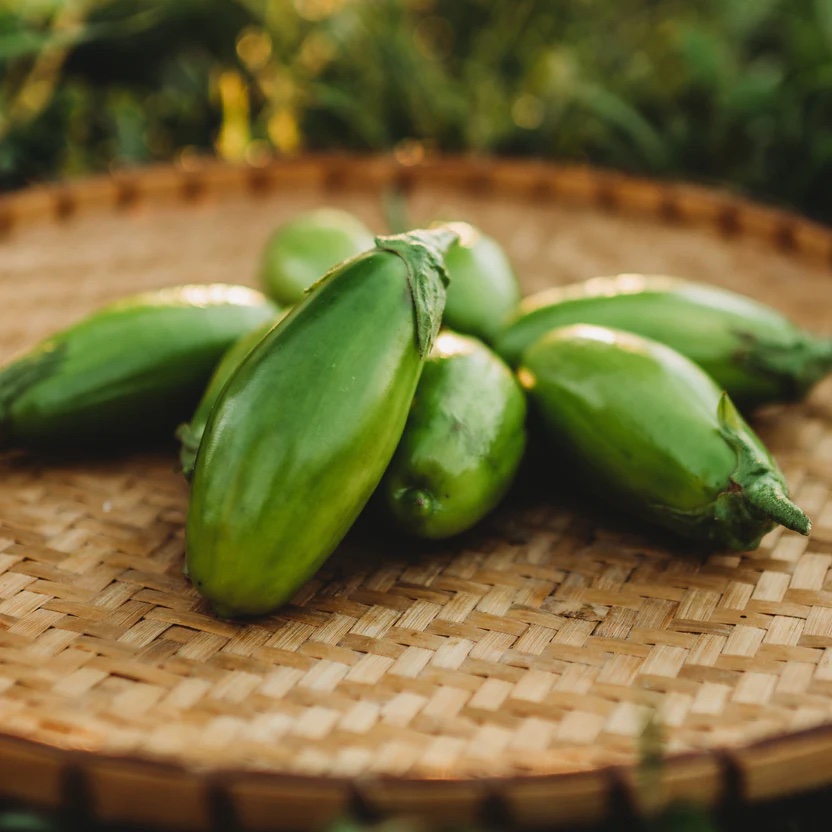
Comprido Verde Claro is another Brazillian bred variety, which unfortunately, has not performed well in fruit production. They have a milder taste than Morro Redondo, while keeping the more peppery notes that come with it.
Orient Express
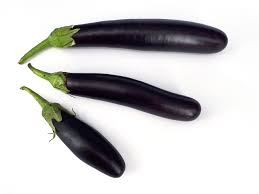
Orient Express stands out, as it is a different species than the other varieties in this trail. Orient express is a variety of the species S. Melongena, while the rest are varieties of S. Aethiopicum. It was chosen as a control, as we have grown it on The Evergreen State College Organic Farm in the past, and have harvest data from previous years. This allows us to account for variables outside our control (Growing Degree Days, Average Temperature, Precipitation, etc.) may skew our results. It isn’t the ideal control, but was deemed to be the most similar crop that we have past performance data for.