Solanum aethiopicum is though to have been domesticated in Africa from Solanum anguivi, and spread across western africa and became a part of the traditional cuisines of Nigeria, Senegal, Uganda, Côte d’Ivoire, and Burkina Faso among others. from here it spread across the world, becoming a popular vegetable in Darjeeling, Sikkim and Nepal. It has also followed the Trans-Atlantic slave trade, appearing in various caribbean cuisines and across Brazil.

Solanum Aethiopicum also began being cultivated in the southern italian commune of Rotanda. It was brought back by italian soldiers after the conclusion of the First Italo-Ethiopian war. It is now a Registered DOP product, under the name of Red Eggplant of Rotonda, or Red Melanzana di Rotonda.
Genetic resources.
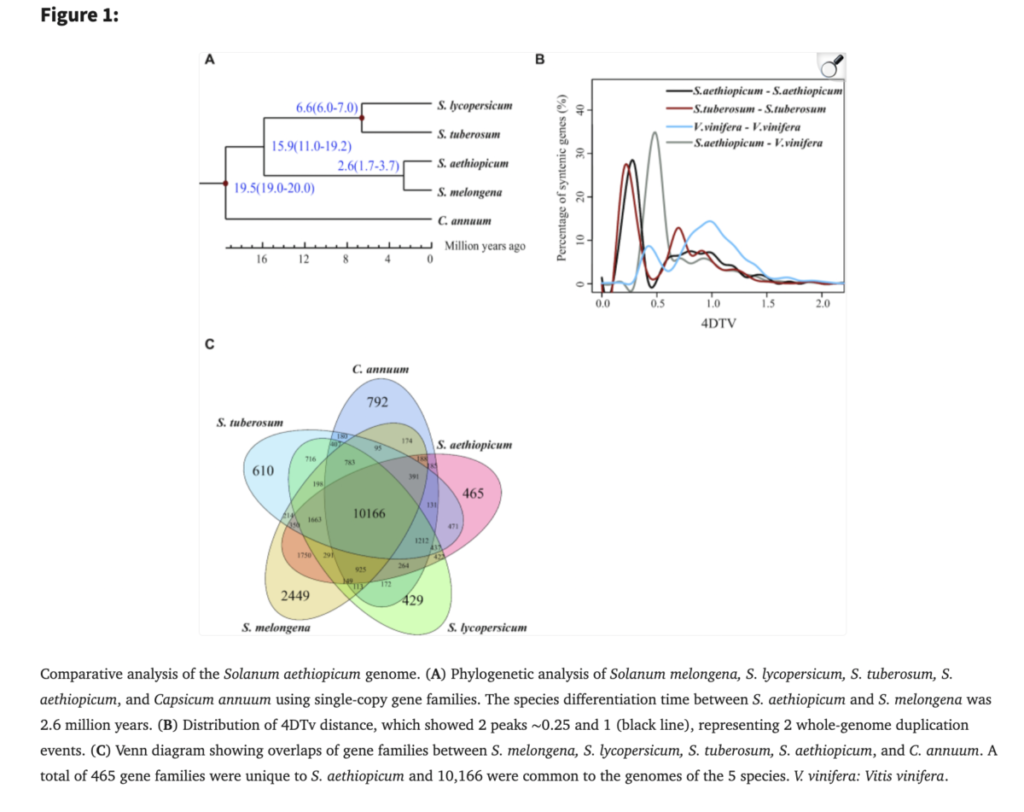
S. Aethiopicum has been used as a source of disease resistant promoting genes for S. Melongena, and had a 1.02 Gb draft genome assembled in 2019, more than 37,000 genes were annotated, of which almost 35,000 were found to code for proteins. These genes have an will continue to serve as a source of genes that can improve disease resistance and genetic diversity of more economically important varieties of S. Melongena, due to their ability to hybridize.