
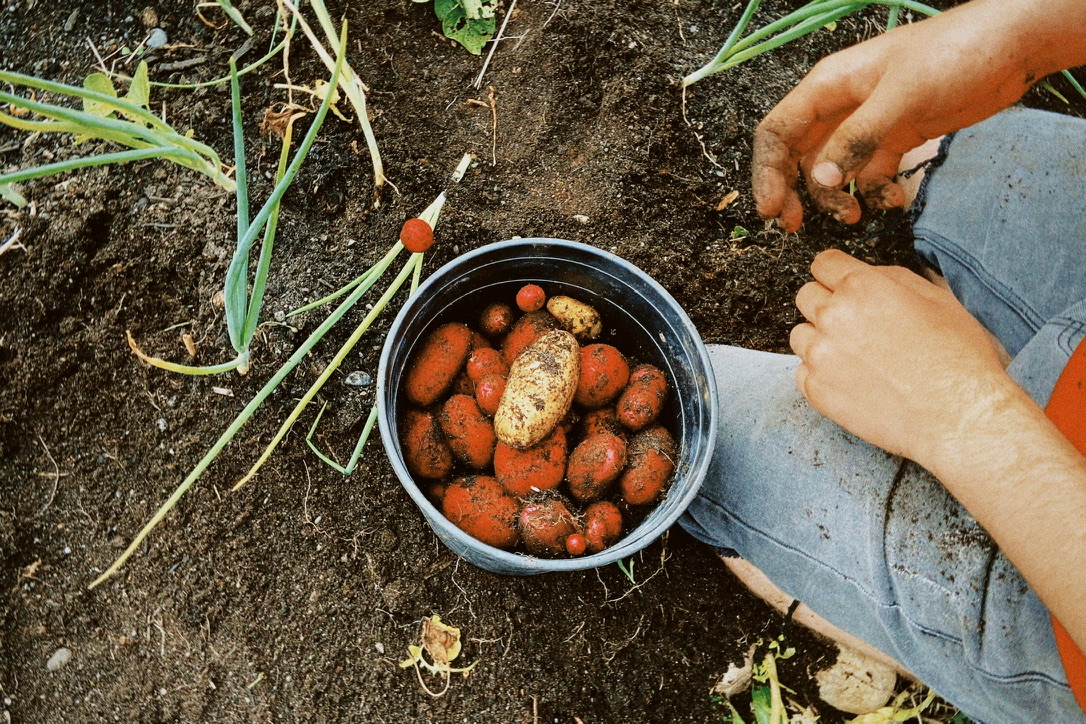
This week we harvested so many potatoes and lots of garlic scapes. It was an absolute joy cooking up the scapes with the kids since so many of them had never tried them before. Frying up freshly harvested potatoes is a treat we will be getting used to as we have such an abundance this year.

Curriculum:
- this week will be hot so we will keep a mellow set of workshops
- discuss the different uses of different parts of plants (ex. scapes and rosebuds)
- take multiple walks and talk about the different wild foods that are around us
- make lavender rose lemonade and rose honey
- make raspberry sticky rice and potatoes with fried garlic scapes
Group discussions are such an important part of what we do at HOPE. Whether it’s as the whole community or a small pack of folks walking and talking, it is crucial to process and explore thoughts with others – especially for teens and kids where group counseling is incredibly effective and important. This week I was apart of three compelling conversations…
While strolling to Callanan Community Garden I broke from the group and walked with two students. We passed a house bearing a politically charged flag from its flagpole. One student began sharing stories of her politically conservative family. She’s a young woman of color born to a white mother. She expressed she experiences erasure from her family, as they often invalidate her reality and discrimination she faces. “Not only does that make me feel kind of crazy,” she explained, “but they support people in power who want to take my rights away… on so many levels. What does that say about how they see me? I try to talk to them about this stuff but I’m outnumbered and told I don’t know what I’m talking about”.
During conversations like these, I try to offer as much support as I can while trying to decipher what kind of support is needed. In this moment I focused on validating her experience and reality. I can hold space for these discussions but my input must remain limited as I am white and lack an amount of formal training in facilitating this discourse than would make me feel comfortable leading it. I tapped into the workshops I have attended focusing on those that had been trauma-focused and asked lots of questions. We talked about different ways to cope, handle, and process not being seen and validated within our family, and how we can ask for support from others close to us. Even though I feel slightly short-handed in these conversations, they are crucial to be had and heard by all. The other student walking with us shared how she doesn’t experience racial erasure or discrimination so can’t quite empathize, but she does hold different views and beliefs than her family so she also feels estranged from them. Encouraging the kids to explore shared experiences helps them develop the language to hold sympathy and compassion for one another while also validating their own experiences.

When we walked the Teresa Johnson Trail after lunch, we sat down by the river and a group of us talked about one student’s tumultuous relationship with her mother. She explained how because of her mom’s absent parenting she’s had to step into the role of nurturing her baby sister. She divulged that this pressure and responsibility is affecting her other relationships, as she has noticed she feels the need to caretake friends, which results in her suppressing her own needs. This prompted an amazing conversation around attachment styles and the difficulty vocalizing our feelings and needs.
One of the greatest opportunities for group conversations is during our morning check-ins. We start each day going around the circle, giving everyone the chance to share how they are doing and answer the morning’s special question. It begins with a full body scan – how their mind, emotions, and body is feeling. Sometime’s our special question is fun and lighthearted and other times its a deeper prompt. This week’s prompt encouraged an amazing discussion. One morning this week we asked the group, “what is a time you accomplished something you didn’t think you could?”
“I have always been really shy and struggled making friends. This past year I found some confidence and have put myself out there and made friends.”
“I’m terrified of heights but really wanted to ride the tall rollercoasters at Wild Waves because my friends were. I didn’t think I could but I did and even though it was hard and I didn’t like it I’m proud of myself for trying.”
“I’ve always known who I am and that I’m trans but after I came out I was scared of sticking true to myself every day. It’s not aways easy but I’m always accomplishing staying true to myself.”
Conversations like these are so important to share with both small and large groups. Even if not everyone participates, just listening to others can teach so much. Knowing so many peers face similar issues can encourage kids to not feel alone and more comfortable sharing with one another. There’s so much to learn from community.