
This week at St. Marks, we spent entirely on finishing up our field trip program for the year. We ended with third and fourth graders. After working with the third graders I was extremely taken aback to notice the developmental difference just one year has on kids from second to third grade. I really value this experience of working up the grade levels and developmental stages. It has been extremely rewarding to ‘up the stakes”’ with each grade and slowly gets more into the ecology world as the students’ ages increase. I thought I would briefly describe some of the key points we focus on during the field trips:
-Michaelas Intro:
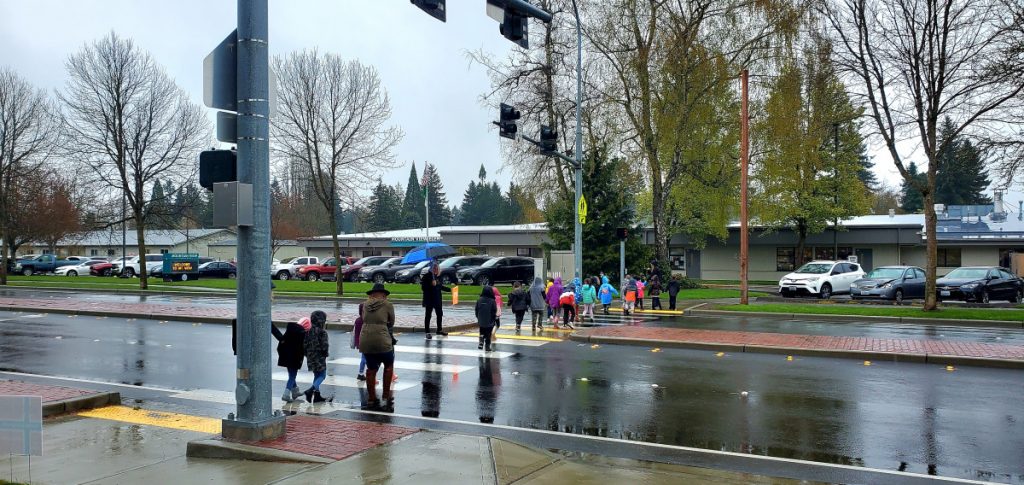
Michaela usually starts us off by gathering the class in a semi-circle around the St Marks Community Garden Sign and we read the sign out loud together. Michaela then asks the class what the word ‘community’ means to them. Students raise their hands and share their knowledge of the word, stating things like a community is a place where people live, a neighborhood or city, or even sometimes the whole Earth. Michaela then shares that their class is a community where they take care of and support each other. She then explains that we live in a kind and caring community where we take care of each other and shares that she works with the Food Bank and that the garden we are at grows 13,000 pounds of food to donate to the food bank to help feed our community, as no one in our community should go without food. The students then learn that they get to help plant the garden to care for their community, this is followed by cheering and excitement. We are providing an opportunity for the students to be active members of the community and foster a sense of empowerment that they are valued and have the power to affect the world around them.
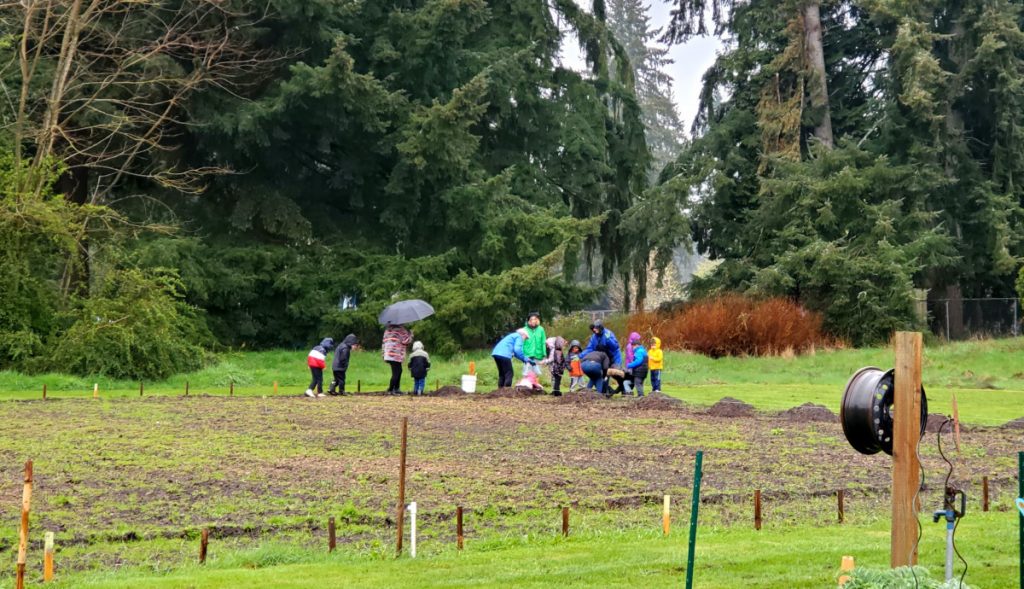
The talk then moves to describe the community boxes. It is explained that people in the area that live in an apartment or don’t have a yard are able to reserve a garden box to grow in and the church provides water and supplies and a space that doesn’t cost any money. Michaela asks the students if they would travel into a neighbor’s house and open their fridge and start eating their food. This is followed by laughter and cries of ‘of course not’ and shock at the proposition. She explains that people’s garden boxes are kind of like their personal refrigerators and that when walking into a community garden we shouldn’t start eating people’s garden bounty without permission. The guidelines for how to behave in the garden, and that it should be treated as an outdoor classroom and not like recess, are established and the group splits into two groups. Half the group goes with the church farmers to plant and the other half goes with me and other interns to go on a garden tour of the community
boxes.
Rhubarb:
We use rhubarb as a lesson in plant parts and safety in consuming plants and the importance of identification and permission to eat plants we are unfamiliar with. We look at the massive green leaf and the long red stem and explain that we only eat the stem of rhubarb as the leaves will make us sick or give us a tummy ache. We talk about other plant parts we eat i.e roots-carrots, potatoes, leaves-lettuce, kale, spinach, stems-celery, rhubarb. We talk about how it is really important to ask and identify plants before we eat them as the enticing rhubarb leaves that resemble kale or lettuce are deceiving and can upset our stomachs.

Rhubarb patch by El Knowles
Strawberries:
We observe the flowers growing on the strawberry plants and notice the small green strawberry starting to form at different developmental stages in different plants. We talk about how fruit comes from flowers and about what a plant needs to grow i.e.soil, sunlight, and air.

Apple Tree:
We identify the type of tree and confirm it is an apple tree. We observe the reproductive parts of the flower (the pistils and stamens), and we talk about pollination and about how every flower has the potential to turn into an apple. We smell the blossoms and take in their beauty. We talk about how long it will take for the apple to form and be ready to be eaten, typical guesses range from five minutes to five years and we explain that they will be ready to be eaten in the fall time when they return to school in the next grade level. We talk about how much time and energy that tree puts into creating each apple to plant the seed of putting food waste into perspective. With the older grades, I started to introduce the concept of thinning and pruning to increase apple yield/size. We identify the “king flower” in the center and observe all of the other flowers that surround it and imagine how much space each apple would take up if they all grew together on that clump.

Mint:
I really like to use mint as a tool to introduce sustainable harvesting practices. I mime ripping up an entire fistful of mint and ask if this the way to harvest a plant, it is quickly followed with cries of no and we talk about how doing that could hurt the plant, it could disrupt its growing cycle, and how it also takes away the opportunity to try a mint leaf from the rest of the school community. I point out the distinguishable square stem of the mint plant and show how to carefully pinch off one leaf to smell and taste. We talk about what the smell and taste remind us of and I like to make sure we give our thanks to the plant for allowing us to sample some of it.
Peas:
Michaela introduced the practice of identifying different microgreens and plant starts by taste. We sample a pea leaf using the same harvesting techniques we learned with the mint and taste how the leaf mimics the flavor of the pea itself. We observe the trellis present and notice how the peas use their tendrils to climb upwards to get more sunlight.

Snack and wrap up:
After both groups complete each task we then move into the church rec room where the snack team has prepared us a snack consisting of fruits and veggies including a sample of what each age group got to plant that day, broccoli, cabbage, beans, as well as strawberry and mint infused water. After discussing the flavors and experience of eating the snack and about our experiences growing food at home we wrap up with a class picture and sometimes a mindfulness activity with Michaela outside under a beautiful tree.
