The Evergreen State College Shellfish Garden

Now growing at the Evergreen Beach

Tag: work party

Spring 2021

We have a new group of students this quarter stewarding the growth of the shellfish. We had our first work party and the first zoom seminar this quarter, and we’re using Discord (“fun Slack”) for communications. The oysters got sampled at our first work party: “tastes like snorkeling”. They’re still pretty petite, but they are getting towards snack size.

The low tides are in the afternoons now, so we’re getting to hike through the Evergreen trails to get to the beach. The trillium (Trillium ovatum) is in bloom and the currants (Ribes sanguineum) and thimbleberries (Rubus parviflorus) are leafing out. There will be two really excellent low tides (full moons) coming up in the end of April/early May and in the end of May.
Biodiversity at the Evergreen Beach

At the beach during low tide this winter, we have been fortunate to encounter a handful of visitors and residents at the shellfish garden. One night we saw a medium sized pink star Pisaster brevispinis, two medium plumose sea anemones Metridium senile, and an unidentified goby that snuck into one of the oyster bags but couldn’t get out. (We had to free the goby so that it would not perish trapped in the bag, but it also was mildly traumatized by the extraction and handling.) The most recent night we found a generously sized horse (fat gaper) clam Tresus capax that had emerged from the sand. I must admit I probably did not rebury it sufficiently deeply when I reburied it; like geoducks, these clams are unable to rebury themselves as adults. Evergreen students frequently mistake them for our school mascot when they encounter them at the beach, as these clams also have a large siphon that protrudes from the shell through a wide gap. When we get a chance to sample under the clam netting later in the year, we’ll undoubtedly find some more.

Shellfish in the time of Coronavirus

The pandemic has forced everyone to modify how they work and the shellfish garden has been no different. It’s been trickier to coordinate, it’s imposed a number of additional safety protocols, but it has forced us to be more organized, which is ultimately going to benefit the shellfish. The shellfish themselves are having a grand old time–fewer people on the beach to disturb them, a mild summer thus far (thus less heat stress on the beach), and having two PhDs, an industry professional, a 3rd generation farmer and others fretting over their well being.

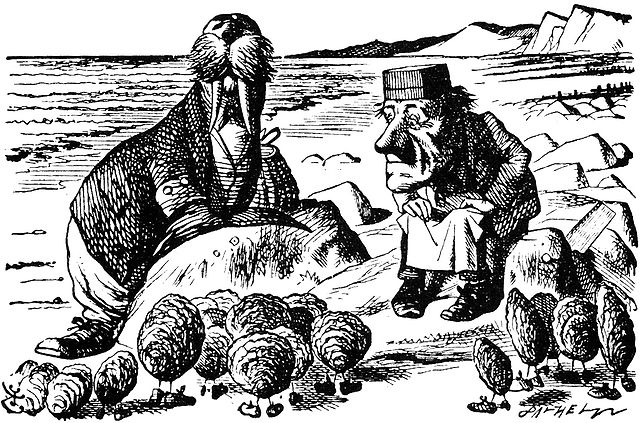
We’re still gathering ourselves mentally, gathering our resources, getting organized and finally gathering as a small group in person for the first time in months. It will be a chance to catch some sunshine, get mud under our fingernails and smell the salt air (and the sulfurous mud) while we discuss bringing this project from plan into the reality of fostering our new little oyster children. Totally like the Walrus and the Carpenter…

Illustration by John Tenniel (1871) from Through the Looking Glass. Note he would have been depicting the European flat oyster, Ostrea edulis, not the introduced Asian Pacific oysters that we will be seeding.