Principle 3: OBTAIN A YIELD
‘You can’t work on an empty stomach’
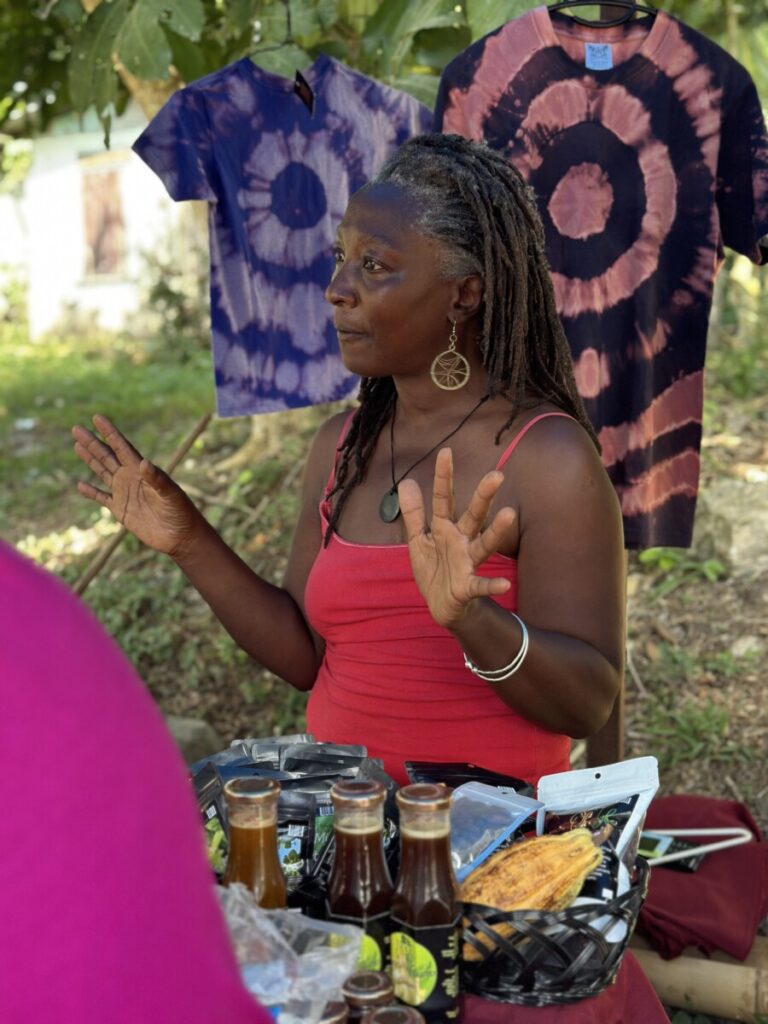
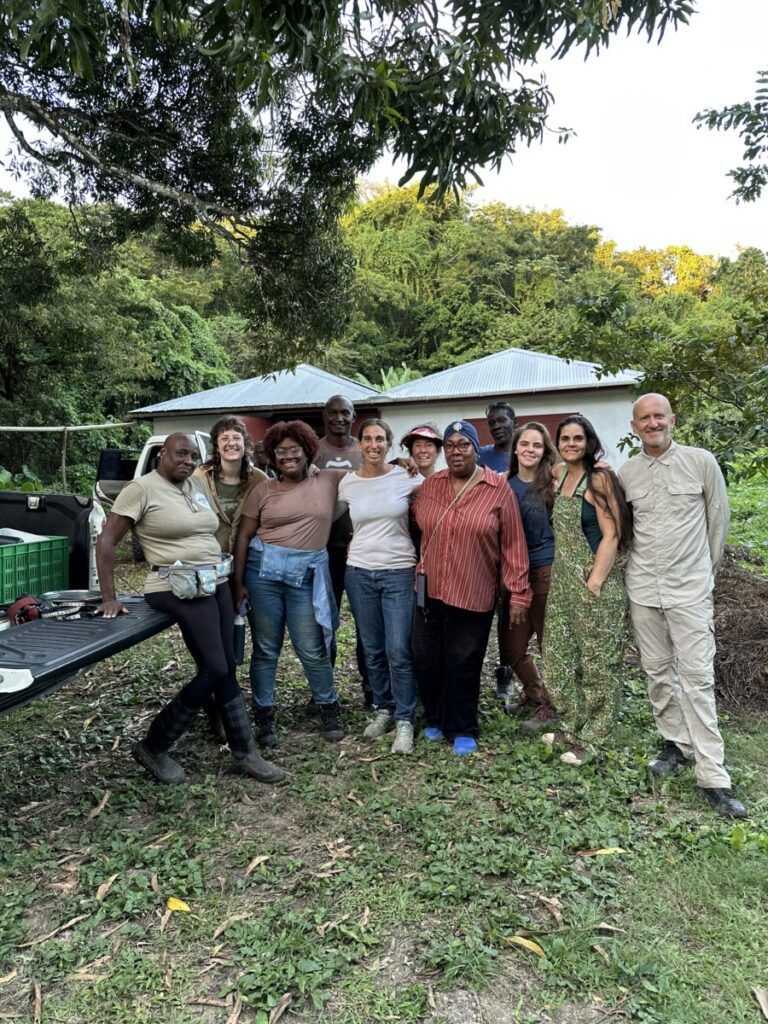
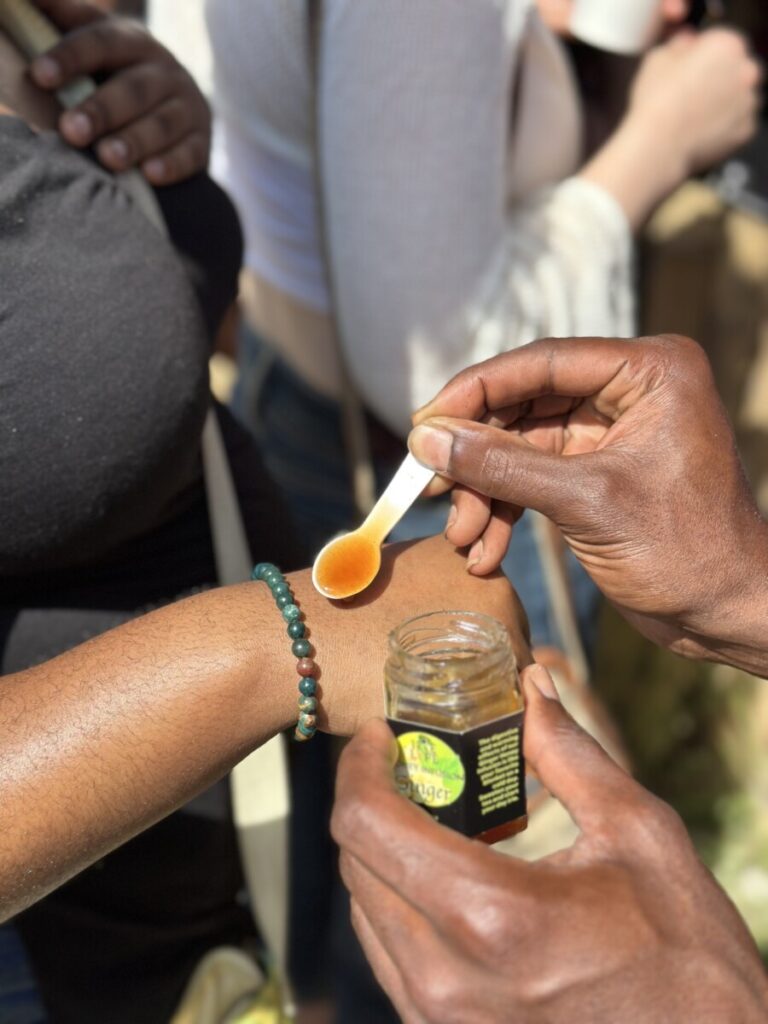
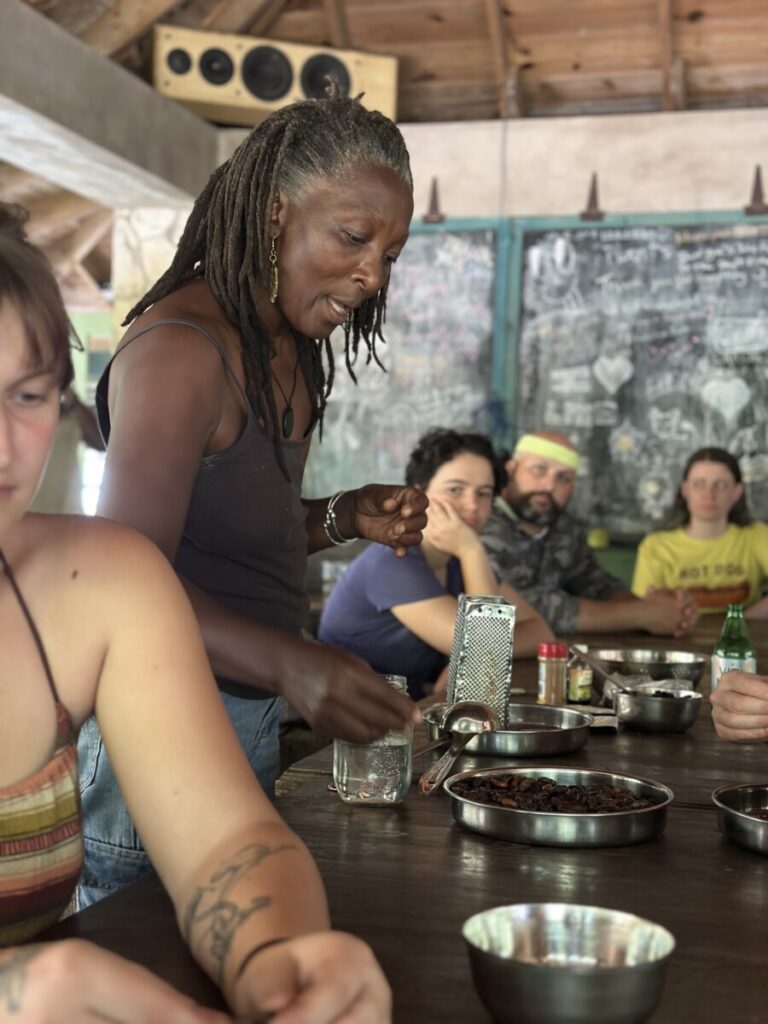
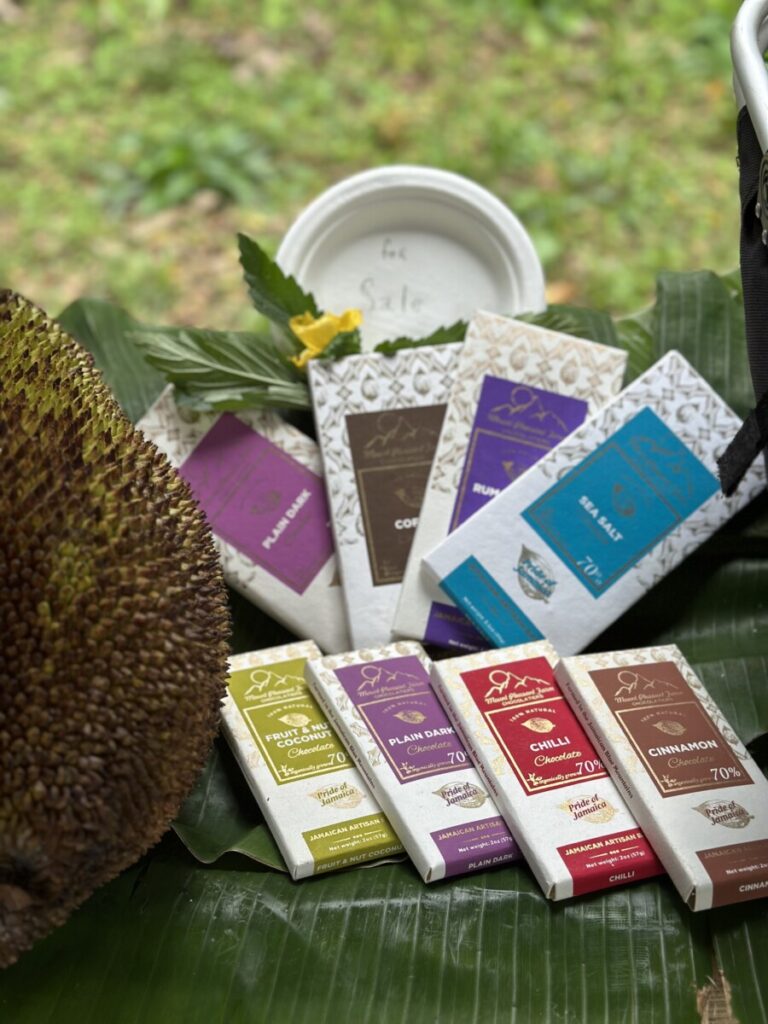
On our way back to GWG on March 6, we stopped along the way at the Irie Lyfe stand. Nzinga and Zuberi, owners of the Irie Lyfe, had joined us the previous day along with their son to help fill bags for the weir project. They run an apiary and sell infused honey as well as lotions, cocoa products, handmade jewelry, and more.
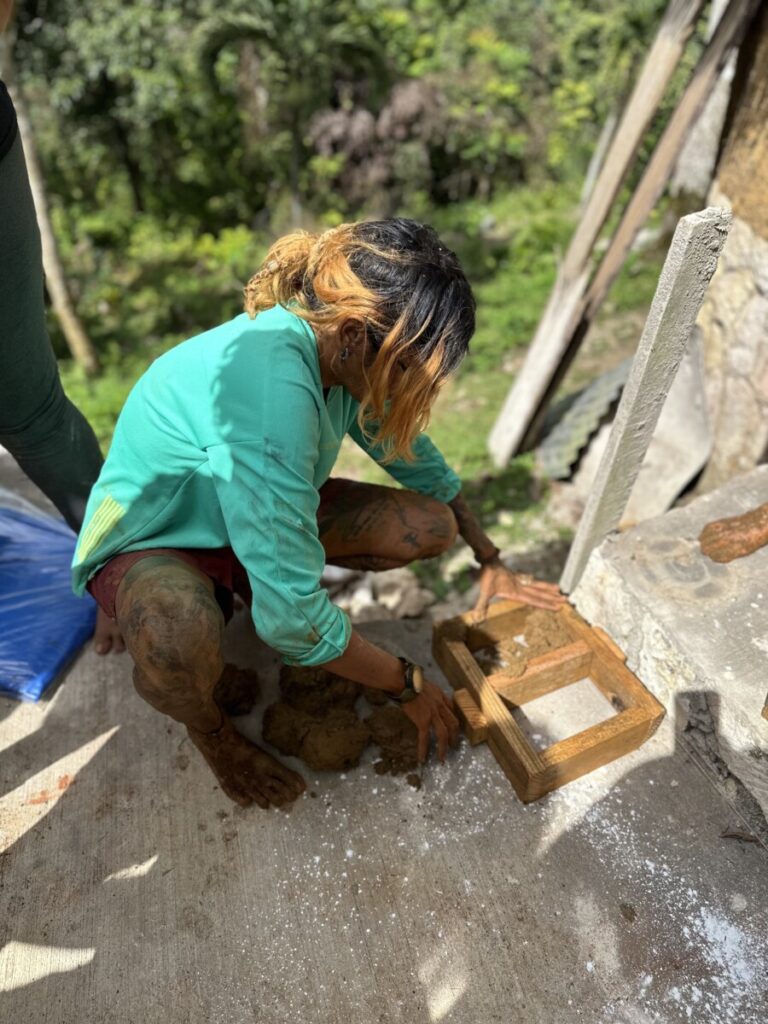
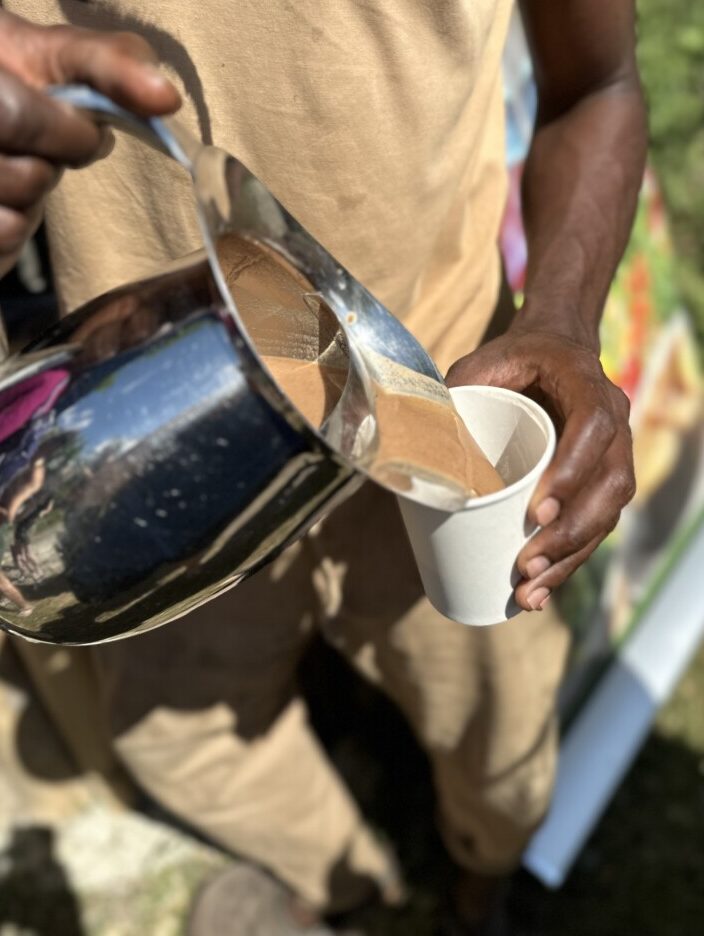
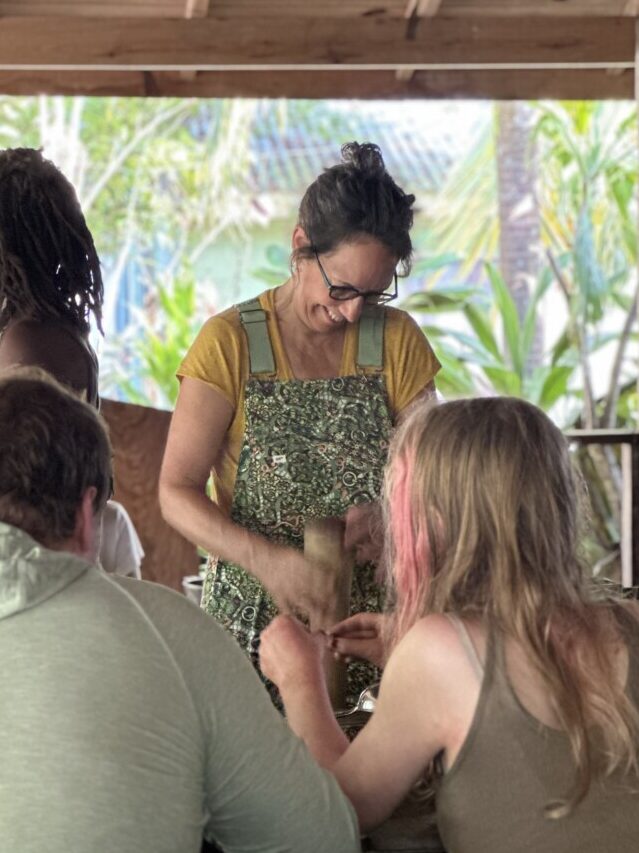
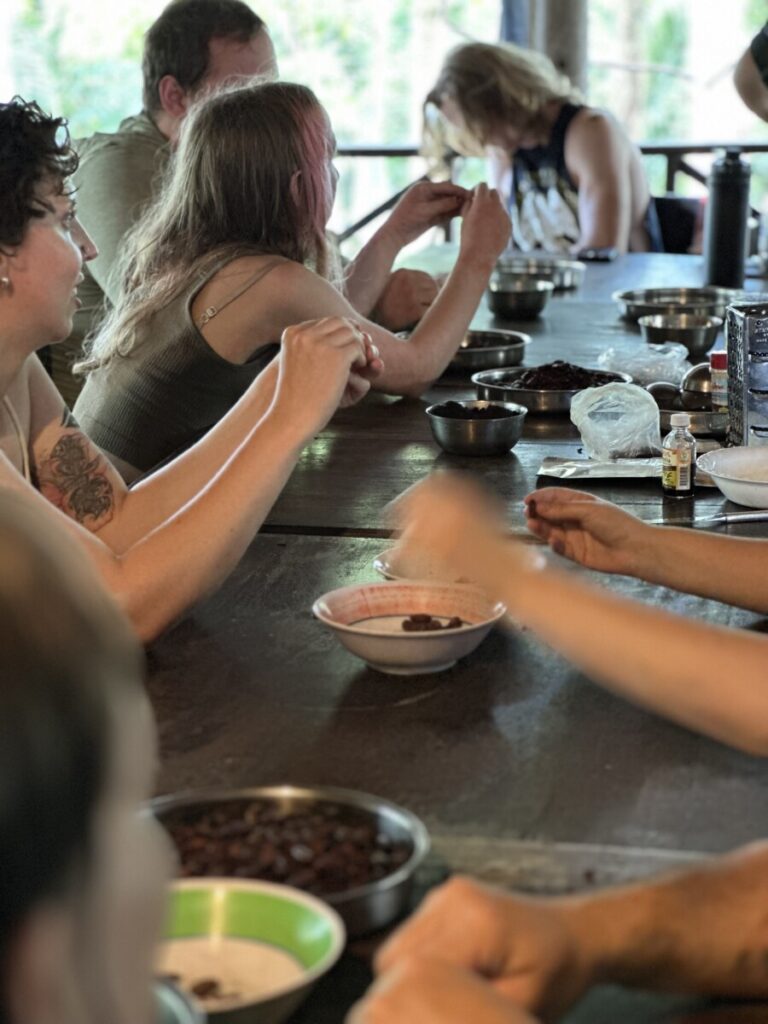
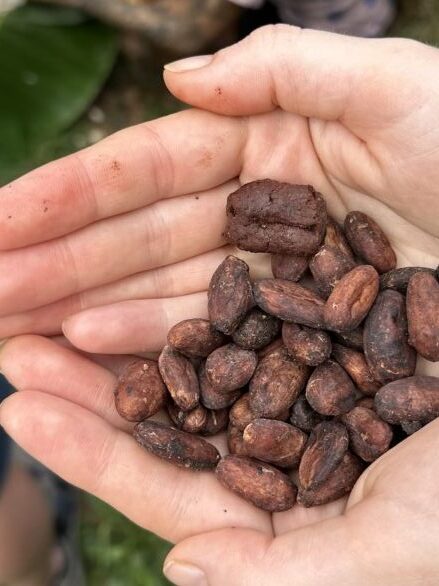
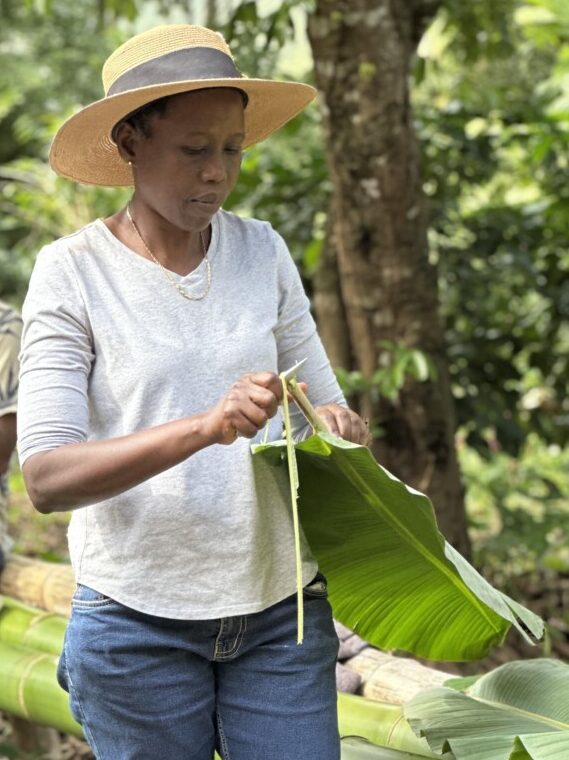
On March 10, they joined us at Durga’s Den to lead a workshop on how to make our own cocoa balls. We roasted cocoa beans, shelled them, ground them in a giant mortar and pestle and mixed in spices.
Principle 11: USE EDGES AND VALUE THE MARGINAL
‘Don’t think you are on the right track just because it is a well-beaten path’
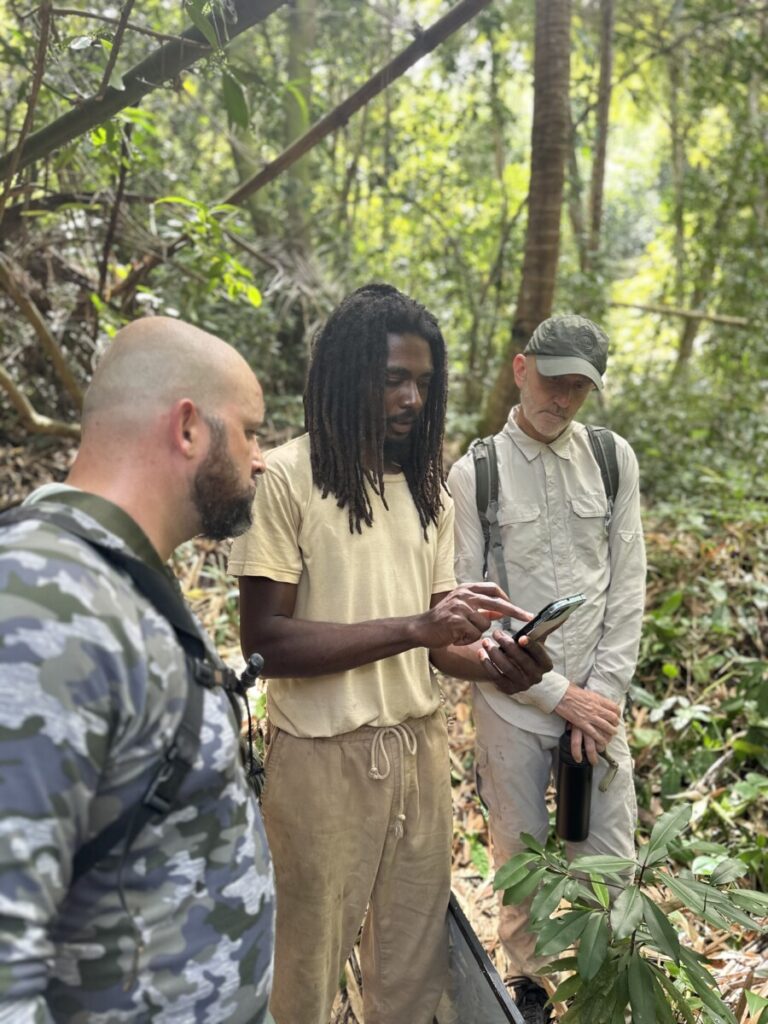
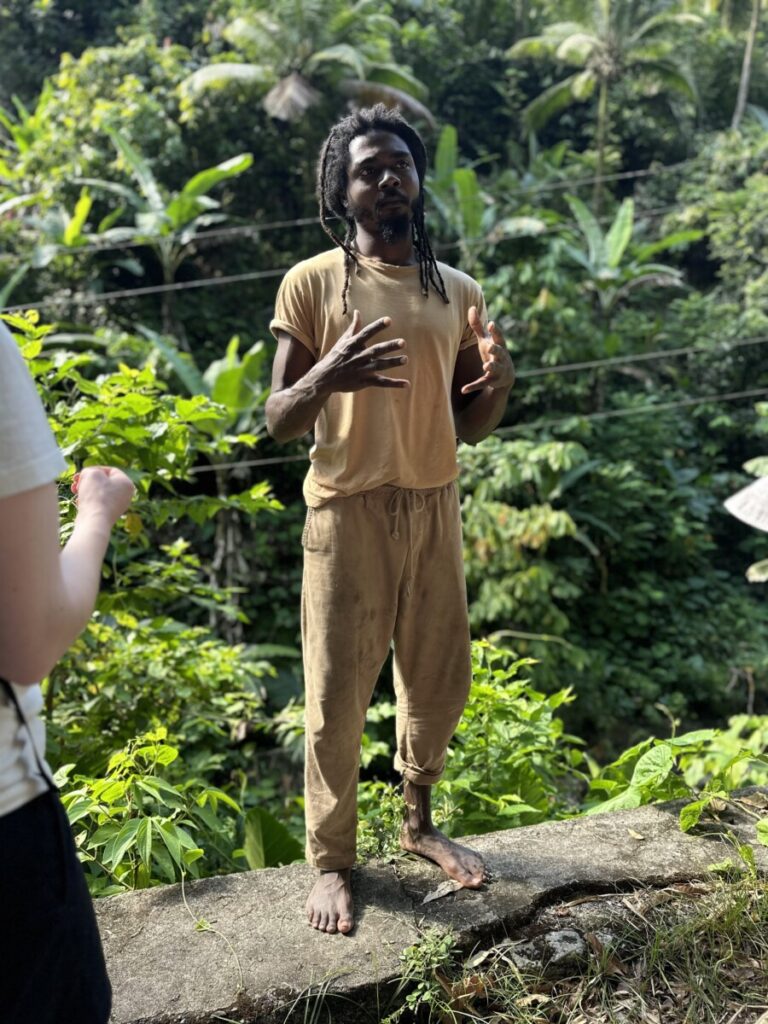
On March 2, 2025 we visited the Moore Town Maroons in the highlands of eastern Jamaica. Colonel Sterling welcomed us at the town museum and provided a brief history before heading up to his home for soup.
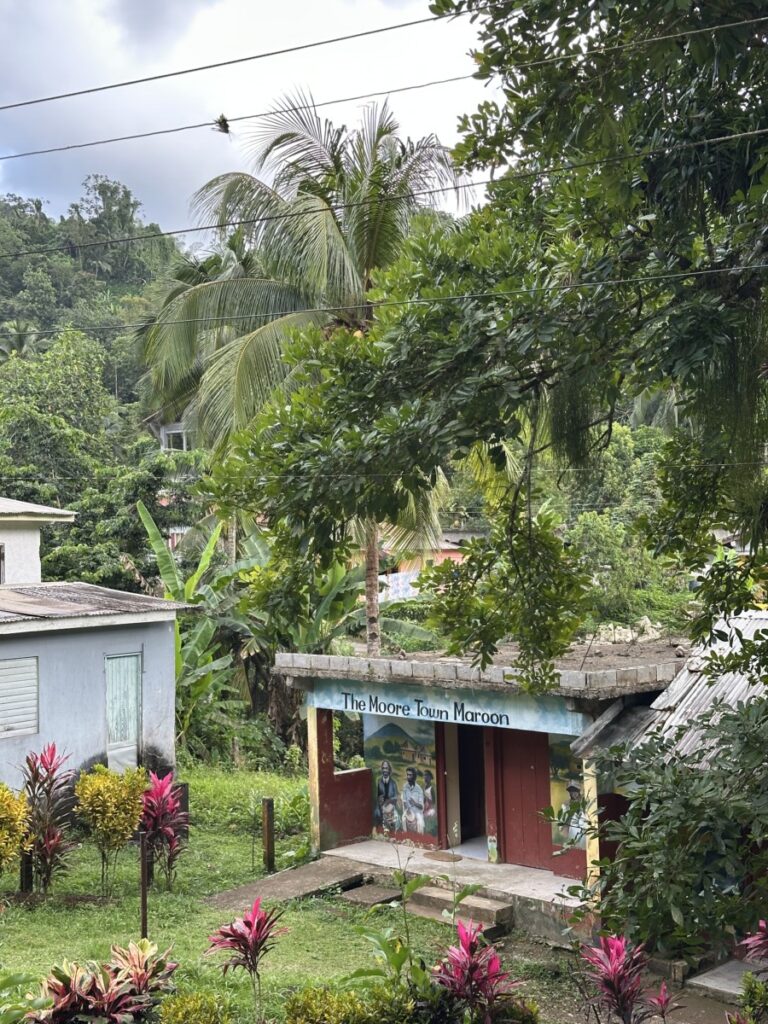
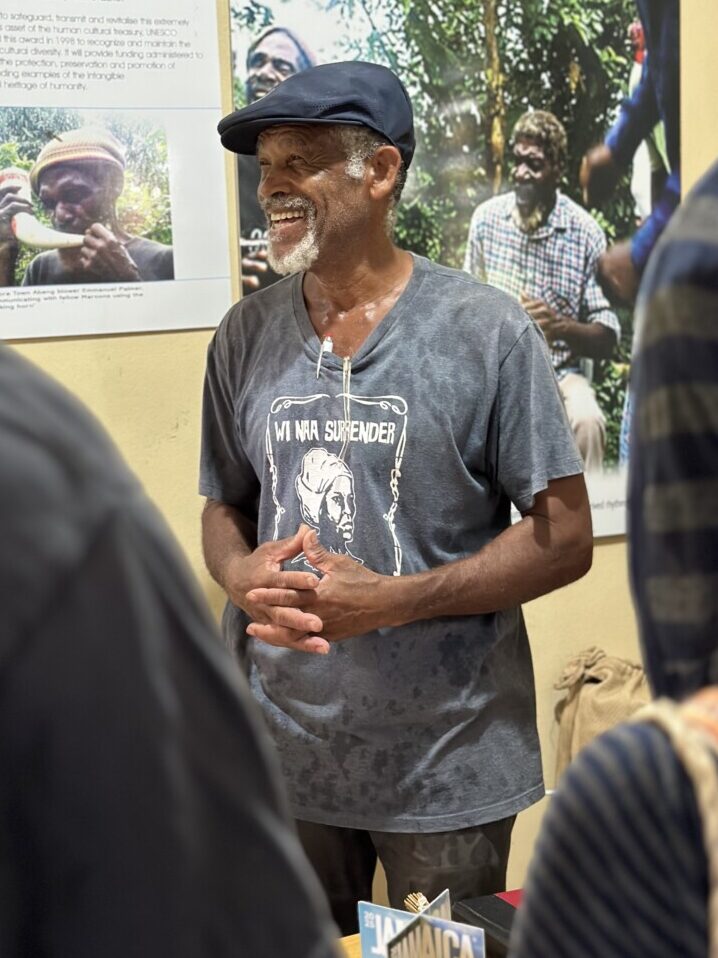
We then hiked up to Nanny Falls where we briefly swam under the falls
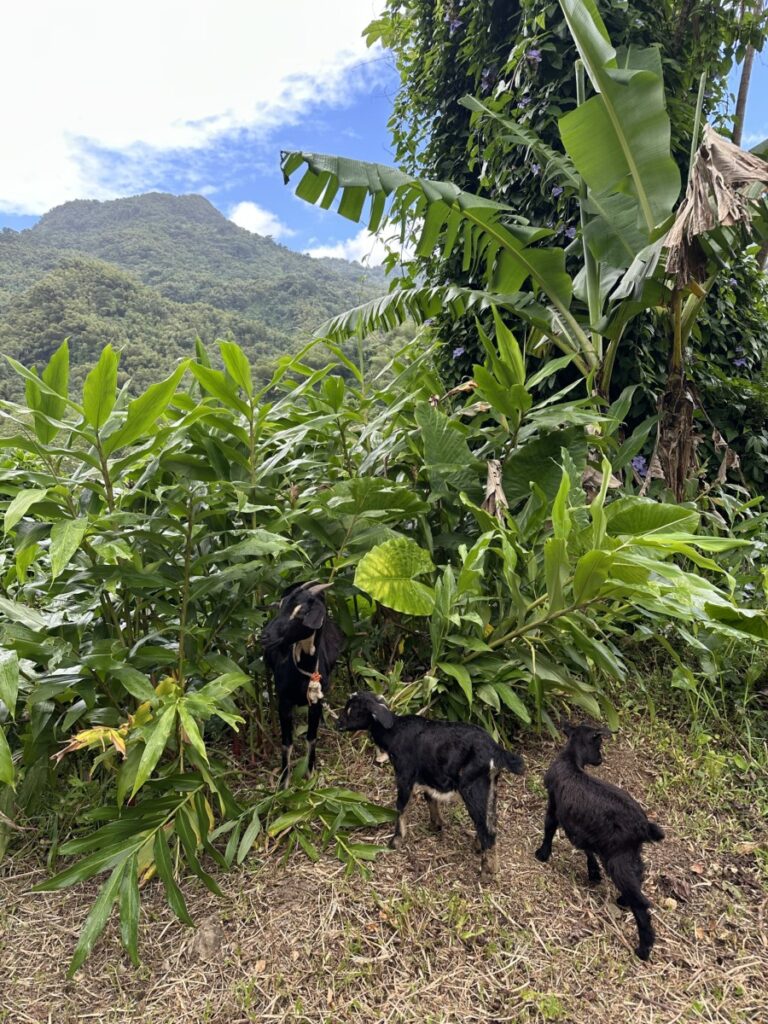


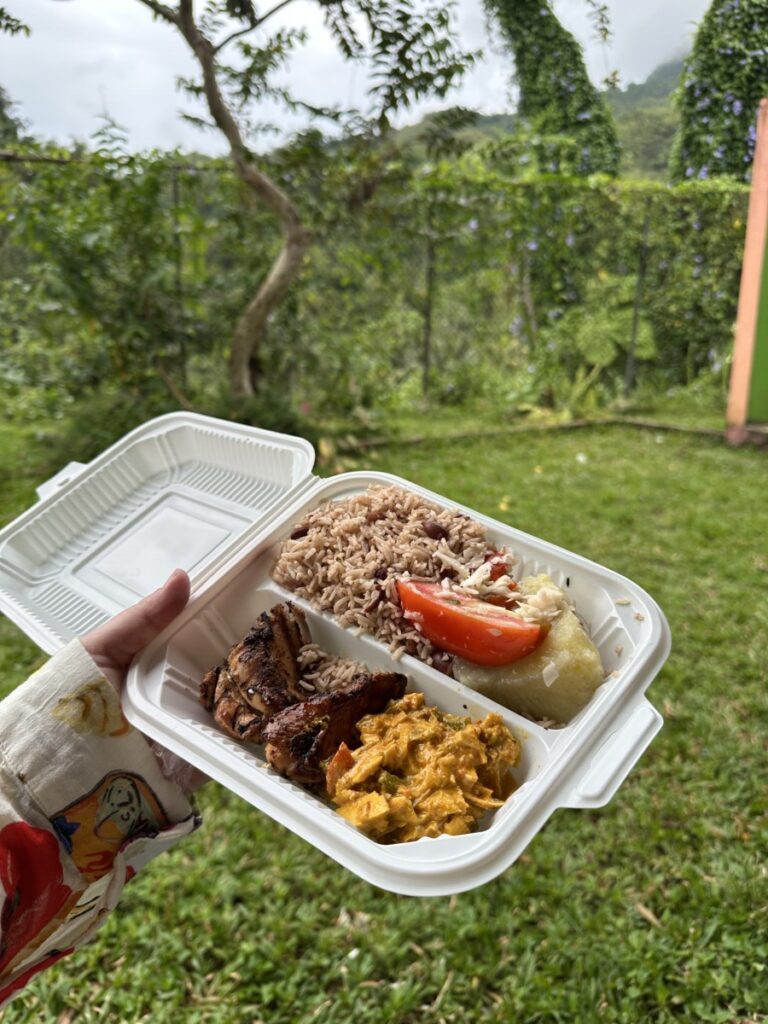
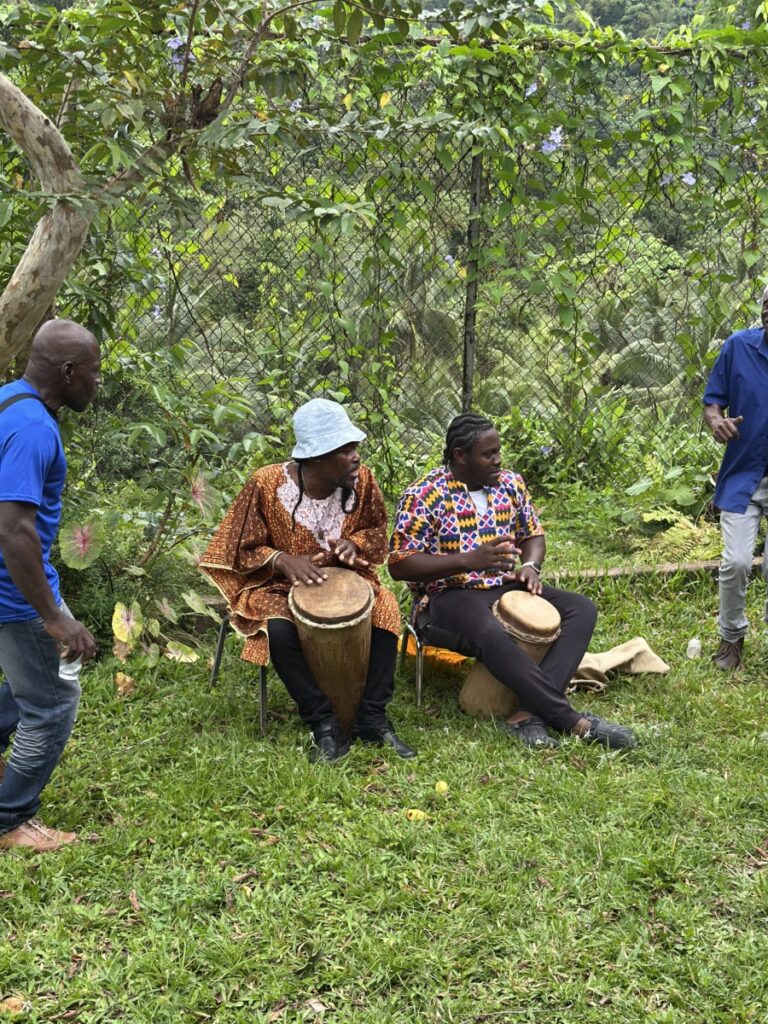
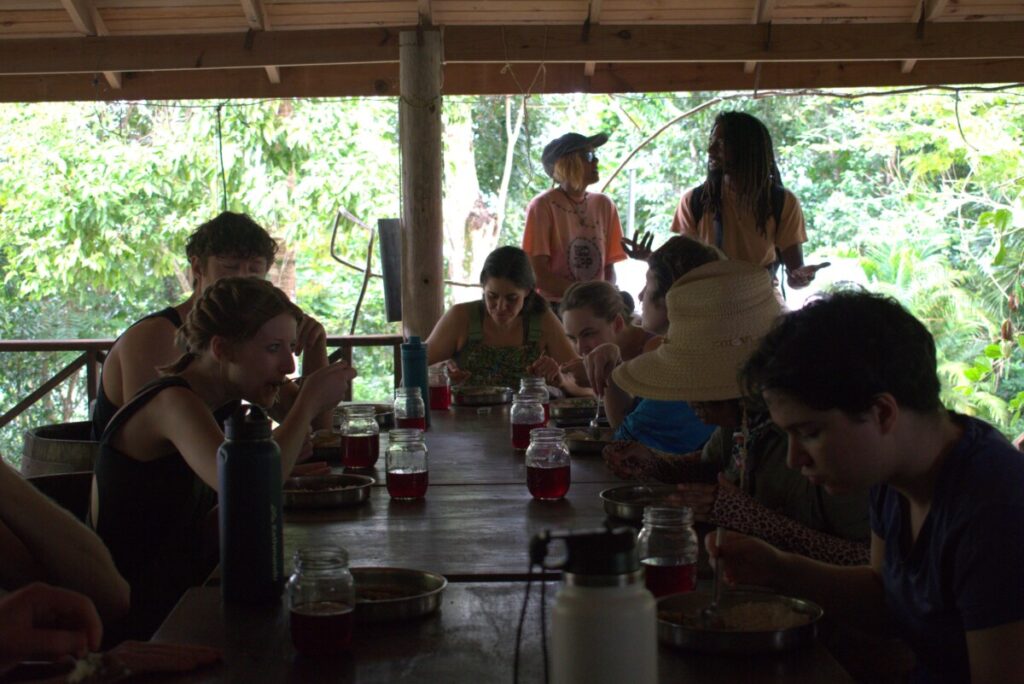
Lunch was then served to us as we enjoyed music from community members playing drums, singing, and dancing. While some may view the Moore Town Maroons as an isolated community, it was very apparent after our visit that the community is thriving while continuing to celebrate their heritage.
Principle 10: USE AND VALUE DIVERSITY
‘Don’t put all your eggs in one basket’
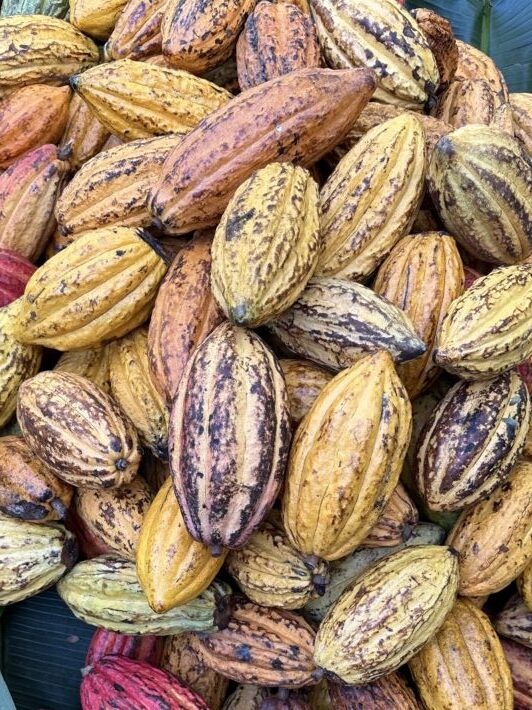
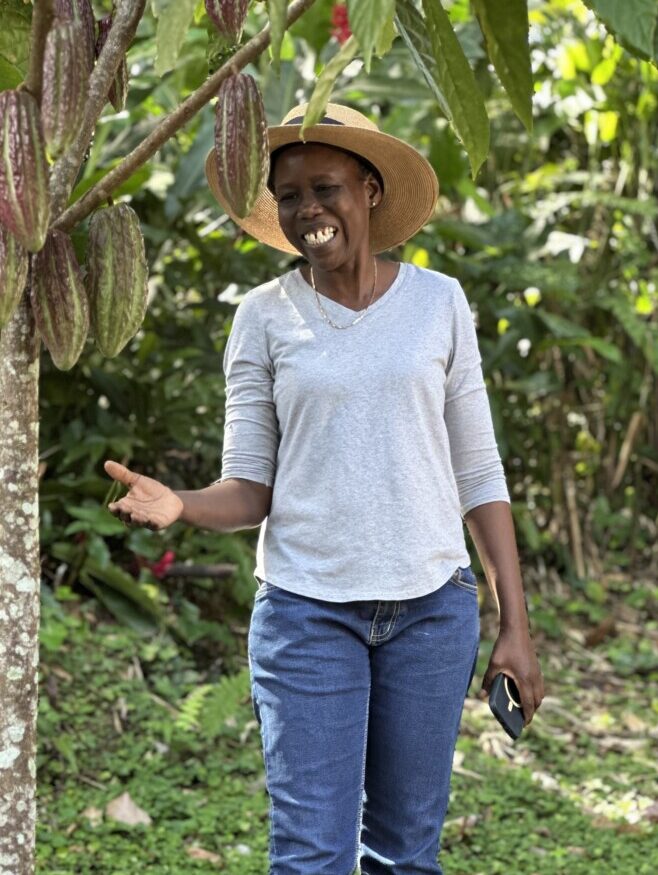
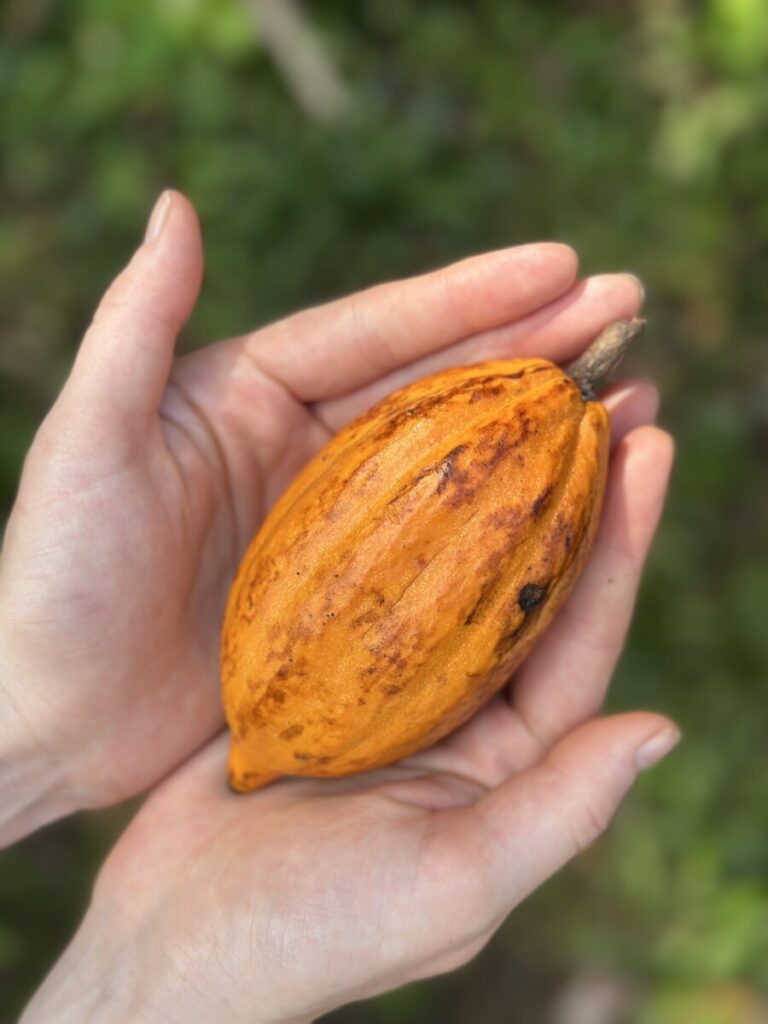
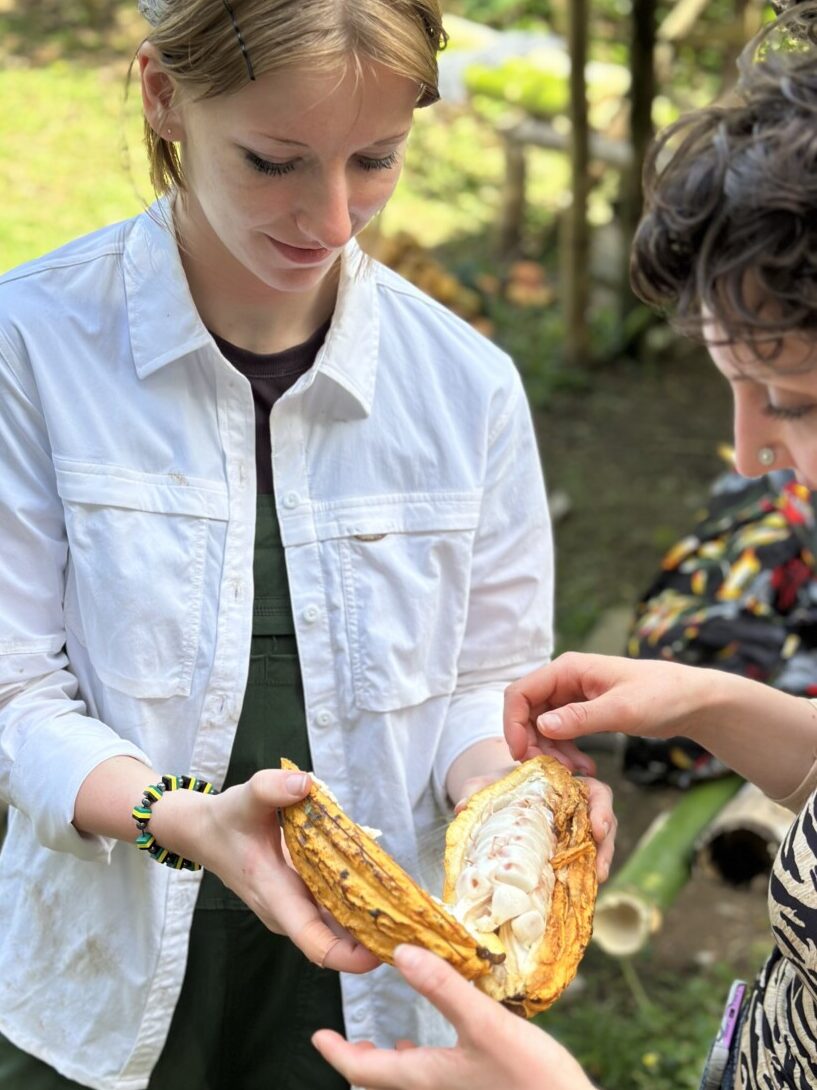
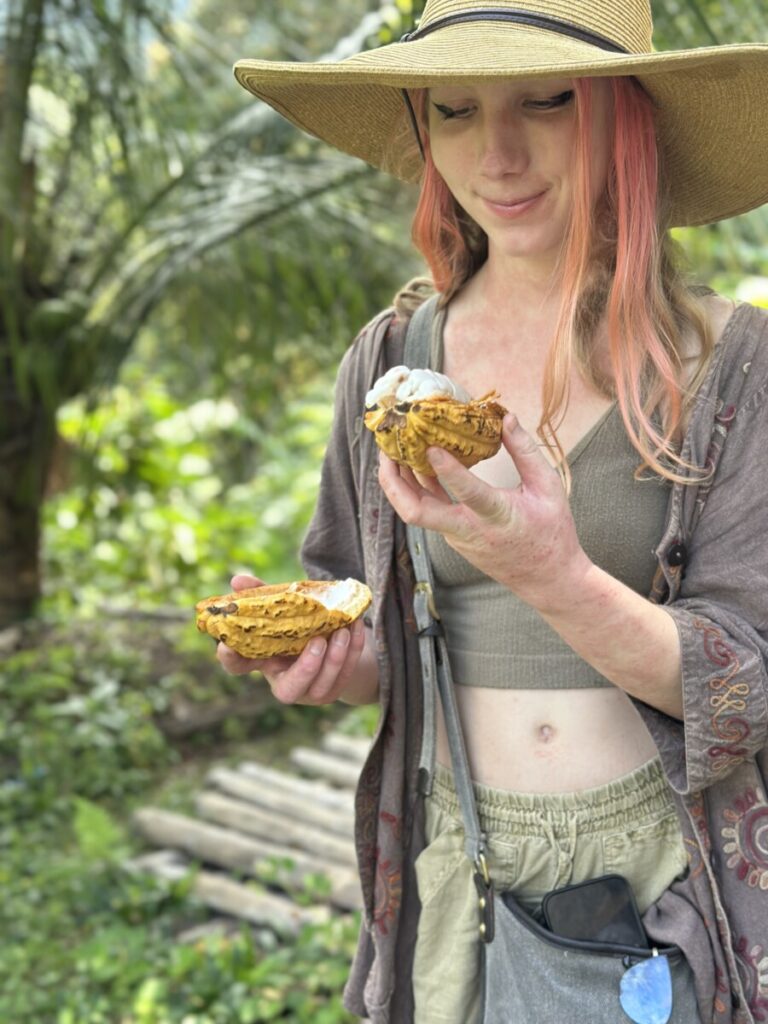
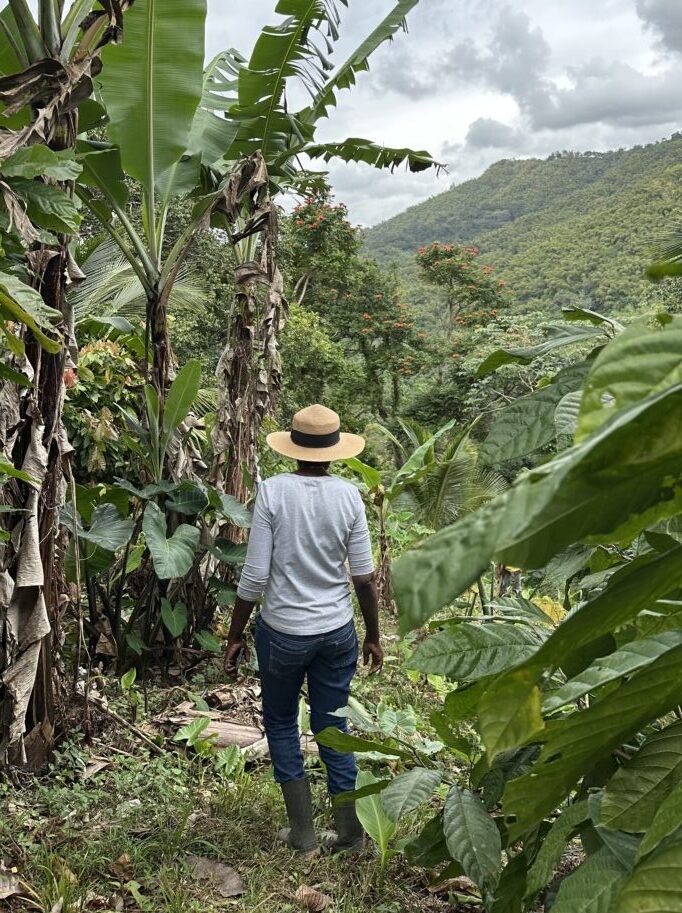
On February 25 we took a trip to one of Mount Pleasant’s three cocoa farms. The farm we visited in Saint Andrew has been in owner Aberel’s family for around 120 years. When we arrived, Aberel and Ellen provided a history on the land and an overview of their practices. They spoke about the ways in which they value diversity on the farm. The cocoa farm looks far different than any produce farm in the United States – to a passer-by, the land might not even be recognized as a farm at all. The cocoa trees grow sporadically along the hillsides of the land. Mount Pleasant allows their farmers to grow any additional plants alongside the cocoa trees, as they know that diversity in planting only benefits the land and soil and enhances the flavors in the cocoa. A perfect example of permaculture principle number ten, use and value diversity.
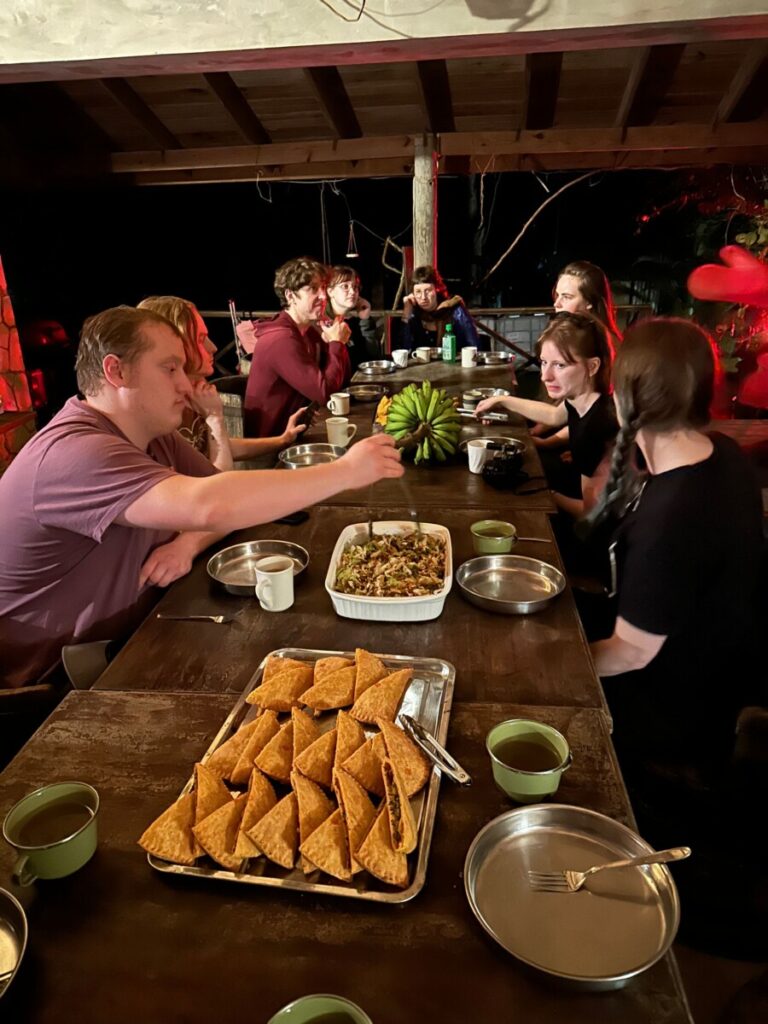
For lunch, the One Regeneration team carried in a picnic lunch of traditional Trini street foods: doubles and aloo pies. All served alongside fresh fruit, coconut, and sugarcane.
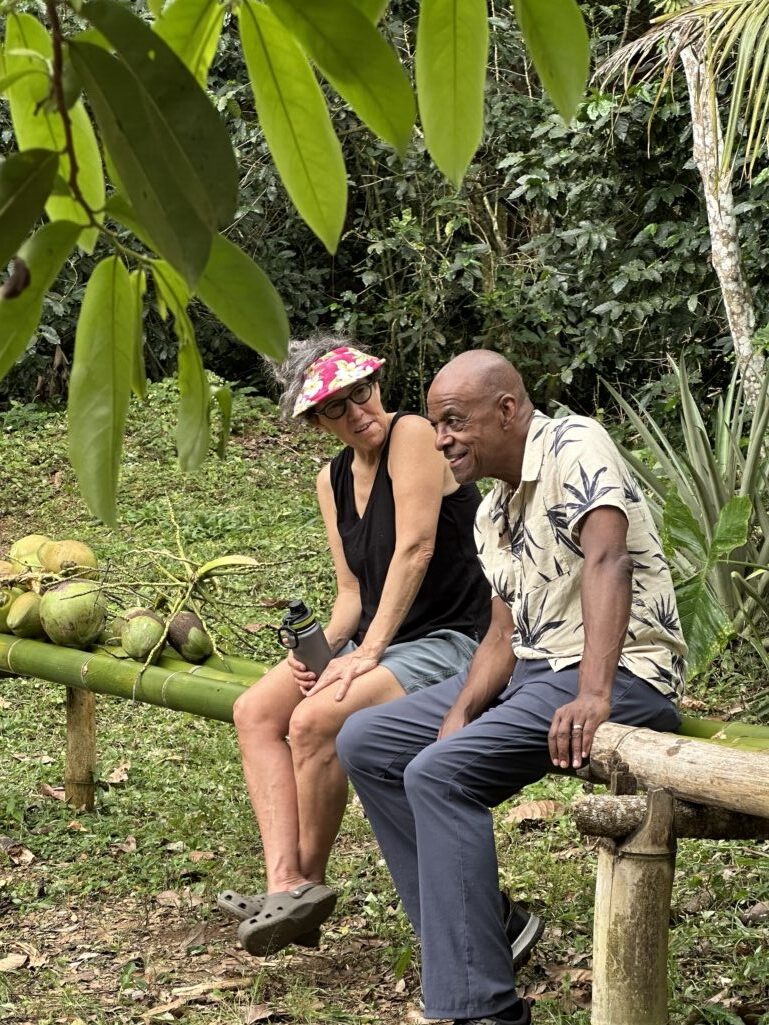
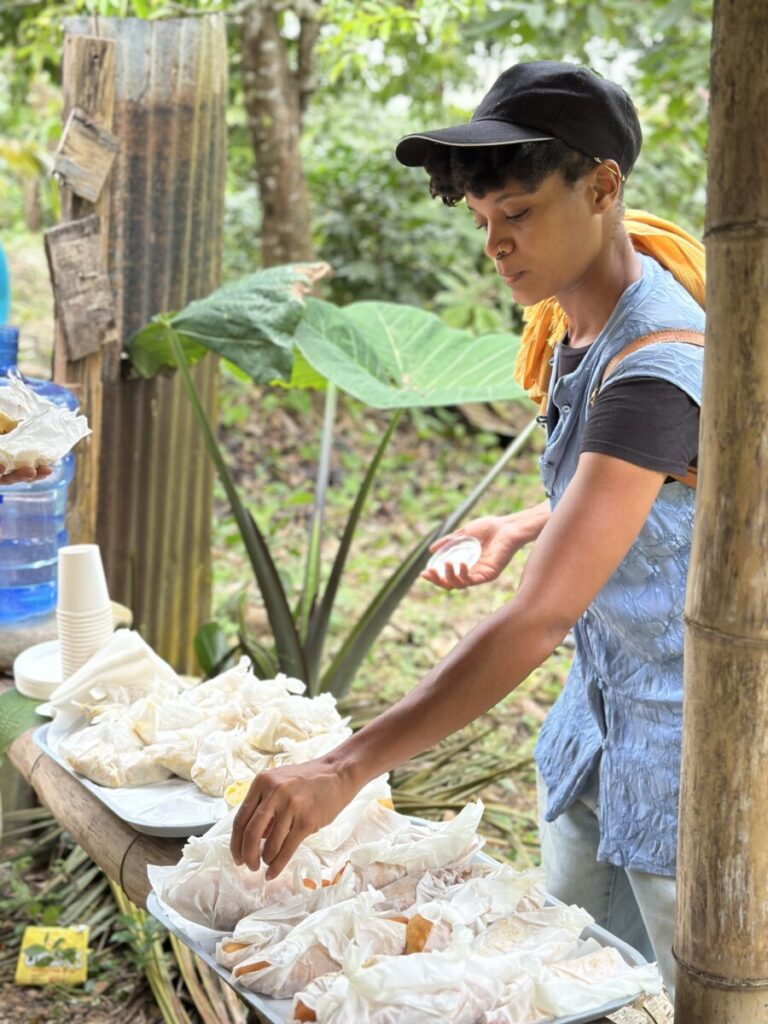
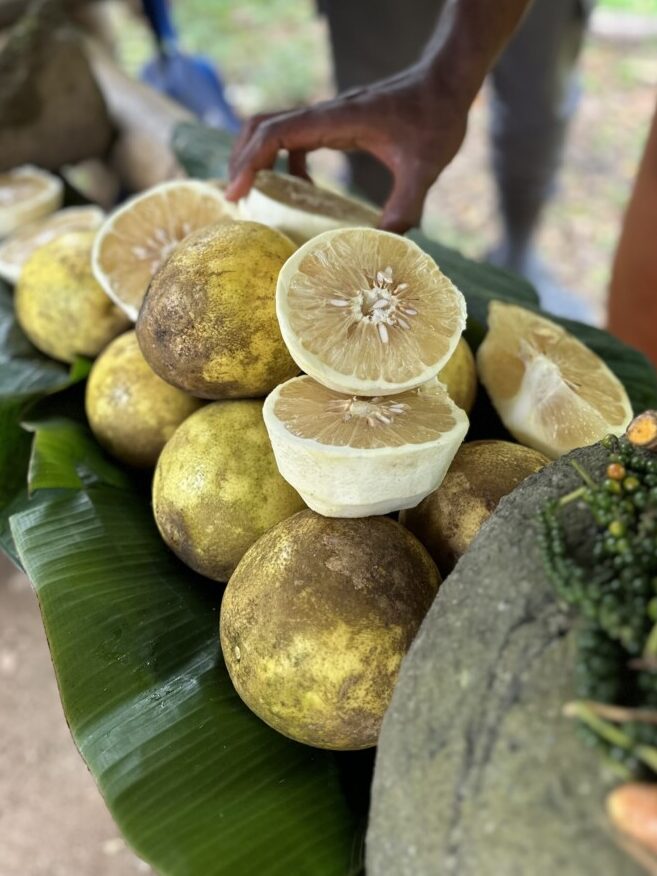
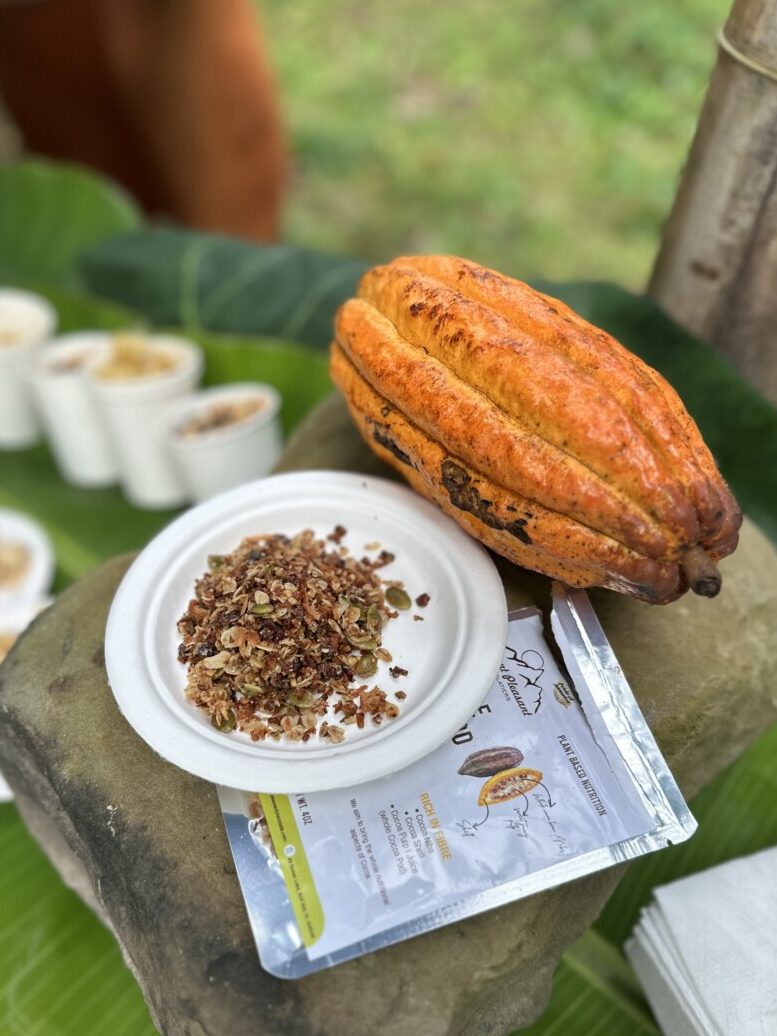
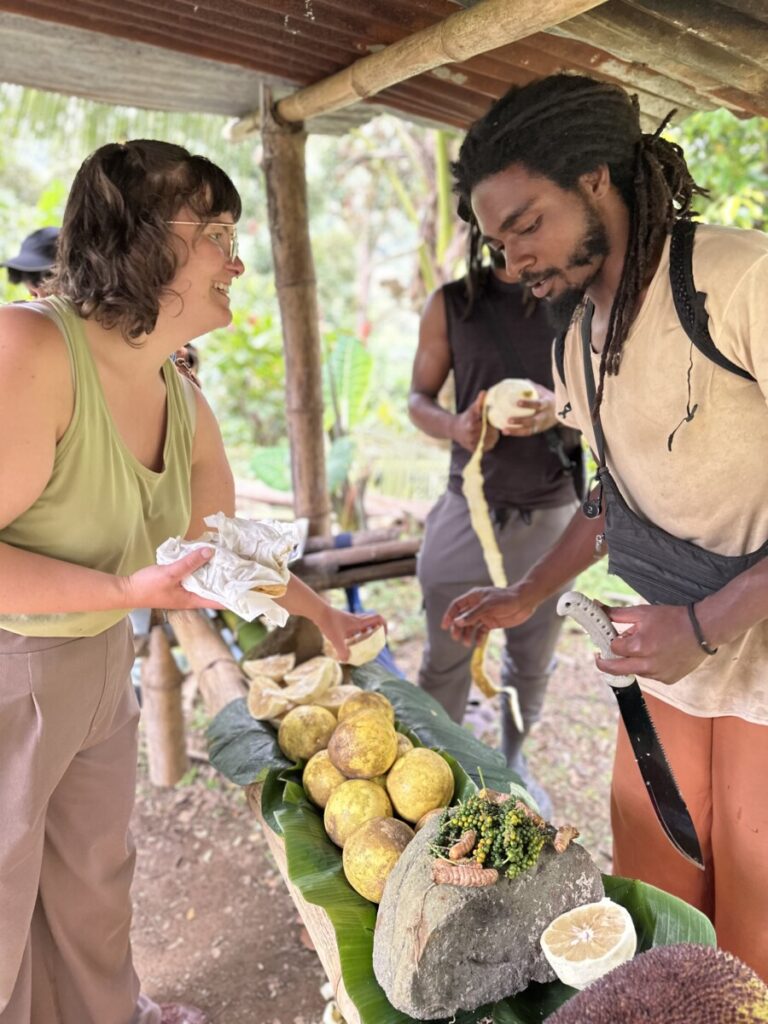
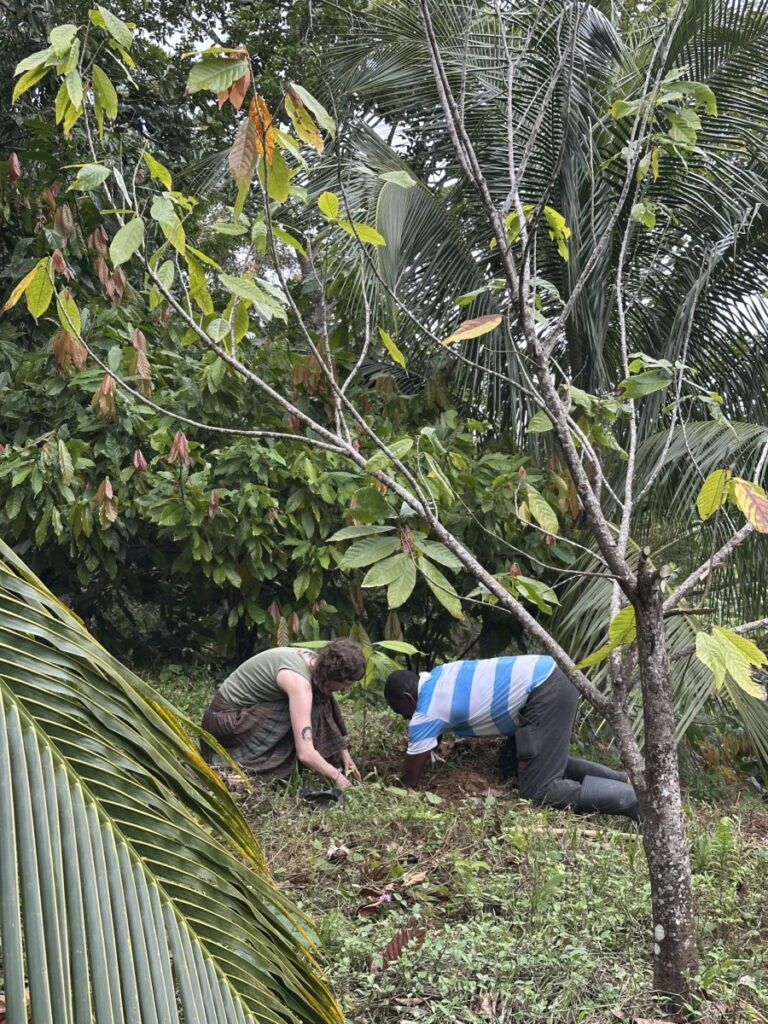
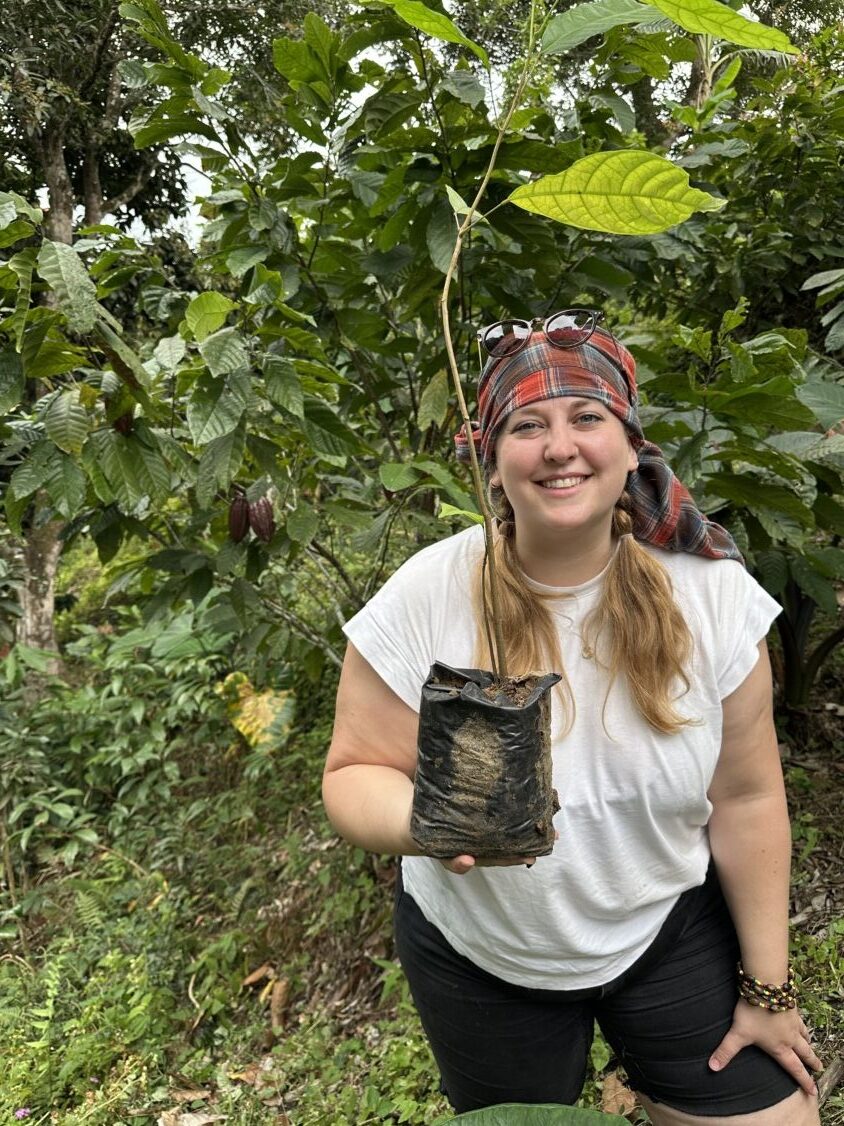
After lunch we were able to hike through part of the 70 acre farm and everyone who wanted to was able to plant their very own cocoa tree.
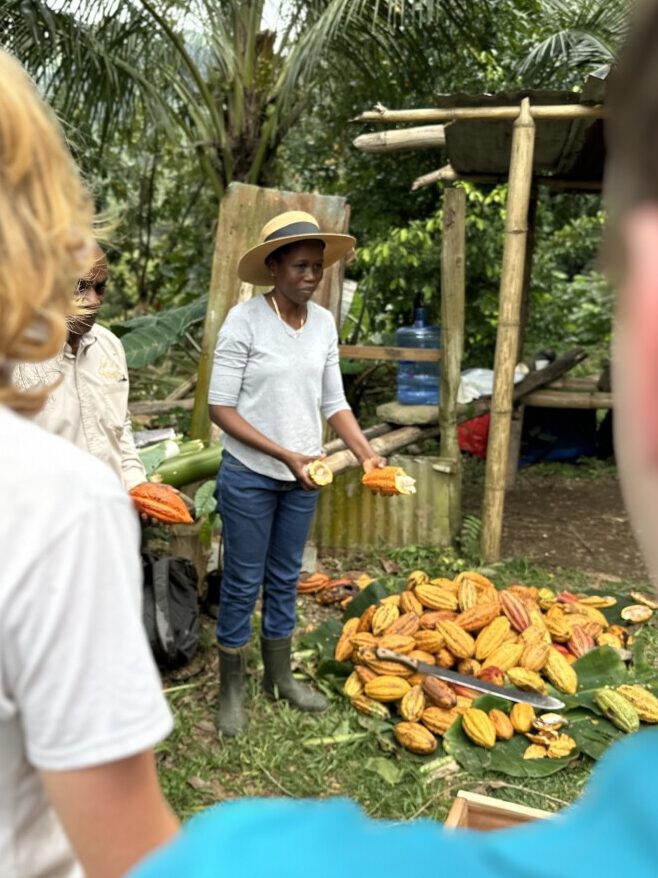
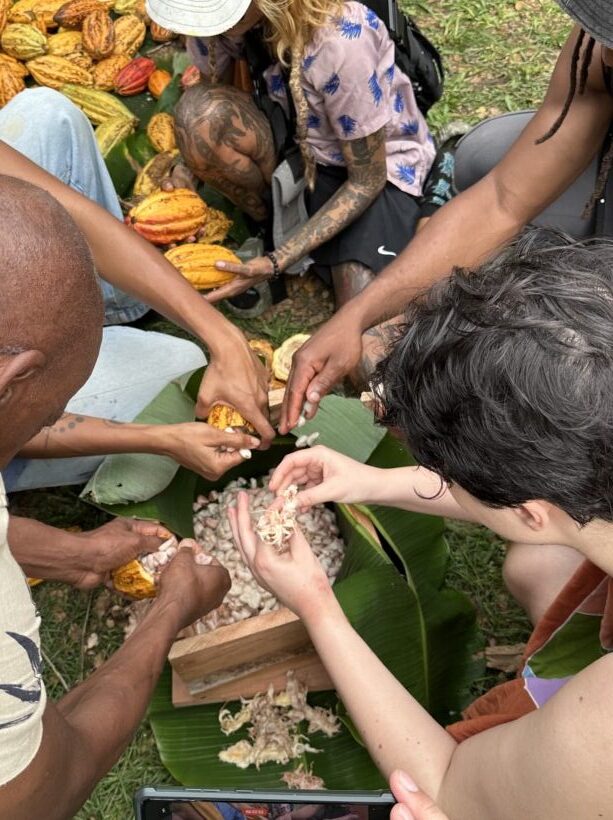
Last but not least, we shelled cocoa pods for a small batch of fermented beans.
February 17-23
Principle 1: OBSERVE AND INTERACT ‘Beauty is in the eye of the beholder’
Principle 3: OBTAIN A YIELD
‘You can’t work on an empty stomach’
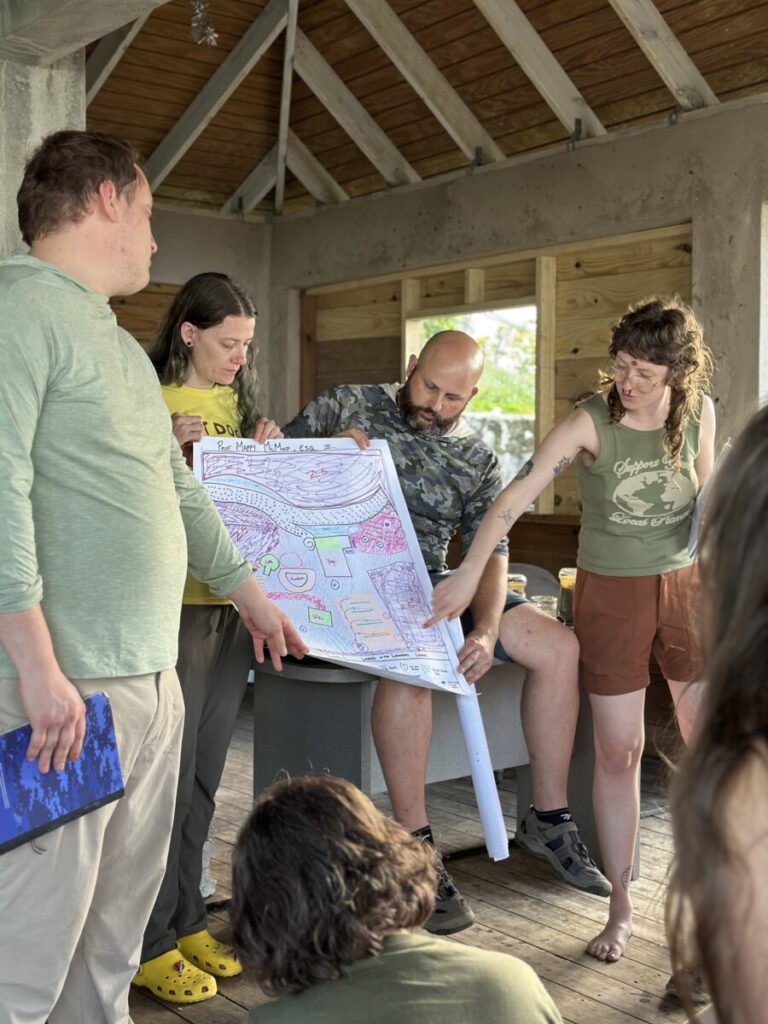
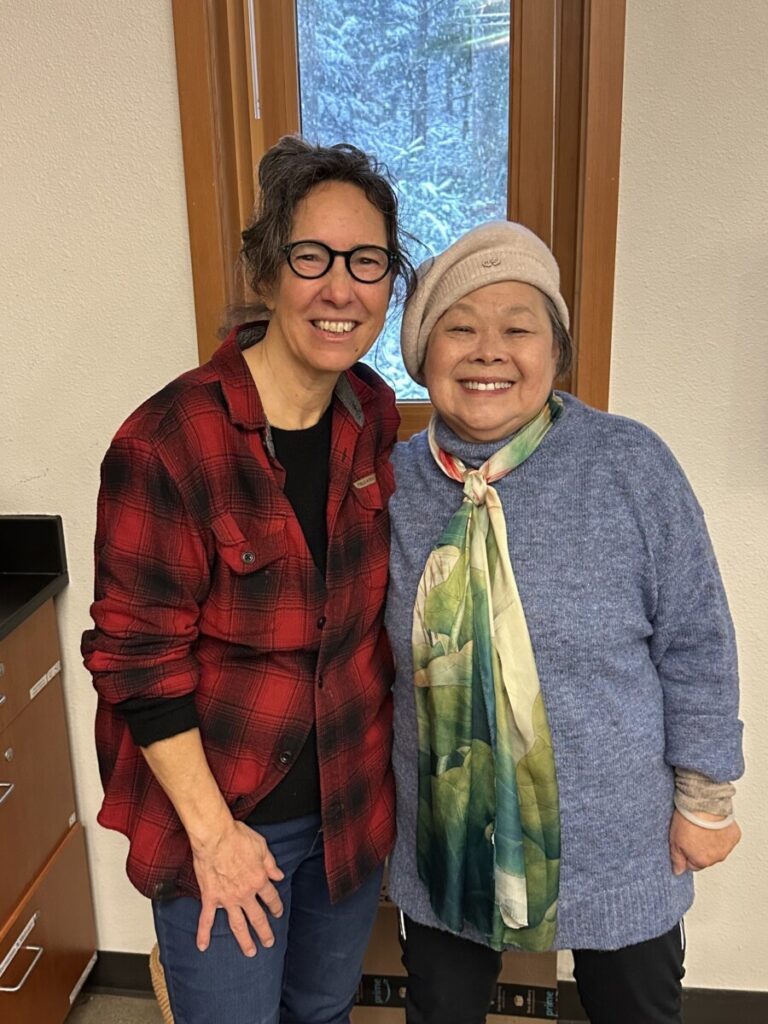
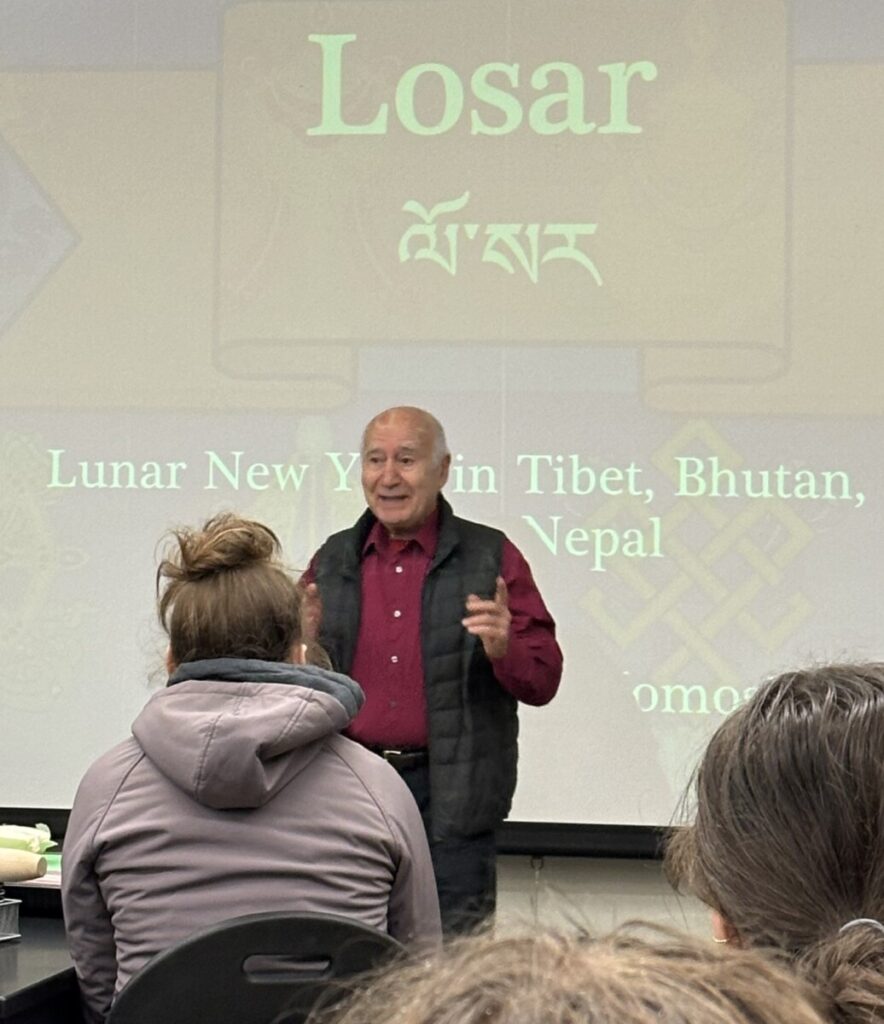
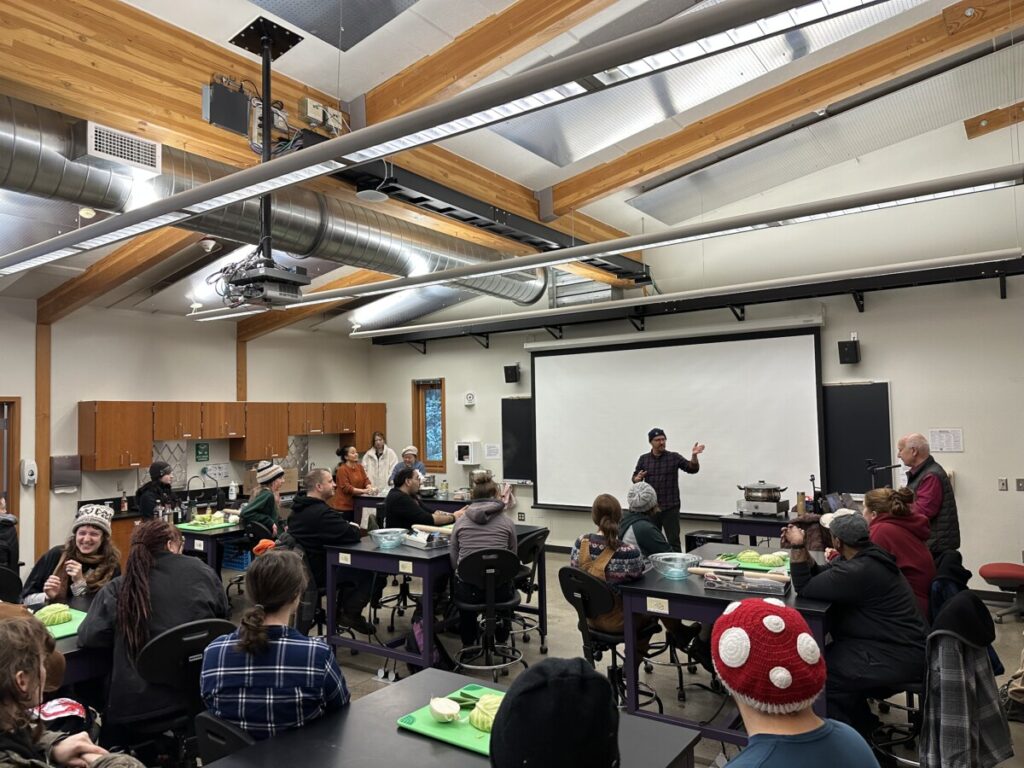
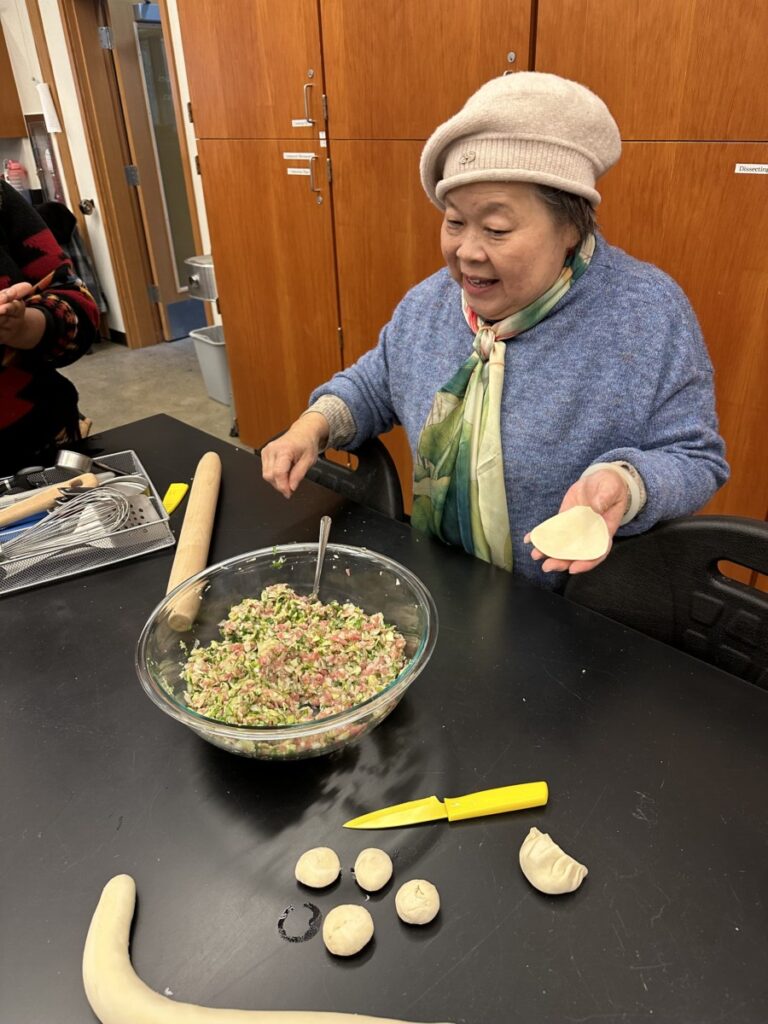
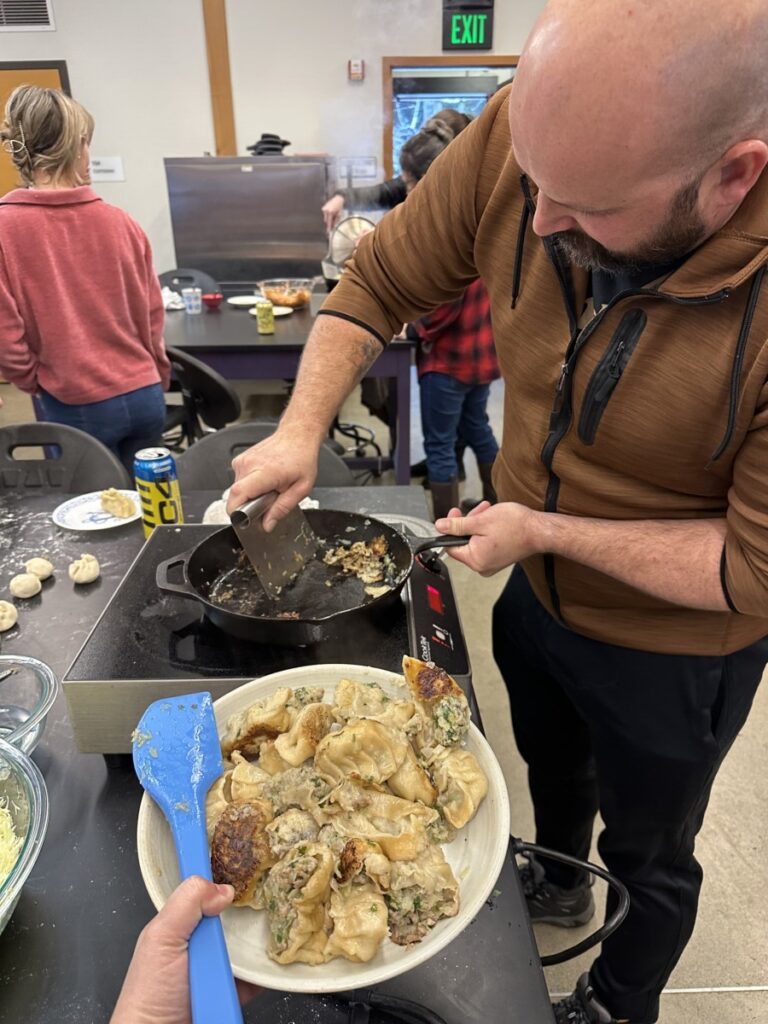
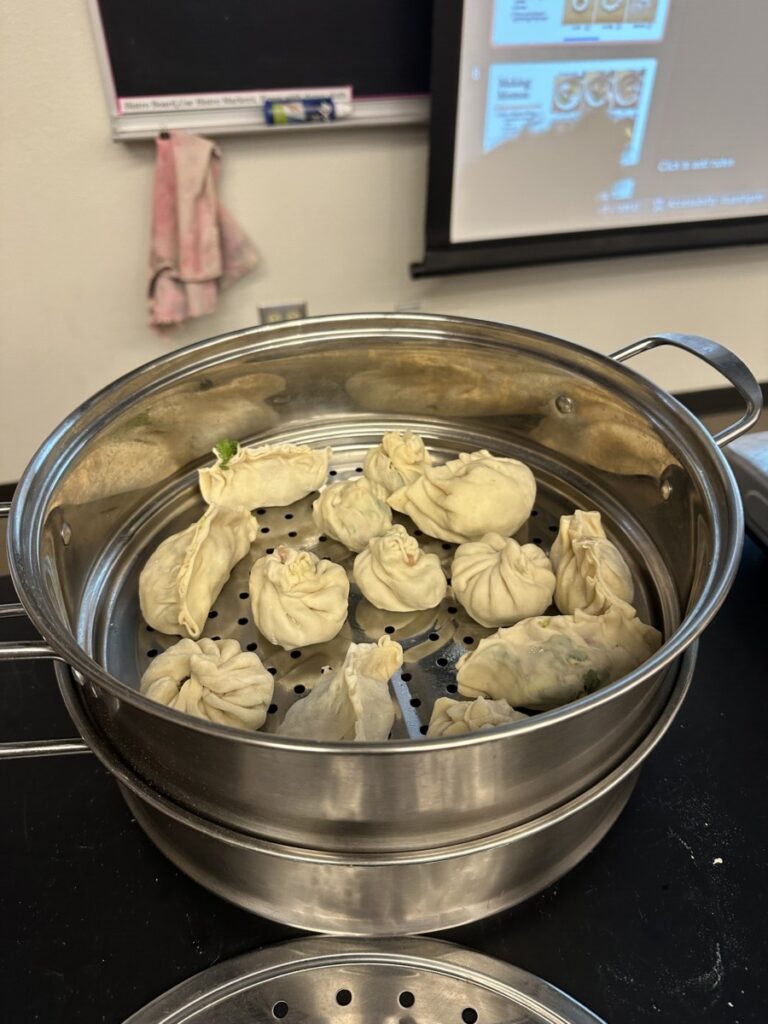
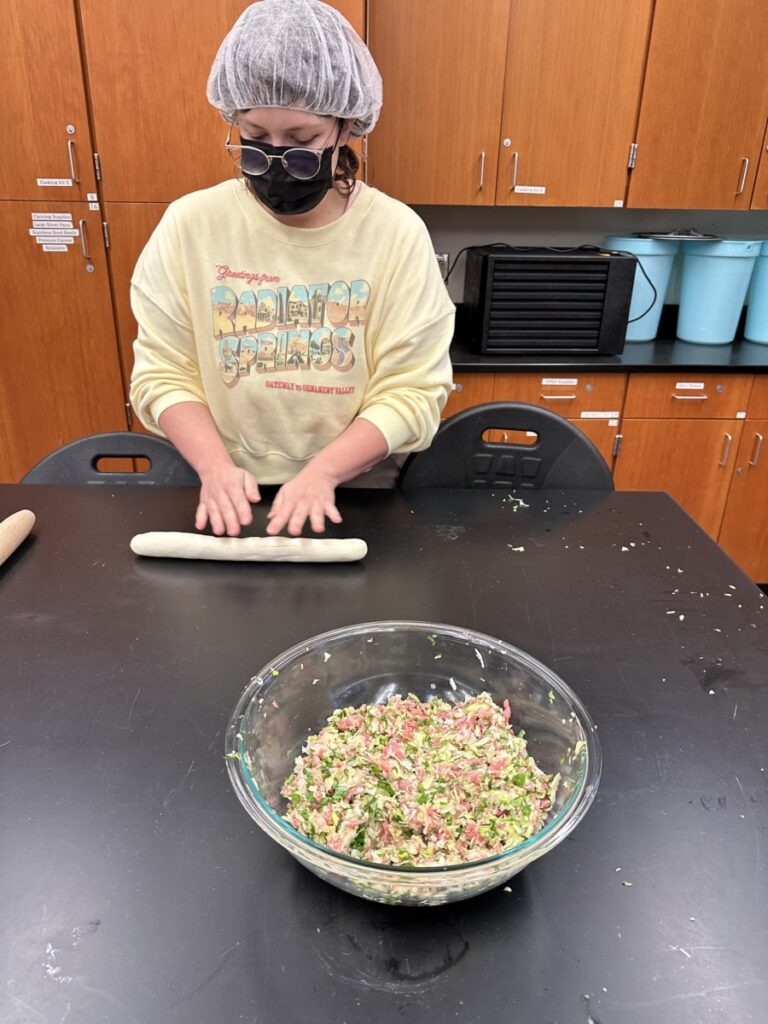
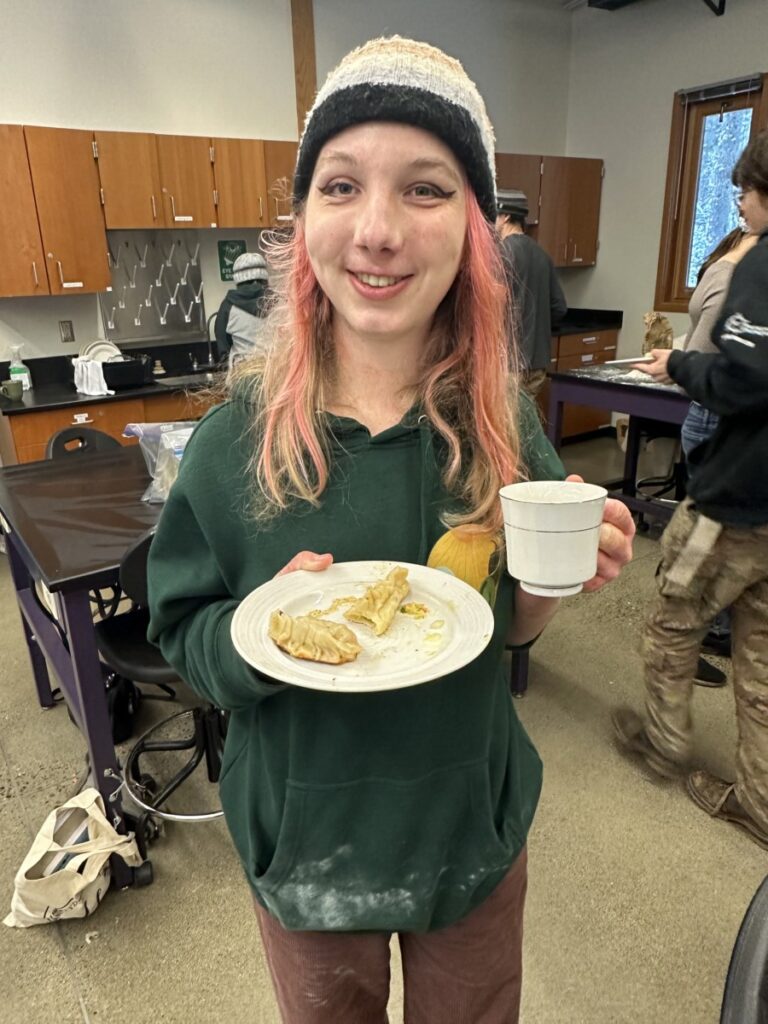
To celebrate the Lunar New Year, our week 5 community-based learning opportunity presented itself in the form of a Momo making workshop on the snowiest day of the year. Students from the Bittersweet program joined Ben Hunsdorfer and students from the Practice of Organic Farm program in the SAL building on the TESC Organic Farm. The workshop was lead by faculty Ben Hunsdorfer and Hirsh Diamantalong with their wives, Jungmoo (sp?), and Jenny (respectively), with special guest Juliette. After a brief PowerPoint presentation detailing the history of Losar (or the Lunar New Year), we were given instructions on how to prepare the momo dumplings and Jenny, along with the other fascilitators, walked around the room to provide visual examples of how to fold each momo effectively. Once everyone had watched the demonstration, we executed the steps ourselves. This was a prefect example of permaculture principle one, observe and interact. In the end, we all got to taste the fruits of our labor and had a feast of steamed and pan-fried momos!
Principle 8: INTEGRATE RATHER THAN SEGREGATE
‘Many hands make light work’
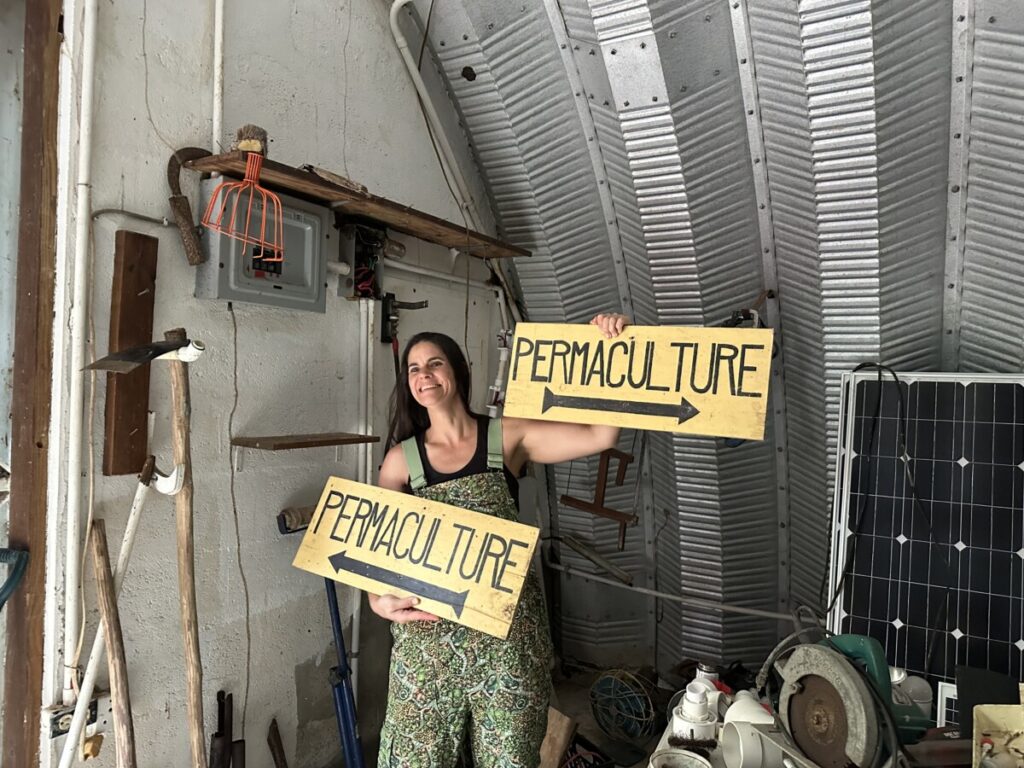
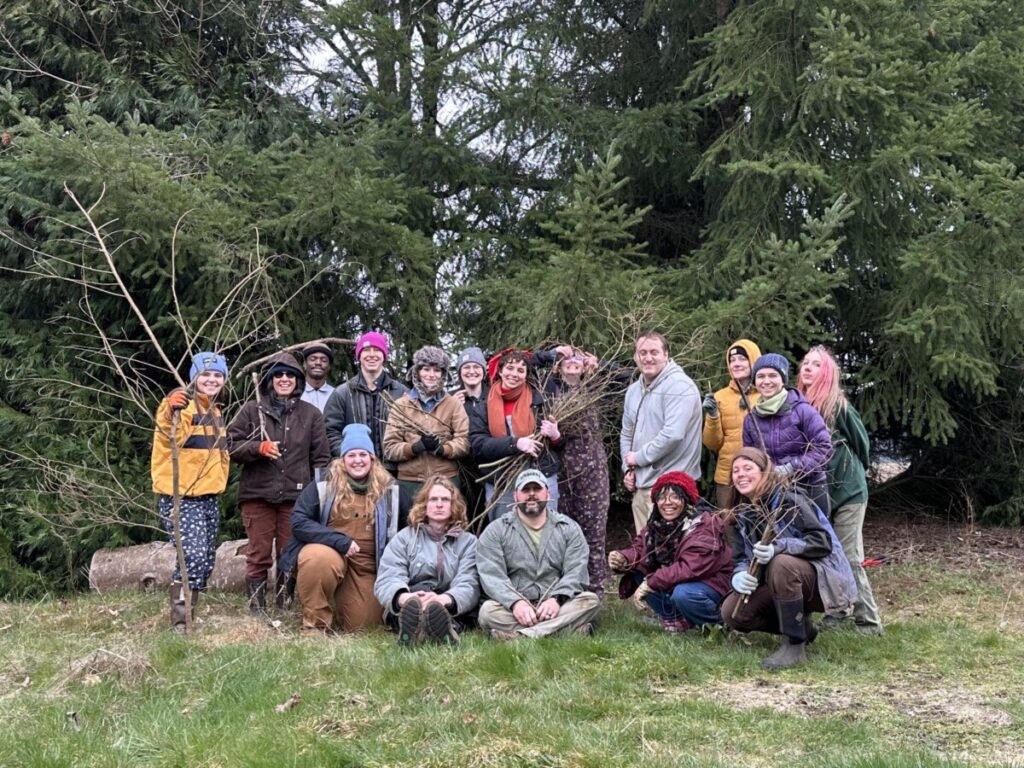
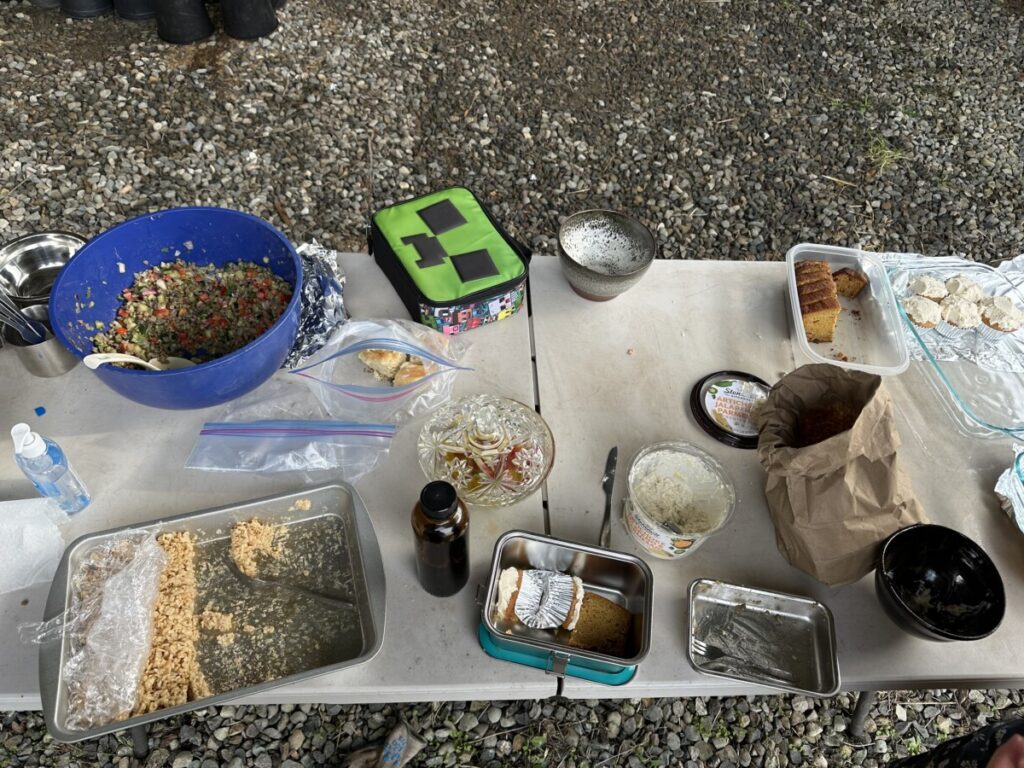
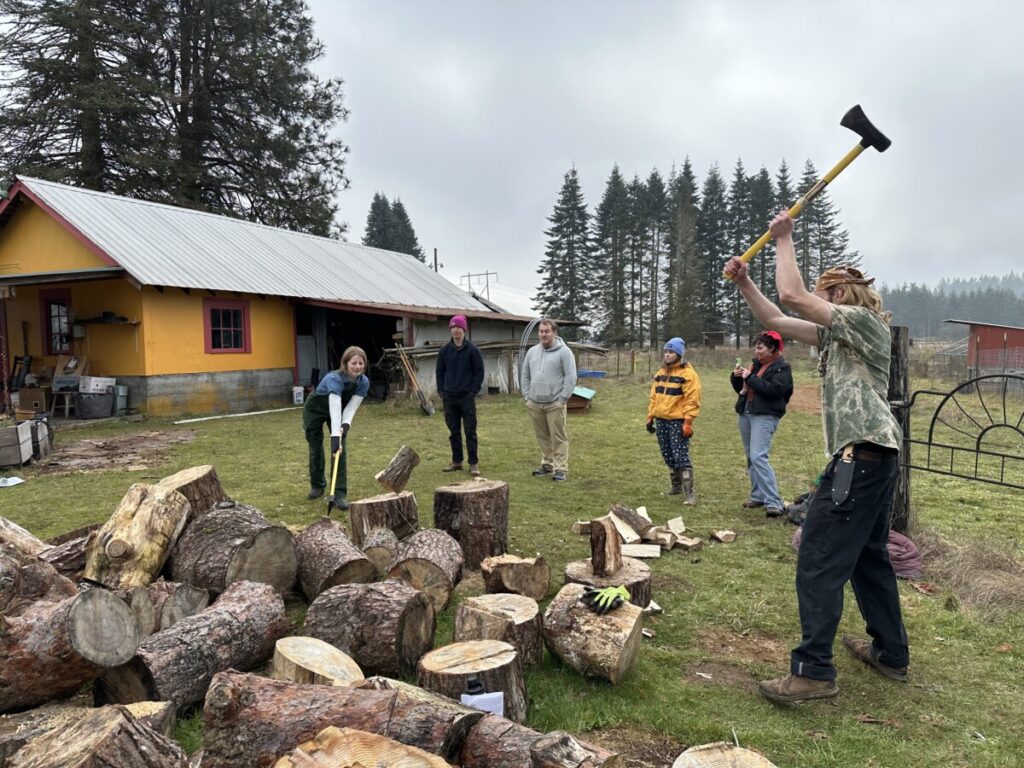
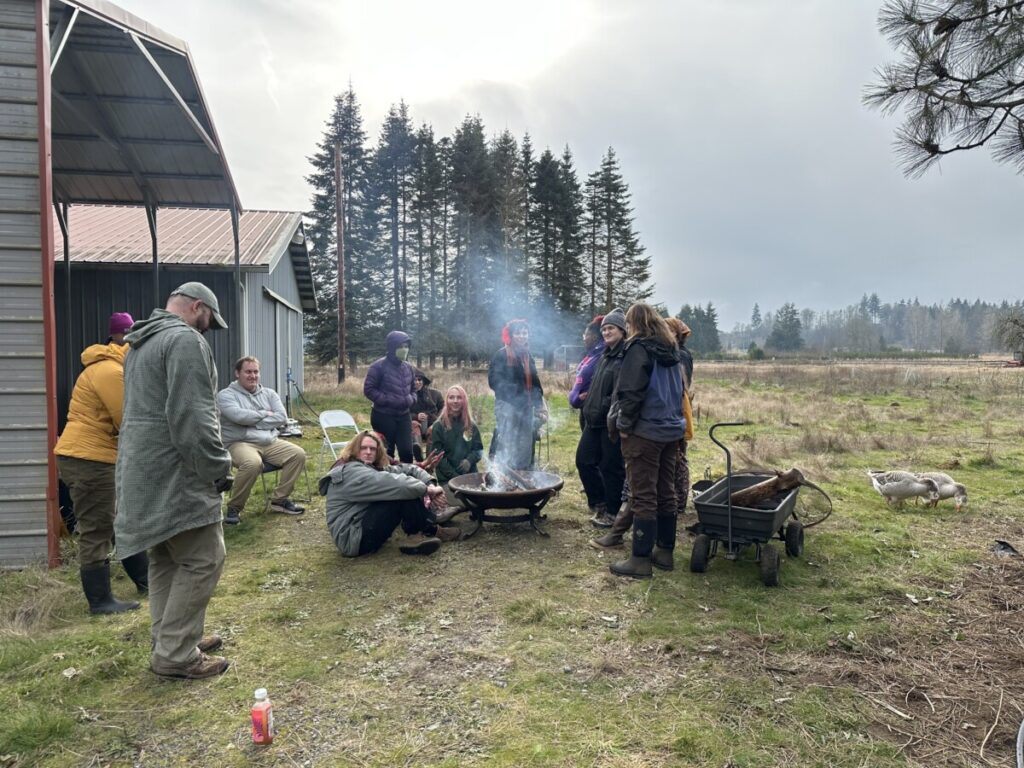
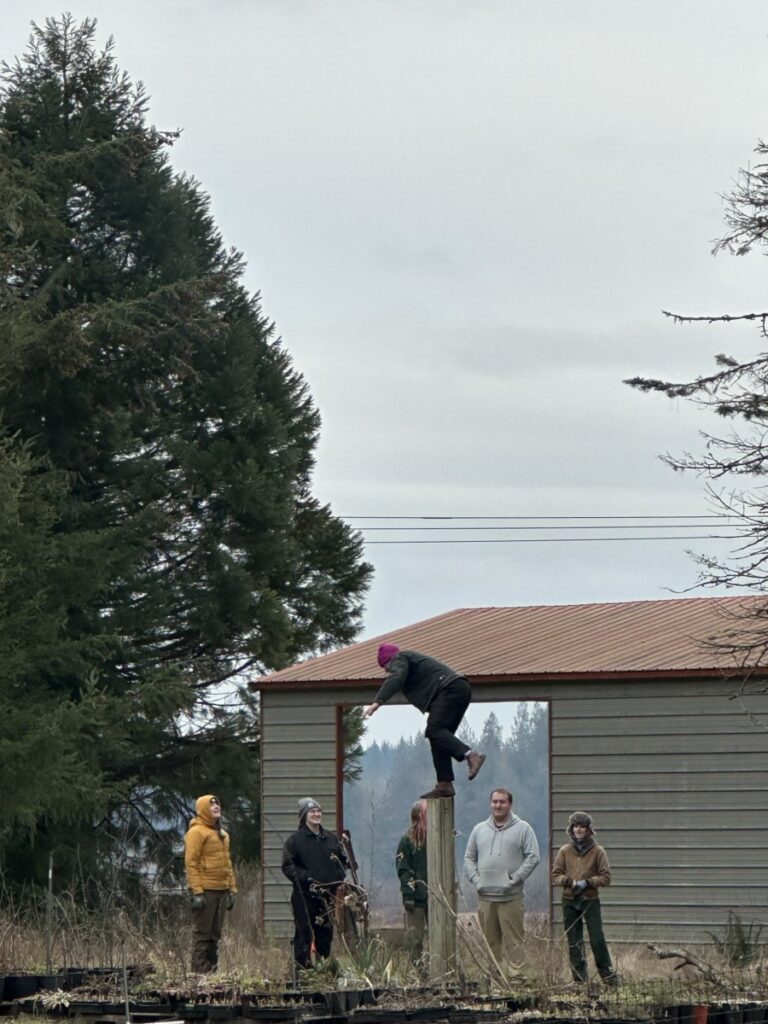
For our farm practicum of week 4, we traveled to Marisha Auerbach’s farm, Permaculture Rising. As a group we worked on several projects including sheet mulching the ground beneath and her palleted nursery, splitting wood, relocating a chicken house, working on her bee keeping table, laying sawdust to create paths in the garden, and trimming tree limbs. Student brought cold lunch items to be shared picnic style and we sat around a fire and listened to Marisha talk about how she first got interested in permaculture.
This is where you will be posting images and text weekly in response to your learning objectives and activities of your in-program ILC.
Reminder: Do NOT change your WordPress ePortfolio theme unless/until you are a confident user of each component of this ePortfolio. Alternative themes that are supported by Evergreen, interactive (mobile app friendly), and compatible with our ePortfolio template include: Lovecraft, Ignite, Evergreen Hemingway, Wilson.