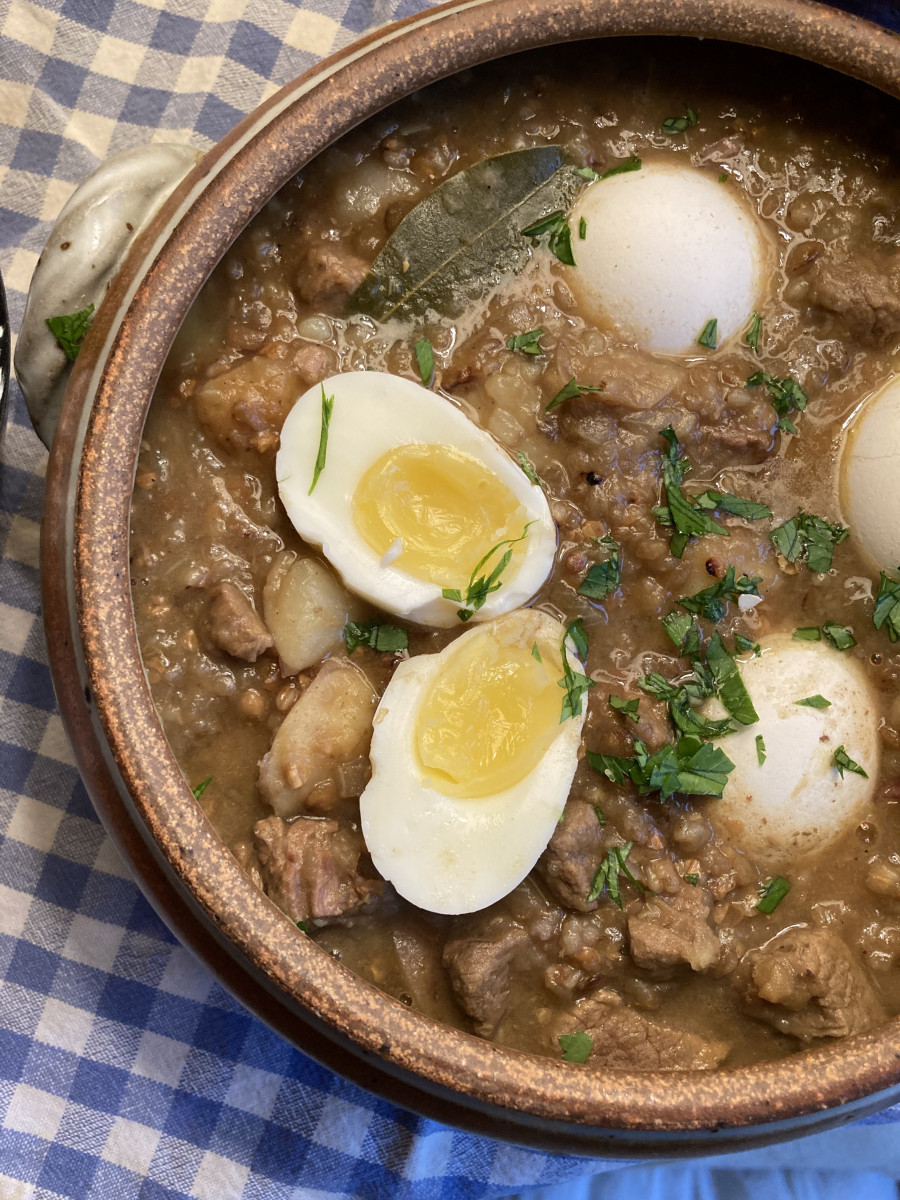
Cholent is a traditional beef stew commonly eaten in shtetls across Europe. It is hearty and full of flavor and protein, two very important aspects of Jewish cooking. In Yaffa Eliach’s book There Once Was a World, he catalogues a shtetl sabbath with menus for each day. On Saturday night many families ate this dish, often topped with stuffed derma or kishke which is beef intestines stuffed with seasoned meat. Along with this would be served kugel, gefilte fish with horseradish, chopped herring with onions, and chopped liver. This would all be served with hot tea and chunks of sugar. While I do not have any chicken livers to chop and am wary of gefilte fish, this hearty stew will give me a taste of what it was like on those Saturday nights.
- Half a pound of beef cut into small cubes (you can use the pre cut beef chunks for stew)
- Two yellow onions, diced
- Three garlic cloves, minced
- 32 oz chicken broth (one box from the grocery store)
- Half a pound of mini red potatoes, cut however you want (I cut into fourths)
- Two beef bones w marrow
- Two cups kasha
- Any dried bean or grain you want to add (lentils, chickpeas, barley, etc)
- As many eggs as you would like
- Paprika, cumin, turmeric and cayenne to taste
- Two or three bay leaves
- Parsley for garnish
- Salt and pepper to taste
In a large pot brown the beef in vegetable oil so it has a little color but is not cooked all the way through. Once the beef has browned a bit, take it out and set it aside. Pour in the onions and cook till translucent and sweating. Put in the garlic and potatoes and stir to combine. Sprinkle in the spices and mix all together before pouring back in meat cubes with their liquid.
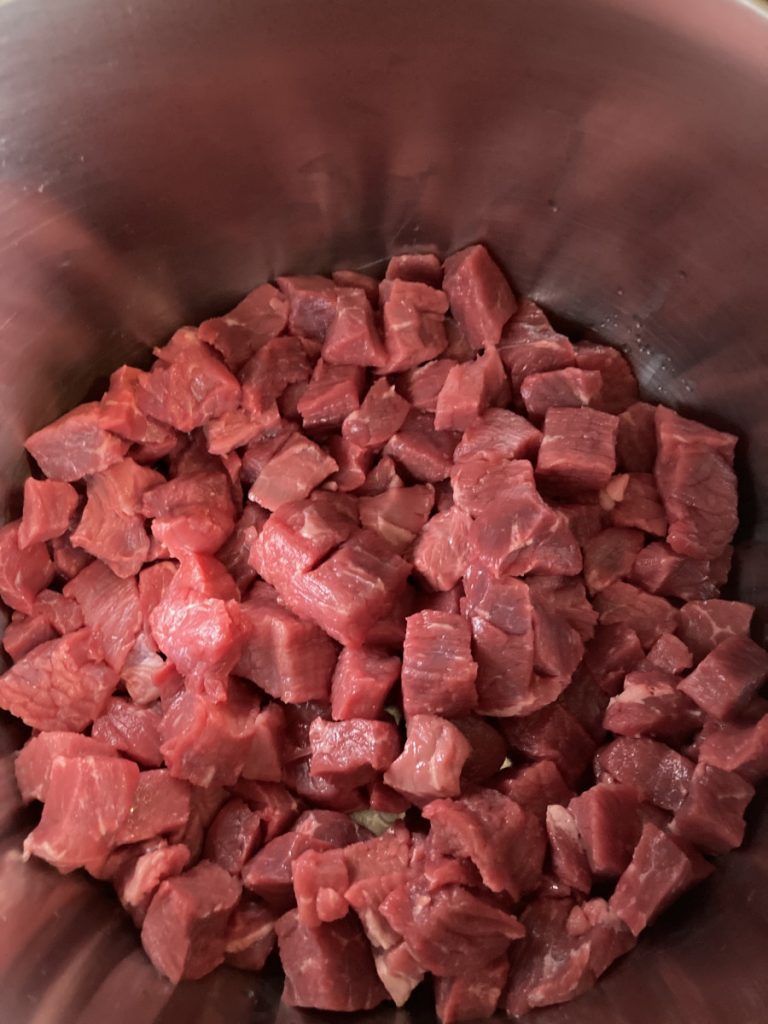
Beef in the pot (Pressman, 2020) 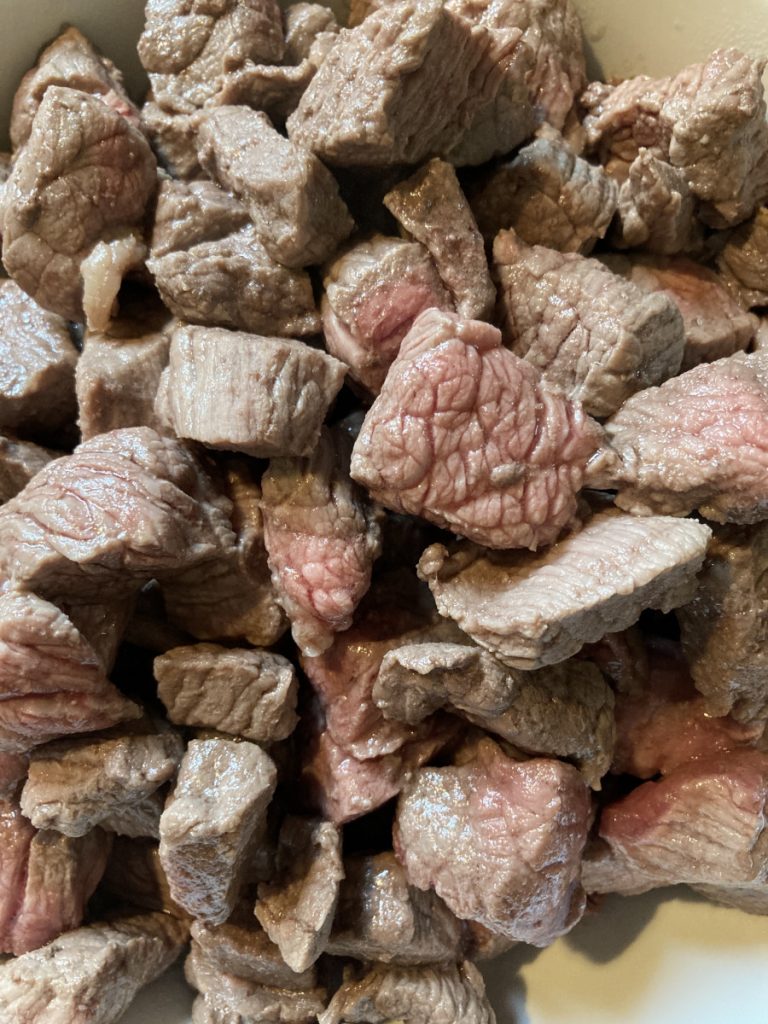
Meat cubes after cooking for a bit (Pressman, 2020) 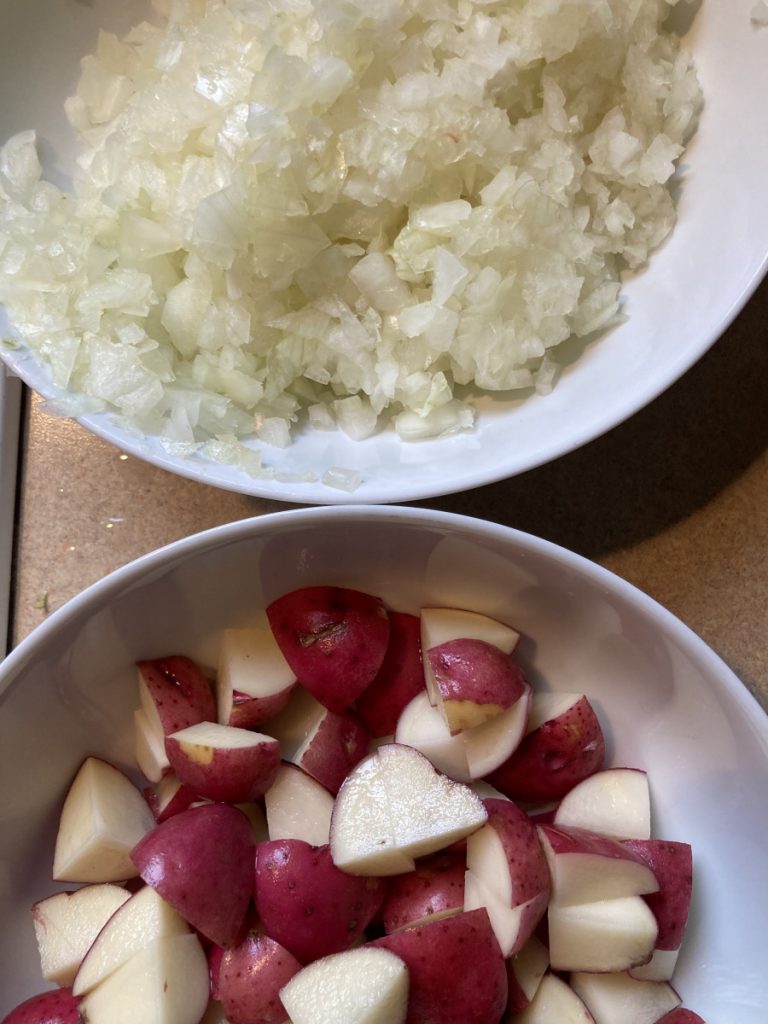
Prepped onions and potatoes (Pressman, 2020) 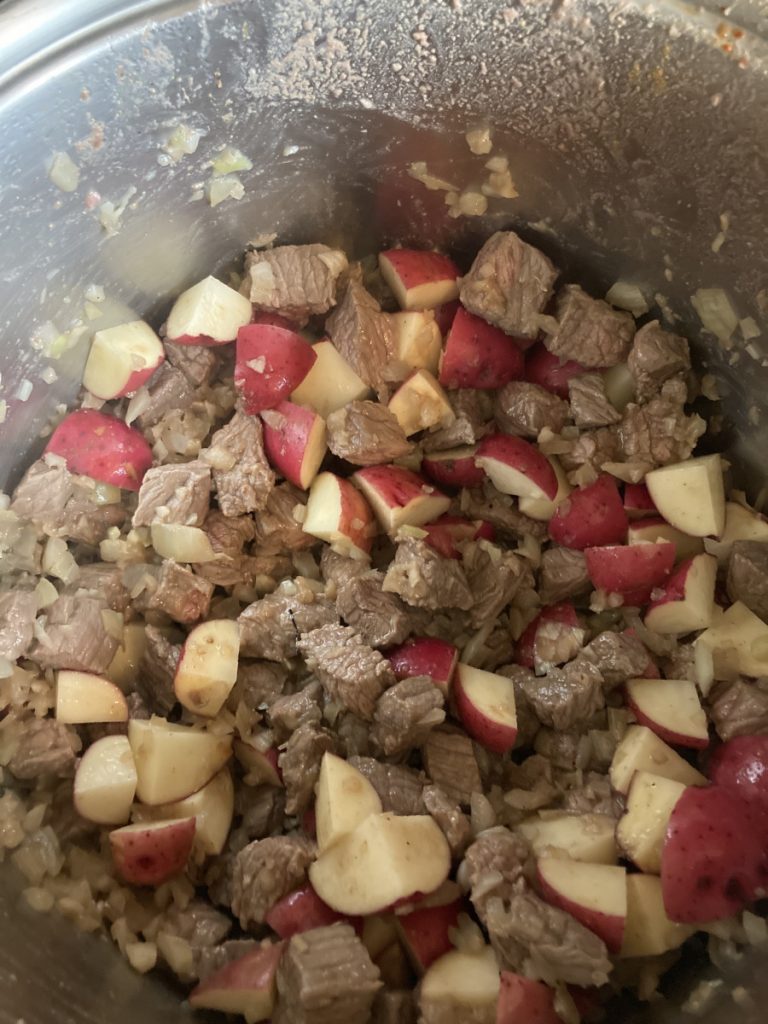
Meat, potatoes, onions, and garlic (Pressman, 2020) 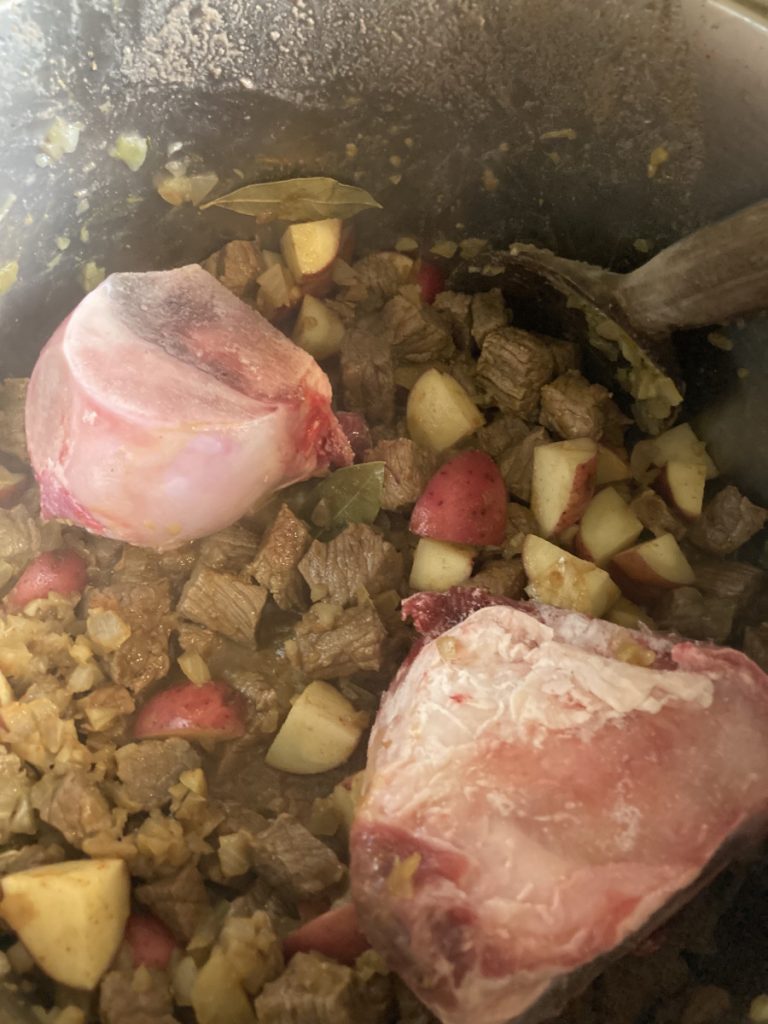
Added beef bones (Pressman, 2020) 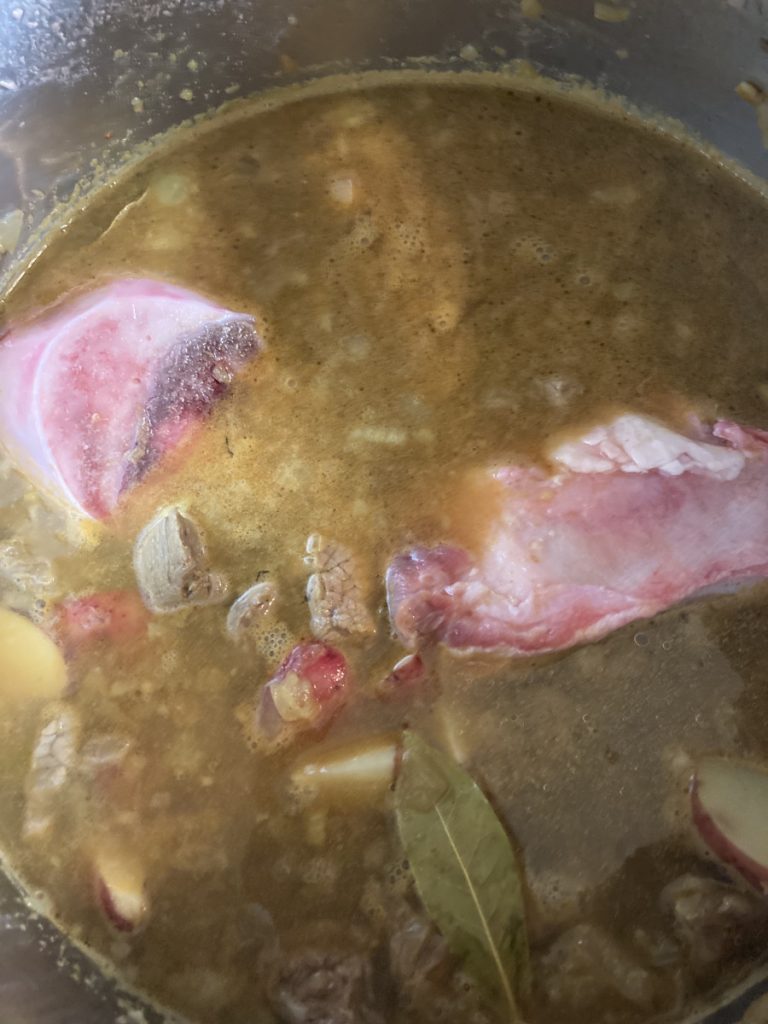
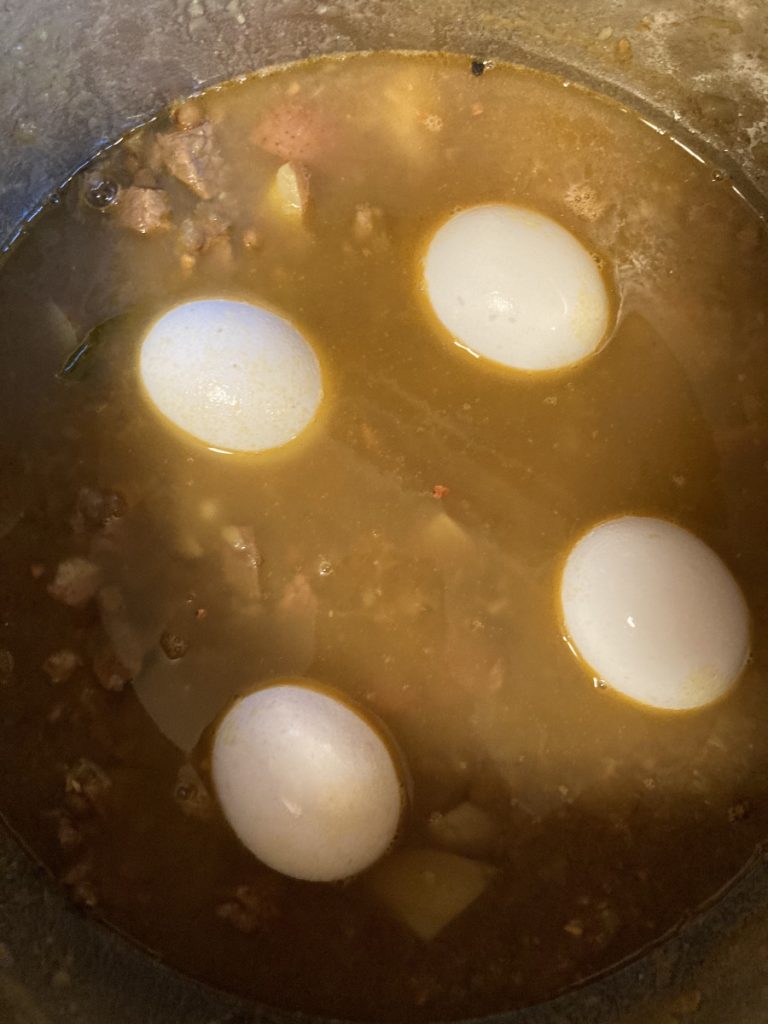
Chicken broth (Pressman, 2020)
Let this cook a bit so all the flavors combine and then put in the beef bones. Pour the chicken broth over the mixture and bring to a boil. Depending on how soft you want the legumes and/or grains you plan to put in, you can add them now or wait. Lower heat and let the stew simmer for as long as you want, I would recommend at least and hour and a half.
About fifteen minutes before serving, add the kasha and legumes or gains as well as the eggs and let cook in the soup. You may need to add a little extra liquid (water or chicken broth) depending on how long you’ve cooked it. Once it’s done, garnish with parsley and serve.

Kasha is a Jewish grain that is used in a lot of traditional dishes. It is similar to barley or any other grain you may use but honestly I think it smells and tastes like mothballs. I am not a huge fan but with all the different flavors in this stew it blends in and adds a nice texture.

For this recipe I used elephant garlic, something I have never cooked with before. It is huge (one clove is the size of my palm) and has a much grassier mild smell and flavor than regular garlic. While I am almost certain that elephant garlic was not grown in the small back gardens of the shtetl Jews that ate this stew, I think the mildness of this garlic will compliment the intense beefy flavor of the soup. Side note: I only used one clove of this elephant garlic because it seemed equal to three cloves of regular garlic. You do not need to add three huge garlic cloves to you stew (unless you want to).
After a few hours the soup is finally done!! It has a rich earthy brown taste to it and a deep warming affect. I usually don’t like kasha but it really works in this soup, adding a deeper note to the whole thing. While it is filling, it is not heavy and it makes sense that one was able to serve this along with other dishes. I would totally recommend this especially in the winter.
Leave a Reply