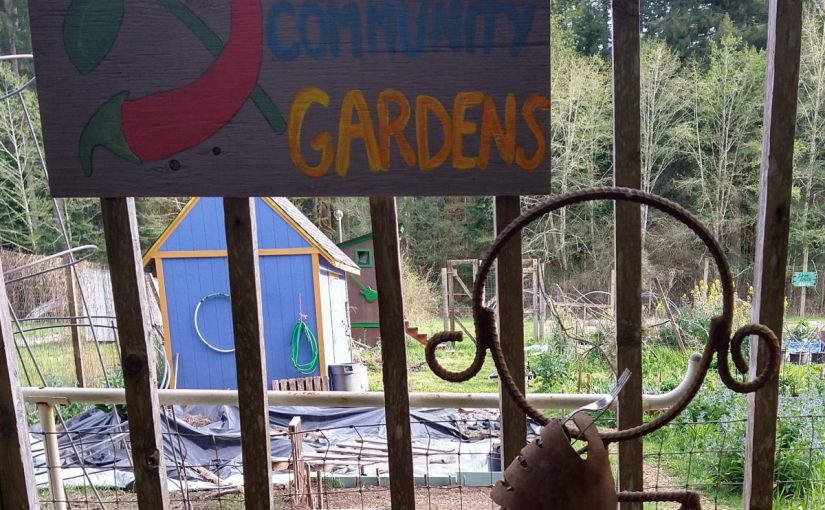
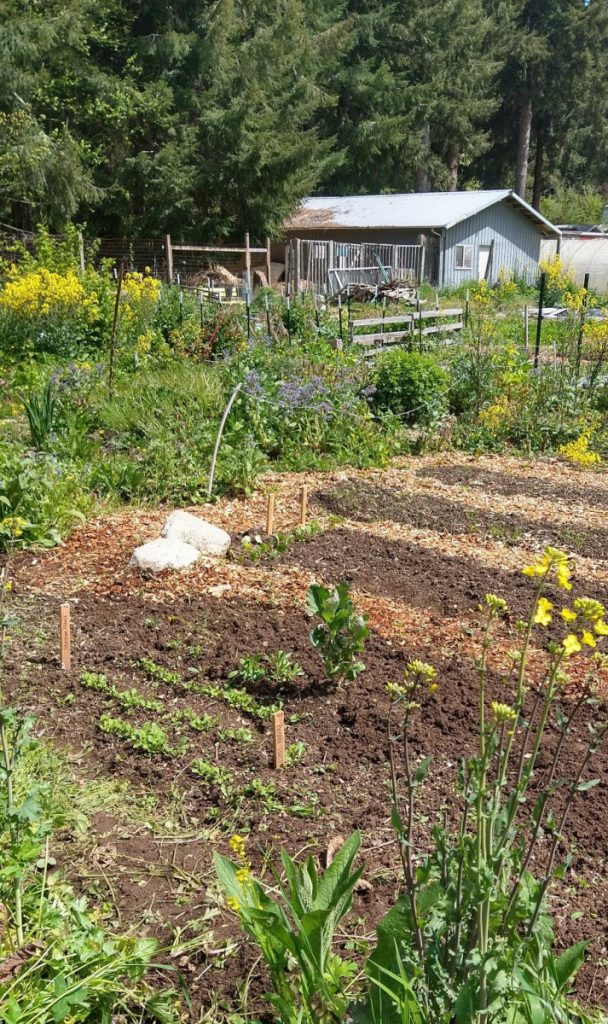
Image Credit: Sarah Dyer
Week Seven Recap:
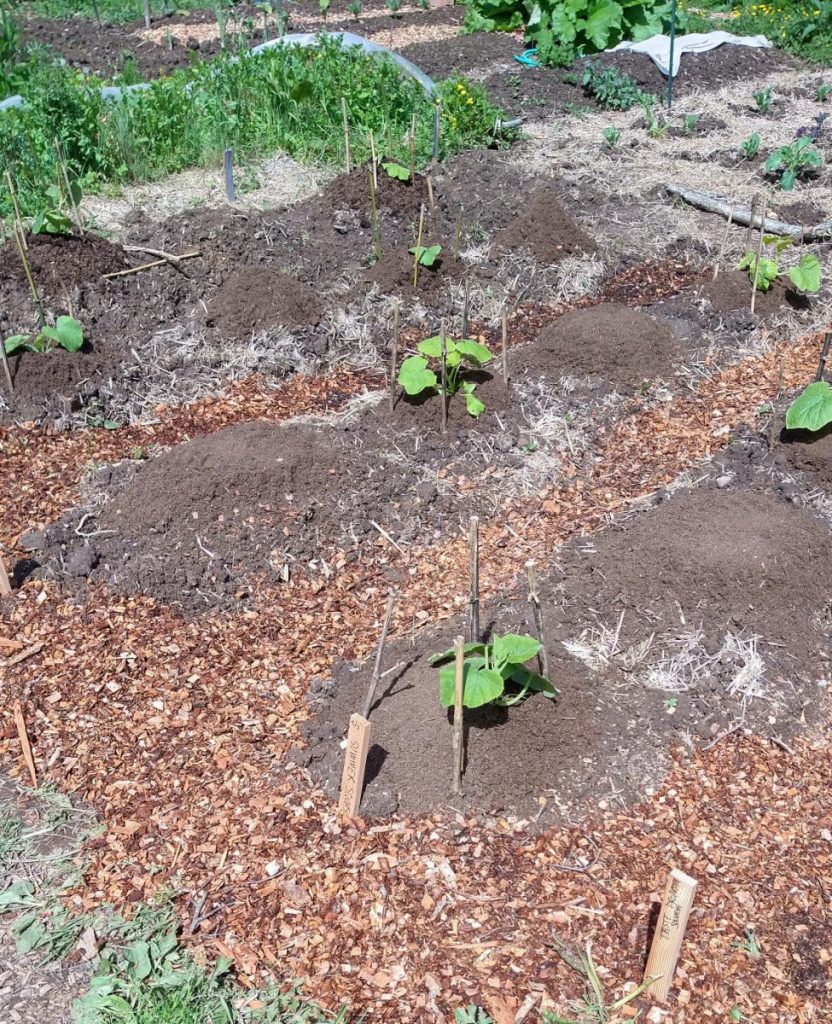
Image Credit: Sarah Dyer
What an excellent day in the garden! After meeting as a group, we split our cohort between the community garden plot and the herb garden. Before splitting our workforce, we all went to take a look at our plastic-covered squash plants; the plastic held-up fairly well over the weekend, protecting the young plants from frost and keeping them warm. The community garden team focused on composting the squash seedlings, clearing another bed of weeds, and laying out wood chips in the paths.
This week our focus was the resiliency of the enslaved through gardening and food, with special focus on the work of Michael Twitty, The Cooking Gene. Our discussion shifted from our chosen topic to a discussion of abortion rights. A comparison of the treatment of our planet with the treatment of women’s bodies, and the colonization of both, led us full circle back to the colonization of people’s bodies, slavery, and the garden. During this discussion I was constantly reminded of a quote by Dr. James C. Scott in his lecture “How Grains Domesticated Us”:
issue of bodily autonomy
into conversation with the
love of gardening. Enjoy!
“And I would argue that if we are to understand domestication as the control over production, it is fruitful to extend it to the first agrarian societies in which you have property relations and the patriarchal family, in which the reproductive services of women become extremely central and their productivity in producing laborers, and if you like domesticated animals, for the patriarchal family is absolutely central as well. It’s when you get the Domus, and you get the statues of women in which their reproductive functions are exaggeratedly represented in the sort of Neolithic statues of women, that I think points in that direction.”
Preparation for Week Eight:
- Come prepared to be working outside: Weather Report. (As a sidenote, if you are having trouble finding boots or waterproof gear, come see me).
- We will be returning our discussion to Ukraine. Please read this article titled, “In ruined Ukrainian village, stranded elderly residents are all who remain”. Be prepared to discuss your thoughts.
- We will be weeding, transplanting, and wood-chipping! The weather is finally starting to warm a bit, so we are playing a bit of catch-up this week.
Week Six Recap:
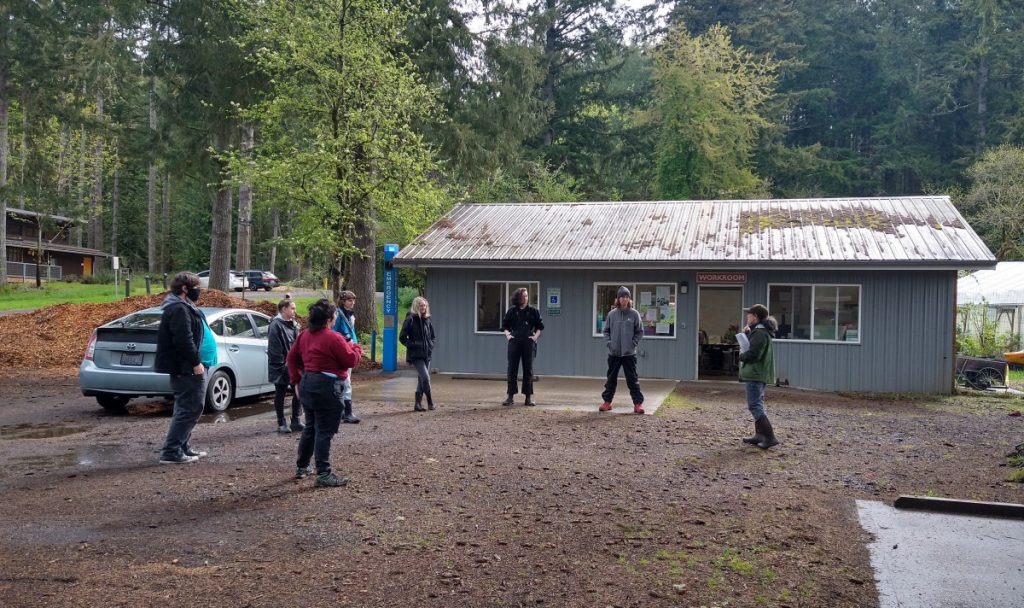
Image Credit: Sarah Dyer
What a wonderful week in the garden. From a warm shift in the weather and several sunny days, to the return of Carli from Chicago and Casey’s healed hand, it was a good week all around for the Taste program.
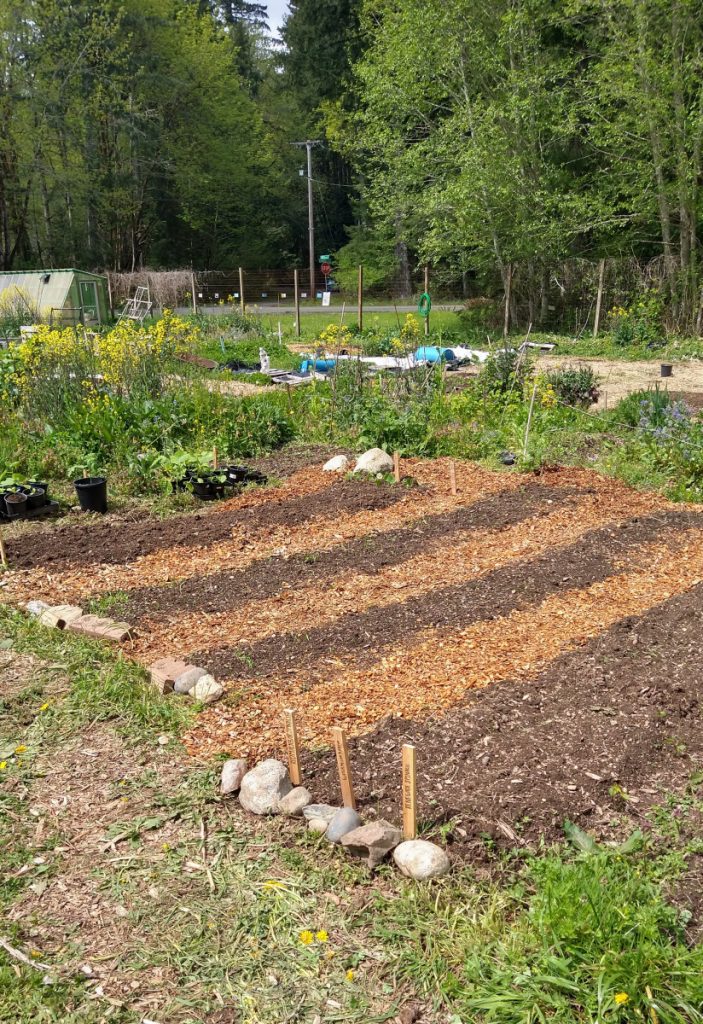
Image Credit: Sarah Dyer
We met with fellow community gardener Sylvi Baldwin to discuss our new plant starts; Sylvi and Clarissa Dirks grew extra squash, pumpkins, tomatoes, and peppers, and we are benefiting from their enthusiasm (see last week’s post for variety information).
We broke into two groups: weeders and woodchippers. The weeders worked on our future four sisters garden, clearing weeds from the equivalent of four full beds. The woodchippers began sheet mulching our garden paths to reduce weed pressure and weeded through our planted beds as they went.
Our weekly discussion of conflict agriculture and building food systems through adversity turned to our readings on the current state of agriculture in Ukraine and the Ukrainian Tractor Brigade. We linked the current issues of mining and poisoning to Chapter 4 of Farming While Black, “Restoring Degraded Land”, the issues at play, and some of the botanical and mycological remediation at play across the world for substances ranging from radiation to petrol to plastics.
Image Credit: Carli Fox
After our regular meeting time, volunteers met at the plot from 1:30PM-5:30PM to continue our work. Carly and I hacked at the grassy seating area with a man-powered push mower, making a dent but realizing we need a weed eater to really get the job done. We were joined a bit later by Zoe, and after taking a moment to enjoy the beautiful afternoon we completed weeding the four sisters garden, eventually carving-out paths, creating mounds, and planting our squash starts. We will have eight squash hills and eight corn and bean hills, checkerboarded across the area. The north side of the plot was left flat in order to accommodate sunflowers. As the quarter continues, we will dive deeper into four sisters gardening, seed sovereignty, and the resilience of Indigenous TEK.
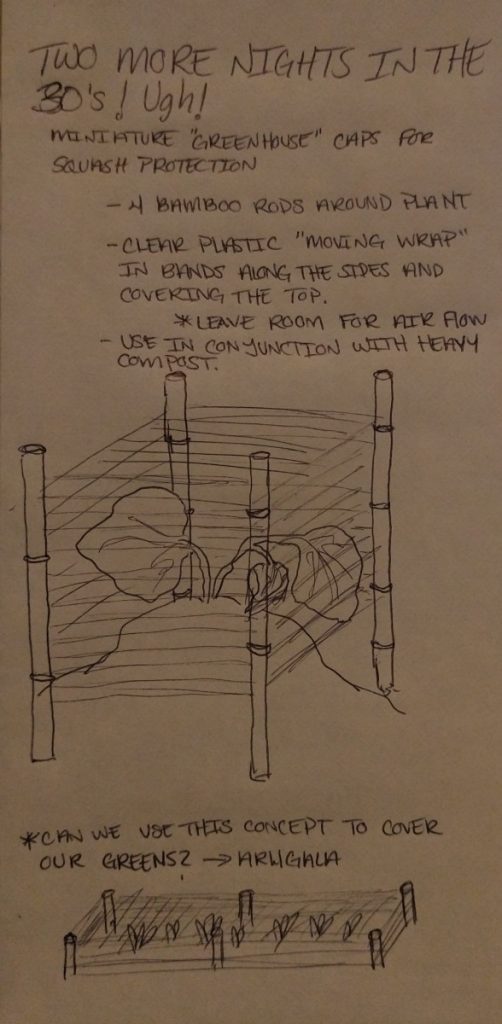
Image Credit: Sarah Dyer
To protect our tiny squash starts from the cold, I will be heavily composting them this weekend, and constructing mini greenhouses to protect them from our last “winter” days. I plan on returning to the garden on Friday afternoon to batten down the hatches for the weekend and will be constructing mini greenhouses, dressing with compost, as well as watering and moving our potted starts into the greenhouse until the danger of frost passes. I’m looking forward to next week, when it seems we will finally be past the stop-start of the early season.
The design to the left describes my idea for a quick greenhouse. I will be composting heavily with mushroom compost both for the nutrient boost (squash love high organic matter) and the extra blanket of protection against cold. It may be worth exploring how we might use this method to extend our season as well.
Preparation for Week Seven:

Image Credit: Amistad, An Imprint of Harpercollins Publishers
“History did not let the historical black garden go unremarked. These spaces were little landscapes of resistance: Resistance against a culture of dehumanizing poverty and want, resistance against the erasure of African cultural practices, resistance against the destruction of African religions, and resistance and slavery itself.”
Michael W. Twitty, The Cooking Gene: A Journey Through African American Culinary History in the Old South, Page 269
- Come prepared to be working outside: Weather Report. (As a sidenote, if you are having trouble finding boots or waterproof gear, come see me).
- We will be discussing the gardens of enslaved peoples as a framework for resistance. Please read Chapter 12 of Farming While Black, “Cooking and Preserving” and Chapter 14 of The Cooking Gene by Michael Twitty, “Adam in the Garden”. We will be placing the ideas in the chapter in conversation with the information in this PBS video of Michael Twitty speaking on the subject of the gardens of enslaved persons and his book. (These links lead to the Evergreen Library and may require you to sign-in).
- A few questions to mull as you read and watch: In what ways were the gardening practices of enslaved Africans a type of resistance? How might we relate this back to enslaved Africans braiding seeds into their hair, and how is this preservation a revolutionary act of resistance? What is Food Sovereignty?
- Let’s come up with a few ideas about how our bounty should be preserved and eaten! In what ways are you all hoping to utilize our harvest? Fermentation? Cooking? Raw?
- We will be weeding, seeding, mulching, and wood-chipping! The weather is finally right for getting seeds in, so we are going to be playing catch-up. We will discuss as we work.
See you Monday morning!
Week Five Recap:
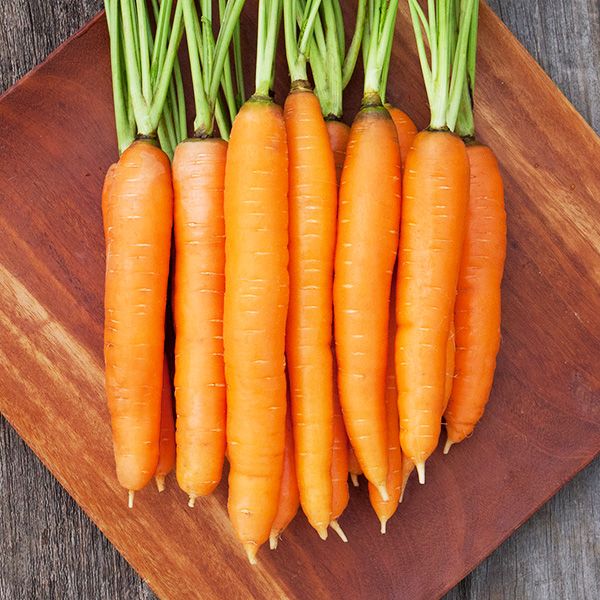
Daucus carota
“DOLCIVA” CARROT
Days to Maturity: 105
Exceptional storage carrot developing sweetness and maintaining quality deep into the storage season.
Great sweet flavor, juicy crunch, and strong field resistance to Alternaria. Slightly tapered roots have good uniformity, bright color and strong tops. Widely adapted and versatile for bunching or storage.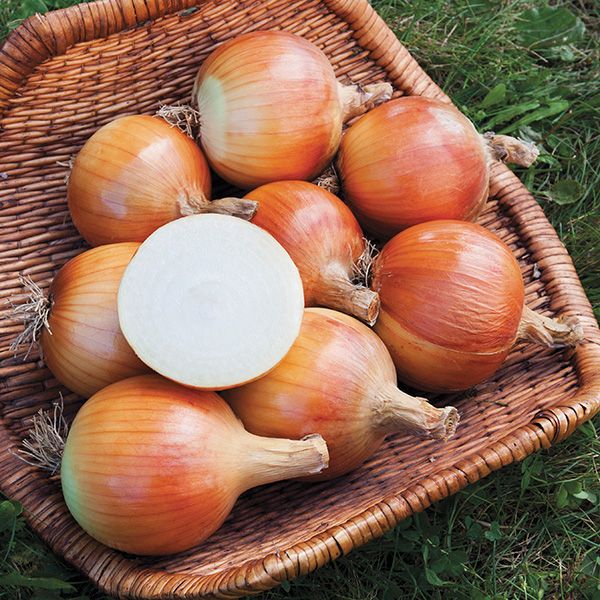
Allium cepa
“YANKEE” (F1) ONION
Days to Maturity: 108 DAYS
Very productive storage variety with medium-sized round bulbs.
Strong resistance to downy mildew and intermediate resistance to pink root. Yield and excellent storage qualities similar to Copra F1. Dark brown skins and bulbs that remain hard and sound until spring.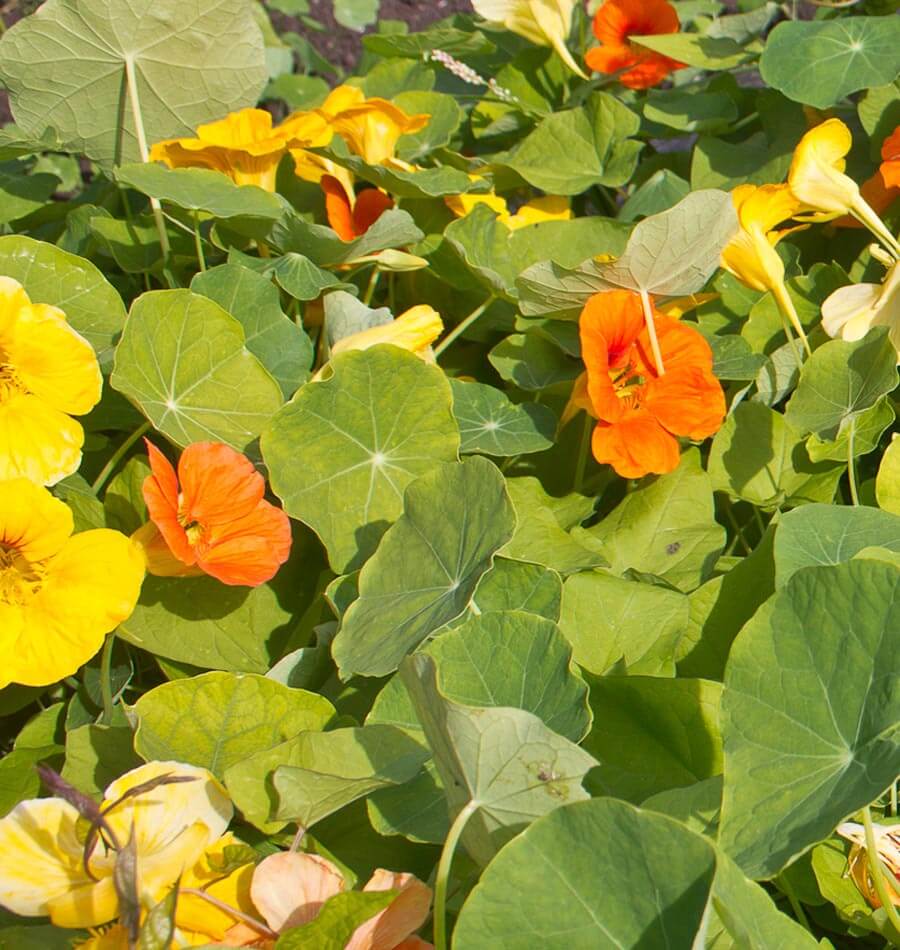
Tropaeolum majus
Nasturtium
Some native South Americans used nasturtium medicinally, apparently due to its antibiotic and antibacterial properties.
Nasturtium is a species of flowering plant in the family Tropaeolaceae, originating in the Andes from Bolivia to Colombia. It is an easily grown annual with disc-shaped leaves and brilliant orange or red flowers. All of the above-ground parts of the plants are edible.
Image Credits from Left to Right: High Mowing Organic Seeds, High Mowing Organic Seeds, West Coast Seeds
Despite the continuation of my illness into Week 5 and our missing another regularly scheduled gardening day, a lot was still accomplished this week. Zoe, Laura, and I met with program alumni Ali Bailey on Wednesday afternoon to work in our plot, and by the end of the day we had weeded another, into which we transplanted nasturtiums started by the Evergreen Organic Farm and seeded-in Dulciva carrots and Yankee onions in alternating rows.
This is a classic companion planting combination, predominantly used for pest control. The onions help to repel or confuse carrot fly, while the carrots can help reduce problems with onion flies. Companion planting is a form of polyculture, which is the idea of raising multiple crops in the same place for a more natural, diverse ecosystem, and is a technique that involves growing plants in proximity to others so that they can repel insects, increase soil nutrients, and help bring about a more balanced ecosystem.
By following the principles of companion planting, a garden can naturally provide the nutrients other plants need to thrive and prevent pesky critters from causing issues. However, if a plant is placed next to an “enemy” plant, it can give off the wrong nutrients, invade its space, and prevent growth. This article from Farmers’ Almanac speaks a bit to the practice.
Additionally, we have been gifted various heirloom squash starts by two generous members of both our academic and gardening communities, Clarissa Dirks and Sylvi Baldwin. Our plot abuts theirs on two sides, and we will be collaborating on maintaining a space for our squash to go wild! Varieties include a beautiful “Sweet Mama” kabocha squash, and an extra-large carving pumpkin called “Big Moose”. Sylvi and Clarissa will also be providing us with other starts as the season progresses, including a lovely early ripening heirloom tomato variety which we will be planting on Monday called “Oregon Spring.”
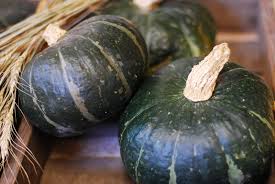
Cucurbita maxima
“SWEET MAMA” KABOCHA WINTER SQUASH
Days to Maturity: 100
This unique kabocha that produces on a very space-saving short vine. In trials, Sweet Mama was also among the earliest to mature. The dark green fruit reach about 8 inches across and 4 inches tall with striking gray ribs and speckles. Inside, the meaty flesh is a dark yellow with a nutty flavor and superior sweetness.
Cucurbita maxima
“BIG MOOSE’ PUMPKIN
Days to maturity: 110
Giant pumpkins with bright color.
Orange red in color with some lighter streaking and light ribbing. Great for eye-catching roadside displays. Average weight is 50–125 pounds!
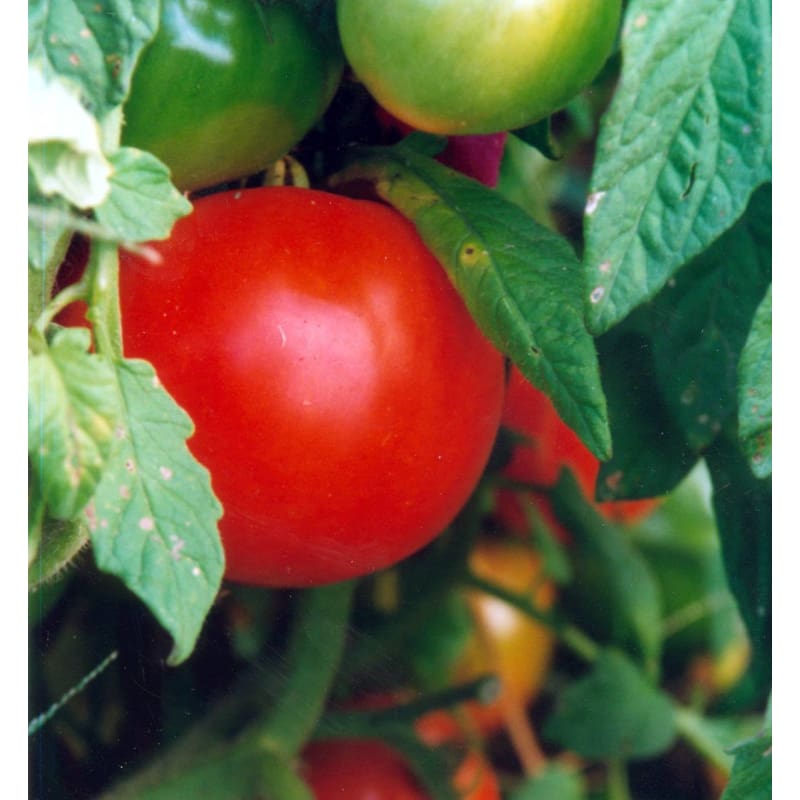
Lycopersicon lycopersicum
“OREGON SPRING” TOMATO
Days to maturity: 55-80
This determinate variety was developed at Oregon State University.
Part of this breeding effort was to develop a variety which could be set out in very cool spring temperatures. They can go out in April if freezing can be prevented. Tomatoes are full sized, 4 inches across, with fine color and texture. Yields are high and flavor is great, nicely acidic.
Preparation for Week Six:
- Come prepared to be working outside: Weather Report. (As a sidenote, if you are having trouble finding boots or waterproof gear, come see me).
- We will meet briefly with Sylvi Baldwin, who graciously donated us squash and tomato seedlings, will stop by to introduce herself and briefly describe the different varieties.
- We will be discussing land reclamation in terms of the war in Ukraine. Please read Chapter 4 of Farming While Black, “Restoring Degraded Land”, and come to class prepared to discuss the ideas in the chapter in relation to the information in this article about Ukraine (article). Pay special attention to pages 72-73. Try to answer the following questions: What is phytoremediation? What is immobilization? How might a farmer or gardener use these two methods of bioremediation? How might we connect these practices to the reclamation of farmland in Ukraine?
- Briefly glance at the Farmers’ Almanac article about companion plants. What is companion planting? Are you surprised by any of the pairings? How else might we utilize companion planting in our garden space?
See you Monday morning!
Week Four Recap:
“Self-care and healing and attention to the body and the spiritual dimension–all of this is now part of radical social justice struggles.”
Angela Davis, quoted in Farming While Black, page 181
Illness! Oh No!
Due to both Zoe and I not feeling well, plus the heavy rain, community gardening on campus was cancelled on Monday morning. Instead, we asked that you please read, view, and post a response to the text and image documents from last week’s “Tending Seeds Tends People” Equity Symposium event (including your photos and participant experiences if you attended this event).
Equity Symposium: Tending Seeds Tends People Workshop (PPT images)
Equity Symposium: Tending Seeds Tends People Presentation Text (script)
After spending some time with these documents, all students were required to watch a video of their choice from this list of Organic Seed Growers Conference recordings to put into conversation with the Tending Seeds ES presentation, which was originally presented by winter quarter Taste program students at this winter Organic Seed Growers Conference.
Thank you all for the understanding and patience! I hope to be back with a will next Monday morning.
Preparation for Week Five:
- Come prepared to be working outside: Weather Report. (As a sidenote, if you are having trouble finding boots or waterproof gear, come see me).
- Depending on weather, we will be planting our nasturtiums! If you haven’t already, please read this short article by The Spruce. What are the benefits of growing nasturtiums, and why do you think they are a part of our garden plan?
- We will be discussing crop planning and our garden layout. Please read Chapter 6 of Farming While Black, “Crop Planning”, and come to class prepared to discuss polycultures and intercropping. Pay special attention to pages 123-128. Try to answer the following questions: What are the benefits of complex polycultures and intercropping, especially in a world where land and water are at a premium? What are the drawbacks?
Week Three Recap:
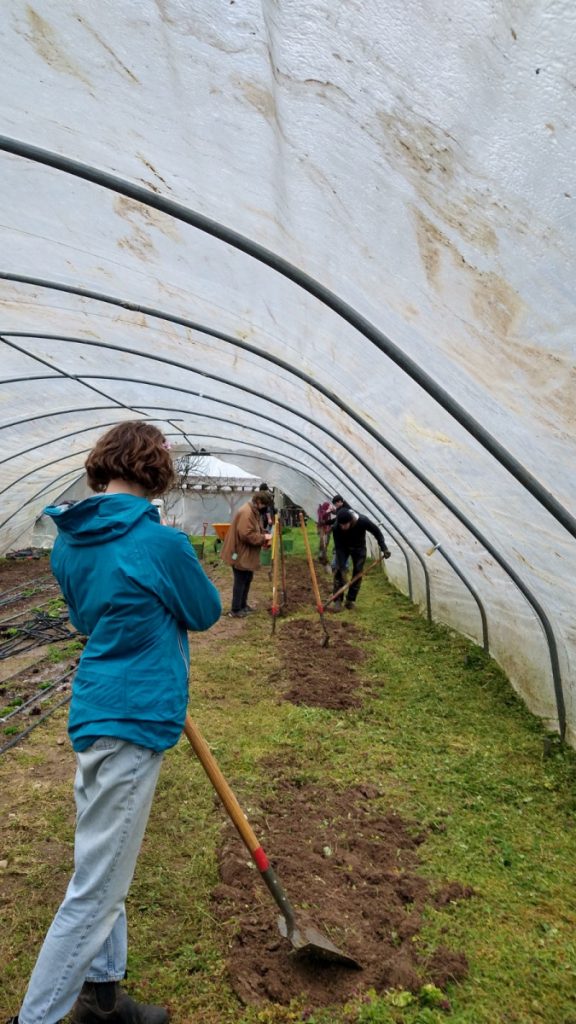
Image Credit: Sarah Dyer
The weather continued to be unseasonably cool, with bouts of snow, rail, and rain throughout the week. Despite the chill and bad weather, we accomplished quite a lot.
- We cleared 2 new garden beds and filled one with spinach and radishes.
- Nasturtiums had to wait-it’s simply too cold!
- We discussed the weekly reading, “Chapter 1: The Art Museum and the Seed Bank” of Where Our Food Comes From: Retracing Nikolay Vavilov’s Quest to End Famine by Gary Paul Nabhan (for link, see Week 2).
- Thank you to everyone who attended our 2022 Equity Symposium event on Wednesday! I enjoyed hearing all the inspiring and empowering stories about how seeds, food, land, and community connect us and are connected to each other.
Preparation for Week Four:
- Come prepared to be working outside: Weather Report. (As a sidenote, if you are having trouble finding boots or waterproof gear, come see me).
- Weeding! So much weeding.
- Check out the PowerPoint presentation and script from the Equity Symposium, posted below, and come prepared to discuss the event in class.
Equity Symposium: Tending Seeds Tends People Workshop (PPT images)
Equity Symposium: Tending Seeds Tends People Presentation Text (script)
Week Two Recap:

Image credit: Sarah Dyer
The weather was poor this week, so we spent time in the red barn greenhouse to avoid the rain. The tradeoff is that next week we will have lots of catchup to do!
- We assisted Beth in repotting and revitalizing plant starts in the RBGH.
- We labeled stakes for our prepared garden beds.
- We discussed the upcoming Equity Symposium. I hope that you will join us for the food and agriculture presentation titled “Tending Seeds Tends People: Regenerative Agriculture as Community Regeneration at the Evergreen State College” on Wednesday, April 13th from 1pm-2:30pm. We will be planting seeds for our plot, so I hope you will take the time to come to our “sowing bee” and join other community members in getting our seeds into soil.
Preparation for Week Three:
- Come prepared to be working outside: Weather Report. (As a sidenote, if you are having trouble finding boots or waterproof gear, come see me).
- Weeding! So much weeding. We need to clear at least one more bed for spinach and radishes.
- We are planting nasturtiums, so we will talk a little about them. Please read this short article by The Spruce. What are the benefits of growing nasturtiums, and why do you think they are a part of our garden plan?
- I hope we can have a small harvest of carrots, mustards, and various raabs.
- We will join Beth for a short farm project.
- Please read “Chapter 1: The Art Museum and the Seed Bank” of Where Our Food Comes From: Retracing Nikolay Vavilov’s Quest to End Famine by Gary Paul Nabhan, posted below.
Week One Recap:
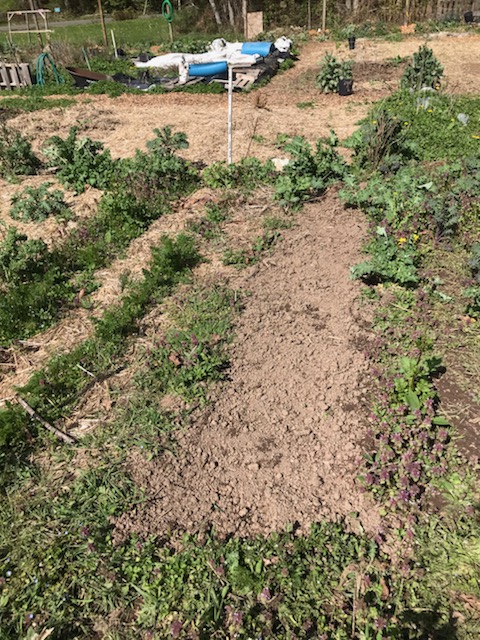
Cleared bed in our community garden plot. 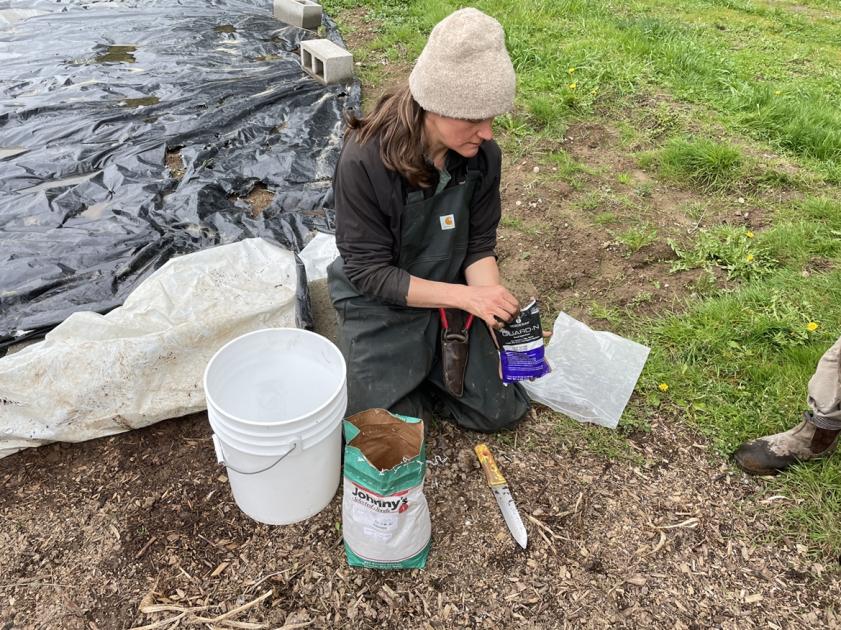
Farm manager Beth Leimbach inoculates fava beans before we plant them in MU 1. 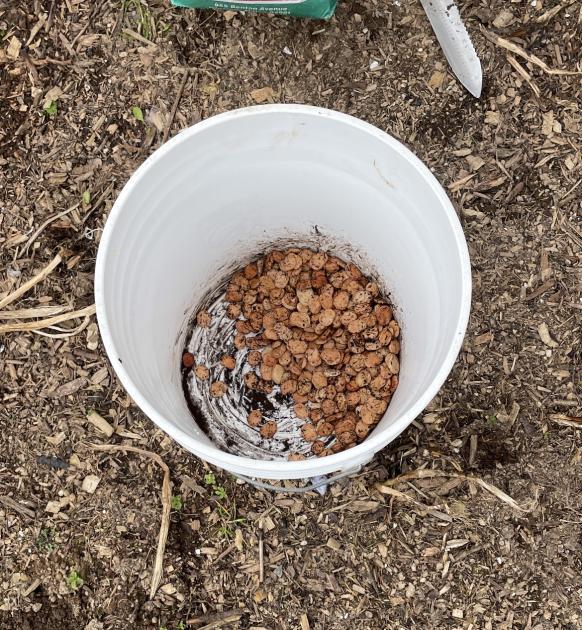
Fava beans left over from the farm were graciously donated to our program. 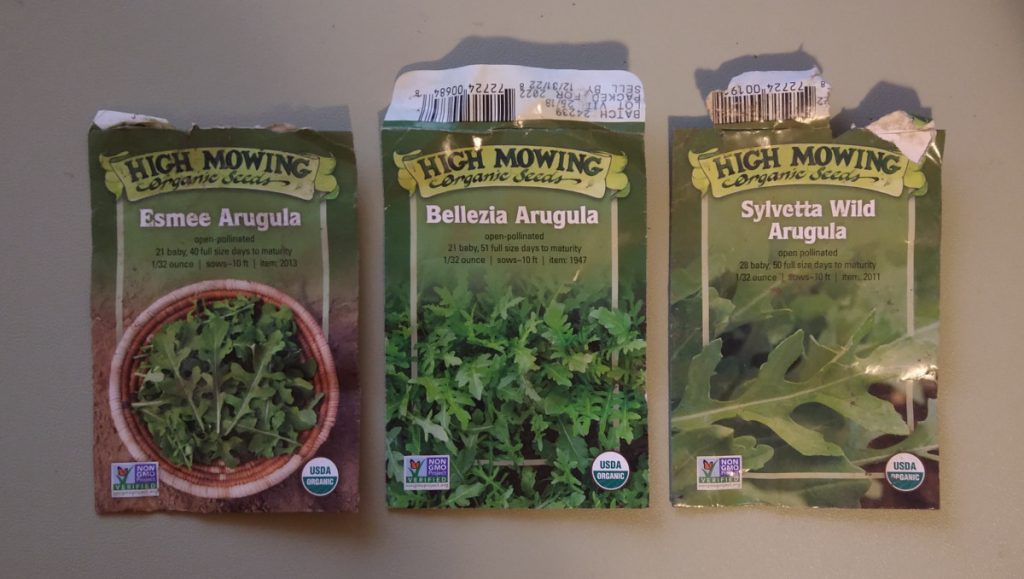
The three varieties of arugula were planted on Monday afternoon.
- Introductions!
- We briefly toured the community garden and discussed the resources available in the space and some of the tools we will be using this quarter.
- We discussed solarization and occultation, and some of their uses in the garden. We will talk about this more as the season progresses.
- We cleared two plots in the classes’ community garden plot! We discussed how much easier it was to weed this year and how regular maintenance of the space leads to better weed suppression.
- We joined Beth on the farm for a project seeding fava beans. The class weeded the bed before planting 300 row feet of fava beans. We discussed the benefits of fava beans (and all plants in the Fabaceae family), specifically nitrogenating the soil through nodules located on their roots.
- After class, I returned with Zoe DeWitt and planted three varieties of arugula in one cleared bed and fava beans (donated by the organic farm in the other).
- We acquired a large bag of older seeds from the farm and were donated seeds from a beautiful heirloom corn called ‘Cascade Ruby Gold’ (thank you Martha Rosemeyer!).
Preparation for Week Two:
- Come prepared to be working outside: Weather Report. (As a sidenote, if you are having trouble finding boots or waterproof gear, come see me).
- Weeding! So much weeding. We need to clear at least one more bed for spinach and radishes.
- For our weekly community project, we will be attempting some greenhouse organization and cleaning. With a clear greenhouse we will be able to start seeding our summer vegetables!
- Find an article about farming through adversity and conflict. Feel free to interpret the theme and talk about anything related to agriculture, food security, and community building in times of strife. My pick for the week is the video below.